
Lottery bill dies in Legislature after support crumbles in Alabama Senate

Gov. Robert Bentley’s lottery bill failed just short of the legislative finish line Friday as support in the Alabama Senate suddenly crumbled amid disagreements over electronic gambling. Senators voted 23-7 against accepting changes made by the House of Representatives. The Senate disapproval killed the proposed lottery referendum that Bentley hoped would provide money to the state’s cash-strapped Medicaid program. “I just can’t believe the Legislature would not allow the people of the state of Alabama to vote on this issue,” Bentley said at a press conference after the legislative defeat. “They looked those children in the eye today, those that voted against it, and they said, ‘I am not going to do anything to fund your health insurance,’” Bentley said referring to the children on state Medicaid rolls. The bill stumbled on what was supposed to be its final hurdle Friday after narrowly winning approval late Thursday in the Alabama House of Representatives. The fragile 21-vote coalition needed in the Senate fell apart after some Democrats withdrew support. Democrats sought the ability to allow electronic machines at state dog tracks, arguing the bill as written would allow the Poarch Band of Creek Indians to have a monopoly on gambling. Republicans defected from the bill as well, leaving only seven senators supporting the House-passed plan. “It was a domino effect. Once one thing fell apart, it all fell apart,” Senate President Pro Tem Del Marsh, R-Anniston, said. Democratic senators objected to House-added language prohibiting electronic lottery terminals – which some members hoped could be a possibility at state dog tracks – by saying a lottery could only be played on paper tickets. They also wanted language to guarantee the tracks would have the same casino or machine games as the Poarch Band of Creek Indians if the state’s governor ever negotiated a compact. “If the governor did nothing, it would still be a clean lottery. That’s all we were asking was to put more money on the table,” Sen. Bobby Singleton, D-Greensboro. Senate Minority Leader Quinton Ross, D-Montgomery, said allowing the terminals could have provided immediate revenue to the state’s Medicaid program, instead of waiting for traditional lottery operations to get up and running. Singleton said the blame shouldn’t fall on Democrats since there are few Democrats in the 35-member Senate. The Republican governor had sought to end the Deep South state’s historic opposition to gambling as a revenue source. Alabama would have become the 45th state with a lottery if lawmakers and voters had approved the idea. Bentley wanted the first statewide vote on a lottery since Alabamians rejected the idea in 1999. The sudden defeat in the Senate was a bitter loss for the governor and lottery supporters who at one point seemed close to clinching victory. “I will say this: We are not done. You will see this bill again. We will keep going. My goal is to respond to the citizens of Alabama who want the right to vote,” Sen. Jim McClendon, the bill’s sponsor, said. McClendon said there were groups pressuring Republicans not to support the bill, separate from the gambling machine turf war. He declined to name them. Lawmakers return to Montgomery on Sept. 6 to finish the special session on Medicaid funding. Their focus will be on a proposed division of the state’s oil spill settlement fund, which could provide some additional money to Medicaid in the next fiscal year. Senators had been trying to reach a compromise that would use some money to pay state debts early – which could free up money for Medicaid – and building roads in south Alabama. Marsh said senators might have to start over now that the lottery isn’t a possibility to provide money to Medicaid in the long-term. “Now you’ve got to look at maybe using those dollars that would have been used for the south or the coast or even in the debt payment and asking yourself if should be used for Medicaid until we find a solution on the general fund,” Marsh said.
Absentee controversy arises in Fort Deposit mayoral election
Two candidates vying to be mayor of Fort Deposit, Ala. are headed to a run-off election. Incumbent mayor Fletcher Fountain and Barry Robinson will square off again in early October after garnering less than 50 percent of vote during Tuesday’s municipal election. According to AlabamaNews.net Robinson is now raising concerns about the number of absentee ballots that were cast in the August 23 election, saying the town is too small for there to be so many absentee ballots. He’s asking state officials to monitor the upcoming race. Incumbent mayor Fountain is less concerned. “Absentee ballots are valuable,” Fountain told AlabamaNews. “It give everybody a chance to vote. If you not going to be here and you want to come in and vote then you have a right to do it.” The run-off is scheduled for Oct. 4.
Presumed dead state lottery comes back to life, passes Alabama House
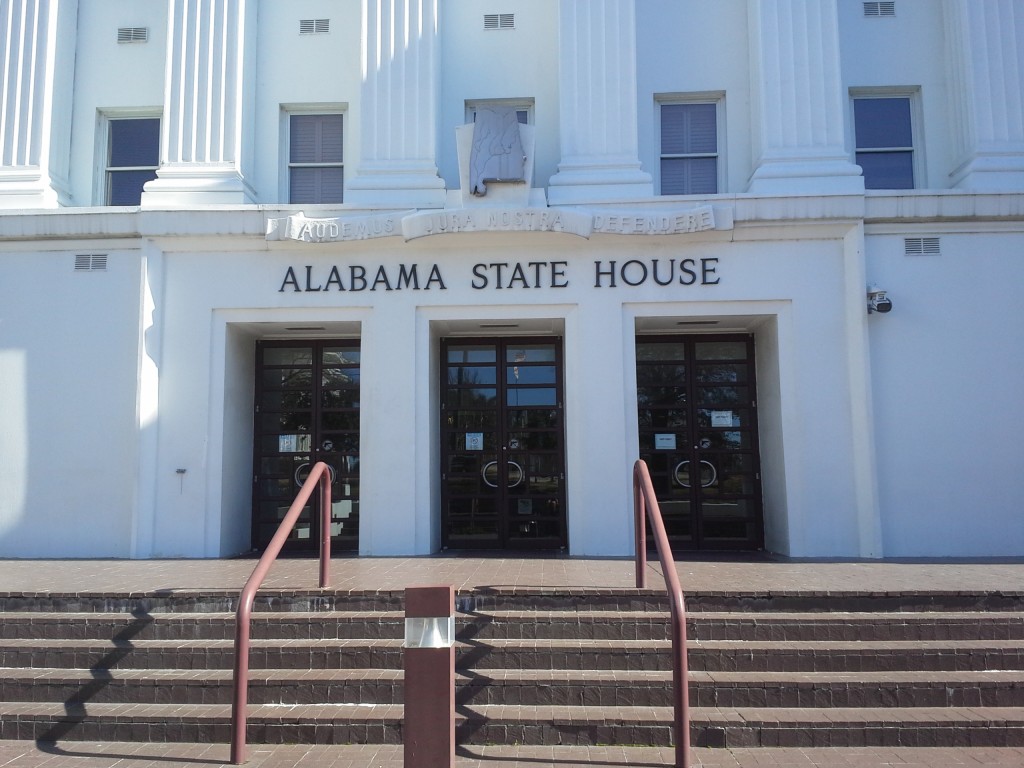
In the dead of night, the state lottery bill came back to life. After a constitutional amendment to establish a state lottery fell two votes shy of the number required for approval, the bill was presumed dead Thursday evening. With no clear path to passage, and a looming Friday deadline for the amendment to appear on the Nov. 8 general election ballot, lawmakers in favor of the bill began a series of long-shot resuscitation efforts to bring the bill back to life. Remarkably, their efforts worked. In an unbelievable of series of votes, supporters of the lottery managed to revive the amendment around midnight and pass it, 64-35, with just one vote more than was needed. Three Democrat representatives — Selma’s Darrio Melton, Hayneville’s Kelvin Lawrence and Grand Bay’s David Sessions — crossed the aisle to make passage possible. “I would like to thank the Democrats and Republicans for coming together and showing bipartisan leadership,” Gov. Robert Bentley said Friday morning. “I would just like to say that I appreciate what they did and what they did for the people of this state.” The amendment’s future is still not finalized, as it must now head back to the Alabama Senate for final approval, where senators must decide whether or not to go along with mostly minor House changes to the legislation they passed last week. But for the time being, the lottery bill is still alive.
Hillary Clinton defends family foundation, says work will continue
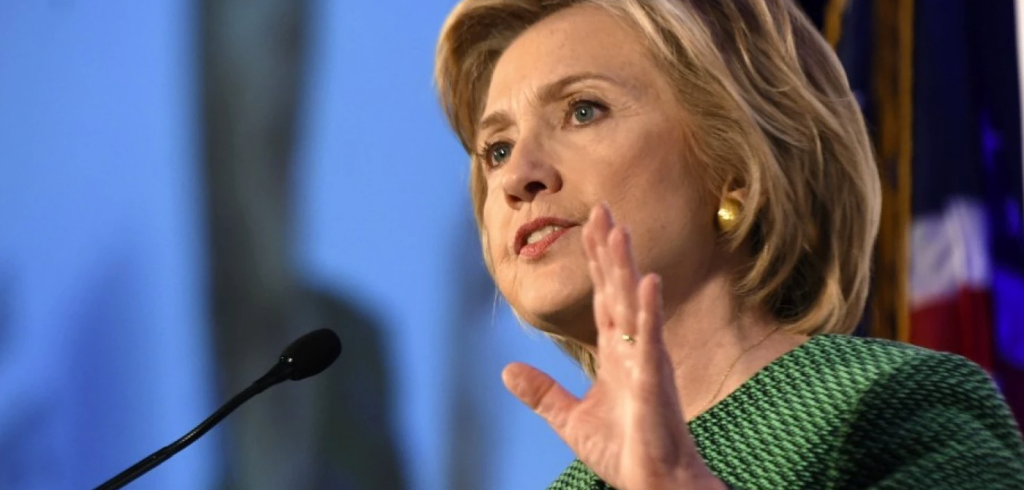
Hillary Clinton said Friday the charitable programs of her family foundation would continue, perhaps through partnerships with other organizations, if she’s elected president, even as critics argue that would present a conflict of interest. The Democratic presidential nominee, in an interview with MSNBC’s “Morning Joe,” defended the Clinton Foundation, saying the charitable work it has conducted has changed lives for the better and is in keeping with American values. Republican opponent Donald Trump has accused Clinton of improperly using her former position as secretary of state to bring in big contributions to the foundation from people and corporations seeking access. “The work has been not only transformational, it has really been in line with American interests and values,” she said in an interview with MSNBC’s “Morning Joe.” ”And we’re going to do everything we can to make sure that good work continues.” In the telephone interview, she also described Trump’s campaign as built on “prejudice and paranoia,” continuing her line of attack from a speech Thursday in Reno, Nevada. In that speech, she accused Trump of unleashing a “radical fringe” within the Republican Party, including anti-Semites and white supremacists. Clinton is looking to counter Trump’s attempts to revamp his image and win over those skeptical of his candidacy. She is also trying to appeal to Republicans, casting the race as “not a normal choice between a Republican and a Democrat.” Trump has rejected Clinton’s allegations, labeling her a bigot. “She lies, she smears, she paints decent Americans as racists,” Trump said, in a Thursday address. Trump also says Clinton is trying to distract from questions swirling around donations to The Clinton Foundation and her exclusive use of her private email servers for official business while secretary of state. The Associated Press reported this week that more than half the people from outside government who met or spoke by telephone with Clinton in the first half of her term as secretary of state had given money – either personally or through companies or groups – to the foundation. On Friday, Clinton promised to put in place additional safeguards to prevent conflicts of interest with her foundation should she win the White House. “I appreciate the concerns that people have expressed and that’s why I have made it clear that if I’m successful in November we are going to be taking additional steps,” she said. Clinton is eager to capitalize on Trump’s slipping poll numbers, particularly among moderate Republican women turned off by his controversial campaign. She’s praised former Republican presidential candidates John McCain and Bob Dole, and former President George W. Bush, for taking decisive steps to counter racism and anti-Muslim sentiment. She said Friday that candidates can reasonably disagree on how to run the country, “but that’s not the campaign that Donald Trump has been running, and I am reaching out and asking fair-minded Americans to repudiate this kind of divisive demagoguery.” On Thursday, Trump tried to get ahead of the Democratic nominee, addressing a crowd in Manchester, New Hampshire, minutes before Clinton spoke. “Hillary Clinton is going to try to accuse this campaign, and the millions of decent Americans who support this campaign, of being racists,” Trump said. “To Hillary Clinton, and to her donors and advisers pushing her to spread her smears and her lies about decent people, I have three words,” he said. “I want you to hear these words, and remember these words: Shame on you.” Trump met Thursday in New York with members of a new Republican Party initiative meant to train young – and largely minority – volunteers. He contends that the Democrats have taken minority voters’ support for granted. “They’ve been very disrespectful, as far as I’m concerned, to the African-American population in this country,” Trump said. Many black leaders and voters have dismissed Trump’s message as condescending and intended more to reassure undecided white voters that he’s not racist. Republished with permission of The Associated Press.
