
Huma Abedin, a top Hillary Clinton aide, is leaving husband Anthony Weiner amid new sexting scandal
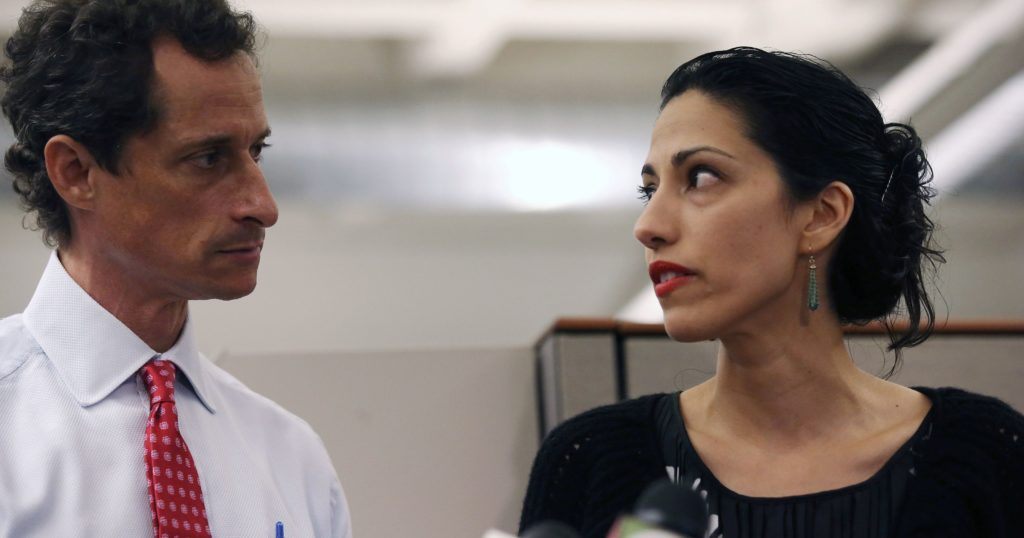
Hillary Clinton aide Huma Abedin is done playing the good wife to Anthony Weiner, announcing Monday she is leaving the serially sexting ex-congressman after he was accused of sending raunchy photos and messages to yet another woman. Abedin, who as vice chair of Clinton’s campaign is destined for big things if the Democrat is elected president, stayed with Weiner after a sexting scandal led him to resign from Congress in 2011 and after a new outbreak of online misbehavior wrecked his bid for New York mayor in 2013. She didn’t leave even when a recent documentary blew up tense moments in their marriage to big-screen proportions. But on Monday, she effectively declared she had had enough. “After long and painful consideration and work on my marriage, I have made the decision to separate from my husband,” she said in a statement issued by the campaign. “Anthony and I remain devoted to doing what is best for our son, who is the light of our life.” The New York Post published photos late Sunday that it said Weiner had sent last year to a woman identified only as a “40-something divorcee” who lives in the West and supports Republican Donald Trump. The photos included two close-ups of Weiner’s bulging underpants. In one of the pictures, Weiner is lying on a bed with his toddler son while texting the woman, according to the Post. The tabloid also ran sexually suggestive messages that it said the two exchanged. Weiner told the Post that he and the woman “have been friends for some time.” “She has asked me not to comment except to say that our conversations were private, often included pictures of her nieces and nephews and my son and were always appropriate,” the 51-year-old Democrat told the newspaper. Weiner didn’t return a call, text or email from The Associated Press. He deleted his Twitter account Monday. The Post didn’t say how it obtained the photographs and messages. Abedin, 40, is a longtime Clinton aide and confidante who is often referred to as the candidate’s second daughter. Trump immediately seized on the aide’s marital split to accuse Clinton of “bad judgment.” He suggested that Weiner might have compromised national security, but offered no evidence to support the allegation. “I only worry for the country in that Hillary Clinton was careless and negligent in allowing Weiner to have such close proximity to highly classified information,” Trump said in a statement. “Who knows what he learned and who he told?” Abedin has been under scrutiny during the probe into Clinton’s use of a private email server while she was secretary of state. Federal prosecutors declined to file charges in the investigation, but FBI Director James Comey said Clinton and her aides had been “extremely careless” in their handling of classified information. Abedin began working for the former first lady as a White House intern and became a trusted aide as Clinton won a seat in the Senate representing New York in 2000, ran for president in 2008 and served as President Barack Obama‘s secretary of state. Former President Bill Clinton officiated when Abedin and Weiner married in 2010. The marriage would provide years of fodder for political commentators, armchair psychologists and spouses all over America who wondered: How could she stay with him? Abedin was pregnant with the couple’s son, Jordan, when a photo of a man’s bulging underpants appeared on Weiner’s Twitter account in 2011. After initially claiming his account was hacked, Weiner acknowledged inappropriate online communication with several women. Two years later, Abedin was all in for her husband’s mayoral bid, raising money, appearing on the campaign trail and participating in interviews in which the couple talked about rebuilding their trust and marriage. Then a new series of sexually explicit pictures and messages emerged, and Weiner was forced to acknowledge he kept sexting after he had resigned from Congress. Still, Abedin said, “I love him, I have forgiven him, I believe in him, and … we are moving forward.” Voters weren’t ready to forgive, however. Weiner lost the Democratic primary. Weiner has since remained in the public eye, commenting on politics on cable news shows. “Weiner,” the documentary offering a cringe-inducing inside view of his mayoral campaign and its unraveling, played in theaters earlier this year and is set to air on Showtime this fall. He recently refused to answer when asked whether he was still sexting, telling The New York Times Magazine in an interview published Aug. 16: “I’m not going to go down the path of talking about any of that.” Some psychology experts, while cautioning they haven’t treated him, suggested his behavior smacks of extreme impulsiveness, compulsion or addiction. “Impulsivity is something that a lot of people really struggle with,” said Jeannette Stern, a New York therapist. While there are various approaches people can try to change such behavior, she noted, “they have to really be willing to stop.” Republished with permission of The Associated Press.
Hillary Clinton unveils mental health plan

Hillary Clinton rolled out a comprehensive plan to address millions of Americans coping with mental illness, pointing to the need to fully integrate mental health services into the nation’s health care system. Clinton’s campaign released a multi-pronged approach to mental health care on Monday, aimed at ensuring that Americans would no longer separate mental health from physical health in terms of access, care and quality of treatment. “We’ve got to break through and break down the stigma and shame. We’ve got to make clear that mental health is not a personal failing. Right now it’s our country which is failing people with mental health issues,” she said. The Democratic presidential nominee’s agenda would focus on early diagnosis and intervention and create a national initiative for suicide prevention. If elected, Clinton would hold a White House conference on mental health within her first year in office. Clinton’s proposal would also aim to enforce mental health parity laws and provide training to law enforcement officers to deal with people grappling with mental health problems while prioritizing treatment over jail for low-level offenders. The former secretary of state held a town hall meeting by telephone with stakeholders on Monday during a three-day fundraising spree in the Hamptons on New York’s Long Island. The policy rollout would overlap with a Clinton plan to address drug and alcohol addiction which she campaigned on in Iowa and New Hampshire after hearing frequently about the problems from voters. Clinton noted that suicides were at their highest levels in years and people were dying from connected health conditions that “too often go undetected and untreated.” She said during the campaign “it has seemed like a floodgate has opened” from parents, students, veterans and others sharing their stories of mental health problems. The federal government estimated in 2014 that about 43.6 million adults in the U.S. had mental illness in the past year, or about 1 in 5 adults age 18 and over. It estimated nearly 10 million adults suffered from serious mental illness. An estimated 17 million children in the U.S. experience mental health problems, including 1 in 5 college students, according to the National Alliance on Mental Illness. Nearly 1 in 5 veterans returning from the wars in Iraq and Afghanistan experienced post-traumatic stress or depression. Clinton’s campaign said the plan would attempt to integrate the nation’s health care system to create a more seamless way of providing both medical and mental health treatment to patients. It would expand the reimbursement systems for collaborative care models under Medicare and Medicaid that aim to treat patients through a team of health care professionals, including a primary care doctor, a care manager and a behavioral health specialist. It would also be helped by a Clinton proposal to boost funding for community health centers that she announced earlier in the summer along with Vermont Sen. Bernie Sanders, her primary rival. Money for the centers, a priority for Sanders, was increased under the Affordable Care Act. Clinton’s plan would make the money for the centers permanent and expand it by $40 billion over the next decade. Republished with permission of The Associated Press.
Robert Bentley announces free training for vacant maritime positions

The Alabama Department of Labor is working with area community colleges, local governments, chambers of commerce, regional groups, Mobile Works and maritime employers on an new initiative to place qualified employees in vacant maritime positions in the Mobile area, Governor Robert Bentley and Labor Secretary Fitzgerald Washington announced Monday. The initiative includes free training programs as well as personalized, one-on-one assistance from the Mobile Career Center to ensure job seekers are enrolled in the appropriate programs. “Alabama is consistently known for its trained and skilled workforce,” Governor Bentley said. “I am encouraging jobseekers to take advantage of the free training opportunities in the Mobile area in order to become qualified for these highly competitive, well paid positions.” Most maritime jobs pay over $17/hour. Bentley’s office cited the following examples in a news release: Structural Metal Fabricators & Fitters – $17.87 Welders – $18.34 Layout Workers – $19.36 Electricians – $22.43 Plumbers, Pipefitters & Steamfitters – $20.24 Sailors and Marine Oilers – $19.69 Captains, Mates and Pilots of Water Vessels – $42.99 “We know there is a need in the Mobile area for maritime workers, from welders to shipfitters, and we are hearing from employers that they’re having trouble finding qualified workers. We are hoping to fix that with this initiative,” Secretary Washington said. “It’s always been our goal to match workers with jobs. We are simply focusing on one specific need right now.”
Bradley Byrne: Working for you
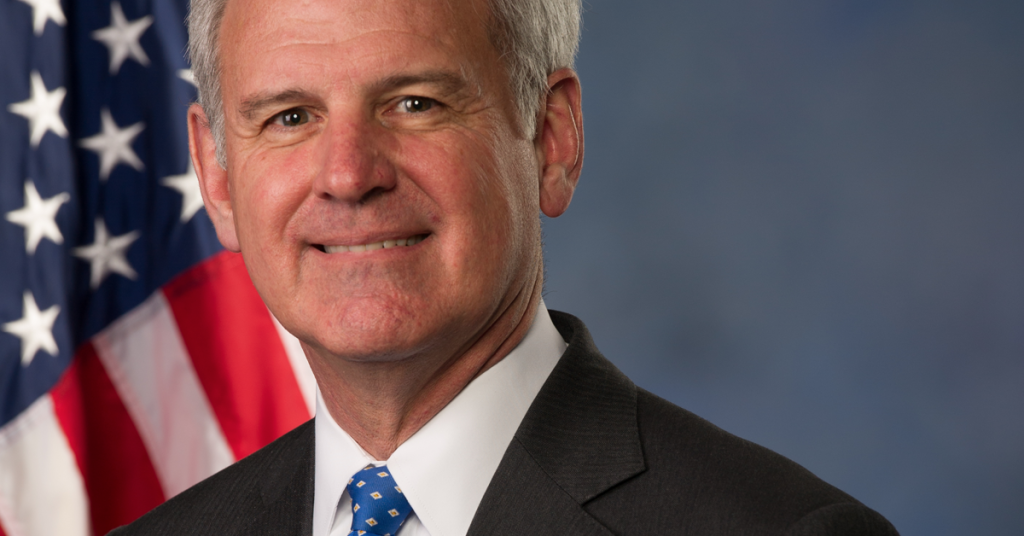
When most people think about the job of a member of Congress, they often think about casting votes or attending committee meetings. While these are important parts of the job, much of my time is spent providing important services to the people of Southwest Alabama. One of the key roles of my Congressional office is known as casework. This means helping residents of Alabama’s First Congressional District navigate the federal bureaucracy. We can do this by intervening on your behalf to check on the status of issues with agencies like Social Security or Medicare. The overwhelming majority of the cases my office works on are related to the Department of Veterans Affairs (VA). This is due to both the unusually high number of veterans in Southwest Alabama and the incompetent management of the VA on the benefits and health care sides of the department. If you are having issues with the VA or any other federal agency, please contact my office so we can check on the issue for you. My staff and I cannot promise perfect outcomes, but we will do everything we can to ensure you are treated fairly and that your case receives the attention it deserves. If your business or organization is having an issue with other federal agencies, my staff may be able to assist with that as well. The same goes for any issues you may be experiencing with obtaining a passport for international travel. It is important to remember that my office can only assist with federal agencies or programs. We do not have the ability to intervene on local or state issues. Additionally, my office does not get involved in legal matters. If you have questions about these issues, my staff and I are happy to try and point you in the right direction. Another service my office provides is nominating young men and women from Southwest Alabama to serve in one of our nation’s military service academies. In order to attend most of our service academies, students must be nominated by a U.S. Congressman or Senator. Each year, I hold a Service Academy Night to allow young people to learn more about the process and visit with representatives from each of the academies. This year’s Academy Night is Oct. 3 at St. Paul’s Episcopal School in Mobile. The honor of attending a service academy comes with an obligation to serve for a minimum of five years upon graduation. My office also can help arrange for you to receive a flag that has flown over the United States Capitol. Many people have found these flags to be the perfect gift to recognize a friend or loved one upon their retirement, graduation, birthday, or other occasion. Some families also request a flag for the funeral of a deceased veteran, and we are honored to expedite such requests. If you are planning a visit to Washington, D.C., my staff can also help arrange for tours of some of our national landmarks like the U.S. Capitol, the Library of Congress, or the Supreme Court. We can also assist with tours of the White House, but those requests should be made at least six weeks in advance. These are just a few of the services my office provides that you may not have been aware of. Of course, my staff and I are always available to answer questions about federal legislation or other issues under debate in Congress. • • • Bradley Byrne is a member of U.S. Congress representing Alabama’s 1st Congressional District.
The Birmingham Police Department and the curious case of unanswered questions

My home burglary story isn’t different than most — while my house was unattended someone broke in through a back window, stole a television and some liquor and left unnoticed. The situation was not necessarily newsworthy, but the experience has opened my eyes to bigger questions about the Birmingham Police Department, its response to crimes, and to the priorities of funding by the city council. This week, the Birmingham City Council will pass its annual budget. In it you’ll find $92,974,535 allocated to the Birmingham Police Department. But the question is, is that enough to fund the functions residents expect from local law enforcement? Going back to my specific case, my expectations for the time and effort that would go into solving it were pretty low. Nearly two decades ago, I logged enough hours at my local police department in its crime prevention and criminal investigation units to allow me to attend to college on a community service scholarship. But the time I spent with them didn’t stop once I went to college. There, I continued to volunteer working an operation to do underage buys for the local PD and the state. Needless to say, the respect I have for officers has never wavered. It is an honorable profession that’s overwhelmingly staffed by honest, trustworthy men and women who unjustly see every bad seed and every bad deed unfairly cast upon them as a reflection of them all. That said, I’ve been vexed for months that despite the fact I did the legwork for the detective, he never did the follow up. Case and point: I provided three phone numbers of possible witnesses and none were called. I provided the address of a neighbor who thought she may have seen the vehicle of the suspect and she was never contacted. The detective said he would send officers to do drive by’s of my residence as I was anxious about the break-in. He said they’d leave “morning cards” to say they were there. That never happened. I didn’t get one card — and when a home video security system was installed, not once did it pick up a police car in my driveway (though I do have a lot of respect for the newspaper delivery guy who comes like clockwork between 4-6 a.m.). After 90 days I decided to inquire formally to try to make sense of what went wrong in hopes I could shed light on a bigger problem, if one exists. That’s where things really took a turn and I learned that it wasn’t just the investigator who was non-responsive, the public information officer wanted nothing to do with the story including giving me requested crime statistics and budget information (Alabama Today will be filing an official public records request for said information.). According to an AL.Com story by Carol Robinson, the FBI listed Birmingham as the fifth-highest city in the nation for crime. You don’t need to go any further than your evening news or morning paper to see that violent crime is a significant problem for our area. No reasonable person would think that a lot of manpower would be dedicated to something outwardly as trivial as a burglary, no matter how emotionally stressful it is for the homeowner to know strangers have invaded their space. I inquired with both the detective assigned my case, Det. James Canino, and the public information officer (PIO), Lt. Sean Edwards, and the response I received was nothing short of mind boggling and short on answers —apparently a common theme for Birmingham Police Department, in my personal experience. Note, I was simply asking basic questions about the investigation (or more appropriately lack of investigation) into the break-in of my home and for information that could help me understand if the challenges I encountered were something that had a deeper cause. I asked the PIO what is the “investigation standard processes, case loads, budget issues, or other facts that may help me explain how a case as simple as this wasn’t investigated at all? Also, can you please provide the number of burglaries for 2016 to date and of those the number that led to arrests?” Here’s the initial response I got back from Lt. Edwards, “This case has been thoroughly investigated by a burglary detective. There is nothing else to report at this time. I will not be making any comments regarding this case.” My hypothesis was that I’d find a lack of resources for non-violent crimes. It seems as though you can’t open up a single news source these days and not read about a violent crime, but I can’t go so far as to even reach that conclusion because the officers involved are too busy to tell me that they’re too busy to help or investigate. I’m now more sure than ever that the Birmingham Police Department has more departmental problems than it has investigations cases not being investigated. The question is — what’s the cause and who’s to blame for the situation? Since Lt. Edwards doesn’t feel he needs to answer my questions as a crime victim or editorial writer, I intend to take my search to the mayor, council, and police chief directly. Follow Alabama Today for more updates.
Donald Trump plans detailed immigration talk as questions remain

Donald Trump says he’ll deliver a detailed speech Wednesday on his proposal to crack down on illegal immigration – but it’s anyone’s guess what he will say. The announcement came late Sunday in a tweet by the Republican presidential nominee after days of wavering – and at least one canceled speech – on a question central to his campaign: Whether he would, as he said in November, use a “deportation force” to eject the estimated 11 million people in the U.S. illegally. Trailing Democrat Hillary Clinton in many key states 10 weeks before the election, Trump is trying to win over moderate Republicans, some of whom have been turned off by his rhetoric on immigration and other issues. But any significant shift could disappoint his core supporters. Trump’s immigration speech in Arizona will come after he and Clinton spent last week trading accusations on racial issues. Trump called Clinton “a bigot;” Clinton accused Trump of allowing hate groups to take over the Republican Party. Clinton is starting this week by announcing her proposals for dealing with mental health issues. She is stressing the need to fully integrate mental health services into the U.S. health care system. Her plan stresses early diagnosis and intervention and calls for a national initiative for suicide prevention. Immigration issues dominated the Sunday talk shows as Trump’s surrogates, led by running mate Mike Pence, discussed his approach. But none could address whether Trump still favored a deportation force. They said Trump’s immigration policy will be humane, and insisted he has not been wavering on the issue. Any discussion of inconsistencies, they suggested, reflected media focus on the wrong issue. Trump’s tweet Sunday suggested he was poised to clear up questions about his immigration stance. Trump’s campaign also announced on Sunday a $10 million-plus buy for ads to air in nine competitive states starting Monday. And late Sunday, America’s only African-American owned and operated national Christian television network announced that its president and CEO, Bishop Wayne T. Jackson, would interview the Republican nominee Saturday in Detroit. It’s been a long and sometimes puzzling journey to this point for Trump, who defeated 16 Republican opponents while promising to be the toughest on illegal immigration. Trump even questioned whether those born in the United States to people here illegally are citizens – even though they have automatically been considered citizens since the adoption of the constitution’s 14th Amendment in 1868. But lately, Trump has been exploring the issue’s complexities. Trump had suggested he might be “softening” on the deportation force and that he might be open to allowing at least some immigrants in the country illegally to stay, as long as they pay taxes. But by Thursday, he was ruling out any kind of legal status – “unless they leave the country and come back,” he told CNN. Trump has focused lately on deporting people who are in the U.S. illegally and who have committed crimes. But whom Trump considers a criminal remains unclear. The speech has been rescheduled at least once. Trump’s campaign had scheduled it for last Thursday, then canceled it. The campaign also blamed staff error for reports that it had been scheduled for August 31 in Phoenix. But it’s not clear what he’ll say, apparently even to his top supporters. Asked whether the “deportation force” proposal Trump laid out in November is still in place, Pence replied: “Well, what you heard him describe there, in his usual plainspoken, American way, was a mechanism, not a policy.” Added Trump’s campaign manager, Kellyanne Conway: “The softening is more approach than policy,” adding that on immigration, Trump “wants to find a fair and humane way.” Pence appeared on CNN’s “State of the Union,” Priebus was on NBC’s “Meet the Press,” and Conway was on “Fox News Sunday” and CBS’ “Face the Nation.” Republished with permission of The Associated Press.
