
Joe Henderson: Marco Rubio’s 2016 slogan — ‘Maybe I’ll stay. Maybe I won’t.’
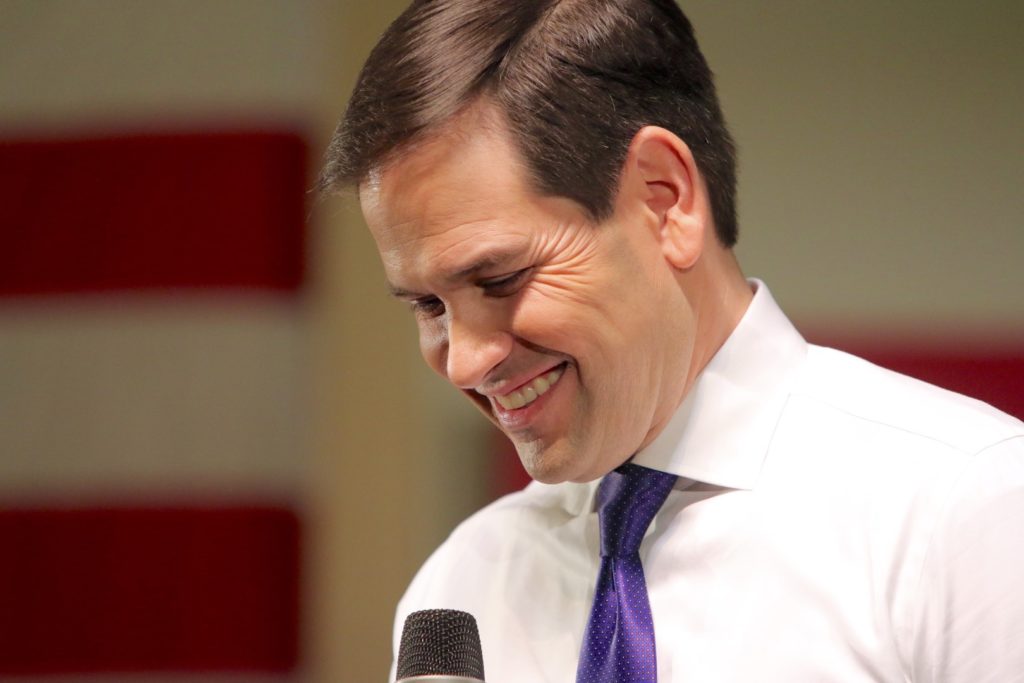
I love a good campaign slogan. It can be the key to victory, as we saw with Barack Obama’s “Hope and Change” and George W. Bush’s “Compassionate Conservative” pitch. And then there is Marco Rubio, Florida’s reluctant U.S. senator who is running, sort of, for re-election to an office he doesn’t appear to completely embrace. When asked a fairly straightforward question on CNN if he will commit to serving the full six-year term if Florida voters re-elect him, Rubio said (paraphrasing here): Nah. “No one can make that commitment because you don’t know what the future’s gonna hold in your life personally or politically,” he told the network. So here is Rubio’s slogan: “Maybe I’ll stay, maybe I won’t. Rubio: 2016 (but no promises beyond that).” I actually give Rubio some props for honesty in his answer, but voters have to wonder if this so-called young-man-in-a-hurry has his track shoes on again. He shirked the duties of his duly elected office not long after voters elected him, mostly so he could jump the line Obama-style and become the next president. Then along came Donald Trump, whose rough-and-tumble campaign of insults (“Little Marco!”) led to a dramatic flameout and a humiliating defeat in Florida’s primary. Rubio clearly wasn’t ready for the big stage. He might be better prepared four or even eight years from now; who knows? It is clear, though, that he views the Senate as just a glorified green room while he awaits his presidential close-up. Ambition is fine, but being a senator is not a part-time job. Florida is experiencing all the problems associated with runaway growth, and by the time Rubio’s second term — if there is one — would expire, the state Chamber of Commerce projects Florida’s population to swell to 26 million. For comparison, that is basically the population of Australia, crammed into a much smaller space. So yeah, we need someone in Washington willing to fight the parliamentary war on Florida’s behalf. We’re gonna need a lot of stuff to deal with all this growth. We don’t need one of our two senators off auditioning for a better gig that whole time. Patrick Murphy, Rubio’s Democratic opponent in the November general election, jumped all over the noncommitment. Although Rubio leads by six points in some early polling, you can bet that CNN comment is going to be replayed a few thousand times between now and Election Day. The message will be clear: A vote for Rubio could be a vote someone else you can’t sure of. Maybe Gov. Rick Scott would take the seat himself if Rubio were to win and then resign. Maybe it would be someone else. The point Murphy can and will repeatedly make is that he wants the job for the long haul, but Rubio can’t say the same. And that could be the most convincing slogan of all. ___ Joe Henderson has had a 45-year career in newspapers, including the last nearly 42 years at The Tampa Tribune. He has covered a large variety of things, primarily in sports but also hard news. The two intertwined in the decade-long search to bring Major League Baseball to the area. Henderson was also City Hall reporter for two years and covered all sides of the sales tax issue that ultimately led to the construction of Raymond James Stadium. He served as a full-time sports columnist for about 10 years before moving to the metro news columnist for the last 4 ½ years. Henderson has numerous local, state and national writing awards. He has been married to his wife, Elaine, for nearly 35 years and has two grown sons — Ben and Patrick.
Judge refuses investigation of Mike Hubbard’s ethics trial
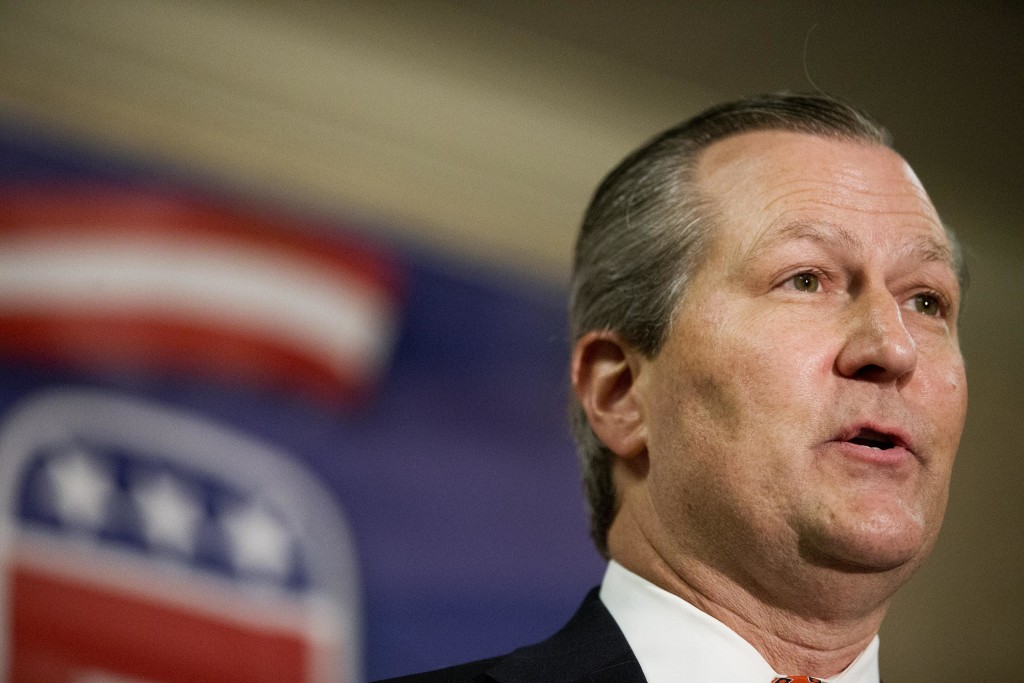
A judge is refusing a request by former Alabama House Speaker Mike Hubbard to have a sheriff investigate whether there was juror misconduct at his ethics trial. But Judge Jacob Walker said Friday he is open to taking testimony from a juror who says another juror made biased remarks. Hubbard is seeking a new trial after being convicted on 12 felony ethics charges and removed from office. His lawyers submitted an affidavit from a juror who says another made biased remarks. During a hearing, the court administrator testified that one juror complained early in the trial that another was saying things like “now the truth is coming out.” She says the juror was asked to be quiet. Prosecutors say there was no evidence of misconduct or an unfair trial. Republished with permission of The Associated Press.
Birmingham residents rank among nation’s savviest investors

When it comes to making investments, Birmingham residents are among the nation’s most savvy. That’s according to New York City financial technology company, SmartAsset and its review of investment for various cities across the country. Its list of “Places with the Savviest Investors” ranks the Birmingham region No. 1 in state and No. 17 nationally out of 129 cities included in the study. Here is a look at how Birmingham performed in each category of the study: Annual Return: -5.7% Volatility: 24.8% Post Tax Return: -5.7% Savviest Investors Index: 84.52 SmartAsset analysts endeavored to find where people are not only seeing good returns on their investments but where they are doing so without taking too much risk. The report examined annual investment returns, as well as portfolio volatility and post-tax returns. In order to find the places with the savviest investors SmartAsset calculated investment returns and portfolio volatility over the last year, focusing on data of user portfolios provided by our partner Openfolio. They then calculated the risk-adjusted return of the stocks using the Sharpe Ratio, which is the stock return minus the risk-free rate divided by volatility. After that they indexed and ranked each of the locations based on this risk-adjusted return to find the places where people were seeing the best returns for the least risk. And finally the company calculated the amount of money investors were taking home after paying both federal and state capital gains taxes. The report found the savviest investors in Reston, Va., followed by Renton, Wash., and White Plains, N.Y.
Greg Lein: Celebrate Alabama State Parks Heritage
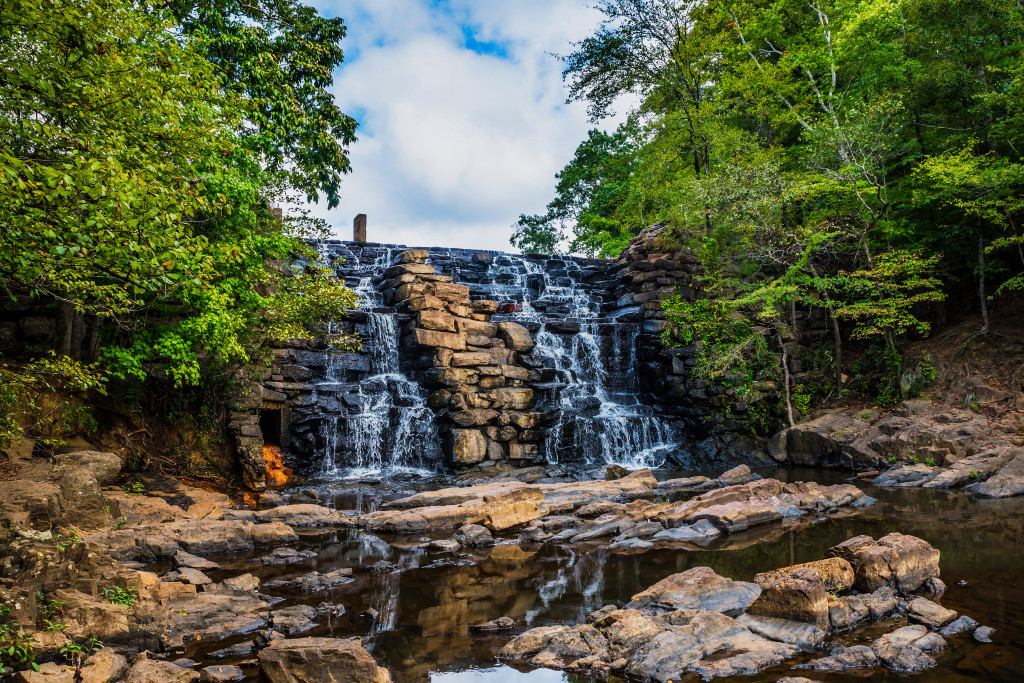
Labor Day weekend in Alabama marks two major events for citizens of our state: the unofficial end of summer and the official start of college football season. As the leaves eventually begin to change and fall temperatures start to prevail, many Alabamians will spend their Saturdays over the next few months focused on their favorite team and tracking their fantasy leagues. Alabamians’ love for parks extends much further than the Saturdays spent at the ballpark. Parks of all kinds are important to our communities; national and state parks provide dozens of options for people to go unwind. As you prepare for your Labor Day adventure and officially kick off fall, I encourage you to get outside and experience some of the amazing opportunities in Alabama’s State Parks as well as the thousands of attractions that can be found in city, county, and National Parks. Last week the National Park Service (NPS) celebrated 100 years of service and stewardship. Alabama’s State Parks are celebrating their 77th year of service. These incredible public lands are much more than simply protected lands; they are outlets for cultural, historical and environmental education. Parks also give citizens countless opportunities for recreation and help provide an exceptional quality of life with scores of recreational options. The Alabama State Parks system protects more than 47,000 acres of land across the state and offers dozens of recreational options. Within Alabama’s State Parks you’ll find hundreds of miles of trails, golf courses, mountain top views, serene beachfront, luxury resorts, ziplines, archery courses and museums that tell the story of Native Alabamians and early pioneers. These parks are as diverse and distinct as the guests that visit them each year. Parks provide opportunities for people of all backgrounds. Regardless of socioeconomic background, education, and physical ability, there’s something for everyone to enjoy at the parks. Our leaders had the choice generations ago of whether to keep these lands available to citizens. They made the right decision to keep our parks available to future generations. We hope all these amazing public lands will still be available to all Americans in the next century. The citizens of Alabama are faced with a decision this November about whether they want their State Parks preserved for future generations. A “yes” vote on Amendment 2 on the November 8 ballot is a vote to help ensure our incredible State Parks will remain available and thriving for future generations. The proposed Constitutional Amendment would protect the State Park system’s money, keeping it within the parks and preventing it from being taken and used elsewhere. Since almost all of the money in the State Parks’ budget comes from Parks’ users, it is only right for those funds to remain in the Parks. Let’s continue to celebrate our “Parks Heritage” during this centennial year and let us come together to ensure the future of our State Parks by voting “Yes” on Amendment 2 – and encourage all your friends and neighbors to do likewise. ••• Greg Lein is the Director of Alabama’s State Parks.
Black vote concentrated, but key in Donald Trump-Hillary Clinton matchup
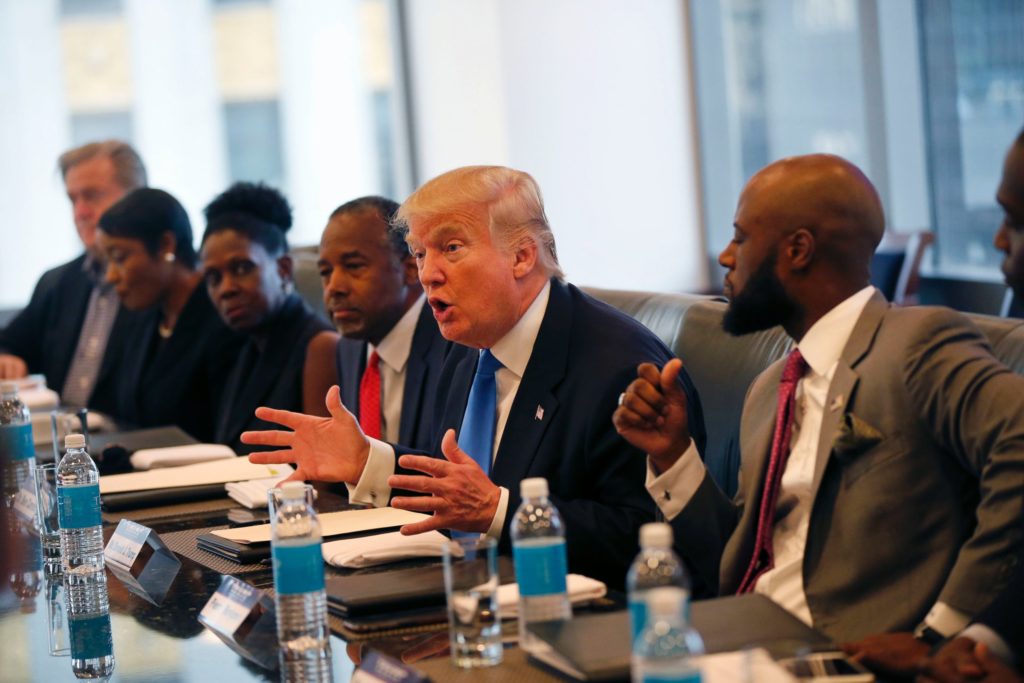
Donald Trump will visit a predominantly black church in Detroit this weekend and, his campaign says, “outline policies that will impact minorities and the disenfranchised in our country.” It’s the latest move in the Republican presidential nominee’s outreach to non-whites. The trip comes in response to sharp criticism from many African-Americans incensed by Trump’s sweeping generalizations about black life in America. “You live in your poverty, your schools are no good, you have no jobs,” he has argued to black voters. While he usually speaks to mainly white crowds, Detroit itself is 83 percent black. A look at how African-Americans will help determine whether Trump or Democrat Hillary Clinton is elected the 45th president: — DEMOCRATIC BLOC In the decades since the Voting Rights Act of 1965 widely enfranchised African-Americans, they have become a reliable Democratic bloc. President Barack Obama, the nation’s first black president, won at least 95 percent and 93 percent of the black vote in his two victories, sending Republicans to historical lows among African-Americans, according to exit polls. In Detroit, Republican candidate Mitt Romney won barely more than 6,000 votes out of more than 288,000 cast in 2012. Ronald Reagan notched 14 percent of the black vote in 1980, then slipped to 9 percent in 1984. The high mark for GOP nominees since was Bob Dole‘s 12 percent in 1996. Polls this year suggest Trump could fare worse than Obama’s opponents. — STEADY, CONCENTRATED Blacks comprise between 12 and 13 percent of eligible voters (about 226 million), a relatively constant share in recent decades. (Hispanics and Asian-Americans have driven overall non-white population increases.) Until Obama’s historic run, blacks hadn’t matched their population strength at the polls, usually casting 10 or 11 percent of presidential ballots. For Obama’s victories, the African-American share hit 13 percent. Black voters are relatively concentrated in Mid-Atlantic and Southeastern states, but they also represent a significant portion of the populations in Chicago, Detroit, Cleveland and Philadelphia. — WHY SUCH LOYALTY? Jaime Harrison, South Carolina’s first black Democratic Party chairman, says the party attracted African-Americans when President Lyndon Johnson signed the 1964 Civil Rights Act, 1965 Voting Rights Act and Great Society programs – then cemented long-term loyalty by defending that legacy he says offers blacks “an opportunity for a life closer to the promise of ‘all men are created equal.’” Too many Republicans, Harrison says, answered with “so many dog whistles” intended “to exploit racial divides.” He pointed specifically to Reagan’s quips about “welfare queens” and George H.W. Bush’s “Willie Horton ad” in the 1988 presidential campaign, which featured a black prisoner released on furlough by Bush’s Democratic opponent, Massachusetts Gov. Michael Dukakis. — TRUMP’S BLACK AMERICA Trump says Clinton is “a bigot who sees people of color only as votes, not as people worthy of a better future.” Democratic politicians have ruined inner cities, he says. The Rev. Mark Burns, one of Trump’s top African-American backers, recently distributed a cartoon depicting Clinton in blackface. Burns later apologized. “What the hell do you have to lose?” Trump has asked – delivering his pitch to an overwhelmingly white audience. Michael Barnett, an African-American, and chair of Florida’s Palm Beach County GOP, praises Trump for raising uncomfortable questions. “What has Barack Obama really done for black people?” Barnett asks. “At least Donald Trump is addressing these issues.” Still, Trump’s abysmal description of life in black communities falls short. African-Americans as a whole lag other race and ethnicity groups in many economic indicators. Yet, the latest Census Bureau analysis puts median household income for blacks at $35,398; that’s less than the national median ($53,657) and white median ($56,866), but well above the poverty level for a family of four ($24,300). Also, while murder rates have risen in certain U.S. cities, violent crime levels are not at record highs, as Trump has claimed, and FBI statistics show violent crime nationally remains on a two decade decline. That leaves many black leaders and voters accusing Trump of peddling stereotypes. “You don’t go to a 99 percent white audience and talk about us and call that an invitation to us,” Rep. Jim Clyburn of South Carolina, a Congressional Black Caucus leader, said this week. — CLINTON’S COUNTER Clinton has been forceful in pegging Trump as the bigot in the race, saying in a nationally televised speech that Trump will “make America hate again” and pushing an online ad linking Trump to white supremacists and neo-Nazis. Throughout her bid, Clinton has directed specific appeals to African-Americans. She backs stricter gun regulations, emphasizes the need for improving relations between police and the black community and campaigns alongside mothers whose black sons lost their lives in police encounters. Black Democratic primary voters opted nearly 4-to-1 for Clinton over Bernie Sanders in states where exit polling was conducted. (White Democrats narrowly preferred Sanders.) — WHERE IT MATTERS MOST Six battleground states – Florida, Michigan, North Carolina, Ohio, Pennsylvania and Virginia – have black population shares ranging from about 12 percent to about 22 percent. Obama won each of those states twice, with the exception of North Carolina, which he split. Georgia, a GOP-leaning state that could be competitive, is more than 30 percent African-American. Ohio is a wild card: Obama drove up African-Americans’ share of the electorate there from 11 percent in 2008 to 15 percent in 2012, with the increase accounting for more than his eventual margin of victory over Romney. Generally speaking, if Clinton is successful in replicating the Obama coalition – her advisers’ clearly-stated priority – it would put tremendous pressure on Trump to run up his numbers among whites to levels no candidate has reached since Reagan’s 1984 landslide. And every additional black vote Clinton picks up pushes Trump’s white-voter mountain even higher. Republished with permission of The Associated Press.
Mike Hubbard trying to overturn ethics conviction, judge to hear request
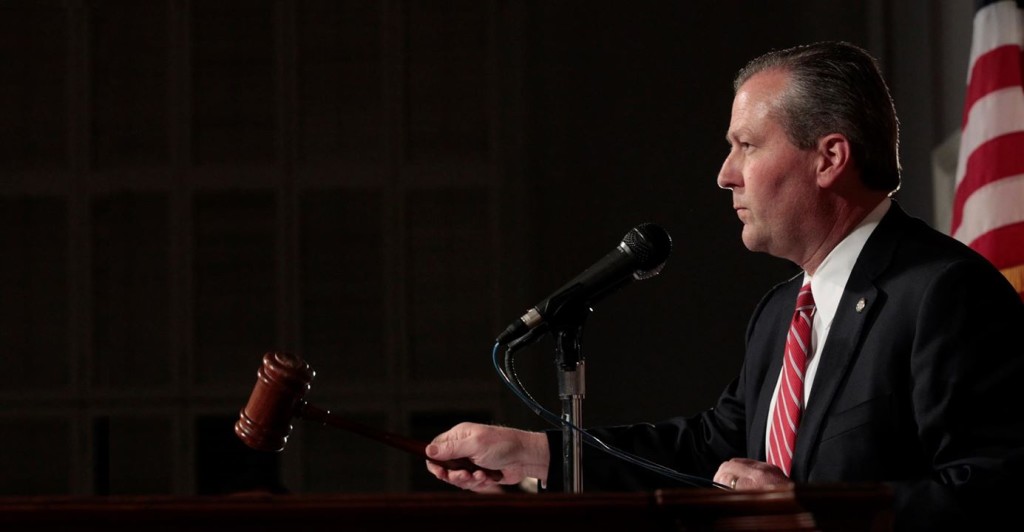
A judge has yet again agreed to consider a request for a new trial for convicted former Alabama House Speaker Mike Hubbard, among other motions. Lee County Circuit Judge Jacob Walker will hold a hearing Friday to consider motions filed by the defense post-conviction. Hubbard’s attorneys filed the request last month asking a judge to reverse the conviction, or allow a new trial, contending Hubbard did not receive a fair and impartial trial. On June 10, Hubbard was convicted on 12 of 23 counts of corruption, which automatically removed the powerful Republican from both the Legislature and the speaker’s office, ending the upward trajectory of the one-time GOP star whose career previously appeared to have no limits. On July 8, he was sentenced to a total of four years in prison, eight years on probation and ordered to pay a $210,000 fine. Hubbard is currently out on bond.
Conservation groups sue over abandoned Alabama mine
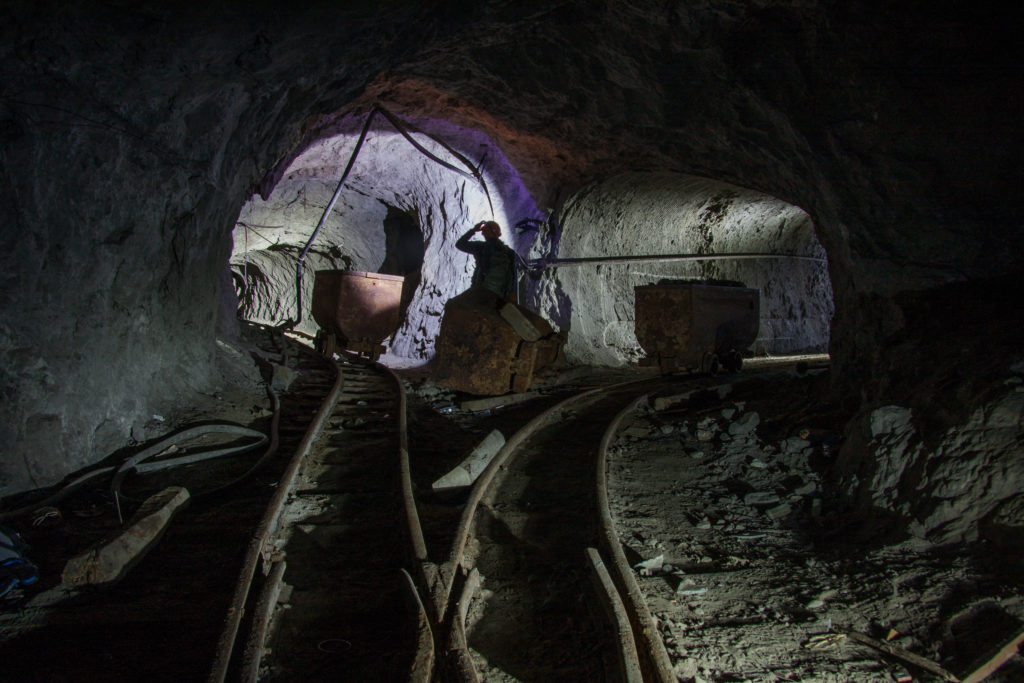
Conservation groups are suing the Birmingham-based Drummond Co. over an abandoned coal mine. The federal lawsuit contends the old Maxine Mine is discharging polluted, acidic water into the Locust Fork of the Black Warrior River. The complaint filed by the Southern Environmental Law Center, Black Warrior Riverkeeper and Public Justice. The groups say mine waste has filled in what was once a tributary of the stream. The suit asks a judge to make the company clean up the waste and restore the polluted streams. Drummond hasn’t responded to an email seeking comment. The groups say hundreds of abandoned mine are located in the Black Warrior basin, and the Maxine site is one of the worst. Republished with permission of The Associated Press.
