
Donald Trump signed improper charity check supporting Florida AG Pam Bondi
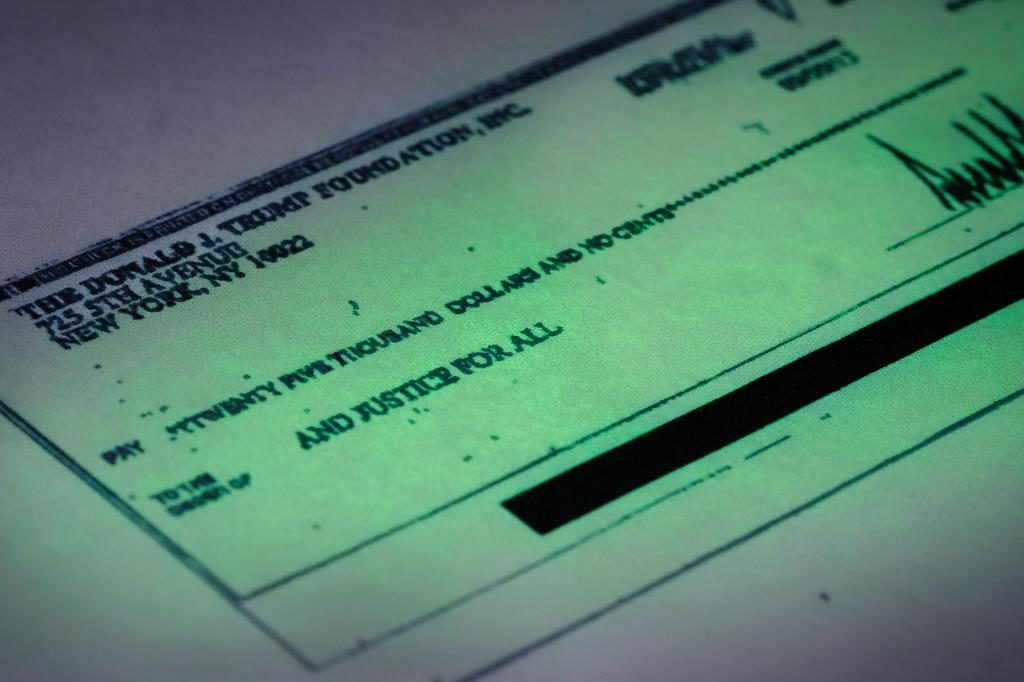
Donald Trump‘s signature, an unmistakable if nearly illegible series of bold vertical flourishes, was scrawled on the improper $25,000 check sent from his personal foundation to a political committee supporting Florida Attorney General Pam Bondi. Charities are barred from engaging in political activities, and the Republican presidential nominee’s campaign has contended for weeks that the 2013 check from the Donald J. Trump Foundation was mistakenly issued following a series of clerical errors. Trump had intended to use personal funds to support Bondi’s re-election, his campaign said. So, why didn’t Trump catch the purported goof himself when he signed the foundation check? Trump lawyer Alan Garten offered new details about the transaction to The Associated Press on Thursday, after a copy of the Sept. 9, 2013, check was released by New York Attorney General Eric Schneiderman. Garten said the billionaire businessman personally signs hundreds of checks a week, and that he simply didn’t catch the error. “He traditionally signs a lot of checks,” said Garten, who serves as in-house counsel for various business interests at Trump Tower in New York City. “It’s a way for him to monitor and keep control over what’s going on in the company. It’s just his way. … I’ve personally been in his office numerous times and seen a big stack of checks on his desk for him to sign.” The 2013 donation to Bondi’s political group has garnered intense scrutiny because her office was at the time fielding media questions about whether she would follow the lead of Schneiderman, who had then filed a lawsuit against Trump University and Trump Institute. Scores of former students say they were scammed by Trump’s namesake get-rich-quick seminars in real estate. Bondi, whom the AP reported in June personally solicited the $25,000 check from Trump, took no action. Both Bondi and Trump say their conversation had nothing to do with the Trump University litigation, though neither has answered questions about what they did discuss or provided the exact date the conversation occurred. House Democrats called earlier this week for a federal criminal investigation into the donation, suggesting Trump was trying to bribe Bondi with the charity check. Schneiderman, a Democrat, said he was already investigating to determine whether Trump’s charity broke state laws. Garten said the series of errors began after Trump instructed his staff to cut a $25,000 check to the political committee supporting Bondi, called And Justice for All. Someone in Trump’s accounting department then consulted a master list of charitable organizations maintained by the IRS and saw a Utah charity by the same name that provides legal aid to the poor. According to Garten, that person, whom he declined to identify by name, then independently decided that the check should come from the Trump Foundation account rather than Trump’s personal funds. The check was then printed and returned for Trump’s signature. After it was signed, Garten said, Trump’s office staff mailed the check to its intended recipient in Florida, rather than to the charity in Utah. Emails released by Bondi’s office show her staff was first contacted at the end of August by a reporter for The Orlando Sentinel asking about the Trump University lawsuit in New York. Trump’s Sept. 9 check is dated four days before the newspaper printed a story quoting Bondi’s spokeswoman saying her office was reviewing Schneiderman’s suit, but four days before the pro-Bondi political committee reports receiving the check in the mail. Compounding the confusion, the following year on its 2013 tax forms the Trump Foundation reported making a donation to a Kansas charity called Justice for All. Garten said that was another accounting error, rather than an attempt to obscure the improper donation to the political group. In March, The Washington Post first revealed that that the donation to the pro-Bondi group had been misreported on the Trump Foundation’s 2013 tax forms. The following day, records show Trump signed an IRS form disclosing the error and paying a $2,500 fine. Bondi has endorsed Trump’s presidential bid and has campaigned with him this year. She has said the timing of Trump’s donation was coincidental and that she wasn’t personally aware of the consumer complaints her office had received about Trump University and the Trump Institute, a separate Florida business that paid Trump a licensing fee and a cut of the profits to use his name and curriculum. Neither company was still offering seminars by the time Bondi took office in 2011, though dissatisfied former customers were still seeking promised refunds. Republished with permission of the Associated Press.
Mike Hubbard loses bid for new trial
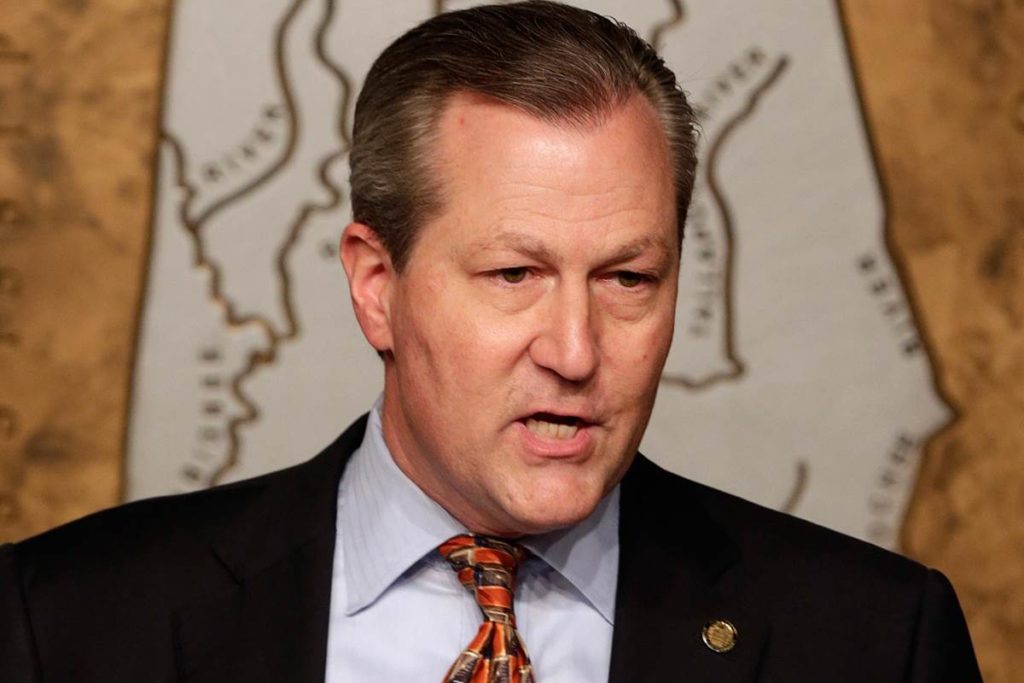
Former Alabama House Speaker Mike Hubbard has lost his bid for a new trial on ethics charges. Defense lawyer Bill Baxley said Thursday that he is now focused on preparing Hubbard’s appeal. Hubbard had requested a new trial arguing that prosecutors stretched the intent of the state ethics law, allowed improper expert witness testimony and there was evidence of juror bias in the case. Baxley says the new trial request is denied automatically if not ruled upon within 60 days. Baxley says his understanding is that the 60-day window expired last week. A jury in June convicted Hubbard of using his public office to obtain work and investments in his companies. A judge sentenced Hubbard to four years in prison. He is free on bond while he appeals his conviction. Republished with permission of the Associated Press.
FBI readies audit of Robert Bentley’s Finance Department
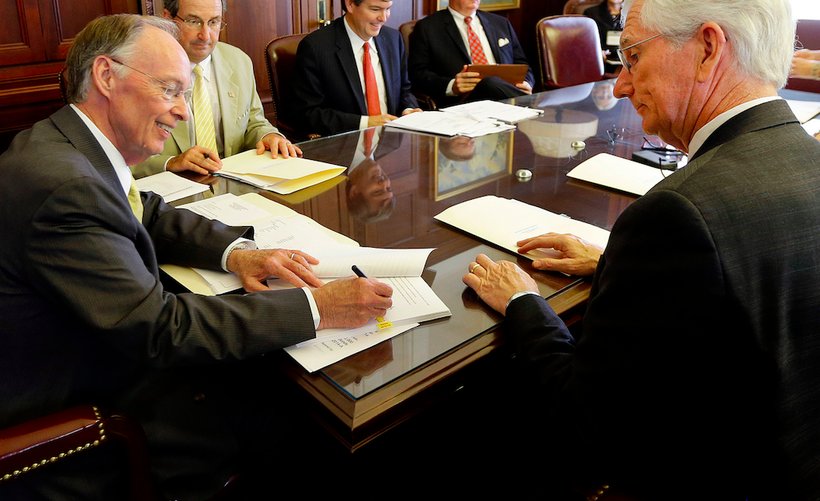
An audit of Gov. Robert Bentley’s Finance Department has been completed by the Federal Bureau of Investigation and is expected to be released next week. The audit comes after Bentley himself requested it saying “potentially criminal” actions took place in the state Department of Finance, and is expected to cover allegations of improper access to criminal justice databases. Bentley admitted on June 10 that contract personnel working for the Finance Department’s Information Services Division (ISD) were “improperly given access to IT resources” supporting ALEA and the state’s Criminal Justice Information Services (CJIS) network. “(ALEA) Secretary (Stan) Stabler informed me that ALEA has met with members of the Office of the United States Attorney here in Montgomery and confirmed that some of the actions of senior managers within the Department of Finance and its Information Services Division are potentially criminal in nature,” the governor wrote in his request. Bentley’s letter to the FBI also stated there were “several major security concerns” with the state’s wide area network (WAN). “Since honesty and integrity are two virtues that I have and will continue to prioritize for my Administration, I was very disheartened to know that the improper actions of a few appear to have had a significant negative impact on the security of the state’s technology resources, especially those serving our criminal justice community,” Bentley said. In light of Bentley’s discoveries, one Department of Finance official was fired and another suspended by the governor the same month. Bentley fired Department director James Nolin, who was still in a probationary period, and placed Assistant Finance Director Rex McDowell on mandatory leave. State Auditor Jim Zeigler says “the FBI audit can help clear the air on questionable activities of the Bentley Finance Department.” Zeigler has a lawsuit against Bentley and Acting Finance Director Bill Newton alleging their $47 million STAARS software contract violated the state’s bid laws and that the software does not work. A hearing is set Sept. 21 in the suit. -30-
Concerned Women for America’s Penny Nance addresses Republican Women in Birmingham
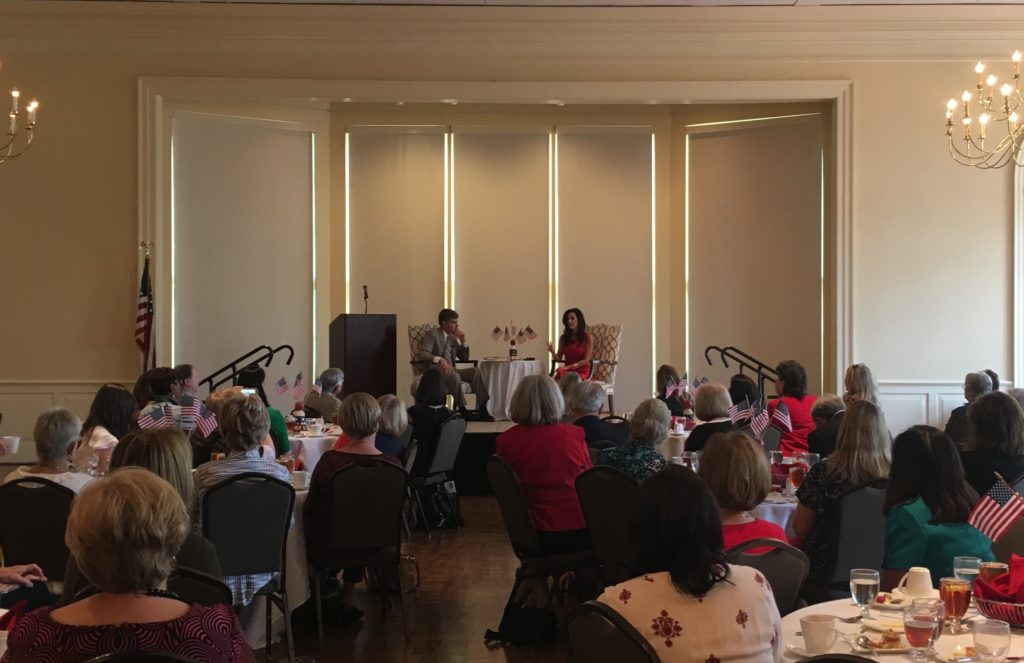
A group of approximately 100 Republican women from across Alabama met in the dining room of the Vestavia Hills Country Club Thursday afternoon to hear a much-anticipated address from Concerned Women for America president and CEO Penny Young Nance. A fixture on cable news and Capitol Hill, Nance’s work with CWA has earned her the respect of liberals and conservatives alike for her ability to graciously engage with those on both sides of the aisle. Facilitated by former Alabama State Rep. Paul DeMarco, Nance’s conversation at the Alabama Federation of Republican Women’s luncheon covered everything from her new book to what conservatives should do if Democratic nominee Hillary Clinton wins the White House in November. “This is our Esther moment,” Nance told the crowd, referring to the Old Testament story of Queen Esther, whose uncle told her she was likely made queen for “such a time as this.” “Women should never be caught in a conversation where they’re looking down at their shoes because they don’t know what to say,” Nance said, urging women to “first pray, then prepare,” to adamantly defend their beliefs in the public sphere. Nance spent much of her time talking about the need to fervently address the issues surrounding sexual assault, rape, and sexual exploitation. One of CWA’s core issues is fighting sexual exploitation, Nance explained, and as a victim of attempted rape herself, she is personally sensitive to the issue. “I don’t know why I was spared,” she said, “but what I do know is I have a national platform I can use to help other people, and that’s what I intend to do.” Calling sexual exploitation and assault a “least of these issues,” Nance said the core of the problem is one of moral decline. “We’re in the middle of a moral crisis in this nation, and the evidence is all around us.” Nance also condemned politicians and bureaucrats for failing to implement policies that will actually protect women, specifically citing the Debbie Smith Act. Named for a rape victim who had to wait six years for her “rape kit” to be tested, the law was supposed to grant money to state and local law enforcement agencies to clear the backlogs of medical tests needed to bring rapists to justice. That money, Nance asserts, never made it to its intended target. Nance also addressed her belief that the 60 million evangelical and devout Catholic American women need to stand together to support Trump, if for no other reason than the one to four Supreme Court justices the next president will appoint. Even if Trump isn’t elected, she believes conservatives must keep the pressure on the U.S. Senate not to appoint pro-choice justices or federal judges. She went on to criticize the political left’s tolerance of radical islam, saying “Islam gives women no power, but the left won’t condemn them. … There’s so much to be said for honestly looking at the ideology and its treatment of vulnerable people, and also the ignorance of the left and its refusal to admit the hatefulness and evil of [radical Islam]. At the end of the discussion there was only time for one question from the audience, which came from a young African-American man who asked her to bring her message to communities of color where he said women are being mistreated and disrespected by men. Nance responded by explaining her belief that the growing disrespect for women in low-income communities isn’t a color issue, it’s a failing of the church. “Income inequality is rooted in family inequality,” explained Nance. “Churches have failed, men have been told they don’t matter, and we have a hurting world and a hurting country, and children and women are harmed in the fallout.” The first, most important group to address this, she believes, is the church, because “we are one in Christ.” Attendees of the lunch received a copy of Nance’s recently published book “Feisty and Feminine: A Rallying Cry for Conservative Women.”
Birmingham Business Alliance VP Waymond Jackson elected to Association of Chamber of Commerce Executives
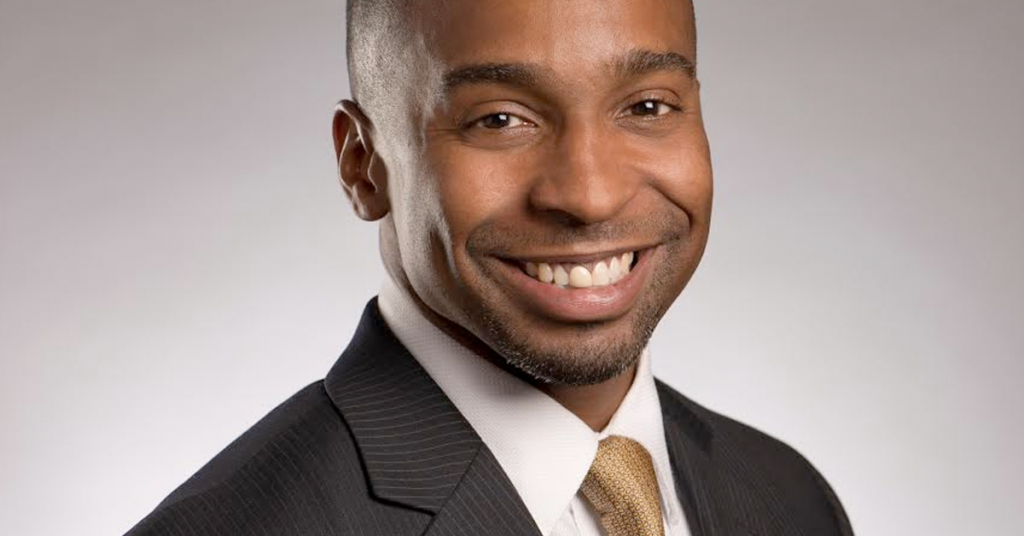
Waymond Jackson, vice president of education and workforce development for the Birmingham Business Alliance (BBA), has been elected to serve on the board of directors for the Association of Chamber of Commerce Executives (ACCE). Alexandria, Va.-based ACCE serves professionals who manage chambers of commerce. Its mission is to support and develop chamber leaders to advance the interests of their communities and businesses. ACCE represents about 7,000 leaders from about 1,300 chambers of commerce. At the BBA, Jackson works closely with K-12 partners to create effective college and career readiness programs to help enhance the Birmingham area workforce. He also works with higher education institutions to recruit and retain new talent to the region through the BBA’s Talent Recruitment Project, which connects talent with Birmingham area companies. “As the importance of workforce development programs in chambers of commerce throughout the U.S. has grown, their linkage to economic development has strengthened,” said Brian Hilson, CEO at the Birmingham Business Alliance. “Waymond is doing an outstanding job in advancing the BBA’s workforce development program, and his work is being recognized nationally. It is an honor for Birmingham and the BBA for him to be selected to serve on the ACCE board.”
Martha Roby applauds U.S. House passage of VA reform legislation

A bill that would create greater accountability measures on Department of Veterans Affairs workers and enhance protection for whistleblowers who expose wrongdoing passed the U.S. House of Representatives on Wednesday. The H.R. 5620: VA Accountability First and Appeals Modernization Act, would allow the VA secretary more flexibility to fire, demote or otherwise punish mid-to-lower level employees for misconduct or poor performance, according to a release sent out by the bill’s co-sponsor Alabama 2nd District U.S. Rep. Martha Roby. According to Roby, the current accountability measures only apply to senior managers and not rank-and-file employees. Roby said the legislation will make a difference in improving care for veterans. “The Central Alabama VA was home to some of the worst abuses nationwide,” explained Roby in a release. “Because of the corruption and misconduct we exposed, the director became the first senior manager fired for cause under the new VA accountability law. That was certainly needed, but it didn’t go far enough.” “I’ve said all along that the blame for what happened does not rest with one person alone. There has been a culture of complacency at the VA throughout the ranks because mid-to-lower level employees know they can almost never be fired. This reform bill changes that by finally giving the VA Secretary the authority to swiftly fire, demote or otherwise punish employees for poor performance or misconduct.” Working with whistleblowers and the press, Roby helped expose major instances of malfeasance and mismanagement that resulted in the Central Alabama VA director being the first senior manager in the country fired under the reform law enacted in 2014. However, that law only allowed the Secretary to deal with senior leaders, not mid-to-lower level employees. Wednesday’s bill would expand those measures down the ranks to ensure all employees can be held accountable for misconduct or poor performance in the treatment of veterans. Roby also lauded the whistleblower protections contained in the bill, calling the treatment of her sources “a disgrace.” “The bill also enhances protections for whistleblowers, and I cannot emphasize enough how important that is. If it weren’t for the brave whistleblowers who told me the truth, who knows if we’d have ever gotten to the bottom of the problems in Central Alabama,” said Roby. “And, the way they were treated was a disgrace. There need to be real consequences for intimidating or retaliating against whistleblowers, and this bill delivers just that.” In summary, H.R. 5620 does the following: Authorizes the Secretary of Veterans Affairs to fire, or demote any VA employee for performance or misconduct. Employees would be afforded due process, including an expedited appeal to the Merit Systems Protections Board; Authorizes the Secretary to reduce a senior manager’s pension if they are convicted of a felony related to their job. Enhances protections for whistleblowers by providing additional reporting mechanisms and mandating that any supervisor found to have retaliated against a whistleblower be suspended or terminated, with the possibility of bonus recoupment. Improves the VA’s appeals process by giving veterans more options and better clarity for pursuing an appeal.
Super PAC tries to plug holes in Donald Trump’s ground campaign
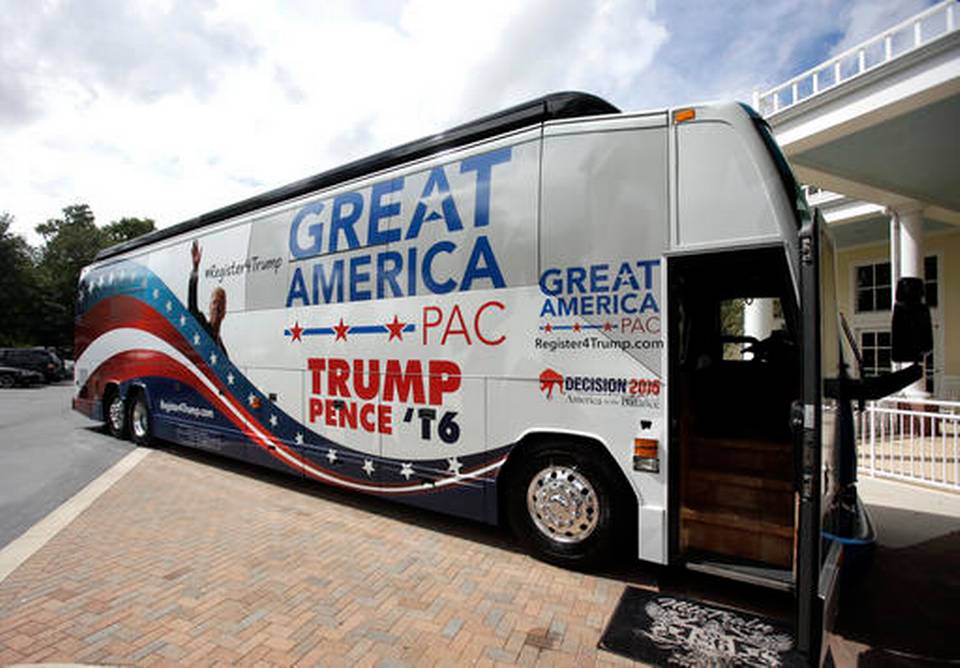
The tour bus features a giant photo of a waving, smiling Donald Trump, but the person who steps out is actor Jon Voight, trailed by conservative radio stars and strategists for a super political action committee. Great America PAC is rolling through some of campaign 2016’s most contested states, opening offices and registering voters. In a presidential race where Trump has paid little attention to the ground game, this outside group has decided the best way to support the GOP nominee is to take such matters into its own hands. “We look at it as, how do we fix the missing pieces of the campaign?” said Ed Rollins, lead strategist for Great America. The group is using a different playbook – both in how it raises and spends money – than the usual super PAC. It has struggled to land major donors, but has toiled since January, making it one of the most senior and active outside groups in the Trump orbit. Unlike candidates, super PACs can accept unlimited amounts of money from donors, so they typically focus on getting the biggest checks possible. Then they often spend most of their money on TV ads, among the most expensive parts of any race and the easiest way to reach millions of voters. Great America sees another way. “Gone are the days where a super PAC should be spending hundreds of millions of dollars on slick TV ads,” said Eric Beach, the group’s founding chairman, between stops in Florida. “We are coming out with a new model, and that is the grass roots. Getting out and registering voters. Getting them excited.” Priorities USA, a super PAC backing Democrat Hillary Clinton, had accepted 42 contributions of $1 million or more each and plans to spend $119 million on TV and radio ads by the Nov. 8 election, but the bulk of Great America’s $7.6 million came from small donors, according to federal filings. The group is hoping to change that. On Tuesday night, about 50 super PAC donors dined at Trump Tower in Manhattan, where they mingled with one of the candidate’s sons, Eric Trump. Federal rules prohibit super PACs from coordinating with campaigns on how their money is spent, and campaign officials may not explicitly ask donors to give more than $2,700. But it has become standard for the campaigns to send stands-ins for the candidates – or even the candidates themselves – to super PAC events. Great America claims to have contacted several million new voters through online solicitations, telemarketing and television ads featuring an 800 number – something more in line with hawking a gadget than promoting a presidential candidate. Callers are asked a few questions and urged to give money. Super PACs don’t usually seek out low-dollar contributions because doing so “can cannibalize donors” who would otherwise give directly to the campaigns, said Charlie Spies, a Republican super PAC operative and lawyer. Rollins defended Great America’s approach. “We built a lot of our operation on small donors because we were reaching out to them anyway,” he said. The group’s cross-country tour began Monday in Florida, with Ohio on the schedule Thursday before ending Saturday in Colorado. The super PAC plans a second tour with four or more buses in October, Beach said. Presidential candidates have long used roadshows to connect with voters, but Trump “likes to fly in his own plane and sleep in his own bed every night,” Rollins said. Rollins was President Ronald Reagan‘s 1984 campaign manager and accompanied him on a “train tour” of America. Aboard the bus are popular conservative radio hosts, Salem Media executives and super PAC operatives. Voight, one of the few highly visible conservatives in Hollywood, provides a dollop of the celebrity that Trump himself would. “I’ve known him for a number of years, not very well, but I like him,” Voight said in an interview. “He’s a doer, and he organizes his thinking to accomplish goals.” As the bus rolled through Orlando suburbs, Milwaukee County Sheriff David Clarke and Voight, who’d just met, chatted genially. Radio hosts Hugh Hewitt and Dennis Prager (who tells crowds Trump was his 17th choice but a better option than Clinton) pecked away at keyboards. Fox News blared on TVs, and as a Clinton ad featuring Republicans slamming their nominee came on the air, the bus fell silent. Later in Tampa, before an event with more than 1,000 people, Dan Frishberg, a drive-time host for Salem, said of Great America: “I love that they’re doing this. We need it. Anything to help with enthusiasm.” Republished with permission of the Associated Press.
How Donald Trump is repurposing Hillary Clinton’s attacks against her

Racist. Divisive. Lacks policy details. Those are the jibes Donald Trump has recently unleashed on Hillary Clinton. If they sound familiar, it could be because she’s lodged those very attacks on him throughout the campaign. As he works to gain ground against Clinton in the final stretch of the presidential race, Trump is increasingly repurposing Clinton’s attacks against her. It’s a popular schoolyard tactic for the GOP nominee, a political game of “I know you are, but what am I?” In the last few days, Trump and his campaign have repeatedly criticized Clinton for failing to provide specific policy proposals. That’s despite the fact that, by any measure, Trump has offered less detail on far fewer issues over the course of his campaign than Clinton, who has released so many policy proposals, her campaign published a book of them. “Clinton is running a policy-free campaign. She offers no ideas, no solutions. And only hatred and derision,” he said at a rally Tuesday in Clive, Iowa. It’s ironic coming from a candidate defined by divisive statements, who once mocked Clinton’s large policy shop, deriding her proposals as “a waste of paper” and insisting the public didn’t care about the sort of specifics she offered. But it illustrates the way that the newly redesigned Trump campaign has embraced the technique of projection, slapping attacks back on his opponent, whether they fit or not. It’s a tactic aimed at neutralizing attacks, said Tucker Martin, a longtime Republican operative. “Essentially you’re delegitimizing their attack by simply muddying the water, and saying, ‘We’re all guilty, now what?’” said Martin. He said the tactic is especially effective in a fast-moving race, where few people step back to analyze the legitimacy of the charges. “It’s almost like a political shortcut,” he said, “a strategy of, ‘Nope you’re guilty too, let’s move to the next question.’” Early in her campaign, Clinton and her allies highlighted Trump’s most controversial comments to paint him as too crass for the job. Her campaign’s first attack ad featured children watching and reacting to a compilation of Trump clips. “Next time you see Trump rant on television, think about all the children listening across America. Kids hear a lot more than we think,” Clinton recently said. It’s a line Trump lifted this week, after Clinton said at a fundraiser that half of Trump’s supporters fit into a “basket of deplorables,” including racists and xenophobes. “What should these parents tell their children about Hillary Clinton’s attacks?” Trump asked his audience in North Carolina. “To every kid in America tonight, I want you to know that your parents are working so hard to make your life better, and to make your country better.” The same pattern has repeated over and over. After Clinton called Trump “temperamentally unfit” for the White House, Trump responded by defending his temperament and assailing hers. He’s accused her of being involved with Russia – despite his frequent praise of Russian President Vladimir Putin and his own campaign’s ties to the strongman. And he’s accused Clinton of starting the “birther” movement questioning President Barack Obama’s citizenship, when he was its most vocal proponent. The most jarring example has come in Trump’s denunciation of Clinton, deeply popular among blacks, as a racist. A day after her campaign announced that she’d be giving a speech linking Trump to the so-called “alt-right movement” – a modern evolution of white supremacy – Trump escalated his attacks, labelling Clinton as “a bigot who sees people of color only as votes, not as human beings worthy of a better future.” “She’s going to do nothing for African-Americans. She’s going to do nothing for the Hispanics,” said Trump, who himself is viewed as racist by a large portion of the electorate. Trump’s campaign did not respond to a request for comment. But Pastor Darrell Scott, the CEO of Trump’s National Diversity Coalition, said Trump was pushing minority voters to re-think their assumptions about Clinton and the Democratic party by asking what they had to lose by voting for him. He said that, after listening to Clinton’s attacks, Trump had come to the conclusion that she was guilty of many of the charges she was lobbing. “In the black community, it’s called flipping the script,” he said. The Rev. Dr. William J. Barber II, the president of the North Carolina NAACP and a Clinton supporter, said that if Trump really wanted to appeal to blacks, he would be embracing policies like strengthening the Voting Rights Act and supporting criminal justice reform, not attacking Clinton. “Instead, what he wants to do is project onto Hillary Clinton what his own policies project onto him, attempt to deflect, and then insult the entire African-American community by suggesting that we have allowed a party to take advantage of us,” Barber said of Trump. “He tries pointing one finger at her, with all the rest of his fingers pointing at himself.” Republican strategist Rick Tyler, who advised Texas Sen. Ted Cruz in his presidential bid, said projection can be effective – but Trump would be better served focusing on Clinton’s clearer vulnerabilities, including perceptions that she isn’t trustworthy. “I think it’s a great tactic that’s misapplied,” he said. While conservatives have been waiting for someone willing to “give it back to the left,” he said, with Trump, “it doesn’t quite hold water, because most of the assertions he’s making against her, he’s guilty of. It’s tinged with a base alloy of hypocrisy.” Republished with permission of the Associated Press.
Daniel Sutter: Welfare reform at twenty
Twenty years ago President Bill Clinton signed a landmark welfare reform bill passed by a Republican Congress. The Personal Responsibility and Work Opportunity Restoration Act (PRWORA) was hailed as the “end of welfare.” Two decades later we can ask, has reform delivered as promised? Welfare can be viewed broadly or narrowly. Broadly, welfare can be viewed as all programs where eligibility is means-tested and targeted for the poor, including Medicaid, food stamps, and public housing. A recent Congressional review identified 129 Federal programs for lower income Americans, on which Washington spent $800 billion and the states another $200 million in 2012. PRWORA did not end welfare broadly conceived. But PRWORA dealt with welfare narrowly construed, namely Aid to Families with Dependent Children’s (AFDC) cash assistance to individuals. Temporary Assistance to Needy Families (TANF) replaced AFDC, with several important changes. Individuals now faced work requirements and a lifetime eligibility limit, which together ended the entitlement to cash assistance. The basis for allocating Federal dollars to states also changed. AFDC used matching grants, where states got $1 from Washington for every $1 they spent, while TANF employs block grants, with states receiving a fixed sum per year regardless of spending. The complexity of government programs means that the devil is often in the details. Politicians can claim to have made dramatic reforms without altering the details necessary for real change. Only a careful examination can determine if welfare reform was all smoke and mirrors. The Heartland Institute’s recent Welfare Reform Report Card provides such an analysis. The most important performance measure is probably the number of recipients, and here reform has delivered: a 70% reduction between 1996 and 2014 (from 12.4 million to 3.4 million). Enrollment has declined by 64% in Alabama. The strong 1990s economy might have initially reduced enrollment, but persistence through the 2008 recession indicates a genuine structural change in the program. Total spending has also been brought under control. A number of program factors have helped reduce enrollment. Work requirements helped reduce fraud and abuse. Deceased recipients and those illegally working could not show up for required training. States spent money on job training and placement, to great effect. But some states have gone to great (and dubious) lengths to get TANF recipients classified as medically disabled and on Social Security SSDI, so that their benefits are entirely picked up by Washington. The Heartland Institute’s report card includes three policies directly related to PRWORA’s goals: how quickly TANF recipients face work requirements, the lifetime eligibility limit, and the reduction of benefits (or sanctions) for recipients failing to comply with work requirements. Alabama does reasonably well on the PRWORA-related policies, imposing work requirements immediately and limiting lifetime eligibility to five years, but only partially reduces benefits for noncompliance. By contrast, some states have indeed largely undermined reform via policy. For instance, five states do not impose work requirements for at least 12 months, while five states have no lifetime eligibility limit. The workforce participation rate for TANF recipients provides another important measure of outcomes, since workforce participants are either working or actively searching for work. The workforce participation rate of TANF recipients in 2011 was 30% nationally and 41% in Alabama (20th among states). States vary widely in TANF workforce participation, from two thirds in Wyoming and North Dakota to just 7% in Massachusetts. Although 30% workforce participation might seem low, recipients who secure full time work typically exit the program and might quickly find work once they are searching. PRWORA was based on solid research, beginning with academic studies documenting the negative effects of AFDC. Meanwhile states experimented with reforms under waivers for their AFDC programs and learned what specifically helped people transition from welfare to work. And PRWORA imposed “Maintenance of Effort” spending requirements to prevent states from diverting block grant dollars to other programs. Welfare reform dealt with one specific program, not the entire array of welfare programs. The well thought-out reforms have significantly and seemingly permanently reduced the number of recipients. Perhaps most importantly, welfare reform shows that entitlement spending can be brought under control without compromising assistance for America’s less fortunate. ••• Daniel Sutter is the Charles G. Koch Professor of Economics with the Manuel H. Johnson Center for Political Economy at Troy University and host of Econversations on TrojanVision. The opinions expressed in this column are the author’s alone and do not necessarily reflect the views of Troy University.
Martin Dyckman: Thinking of voting for Donald Trump? Do yourself a favor and ask why
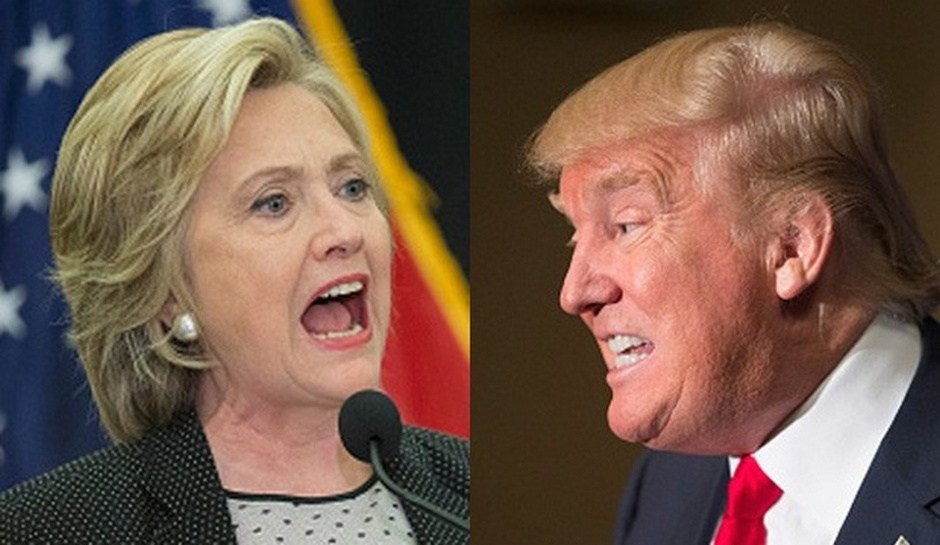
“I do not like thee, Doctor Fell, “The reason why — I cannot tell; “But this I know and know full well, “I do not like thee, Doctor Fell.” Hillary Clinton and Donald Trump both have their liabilities, but his are so much more numerous and serious than hers that the race should not be nearly as close as it seems to be. Why is he even competitive? More depends on the answer to that question than rested upon on the outcome of any presidential election that I can remember. If you’re for Trump because you agree with what you think he stands for, or if you just can’t bear to vote for any Democrat, or if you simply admire his chutzpah, well, so be it. But how can you be sure what he stands for? There have been no consistent themes in his message other than the undercurrent of intolerance that breeds violent words and physical assaults at his rallies. Or perhaps you think he speaks for those “who feel that the government has let them down, the economy has let them down, nobody cares about them, nobody worries about what happens to their lives and their futures, and they’re just desperate for change.” Those are Hillary Clinton’s words. She spoke them in sympathy with fully half of Trump’s supporters right after that ill-chosen — but accurate — description of the other half as a “basket of deplorables.” The media has largely — and, I believe, intentionally — overlooked the kind words she said. Trump has not proposed the slightest remedy for a government that shafts working people because it is controlled by wealthy investors and by corporations like the one charging $600 for a lifesaving drug. Clinton would cut them down to size by ridding the country of the curse of Citizens United, the Supreme Court decision that sold you and I and all ordinary Americans out to the power of big money. Trump never mentions that. Clinton is capable, qualified, intelligent, and experienced. Trump is the most morally unfit, unprepared and untrustworthy candidate ever to seek the presidency. He’s made a life’s work out of stiffing people who work or invest with him, or trusted in ventures such as his misnamed “university.” He is exuberantly ignorant of everything a president should know. He’s a narcissistic bully whose expressed admiration for tyrants like Vladimir Putin is fair warning of how a President Trump would abuse power. And yet the race is competitive. So if you’re thinking of voting for Trump simply because you don’t like or trust Clinton, please do yourself, your children and your country a favor. Ask why. Is it because she voted for the Iraq War? Well, Trump supported that too. Is it because of her emails? Nothing about that even remotely justifies electing someone like Trump, who won’t reveal what are surely some highly damaging tax returns, rather than someone like Clinton, whose finances are an open book. Is it because of Benghazi? The blame really belongs to the gang of Republican hypocrites in Congress who cut funding for embassy security. Is it because she isn’t charismatic like Barack Obama? Because she’s not an aw-shucks candidate like Ronald Reagan or George W. Bush? Well, this isn’t a contest for Homecoming Court or first place on a reality show. The presidency is deadly serious business. Charisma is nice, but not indispensable. The “likability” issue reeks of misogyny. Or is it simply because she’s your Dr. Fell? You don’t like her, but you don’t know why? In that case, I’ll tell you why. It’s because that vast right-wing conspiracy is a fact, not a figment of her imagination. Professional propagandists and right-wing hacks have been after the Clintons for more than 25 years, never distinguishing between valid criticism and slander. The right wing abhors progressive senators and presidents whom they can’t control. They have had an effect. What’s amazing is that she perseveres. The Citizens United decision, one of the Supreme Court’s worst ever, was about her. Let’s not forget that. As the case went to the court, the question was only whether a professional propaganda shop named Citizens United could legally distribute a video attacking Clinton during her 2008 presidential race. It was a question of whether the campaign finance law applied to that kind of material. In an act of staggering judicial activism, John Roberts recast the question into whether there could be any limits on a corporation’s spending on behalf of or against a candidate. And now Trump’s new deputy campaign manager, David Bossie, comes to his campaign straight from Citizens United. The Washington Post characterized Bossie as “the Captain Ahab of Clinton haters.” Google him. He’s vile. There’s more. According to Yahoo.com/news, Trump’s questionable charitable foundation gave $100,000 two years ago to Bossie’s Citizens United Foundation, which that same year filed a lawsuit against the New York Attorney General Eric Schneiderman. Yes, the same attorney general who’s pursuing Trump University on behalf of the victims whom Florida’s attorney general, Pam Bondi, chose to ignore right after getting a $25,000 contribution from the same Trump Foundation. Citizens United says the lawsuit, which has been thrown out of court, was to try to stop Schneiderman from getting at donor information and had nothing to do with the Trump dispute. So they say. It would be poetic justice if Hillary Clinton became the president whose Supreme Court appointees overturned the Citizens United decision. And that’s a powerfully good reason to vote for her. ___ Martin Dyckman is a retired associate editor of the newspaper now known as the Tampa Bay Times. He lives in suburban Asheville, North Carolina.
