
Birmingham schools superintendent Dr. Kelley Castlin-Gacutan fired after one year

After one year at the helm of the city of Birmingham’s public school system, Superintendent Dr. Kelley Castlin-Gacutan‘s contract was terminated Thursday by the Birmingham Board of Education. The board voted to terminate Castlin-Gacutan Thursday evening by a 6-3 vote, during a special meeting called to discuss governance and leadership of the Birmingham school system. “This school year just started and we’re going to terminate her without cause it’s inappropriate and it’s wrong,” Board Member Randall Woodfin said at the meeting. Woodfin, along with Lyord Watson and Brian Giantinna, were the three members who voted against terminating Castlin-Gacutan’s contract. Woodfin said the district needs to learn why it can’t keep a Superintendent. “We all need to challenge ourselves to figure out why we continue to have these issues.” Per her employment contract, the vote served as Castlin-Gacutan’s 60 days notice of termination. For her final two months, she will be on paid administrative leave. While the details of her contract were debated at the meeting, the Birmingham school system will have to pay out Castlin-Gacutan’s remaining salary and benefits for the next two years of her contract, which was set to expire on June 30, 2018. Those payments could total over $400,000 as Castlin-Gacutan was being paid $202,000 a year. Prior to being named Superintendent in Birmingham, Castlin-Gacutan served as Deputy Superintendent of School Operations and Interim Superintendent in the Bibb County School District in Macon, Georgia. She was a seasoned educator with 24 years of experience including classroom teacher, assistant principal, principal, district level administrator, and university professor/director. An explicit reason was not given for her termination, though fiscal responsibility was brought up during the meeting. Following the termination vote, the board named longtime administrator and director of schools for zone four, Larry Contri, interim superintendent.
Alabama’s highways rank 20th in condition, cost-effectiveness
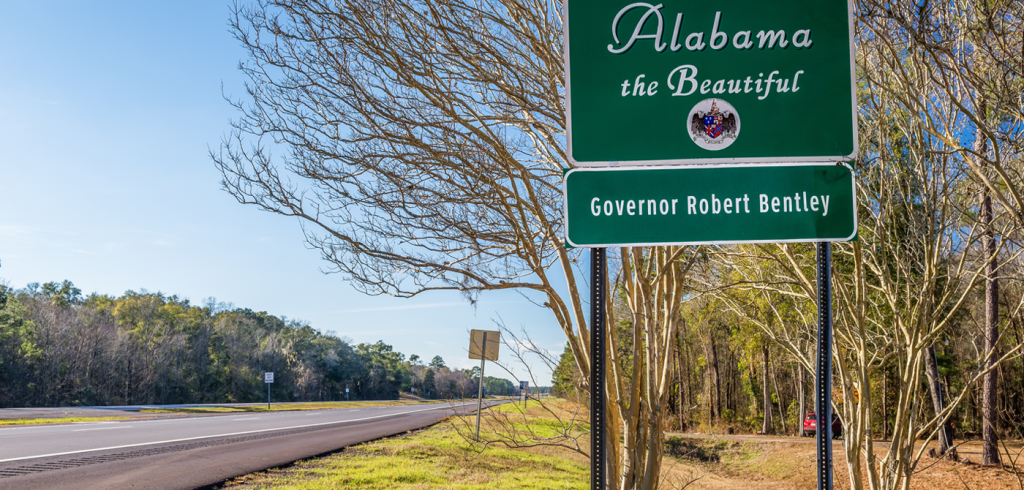
Alabama ranks 20th in the nation when it comes to overall highway performance and cost-effectiveness, according to the 22nd annual Highway Report released on Thursday by the Los Angeles-based libertarian think tank, Reason Foundation. That’s up one spot from last year’s report, when Alabama ranked 21st in the nation. The study ranks every state’s highway system on pavement condition, traffic congestion, deficient bridges, traffic fatality rates, spending per-mile among others, based on spending and performance data that state highway agencies provided to the federal government for 2013, as well as 2014 congestion data from the Texas A&M Transportation Institute. “To determine relative performance, state highway system budgets (per mile of responsibility) are compared with system performance, state by state. States with high ratings typically have better-than-average highway system conditions — low numbers of deficient bridges and smooth pavement conditions — along with relatively low per-mile expenditures on metrics such as administrative costs,” the report reads. Other Alabama rankings in the report included: Fatality rate: 36th Deficient bridges: 25th Rural Interstate pavement condition: 34th Urban Interstate pavement condition: 37th Urbanized area congestion: 9th Rural arterial lane-width: 6th Rural arterial pavement condition: 16th Total disbursements per mile: 27th Administrative disbursements per mile: 35th Alabama’s state-controlled highway mileage makes it the 26th largest system. Here’s how Alabama compares to other states: South Carolina South Dakota Kansas Nebraska Maine Montana North Dakota Wyoming Ohio Mississippi New Mexico Missouri Utah Kentucky North Carolina Idaho Oklahoma Tennessee Texas Alabama Georgia Nevada Oregon Arizona West Virginia New Hampshire Minnesota Wisconsin Illinois Virginia Michigan Florida Arkansas Louisiana Colorado Indiana Delaware Maryland Pennsylvania Iowa Vermont California Washington Connecticut New York Massachusetts Rhode Island Hawaii New Jersey Alaska
U.S. Navy’s next Littoral Combat Ship to be named USS Mobile
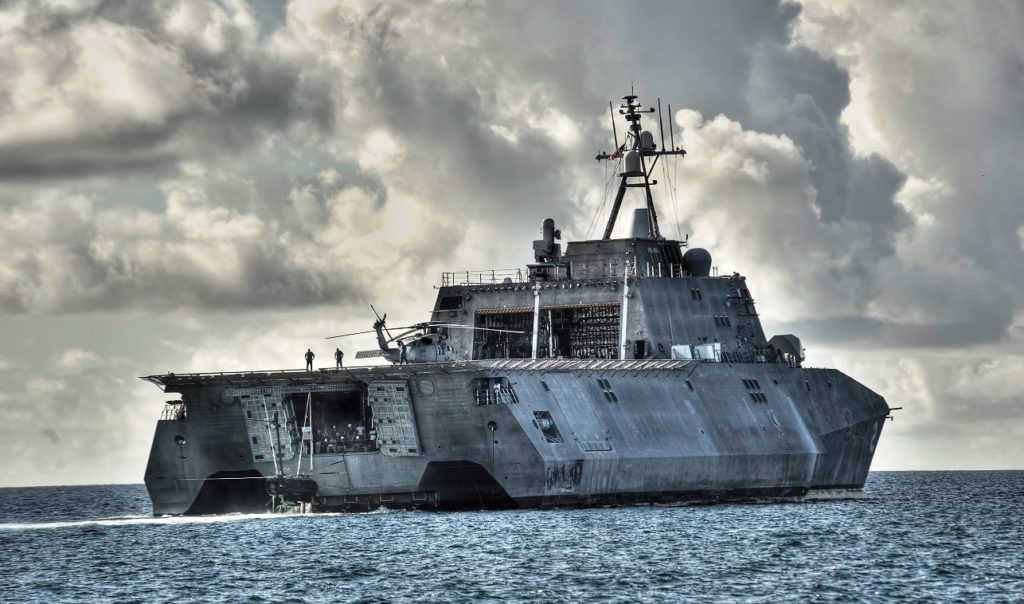
Secretary of the U.S. Navy Ray Mabus announced on Thursday, the next Independence-variant Littoral Combat Ship (LCS) will be named USS Mobile (LCS 26) to recognize the Alabama city’s significant contribution to Navy ship building. “I can’t think of a better way to recognize the superior craft and workmanship Mobilians put into each of these ships,” Mobile Mayor Sandy Stimpson said. “A little piece of Mobile goes into each of the Independence Class LCS ships made right here at Austal, but this ship is especially significant because it marks us as a regionally important U.S. city with global impact and magnificent workers. I have no doubt Austal will produce another incredible warship worthy of the name Mobile that will not only meet the standards of today but will adapt to the evolving needs of the future. “ Stimpson sent a letter to Mabus last year requesting the Navy consider naming a future LCS the USS Mobile as a tribute to the City of Mobile and its citizens “who put their heart and soul into every warship they build.” Alabama 1st District U.S. Bradley Byrne was present for the announcement ceremony Thursday in Washington, D.C.. “Our area takes such pride in building these fine ships, just the latest vessel in Mobile’s long history of shipbuilding,” said Byrne. “I know the spirit and patriotism of Mobile will be encapsulated in this ship.” Byrne continued, “I appreciate Secretary of the Navy Ray Mabus for working with us to make this possible, and I look forward to one day standing in the Mobile waterfront to christen and commission this fine ship.”
Alabamians took out a staggering 2 million payday loans last year

Last year, Alabamians took out more than two million payday loans, according to the state’s Banking Department. At the inaugural meeting of the Alabama Consumer Protection Task Force on Wednesday the Alabama Banking Department revealed the new figures, which indicate borrowers have taken an average of eight loans each since the a loan-tracking database was created in August of 2015. According to the data, there were 246,824 unique borrowers. The average loan was for $326, with an average fee of $56, and was paid back in roughly 20 days. The Banking Department began tracking the loans after winning a court case over the creation of the database to enforce an existing law, which limits consumers to having no more than $500 in payday loans at any given time. Figures revealed Wednesday, showed about 400,000 additional loans were declined. “We’ve got to make sure consumers are protected. I want our companies to make a reasonable profit. They have to. They can’t stay in business if they don’t, but we have to protect,” Governor Robert Bentley said at the meeting. Bentley created the Task Force through Executive Order 21 on June 14 to evaluate at and suggest changes to all of the state’s consumer credit laws, which apply to entities from mortgage brokers to pawn shops. Members of the Task Force are working to identify areas of Alabama’s consumer credit laws for possible revision or new legislation. The Task Force is comprised of 33 experts appointed by various stakeholder organizations including the Office of the Governor, Alabama Legislature, Alabama Law Institute, Attorney General’s Office, Alabama Bar Association, Alabama State Baking Department, Alabama Department of Insurance, State of Alabama Credit Union Administration, Alabama Appleseed, Arise Citizen Policy Project, Southern Poverty Law Center, AARP, Alabama Pawnbrokers Association, Community Financial Services Association, Mortgage Bankers Association of Alabama, Alabama Mortgage Professionals Association, Alabama Lenders Association, Alabama Consumer Finance Association, American Financial Services Association, Alabama Bankers Association, Alabama Credit Union Association and the Alabama Securities Commission.
Lawyers, company agree on documents in ongoing Gulf oil leak

Environmental attorneys and a New Orleans energy company agreed Thursday to work out differences over the confidentiality of documents related to an ongoing Gulf of Mexico oil leak from an offshore site damaged by Hurricane Ivan in 2004. Environmental groups including Waterkeeper Alliance, Apalachicola Riverkeeper and the Louisiana Environmental Action Network agreed in federal court with Taylor Energy to negotiate supplemental language for a 2015 settlement agreement over how and when to release information on Taylor’s response to the leak. At issue are volumes of documents that Taylor Energy says include confidential information about oil spill containment technology developed for the company. A 2015 Associated Press investigation revealed evidence that the leak was worse than the company or the federal government had earlier reported. Government experts believe oil is still leaking at the site where waves whipped up by Hurricane Ivan in 2004 triggered an underwater mudslide, toppling a Taylor Energy-owned platform and burying a cluster of its oil wells under mounds of sediment. Last year, regulators estimated the leak could last a century or more if left unchecked. Taylor Energy has said nothing can be done to completely eliminate persistent slicks from the site. The company has said the sheens sometimes seen off Louisiana’s coast are coming from residual oil oozing from sediment on the seafloor. Republished with permission of the Associated Press.
CAE USA to open key Army aviation training center in Alabama
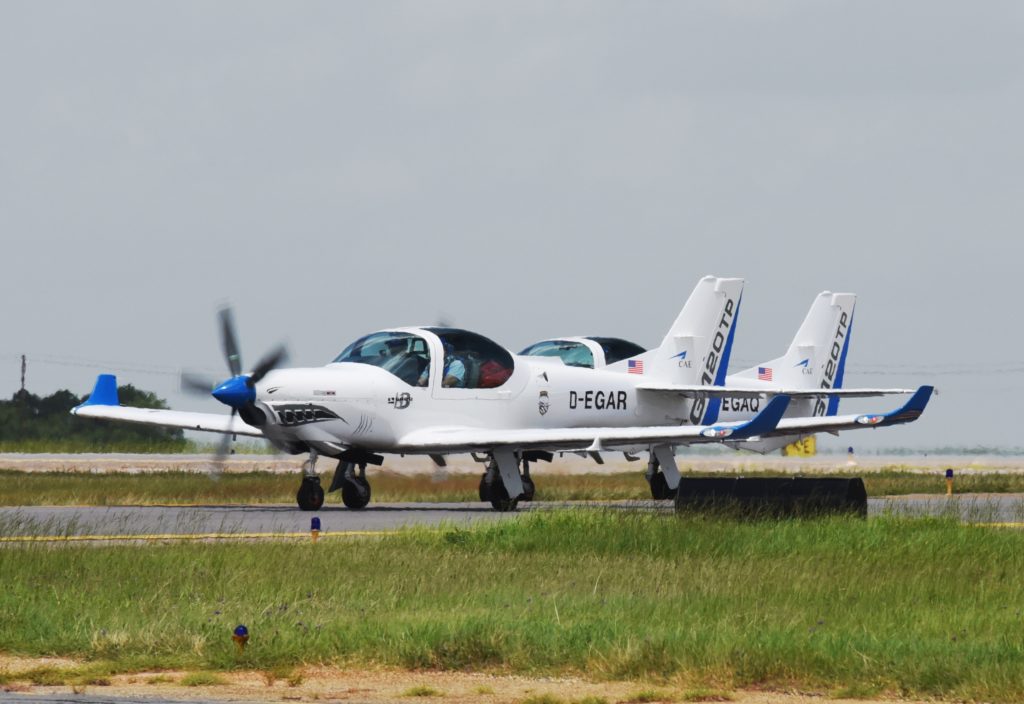
A Tampa-based aviation training company plans to begin offering flight training to U.S. Army aviators at a training facility opening in Dothan. CAE USA plans to open the facility in 2017 as part of the company’s $75 million investment in the state, a little more than 20 miles from Fort Rucker and the U.S. Army’s Aviation Center of Excellence, the headquarters of Army Aviation and primary location for Army helicopter flight training for more than five decades. “Alabama has more 100 years in aerospace history, and I am proud to see CAE make progress on the construction of the new Dothan Training Center located at the Dothan Regional Airport,” Governor Robert Bentley said Thursday morning. “This world-class training facility will train Army and Air Force pilots to keep our nation safe.” With the project progressing, the company has taken delivery of the first aircraft that will be used in the U.S. Army Fixed-Wing Flight Training program at the Alabama center. CAE has also begun preparing its initial cadre of instructor pilots for the program. “Our new Dothan Training Center will provide the Army with a modern, flexible and cost-effective training solution specifically designed for the Army’s fixed-wing aviators,” said Ray Duquette, president and general manager of CAE USA. “The state of Alabama, Department of Commerce and all the local government organizations in the Wiregrass area have been incredibly supportive and instrumental in the creation of what will be a truly world-class training facility,” he added. Beginning next spring, the company’s new 79,000-square-foot center will provide comprehensive training for more than 450 U.S. Army fixed-wing aviators each year, as well as Air Force crews flying C-12 twin turboprop aircraft. “We are extremely excited to see a world-wide leader in aviation training locate in the Wiregrass region,” Dothan Mayor Mike Schmitz said. “Through the team led by Governor Robert Bentley including our local, state, and federal officials and partners, this project was made possible to bring new technology, innovation, and high-paying jobs to the area.”
Pentagon officials draw sharp questions from GOP on Syria
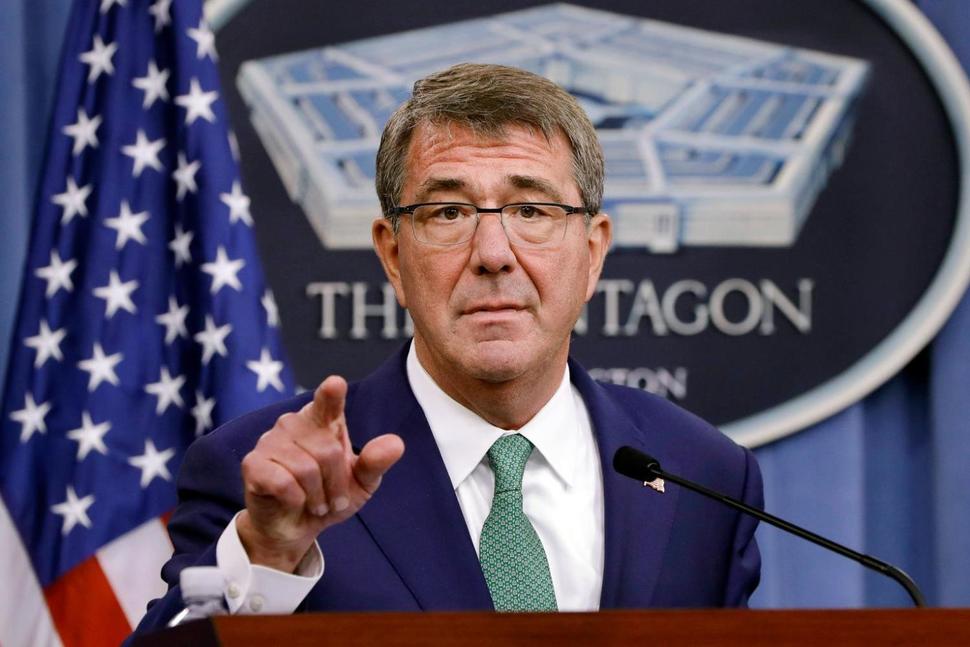
The nation’s top military officials faced sharp questions on Thursday from Republicans angry that the Obama administration is not taking more aggressive steps to end the 5-year-old-civil war in Syria. A senior GOP senator dismissed Secretary of State John Kerry as “intrepid but delusional” for trying to work with Russia. Defense Secretary Ash Carter and Gen. Joseph Dunford, the chairman of the Joint Chiefs of Staff, testified before the GOP-led Senate Armed Services Committee after the latest attempt to secure a cease-fire in Syria all but collapsed. Republicans are skeptical, even hostile, to the idea that Russia is a willing partner for peace and would work with the United States to combat Islamic State militants and al-Qaida. Sen. John McCain, R-Ariz., the committee’s chairman, opened the hearing by saying that the administration “still has no plausible vision of an end-state for Syria.” Instead, McCain said that while Russian and Syrian aircraft “bombed hospitals, markets, aid warehouses, and other civilian targets, President Obama sent his intrepid but delusional secretary of state to tilt yet again at the windmill of cooperating with” Russian President Vladimir Putin. Sen. Lindsey Graham, R-S.C., a defense hawk and one of President Barack Obama‘s most vocal critics, said he anticipated the hearing will be contentious because of mounting frustration among lawmakers over a lack of a coherent strategy for ending the conflict. “I expect this to be confrontational,” Graham said. “At the end of the day, I think Congress needs to challenge what’s going on in Syria.” The failure to establish a no-fly zone in the country’s north to protect Syrians from the bombing has been a mistake, according to Graham, and he also criticized the reliance on Kurdish fighters the U.S. has been supporting in the fight against the Islamic State. Although the battle-hardened Kurds have proven to be effective, their success has alarmed Turkey, which is grappling with a Kurdish insurgency in its southeast. Although Turkey has repeatedly called for a no-fly zone, the Obama administration has resisted, unwilling to wade too deeply into an intractable conflict. Tensions between Russia and the United States have only heightened in recent days after authorities in Washington determined with a very high degree of confidence that an attack on a humanitarian aid convoy in Syria earlier this week was carried out by a Russian-piloted aircraft. The assessment laid more deliberate blame on Moscow for the strike on the Syrian Arab Red Crescent convoy, which killed 20 civilians. Washington had said Tuesday that Russia was to blame, but that the strike delivered by a Russian-made Su-24 could have been carried out by Russia or Syria. Both militaries use Su-24 fighter jets. But officials said Wednesday the U.S. has gathered enough intelligence to say that it was Russia, not Syria, that launched the airstrike. Kerry called for all warplanes to halt flights over aid routes and at a U.N. Security Council session he raised “profound doubt” about the willingness of Russia and Syria to abide by the cease-fire. The Sept. 9 truce envisioned a U.S.-Russian military partnership against the Islamic State and al-Qaida if violence was reduced and aid delivered over the course of seven continuous days. The Pentagon, however, voiced reservations about coordinating air strikes and sharing intelligence with Russia. McCain assailed the potential partnership, saying it would “mean that the U.S. military would effectively own future Russian airstrikes in the eyes of the world.” Republished with permission of the Associated Press.
