
Hillary Clinton says video of Donald Trump is “horrific”
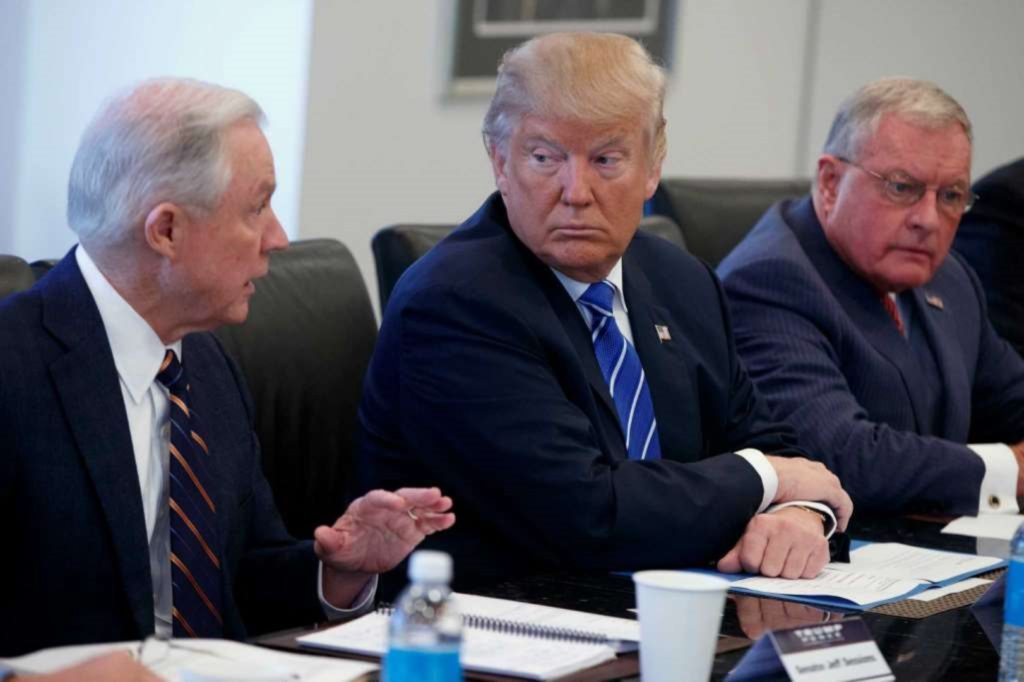
Hillary Clinton is responding to a video of rival Donald Trump making lewd comments about women in 2005. The Democratic presidential candidate said on Twitter, “This is horrific. We cannot allow this man to become president.” Trump issued an apology after the video emerged of him making sexually charged comments. He called it “locker room banter.” Clinton has said that Trump has shown a lack of respect for women, noting during the first presidential debate that he insulted a former Miss Universe. She has said it’s a reason why he’s unfit to be president. *** Earlier, Trump issued a rare apology after a video showed him making lewd, sexually charged comments about women in 2005. He called it “locker room banter.” The Republican nominee said that “I apologize if anyone was offended.” He issued the statement after The Washington Post revealed the video of Trump caught on a hot mic while talking with Billy Bush of “Access Hollywood.” Trump is heard saying he “did try and f— her,” referring to an unknown woman. He also used graphic terms to describe the woman’s body and said he frequently tried to kiss beautiful women. He boasted that “when you’re a star they let you do it.” He said: “You can do anything.” Trump has a long history of making crude comments about women. Republished with permission of the Associated Press.
Email Insights: Gary Palmer emails October newsletter to constituents
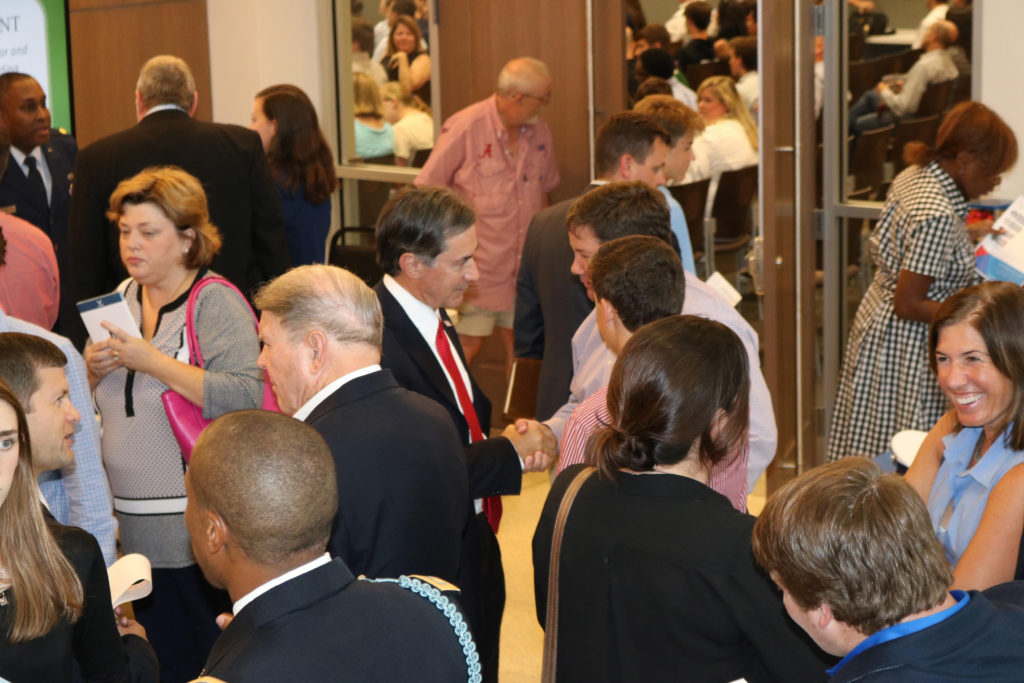
On Friday, Alabama 6th District U.S. Rep. Gary Palmer emailed constituents his monthly newsletter with updates of what he’s been doing throughout the month of September. From hosting a Service Academy Night to releasing a new video highlighting the history and beauty of the six counties in the 6th District, to updates on the ongoing Hillary Clinton investigation — it’s safe to say, Palmer’s had a very busy month. Read Palmer’s full newsletter below: Dear Friend, As October begins, I am looking forward to spending the entire month back in Alabama’s Sixth District. I will be hosting Town Halls throughout the month across the district. These events are important to me because they are a great opportunity for us to have open dialogue about the issues we all face. I look forward to seeing you at one of the upcoming Town Halls. Thanks for reading, Gary Palmer U.S. Service Academy Night In September I hosted a U.S. Service Academy Night for interested high school students and their parents. Representatives from the five service academies — Army, Air Force, Navy, Coast Guard, and Merchant Marines — plus a representative from Marion Military Institute were all present. We were able to explain the nomination and application process, and students had a chance to ask questions about academy life and the opportunities these academies offer. These are the future leaders of our country, and I’m grateful to these young men and women for their sincere desire to serve their country. County Highlight Video Over the next few months I hope to share videos with you highlighting the history and beauty of the six counties in Alabama’s Sixth Congressional District. For the first video, I hope you enjoy learning about Bibb County. A Better Way Recently, through six issue-driven task forces made up of Members of Congress, we constructed a plan to strengthen America, foster economic growth, and reform our government. We have labeled the plan A Better Way. I was pleased to work other members on three of the task forces: the economy, the Constitution, and tax reform. My bill, the Stopping the EPA Overreach Act, is included in our economic plan and would protect jobs both in Alabama and across America. To learn more about our plan, go to better.gop. Constitution Week September 17th marked the 229th anniversary of the signing of the Constitution. During the month of September, my office spoke with over 600 fifth grade students in area schools about the Constitution and Washington D.C. We encourage all of our schools to teach the Constitution and the Declaration of Independence. It is my hope that students and citizens will read and study this great document and require elected officials through the political process to abide by it. This is how we can keep the republic our Founders created. House Oversight Committee Hearing I believe protecting our national security to be of the utmost importance. It is especially concerning that apparently no one has made an effort to recover Hillary Clinton’s missing laptop. Although Clinton’s IT specialist, Bryan Pagliano, failed to attend our House Oversight Committee hearing, three others did attend. Two Platte River Networks employees, Bill Thornton and Paul Combetta, invoked their Fifth Amendment privilege and refused to answer questions. So I appreciate the fact that our fourth witness, Justin Cooper, stayed and answered our questions. Watch more in the video below. Click here to subscribe to Palmer’s newsletter.
Donald Trump says Border Patrol ordered to let immigrants illegally cross border to vote in election
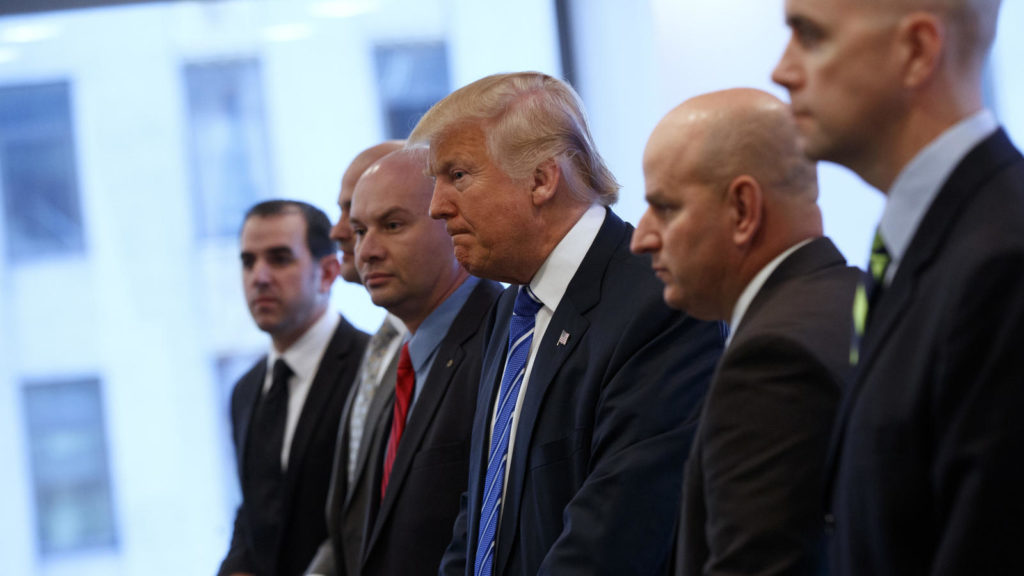
Citing a Border Patrol union leader, Donald Trump said Friday that agents have been told to allow immigrants into the United States illegally “so they can vote in the election.” But he offered no evidence to support his most recent claim that presidential voting may be tainted by fraud. In an immigration roundtable with Trump, Art Del Cueto, a vice president for the National Border Patrol Council, told the candidate Friday officials in the U.S. are being directed to ignore criminal histories of immigrants and speed up citizenship applications. “That’s a massive story,” Trump responded, saying it would be ignored by the media. “They are letting people pour into the country so they can go ahead and vote.” However, union spokesman Shawn Moran, who was in New York with Del Cueto, said later in a telephone interview that several issues were conflated during the roundtable discussion. Border Patrol agents have indeed seen an increase in attempts to cross the U.S.-Mexico border illegally, Moran said. But Moran did not say any border agents had been ordered to let those immigrants in so they could vote in November. The two issues are sometimes linked in a misleading fashion, and the brief exchange between Del Cueto and Trump underscored that. Neither Del Cueto nor Trump offered evidence to back up the idea immigration officials are taking action to allow people who have recently crossed the border to cast ballots on Election Day. Newly admitted immigrants are not permitted to vote, a right that is reserved for citizens. The process of achieving citizenship takes years. Citizenship applications are handled by U.S. Citizenship and Immigration Services, not the Border Patrol. There is no evidence that USCIS officials have been directed to quickly approve citizenship applications, though some lawmakers have asked the agency to address such reports. Trump has repeatedly said he fears the election will be rigged and has made a hard-line stance on immigration a centerpiece of his campaign. His latest provocative claim comes as Trump and Clinton are preparing for their second debate, a town-hall style confrontation Sunday night. It’s a critical moment for Trump, who after a rough performance in last week’s debate, is tasked with showing he can stick to his campaign message and steer clear of comments likely to alienate moderate voters. Trump and Clinton have been treading somewhat lightly on the campaign trail in recent days, as Hurricane Matthew barreled down on swing state Florida. The pause was a reminder of the possibilities and perils of campaigning during a crisis. Plenty of presidents and presidential hopefuls before them have used similar natural disasters to showcase their leadership — or their shortcomings — in ways that can change the trajectory of the race. Both Clinton and Trump appear to be moving carefully, for now. The campaigns spent Thursday moving staff and volunteers, closing offices and canceling events in the path of the storm, as many Floridians heeded calls to evacuate. In Florida, the Clinton campaign pulled its ads from the Weather Channel, amid criticism about insensitivity, and the Trump team pulled its negative TV ads. “Even if you want to do politics, no one is there to listen,” said Steve Schale, a Democratic consultant who directed or advised Barack Obama‘s campaigns in the state in 2008 and 2012. Both the campaigns and state officials were watching closely how the storm might impact Florida votes. The storm arrived five days before the voter registration deadline, prompting the Clinton campaign to ask state officials for an extension. Florida Gov. Rick Scott, Republican who leads a super PAC working to defeat Clinton, refused. “Everyone has had a lot of time to register,” he said. Officials were also eyeing the vote-by-mail operation. Vote-by-mail ballots were due to be sent this week, leaving the potential for ballots to arrive just as voters evacuate their homes. At least half of Florida voters typically cast ballots early, either by mail or in person. Officials said they hope any disruption to voting would be less severe than with Superstorm Sandy, which struck New Jersey and New York just before the 2012 presidential election and kept many voters away from polls. Sandy’s greater political impact, however, may have been the way President Obama used the moment to his advantage. Obama quickly surveyed the aftermath, received a warm welcome from Gov. Chris Christie, a Republican, and promised millions in aid. Trump, who is trying to recapture momentum lost in a rocky first debate, practiced his skills in public Thursday night at a town hall in Sandown, New Hampshire. Although his aides called the event a dry run for Sunday, Trump dismissed the notion. “I said, ‘Forget debate prep.’ I mean, give me a break,” said Trump, who mocked Clinton for spending days preparing. “She’s resting. She wants to build up her energy for Sunday night. And you know what? That’s fine. But the narrative is so foolish.” Republished with permission of the Associated Press.
Alabama mayors asking citizens to vote yes for Amendment 11
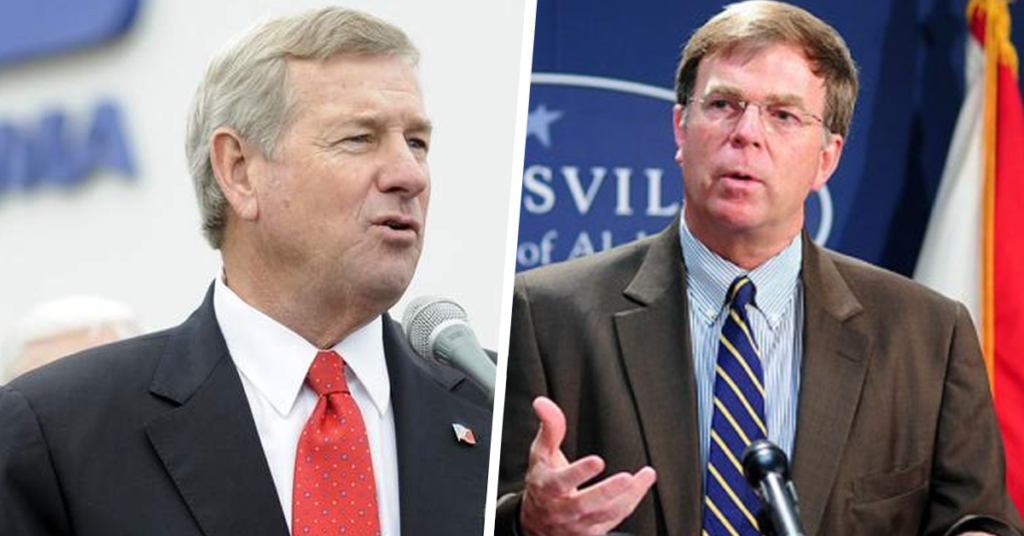
Alabama’s mayors are urging citizens to vote yes next month on an amendment they believe will help improve economic development across the Yellowhammer State. Huntsville Mayor Tommy Battle and Montgomery Mayor Todd Strange Thursday joined forces advocating for support for Amendment 11. Together they met with economic developers to simplify the details of the amendment for voters. “All we have to do is vote yes for Amendment 11 and it helps make Alabama better. It helps us compete and win against other states,” said Strange. Amendment 11, also known as the 21st Century Manufacturing Zone Act, is one of 14 amendments that will grace the Alabama election ballots this fall. It will provide local governments throughout Alabama an innovative tool to facilitate the recruitment of large economic development projects while utilizing the enhanced tax revenues from a project to fund the costs associated with bringing that business to the community. At Thursday’s event Strange went on to explain the competition is no longer happening between Alabama cities, but rather the state is fighting with its neighbors for businesses and jobs. “They’re going to be able to get the infrastructure, it’s going to make us more competitive,” said Strange. “Not between Huntsville and Montgomery and Mobile and Birmingham, but between Alabama, the local communities and what Tennessee might have, what Georgia might have, Louisiana and some of those others.” “Bottom line, it would really give us an opportunity to be more competitive when we’re competing with other areas and other states as far as locating a new business into Alabama,” said Montgomery Area Chamber of Commerce Chairman Horace Horn on Thursday. Both mayors and economic developers said simply the amendment “puts the financial responsibility back on the industries and protects your taxpayer dollars.” The bill for the amendment passed unanimously in the Alabama House and Senate.
Campaign stop latest bump in rocky Paul Ryan-Donald Trump relationship
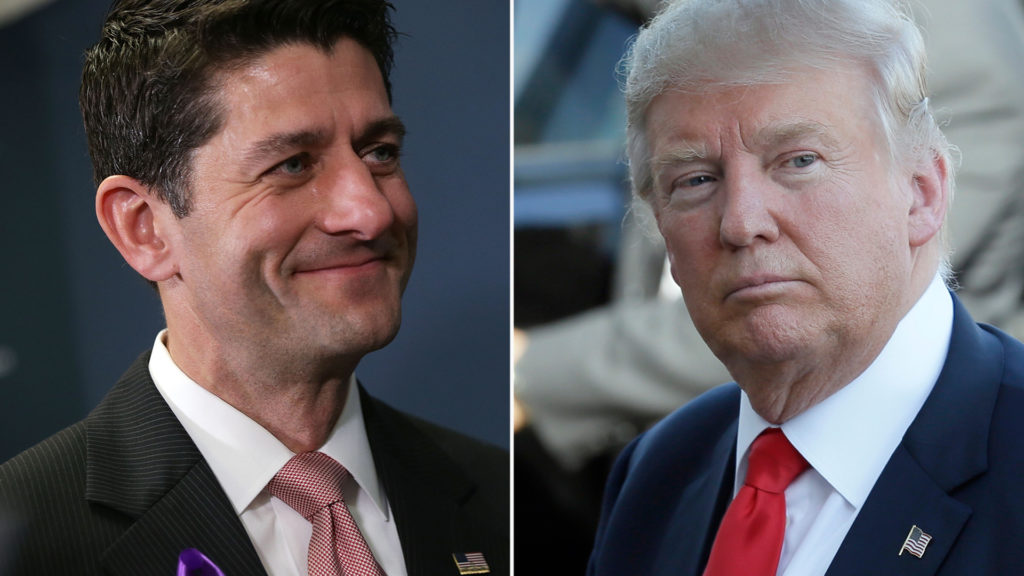
It’s long been clear that House Speaker Paul Ryan is, shall we say, not wholly comfortable with Donald Trump‘s presidential candidacy. The announcement of Ryan’s and Trump’s first joint appearance of the campaign on Saturday in Wisconsin – just four weeks before the election – was simply the latest reminder. The awkwardly worded missive on Thursday said that Ryan would appear with top Wisconsin Republicans, including Gov. Scott Walker and Sen. Ron Johnson. Oh, and by the way, the third paragraph of Ryan’s release says that Trump “will also join Wisconsin Republicans” at the annual party festival in Elkhorn, a small city in Ryan’s congressional district. In the news business, that’s known as “burying the lead.” The announcement also doesn’t say that Ryan is actually campaigning for Trump, just that they are appearing at the same event. Asked Thursday why he hasn’t appeared with Trump, Ryan said: “I’ve been busy doing my job.” “I want to win up and down the ballot, but my primary responsibility is re-election of House Republicans,” Ryan said during a brief interview after appearing at a campaign stop for GOP House candidate Lloyd Smucker, who is expected to win an open GOP seat in a district near Harrisburg, Pennsylvania. — A recap of the greatest hits of the awkward Trump-Ryan relationship: NO ENDORSEMENT (RYAN) Jaws dropped in May when Ryan withheld his endorsement of Trump just days after the billionaire businessman effectively clinched the nomination. “I’m just not ready to do that at this point. I’m not there right now,” the Wisconsin Republican said on CNN. Ryan came on board the Trump train a month later: “It’s no secret that he and I have our differences. I won’t pretend otherwise. … But the reality is, on the issues that make up our agenda, we have more common ground than disagreement.” NO ENDORSEMENT (TRUMP) Even after Ryan endorsed him, Trump declined to return the favor as Ryan faced a tea party primary challenge from Paul Nehlen. Trump even praised Nehlen, saying he was running “a very good campaign” and telling The Washington Post, “I like Paul, but these are horrible times for our country” and “I’m just not quite there yet. I’m not quite there yet.” Days later, Trump endorsed both Ryan and GOP Sen. John McCain of Arizona. MUSLIM BAN Ryan joined a chorus of Republicans last December and again this summer in condemning Trump’s proposed ban on Muslims entering the U.S. “This is not who we are as a party or a country,” Ryan told fellow House Republicans in a December closed-door meeting. When Trump reiterated the call for a ban in June, Ryan said: “I do not think a Muslim ban is in our country’s interest. I don’t think it is reflective of our principles, not just as a party but as a country.” ATTACKING A JUDGE Immediately after endorsing Trump, Ryan weighed in to criticize him for saying a federal judge of Mexican-American heritage was biased against him in a lawsuit involving Trump University. Ryan said Trump’s comments were “the textbook definition of a racist comment.” ATTACKING A GRIEVING FATHER When Khizr Khan, a Muslim-American whose son Humayun Khan died while serving with the U.S. Army in Afghanistan, criticized Trump during the Democratic National Convention in July, Trump went on the attack. Ryan was among those who rebuked Trump and used the occasion to say again that a Muslim ban would be a mistake. “Many Muslim-Americans have served valiantly in our military, and made the ultimate sacrifice. Capt. Khan was one such brave example. His sacrifice – and that of Khizr and (Khan’s wife) Ghazala Khan – should always be honored. Period.” TRUMP’S TAXES As the GOP’s vice presidential nominee in 2012, Ryan released his tax returns. In September, he urged Trump to release his. “I released mine. I think we should release ours,’ Ryan said, referring to GOP nominees. “I’ll leave it to him when to do it.” DAVID DUKE AND THE KLAN When Trump in February declined to condemn the Ku Klux Klan or decline the endorsement of former Klansman David Duke, Ryan joined a chorus of outraged establishment Republicans. “If a person wants to be the nominee of the Republican Party, there can be no evasion and no games,” Ryan said. “They must reject any group or cause that is built on bigotry.” RYAN’S BUDGET In a South Carolina campaign event in February, Trump repeated his opinion that Ryan’s budget plan, which called for sharply curbing benefit programs like Medicare, helped cost Republicans the 2012 election. “That was the end of that campaign, by the way, when they chose Ryan,” Trump said. IF YOU CAN’T SAY SOMETHING NICE… Ryan typically rebukes Trump when he says something especially egregious and over the top. He stays out of smaller controversies like Trump’s proposal for paid maternity leave, a plan that defies GOP orthodoxy. And he declined to weigh in on Trump’s emphasis on police “stop and frisk” tactics as a way to improve race relations. Republished with permission of the Associated Press.
Alabama sends resources to Florida to assist with Hurricane Matthew response

As Florida readies herself for the impact of Category 4 Hurricane Matthew, Alabama is prepping to help. The Yellowhammer State is already sending personnel and resources to Florida to assist with hurricane response efforts. Gov. Robert Bentley made the announcement Thursday, saying the Yellowhammer State has received numerous requests for assistance from Florida as Hurricane Matthew approaches and intensifies. Thus far assistance has been requested from the Alabama National Guard, Alabama Emergency Management Agency (AEMA), and the Alabama Department of Public Health (ADPH) through the Emergency Management Assistance Compact (EMAC). “Our disaster response teams are always ready to act at a moment’s notice during emergency situations,” Bentley said. “I am proud of our men and women who are dedicating their time and expertise to help others during natural disasters. Alabama stands ready to assist Florida, or any other state that requests our support, as they respond to Hurricane Matthew.” AEMA will deploy an Emergency Operations Center Augmentation Team to support the Florida Division of Emergency Management at their Emergency Operation Center. Their primary role will be to support their Florida counterparts as they experience an overwhelming need to coordinate their state response efforts. “When Alabama is not impacted we always stand ready to support other states in need of assistance,” AEMA Director Art Faulkner said. “We always remember the assistance that has been provided to our state following catastrophic events and want to return the favor.” Florida also has requested aviation assets and air crews from the Alabama Army National Guard (ALARNG). ALARNG plans to send four UH-60 Blackhawk and two CH-47 Chinook helicopters and 33 air crew soldiers to assist with lift capabilities transporting personnel and supplies as needed. These soldiers will be activated under State Active Duty beginning Friday and arrive in Florida Saturday. ADPH will deploy two Medical Needs Shelter Teams and a Public Health Nurse Strike Team to assist with medical needs in the areas hit by the hurricane in Florida. They will set up medical care shelters and medical strike teams to provide for the impacted residents in the area. The teams are scheduled to arrive at the staging area in Tallahassee Saturday afternoon.
2016 campaign can’t shake Bill Clinton’s scandals
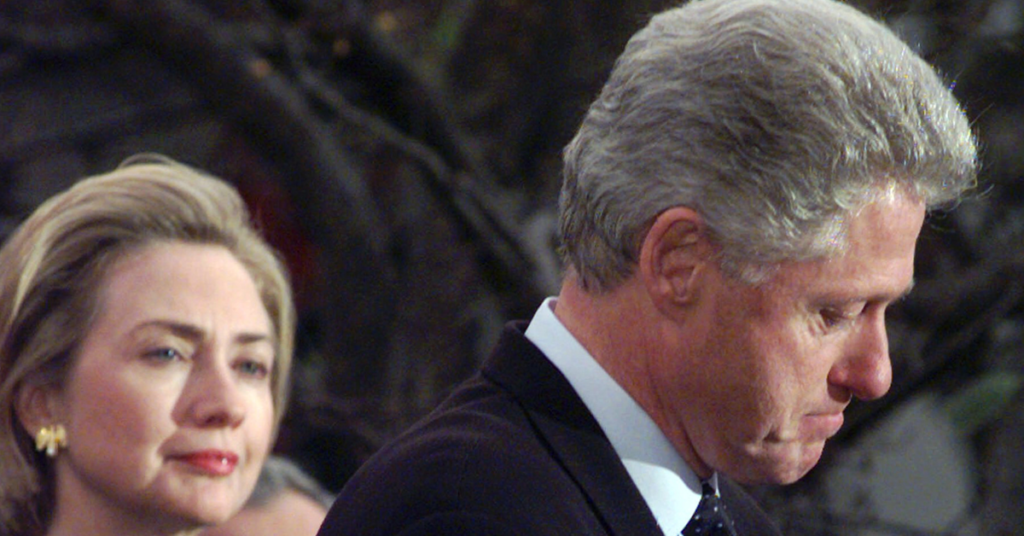
Monica Lewinsky tends to avoid politics these days, after becoming instantly famous nearly 20 years ago as the White House intern who had an affair with President Bill Clinton. Unfortunately for Lewinsky, the 2016 presidential race keeps getting stuck in the past. In the first presidential debate between Hillary Clinton and Donald Trump, the thrice-married Republican hinted at the Clintons’ marital problems and brought up Bill Clinton’s infidelities directly soon after. For now, Trump says he won’t discuss the subject at Sunday’s debate. But he has been known to change his mind. “Let’s see what happens,” Trump said at a town-hall event Thursday in New Hampshire, referring to whether he will hold off on the topic. “I think we’re all better off if we can do that because it is about issues, it is about policies.” Hillary Clinton may not want to relive this period. But Clinton spokesman Brian Fallon said any attack by Trump on the topic would backfire, showing Trump to be “combustible and erratic.” Some political analysts said Trump risks showing Clinton in a sympathetic light as the wronged wife – hardly helpful as he struggles to draw support from women. Yet it’s a fraught subject for both candidates. Bill Clinton aides moved aggressively to discredit women who alleged sexual contact with him, while Hillary Clinton stood by her husband publicly in much of that era and cast his accusers as part of a “vast right-wing conspiracy.” Dianne Bystrom, director of the Carrie Chapman Catt Center for Women and Politics at Iowa State University, said the Lewinsky episode humanized the Clintons for many Americans. “People felt sorry for her,” she said. Campaigning for his wife this week in Ohio, Bill Clinton dismissed Trump’s threats to bring up his infidelity. “He’s been making those attacks from the beginning of this campaign, so I don’t think there’s anything new,” Clinton told reporters. Lewinsky declined to be interviewed for this story. After staying out of the public eye for many years, she recently re-emerged as an anti-bullying advocate. She has talked about the public shaming she experienced in a well-received 2014 Vanity Fair essay and a TED Talk. “I’ve decided, finally, to stick my head above the parapet so that I can take back my narrative and give a purpose to my past,” Lewinsky wrote in Vanity Fair. In June of that year, Hillary Clinton told ABC’s “Nightline” that she wishes Lewinsky well, adding: “I hope that she is able to think about her future and construct a life that she finds meaning and satisfaction in.” The end? No. Trump in 2016 threatened to bring up Bill Clinton’s infidelities and congratulated himself for refraining in the first of three presidential debates. Trump spokeswoman Hope Hicks said Thursday he does not plan to talk about the Lewinsky relationship or others during Sunday’s showdown. Bill Clinton has long been dogged by allegations of womanizing, extramarital affairs and abuse. During his 1992 campaign, Betsey Wright, a longtime aide to the Clinton, dubbed the problems “bimbo eruptions,” a label that appeared aimed at discrediting them. But the most damaging episode was his relationship with Lewinsky. The two met in 1995 when she was a 22-year-old intern and she later revealed they had a series of sexual encounters over a roughly 18-month period. Clinton initially denied the relationship, but eventually admitted it and said he “misled people, including even my wife.” The president was impeached over the episode, accused of obstruction and perjury, and acquitted by the Senate. In her book “Living History,” Hillary Clinton described the moment in August 1998 when he told her that he had lied. She said she could hardly breathe, and screamed in rage. “I was dumbfounded, heartbroken and outraged that I’d believed him at all,” she wrote. Lewinsky is not the only relationship baggage for Clinton. In 1998, he agreed to an $850,000 settlement with Paula Jones, an Arkansas state worker who had accused Clinton of exposing himself and making indecent propositions when Clinton was governor. The settlement included no apology or admission of guilt. Juanita Broaddrick, a nurse, in 1999 claimed she was raped by then-state Attorney General Clinton at a Little Rock hotel in 1978. Clinton’s attorney denied the claim at the time and Clinton was never charged. Kathleen Willey, a White House volunteer, claimed Clinton fondled her when she met privately with him at the White House in 1993 to seek a job. Clinton has denied the allegations by both women. Hillary Clinton’s involvement in efforts to undermine the credibility of her husband’s accusers remains the subject of speculation; What’s known is that people close to her or Bill Clinton spared little effort on that front. Writings about the Clinton White House years suggest she was active behind the scenes, helping to drive political and legal strategy to defend her husband during the Lewinsky investigation. Her friend Diane Blair wrote in her diary that Hillary Clinton had called Lewinsky a “narcissistic loony tune.” Former Clinton aide George Stephanopoulos, in his 1999 memoir, recalled Hillary Clinton in 1992 saying of one woman who claimed to have been propositioned by her husband, “We have to destroy her story.” After the first debate, Trump supporter Rudy Giuliani, former New York City mayor, raised the Lewinsky affair, arguing that Hillary Clinton attacked Lewinsky after the revelations and saying that “if you didn’t know the moment Monica Lewinsky said that Bill Clinton violated her that she was telling the truth, then you’re too stupid to be president.” Clinton has stayed above the fray, but in her efforts to connect with women she has highlighted Trump’s long history of derogatory comments about women and used the first debate to revive the story of a former Miss Universe who says Trump shamed her for gaining weight. Democratic consultant Lis Smith said that if Lewinsky or infidelity comes up on Sunday, it could give Clinton an opportunity “to drop the facade, drop the mask and have a real human moment.” Republished with permission
Daniel Sutter: The economic performance of blue and red states
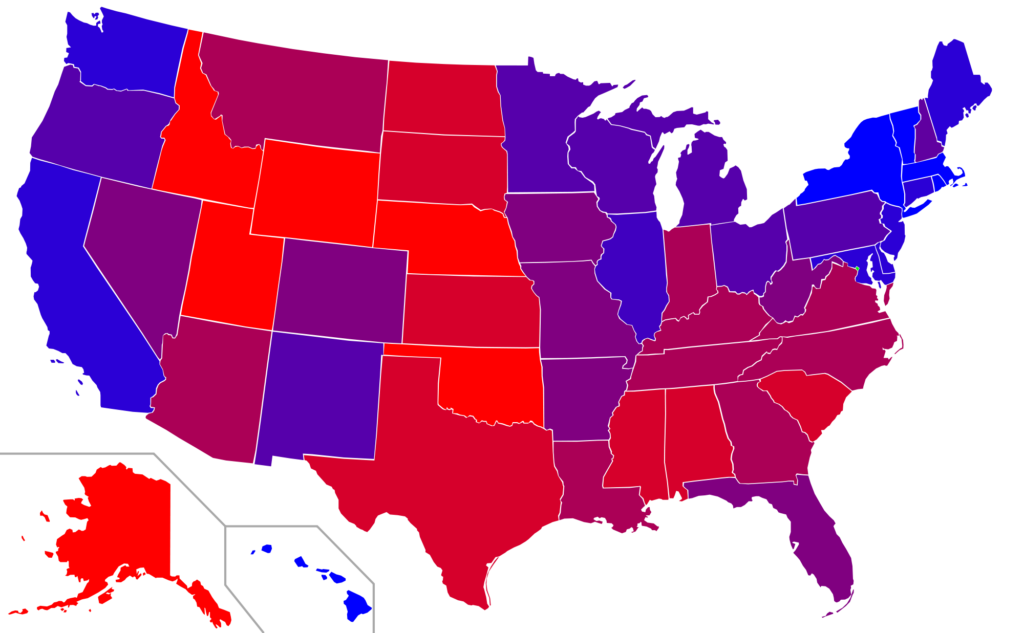
The Red vs. Blue state divide has driven national politics since the realignment of Southern states from Democratic to Republican. Because Republicans generally favor lower taxes and less regulation, the performance of Republican-dominated Red states offers evidence on whether smaller government is better for the economy. The results are surprising, but ultimately illuminating. To approach this, one first must classify states as Red or Blue. This is typically done based on voting in recent presidential elections. I like to use the average vote percentage of the Democratic candidate in the past four elections (back to 2000). This measure yields no real surprises: states like Alabama and Mississippi are Red, while California and New York are Blue. Possibly the best single economic performance measure is median household income, tabulated by the Census Bureau. When we compare states, the results are clear: Blue states outperform Red states. Income averaged across states was $62,000 in 2014 in the 13 “bluest” states, versus $53,000 in the 13 “reddest” states (including Alabama). Liberal bloggers claim such numbers prove low taxes do not grow the economy. These numbers clearly question the economic benefits of limited government which I often promote here. But I emphasize economic freedom, not party labels. Democrats and Republicans have made policy changes increasing (and decreasing) economic freedom. For example, President Carter deregulated trucking, railroads, and the airlines; while President Ronald Reagan lowered the top Federal income tax rate from 70 percent to 28 percent. Divided government under Presidents Bill Clinton and Barack Obama helped to hold federal spending in check. In addition, both current and past economic freedom — good and bad policies from 10, 20, or even 50 years ago — affect performance today. Businesses face significant costs to move their operations and will not move immediately if taxes rise. Many industries also cluster geographically, with financial institutions in New York, automobiles in Detroit, and high tech in Silicon Valley. Industry clusters often persist even if government policies become quite unfriendly for business, and do not spring up immediately upon adoption of better policies. Furthermore, economic freedom is not the only thing that people (and consequently firms) value. Economist Richard Florida, who has extensively studied regional economies, once noted the large number of four-star restaurants in California’s Napa Valley, in the heart of wine country. This concentration was driven by the desire of superstar chefs to live in northern California, not economics, since the competition hurts the profitability of each restaurant. People decide where to live and work based on things like climate, outdoor recreation (beaches and mountains), and the vitality and diversity of mega-cities, not just taxes and the ease of starting a business. So Blue states could readily have higher incomes today even if limited government is better for business. A more revealing analysis asks if Blue states with the most economic freedom are more prosperous, and similarly for Red states. The freest states among both groups, based on Economic Freedom of North America scores today and back to 1981, are indeed more prosperous. Median incomes are 15 percent higher in the most-free versus the least-free Blue states, and 6 percent higher in the freest Red states (25 percent if you don’t include Alaska). Indeed, I think politicians sometimes exploit local amenities to impose otherwise unacceptable tax and regulatory burdens. Lawmakers recognize people will pay high taxes to live in New York, Los Angeles, or San Francisco. But decades of poor policy — California and New York have the least economic freedom today — have taken their toll. Income in New York is only 10 percent above the national average. Economic freedom contributes to prosperity, but is not the only thing that matters in life. Freedom becomes more important because it is what policymakers can change today. We cannot undo bad policies of yesterday or duplicate California’s Pacific coast or the dynamism of New York City. We should focus on what we can control that matters, namely economic freedom. ••• Daniel Sutter is the Charles G. Koch Professor of Economics with the Manuel H. Johnson Center for Political Economy at Troy University and host of Econversations on TrojanVision. The opinions expressed in this column are the author’s alone and do not necessarily reflect the views of Troy University.
