
More women accuse Donald Trump of unwanted sexual touching

Two more women came forward on Friday to accuse Donald Trump of unwanted sexual touching, including a former contestant from a reality show that starred the Republican presidential nominee. The latest accounts come after several women reported in recent days that Trump groped or kissed them without their consent. At a campaign rally in North Carolina on Friday, Trump sought to discredit his accusers. He said because there were no witnesses to the interactions, the allegations were not credible. “Right now I am being viciously attacked with lies and smears,” Trump said at an outdoor amphitheater. “It’s a phony deal. I have no idea who these women are.” Trump also suggested the women who have come forward to accuse him were not physically attractive enough to merit his attention. “Believe me, she would not be my first choice, that I can tell you,” he said when speaking of one of the women. Summer Zervos, a former contestant on “The Apprentice,” said Trump made unwanted sexual advances toward her at a Beverly Hills hotel in 2007, while photographer Kristin Anderson alleged Trump sexually assaulted her in a New York nightclub in the early 1990s. Zervos, 41, appeared at a news conference Friday with Gloria Allred, a well-known Los Angeles attorney who has previously represented women who have accused celebrities of sexual misconduct. Zervos was a contestant on “The Apprentice” in 2006 and said she later contacted Trump to inquire about a job with one of his businesses. Zervos said she had an initial meeting with Trump, where he discussed a potential job with her. When they parted, he kissed her on the lips and asked for her phone number, she said. She said weeks later Trump called to invite her to meet him at the Beverly Hills Hotel, where she said she was expecting to have dinner with the New York billionaire. Instead, she described a series of unwanted kisses and touching by Trump, which she said she repeatedly rejected. “He tried to kiss me again … and I said, ‘Dude, you’re tripping right now,’ attempting to make it clear I was not interested,” she said. Zervos said Trump eventually stopped and began talking as if they were in a job interview. She said she was later offered a low-paying job at a Trump-owned golf course. At the time, Trump had recently married his third and current wife, Melania Trump, and the couple had an infant son. Zervos said she is a Republican and has no political agenda in coming forward. Allred said her client told her parents and others about the incident shortly after it occurred. In a story published online Friday, Anderson told The Washington Post that she was sitting on a couch with friends at a New York nightclub in the early 1990s when someone’s hand reached up her skirt and touched her through her underwear. Anderson, then in her early 20s, said she pushed the hand away, turned around and recognized Trump as the man who had groped her. Then recently divorced, Trump was then a frequent presence in the New York tabloids, and he was regular presence on the Manhattan club scene. “He was so distinctive looking — with the hair and the eyebrows. I mean, nobody else has those eyebrows,” Anderson, 46, told the newspaper. She said the assault was random and occurred with “zero conversation.” Anderson did not immediately respond to a phone message from The Associated Press. She told the newspaper said she does not back Trump or Hillary Clinton, the Democratic nominee. At the time of the incident, Anderson was trying to start a career as a model while working as a makeup artist and restaurant hostess. She said the episode lasted no more than 30 seconds. Anderson told the Post that she and her companions were “very grossed out and weirded out” and thought, “OK, Donald is gross. We all know he’s gross. Let’s just move on.” The Post said it contacted Anderson after a friend she had told about the incident recounted it to a reporter. Other friends also told the Post that Anderson recounted the same story to them years ago. At the North Carolina rally, Trump physically acted out two of alleged incidents. “Somebody that you’ve never seen that said, ‘Oh, in 1992, he went like this,’” he said at one point, appearing to mimic pawing at a woman’s chest in a downward motion. Anderson’s decision to speak publicly about her experience follows last week’s disclosure by the Post of a 2005 video in which Trump boasted that his celebrity gave him the ability to grab women “by the p—-. You can do anything.” Trump apologized for those remarks, but also dismissed them as “locker-room talk.” Anderson disagreed that Trump’s behavior is harmless. “It’s a sexual assault issue, and it’s something that I’ve kept quiet on my own,” she told the Post. “And I’ve always kept quiet. And why should I keep quiet? Actually, all of the women should speak up, and if you’re touched inappropriately, tell somebody and speak up about it. Actually, go to the authorities and press some charges. It’s not OK.” Republished with permission of The Associated Press.
Former Alabama Lt. Gov. Lucy Baxley dies at age 78
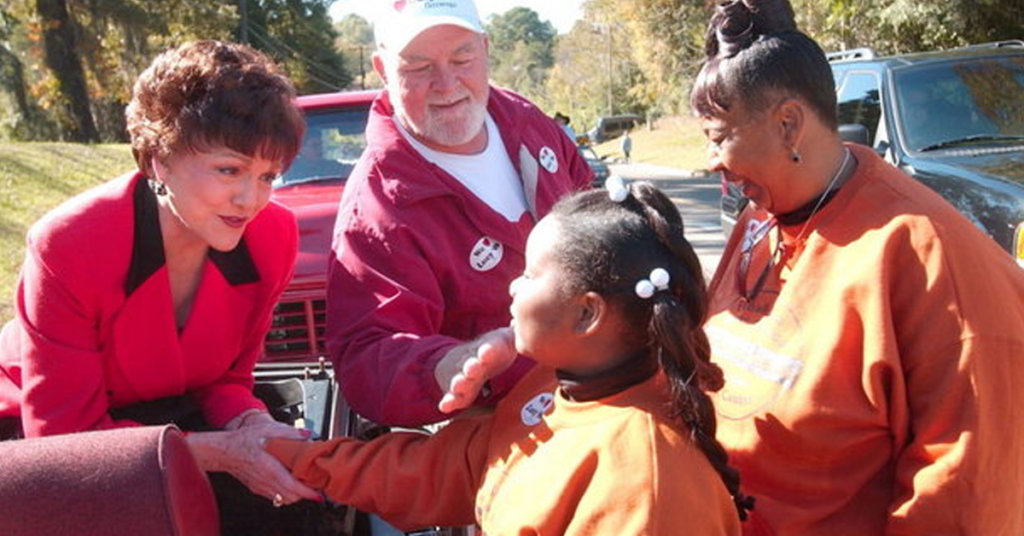
Alabama’s first female Lt. Gov. Lucy Baxley has passed away at the age of 78. She died peacefully at her home surrounded by family. Baxley was the last Alabama Democrat to hold statewide office, serving in the as lieutenant governor from 2003-2007. In 2006, Baxley defeated Don Siegelman to claim the Democratic nomination for governor, where she ran against incumbent Republican Gov. Bob Riley, but lost. Shortly after the election, Baxley suffered a stroke that left her confined to a wheelchair. Nevertheless she persevered and went on to narrowly defeat Republican Twinkle Andress Cavanaugh for president of Alabama’s Public Service Commission in 2008. In 2012, Cavanaugh defeated Baxley in her re-election bid. “Today the state of Alabama lost a great public servant,” Gov. Robert Bentley said of Baxley’s passing. “Lucy Baxley loved Alabama and loved the people of Alabama. I enjoyed our time working together when I served in the Legislature. Lucy will forever be remembered as a fierce advocate for the people of Alabama, for her decades of service and as Alabama’s first female lieutenant governor. My thoughts and prayers are with her family and friends during this time.” House Minority Leader Craig Ford echoed Bentley’s sentiments that Baxley was a great public servant. “My thoughts and prayers are with the Baxley family today,” said Ford in a statement. “Lucy was a true public servant, a pillar of the Alabama Democratic Party and will be greatly missed.” Baxley is survived by her husband of 20 years, Jim Smith, her son Louis Baxley, daughter Becky Nichols, as well as four grandchildren and three great grandchildren. “When I asked Lucy to marry me, I really didn’t know what it would be like to be married to a politician,” Smith said in a news release from the family. “I’m still not so sure about the politician part, but I do know what it was like to be married to the most caring and wonderful woman in the world.”
Joe Henderson: Assault on polling begins in ShameFest 2016

As we approach the home stretch of ShameFest 2016 — otherwise known as the election — we should take a moment to ponder one of the great moments the last time the nation chose a president. It was election night in 2012 and Fox News, accurately as it turned out, declared President Barack Obama had won Ohio and, thus, a second term as commander in chief. But GOP operative Karl Rove didn’t agree. He argued live on camera that his own network was wrong. He argued that his numbers told a different story, and that Mitt Romney would win. So anchor Megyn Kelly was dispatched to the Fox number-crunching room, where the people charged with making that call patiently explained why they were 99.5 percent correct on their projection. When Rove persisted, saying his calculations told a different story, Kelly asked, “Is that math you do as a Republican to make yourself feel better?” It was the runaway best quote of the election season. We are seeing an assault on polling again, particularly by the Donald Trump camp. At every rally, he tells the faithful that the polls are wrong and it always gets big cheers. I’ll admit this morning I did a double-take Friday morning when Rasmussen Polling showed Trump with a 43-41 percent lead nationally. Where in the world did that come from, especially when even News shows Hillary Clinton with a 7-point advantage? There are too many polls for the average voter (or, I hate to admit, the average journalist) to keep up with. And since polls show only a snapshot of the moment, no one can say with certainty who will or won’t win until all the votes are counted. So it’s really a case of which ones you trust most. I tend to believe Nate Silver’s fivethirtyeight.com site is on the mark way more often than not. In case you’re curious, his site has a section devoted to grading the accuracy of all the polls. The ranking is based on several criteria, including the percentage of races it has called correctly. He has the Monmouth University poll at the top of a lengthy list of polls. It was one of six polls, including the ABC/Washington Post poll, to get an A-plus rating. For what it’s worth, he gives the Rasmussen poll a C-plus. Silver’s own forecast has Hillary Clinton with an 84.4 percent chance of winning the election. He gives her a 72 percent chance of winning Florida’s 29 electoral votes. Remember, though, that’s just a snapshot. The site advises it will be updating its forecasts every time new data is available until the election, because things do change. In the end, though, numbers never lie even when politicians do. ___ Joe Henderson has had a 45-year career in newspapers, including the last nearly 42 years at The Tampa Tribune. He covered a large variety of things, primarily in sports but also including hard news. The two intertwined in the decade-long search to bring Major League Baseball to the area. Henderson was also City Hall reporter for two years and covered all sides of the sales tax issue that ultimately led to the construction of Raymond James Stadium. He served as a full-time sports columnist for about 10 years before moving to the metro news columnist for the last 4 ½ years. Henderson has numerous local, state and national writing awards. He has been married to his wife, Elaine, for nearly 35 years and has two grown sons – Ben and Patrick.
Medicare unveils far-reaching overhaul of doctors’ pay
Medicare on Friday unveiled a far-reaching overhaul of how it compensates doctors and other clinicians. The goal is to reward quality, cost-effective care instead of just paying piecemeal for services. The complex regulation is nearly 2,400 pages long and will take years to fully implement. It’s meant to carry out bipartisan legislation that was passed by Congress and signed by President Barack Obama last year. Whether it succeeds or fails, it’s one of the biggest changes in Medicare’s 50-year history. While the concept of paying for quality has broad support, the details have been a source of trepidation for some clinicians, who worry that the new system will force small practices and old-fashioned solo doctors to join big groups. Patients may soon start hearing about the changes from their physicians, but it’s still too early to discern the impacts. The Obama administration sought to calm concerns Friday. “Transforming something of this size is something we have focused on with great care,” said Andy Slavitt, head of the federal Centers for Medicare and Medicaid Services. Officials said they considered more than 4,000 formal comments and held meetings around the country attended by more than 100,000 people before issuing the final rule, which gives clinicians more time to comply. The administration will continue to accept comments and suggestions. MACRA, the Medicare Access and CHIP Reauthorization Act, creates two new payment systems, or tracks, for clinicians. The majority of medical professionals who bill Medicare – more than 600,000 doctors, nurse practitioners, physician assistants and therapists – are affected. Medical practices must decide next year what track they will take. Starting in 2019, clinicians can earn higher reimbursements if they learn new ways of doing business, joining a leading-edge track that’s called Alternative Payment Models. That involves being willing to accept financial risk and reward for performance, reporting quality measures to the government, and using electronic medical records. Medicare said some 70,000 to 120,000 clinicians are expected to initially take that track, which is more challenging. Officials are hoping that number will quickly grow. Most clinical practitioners – an estimated 590,000 to 640,000 – are expected to join a second track called the Merit-Based Incentive Payment System. It features more modest financial incentives, and accountability for quality, efficiency, use of electronic medical records, and self-improvement. Finally, about 380,000 clinicians are expected to be exempt from the new systems because they don’t see enough Medicare patients, or their billings do not reach a given threshold. “This law and this regulation are going to need to evolve as medicine evolves,” Slavitt said. Advocates say the new system will improve quality and help check costs. But critics say the complicated requirements could prove overwhelming. The administration says some doctors will be pleasantly surprised to find out that reporting requirements have actually been streamlined to make them easier to meet. With 57 million beneficiaries, Medicare is the government’s premier health insurance program. The Obama administration has pushed to overhaul payment not only for doctors, but also for hospitals and private insurance plans that serve many beneficiaries. The unifying theme is a new emphasis on rewarding quality over volume. While some quality improvements have already been noted, it’s likely to take years to see whether the new approach can lead to major savings that help keep Medicare sustainable over the long run. Medicare’s previous congressionally mandated system for paying doctors proved unworkable. It called for automatic cuts when spending surpassed certain levels, and lawmakers routinely waived those reductions. MACRA was intended by lawmakers as a new beginning. Republished with permission of the Associated Press.
Ken Bone’s past comments come to light in Reddit session
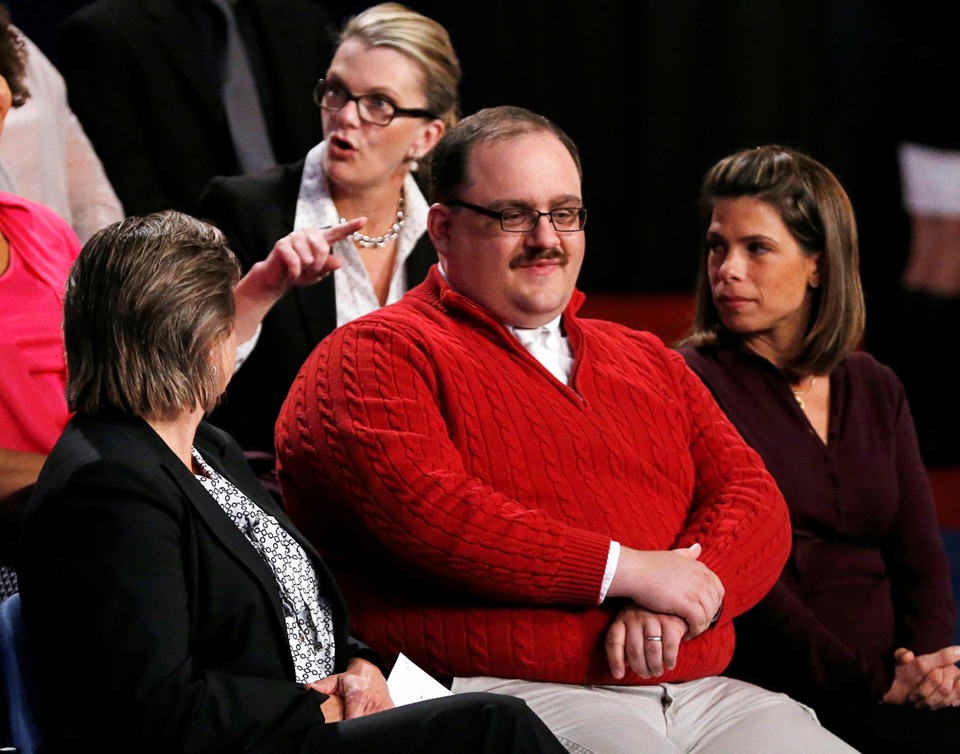
Ken Bone is learning what it’s like to be famous. The Illinois man who became an internet sensation after asking a question of the candidates while wearing a bright red sweater during Sunday’s presidential debate answered questions on Reddit late Thursday and early Friday. Bone included his Reddit username in a Twitter post announcing the session. Those who looked up the name found Bone has shared his thoughts on everything from images of a pregnant woman in a bikini to the increased “sexual satisfaction” he found after undergoing a vasectomy. In another post, he commented that the 2012 fatal shooting of Florida teen Trayvon Martin was justified, but also expressed contempt for the shooter, George Zimmerman. When questioned about some of his comments, Bone responded, “I’m not running for president. I can say whatever I want.” Republished with permission of the Associated Press.
‘Come on, man,’ Barack Obama says, rolling his eyes at Donald Trump

Rolling his eyes at the Republican nominee, President Barack Obama mocked Donald Trump‘s purported business acumen and newfound rage against the “global elite,” as he rallied Friday for Democrat Hillary Clinton. He warned that democracy itself was at risk if Trump wins. As the presidential election draws to a close, Obama has increasingly embraced his role as troll-in-chief to the former reality star who hopes to succeed him in the Oval Office. With his own popularity having rebounded, Obama has become one of Trump’s chief antagonists making the claim that Trump’s exaggerated boasts aren’t to be believed. He used a rally for Clinton in battleground Ohio to try to debunk Trump’s charge a day before that Clinton was at the center of a global conspiracy by wealthy elites and political big-wigs to rig the system against working people. Obama encouraged voters to judge candidates by “what they’ve been doing their whole lives.” “This is a guy who spent all his time hanging around, trying to convince everybody he was a global elite … and flying around everywhere and all he had time for was celebrities,” Obama said. “Suddenly he’s going to be the champion of working people?” “Come on, man,” Obama said with a sardonic laugh, in what became a recurrent refrain of his campaign speech. In a cutting jab at Trump’s business acumen, the president invoked the gambling adage that “the house always wins.” “Unless he owns the house,” Obama said of Trump, his voice dripping with contempt. “Then it loses a billion dollars.” Trump, who formerly had a casino empire in Atlantic City, reported losing more than $900 million in 1995 in tax returns that were recently leaked. He’s since acknowledged using those losses and accounting measures to avoid paying federal incomes taxes for years. Obama’s final-stretch push for Clinton has coincided with growing concerns among both parties that the intense toxicity of this year’s campaign could pose long-term problems for American democracy, as citizens lose faith in the well-being of their political system. In his most direct terms yet, Obama echoed those concerns. “Democracy itself is on the ballot right now,” he said. The president pointed to Trump’s claims that the election is “rigged” against him, a charge Trump has leveled while encouraging his supporters to monitor for voter fraud he believes will be perpetrated in Pennsylvania and elsewhere. He likened Trump’s tactics – including barring journalists he dislikes – to the way undemocratic nations operate, adding that “they are tyrannies and they are oppressive.” In a nod to Democratic concerns that Trump is trying to drive down turnout, Obama said Trump wanted to make politics so toxic that voters would figure they have “no good choices, and just not vote.” “Don’t fall for it,” he urged some 2,500 rally-goers in Cleveland. Ohio, with its diverse mix of cities and rural areas, is a coveted prize every four years, seen as a barometer for the shifts in the nation’s political climate. This year, it’s one of just four states that polls still suggest are toss-ups, along with Nevada, North Carolina and Florida. This week Obama entered the final 100 days of his presidency, and he’s increasingly devoting his time to trying to push Clinton over the finish line. Deploying his own popularity against Trump, Obama warned in dire terms that his legacy would falter if the businessman is elected. “I’m here to tell you that all that progress goes out the window if we don’t make the right choice right now,” Obama said. Republished with permission of the Associated Press.
New York Times says no libel, no retraction, no apology for Donald Trump story
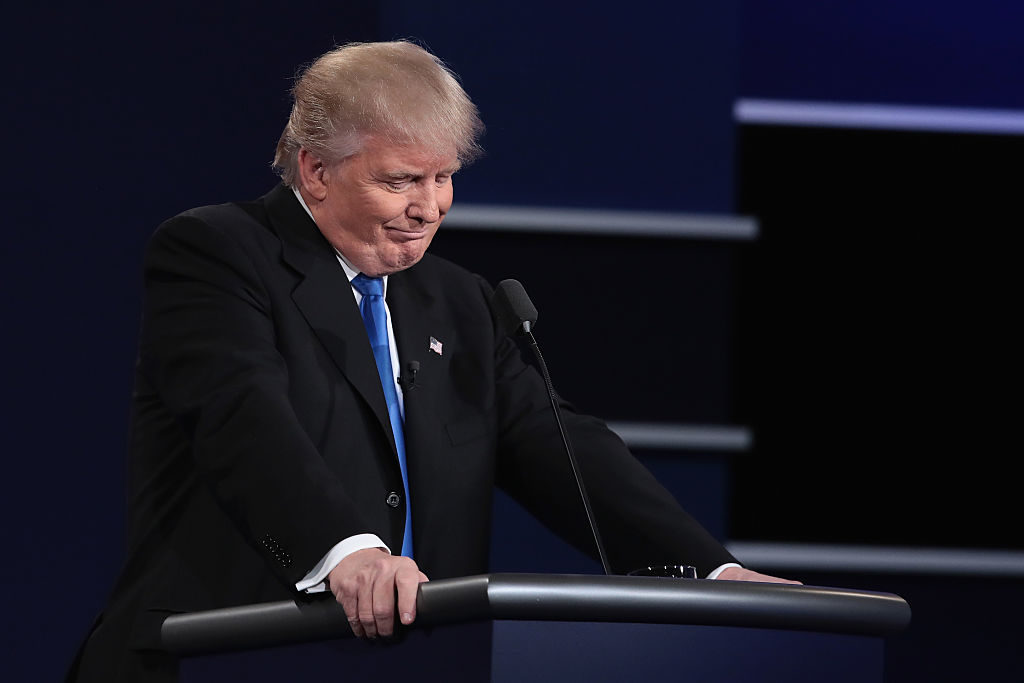
The New York Times on Thursday rejected Donald Trump‘s claim the newspaper had libeled the Republican presidential nominee, saying its story about two women who said he sexually assaulted them was “newsworthy information about a subject of deep public concern.” In a letter, Times attorney David McCraw said Trump “has bragged about his non-consensual sexual touching of women” and that multiple women had already come forward. “Nothing in our article has had the slightest effect on the reputation that Mr. Trump, through his own words and actions, has already created for himself,” he wrote. The Times reported Wednesday that two women told the paper of his unwanted sexual advances. One, Jessica Leeds, said Trump groped her on an airplane more than three decades ago. The other, Rachel Crooks, said Trump kissed her without invitation in 2006 when she was a 22-year-old receptionist for a real estate firm located at Trump Tower. Trump vehemently denied the allegations, and demanded through his attorney that the story be retracted. At a rally in Ohio, Trump said the media had “slandered and lied about me with false accusations.” The Times refused to retract the story, saying its reporters worked diligently to confirm the women’s accounts. “It would have been a disservice not just to our readers but to democracy itself to silence their voices,” McCraw’s letter said. McCraw said that if Trump decides to go ahead with a lawsuit, then “we welcome the opportunity to have a court set him straight.” Trump’s wife, Melania Trump, is threatening to sue a separate publication over another woman’s allegation of assault by her husband. Lawyers for Melania Trump demanded Thursday that People magazine retract and apologize for a story in which one of its writers, Natasha Stoynoff, describes being assaulted by Trump at their Florida home, Mar-a-Lago, in 2005. Stoynoff wrote that she had arrived to interview the couple for a story, and that when Melania Trump left the room, her husband pushed Stoynoff against a wall and assaulted her. The story also says the writer and Melania Trump later ran into each other in New York and had a conversation. Lawyers for the Republican nominee’s wife say no such encounter occurred. Republished with permission of the Associated Press.
Suspended Chief Justice Roy Moore asked to remove personal items from office
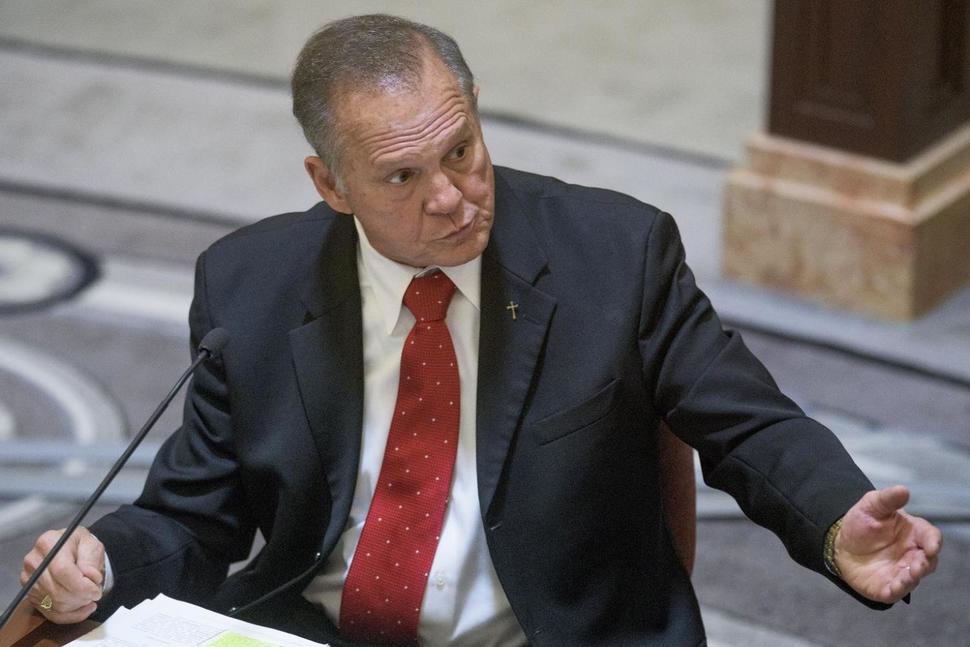
Suspended Alabama Chief Justice Roy Moore has been asked to remove his personal items from the state courthouse and turn in his keys to the building. Acting Chief Justice Lyn Stuart made the request with an Oct. 18 deadline. Last month, Moore was suspended from the bench for the remainder of his term for encouraging probate judges to defy a federal order and refuse marriage licenses to gay couples back in January. The nine-member Alabama Court of the Judiciary (COJ) unanimously found Moore guilty on six charges relating to violations of the canon of judicial ethics, and issued his suspension from the bench. Moore filed a notice of appeal last week.
Hillary Clinton plots a ‘do no harm’ campaign amid Donald Trump whirlwind
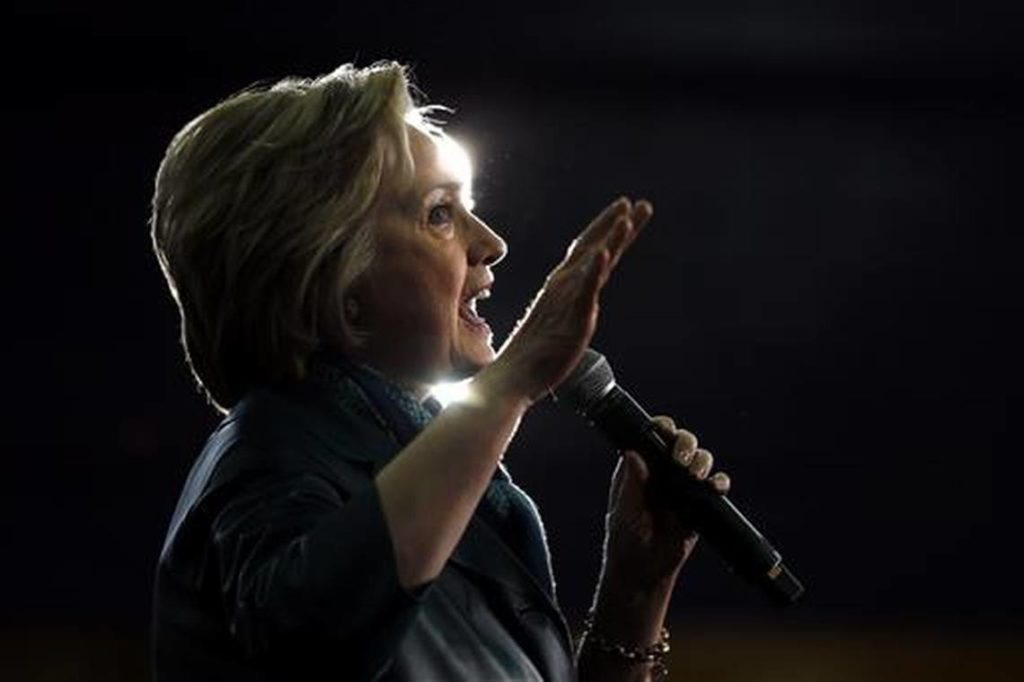
How do you run for president during a political cyclone with no precedents and no predictable path? Hillary Clinton has her answer: Slow and steady. As Donald Trump jags across the country, battling an onslaught of sexual misconduct allegations, his party’s opposition and the media, Clinton has stepped cautiously on the campaign trail. She rarely makes news or veers from her script. She keeps a plodding schedule of modest-size events. She relies heavily on her cast of loyal – and arguably more effective – surrogates. And she doesn’t overdo it: With just less than a month left to campaign, Clinton was fundraising in California on Thursday and expected to spend most of the weekend out of the public eye. “Make no errors, do no harm,” said Republican strategist Rick Tyler, who worked for Trump’s primary rival Sen. Ted Cruz. “(Trump) has no ability to make good news about himself. Like none. So why not just let him go?” The news about Trump has overshadowed potentially damaging reports about Clinton based on thousands of hacked emails that apparently came from the email account of her campaign chairman, John Podesta. The campaign has not confirmed the authenticity of the emails. Clinton aides said the former secretary of state has been balancing a full schedule – she attended rallies in Michigan, Ohio, Florida, Colorado and Nevada this week – with preparations for the final debate, scheduled for Wednesday, as well as fundraising for an ambitious get-out-the-vote program and advertising in battleground states. She was also off the trail for several days in September after a bout of pneumonia forced an awkward exit from a 9/11 memorial event. Spokesman Brian Fallon said that that Clinton “continues to take time to raise resources to execute our strategy and prepare for the debates,” and said the campaign was “confident we’re not leaving any voters untouched in critical states.” There’s little sign that the relatively low-key strategy is hurting Clinton, who has seized a comfortable lead in several national polls. Early voting shows positive signs for her in two states that could help her lock up the presidency, North Carolina and Florida, according to preliminary data compiled by The Associated Press. Still, the approach strikes a sharp contrast to her predecessor on the Democratic ticket. Never a natural on the stump, Clinton has had few of the massive rallies that defined President Barack Obama‘s two campaigns. Her largest event to date, an evening rally on the campus at Ohio State University, drew some 18,500 people on Tuesday. But events a quarter of that size are more common. Around this time eight years ago, Obama drew 100,000 people to a rally in Missouri. Clinton isn’t aiming for that kind of spotlight. Her campaign notes she’s focused on policy speeches and voter registration events. She’s also looked for ways to talk to her voters without riling those she will never win over. She consistently talks to local press as she travels around the country and has worked through niche media, granting an interview to a student journalist for Elle Magazine and speaking with Mary J. Blige for her new show. Clinton is also relying on a team of what her campaign calls “uber-surrogates” to cover the territory she is not. In recent days, first lady Michelle Obama has fired up heavily female audiences in Raleigh and Charlotte, North Carolina, while President Barack Obama husband hit Greensboro and was due to campaign Friday in Ohio. Former President Bill Clinton campaigned this week across Florida and then hopped on a bus tour through Iowa on his wife’s behalf. Mrs. Obama’s scathing remarks about Trump’s treatment of women rocketed around social media and instantly won the sort of buzz Clinton herself rarely seeks. “Too many are treating this as just another day’s headline. As if our outrage is overblown or unwarranted, as if this is normal, just politics as usual,” Mrs. Obama said Thursday in Manchester, New Hampshire. “This is not normal. This is not politics as usual. This is disgraceful.” Clinton herself has at times seemed determined not to make news. On Wednesday, though the campaign signaled she would launch a harder attack on Republicans aligned with Trump, a move that would win headlines, she demurred. On Thursday, as Trump issued denials and threatened lawsuits over the new round of news stories alleging mistreatment of women, Clinton made no direct comment on the allegations. She did, however, recommend that her supporters watch the first lady’s blistering takedown. Republished with permission of the Associated Press.
Stephen Stetson: ‘Ban the box’ to enhance the chance for Alabama workers, employers to succeed
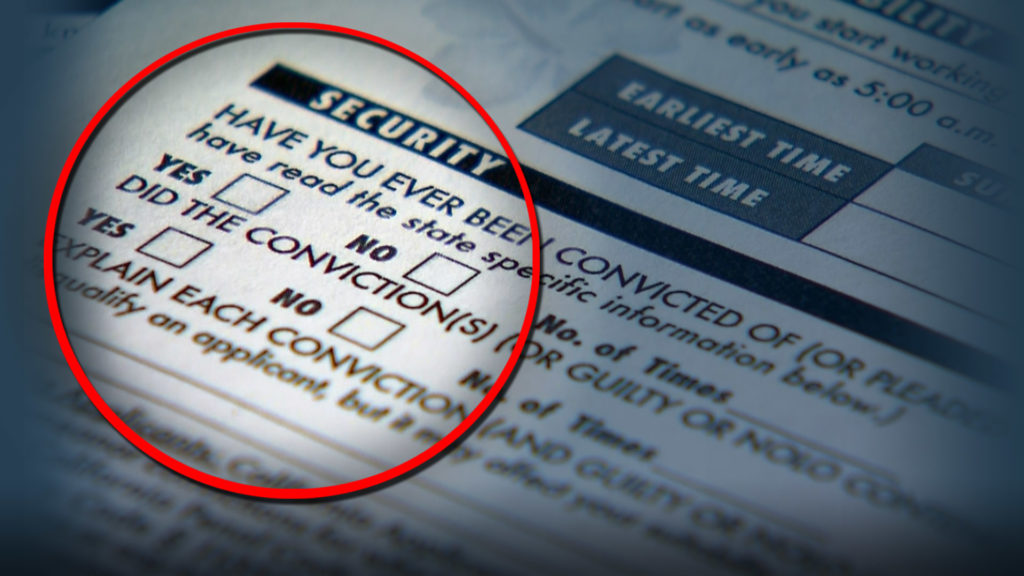
It’s rare to have a political revelation in the bread aisle. But two recent trips to the grocery store gave me a sense of a needed change in Alabama’s criminal justice system. Both Winn-Dixie and Publix carry Dave’s Killer Bread, which comes in bags with a logo of a guy with a mustache and a mullet holding an electric guitar. But the most interesting thing about this bread isn’t the branding — it’s the story behind it. Dave’s Killer Bread makes a conscious effort to employ people with criminal convictions. One in three of its employees has a criminal background. “We believe that everyone is capable of greatness, and we have seen firsthand the powerful transformation that is possible when someone is given a second chance,” the company’s website says. “Our goal is to serve as an example to other employers that hiring people with criminal backgrounds can strengthen not only their workforce and company culture, but their local communities as well.” This is powerful stuff — not to mention that I ended up buying a loaf and making some of the best toast I’ve ever had. It was a timely reminder that Alabama lawmakers are examining the state’s rules about job application processes in response to a nationwide nonpartisan movement to “ban the box” — that is, to remove the criminal history checkbox on job applications. Alabama would do well to move in this direction. Some of our neighbors already have this policy. Georgia Gov. Nathan Deal signed an executive order last year removing the criminal history question from applications for state jobs. Louisiana and Tennessee followed suit this year. In all, 24 states have some form of “ban the box” policy. Nine of them forbid private-sector employers from making the inquiry at the initial job application stage as well. Let’s be clear: These policies don’t mean employers can’t ask about applicants’ histories. It just means they get to build a first impression based on qualifications in the person’s resume. Study after study shows you get better candidates when you let them explain in person any previous mistakes they may have made. The “ban the box” movement isn’t just the product of criminal justice reform groups. It also has the support of some of our country’s largest employers, including Home Depot, Target, and Wal-Mart. All of them realize we’re better off when we don’t screen people out of the hiring process with a single question on an application. Nobody benefits from permanently locking people out of meaningful employment. Once people have served their time and paid their debt to society, they ought to be able to rejoin the economy and contribute in a meaningful way. When their job applications are rejected out of hand due to a previous run-in with the law, people can become alienated, frustrated, and hopeless. This same logic also applies to another change Alabama lawmakers need to make: updating the law to allow more people to regain voting rights. Certain crimes permanently disqualify people from voting, but amazingly, Alabama has no clear list of which offenses actually count as these “crimes of moral turpitude.” The Legislature should end that uncertainty in 2017. People with criminal convictions can, and must, re-enter society after fulfilling the terms of their punishments. They should be allowed to work and vote and make meaningful contributions to society. Some simple changes to our laws can help reduce recidivism and smooth the extremely difficult path facing people seeking to start a new life after prison. Getting re-entry policies right isn’t always easy. But “ban the box” and voting rights restoration are two policy changes that would make Alabama safer and more prosperous. Companies benefit when they hire from the fullest range of people in the applicant pool, and we all benefit when people are more invested in their community’s future. That’s why the legal barriers to re-entry in Alabama should become toast — and not the delicious kind. ••• Stephen Stetson is a policy analyst for Arise Citizens’ Policy Project, a nonprofit, nonpartisan coalition of congregations, organizations and individuals promoting public policies to improve the lives of low-income Alabamians. Email: stephen@alarise.org.
Billy Bush lawyer: Bush risked firing if he rebuked Donald Trump
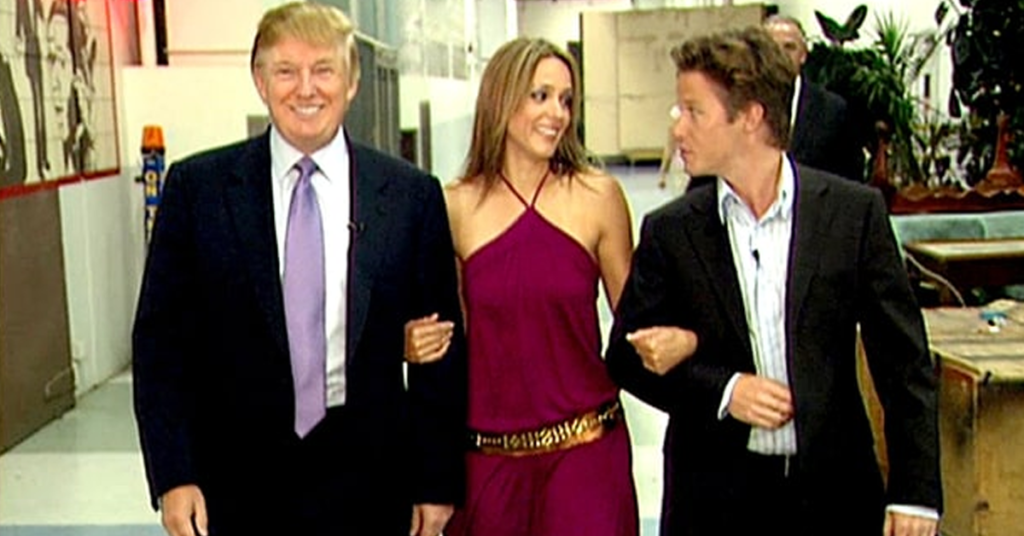
An attorney for Billy Bush is defending the TV personality’s part in a lewd 2005 exchange with Donald Trump. Marshall Grossman told The Hollywood Reporter that Bush would have been fired from his then-job with “Access Hollywood” if he’d been passive or told Trump to shut up. Grossman noted Bush was a NBC Universal employee talking with NBC’s “The Apprentice” star. The attorney, who was quoted by the trade paper online Thursday, declined comment when reached by phone. Bush, who joined NBC News’ “Today” as a co-host in recent months, was suspended after the tape became public last week. NBC is said to be privately negotiating his exit. Both NBC and “Access Hollywood” declined to comment on the report. A publicist for Bush didn’t immediately respond when asked for comment. Republished with permission of the Associated Press.
