
Donald Trump challenges legitimacy of election
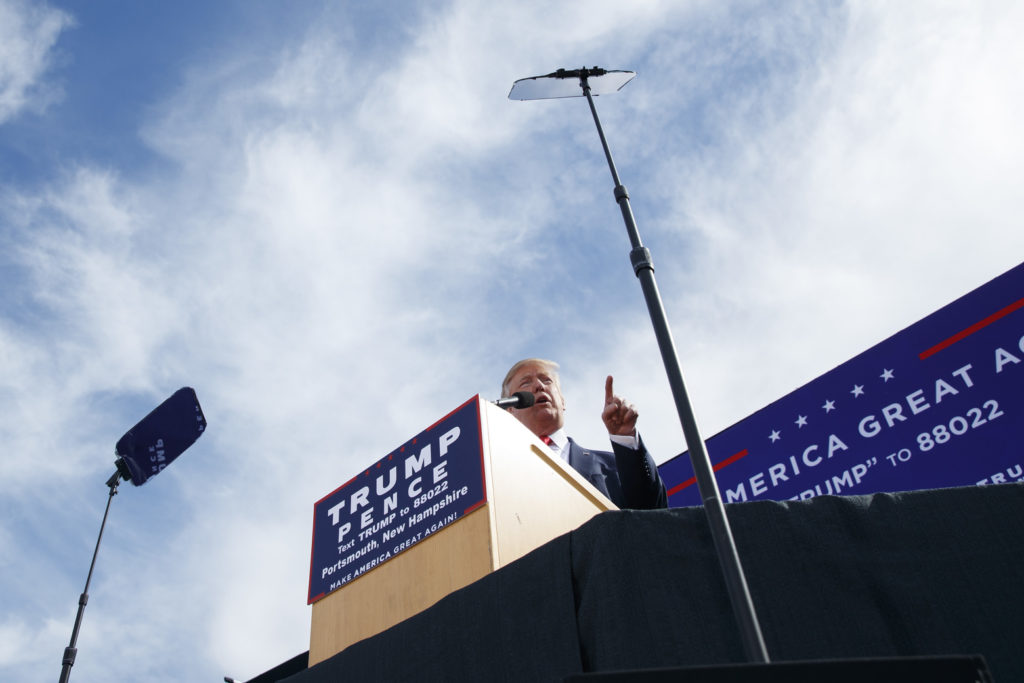
A beleaguered Donald Trump sought to undermine the legitimacy of the U.S. presidential election on Saturday, pressing unsubstantiated claims the contest is rigged against him, vowing anew to jail Hillary Clinton if he’s elected and throwing in a baseless insinuation his rival was on drugs in the last debate. Not even the country’s more than two centuries of peaceful transitions of political leadership were sacrosanct as Trump accused the media and the Clinton campaign of conspiring against him to undermine a free and fair election. “The election is being rigged by corrupt media pushing completely false allegations and outright lies in an effort to elect her president,” he said, referring to the several women who have come forward in recent days to say that Trump had groped or sexually assaulted them. He has denied the claims, calling the women liars. Earlier Saturday, Trump took to Twitter to warn that “100% fabricated and made-up charges, pushed strongly by the media and the Clinton Campaign, may poison the minds of the American Voter. FIX!” “Hillary Clinton should have been prosecuted and should be in jail,” he added. “Instead she is running for president in what looks like a rigged election.” In a country with a history of peaceful political transition, his challenge to the election’s legitimacy — as a way to explain a loss in November, should that happen — was a striking rupture of faith in American democracy. Trump has repeatedly claimed without offering evidence that election fraud is a serious problem and encouraged his largely white supporters to “go and watch” polling places in certain areas to make sure things are “on the up and up.” Peter Kostruba, a Trump supporter who traveled to his Portsmouth rally from Barnet, Vermont, with his 10-year-old son, said he’s not expecting riots to break out if Clinton wins, but he sees sharper divisions in the country. “It definitely feels like the odds are stacked, whether it’s the legal system or the voter system,” Kostruba said. “I don’t think you’re going to see all of this group here arm themselves and mobilize, but, you know, we’re probably not too many years away from that if things keep going the way we’re going.” On a similar theme, a prominent Trump supporter who spoke at the GOP convention last summer, Sheriff David Clarke Jr. of Wisconsin’s Milwaukee County, tweeted Saturday: “It’s incredible that our institutions of gov, WH, Congress, DOJ, and big media are corrupt & all we do is bitch. Pitchforks and torches time.” Clarke, an elected Democrat, illustrated his tweet with a photo showing angry people with clubs and torches. House Speaker Paul Ryan, whose decision not to campaign for Trump angered the GOP nominee, made clear he does not share the candidate’s concern about the election’s legitimacy.”Our democracy relies on confidence in election results, and the speaker is fully confident the states will carry out this election with integrity,” said AshLee Strong, speaking for him. It was not the first time Trump has raised the idea the election is unfairly tilted against him, but it has become a resurgent theme for the New York billionaire and many of his supporters in the past several days as he’s slipped in preference polls and faced allegations of sexual misconduct. As well, campaign money is tight, at least in comparison with his rival’s resources, according to information that pre-dates the release of a 2005 video that showed him bragging about imposing himself on women. Trump began this month with $75 million in his campaign and joint party accounts, he said Saturday in a statement. That’s exactly half of what the Clinton team said it had on hand — a worrisome financial disadvantage for the Republican side. There was trouble in Ohio, too, where Trump severed ties with the state’s Republican Party chairman, Matt Borges, who had become openly critical of the nominee at times. That crack in unity comes in a critical battleground state, where Republican Gov. John Kasich is also not behind Trump. Trump’s tribulations and accusations overshadowed the release Saturday of yet more emails hacked from accounts of Clinton campaign chairman John Podesta, laying bare aspects of the campaign’s internal deliberations. The latest batch showed the campaign worrying whether Sen. Elizabeth Warren might endorse Bernie Sanders, wrestling with how to respond to revelations about her private email use, and lining up materials to respond to fresh accusations from Juanita Broaddrick, who accused Bill Clinton of raping her decades ago. He denied the rape accusation, which was never adjudicated by a criminal court. Trump also suggested Saturday that Clinton had been on drugs during the last debate and challenged his rival to a drug test before the final debate Wednesday. Instead of spending the weekend preparing, he said, “I think she’s actually getting pumped up, you want to know the truth.” “I think we should take a drug test prior to the debate, ’cause I don’t know what’s going on with her,” he said. “But at the beginning of her last debate, she was all pumped up at the beginning. And at the end, it was like … she could barely even reach her car.” Trump offered no evidence to support the bizarre claim. Nothing about Clinton’s demeanor in the debate suggested she was under the influence. Republished with permission of the Associated Press.
Emails show concern over Bill Clinton’s Wall Street speech
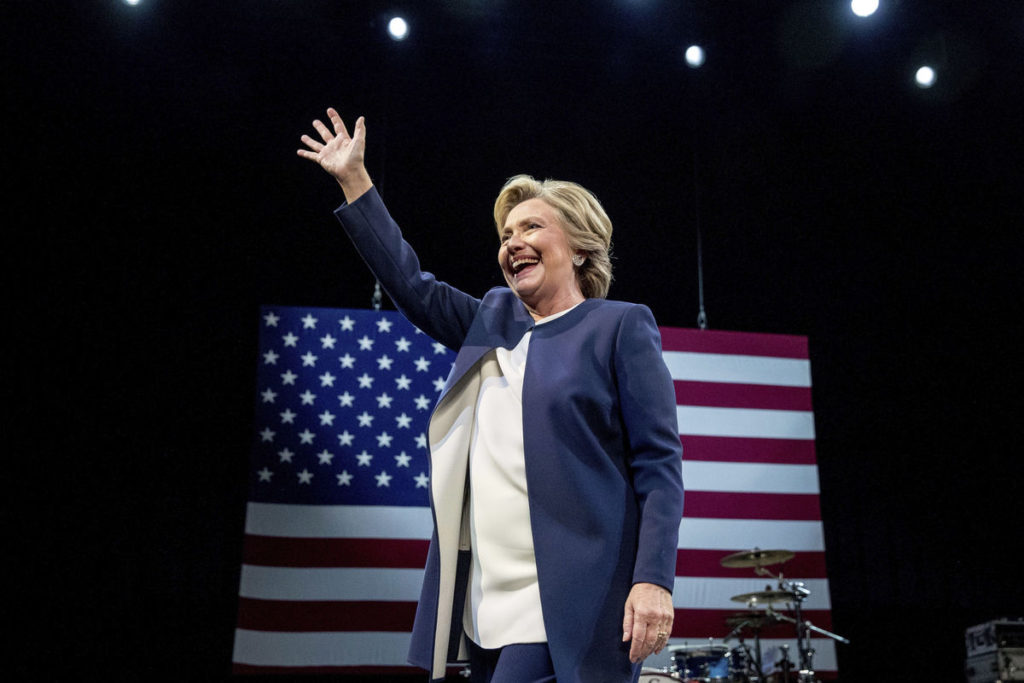
Hillary Clinton‘s campaign asked former President Bill Clinton to cancel a speech to a Wall Street investment firm last year because of concerns that the Clintons might appear to be too cozy with Wall Street just as the former secretary of state was about to announce her White House bid, newly released emails show. Clinton aides say in hacked emails released Friday by the anti-secrecy group WikiLeaks that Hillary Clinton did not want her husband to cancel the speech, but after a “cool down period” was eventually convinced that canceling was the right step. Campaign manager Robby Mook said he realized canceling the lucrative speech would disappoint both Clintons but “it’s a very consequential unforced error and could plague us in stories for months.” The Clintons’ paid speeches have been an issue throughout the campaign, particularly Hillary Clinton’s private speeches to Wall Street firms. Hillary Clinton earned about $1.5 million in speaking fees before launching her presidential campaign, while Bill Clinton reaped more than $5 million from banking, tech and other corporate interests, according to financial documents filed by Hillary Clinton. The campaign has never released transcripts of Hillary Clinton’s speeches, but the hacked emails did reveal excerpts flagged by her advisers as potentially concerning. In the excerpts, Clinton talked about dreaming of “open trade and open borders” in the Western Hemisphere. She also says politicians sometimes need to have “both a public and a private position” on issues. Bill Clinton was scheduled to speak to Morgan Stanley executives in April 2015, a few days after his wife was set to launch her bid for president. “That’s begging for a bad rollout,” Mook wrote in a March 11, 2015, email. In a later email, Mook says he feels “very strongly that doing the speech is a mistake” with serious potential consequences for Hillary Clinton’s campaign. “People would (rightfully) ask how we let it happen.” Hillary Clinton was scheduled to campaign in Iowa, “where caucus-goers have a sharply more negative view of Wall Street than the rest of the electorate,” Mook wrote. “Wall Street ranks first for Iowans among a list of institutions that ‘take advantage of everyday Americans,’ scoring twice as high as the general election electorate. … This is a very big deal in my view.” Clinton’s longtime aide, Huma Abedin, assured Mook the next day that Clinton was fine with canceling the speech, especially if Bill Clinton agreed. The candidate “just needed a cool down period,” Abedin wrote. The emails were among thousands published this week by WikiLeaks, which has been releasing a series of emails hacked from the accounts of Clinton campaign chairman John Podesta. U.S. intelligence officials last week blamed the Russian government for a series of breaches intended to influence the presidential election. The Russians deny involvement. Podesta’s hacked messages offer insight into the various strategies and responses considered by those close to Clinton as they grappled with pitfalls in her bid for the Democratic presidential nomination, including the 2009 decision to use a private email server while serving as secretary of state. In a separate email, Clinton aides discussed how to explain her 2001 support for an overhaul of the nation’s bankruptcy system. Sanders was citing past criticism by Sen. Elizabeth Warren, D-Mass., as evidence of Clinton’s favoritism to Wall Street. Clinton defended the vote in a TV interview earlier this year, saying she pursued language to ensure women received child support if a spouse went into bankruptcy. In a Feb. 7 email, adviser Ann O’Leary noted that Clinton had overstated her case: “She said women groups were all pressuring her to vote for it. Evidence does not support that statement.” Clinton spokeswoman Jennifer Palmieri said Friday that the campaign has taken unspecified precautions to secure its emails. Asked whether officials were considering releasing all of Podesta’s emails at once, Palmieri said, “That is what the Russians would like us to do and we are not going to do that.” Emails released Friday also show that Clinton’s daughter, Chelsea, used a second alias to communicate with her mother’s campaign: Anna James. Chelsea Clinton also used the alias Diane Reynolds, according to emails previously made public. Republished with permission of the Associated Press.
Donald Trump belittles accusers as more turn up with sordid stories

Donald Trump acted out onstage an accuser’s allegations and suggested another wasn’t worthy of his attention the same day two more women came forward with years-old stories of unwanted sexual encounters with the Republican presidential nominee. With eight women accusing Trump of unwanted kissing, groping or more, the New York businessman maintained his innocence and his denunciation of opponent Hillary Clinton and an international media conspiracy aimed at denying him the White House. “100 percent fabricated and made-up charges, pushed strongly by the media and the Clinton Campaign, may poison the minds of the American Voter. FIX!” Trump tweeted on Saturday morning. Clinton maintained a relatively low profile as Trump stormed, but more hacked emails from WikiLeaks raised anew questions about her private versus public pronouncements. Those released Friday showed her campaign had asked former President Bill Clinton to cancel a speech to an investment firm last year because of concerns that the Clintons might appear to be too cozy with Wall Street just as she was about to announce her candidacy. Such revelations were no match for the sordid new accusations against Trump. Summer Zervos, a former contestant from Trump’s NBC show “The Apprentice,” said the series’ star became sexually aggressive at a Beverly Hills hotel in 2007. He kissed her open-mouthed and touched her breasts in a private room, she said during a news conference. Late Friday night, the Trump campaign released a statement in which a cousin of Zervos said he was “shocked and bewildered” by her account. John Barry of Mission Viejo, California, said Zervos “wishes she could still be on reality TV, and in an effort to get that back she’s saying all of these negative things about Mr. Trump.” In response, Summer’s lawyer, Gloria Allred, said in a statement that Barry worked at Zervos’ family restaurant until several months ago, “when his employment ended. Since then he has expressed hostility and ill will toward Summer.” In a story published online Friday, Kristin Anderson told The Washington Post that she was sitting on a couch with friends at a New York nightclub in the early 1990s when a hand reached up her skirt and touched her through her underwear. She said she pushed the hand away, turned around and recognized Trump as the man who had groped her. Trump called his accusers liars and “sick” women seeking fame or money. During a rally in North Carolina, Trump dismissed one of them by saying, “She would not be my first choice, that I can tell you.” In alleging a widespread conspiracy, Trump assailed The New York Times in particular, noting its connection to Mexican billionaire Carlos Slim, a major shareholder in the media company. Spokesman Arturo Elias Ayub later said Slim doesn’t know Trump at all “and is not the least bit interested in his personal life.” The WikiLeaks release of emails stolen from Clinton campaign chairman John Podesta‘s personal account showed aides having to convince the former first lady to persuade her husband to cancel the Wall Street speech ahead of her campaign rollout. The Clintons’ paid speeches have been an issue throughout the campaign, particularly lucrative speeches to financial interests. In remarks at a fundraiser Friday, Hillary Clinton spoke of a need for national healing. “I take no satisfaction in seeing what Trump does and says because it hurts — it hurts me and it hurts our country,” she said. Polls suggest Trump has fallen further behind Clinton nationally and in most battleground states. Early in-person voting is underway in 20 states, including Ohio, where President Barack Obama railed against Trump a day after first lady Michelle Obama declared in a passionate speech, “Enough is enough.” The Obamas both seized on Trump’s words, captured in a video released last week, bragging about kissing and groping women without their permission. The 70-year-old billionaire has apologized, but also repeatedly dismissed his comments as “locker room talk.” “You don’t have to be a husband or a father to know that that kind of language, those kinds of thoughts, those kinds of actions are unacceptable. They’re not right. You just have to be a decent human being,” President Obama charged in Columbus, Ohio. Even before the mounting allegations, there was evidence that Trump’s troubles were hurting the Republican Party’s ability to raise money. The Republican National Committee has raised about 25 percent less over the past three months than it did over the same period four years ago, when Mitt Romney was atop the ticket. The RNC said Friday that it raised $39.4 million last month, compared to $48.4 million in September 2012. It says it has raised $262.3 million since January 2015, about $20 million more than it had by this time in 2012. Republished with permission of the Associated Press.
