
Barack Obama urges young adults to sign-up for Obamacare
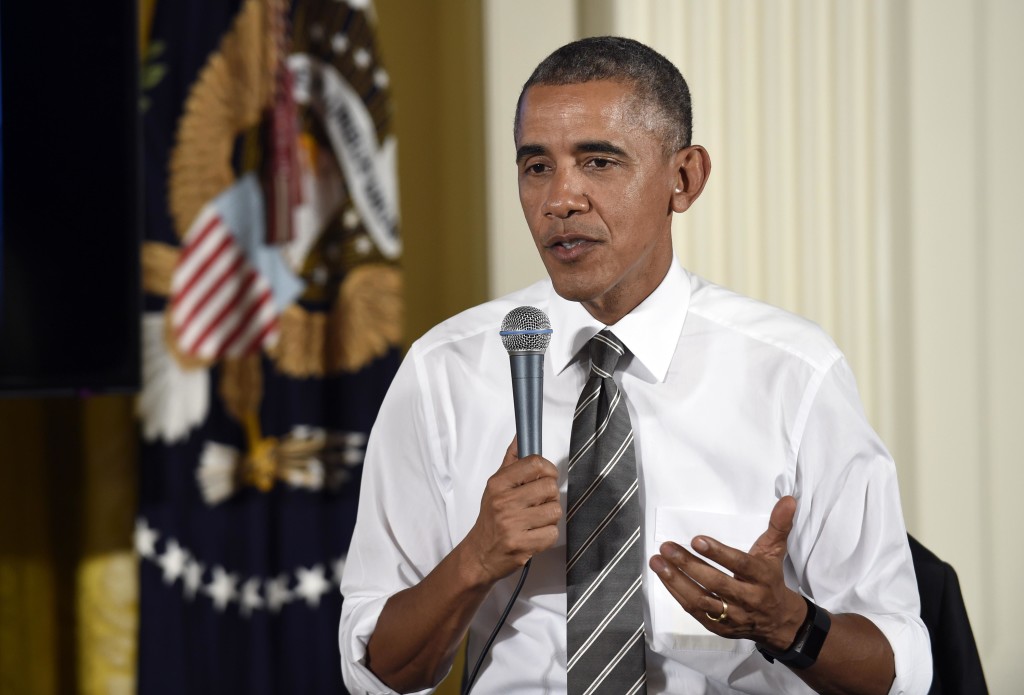
President Barack Obama is promoting his health overhaul by saying that never in U.S. history has the uninsured rate been lower than it is today. Obama says in a speech at Miami Dade College that the law has worked. But, he adds, “Now that doesn’t mean it’s perfect. No law is.” Obama says the Affordable Care Act is just a first step and that he recognizes the need for improvements. He says the law has helped slow the cost of health care inflation. The president is pushing more young adults to enroll in insurance plans. This group is generally healthier and tends to help offset the cost of providing health care to older adults – and that helps keep premiums in check. The next Affordable Care Act enrollment period begins Nov. 1. Republished with permission of the Associated Press.
Roy Moore refuses to clear personal items out of courthouse office
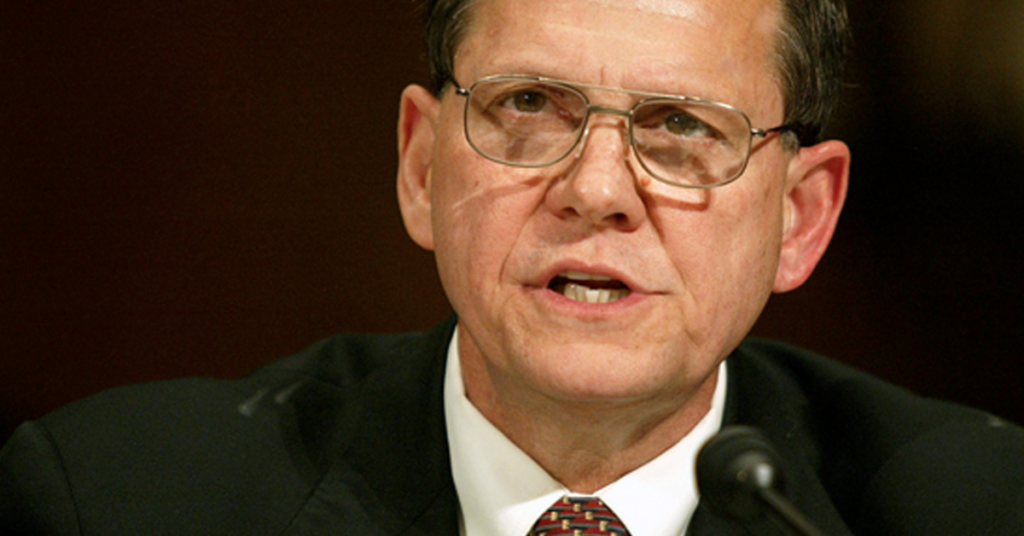
Following his removal from bench, suspended Alabama Chief Justice Roy Moore ignored a Tuesday evening deadline to clear out his Montgomery courthouse office, and as of Thursday has yet to tackle the task. Moore doesn’t believe acting Alabama Chief Justice Lyn Stuart has the authority to make the request of him. His lawyers have asked the Alabama Supreme Court to overrule Stuart, saying the request is premature given Moore is appealing his suspension. “When you are suspended from office, you are not removed. We are appealing it,” Moore said. In September, Moore was suspended from the bench for the remainder of his term for encouraging probate judges to defy a federal order and refuse marriage licenses to gay couples.
$15M facelift to begin on Gulf Shores beaches
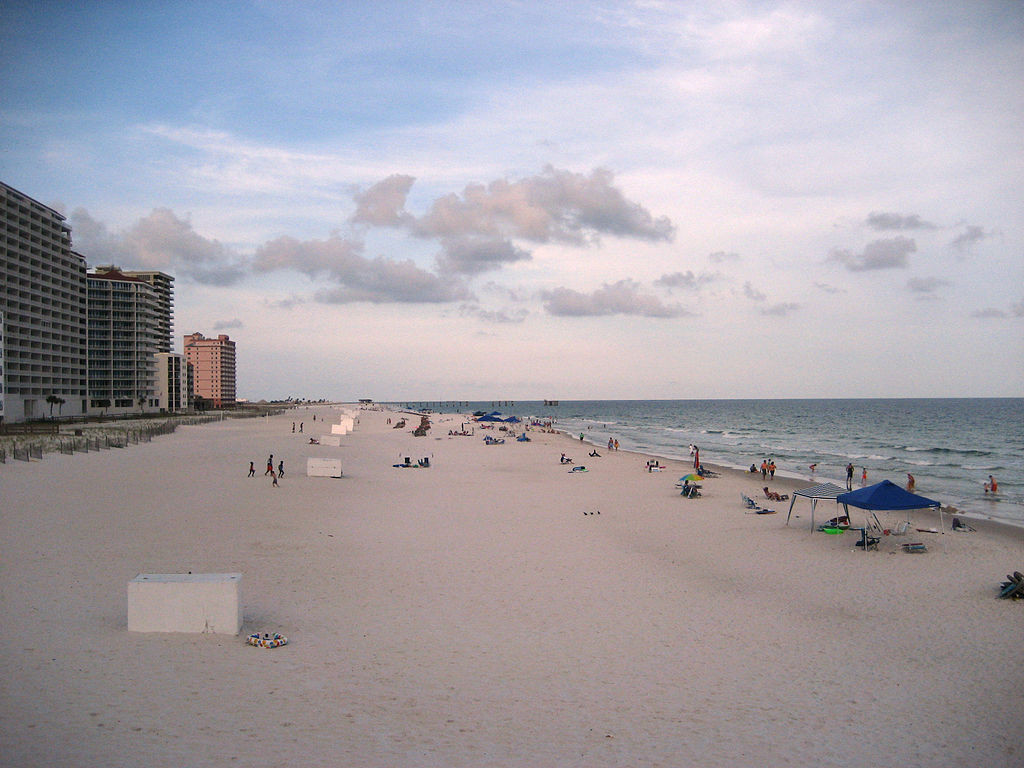
Gulf Shores’ public beachfront is getting a makeover. Phase one of a $15 million revitalization project will begin Nov. 7, with a completion date in late March or April. WALA-TV reports crews began removing palm trees, sidewalks and other items from the beach Tuesday to make way for contractors to begin work on the Gulf Place Beach Revitalization project. Gulf Shores spokesman Grant Brown says the project will include improved parking, a public safety building and a revitalized beachfront boardwalk for better pedestrian access to the beach. The project is part of the city’s Vision 2025 plan which was adopted in 2014 for the Gulf Beach District. The goal is to create a safe and accessible destination for families while enhancing the overall beach going experience. Republished with permission of the Associated Press.
36,000 Alabamians must refile taxes after TurboTax error

Roughly 36,000 Alabamians who used TurboTax software for their 2015 tax returns will need to file an amended state income tax return for that year due to software programming errors. According to the Alabama Department of Revenue (ADOR), affected taxpayers should been notified in letters by both TurboTax and ADOR over the summer of the errors which could have caused them to file an incorrect Alabama state income tax return. This means taxpayers may be owed additional refunds or, in some cases, taxpayers may owe more money. “Some of our calculations relating to losses from “at-risk” investments were not correct,” TurboTax said in a statement. “We updated these calculations and want to help to make sure (a customer’s) return is complete and accurate. Because of this error, certain taxpayers may have filed an incorrect Alabama return. We apologize for this error and the inconvenience it may cause.” Turbotax users have until Oct. 23 to file their amended return or risk facing problems on their 2016 return. TurboTax will reimburse customers for any penalties or interest assessed as a result of the issues. State officials are urging Alabamians to handle the situation as quickly as possible. As of this week, the majority of possibly affected taxpayers have not corrected their return. How do I know if I need to re-file with TurboTax? You WILL need to amend your 2015 Alabama tax return if you received an email from TurboTax that discussed the following: In TurboTax interview screen “Federal Refund for Prior Years,” you entered your original 2012, 2013, 2014, or 2015 federal refund AND/OR In TurboTax interview screen “Federal Income Taxes Paid for a Prior Tax Year,” you entered your original 2012, 2013, 2014, or 2015 federal balance due. You MAY need to amend your 2015 Alabama tax return if you received an email from TurboTax that discussed the following: In TurboTax interview screen “Federal Refund for Prior Years,” you entered an amount not related to amending a prior federal return or receiving an adjustment letter from the IRS AND/OR In TurboTax interview screen “Federal Income Taxes Paid for a Prior Tax Year,” you entered an amount not related to amending a prior federal return or receiving an adjustment letter from the IRS. Affected TurboTax customers can amend their returns by following the instructions linked here: 2015 Alabama Amend Instructions for the TurboTax Online product. Taxpayers who have questions or need assistance amending their returns should call TurboTax directly at 877-216-2138 and tell the TurboTax agent they are calling about 2015 Alabama: Prior Year Refunds/Payment.
Donald Trump slammed for not promising to honor election results
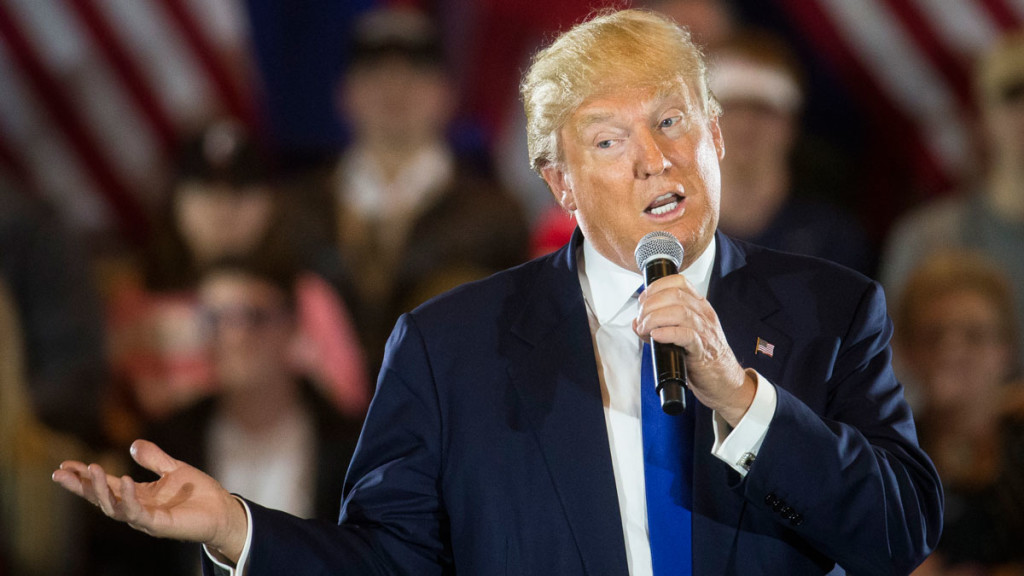
Donald Trump‘s allies struggled late Wednesday to defend his refusal at the final presidential debate to say he will honor the results of the November election should he lose, with condemnation arriving from both Republicans and Democrats alike. Sean Spicer, the chief strategist of the Republican National Committee, which is supplying much of the Trump campaign’s get out the vote and voter outreach efforts, said the national party would “respect the will of the people.” “I cannot speak for what he thinks,” Spicer said. South Carolina Sen. Lindsey Graham said in a statement that “Mr. Trump is doing the party and the country a great disservice” by suggesting the election is rigged, while Arionza Sen. Jeff Flake called the New York billionaire’s statements “beyond the pale.” After spending the past few weeks claiming without evidence that the November election will be “rigged” in favor of Democratic nominee Hillary Clinton, Trump was asked directly by Fox News anchor and debate moderator Chris Wallace if he would concede should he lose to Clinton. “I will look at it at the time,” Trump said. When pressed moments later, Trump added simply: “What I’m saying is that I will tell you at the time. I will keep you in suspense.” Clinton called Trump’s comments “horrifying.” Billionaire Mark Cuban, one of Clinton’s top supporters, called Trump’s words “a slap in the face of every American in the history of this country, the Constitution and our democracy.” “That’s what we’re proud of,” he said. “So, for him to question that, that’s disqualifying.” Trump’s remarkable comments came just hours after his running mate, Indiana Governor Mike Pence, said on CNN “that we’ll certainly accept the outcome of this election.” And Trump’s daughter Ivanka, arguably his most influential adviser, said earlier Wednesday that her father would “do the right thing” when she was asked if he would concede after a defeat in November. The debate answer left his own team scrambling in the aftermath of the debate. Kellyanne Conway, his campaign manager, at first responded to questions about the comment by saying he “would accept the results, because he’ll win the election.” “So, you know, absent widespread fraud and irregularities, then, we’ll see,” Conway said. “What he’s saying is we have to see what happens.” She later rejected the outcry over Trump’s comment, saying it’s “not fair” to suggest Trump is undermining the prospects of a peaceful transfer of power. “You’ve got to listen to everything he said,” she argued. “Al Gore did not accept the results of the elections and he said he would. He actually conceded to George W. Bush on election night in 2000 and then called and retracted his concession.” Gore pulled back his concession only after updated vote count results in Florida showed the state too close to call, throwing the outcome of the election into doubt. When the U.S. Supreme Court later halted a recount, leaving Bush ahead in Florida and giving him the election, Gore conceded and asked the country to accept Bush as the nation’s next leader. Former New York City Mayor Rudy Giuliani, another of Trump’s top allies, said the Republican nominee had good reason to be suspicious about potential fraud. “There are indications of a lot of fraud around by the Clintons,” Giuliani said. In fact, there is no proof that voter fraud is a widespread problem in the United States. A study by a Loyola Law School professor found that out of 1 billion votes cast in all American elections between 2000 and 2014, there were only 31 known cases of impersonation fraud. Republished with permission of the Associated Press.
Day after debate, Donald Trump, Hillary Clinton square off again at roast
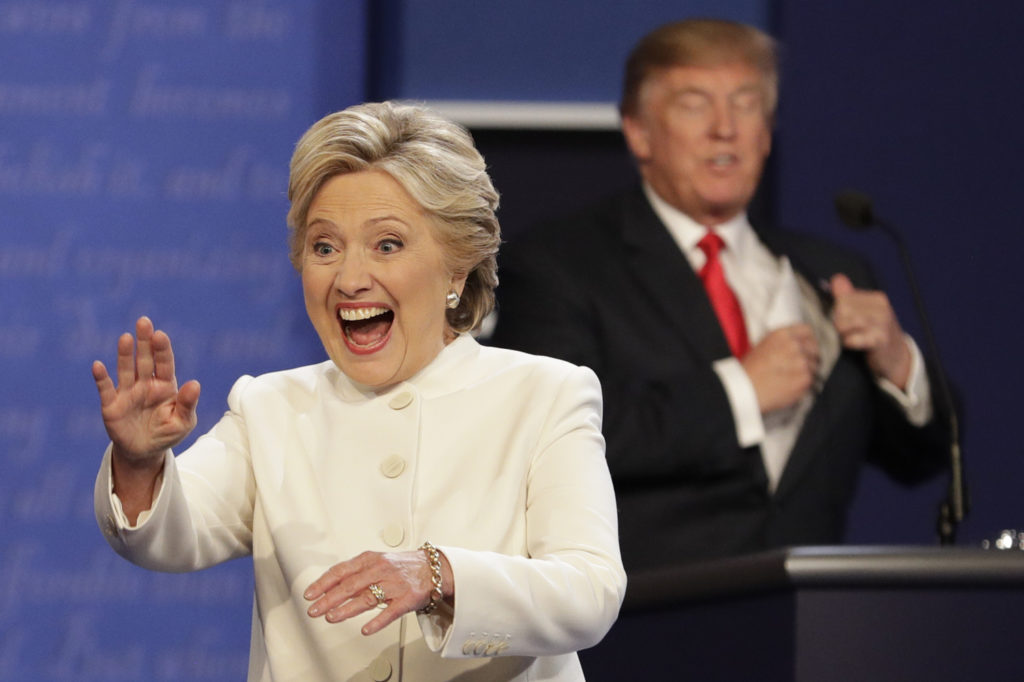
Bitter presidential rivals Hillary Clinton and Donald Trump have one more face-to-face showdown before Election Day. And they’re supposed to make it funny. The venue just 24 hours after their third and final debate is the annual Alfred E. Smith Memorial Foundation Dinner in New York, a white-tie gala that every four years becomes a showcase for presidential politics. Tradition dictates that the candidates deliver humorous remarks poking fun at each other and themselves, a jovial custom that seems hard to envision amid such an ugly campaign. Trump regularly calls Clinton, “Crooked Hillary,” mocks her stamina and says he’d put her in jail if he wins the presidency. Clinton says he lives in his own reality, is running a “hateful, divisive campaign” and lacks the temperament to be president. They will sit just one seat apart for the evening, with New York’s Cardinal Timothy Dolan acting as the only buffer. “I certainly expect that the dinner will be what it’s always been: an opportunity for two candidates to put aside partisan politics for the evening,” said Joseph Zwilling, the spokesman for the Archdiocese of New York, which hosts the dinner. “I anticipate that we will have good humor and civility that this dinner has been always been known for.” The unprecedentedly bitter campaign between Clinton and Trump could threaten the ecumenical goodwill that has defined previous roasts. Since 1960, at least one of the major party nominees has appeared at nearly every election year dinner, which is traditionally the last time the nominees share a stage before voters go to the polls. Four years ago, President Barack Obama and Mitt Romney set aside their differences to trade (mostly) warm jokes. Romney, scanning the well-heeled crowd in the gilded Waldorf-Astoria ballroom, joked that the event’s white-tie attire finally gave him a chance to publicly don what “Ann and I wear around the house.” Obama, meanwhile, used his speech that year to look ahead to an upcoming debate on foreign policy, previewing his argument by saying “Spoiler alert: we got Bin Laden.” Trump will speak first Thursday night, then Clinton. Neither campaign opted to preview their candidate’s remarks and aides for both declined comment on the evening other than to confirm that each nominee will be there. The evening might feel familiar to Trump, who infamously glowered through Obama’s jokes at his expense during the 2011 White House Correspondents Dinner and is not known for being self-deprecating. Last weekend, he tweeted that he did not appreciate Saturday Night Live’s portrayal of him in a sendup of the candidates’ performances in the second presidential debate. This is the first time that both party’s nominees hail from New York State as a crowd of about 1,500 gathers for the distinctly Gotham event, held each October. Attendees pay between $3,000 and $15,000 to attend the dinner, which raises about $5 million to provide services for impoverished children, Zwilling said. The dinner is named after the former New York governor, who was the first Catholic to receive a major party nomination for president when he unsuccessfully ran in 1928. And fittingly for an event named after a man nicknamed “The Happy Warrior,” the occasion has produced dozens of memorable presidential jokes. In 2000, then-Texas Governor George W. Bush gazed upon the glitzy gathering and declared: “This is an impressive crowd, the haves and the have-mores. Some people call you the elite. I call you my base.” That same year, Vice President Al Gore touted his campaign trail ability to weave in stories “of real people in the audience and their everyday challenges.” “Like the woman here tonight whose husband is about to lose his job,” Gore continued. “She’s struggling to get out of public housing and get a job of her own. Hillary Clinton, I want to fight for you.” And in 2008, John McCain joked about the exalted manner in which the media venerated Obama, noting that “‘Maverick’ I can do, but ‘Messiah’ is above my pay grade.” But he wound down his remarks with a note of grace that, to this point, has been largely absent from the 2016 campaign. “I can’t wish my opponent luck,” McCain said, turning toward Obama, “but I do wish him well.” Republished with permission of the Associated Press.
Takeaways: Donald Trump sends shock waves with defiant stance
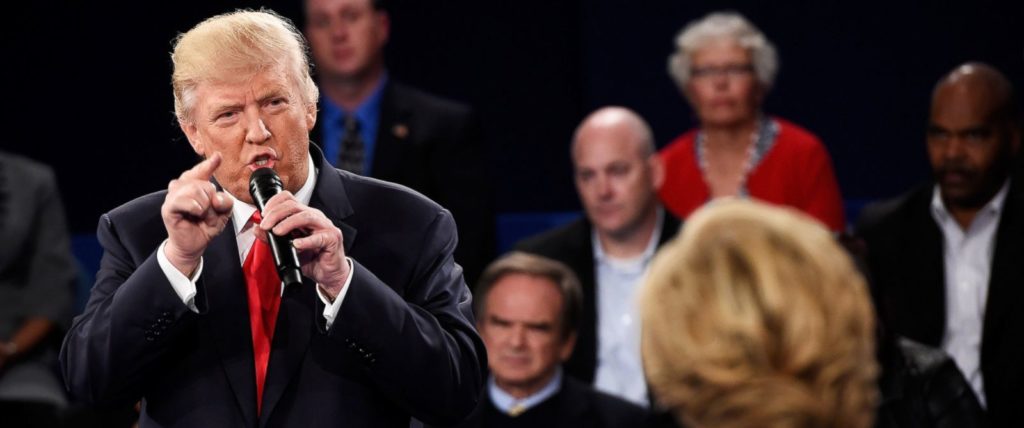
Trailing in the polls, Donald Trump had little to lose in his final debate against Hillary Clinton. He still managed to send shock waves, refusing to say he would accept the results of the 2016 election if he loses. Trump largely steered clear of making personal attacks against Clinton at the start of the debate, but repeatedly clashed with the former secretary of state as it went on. He called her a liar, questioned her experience and at one point labeled her “such a nasty woman.” Unconventional as always, the celebrity businessman wouldn’t commit to conceding the election if he fails to win the White House, a staggering declaration by a presidential nominee. Some takeaways from Wednesday’s debate: — NO SURRENDER More than an hour into the debate, Trump would not commit to honoring the election results if Clinton wins. Pressed by moderator Chris Wallace, Trump said he would “keep you in suspense.” Clinton said it was “horrifying” that Trump wouldn’t heed the nation’s tradition of having a peaceful transfer of power. The businessman has argued without providing any evidence that the election is rigged against him and has suggested Clinton would be an illegitimate president because she used a private email server as secretary of state. He said she “never should have been allowed to run.” — ‘NASTY WOMAN’ Trump faces the possibility of a large gender gap against Clinton and some of his commentary is unlikely to help him with women voters in swing states. At the end of the night, Trump referred to Clinton as a “nasty woman” and denied again that he had engaged in any sexually aggressive behavior, blaming Clinton’s campaign for the series of women who have charged him with groping and other forms of harassment and assault in recent days. The GOP candidate said he didn’t know his accusers. “I didn’t even apologize to my wife,” Trump said, “because I didn’t do anything.” In an interview earlier this week, Melania Trump said her husband apologized to her. Clinton didn’t let the moment go, noting that Trump had derided the women as unattractive and “disgusting.” Clinton said, “Donald thinks belittling women makes him bigger.” — BAD HOMBRES When Trump reiterated his call to build a wall along the Mexican border, he vowed again to get rid of “drug lords” and “bad people” in the country. Adding a touch of Spanish, Trump said, “we have some bad hombres here, and we’re going to get them out.” The phrase quickly resonated on social media with allies of Clinton saying Trump was denigrating immigrants. Clinton said Trump’s immigration policies would amount to “rounding up people who are undocumented” and would “rip our country apart.” — ABORTION The candidates had their first extended exchange over abortion rights of the general election. Trump said he thought Roe vs. Wade would “automatically” be overturned if he is elected because he will appoint justices who are against abortion rights. But he refused to say whether he personally thinks the landmark case should be overturned. Clinton said she’d strongly defend the ruling and offered a passionate defense of a woman’s right to have an abortion, even as Trump accused her of supporting “ripping” babies from their mothers’ wombs. “This is one of the worst possible choices that any woman and her family has to make, and I do not believe the government should be making it,” Clinton said. — PUTIN A question over immigration quickly turned into a sharp exchange over Russia’s role in the election, an issue that has become central to the campaign. Asked about her apparent support for “open borders” in a private speech to a Brazilian bank, Clinton pointed out that the excerpt came from a hack of her campaign chairman’s personal email – an intrusion that U.S. intelligence agencies blame on Russia. She called on Trump to “reject Russian espionage against Americans” and cast him as a “puppet” of Vladimir Putin. Trump shot back that Clinton was the “puppet,” saying “of course” he condemns Russia or any other country interfering in the U.S. elections. But Trump said he doubted that Russia had hacked emails from her campaign. Trump went onto say that Putin is not “my best friend.” He added, “She doesn’t like Putin because Putin has outsmarted her at every step of the way.” — ‘BAD EXPERIENCE’ At the end of President Barack Obama‘s two terms, Trump tried to reach voters who may be in the mood for a change in Washington. He cast himself as an outsider, acknowledging to Clinton: “The one thing you have over me is experience. But it’s bad experience.” Trump said, “The problem is, you talk, but you don’t get anything done, Hillary.” Clinton responded by comparing her record over the past three decades to Trump’s resume as a businessman. She pointedly noted that on the day she was inside the White House Situation Room during the raid that killed Osama bin Laden, Trump was hosting his NBC reality show, “Celebrity Apprentice.” — TOO LATE? Trump did not appear to do enough to connect with women, college-educated and suburban voters who have gravitated to Clinton during the fall and helped her build a solid lead in preference polls. His unwillingness to say he’ll accept the results of the election should he lose will give Clinton another way to argue that he doesn’t have the temperament to be president. And now Trump has little time to make up ground. When the debate got underway, about 2.2 million Americans had already voted and many more will take part in in-person early voting next week. Clinton’s campaign expects more than half the electorate in the battleground states of Florida, North Carolina and Nevada will vote before Election Day. For many voters, the debate may have been the final chance for Clinton and Trump to make their case. Republished with permission of the Associated Press.
Final debate brings little clarity to undecided voters
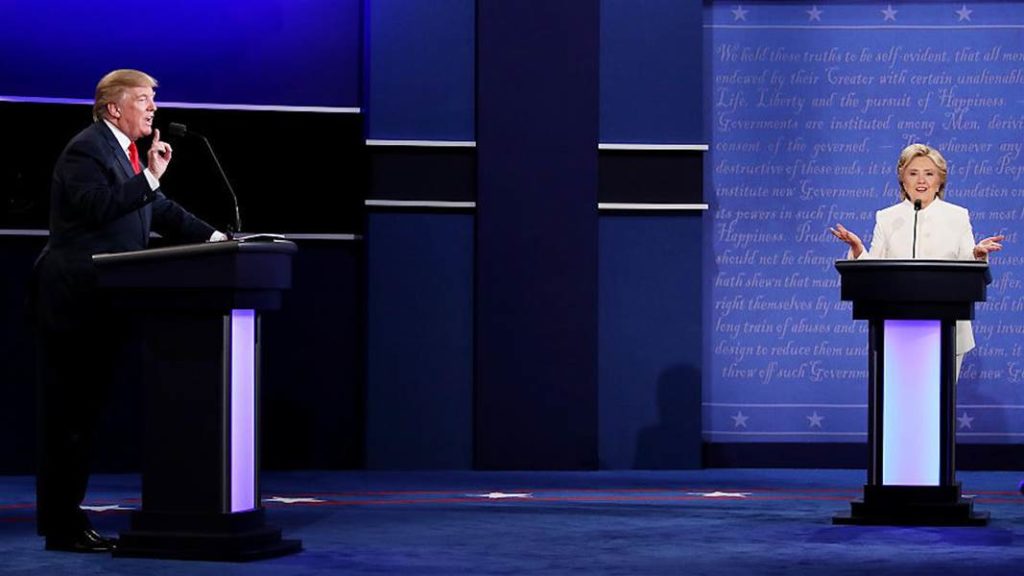
As a tumultuous campaign nears an end, undecided voters across the country watched the final debate of the U.S. presidential race with a mix of skepticism and rapt attention Wednesday night. They were searching for clarity, and some found it. But others remained painfully undecided just a few weeks before the election, saying neither candidate won them over. “I heard a lot of the same rhetoric spewed over and over again,” said 41-year-old Damon Holter, who makes barbecue sauces and marinades in western Wisconsin. “I know I need to make a decision. I just don’t know how to get there.” Here’s what else Holter and others had to say: ‘LIKE A LITTLE KID’ Watching the start of the debate at Bo’s ‘N Mine bar and grill in River Falls, Holter took note when Hillary Clinton and Donald Trump again did not shake hands. “He’s just like a little kid,” he said when Trump began speaking. Still, the GOP candidate did a better job than in the first two debates, taking charge while Clinton stumbled, Holter said. “She’s no longer acting presidential” when she’s interrupting Trump, he said. But when Trump talked about the U.S. border with Mexico, Holter scoffed: “The whole notion of a wall is pretty ridiculous.” Overall, he said, nothing either candidate said swayed him. THE VERDICT: Holter remains undecided. A HOUSE DIVIDED Chadd Bunker, 50, a union truck driver in Sparks, Nevada, who considers himself largely politically apathetic, said after the debate he’s still not sure if he will end up voting, but he doesn’t think he’ll cast his ballot for Trump. The longtime LA Dodgers fan kept an eye on his laptop streaming the National League championship against the Cubs while watching the debate in his living room with his wife Karen, a staunch Democrat. “I think Hillary kicked his butt. And that’s my unbiased opinion, because I don’t really care,” said Chadd Bunker, an avid outdoorsman and gun owner. “She may be crooked. She may have done stuff, but she seems the most logical.” Bunker cast his first presidential vote for Ronald Reagan in 1984, voted for Obama in 2008 and sat out the 2012 election. He said he is pro-abortion rights and didn’t learn until Wednesday night that Trump is not. He doesn’t think his life will change much regardless of who wins. He likes Trump’s experience in the business world and believes Clinton would be better at handling foreign affairs. “Neither one of them is going to come to my house and take my guns,” Chadd Bunker said. THE VERDICT: “I don’t know if I decided one way or the other. But if I did have to vote, I would probably vote for Hillary Clinton. I would not vote for Trump,” Chadd Bunker said. ROOKIE VOTER Taylor Botwinis of Clinton Township, Michigan, is 26, but this will be the first time she casts a ballot in a presidential election. Clinton is a no-go for the homeschooling mother of three. For Botwinis, the debate was an opportunity to hear more from Trump and decide whether to support the Republican or vote for a third-party candidate. She filled a page with handwritten notes early in the debate but put down her pen when the discussion slid into finger-pointing over ethics, morals and fitness for office. “The first four issues – Supreme Court, Second Amendment, abortion, immigration – I could side with Trump,” she said. “Now they’re nitpicking. They’re just like kids.” Botwinis noted Trump didn’t directly answer when asked about U.S. troops possibly going to Syria under his presidency. She liked his pledge to improve the economy, saying too many college graduates aren’t working in their field of study. Botwinis cringed when Trump called Clinton a “nasty woman.” “Even if he’s thinking that – have a filter,” she said. THE VERDICT: Botwinis said she’ll likely vote for Trump because of his “stances, not his personality.” FIRST-GENERATION AMERICAN Hussien Kazwini, a community college student in Toledo, Ohio, says this debate was more substantive, but there were no big moments that changed the race. “Hillary was on the defensive, but I don’t think Trump made a big splash to change or damage Hillary’s momentum.” Kazwini, whose parents were born in Lebanon before coming to the United States 30 years ago, will vote in his first election. He says Trump’s stand on immigration and threats to deport people “isn’t morally right” but he also doesn’t believe there should be open borders. Kazwini noted Trump kept his temper in check until he called Clinton a “nasty woman” near the end of the debate. “He can’t help himself,” Kazwini said. THE VERDICT: He’s still undecided but leaning toward Clinton. He says Trump’s comments about women and his demeanor are not huge issues. However, “I want to hold a president to higher standards.” TOO POLISHED Matt Alsaeedi, 26, felt refreshed by Clinton’s authenticity during much of the debate, saying an overall mistrust in government “hurts her as much as it helps her” as a candidate. The Charlotte School of Law student originally from Sandy Run, South Carolina, who said he leans to the left politically, was listening for discussion of foreign policy issues. “I liked Secretary Clinton’s specificity as to what she wanted to do, her knowledge of the issues,” Alsaeedi said. “I did not get that impression from Donald Trump, but then again, I expect him to delegate most of those duties anyway.” The biggest disappointment to Alsaeedi was a lack of discussion of veterans’ issues. “There’s a crisis with mental health issues,” he said. “There’s an epidemic, and it wasn’t even mentioned, and it bothers me. … I would have expected Secretary Clinton to at least have dropped the ‘V’ word, and it was not.” THE VERDICT: Alsaeedi remains undecided, saying he was turned off by Clinton’s polished-politician persona. “I was on board with her until she opened the can in the conclusion,” he said. “It felt like she just spewed this message. I’m undecided still out of
Daniel Sutter: Some unpleasant voting math
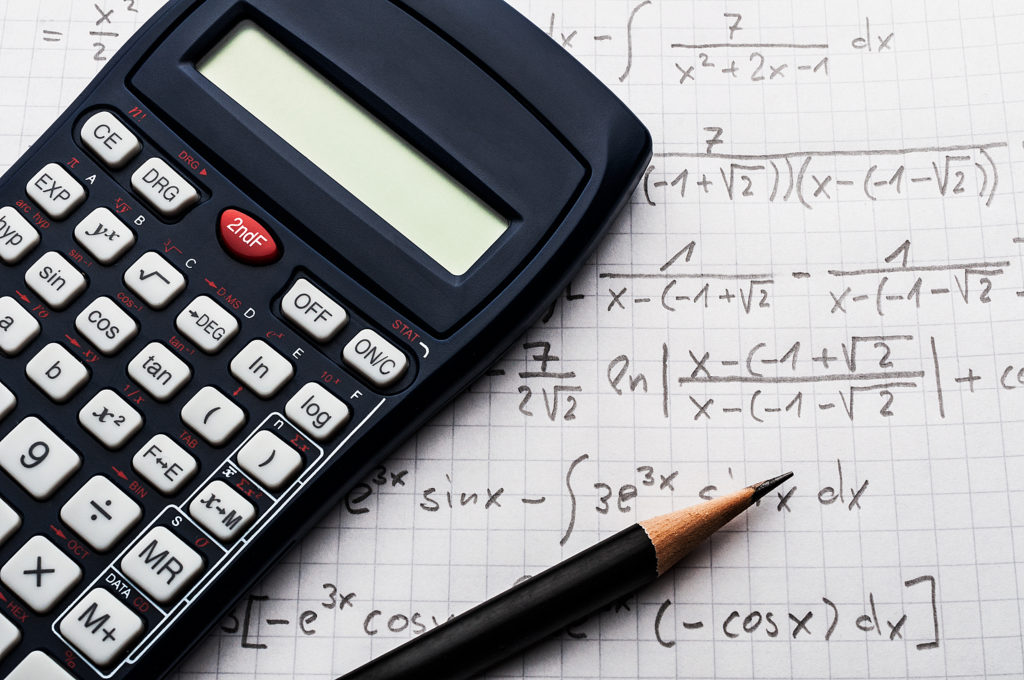
Election Day is our opportunity to possibly tell our elected representatives, “You’re Fired!” Election season brings lots of get-out-the-vote messages, but I will consider some economics of voting. Let me warn you in advance: people often find this economics lesson upsetting, probably because it challenges the conventional wisdom about democracy. The economic perspective considers an individual voter’s benefits and costs. Consider someone who believes the outcome of the presidential election will significantly effect the economy. Imagine that their favored candidate will cut federal taxes, resulting in extra money to spend. Further, cutting taxes and regulation will boost economic growth, increasing pre-tax income. If we add the value of important presidential decisions like nominations to the Supreme Court and foreign diplomacy, let’s say that the outcome of the election matters by $25,000 over the next four years. The cost includes the time to drive to the polling place, waiting in line, reading the ballot, and casting a vote, plus gas to drive to the polls. Voting will likely take at least 30 minutes, more if the line is long. Between the time and the gas, let’s say that the cost is $10. Voting appears to be a good deal, since the value of the outcome ($25,000) far exceeds the cost ($10). Except that the favored candidate may not win even if the person votes, and could win if she doesn’t vote. The election outcome is not tied to the cost. How do we evaluate voting now? Economists would weigh the benefit by the probability that a person’s vote changes the election outcome. Here arises the problem. The probability of casting a decisive vote in a U.S. presidential election is really small. How small? The probability is likely smaller than the chance of getting in an accident driving to the polls. The frequency of tie elections provides evidence on the likelihood of a casting a decisive vote, and very few elections end in ties. When you multiply $25,000 by this really small number, the result might well be less than a penny. The economic perspective clearly recommends staying home on Election Day. Yet over 100 million Americans will vote, so people must not be deciding to vote exclusively in terms of personal costs and benefits. Many Americans feel a duty to vote, and so the guilt of not voting may outweigh the cost. People might also vote to express their values. Do these other motives render the economics irrelevant? I don’t think so, because the above reasoning also applies to voters’ incentive to become informed about issues and candidates. Better information reduces the chance of voting for a candidate who does not support your positions, but the low probability of casting a decisive vote means that a mistake likely doesn’t matter. Voters’ incentive here has been termed rational ignorance, to emphasize how not becoming informed makes some sense. A sense of duty or the value of self-expression might get Americans out to vote. But many of these votes will be ill-informed, and the problem of poorly informed voters is not going away easily. The economics of voting is part of Public Choice economics, which has been called “politics without romance.” Public Choice challenges the view of democracy offered in high school civics class, but ultimately just tries to describe the world as it actually operates. Whether we like this or want to change our democracy as a result are separate questions. For instance, we might conclude that rational ignorance explains why campaign ads succeed in manipulating poorly informed voters, thus providing a rationale for campaign finance reform. Or perhaps the Americans who follow politics closely and cast votes in line with their values make elections work well despite some ill-informed voters. The economics of voting, I think, definitely dispels the idea that simply voting somehow automatically and magically produces good outcomes. Elections have been a tremendous innovation in human history, but voting has limits. We must study the electoral process carefully to ensure that we do not ask elections to do more for us than they can realistically deliver. ••• Daniel Sutter is the Charles G. Koch Professor of Economics with the Manuel H. Johnson Center for Political Economy at Troy University and host of Econversations on TrojanVision. The opinions expressed in this column are the author’s alone and do not necessarily reflect the views of Troy University.
Fox News’ Chris Wallace extracts headline with follow-up question

Fox News’ Chris Wallace worked hard to keep the final presidential debate substantive with tough questions to Hillary Clinton and Donald Trump, but it was the simplest of queries that extracted the biggest headline. Noting Trump’s claims Wednesday night that the election was being rigged against him, Wallace asked the Republican whether he would accept the results win or lose, saying GOP vice presidential candidate Mike Pence had said that he would. When Trump answered that “we will look at it at the time,” Wallace seemed incredulous. The veteran newsman pointed out that a peaceful transition of power is one of the nation’s longest traditions, no matter how tough the campaign. “Are you saying you’re not prepared to commit to that principle?” Wallace asked. Answered Trump: “I will keep you in suspense.” Wallace walked the finest of lines during a campaign where debate moderators received an intense focus. As the first-ever general election moderator of Fox News, he had the hopes of an organization in the midst of a tough year riding on him along with additional baggage. Fox critics worried that he’d go easy on Trump because of the GOP bent of Fox’s prime-time lineup. He kept things straight and issue-oriented and rode herd on the audience and candidates to keep control. Wallace promised he would not take on the role of fact-checker and largely adhered to that, although he had one nasty exchange with Trump in correcting the candidate on statements made in Syria in the last debate. Wallace tended to open a subject area with a general question before boring in on specifics to each candidate. For instance, he asked each candidate about their philosophies in naming Supreme Court justices, then moved in to ask Clinton about partial-birth abortions and Trump about whether he sought to overturn Roe vs. Wade. “It was a fair and balanced debate,” said Megyn Kelly, Wallace’s Fox colleague. “He pressed both sides.” Wallace asked Trump about the Republican’s denials that he had groped or made unwelcome advances to women. Several women have come forward with stories following the release of a lewd “Access Hollywood” tape where Trump bragged of touching women against their will, after Trump denied that he had engaged in the conduct. “Why would so many different women from so many different circumstances over so many different years, why would they all in the last couple of weeks … make up these stories?” Wallace asked him. When Trump claimed that “nobody has more respect for women than I do,” some audience members in Las Vegas laughed – and Wallace was quick to scold them. “Please, everybody,” he said. While Trump twice made it a point to thank Wallace for questions posed to Clinton – including the former secretary of state’s claims in a leaked email about free trade – the Republican seemed visibly angry when the newsman tried to correct him on points made about Syria in a previous debate. “If I may finish the question,” Wallace said. His toughest exchange with Clinton came when he asked the Democrat about “pay-to-play” charges surrounding people who made contributions to the Clinton foundation. When Clinton answered by praising the work the Clinton foundation had done, Wallace interrupted her with a reminder to answer the question posed. She didn’t get the chance, since Trump interrupted at about the same time, and Wallace turned to him for a rebuttal. While occasionally wordy, Wallace’s questions seemed designed to get the candidates talking and he mostly let them go at it. The candidates – typical for most debates – bulldozed past his questions at times but there seemed fewer interruptions than in the previous two debates. The first debate, moderated by NBC’s Lester Holt, reached a record-setting audience of 84 million people. Last week’s second debate with CNN’s Anderson Cooper and ABC’s Martha Raddatz sharing the journalists’ duties reached 66.5 million. Ratings for Wednesday’s debate will be released Thursday. Republished with permission of the Associated Press.
