
Judges to be picked Thursday for suspended Alabama Chief Justice Roy Moore’s appeal
Seven judges will be named this week to hear suspended Alabama Chief Justice Roy Moore’s appeal. Alabama Supreme Court Acting Chief Justice Lyn Stuart says the judges will be randomly selected among a pool of 50 of retired appellate, circuit, and district judges. In September, Moore was suspended from the bench for the remainder of his term for encouraging probate judges to defy federal order and refuse marriage licenses to gay couples back in January. Moore’s colleagues on the Court recused themselves on Monday from hearing Moore’s appeal themselves, citing their impartiality might come into question. The appeal judges will be selected in a public proceeding at the Heflin-Torbert Judicial Building at 3 p.m. Thursday.
Justin Timberlake’s ballot selfie highlights mixed laws
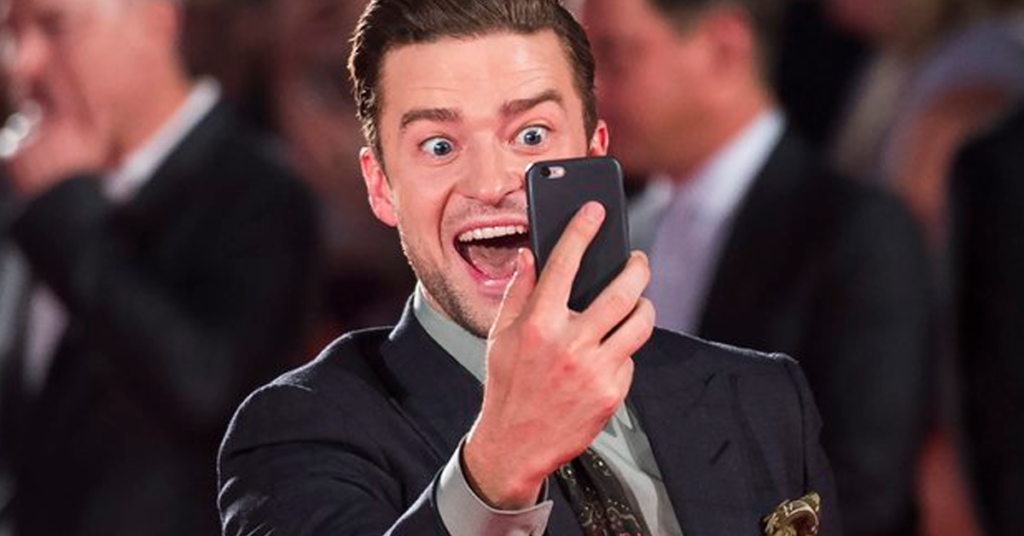
Now even Justin Timberlake has been forced to deal with the question of whether a ballot selfie is legal. Timberlake flew from California to Tennessee to vote early this week, but his posting of an image of himself at the voting booth on Instagram on Monday drew questions about whether he was breaking the law. A Tennessee law that took effect earlier this year bars voters from taking photographs or video while they’re inside a polling location. While secrecy in the voting booth has become a thing of the past for those ready to share their views and daily lives on social media, laws nationwide are mixed on whether voters are allowed to take pictures of themselves voting and their ballots. Federal courts have struck down bans in New Hampshire and Indiana, and on Monday, a judge in Michigan blocked enforcement of a ban on ballot selfies, saying it violates free speech. Tennessee Secretary of State spokesman Adam Ghassemi said officials are “thrilled Justin can’t stop the feeling” but reminded voters to use their phones inside polling locations only to help them vote. Timberlake lives in California, but grew up in the Memphis area and owns property near Nashville. How states handle the question: — STATES WHERE BALLOT SELFIES ARE ALLOWED CONNECTICUT: No law bans ballot selfies, according to Patrick Gallahue, a spokesman for Secretary of State Denise Merrill. But election moderators have discretion to prohibit activity “that threatens the orderly process of voting or the privacy of another voter’s ballot.” DISTRICT OF COLUMBIA: There’s no ban. Election officials discourage people from taking pictures but won’t do anything to stop them, said Tamara Robinson, a spokeswoman for the D.C. Board of Elections. HAWAII: A law passed this year allows voters to share a digital image of one’s own marked ballot. IDAHO: There’s no law banning them, the secretary of state’s office said. INDIANA: A federal judge last year barred the state from enforcing a new law prohibiting ballot selfies. KENTUCKY: Secretary of State spokesman Bradford Queen says state law does not allow people to record the likeness of a voter, but the law does not say whether voters can record their own likeness. Therefore, the secretary of state’s office routinely tells county clerks the law does not prohibit ballot selfies. LOUISIANA: Secretary of State Tom Schedler says ballot selfies are allowed in the state, though he’s not a fan of them. MAINE: The secretary of state discourages ballot selfies because there’s a ban on making unauthorized ballot copies, but there’s no law against voters posting photos of their marked ballot. MICHIGAN: A federal judge on Monday blocked enforcement of a ban on ballot selfies, saying it violates free speech. Lawyers for Secretary of State Ruth Johnson predicted “chaos” at polling places, but the judge on Wednesday denied the state’s request to freeze her order while they appeal. MINNESOTA: Allowed as long as they’re not shown to fellow voters at the polling place or capture another person in the photo. MONTANA: Law does not specifically prohibit the use of cameras at polling places, but election administrators and judges have broad authority to limit disruptive activity, according to Emily Dean, spokeswoman for the secretary of state. Sharing photos of absentee ballots is also not banned. NEBRASKA: Gov. Pete Ricketts signed a bill in April that allows someone to show their marked ballots to others without risking a $100 fine. NEW HAMPSHIRE: The 1st Circuit Court of Appeals in Boston last month upheld a decision that a ban was unconstitutional, saying it suppresses a large swath of political speech and there was no evidence to support the state’s concerns. NORTH DAKOTA: Photos inside polling places are allowed. OREGON: All voting is done through mail-in ballots, which voters are free to photograph. A state law prohibiting showing a marked ballot to another person was repealed in 2014, according to Molly Woon, a spokeswoman for Secretary of State Jeanne Atkins. RHODE ISLAND: The Board of Elections adopted new rules in time for November’s election that allow for selfie-taking inside polling places. The updated regulations allow voters to take photos as long as they don’t show another person’s ballot. UTAH: Gov. Gary Herbert signed a bill last year that makes it legal for people to snap pictures of themselves with their ballots. The law makes it a misdemeanor to photograph someone else’s ballot. VERMONT: No rules regarding photos in polling places. Clerks are encouraged to adopt specific rules for their polling places to maintain order, according to Jim Condos, a spokesman for the secretary of state. VIRGINIA: Attorney General Mark Herring issued a formal opinion last month that says ballot selfies are legal in Virginia. Nothing in Virginia law prohibits voters from taking pictures of themselves, fellow voters or their ballot within the polling place, he said. WASHINGTON STATE: It’s not against the law in Washington, but a spokesman for Secretary of State Kim Wyman said the office doesn’t recommend it. WYOMING: No laws against ballot selfies. Law does allow judges of elections to “preserve order at the polls by any necessary and suitable means.” — STATES WHERE BALLOT SELFIES ARE ILLEGAL ALABAMA: Not allowed because voters have “a right to cast a ballot in secrecy and in private,” said a spokesman for Secretary of State John Merrill. ALASKA: A state law bans voters from showing their marked ballots, but Division of Elections Director Josie Bahnke says there is no practical way to enforce it. COLORADO: Ballot selfies or any public dissemination of a marked ballot are considered a misdemeanor. A 2016 bill to repeal the ban failed. FLORIDA: Photographs are not allowed in polling places or of mailed ballots. GEORGIA: Law prevents photos of ballots or the screens of electronic voting machines. ILLINOIS: Banned by a law that considers “knowingly” marking your ballot so that another person can see it is a felony that carries a prison sentence of one to three years. KANSAS: Secretary of state says a selfie showing a picture of
The Donald Trump-Hillary Clinton Twitter war: Bludgeon vs. stiletto
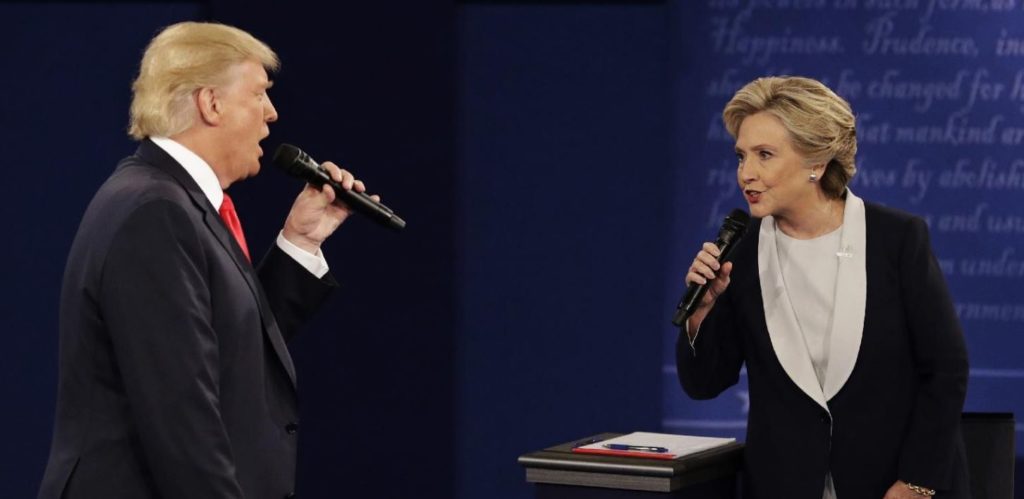
Back in June, when Donald Trump slammed President Barack Obama‘s endorsement of Hillary Clinton on Twitter, the Democrat’s campaign was quick to tweet back a chilly three-word response: “Delete your account.” It was a telling exchange, and not just because it set the stage for what has become the country’s first nationwide Twitter election. It also highlighted the striking, and very different, ways both presidential hopefuls have used the service to hone their messages, hurl accusations at one another and speak directly to voters — in effect, bypassing traditional media while also relying on it to amplify their retorts. So entrenched has Twitter become in the 2016 election that it can be difficult to remember just how new it is in this context. Four years ago, candidates Obama and Mitt Romney were just testing the waters with social media. This year, it’s a major source of information — political and otherwise — for a huge number of Americans. In a Pew Research Center poll last January, 44 percent of adults said they had learned about the election in the previous week from social media, more than cited print newspapers. “People are using Twitter to connect more directly to the live events, moments and candidates of this campaign in a way that voters have never been able to do before,” says Adam Sharp, Twitter’s head of news, government and elections. STILETTO VS. BLUDGEON The candidates are certainly making the most of it. While Trump says he writes many of his tweets himself, especially at night, Clinton’s staff acknowledges producing the vast majority of hers. And Trump is definitely ahead by one crude measure: His followers outnumber Clinton’s, 12.7 million to 10 million. The former reality-TV star and GOP presidential nominee draws outsized attention for what he’s tweeting and retweeting on a near-daily basis, most recently for his attacks on fellow Republicans and unsupported claims that the Nov. 8 election will be “rigged.” During his primary campaign, Trump drew regular news coverage for Twitter assaults that bludgeoned opponents with insults and sometimes baseless charges. Trump’s approach hasn’t changed much in the general election, although his focus on his political opponent sometimes wavers. While he constantly refers to Clinton as “Crooked Hillary” and has continued to criticize the media for reporting that he is falling behind in the polls, he’s also launched long, and sometimes late-night, Twitter broadsides on a beauty queen, the Muslim family of a slain U.S. soldier and a federal judge. The Trump campaign didn’t respond to requests for comment. When the Clinton camp goes on the attack, by contrast, it uses Twitter more as a stiletto than a club. “Delete your account” is a popular internet meme, an arch putdown that suggests someone just said something so embarrassingly stupid that they should just slink away and disappear. The response was an immediate hit that ricocheted around blogs and news sites for days; it’s been retweeted more than half a million times. Trump is “that rough individual who will say anything,” a stance that his supporters find “very refreshing,” says Ian Bogost, a communications professor at Georgia Tech. Clinton’s tweet, by contrast, “signals to her base that she’s with-it on the internet,” he noted in an earlier piece in the Atlantic. In his first debate with Clinton on Sept. 26, Trump denied saying that climate change was a hoax perpetrated by the Chinese. Clinton’s social media team immediately pounced, retweeting Trump’s own 2013 tweet in which he said just that. After Clinton referred to a large fraction of Trump supporters as a “basket of deplorables ” for their sexism and racism, Trump retweeted a 2012 Obama tweet that argued the country doesn’t need a president “who writes off nearly half the country.” But Trump has also drawn fire for repeatedly retweeting white nationalists and promulgating at least one image condemned as anti-Semitic, an association Trump denied. SEIZING THE WHEEL Unsurprisingly, the two campaigns have very different social media goals. Trump, who joined Twitter in 2009, has long used the medium as a direct channel to the public for promoting himself and testing the political waters — for instance, by fueling the lie that Obama wasn’t born in the U.S. Trump’s campaign staffers do sometimes seize the wheel, as when the account tweeted “thoughts and prayers ” for NBA star Dwayne Wade following the shooting death of his cousin in August. Trump’s first tweet on the subject 82 minutes earlier had noted the shooting and crowed, “Just what I have been saying. African-Americans will VOTE TRUMP!” Some analysts have noticed that most Trump-y tweets from Trump’s account originate from a different mobile device than ones that could have come from any traditional politician. That has spawned endless jokes — mainly on Twitter, naturally — along the lines of how his campaign staff fails to take away Trump’s phone during his tirades. The Clinton campaign takes a more traditional approach, operating as its own massive brand rather than as a singular, fly-by-the-seat-of-his-pants candidate. (Rare tweets directly from the candidate are signed “-H.”) Many of the campaign’s tweets are the typical boilerplate of politics — thanks to supporters, reiterations of the candidate’s positions, forwarding news of endorsements and other developments. Clinton’s approach hasn’t always fared well; an early tweet asking people to share how student debt makes them feel in “3 emojis or less ” quickly backfired. Responses on Twitter included, “This is like when your mom tries to be hip in front of your friends and totally fails at it.” THE DIGITAL 100 Twitter is just part of a much larger Clinton digital presence run by a 100-person “digital team” that extends from Twitter to Snapchat to Quora to YouTube to Pinterest. It’s designed to draw in a broad range of voters, from young, social media savvy fans to Pinterest moms, while also working to undercut her rival on some of his favorite stomping grounds. Clinton’s digital team offered Snapchat filters during the GOP convention that let people paste old Trump
Donald Trump mixes business and politics with opening of new hotel
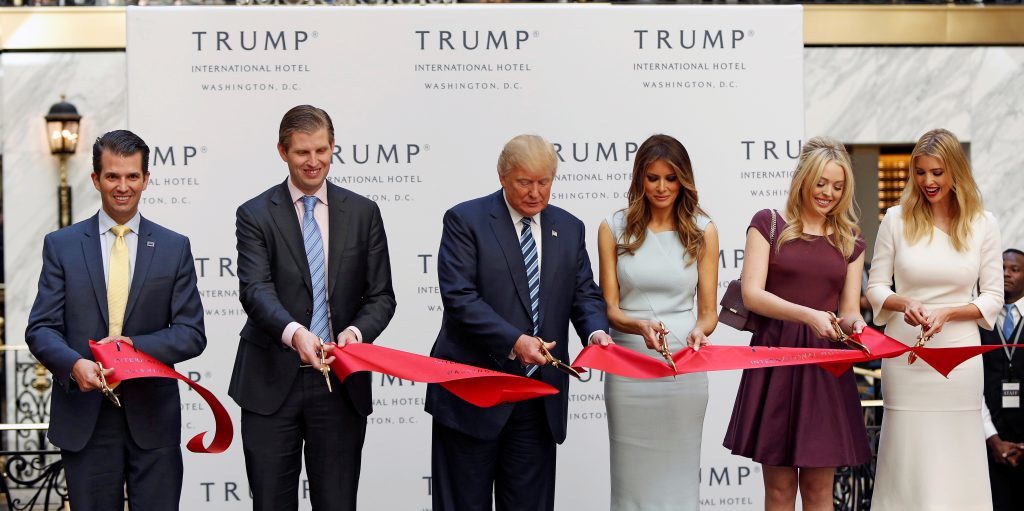
With his White House dreams increasingly in question, Donald Trump is spending precious campaign time promoting his private business in the final weeks of the long race. Hillary Clinton, meanwhile, is using his appearances to undermine his business credentials out on the campaign trail, accusing him of having “stiffed American workers.” Less than two weeks before Election Day – and with polls showing him trailing in many battleground states – Trump took a break from campaigning Wednesday morning to formally open his new hotel in Washington. His remarks at the hotel, which has struggled to fill rooms amid the controversy surrounding his presidential bid, followed a visit Tuesday to another of his properties, the Doral golf course outside Miami. “Under budget and ahead of schedule. So important. We don’t hear those words so often, but you will,” said Trump, linking the hotel redevelopment to his promised performance as president. “Today is a metaphor for what we can accomplish for this country.” Though the GOP nominee focused his remarks on his political message, the event was heavy with marketing, too. Standing under glittering chandeliers, top company executives, including his daughter, touted the hotel. After delivering brief political remarks, Trump and his family headed to the hotel’s grand lobby where they cut a wide red ribbon with golden scissors before flying to North Carolina for what his campaign billed as an urban policy speech. As Trump cut ribbons, Clinton was slamming Trump’s business practices at a Florida campaign rally, saying he built his empire with Chinese-manufactured steel, overseas products and labor from immigrants in the country illegally. Later in the day, she was being joined by restaurateur Jose Andres, who pulled out of the Washington hotel to protest Trump’s anti-immigrant rhetoric. Trump and Andres are currently locked in litigation over the deal. “While the hotel may be new it’s the same old story,” she told several thousand supporters in Lake Worth, Florida. “He has stiffed American workers, he has stiffed American businesses.” Trump’s unusual travel schedule, coming amid signs that the controversy surrounding his campaign has hurt his corporate brand, raises questions about whether the GOP nominee has begun to turn some of his focus to post-election plans. Rooms at the overhauled $212 million hotel that bears his name at Washington’s Old Post Office Pavilion have been heavily discounted and smartphone data suggest fewer people are visiting his properties compared to rival venues nearby. A new Facebook live show produced by his campaign has heightened speculation that Trump may try and offset any losses with advertising revenue from a new a media network – a plan he denies. Trump supporters defended the stops, arguing they show how he would govern as president. “I think there was a symbolic message here that if you want business as usual and bureaucracy as usual, vote Hillary,” said former House Speaker Newt Gingrich, a Trump backer. Clinton, too, has turned some of her focus to what happens after Nov. 8, though her efforts assume she wins. Deep in transition planning, people familiar with her effort say she plans to impose strict ethics rules on how lobbyists may participate on her team. In recent days, she’s begun expanding the scope of her campaign to help down-ballot Democrats – her party sees an opportunity to win control of the Senate and reduce its deficit in the House – and retool her campaign message to emphasize unifying the country after a divisive race. “What Trump has done is to make it possible for people who had racist, sexist, and all kinds of prejudices and bigotry to put them right out there,” Clinton said on the “Breakfast Club,” a syndicated radio show based in New York City. “I’m not going to be able to wave a magic wand and change everybody’s thoughts.” Wednesday was the candidate’s 69th birthday, a milestone she celebrated a day early on Univision’s entertainment news show “El Gordo y La Flaca,” where she was feted with a bottle of tequila and a large cake featuring her face. In her appearance on “The Breakfast Club,” a syndicated radio show popular with African-American voters, singer Stevie Wonder serenaded the woman he called “Madam President Clinton.” Trump, meanwhile, dispatched his running mate, Mike Pence, to play political defense in Utah – a state that hasn’t backed a Democrat for president in 52 years. Besides Utah, Pence also was stopping in the swing states of Nevada and Colorado before he heads on Thursday to solidly Republican Nebraska, a state that awards some of its electoral votes by congressional district. His rally in Omaha may be aimed at shoring up support in the one district that Clinton could potentially win. Republished with permission of the Associated Press.
Bernie Sanders urges government to kill AT&T-Time Warner merger
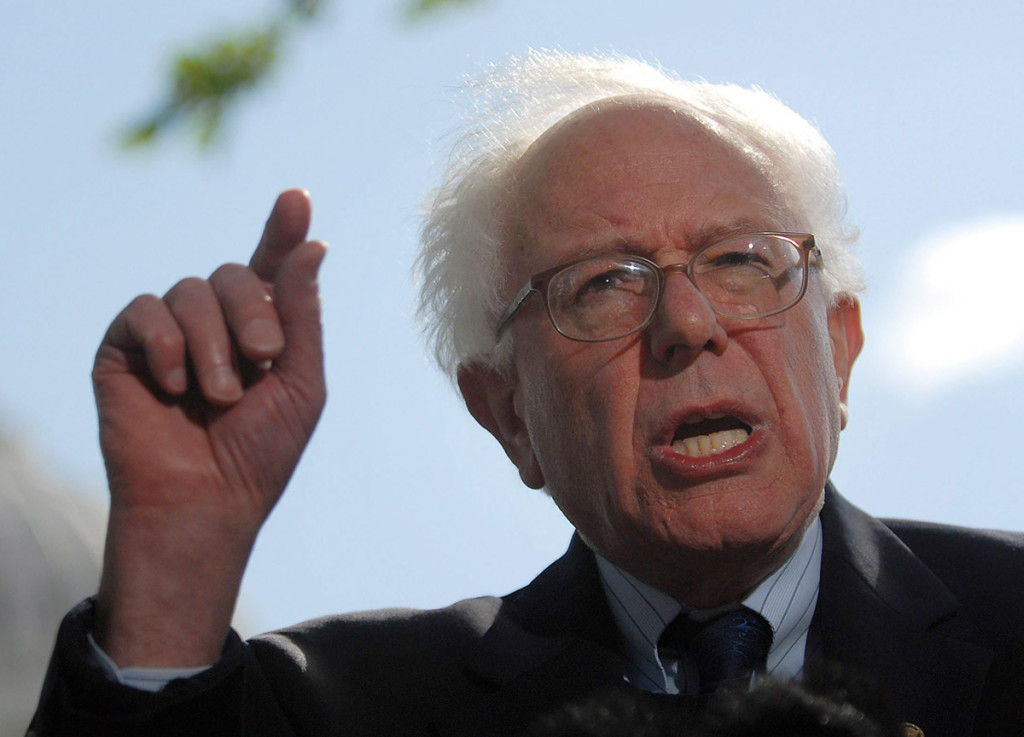
Sen. Bernie Sanders is calling on the government to block a proposed $85 billion merger of communications giants AT&T and Time Warner. The Vermont independent and former contender for the Democratic presidential nomination warns in a letter to President Barack Obama‘s Justice Department that the merger would lead to less “competition and diversity of content” and would “provide consumers less while charging them more.” There is bipartisan opposition to the proposed acquisition by broadband and wireless provider AT&T of Time Warner, which owns CNN, HBO and Warner Bros. Sanders is warning that the proposed deal could lead to a wave of mergers in an already concentrated media industry. Donald Trump has swung against the merger but Hillary Clinton has been more cautious. Republished with permission of the Associated Press.
United States says it will abstain on UN vote on Cuba embargo
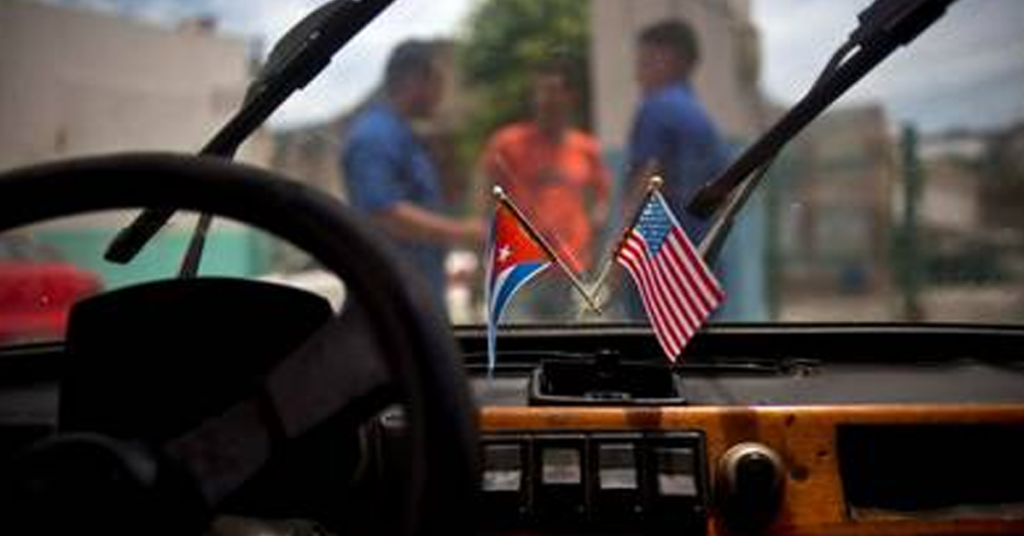
The United States announced Tuesday that it will abstain for the first time in 25 years on a U.N. resolution condemning America’s economic embargo against Cuba, a resolution it had always vehemently opposed. The announcement by U.S. Ambassador Samantha Power ahead of a vote on the resolution was greeted with applause in the 193-member General Assembly. Power said the U.S. was abstaining because of President Barack Obama‘s new approach to Cuba, but she made clear that the United States “categorically” rejects statements in the resolution suggesting the embargo violated international law. She also stressed that abstaining “does not mean that the United States agrees with all of the policies and practices of the Cuban government.” “We do not,” Power said. “We are profoundly concerned by the serious human rights violations that the Cuban government continues to commit.” Republished with permission of the Associated Press.
Republicans contend with Trump factor among Hispanic voters
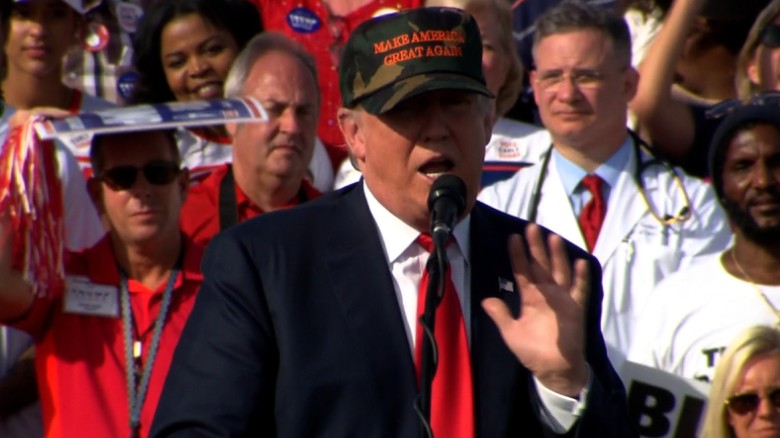
Berta Delgado told the Spanish-speaking conservative activists at her door that she is “100 por ciento” Republican, and agreed with their assessment that Democratic Senate candidate Patrick Murphy is too liberal. She said she’d vote for Sen. Marco Rubio. That is, if she votes. Delgado said she’s so disgusted by the presidential race that she might stay home in bed on Election Day. A few blocks away in the same Cuban-American enclave, Ernesto Gil assured the activists that he, too, favors Rubio. But due to Donald Trump, he said, he’s not planning to vote for any other Republicans. When it comes to connecting with and motivating Hispanic voters, GOP candidates across the country face an exceptional obstacle: their own presidential nominee. Trump’s harsh words about immigrants in the country illegally and his vows to deport them and build a border wall have turned off many of the estimated 27 million Latinos eligible to vote. Democrats are playing the “Trump” card whenever and wherever they can. The approach is evident from a review of Spanish-language television advertisements. Of more than 6,800 Democratic general election ads that had aired on broadcast stations by last week, about 70 percent featured Trump, an Associated Press analysis of Kantar Media’s political ad data found. The review covered commercials about races for the Senate, House and governor, by candidates and outside groups. “Basically if you put the words ‘Donald Trump’ in an ad, it hurts Republicans,” said Juan Cuba, executive director of the Miami-Dade Democratic Party. In Nevada, where more than one-quarter of the population is Hispanic, Democratic Senate hopeful Catherine Cortez Masto tethers her Republican opponent, Rep. Joe Heck, to the presidential nominee in a bonanza of Spanish-language TV ads about “Heck y Trump.” Many conclude, “no nos respetan,” which means, “they don’t respect us.” Supporters of Democrat Patricio Moreno‘s uphill bid to unseat Rep. Carlos Trujillo in a district that includes Doral, Florida, have tagged the Republican “Trumpillo.” And in a competitive Texas congressional race in a heavily Hispanic district, Republican Rep. Will Hurd has disavowed Trump and begun running ads saying he’d stand up to either Trump or Democrat Hillary Clinton. Trump is a fixture of down-ballot debate nights. Standing next to Rubio last week in Orlando, Murphy, a congressman, used Trump’s full name 16 times. He began one answer by saying, “Let’s just talk about Donald Trump again, right?” At the Nevada Senate debate, just after Heck denounced Trump for his videotaped boasts about forcing himself on women, Cortez Masto said Heck’s repudiation was too little, too late. Why, she asked, was it acceptable for Trump to call Mexican immigrants rapists and criminals during his kickoff speech in June 2015? Trump has vastly complicated the efforts of a party that knows it needs to do better with Hispanic voters. Front and center among the findings of a Republican National Committee autopsy on why Mitt Romney lost the 2012 presidential race was a discussion about the importance of Latinos, whose backing dropped to 27 percent compared with the 44 percent who’d chosen President George W. Bush in 2004. “There is no question that Republicans have failed miserably in the past at connecting with Latinos,” said Daniel Garza, executive director of the Libre Initiative. Funded by billionaires Charles and David Koch, Libre tries to sell Latinos on conservative policies. Like other Koch groups, Libre is not advocating for either presidential candidate this time. Asked how Trump might complicate the community-building efforts of Libre and others, Garza said, “There’s no question that personalities matter. It’s difficult.” That’s evident in Florida. Rubio has awkwardly tried to dissociate himself from Trump, while saying he’ll still vote for him. During the debate, Rubio directly dinged Murphy for a lack of engagement among the state’s Latino voters. Glossing over his own complicated history with an immigration overhaul, Rubio said Murphy only began reading up the issue after “consultants told him he needed to do better among Hispanics.” Rubio was part of a core group working on immigration legislation that included a path to citizenship for those here illegally; he abandoned the effort as he geared up for a presidential bid. Murphy didn’t hire a Hispanic outreach director until late September and does not speak Spanish. Rubio, a Cuban-American fluent in Spanish, is far better known among Latinos. “There’s a history there, and it’s not just based on an election-time outreach,” said Ana Carbonell, a senior adviser to Rubio and political consultant on Latinos. “The Hispanic community in Florida is very diverse and complex, and even if you get all the briefs in the world, you can’t get up to speed in time.” Rubio’s five different Spanish-language commercials had been broadcast 741 times as of last week, more than double what Murphy had on the air. The senator frequently appears at community meetings with dignitaries from the homelands of Florida’s Latino voters. He follows South American struggles with the Zika virus, weighs in on the Puerto Rican debt crisis and has successfully pushed to keep in place economic sanctions on Venezuela. That engagement is one of the messages the conservative door-knockers have been carrying into Hispanic neighborhoods of Florida. The Kochs’ network of political and policy groups have more employees in Florida – about 165 – than anywhere else in the country. Many speak Spanish. On a recent afternoon, Jairo Rivera, Miami-Dade field director for Americans for Prosperity, knocked on dozens of doors in Hialeah, striking up conversations in Spanish as he reminded Republican-leaning people to go vote – and not for the Democrat. Street after street of single-story, barrel-tile-roof homes gave few clues about the coming elections; only one lone Clinton yard sign was in sight. Behind the doors, more people than not grumbled about Trump when asked by a reporter, though one man, Pedro Pena, proudly grabbed a “Hispanas for Trump” bumper sticker out of his pickup truck. As for Ernesto Gil, he promised to vote for Rubio for the Senate but Clinton for president. Better the
New Hillary Clinton ads lay out closing arguments for campaign

Hillary Clinton is out with two new ads in the final days of the presidential race. A campaign official says the ads are part of a final series laying out a closing argument for the Democratic presidential nominee’s campaign. One ad features Clinton discussing her plans to help children and families if she’s elected president. The second ad is narrated by actor Morgan Freeman and contrasts Clinton and Republican Donald Trump. Freeman says: “Our children are looking to us. What example will we set?” The campaign says the ads will air in Florida, Iowa, Nevada, New Hampshire, North Carolina, Ohio and Pennsylvania and on national cable. Republished with permission of the Associated Press.
Donald Trump’s Walk Of Fame star destroyed, police investigate
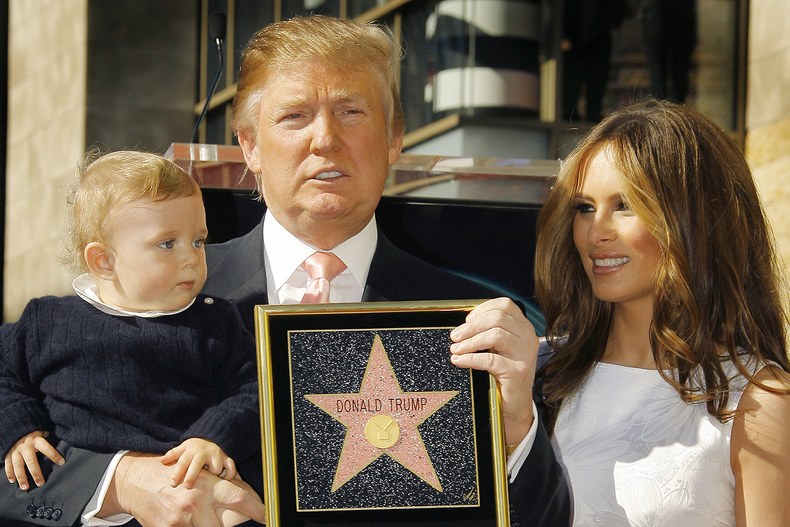
Los Angeles police are investigating the vandalizing of Donald Trump‘s star on the Hollywood Walk of Fame. Det. Meghan Aguilar says investigators were called to the scene before dawn Wednesday following reports that the presidential candidate’s star was destroyed by blows from a hammer. A man who identified himself as Jamie Otis says he’s responsible for the damage. Otis tells Deadline Hollywood that he originally intended to remove Trump’s star. He says he wanted to auction it off to raise funds for the 11 women accusing the presidential candidate of groping them. Trump has denied the groping allegations. Aguilar says she’s aware of the Deadline report but couldn’t comment on whether Otis is a suspect. Trump’s star was dedicated in 2007 in recognition of his work on NBC’s reality TV show “The Apprentice.” Republished with permission of the Associated Press.
