
Donald Trump is master of his domains, even ones that bash him
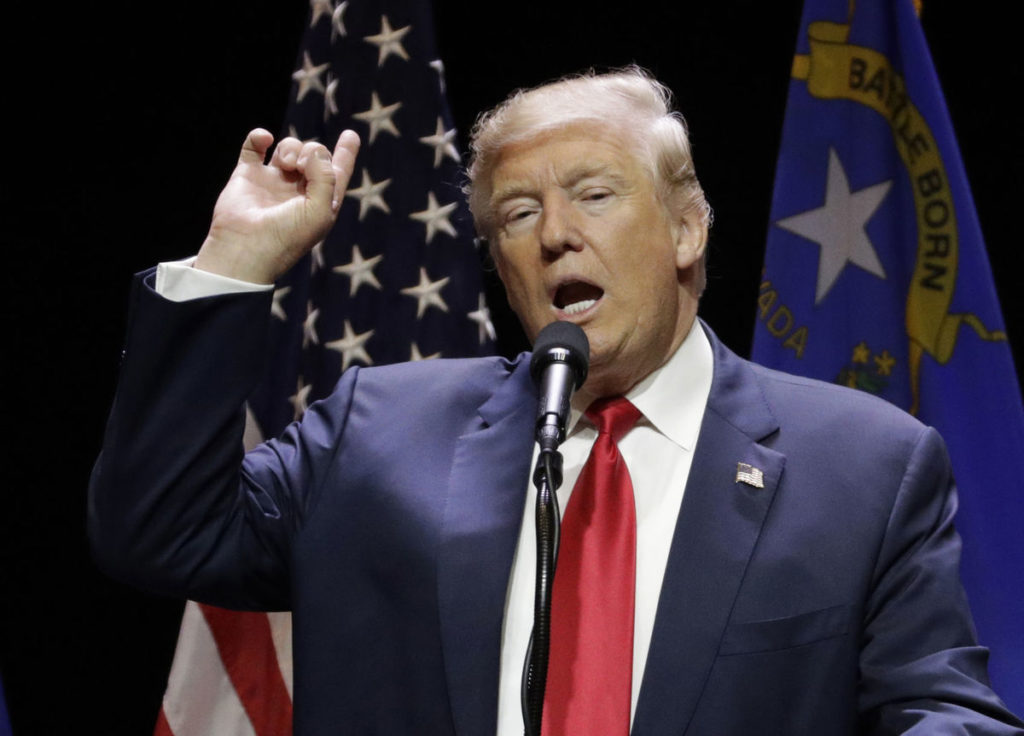
Whoever owns donaldtrumpsucks.com must really hate Donald Trump, right? Wrong! It’s the Donald himself. The same goes for no2trump.com, trumpmustgo.com and two dozen other web addresses that sound like they’re bashing the billionaire Republican presidential nominee, his business interests or his political aspirations. What would Trump want with such insulting domains? Easy. To make sure his critics and rivals can’t have them. He and his Trump Organization own more than 3,600 web addresses, according to the research firm DomainIQ. The vast majority bear the names of his properties, products and progeny. There are 274 domains alone featuring the name of Trump’s daughter Ivanka. And then there are the ones that seem better suited for the anti-Trump crowd: eight domains ending in “scheme,” eight ending in “fraud” and eight ending in “sucks.” It is common for businesses and celebrities to scoop up and sit on web addresses that could be used to mock or attack them. Cable giant Comcast owns ihatecomcast.com, and Verizon holds verizonsucks.com. Colleges have made a habit of buying up versions of their names ending in .xxx to prevent them from falling into the hands of pornographers, and Major League Baseball has registered the names of various teams ending in .sex. “Domains are cheap,” branding expert Rebecca Lieb said. “Mopping up when somebody acquires a domain and does something malicious with it is expensive.” Trump’s collection of web addresses good and bad is far more extensive than that of any candidate before. He and the Trump Organization own a few hundred more than Target Corp. or General Motors. Hillary Clinton‘s campaign owns 70, according to DomainIQ, though none appear to be the kind of derogatory names Trump has registered. Her family’s foundation owns 214 domains, including four ending in .xxx. “Mr. Trump has built a globally recognized, highly successful brand, and it’s only natural he would attempt to protect his name and his brand in all respects,” Trump campaign spokeswoman Hope Hicks said in an email Monday. Web addresses cost just a few bucks to register. After that, you can sell them to the highest bidder, unless someone steps in and successfully claims that the domain involves a trademark. That’s how Trump has gotten his hands on Trump-related addresses that other people registered before he could. His lawyers have sent cease-and-desist letters and gone to arbitration at least 40 times to force outsiders to hand over domains, including MelaniaTrump.com. Trump and his team didn’t take any chances in 2009 when he created the Trump Network brand to sell vitamins and other health products. They quietly scooped up 18 negative domain names, including DonaldTrumpPonziScheme.com and TrumpNetworkFraud.com. Trump also tried to head off the haters when he ventured into the liquor business with Trump Vodka in 2005. Along with trumppunch.com, trumpwithatwist.com and yourefiredvodka.com, Trump’s company registered ihatetrumpvodka.com and trumpvodkasucks.com. And last year, as his run for the White House focused new attention on Trump University’s questionable practices, Trump and his team registered trumpfraud.com and three similar domains. Trump’s roster traces his professional ambitions and personal milestones, with registrations tied to the start of big projects and the arrival of children and grandchildren, and addresses for ventures that never got off the ground or ones like trumponair.com that could be ripe for use if he loses on Nov. 8. There are domains for an unrealized plan to build a NASCAR speedway in the early 2000s, a failed attempt to acquire Gianni Versace‘s Miami Beach mansion in 2013 and an unsuccessful push to develop a North Carolina golf resort. There are domains for a Trump-produced Broadway show featuring the music of Irving Berlin. The curtain never rose, but Trump still owns trumpfollies.com. And then there are the politically themed domains that appear to coin new terminology: trumpublican.org and trumpocrat.net. Despite Trump’s efforts, some of his tormentors have beaten him to the punch. Chris Puchowicz bought trump.org for $1,272 at an auction in 2012 and snagged trump.tv for $251 a few months later. The Trump Organization didn’t make a bid, he said, but its lawyers later threatened a lawsuit. Puchowicz still owns the domains and has used them to post an anti-Trump rant. Brian Lam, a software engineering student in St. Louis, spent $9 to register votefortrumppence.com. He then posted a photo of himself giving the finger to the camera over the words “Just Kidding.” All is not lost. Trump still owns ilovedonaldtrump.com. Republished with permission of the Associated Press.
Colombian Ambassador Juan Carlos Pinzón visits Mobile to strengthen trade relations
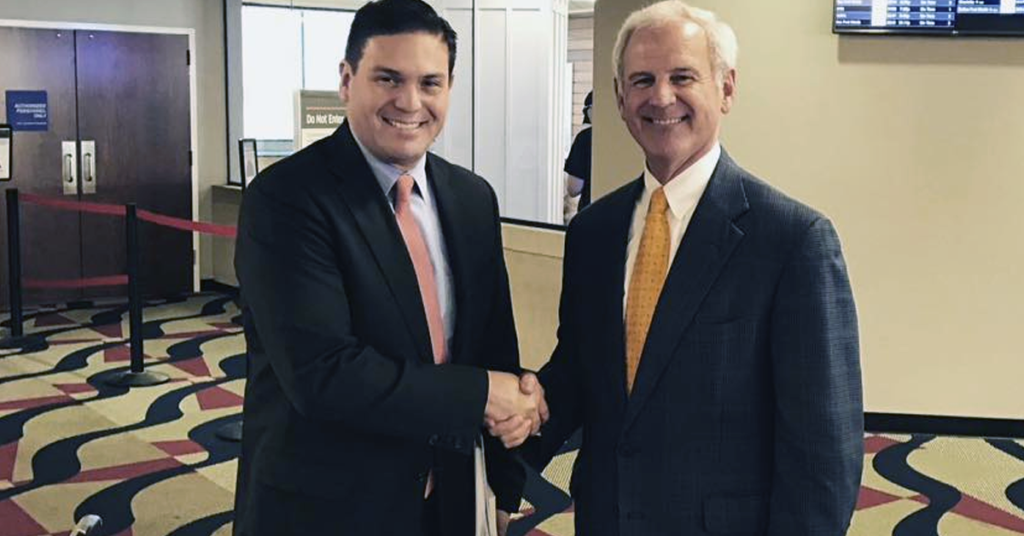
They say a rising tide lifts all boats — that certainly seems to the goal of Alabama 1st District Rep. Bradley Byrne and Colombian Ambassador Juan Carlos Pinzón, who are meeting this week to further develop a lasting trade partnership between Southwest Alabama and the South American country. Pinzón arrived in the Port City Tuesday for a two-day visit hosted by Byrne. During his stay in the Yellowhammer State, Pinzón will visit local businesses, speak with community and business leaders, meet with students and faculty at the University of South Alabama and tour the Port of Mobile. “I always appreciate the opportunity to host world leaders in Mobile to show the exciting progress taking place in our area,” said Byrne. “There is great potential for economic partnerships between Colombia and the United States, and I look forward to exploring that partnership further. I believe we both stand to learn from one another, and I look forward to a productive visit.” In 2015, Alabama exported to Colombia a total of $187.2 million in goods that ranged from machinery and transportation equipment to chemicals. In that same year, Colombia exported to Alabama a total of $176 million in goods, which ranged from minerals and ores, to plastics and rubber products. “Colombia and Alabama have a dynamic economic partnership that benefits businesses small and large, farmers and workers both in the state and throughout Colombia,” Pinzón explained. “I look forward to visiting Mobile this week and meeting with policymakers, and business and community leaders to determine how we can make an already strong partnership even stronger.” In addition to Byrne, Ambassador Pinzón is meeting with Mobile Mayor Sandy Stimpson, business leaders from Airbus, Austal USA, the Alabama Port Authority, and the Mobile Chamber of Commerce. The ambassador also will speak about U.S.-Colombia relations; and study abroad programs and internships at the University of South Alabama; and he will discuss philanthropy and charitable giving at the Community Foundation of South Alabama.
Alabama named one of the top 10 fattest states in America
“Fat” may be the new normal in America. It certainly seems to be in the Yellowhammer State. Alabama was just ranked the eighth fattest state in the country by personal-finance website WalletHub in their latest study, 2016’s Fattest States in America. To make matters worse, drawing on data from the Centers for Disease Control and Prevention, a report from JAMA Internal Medicine found that more than three-quarters of American adults today are either overweight or obese. And for the first time in history, the number of obese people has surpassed that of the overweight. Not exactly the news you want to hear before entering America’s most gluttonous time of the year, holiday season. Which is why WalletHub released the study during National Diabetes Awareness Month — to shed light on America’s growing waistline and give Americans a reason to thoughtfully consider their holiday eating and exercise plans. In the study, WalletHub’s analysts compared the 50 states and the District of Columbia based on 17 key indicators of weight-related problems across three key dimensions: 1) Obesity & Overweight Prevalence, 2) Unhealthy Habits and Consequences and 3) Food and Fitness. Their data set ranges from “percentage of adults and children who are overweight and obese” to “sugary-beverage consumption among adolescents.” The fat problem in Alabama (1=Worst; 25=Avg.) 5th: percentage of adults who are obese 17th: percentage of children who are overweight 11th: percentage of children who are obese 7th: percentage of residents who are physically inactive 1st: percentage of residents with high cholesterol 6th: percentage of adults eating less than 1 serving of fruits/vegetables per day 3rd: percentage of residents with diabetes 3rd: percentage of residents with hypertension Statistics published by the Physical Activity Council suggest a need for more aggressive efforts to combat the “fat” issue. In 2015, about 81.6 million Americans were completely inactive, which is one of the leading causes of obesity. Here’s a look at how Alabama compares to the rest of the country: Source: WalletHub Although this WalletHub’s report examines the prevalence of obesity, it also evaluated the levels of inactivity and overweight in each state. Given the particularly harmful effects of obesity, they also constructed a separate table below that focuses just on obesity rates to highlight the states in which the problem is most concerning. In its findings, Alabama ranked no.5. Source: WalletHub
State Auditor Jim Zeigler asks panel to delay $8M contract for Medicaid RCOs

Alabama State Auditor Jim Zeigler is asking for yet another Medicaid contract delay. On Tuesday, Zeigler asked the Alabama Legislature’s Contract Review Committee to delay a contract for $8 million in consulting services for implementation of the regional care organizations (RCOs) to deliver Medicaid healthcare. Zeigler said the contract needs to be scrapped, and has filed a written request for the maximum delay of 45 days to allow such action. “This huge consulting cost needs substantial review by all in authority,” Zeigler explained of his request. “A contract of this size does not need to be approved and should be scrutinized and scrapped.” Medicaid is seeking to pay $8 million to the Chicago firm of Navigant Consulting for implementing the new system of private providers in each area of Alabama instead of the present statewide administration by the state Medicaid agency. Zeigler continued, “It appears that the plan for regional care organizations as now formatted will cost the state millions instead of saving the state millions. This plan needs to be halted now, before millions are spent in the implementation stage. Approval of this contract would be throwing good money in front of bad.” Designed to be the state’s solution to the perennial problem of rising costs of Medicaid, RCOs have become a controversial topic in the Yellowhammer State this year. Last month, Zeigler filed a separate request for another delay of a controversial $1.3 million contract. The Committee approved the request for delay. The review panel will meet Thursday, Nov. 3 at 1 p.m. to review proposed contracts from state agencies, and will consider Zeigler’s request then. Below is a copy of Zeigler’s Nov. 1 request to the Contract Review Committee:
Hillary Clinton, Donald Trump warn of dire consequences if rival wins
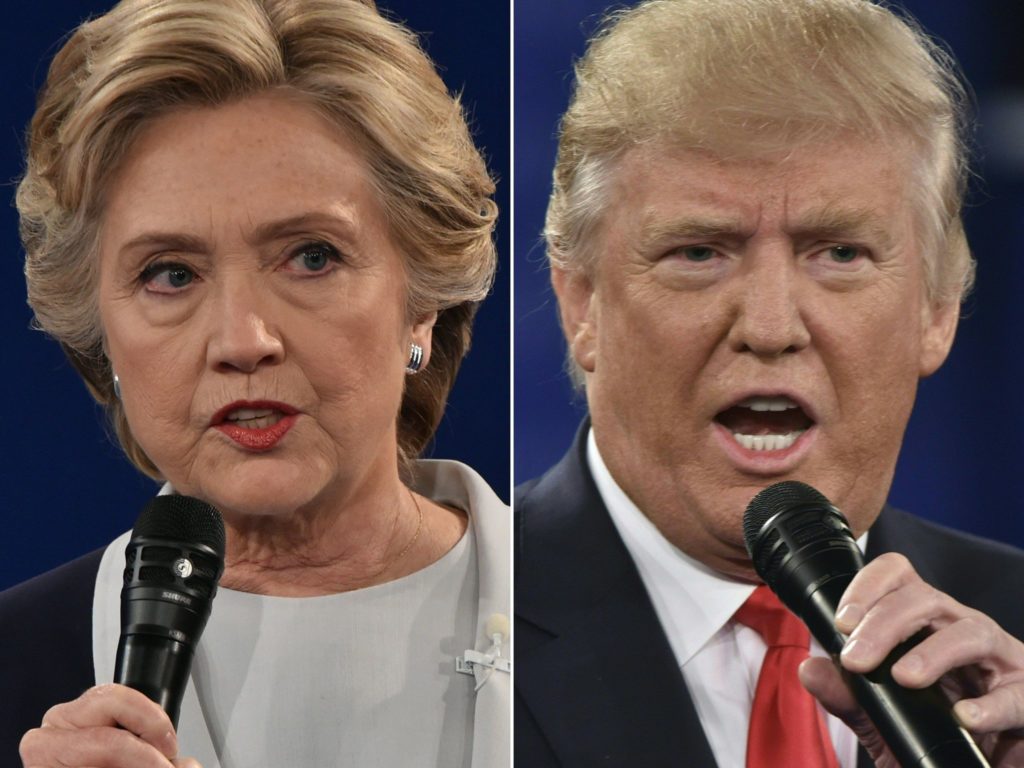
Donald Trump could draw the United States into nuclear war, Hillary Clinton warns. Clinton would plunge the country into a constitutional crisis, he says. As the caustic presidential race lurches toward the finish line, each candidate is aggressively casting the other as a catastrophic choice for the White House. Making an affirmative case about his or her qualifications and vision has become a secondary priority. It’s an ugly conclusion to a contest featuring two of the most unpopular presidential candidates in modern American politics. The sexual assault accusations that have trailed Trump in the race’s closing weeks and a new FBI review into Clinton’s email habits seem likely to only reinforce the public’s negative perceptions, leaving the candidates to essentially argue to voters that they’re the best of two unappealing options. “I would rather be here talking about nearly anything else,” Clinton said Tuesday during a rally in Florida where she leveled a series of attacks on Trump’s character and preparedness for the White House. “But I can’t just talk about all of the good things we want to do.” Indeed, Clinton’s speeches in this final full week of campaigning have overwhelmingly focused on Trump. On Monday, she warned against giving Trump the authority to order a nuclear attack, bringing along a former nuclear launch officer to bolster her point. “Imagine his advisers afraid to tell him what he doesn’t want to hear, racing against his legendarily short attention span to lay out life-and-death choices too complex to be reduced to a single tweet,” Clinton said Monday in Ohio. “Then imagine him plunging us into a war because somebody got under his very thin skin.” After spending much of the summer and fall tearing Trump down, Clinton had planned to close the campaign on a more positive note. She talked about giving Americans something to vote for, not just against. And with public opinion polls showing her with solid leads in most battleground states, she started talking about healing divisions and unifying the country after the election. But her advisers say they saw polls tighten even before the FBI launched its new email review. The campaign now believes she needs to make a last push to define Trump as an unacceptable choice in order to seal the deal with persuadable voters. On Tuesday, Clinton focused on Trump’s demeaning and predatory comments about women, calling him a “bully.” This time she brought with her former Miss Universe Alicia Machado. Trump criticized Machado for gaining weight after winning the 1996 contest. Trump’s campaign rhetoric has always been dark, full of searing depictions of a crumbling nation, and he has not been shy about going negative on Clinton. He routinely calls her “Crooked Hillary” and “the most corrupt person ever to run for the White House.” But Trump, too, has stepped up his broadsides after the last weeks of October handed him a pair of potentially potent political gifts: the projected “Obamacare” premium rate hike and FBI Director James Comey‘s letter revealing that agents are reviewing emails that may be connected to Clinton’s private server. His campaign sees the latter in particular as an opportunity to reinforce questions about Clinton’s trustworthiness and remind voters that sending Clinton to the White House could lead to the return of the scandals that trailed Bill Clinton’s presidency in the 1990s. “She would be under protracted criminal investigation and probably a criminal trial, I would say,” Trump said during a rally in Michigan on Monday. “So we’d have a criminal trial of a sitting president.” Campaigning Tuesday in Pennsylvania, a state in which Trump has directed an abundance of time and resources, he and his running mate Mike Pence delivered their most full-throated takedown yet of President Barack Obama‘s health care law. Though barely mentioning Clinton’s name, the typically fiery Republican somberly warned that electing Clinton would “destroy American health care forever.” Clinton’s and Trump’s closing campaign advertisements reiterate the race’s sharply negative tone. Her campaign has several commercials out that directly question whether Trump would launch a nuclear attack. The ads feature clips of him saying he likes to be unpredictable and would “bomb the (expletive) out of them.” She’s also doubled down on her argument that Trump’s offensive comments about women, as well as his boasts about touching women without their permission, disqualify him from the White House. A 60-second ad that features Trump in his own words over the years concludes: “Anyone who believes, anyone who says, anyone who does what he does, is unfit to be president.” Meanwhile, Trump’s ads reinforce his message that the country risks doom if it doesn’t change directions by electing him. “Hillary Clinton will keep us on the road to stagnation,” a narrator says in one of his latest ads. Republished with permission of the Associated Press.
James Comey: The do-the-right-thing guy in email maelstrom
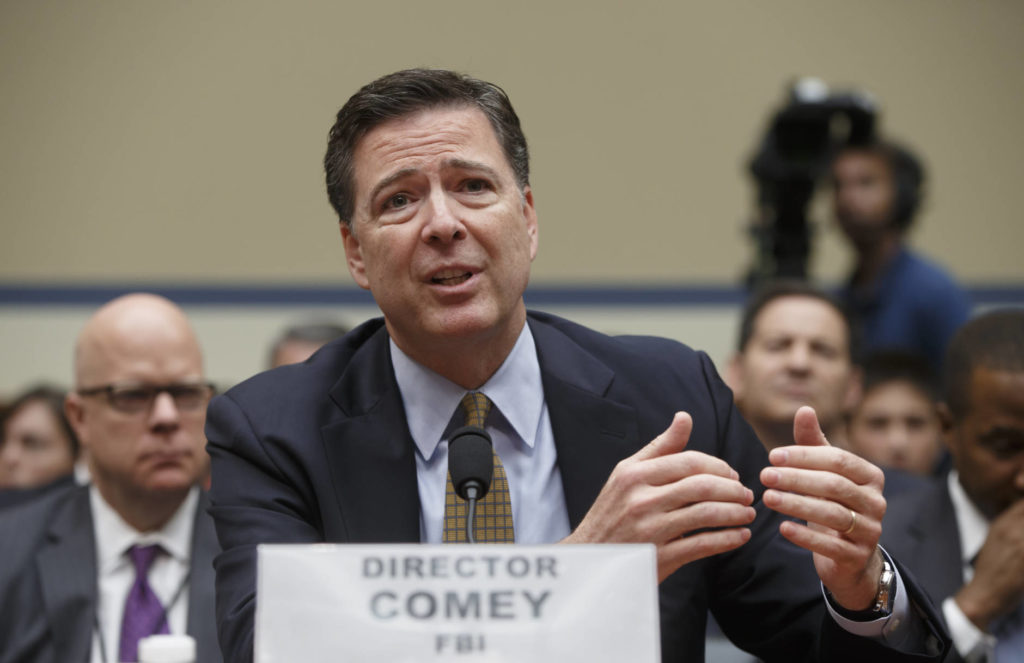
FBI Director James Comey once called it a crucial leadership test: Anticipating whether a decision makes sense “through the eyes of others.” Now his own big decision has Democrats and even some Republicans wondering whether he failed his own test. The FBI director who prides himself on moral rectitude and a squeaky-clean reputation is being criticized from all sides for lobbing a stink bomb into the center of the presidential race. His disclosure that investigators have found more emails that may – or may not – relate to Democrat Hillary Clinton’s use of a private email setup as secretary of state has jolted the race and generated far more questions than answers. This isn’t the first time Comey has found himself in the spotlight for taking a stand on what the 6-foot-8 lawyer saw as the moral high ground. Perhaps the last previous thing many Americans heard about Comey was the tale of his dramatic rush to the bedside of then-Attorney General John Ashcroft in a darkened hospital room in 2004 for a standoff with senior White House officials over federal wiretapping rules. Comey, serving as acting attorney general during Ashcroft’s illness, dashed to the bedside to block Bush administration officials from making an end run to get Ashcroft’s permission to reauthorize a secret no-warrant wiretapping program. “That night was probably the most difficult night of my professional life,” Comey testified before Congress in 2007. Perhaps until now. Former Justice Department officials and lawmakers from both parties are calling Comey’s revelation about Clinton’s emails just 11 days before the election an improper, astonishing and perplexing intrusion into politics in the critical endgame of the 2016 campaign. It’s an unexpected predicament for the man who has painted ethical decision-making as an easy call. “There’s right, and there’s wrong, and it ain’t hard to tell the difference,” he once said. That internal certitude has led the FBI official to freelance his positions at times. Last year he broke from the White House in suggesting a possible link between police officers’ anxieties about taking actions that could be recorded on viral videos and rising homicide rates in some American cities. The White House distanced itself from those remarks, saying there was no scientific evidence to support a connection, or show that officers were pulling back from their responsibilities. Comey, a former Republican who is no longer registered with a political party, spent 15 years as a federal prosecutor before serving in the George W. Bush administration. His office brought the case that led to Martha Stewart‘s conviction on obstruction of justice and lying to government investigators. As an assistant U.S. attorney in Virginia, he handled the investigation of the 1996 bombing of the Khobar Towers housing complex in Saudi Arabia that killed 19 members of the U.S. military. President Barack Obama, when he nominated Comey for a 10-year-appointment to the FBI job in 2013, cited his willingness to stand up to power “at key moments when it’s mattered most,” referencing the hospital-room standoff. Aides say Obama’s high opinion of Comey still stands. But the White House is leaving the FBI director dangling, saying it is up to him to defend himself in the face of what spokesman Josh Earnest called “significant criticism from a variety of legal experts, including individuals who served in senior Department of Justice positions in administrations that were led by presidents in both parties.” Indeed, Rep. Jim Jordan, R-Ohio, a hard-line conservative and House Judiciary Committee member, told Fox News Radio that “this was probably not the right thing for Comey to do, the protocol here, to come out this close to an election. But this whole case has been mishandled, and now it is what it is.” And former Rep. Joe Walsh, a supporter of Donald Trump, tweeted that Comey’s action amounted to an “unconstitutional abuse of government power against our electoral process. Just not right.” Senate Democratic leader Harry Reid of Nevada went a step further and accused Comey of deliberately inserting himself into the race to damage Clinton’s presidential prospects, suggesting the FBI director may have broken the law. Comey, 56, made his disclosure about the Clinton emails despite admonitions from officials within the Justice Department not to go there. It is longstanding Justice Department protocol to avoid taking investigative action in the run-up to an election that could affect its outcome. Comey told colleagues that he felt obligated to go public with the information after having previously told Congress over the summer that the investigation into Clinton’s emails had been concluded without prosecution. Trying to explain his decision, he wrote to FBI employees that it would have been “misleading to the American people were we not to supplement the record” despite the “significant risk of being misunderstood.” Christine Chung, a New York lawyer who worked with Comey when he was the top federal prosecutor in Manhattan, described him as ever “determined to do the right thing.” The criticism he’s faced over the email disclosure, she added, is a “lesson for why good people shouldn’t go to Washington.” Republished with permission of the Associated Press.
Iran’s supreme leader criticizes U.S. presidential candidates
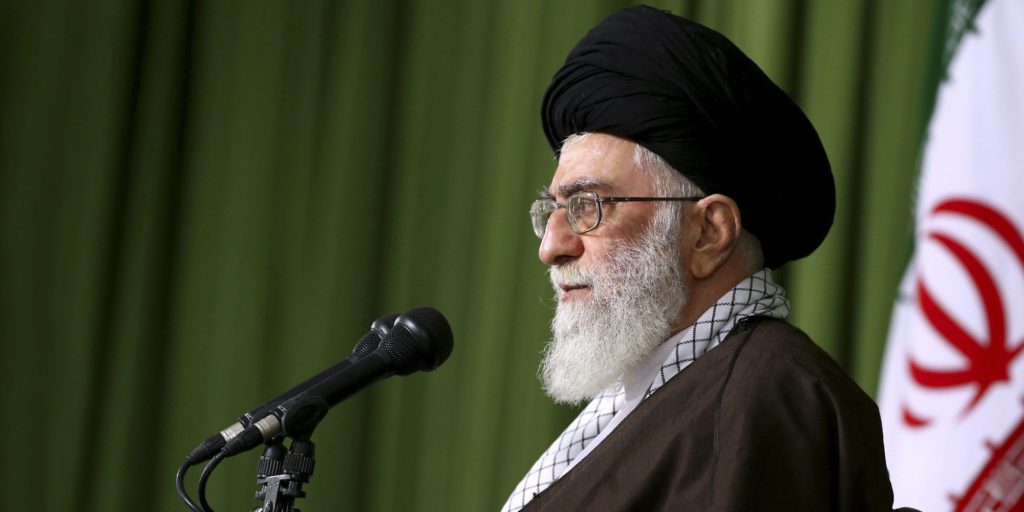
It seems everyone has an opinion about the U.S. presidential election, including Iran’s supreme leader. Ayatollah Ali Khamenei criticized both Democratic candidate Hillary Clinton and Republican Donald Trump in a speech Wednesday marking the 1979 takeover of the U.S. Embassy in Tehran. Khamenei said Clinton and Trump’s comments in the presidential debates “are sufficient for the annihilation of the reputation of the United States.” He didn’t name either candidate in his speech. He also described Americans as “liars, untrustworthy, deceitful and backstabbers” while saying he still opposed any direct negotiations with the U.S. following the nuclear deal. Iranian state television aired two of the three U.S. presidential debates live. Iran’s President Hassan Rouhani in October described the two candidates as “bad and worse,” without specifying which was which. Republished with permission of the Associated Press.
U.S. Muslims cringe at how both presidential nominees portray them
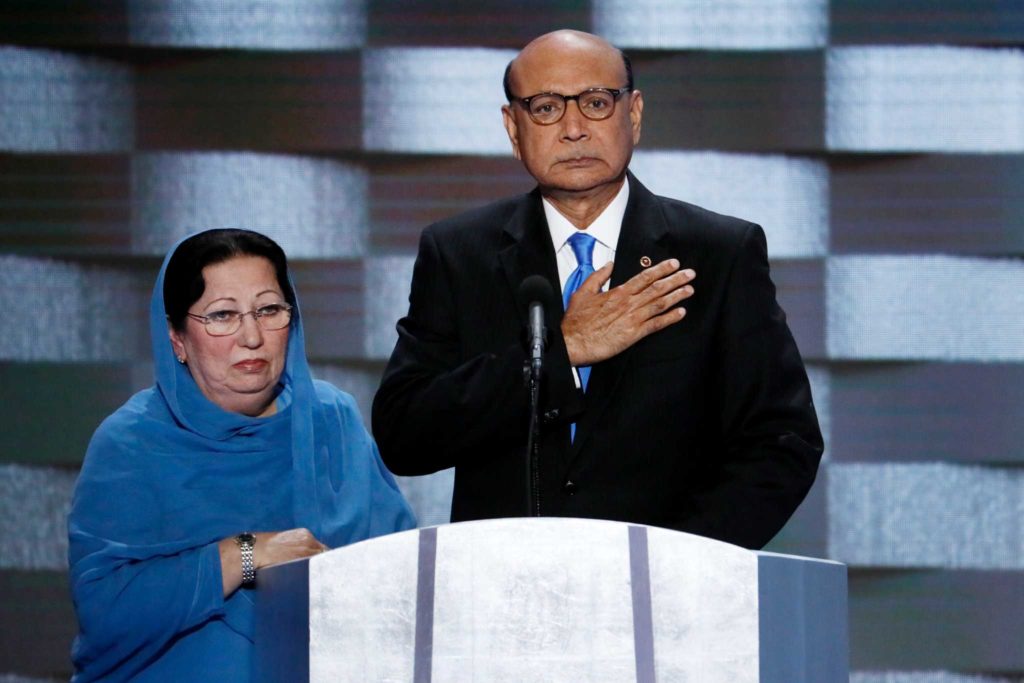
Many Muslim Americans cringe at the way they have been portrayed by candidates during the presidential campaign – either as potential terrorists or as eyes and ears who can help the government’s counterterrorism efforts. Those descriptions, offered by Donald Trump and Hillary Clinton, respectively, are troubling to Muslims who complain they are being pigeonholed and their concerns on other issues ignored. “I think that there is some level of dismissiveness about Arab-Americans and American Muslims that allows candidates to talk about us, not really to us,” said Omar Baddar, a political analyst and media producer based in Washington. Chaumtoli Huq, a lawyer from the New York City suburb of Yonkers, agreed. “We’re not able to talk about issues that impact us as citizens – education, jobs, things that any other voter would care about,” she said. “It’s a really demoralizing way to be seen to be part of this country.” One of the campaign’s more memorable moments for Muslim Americans unfolded at the Democratic National Convention in July, when a grieving Khizr Khan addressed delegates about his son, Humayun, an American soldier who was killed in Iraq. The GOP candidate soon pushed back against Khan’s anti-Trump comments, setting up an almost unprecedented episode in which a presidential nominee criticized a military family that lost a loved one in a war zone. Huq and others said Trump’s campaign has clearly been the more negative one, starting with his call to ban foreign Muslims from entering the United States as an anti-terrorism measure. In the second presidential debate in St. Louis, Trump answered a question about how to stop Islamophobia in America by saying American Muslims must report other Muslims who are engaging in dangerous behavior. He also repeated the false claim that neighbors of the San Bernardino, California, shooters saw bombs all over the floor in the shooters’ home last year but did not report it. That led to a widely retweeted comment from Brooklyn College professor Moustafa Bayoumi, who posted, “I’m a Muslim, and I would like to report a crazy man threatening a woman on a stage in Missouri.” By the time the debate ended, his retort had been retweeted more than 32,000 times and “liked” more than 43,000 times. Speaking to The Associated Press, Bayoumi said Muslim Americans “get exceptionalized to such a degree that their average Americanness disappears in the wind.” But Hillary Clinton did not escape censure from Muslim Americans, who said that the Democratic nominee’s public remarks have primarily revolved around recognizing them for what they could do to support counterterrorism efforts. At that second debate, in answering the same question as Trump, Clinton said: “We need American Muslims to be part of our eyes and ears on our front lines. I’ve worked with a lot of different Muslim groups around America. I’ve met with a lot of them, and I’ve heard how important it is for them to feel that they are wanted and included and part of our country, part of our homeland security, and that’s what I want to see.” Nour Eidy, a freshman at the University of Michigan, grew up in the Detroit suburb of Dearborn, which is heavily Arab and Muslim. She was troubled by the call to root out radicals, mainly because she has not come across any. “I don’t know anything about terrorism. I don’t know their game plans, their strategies,” she said. “We’re just as victimized by them as anybody else.” Hussien Kazwini does not object to calls for Muslims to identify dangerous extremists. The college student in Toledo, Ohio, whose parents were born in Lebanon, said it’s what every U.S. citizen should do. “We, at the end of the day, are around more Muslims at a mosque or an event,” Kazwini said. “Maybe we do have an ability to more easily see if someone is going over to the extreme side.” Frustration with the race is enough to make Ramah Kudaimi want to skip voting altogether. “People are so shocked by what Trump is saying, that he’s – and he’s so openly racist – that they are giving Hillary Clinton a pass,” the Washington, D.C., organizer said. “The Democrats, frankly, have not necessarily done what is needed to also earn my vote as a Muslim American.” In New York, Ahsia Badi said the campaign rhetoric had also affected how non-Muslims interact with Muslims. “This sort of dialogue … is forcing people to sit there and see their friends who happen to be Muslim, to be their ‘Muslim friends.’” The 44-year-old health professional has two children, ages 10 and 8. Because of the constant linkage between Muslims and terrorism issues, she said, “I’m worried about how my children see their own opportunities and what their role is” as Americans. Republished with permission of the Associated Press.
Donald Trump camp calls KKK newspaper ‘repulsive’ after praise
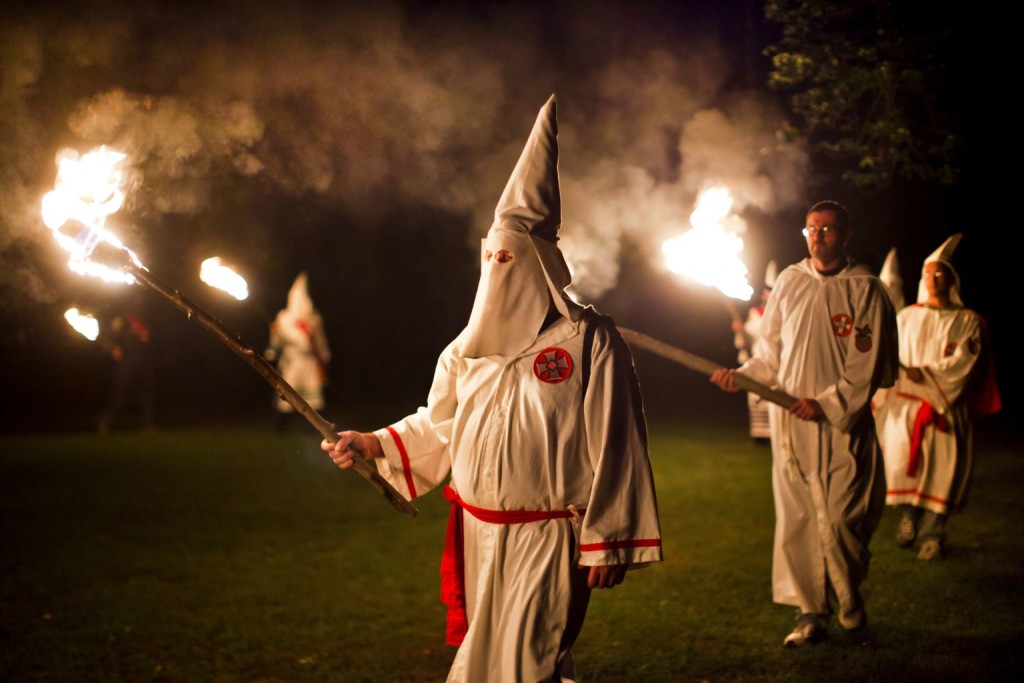
Donald Trump‘s campaign is firmly rejecting the embrace of a Ku Klux Klan-affiliated newspaper. The latest issue of The Crusader used Trump’s “Make America Great Again” campaign slogan as its headline for an editorial praising the catchphrase and the Republican presidential candidate. The newspaper bills itself as “The Premier Voice of the White Resistance.” The newspaper didn’t specifically call for readers to vote for Trump. In a statement, the Trump campaign calls the newspaper “repulsive.” It said its “views do not represent the tens of millions of Americans who are uniting behind our campaign.” Trump had been criticized earlier in the campaign for failing to immediately denounce the endorsement of David Duke, a former Grand Wizard of the Ku Klux Klan. Republished with permission of the Associated Press.
