
Elbowing each other all the way, Donald Trump, Hillary Clinton near finish
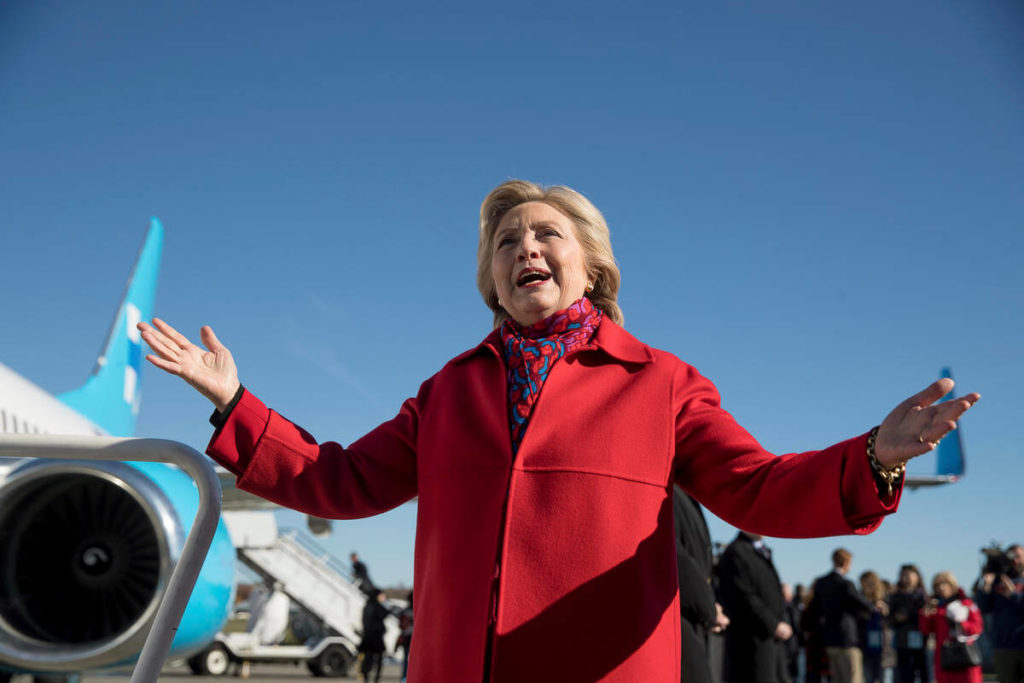
Closing out a wildly unpredictable White House race, Hillary Clinton and Donald Trump blitzed through battleground states Monday in a final bid to energize supporters. Clinton urged voters to embrace a “hopeful, inclusive, bighearted America,” while Trump called for supporters to “beat the corrupt system.” The candidates rallied voters late into the night, a frenzied end to a bitter election year that has laid bare the nation’s deep economic and cultural divides. Clinton campaigned with confidence, buoyed by FBI Director James Comey‘s announcement Sunday that he would not recommend criminal charges against her following a new email review. The inquiry had sapped a surging Clinton momentum at a crucial moment in the race, though she still heads into Election Day with multiple paths to the 270 Electoral College votes needed to become the nation’s first female president. “I think I have some work to do to bring the country together,” she acknowledged as she boarded her plane for her last battleground tour. “I really do want to be the president for everybody.” Looking beyond Election Day, Clinton said in a radio interview that she hopes Trump will play a “constructive role” in helping bring the country together if she defeats him. Trump at times struck a nostalgic tone during his final round of rallies, recalling the rivals he’d vanquished and how far he’s come. As he surveyed the crowd in Scranton, Pennsylvania, he declared, “It’s been a long journey.” Still, Trump was aggressive to the end, slamming Clinton as the “face of failure.” Having made the new FBI review a centerpiece of his closing case to voters, he argued that the Democrat was being protected by a “totally rigged system.” “You have one magnificent chance to beat the corrupt system and deliver justice,” Trump said. “Do not let this opportunity slip away.” The comments were a reminder that Comey’s news, delivered in a letter to lawmakers on Sunday, was a doubled-edged sword for Clinton. While it vindicated her claims that the emails would not yield new evidence, it ensured that a controversy that has dogged her campaign from the start would follow her through Election Day. Across the country, nearly 24 million early ballots were cast under the shadow of Comey’s initial announcement of a new email review. That number represents about half of the nearly 45 million people who had cast votes by Monday, according to Associated Press data. The inquiry involved material found on a computer belonging to Anthony Weiner, the disgraced former congressman and estranged husband of Huma Abedin, a longtime Clinton aide. Comey said Sunday the FBI reviewed communications “to or from Hillary Clinton while she was secretary of state.” Clinton tried to fly above the controversy Monday, making no mention of the FBI during her rallies. The centerpiece of her final day of campaigning was a nighttime event in Philadelphia with President Barack Obama and first lady Michelle Obama, along with rock stars Bruce Springsteen and Jon Bon Jovi. Nearing the end of his two terms in the White House, Obama was sentimental as he launched his own busy day of events, noting that he was probably making his last campaign swing for the foreseeable future. “Whatever credibility I have earned after eight years as president, I am asking you to trust me on this. I am voting for Hillary Clinton,” Obama said. Clinton is banking in part on high turnout – particularly among Obama’s young, diverse coalition of voters – to carry her over the finish line Tuesday. Roughly half the states with advance voting have reported record turnout, including Florida and Nevada, which have booming Hispanic populations, a possible good sign for Clinton. In Florida alone, Hispanic participation is up by more than 453,000 votes, nearly doubling the 2012 level. Black turnout is up compared to 2012, but that share of the total vote is lower due to bigger jumps among Latinos and whites, according to University of Florida professor Daniel Smith In Nevada, where more than three-fourths of expected ballots have been cast, Democrats also lead, 42 percent to 36 percent. Trump deputy campaign manager David Bossie downplayed the impact of increased Hispanic participation, telling reporters on a conference call, “We feel that we’re going to get a good share of those votes.” However, he sidestepped two questions about the level of Hispanic vote Trump needs to win the presidency. Without victories in Florida and Nevada, Trump’s path to 270 electoral votes would be exceedingly narrow. He already must win nearly all of the roughly dozen battleground states. Trump had planned to keep up his breakneck travel schedule deep into Election Day, but aides revised plans, keeping the businessman in New York. Midway through his final day of travel Monday, Trump praised his supporters for having created a “movement.” But he warned it would all slip away if he loses Tuesday. “Go vote,” he urged. “Or honestly, we’ve all wasted our time.” Republished with permission of the Associated Press.
Bradley Byrne: local schools are making a difference
There is something really fun and exciting about visiting with students in our local schools. From the elementary student who just wants you to read a book with them to the high school student looking for college advice, the visits are always special. With the House out of session for the month of October, I had the pleasure to spend quality time in a number of our local schools. I visited Clarke County High School in Grove Hill to talk with students and learn more about their new workforce training center. At Saraland High School, I attended the induction ceremony for students joining career and technical education student organizations. I also visited the Chickasaw School System in Mobile County, where the students welcomed me with impressive handmade signs. I spent time at Magnolia School in Foley and Robertsdale Elementary School in Baldwin County to share some stories with some of the students. I believe it is important we all find time to volunteer and support our local school systems, and reading to students is a great way to make a difference. At each of my school visits, I have been blown away by the work our teachers and administrators are doing. Their job is certainly not easy. Due to budget issues at the state level, many teachers are facing unique challenges. For example, I talked with teachers who spent personal money in their classrooms in order to support students’ needs. Teachers wear many different hats. Teachers are more than just instructors. They often serve as mentors and friends to the students they teach. For some students, they provide much needed stability for what may be a very complicated home life. Education in Alabama is making important progress, and that is a testament to our teachers and administrators. For example, the high school graduation rate in Alabama is now at 89%, a new record high. However, more challenges remain. As a parent, former member of the Alabama State School Board, and education advocate, I am committed to doing everything I can to support our students, teachers, and local schools. In the House of Representatives, I serve as a member of the House Education and the Workforce Committee. This is the committee responsible for both K-12 and higher education policy. There are obvious ways elected officials in Washington can help our local schools. First, we need to cut down on the red tape and paperwork that tie up teachers and keep them from doing their job. We need to also stop trying to push national academic standards. What works for students in Alabama may be different than what works for students in California or Michigan. We should allow states to set their own academic standards that best fit their students. Most importantly, we need to ensure that any federal education funding is actually making its way to the classrooms instead of getting stuck in the bureaucracy. The money that Washington sends to our local schools should be spent in the classrooms helping students and teachers. Ultimately, we need to empower our local teachers and stop getting in their way. Visiting with our teachers, I see firsthand their passion for helping students succeed. Education is not a field you can work in unless you have an unyielding passion for helping students. Of course, I want to see our local schools continue to improve and grow, but we should never take for granted the job our teachers and administrators do on a daily basis. They are real difference makers in our society, and they deserve our praise. • • • Bradley Byrne is a member of U.S. Congress representing Alabama’s 1st Congressional District.
Robert Bentley expands drought emergency to all 67 Alabama counties

Gov. Robert Bentley announced the entire state of Alabama is now under a Drought Emergency Declaration. Effective as of 3 p.m. Monday, all 67 Alabama counties have been placed under a No Burn Order, with all outdoor burning prohibited due to the high risk of wildfires. According to the governor’s office, since the first of October, a total of 1,421 wildfires have occurred in Alabama, destroying approximately 15,409 acres of land. Last year in the same time frame, there were only 232 wildfires, burning 1,846 acres across the state. “Although 46 counties in North Alabama were already under the No Burn Order, it was necessary to add the remaining 21 counties in the southern part of the state because of alarming wildfire activity and continued lack of rainfall,” Bentley said in a statement released Monday. “The expansion of this No Burn Order is critical to keeping our citizens safe from the threat of wildfires and reducing the chance of avoidable fires.” Alabama Forestry Commission (AFC) wildland firefighters are currently battling a 700-acre blaze that has burned since Friday in Walker County. Over the weekend, other large wildfires burned in Baldwin, Coosa. and Wilcox counties, affecting several property owners. “With these extremely dry conditions, any fire can quickly spread out of control, explained Interim State Forester Gary Cole of the AFC. “Over the past few weeks, we’ve seen an increase not only in the number of wildfires that have occurred, but also the size. Several of these fires have been large, not only resulting in damage to our forests but also directly threatening residential areas. If not for the efforts of Forestry Commission firefighters and assistance from volunteer fire departments, we would have lost homes.” Under the Drought Emergency No Burn Order, it is illegal for any person to set fire to any forest, grass, woods, wildlands, or marshes; to build a campfire or bonfire; or to burn trash or other material that may cause a forest, grass or woods fire. Specifically, the regulation prohibits any prescribed burns, any campfire or bonfire, any trash or debris fires, or any other open burning. If convicted, the penalty for violating the No Burn order is up to six months in jail and a fine of up to $500. The No Burn order will remain in effect until rescinded by the state forester, when conditions will have changed sufficiently to reduce the occurrence and frequency of wildfires. To report persons burning in violation of this law, contact your local law enforcement. For more information on the current wildfire situation in the state, visit Alabama Forestry Commission’s website at forestry.alabama.gov.
Supreme Court refuses to issue order on voter intimidation

The U.S. Supreme Court and federal judges in two states turned down requests by the Democrats on Monday to head off what party leaders say are plans by Donald Trump‘s supporters to harass and intimidate voters on Election Day. The Democrats asked for restraining orders to prevent what they characterized as ballot-box vigilantism by Trump’s Republican presidential campaign and his friend Roger Stone’s political organization, Stop the Steal. But the Supreme Court issued a one-page denial in a case out of Ohio, with Justice Ruth Bader Ginsburg noting that state law already forbids voter intimidation. And the Democrats’ arguments in federal courts in Pennsylvania and North Carolina fell flat in those crucial battlegrounds, too. Warning repeatedly that the election is about to be stolen from him, Trump has called on his supporters to act as election observers in parts of the country to prevent fraud. That has stirred fears of minority voters being confronted and challenged by self-appointed poll watchers. In North Carolina, U.S. District Judge Catherine Eagles said she saw insufficient evidence the state’s Republicans and Trump want supporters to intimidate minorities on Tuesday. But she said she will keep an eye on the balloting and could revisit the case quickly if there’s evidence of a conspiracy to suppress voting. “These are difficult times,” Eagles said at a hearing. In Pennsylvania, U.S. District Judge Paul Diamond denied a request to pre-emptively ban Republicans from polling places, saying that Democrats had not produced any evidence there would be problems. He faulted the effort as a last-minute “mad scramble” and said it would be wrong to ask the Pennsylvania GOP chairman to travel across the state on a day’s notice for the hearing. A federal court in Nevada also planned a hearing Monday in a similar dispute. Last week, a federal judge in Cleveland issued a temporary restraining order warning that anyone, regardless of political affiliation, who engages in intimidation or harassment near or inside polling places will face contempt of court charges. But a federal appeals court blocked the order on Sunday after the Trump campaign argued that it tramples on the First Amendment right to free speech and was issued without evidence of voter intimidation during the early balloting that has been going on in Ohio for weeks. The U.S. Supreme Court refused to reinstate the restraining order. Ginsburg criticized Trump over the summer before apologizing for her remarks. Her comments raised questions about her impartiality and whether she would participate in election disputes involving Trump. Republished with permission of the Associated Press.
Justice Department to dispatch more than 500 staffers to polls
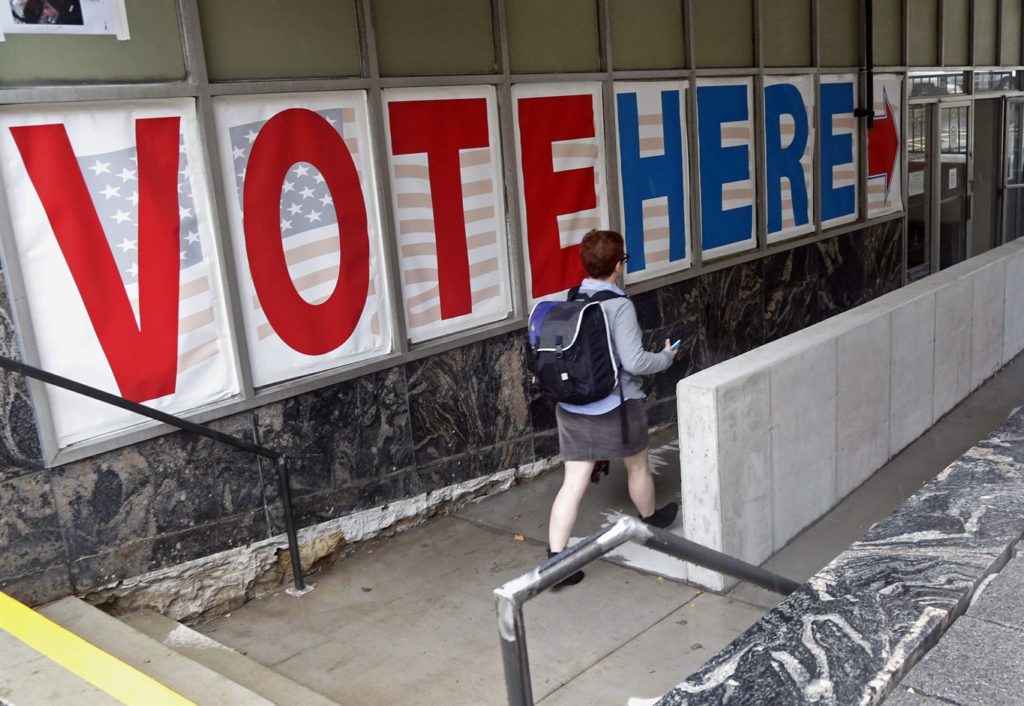
The Justice Department said Monday it will send more than 500 staffers to 28 states on Election Day to monitor the polls, a 35 percent reduction from the number four years ago. The personnel will be dispatched to 67 jurisdictions to watch for potential civil rights violations, such as discrimination on the basis of race, religion or gender. The announcement comes amid rising concerns about voter intimidation, particularly aimed at minorities. The number of personnel is fewer than the roughly 780 monitors and observers who were dispatched in 2012. The Justice Department has said its poll-watching presence has been curtailed by a 2013 Supreme Court opinion that gutted a key provision of the Voting Rights Acts. That has led to a reduction in trained observers, who enjoy unfettered access to the polls and cannot be removed from the sites. Most of the more than 500 staffers will be monitors, who rely on the cooperation of local officials to do their jobs. Observers in this election are limited to a handful of jurisdictions around the country where federal court orders are in place that authorize their presence. Justice Department officials say they hope voters will not detect any difference in the federal presence. Among the states receiving federal monitors are those that have changed their voting rights laws since the last presidential election, including North Carolina, or that have reported problems in past elections. “In most cases, voters on the ground will see very little practical difference between monitors and observers,” Vanita Gupta, head of the department’s Civil Rights Division, said in a statement. “We work closely and cooperatively with jurisdictions around the country to ensure that trained personnel are able to keep an eye on the proceedings from an immediate vantage point.” Republished with permission of the Associated Press.
High court raises doubts about temporary presidential picks

The Supreme Court on Monday raised doubts about the temporary appointment of a former labor official in a case that could limit the president’s power to fill top government posts. The justices considered whether Lafe Solomon was allowed to serve as acting general counsel of the National Labor Relations Board while he was at the same time nominated to fill that role permanently. The outcome of the case could affect the next administration if the new president and the Senate remain at odds over nominations to agencies at the center of partisan political fights. It also raises questions about the validity of decisions made by a half-dozen other temporary officials who still have nominations pending. President Barack Obama named Solomon acting general counsel in June 2010 and he held the office until Nov. 4, 2013. But he was never confirmed by the Senate, where Republicans saw him as too favorable to labor unions. At issue is a 1998 law that seeks to prevent the president from using temporary appointments to bypass the Senate’s advice-and-consent role. A federal appeals court ruled last year that Solomon’s tenure was invalid under the complex requirements of the law. Acting Solicitor General Ian Gershengorn told the justices that the lower court ruling upends a settled understanding of the law that has been used to nominate more than 100 people over nearly two decades. He said Congress never objected to any of those officials. “It was very much the dog that didn’t bark,” he said of Congress’ silence. But during the hourlong argument, it seemed that justices across the ideological divide were skeptical about the government’s reading of the law. Chief Justice John Roberts said congressional inaction over the practice does not mean lawmakers believed it complied with the law. “That might not be a partisan battle they want to fight at that time,” he said. Justice Ruth Bader Ginsburg said she was not persuaded by interpretations of the law from the Justice Department’s Office of Legal Counsel and the Government Accountability Office that sided with the administration. The case began when an Arizona-based ambulance company accused of unfair labor practices argued that Solomon was serving in violation of the Federal Vacancies Reform Act. The U.S. Court of Appeals for the District of Columbia Circuit sided with the company, SW General, Inc. The law says that once an official is nominated for a post requiring Senate confirmation, that person can’t serve in the same position on a temporary basis. There is an exception if the nominee served for 90 days as a “first assistant” to the person who previously held the office. The Obama administration says the law doesn’t prevent the president from tapping other senior officials as temporary fill-ins even if they are also formally nominated for the post. That was the case with Solomon, who was director at a different office at the NLRB. Arguing for the ambulance company, Shay Dvoretzky said the law allows federal agencies to run smoothly by keeping the first assistant in place and not bringing in someone else. Others, like Solomon, have “no accountability” to the Senate. Justice Stephen Breyer seemed worried about a ruling that would disrupt the continuity of government agencies by forcing the president to choose a temporary official who may not be the best leader. A ruling is expected by the end of June. Republished with permission of the Associated Press.
Jeff Sessions makes final push for Donald Trump in New Hampshire
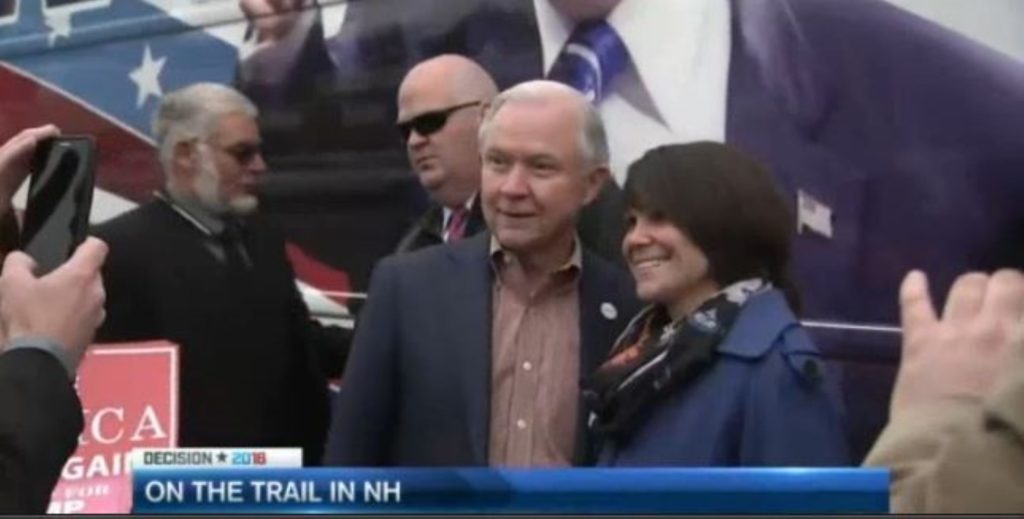
On Sunday, Donald Trump surrogate Jeff Sessions visited Windham, New Hampshire to inspire supporters to vote on Election Day. The Alabama Senator was welcomed by former New Hampshire Sen. Bob Smith, reports Alysha Palumbo of NECN. “I’ve been told repeatedly that you have probably the best-organized state in the nation and you’re working hard, you’re knocking on doors, making phone calls, doing the bread and butter work that takes us from a close election to victory,” Sessions told the crowd. Trump is scheduled to campaign in the state Monday.
Forget the TV: How to follow Election Day online
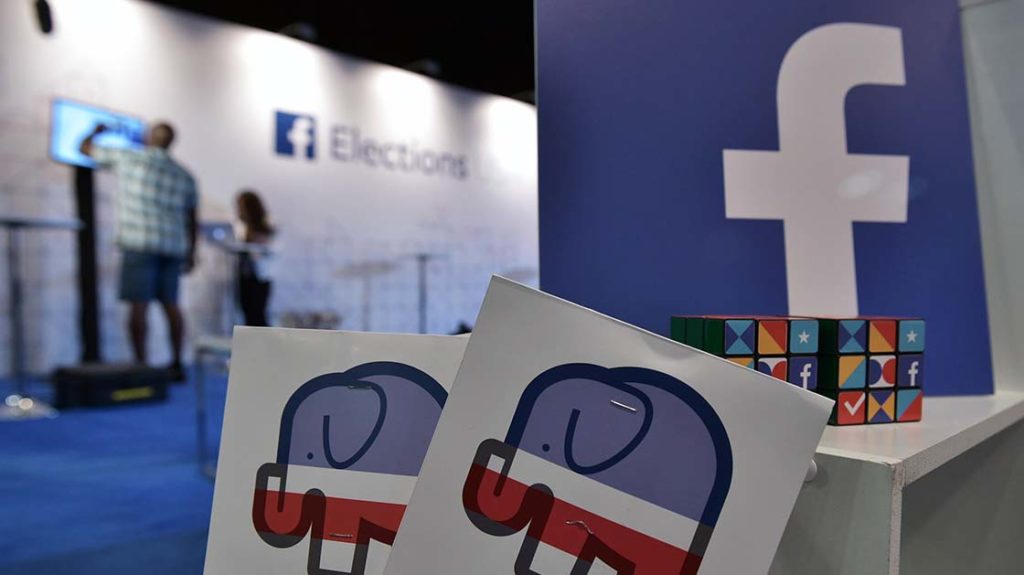
TVs are so last century. News outlets are using Facebook Live, Snapchat, YouTube and other tools to offer live coverage of Election Day in ways not possible four years ago. It’s a fitting close to an election season that has played out on Twitter and Facebook as much as it has on the nightly news, with debates live-streamed online and candidates barbing on social media. Here’s your online guide for Tuesday. All times are Eastern. — FIND YOUR POLLING PLACE AND MORE Unless you’re one of the millions of Americans who have already voted, it’s a good idea to find out where to cast your ballot, preferably before Tuesday. Googling “how to vote” will take you to localized results that include the times the polls are open and any requirements such as an ID. You can also enter your address to locate your polling place. Facebook’s elections tool will show you what’s on your ballot and where various candidates stand on key issues. The information comes from the nonpartisan group Center for Technology and Civic Life, which also generates some of the data for Google searches such as “what’s on my ballot.” To get started, go to https://www.facebook.com/elections/yourplan (you’ll need a Facebook account). — SNAP AWAY Among other things, Snapchat users will be able to see “live stories” on the app – showing people at the polls, election results, acceptance and concession speeches and election night celebrations. In the U.S., users will see overlays they can add to their snaps. — FACE-OFF ON FACEBOOK NowThis, a news outlet aimed at millennials, will have video coverage on its Facebook page. Comedian Jordan Carlos will host the stream, called “No Sleep til POTUS.” CNN will have live coverage with reporters in battleground states, as well as drone shots of voting locations and international reaction throughout the day. Each hour from 9 a.m. to 6 p.m. will be streamed from a different location. After 6 p.m., the network will continue Facebook Live streams from various locations, including watch parties and, again, battleground states. The Washington Post is planning live programming on its Facebook page beginning at 7 p.m. The show will include commentary and updates from Post reporters, including those at campaign headquarters for both Donald Trump and Hillary Clinton. The New York Times will also stream election coverage on its Facebook page, beginning at 4:30 p.m., from locations such as polling stations, college campuses and election viewing parties. Other news outlets with live streaming plans include Univision, PBS NewsHour, the Daily Caller, ABC News and Vox. — TWITCH ALONG WITH TWITTER Twitter is partnering with BuzzFeed News for a live stream from BuzzFeed’s New York headquarters. The stream will begin at 6 p.m. Twitter says segments will include critiques of traditional news outlets and how they are covering the election, as well as live reports from BuzzFeed journalists at various locations throughout the U.S. and elsewhere. Go to https://election.twitter.com. You don’t need an account. On Monday, Twitter also launched “official” election hashtags, which include an emoji icon of a ballot box, next to the hashtag “ElectionDay” and “Election2016.” With at least one scam trying to tell Clinton supporters to vote by text, Twitter reminded users that you cannot vote by text or tweet – but you can send direct messages to the Twitter-owned @gov account to find where your polling place is. Republished with permission of the Associated Press.
Alabama Sen. Trip Pittman files bill to allow execution by firing squad
An Alabama state senator wants to allow the state to carry out executions with firing squad. Montrose- Republican Sen. Trip Pittman said the firing squad should be an “option” for the Yellowhammer State during continued litigation over lethal injection. Pittman explained that he was prompted to introduce the bill in the wake of the U.S. Supreme Court‘s Thursday night decision to stay the execution of Alabama-death row inmate Tommy Arthur while deciding whether or not to hear Arthur’s appeal that challenges the state’s lethal injection procedure. Arthur was convicted of killing a man in a 1982 murder-for-hire. Thursday night was Arthur’s seventh scheduled execution date in 15 years. Ahead of it, he challenged the lethal injection procedure saying that it was cruel and unusual punishment. He suggested a firing squad as an alternative. By law, Alabama allows inmates to choose between lethal injection and the electric chair. However, the chair has not been chosen since lethal injection became an approved option. Pittman’s bill, SB 12, follows Arthur’s own suggestion and would allow inmates to allow choose death by a five-person firing squad comprised of law enforcement officers. The senator pre-filed the bill ahead of the legislative session, which is scheduled to begin February 7, 2017. Should the Alabama Legislature approve Pittman’s bill, the state would join Utah in allowing firing squads for executions.
Donald Trump, GOP paying consultant dogged by voter fraud charges

Donald Trump‘s campaign and the Republican National Committee have paid at least $1.8 million to a political operative whose roster of companies include several that have been repeatedly investigated for voter registration fraud, even as Trump has complained that the election is rigged against him. Three employees of Strategic Allied Consulting, a firm owned by conservative operative Nathan Sproul, pleaded guilty in Florida four years ago to felony charges related to altering and destroying scores of voter registration forms. There were no formal actions against the firm. Yet recent federal campaign finance reports reviewed by The Associated Press show Sproul is now back on the RNC’s payroll, this time with a firm named Lincoln Strategy Group. That’s a renamed version of his former firm Sproul & Associates, an Arizona-based company that was investigated for alleged voter registration misconduct in Nevada and Oregon. Although Sproul was never charged in the 2012 Florida case, GOP officials and Mitt Romney‘s presidential campaign considered the charges against his employees alone serious enough to fire his company in 2012. The chairman of the RNC said this week he didn’t know Sproul’s firm has been rehired. Neither the Republican Party nor the Trump campaign would discuss the specifics of the work Sproul or the firm is doing and in what states. “We have zero tolerance for any threat to the integrity of elections,” Sean Spicer, spokesman for the Republican National Committee, told the AP in September 2012. “When we were informed of an alleged incident, we immediately cut all ties to the company.” The RNC paid Sproul’s company a total of $1.2 million in October for get-out-the-vote efforts. Records show Donald J. Trump For President Inc. paid another $600,000 to Lincoln Strategy on Oct. 27. RNC Chairman Reince Priebus said he didn’t know his organization was still doing business with Sproul. RNC spokeswoman Lindsay Walters declined to provide specific details about Sproul’s current work for the party. In past years, the RNC’s full spending with Sproul’s firms wasn’t disclosed in campaign finance reports until after the election. “This is a coordinated expenditure with the campaign,” Walters said, referring to the practice of political parties working with campaigns to raise and spend money. “Similar to 2012, coordinated expenditure decisions are joint decisions, the RNC does not have sole decision authority.” Trump campaign spokeswoman Hope Hicks said: “This is a firm that we work with to execute door knocking.” Sproul, 44, said in a statement Friday that his companies had been “cleared of any and all wrongdoing,” and that any past accusations against his firms had been “utterly discredited.” “Lincoln Strategy upholds the strictest anti-fraud standards,” Sproul said. “Because of our strict standards, our company immediately refers people to law enforcement and election officials when there is any indication of improper activity.” In the 2012 Florida case, three people identified by authorities as employees of Strategic Allied Consulting pleaded guilty to forging voter registrations, saying their supervisors had demanded it. But after a two-year investigation, the Florida Department of Law Enforcement said it found no evidence that Sproul’s firm specifically directed its employees to turn in the faked forms. Strategic Allied Consulting reportedly employed about 2,000 people in Florida for the 2012 election. On Sunday, Sproul sought to clarify that those registering voters for his firm were contract workers, rather than his direct employees. “They were all employees of a staffing firm that Strategic contracted with,” Sproul said, though he told AP he could not recall the name of the other company involved. Sproul also claimed his firm reported the suspect workers to law enforcement, though Florida authorities said at the time their investigation was triggered when the fraudulent registrations were flagged by suspicious elections officials in Palm Beach County. A search of online help-wanted ads shows Lincoln Strategy Group is now hiring in North Carolina, Colorado, Missouri and other swing states, offering “Great Pay!” to those available to go door-to-door to canvass voters for conservative causes. “Make America Great Again $20/HR Canvassing,” reads a recent ad posted on Craigslist in Raleigh, North Carolina, offering full-time and part-time jobs through Election Day. A veteran Republican operative from Arizona, Sproul has worked closely with dozens of state and national GOP campaigns, specializing in organizing voter registration drives and outreach efforts targeting evangelical Christians and social conservatives. He told AP his companies have employed more than 10,000 grassroots campaign workers over the last decade. Operating under numerous corporate names, Sproul’s firms also have a history of allegations of voter registration fraud. In a 2012 interview with the Los Angeles Times, Sproul acknowledged he set up multiple companies at the RNC’s request, because the Republican Party wanted to obscure its ties with his firms. Republished with permission of the Associated Press.
Colonial Pipeline flowing again 6 days after deadly Alabama explosion
Colonial Pipeline has restarted its gasoline pipeline just six days after a deadly explosion and fire in Shelby County that killed one and injured six workers. A statement from Colonial says following removal of the affected segment of the pipeline Saturday, installation of the new segment commenced and was successfully completed and Line 1 resumed service at 5:45 a.m. CST on Sunday. “Subsequent to today’s successful restart, it is expected to take several days for the fuel delivery supply chain to return to normal,” the statement said. According to Colonial, fuel products are expected to arrive throughout Alabama within 24 hours.
How AP rates the presidential race and the Road to 270
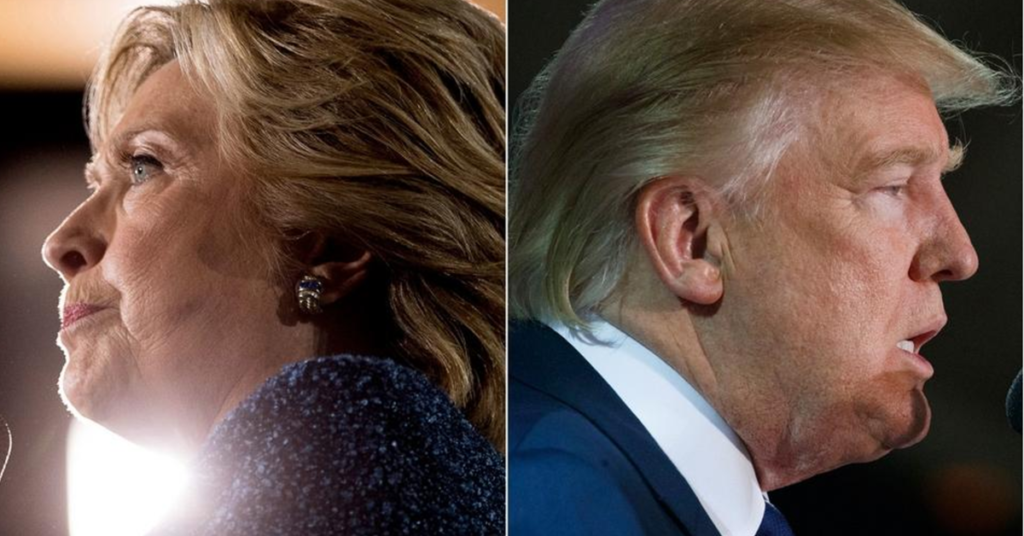
In the final days of the 2016 campaign, Hillary Clinton holds advantages over Donald Trump in just enough states to win her the White House – if she can hold them on Election Day. But Clinton’s national lead appears to have narrowed in the last two weeks, and Clinton’s winning map appears more fragile than it once did. The Associated Press this week moves New Hampshire from leaning Democratic to a toss-up, Arizona and Iowa from a toss-up to leaning Republican, Virginia from strong Democratic to leaning Democratic, and Texas from leaning Republican to strong Republican. The analysis is of the map as it stands today. It considers preference polling, recent electoral history, demographic trends and campaign priorities such as advertising, travel and on-the-ground staff. — SOLID DEMOCRATIC: California, Connecticut, Delaware, District of Columbia, Hawaii, Illinois, Maine, Massachusetts, Maryland, Minnesota, New Jersey, New Mexico, New York, Oregon, Rhode Island, Vermont, Washington state (200 total electoral votes). LEANS DEMOCRATIC: Colorado, Michigan, Nevada, Pennsylvania, Wisconsin, Virginia (74 total electoral votes). TOSS-UP: Florida, Maine 2nd District, Nebraska 2nd District, New Hampshire, North Carolina, Ohio, Utah (74 total electoral votes). LEANS REPUBLICAN: Alaska, Arizona, Georgia, Iowa, Missouri (46 total electoral votes). SOLID REPUBLICAN: Alabama, Arkansas, Idaho, Indiana, Kansas, Kentucky, Louisiana, Mississippi, Montana, Nebraska, North Dakota, Oklahoma, South Carolina, South Dakota, Tennessee, Texas, West Virginia, Wyoming (144 total electoral votes). — Want to chart your own path along the Road to 270? Figure out how Donald Trump or Hillary Clinton can get the Electoral College votes they’ll need to win the White House with AP’s interactive map: https://elections.ap.org/content/road-270-0 Republished with permission of the Associated Press.
