
This week in the U.S. House of Representatives, Senate: Nov. 14-17, 2016
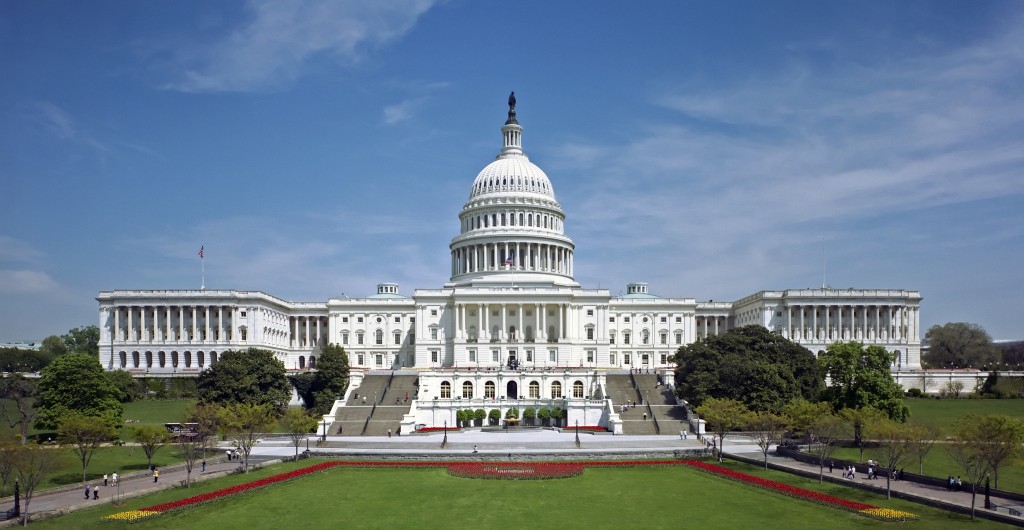
Congress returns to Washington D.C. this week in the wake of one of the most historic elections in U.S. history for a lame duck session as President-elect Donald Trump prepares his new administration. Here’s what’s happening in Congress this week: U.S. House of Representatives On Monday, the U.S. House of Representatives is in session and will consider several bills under Suspension of the Rules, including: H.R. 1192: National Clinical Care Commission Act; H.R. 1209: Improving Access to Maternity Care Act; H.R. 2713: Title VIII Nursing Workforce Reauthorization Act of 2016; H.R. 4365: Protecting Patient Access to Emergency Medications Act of 2016, as amended; H.R. 985: Concrete Masonry Products Research, Education, and Promotion Act of 2015, as amended; H.R. 4665: Outdoor Recreation Jobs and Economic Impact Act of 2016, as amended; H.R. 2566: Improving Rural Call Quality and Reliability Act of 2016; and H.R. 2669: Anti-Spoofing Act of 2016 On Tuesday, the House is expected to consider additional bills under suspension including: H.R. 5732: Caesar Syria Civilian Protection Act of 2016, as amended; H.R. ___: Iran Sanctions Extension Act. This legislation reauthorizes the 1996 Iran Sanctions Act (ISA) for 10 years, through Dec. 31, 2026. Under the ISA, sanctions may be imposed against foreign companies or entities that invest in the development of Iran’s oil and gas industry. The ISA is due to expire at the end of this year but it is is separate from the multilateral sanctions being lifted under the Iran Nuclear Agreement. H.R. 5332: Women, Peace, and Security Act of 2016, as amended; and H.Res. 780: Urging respect for the constitution of the Democratic Republic of the Congo in the democratic transition of power in 2016, as amended On Wednesday and Thursday, the House is expected to consider the following: H.R. 5711: a bill that would block U.S. financing for Iranian aircraft purchases. The bill, which combines two other bills, prohibits the Export-Import Bank (Ex-Im) from providing any export financing that would benefit the government of Iran or Iranian entities, and it prohibits the Treasury Department from authorizing transactions by U.S. financial institutions to finance the export or re-export of commercial passenger aircraft to Iran. Any prior Treasury authorizations for U.S. financing of commercial aircraft sales to Iran would be retroactively revoked. Alabama co-sponsor(s): None. H.R. 5982: the Midnight Rules Relief Act. The bill permits a new Congress to use the procedures under the Congressional Review Act to disapprove, en bloc, multiple regulations issued by a president in his final year in office, rather than just a single regulation at a time for rules issued during the final 60 session days of the previous Congress. Alabama co-sponsor(s): None. On Friday, the House is not in session. U.S. Senate The Senate is in recess on Monday and will reconvene Tuesday. It is expected to then consider the following: H.R. 4511: the Gold Star Family Voices Act. This bill would allow the Veterans History Project to collect audio and video recordings of biographical histories by immediate family members of service members who died as a result of serving in war.
Personnel note: Alabama Policy Institute’s Katherine G. Robertson heading to AG’s office

Vice president of the Alabama Policy Institute (API), Katherine G. Robertson, will be leaving API after four years to take a position with the Alabama Attorney General’s Office. As of Dec. 1, Robertson will serve as senior advisor to Attorney General Luther Strange. “I believe that I speak for the entire API team when I say that we are thankful to have had the opportunity to work alongside Katherine Robertson during her time at API,” said API President and CEO Caleb Crosby. “Katherine’s move is a continuation of what we do at API, as people join our team, craft and influence policy, and then take their expertise to public office. She is joining the legacy left by Mayor Sandy Stimpson, Congressman Gary Palmer, Judge Tom Parker and many others who were all once members of the API team and now serve in government. We wish Katherine all the best as she joins the attorney general’s team and look forward to working with her in her new capacity.” Robertson started her career with the U.S. Department of Justice’s Office of Intergovernmental and Public Liaison in 2006, before going on to be a law clerk while she worked on her law degree from the University of Alabama. Upon completion of her J.D., Robertson served as Legislative Counsel for Alabama Sen. Jeff Sessions on the U.S. Senate Judiciary Committee for little over a year before heading to API in April 2013. At API, Robertson began as senior policy counsel and went on to become vice president in 2014.
Donald Trump considering woman, openly gay man for leadership position
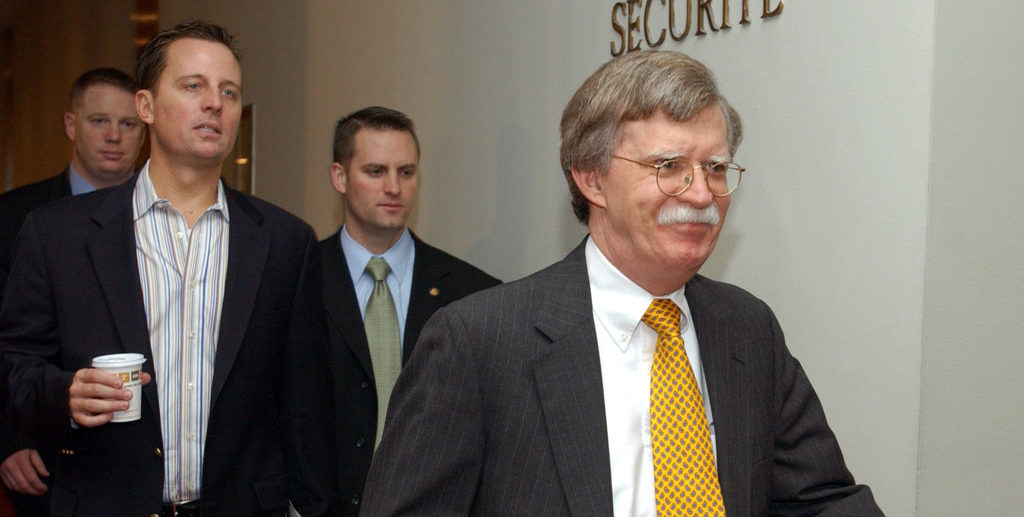
President-elect Donald Trump is considering a woman and an openly gay man to fill major positions in his administration, history-making moves that would inject diversity into a Trump team. The incoming president is considering Richard Grenell as United States ambassador to the United Nations. If picked and ultimately confirmed by the Senate, he would be the first openly gay person to fill a Cabinet-level foreign policy post. Grenell previously served as U.S. spokesman at the U.N. under former President George W. Bush‘s administration. At the same time, Trump is weighing whether to select the first woman to serve as chairman of the Republican National Committee. On his short list of prospective chairs: Michigan GOP chairwoman Ronna Romney McDaniel, the former sister-in-law of Trump critic and 2012 presidential nominee Mitt Romney. “I’ll be interested in whatever Mr. Trump wants,” McDaniel told The Associated Press on Monday, adding that she was planning to seek the Michigan GOP chairmanship again. Appointing a woman to the top tier of his team – and the first female GOP chief – would appear to be an effort to begin to mend ties with women, who he antagonized frequently during the campaign. The appointment of Grenell could begin to ease concerns by the gay community about Vice President-elect Mike Pence’s positions on same-sex marriage during his time as Indiana governor. The personnel moves under consideration were confirmed by people with direct knowledge of Trump’s thinking who were not authorized to publicly disclose private discussions. They stressed that the decisions are not final. Internal deliberations about staffing come a day after Trump made overtures to warring Republican circles by appointing RNC Chairman Reince Priebus as his White House chief of staff and Breitbart News executive Stephen Bannon as chief strategist and senior counselor. The two men had made up the president-elect’s chief of staff shortlist, and while Priebus received that job, Bannon is expected to wield significant clout. Trump gave top billing to the former media executive, who led a website that appealed to the so-called “alt-right” – a movement often associated with efforts on the far right to preserve “white identity,” oppose multiculturalism and defend “Western values.” Priebus on Monday defended the media mogul, saying the two made an effective pair as they steered Trump past Democrat Hillary Clinton and toward the presidency. He sought to distance Bannon from the incendiary headlines on his website, saying they were written by unspecified others. “Together, we’ve been able to manage a lot of the decision making in regard to the campaign,” Priebus told NBC’s “Today.” ”It’s worked very, very well.” Trump’s hires were, at first glance, contradictory, though they fit a pattern of the celebrity businessman creating a veritable Rorschach test that allowed his supporters to see what they wanted. Priebus, who lashed the RNC to Trump this summer despite some intraparty objections, is a GOP operative with deep expertise of the Washington establishment that Trump has vowed to shake up. He has close ties to House Speaker Paul Ryan, a fellow Wisconsinite. Bannon, meanwhile, helped transform the Breitbart News site into the leading mouthpiece of the party’s anti-establishment wing, which helped fuel the businessman’s political rise. Ryan has been one of his most frequent targets. Neither Priebus nor Bannon brings policy experience to the White House. Chiefs of staff in particular play a significant role in policymaking, serving as a liaison to Cabinet agencies and deciding what information makes it to the president’s desk. They’re often one of the last people in the room with the president as major decisions are made. In announcing the appointments, Trump said Priebus and Bannon would work as “equal partners” – effectively creating two power centers in the West Wing. The arrangement is risky and could leave ambiguity over who makes final decisions. Trump has long encouraged rivalries, both in business and in his presidential campaign. He cycled through three campaign managers during his White House run, creating a web of competing alliances among staffers. Priebus is a traditional choice, one meant as an olive branch to the Republicans who control both houses of Congress as Trump looks to pass his legislative agenda. The Bannon pick, however, is controversial. Bannon, who became campaign CEO in August, pushed Trump to adopt more populist rhetoric and paint rival Hillary Clinton as part of a global conspiracy made up of the political, financial and media elite, bankers bent on oppressing the country’s working people – a message that carried Trump to the White House but to some, carried anti-Semitic undertones. An ex-wife of Bannon said he expressed fear of Jews when the two battled over sending their daughters to private school nearly a decade ago, according to court papers reviewed this summer by The Associated Press. In a sworn court declaration following their divorce, Mary Louise Piccard said her ex-husband had objected to sending their twin daughters to an elite Los Angeles academy because he “didn’t want the girls going to school with Jews.” A spokeswoman for Bannon denied he made those statements. Republished with permission of the Associated Press.
Speaker Paul Ryan tells GOP colleagues: ‘We must deliver’

House Speaker Paul Ryan told Republican lawmakers Monday that it’s time to “hit the ground running as we join forces with the new Trump administration.” “We need to seize this moment, and come together like never before,” Ryan told fellow House GOP lawmakers in a letter seeking their support in his re-election for speaker. The Wisconsin Republican circulated the letter as Congress reconvened for a lame-duck session following Republican Donald Trump‘s election as president. House Republicans were widely expecting to return to Washington this week to plan for life under a Democratic administration and possibly a Democratic-controlled Senate. Instead they find themselves in full control of Washington and are elated at the opportunity to get their pent-up legislative goals signed into law. House Republicans will hold closed-door leadership elections on Tuesday and Ryan is expected to be re-elected as speaker – despite mumblings of discontent from a few conservative lawmakers. He has served in the job for a year. “Serving as speaker is a tremendous honor, and one I do not take for granted,” Ryan wrote. “I am running for re-election so that we can continue what we have started and make 2017 a year of action. I ask for your vote, and I ask for your support at the start of this great undertaking.” Ryan had clashed with Trump in the course of the campaign, including initially withholding his endorsement, which angered some conservative House members and appeared to irritate Trump. But since the election Ryan has been effusive in his praise for Trump and enthusiasm over their potential joint agenda, even though Trump has shown no enthusiasm for the large-scale overhauls of Medicare and Social Security that Ryan has pushed for years. As the House was coming back into session Monday, some 50 newly elected House members were arriving in the capital to learn the ropes of their new jobs – much like college freshmen. Republished with permission of the Associated Press.
Donald Trump eyes oil billionaire, lawmaker for energy secretary
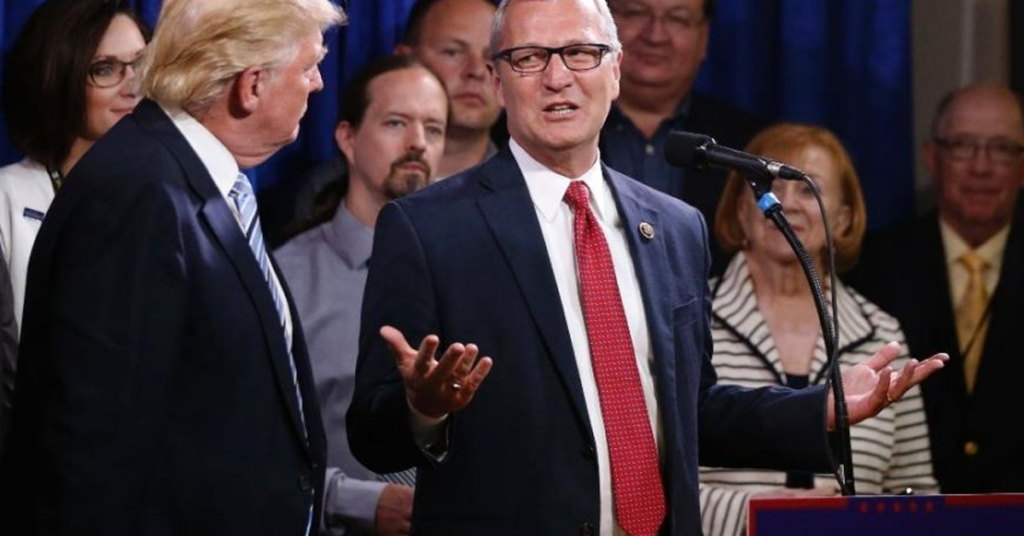
An oil billionaire, a North Dakota lawmaker and a former Bush administration official are being considered to run Donald Trump‘s Energy Department, according to transition planning documents obtained by The Associated Press. The documents, which are being closely scrutinized by energy lobbyists in Washington, also outline early policy priorities for a Trump administration. Topping the list is repealing the Clean Power Plan, an Obama administration effort to limit carbon pollution from coal-fired power plants. Implementation is currently on hold awaiting a court ruling. Those under consideration for energy secretary include Harold Hamm, an Oklahoma oil tycoon and leading proponent of fracking, and North Dakota Rep. Kevin Cramer, an early Trump supporter from a major oil drilling state. Venture capitalist Robert Grady, who worked in President George H.W. Bush‘s administration, is listed as a contender to lead both the Energy and Interior Departments. It’s unclear whether the list is exhaustive or has been reviewed by Trump. The Republican is in the early stages of setting up his administration, having named only his White House chief of staff and chief strategist thus far. The Trump to-do list targets recent Obama administration efforts to reduce air and water pollution that have been opposed by Republicans and industries that profit from the extraction and burning of fossil fuels, including the “waters of the United States” rule and ozone regulations. Trump calls climate change a “hoax” perpetrated by China and others and has said he will rescind the Clean Power Plan – the linchpin of President Barack Obama’s strategy to fight climate change. A coalition of conservative states has challenged the Clean Power Plan and also has challenged an EPA rule that expanded the definition of waters protected under the Clean Water Act to smaller non-navigable waters and seasonal tributaries. The Obama administration says the rule would safeguard drinking water for 117 million people, but Republicans and some Democrats representing rural areas say the regulations are costly, confusing and amount to a government power grab. Federal courts have put the rules on hold as judges review lawsuits. On his campaign website, Trump called for rescinding “all job-destroying Obama executive actions” and has vowed to unleash an American energy revolution, allowing unfettered production of oil, coal and natural gas. He would sharply increase oil and gas drilling on federal lands and open up offshore drilling in the Atlantic Ocean and other areas where it is blocked. Senate Majority Leader Mitch McConnell, R-Ky., said last week he has asked Trump to move quickly to approve the Keystone XL oil pipeline from Canada, which Obama rejected last year. Trump highlighted the stalled Keystone project during a late October campaign swing through Florida, saying: “We’re going to approve energy infrastructure projects like the Keystone pipeline and many more.” He listed the project among his top priorities for the first 100 days of his administration, saying it could provide “a lot of jobs, a lot of good things.” In addition to repealing the power plant rules, the transition document also says Trump’s energy team is considering modifications to Obama’s ozone rule, which is meant to reduce smog. Also on the chopping block are Obama administration regulations intended to limit harmful emissions and chemical-laden waste water from hydraulic fracturing operations at oil and gas wells. Republished with permission of the Associated Press.
Birmingham agency wins extension for Zika virus research

The Birmingham-based Southern Research is expanding its work on the Zika virus. The National Institutes of Health has awarded the non-profit organization a contract extension worth $650,000 to expand a screening effort to include testing of the virus. The goal of the work is to identify compounds that may serve as drug agents to combat Zika, which is transmitted by the bite of a tropical mosquito. Zika is so mild in people that most who get it don’t even know they are sick. But it is believed to cause serious birth defects if women are infected while pregnant. Health officials have been concerned mostly with helping women who are pregnant or about to become pregnant avoid the disease. Republished with permission of the Associated Press.
Is Donald Trump’s tough plan on immigration cracking?

President-elect Donald Trump‘s tough-talking plan to rein in illegal immigration showed signs of cracking on Sunday, with the president-elect seemingly backing off his vow to build a solid wall along the southern U.S. border and the top House Republican rejecting any “deportation force” targeting people in the country illegally. In an interview with CBS’ “60 Minutes,” Trump said Sunday he would accept a fence in some places along the U.S. southern border where he had promised to build a wall. During his campaign he insisted he would deport 11 million people living in the country illegally, with exceptions. But he distanced himself from that position as time went on, and in his first television interview since winning the presidential election, Trump said he’s willing to deport or incarcerate 2 million to 3 million people living in the country illegally who “are criminal and have criminal records, gang members, drug dealers.” Earlier Sunday, House Speaker Paul Ryan, also told CNN’s “State of the Union” that “we are not planning on erecting a deportation force.” Ryan said “I think we should put people’s minds at ease” on mass deportation because the top priority is really border security. On that, both men agreed Sunday, with the president-elect emphasizing that securing the border is his first immigration priority. Trump campaigned on a promise to build a wall and make Mexico pay for it. The promise elicited chants of “Build that Wall” from the thousands throughout the country who packed his rallies. Mexico has said it would not pay for the construction of a border wall. Nearly 700 miles of fencing was put in place during President George W. Bush‘s second term and the beginning of President Barack Obama‘s first term. The fencing is placed largely in urban areas along the nearly 2,000-mile frontier. It is not the type of solid wall that Trump has pledged to construct at Mexico’s expense. The fence has miles-long gaps and gates built in to allow landowners access to their property on the south side of the fencing. Immigrants have been known to go over and around the fence. Republished with permission of the Associated Press.
Still reeling, Democrats begin battling for future
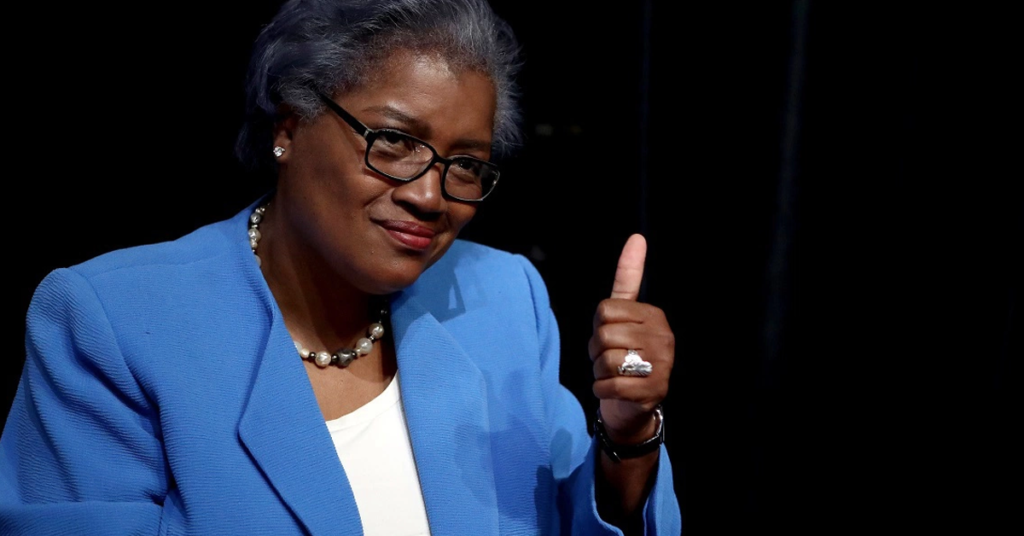
Still reeling from a devastating defeat in last week’s election, Democrats are beginning the process of charting the direction of their party in the Donald Trump era. With Hillary Clinton and her team staying out of the public eye, liberal politicians have begun jockeying for control of the party’s future. While they all backed Clinton, they’re now pushing for a serious shift in the party’s policy positions, financial resources and grassroots organizing to focus more on motivating their base and winning back the white working class voters who went for Trump. “We have to do a lot of rethinking,” said Vermont Sen. Bernie Sanders, who mounted a fierce challenge to Clinton in the primary. “Democrats are focused too much with a liberal elite, which is raising incredible sums of money from wealthy people,” Sanders said on CBS’s “Face the Nation.” The Democratic National Committee, the last bastion of party power in Washington, is quickly emerging as ground zero for the fight. After losing the White House and Congress – and likely the ideological tilt of the Supreme Court – the Democrats’ new chief likely will be one of the party’s most visible faces in politics, making the role a far more influential post than it was during the Obama administration. Already, around a dozen Democrats’ names have been publicly floated to succeed interim chairwoman Donna Brazile, who replaced Florida Rep. Debbie Wasserman Schultz in July after she was caught up in a hacking scandal. Minnesota Rep. Keith Ellison, a prominent progressive and the first Muslim elected to Congress, has emerged as an early contender, backed by much of the party’s liberal wing. He’s also picked up support from several key Democratic leaders, including outgoing Senate Democratic leader Harry Reid and Reid’s likely replacement, New York Sen. Chuck Schumer. Ellison was expected to officially announce his bid on Monday. His supporters argue that Ellison’s faith would send an important signal about the party’s commitment to inclusivity during the Trump administration. “My friend Keith Ellison is a terrific leader and a strong progressive who knows how to get things done. Now is the time for new thinking and a fresh start at the DNC. Now is the time for Keith,” Reid said in a statement on Sunday. In interviews on Sunday talk shows, Ellison pushed back on concerns that he’d be unable to balance party responsibilities with the politics of his day job in Congress – a problem some Democrats believe hampered Wasserman Schultz. “There’re a lot of places that I can serve,” he said, in an interview on NBC’s “Meet the Press.” ”I’m looking for a place to be of use and benefit. And every single Democrat in this country better be thinking the exact same way.” Ellison is far from the only contender for the job. Former Vermont Gov. Howard Dean announced his intention Thursday to reclaim a post he held during the Bush administration. Former Maryland governor Martin O’Malley, DNC National Finance Chairman Henry Muñoz III, and South Carolina Democratic Party Chairman Jaime Harrison have also said they’re considering bids. Others are pushing for a Latino leader, arguing that the growing demographic group is crucial to the party’s future and should be represented at the highest levels of its leadership. Outgoing Labor Secretary Thomas Perez, Arizona Rep. Ruben Gallego and California Rep. Xavier Becerra are said to be weighing a bid. Jason Kander, an Army veteran who lost the Senate race in Missouri to Roy Blunt on Tuesday, is also said to be considering a run. The contest comes at a time of deep unrest for the party – and the country. Anti-Trump protests continued this weekend with thousands of demonstrators turning out in cities across the country. And post-election polls showed a significant minority of Clinton backers question the legitimacy of Trump’s win. Top party leaders are urging Democrats not to despair. “It’s time to brush ourselves off, get back in the arena, and get ready to fight,” President Barack Obama said in an email to supporters inviting them to join a call with him on Monday evening about moving forward. Clinton, meanwhile, has offered little advice to supporters after her concession speech on Wednesday. On a weekend call with top donors, she blamed her loss largely on the FBI’s decision to revive its examination of her email accounts. She made nearly no mention of the other factors driving Trump’s victory, including flaws within her own message, and offered her backers little guidance on moving forward, according to donors on the call. Republished with permission of the Associated Press.
RNC Chairman Reince Priebus chosen as Donald Trump’s WH chief of staff
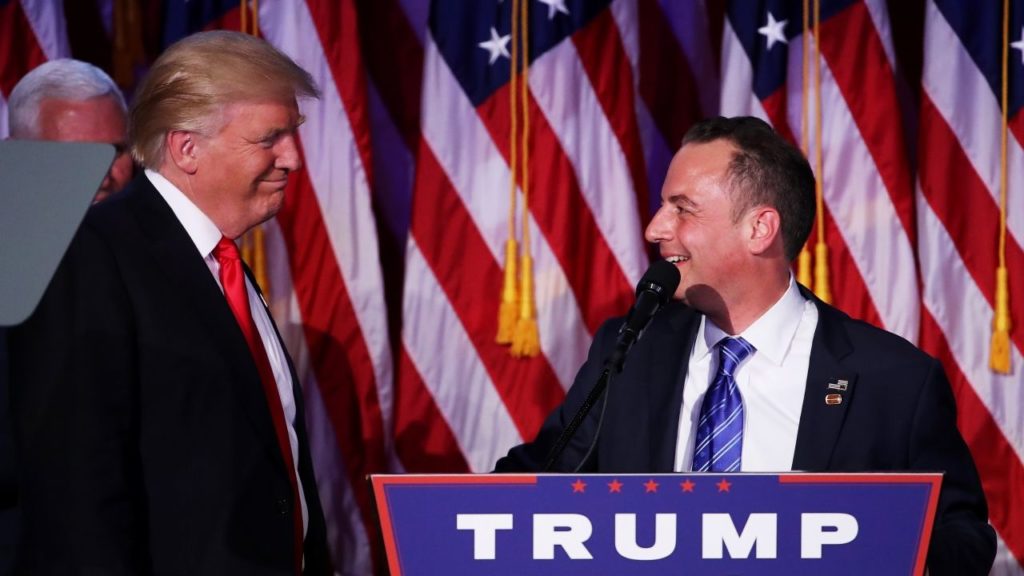
In the year of the outsider, Reince Priebus was the face of the Republican establishment. Yet the Republican National Committee chairman would come to earn the trust and confidence of President-elect Donald Trump, who on Sunday named Priebus as his chief of staff, along with flame-throwing media executive Stephen Bannon as his chief strategist. The position puts Priebus at the power center of the new Trump administration. The 44-year-old Wisconsin political operative will help guard access to the president-elect, guide policy and political decisions, and if past practice holds true, will often be, along with Bannon, the last person Trump consults before making major decisions. Priebus has no governing experience in Washington. Yet his extraordinary ability to build and maintain relationships with his party’s power brokers and grassroots sets him apart from other prospective chiefs of staff. The affable and slow-talking Priebus maintains a particularly close relationship with House Speaker Paul Ryan, who is also from Wisconsin. At the same time, Priebus may have been almost as popular among the Republican National Committee’s 168 members, who represent many different factions of the GOP and come from every state in the nation. Trump’s new chief of staff and the House speaker met in the late 1990s when Priebus was a party activist in Kenosha County, Wisconsin, and Ryan was running for Congress. Priebus eventually became the party chairman of Kenosha County, the First District (the speaker’s district) and then Wisconsin party chairman. He’s been a friend and adviser to Ryan all these many years. Priebus was already the longest serving chairman in party history, having worked in that role since January 2011, but he easily could have been re-elected early next year had he wanted to seek another term. More than anything, he served as the chief fundraiser for the Republican National Committee, a job he did very well. He used the tens of millions of dollars he helped raise to create a nationwide voter outreach operation that fueled Trump’s stunning victory. Still, his status as a party insider caught the attention of Trump supporters such as tea party leader Jenny Beth Martin. She warned on Saturday that, “No Washington insider, regardless of who it is, should serve as President Trump’s chief of staff.” “It’s time to drain the swamp – not promote insiders beholden to the Washington establishment who helped create it,” she said. Priebus’ ability to earn Trump’s trust and confidence ultimately outweighed any political concerns. He was perhaps the only major establishment leader to stand with Trump over the campaign’s final weeks as much of the political world predicted the Republican nominee would lose the election. Priebus became Trump’s regular traveling companion and confidant. He was optimistic until the very end. “I don’t buy this conventional wisdom that somehow or other, things are bad. I think things are going well,” he told The Associated Press a few days before the election. Priebus, a big Green Bay Packers fan, likes to talk sports, he plays the piano and is quick to poke fun at himself. His easygoing personality, self-deprecating humor and lack of knowledge of the legislative process, mark a particularly sharp contrast with President Barack Obama‘s first chief of staff, Rahm Emanuel. He married his high school sweetheart, Sally. They have two school-age children. Priebus “gets along with pretty much everybody,” said Lanhee Chen, a former top adviser to the GOP’s 2012 presidential nominee Mitt Romney. Chen called the pick “a terrific decision.” ”I think it reflects an understanding that, first of all, you have to have someone who understands the politics of Washington,” he said. Priebus has long favored a “big-tent” political philosophy that encourages the GOP to adopt a more welcoming and inclusive tone. Back in December, he condemned Trump’s plan to ban Muslim immigrants in December. “I think it’s the party for everybody. It’s for everyone,” Priebus told the AP days before Trump’s victory. “That the message that we’re trying to get out across the country, which is it doesn’t matter what the color of your skin is, what your faith is, what gender you are, or what age you are. This is a party of freedom, opportunity and equality. That’s what our party is.” Republished with permission of the Associated Press.
