
Daniel Sutter: What will make America great again?
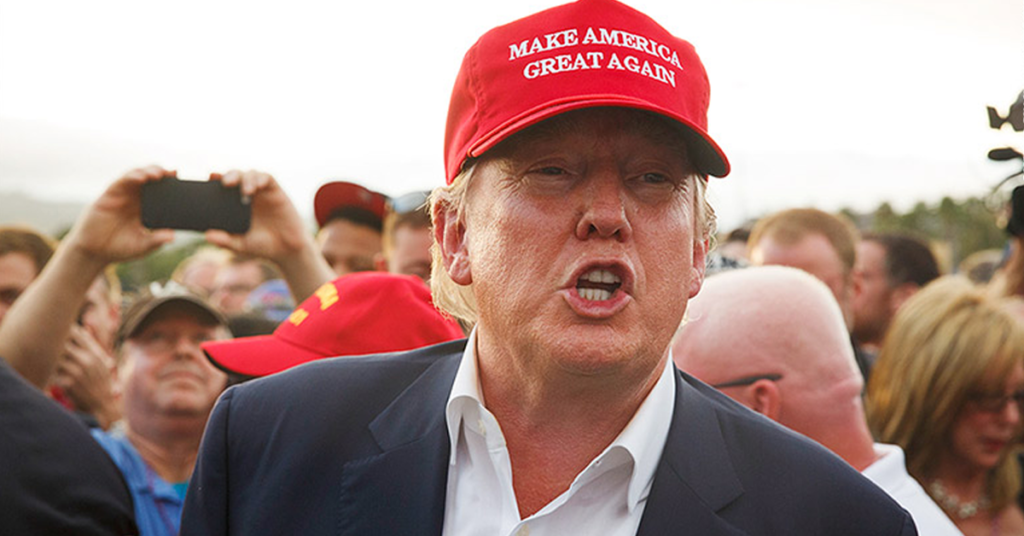
Donald Trump pulled off an historic upset to win the Presidency. How big of an upset? Betting markets in England offered 3-1 odds against him on Election Day. Nate Silver at Five Thirty Eight gave Hillary Clinton around a 70 percent chance to win, with many criticizing him for giving Mr. Trump too great of a chance. The Iowa Electronic Market, which is normally quite accurate, gave Ms. Clinton almost an 80 percent chance of winning. Mr. Trump’s campaign slogan was “Make America Great Again.” Now he must set about restoring America’s lost greatness. In looking to the past, we should remember that America, like every person and nation, has never been perfect. Our history includes slavery, Jim Crow segregation, and broken promises to and mistreatment of Native Americans. By taking the best of the past and omitting the regrettable things, we could make America greater than before. I think that renewing freedom, and specifically economic freedom, would make a great start. Freedom has been America’s distinctive element, the cause that led the colonists to take up arms against England. America’s founding documents offer great statements of the principle of liberty. We have lost ground on economic freedom. Canada’s Fraser Institute and Southern Methodist University’s O’Neil Center compile the Economic Freedom of the World (EFW) index annually. Economic freedom means the ability of individuals and businesses to engage in voluntary transactions and make decisions about their property and wealth. The index measures how closely a nation approaches the ideal of a market economy. The EFW index allows economists to test whether free markets and competition are truly indispensable for a prosperous economy. Studies using the EFW index have documented the link between free markets and prosperity. GDP per capita, how economists measure the standard of living, and growth in inflation-adjusted GDP per capita are both substantially higher in nations with more economic freedom. And economic freedom does not merely benefit the rich: the incomes of the poorest 10% are also much higher in the freest nations. The 2016 EFW ratings were released last month, and the United States ranked 16th, unchanged from the previous year. Currently the index rates 157 nations, so we make the top 10%. But between 1980 and 2000, the U.S. was one of the three freest nations in the world. Our economic freedom has declined notably. What can we do to increase economic freedom? The index measures freedom in five broad areas: the size of government (meaning tax rates and spending), legal structure and the enforcement of property rights, sound money, freedom for international trade, and regulation. Each component is evaluated using internationally available data. Our worst score, both absolutely and relatively, is in the size of government component, while we score highest in sound money and rank highest in regulation. Income tax rates are the size of government component with our lowest score. President-Elect Trump’s proposed tax cuts could be a first step toward increasing economic freedom. In addition, the U.S. has one of the highest corporate income tax rates in the developed world, even though many companies secure exemptions from the tax. Our corporate income tax combines high rates, which deter productive economic activity, and little revenue generation due to loop holes rewarding unproductive political lobbying. Regulation is another area ripe for improvement. We score well on labor market regulation because the U.S. does not penalize businesses for dismissing workers like many European nations do. But several recent policy measures have increased the cost of hiring. Two of note are the Affordable Care Act, which increased the cost of employee benefits, and the new overtime rule raising the annual earnings threshold for paying salaried workers. Economic freedom drives prosperity and creates opportunity for individuals to live their lives on their own terms. Restoring America’s leadership in economic freedom would be an important step toward delivering on President-Elect Trump’s campaign pledge. ••• Daniel Sutter is the Charles G. Koch Professor of Economics with the Manuel H. Johnson Center for Political Economy at Troy University and host of Econversations on TrojanVision. The Economic Freedom of the World report is available at www.freetheworld.com. The opinions expressed in this column are the author’s alone and do not necessarily reflect the views of Troy University.
Hardliner Jeff Sessions could face repeat of 1986 Senate confirmation battle
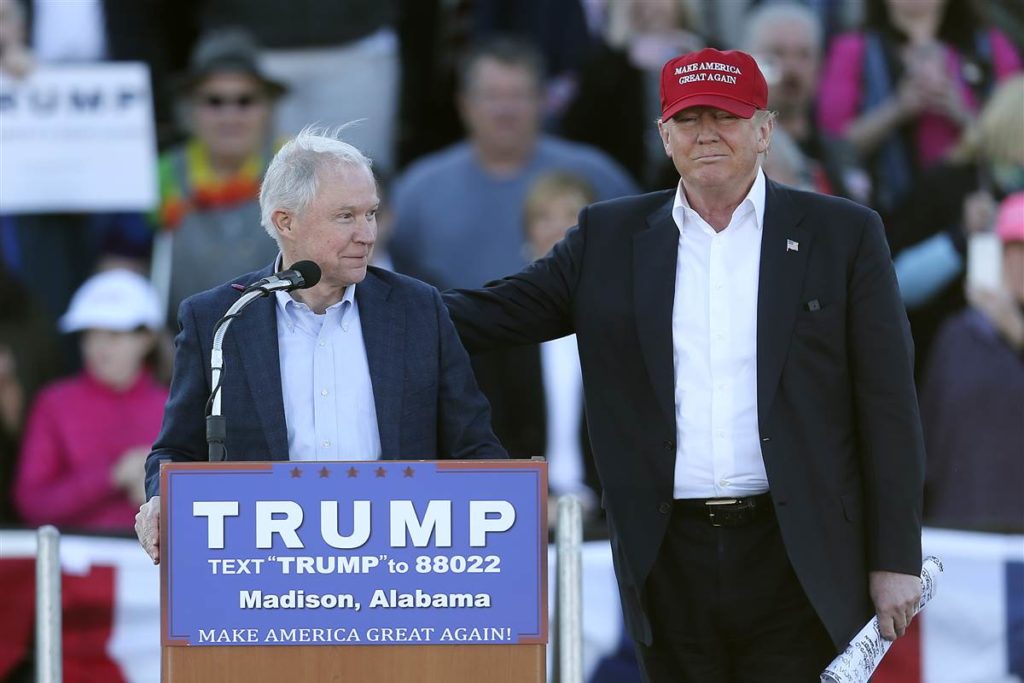
Thirty years ago, federal judge nominee Jeff Sessions ran afoul of a Senate confirmation hearing after accusations emerged he called a black attorney “boy” and referred to the NAACP as “un-American.” Now a senior member of that same Senate panel, the Alabama Republican, one of the chamber’s strongest conservatives, could once again face a confirmation battle as one of Donald Trump’s staunchest supporters. POLITICO reports Sessions, as a reward for backing Trump, is under consideration for either U.S. Attorney General or Secretary of Defense. However, those same accusations of racial insensitivity and hardline attitudes on immigration could make a possible Cabinet position far from assured. Sessions’ nomination could add fodder to Trump critics, particularly after the announcement of Steve Bannon, who leads the alt-right Breitbart News, as a top White House adviser. “Jeff Sessions, just because he’s a senator, does not mean he doesn’t have any racist intent,” Arizona Democratic Rep. Ruben Gallego told POLITICO, adding that Sessions aligns with Trump and is known for “anti-Latino and anti-minority viewpoints.” Sessions could still get a pass from senators — even those who have been critics in the past — including South Carolina Sen. Lindsey Graham, who has disagreed with Sessions on immigration. “He was the early, only supporter for Donald Trump … in the Senate,” Graham told reporters this week. “I believe that Jeff Sessions has earned the right to serve President Trump at the highest levels … I think he’s a good, competent, capable man.” Sessions has long denied accusations of bigotry, telling the judicial confirmation hearing in 1986: “I am not the Jeff Sessions my detractors have tried to create. I am not a racist. I am not insensitive to blacks. I have supported civil rights activities in my state. I have done my job with integrity, equality, and fairness for all.” And his stance on immigration has made him popular with several senior Republicans. “Just because the leadership does it or likes it doesn’t mean it’s right,” said California Republican Rep. Duncan Hunter, another early Trump congressional backer. “He’s been right on immigration. … It just so happens we now have a president-elect that sees directly eye to eye with what Jeff Sessions always has believed is right.” Originally, Sessions was in rare company among Senate Republicans, supporting Trump over Texas Sen. Ted Cruz in the early months of the campaign. Now that loyalty looks like it will be paying off, when Trump named Sessions vice-chair of the transition executive committee. Over his Senate career, Sessions frequently clashed with his own party on issues such as the federal defense budget and immigration, leading the attacks on the bipartisan “Gang of Eight,” which in 2013 attempted to produce a compromise immigration reform bill. It could be just the thing that feeds backlash should he face another Senate confirmation hearing.
Donald Trump’s lobbyist ban complicates administration hiring
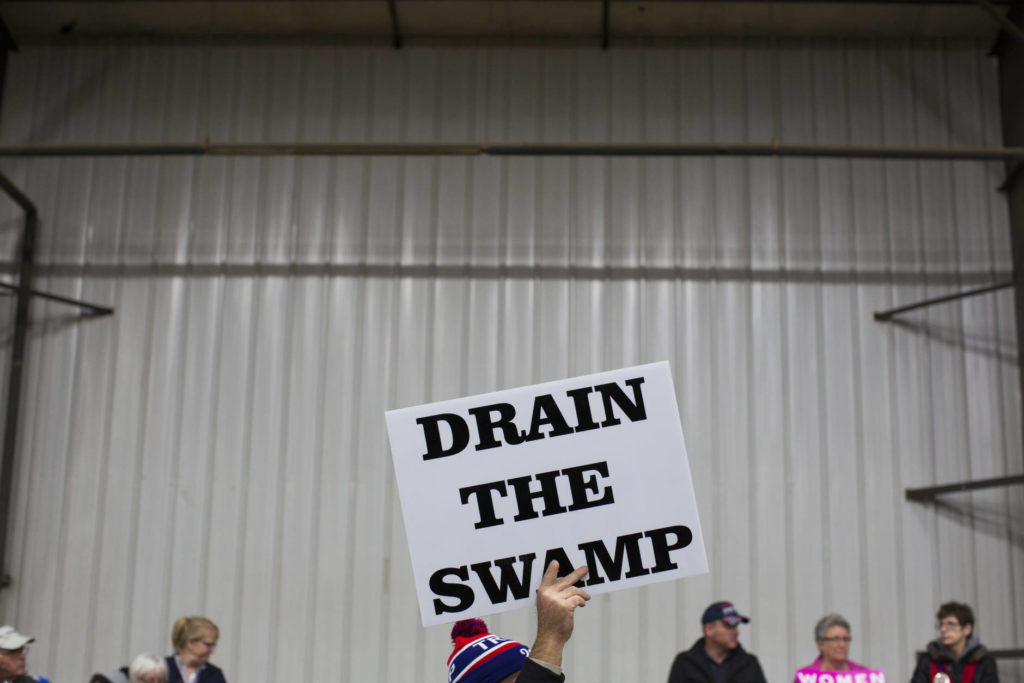
President-elect Donald Trump‘s campaign promise to “drain the swamp” of Washington might make it difficult for him to fill all the jobs in his administration. Trump’s ethics plan would ban all executive-branch officials from lobbying for five years after leaving their government jobs — one of several policies aimed at curbing the influence of lobbyists. His campaign released his plan about three weeks before Election Day, and “drain the swamp” quickly became a favorite rallying cry and social media hashtag. Lobbyists, many of whom are massed along the K Street corridor downtown just blocks from the White House, see the plan as misguided and argue that it could backfire on him. The incoming Republican president is racing to hire some 4,000 executive-branch employees, and his ethics plan could cause some job-seekers to look elsewhere because it limits how they can earn a living when they decide to leave the administration. “This will have a chilling effect on his hiring, no doubt,” said Paul Miller, who leads the National Institute for Lobbying and Ethics. “Most people who agree to government service want to go back into the private sector. We don’t want career politicians, and that’s what he could end up with.” But to those who have long advocated for breaking the “Potomac fever” that befalls those who come to Washington and never leave, Trump’s ban is worth the risk of losing some potential administration employees. “Too many people go into government service as a way to punch their ticket and come out and make millions of dollars. That’s both a concern and a reality,” said Meredith McGehee, an executive at the government reform group Issue One. Trump’s plan makes bold assertions, some more doable than others. He can enforce his executive-branch lobbying ban with the stroke of his pen, but measures involving Congress are trickier. Trump says he will ask Congress to institute a five-year lobbying ban for departing members and staff. That would take the approval of legislators who might be squeamish about tamping down their own future employment options. Senate Majority Leader Mitch McConnell didn’t directly answer when asked about Trump’s proposed lobbying ban for those leaving the Hill. He said he wants legislators to “address the real concerns of the American people” rather than fixate on every utterance during the presidential contest. Trump also wants to “expand the definition of lobbyist so we close all the loopholes that former government officials use by labeling themselves consultants and advisers when we all know they are lobbyists.” That’s reasonable, McGehee said, but difficult. Increasingly, those employed by the influence industry call themselves “consultants” or “strategists.” In fact, the number of registered lobbyists in Washington has dropped to fewer than 10,000 from 15,000 a decade ago, likely due to this rebranding effort. Miller and other lobbying advocates also agree registration should be more expansive. Yet 2011 legislation to do just that hasn’t moved forward. That could be a heavy lift for Trump. If it’s too onerous, he could pare back his goals and include a more expansive lobbying definition that would only apply to the administration. It’s also unclear how many of the 4,000 or so people Trump is about to hire would be subject to his ban. His proposal says “all executive-branch officials,” but in practice he may be referring only to Cabinet members and high-level White House officials. Trump’s transition team did not respond to questions about his ethics plan. Washington insiders are getting mixed signals from Trump. His original transition team was packed with lobbyists and interest advocates, and that group is charged with helping to find, vet and hire for the Trump administration. In recent days, Trump put Vice President-elect Mike Pence in charge of transition, and he is changing some of the people who are involved. Pence is “making good on President-elect Trump’s promise that we’re not going to have any lobbyists involved with the transition efforts,” Trump spokesman Jason Miller said Wednesday. “And this is, when we talk about draining the swamp, this is one of the first steps. And so, the bottom line is, we’re going to get the transition team where we need it to be.” In a “60 Minutes” interview that aired Sunday, Trump said he’d had no choice but to initially rely on lobbyists in Washington because “the whole place is one big lobbyist.” He vowed to “phase that out.” His White House predecessors have made similar promises. On the campaign trail in 2007, Barack Obama frequently condemned the “revolving door” of Washington in terms strikingly similar to Trump. Obama made bold promises before his first election, yet government influencers remained entrenched. Still, he won re-election after a second campaign that included almost no talk about the revolving door. “Drain the swamp. Stop the revolving door. These are great things to say to get elected,” said Howard Marlowe, president of Warwick Group Consultants, and a longtime advocate for fellow lobbyists. “After you get elected, you find a way to quietly push it aside.” Republished with permission of the Associated Press.
In Greece, Barack Obama calls for ‘course correction’ on globalization
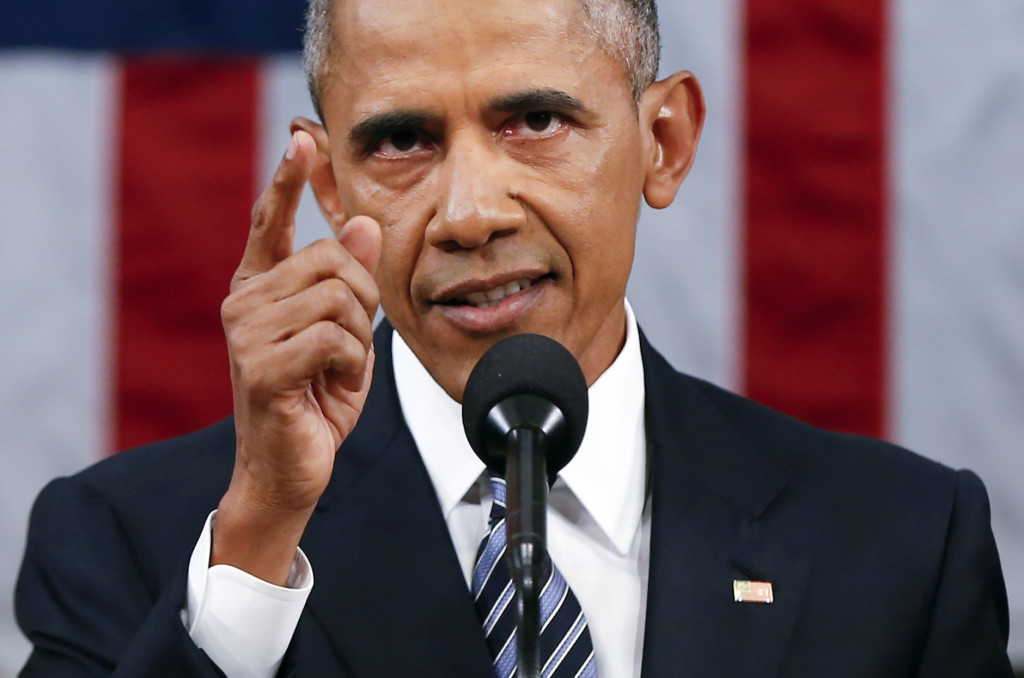
Pushing back against the forces of isolationism, President Barack Obama stood at the birthplace of democracy on Wednesday and declared it’s time for a “course correction” to ensure that the benefits of technology and globalization are more broadly shared. Reducing inequality, he said, creates societies where people are “less likely to turn on each other, less likely to appeal to some of the darker forces” that tear people apart. With the U.S. presidential election of Republican Donald Trump laying bare frustrations and dissatisfaction in America, Obama said the impulse to “pull back from a globalized world is understandable.” But he had this message to leaders and people around the globe: “We can’t look backward for answers, we have to look forward.” “We cannot sever the connections that have enabled so much progress,” Obama said in a speech to the Greek people as he wrapped up the first leg of his final foreign tour as president. He then headed for Germany. Obama cited both last week’s election of Trump and the June vote by Britain to leave the European Union as evidence of the inclination to pull back. “The current path of globalization demands a course correction,” he said. “In the years and decades ahead, our countries have to make sure that the benefits of an integrated global economy are more broadly shared by more people and that the negative impacts are squarely addressed.” “That’s how democracies can deliver the prosperity and hope that our people need,” Obama said. Before Trump’s victory, Obama’s speech to the Greeks had been envisioned to be a capstone moment for his presidency, harking back to the origins of democracy as he expected to hand off to fellow Democrat Hillary Clinton. Instead, Obama’s legacy is in doubt as Trump prepares to take power and promises to undo much of the president’s agenda. Obama spoke out in defense of his agenda: the Iran-nuclear deal, a global climate change pact, establishing relations with Cuba and more. “The next American president and I could not be more different,” Obama said. But, he said, “democracy is bigger than any one person.” He renewed his pledge to ensure a peaceful transition despite his differences with Trump. Obama’s words are being watched closely by world leaders. They see parallels between Trump’s ascension and the rise of far-right and populist movements in their own countries amid continued economic anxiety. Greek Prime Minister Alexis Tsipras won elections last year on what critics say was a populist platform, though one on the left of the political spectrum. He pushed his formerly small radical left party onto the forefront by telling Greeks weary from six years of financial crisis and falling living standards that he would reject austerity measures imposed in return for the country’s bailouts. But after the near collapse of negotiations with Greece’s creditors – other European countries using the euro currency, and the International Monetary Fund – Tsipras performed a political about-face: He signed up to a new bailout and more austerity to prevent his country being forced out of the euro. Before Obama’s speech, he toured Greece’s most famous ancient monument, the Acropolis citadel. Obama passed through the Propylaea, the monumental gateway that serves as an entrance to the site, and walked along the Parthenon temple, which is dedicated to the goddess Athena, considered the patron of Athens. The U.S. president lingered at the base of the Parthenon, gazing at the columns and glancing around at the panoramic view of Athens as he chatted with his guide, Eleni Banou of the Culture Ministry’s antiquities division. The 5th century B.C. temple is surrounded these days by scaffolding as part of a maintenance project. The entire site was closed to the public for the day for Obama’s visit, which has taken place amid stringent security measures. Demonstrations were banned in parts of Athens, and road and subway stations were shut down for the first official visit of a sitting U.S. president since Bill Clinton came in 1999. Greece’s government hoped Obama would help persuade some of Greece’s more reluctant international creditors to grant debt relief, and pressure other European countries to share more of the burden of the continent’s refugee crisis. Obama was receptive to Greece’s woes and repeated his belief that debt relief is necessary. He said Greece must continue putting in place painful reforms it signed up to in return for successive international bailouts. It is questionable how much of this stance will also be adopted by Trump. Greece is struggling to deal with hundreds of thousands of refugees who have crossed Greece’s borders on their way to more prosperous European countries. A reluctance by many other EU countries to host refugees has left more than 60,000 people stranded in Greece. Many are living in poor conditions in massively overcrowded camps. Obama said the Greeks cannot be expected to bear the bulk of the burden on their own. It demands “a truly collective response by Europe and the world,” he said. Obama’s next stop on his final foreign tour is Germany, followed by Peru. Republished with permission of the Associated Press.
SPLC says over 400 hate crimes reported since election
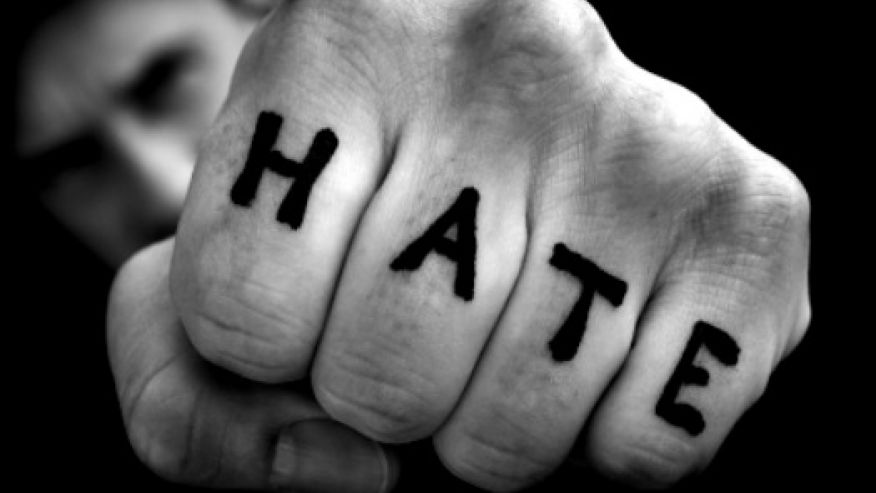
More than 400 incidents of harassment or intimidation have been reported following the election of Donald Trump, according to the Southern Poverty Law Center (SPLC). The civil rights organization released a report totaling 437 incidents nationwide through Monday evening, but said reports have continued to come in. Collected through news reports, social media, and direct submissions via SPLC’s #ReportHate page, the SPLC says these incidents, range from anti-Black to anti-woman to anti-LGBT incidents. There were many examples of vandalism and epithets directed at individuals. Anti-Black and anti-immigrant incidents were far and away the most reported with anti-Muslim being the third-most common. The category of “Trump” consisted of incidents where there was no clear racially defined target. There have also been reports of violence against Trump supporters. The SPLC has called on Trump to openly condemn these hate-based incidents. and asks that those who experience or witness harassment or intimidation to report it to both law enforcement authorities and the SPLC. And while President-elect Trump addressed the issue during an interview on “60 Minutes,” outgoing Senate Minority Leader Harry Reid thinks Trump needs to do much more. “Stop hiding behind your Twitter account. And show America that racism, bullying and bigotry have no place in the White House or in America,” Reid said. Here are a few examples of some of the reports: Georgia A Gwinnett County high school teacher said she was left a note in class Friday telling her that her Muslim headscarf “isn’t allowed anymore.” “Why don’t you tie it around your neck & hang yourself with it…,” the note said, signed “America!” Texas A Latina women reported: I was walking my baby at my neighborhood park and a truck drove by with a male driving and a female passenger. The female yelled “white power” at us as they drove by and then sped away. Oregon A Muslim woman was riding the Max to Beaverton in the early afternoon and a group of teenagers went to the corner of the car where she was sitting and got up in her face yelling at her that she was a terrorist, that our new president was going to deport her, that she can’t wear her hijab anymore. They got increasingly menacing, and my friend went over and made them get off the train. When they were leaving through the door they tried to spit on her. Aside from news reports, SPLC notes that these reports are largely anecdotal as every incident could not be immediately, independently verified.
Donald Trump’s lobbyist ban complicates administration hiring
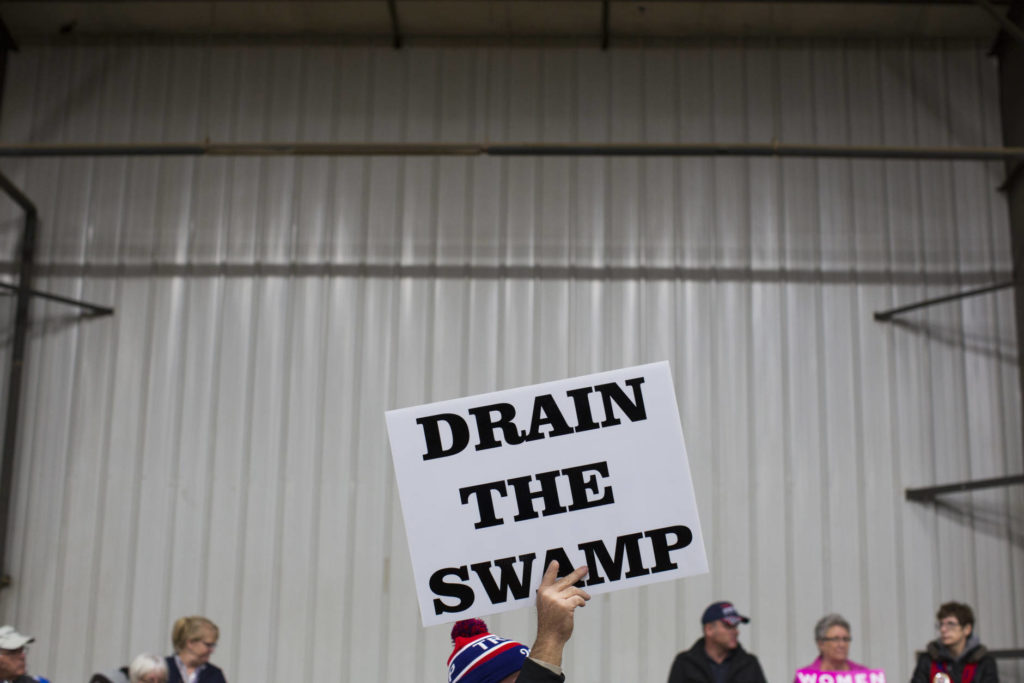
President-elect Donald Trump‘s campaign promise to “drain the swamp” of Washington might make it difficult for him to fill all the jobs in his administration. Trump’s ethics plan would ban all executive-branch officials from lobbying for five years after leaving their government jobs – one of several policies aimed at curbing the influence of lobbyists. His campaign released his plan about three weeks before Election Day, and “drain the swamp” quickly became a favorite rallying cry and social media hashtag. Lobbyists, many of whom are massed along the K Street corridor downtown just blocks from the White House, see the plan as misguided and argue that it could backfire on him. The incoming Republican president is racing to hire some 4,000 executive-branch employees, and his ethics plan could cause some job-seekers to look elsewhere because it limits how they can earn a living when they decide to leave the administration. “This will have a chilling effect on his hiring, no doubt,” said Paul Miller, who leads the National Institute for Lobbying and Ethics. “Most people who agree to government service want to go back into the private sector. We don’t want career politicians, and that’s what he could end up with.” But to those who have long advocated for breaking the “Potomac fever” that befalls those who come to Washington and never leave, Trump’s ban is worth the risk of losing some potential administration employees. “Too many people go into government service as a way to punch their ticket and come out and make millions of dollars. That’s both a concern and a reality,” said Meredith McGehee, an executive at the government reform group Issue One. “Is there a cost to someone who goes into government service? The answer is yes. Are there lots of other things that person can do? Absolutely. Do policy. Go back home.” She praised Trump’s pledge. Yet the devil is in the details – and the follow-through, said McGehee, who has worked on transparency and disclosure issues for three decades. Trump’s plan makes bold assertions, some more doable than others. He can enforce his executive-branch lobbying ban with the stroke of his pen, but measures involving Congress are trickier. Trump says he will ask Congress to institute a five-year lobbying ban for members and staff, which would take the approval of senators and representatives, who might be squeamish about tamping down their own future employment options. Trump also wants to “expand the definition of lobbyist so we close all the loopholes that former government officials use by labeling themselves consultants and advisers when we all know they are lobbyists.” That’s reasonable, McGehee said, but difficult. Increasingly, those employed by the influence industry call themselves “government relations strategists.” In fact, the number of registered lobbyists in Washington has dropped to fewer than 10,000 from 15,000 a decade ago. These “lobbyists” haven’t gone anywhere, McGehee said; they’re just calling themselves something else. Miller and other lobbying advocates also agree registration should be more expansive. Yet the 2011 legislation to do just that hasn’t moved forward. That could be a heavy lift for Trump. If it’s too onerous, he could pare back his goals and include a more expansive lobbying definition that would only apply to the administration. It’s also unclear how many of the 4,000 or so people Trump is about to hire would be subject to his ban. His proposal says “all executive-branch officials,” but in practice he may be referring only to Cabinet members and high-level White House officials. Trump’s transition team did not respond to questions about his ethics plan. Washington insiders are getting mixed signals from Trump. His original transition team was packed with lobbyists and interest advocates, and that group is charged with helping to find, vet and hire for the Trump administration. In recent days, Trump put Vice President-elect Mike Pence in charge of transition, and he is changing some of the people who are involved. Trump said he has no choice but to rely on lobbyists as he forms his government – but he argued he would try to change the dynamic over time. “Everybody that works for government, they then leave government and they become a lobbyist, essentially. I mean, the whole place is one big lobbyist,” Trump said in a “60 Minutes” interview that aired Sunday. “We’re going to phase that out. You have to phase it out.” His White House predecessors have made similar promises. On the campaign trail in 2007, Barack Obama frequently condemned the “revolving door” of Washington in terms strikingly similar to Trump. Obama made bold promises before his first election yet didn’t do much to curb the influence of lobbyists. Still, he won re-election after a second campaign that included almost no talk about the revolving door. “Drain the swamp. Stop the revolving door. These are great things to say to get elected,” said Howard Marlowe, president of Warwick Group Consultants, and a longtime advocate for fellow lobbyists. “After you get elected, you find a way to quietly push it aside.” Republished with permission of the Associated Press.
Ex-Maryland Gov. Martin O’Malley says he won’t seek to lead DNC
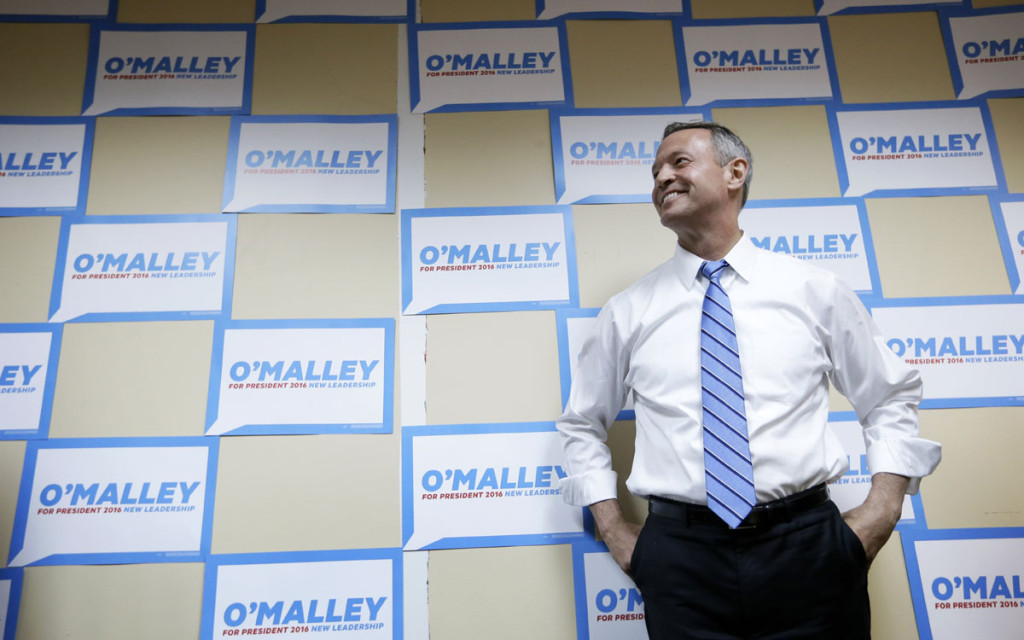
Former Maryland Gov. Martin O’Malley says he won’t seek to become chairman of the Democratic National Committee. O’Malley released a statement Wednesday saying he’s grateful to friends who urged him to consider running, but he won’t seek the chairmanship. He says the committee needs a chairman “who can do the job fully and with total impartiality.” The announcement comes days after O’Malley said he was “taking a hard look” at the position after being approached by “many Democrats who believe our party needs new leadership.” O’Malley ran for president, but he ended his campaign in early February midway through vote-counting in the Iowa caucuses after his bid failed to gain traction against Hillary Clinton and Bernie Sanders. He is a former two-term governor and Baltimore mayor. Republished with permission of the Associated Press.
Life in the White House bubble? Donald Trump’s had practice
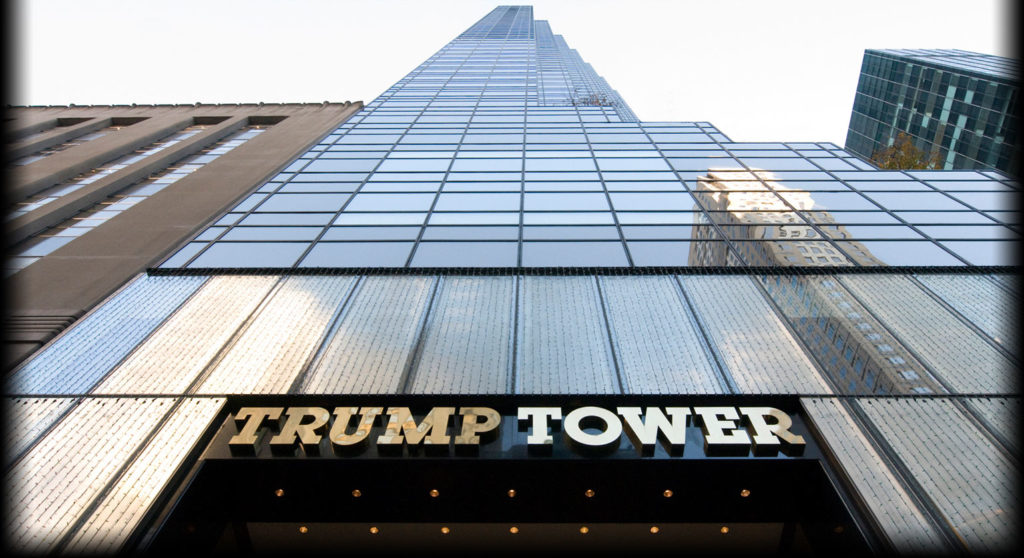
For nearly the entire week since he became president-elect, Donald Trump has been holed up in his gilded New York skyscraper. A steady stream of visitors has come to him, flooding through metal detectors and getting whisked up to Trump’s offices and penthouse residence. The unusual arrangement has left Trump looking like the missing player in his own transition planning. He’s left it to aides to explain the increasingly strained process and given space for allies jockeying for top jobs to set the tone during a crucial phase. “President-elect Trump is there receiving calls from different people. He has different meetings, interviews,” Trump adviser Kellyanne Conway said earlier this week. “We’ve really just been ensconced in Trump Tower trying to form a government.” Advisers have provided few specific details of Trump’s schedule, leaving journalists gathered in the lobby of Trump Tower to piece together clues based on who is seen entering and exiting the building. He emerged briefly Tuesday night for a private dinner with family, but his team has given no indication of when he may next appear in public. Trump has long lived in a bubble of his own creation, a situation that could prepare him for the insular, security-shrouded cocoon that awaits him at the White House. Unlike President Barack Obama, who flew commercial and lived in a dingy Washington apartment within about a year of taking office, Trump has already spent decades living an unusually cloistered life. While Obama often bemoans his inability to take a walk or enjoy a meal at a sidewalk cafe, Trump doesn’t appear to have much of an affinity for either. “The reason my hair looks so neat all the time is because I don’t have to deal with the elements very often,” Trump wrote in his 2004 book, “How To Get Rich. “I live in the building where I work. I take an elevator from my bedroom to my office. The rest of the time, I’m either in my stretch limousine, my private jet, my helicopter, or my private club in Palm Beach, Florida.” Indeed, Trump hadn’t been seen outdoors since Thursday, when he traveled to Washington to meet with Obama and Republican congressional leaders. He left for dinner Tuesday without his press corps, which did not witness him during the outing. Trump was a fixture on the New York social scene when he was younger, but those close to him say he’d become more of a homebody even before he began running, preferring to camp out in front of the television at night watching cable news. He spends nearly all of his time at his properties, including Trump Tower in New York, his golf club in Bedminster, New Jersey, or at Mar-a-Lago, his exclusive South Florida club. If he travels outside of those locales, it’s often to a place with a Trump property nearby. As president, Trump will be constantly surrounded by a pack of Secret Service agents, replacing the team of private security guards who protected him before he ran. He’ll fly on Air Force One, giving his Trump-branded jet a break. And he’ll be restricted from driving anything other than a golf cart, though he’s said to rarely drive himself anyway. “To me, a great luxury is for me just to get into a car by myself and drive,” Trump said last year. The insular world of the White House is often even more of an adjustment for the president’s family. First lady Michelle Obama has notoriously chafed at the restrictions on her movement, speaking longingly about wanting to simply be able to get into a car and roll down the windows. But Melania Trump sounded sanguine about what’s ahead, noting that she’d had time to get used to the bubble during her husband’s presidential campaign. “It will just continue,” Mrs. Trump said in an interview on CBS’ “60 Minutes. “It’s another level, but it will continue.” Trump aides say the businessman does plan to move to the White House – “The president is going to live in Washington,” top adviser Rudy Giuliani said Monday – but Trump is expected to continue spending time at his exclusive Mar-a-Lago, which the property’s original owner, Marjorie Merriweather Post, willed to the U.S. government when she died in 1973 to serve as a retreat for presidents and visiting dignitaries. It has sometimes been dubbed the “winter White House.” Members of the club, where he often spends winter weekends, describe Trump as a man of routine, who spends most of his time at the club or at his nearby golf courses, eating, mingling with guests, working – and keeping an eye on his employees’ work. While Trump was once known as a New York playboy who stuffed his calendar with galas and events, Lee Lipton, a Mar-a-Lago member for years, said that it’s rare to see Trump venture to an event off-site these days. “He said, ‘Why should I go anywhere else?’” Lipton recalled Trump once explaining. “‘I have the best food in Palm Beach.’” Republished with permission of the Associated Press.
Drug prices don’t budge even after pressure from Congress

Congress’s routine of publicly shaming drug company executives over high prices works no better than a placebo: It may make some people feel better, but it doesn’t treat the problem. In the last two years, House and Senate committees issued more than a dozen subpoenas to price-hiking drugmakers, collecting hundreds of thousands of documents and berating executives for more than 16 hours of public hearings. But a review by The Associated Press of the list prices of nearly 30 brand-name medications and generic versions targeted by congressional investigators shows most haven’t budged since coming under federal scrutiny, according to figures from Truven Health Analytics. “These companies have made clear that they are not going to change course on their own – they will keep bilking the American people for all they can unless Congress acts,” said Rep. Elijah Cummings, D-Maryland, the ranking member on the House Committee on Oversight and Government Reform. Unlike most countries, the U.S. doesn’t regulate drug prices. That means drugmakers, like other businesses, are largely free to set prices as high as the market will bear. Congress has avoided passing laws that would change how drugs are priced, in keeping with the wishes of the powerful pharmaceutical lobby. That leaves lawmakers with few options beyond hauling executives before their committees. Cummings helped kick off Capitol Hill’s latest round of pharmaceutical bashing in the fall of 2014 with a flurry of letters to makers of prescription drugs that had seen dramatic price spikes. Since then, the AP counted 29 drugs that were specifically mentioned either in letters from lawmakers or during congressional hearings. The list prices of 22 of those drugs did not change at all. Five fell, and two went up. Those that fell were generic drugs that received little public attention. Drugmakers say list prices overstate drug costs, since insurers who pay for them negotiate discounts and rebates. But companies don’t disclose those reductions, leaving the actual prices paid unclear. Meanwhile, executives have found ways to defuse some of the public outrage without cutting prices. Under questioning from Cummings and other lawmakers in September, Mylan CEO Heather Bresch pointed to company coupons that can lower the price for EpiPens by up to $300 for some insured patients. While such coupons lower patients’ out-of-pocket expenses, insurers foot the bill for the drug, which still carries of list price of $608 for a two-pack, up more than 500 percent since 2007. Last year, former Turing Pharmaceuticals CEO Martin Shkreli reneged on a pledge to lower the price of the life-saving anti-infection drug Daraprim after raising it 5,000 percent. Instead, his company offered hospitals a sliding discount and the option to buy a 30-pill bottle for $22,500 instead of the original 100-pill bottle, which cost $75,000. The $750 list price per pill didn’t budge. “The industry has cultivated an outrageously complicated and obscure pricing system,” said Robert Weissman, president of consumer advocate Public Citizen. “They can give the illusion of various discounts and rebates that sound on their face like price reductions but without really impacting their bottom line.” Even when corporate leaders seem to promise price cuts while under oath, the decreases don’t materialize. Last April, billionaire investor Bill Ackman testified before a Senate committee about Valeant Pharmaceutical’s much-maligned strategy of buying niche drugs and raising their prices by as much as 3,000 percent. With the Canadian drugmaker’s then-CEO Michael Pearson stepping down, Ackman promised to use his influence on the company’s board to try and revamp its pricing strategy. “A lot is going to change,” said Ackman, whose Pershing Square Capital fund is Valeant’s largest investor. On two heart drugs that Valeant had acquired and hiked, Nitropress and Isuprel, Ackman suggested price cuts were imminent. “You can expect from us within weeks, and hopefully sooner, a response to where we’re going to price these drugs and it will be meaningfully lower than where they are priced now,” Ackman said. Instead, Valeant kept the list prices the same and expanded existing rebates for hospitals to up to 40 percent. “That sounds good, but when you raise prices more than 500 percent a 40 percent discount is still egregious,” said Scott Knoer, chief pharmacy officer at the Cleveland Clinic. Valeant said in a statement the rebates were recommended by its internal drug pricing committee, created in the wake of public outrage over its prices. A spokesman for Ackman declined to comment. Experts who study the pharmaceutical pricing say rebates and discounts allow drugmakers to retain greater control – and revenue – than blanket price cuts. “You can have different prices for different customers depending on who has more market share,” said analyst Richard Evans of Sector and Sovereign Research. “So you can tailor your pricing somewhat stealthily.” Evans says congressional scrutiny of companies like Valeant has discouraged the most extreme price hikes, generally those above 100 percent. But most of the price inflation squeezing patients and hospitals comes from industry-wide price increases that often total more than 10 percent a year, rather than the drastic hikes targeted by Congress. Rep. Cummings and his investigative partner, Senator Bernie Sanders of Vermont, unveiled a new strategy earlier this month that could have more teeth than shaming, at least if companies are doing something illegal. Rather than launching another congressional probe, the lawmakers called on the Department of Justice to investigate possible price collusion among manufacturers of insulin, which they say has seen industrywide price increases of more than 300 percent between 2002 and 2013. There are also some new and long-standing proposals that could stem increases, but they are unlikely to pass Congress, in part because of the pharmaceutical industry’s pervasive influence on Capitol Hill. Drugmakers and related health businesses spent more than $235 million on lobbying last year, more than any other industry, according to the nonprofit Center for Responsive Politics. Investors seem to think the victories of Donald Trump and congressional Republicans have dimmed the prospects for drug price reform even further. Pharmaceutical company shares, which had
Early sign-ups for health care law are steady, but no surge
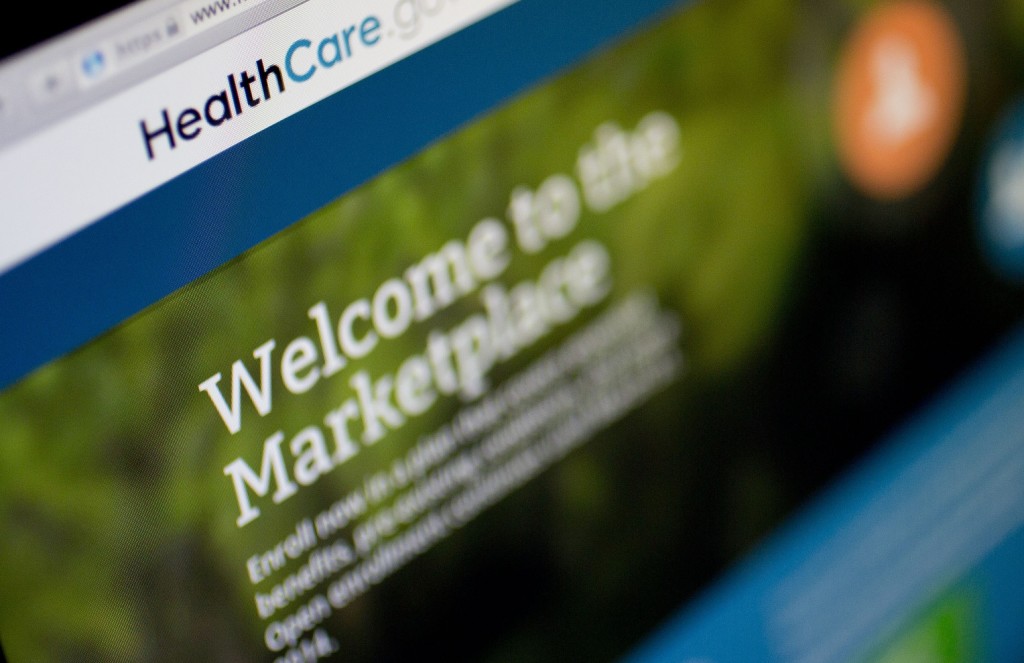
A little more than 1 million people renewed health coverage or signed up for the first time through HealthCare.gov around the start of open enrollment, which coincided with a GOP election sweep that’s likely to scramble President Barack Obama’s signature law. The figures released Wednesday by the Obama administration represent steady sign-ups but no enrollment surge so far. The overall number is fairly comparable to early sign-ups last year, but the share of new customers is down. They accounted for 24 percent of the total so far this year, compared with 34 percent in the first two weeks of last year’s open enrollment season. Nearly 1.1 million people had enrolled last year by about the same time. The 2017 early sign-up figures are for Nov. 1-12, while the closest numbers from last year cover a full two weeks. Even before the election that put Republicans in charge, the health care law was facing strong headwinds in 2017. The remaining uninsured are harder to reach and persuade. Premiums for a standard plan are going up an average of 25 percent in the 39 states served by HealthCare.gov, and insurer exits have left about one-third of U.S. counties with only one carrier. President-elect Donald Trump and the Republican-led Congress are pledging to repeal and replace the 2010 Affordable Care Act, although it has reduced the nation’s uninsured rate to a historic low of about 9 percent. It’s shaping up as the most volatile open enrollment season since HealthCare.gov went live in 2013 and the computer system didn’t work. Health and Human Services Secretary Sylvia Burwell has set a goal of signing up 13.8 million people through the federal HealthCare.gov and state-run insurance markets, which offer taxpayer-subsidized private coverage to people without access to health care through their jobs. That would be an increase of about 1 million from the last open enrollment, so attracting new people is crucial. The White House is hoping that robust numbers will translate into a strong closing argument for keeping many of the law’s essential parts. Even though premiums are going up significantly, administration officials say most people will be cushioned from the impact because they receive subsidies designed to rise as their insurance costs increase. But an estimated 5 million to 9 million people who buy individual policies outside the law’s markets face the full brunt of increases. During the campaign, Trump said the health overhaul was a “disaster,” but now he is signaling that he doesn’t want to take away coverage from the millions of people who have benefited. Independent studies estimated that Trump’s campaign plan would have caused 18 million to 20 million people to lose health insurance. Republicans in Congress are puzzling over how to follow through on their promise to repeal the health care law while at the same time maintaining p Republished with permission of the Associated Press.
