
Donald Trump auditions Cabinet prospects high above Manhattan

Donald Trump held court from his perch high above Manhattan on Monday, receiving a line of former rivals, longtime allies and TV executives while overseeing a presidential transition that at times resembles a reality show like the one he once hosted. Trump met with nearly a dozen prospective hires, all of whom were paraded in front of the cameras set up in the Trump Tower lobby as they entered an elevator to see the president-elect. Out of public view himself, he fell back on his TV star roots by filming a video that touted his legislative goals once he takes office. Trump; did not immediately announce any appointments after the meetings, which came on the heels of a two-day whirlwind of interviews at his golf course in Bedminster, New Jersey. Unlike his predecessors, who often spoke with Cabinet candidates under a cloud of secrecy, Trump has turned the search into a very public audition process. The extraordinary exercise took on a routine feel on Monday: First, former Massachusetts Senator Scott Brown stepped off the gold-plated elevator into the marble-coated lobby after his meeting to declare to waiting reporters that he was “the best person” to become Veterans Affairs secretary. Next, Oklahoma Gov. Mary Fallin, a candidate for interior secretary, did much the same, striding off the lift to say she had “a wonderful discussion” with Trump. Former Texas Governor Rick Perry declined to speak to reporters, but he did take time for a photo with the Naked Cowboy, the underwear-sporting, guitar-strumming New York institution who is normally a fixture at Times Square but has spent recent days camped out at Trump Tower singing about the president-elect. Democratic Hawaii Rep. Tulsi Gabbard, who resigned her post on the Democratic National Committee after endorsing Bernie Sanders over Hillary Clinton, also met with Trump but entered and exited out of sight. She later defended crossing party lines to meet with Trump about U.S. involvement in Syria, saying in a statement she would never “play politics with American and Syrian lives.” Former House Speaker Newt Gingrich, a longtime Trump ally, also arrived with his wife, Callista, and told reporters that he indicated to Trump that he was interested in being a “senior planner” to coordinate long-term political efforts among the Republicans in control of all three branches of government. Senior adviser Kellyanne Conway said of the visitors, “Not all of them will be in his Cabinet and his federal government, but they are all incredibly important in offering their points of views, their experience and certainly their vision of the country.” No one was saying whether Trump would announce more appointments before heading to Florida for Thanksgiving. He was planning to leave Tuesday or Wednesday to spend the holiday at his Mar-a-Lago estate, while Vice President-elect Mike Pence will spend Thanksgiving in Mississippi, where his Marine son is stationed. Trump has largely remained out of sight since winning the election, save for a flurry of brief public appearances over the weekend, often with Pence at his side, to flash thumbs-ups and provide quick updates on his progress in building a government. He remained in the upper floors of his skyscraper Monday, seeking counsel on the phone and interviewing candidates all while keeping an eye on the cable news coverage of the day’s events. He appeared in a two-and-a-half minute video released late Monday in which he pledged to the American people that he was appointing “patriots” to his administration and reiterated a number of his campaign promises, including plans to renegotiate trade deals, scrap excessive regulations and institute a five-year ban on executive officials becoming lobbyists. The video — which made no mention of key pledges to build a border wall with Mexico or repeal the Affordable Care Act — continues the president-elect’s practice of trying to go over the heads of the media and take his case directly to the American public. Since Election Day, he has twice ditched the group of reporters designated to follow his movements and has so far eschewed the traditional news conference held by the president-elect in the days after winning. Trump has not held a full-fledged news conference since July. But the media were clearly on his mind as he met with executives and on-air personalities from TV networks. He frequently singled out the media — declaring them “so dishonest” — for criticism during the campaign, but it’s not unusual for presidents to hold off-the-record meetings with journalists when trying to promote policies or programs. Among the attendees were NBC anchor Lester Holt and “Meet the Press” host Chuck Todd, ABC’s “Good Morning America” host George Stephanopoulos and anchor David Muir, CBS’ “Face the Nation” host John Dickerson, CNN’s Wolf Blitzer and several executives at the networks. None of the attendees would discuss the meeting with reporters in the lobby, though Conway said it was “very cordial, very productive, very congenial.” Those Trump met with over the weekend included former Massachusetts Gov. Mitt Romney, a former critic now being considered for secretary of state; retired Marine Corps Gen. James Mattis, who Trump dubbed an “impressive” prospect for defense secretary, and billionaire investor Wilbur Ross, who is under consideration for Commerce secretary. “We’ve made a couple of deals,” Trump said Sunday. He gave assurances that “incredible meetings” would be bringing “incredible people” into the government. Republished with permission of the Associated Press.
Robert Bentley asks GOP Committee for Senate appointee names
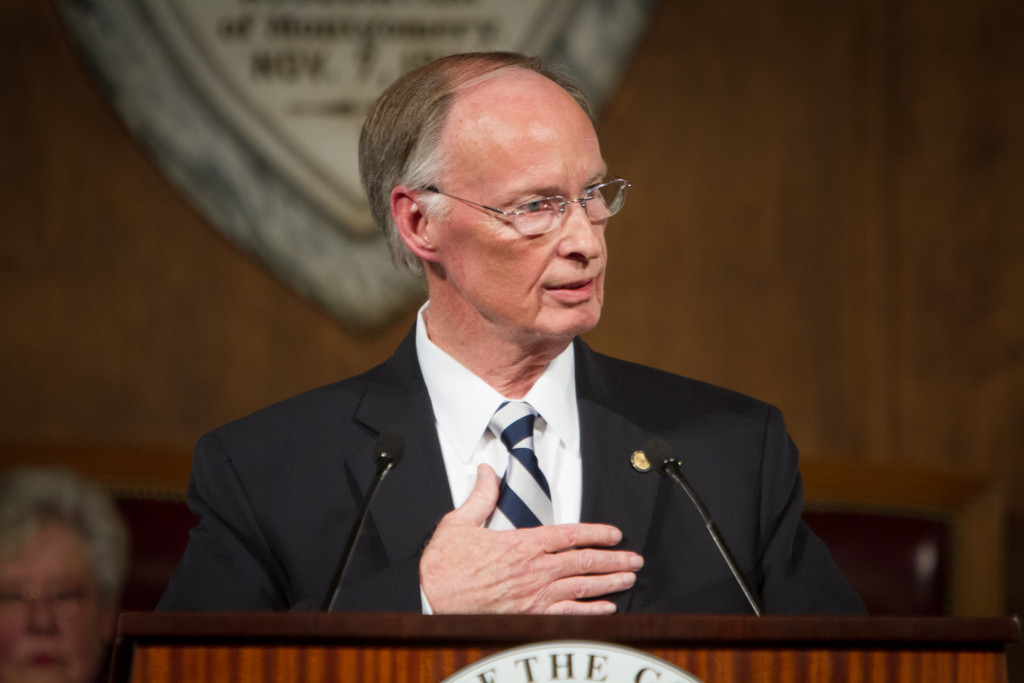
Gov. Robert Bentley is asking the Alabama Republican Executive Committee to suggest who should replace U.S. Sen. Jeff Sessions. The governor sent a request to the 400-plus committee members seeking their input on who he should appoint to fill Sessions’ seat. President-elect Donald Trump has tapped Sessions to be his U.S. attorney general. Republican Party Chairwoman Terry Lathan said she is glad the governor is seeking input from Republicans who have helped build the party. She said the decision is ultimately the governor’s. The governor asked committee members to submit names by Dec. 1. A spokeswoman for Bentley said last week the governor’s legal office is researching if an appointed senator would have to run in a quickly called special election or run in 2018. Republished with permission of the Associated Press.
Severe drought continues across Alabama, no end in sight

While some areas of Alabama saw a sprinkling of rain this past week, severe drought continues to torment the vast majority of the state. With well over a month without rain, coupled with record-breaking heat, federal statistics released this week show nearly 90 percent of the state is now in a severe drought, and 65 percent of the state is in an extreme or exceptional drought. Even as seasonal cold fronts begin to arrive, there appears to be no relief in sight. The National Weather Service’s Climate Prediction Center has predicted warm and near-record dry conditions to continue in Alabama, and across the Southeast, throughout the fall and winter lasting through February. Experts say at least a solid week of rain is needed for the state to “break even” and move past the drought.
Democrats worry Jeff Sessions as AG could impact immigration on Day One — by simply enforcing existing law
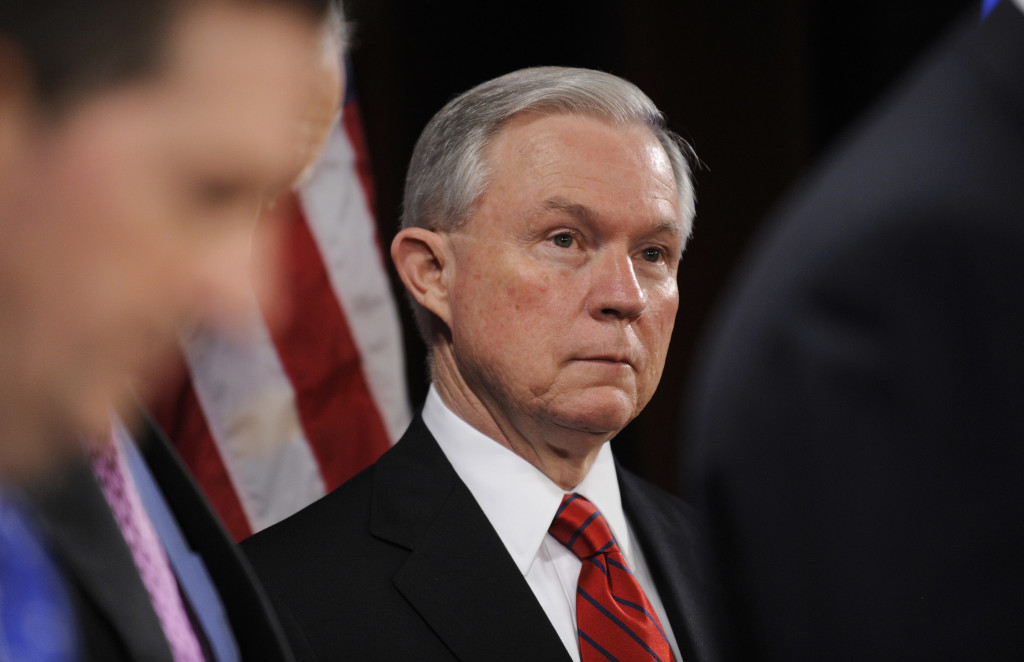
Few were surprised by the controversy set off by Donald Trump’s nomination of Jeff Sessions for attorney general. Byron York of the Washington Examiner writes that, over the years, Democrats and others in the press have branded the Alabama senator a racist. Even now, anti-Trump folks are using Sessions’ full name — Jefferson Beauregard Sessions III — to emphasize his ties to the Old South, with its suggested racism. As such, York says efforts will intensify to stop the confirmation of the Senate’s “highest-profile, most determined, and most knowledgeable opponent of comprehensive immigration reform.” “Democrats are particularly anxious about immigration because of the unusually tenuous nature of President Obama’s policies on the issue,” York notes. “Those policies can be undone unilaterally, by the new president in some cases, and by the attorney general and head of Homeland Security in other cases. There’s no need for congressional action — and no way for House or Senate Democrats to slow or stop it.” Although extensive immigration laws are currently books — approved by bipartisan majorities in Congress — Obama was looking to make significant changes, which Congress resisted. Thus, Obama just stopped enforcing provisions of the law with which he disagreed. York says a significant change in immigration policy of the United States would also be the simplest —no congressional approval needed — just by the Trump administration resuming enforcement of those laws. Among those laws: deportation of those who entered the U.S. illegally, deportation of people who entered the U.S. illegally and later committed crimes, as well as laws enforcing immigration compliance at the worksite. There are also laws governing immigrants overstaying visas; Laws requiring local governments to comply with federal immigration law. Many of those immigration laws have been relaxed or even completely ignored by the Obama administration. York says one immediate change from a Trump administration could be to end Obama’s Priority Enforcement Program, which began in 2014. PEP made it nearly impossible for Immigration and Customs Enforcement agents to begin deportation proceedings until a person in the country illegally is convicted of an aggravated felony or multiple misdemeanors. Obama’s strategy “forced local ICE offices to release of thousands of deportable criminals,” says Jessica Vaughan, director of policy studies at the Center for Immigration Studies, “including Eswin Mejia, an illegal immigrant with prior arrests who killed 21-year old Sarah Root in Omaha, Nebraska, while drag-racing drunk in January of this year. Like many of the 86,000 convicted criminals released by ICE since 2013, Mejia is now a fugitive but considered a ‘noncriminal,’ because he has yet to be tried and convicted of Root’s death.” In a study by the Center for Immigration Studies, there are 79 policies of the Obama administration Trump could change without any action by Congress. Among the things Trump and Sessions could do, York says, are: 1) End the embargo on worksite enforcement. “Experience has shown that employers respond very quickly and voluntarily implement compliance measures when there is an uptick in enforcement,” Vaughan notes, “because they see the potential damage to their operations and public image for being caught and prosecuted.” 2) Restore ICE’s authority to make expedited removals of those here in the country illegally who are felons or who have recently crossed into the United States. 3) Tighten requirements for H-1B visas, including banning such visas for low-salary, low-skill jobs, revoking visas that are followed by layoffs of American workers, and other measures. 4) Stop suing states which act to support immigration enforcement, supporting such enforcement instead. After Arizona’s notorious SB 1070 law, Obama cracked down, arguing the federal government has the sole authority to enforce immigration law, and to not enforce immigration law. A President Trump and Attorney General Sessions could choose to implement the law. 5) Force sanctuary cities to observe the law. Trump campaigned extensively about sanctuary cities, mentioning San Francisco murder victim Kate Steinle in many speeches. Sessions could enforce existing law, 8 USC 1373, which prohibits local communities from banning their officials from cooperating with federal immigration authorities. Federal agencies, including the Justice Department, give billions of dollars in federal grants. By not forcing grant recipients to comply with federal law, York says the Obama administration ignored 8 USC 1373. A Justice Department inspector general told a House committee in September that, “we found that the Department had not provided grant recipients with clear guidance as to whether Section 1373 was an applicable federal law with which recipients were expected to comply.”
Back in NYC, a parade of meetings at Trump Tower
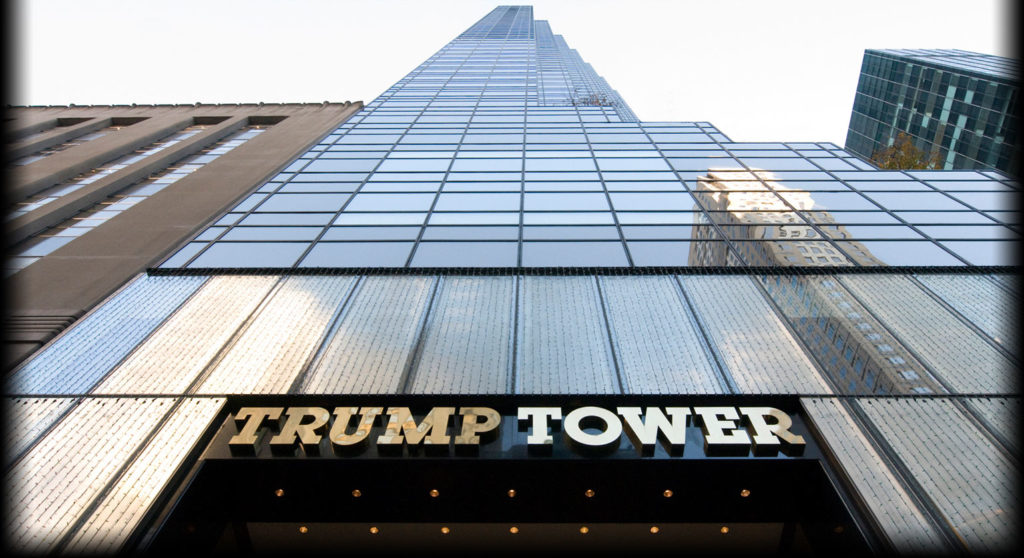
President-elect Donald Trump returned to his perch high above Manhattan on Monday, meeting with former rivals and longtime allies a day after he indicated he had worked out agreements to fill major posts in his administration. Trump, after spending the weekend receiving a parade of visitors at his golf course in New Jersey, was set to do the same at Trump Tower. Among his scheduled visitors: former Texas Gov. Rick Perry, who ran against him in the Republican primary, longtime ally Newt Gingrich, the former speaker of the House of Representatives, and Oklahoma Gov. Mary Fallin. “We’ve made a couple of deals,” Trump told reporters at his Bedminster, New Jersey, golf club on Sunday. He gave assurances that “incredible meetings” would be bringing “incredible people” into the government. “You’ll be hearing about them soon.” The president-elect apparently is working to get important Cabinet jobs settled before heading to Florida for Thanksgiving. Aides said Monday he will spend the holiday at his Mar-a-Lago estate. He is expected to fly there either Tuesday or Wednesday, while Vice president-elect Mike Pence will spend Thanksgiving in Mississippi, where his Marine son is stationed. Trump made a flurry of brief public appearances over the weekend, often with Pence at his side, to flash frequent thumbs-ups and provide quick updates on his progress in building a government. Mitt Romney, the Republican presidential nominee in 2012, was “under active and serious consideration” for secretary of state, Pence said. Trump himself said retired Marine Corps Gen. James Mattis was an “impressive” prospect for defense secretary. Kellyanne Conway, a senior adviser for the transition, said Monday the president-elect wanted to hear viewpoints from across the political spectrum, including from “Never Trumpers” who she said “are looking forward to having a say in what happens next.” She also said that Trump would receive a visit from Hawaii Democratic Rep. Tulsi Gabbard, who resigned her post in the Democratic National Committee after endorsing Bernie Sanders over Hillary Clinton. “Not all of them (his visitors) will be in his Cabinet and his federal government, but they are all incredibly important in offering their points of views, their experience and certainly their vision of the country,” Conway said. The businessman who is now the president-elect also apparently is considering options to lead the Commerce Department, meeting with billionaire investor Wilbur Ross. “Time will tell,” Ross told reporters when asked if he wanted a post. Between conversations Sunday, Trump revealed he was making transition plans for his family, too. He told reporters that his wife, Melania, and their 10-year-old son, Barron, would move to Washington when the school year ends. Trump also turned to Twitter to share some of his thinking. In between criticism of “Saturday Night Live,” the hit musical “Hamilton,” and retiring Democratic leader Harry Reid, he wrote that, “General James ‘Mad Dog’ Mattis, who is being considered for secretary of defense, was very impressive yesterday. A true General’s General!” The comments indicated Trump is looking outside his immediate circle as he works toward rounding out his foreign policy and national security teams. On Friday, he named a loyalist, retired Gen. Michael Flynn, as his national security adviser. Romney, the former Massachusetts governor, and Trump exchanged bitter insults during the campaign, and Mattis has not been considered a Trump confidant. The appointment of more establishment figures could offer some reassurance to lawmakers and others concerned about Trump’s hard-line positions on immigration and national security and his lack of foreign policy experience. Trump told reporters Sunday that one of his most loyal and public allies, former New York Mayor Rudy Giuliani, was also a prospect for secretary of state “and other things.” Giuliani at one point had been considered for attorney general, but Trump gave that job to Sen. Jeff Sessions of Alabama. Even as Trump and his team discussed pressing issues facing the country and how to staff the incoming administration, the president-elect’s Twitter feed suggested other issues, too, were on his mind. His targets Sunday included Nevada Sen. Reid. Trump tweeted that incoming Senate Democratic leader Chuck Schumer, another media-savvy New Yorker, was “far smarter” than Reid and “has the ability to get things done.” Trump also complained that “Saturday Night Live,” which thrives on making fun of politicians, is “biased” and not funny. The night before, actor Alec Baldwin portrayed Trump as Googling: “What is ISIS?” Trump also insisted again that the cast and producers of “Hamilton” should apologize after the lead actor addressed Pence from the stage Friday night, telling the vice president-elect that “diverse America” was “alarmed and anxious.” Pence said on CBS’ “Face the Nation” that he wasn’t offended. The brouhaha over Hamilton dominated cable news over the weekend and was the latest example of Trump’s ability – whether intentional or not – to ignite one controversy to distract from another, in this case the announcement Friday that he had agreed to pay a $25 million settlement to end fraud cases against his now-defunct for-profit Trump University. Republished with permission of the Associated Press.
GOP’s control of Washington carries risks
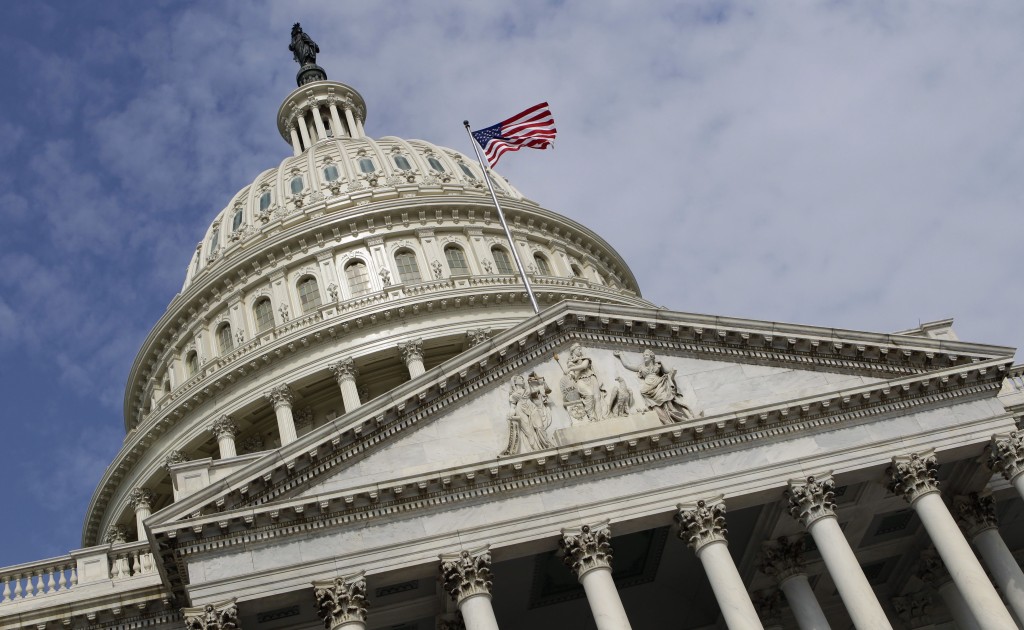
For Republicans, there will be no one left to blame. As they prepare to take control of the White House and both chambers of Congress next year, Republicans are celebrating the opportunity to enact a new agenda for the country, including lowering taxes, securing the border and repealing President Barack Obama‘s health care law. But with that opportunity comes massive political risk: If President-elect Donald Trump and congressional Republicans don’t deliver, they will face a serious reckoning with voters. That could begin with the 2018 midterm elections, when every House member and one-third of the Senate will be up for re-election. “The American public has clearly said that they want to go a different direction,” said Republican Rep. Ken Buck of Colorado. “And if we are not effective in moving in that different direction, they will take the opportunity away from us, and they will return it to the Democrats.” Said Sen. Ted Cruz of Texas, speaking Friday at the Federalist Society: “It’s time to put up or shut up. There are no excuses.” That sobering reality has been sinking in for GOP members of the House and Senate as they begin the early stages of planning an agenda for next year. Republicans point out that although they will control a majority in the Senate with 52 votes, that’s well short of the 60-vote supermajority needed to advance most major initiatives, including Supreme Court nominees. So although Republicans would be able to use a legislative maneuver to send a health care repeal to Trump’s desk with just a simple majority, other major objectives, including immigration and border enforcement, would require some degree of cooperation from minority Democrats. That could give Senate Democrats’ new leader, Chuck Schumer of New York, veto power over major chunks of Trump’s agenda. And it’s led to a call from some House Republicans for their Senate colleagues to try to push through a rules change to eliminate the 60-vote filibuster barrier. “They’re either going to have to modify that rule, or they’re going to have to face the wrath of the voters,” said Rep. Matt Salmon, R-Ariz., who is retiring at the end of this year. Senate Majority Leader Mitch McConnell, R-Ky., is an institutionalist who has shown no enthusiasm for such a move. But Republicans fret that a shortage of votes in the Senate is not likely to be a winning political excuse to most voters who picked an outsider in Trump to bring wholesale change to Washington, and now want to see that happen. “We can talk about not having 60 in the Senate, but I think that our time to show that we can govern is now,” said GOP Rep. Tom Rooney of Florida. The Republican role on health care seems particularly risky to some in the party. Democrats have suffered severe political consequences for pushing through the Affordable Care Act in 2010. They lost control of the House in that year’s midterm elections, and Republicans have used the health care issue ever since to rally their base and attack Democrats. But if Republicans repeal it, as they are determined to do, they will be the ones responsible for whatever comes next. And given the enormous complexity of the U.S. health care system, which accounts for fully one-sixth of the U.S. economy, the potential for complications looks immense. Even after six years, Republicans have failed to unite around a single alternative to Obamacare, or a solution to ensure that the 20 million Americans who gained health coverage under the law don’t suddenly lose it. Schumer warned in an interview Friday that repealing the health care law would turn into “a political nightmare” for Republicans. And even while cheering the opportunity to undo the health law, House Speaker Paul Ryan acknowledged in a news conference this past week that, “It’s too early to know the answer to, ‘How fast can Obamacare relief occur?’ “ Many Republicans believe Democrats overreached in the early years of the Obama administration, when they controlled the White House and both chambers of Congress. Voters took Democrats’ majorities away, and now Republicans are mindful of making the same mistake themselves. Rather than a rightward lurch, “It’s paramount right now in American politics to build a plurality coalition, because we are still a country of great diversity,” argued Paul Schumaker, who was North Carolina GOP Sen. Richard Burr‘s chief re-election consultant this year. And even as Republicans prepare to enact a governing agenda, it’s unclear in some cases what that agenda will be, because some of Trump’s promises clash with goals set out over the years by Ryan and other congressional Republicans. For example, Trump has promised to protect Medicare; Ryan has proposed turning it into a voucher-like program for future retirees. Trump is proposing a $1 trillion infrastructure bill; most conservatives balk at major new government spending. As for Democrats, even from their defensive crouch they’re eyeing the political upside that could result from full Republican control of the nation’s capital. House Minority Leader Nancy Pelosi, who is facing a rare leadership challenge from Democratic colleagues distraught about the election results, tried to reassure her caucus this past week that midterm elections in an opposition president’s first term offer a singular chance for political gain. “Trump is president, we have a bigger opportunity to take the Congress, just following history, in our generation of being involved in politics,” said the California Democrat. Republished with permission of the Associated Press.
Donald Trump popularity rising post-election, new poll shows

Since winning the presidential election, Donald Trump has become more popular with Americans, a new poll of registered voters shows. According to a survey conducted by POLITICO/Morning Consult Nov. 16-18, 45 percent of voters now have either a very favorable or somewhat favorable opinion of Trump. Twelve percent say they have a somewhat unfavorable opinion and 34 percent have a very unfavorable opinion of the president-elect. Anna Palmer of POLITICO calls it a “dramatic uptick” since the election Nov. 8. Trump’s favorability has jumped by 9 points, from 37 to 46 percent, compared to a similar Morning Consult poll taken just before the election. His unfavorability rating dropped 15 points, from 61 to 46 percent. In addition, less than one-third of respondents believe Trump’s children should play a role in his administration, and only one in four say certain Trump family members should be given security clearance. Voters are also supporting Trump’s call for a lobbying ban. Sixty-one percent of voters say they believe lobbyists should not serve in presidential administrations (Democrats by 55 percent; 67 percent of Republicans). Despite that, around four in 10 believe it is very or somewhat likely Trump will restrain the influence of lobbyists and special interests in his White House. President Barack Obama has also become slightly more popular, with 54 percent of voters approving his job performance; 43 percent disapprove. Before the election, 50 percent approved; 48 percent disapproved. “Trump’s favorability among voters has reached new highs since he became president-elect,” Morning Consult co-founder and Chief Research Officer Kyle Dropp told POLITICO in a statement. “This honeymoon phase in common for new presidents. For example, Obama saw about a 20-point swing in his favor following the 2008 election.” Trump’s transition also is being well received, as 19 percent of respondents believe it is better organized than previous efforts; 34 percent say his transition is about the same. Dropp notes “many of the initial transition picks, including Reince Priebus, Steve Bannon, and Jeff Sessions are still largely unknown to Americans.” The survey found more than half of respondents had never heard of, or had no opinion, on Priebus (Trump’s choice for chief of staff) chief strategist Bannon, or Alabama Sen. Sessions, his pick for attorney general. Nevertheless, about a third of voters called Priebus a “strong choice,” as opposed to 27 percent who say it was “weak.” Two in 10 feel Bannon was a strong choice; 34 percent called it weak. The POLITICO/Morning Consult poll contacted 1,885 registered voters, with a margin of error of plus or minus 2 percent. Thirty-three percent of those surveyed self-identify as Democrats, 32 percent independents, and 33 percent Republicans.
‘Hamilton’ actor: ‘There’s nothing to apologize for’
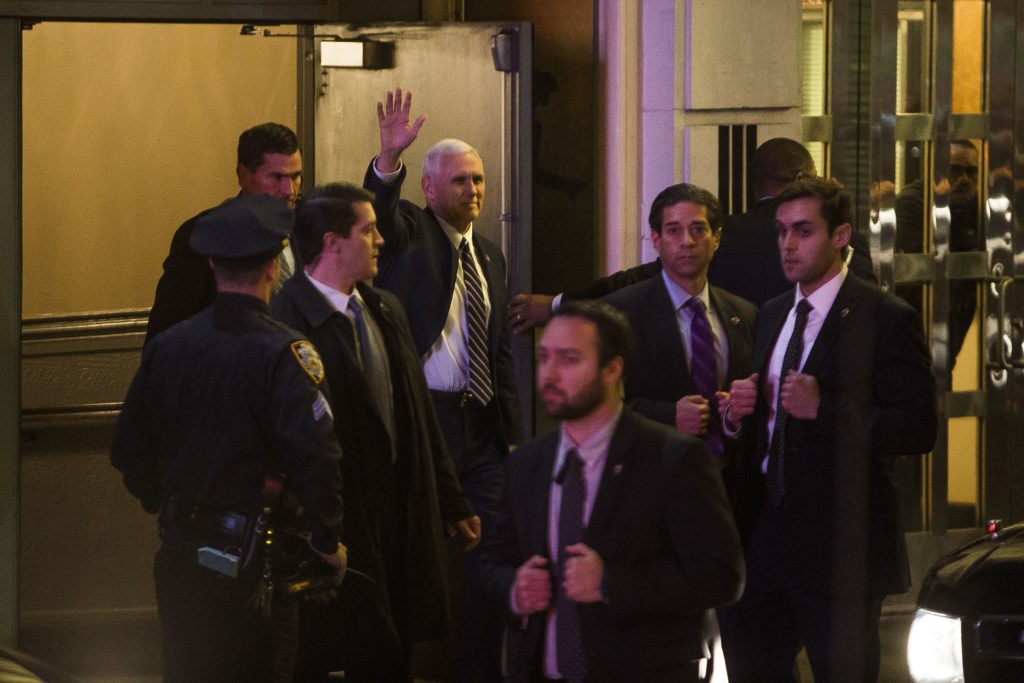
If Donald Trump is waiting for an apology from the cast of “Hamilton,” he will have to continue to wait. Actor Brandon Victor Dixon, who plays Aaron Burr in the celebrated musical, told “CBS This Morning” on Monday that “there’s nothing to apologize for.” Dixon gave Vice President-elect Mike Pence an onstage earful about equality at the end of Friday’s performance. Trump has taken to Twitter several times to demand an apology. Pence on Sunday said he wasn’t offended by the message. Dixon said “Hamilton” creator Lin-Manuel Miranda had a hand in crafting Dixon’s remarks, although Dixon said he “made some adjustments.” Dixon said that both Trump and Pence are welcome to come backstage and meet with the cast at any time, adding, “Art is meant to bring people together.” From the stage on Friday night, he sparked controversy by saying he and the cast were “alarmed and anxious” that the Trump administration “will not protect us, our planet, our children, our parents, or defend us and uphold our inalienable rights.” The musical is by Lin-Manuel Miranda, who wrote the story, music and lyrics. It stresses the orphan, immigrant roots of first U.S. Treasury Secretary Alexander Hamilton and has been cheered for reclaiming the nation’s founding story with a multicultural cast. Dixon’s unprecedented address of the vice president-elect has divided many, with critics saying theater should be a safe place and the “Hamilton” cast comments seemed aggressive. But supporters contend Dixon was respectful and note that artists speaking out is a timeless ritual. The debate has even divided members of Bruce Springsteen‘s The E Street Band, with Steven Van Zandt calling the Pence address “the most respectful, benign form of bullying ever.” Van Zandt said on Twitter on Saturday that the statement was “beautiful,” but “completely inappropriate at that time.” He added that singling out an audience member to “embarrass him from the stage” is “a terrible precedent to set.” But Nils Lofgren, his bandmate, supported the protest, arguing: “Everywhere and anytime you can raise your voice is appropriate, especially right now.” Springsteen himself attended the Broadway show with his wife, Patti Scialfa, on Sunday and went backstage to have their picture taken with Mandy Gonzalez, an actress in the show. Springsteen and Scialfa posed for a photo in front of a poster of the show. She later called it “joyous and necessary.” Republished with permission of the Associated Press.
Barack Obama: I’ll push back on Donald Trump if needed to defend US ideals
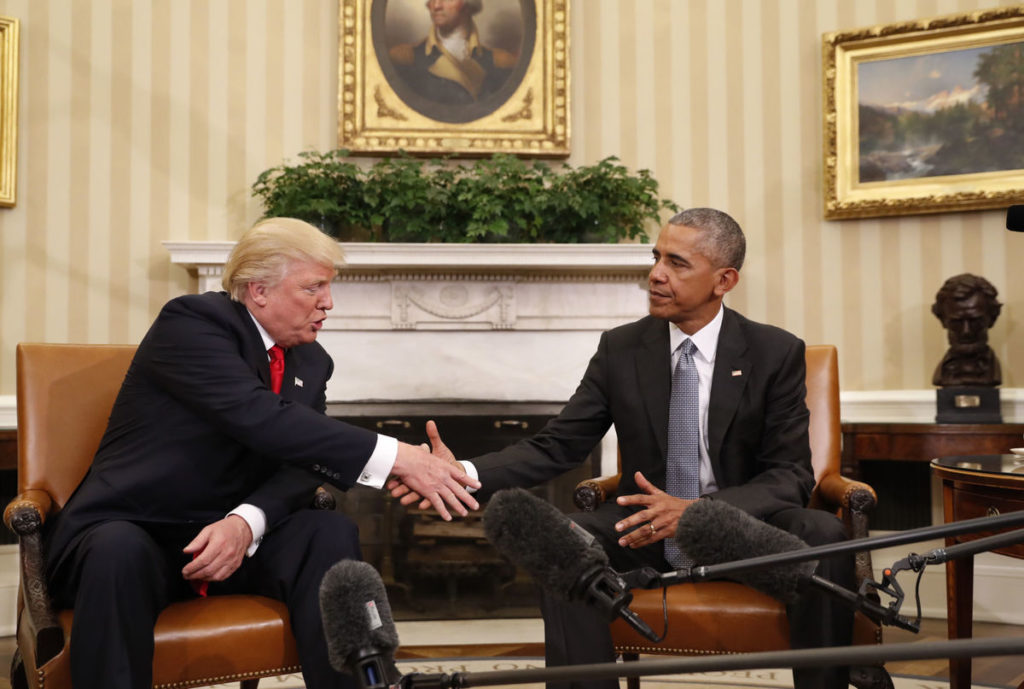
President Barack Obama said Sunday he doesn’t intend to become his successor’s constant critic — but reserved the right to speak out if President-elect Donald Trump or his policies breach certain “values or ideals.” Offering a rare glimpse into his thoughts on his post-presidency, Obama suggested once he was out of office he would uphold the tradition of ex-presidents stepping aside quietly to allow their successors space to govern. He heaped praise on former President George W. Bush, saying he “could not have been more gracious to me when I came in” and said he wanted to give Trump the same chance to pursue his agenda “without somebody popping off” at every turn. But Obama suggested there may be limits to his silence. “As an American citizen who cares deeply about our country, if there are issues that have less to do with the specifics of some legislative proposal or battle or go to core questions about our values and ideals, and if I think that it’s necessary or helpful for me to defend those ideals, I’ll examine it when it comes,” Obama told reporters. Obama, who has consistently praised Bush for the way he’s handled his ex-presidency, faces a conundrum about how to handle his own. Though he’s vowed to ensure a smooth handover of power, Obama is keenly aware he’s being replaced by a new president who holds antithetical views on issue after issue. The president spoke out vigorously throughout the campaign against Trump’s calls for banning Muslim immigrants, deporting millions of people living in the U.S. illegally, repealing “Obamacare,” and canceling the Paris climate deal, to name a few. Those policy proposals and others like them have stoked fear for many Americans who oppose Trump and are hoping vehement opposition from Obama and other Democrats might prevent Trump from implementing them. Though Obama didn’t specify what might trigger him to break silence, he left himself a broad window of possibilities. His comments suggested he’d be most inclined to weigh in if Trump violated basic principles Obama has tried to uphold, such as minority rights, equal protection and respect for civilian life. Obama has long warned that Trump might impulsively use nuclear weapons, and has cast a dim view on ideas like a Muslim registry, which Trump’s incoming chief of staff declined on Sunday to rule out. Yet Obama suggested that while he might not always hold his tongue, his goal wasn’t to spend his time publicly disparaging his replacement. “My intention is to, certainly for the next 2 months, just finish my job,” Obama said. “And then after that, to take Michelle on vacation, get some rest, spend time with my girls, and do some writing, do some thinking.” Bush, like many ex-presidents, strictly avoided opining on politics during Obama’s eight years. Former President Bill Clinton, after leaving office, focused his attention on global humanitarian issues, especially as his wife entered politics. Former President Jimmy Carter was more vocal in his views in his post-White House years, occasionally stirring up controversy with comments critical of Israel. Obama’s remarks at a news conference in Lima offered some of his most specific indications to date of how he feels Democrats and Trump opponents should handle the next four years. Asked whether Democrats in the Senate should follow Republicans’ example of refusing to even consider a Supreme Court nominee, Obama said they should not. “You give them a hearing,” said Obama, whose own Supreme Court nominee, Merrick Garland, has lingered for more than half a year due to the GOP’s insistence that no Obama nominee be considered. Obama said he certainly didn’t want Democrats to adopt that tactic spearheaded this year by Senate Majority Leader Mitch McConnell, R-Ky. “That’s not why the American people send us to Washington, to play those games,” Obama said. He declined to weigh in explicitly on whether House Democrats should stick with Rep. Nancy Pelosi as minority leader, arguing it was improper to meddle in the vote. But he said of the California Democrat, who faces a challenge for the leadership post: “I cannot speak highly enough of Nancy Pelosi.” Obama’s remarks came as he concluded his final world tour as president. For Obama, it was the last time he’d take questions on foreign soil, a staple of his overseas trips that his administration has seen as an important symbol of America’s commitment to a rigorous free press. On his final day in Peru, Obama chatted briefly with Russian President Vladimir Putin about Ukraine and the Syria crisis, though Obama said the U.S. accusation that Moscow tried to influence the U.S. election didn’t come up. The four-minute conversation, likely their last face-to-face interaction, came amid intense speculation about whether Trump’s election might herald a more conciliatory approach to Russia Putin, speaking later in Lima, said he and Obama had a difficult working relationship but “always respected each other’s positions – and each other.” He said he’d thanked Obama and told him he’d be welcome in Russia “at any time.” Questions about Trump trailed Obama throughout his final overseas trip, as anxious world leaders quizzed him on Trump’s stances on trade, foreign policy and the NATO alliance. Obama sought to reassure the leaders of Australia, Canada and other U.S. allies their longstanding ties with America wouldn’t falter under Trump. Republished with permission of the Associated Press.
Line between transition, company blurred by Donald Trump children
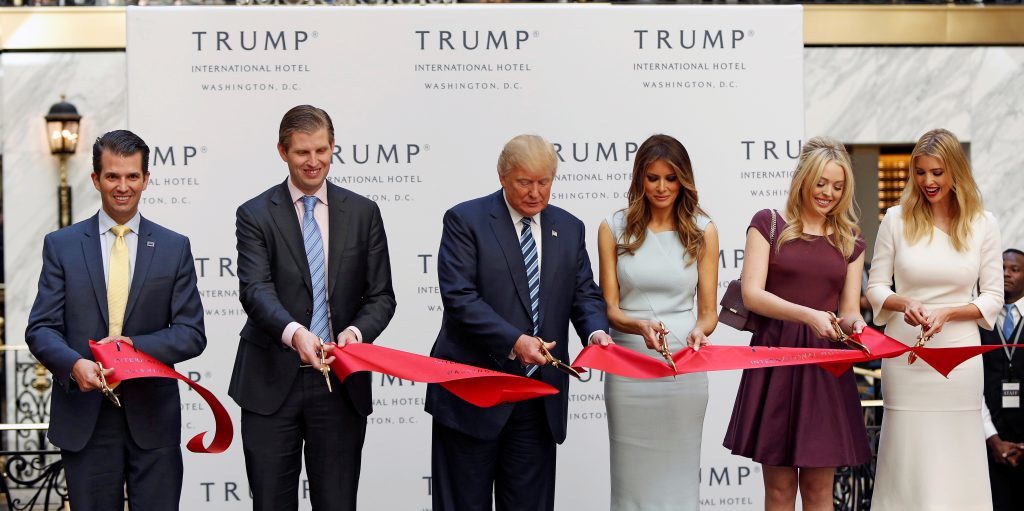
Nearly every morning since their father’s stunning victory on Election Day, three of Donald Trump‘s grown children walk through the Trump Tower lobby and board an elevator. But are Don Jr., Ivanka and Eric going to the campaign office on the fifth floor? Their business offices on the 25th floor? The president-elect’s penthouse on the 56th floor? That uncertainty highlights the multiple roles the children play for their father. For the past year, the lines were constantly blurred between political campaign and business empire, raising questions about a possible conflict of interest between Trump’s White House and his sprawling business interests. The children are poised to wield incredible influence over their father, even if they don’t follow him to Washington. Trump said consistently during the campaign that if he won, those children would stay in New York and run his business. But the three – plus Ivanka’s husband, Jared Kushner – were all named to the transition team’s executive committee. So far, they’ve been heavily involved in shaping the new administration. They’ve sat in on meetings and taken late night calls from their father. They advocated for making Reince Priebus, the Republican National Committee chairman, the White House chief of staff. They counseled against bringing back Corey Lewandowski, Trump’s first campaign manager, who was fired in June on their advice. On Thursday, Ivanka Trump and Kushner were present for the president-elect’s meeting with Japanese Prime Minister Shinzo Abe at Trump Tower. Trump has insisted he will build a wall between his White House and his company by placing his holdings into a blind trust, but with his children as its trustees. Federal requirements are that independent outsiders run such trusts. “We are in the process of vetting various structures with the goal of the immediate transfer of management of The Trump Organization and its portfolio of businesses to Donald Jr., Ivanka and Eric Trump as well as a team of highly skilled executives,” Trump spokeswoman Hope Hicks said. She said the structure “will comply with all applicable rules and regulations.” Trump’s company would be the largest business portfolio to belong to a modern sitting president. Federal ethics rules would allow Trump to run his business interests from the White House, or, perhaps more likely, influence decisions made by his children. That raises conflict of interest concerns. For example, Trump could set domestic policy while making deals abroad that could affect his corporation, even if it were technically in his children’s hands. Kellyanne Conway, a senior adviser, disputed the idea that the Trump children’s involvement in the transition could lead to a breach of trust. “You’re presuming that they are doing certain things that they should not be doing,” Conway said. “They are his children. And they’ve been his business colleagues for a long period of time. They obviously will support their father as president.” But the potentially problematic entanglement revealed itself this past week when Ivanka Trump’s company promoted a $10,800 bracelet she wore during a “60 Minutes” interview on CBS. The spokeswoman for the company later apologized. The children – they were not made available for interviews – are limited in what formal role they could take in a Trump administration. Congress passed an anti-nepotism law in 1967 that prohibits the president from appointing a family member to work in the office or agency they oversee. The measure was passed as a reaction to President John F. Kennedy appointing his brother Robert as attorney general. But the law does not appear to prevent the children – or Kushner, who is one of Trump’s closest aides and is said to be weighing a White House role – from serving as unpaid advisers or providing informal counsel. The three grown children – their mother is Ivana Trump, Trump’s first wife – delivered well-received speeches at this summer’s Republican National Convention in which they tried to humanize their father. Don Jr. and Eric were staples on conservative radio and on the road, trekking to campaign offices and small rallies across battleground states like Ohio and North Carolina. Ivanka Trump, meanwhile, was utilized in some of the campaign’s biggest moments, including introducing her father before his convention speech, unveiling his family leave plan and campaigning across the crucial Philadelphia suburbs. Another daughter, Tiffany Trump, a recent college graduate whose mother is Trump’s second wife, Marla Maples, also made appearances on her father’s behalf. Trump’s youngest child, 10-year-old Barron, whose mother is the president-elect’s current wife, Melania, is enrolled at a private Manhattan school. Trump on Sunday told reporters that Mrs. Trump and their son will move to Washington after the school year ends. For the three eldest Trump kids, there were bumps in the road. Eric and Ivanka were the subject of some embarrassing headlines when it was revealed that they were not registered to vote in time for their father in the New York primary. An African big-game safari Eric and Don Jr. took drew criticism from animal rights activists. And Don Jr. has received criticism for tweeting images likening Syrian refugees to a poisoned bowl of Skittles candy and a cartoon character appropriated by white supremacists. But now they stand poised to be the most influential presidential children in decades, as recent White House offspring have been far younger than the eldest Trump children, who are all in their 30s. During the campaign, Eric Trump insisted that the children’s main focus “was the company,” but “we’d always be one phone call away” if needed, the younger Trump told The Associated Press in May. “We’d do anything for the man.” Republished with permission of the Associated Press.
Donald Trump’s vow to bring back coal gives hope to weary regions

The hard-eyed view along the Tug Fork River in West Virginia coal country is that President-elect Donald Trump has something to prove: that he’ll help bring back Appalachian mining, as he promised time and again on the campaign trail. Nobody thinks he can revive it entirely – not economists, not ex-miners, not even those recently called back to work. But for the first time in years, coal towns are seeing a commodity that had grown scarcer than the coal trains that used to rumble through around the clock: hope. Around here that hope is measured. Still, most voters saw Trump as the only choice for president. He vowed to undo looming federal rules and said President Barack Obama had been “ridiculous” to the industry. Trump told miners in Charleston: “We’re going to take care of years of horrible abuse. I guarantee it.” West Virginians went all in, backing Trump and electing a coal mine-owning billionaire, Democrat Jim Justice, as governor. But a lot of people had gone under already. “Lost my home, vehicle, everything,” said Roger Prater. Wearing the miner’s telltale blue pants with reflective strips on the legs, Prater would be heading underground that night. He’d been laid off for 20 months but now benefits from a small hiring surge that started before the election. At 31, Prater said he can get everything back, but he’s uncertain for how long. “In Trump’s term, I feel we’ll do good, but after that who’s to say?” he said. That skepticism is supported by industry analysts, who say any recovery won’t be centered in the eastern coalfields of Kentucky and West Virginia and will never bring U.S. coal back to what it once was. Last year, the nation had about 66,000 coal mining jobs – the lowest since the U.S. Energy Information Administration began counting in 1978. That’s down 20,000 since a high point in 2008, and preliminary data show 10,000 more lost this year. Mines out west stand to gain the most under Trump because of the huge reserves beneath public lands in Wyoming, Montana, Colorado and Utah. At the Wolf Mountain Coal company near Decker, Montana, superintendent Dave Bettcher said he’s been praying Trump can do just that. Wolf Mountain gets coal from the nearby Spring Creek strip mine, where operator Cloud Peak Energy has cut workforce and production. Wolf Mountain’s 20 workers still have jobs, but Bettcher said eight years of anti-coal leadership in Washington have left the industry in peril. “I believe in the guy,” Bettcher said of Trump as a conveyor belt dumped coal into a truck bound for North Dakota. “If he can hold up his end, he’s going to help a lot of people.” In January, the Obama administration – prompted in part by concerns about climate change – imposed a moratorium on new lease sales pending a three-year review of the federal coal program. Trump has vowed to rescind the moratorium, which could open huge coal reserves. Burning them would unleash an estimated 3.4 billion tons of carbon dioxide – equivalent to a year’s worth of emissions from 700 million cars, according to Environmental Protection Agency calculations. But Trump has promised, too, to roll back Obama’s Clean Power Plan, emissions restrictions that would make it more expensive for utilities to use the fuel. Such proposals would “level the playing field for coal,” allowing it to better compete with natural gas and renewable energies, said coal analyst Andy Roberts with the firm Wood Mackenzie. Yet industry executives expect that pressure to reduce carbon dioxide emissions will continue. “It can’t just be, ‘We’re going to get rid of these regulations, and you guys can party until the next administration comes,’” Cloud Peak Energy Vice President Richard Reavey said. “There are serious global concerns about climate emissions. We have to recognize that’s a political reality and work within that framework.” Owners of more than 200 coal plants, almost half the nation’s total, plan to retire the facilities by 2025, said Mary Ann Hitt, director of the Sierra Club’s anti-coal campaign. That trend is unlikely to be reversed, she said, with wind and solar power becoming more cost effective and natural gas offering a cheap alternative. But Hitt said environmentalists would be naive to think they’ve won. “The coal industry is going to have friends in high places,” she said. In West Virginia, Justice reopened four of his mines this month, saying they’ll provide 375 jobs, before being elected governor. They produce metallurgical coal for making steel; its price has risen sharply with lower Chinese production. Justice acknowledged during campaigning that the coal business is tough – mining jobs in the state fell to about 15,000 last year, with 7,000 gone since 2008 – but said he believes it will help power the U.S. economy and West Virginia’s future. “You’re going to see more miners go back to work in West Virginia to some level,” he said. On Saturday, Justice said he and Trump talked for 15 minutes about efforts to put miners back to work. He didn’t disclose specifics. For now, Williamson resembles the small Rust Belt cities of the North after factories closed, leaving empty storefronts and sidewalks. On a recent afternoon, a young man stood on the city bridge over the Tug Fork, which mostly separates southern West Virginia from Kentucky, holding a sign asking for help. Greg Blankenship from Pike County, Kentucky, across the river, lost his $50,000-a-year mining job in 2009 and got a lower-paying county job months later. His father made a good living as a miner and raised three kids. At 44, Blankenship hopes Trump’s election means he’ll be able to go back but says he knows “the president can’t do everything.” He’s right: Trump won’t control the economics of low natural gas prices or slow global growth, two big factors hurting coal demand, said John Deskins, director of the West Virginia University Bureau of Business and Economic Research. Trump will have some control over environmental regulation, but it’s not
