
Donald Trump drama rolls on: Disputes, falsehoods hit transition

The drama, disputes and falsehoods that permeated Donald Trump‘s presidential campaign are now roiling his transition to the White House, forcing aides to defend his baseless assertions of illegal voting and sending internal fights spilling into public. On Monday, a recount effort, led by Green Party candidate Jill Stein and joined by Hillary Clinton‘s campaign also marched on in three states, based partly on the Stein campaign’s unsubstantiated assertion that cyberhacking could have interfered with electronic voting machines. Wisconsin officials approved plans to begin a recount as early as Thursday. Stein also asked for a recount in Pennsylvania and was expected to do the same in Michigan, where officials certified Trump’s victory Monday. Trump has angrily denounced the recounts and now claims without evidence that he, not Clinton, would have won the popular vote if it hadn’t been for “millions of people who voted illegally.” On Twitter, he singled out Virginia, California and New Hampshire. There has been no indication of widespread election tampering or voter fraud in those states or any others, and Trump aides struggled Monday to back up their boss’ claim. Spokesman Jason Miller said illegal voting was “an issue of concern.” But the only evidence he raised was a 2014 news report and a study on voting irregularities conducted before the 2016 election. Trump met Monday with candidates for top Cabinet posts, including retired Gen. David Petraeus, a new contender for secretary of state. Trump is to meet Tuesday with Tennessee Sen. Bob Corker, who is also being considered more seriously for the diplomatic post, and Mitt Romney, who has become a symbol of the internal divisions agitating the transition team. Petraeus said he spent about an hour with Trump, and he praised the president-elect for showing a “great grasp of a variety of the challenges that are out there.” “Very good conversation and we’ll see where it goes from here,” he said. A former CIA chief, Petraeus pleaded guilty last year to a misdemeanor charge of mishandling classified information relating to documents he had provided to his biographer, with whom he was having an affair. Vice President-elect Mike Pence, who is heading the transition effort, teased “a number of very important announcements tomorrow” as he exited Trump Tower Monday night. Pence is said to be among those backing Romney for State. Romney was fiercely critical of Trump throughout the campaign but is interested in the Cabinet position, and they discussed it during a lengthy meeting earlier this month. Other top Trump allies, notably campaign manager Kellyanne Conway, have launched a highly unusual public campaign to warn the president-elect that nominating Romney would be seen as a betrayal by his supporters. Conway’s comments stirred speculation that she is seeking to either force Trump’s hand or give him cover for ultimately passing over Romney. Three people close to the transition team said Trump had been aware that Conway planned to voice her opinion, both on Twitter and in television interviews. They disputed reports that Trump was furious at her and suggested his decision to consider additional candidates instead highlighted her influence. Conway served as Trump’s third campaign manager and largely succeeded in navigating the minefield of rivalries that ensnared other officials. Trump is said to have offered her a choice of White House jobs — either press secretary or communications director. But people with knowledge of Conway’s plans say she is more interested in serving as an outside political adviser, akin to the role President Barack Obama‘s campaign manager David Plouffe played following the 2008 election. The wrangling over the State Department post appears to have slowed the announcements of other top jobs. Retired Gen. James Mattis, who impressed Trump during a pre-Thanksgiving meeting, was at the top of the list for Defense secretary, but a final decision had not been made. Trump was also considering former New York City Mayor Rudy Giuliani for Homeland Security secretary, according to those close to the transition process. Giuliani was initially the front-runner for State and is still in the mix. But questions about his overseas business dealings, as well as the mayor’s public campaigning for the job, have given Trump pause. Those close to the transition insisted on anonymity in commenting because they were not authorized to publicly discuss the private process. Even as Trump weighs major decisions that will shape his presidency, he’s been unable to avoid being distracted by the recount effort. He spent Sunday on a 12-hour Twitter offensive that included quoting Clinton’s concession speech, in which she said the public owed Trump “an open mind and the chance to lead.” His final tweets challenging the integrity of an election he won were reminiscent of his repeated, unsubstantiated assertions during the campaign that the contest might be rigged. Those previous comments sparked an outcry from both Clinton and some Republicans. Clinton lawyer Marc Elias said the campaign has seen “no actionable evidence” of voting anomalies. But the campaign still plans to be involved in Stein’s recount to ensure its interests are legally represented. Trump narrowly won Wisconsin, Pennsylvania and Michigan. All three would need to flip to Clinton to upend the Republican’s victory, and Clinton’s team says Trump has a larger edge in all three states than has ever been overcome in a presidential recount. Republished with permission of the Associated Press.
Mac McCutcheon: My vision for the Alabama House
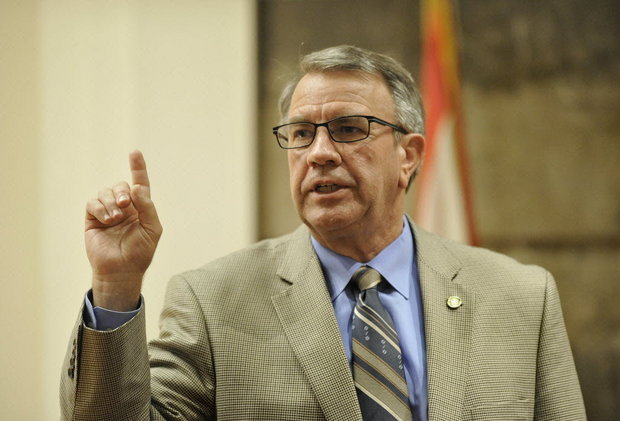
As the newly-elected Speaker of the Alabama House of Representatives, I thought it important to take a moment and let readers here know something about my background, my philosophy, and my vision for how the legislative chamber should operate during the upcoming regular session and thereafter. Though unorthodox, I will begin by letting you know the things I am not. I am not a career politician. After 25 years in law enforcement, I was elected to the House in 2006 during my first run for office, and I serve solely to give back to the state, community, and neighbors that have been so good to me. My only priority is the office I currently hold I am not guided by a desire for riches, power or the other temptations that elected office sometimes offers. As a retired police officer living on a monthly pension, my future resources are already determined, and my wife and I are quite thankful for all that life has already provided us. I am not beholden to any special interests groups. As a lawmaker and public servant, I am beholden to the 45,000 citizens in House District 25, to the people of Alabama, to my family, and to my Lord and Savior. Now let me tell you the things that I am. I am a man who is humbled by the confidence and trust that my colleagues have offered by electing me as Speaker of the House, especially following such difficult and often controversial times in our government. I am determined to utilize the talents, ideas, and input of every member of the House whether man or woman, Republican or Democrat, conservative, moderate, or liberal. A legislator’s worth as a member should not be solely determined by whether a D or an R follows their name on the roster, but rather by their work ethic, their commitment to understanding important issues, and the soundness of the ideas and initiatives they have to offer. Moving Alabama forward is going to require us to adjust the way the House has operated over the past several decades. I plan to create a system that opens and embraces the legislative process and allows bills to sink or swim based upon their own merits and the sponsors’ ability to convince their colleagues to offer support. Taking a turn from the politics of the past will not be simple or easy because old habits die hard, but we must begin the effort anyway. The motto of the Alabama House is “Vox Populi” which means “Voice of the People.” This statement serves as my driving force and rulebook for how the body will operate moving forward. We consist of 105 members, with 105 districts, and 105 different constituencies. It is important to me that our Representatives have every opportunity to be the voice of their district, and this will be the defining feature of our House. I have discussed the ideas outlined above with members of House and Senate leadership, the lieutenant governor, and Gov. Robert Bentley, and all have indicated some level of support for them. As a result, I am confident that if we work together, lawmakers can improve Alabama’s future by helping to create jobs for the jobless, offering hope to the hopeless, and providing a quality education to the children who are our future and will one day take our places in this Alabama State House. Evidence of this fact was on display during the September special session when House members of both parties joined together in passing landmark legislation that pays down a significant portion of our state’s debt, provides needed funding for road and bridge projects related to economic development on the Gulf Coast, and shores up funding needs in the Medicaid agency’s budget. And, best of all, we were able to do all of this with no new taxes. On the day my colleagues elected me Speaker, I stood in the well of the House and asked God’s blessings on every action, every decision, and every vote that takes place in the chamber so that we may fulfill the calling in Peter 4:10, which reads, “Each of you should use whatever gift you have received to serve others, as faithful stewards of God’s grace in its various forms.” I believe that if we simply follow that biblical admonition, House members will succeed in doing our jobs well. ••• Mac McCutcheon serves as Alabama’s Speaker of the House and represents District 25 which encompasses the communities of Madison City, Huntsville, Capshaw, Monrovia and East Limestone. Follow Speaker McCutcheon on Twitter via @MacDistrict25 and Facebook at facebook.com/speakermccutcheon.
Martha Roby: America must keep the upper hand with Iran

Recently the U.S. House of Representatives took up and overwhelmingly passed the Iran Sanctions Extension Act, which reauthorizes for another ten years the economic penalties the United States has used to deter the Islamic Republic of Iran from further developing its unconventional weapons program, including ballistic missiles and supporting terrorism. Originally enacted in 1996, these sanctions have been some of the most meaningful tools in bringing Iran and its ambitious weapons program to heel. Extending them for another ten years is the right decision, and I was proud to vote in favor of the bill’s passage. Also last week, House Speaker Paul Ryan sent a letter to President Obama urging him to abandon any plans for new concessions to Iran during his final days in office. The letter asked that President Obama “take no further actions designed to bolster international investment in Iran, or otherwise change or alter the existing sanctions regime within international organizations through the use of waivers or through administrative actions…” The House vote and Speaker Ryan’s letter comes amid reports that the Obama Administration plans to take additional steps to aide Iran’s economy in attempt to save the president’s legacy nuclear agreement. You may remember that last year, despite significant opposition from Republicans and Democrats alike in Congress, President Obama negotiated an executive nuclear agreement with Iran. I said at the time that the executive agreement was a bad deal because negotiators failed to achieve their very own stated objectives on inspections, verifications, and sanctions. Then in January, the Administration released a $1.7 billion payment to Iran coinciding with the release of five Americans held prisoner by Iran, in violation of longstanding U.S. policy meant to protect our national security interests. I’m afraid the Obama Administration’s baffling behavior toward Iran is weakening what was once a very strong hand in dealing with this rouge nation. However, since President Obama’s Iran nuclear deal is an executive agreement and not a treaty, it is subject for review in the next presidential administration. President-elect Donald Trump said repeatedly throughout his campaign that he believes the Obama Administration negotiated badly, and he strongly suggested that he will pull the U.S. out of the nuclear agreement. Like everyone else who has been engaged in this issue, I am eager to see how President-elect Trump deals with the situation. My colleagues and I in Congress certainly stand willing to support policies that strengthen our hand towards Iran, as evidenced by the overwhelming bi-partisan vote in favor of the Iran Sanctions Extension Act (ISA). Of course, this is just one of many decisions facing President-elect Trump and his incoming administration as the transition of executive power moves forward. I hope you’ll join me in praying for wisdom and guidance for the president-elect and all those who advise him at this time of great consequence for our country. ••• Martha Roby represents Alabama’s 2nd Congressional District. She lives in Montgomery, Alabama with her husband Riley and their two children.
Ronda M. Walker: Beyond the Jeff Sessions’ nomination — the trickle down effect
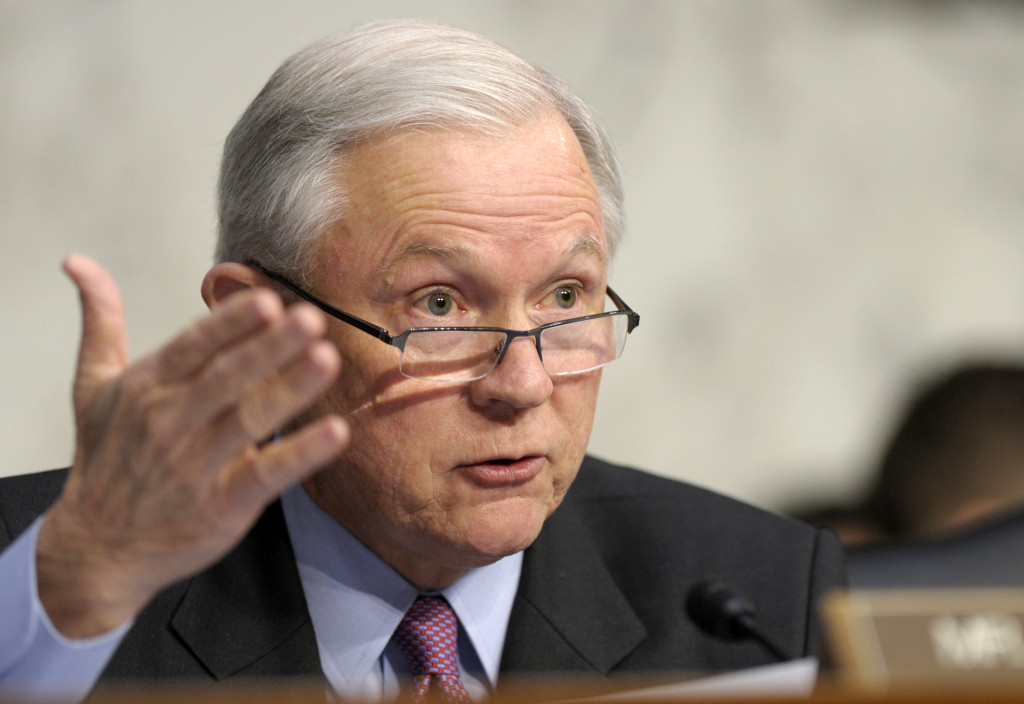
For the past eight years conservatives in Alabama have balked at the policies of the Barack Obama Administration. Now it’s the Republicans turn to govern. The Democrats had a few years, now the Republicans will have a few years. Americans, we are a pendulum people. We sway back and forth between conservative and liberal leadership every few years. A quick glance at contemporary Presidential history proves my point: Harry S. Truman (D) Dwight Eisenhower (R) John Fitzgerald Kennedy (D), assassinated and replaced by Lyndon Baines Johnson (D) Richard Nixon (R), resigned and replaced by Gerald Ford (R) Jimmy Carter (D) Ronald Reagan (R) George H.W. Bush (R) Bill Clinton (D) George W. Bush (R) Barack Obama (D) Donald Trump (R) I assume you see the pattern. The Republicans will soon control the White House and both Chambers of Congress. However, the same swing pattern is found in Congressional elections, specifically in a midterm, which likely means the 2018 Congressional midterms will likely not bode well for Republicans. But for now we have a Republican at the top making cabinet selections and an Alabamian has been nominated to serve as U.S. Attorney General. Several Alabamians have held cabinet-level positions including a few Surgeon Generals – Regina Benjamin of Mobile and David Satcher of Anniston. Condoleezza Rice of Birmingham is most definitely a favorite daughter and she served as the National Security Advisor and the Secretary of State. Winton M. Blount, born in Union Springs and settled in Montgomery, was Postmaster General for Richard Nixon back when Postmaster General was still a cabinet level position. So while this level of power is nothing new to Alabama, the nomination of Jeff Sessions is different. Sessions is a current statewide elected official. We know him. Personally. We’ve shaken his hand at barbecues in rural Alabama, we’ve bumped in to him on our visits to DC and he’s taken the time to say hello and ask about the family. Born in Selma and raised in Wilcox County Sessions attended Huntingdon College in Montgomery and the University of Alabama School of Law. He and his wife Mary now live in Mobile. Senator Sessions, while being one of the most powerful men in the world, is definitely one of us. And now one of us has been nominated by President-elect Donald Trump as the next Attorney General of the United States. Assuming Sessions’ confirmation by the U.S. Senate, Alabama will need a new U.S. Senator and the speculation is dizzying. But before we jump into the political what-ifs and maybes, I think it is important that we take a collective pause and enjoy the moment. The moment when our very own United States Senator, our highly respected native son, will likely transition from being a champion for Alabama to being a champion for America. That is a very big deal. But now let’s look beyond the Sessions’ nomination and consider the trickle down effect. Assuming Sessions’ confirmation to U.S. Attorney General, the Governor of Alabama has an appointment to make. As an appointee of Governor Robert Bentley myself, I will jump into the speculation fray and consider the route the Governor might take when making his nomination. In the summer of 2013 Jay Love announced he was leaving the Alabama House of Representatives, thus creating a vacancy in the House to be filled in a special election. Montgomery County Commissioner Dimitri Polizos was elected in that special election thus creating a vacancy on the County Commission. When a vacancy occurs on a County Commission, the Governor appoints an individual to fill the position until the next regular election. In December of 2013 I was interviewed by the Governor’s staff and subsequently asked to fill the remainder of Polizos’ Commission term. I was sworn in February 10, 2014 and had two years to serve before facing election to a full four-year term. So while the offices are vastly different, I would argue the Governor’s method of making an appointment will be somewhat similar in the case of Jeff Sessions. At the time the vacancy occurred on the Montgomery County Commission approximately twenty individuals reached out to the Governor and asked to be considered for the appointment. The same thing is happening now as individuals, both directly and through proxy, are making it clear to Governor Bentley they would like to receive the Senate appointment. While I was not privy to the internal deliberations, I can speculate on the scope of the conversations. First, the Governor wanted to appoint someone who knew Montgomery County, someone who understood the constituents they would represent. It was important that the appointee was knowledgeable of the issues facing the county. The Governor wanted someone who understood the strengths and weaknesses of local education, law enforcement, and economic development. Also, he wanted someone with a first-hand knowledge of the local personalities and flavor. And of course someone who had enough intelligence to differentiate between fact and fiction. That last consideration alone should keep several out of the running for Senate. I was raised in Montgomery County, educated in the public school system, and I made the decision to settle in Montgomery to raise my family. I know Montgomery; moreover I love Montgomery and want to see her succeed. Second, the Governor wanted an appointee who was willing to work with the current County Commission. The Governor had no interest in appointing someone who would cause trouble for the sake of causing trouble. Divisiveness and lines in the sand, he made clear, were counterproductive to progress. Governor Bentley wanted someone who was thoughtful and reasonable and willing to listen to all sides of an argument before making a decision. I believe my willingness to reach beyond partisan, racial, and ideological lines and do what was best appealed to the Governor. However, it was also important for the Governor that his appointee reflect the values and beliefs of the majority of the constituents of the district. The third commission district of Montgomery County is remarkably conservative. I am
Alabama ranks among the states college grads are most likely to leave

What to do after college can be a daunting challenge for many graduates. Grads are faced with many major life decisions, like where they will land a job and what city they want to live in. In a recent study, The New York Times found many young people with college degrees — are leaving struggling regions of America for cities, specifically for cities in Southern and coastal states. And despite fitting both of those attributes, Alabama is actually losing college-educated workers to other nearby states. According to the Times, there are clear economic reasons for their choice. “Dense metro areas tend to produce more jobs and make workers more productive. Wages, for all kinds of workers, are also higher.” In the regional competition for the most skilled and most mobile workers in America, Alabama appears to be at a disadvantage leaving the local economy struggling to find skilled workers. Which is precisely why the state recently launched AlabamaWorks — an effort to transform the state’s workforce development efforts into one unified system, seamlessly linking employers looking for skilled workers with Alabamians seeking jobs or job training. “Keeping young college graduates would help alleviate the effects of globalization and technological change on these local economies,” said the Times.
Donald Trump aides say Cuban government will have to change

The Cuban government must move toward enacting greater freedoms for its people and giving Americans something in return if it wants to keep warmer U.S. relations initiated by President Barack Obama, top aides to President-elect Donald Trump said Sunday. The comments by Trump advisers Kellyanne Conway and Reince Priebus followed the death of former Cuban leader Fidel Castro. Castro’s younger brother, 85-year-old Raul Castro, took control in 2006, and later negotiated with Obama to restore diplomatic relations. Priebus, Trump’s incoming chief of staff, said Trump would “absolutely” reverse Obama’s opening to Cuba unless there is “some movement” from the Cuban government. “Repression, open markets, freedom of religion, political prisoners – these things need to change in order to have open and free relationships, and that’s what President-elect Trump believes, and that’s where he’s going to head, ” Priebus told “Fox News Sunday.” Conway made similar remarks and noted that any diplomatic deal will have to benefit American workers. “To the extent that President Trump can open up new conversations with Cuba, it would have to be a very different Cuba,” she told ABC’s “This Week.” She added: “He wants to make sure that when the United States of America, when he’s president, engages in any type of diplomatic relations or trade agreements … that we as America are being protected and we as America are getting something in return.” Conway said nothing on Cuba has been decided. But she noted that the U.S. is allowing commercial aircraft to do business with a repressive Cuban government and Cuban military. And she said the “first order of business” is to rally the international community around trying to free political prisoners. While Obama opened some U.S. investment and travel to Cuba through executive order, vast restrictions tied up in the trade embargo remain at the insistence of Republican lawmakers. Separate memorial services have been scheduled for Tuesday and later in the week in Cuba for Castro, and some world leaders and celebrities were expected to attend. As of Sunday, though, the White House had not said whether anyone from the U.S. government would attend. Republican Sen. Marco Rubio of Florida, whose parents were born in Cuba, says he is heartened by Trump’s past hard-line rhetoric on Cuba. Rubio told CNN’s “State of the Union” that the U.S. focus must be its own security and other interests and encouraging a Cuban democracy. “We should examine our policy toward Cuba through those lenses,” he said. “And if there’s a policy that helps that, it remains in place. And if it’s a policy that doesn’t, it’s removed.” During the campaign, Trump said he would reverse “concessions” to the Cuban government by Obama unless the Castro government meets his demands. On Saturday, while Obama offered condolences to Castro’s family and said the U.S. extends “a hand of friendship to the Cuban people,” Trump tweeted: “Fidel Castro is dead!” Trump later released a statement noting his administration “will do all it can to ensure the Cuban people can finally begin their journey toward prosperity and liberty.” Republished with permission of the Associated Press.
SCOTUS justices reject appeal of Ponzi scheme conviction
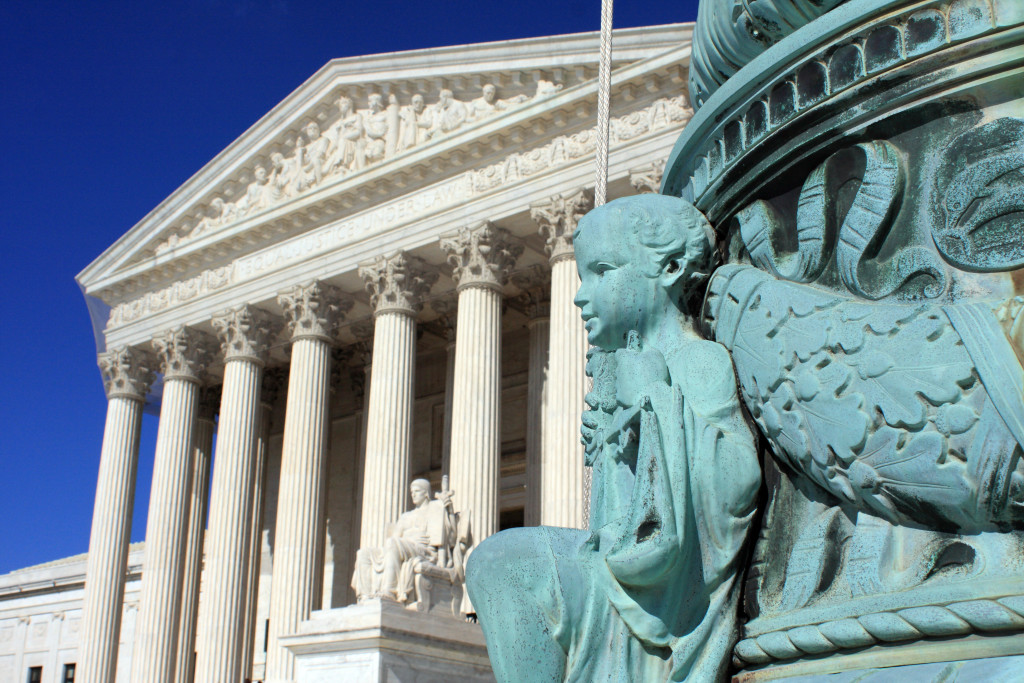
The Supreme Court has declined to disturb the conviction of former Texas tycoon R. Allen Stanford on fraud, conspiracy and obstruction charges. The justices had no comment Monday on their order rejecting Stanford’s appeal of his 2012 conviction for running a Ponzi scheme that bilked investors out of $7.2 billion. He was sentenced to 110 years in prison. Stanford argued that the government deprived him of using his lawyer of choice by unfairly freezing all his global assets, including money untainted by fraud. He also said the government used evidence that was illegally seized by the U.S. Securities and Exchange Commission. A federal appeals court denied his appeals in 2015. Republished with permission of the Associated Press.
Barack Obama’s rough ride on health care offers lessons for Donald Trump
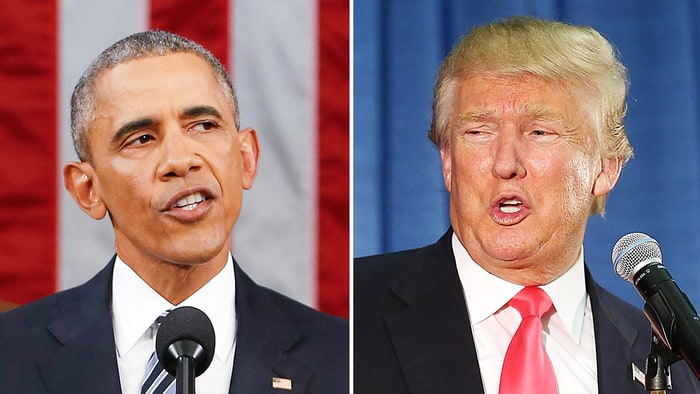
President Barack Obama took on the problems of a lack of access to health care and high cost, but he and Democrats paid a political price. President-elect Donald Trump has promised to undo much of what Obama put in place, and pledged to make the system better. Although Trump is lacking in specifics, he seems to want to make costs his priority. States, insurers, businesses and individuals would get more leeway to sort out access. Health care keenly reflects the country’s deep political divide. A look at some lessons Trump might learn from Obama’s rough ride: THE PERILS OF PROMISES Obama promised that “if you like your health care plan, you can keep it.” But then several million people were threatened with the loss of policies that didn’t conform to his overhaul. Obama said premiums would come down, too. Trump hasn’t made such specific promises, yet it may already be too late for him. In the campaign, Trump made it sound like replacing the law would be quick and easy, and people would be widely satisfied with the results. Consider his idea for allowing insurers to sell policies across state lines. “Get rid of the artificial lines and you will have yourself great plans,” Trump said. That ignores practical issues such as whether an insurer in Houston can set up a viable network of doctors in New York. “There are no easy solutions in health care,” said Jim Capretta, a health policy expert with the business-oriented American Enterprise Institute. “Whatever is done will necessarily involve some trade-offs, and winners and losers. There are political risks associated with every kind of policy proposal.” — MEDICARE AND MEDICAID As a candidate in 2008, then-Sen. Obama proposed requiring parents to get health insurance for their children, one of several steps to move toward coverage for all. As president, he embraced a broader “individual mandate” requiring most people to be covered. Enforced with fines from the IRS, it’s been unpopular from the start. Separately, Obama and a Democratic-led Congress financed part of the coverage expansion in the Affordable Care Act with cuts in Medicare payments to service providers. That was an unwelcome surprise to older people. Even if Medicare cuts improved the program’s balance sheet, older voters helped deliver the House to Republicans in 2010, a few months after Obama signed the overhaul. Trump has promised not to cut Medicare, but Republican leaders in Congress want to revamp the program to provide future retirees with a fixed amount to purchase private insurance. Will Trump go along? Trump initially also said he wouldn’t cut Medicaid, the health care program for low-income people. During the campaign, though, his views shifted to backing a “block grant” that would limit federal money to states and could result in big cuts. Medicare and Medicaid have been around for more than 50 years and are politically popular. Most people, including Republicans, don’t equate the programs with the health law. So Trump could be left exposed. — GOING IT ALONE Democrats passed the 2010 law over solid GOP opposition. Progressives blamed Republican obstinacy and said the overhaul contained many provisions with a centrist, even Republican, pedigree. But the lack of bipartisan support stoked years of opposition. Trump’s ability to win over some Democrats will determine whether his ideas are remembered as a fleeting lurch to the political right or a lasting course correction. At the moment, it’s hard to detect any glimmer of bipartisanship. “If President Trump succeeds in getting the ACA repealed, he and the Republicans will ‘own’ America’s health care system,” said Ron Pollack of Families USA, a leading advocate for Obama’s law. “As tens of millions of people lose coverage, the blame will go squarely onto the shoulders of those who engineered the repeal.” — PEOPLE LIVE HERE When Obama signed the measure into law, Democrats hailed it as the fulfillment of historic aspirations to close the last major hole in the nation’s social safety net. If Trump gets to sign “repeal and replace” legislation, the rhetoric will be about getting government off people’s backs and giving consumers the options they really needed. How will the reality measure up? Obama’s law has been a lifeline for many people who previously could not get coverage. For others it brought unwanted legal obligations and expenses that burdened household budgets. The law did not hold back the trend of rising out-of-pocket costs for those with employer coverage. People worry about the overall affordability of their health care, said Larry Levitt of the nonpartisan Kaiser Family Foundation. Consumers have gotten savvy that out-of-pocket costs, which come on top of premiums, erode the value of their insurance card. “Republicans may be tempted to push insurance premiums down by allowing insurers to offer skimpier coverage with fewer benefits and higher deductibles,” he said. “That’s not likely to satisfy consumers in the end.” Republished with permission of the Associated Press.
Drain the swamp’? Federal workers worried about Donald Trump’s plan
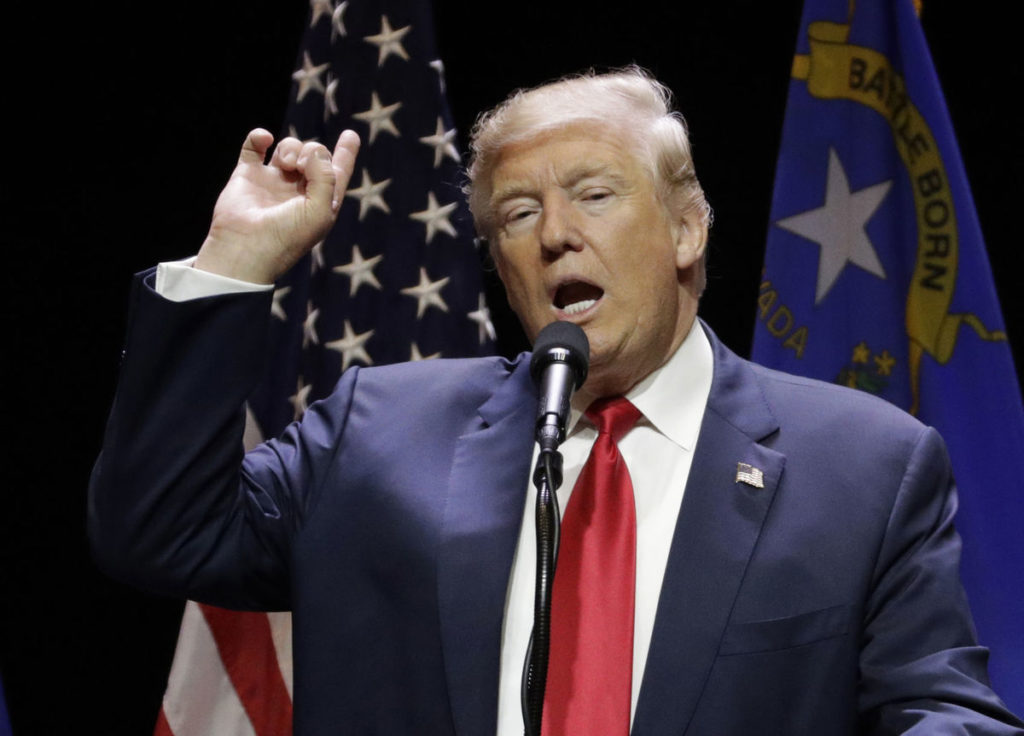
Melissa Baumann lives some 850 miles from the nation’s capital, but when she hears President-elect Donald Trump and his supporters say they will “drain the swamp,” she worries she will be sucked down into the muck. Baumann, a chemist with the Forest Service, is one of the nation’s 4 million or so federal workers and is watching anxiously as Trump looks to set his agenda in motion. In terms of policy, Trump has suggested a federal hiring freeze and hinted at eliminating or sharply curtailing an entire Cabinet agency, the Department of Education. In terms of rhetoric, he targeted the federal bureaucracy and regulations. And then there’s his “drain the swamp” catchphrase. Trump’s allies say that was directed at lobbyists, donors and political cronies. Some federal workers fear he means a broader group. “I believe that is directed at us. And it’s misdirected,” said Baumann, who lives in Madison, Wisconsin, where she also serves as a union officer for the Forest Service. The problems in Washington “have nothing to do with the people outside the Beltway” who are doing honorable work under difficult circumstances, she said. Like most federal workers, Baumann works far from D.C., where less than 10 percent of the federal workforce is stationed, government data show. Maryland and Virginia are large federal employment centers, but so are California, Florida, Texas and Georgia. Greg Guthrie, an information specialist with the National Technical Information Service in Alexandria, Virginia, said that after the initial shock of Trump’s win, he has adopted a “cautiously optimistic” stance. Trump won as a champion of the working class, he reasoned, and he hopes Trump will advocate for the federal working class as well as the private sector. Guthrie’s co-workers are sympathetic to technology’s disruption of the labor force, he said. The NTIS provides reports and research to a variety of customers. Internet search engines now fill some of that role, prompting senators to introduce the “Let Me Google That For You Act” in 2014 to kill the NTIS. But Guthrie said his agency has reinvented itself and now helps government agencies use big data. Guthrie said federal workers can adapt when given the opportunity. “I don’t like some of the terms I’m hearing, like ‘drain the swamp,’” said Guthrie, also an officer in his union. “Sometimes it’s couched as we’re these lazy, unnecessary relics. That’s not true. We’re people who work hard.” Corey Stewart – who chaired Trump’s Virginia campaign and serves as Board of Supervisors chairman in Prince William County, home to many federal workers – said “drain the swamp” was directed at the lobbying corps and Washington insiders who infiltrate the political system. The average federal worker doesn’t have much to worry about, he said, though he does expect reductions at the Department of Education, IRS and EPA, because Trump is skeptical of those agencies. Stewart said Trump’s promises to bolster defense will result in a net benefit for the capital region and the federal workforce. He said Trump won’t find much savings in the federal labor force because it has already been squeezed by budget cuts. The number of executive branch employees hasn’t been this low since 1965, government data show. Bill Dougan, president of the National Federation of Federal Employees, said that after the initial shock of Trump’s victory, many federal workers are adopting a wait-and-see attitude. Dougan suspects federal workers’ fate will depend largely on whether Trump’s inner circle is populated by establishment Republicans – even though they’ve been hostile to federal workers – or wild cards like Newt Gingrich, who engineered a government shutdown as speaker of the House, and Steve Bannon, the Trump adviser Dougan says embodies an ethos to “do everything he can to blow things up.” Dougan said he expects Republican attacks on federal salaries and pension benefits to continue, but he’s “hopeful that we’re going to see some appointments with some experience in government and how government works, or it’s going to be a real problem.” Still, he said, there’s some optimism that federal workers connected to defense and the Veterans Administration could see improvements, given campaign promises to increase spending there. But Kim Valavez, a social worker at a VA clinic in Santa Rosa, California, said the prevailing mood among workers there is fear. They worry a Trump administration may favor privatization over investing in the VA itself. “People are scared,” she said. “It feels like a great unknown.” Rep. Gerry Connolly, the ranking Democrat on a subcommittee overseeing the federal civil service, said he doesn’t expect the GOP-controlled Congress to oppose any Trump efforts to downsize the federal workforce. “I think if anything they will be more emboldened to scapegoat federal workers than before,” said Connolly, whose northern Virginia district is home to large numbers of federal workers and contractors. Republished with permission of the Associated Press.
