
Will Lochamy: Uh, Mr. President… your Twitter is showing

This isn’t about policy. I wish it was. I’d love to have a rational conversation about policy. Instead, I keep looking around and thinking, “You guys all just saw that, right? You just heard what he said, didn’t you? Huh? We’re just gonna let that go… like, it’s normal?” It’s not normal. It’s not what we expect. There’s no arguing that. But is it ok? We expect college football fans to irrationally dislike the other team’s fans (even though they really are terrible and totally deserve it). What we don’t expect is for the president-elect to tweet false or (at best) unsubstantiated information like an unhinged middle schooler. Our Facebook friend who’s overly dramatic (and thinks we need to know everything he thinks) is a harmless train wreck that’s curiously entertaining. It’s because he doesn’t represent us. When it’s the most powerful man in the world, though, who does represents us, it’s embarrassing and somewhat alarming. Before his unprecedented run for president, Donald Trump routinely used Twitter as his bully pulpit. He called out numerous women as unattractive, referred to people over and over as “losers and haters,” and once tweeted at 1:22 AM that Jon Stewart was a [word that starts with the letter that comes before ‘Q’ and after ‘O’]. It’s not that I’m afraid to publicly use that word, it’s just that I’m a grown man and know better. Once elected, I absolutely expected his unmonitored use of twitter to stop on a dime. I should just stop expecting things. He quickly began tweeting unsubstantiated accusations of paid protestors, degraded multiple long-standing news outlets, made claims of voter fraud with zero evidence, and suggested revoking first amendment rights. (By the way, the American flag proudly hangs on both the outside and inside of my house. That’s not the point.) I don’t buy into this idea that he is tweeting nonsense as a distraction. A distraction from what? To be honest, I don’t think he’s intelligent enough for that. He’s the definition of narcissistic and he refuses to think he needs monitoring. Does the president need to be presidential? ‘Need’ might be too strong of a word. How about this… Do we want our president to be presidential? I do. I don’t expect to agree with the president on everything, but I expect to think of him or her as the president. I haven’t yet been able to take this guy seriously. #StopTweeting #PleaseForTheLoveOfPeteJustHushForABit #LearnHowToUseHashtagsCorrectly ••• Will Lochamy is co-host of the radio show, “Oh Brother Radio” on Birmingham Mountain Radio (107.3FM).
Jill Stein makes Michigan third state for presidential recount
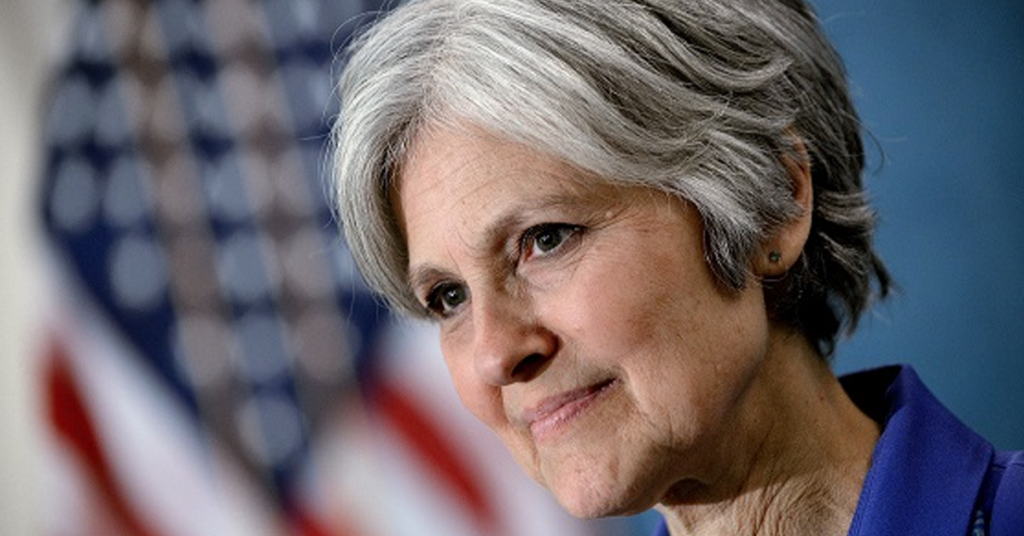
Green Party presidential nominee Jill Stein on Wednesday requested a full hand recount of Michigan’s presidential vote, making it the third state narrowly won by Republican Donald Trump where she’s asked for another look at the results. Stein previously requested recounts of the presidential votes in Pennsylvania and Wisconsin. President-elect Trump defeated Democrat Hillary Clinton by 10,704 votes out of nearly 4.8 million ballots cast in Michigan, but Stein alleges that irregularities and the possibility that vote scanning devices could have been hacked call the results into question. Elections officials in all three states have expressed confidence in their election results. Michigan’s recount could start as early as Friday, though a challenge to the recount by Trump could delay it. Trump’s victory is highly unlikely to be reversed in any of the states, but Stein has said the recount will ensure the integrity of the election. Republicans have said a Michigan recount would cost taxpayers far more than the $973,000 Stein must pay when filing her recount petition. Meanwhile in Wisconsin, where Trump defeated Clinton by roughly 22,000 votes, Stein’s campaign said Wednesday that it won’t appeal a judge’s ruling that Wisconsin’s recount can be done without counting every ballot by hand. Stein spokeswoman Margy Levinson said in an email that the campaign decided not to appeal the ruling due to the tight time constraints for completing the Wisconsin recount, which begins Thursday. Most Wisconsin counties plan to recount their ballots by hand even though the judge’s ruling means they can choose to feed the ballots into tabulation machines to double-check the results. Levinson said Stein’s focus will be on verifying the vote on the ground and she encouraged counties to voluntarily conduct a hand recount. The Wisconsin Republican Party filed a complaint with the Federal Elections Commission on Wednesday alleging that Stein’s recount effort amounts to illegal coordination with Clinton designed to circumvent the law and public scrutiny. Stein campaign manager David Cobb said in a statement that Stein is not coordinating with anyone and dismissed the complaint as a “PR stunt to push a false narrative that will ultimately have no impact on the recount in Wisconsin.” Trump defeated Clinton in Pennsylvania by about 71,000 votes, or about 1 percentage point. Republished with permission of The Associated Press.
Oliver Robinson retiring from Ala. House of Representatives, effective immediately
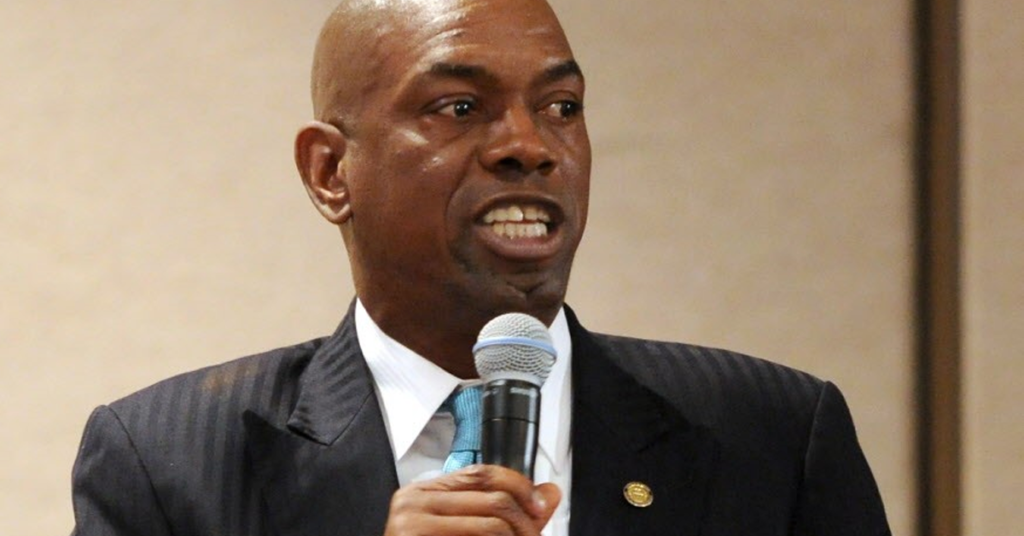
After 18 years of service, Alabama state Rep. Oliver Robinson is saying farewell to the Alabama House of Representatives to allow his daughter Amanda to accept a job with Governor Robert Bentley‘s office, effective immediately. The Birmingham Democrat said his daughter will serve as Bentley’s liaison to the Alabama House and he wants to avoid any conflict of interest or ethical conflicts. “My reason for retiring is simply because of a wonderful opportunity provided to my daughter to become the Governor’s Liaison to the House of Representatives,” Robinson said in a statement. “She is the first female as well as the first African-American female to hold this position in Alabama’s history.” “With the responsibilities to ascertain all votes on the House floor, we can easily see in this highly-ethical and conflict-of-interest environment where I could cause her problems in her job. This is why I am retiring now to give my child every opportunity to succeed,” he continued. Robinson has represented House District 58 since 1998 and said his retirement from politics is permanent. He will now shift his focus on the children in the areas where he once lived, Gate City and Harris Homes.
David Carrington eyes 2018 gubernatorial run
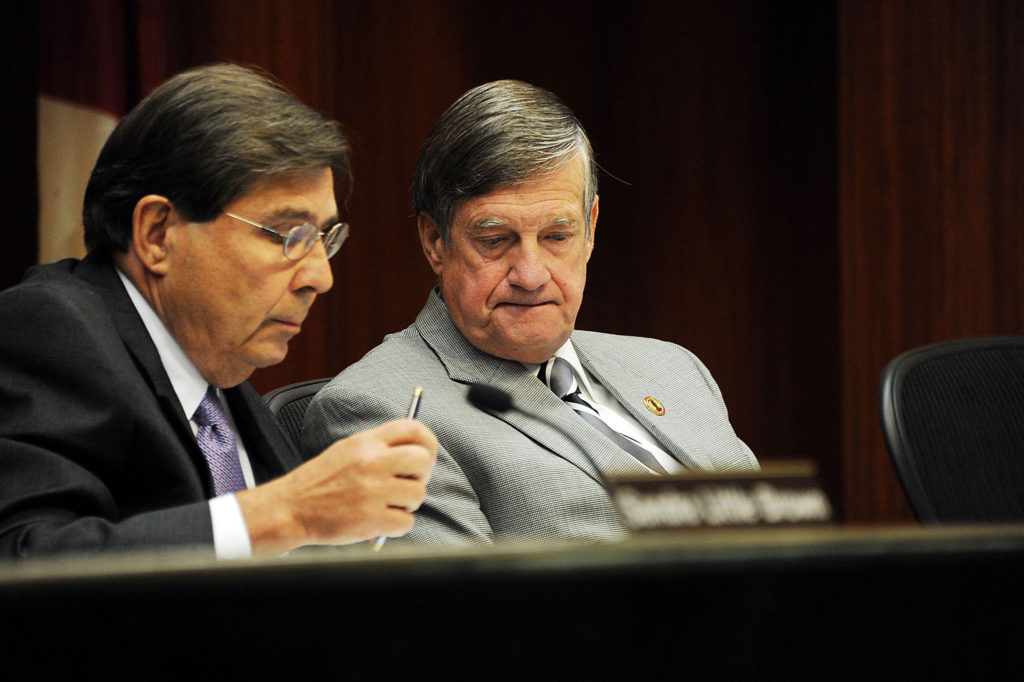
Republican David Carrington announced Tuesday that he has his sights set on becoming Alabama’s next governor rather than running for another term on the Jefferson County Commission. Carrington said GOP insiders told him he was “cutting into the front of the line,” but the commissioner said his background as a city council and commission president makes him more qualified to be Alabama’s top elected official in 2018 than others. “I honestly don’t believe that a Washington or Montgomery insider, who either created the mess in Montgomery or stood idly by while the mess was being created, can do what needs to be done in Montgomery to right the ship,” he said. Carrington was president of Jefferson County when it filed for bankruptcy in 2011, and has presided over budget cuts and staff reductions that have caused multiple debt rating services to upgrade the county’s rating. The commissioner also serves as president of RacingUSA.com, a website that bills itself as the “world’s most frequently shopped, independently owned store for officially licensed NASCAR merchandise.” The path from Jefferson County Commissioner to the governor’s mansion is a long one, and Carrington will have to face off against many better-known and well-funded candidates vying for the job. Still, Carrington believes he is the most qualified candidate for the job. “Here is the way I see it,” he said Tuesday on the Matt Murphy Radio Show. “Montgomery is a mess, as was Jefferson County the day I was sworn into office six years ago. Now, hardly a day goes by that someone doesn’t tell me that things are much better in Jefferson County than they were on my first day in office. “Let’s be honest, not many citizens gave me and my fellow commissioners a prayer of ever turning around Jefferson County and it was accomplished in less than four years,” he continued. “I truly believe the same can happen in Montgomery with the right leadership team.”
Mo Brooks supports Donald Trump’s voter fraud assertions from House floor
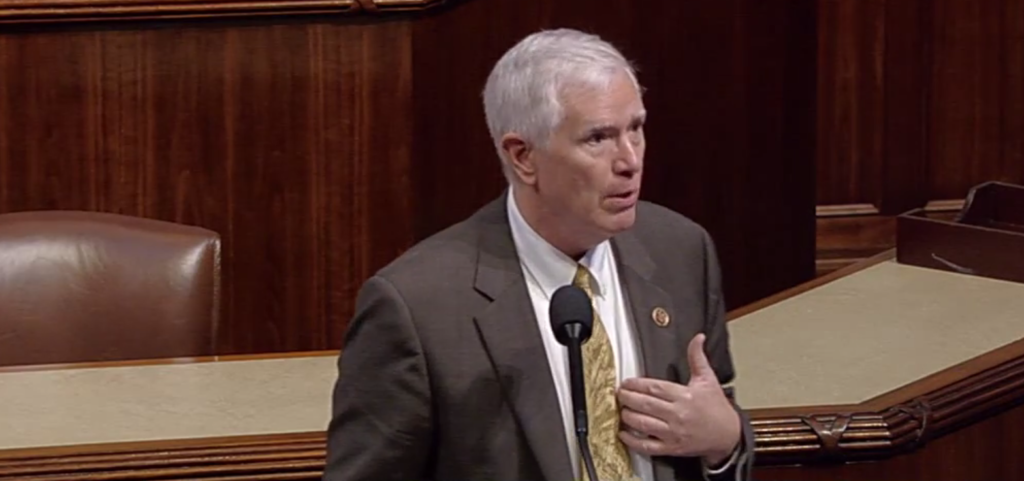
Alabama 5th District U.S. Rep. Mo Brooks took to the House floor Wednesday to support President-elect Donald Trump’s assertion of voter fraud in the recent presidential election and challenged “left-wing media” efforts to silence “serious discussion” on the problem of non-citizens illegally voting in U.S. elections. “Mr. Speaker, President-elect Donald Trump opined in a tweet on November 27 that ‘In addition to winning the Electoral College in a landslide, I won the popular vote if you deduct the millions of people who voted illegally.’ As would be expected, a circus of left-wing, media pundits immediately pounced on President-elect Trump’s opinion in an effort to silence serious discussion of the noncitizen voter fraud problem,” Brooks said from the floor. Brooks went on to describe the voter fraud challenges he believed his home-state of Alabama faced in the most recent Presidential elections. Brooks continued, “In January of 2016, the United States Election Assistance Commission approved Alabama’s proof of citizenship voter registration requirement. The League of Women Voters then challenged proof of citizenship laws in the Washington, D.C., federal courts. In an astonishing ruling in September of 2016, a mere six weeks before the election, the United States Court of Appeals for the District of Columbia entered a preliminary injunction that barred Alabama, Kansas, Georgia, and, indirectly, any other state, from requiring proof of citizenship to register to vote.” “Now what does all of this mean?” Brooks pondered. “It means that, right before the presidential election, federal courts created a massive legal hole that empowers non-citizens to register to vote and, once registered, to vote in America’s elections with impunity, thereby undermining and diluting the vote of lawful Americans and striking at the very heart of our democracy.” It remains to be seen whether or not Trump’s team will provide substantial evidence of the alleged voter fraud. Watched Brooks’ entire speech below:
Donald Trump says Ohio State attacker shouldn’t have been in US
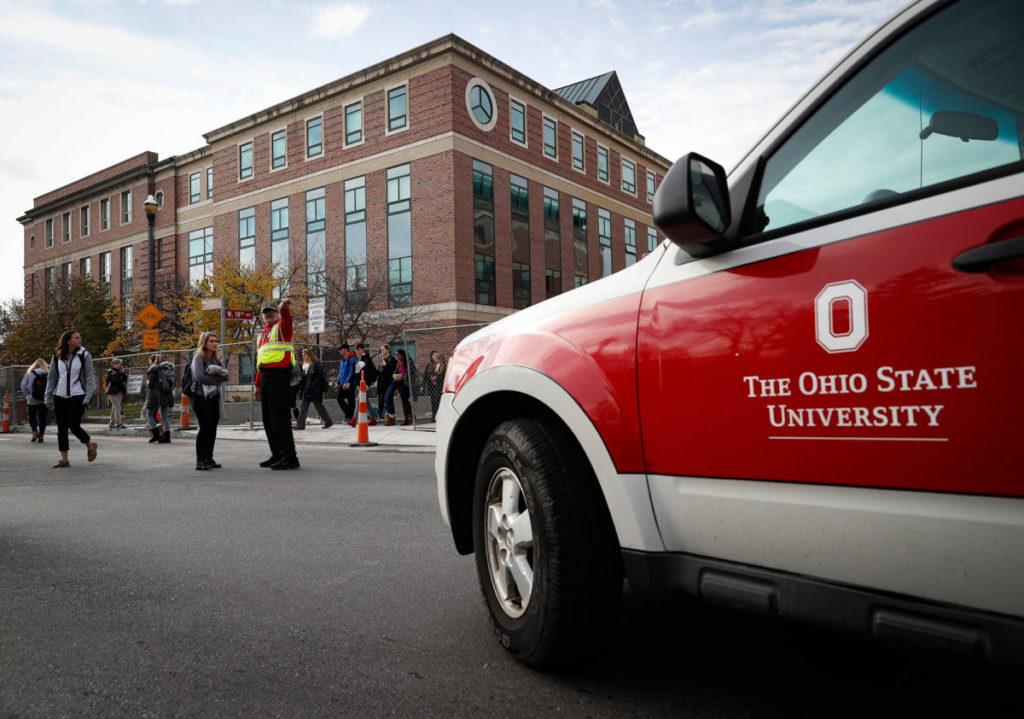
President-elect Donald Trump tweeted Wednesday that the 18-year-old Ohio State student who carried out a car-and-knife attack on his college campus “should not have been in our country.” It’s unclear from Trump’s tweet whether he thinks there was some failure in the screening system or whether he was offering this case as evidence to support his proposals to overhaul immigration policies, especially to restrict the entry of refugees. If Trump is arguing that Abdul Razak Ali Artan‘s family wasn’t properly checked out, there is no evidence of that. If Trump is referring to his plans to overhaul immigration, that may be difficult to accomplish. A look at both scenarios: — THE VETTING PROCESS Trump correctly described Artan, who was killed by police, as a refugee originally from Somalia. Artan and his family moved in 2014 to the United States after living in Pakistan since 2007. As part of that process of being admitted to the United States, the family was subjected to a lengthy background check that generally includes multiple in-person interviews, checks with federal law enforcement and intelligence agencies, and the collection of biometric data, including fingerprints. When the family arrived in the U.S., Artan had a secondary inspection by immigration officials, but no negative information was found and he was allowed into the country, according to a U.S. official briefed on the case. The official was not authorized to publicly discuss details on the case and spoke on the condition of anonymity. The government conducted a second background check on Artan when he became a legal permanent resident in 2015. — TRUMP’S PROPOSALS If Trump was referring to his proposal to end some refugee processing and to block migration from certain countries, that’s a different issue. During the presidential campaign, Trump initially proposed banning all Muslims “entering the United States until our country’s representatives can figure out what is going on.” He later suggested temporarily blocking migration from certain countries and adding “extreme vetting” to the process. He never specified which countries would be affected. It’s unclear how he would accomplish either an all-out ban on Muslims or select which countries no longer would be able to send people to the United States. There is no religious test for anyone asking to enter the United States. Adding one would likely lead to litigation from civil libertarians. Trump will have authority to control the volume of refugees entering the country, but may need legislative and likely diplomatic support to bar migration from certain countries. Republished with permission of The Associated Press.
Decatur Ala. employees to get 1.5 percent raise

After several months of negations and hold-ups the Decatur City Council on Monday approved a 1.5 percent cost-of-living increase for city employees that will go into effect in January. The Decatur Daily reports the raise was held up after the previous council earmarked $600,000 for pay increases, but failed to designate how $240,000 of those dollars would be spend, leaving the decision to the new council, which took office earlier this month on Nov. 6. The controversial wage increase was approved 3-2. Council President Chuck Ard and members Paige Bibbee and Charles Kirby voted in favor the raise, while Kristi Huskey and Billy Jackson voted against it.
US Supreme Court weighs bond hearings for detained immigrants

A seemingly divided Supreme Court on Wednesday tried to figure out whether the government can detain immigrants indefinitely without providing hearings in which they could argue for their release. The justices heard argument in a class-action lawsuit brought by immigrants who spent long periods behind bars, including many who are legal residents of the United States or are seeking asylum. The issue for the court is whether people the government has detained while it is considering deporting them can make their case to a judge that they should be released. The case pits the Obama administration against immigration advocates, and the court hearing comes as President-elect Donald Trump has said he will step up deportations. The San Francisco-based 9th U.S. Circuit Court of Appeals ruled for the immigrants, including Mexican immigrant Alejandro Rodriguez, who was detained for more than three years without a bond hearing. Rodriguez is a legal U.S. resident who was brought to the country as an infant. The Homeland Security Department detained him when it began deportation proceedings because Rodriguez had been convicted of possession of a controlled substance and driving a stolen vehicle, according to the appeals court. He spent no time in jail for the criminal convictions. In another case, an Ethiopian asylum-seeker was kept in detention partly because a DHS officer wrongly labeled him a Somali, according to the American Civil Liberties Union, which is representing the immigrants. The 9th Circuit ruled that immigrants generally should get bond hearings after six months in detention, and then every six months if they continue to be held. The government must show why they should remain locked up, the court said. Justice Stephen Breyer, voicing a sentiment that appeared to be shared by other liberal justices, expressed astonishment that the provisions of immigration law at issue would allow someone released after a hypothetical four-year prison term to be held the same amount of time by U.S. immigration authorities. “How can they be punished for four more years?” Breyer asked. Acting Solicitor General Ian Gershengorn defended the law, saying Congress clearly gave DHS considerable power to hold people in custody while determining whether to deport them. Ahilan Arulanantham, the ACLU lawyer representing the immigrants, told the justices the ultimate decision about whether to hold or release people was not at issue before the court. “We’re just talking about the need for an inquiry, the need for a hearing,” Arulanantham said. But the court’s conservative justices sounded skeptical of Arulanantham’s and the appeals court’s reading of immigration law. “The problem is, that looks an awful lot like drafting a statute or a regulation. … We can’t just write a different statute,” Chief Justice John Roberts said. Republished with permission of The Associated Press.
Clinton team sees recount effort as waste of resources
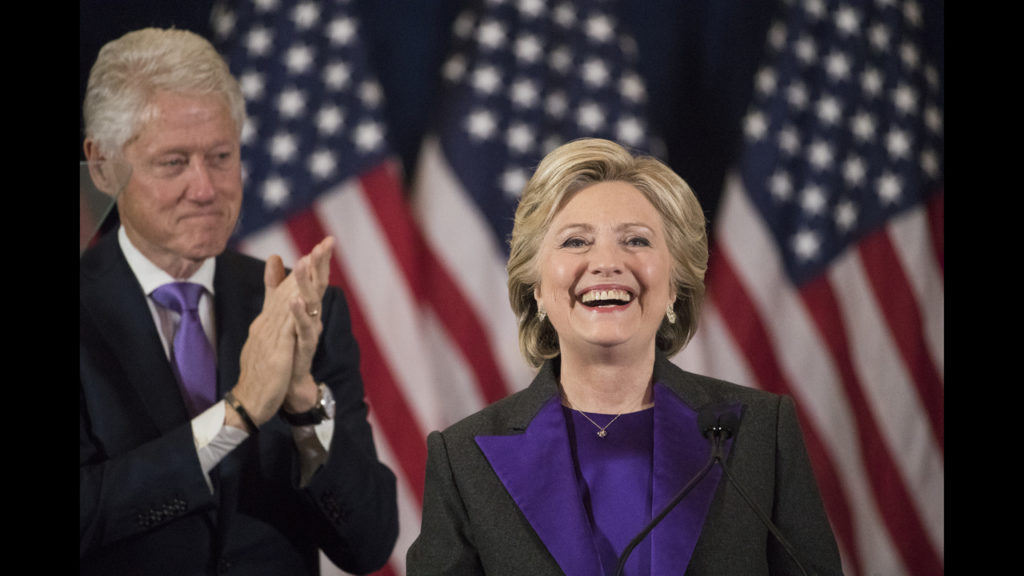
Hillary Clinton‘s aides and supporters are urging dispirited Democrats to channel their frustrations about the election results into political causes — just not into efforts to recount ballots in three battleground states. The former Democratic presidential candidate and her close aides see the recount drive largely as a waste of resources, according to people close to Clinton. The effort is being fueled by Green Party candidate Jill Stein, who’s formed an organization to try to force recounts in Wisconsin, Michigan and Pennsylvania. “Believe me if there was anything I could do to make Hillary Clinton the next president of the United States I would,” said former Pennsylvania Gov. Ed Rendell, a longtime Clinton supporter. “But this is a big waste of time.” Aides say Clinton is focused on moving past her unexpected defeat and has devoted little attention to the recount or thinking about her political future. She’s been spending time with her grandchildren and going for walks near her Westchester home. Sightings of Clinton hiking with her dogs and shopping at a Rhode Island bookstore went viral on social media. “There have been a few times this past week where all I wanted to do was curl up with a good book and our dogs and never leave the house again,” Clinton said in an emotional speech at a gala for the Children’s Defense Fund, her one public appearance since her loss. Former President Bill Clinton, meanwhile, has been poring over the election results, second-guessing decisions by top campaign aides and intensely trying to figure out how his wife lost the white working-class voters who were the base of his electoral coalition, say people familiar with the campaign. Clinton’s team was aware of possible discrepancies soon after the election, telling top donors on a conference call four days after the election that they were looking into potential problems in the three states. But while many campaign staffers believe Russian hacking influenced the outcome of the election, blaming foreign actors for incursions into campaign and Democratic National Committee emails, they’ve found no evidence of the kind of widespread ballot box tampering that would change the results of the race — or even flip a single state. Still, some dejected Clinton supporters have been unwilling to accept the results. Stein has raised $6.5 million for her recount campaign, according to a count posted on her campaign website on Tuesday. That’s nearly double the roughly $3.5 million she raised during her entire presidential bid. Some former Clinton aides have asked frustrated supporters to donate their dollars to what they view as more constructive causes, like state parties or the Democratic candidate in Louisiana, where a Dec. 10 runoff will be the party’s last chance to pick up a Senate seat this year. “I wouldn’t give a dollar to Jill Stein,” said Adam Parkhomenko, a longtime Clinton aide. “Volunteers, supporters and Democrats, they want to pick themselves up and get back out there. The best vehicle to do that is the Louisiana Senate race.” Clinton’s team conducted an exhaustive investigation into the possibility of outside interference in the vote tally, tasking lawyers, data scientists and political analysts to comb over the results. They contacted outside experts, examined the laws governing recounts and double-checked all the vote tallies. The campaign found no “evidence of manipulation,” wrote Marc Elias, the general counsel for Clinton’s campaign, in an online essay. But, he said, Clinton agreed to minimal participation in Stein’s effort, largely to make sure that her interests are represented. They put out a call for volunteers to monitor the proceedings and are relying on local lawyers to handle filings and other legal matters. Clinton is under pressure to participate from her supporters, some of whom have struggled to accept the election results given her lead in the popular vote, which has grown to more than 2.3 million in the weeks after the Nov. 8 election. “Now that a recount is underway, we believe we have an obligation to the more than 64 million Americans who cast ballots for Hillary Clinton to participate in ongoing proceedings to ensure that an accurate vote count will be reported,” Elias wrote. Clinton’s lawyers filed motions with a Wisconsin judge on Tuesday looking to join Stein’s lawsuit demanding that Wisconsin officials recount ballots by hand. The state elections commission will formally began the recount on Thursday. Stein’s organization has also filed for recounts in six of Pennsylvania’s largest counties and says it plans to file a petition Wednesday demanding a Michigan recount. “It’s election law malpractice to not have your lawyers sitting around the table with Jill Stein’s lawyers,” said Adam Ambrogi, elections program director at the bipartisan Democracy Fund. “It is just due diligence.” Republished with permission of The Associated Press.
Carrier Corp. announces deal with Donald Trump to keep jobs in Indiana

Air conditioning company Carrier Corp. says it has reached a deal with President-elect Donald Trump to keep nearly 1,000 jobs in Indiana. Trump and Vice President-elect Mike Pence plan to travel to the state Thursday to unveil the agreement alongside company officials. Trump confirmed the meeting on Twitter late Tuesday, promising a “Great deal for workers!” Trump spent much of his campaign pledging to keep companies like Carrier from moving jobs overseas. His focus on manufacturing jobs contributed to his unexpected appeal with working-class voters in states like Michigan, which has long voted for Democrats in presidential elections. The details of the agreement were unclear. Carrier tweeted that the company was “pleased to have reached a deal” with Trump and Pence to keep the jobs in Indianapolis. Neither Wilbur Ross, Trump’s pick for commerce secretary, nor Steven Mnuchin – the banker picked to be treasury secretary – would discuss specifics about the agreement on Wednesday. But Mnuchin told CNBC’s “Squawk Box” that Trump and his administration are “going to have open communications with business leaders.” He said Trump called the CEO of Carrier’s parent company and said it was “important to keep jobs here.” Both Trump and Pence, who is ending his tenure as Indiana governor, are expected to appear with Carrier officials Thursday. In February, Carrier said it would shutter its Indianapolis plant employing 1,400 workers and move its manufacturing to Mexico. The plant’s workers would have been laid off over three years starting in 2017. United Technologies Electronic Controls also announced then that it planned to move its Huntington manufacturing operations to a new plant in Mexico, costing the northeastern Indiana city 700 jobs by 2018. Those workers make microprocessor-based controls for the HVAC and refrigeration industries. Carrier and UTEC are both units of Hartford, Connecticut-based United Technologies Corp. – which also owns Pratt & Whitney, a big supplier of fighter jet engines that relies in part on U.S. military contracts. In a September debate against Democratic rival Hillary Clinton, Trump railed against Carrier’s plans. “So many hundreds and hundreds of companies are doing this,” Trump said. “We have to stop our jobs from being stolen from us. We have to stop our companies from leaving the United States.” Carrier wasn’t the only company Trump assailed during the campaign. He pledged to give up Oreos after Nabisco’s parent, Mondelez International, said it would replace nine production lines in Chicago with four in Mexico. He criticized Ford after the company said it planned to invest $2.5 billion in engine and transmission plants in Mexico. Chuck Jones, president of United Steelworkers Local 1999, which represents Carrier workers, said of Tuesday’s news: “I’m optimistic, but I don’t know what the situation is. I guess it’s a good sign. … You would think they would keep us in the loop. But we know nothing.” The event Thursday in Indiana will be a rare public appearance for Trump, who has spent nearly his entire tenure as president-elect huddled with advisers and meeting with possible Cabinet secretaries. He plans to make other stops later this week as part of what advisers have billed as a “thank you” tour for voters who backed him in the presidential campaign. Republished with permission of the Associated Press.
Donald Trump’s idea of ‘presidential’ diverges from past presidents

Donald Trump, that most unconventional of presidential candidates, last spring pledged that he would act perfectly presidential when the time was right. “I will be so presidential that you’ll call me and you’ll say, ‘Donald, you have to stop that, it’s too much,’” he promised during a March television interview. Less than two months from Inauguration Day, there are growing signs that Trump’s idea of what’s presidential may never sync up with past norms — to the delight of some and dismay of others. The president-elect has kept up his habit of sending unfiltered tweets, directly challenged the First Amendment right to burn the flag and selected a flame-throwing outsider for a top adviser. He’s shown no hesitation to traffic in unsubstantiated rumors, has mixed dealings in business and government, and has flouted diplomatic conventions to make his own suggestion for who should be Britain’s ambassador to the U.S., a job that happens to already be filled. He’s picked numerous fights with individual journalists, disregarded past practices on press access and dabbled in the name-calling that was commonplace during his candidacy. Trump’s search for Cabinet nominees has played out like a reality TV show, with a number of candidates engaged in unabashed self-promotion while their assets and liabilities are publicly debated by members of the president-elect’s own transition team. (It’s normally a hush-hush process until the unveiling of an appointee). Trump’s tweet that “Fidel Castro is dead!” had none of the diplomatic subtleties normally associated with such an international development. Is all of this, then, the “new normal” for what to expect from a Trump administration or a reflection of the growing pains associated with any presidential transition? President Barack Obama, who knows a thing or two about making the big leap to the Oval Office, has expressed hope that the weight of the office will ultimately have a sobering effect on Trump, cautioning people against assuming “the worst.” “How you campaign isn’t always the same as how you govern,” Obama said in one of a string of recent comments trying to provide some measure of reassurance to those concerned about the next president. “Sometimes when you’re campaigning, you’re trying to stir up passions. When you govern, you actually have reality in front of you, and you have to figure out, ‘How do I make this work.’” Republican Rep. Mark Meadows of North Carolina, a strong conservative and a Trump defender, said of the transition, “You gotta break a few eggs to make an omelet.” But Thomas Mann, a longtime scholar of government from the Brookings Institution, said that while people can hope for the best, “There’s no reason to take what’s going on with anything other than great uneasiness and caution about the kind of government that is preparing to take control in the United States.” “To call this the ‘new normal’ is to make light of the seriousness of what’s going on,” Mann said. Trump has “got to get some discipline,” said New York University’s Paul Light, another scholar of government. “He’s just got to get on this.” On the matter of Trump’s tweeting, Light said, “If he’s up at 3 a.m. about to tweet, he should start reading something about his agenda instead. He’s under-informed and so is his staff.” The concerns extend well beyond matters of style. — Trump’s out-of-the-blue tweet this week that people who burn the flag should face jail time or a loss of citizenship had Republicans stepping forward to defend First Amendment rights. — His unfounded charges that millions of Americans voted illegally sow distrust in the integrity of the U.S. electoral system. — On matters of press access, the idea that the whereabouts of the president or president-elect might be unknown in a time of national emergency has troubling implications beyond mere inconvenience for reporters. And experts on government ethics say that if the president doesn’t sell off his vast business buildings, he’ll be subject to a never-ending string of conflict-of-interest questions that will cast a cloud over his policy actions. For all of that, though, polls show Trump’s favorability ratings have ticked up since the election, even if they are still extremely low for an incoming president. A CNN survey released last week found that Trump’s favorability rating had gone from 36 percent a few weeks before the election to 47 percent 10 days after the vote. A little less than half of Americans said Trump’s actions since the election had made them more confident in his ability to serve as president. A Quinnipiac poll released last week found that nearly 6 in 10 Americans thought Trump should shut down his personal Twitter account. More than half were concerned that Trump might veto legislation that’s good for the nation if it hurt his business interests. Trump has offered postelection reassurances that he’ll be “very restrained” in his tweets and more going forward. His actions haven’t always confirmed that. Republished with permission of The Associated Press.
Reckoning for Nancy Pelosi as House Democrats vote for leader
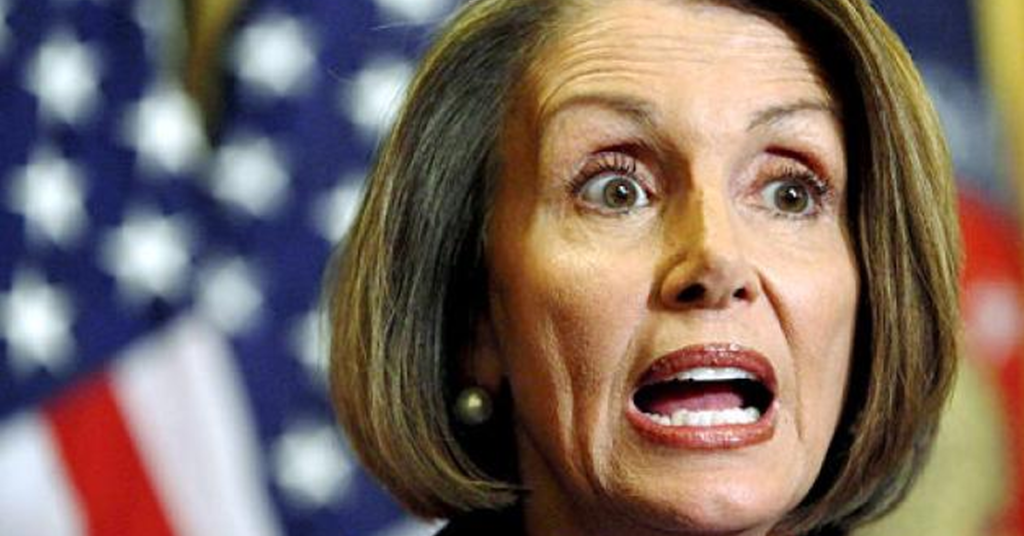
Minority Leader Nancy Pelosi faced a reckoning from fellow House Democrats on Wednesday as frustrated lawmakers tried to oust her from the leadership post she’s held for over a decade. The 76-year-old California Democrat, known as a master vote counter, was expected to beat back the challenge from Ohio Rep Tim Ryan as Democrats met behind closed doors. But she was forced to promise changes to the caucus to answer complaints from lawmakers fed up with being shut out of the upper ranks of leadership, especially in the wake of a devastating election that installed a GOP monopoly over Congress and the White House. A half-dozen Democrats were slated to deliver testimonials to Pelosi in nominating speeches, but the disenchantment was evident. “I think Tim Ryan would be a great leader. He’s a new generation and I think he would appeal to a lot of millennials and young people in this country,” Rep. Steve Lynch, D-Mass., said as he headed into the session. “He brings a certain excitement and also a bit of common sense from Youngstown, Ohio.” “Our base is working people and we’ve got to talk about that. We’ve got to tell working people in this country that we care about them,” Lynch said. Leadership elections were originally scheduled to be held before Thanksgiving but were delayed to give Democrats more time to discuss and process the election results and consider a path forward. Many are discouraged after losing the White House and making smaller than expected gains in both chambers of Congress. “I believe we must do more than simply paper over the cracks,” said Rep. Ruben Gallego of Arizona, one of a handful of House Democrats to endorse Ryan. “We can’t just say the right things – we must take concrete steps to move our party in the right direction.” The 76-year-old Pelosi has been promising some changes to assuage concerns in her caucus, including adding a member of the freshmen class to her leadership team. But her proposals do little to ensure new blood at the very top or change the seniority system that has key committees led by lawmakers in their 80s at a moment when the party needs to be defending President Barack Obama‘s health care law and other initiatives. Nonetheless Pelosi projected confidence heading into the vote. Known for her vote-counting skills, the Californian asserted she had support of two-thirds of Democrats locked up. “Leader Pelosi is honored to receive the overwhelming support of her colleagues,” said spokesman Drew Hammill. “That so many members are so enthusiastic and eager to take active roles in the caucus is music to her ears.” Other top leadership posts are uncontested, with Steny Hoyer of Maryland expected to stay in the No. 2 job of whip, and Jim Clyburn of South Carolina in the No. 3 position of assistant leader. The position of conference chairman is term-limited, and Xavier Becerra of California is expected to be replaced by Joe Crowley of New York. There is a contest for the position of conference vice chair between two California Democrats, Linda Sanchez and Barbara Lee. Either would become the first minority woman in leadership. On the eve of the House leadership elections, 85-year-old Rep. Sander Levin, the top Democrat on the House Ways and Means Committee, said he will not seek re-election to the panel post, clearing the way for a younger lawmaker to move into the spot on the powerful committee. Becerra and Rep. Richard Neal of Massachusetts told House Democrats they are interested in the position. Republicans are on track to hold at least 240 seats in the House next year. Democrats, who had high hopes of significant gains in the election, picked up just six seats on Election Day earlier this month and remain in the minority with 194 seats. Republished with permission of the Associated Press.
