
RNC commemorates Rosa Parks and the Montgomery, Ala. bus boycott
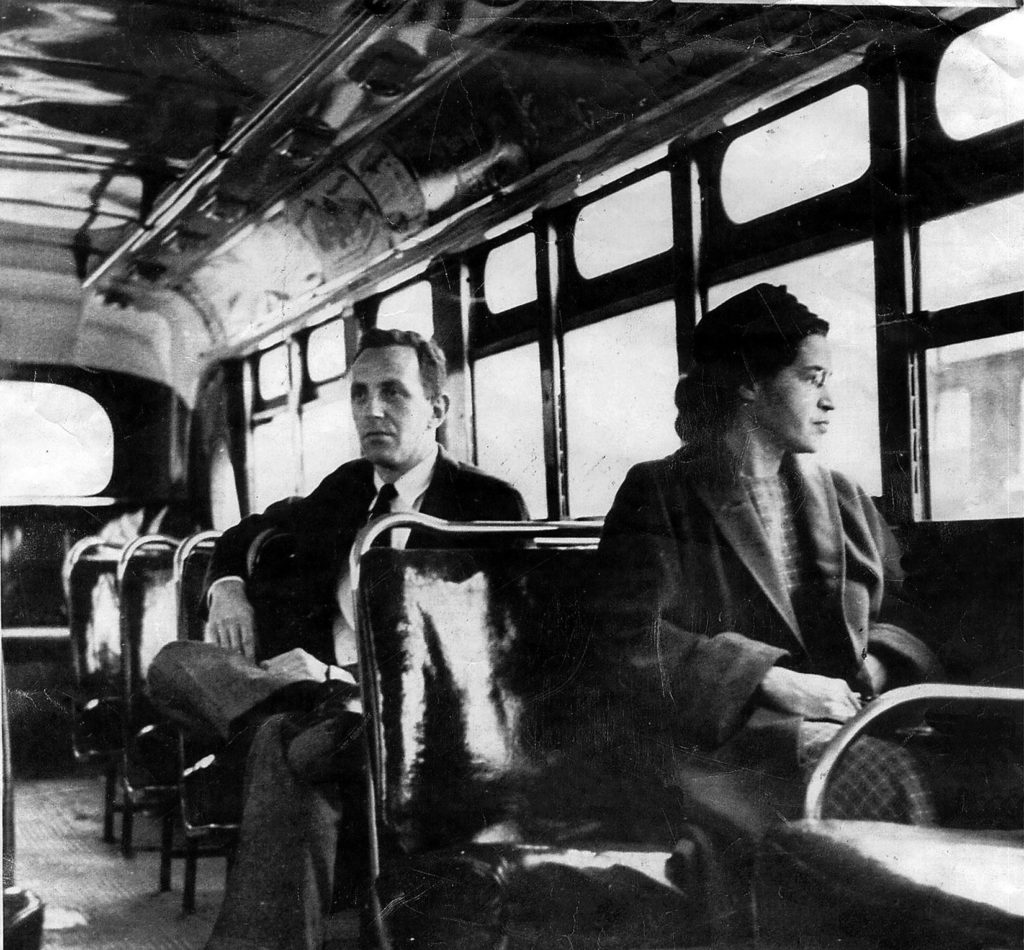
Dec. 5 marks the 61st anniversary of the Montgomery, Ala. bus boycott, which began in the days following Rosa Parks‘ arrest after she refused to give up her bus seat to a white man, as was the custom for the time period in 1955. The boycott lasted 381 and garnering national attention and ultimately leading to the landmark 1956 U.S. Supreme Court ruling that outlawed segregation on public transportation. On Monday, the Republican National Committee (RNC) Co-Chair Sharon Day released a statement commemorating the anniversary of 1955-1956 boycott. “Rosa Parks’ courage on a Montgomery, Alabama bus in December 1955 helped fuel one of the great demonstrations for freedom and equality in our nation’s history,” Day wrote. “Her stand for human dignity and equality lit the spark of conscience in citizens across Montgomery, leading to a bus boycott which dealt a blow to injustice and drew national attention to the burgeoning civil rights movement. By refusing to take the bus, freedom-minded people across that city made a 381-day declaration that liberty was of infinitely greater importance than any convenience in getting where they had to go. Today we commemorate the Montgomery bus boycott, a bold act of conviction which helped put segregation to death and moved America one step closer to completely honoring the Declaration of Independence’s truism that “all men are created equal.”
The week ahead for the U.S. House and Senate – Dec. 5-9, 2016
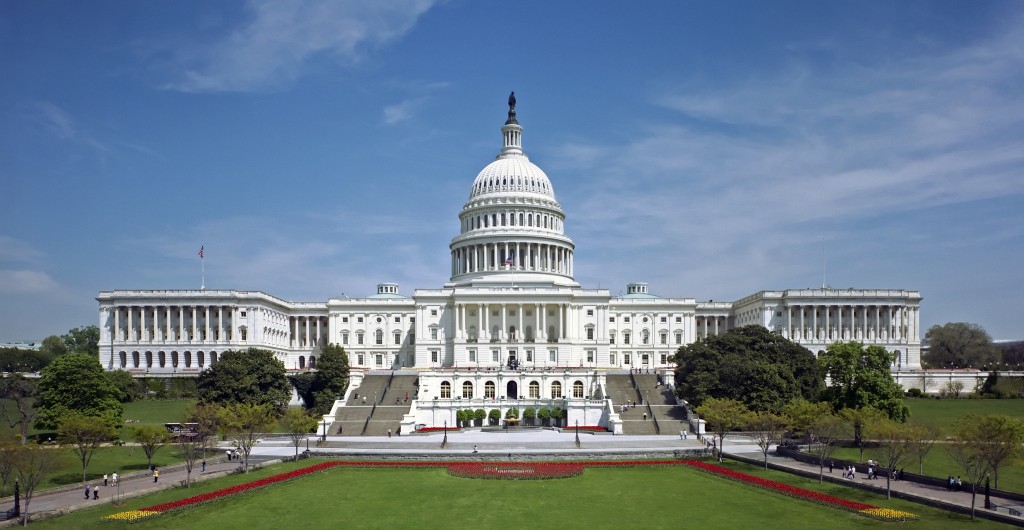
As President-elect Donald Trump continues to fill top positions in his cabinet this week, lawmakers look to begin wrapping up their legislative year by passing a stopgap spending bill in order keep the government running into 2017. Here’s what both chambers are working on this week: U.S. House of Representatives On Monday, the U.S. House of Representatives is in session and will consider several bills under Suspension of the Rules. A full list of bills can be found here. On Tuesday, the House is expected to continue with the consideration of several suspension bills. For the balance of the week, the House is expected to consider the following: H.R. 5143: Transparent Insurance Standards Act. The bill prohibits the United States from agreeing to any international insurance standards unless the government first publicly publishes the proposal, seeks public comment and reports to Congress on the impact of those standards on U.S. markets and consumers. It also prohibits the adoption of any international insurance capital standards until after the Federal Reserve issues domestic capital standards for insurance companies. Alabama co-sponsor(s): None WRDA: Negotiators from the House and Senate are expected to reach an agreement on a new Water Resources Development Act (WRDA; “wurd-uh”). Generally speaking, a WRDA is legislation that authorizes new water projects for construction by the Army Corps of Engineers. This final WRDA may also be the vehicle to help provide aid to Flint, Mich., whose drinking water system has been contaminated by lead. The bill would likely contain an authorization for that aid and actual funding may be packaged as part of the continuing resolution (CR) that the House will also consider this week. Alabama co-sponsor(s): N/A FY2017 CR: The House is expected to consider a continuing resolution (CR) that will extend current federal funding until sometime after March 2017. The final timeline of the CR is still being determined. Alabama co-sponsor(s): N/A The Senate is in session this week and expected to consider both the 21st Century Cures package and the NDAA that passed the House last week. The Senate will also likely consider both WRDA and the FY2017 CR after House consideration. U.S. Senate The Senate is in session this week and expected to consider both the 21st Century Cures package and the NDAA that passed the House last week. The Senate will also likely consider both WRDA and the FY2017 CR following House consideration.
Ben Carson rose from poor childhood to acclaimed neurosurgeon
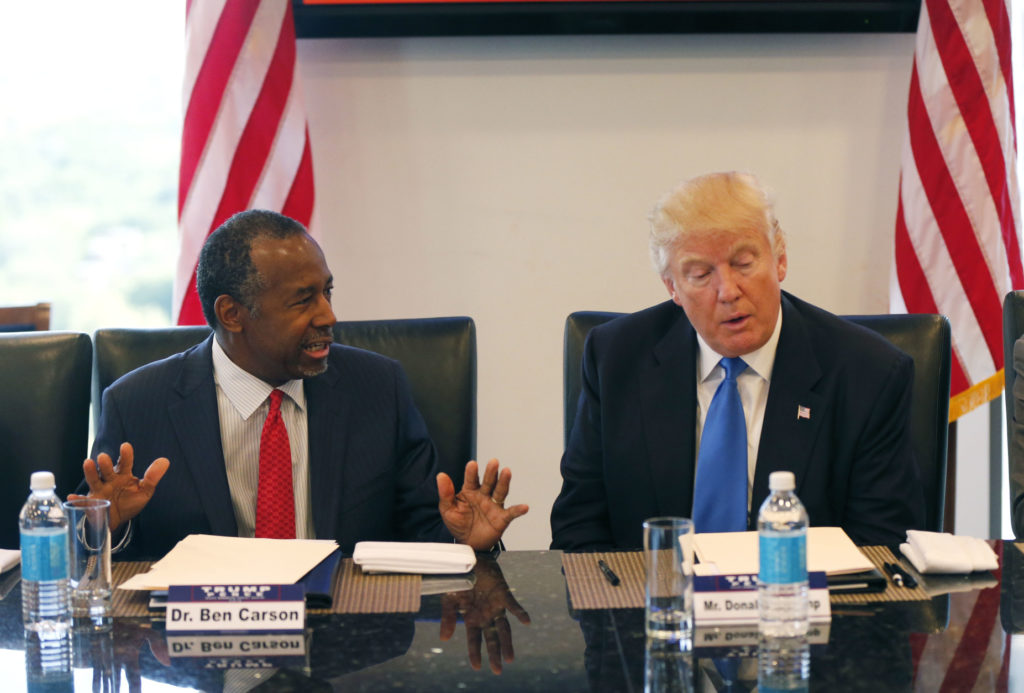
Retired neurosurgeon Ben Carson, picked by Donald Trump to run the Housing and Urban Development Department, has often recounted his childhood as the son of a single mother in inner-city Detroit. Carson has not said whether his family ever lived in federally funded housing or received Section 8 subsidies to help pay rent, but as a political figure he has criticized such public assistance programs for creating “dependency” on the government among low-income minorities. “I’m interested in getting rid of dependency, and I want us to find a way to allow people to excel in our society, and as more and more people hear that message, they will recognize who is truly on their side and who is trying to keep them suppressed and cultivate their votes,” Carson said in a speech at the Conservative Political Action Conference in 2015. In his 1996 autobiography “Gifted Hands,” Carson wrote of the humiliation he felt using food stamps from his mom to pay for bread and milk, and said he began to excel at school only after receiving a free pair of glasses that allowed him to see the lessons written on chalk boards. After Carson’s mother divorced his father, she received a small house in the settlement. But as her financial situation deteriorated, Carson and his siblings were forced to move into a succession of tenements and apartment buildings, some of which he described as having “hordes of rats” and “armies of roaches.” With the help of financial aid and scholarships, Carson attended Yale University and the University of Michigan Medical School before being the first African-American named as the head of pediatric neurosurgery at Johns Hopkins Children’s Center in Baltimore. There, he garnered national acclaim for directing the first surgery to separate twins connected at the back of the head. Carson’s rise to political prominence began with a 2013 speech at the National Prayer Breakfast, where he gave a withering critique of the modern welfare state and the nation’s overall direction while President Barack Obama was seated just feet away. During the 2016 Republican presidential primary, Carson’s inspirational life story, Christian faith and anti-establishment message briefly catapulted him last year ahead of Trump and other rivals in opinion polls. But his success on the campaign trail quickly crumbled amid questions about whether elements of his rags-to-riches autobiography were exaggerated or fabricated – including a purported childhood fit of rage he tried to stab his best friend in the belly only to be foiled by a belt buckle. Carson’s business dealings also faced scrutiny, including his ties to a wealthy Pittsburgh dentist whom he helped avoid prison time for felony health care fraud. The Associated Press first reported last year that Carson invested millions of dollars in real estate deals with Alfonso A. Costa, whose dentistry license was revoked following a felony conviction. According to required financial disclosure forms he filed in 2015, Carson his wife made between $200,000 and $2 million a year from those real estate investments. Costa also served on the board of Carson’s charity, the Carson Scholars Fund, which provides college scholarships to children in need. Records show Carson appeared as a character witness at his friend’s 2008 sentencing hearing, pleading with the judge for leniency. Though he faced up to 10 years in prison, Costa received a greatly reduced sentence of one year of house arrest served in a suburban mansion. Yet in his 2013 book “America the Beautiful,” Carson called for severe penalties for those convicted of health care fraud, including at least a decade in prison and “the loss of all of one’s personal possessions.” Republished with permission of the Associated Press.
Donald Trump’s call inspires hope in Taiwan, concern in Beijing
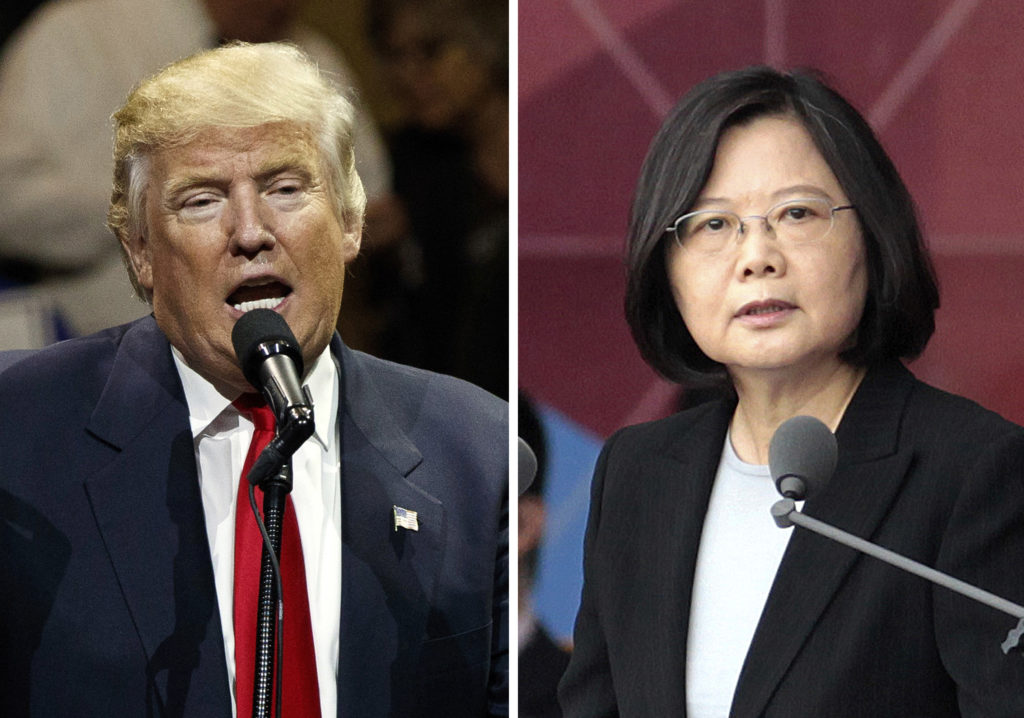
With a 10-minute phone call and two tweets, Donald Trump inspired banner headlines and renewed hopes across Taiwan for a stronger partnership with the United States, while also inflaming the complex relationships between the U.S., mainland China, and the self-governing island China regards as a renegade province. Whether the U.S. president-elect meant to jump into the generational fight between China and Taiwan remains an open question. But by speaking to Taiwanese President Tsai Ing-wen, Trump upended four decades of American foreign policy and engaged China directly on the issue of Taiwan, which Beijing has threatened to reclaim by force if necessary. No American president or president-elect has publicly spoken to Taiwan’s leader since the U.S. ended their formal diplomatic relationship in 1979. Four of his words drew particular attention in Taiwanese newspapers: Trump’s reference, in a follow-up tweet, to Tsai being “the President of Taiwan.” The phrase is far from benign for China, which regards any reference to a Taiwanese president as an unacceptable acknowledgement of Taiwan’s statehood. Official Chinese pronouncements typically refer to the Taiwanese president as “the Taiwan regional leader.” Chinese leaders have indicated they dislike Tsai, who was elected in January from a pro-Taiwan independence party and became the island’s first female president. An editorial from the state-run China Daily newspaper admonished Tsai and said the call would “bring nothing substantial but illusionary pride.” As for Trump, the newspaper said the incident “came as a striking move,” but was not as important as “it seems to be.” Taiwanese are generally considered to support independence or the status quo, in which China and Taiwan maintain robust social and economic exchanges while the island retains its democracy and de facto independence, over unification with China. Chinese President Xi Jinping, however, has warned that the issue of unification cannot be put off indefinitely. Yang Chih-kai, a 22-year-old university student at Taiwan’s Tamkang University, said Saturday that the call raised Taiwanese hopes for a stronger relationship with the United States. “People will think that the U.S. will keep on helping Taiwan protect itself against China’s threat,” Yang said. Chen Chun-hao, a 43-year-old designer, said Trump might “bring more help” to Taiwan now that both sides had opened a dialogue. “I believe that this could help Taiwan in its international status and its global situation,” Chen said. Kao-cheng Wang, dean of Tamkang University’s college of international studies, said he believes Trump might increase American military exports to Taiwan, over Beijing’s vociferous opposition, and try to strengthen economic ties between the two sides. “Trump will not be restricted by the established foreign policy,” Wang said. “The diplomatic policy may be flexible after he takes office.” China cut off diplomatic contact with Taiwan in June, one month after Tsai took office, accusing her of refusing to endorse the concept that Taiwan is a part of China. Last month, Xi met with Taiwan’s opposition leader, Nationalist Party Chairwoman Hung Hsiu-chu. Zhou Qinfen, a retiree from China’s eastern Jiangsu province visiting Beijing on Sunday, echoed several other Chinese interviewed who said they consider Taiwan to be an inextricable part of China. “If an American president who has only been recently elected starts opposing the unity of China, the people of China will never agree with that,” she said. The Taiwanese presidential office said Trump and Tsai discussed issues affecting Asia and the future of U.S. relations with Taiwan. Tsai also told Trump that she hoped the U.S. would support Taiwan in its participation in international affairs, the office said, in an apparent reference to China’s efforts to isolate Taiwan from global institutions such as the United Nations. Taiwan’s presidential office spokesman Alex Huang said separately that Taiwan’s relations with China and “healthy” Taiwan-U.S. relations can proceed in parallel. “There is no conflict (in that),” he told reporters in Taipei on Saturday. After Chinese Foreign Minister Wang Yi blamed Taiwanese leaders Saturday for playing a “small trick,” China said it would issue a diplomatic complaint with Washington. That is likely only the beginning of China’s response, said Douglas Paal, a former director of the American Institute in Taiwan, which unofficially represents U.S. interests in Taipei. Wang’s comment “is intended to give time for Trump to back away from or desist from moves to elevate treatment of Taiwan,” said Paal, now vice president for studies at the Carnegie Endowment for International Peace. “China will watch carefully to see what he does. But Taiwan will be seen as in need of some form of punishment.” One potential move for China is to apply new pressure to the 22 states that have formal diplomatic ties with Taipei, Paal said. Most of the world and the United Nations already recognize Beijing as the official government of China. What happens next will hinge on whether the call is seen as a “complicated accident” or an intentional signal of new policy, Paal said. “Beijing will watch closely to see which it is,” he said. “But until someone from Trump Tower explains further, it is unknowable.” Republished with permission of the Associated Press.
Donald Trump nominates Ben Carson as Housing and Urban Development secretary

Palm Beach neurosurgeon and former Republican presidential candidate Ben Carson is Donald Trump‘s pick to be secretary of Housing and Urban Development. Trump’s transition office announced the nomination Monday, bringing his once rival but early supporter into the cabinet discussion for his administration. “I am thrilled to nominate Dr. Ben Carson as our next Secretary of the U.S. Department of Housing and Urban Development. Ben Carson has a brilliant mind and is passionate about strengthening communities and families within those communities,” Trump stated in a news release. “We have talked at length about my urban renewal agenda and our message of economic revival, very much including our inner cities. Ben shares my optimism about the future of our country and is part of ensuring that this is a presidency representing all Americans. He is a tough competitor and never gives up.” “He is a tough competitor and never gives up.” Carson ran a up-by-your-bootstraps campaign that placed him briefly among the top challengers to Trump’s steamroll primary bid last winter. Frequently, Carson spoke of finding ways to get people, particularly African-Americans such as himself, out of government-supported lives. His conservative views also extended to science, as he has questioned tenants of science ranging from evolution to the Big Bang Theory, leading Democrats to ridicule him widely. A Detroit native, Carson, 65, is a retired neurosurgeon, educated at Yale University and trained as a doctor the University of Michigan. He served as director of pediatric neurosurgery at Johns Hopkins Hospital in Maryland and retired in Florida. After dropping out of the presidential race in March, he quickly endorsed Trump in a news conference, declaring they had buried their hatchets. That news conference sparked immediate talk of the prospect Carson might serve in a Trump administration. Carson said both he and Trump committed to working together if Trump won. “I am honored to accept the opportunity to serve our country in the Trump administration,” Carson said. “I feel that I can make a significant contribution particularly by strengthening communities that are most in need. We have much work to do in enhancing every aspect of our nation and ensuring that our nation’s housing needs are met.”
Democrats aim to rebuild the blue political wall in Midwest

With the dust now settled from the election, Democrats are looking to rebuild the political “blue wall” of traditionally Democratic upper Midwest and Great Lakes states that Republican Donald Trump captured with an appeal to white, working-class voters. Hillary Clinton‘s failure to hold key blocs of these voters helped seal Trump’s stunning electoral victory and leaves Democrats with a gaping, perhaps long-term, hole in the party’s national battle front. Trump boasted of his accomplishment at a post-election rally in Ohio. The president-elect crowed: “We didn’t break it, we shattered that sucker. We shattered it, man. That poor wall is busted up.” Trump carried Michigan and Pennsylvania, where Democratic nominees had won the previous six presidential elections. Trump also won Wisconsin, carried by Democrats in seven straight tries, and Iowa, carried just once by a Republican over the same period. In each, Trump vastly outperformed 2012 GOP nominee Mitt Romney in rural areas, while also seizing more typically Democratic-voting small cities and working-class suburbs. Should Democratic voting continue to lag behind Republicans in midterm elections, as it did in in 2014, the results could be devastating in two years when the party will defend Senate seats in Michigan, Wisconsin and Pennsylvania, and try to retake governorships in Iowa, Michigan and Wisconsin. “Democrats suffered the consequences of apathy and selective amnesia over the past midterms and arrogance over the presidential electorate,” said Haley Morris, a senior adviser to Democrat Gary Peters‘ Michigan Senate campaign, among the Democrats’ few 2014 victories in the region. “We got walloped across the Midwest in 2010 and 2014. Democrats had a glimpse of what the results could look like without Barack Obama on the ticket and ignored it.” Mark Jefferson, the Republican National Committee’s Midwest regional political director, said the GOP consistently focused on “blue-collar Reagan Democrats, who were heavily trending toward Trump.” County-specific, unofficial national voting data tabulated by The Associated Press shows Clinton received fewer votes than Trump in places Democrats had banked on for consecutive elections, and even decades, such as Dubuque County, Iowa. Trump edged Clinton by fewer than 1,000 votes in this northeast Iowa county known for its small-city namesake on the Mississippi River and its once thriving manufacturing economy. Trump became the first Republican to carry Dubuque County since Dwight D. Eisenhower in 1956. Clinton’s 22,774 Dubuque County total fell roughly 6,000 fewer short of Obama’s 28,768 in 2012, and more than 1,000 behind his 23,791 in 2008. Dubuque’s Rebecca Thoeni, a lifelong Democrat until recently, said Clinton did not seem to reach out to her or her peers in 2016. “Then I saw Donald Trump, and he got out there and showed he was serious about keeping jobs,” said Thoeni, who attended a Dubuque Trump rally in January. “He explained things in layman’s terms. That’s what changed me.” Thoeni’s is a scenario that echoed loudly around the country, where six in 10 white women without college degrees said they voted for Trump, according to exit polls conducted for The Associated Press by Edison Research. The rate was even higher among white, non-college educated men. And it played out in the thousands in Macomb County, Michigan, home to 10 percent of the state’s voters. After railing for months against the North American Free Trade Agreement, enacted under President Bill Clinton, Trump won Macomb by 48,000 votes. Clinton received 176,238 votes, compared with Obama’s 208,016 in 2012 and 223,754 in 2008. “In counties decimated by trade deals, decades of talking points don’t pay the bills,” said Robert Becker, who ran Vermont Sen. Bernie Sanders’ winning campaign for the Michigan Democratic presidential 2016 primary. “For the party’s future, we have to be honest that the jobs being created in the country aren’t being created in this part of the country.” The pattern held in Wisconsin too, where Trump won fewer votes than Romney did in suburban Milwaukee and where Trump’s criticism of Gov. Scott Walker worked against him. However, he carried the state in part by winning places like Racine County, part of a former union-heavy industrial corridor between Milwaukee and Chicago. Trump received about 4,000 votes more than Clinton in Racine County. Clinton’s 42,506 were more than 10,000 off Obama’s 53,008 in 2012 and 53,405 in 2008. In Pennsylvania, Trump similarly won Erie and Luzerne counties, smaller metropolitan areas than sprawling Philadelphia and its suburbs, but with a higher white working-class population and unemployment higher than the state average. Democratic presidential candidates had carried both counties in the past six consecutive elections. Trump beat Clinton in Luzerne County – childhood home of Vice President Joe Biden – 78,303 to 52,092. In the final weeks, Clinton focused on emerging Democratic states such as Arizona and North Carolina. She lost both. Clinton did not have ties to working-class white voters as strong as those of her husband, who had been governor of Arkansas, said political historian Mary Frances Berry of the University of Pennsylvania. Berry, who has also worked for Democratic candidates, said before the election that Hillary Clinton was not contesting Trump in blue-collar country. The Democratic Party is seen by ordinary, working people as “caring about the cultural, managerial and professional elite,” she said, “not about them.” Republished with permission of the Associated Press.
Donald Trump’s inauguration set to test nation’s readiness to heal
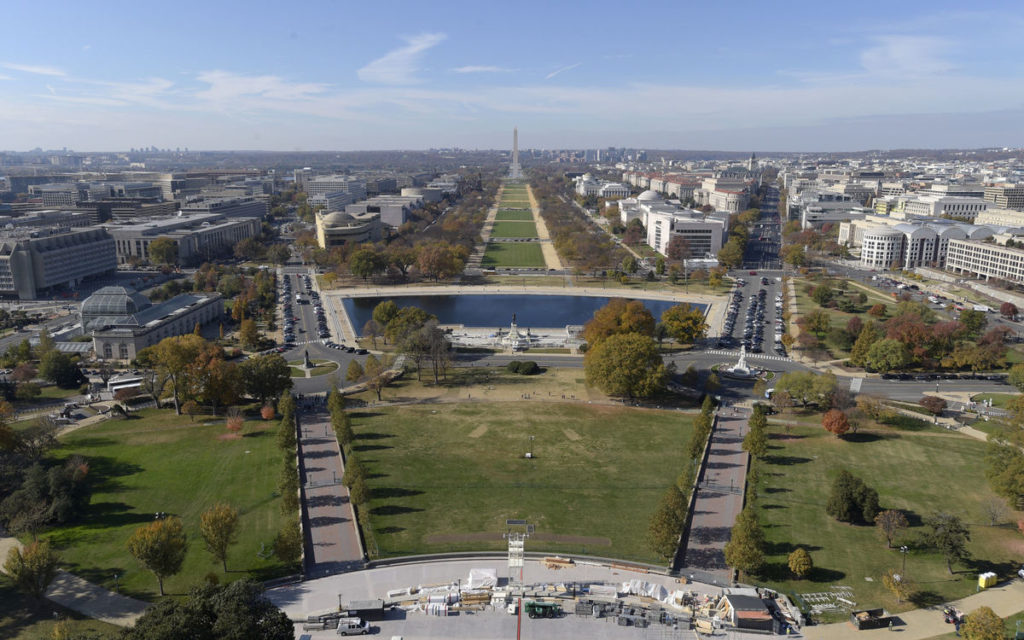
One thing you can count on during inauguration season in Washington: People of all stripes will find a reason to show up — whether it’s to celebrate or commiserate. There are parties and protests to attend, stars to gawk at, receptions to be worked, deals to be done, drinks to be consumed. Less than two months out from Inauguration Day, there’s a different dynamic surrounding the planning for Donald Trump‘s swearing-in than the unbridled enthusiasm that swirled around the installation of the first black president in 2008. Crowd expectations are down. Fewer A-list celebrities are likely to descend. Hotels still have rooms to be rented. But congressional offices are maxing out on ticket requests for the Jan. 20 swearing-in. Trump’s inaugural committee is wooing big donors with candlelight dinners, exclusive luncheons and premier access to balls. Interest groups are lining up sideline events. And among those still mourning Hillary Clinton‘s loss, there is plenty of counter-programming afoot, including plans for a giant women’s march aimed at sending a defiant message to the incoming president. Before the election, District of Columbia planners set an early estimate of 800,000-900,000 people for this year’s inauguration and they haven’t revised that number yet, according to Christopher Geldart, director of D.C.’s Department of Homeland Security and Emergency Management. But there’s scant expectation of replicating the 1.8 million people who descended on Washington for Barack Obama‘s first inaugural. Nor will Hollywood turn out as it did for Obama, whose two inaugurals attracted the likes of Beyonce, Bruce Springsteen, Usher, Jamie Foxx, Jay-Z, Oprah Winfrey and many more A-listers. “More than any election we’ve seen in a very long time, the Hollywood community was really behind Hillary, and a lot of people put their reputations on the line,” says longtime Hollywood publicist Howard Bragman. “Clearly those are people who are going to be taking their Xanax and Valium that day and staying in bed with the covers over them.” But Bragman said there still will be Republican-leaning celebrities who turn out for Trump — and a larger contingent of Hollywood types who show up for counter events like the women’s march planned for the day after Trump’s inauguration. While demand for hotel rooms and other venues is slower than at this point four and eight years ago, hoteliers remain “guardedly optimistic,” according to Elliott Ferguson, president of Destination DC, the city’s tourism bureau. Some hotels that set up four-day-minimum inaugural packages are rethinking that model, hoping to capture more business from those headed to Washington for the women’s march. Hotels are noticing “more rooms being picked up on Saturday than on Friday,” Ferguson says, suggesting strong interest in the march, whose organizers hope to draw 200,000 people to the city. Be advised: The president-elect’s own Trump International Hotel is sold out. Still available: For $2.5 million, the J.W. Marriott is offering a package that includes four presidential suites, 325 guest rooms, a craft bourbon barrel tasting reception, special inauguration menus, and a private viewing party on the terrace overlooking the parade route, among other amenities. There are always more affordable options through rental network Airbnb, which says local bookings for inauguration weekend spiked by 80 percent during the week after the election. Airbnb host Jade Moore, a video editor and Democrat, doubled her prices to $200 a night for inauguration weekend and says she’s booked both Trump supporters and women marchers for her Anacostia home. Before her inaugural guests arrive, she’ll be removing the toilet paper bearing Trump’s photo and the sign in her bathroom that invites people to “take a dump on Trump.” “I’m sure we’ll all get along,” says Moore, hopefully. “We don’t even have to bring up politics.” Not all hosts are that dispassionate. Another local Airbnb host, who asked that her name not be used to avoid getting in trouble for violating the company’s nondiscrimination policy, says she declined to accept a rental request that looked like it came from a Trump supporter and did accept a request that came from women planning to attend the march. Interest groups, too, are adapting in different ways. The Creative Coalition, a bipartisan advocacy group for the arts, has been holding inaugural balls for the past 20 years that typically attract top talent and celebrities. Coalition CEO Robin Bronk says interest in the ball remains strong and she expects it to feature top names once again. “It’s an event that hopefully will be part of the healing of the nation,” Bronk says. Plus, she adds, “I would venture to say a lot of business gets done at our ball.” The Human Rights Campaign, a gay rights organization that threw an “equality ball” eight years ago, this year is focused on making sure its members get involved in demonstrations, marches and other events on inauguration weekend and throughout the year, says spokeswoman Sarah McBride. The Latino Victory Project, which four years ago helped mount a huge Kennedy Center gala featuring Eva Longoria, George Lopez and other top Latino entertainers, this time is putting together events that put the Trump administration on notice that Latinos will fight “his hateful rhetoric and policies,” says project president Cristobal Alex. “I wouldn’t call it a party,” Alex said of this year’s yet-to-be-announced events. “What I would call it is a moment to learn” from the last election. Republished with permission of The Associated Press.
Focus of recount effort shifts to Michigan, Pennsylvania
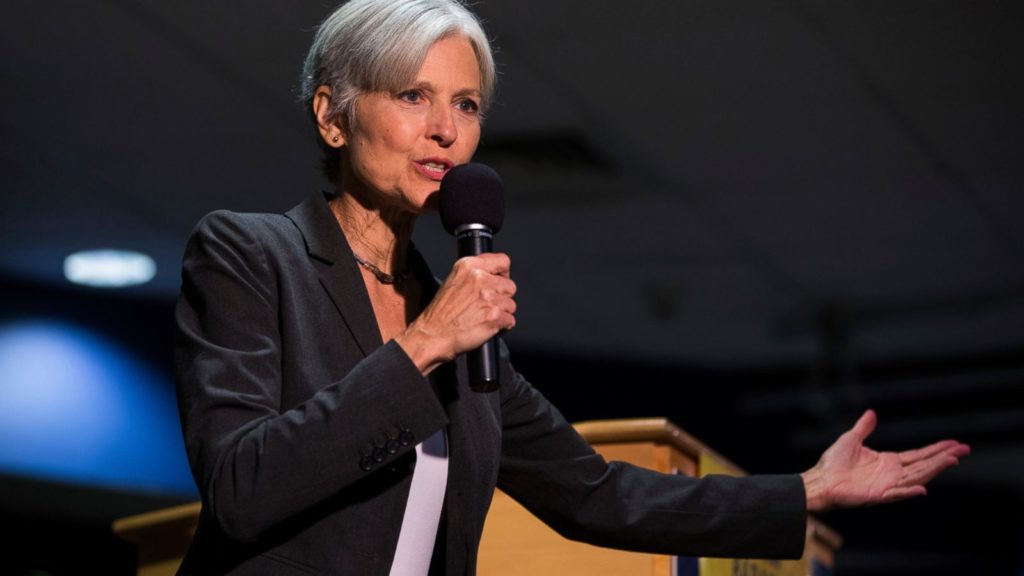
Presidential candidate Jill Stein‘s fight to force ballot recounts in three states focuses Monday on Pennsylvania, where her Green Party is seeking an emergency federal court order for a statewide recount, and Michigan, where a federal judge has ordered a hand recount to begin by noon. The recount is underway in Wisconsin. President-elect Donald Trump narrowly defeated Democratic candidate Hillary Clinton in all three states. The recounts were not expected to change enough votes to overturn the result of the election. Stein, who received about 1 percent of the vote in all three states, says her intent is to verify the accuracy of the vote. She has suggested, with no evidence, that votes cast were susceptible to computer hacking. She also scheduled a rally and news conference for Monday morning outside Trump Tower in New York. Here’s what’s going on in each state and in Nevada, where a partial recount of the race was requested by independent presidential candidate Roque De La Fuente: — WISCONSIN The recount began Thursday and continued over the weekend, with little change so far in the unofficial results as reported on election night. A federal lawsuit was filed late last week by a Trump voter and two super PACs seeking to stop the recount. The judge rejected a request to halt the recount while the lawsuit is pending and scheduled a hearing for Friday. State and local election officials have all said they don’t expect Clinton to surpass Trump in Wisconsin, where he won by about 22,000 votes. — MICHIGAN A federal judge late Sunday night in Detroit ordered a statewide hand recount of roughly 4.8 million ballots to start by noon Monday. Trump won the state by about 10,700 votes, or two-tenths of a percentage point, over Clinton. Stein argued that a law is unconstitutional that requires a break of at least two business days after the Board of Canvassers’ final action on a recount request. Judge Mark Goldsmith found that Stein had “shown the likelihood of irreparable harm” if the count was delayed even by two days and rejected the state’s arguments about the cost to taxpayers. Republican Attorney General Bill Schuette, the Trump campaign and super PACs have filed separate lawsuits asking state courts to prevent the recount, arguing that Stein, as the fourth-place finisher, is not “aggrieved” because she has no chance of winning in a recount. — PENNSYLVANIA The Green Party filed a federal lawsuit on Monday seeking a statewide recount – a move that came after the party on Saturday dropped a case set to be argued Monday in state courts. An updated count Friday by state election officials showed Trump’s lead shrinking to 49,000 from 71,000 over Clinton, out of 6 million votes cast, as more counties finish counting overseas ballots and settled provisional ballot challenges. That is still shy of Pennsylvania’s 0.5 percent trigger for an automatic statewide recount. Final counts are outstanding in some counties, but there are not enough uncounted votes to change the outcome, officials say. — NEVADA A recount of a sample of ballots has begun in Nevada at the request of De La Fuente. Clinton won Nevada and De La Fuente finished last, but he requested and paid about $14,000 last week for the recount, which he called a counterbalance to the review sought by Stein in Wisconsin. Nevada Secretary of State spokeswoman Gail Anderson said late last week that the recount of ballots from Carson City and Douglas, Mineral, Nye and Clark counties should be completed by Friday. If the sample shows a discrepancy of at least 1 percent for De La Fuente or Clinton, a full recount will be launched in all 17 Nevada counties. Clinton defeated Trump in Nevada by 27,202 votes out of 1.1 million votes cast. Republished with permission of the Associated Press.
Bradley Byrne: A bill that can save lives

I met a young boy named Gabe Griffin a few years back at Battleship Park in Mobile. His family and friends had organized a cross country bike ride that started in Oregon and ended on Alabama’s Gulf Coast. The goal of the ride was to raise awareness about Duchenne muscular dystrophy, a rare disease in young boys that causes your muscles to weaken rapidly. Despite suffering from Duchenne, Gabe was thrilled that day to be greeted by the University of South Alabama mascots, the Azalea Trail Maids, and local firefighters. I will never forget the smile on Gabe’s face on that special day. Gabe was on my mind last week as I cast my vote in favor of the 21st Century Cures Act. This bill brings health research and the drug approval process into the 21st Century in order to boost research into diseases, like Duchenne, that impact far too many families. The bill provides the National Institutes of Health with over $4 billion in new funding. Over $1 billion will go toward the new Precision Medicine Initiative to drive research into diseases, over $1 billion will go toward cancer research, and over $1 billion will go toward the BRAIN initiative to improve understanding of diseases, like Alzheimer’s. The 21st Century Cures Act also allows for the Food and Drug Administration (FDA) to expedite the approval process for breakthrough medical treatments, drugs, and devices. These reforms help cut through the red tape and bureaucracy that has limited the potential for important medical breakthroughs. The bill encourages innovation and research through a number of new strategies. For example, 21st Century Cures authorizes innovation prize competitions to advance biomedical science for diseases that are serious and represent a significant burden. The bill also creates a new “Next Generation of Researchers Initiative” to encourage younger students to enter the field of medical research. Another important reform is that 21st Century Cures empowers patients to take part in research and clinical trials. This change allows patients to voluntarily provide hospitals and research institutions with authorization to use their personal health data for research purposes. The bill also requires the FDA to incorporate patient input and experiences into their decision-making process. All of these reforms ensure that the United States remains a global leader in medical innovation, which in turn protects and helps create new jobs here at home. The bill also includes important reforms to update our nation’s mental health programs. Mental health reform has long been a priority for me, and I know these reforms will go a long way toward changing the way we treat mental illness in America. Another important issue addressed in the bill is the opioid prescription drug crisis impacting communities all across the country. Approximately 46,000 Americans die each year because of prescription drug abuse, so I’m pleased to report the bill includes $1 billion in new grants that can be given to states to help them combat opioid abuse. Importantly, all new spending in the bill is offset, and the Congressional Budget Office estimates the bill will actually result in government savings. The 21st Century Cures Act has been years in the making. Gabe, and many others who suffer from major diseases, have been traveling to Washington for over two years to advocate for this critical legislation. Legislation that gives them hope. It is not often that Congress passes legislation that can actually save lives, but that is exactly what the 21st Century Cures Act has the potential to do. Just as important though, it also gives hope to people like Gabe and his family that a cure can be found. And sometimes, hope is exactly what you need. • • • Bradley Byrne is a member of U.S. Congress representing Alabama’s 1st Congressional District.
Supreme Court seems concerned over race in redistricting
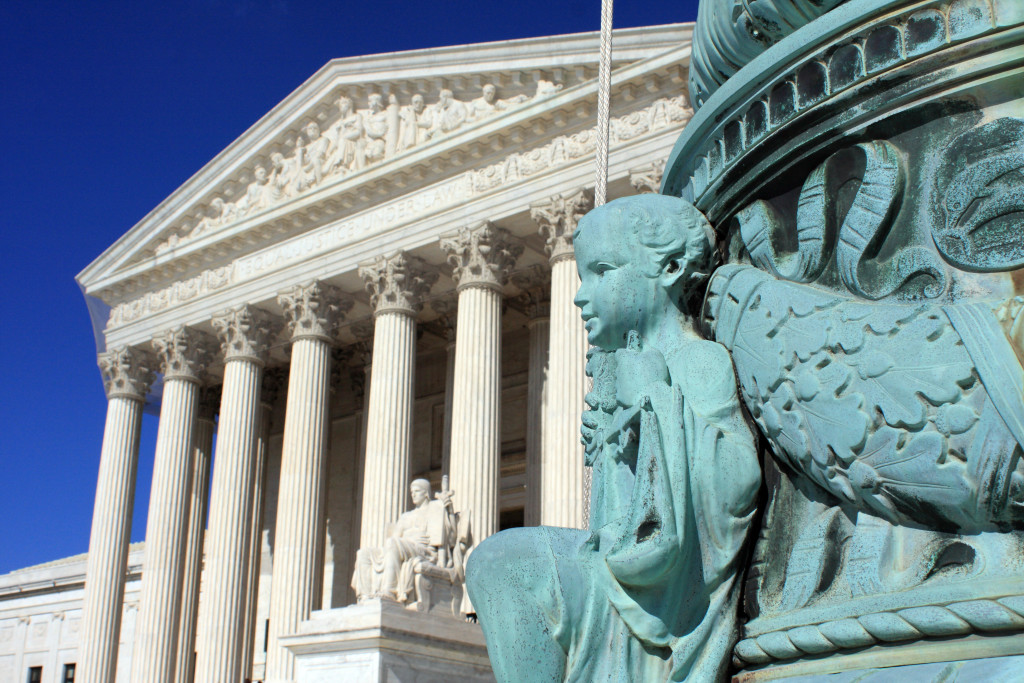
The Supreme Court seems concerned that race may have played too large a role in the drawing of electoral districts in Virginia, to the detriment of black voters. Several justices hearing arguments in the case on Monday suggested a lower court failed to apply the correct standard when it upheld new boundaries for 12 state legislative districts. The case is the first of two redistricting disputes the court was considering. In the second case, the state of North Carolina is challenging a lower court ruling that struck down two districts as unconstitutional because they relied too heavily on race. The claim made by black voters in both states is that Republicans created districts with more black voters than necessary, making neighboring districts whiter and more solidly Republican. Republished with permission of the Associated Press.
