
Right to the end, Donald Trump campaign spent less than Hillary Clinton’s
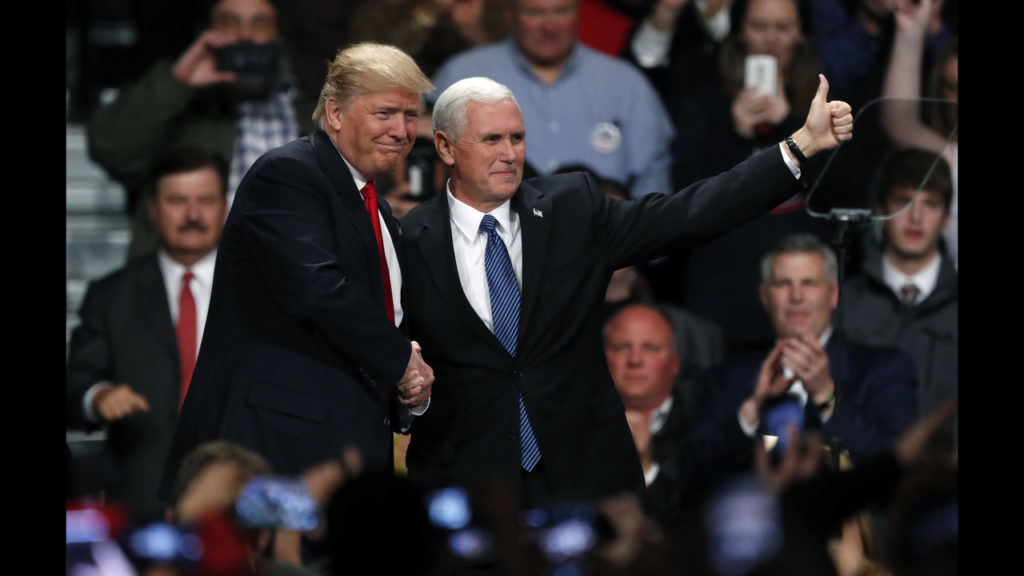
Donald Trump‘s campaign spent about $94 million in its final push for the White House, according to new fundraising reports filed Thursday. The Republican continued his campaign-long trend of spending far less than Democratic rival Hillary Clinton. Her campaign blew through almost $132 million in its closing weeks, according to reports filed Thursday with the Federal Election Commission. The latest reports cover Oct. 20 through Nov. 28. Over the course of the primary and general elections, the Trump campaign raised about $340 million. That included $66 million that the billionaire businessman contributed from his own pocket. The Clinton campaign, which maintained a longer and more concerted fundraising focus, brought in about $581 million. Brad Parscale, Trump’s digital director who was empowered with spending decisions across the campaign, credited strategic last-minute investments with helping propel the political newcomer to victory. Specifically, he told The Associated Press, the campaign and Republican Party spent about $5 million in get-out-the-vote digital advertising targeted in the final few days to Michigan, Wisconsin, Pennsylvania and Florida. That proved critical; some of those states were won by razor-thin margins. “You think, what if we hadn’t spent that?” Parscale said. “We might not have won.” Another investment that he said paid dividends was $7 million to air a two-minute “closing” television commercial. “Our movement is about replacing the failed and corrupt political establishment with a new government controlled by you, the American people,” he said as images from his rallies rolled across the screen. The final FEC report showed the extent of the Trump advertising splurge. The campaign spent nearly $39 million on last-minute TV ads and another $29 million on digital advertising and consulting work done by Parscale’s firm. Clinton’s campaign placed a far greater emphasis than Trump on television advertising, a more traditional way of reaching swaths of voters. She spent $72 million on TV ads and about $16 million on internet ads in the final weeks. The former secretary of state also spent more than $12 million on travel — about double what Trump spent. Clinton, who not only had a money advantage over Trump but a staffing edge, spent more than $4 million on a nearly 900-strong payroll. Still, Clinton’s top campaign aides have acknowledged in post-election appearances that it didn’t always spend money in the right places. Her campaign manager Robby Mook said at a gathering of political strategists and journalists last week at Harvard University that he regretted not putting more staff in Michigan. When the state certified its results — 20 days after the election— Trump had won by just under 11,000 votes. Outside groups that spent money on the presidential election also filed reports Thursday. Trump got help from the super political action committees Future 45, Make America Number 1 and Rebuilding America Now. Future 45 and a partner nonprofit that does not disclose donors spent late in the campaign but became Trump’s biggest outside investors. Las Vegas casino magnate Sheldon Adelson and his wife, Miriam, together gave $10 million to Future 45 in the final weeks of the campaign, the new reports show. Former wrestling executive Linda McMahon, who Trump named this week as head of the Small Business Administration, gave $1 million to the group in October. She’d earlier given $6 million to Rebuilding America Now. Make America Number 1 benefited from a $1 million donation by PayPal co-founder Peter Thiel, now an executive on the Trump transition team. On Clinton’s side, Priorities USA — which raised and spent more than any super PAC in history — landed $16 million in the final weeks of the campaign. That brought its total haul to about $192 million. Some of the group’s final seven-figure contributions came from its most loyal donors: media mogul Haim Saban and investors James Simons and Donald Sussman. The 2016 election is over — but the fundraising continues. The president-elect has raised millions of dollars since Nov. 8. That money is coming in mostly through purchased merchandise such as hats and ornaments and is paying for Trump’s “thank you” tour, which took him to Ohio and Iowa on Thursday. Republished with permission of The Associated Press.
Coal-state Dems threaten gov’t shutdown over aid for miners

Hours to a government shutdown, coal-state Senate Democrats blocked swift action on a stopgap spending bill over benefits for retired miners and pressed President-elect Donald Trump, a self-proclaimed coal champion, to intervene with Republicans. The House on Thursday easily approved the must-pass bill that would keep the government operating beyond Friday’s midnight deadline and through April 28. The vote was 326-96. But the bill stalled in the Senate as Democrats facing re-election in 2018, including West Virginia’s Joe Manchin, Sherrod Brown of Ohio and Bob Casey of Pennsylvania, fought for a one-year extension for the miners’ health benefits rather than the temporary, four-month fix in the bill. Trump won those three states last month with heavy support from working-class voters in coal and steel communities. Challenging another coal-state lawmaker – Majority Leader Mitch McConnell of Kentucky. – Democrats said their fight on behalf of miners was a matter of fairness, upholding a 1946 guarantee by President Harry S. Truman to provide miners lifetime health and retirement benefits. Manchin called the GOP proposal to temporarily extend health care benefits for about 16,500 retired union coal miners “horrendous” and “inhumane” and accused lawmakers of turning their backs on people who built the country and made it great. While Democrats do not want to shut down the government, they’re willing to do so to protect the miners, Manchin said. “You’ve got to stand for something or surely to God you’ll stand for nothing,” he said. Democrats called on Trump to uphold a campaign promise to help coal miners by persuading Republican leaders to adopt a broader bill that would protect health care and pension benefits for the next decade. The Republican-controlled Senate Finance Committee approved the $3 billion bill in September, but the measure has stalled in the full Senate. “Who’s for the working people? Where’s Donald Trump on miners?” asked Sen. Claire McCaskill, D-Mo, who also faces re-election in 2018. “Republicans are bragging about the kind of support they have from workers in coal country … and now are prepared to just extend their health care for (four) months,” said White House Press Secretary Josh Earnest. Missing in action on the latest fight were two Republicans – Ohio’s Rob Portman and Pat Toomey of Pennsylvania – who had backed the broader bill when faced with tough re-election fights. Without mentioning their names, Democratic Sen. Bob Menendez of New Jersey referred to their absence now that the two had comfortably returned to the Senate. “Members who were running for re-election got to go home and say … ‘we’ll take care of it when we come back after the elections.’ Well, here we are,” he said on the Senate floor. Aides to Portman and Toomey did not return repeated calls for comment. McConnell and other GOP leaders are wary of bailing out unionized workers, with some arguing that all coal miners should get the help. Some Republicans also say the bill could pressure Congress to offer similar help to other cash-strapped pension funds. “They’re not going to get what they want. They ought to actually be grateful for what they got,” said Sen. John Cornyn of Texas, the No. 2 Republican. But Brown said Democrats hope Trump, “in his words about Buy America and his talk about workers, will help us convince Republicans.” The dispute over the miners’ benefits was not the only one holding up action in the Senate as lawmakers sought to complete their work for the year. The House on Thursday cleared the government-funding bill and another bill authorizing hundreds of water projects, including measures to help Flint, Michigan, rid its water of poisonous lead, and one to allow more of California’s limited water resources to flow to Central Valley farmers hurt by the state’s lengthy drought. Sen. Barbara Boxer, D-Calif., vowed to filibuster the massive water projects bill, saying it favors corporate farmers over fishermen and endangered species. It appeared to be an uphill struggle, in part because her California colleague, Sen. Dianne Feinstein, favors the changes for the distribution of the state’s water resources. Democrats’ options are limited, especially since House members left for a three-week holiday and won’t consider changes to either bill. “If we can’t stand for working men and women in this country, we deserve what the American people think of us. We deserve the (low) ratings we get,” said Sen. Heidi Heitkamp, D-N.D., at a news conference with miners. Republished with permission of The Associated Press.
Steve Ryan: John Glenn, Senator and hero. Things the public didn’t always see.
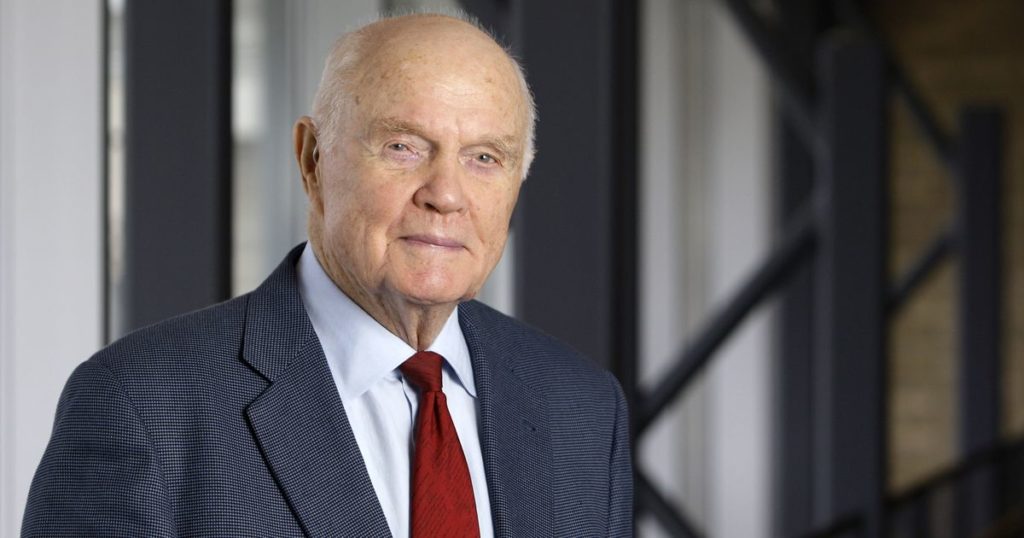
John Glenn is my hero and America’s hero, but he was also my boss. Sen. Glenn always acted with integrity: in his marriage to his sweetheart, in his devotion to his country, in his work with his colleagues. He was always a gentleman in the best sense. I had the good luck as a young child to have the measles during his February 1962 flight. We all marveled at his flight, and his coolness under pressure. Subsequently, we saw all the pictures of him and Annie with President Kennedy, Mrs. Kennedy and the brothers, particularly Bobby, and they all seemed the embodiment of Camelot. So, it was part of my dream to work for him, and I ended up as an advance man in his presidential campaign. As an advance man in his 1984 presidential campaign, I went to fly with him and work with him. The Senator had a way to remind folks about his heroism while being so ‘right stuff’ and self-deprecating at the same time. Joke 1 was his government contract joke: he was sitting atop the Atlas rocket waiting to be launched when he realized it had been awarded to the lowest bidder. Joke 2 was the hero and marriage joke: after his flight, a speaker was droning on about him and saying how there “were few truly great Americans.” When he and Annie were driving home, and the Senator started talking about this, and he claimed Annie responded: “John Glenn, there is one less Great American than you may think …” We all know that this incident was unlikely to ever have happened. All of us saw the Glenns as a model for how devotion in marriage could work. In a movie or real life, their love was a constant for each other and a lesson to all of us surrounding them. But the Senator’s modesty and calm at times masked his killer qualities. Opponents in war or politics knew a different Glenn. We should never forget that John Glenn was one of the youngest Corsair fighter pilots in the Pacific who flew really dangerous ground support missions for his fellow Marines in World War II. He followed this by flying jet fighters in Korea where he became known as “Magnet Ass,” said with affection and respect by his colleagues, for picking up so much shrapnel from enemy anti-air fire and from flying low to the ground supporting the troops. Glenn and the greatest baseball player of all time, Ted Williams, who also flew combat in two wars flew together the last days of the Korean War, and the Senator downed Migs with his Sabre. That same quality was on exhibit when the Senator made his Gold Star debate response: “In the primary race, his opponent contrasted his strong business background with Glenn’s military and astronaut credentials, implied Glenn had never met a payroll or held a “job.” Glenn’s impassioned response came to be known as the “Gold Star Mothers” speech. He told his opponent to go to a veterans’ hospital and “look those men with mangled bodies in the eyes and tell them they didn’t hold a job. You go with me to any Gold Star mother, and you look her in the eye and tell her that her son did not hold a job.” It won the Senate election. Well, like most presidential campaigns we ended in failure. We failed to get our Democratic Eisenhower the nomination he deserved, but campaign work was enough to raise me from being an Assistant U.S. Attorney to a swanky job as counsel to the Senator as Chair of what is now the Homeland Security and Governmental Committee in 1987. The Senator was doing what he always did–leading a worthy policy effort in success or failure. At leadership’s request, the Chairman took to the floor in a valiant and doomed attempt to raise the federal civil service wages, which had bottomed out at that time in comparison to the private Sector. But it was not a popular issue and he/we knew it would not succeed. It translated into hard seat time for the new Committee Chair, being forced to walk the plank for his colleagues. My first important time on the Senate floor sitting in a side chair with Senator Glenn was to me the highest honor accorded a government lawyer. Senator Glenn was pretty popular with his colleagues, and Senators spoke out one after another against civil service raises then came over to tell the Senator they would like to be with him but couldn’t. Finally, after several hours of this, I could see the warning signs: the Senator’s neck and bald spot started to turn red during those conversations. I had learned this was about the only visible sign his cool, control, and laconic fighter pilot calm might desert him. Finally, he turned to one Senator and said quietly (so only the Senator could hear) ‘do what’s right for the country.’ The Senator on the receiving end of that statement had a shocked look on his face, and left pretty quickly. That was the only time in the years I worked for Senator Glenn that I saw him rebuke a colleague. One time, a very old Senator, who was on occasion losing his grip on memory, chewed Senator Glenn out for a position he had taken on the Armed Services Committee. It was harsh and un-senatorial. Barely an hour later we were back in his Hart office, on a late evening, and the Senator called and asked for a favor. And Glenn agreed. I was incredulous. My Irish was up from the earlier encounter, and I asked the Senator why he did it—he laughed and said the other Senator no longer remembered the chewing out, and it did no harm to help him on the matter at hand. Pure Glenn. Generous beyond expectation. The Senator put together a really respectable body of public policy accomplishments, including addressing nuclear non-proliferation issues that still dog our security. He insisted
Donald Trump praises Michigan GOP while weighing RNC chairman call
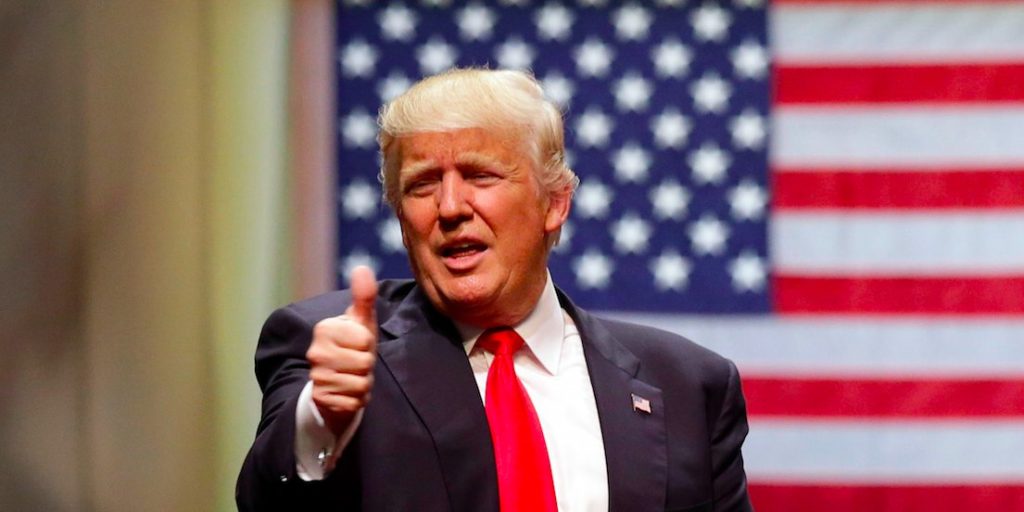
Donald Trump may have more than just his gratitude to offer in Michigan when he visits the state that capped his stunning presidential victory last month. Michigan Republican Party chairwoman Ronna Romney McDaniel is a leading contender for the Republican National Committee’s chairmanship. There was no immediate sign from Trump’s transition team Thursday that the billionaire planned to offer McDaniel the leadership post. The niece of 2012 GOP presidential nominee Mitt Romney is not the only contender. Rising national star Nick Ayers, a senior aide to Vice President-elect Mike Pence, also has vocal support from influential GOP figures. Whoever takes the post will face immediate pressure to hold onto control of Congress in 2018. Along with Trump’s public admiration, McDaniel has factors working in her favor, not the least of which is representing Republicans in a state that, until last month, was carried by Democrats in six consecutive presidential elections. McDaniel is scheduled to speak at a victory rally Trump plans to attend Friday in Grand Rapids. “Ronna’s record speaks for itself. The president-elect owes his success to the Rust Belt. Having a national party chair from here makes sense,” said Bob LaBrant, a Michigan GOP activist and former political director of the Michigan Chamber of Commerce. As Trump assembles his Cabinet, the party’s leadership is also his to recommend. Republican National Committee Chairman Reince Priebus, whom Trump has asked to serve as White House chief of staff, was a close adviser to Trump during the campaign. Priebus’ legacy – investing early in campaign staff and technology in key states – ahead of the 2018 midterms and 2020 presidential election is something an existing RNC member, as McDaniel is, would be inclined to follow, party insiders say. Priebus has been publicly silent on whom he’d like to succeed him. But Trump singled her out for praise during a packed New York City fundraiser Wednesday. Top supporters and donors gathered for a private thank-you session, whose attendees included McDaniel, Michigan Attorney General Bill Schuette and about 1,000 others. “The president-elect gave a big shout-out to Ronna” and said she had a “big opportunity,” Schuette recalled of Trump’s comments. Only a handful of individuals were mentioned by name, Schuette said. “I think that’s pretty significant.” Despite her uncle’s sharp criticism of Trump, the 43-year-old McDaniel fully endorsed the nominee who frustrated many in his party’s establishment. And still she’s widely admired across the RNC’s membership, several RNC members said. “I hold her in high regard,” Arizona committeeman Bruce Ash said. Other assets supporters cite: She is a quick study, has a solid fundraising reputation and has a strong Republican pedigree. Besides Uncle Mitt, the Michigan Romneys include her grandfather, the late former Gov. George Romney. After executing Michigan’s GOP election plan to victory, she next converted the state GOP into Trump’s recount legal team. She retained top lawyers who persuaded the state appeals court this week to deny Green Party candidate Jill Stein’s call for a recount. McDaniel did not requests for comment Thursday but told The Associated Press last month she’d be “interested in whatever Mr. Trump wants.” Some close to Trump are recommending Ayers, who has credentials that seem to defy his 34 years. Ayers was the Republican Governors Association executive director in 2010, a successful year for Republican state executives, and was a key adviser to Pence’s 2012 governor’s race. He joined Trump last summer, mainly helping Pence. He now advises Pence, who is chairman of the transition. “Trump allies are encouraging Nick to run,” Trump spokesman Jason Miller told The Associated Press this week. Ayers counts heavyweights former Mississippi Gov. Haley Barbour, a former RNC chairman, former Texas Gov. Rick Perry and incoming Missouri Gov.-elect Eric Greitens among his backers. “The fact is Nick wins,” said Greitens, whom Ayers advised during his 2016 campaign. “I am 100 percent behind Nick Ayers.” The showdown between Romney and Ayers has the makings of the first power struggle within Trump’s budding administration. Then again, the unpredictable Trump could always surprise. Others said to be interested: Matt Pinnell, RNC liaison to state parties; David Bossie, committeeman from Maryland; David Urban, Pennsylvania GOP operative. One name won’t be in contention. New Jersey Gov. Chris Christie, who had expressed interest, is no longer considering seeking the party chairmanship, Christie aides said Thursday. Republished with permission of The Associated Press.
Friends and foes examine Jeff Sessions’ record on civil rights
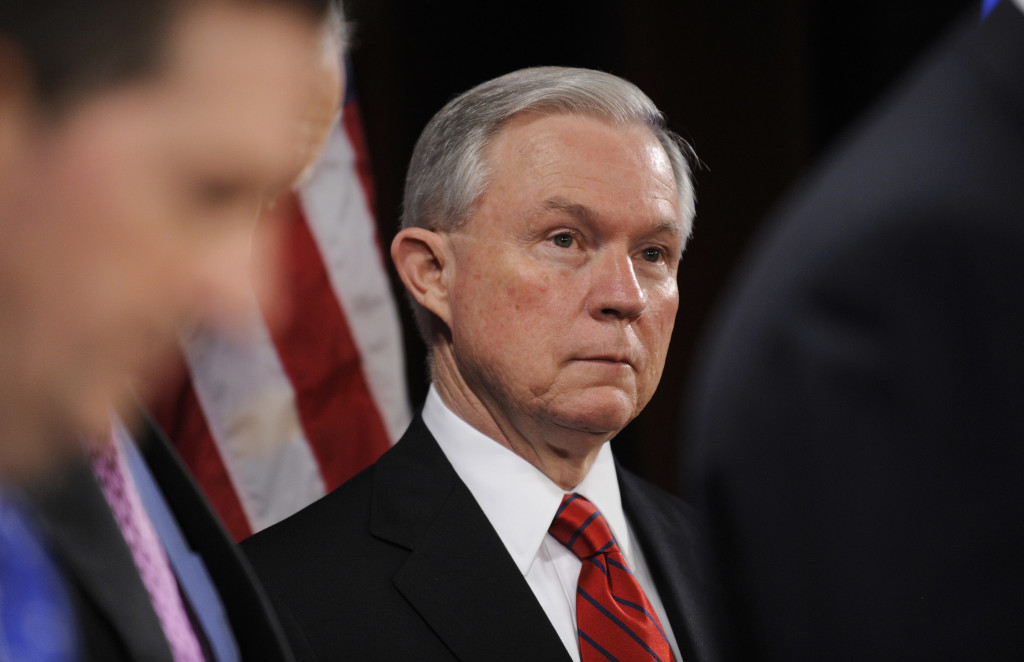
President-elect Donald Trump has raised more than a few eyebrows with his picks for top Cabinet positions, but the nomination of Alabama Sen. Jeff Sessions for Attorney General has likely drawn the most scrutiny. Since his name was put forward for the job last month, dozens of articles have detailed everything from his tenure as Alabama’s Attorney General to his failed nomination to a federal judgeship in the 1980s. Here’s a roundup of the latest blogs, articles and think pieces on Trump’s controversial pick. Sherrilyn Ifill of New Republic wrote an article about the Trump administration’s plan to tout Session’s background as a “civil rights advocate” during the confirmation process. “This public relations strategy has become the new normal: take the most glaring weakness of your candidate and present it through the looking glass,” she writes. “And so Jeff Sessions, lifelong civil rights foe, becomes a civil rights advocate.” The article goes on to detail some well-tread, yet troublesome parts of Sessions’ career, such as when he prosecuted the Marion Three, and asserts that if the 20-year Senator “is a civil rights advocate, he has kept it well-hidden from civil rights lawyers and activists.” In The Atlantic, Adam Serwer has a hard time finding proof for some of the pro-civil rights highlights on Sessions’ resume, including the claim Sessions made that he filed up to 30 lawsuits to desegregate schools and political organizations. “Searches of the legal databases Westlaw and PACER found no evidence that any new school-desegregation lawsuits were filed in Alabama’s Southern District by Sessions between 1981, when Sessions became U.S. attorney in Alabama, and 1995, when he became Alabama attorney general,” Serwer writes. According to their findings, Sessions name would have been on filings prepared by the civil rights division while he was U.S. Attorney, though that doesn’t mean he had anything to do with a case. “All this shows is that Sessions didn’t completely refuse to participate in or have his name on pleadings in cases that the civil rights division brought during his tenure. But nobody, to my knowledge, has ever made such a claim about him,” said Michigan Law professor Samuel Bagenstos. Paul Mirengoff of PoweLineBlog attacks the notion that Sessions is a racist by noting that “African-Americans who know him well aren’t buying in.” Mirengoff quotes Donald Watkins, who attended law school with Sessions, as posting on Facebook that “Jeff was a conservative then, as he is now, but he was NOT a racist.” Watkins has also said he regrets not coming forward 30 years ago to defend Sessions during his failed bid at a federal judgeship. The blog post also brings up Alabama State Sen. Quinton Ross, a black Democrat who is publically backing Sessions’ nomination. Freelancer James Higdon explores Sessions’ views on marijuana enforcement in a piece for Politico, saying “with little more than the stroke of his own pen, the new attorney general will be able to arrest growers, retailers and users, defying the will of more than half the nation’s voters, including those in his own state where legislators approved the use of CBD.” Sessions hasn’t said what plans are for drug enforcement, though if aggressive enforcement is the name of the game, he could send a $6.7 billion industry into a tailspin. Bill Piper treads similar ground in a piece for U.S. News & World Report, this time tying Sessions views on drugs to his record on civil rights. “Sessions’ record shows he’s likely to escalate the war on drugs by undermining civil rights, stifling state-level marijuana reforms that have drastically reduced arrests in communities of color and rolling back much of the progress in policing and criminal justice reform made by the Obama administration,” he writes.
Donald Trump picks fast food executive Andrew Puzder for Labor
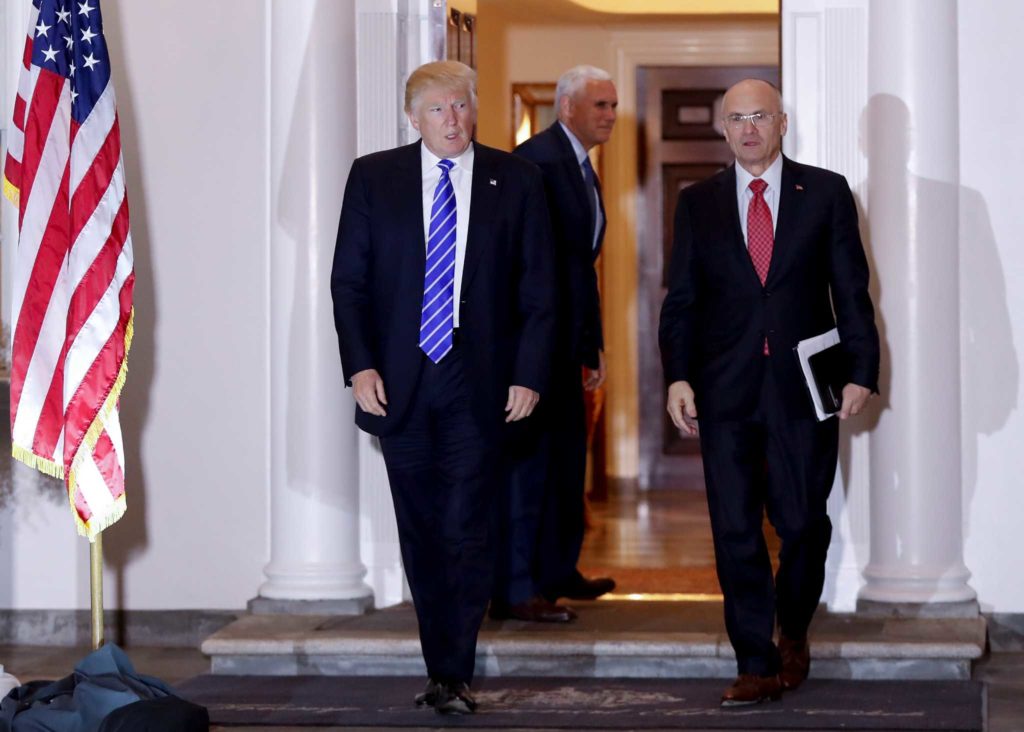
President-elect Donald Trump plans to add another wealthy business person and elite donor to his Cabinet, saying he would nominate fast-food executive Andrew Puzder as labor secretary. Puzder heads CKE Restaurants Holdings, the parent company of Carl’s Jr., Hardee’s and other chains. In 2010, he published a book called “Job Creation: How it Really Works and Why Government Doesn’t Understand It.” “Andy will fight to make American workers safer and more prosperous by enforcing fair occupational safety standards and ensuring workers receive the benefits they deserve, and he will save small businesses from the crushing burdens of unnecessary regulations that are stunting job growth and suppressing wages,” President-elect Trump said in a statement. Puzder, in the same statement, said he was honored “to help President-elect Trump restore America’s global economic leadership.” The Californian was one of Trump’s earliest campaign financiers, serving as a co-chairman of his California finance team and organizing fundraisers well before most major donors got on board with the eventual Republican nominee. Together with his wife, Puzder contributed $150,000 in late May to Trump’s campaign and Republican Party partners, fundraising records show. As one of Trump’s most outspoken defenders, Puzder frequently appeared on cable news and Twitter to talk up the benefits of having a business leader in the White House. A week after Trump’s election, Puzder said he agreed with Trump’s aim to ease business regulations. “We’ve reached the point where overregulation is doing meaningful damage to our businesses,” he said last month at the Restaurant Finance & Development Conference in Las Vegas, citing high labor costs, increased health care costs and “political and social” policies as hindrances. Union leaders decried Puzder as a secretary who would look out for millionaires – but not workers. AFL-CIO President Richard Trumka said in a statement that Puzder’s “business record is defined by fighting against working people.” Incoming Senate Minority Leader Charles Schumer said there’s reason to be skeptical about Puzder. “Turning the Labor Department over to someone who opposes an increase in the minimum wage, opposes the overtime rule that would raise middle class wages, and whose businesses have repeatedly violated labor laws might be the surest sign yet that the next cabinet will be looking out for the billionaires and special interests, instead of America’s working class,” Schumer said in a statement. Trump’s selection won praise from the National Retail Federation, however. “Andrew Puzder is someone with the real-world experience to understand workforce issues and how jobs are created,” said David French, NRF’s senior vice president for government relations. Trump’s recent appointments have reflected his desire to turn to business leaders – who also were campaign donors. Trump tapped former WWE chief executive and top campaign contributor Linda McMahon to lead the Small Business Administration. He also selected his campaign’s national finance chairman Steven Mnuchin, a former Goldman Sachs executive and hedge fund investor, as Treasury secretary. Puzder visited with Trump several times since the election, including a meeting Wednesday afternoon at Trump Tower. He has long been a reliable GOP donor. He was a major financier for 2012 GOP nominee Mitt Romney and has remained close to him. At Romney’s annual donor summit in June, Puzder was one of just a few attendees who aggressively promoted Trump to the dozens who were more squeamish about their party’s new star. He told The Associated Press at the Republican National Convention in late July that he enjoyed the challenge of raising money for Trump, saying he often sought common ground with reluctant GOP donors by talking up Trump’s children. “If he’s such an evil villain,” Puzder said he would tell would-be donors, “how do you explain the kids?” Republished with permission of The Associated Press.
Martin Dyckman: Of Donald Trump and Abe Lincoln
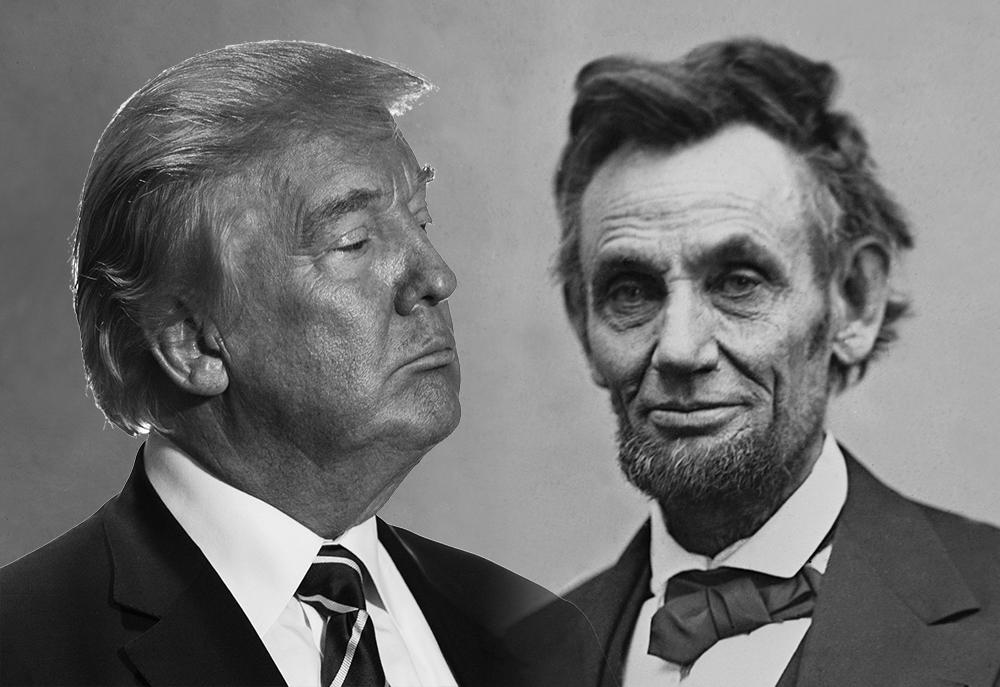
Donald Trump, who stays up late watching himself being satirized on “Saturday Night Live” and snarling at his critics on Twitter, could make better use of his time by reading some American history—specifically, about Abraham Lincoln. Granted, “Trump” and “Lincoln” don’t seem to belong in the same sentence, but there are parallels, and a distinction, that would be in the nation’s interest, as well as his own, for the president-elect to take to heart. For one, he’s on track to become the most reviled president since Lincoln, who was universally honored only after his assassination. Various Lincoln websites recount an unceasing torrent of venom. “He is no more capable of becoming a statesman, nay, even a moderate one, than the braying ass can become a noble lion,” said the Salem Advocate, a newspaper in Lincoln’s home state before his inauguration. “The European powers will despise us because we have no better material out of which to make a President.” It got worse. The Chicago Times called the Emancipation Proclamation “a monstrous usurpation, a criminal wrong, and an act of national suicide.” In 1864, when even Lincoln was sure he would be defeated for re-election, the New York World quoted with approval from the Richmond Examiner, “The obscene ape of Illinois is about to be deposed from the Washington purple, and the White House will echo to his little jokes no more.” Some in the press panned even his inaugural and Gettysburg addresses, now considered among the greatest ever spoken. “He was called a coward, ‘an idiot,’ and ‘the original gorilla’ by none other than the commanding general of his armies, George McClellan,” wrote Mark Bowden in the June 2013 Atlantic. Here’s the distinction. Although Lincoln had nothing like Twitter to bite back at his critics, he would not have used it. “If I were to try to read, much less answer, all the attacks made on me, this shop might as well be closed for any other business,” he told Francis B. Carpenter, a portrait artist who spent six months in the White House in 1864. ” … If the end brings me out all right, what is said against me won’t amount to anything. If the end brings me out wrong, 10 angels swearing I was right would make no difference.” Such wisdom, it’s plain to see, is not one of Trump’s virtues. But if anyone has his ear, he needs to be told that his Twitter outbursts are harmful not only to the country, but to him. Each one inspires more criticism than it answers, and sharpens the perception of him as a narcissistic, thin-skinned and undignified bully. The potential for harm to others is real and it is great. A union leader in Indianapolis received threats against his children after debunking Trump’s claim to have saved as many as 1,100 jobs at a Carrier factory. Trump’s tweet threatening to cancel Boeing’s contracts for two new presidential airplanes, sent shortly after its CEO had warned of the costs of a trade war with China, temporarily carved nearly $1.5-billion out of its market value, a severe loss for any stockholder who was panicked into selling. “The President-elect’s tendency to go after people who criticize him by spreading false and provocative statements about them to his 16 million Twitter followers is not only dangerous to those people,” wrote former labor secretary Robert Reich on Facebook. “The practice poses a clear and present danger to our democracy, which depends on the freedom to criticize those in power without fear of retribution. No President or President-elect in history has ever publicly condemned individual private citizens for criticizing him. Unchecked, this is the start of tyranny.” Trump acts as if thinks he’s Teflon-coated — and his outrageously bad Cabinet choices so far certainly reflect that — but it’s his “petty” and “vindictive” outbursts, as Reich describes them, that will wear thin on the public faster than anything else. Electing a bomb-thrower who’ll “clean the swamp” is one thing. Watching him disgrace the office he won is much different. Among other things, his outbursts stoke the fear of him taking rash actions with disastrous consequences. What is the point, he wondered aloud during his campaign, of having nuclear weapons if we don’t use them? Abraham Lincoln could not have imagined nuclear weapons, but he would have known the answer to that question. Trump’s hot-blooded temper tantrums serve warning that he hasn’t learned it yet. ___ Martin Dyckman is a retired associate editor of the newspaper now known as the Tampa Bay Times. He lives in Asheville, North Carolina.
