
Alabama counties embroiled in ‘dismissal-for-sale’ pretrial diversion scheme

According to an article published in The New York Times, the pretrial diversion programs in Alabama counties are being used as a “dismissal-for-sale” scheme for those with money and connections. Typically used for first-time offenders, pretrial diversions give nonviolent, low-level offenders a chance to escape a scrape with the law by paying a fee instead of getting a permanent mark on their criminal record. Proponents say such programs also allow prosecutors to focus on more pressing cases instead of letting the system getting bogged down with small-time crooks, but the Times has found many counties’ programs are rife with abuse. District Attorney Douglas A. Valeska, who serves Houston and Henry counties, has brought in more $1 million for his office over the past 5 years by using the program, including $2,400 for a case involving his son and a friend. Back in 2011, a friend of Douglas Valeska II fired a gun into the air at a party and then began spraying Mace, eventually fleeing into a getaway car driven by the Valeska. When the pair were pulled over by police, the friend was When the pair were pulled over by police, the friend was arrested, but was granted a pretrial diversion that involved a fine and probation. That same year, the District Attorney’s office transferred $2,300 to the Henry County Sheriff’s office to buy scuba gear for the dive unit headed up by the arresting officer in the case involving Valeska’s son.In another case, an Arby’s cashier used a customer’s debit card to buy $14 worth of food was required to pay $2,000 to get a pretrial diversion, five times the maximum rate of wealthier San Bernardino County, Calif. In another case, an Arby’s cashier used a customer’s debit card to buy $14 worth of food was required to pay $2,000 to get a pretrial diversion, five times the maximum rate of wealthier San Bernardino County, Calif. Of that money, $850 went to the District Attorney’s office, $100 to the county clerk and $100 to the police. A pair of charities founded by Valeska received $250 a piece. The Times also found that the ability to get diversion in Alabama is closely related to an individual’s ability to pay up, which runs counter national guidelines on diversion programs. “Out of 48 diversions, 10 were revoked for failure to pay,” author Shaila Dewan writes. “In Mr. Valeska’s jurisdiction, the poverty rate for blacks is almost triple that of whites, putting them at a significant disadvantage.” Valeska seems to play politics with diversions as well. In one case, a man accused of stealing money and equipment from his employer was granted a diversion, only to have it revoked when hired a lawyer, Adam Parker, who had cooperated in an ethics investigation of Valeska. “Mr. Valeska used his own misguided hatred of my law partner against our client and arbitrarily and without cause stated he was killing the deal,” Parker’s partner said at the time. Still, there are signs of change in Dothan, the Times reports. After an Alabama Ethics Commission found Valeska had committed two minor violations and fined him $2,000, the longtime District Attorney did not file for re-election. His successor, Pat Jones, was elected without opposition and will take over in January. Those close to Jones, who has worked with a local prison re-entry group, say he will likely have a more merciful approach to the job, though there is a possibility he will retain Valeska to prosecute high-profile cases.
Alabama delegation shuffles D.C. office locations during biennial office lottery
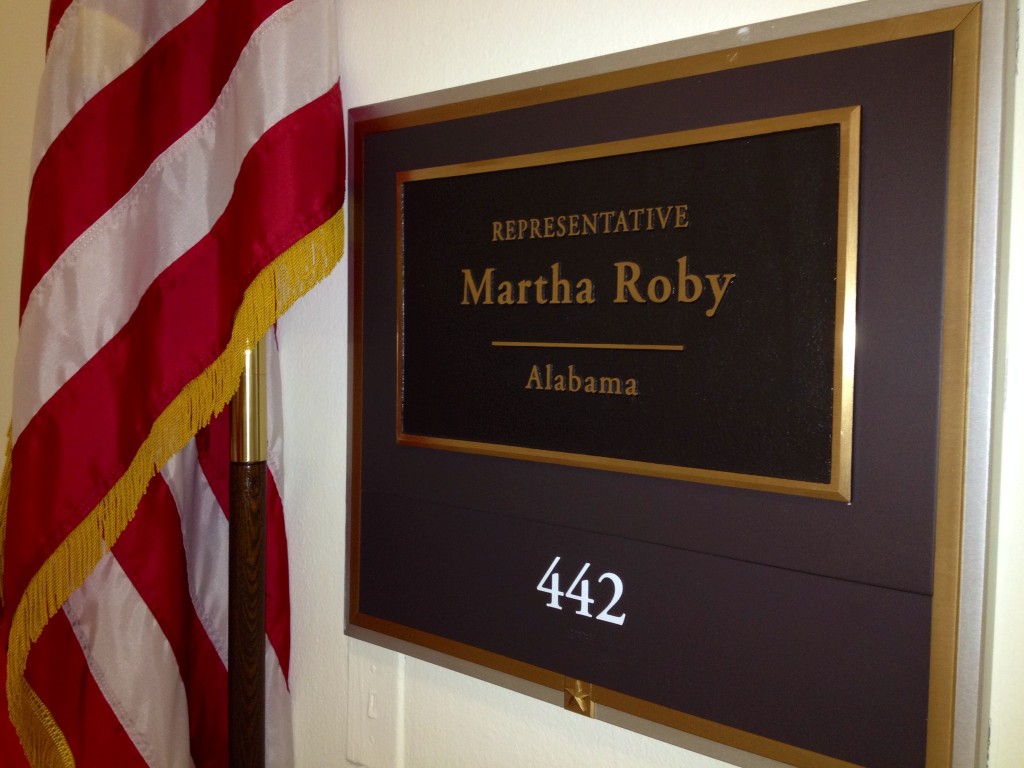
Following the November elections, Capitol Hill’s version of “The Hunger Games” began in Washington, D.C., where incumbent and incoming Members of Congress battled it out from prime office real estate in the House of Representatives. The “House Office Lottery” takes place every two years before the each new Congress begins in January. During the lottery, lawmakers vie for office spaces in one of the three House Office Buildings (HOB), Cannon, Longworth and Rayburn, where they’ll stay for the entirety of the two-year Congress. Those who end up with a coveted, large corner office may stay put for their entire Congressional careers; while other less lucky Members who end up in no-man’s land on the dimly lit fifth-floor, where elevators and people are scarce may opt to move the first chance the get during the next lottery. The process is simple, numbered black and white discs are placed into a wooden box. By seniority in Congress, then alphabetical order, each Members pulls disc out of the box. The lower the number on the disc, the better the position in line to choose an office. For some Members who have had a bad draw in the past and have been relegated to an extra small office, the a low number literally feels like winning the lottery. While there are no new Members joining the Alabama delegation this January, all of the incumbents won their re-elections, there will be a shuffle of office spaces among the delegation, with only three of the delegation’s seven Members opting to stay put during the 115th Congress. One of those taking advantage of the option to upgrade and move, is Alabama 3rd District U.S. Rep. Mike Rogers. Previously situated near the construction zone of oldest office building, Cannon HOB, Rogers was lucky enough to update to a space known for its large offices and superior views in the newest building, Rayburn HOB. “I have always said my door is open to the people of the Third Congressional District,” Rogers said. “I am excited about our new location in Washington and hope local citizens will continue to come by and visit when they are in our nation’s capital.” Here’s where you can find the Yellowhammer State reps should you visit Washington, D.C. next year: Alabama 1st District U.S. Rep. Bradley Byrne: Staying put Office location: 119 Cannon HOB Alabama 2nd District U.S. Rep. Martha Roby: Staying put Office location: 442 Cannon HOB Alabama 3rd District U.S. Rep. Mike Rogers: Moved Office location: 2184 Rayburn HOB Alabama 4th District U.S. Rep. Robert Aderholt: Staying put Office location: 235 Cannon HOB Alabama 5th District U.S. Rep. Mo Brooks: Moved Office location: 2400 Rayburn HOB Alabama 6th District U.S. Rep. Gary Palmer: Moved Office location: 330 Cannon HOB Alabama 7th District U.S. Rep. Terri Sewell: Moved Office location: 2201 Rayburn HOB
55% of the Alabama Legislature is on Twitter

Years ago, a lawmaker’s official website used to be sole clearinghouse for information — functioning as hub of schedule updates, press releases, contact information, and more. While those websites aren’t going anywhere any time soon, gone are the days where they’re the only platform lawmakers use to communicate with constituents. But with the advent of social media — Facebook, Twitter, Instagram, to name but a few — it’s become increasingly important for members to take the extra effort to engage more directly, and frequently with those who put them in office. In 2016, 78 percent of Americans had at least one social media profile, making a strong argument that if lawmakers want to continue to be re-elected they should go where the people are — online. Which is why Alabama Today wanted to see just how many Alabama lawmakers have a social media presence on Twitter — a digital platform where users “tweet” 140-character messages to the world, and one another. In our research, we found that 55 percent of the current 135 member Legislature is on Twitter. To break it down further, we found 77 percent of the Senate is on Twitter, while on 47 percent of the House has jumped on the platform. Further still, the make-up of the Alabama Legislature on Twitter is 56 percent Republicans and 49 percent Democrats. But merely having an account on Twitter by no means the users are active. We discovered the vast majority of Alabama lawmakers on the platform only used to first get elected, and that most accounts are years out of date, like Rep. Thad McClammy who’s not tweeted since 2009, or Sen. Rodger Smitherman who’s not tweeted since 2010. While others, like Sen. J.T. Waggoner (R-AL-16) and Rep. April Weaver seem to have missed the entire point of being a public official with a Twitter account in the first place — to communicate with constituents — and have their accounts hidden behind privacy filters. Then there’s the smallest population of users, like RepublicanRep. Victor Gaston and Democrat Rep. Barbara Boyd who have created accounts, but have never actually tweeted from. Take a look at our findings: Alabama State Senate Sen. Greg Albritton (R-AL-22): N/A Sen. Gerald Allen (R-AL-21): @SenGeraldAllen Sen. Billy Beasley (D-AL-28): @senbillybeasley Sen. Slade Blackwell (R-AL-15): @SladeBlackwell Sen. Dick Brewbaker (R-AL-25): @dick_brewbaker Sen. Paul Bussman (R-AL-4): @PaulBussman Sen. Clyde Chambliss (R-AL-30): @Clyde_SD30 Sen. Linda Coleman (D-AL-20): @senlindacoleman Sen. Gerald Dial (R-AL-13): @sengeralddial Sen. Priscilla Dunn (D-AL-19): N/A Sen. Vivian Figures (D-AL-33): @vivian_figures Sen. Rusty Glover (R-AL-34): N/A Sen. Bill Hightower (R-AL-35): @hightower_bill Sen. Jimmy Holley (R-AL-31): N/A Sen. Bill Holtzclaw (R-AL-2): @billholtzclaw Sen. Steve Livingston (R-AL-8): N/A Sen. Del Marsh (R-AL-12): @SenatorDelMarsh Sen. Jim McClendon (R-AL-11): @SenJimMcClendon Sen. Tim Melson (R-AL-1): N/A Sen. Arthur Orr (R-AL-3): @SenatorAOrr Sen. Trip Pittman (R-AL-32): @PittTrippman Sen. Greg Reed (R-AL-5): N/A Sen. Quinton Ross (D-AL-26): @SenQuintonRoss Sen. Henry Sanders (D-AL-23): @SenHankSanders Sen. Paul Sanford (R-AL-7): @CitizenLawmaker Sen. Clay Scofield (R-AL-9): @ALConservative Sen. Shay Shelnutt (R-AL-17): @shelnutt417 Sen. Bobby Singleton (D-AL-24): N/A Sen. Harri Anne Smith (I-AL-29): @HarriAnneSmith Sen. Rodger Smitherman (D-AL-18): @alsenateprotem Sen. Larry Stutts (R-AL-6): @Larry_Stutts Sen. J.T. Waggoner (R-AL-16): @JaboWaggoner (protected account) Sen. Cam Ward (R-AL-14): @sencamward Sen. Tom Whatley (R-AL-27): @SenTomWhatley Sen. Phil Williams (R-AL-10): @SenPhilWilliams Alabama State House of Representatives Rep. Will Ainsworth (R-AL-27): @WillAinsworth27 Rep. Louise Alexander (D-AL-56): N/A Rep. Alan Baker (R-AL-66): N/A Rep. Mike Ball (R-AL-10): N/A Rep. George Bandy (D-AL-83): N/A Rep. Paul Beckman (R-AL-88): @RepPaulBeckman Rep. Elaine Beech (D-AL-65): N/A Rep. Marcel Black (D-AL-3): @marcel_black42 Rep. Chris Blackshear (R-AL-80): @chrisblackshear Rep. Alan Boothe (R-AL-89): N/A Rep. Barbara Boyd (D-AL-32): @131Babs (never Tweeted) Rep. Napoleon Bracy (D-AL-98): @hiphopstaterep Rep. K.L. Brown (R-AL-40): @RepKLBrown Rep. James Buskey (D-AL-99): N/A Rep. Mack Butler (R-AL-30): @RepMackButler Rep. Jim Carns (R-AL-48): @JimCarns Rep. Donnie Chesteen (R-AL-87): @DonnieChesteen Rep. Adline Clarke (D-AL-97): N/A Rep. Steve Clouse (R-AL-93): @RepSteveClouse Rep. Merika Coleman-Evans (D-AL-57): N/A Rep. Terri Collins (R-AL-8): @RepTerriCollins Rep. Danny Crawford (R-AL-5): N/A Rep. Anthony Daniels (D-AL-53): @anthonydaniels Rep. Randy Davis (R-AL-96): N/A Rep. Dickie Drake (R-AL-45): N/A Rep. Barbara Drummond (D-AL-103): @Drummond103 Rep. Christopher England (D-AL-70): @RepEngland70 Rep. Allen Farley (R-AL-15): @RepAllenFarley Rep. David Faulkner (R-AL-46): @RepFaulkner Rep. Joe Faust (R-AL-94): N/A Rep. Bob Fincher (R-AL-37): N/A Rep. Craig Ford (D-AL-28): @RepCraigFord Rep. Berry Forte (D-AL-84): N/A Rep. Matt Fridy (R-AL-73): @MattFridy Rep. Danny Garrett (R-AL-44): @DannyGarrett44 Rep. Victor Gaston (R-AL-100): @VictorGastonAL (never Tweeted) Rep. Juandalynn Givan (D-AL-60): @RepJuandaGivan Rep. Lynn Greer (R-AL-2): N/A Rep. Dexter Grimsley (D-AL-85): N/A Rep. Laura Hall (D-AL-19): @RepLauraHall Rep. Micky Hammon (R-AL-4): @RepMickyHammon Rep. James Hanes (R-AL-23): N/A Rep. Corey Harbison (R-AL-12): N/A Rep. Alan Harper (R-AL-61): N/A Rep. Ed Henry (R-AL-9): @Ed_Henry_HD9 Rep. Jim Hill (R-AL-50): N/A Rep. Alvin Holmes (D-AL-78): N/A Rep. Mike Holmes (R-AL-31): N/A Rep. Ralph Howard (D-AL-72): N/A Rep. Steve Hurst (R-AL-35): N/A Rep. Reed Ingram (R-AL-75): N/A Rep. Thomas Jackson (D-AL-68): N/A Rep. Ken Johnson (R-AL-7): @KenCJohnson Rep. Ronald Johnson (R-AL-33): N/A Rep. Mike Jones (R-AL-92): N/A Rep. John Knight (D-AL-77): @alrep77 Rep. Kelvin Lawrence (D-AL-69): @Lawrencekj Rep. Nathaniel Ledbetter (R-AL-24): @RepLedbetter24 Rep. Paul Lee (R-AL-86): N/A Rep. Richard Lindsey (D-AL-39): N/A Rep. James Martin (R-AL-42): N/A Rep. Artis McCampbell (D-AL-71): N/A Rep. Thad McClammy (D-AL-76): @thadmcclammy Rep. Mac McCutcheon (R-AL-25): @MacDistrict25 Rep. Stephen McMillan (R-AL-95): @RepMcMillan Rep. Mike Millican (R-AL-17): N/A Rep. Arnold Mooney (R-AL-43): @Arnoldfor43 Rep. Barry Moore (R-AL-91): @RepBarryMoore Rep. Mary Moore (D-AL-59): N/A Rep. Johnny Morrow (D-AL-18): N/A Rep. Becky Nordgren (R-AL-29): @RepBeckNordgren Rep. Jim Patterson (R-AL-21): N/A Rep. Phil Pettus (R-AL-1): N/A Rep. Dimitri Polizos (R-AL-74): N/A Rep. Bill Poole (R-AL-63): @GoBillPoole Rep. Chris Pringle (R-AL-101): @ChrisPringle101 Rep. Kerry Rich (R-AL-26): N/A Rep. John Rogers (D-AL-52): N/A Rep. Connie Rowe (R-AL-13th): @rowe_reprowe13 Rep. Howard Sanderford (R-AL-20): N/A Rep. Roderick Scott (D-AL-55): N/A Rep. Chris Sells (R-AL-90): N/A Rep. David Sessions (R-AL-105): N/A Rep. Randall Shedd (R-AL-11th): N/A Rep. Harry Shiver (R-AL-64): N/A Rep. Kyle South (R-AL-16): @RepSouth16 Rep. David Standridge (R-AL-34): @JudgeStandridge Rep. Patricia Todd (D-AL-54): @RepTodd Rep. Allen Treadaway (R-AL-51): N/A Rep. Mark Tuggle (R-AL-81): @MarkMTuggle Rep. Tim Wadsworth (R-AL-14): @AlabamaLaw Rep. Pebblin Warren (D-AL-82): N/A Rep. April Weaver (R-AL-49): @aprilcweaver (protected account) Rep. Isaac Whorton (R-AL-38): N/A Rep. Ritchie Whorton (R-AL-22): N/A Rep. Margie Wilcox (R-AL-104): N/A Rep. Jack Williams (R-AL-102): @AlabamaWilliams Rep. Jack Williams (R-AL-47): @RepJack Rep. Phillip Williams (R-AL-6): : @PhilHouse44 Rep. Rich Wingo (R-AL-62): N/A Rep. Randy Wood (R-AL-36): N/A
Jerusalem mayor hopes Donald Trump will move US Embassy to the city

Jerusalem’s mayor said Tuesday that he is confident Donald Trump will move the American Embassy from Tel Aviv to Jerusalem, a break in U.S. policy that is sure to anger Palestinians, who claim the eastern sector of the city for their future capital. Mayor Nir Barkat told The Associated Press that he has been in touch with Trump’s staff about the issue. While previous presidential candidates have made similar promises, Barkat said his conversations have led him to believe that Trump is serious about making the move. “Naturally my intuition tells me that it’s different this time, knowing the people hearing his statements, where we are today,” Barkat said. Transferring the embassy to Jerusalem would be a highly symbolic and politically charged act. The fate of the east Jerusalem is at the heart of the conflict between Israel and the Palestinians. Virtually all embassies to Israel are located in or around Tel Aviv. Israel captured east Jerusalem in the 1967 Mideast war and annexed it in a move that is not internationally recognized. It claims the entire city as its capital. The Palestinians seek east Jerusalem, home to key Jewish, Muslim and Christian holy sites, as the capital of their future state. “The United States of America has embassies in all of the world’s capitals with the exception of Israel,” Barkat said. “That’s absurd, and moving the embassy to the capital of the Jewish people, to Jerusalem, is a straightforward, standard thing to do.” Barkat spoke a day after Trump’s spokeswoman Kellyanne Conway told conservative radio host Hugh Hewitt that the president-elect is determined to move the embassy to Jerusalem when he takes office “That is a very big priority for this president-elect, Donald Trump,” she said. “He made that very clear during the campaign, Hugh. And as president-elect, I’ve heard him repeat it several times privately, if not publicly.” The moving of the embassy, and recognition of Jerusalem as Israel’s capital, enjoys broad support among Israel’s Jewish majority. Speaking to foreign reporters Monday, before Conway’s comments had been reported, opposition lawmaker Yair Lapid called the proposal an “excellent idea.” Moving the embassy to Jerusalem would signal U.S. recognition of Jerusalem as Israel’s capital, a move that would infuriate Palestinians, break decades of American policy and distance the U.S. from most of the international community, including its closest allies in Western Europe. The Palestinians condemned the idea. “Any attempt to move the embassy to Jerusalem will not help achieve peace,” said Adnan Husseini, Palestinian minister for Jerusalem affairs. He urged Trump to instead push for the establishment of a Palestinian state as part of a peace settlement with Israel. Trump has said he would like to broker a peace deal, but he has given few details on how he hopes to do so. He has raised concerns among Palestinians because many of his advisers take hard-line positions that favor Israel, and his campaign platform made no mention of Palestinian independence – a U.S. position for the past two decades. The last round of U.S.-mediated peace talks collapsed over two years ago. Republished with permission of the Associated Press.
Tech leaders couldn’t beat Donald Trump; they’ll meet him instead
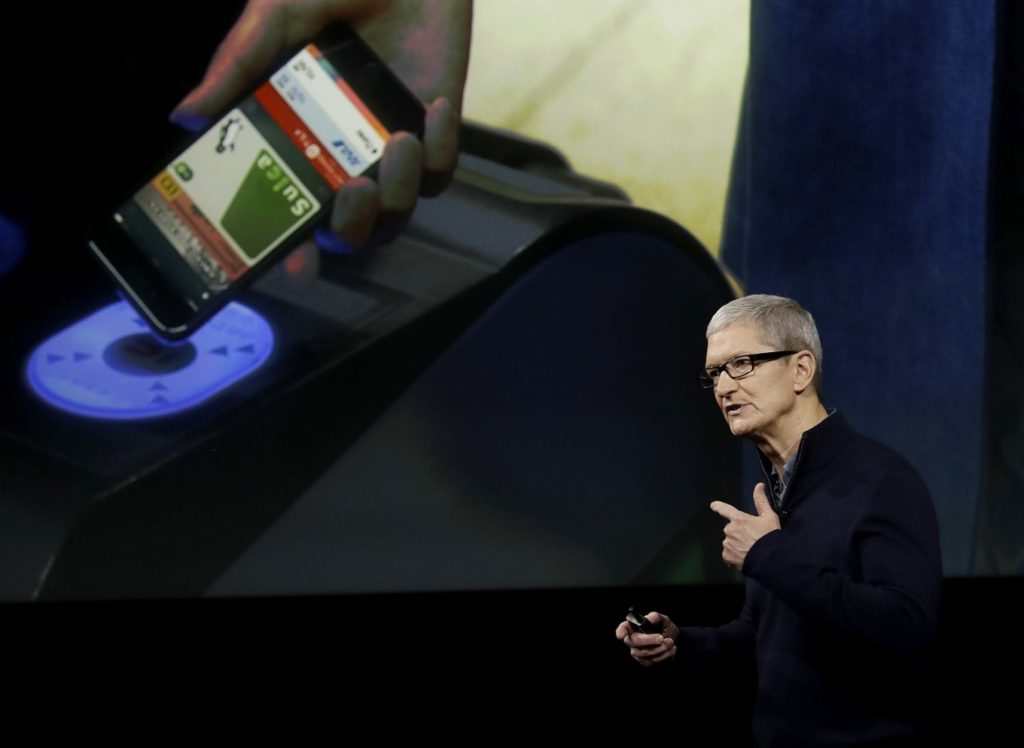
Technology leaders are about to come face-to-face with President-elect Donald Trump after fiercely opposing his candidacy, fearful that he would stifle innovation, curb the hiring of computer-savvy immigrants and infringe on consumers’ digital privacy. On Wednesday, Silicon Valley luminaries and other technology leaders are headed to Trump Tower in New York to make their peace – or press their case – with Trump and his advisers. The CEOs planning to attend include Apple’s Tim Cook, Alphabet’s Larry Page, Microsoft’s Satya Nadella, Amazon’s Jeff Bezos, Intel’s Brian Krzanich, IBM’s Ginni Rometty, Oracle’s Safra Catz and Cisco Systems’ Chuck Robbins. Facebook’s chief operating officer, Sheryl Sandberg, will be on hand instead of its CEO, Mark Zuckerberg, who was one of many tech executives to express misgivings about Trump’s pledge to deport millions of immigrants. TECH VS. TRUMP It could be a prickly meeting. No other industry was more open in its contempt for Trump during the campaign. In an open letter published in July, more than 140 technology executives, entrepreneurs and venture capitalists skewered Trump as a “disaster for innovation.” And Trump’s denigration of Mexicans, his pledge to deport millions of immigrants now living in the U.S. illegally, and his crude remarks about women were widely viewed as racist, authoritarian and sexist by an industry that prides itself on its tolerance. Trump, in turn, sometimes lashed out at the industry and its leaders. He lambasted Bezos for the campaign coverage of his newspaper, The Washington Post, and suggested that Amazon could face antitrust scrutiny if he was elected. Trump also rebuked Cook for fighting a government order requiring Apple to unlock an encrypted iPhone used by a shooter in last year’s terrorist attack in San Bernardino, California. And Trump’s repeated screeds against immigrants raised fears that he might dismantle programs that have enabled tech companies to hire tens of thousands of foreign workers with the skills to write computer programs, design web pages and build mobile apps. The industry is also worried that Trump might try to undermine “net neutrality,” a regulation requiring internet service providers to offer equal access to all online services. Trump’s harsh characterization of the media as dishonest and unfair has raised other fears that he might even try to restrict free speech online. OUT OF STRIFE, PEACE? Some in Silicon Valley think the industry’s best move would be to keep its distance until Trump changes his tone. Former Google executive Chris Sacca, now a tech investor, argues that industry leaders should steer clear of the meeting altogether. Sitting down with the president-elect “would only make sense after Trump has given public assurances he won’t encourage censorship, will stop exploiting fake news, will promote net neutrality, denounce hate crimes, and embrace science,” Sacca said. “If and until then, tech figures who visit are being used to whitewash an authoritarian bully who threatens not just our industry, but our entire democracy.” Most of the companies with executives attending Wednesday’s meeting declined to comment ahead of the gathering. But Oracle’s Catz said in a statement that she plans to tell Trump “that we are with him and are here to help in any way we can. If he can reform the tax code, reduce regulation, and negotiate better trade deals, the U.S. technology community will be stronger and more competitive than ever.” Other tech institutions are also signaling an end to the animosity. The Internet Association, a trade group whose members include Google, Facebook and Amazon, praised Trump in an open letter last month for his use of Twitter and other digital tools to help him get elected. The letter also appealed to Trump’s emphasis on the economy, citing statistics estimating that the internet sector accounted for nearly $1 trillion of the country’s gross domestic product. Some conservatives say they’re actually worried that Trump might get too friendly with tech. Peter Flaherty, the president of the National Legal and Policy Center, charges that big technology companies exploited their close relationship with President Obama “to feather their nests and push for policies that benefit them at the expense of the American worker.” Trump spokeswoman Hope Hicks said by email that the president-elect “looks forward to meeting with this important group of industry leaders and true innovators.” COMMON GROUND: TAX CUTS The technology industry already supports one of Trump’s ideas. He has promised to temporarily reduce the corporate tax on foreign profits from the current 35 percent to 10 percent to give U.S. companies an incentive to bring their overseas cash back home. It’s a cut that Cook has been pushing Congress to make because Apple has $216 billion, or 91 percent of its total cash, in overseas accounts. Other tech companies in line to benefit the most from a tax reduction include Microsoft, Cisco, Microsoft and Google’s corporate parent, Alphabet. But Trump might not be doing many other favors for technology companies given his history of holding grudges against his opponents, said Larry Irving, a former government affairs executive for Hewlett-Packard who now runs a consulting firm. “Everything Trump has done so far suggests that he rewards loyalty and punishes disloyalty,” Irving said. “The tech industry better have some pontoons ready.” Republished with permission of the Associated Press.
New Congress poised to greet Donald Trump with Russia probes

Congress’ Republican leaders are preparing to greet incoming President Donald Trump with investigations into whether Russia intruded into last month’s elections to help him win the White House. Senate Majority Leader Mitch McConnell declined to say Monday whether he agreed with the CIA assertion that Russian hacking and public release of Democrats’ emails during the presidential campaign were designed to aid Trump. But in a noteworthy departure from Trump’s rejection of that conclusion, the Kentucky Republican said the Senate Intelligence Committee would probe the issue. “It’s an important subject, and we intend to review it on a bipartisan basis,” McConnell said. House Speaker Paul Ryan, R-Wis., endorsed an ongoing investigation by the House Intelligence Committee into cyberthreats from other countries and extremist groups and condemned “any state-sponsored cyberattacks on our democratic process.” He said that examination would continue, with his support. “Any intervention by Russia is especially problematic because under President (Vladimir) Putin, Russia has been an aggressor that consistently undermines American interests,” Ryan said in a written statement after McConnell met with reporters. The remarks by McConnell and Ryan drew a contrast with Trump’s oft-repeated praise of Putin and the president-elect’s scoffing at the CIA’s findings. Trump on Sunday called the CIA’s contention “ridiculous” and blamed the disclosures of the agency’s assessment on Democrats who he said were embarrassed over losing last month’s election. McConnell said he has “the highest confidence” in U.S. intelligence agencies. He recounted Russia’s annexation of Crimea from Ukraine in 2014, said Baltic nation leaders are nervous about Moscow and pointedly praised NATO, the alliance that Trump criticized repeatedly during his campaign. “I think we ought to approach all of these issues on the assumption that the Russians do not wish us well,” McConnell said. Besides embracing an investigation by the Senate’s intelligence panel, led by Richard Burr, R-N.C., McConnell also expressed support for a related probe by the Armed Services Committee, chaired by Sen. John McCain, R-Ariz. McCain has been calling for such an examination and has long been wary of Russia. The chairman of the House Intelligence Committee, Rep. Devin Nunes, R-Calif., released a letter Monday to National Intelligence Director James Clapper complaining that recent reports of the CIA’s conclusion clashed with Clapper’s prior statement to the panel that he lacked “good insight” about the connection between Russian hacking of Democratic campaign documents and their release by Wikileaks. Nunes requested a briefing on the subject for this week. The GOP leaders expressed their views after a weekend in which Trump also said he would not need daily intelligence briefings, a staple of presidents’ days for decades and a flouting of a convention common for presidential transitions. The campaign chairman for defeated Democratic presidential candidate Hillary Clinton urged the Obama administration Monday to reveal what it knows about any Russian efforts to help Trump win. John Podesta, whose emails were stolen and posted online, said the administration “owes it to the American people” to release details of the intrusions, which included the hacking of Democratic Party files. Podesta said the Clinton campaign also supports a call by 10 of the 538 members of the Electoral College for Clapper to provide information that intelligence agencies have gathered on the subject. Republished with permission of the Associated Press.
Republican looks to overhaul Social Security
A key Republican lawmaker wants to overhaul Social Security, the decades-old program that provides benefits to some 60 million retirees and disabled, with a plan to gradually increase the retirement age and slow the growth of benefits for higher-income workers. Rep. Sam Johnson of Texas, the chairman of the House Ways and Means subcommittee on Social Security, introduced legislation just before the end of the congressional session last week that he said would “permanently save” the program. He said the bill would increase benefits for lower-income workers. About 168 million people work and pay taxes toward the inevitable monthly Social Security benefits. About 42 million of the beneficiaries are retirees and their families. The trustees who oversee Social Security say it has enough money to pay full benefits until 2034, and then Social Security will collect only enough taxes to pay 79 percent of benefits. Unless Congress acts, millions of people on fixed incomes would get an automatic 21 percent cut in benefits. “Americans want, need, and deserve for us to finally come up with a solution to saving this important program,” Johnson said. Next year, with Donald Trump as president, congressional Republicans plan to take a wrecking ball to the eight years of President Barack Obama‘s policies, from the health care law to environmental regulations. Medicare, a program created under another Democrat, Lyndon B. Johnson, is in the crosshairs of Speaker Paul Ryan, R-Wis., and Trump’s pick for Health and Human Services secretary, Rep. Tom Price. Ryan and Price favor privatizing the program, arguing that a voucher-system is necessary to ensure Medicare’s long-term solvency. Conservatives like Johnson, who have pushed their priorities for years under divided government, see an opportunity to tackle Social Security next year. Johnson’s bill is designed to slow the growth of Social Security costs while boosting some minimum benefits for those who earned lower wages over longer careers. It would also limit the size of benefits for spouses and children of high-income earners, among other changes in how the benefits are calculated. The retirement age would be gradually increased to 69, starting with those who were born in 1968 and would likely retire in the mid-2030s. Currently, individuals can receive benefits as early as age 62. The bill’s summary says the new retirement age would better reflect Americans’ longer life expectancy. But it’s unclear if his proposal – or any others to revise Social Security – will move. Trump, who enjoyed strong support from working-class Americans, promised during the campaign not to cut Social Security and Medicare. Ryan told CBS’ “60 Minutes” earlier this month that he has no plans to change Social Security. The issue has long been unpopular on Capitol Hill, where even some GOP lawmakers are nervous about changing a program seniors rely on so heavily. President George W. Bush proposed a partial privatization of the program in his second term, but the effort failed in a Republican-led Congress and may have contributed to his party’s sweeping losses in the 2006 midterm elections. Neither Ryan nor the Republican chairman of the Ways and Means Committee, Texas Rep. Kevin Brady, would endorse Johnson’s bill. AshLee Strong, a spokeswoman for Ryan, said the bill “is one of many Republican ideas put forward to strengthen the program.” Lauren Aronson, a spokeswoman for Brady, said he appreciates Johnson’s commitment to a thoughtful conversation but also “sees the proposal as one of many ideas” to address the program’s challenges. Ryan has long been one of the most outspoken in his party on the need for entitlement reform, including Social Security. But he has indicated that he’s more likely to first focus on Medicare’s insolvency, now predicted for 2028. Democrats immediately rejected Johnson’s measure. “While Speaker Ryan sharpens his knives for Medicare, Chairman Johnson’s bill is an alarming sign that Republicans are greedily eying devastating cuts to Americans’ Social Security benefits as well,” said House Democratic Leader Nancy Pelosi of California. Republished with permission of the Associated Press.
Jill Stein plans to donate leftover money raised for recounts
Green Party presidential candidate Jill Stein said Tuesday that she will donate any money left over from her bids to force election recounts in three states to groups dedicated to election reform and voting rights. Stein’s campaign raised about $7.3 million to fund her recount efforts in Wisconsin, Pennsylvania and Michigan, and she said she expects there to be some leftover money once all expenses are paid. There are currently $7.4 million in recount expenses, but that’s expected to decrease once the Wisconsin and Michigan costs are finalized. Republican Donald Trump narrowly defeated Democrat Hillary Clinton in all three states on his way to victory. Wisconsin was the only state that completed a recount, finishing Monday with little change in the results. Trump beat Clinton by nearly 23,000 votes in the state. A federal court halted Michigan’s recount after three days and another federal judge didn’t allow a recount in Pennsylvania. “The final Wisconsin vote is in and guess what – we just picked up an additional 131 votes,” Trump tweeted after Wisconsin completed its recount Monday. “The Dems and Green Party can now rest. Scam!” Trump planned to hold a rally Tuesday night near Milwaukee as part of his victory tour, giving him a chance to comment in Wisconsin about the just-completed recount. Among the criticism that Trump and his supporters have leveled at Stein was that she was pursuing the recounts to raise her own profile and pad her campaign coffers. Stein only won about 1 percent of the vote in the three states. Stein said Tuesday that she had raised $7.33 million from nearly 161,300 donors. Even if she doesn’t keep any leftover money, the recounts helped her build a database of donors that could be sold to others or tapped for future efforts. Stein hoped to add to that list by soon launching an online survey asking donors who they would like any leftover money to be given to. Stein said the names of groups getting the money will be made public “in the coming weeks.” Stein also provided an accounting of what she has spent money on so far. The most, nearly $3.5 million, went to Wisconsin to pay for its recount. If the final cost is higher, Stein’s campaign would have to pay for it. But if it is less, she would be refunded the difference. Those expenses aren’t expected to be finalized until the end of December. The next largest Stein expense, more than $1.6 million, was for legal fees. Other expenses included payments to recount observers, consultants and nearly $1 million to Michigan for its aborted recount, some of which Stein expected to be refunded. Stein insisted throughout that her goal was not to overturn the results, potentially handing the election to Clinton, but rather to ensure the integrity of the vote and voting systems. She alleged, without evidence, that voting patterns in all three states raised concerns about potential hacking or security breaches. Election officials in all three states, along with judges who heard lawsuits filed both by Stein and pro-Trump forces, said there was no evidence to support such claims. Republished with permission of the Associated Press.
Donald Trump picks Rex Tillerson to lead State Department

President-elect Donald Trump announced Tuesday he has picked ExxonMobil CEO Rex Tillerson to be secretary of state, calling him “among the most accomplished business leaders and international dealmakers in the world.” “Rex Tillerson’s career is the embodiment of the American dream. Through hard work, dedication and smart deal making, Rex rose through the ranks to become CEO of ExxonMobil, one of the world’s largest and most respected companies,” the billionaire real estate mogul said in a pre-dawn news release from Trump Tower in New York. Tillerson “knows how to manage a global enterprise, which is crucial to running a successful State Department,” Trump said. In a tweet, Trump added that Tillerson “has vast experience at dealing successfully with all types of foreign governments.” In an accompanying statement, Tillerson said he was “honored” by his selection and shares Trump’s “vision for restoring the credibility of the United States’ foreign relations and advancing our country’s national security.” But Tillerson has close ties to Russia and President Vladimir Putin, which is certain to draw scrutiny and fuel a potential Senate confirmation fight. Leading Republicans have already expressed anxieties as they contend with intelligence assessments saying Russia interfered with the U.S. presidential election to help Trump. Sen. Bob Corker, chairman of the Senate Foreign Relations Committee that will hold confirmation hearings in January, called Tillerson “a very impressive individual” with “an extraordinary working knowledge of the world.” Corker, who had been considered for the secretary of state job, said Trump called him Monday to inform him of the pick. Reince Priebus, Trump’s incoming chief of staff, said Tuesday that Tillerson was chosen because he is “a diplomat that happens to be able to drill oil.” Tillerson has “had to maintain relationships across the world in many places that aren’t the easiest places to have relationships,” Priebus said on MSNBC. “The good Lord didn’t put oil in all freedom-loving democracies across the world and yet Rex Tillerson was able to make this work. Donald Trump and Rex Tillerson, they hit it off, and they have a similar vision of how to get things done,” Priebus said. Trump has made it clear he sees Tillerson’s deep relations with Moscow as a selling point. As ExxonMobil’s head, Tillerson maintained close ties with Russia and was awarded by President Vladimir Putin with the Order of Friendship in 2013, an honor for a foreign citizen. For weeks, Trump has teased out the secretary of state decision process publicly, often exposing rifts in his organization. Besides Corker, he also considered former Massachusetts Gov. Mitt Romney, a one-time vocal Trump critic. Romney wrote on Facebook Monday that it “was an honor to have been considered” for the job. Trump’s unconventional Cabinet vetting procedures are in keeping with his presidential style thus far, unconcerned with tradition or business as usual. In recent weeks, he’s attacked CIA intelligence, spoken to the leader of Taiwan — irritating China — and has continued his late-night Twitter tirades. Beijing is looking forward to working with the new secretary of state “to push forward greater progress of the bilateral relationship on a new starting point,” China’s foreign ministry spokesman, Geng Shuang, said Tuesday. In Washington, a congressional investigation is in the works over a CIA assessment that Russia interfered in the November election on his behalf, a conclusion Trump has called “ridiculous.” The issue is raising red flags among lawmakers concerned about the sanctity of the U.S. voting system and potentially straining relations at the start of Trump’s administration. On Twitter Monday, Trump pushed back, saying: “Can you imagine if the election results were the opposite and WE tried to play the Russia/CIA card. It would be called conspiracy theory!” Putin, meanwhile, said he was ready to meet with Trump “at any moment.” In the transcript of his interview with journalists which was released Tuesday in Moscow, Putin said “it’s widely known that the elected president of the United States has publicly called for the normalization of the Russian-American relationship. We cannot but support this.” Putin added that he thought a meeting with Trump would be more likely after Trump’s January inauguration. “We understand it will not be a simple task considering the extent of degradation of the Russian-American relationship,” he said. “But we are prepared to do our bit.” If confirmed, Tillerson would face immediate challenges in Syria, where a civil war rages on, and in China, given Trump’s recent suggestions that he could take a more aggressive approach to dealing with Beijing. A native of Wichita Falls, Texas, Tillerson came to ExxonMobil Corp. as a production engineer straight out of the University of Texas at Austin in 1975 and never left. Groomed for an executive position, Tillerson came up in the rough-and-tumble world of oil production, holding posts in the company’s central United States, Yemen and Russian operations. Early in the company’s efforts to gain access to the Russian market, Tillerson cut a deal with state-owned Rosneft. The neglected post-Soviet company didn’t have a tremendous amount to offer, but Exxon partnered with it “to be on the same side of the table,” Tillerson said, according to “Private Empire,” an investigative history of Exxon by Steve Coll. Republished with permission of the Associated Press.
