
Stillman College trustees name Cynthia Warrick as interim president
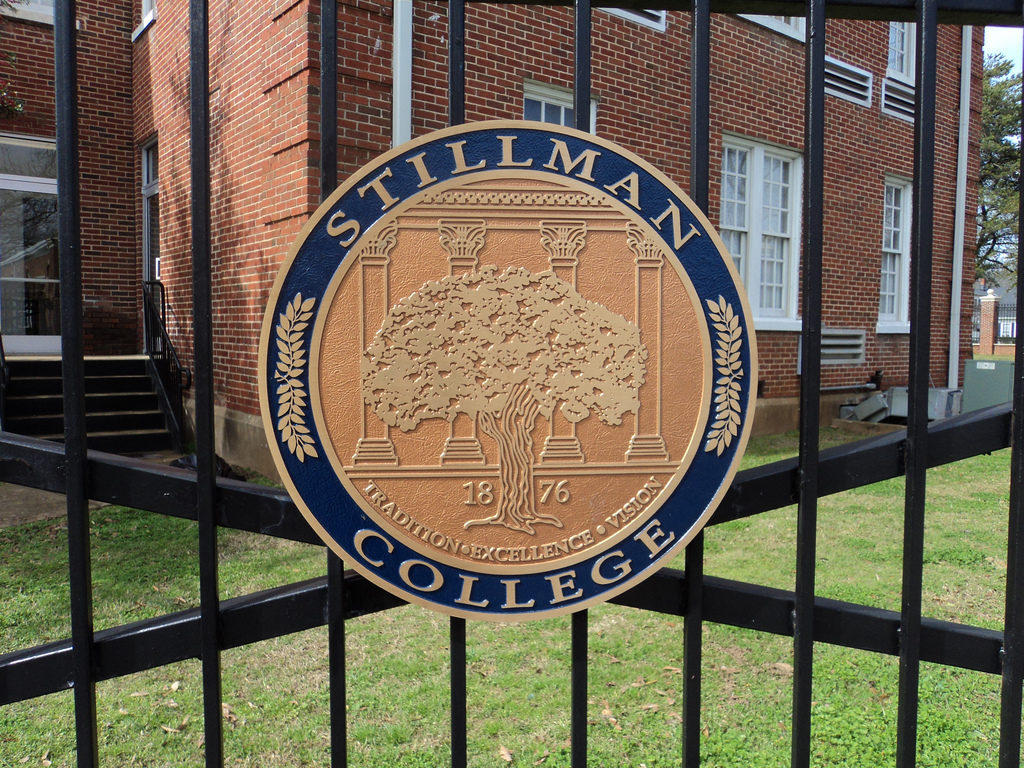
A senior fellow at the Thurgood Marshall College Fund has been named interim president of Stillman College. The Tuscaloosa News reports the board of trustees at Stillman announced Wednesday that Cynthia Warrick will fill in as president after Peter Millet leaves the historically black college at the end of December. Warrick is a senior fellow for research and evaluation with the Thurgood Marshall College Fund in Washington. She has also served as an interim president at two other schools — South Carolina State University and Grambling State University. Millet is leaving Stillman at the end of the year to take a job as executive vice president of Meharry Medical College in Nashville, Tennessee. A trustees committee is conducting a search for a permanent replacement for Millet. Republished with permission of The Associated Press.
New rules planned to keep sea turtles from shrimp net deaths

More shrimp fishermen would have to use nets equipped with turtle escape hatches, to prevent sea turtle deaths, under proposed new federal rules. The National Marine Fisheries Service wants to require more shrimp fishermen to use “turtle excluder devices.” The devices are metal grates that allow turtles to escape the boats’ nets. The fisheries service announced the proposed rules Thursday. They will be subject to a public comment process through mid-February. Thursday was the deadline for the federal government to propose regulations to protect turtles under a settlement with the conservation nonprofit Oceana. Oceana sued the government in April 2015, arguing that government estimates indicate that more than 500,000 sea turtles get caught in shrimp nets each year, and more than 53,000 of them die. Republished with permission of The Associated Press.
Barack Obama environmental legacy at stake as GOP, industry align
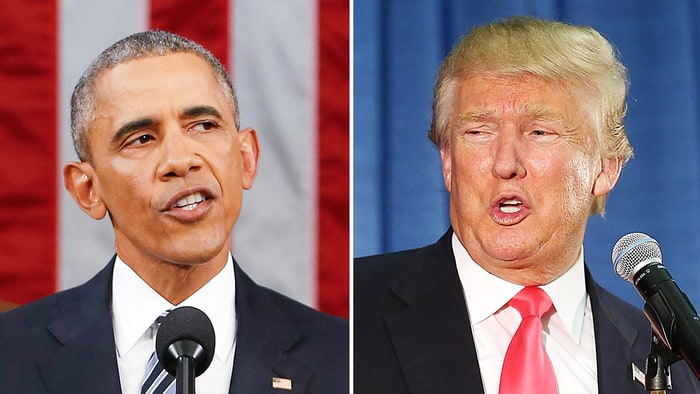
The Obama administration will leave behind a host of disputed recent actions and unfinished business on the environment – from shelved energy leases and blocked mining projects to pollution restrictions and decisions on hundreds of potentially imperiled species. Republicans and business groups emboldened by Donald Trump‘s victory are gearing up to reverse many of the administration’s signature environmental moves, particularly those made since the election. The outcome could determine whether eight years of Democratic rule in the White House leaves a lasting mark on the environment or quickly fades. Already environmental groups and their Democratic allies are raising alarms over Trump’s choice of Oklahoma Attorney General Scott Pruitt to head the Environmental Protection Agency, Texas Gov. Rick Perry for energy secretary and Thursday’s announcement of Montana Rep. Ryan Zinke for interior secretary. All three are industry proponents who have lined up against Obama on environmental issues and expressed doubts about the science behind climate change. “Obama may be in danger of losing his entire legacy,” said Rep. Rob Bishop, chairman of the House Natural Resources Committee, who pointed to “excessive” administration moves on the environment that attracted a Republican backlash. “From the top, the president (Trump) on down, there is a commitment to making change, and the stars are aligning to see that change take place,” the Utah Republican said. Reversing course from the Obama years could happen with the stroke of a pen for a moratorium on new coal sales and recent mining claim withdrawals in Montana, Oregon and Washington. Trump already has said he would knock down the coal moratorium. Other administration actions will be harder to unravel, legal and industry experts said. Those include pollution restrictions for coal-burning power plants, blocked oil leases in the Arctic and limitations on methane emissions to reduce greenhouse gases from the oil and gas industry, which would require congressional action or the reopening of lengthy bureaucratic processes. Yet with the GOP in firm control of Congress, the White House and likely the Supreme Court, “they are going to have an easier time getting their way” on environmental issues, said Mark Squillace, a professor of natural resource law at the University of Colorado. “It is easier to break things than it is to create them. … On some level, Trump wants to come in and break things Obama has created,” he said. The Obama administration’s scramble to finalize key environmental policies in its last days obscures the fact that many of those actions were in the works for years. Nevertheless, the industry wish list for Trump and the next Congress has grown with each recent announcement. Senior administration officials reject allegations that they’re ignoring public sentiment in a rush to get disputed and controversial items over the finish line before their power expires. As evidence, officials pointed to the yearslong process that resulted in the methane rule and the millions of public comments received prior to shelving future energy lease sales in the Arctic. It would not make sense for that work to “just be put in a drawer” because of the election, Bureau of Land Management Deputy Director Linda Lance argued. “There are good moderate proposals that have very much taken into account the concerns of the public. We would hope the work that’s done will be respected and continue,” she said. Among the most powerful legislative instruments Republicans promise to wield to overturn recent moves by the current administration is the Congressional Review Act. The 1996 law, passed as part of then-Speaker Newt Gingrich’s “Contract with America,” allows lawmakers to overturn rules recently issued by a previous president with approval from both chambers of Congress and the consent of the new president. It would apply to rules submitted since May 30, the nonpartisan Congressional Research Service has said. It’s been used successfully only once, to kill a 2000 rule on workplace ergonomics from the Clinton administration. Prominent Republicans including Sen. John Barrasso of Wyoming promised to use the law when the administration last month finalized the methane rule, which would restrict companies from burning off excess natural gas, a contributor to climate change. Barrasso chairs the Senate Subcommittee on Energy and Natural Resources. He said the rule would drive oil and natural gas companies off public lands and showed the Obama administration was “unwilling to listen to the message that the American people sent” with Trump’s election. Meanwhile, conservation groups that frequently prodded the Obama administration to be more aggressive on the environment now find themselves at risk of being marginalized. In recent years those groups complained that timelines for greenhouse gas reductions were too long. They accused the administration of underfunding agencies that oversee endangered species protections. And they went to court to challenge sales of federally owned coal with no regard for future pollution. Activists acknowledged they will soon need to shift their focus to the Republicans, who they predict will open more public lands to oil and gas drilling, mining and logging and will attempt to dismantle the Endangered Species Act. “We have to play defense now, and that’s what we’re going to do. We’re expecting full-on trench warfare,” said Jeremy Nichols, climate program director for the nonprofit environmental group WildEarth Guardians. Republished with permission of The Associated Press.
Kay Ivey: The reason for the season

Christmas is among us– Christmas trees adorned with decorative ornaments and twinkling with bright strands of lights, wreaths and stockings hung, gifts wrapped and cool air filled with cheer. A time for most of us to exchange gifts and spend time with those who mean the most. Others are consumed with the busyness of the season, traveling to visit loved ones and finding ways to financially stretch in hopes of spreading Christmas cheer. In the midst of all the hustle and bustle of the Christmas Season, I wanted to share with you one of the greatest stories in history: The Birth of Jesus Christ. As written in Matthew 1:18-25 (NIV), “This is how the birth of Jesus the Messiah came about: His mother Mary was pledged to be married to Joseph, but before they came together, she was found to be pregnant through the Holy Spirit. Because Joseph her husband was faithful to the law, and yet did not want to expose her to public disgrace, he had in mind to divorce her quietly. But after he had considered this, an angel of the Lord appeared to him in a dream and said, “Joseph son of David, do not be afraid to take Mary home as your wife, because what is conceived in her is from the Holy Spirit. She will give birth to a son, and you are to give him the name Jesus, because he will save his people from their sins.” All of this took place to fulfill what the Lord had said through the prophet: “The virgin will be with child and will give birth to a son, and they will call him Immanuel” – which means, “God with us.” When Joseph woke up, he did what the angel of the Lord has commanded him and took Mary home as his wife. But he had no union with her until she gave birth to a son. And he gave him the name Jesus.” In Isaiah 9:6 (NIV) it states, “For to us a child is born, to us a son is given; and the government will be on his shoulders. And he will be called Wonderful Counselor, Mighty God, Everlasting Father, Prince of Peace.” As I started this Christmas Season with the Christmas Tree Lighting on the steps of the Alabama Capitol, I was reminded when looking at the tree glowing brightly that Jesus serves as the Light of the World for those who need hope. As we celebrate Christmas, may we focus on the reason for the season: The Birth of our Savior Jesus Christ. It is easy this time of year to lose focus on what matters most. Take time this season to share cheer with others through your giving. Wishing you and your family a blessed Christmas! ••• Kay Ivey is the lieutenant governor of Alabama. Elected in 2010, she was the first Republican woman to hold the office in Alabama’s history.
The electoral voters speak, and they’re not out for a revolt
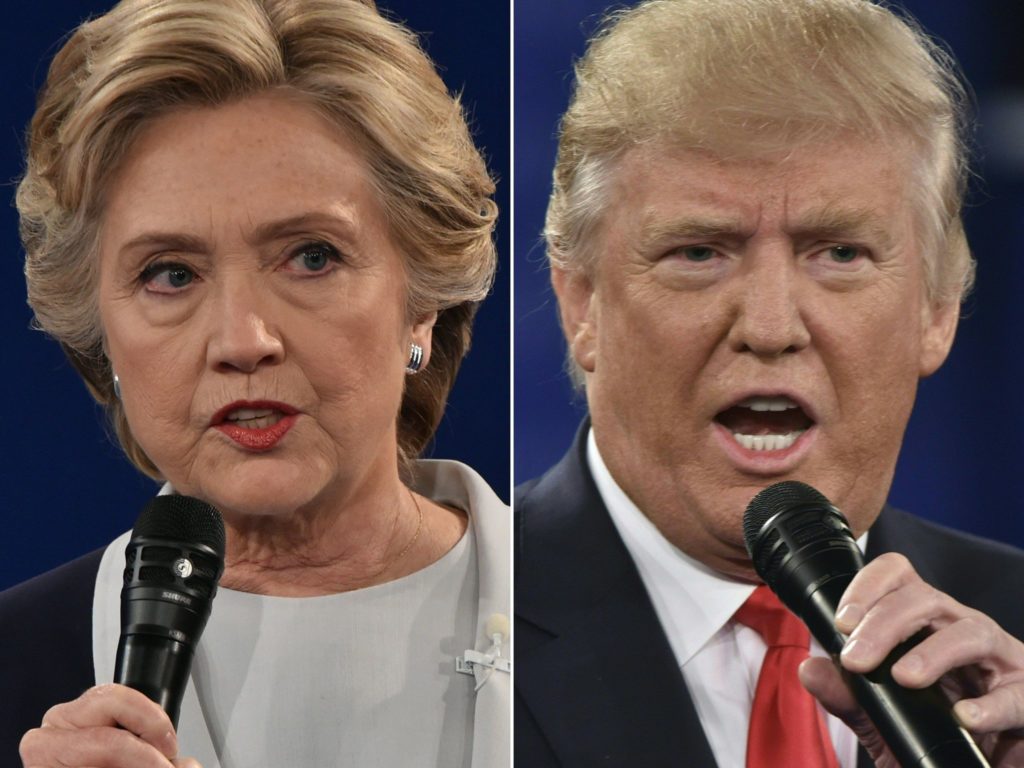
Hounded to abandon Donald Trump, Republican electors appear to be in no mood for an insurrection in the presidential campaign’s last voting ritual. This most untraditional of elections is on course to produce a traditional outcome Monday – an Electoral College ticket to the White House for the president-elect. Whether they like Trump or not, and some surely don’t, scores of the Republicans chosen to cast votes in the state-capital meetings told AP they feel bound by history, duty, party loyalty or the law to rubber-stamp their state’s results and make him president. Appeals numbering in the tens of thousands – drowning inboxes, ringing cell phones, stuffing home and office mailboxes with actual handwritten letters – have not swayed them. The Associated Press tried to reach all 538 electors and interviewed more than 330 of them, finding widespread Democratic aggravation with the electoral process but little expectation that the hustle of anti-Trump maneuvering can derail him. For that to happen, Republican-appointed electors would have to stage an unprecedented defection and Democrats would need to buck tradition, too, by peeling away from Hillary Clinton and swinging behind a consensus candidate in sufficient numbers. Still, people going to the typically ho-hum electoral gatherings have been drawn into the rough and tumble of campaign-season politics. Republicans are being beseeched to revolt in a torrent of lobbying, centered on the argument that Clinton won the popular vote and Trump is unsuited to the presidency. Most of it is falling on deaf ears, but it has also led to some acquaintances being made across the great political divide. “Let me give you the total as of right now: 48,324 emails about my role as an elector,” said Brian Westrate, a small-business owner and GOP district chairman in Fall Creek, Wisconsin. “I have a Twitter debate with a former porn star from California asking me to change my vote. It’s been fascinating.” Similarly deluged, Republican elector Hector Maldonado, a Missouri National Guardsman, has taken the time to console one correspondent, a single mother and Air Force veteran who is beside herself with worry about what a Trump presidency will mean. “Everything’s going to be OK,” he said he told her. “I know you’re scared, but don’t worry. Everything’s going to be OK. And I know that it will be.” Maldonado, a Mexican immigrant and medical-equipment seller in Sullivan, backed Ted Cruz in the primaries but will cast his vote for Trump with conviction. “I took an oath once to become a U.S. citizen,” he said, “and on Aug. 14, 1995, that was the first oath that I’ve taken to support the U.S. Constitution. A year later I took the oath again, to support the duties of being an officer in the U.S. Army. This was the third oath that I’ve taken to execute what I promised to do.” Even a leader of the anti-Trump effort, Bret Chiafalo of Everett, Washington, calls it a “losing bet” – but one he says the republic’s founders would want him to make. “I believe that Donald Trump is a unique danger to our country and the Founding Fathers put the Electoral College in place to, among other things, stop that from happening,” said Chiafalo, 38, an Xbox network engineer who backed Bernie Sanders in the Democratic primaries. It takes 270 electoral votes to make a president. Despite losing the national popular vote, Trump won enough states to total 306 electoral votes. He would need to see three dozen fall away for him to lose his majority. Only one Republican elector told AP he won’t vote for Trump. Over the sweep of history, so-called faithless electors – those who vote for someone other than their state’s popular-vote winner – have been exceptionally rare. Nashville attorney Tom Lawless, who chose Marco Rubio in the primaries, described his vow to cast his electoral vote for Trump in blunt terms. “Hell will freeze and we will be skating on the lava before I change,” he said. “He won the state and I’ve pledged and gave my word that that’s what I would do. And I won’t break it.” Nor will Jim Skaggs, 78, a developer from Bowling Green, Kentucky, despite deep concern about Trump. “His personality worries me,” Skaggs said. “He is not open-minded.” Skaggs knew Trump’s father through the construction business, met the son in his 20s, and “I wasn’t impressed.” “I hope he is far better than I think he is,” Skaggs said. Even so, “I fully intend to vote for Donald Trump,” he said. “I think it’s a duty.” State law and practices vary for electors, but even in states where electors don’t take an oath to vote a certain way or don’t face legal ramifications for stepping out of line, the heavy expectation is for them to ratify the results. As much as they don’t want Trump in office, some Democrats are as reluctant as Republicans to go rogue. “We lost the election,” said John Padilla of Albuquerque, New Mexico, a Democratic ward chairman. “That’s how elections are and you shake hands with your opponent and you get on with what you have to do and support your candidate.” Yet Democratic electors, stung by losing an election to a Republican who trails Clinton by more than 2.6 million votes nationwide, spoke strongly in the interviews in favor of overhauling or throwing out the electoral system. Republican electors generally supported it, reasoning that it provides a counterweight to political dominance by coastal states with huge (and largely Democratic) populations, like California and New York. Chiafalo is a co-founder of the Hamilton Electors, a group formed to steer other electors from both parties to a third candidate. “We’ve stated from Day 1 this is a long shot, this is a Hail Mary,” he said. But if the effort fails, it won’t be from lack of trying. Most of the pleas to reject Trump are coordinated, automated, professionally generated and, for those reasons, none too persuasive. “We got a stack of letters
Electoral College has had tie votes, hanging chads, chaos
The Founding Fathers set up the Electoral College to ensure a well-informed, geographically diverse group of electors would choose the nation’s presidents. That sounds rational – and sometimes it even works. But the history of the Electoral College also includes tales of tie votes, hanging chads, conniving politicians and intrigue. A look at four elections when controversy reigned: 1800: THE TIE It’s the last thing you want in an election: a tie. The framers of the Constitution didn’t quite think that through when they failed to provide for separate ballots for president and vice president. Under the original Electoral College system, the top vote-getter was to become president and the runner-up would become vice president. In the 1800 election, Thomas Jefferson and Aaron Burr ran in tandem, with Jefferson the presumed head of the ticket. Each got 73 votes in the Electoral College. The tie threw the election to the House and set off months of maneuvering and mischief. It took the House – then with members from 16 states – 36 ballots over seven days in 1801 to elect Jefferson president and Burr his vice president. To avoid a repeat, the 12th Amendment was ratified in 1804, specifying that electors would vote separately for president and vice president. The 1800 election marked the first peaceful transfer of power between political parties in U.S. history. 1824: HOUSE CALL – AGAIN Andrew Jackson came out of the 1824 election with the most popular and electoral votes after a four-way campaign. But Jackson’s 99 electoral votes were well shy of the 131 then necessary to become president. With that, the election went to the House. House Speaker William Clay, the fourth-place finisher, was eliminated because the Constitution limits the choice to the top three candidates. With no rules for the House balloting, the chamber decided that each state’s vote should reflect the preference of the majority of its congressmen. Deal-making, backroom lobbying and bitter recriminations quickly commenced. Clay, out of the running, was determined to serve as kingmaker, and threw his support to John Quincy Adams, who had finished second. Rumors swirled that Clay had been promised the State Department in return. In the end, the deciding ballot came down to New York’s Stephen Van Rensselaer, who voted for John Quincy Adams on the first ballot and sent him to the White House. Rensselaer said he’d noticed a ballot for Adams on the floor when he bowed his head to pray, and took it as a sign from heaven, according to an account by Norman Ornstein in the book “After the People Vote.” Clay was later named secretary of State. Jackson was incensed, writing to friends, “Was there ever such a barefaced corruption in any country before?” Four years later, Jackson got his revenge when he defeated Adams. 1876: ‘HIS FRAUDULENCY’ Anyone remember Samuel Tilden? In 1876, he thought he’d been elected president. Tilden, the Democratic governor of New York, won the popular vote that year but Ohio Gov. Rutherford B. Hayes claimed the presidency based on electoral votes. At first it looked like Tilden had things sewn up: He led 184 to 165 in electoral votes with 20 votes outstanding and 185 required to win. Hayes went to bed on election night thinking he’d lost. But Republican Party leaders put pressure on electors in the remaining states, and South Carolina, Florida and Louisiana each sent conflicting electoral returns to Washington. Months of controversy ensued, with charges of bribery, forgery and ballot-box stuffing on both sides. President Ulysses Grant dispatched troops to keep the peace as votes were tabulated. It took a special bipartisan electoral commission to settle matters, with Hayes ultimately elected by a margin of one electoral vote. Hayes’ mandate was so narrow that he was called “His Fraudulency.” He kept the promise he made in his inaugural address to serve only one term. Tilden urged his supporters to recognize Hayes as the legitimate president but “nonetheless believed until his death that he had been duly elected president,” according to Ornstein’s account. To avoid a rerun of that mess, Congress passed legislation giving states authority to determine the validity of their electors. In the future, a majority of both houses of Congress would be required to reject electoral votes. 2000: 537 VOTES Vice President Al Gore won the national popular vote by more than a half-million ballots over George W. Bush in the 2000 presidential contest, but was defeated in the Electoral College after the Supreme Court stopped a hotly debated recount in Florida. Bush claimed 271 electoral votes – just one vote more than needed to prevail – after he was certified as the winner in Florida by a scant 537 votes. It took until Dec. 12, more than five weeks after Election Day, to reach that conclusion. The Supreme Court said the Florida recount violated the Constitution’s Equal Protection Clause because counties were allowed to set their own standards for determining whether to count a vote. As the laborious recount of punch-card ballots played out, “pregnant chad” entered the political lexicon. The punch cards – and their chads – have since been banned in Florida. It was all a fresh reminder of the Founding Fathers’ complicated plan for picking presidents. Republished with permission of The Associated Press.
Daniel Sutter: Be careful what you wish for
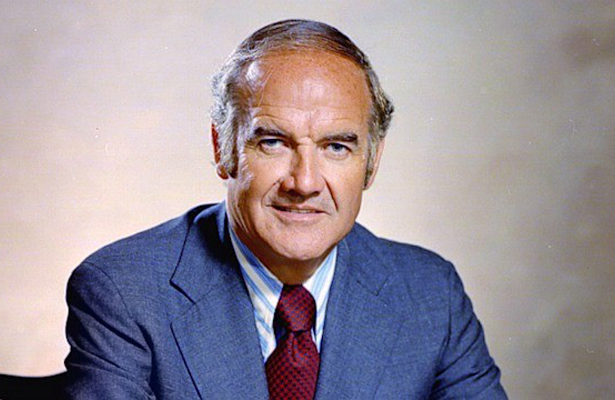
Many politicians today have essentially spent their entire adult lives in politics, first as legislative staffers and then holding elected office. Some pundits argue that career politicians are out of touch with ordinary Americans, and specifically unaware of the burdens that taxes and regulations impose on businesses. Does personal experience running a business affect governance? Consider an observation by George McGovern, the long-serving U.S. Senator and 1972 Democratic presidential nominee. After retiring from politics, Senator McGovern ran a hotel and remarked, “I wish that someone had told me about the problems of running a business. I have to pay taxes, meet a payroll – I wish I had a better sense of what it took to do that when I was in Washington.” If business experience affects governance, America is in for a change. President-Elect Donald Trump and his picks to head the Departments of State, Treasury, Commerce and Labor have all had careers in business. Whether one thinks that a government official’s background and life experience matter depends on how one views life and politics. To see why, let’s revisit Senator McGovern’s words. The Senator likely learned a lot about running a business during his second career. But surely someone could have, as he wished, told him while he was in the Senate how higher taxes or the minimum wage affect business. I’m sure some people tried. Limitations in our ability to communicate can allow politicians’ backgrounds to matter. Consider the related argument that we must elect more women and minorities to ensure that government decisions reflect their views and concerns. In all three cases, communicating concerns to a sympathetic representative lacking personal knowledge is not enough. Perhaps Senator McGovern simply couldn’t process business persons’ concerns. For politicians’ backgrounds to matter, elected officials must also be able to act on what they learn. If elections are really effective, office holders will have do what their constituents want. Senator McGovern would have burdened businesses because this is what his constituents wanted. Even if the “constituents” are special interests, representatives beholden to whomever put them in office will not be able to act on the insights their backgrounds provide. Elected officials consequently must have discretion over at least some of their decisions. Discretion can arise because elections do not work so well, or simply from the larger number of actions they take. Members of the U.S. House typically cast over one thousand roll call votes during a two year term; we vote once every two years regarding their performance. Elected officials might have to do their constituents’ bidding on some issues, but possess discretion on other issues. To explore if a business background matters, economist Rex Pjesky and I examined Congressional voting on issues tracked by the U.S. Chamber of Commerce. We titled our paper “Searching for Cincinnatus,” after the Roman citizen-soldier who (supposedly) twice left his farm to help save the Republic and then returned home after each crisis. Critics of career politicians imply that we need more politicians like Cincinnatus today. Our first task was documenting the backgrounds of members of Congress. About one third of House and Senate members during the years of our study had professional business experience, with more Republicans having a business background. Members with a business background voted more consistently with the Chamber of Commerce’s position, but our statistical analysis found that the difference was due primarily to other factors like party affiliation. The difference attributable to a business background was generally small. Our paper only looked at roll call votes, and so background might matter for other things. For instance, Congressional hearings can attract media attention and lay the groundwork for future change. Representatives might have discretion over hearings. Will the influx of business leaders in Washington under President Trump lead to major changes? Based on my research, I won’t be holding my breath in anticipation. But we’ll have to stay tuned to see for sure. ••• Daniel Sutter is the Charles G. Koch Professor of Economics with the Manuel H. Johnson Center for Political Economy at Troy University and host of Econversations on TrojanVision. The opinions expressed in this column are the author’s and do not necessarily reflect the views of Troy University.
The Electoral College class of 2016

The sharp divisions left by last month’s presidential election have cast more attention than usual on the Electoral College. The Associated Press attempted to talk to all 538 electors to get an idea of the pressure they are under, what they think about their Constitutional duty and what they make of longshot efforts to derail Donald Trump‘s ascension to the White House when they meet Monday. Here’s a sampling: Republican Rex Teter, 59, a music teacher and preacher in Pasadena, Texas, received about 35,000 emails and 200 letters urging him not to support Trump. It took him several hours to delete them the day after Thanksgiving. A Marco Rubio supporter in the primaries, he is solidly for Trump. “Some have been very personal letters. Some threatening. One was very funny. They view President-elect Trump as a threat so it’s personal for them, and I can empathize. But I’m not changing my vote as an elector.” “When I decided to run for elector, that’s when I decided to vote for Trump. I could not be an elector and not vote for Trump. … No matter of arm-twisting or any amount of money would get me to change. I was also bound by a higher law, because I promised but also because I made a higher pledge before God.” — Democrat Raymond Cordova, 77, of Garden Grove, California, thinks the Electoral College is an anachronism, but electors have an obligation to carry on the tradition of ratifying their state’s popular vote. In the primaries, he voted for Bernie Sanders. “During the time of (James) Madison I think they were right on target with it. We have the means, with sophisticated communication, all these things today, we don’t need the Electoral College. But it will never change, it will always be there.” “I honestly believe if Bernie Sanders had been the nominee, we’d have had a whole different story. But I’m not going to cry over spilled milk, I’m going to pick up my marbles and start all over again.” — Kirk Shook, 32, is an Athens, Georgia, teacher and secretary of the state GOP, who says he’s sent more than 47,800 emails about his duty as an elector to his spam folder. “Even if I could have been swayed a little bit, this has caused me to be even firmer in my resolve if just to aggravate them. It’s been a complete thorn in my side. They’re from all over the country.” “On the whole, the American people knew who they voted for. Nothing going to come out about Donald Trump, I think, that would sway the people who voted for him to change their vote or change electors’ decision.” — Democrat David Mulinix, 66, of Kaneohe, Hawaii, is exasperated with the Democratic National Committee, the Electoral College system and the fact he can do little except cast his electoral vote for Hillary Clinton according to the rules. “Now we have Donald Trump because the DNC manipulated the system to put in the worst candidate possible that the people of the United States did not want. So now we’re stuck with Trump. So I’m not sure what else to do about that. I wish there’d be some way to make a statement saying you guys really messed up … and I just don’t know exactly how to do that.” “If there was some way to change the election, then I’d be on the phone hot and heavy calling people.” “We need to get rid of this dumb thing. I really am not happy about being an elector or that this thing exists. This is really terrible. We’re supposed to have a democracy… Right now, if all the electors got together and held a conference, and said you know what, we’re going to vote for like Donald Duck, they can just do that.” — Alberto Gutier, 77, director of the Arizona Governor’s Office of Highway Safety and the state GOP’s sergeant-at-arms, says he’s been swamped with emails, several dozen calls to his personal cellphone “and a stack of letters a foot high” about his service as a Republican elector. These are largely pleas for him to back someone other than Trump. “Forty-seven thousand, five hundred emails, that’s ridiculous, OK? And hundreds and hundreds of letters. Do you have any idea, for those stamps, how many people could have been fed for the holidays?” — Sam Shapiro, 89, of Winslow, Maine, was treasurer of the state Democratic Party for 13 years and treasurer of the state as well. He says the country should emulate Maine and Nebraska by splitting their electoral votes, moving away from a winner-take-all system. But he says the people have spoken, and he will cast his electoral vote for Clinton and not be part of any effort to deny Trump the presidency. “Trump has won. I firmly support our president-elect. All of this turmoil of trying to get people to switch their votes. First of all it won’t happen. Second of all, it puts us in a bad light.” “I served in the military and took an oath to uphold the Constitution. Trump is going to be the president, and I’ll support him, even if means being in opposition to Democrats who’re trying to make a change.” — John Harper, 73, is a former Rowlett, Texas, mayor, and a Republican elector who weighed the consequences of casting his electoral vote for someone other than his state’s presidential election winner, Donald Trump. “I struggled with that one. I want to be always morally straight, kind of a Boy Scout, you know? I’m a retired military officer. Taking an oath means a lot. When you take an oath you live up for it. I made a promise. Lacking some strong, strong evidence, I think everyone is obligated to follow through what they promise.” — Democrat Stephanie A. Miner, 46, mayor of Syracuse, New York, is taking a hard look at the system in light of the fact that Clinton won about
Iran sanctions renewal becomes law without Barack Obama signature

In an unexpected reversal, President Barack Obama declined to sign a renewal of sanctions against Iran but let it become law anyway, in an apparent bid to alleviate Tehran’s concerns that the U.S. is backsliding on the nuclear deal. Although the White House had said that Obama was expected to sign the 10-year-renewal, the midnight deadline came and went Thursday with no approval from the president. White House press secretary Josh Earnest said Obama had decided to let it become law without his signature. “The administration has, and continues to use, all of the necessary authorities to waive the relevant sanctions” lifted as part of the nuclear deal, Earnest said in a statement. Under the Constitution, the president has 10 days after Congress passes a bill to sign it, veto it or do nothing. If Congress has adjourned, failing to sign it is a “pocket veto” that prevents the bill from becoming law. But if Congress is still in session, the bill becomes law with no signature. Although lawmakers have returned home for the holidays, Congress technically is still in session and holding “pro-forma” sessions this week. Though Obama’s move doesn’t prevent the sanctions renewal from entering force, it marked a symbolic attempt by the president to demonstrate disapproval for lawmakers’ actions. The White House has argued that the renewal is unnecessary because the administration retains other authorities to punish Iran, if necessary, and has expressed concern that the renewal may undermine the nuclear deal. Iran had vowed to respond if the sanctions were renewed, arguing they violate the nuclear deal between Iran and world powers, which eased sanctions in exchange for curbs on Iran’s nuclear program. Iran’s government has complained to the United Nations about the renewal, and on Tuesday, Iran’s president ordered up plans to build nuclear-powered ships and to formally accuse the U.S. of violating the terms of the deal. Yet U.S. lawmakers argued that renewing the law, first passed in 1996 and renewed several times since, was critical to maintaining pressure on Iran to abide by the deal and to pushing back on Tehran’s other troubling behavior in the region. The bill passed the Senate unanimously and the House by an overwhelming margin. The Obama administration stressed that Iran would be unaffected by the renewal, as long as it continues honoring the nuclear deal. Secretary of State John Kerry said he’d told his Iranian counterpart that “to ensure maximum clarity,” he’d issued new, redundant waivers exempting Iran from sanctions lifted under the deal. “Extension of the Iran Sanctions Act does not affect in any way the scope of the sanctions relief Iran is receiving under the deal or the ability of companies to do business in Iran consistent with the JCPOA,” Kerry said, using an acronym for the nuclear deal. President-elect Donald Trump has been sharply critical of the nuclear deal and has threatened to try to renegotiate it, and Israel’s prime minister has said he plans to lobby Trump to undo the deal. Republican supporters of the sanctions had argued that renewing them would ensure that Trump would have the authority to reinstate penalties that Obama eased. Under the nuclear deal, the U.S. and world powers suspended sweeping oil, trade and other financial sanctions that had devastated Iran’s economy. In exchange, Tehran agreed to roll back its nuclear program, though the deal’s critics say the agreement is flawed because it didn’t halt all Iranian activity and because key restrictions eventually expire. Republished with permission of The Associated Press.
Russian PM says Donald Trump team has no ‘anti-Russian stereotypes

Russian Prime Minister Dmitry Medvedev has lauded nominees for the incoming Trump administration as people with no “anti-Russian stereotypes.” Medvedev said in a televised interview on Thursday that Moscow is glad Exxon Mobil CEO Rex Tillerson has been nominated for secretary of state, describing him as someone with “pragmatic thinking.” Medvedev said President-elect Donald Trump‘s recent appointments show that he hires people who “don’t have ingrained anti-Russian stereotypes, or any stereotypes.” The Kremlin has cheered Trump’s victory although some top Russian officials have recently said they had no illusions and were not expecting relations between Russia and the U.S., which were battered after Russia’s annexation of Crimea in 2014, to improve overnight. Republished with permission of The Associated Press.
From Donald Trump and his new team, mixed signals on climate change

He brushed off climate change as a Chinese hoax, then called it the real deal and finally declared that “nobody really knows.” Donald Trump is sending mixed signals on whether or how he will try to slow Earth’s warming temperatures and rising sea levels. Since he was elected, Trump has met with prominent climate activists Al Gore and Leonardo DiCaprio. He’s suggested his daughter Ivanka, a close adviser, has a particular interest in the issue and could be his envoy. But he has also tapped oil industry champions for his Cabinet, men who say they’re determined to reverse President Barack Obama‘s efforts to rein in emissions. The pushback has already started. Environmentalists were outraged by the Trump transition team’s decision to ask the Energy Department for a list of staffers who worked on climate change – a request the administration refused out of concern it could be used to try to purge climate-change believers. Trump’s team later said the questionnaire “was not authorized” and that the person responsible had been “counseled.” Yet if Trump’s record on climate change is complex, in his administration, he won’t be the only one. Two days after Trump was elected, oil giant Exxon Mobil tweeted a declaration of support for the Paris deal, a global emissions-cutting pact that marks the biggest step the world has taken to date on climate. Weeks later, Trump tapped Exxon CEO Rex Tillerson to be secretary of state, a position putting Tillerson at the helm of U.S. efforts to implement – or scuttle – the Paris deal. Though environmentalists often vilify Exxon, Tillerson almost surely signed off personally on the tweet, said individuals familiar with Exxon’s structure and operations, who weren’t authorized to comment publicly and requested anonymity. And under Tillerson’s leadership, Exxon has started planning for climate change and even voiced support for a carbon tax. So, in a strange twist, Trump’s selection of an oil magnate for chief diplomat has been reassurance to some that the next administration may not herald the end of climate change efforts that burgeoned under Obama. “Tillerson is probably the least-bad choice among a lot of bad options,” said Andrew Logan of Ceres, a coalition of institutional investors concerned about climate change. “Tillerson could be a moderating influence on Trump, keeping things from being as disastrous as they otherwise might be.” Democratic attorneys general have been suing Exxon over allegations the company for decades concealed its own scientific research showing climate change was occurring. Tillerson, in public comments, has explicitly acknowledged climate change and said the risks could be “significant,” but has suggested it’s a low priority. “There are much more pressing priorities that we as a human being race and society need to deal with,” Tillerson said in 2012, citing people living in poverty who he said would benefit from cheap energy. Other Trump picks are openly hostile to calls to act on climate. His choice to run the Environmental Protection Agency – responsible for domestic emissions-cutting measures – is Oklahoma Attorney General Scott Pruitt, a vocal denier of climate change science. The vast majority of peer-reviewed studies and climate scientists agree the planet is warming, mostly due to man-made sources. But Pruitt has sued the EPA repeatedly to stop its climate agenda, including Obama’s sweeping power plant rules. And Trump’s nominee to run the Energy Department, former Gov. Rick Perry, also has questioned climate science while working to promote coal-fired power in Texas. Though Perry, like Tillerson and Pruitt, has close ties to the oil industry, he also oversaw the growth of renewable power in Texas, which became the lead wind-energy producer while he was governor. Perry in 2012 famously called for abolishing the Energy Department, which plays a major role funding clean energy projects. Under Obama, the U.S. has dramatically ramped up production of renewable energy from sources like solar, in part through Energy Department grants. Amy Myers Jaffe, an energy policy expert at the University of California-Davis, said Trump’s administration is likely to embrace Tillerson’s view that engineering and innovation, not government, are the solution. She said the falling cost of clean energy and desire of companies to appear climate-friendly are likely to produce those changes anyway. “The common denominator looking at Trump’s appointments so far is that there’s clearly a sentiment that the energy sector is overregulated, and therefore we could probably expect a rollback,” Jaffe said. “But I think we’re getting to the point where some of these technologies can stand on their own.” Yet those looking to Trump for clarity won’t find it – at least not yet. In a television interview last week, Trump said he was still “studying” the Paris pact to determine whether to pull the U.S. out, as he threatened during the campaign. And asked about the science of climate change, Trump demurred. “I’m still open-minded,” Trump said. “Nobody really knows.” Republished with permission of The Associated Press.
