
Donald Trump cruises to Electoral College victory despite protests
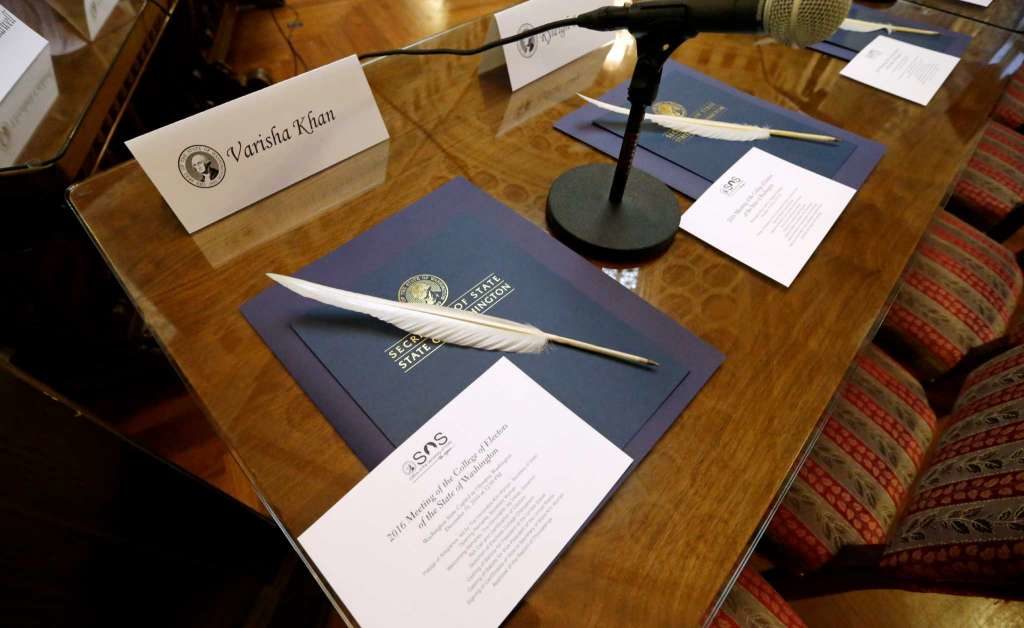
There were many protesters but few faithless electors as Donald Trump won the Electoral College vote Monday – ensuring he will become America’s 45th president. An effort by anti-Trump forces to persuade Republican electors to abandon the president-elect came to practically nothing and the process unfolded largely according to its traditions. Trump’s polarizing victory Nov. 8 and the fact Democrat Hillary Clinton had won the national popular vote had stirred an intense lobbying effort, but to no avail. “We did it!” Trump tweeted Monday evening. “Thank you to all of my great supporters, we just officially won the election (despite all of the distorted and inaccurate media).” Even one of Trump’s fiercest Republican rivals, Ohio Gov. John Kasich, said it was time to get behind the president-elect. “We want unity, we want love,” Kasich said as Ohio’s electors voted to back Trump at a statehouse ceremony. Kasich refused to endorse or even vote for Trump in the election. With Hawaii still to vote, Trump had 304 votes and Clinton had 224. It takes 270 Electoral College votes to win the presidency. Texas put Trump over the top, despite two Republican electors casting protest votes. Befitting an election filled with acrimony, thousands of protesters converged on state capitols across the country Monday, urging Republican electors to abandon their party’s winning candidate. More than 200 demonstrators braved freezing temperatures at Pennsylvania’s capitol, chanting, “No Trump, no KKK, no fascist USA!” and “No treason, no Trump!” In Madison, Wisconsin, protesters shouted, cried and sang “Silent Night.” In Augusta, Maine, they banged on drums and held signs that said, “Don’t let Putin Pick Our President,” referring to Russian President Vladimir Putin. Despite the noise outside state Capitols, inside, the voting went pretty much as planned. In Nashville, Tennessee, one audience member tried to read out some Scripture before the ballots were cast, but was told he could not speak. “We certainly appreciate the Scripture,” State Election Coordinator Mark Goins said from the podium. “The answer is no.” With all Republican states reporting, Trump lost only the two electors in Texas. One voted for Kasich, the Ohio governor; the other voted for former Texas Rep. Ron Paul. Clinton lost four electors in Washington state – three voted for former Secretary of State Colin Powell and one voted for Native American tribal leader Faith Spotted Eagle. Several Democratic electors in other states tried to vote for protest candidates but they either changed their votes to Clinton or were replaced. The Electoral College has 538 members, with the number allocated to each state based on how many representatives it has in the House plus one for each senator. The District of Columbia gets three, despite the fact that the home to Congress has no vote in Congress. Republican electors were deluged with emails, phone calls and letters urging them not to support Trump. Many of the emails are part of coordinated campaigns. In Baton Rouge, Louisiana, elector Charlie Buckels reached out to Trump’s opponents after the New York businessman got all of the state’s eight votes. “For those of you who wished it had gone another way, I thank you for being here,” said Buckels, the state GOP finance chairman. “I thank you for your passion for our country.” There is no constitutional provision or federal law that requires electors to vote for the candidate who won their state – though some states require their electors to vote for the winning candidate. Those laws, however, are rarely tested. More than 99 percent of electors through U.S. history have voted for the candidate who won their state. Of those who refused, none has ever been prosecuted, according to the National Archives. Some Democrats have argued that the Electoral College is undemocratic because it gives more weight to less populated states. That is how Clinton, who got more than 2.8 million more votes nationwide, lost the election to Trump. Some have also tried to dissuade Trump voters by arguing that he is unsuited to the job. Others cite the CIA’s assessment that Russia engaged in computer hacking to sway the election in favor of the Republican. “When the founders of our country created (the Electoral College) 200-plus years ago, they didn’t have confidence in the average white man who had property, because that’s who got to vote,” said Shawn Terris, a Democratic elector from Ventura, California. “It just seems so undemocratic to me that people other than the voters get to choose who leads the country.” A joint session of Congress is scheduled for Jan. 6 to certify the results of the Electoral College vote, with Vice President Joe Biden presiding as president of the Senate. Once the result is certified, the winner – almost certainly Trump – will be sworn in on Jan. 20. Republished with permission of The Associated Press.
All 9 Alabama electors cast their votes for Donald Trump
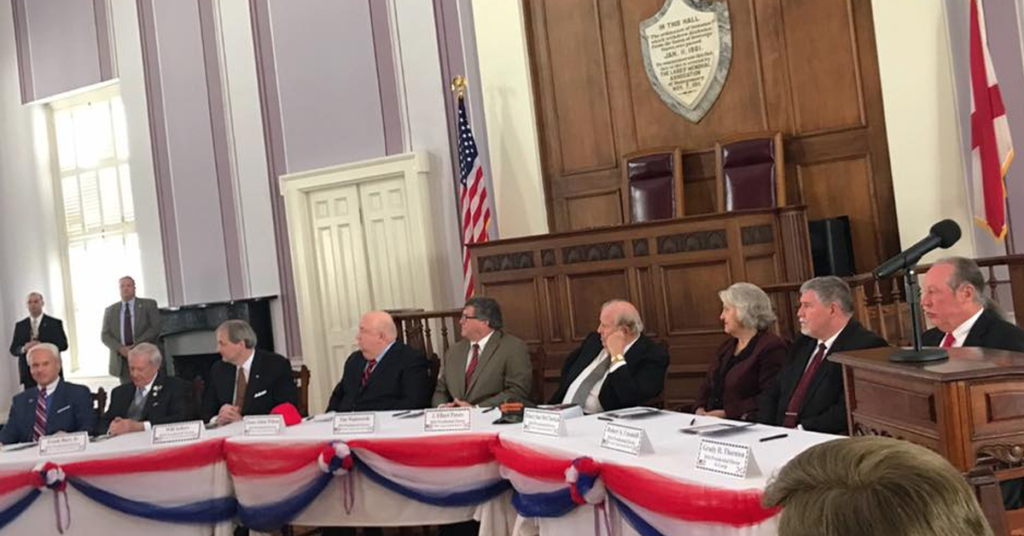
Several dozen protesters took to the steps of the state Capitol on Monday seeking to persuade Alabama’s presidential electors to cast ballots for someone other than Donald Trump. Over the last few weeks, electors in Alabama and other states have been inundated with calls, emails and letter urging them to reject Trump. But the protests were mostly symbolic in the Yellowhammer State as Trump overwhelmingly delivered the state during the general election last month, having received 1.3 million votes — roughly 62 percent of the vote. Meanwhile Democratic presidential nominee Hillary Clinton only took home 34 percent of the vote, with remaining votes divided between write-in candidates, Libertarian Gary Johnson and Green Party nominee Jill Stein. “The people of Alabama put their trust in these electors to represent the will of the people and the voice of the people of this great state in the electoral process,” Gov. Robert Bentley said before the electors cast their votes. And during an elaborate ceremony within the Montgomery-capitol, all nine of the electors voted for Trump. “Let the record show that the president-elect received more votes for the presidency than any candidate in the history of Alabama,” said Secretary of State John Merrill, who presided over the 30-minute ceremony before later certifying the vote. Watch the full electoral ceremony below: https://www.youtube.com/watch?v=H6UyVRw1U3I
Angi Stalnaker: A letter to Santa from the people of Alabama

Dear Santa, It’s been a crazy year in Alabama and we could use a break from the madness. On behalf of all of the good little boys and girls in this state who have been good all year, we want to ask you for a few Christmas miracles as we look ahead to 2017. First and foremost, we would really appreciate a scandal free year. Ok, maybe asking for an entire year without a nationally televised embarrassing event is too much to expect even from you, Santa, but can we get a month or two without a feature story on the Rachel Maddow show? We would also like to ask you for reasonable payday lending reform legislation. This issue keeps making its way through the halls of the legislature and if we could have a realistic solution that everyone could live with, we would be so thankful. Speaking of issues that keep coming up over and over again. Can you use your Christmas magic to help us ensure that Alabama’s children get the education they deserve? Every child deserves a good education with a meaningful diploma and grades that they actually earned. Can you please see to it that this gift finds a place on our sleigh this year? Finally, can you give our state the gift of a meaningful budget process? We understand that everyone wants their piece of the taxpayer funded pie but we would like a way to ensure that there is enough money in the budget to fund the programs that really need it and maybe make wiser selections when it comes to the entire budgeting process. I know I have asked for a lot this Christmas but please keep in mind these gifts are for all Alabamians and, after the year we have had, we deserve a little something special. Don’t you agree? We will leave some cookies and milk for you on the steps of the Capitol. Merry Christmas! From the people of Alabama!
Alabama’s Sarah Parcak among 100 leading Global Thinkers
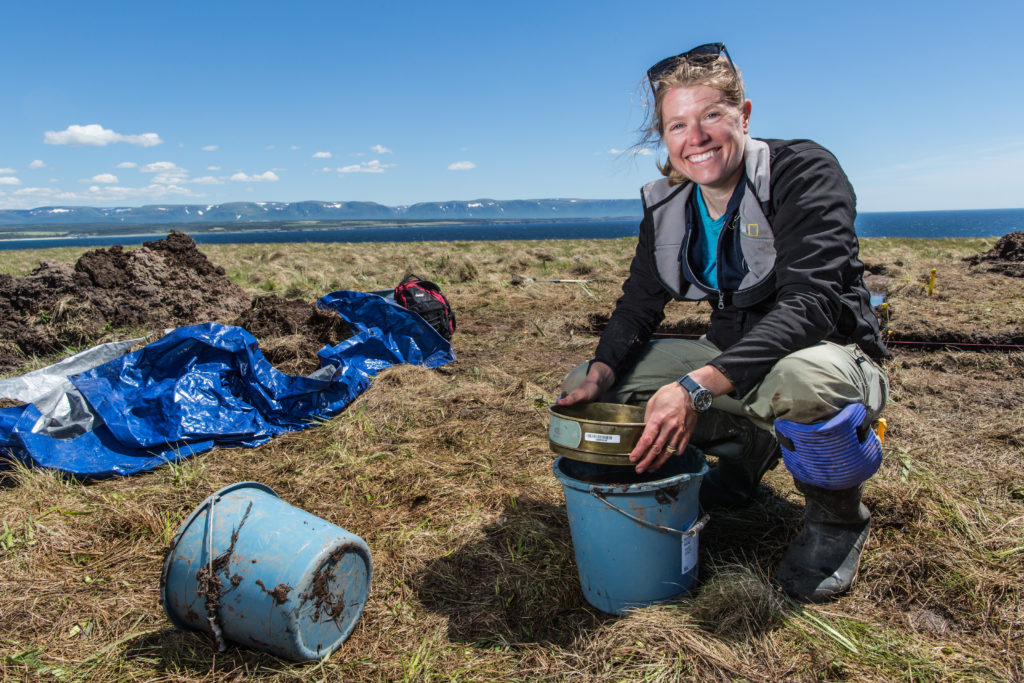
Alabama’s Sarah Parcak, Ph.D. — an archaeologist and associate professor in the UAB College of Arts and Sciences Department of Anthropology — is among this year’s 100 Leading Global Thinkers selected by Foreign Policy magazine. Every year the magazine recognizes the world’s pre-eminent thought leaders and public intellectuals in its annual issue “100 Leading Global Thinkers.” Honorees are selected by the magazine’s editors based on their standout contributions over the past year and ability to translate ideas into action that change and shape the world. They are organized into nine categories — decision-makers, challengers, innovators, advocates, artists, healers, stewards, chroniclers and moguls. Parcak can be found among the innovators. “Like never before, global development and war are pushing archaeologists into a race against time — so much so that Sarah Parcak is revolutionizing the already-modern field of space archaeology,” said the FP Global Thinkers summary of the UAB professor. “That discipline uses satellite imagery to uncover the planet’s historical artifacts and can track looting and destruction patterns. However, there aren’t enough archaeologists to study the world’s surface before parts of it disappear. The summary continued, “Now Parcak is recruiting her own citizen army for the research. GlobalXplorer, which she developed this year, functions like ‘a super-high-tech version of Google Earth,’ and allows anyone with an Internet connection to scrutinize satellite imagery of ancient locales. Parcak hopes GlobalXplorer will be the way to ‘find and protect the world’s hidden heritage.’” The eighth annual Foreign Policy special issue celebrating 100 Leading Global Thinkers is based on the theme “The Case for Optimism.” The honorees range from politicians such as Hillary Clinton and Angela Merkel, to acclaimed, avant-garde artists like Morehshin Allahyari, to billionaire philanthropists such as Mark Zuckerberg and his wife Priscilla Chan. “When we consider as we do each year the work of the world’s leading thinkers, we find that the vast majority of them – in science, technology, business, culture and government – are actually moving us forward and helping to solve the problems of the past,” said David Rothkopf, the magazine’s editor, in a press release.
Barack Obama says he’ll focus on helping new generation of leaders
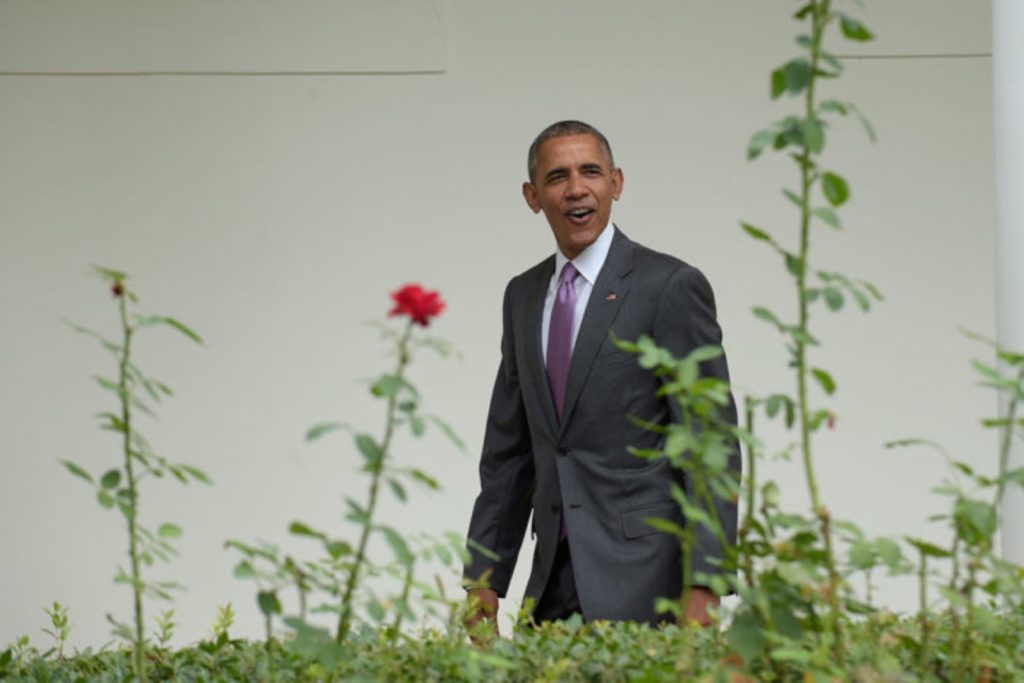
President Barack Obama says one of his missions after leaving office will be to develop a new generation of leaders on issues such as climate change, criminal justice reform and expanding health insurance coverage. In a wide-ranging interview with NPR, Obama said he wants to ensure that young people working on those issues have “whatever resources, credibility, spotlight that I can bring to help them rise up.” Obama said in the interview airing Monday that the issues he cares most about will be well served when that new generation moves into positions of authority. The Democratic Party has been hit hard during his presidency. He’ll leave with the GOP controlling the White House and Congress. Obama said Republicans have been systematic in building from the ground up while Democrats have had a bias toward national and international issues. “As a consequence I think we’ve ceded too much territory,” Obama said. Obama said he leaves office with some ideas about how to build up the party, but he says he’ll serve more as an adviser, coach and friend. “I’m less likely to get involved in all the nuts and bolts of electioneering,” Obama said. Republished with permission of The Associated Press.
Why a stronger US dollar could hinder Donald Trump’s economic plans
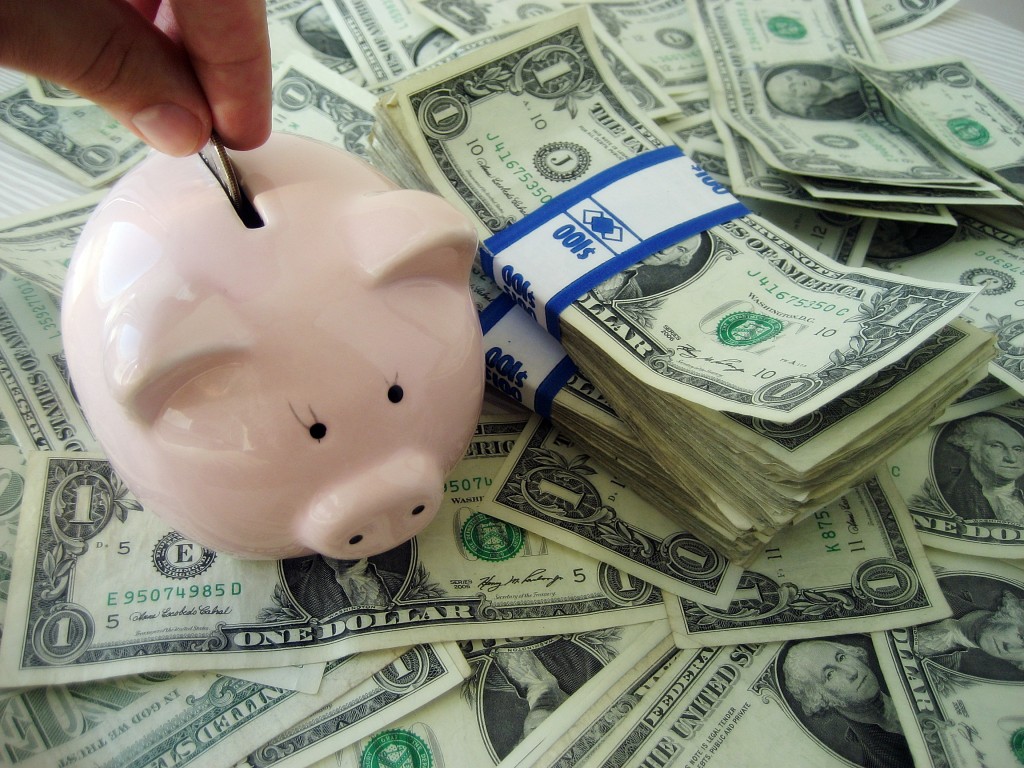
President-elect Donald Trump‘s ambitious plans to revive exports, return jobs to the United States and increase oil drilling are running up against a home-grown threat: The surging U.S. dollar. Since the Nov. 8 election, the dollar has shot up 5 percent. An index that tracks the dollar against other major currencies reached a 14-year high after the election before dipping a bit since then. In part, the dollar’s gain reflects the U.S. economy’s strength and investor confidence that Trump will accelerate growth by slashing taxes and pumping money into roads, bridges and other infrastructure. The dollar could rise even more now that the Federal Reserve has raised interest rates and foresees three more hikes next year. With rates far lower elsewhere in the world, many investors will shift money to the United States to capitalize on higher yields – a shift that could send the dollar even higher. Which creates a problem: An expensive dollar makes U.S. goods costlier overseas – and imports cheaper in the U.S. That’s a recipe for more pain for American manufacturers. A high dollar can also lead some U.S. multinational companies to move operations to countries where their dollars go further. And a high-priced dollar tends to shrink oil prices, thereby discouraging the increased energy production that Trump has made a centerpiece of his economic plans. “A strong dollar will make it more challenging to boost the international competitiveness of U.S. manufacturing, bring back jobs and increase exports,” says Eswar Prasad, professor of trade policy at Cornell University. Even before the election, a comparatively strong dollar had slowed U.S. exports for much of the past two years. Exports of goods and services had peaked in October 2014 at $200 billion. The figure fell to $179 billion in March before recovering slightly as the dollar weakened. But then the dollar marched back up and accelerated after Trump’s victory. It was no surprise when U.S. exports fell nearly 2 percent in October, according to the Commerce Department. Consider what the strong dollar does to U.S. corporate earnings, too: Whatever revenue American companies earn in foreign currencies is worth less once it’s exchanged into U.S. dollars and returned home. In recent weeks, American companies, from Whirlpool to Apple, have complained that the strong dollar has dented their earnings. At Vaughn Manufacturing Co. in Nashville, Tennessee, the company president, Mark Vaughn, is fretting about the dollar’s 11 percent rise against Mexico’s peso since the election. Around 20 percent of Vaughn’s tool-and-die business is done in Mexico. And the company competes with Chinese and Korean companies that aren’t saddled with an expensive currency. “It’s a concern,” he says. A rising dollar can encourage U.S. companies to move factories and jobs overseas because it makes foreign investments cheaper. Trump, of course, has pledged to stop American companies from taking operations offshore. He’s even threatened to impose a 35 percent tax on companies that leave America and then ship goods back to the United States. The dollar’s rally could also complicate the president-elect’s plans to spur oil drilling by reducing environmental regulations. Oil is usually bought in dollars. So the higher the dollar’s value, the fewer dollars are needed to buy a barrel of oil. The result is that the dollar-denominated price of oil drops. When oil prices drop, energy companies tend to cut investment in drilling and production. Low oil prices are the main reason U.S. business investment plummeted late last year and in the first half of 2016, thereby slowing the economy. Oil prices have risen since Trump’s victory but could retreat again if the dollar keeps rising. The Trump transition team didn’t respond to requests for comment. William Cline, senior fellow at the Peterson Institute for International Economics, says he worries that the strong dollar could incite conflicts between the U.S. and its trading partners – something that happened during the Reagan administration in the 1980s. Despite his reputation as a free trader, Reagan used tariffs against Japanese motorcycles and semiconductors, which had enjoyed a price edge in the U.S. market resulting from a sharp rise in the dollar. It took an extraordinary 1985 meeting at New York’s Plaza Hotel to craft an arrangement with Japan, Germany and Britain to reduce the dollar’s value and ease tension. Trump, who threatened to tear up trade treaties and impose tariffs against Mexico and Japan, might be even quicker to impose sanctions against what he sees as unfair trade practices, potentially triggering a wider trade war. In an analysis it did before the election, the Peterson Institute warned that the United States could lose nearly 4.8 million jobs in a trade war that would result if Trump imposed the tariffs on Mexico and China – and they responded with equal tariffs of their own. “The tricky thing in the case of Trump is if his administration sees trade deficits as the result of unfair trade” and not of economic forces that are pushing the dollar higher, Cline says. “You could get into a lot of trade conflicts.” Republished with permission of The Associated Press.
Bradley Byrne: A few Christmas thoughts

With Christmas fast approaching, I want to take time to reflect on two important thoughts: the need to count our blessings and the importance of sharing those blessings with others. Last week, I stopped by the WKRG studios in Mobile to donate a few toys to their annual toy drive. I was blown away to see a warehouse packed full of toys that will make their way to children in need. It was a truly heartwarming experience to know so many from Southwest Alabama came together to help spread joy this Christmas season. One of my favorite things about Christmas is the spirit of giving. The opportunity to see neighbors helping neighbors and people lending time or money to those they may not even know. This past weekend, I had the opportunity to ring the bell for the Salvation Army in downtown Fairhope. It is always really special to see people – young and old – dropping money in the bucket in an effort to bring a smile to someone else’s face. You know, the holidays are a fun and exciting time, but for many of us, they can also be a busy and even stressful time of year. Christmas shopping can sneak up on you, family tensions can run high, and work and school demands can increase leading up to Christmas. I want to encourage all of us to slow down this Christmas, take a moment to reflect on the true reason for the season, spend time with loved ones, and remember our many blessings here in the United States of America. As we count our blessings and share them with others, I hope you will keep two other groups of people in mind. I hope you will remember the Christians around the world who face persecution each and every day simply for what they believe. Particularly in the Middle East, Christians are forced to secretly carry out their religious practices for fear of attack or ridicule. The freedom to freely exercise our religion is something we too often take for granted as Americans, so I hope you will join me in saying a special prayer for those facing religious persecution throughout the world. I’m also reminded of our military men and women, who are away from their families and loved ones this Christmas. It is because of their service, and the sacrifice of those before them, that we are able to freely celebrate Christmas. In addition to the service members themselves, let us also say a prayer for their families who I know miss them dearly. These days, as you turn on the television and look at some of the challenges facing the world, it can be easy to feel like evil and darkness is winning. Personally, seeing the many challenges serve as a reminder for me to fight even harder for the values and freedoms we all hold dear throughout my service in Congress. But, to all of us, the Christmas season should help us remember that, no matter how bad things may seem at times, we are blessed with eternal hope through the birth of Jesus Christ. So, as I do every Christmas, I take comfort in words written in John chapter 1, verse 5: “The light shines in the darkness, and the darkness has not overcome it.” May we always remember those important words of hope. From my family to yours – Merry Christmas! • • • Bradley Byrne is a member of U.S. Congress representing Alabama’s 1st Congressional District.
Ala. Speaker Mac McCutcheon appoints new committee chairmen
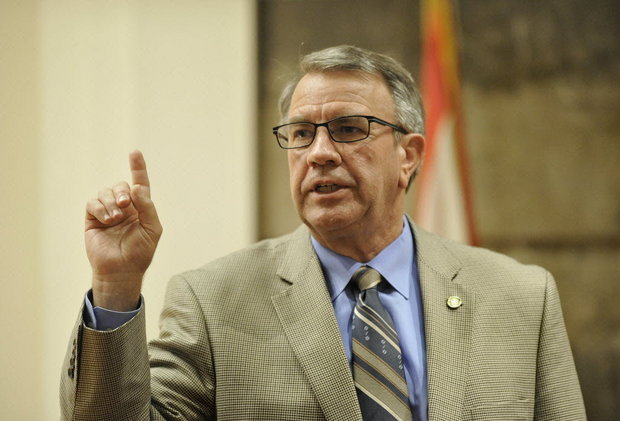
With the Alabama Legislature poised to kick-off it’s 2017 regular session less than two months away, on Feb. 7, Alabama’s newly elected House Speaker is busy this holiday getting things ready. On Monday, the Monrovia-Republican announced the members who will chair the chambers’ Rules, Internal Affairs, Public Safety and Homeland Security, Commerce and Small Business, and Insurance committees when the Legislature convenes for in 2017. “Each of these legislators is a proven leader and possesses a skill set that makes them uniquely qualified to chair their committees,” McCutcheon said in a news release. “Chairing a legislative committee significantly increases a lawmaker’s workload and demands a much greater time commitment, so I appreciate their willingness to serve in these important leadership positions.” Here’s who’s McCutcheon has chosen as chairs: Troy-Republican, state Rep. Alan Boothe will chair the powerful House Rules Committee, which determines each day’s work agenda and decides which bills will come to the floor for debate and consideration. Boothe has served in the House since 1998 and previously served on the Troy City Council. He chaired the House Internal Affairs Committee, but will relinquish that post in order to lead the Rules Committee. Anniston-Republican, state Rep. Randy Wood will take over as chair of the House Internal Affairs Committee, which is tasked with considering bills pertaining to the operations and ethics of the Alabama Legislature. It also holds disciplinary power over members who violate the body’s rules. Wood was elected to the House in 2002 and previously held a seat on the Calhoun County Commission. Wood will relinquish his chairmanship of the House Public Safety and Homeland Security committee to serve in his new role. Morris-Republican, state Rep. Allen Treadaway, a captain in the Birmingham Police Department, will chair the House Public Safety and Homeland Security Committee. Treadaway, who was elected to the House in 2006, was a member of the committee and has been elevated to its leadership. Birmginham-Republican, state Rep. Jim Carns, a businessman with experience in manufacturing, will lead the House Commerce and Small Committee. Carns served in the Alabama House from 1990 to 2002 and returned to the body following a special legislative election in 2011. He also served as a member of the Jefferson County Commission. Albertville-Republican, state Rep. Kerry Rich (has been selected to chair the House Insurance Committee. Rich has served in the House since 2010 but was previously elected to two terms from 1974 to 1978 and from 1990 to 1994. The owner and manager of several radio stations throughout his career, he was also a member of former Alabama Gov. Fob James’ cabinet in the mid-1990s.
John McCain sees Russia hacking as threat, at odds with Donald Trump
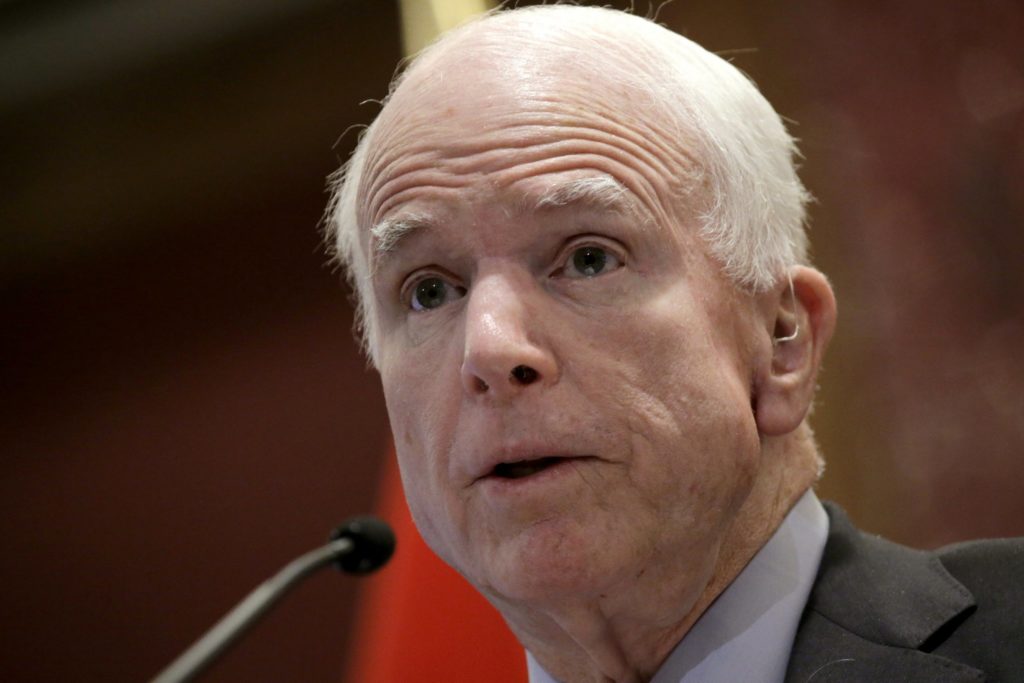
President-elect Donald Trump is the business titan who has spoken appreciatively of Russian President Vladimir Putin. Republican Sen. John McCain is the tough-talking national security hawk who warns that Russian interference in the U.S. election threatens to “destroy democracy.” McCain, chairman of the Armed Services Committee, on Sunday joined Democrats in calling for a special select committee to investigate foreign cyberattacks, putting him at odds not only with the incoming GOP president but with Senate Majority Leader Mitch McConnell, R-Ky., who favors allowing the Intelligence committee to take the lead on the inquiry. “We need a select committee. We need to get to the bottom of this. We need to find out exactly what was done and what the implications of the attacks were, especially if they had an effect on our election,” McCain said. “There’s no doubt they were interfering and no doubt that it was cyberattacks. The question now is how much and what damage and what should the United States of America do? And so far, we have been totally paralyzed.” Trump calls reports of Russian hacking “ridiculous” and his transition team dismissed the CIA assessment, saying it was the work of the same people who claimed Iraq had weapons of mass destruction. CIA Director John Brennan has said the intelligence community is in agreement that Russia tried to interfere in the U.S. presidential election, though there’s no evidence Moscow succeeded in helping Trump win. But the charge, along with Trump’s selection of a potential secretary of state with business ties to Russia, has divided a GOP riven by a fierce presidential primary and Trump’s refusal to single out Moscow for criticism. The fractures within the Republican Party will test longstanding GOP orthodoxy that saw Russia as a threat and responded to Putin’s annexation of Crimea with tough sanctions. “I think reality is going to intercede at one point or another,” McCain said Sunday on CNN’s “State of the Union,” on the eve of the Electoral College vote expected to formalize Trump’s victory. Trump, McCain suggested, “will very quickly understand what the Russians are all about.” The Twitter-loving Trump did not immediately respond to McCain’s remarks. But the president-elect’s incoming chief of staff refused Sunday to say that the president-elect trusts the CIA’s conclusion that Russia hacked the Democratic National Committee in a bid to help the real estate mogul defeat Democrat Hillary Clinton. “They haven’t been totally up front and transparent in their opinion as to who, what, where and how this all happened,” Reince Priebus said of the intelligence community on “Fox News Sunday.” Republican Sen. Richard Burr of North Carolina said Friday that his Intelligence panel “will follow the intelligence wherever it leads.” McCain at Armed Services and Sen. Bob Corker, chairman of Foreign Relations, also plan inquiries. McCain joined Republican Sen. Lindsey Graham and Democratic Sens. Chuck Schumer and Jack Reed in pressing for a select committee in a letter released Sunday. An aide to McConnell said he would review the letter. McCain and Trump have clashed throughout the campaign. Trump bashed McCain as a “loser” and “not a war hero” because he was shot down and captured during the Vietnam War. McCain criticized Trump for making disparaging remarks about NATO, immigrants, Muslims and a “Gold Star” family that lost a son in Iraq – and for refusing to say he’d accept the presidential election results unless he won. McCain dropped his tepid support for his party’s nominee in October over the release of a recording in which Trump boasts about assaulting women. President Barack Obama has ordered a full review of any Russian involvement before he leaves office next month. While Trump’s choice of Exxon Mobil CEO Rex Tillerson to be secretary of state has drawn concern among some Republicans, he is expected to win confirmation despite ties to Russia. Republished with permission of The Associated Press.
Donald Trump action on health care could cost Planned Parenthood
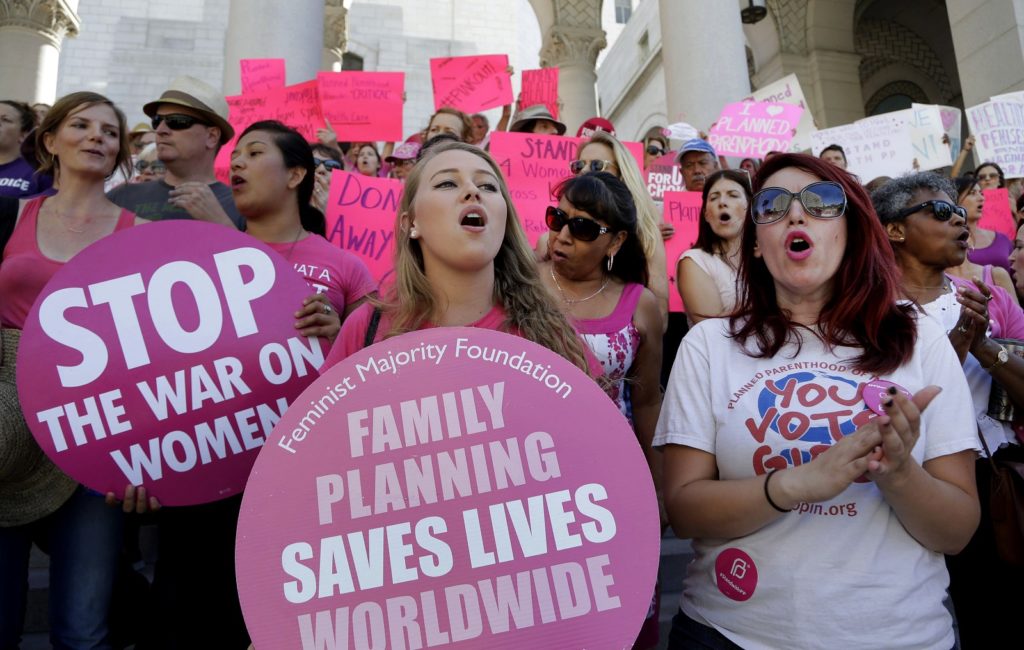
One of President-elect Donald Trump‘s first, and defining, acts next year could come on Republican legislation to cut off taxpayer money from Planned Parenthood. Trump sent mixed signals during the campaign about the 100-year-old organization, which provides birth control, abortions and various women’s health services. He said “millions of women are helped by Planned Parenthood,” but he also endorsed efforts to defund it. Trump once described himself as “very pro-choice.” Now he’s in the anti-abortion camp. Still, the Republican has been steadfast in calling for repeal of President Barack Obama‘s health care law, and the GOP-led Congress is eager to comply. One of the first pieces of legislation will be a repeal measure that’s paired with cutting off money for Planned Parenthood. While the GOP may delay the impact of scuttling the law for almost four years, denying Planned Parenthood roughly $400 million in Medicaid funds would take effect immediately. “We’ve already shown what we believe with respect to funding of Planned Parenthood,” House Speaker Paul Ryan, R-Wis., told reporters last month. “Our position has not changed.” Legislation to both repeal the law and cut Planned Parenthood funds for services to low-income women moved through Congress along party lines last year. Obama vetoed it; Trump’s win removes any obstacle. Cutting off Planned Parenthood from taxpayer money is a long-sought dream of social conservatives, but it’s a loser in the minds of some GOP strategists. Planned Parenthood is loathed by anti-abortion activists who are the backbone of the GOP coalition. Polls, however, show that the group is favorably viewed by a sizable majority of Americans — 59 percent in a Gallup survey last year, including more than one-third of Republicans. “Defunding Planned Parenthood as one of their first acts in the new year would be devastating for millions of families and a huge mistake by Republicans,” said incoming Senate Minority Leader Chuck Schumer, D-N.Y. Democrats pledge to defend the group, and they point to the issue of birth control and women’s health as helping them win Senate races in New Hampshire and Nevada this year. They argue that Trump would be leading off with a political loser. But if he were to have second thoughts and if the Planned Parenthood provision were to be dropped from the health law repeal, then social conservatives probably would erupt. “They may well be able to succeed, but the women of America are going to know what that means,” said Rep. Diana DeGette, D-Colo., citing reduced access to services Planned Parenthood clinics provide. “And we’re going to call Republicans on the carpet for that.” At least one Republican senator, Susan Collins of Maine, may oppose the effort. Collins has defended Planned Parenthood, saying it “provides important family planning, cancer screening and basic preventive health care services to millions of women across the country.” She voted against the health overhaul repeal last year as a result. Continued opposition from Collins, which appears likely, would put the repeal measure on a knife’s edge in the Senate, where Republicans will have a 52-48 majority next year. Senate GOP leaders could afford to lose just one other Republican. Anti-abortion conservatives have long tried to cut Planned Parenthood funds, arguing that reimbursements for nonabortion services such as gynecological exams help subsidize abortions. Though Planned Parenthood says it performed 324,000 abortions in 2014, the most recent year tallied, the vast majority of women seek out contraception, testing and treatment of sexually transmitted diseases, and other services including cancer screenings. The drive against Planned Parenthood picked up steam in 2015 after an anti-abortion group called the Center for Medical Progress released secretly-recorded videos that it claimed showed Planned Parenthood officials profiting from sales of fetal tissue for medical research. The measure, however, would strip Planned Parenthood’s Medicaid funding for only a year, a step taken to give time for continued investigations of Planned Parenthood’s activities. A House panel is still active, but investigations by 13 states have been concluded without charges of wrongdoing. Planned Parenthood strongly denied the allegations and no wrongdoing was proved, but the group announced in October that it will no longer accept reimbursement for the costs involved in providing fetal tissue to researchers. The defunding measure would take away roughly $400 million in Medicaid money from the group in the year after enactment, according to the nonpartisan Congressional Budget Office, and would result in roughly 400,000 women losing access to care. One factor is that being enrolled in Medicaid doesn’t guarantee access to a doctor, so women denied Medicaid services from Planned Parenthood may not be able to find replacement care. Planned Parenthood says private contributions are way up since the election, but that they are not a permanent replacement for federal reimbursements. “We’re going to fight like hell to make sure our doors stay open,” said Planned Parenthood spokeswoman Erica Sackin. Republished with permission of The Associated Press.
Obama admin sets rule to protect streams near coal mines

The Obama administration has finalized rules designed to reduce the environmental impact of coal mining on the nation’s streams, a long-anticipated move that met quick resistance from Republicans who vowed to overturn it under President-elect Donald Trump. The Interior Department said Monday the rule will protect 6,000 miles of streams and 52,000 acres of forests, preventing debris from coal mining from being dumped into nearby waters. Officials said the rule would cause only modest job losses in coal country, but Republicans denounced it as a job-killer imposed during President Barack Obama‘s final days in office. Republican Rep. Rob Bishop of Utah, chairman of the House Natural Resources Committee, said he looks forward to working with Trump to overturn the rule “and implement policies that protect communities forsaken by this administration.” Republished with permission of The Associated Press.
GOP electors cite rural voice in Electoral College
As members of the Electoral College prepare to choose Donald Trump as the 45th president of the United States, some Republican electors say they are defending rural and small-town America against big-state liberalism and its support for national popular vote leader Hillary Clinton. But the picture is more complicated. “Our Founding Fathers established the Electoral College because those larger states, those larger areas, don’t necessarily need to be the ones that rule,” said Mary Sue McClurkin, a Republican elector from Alabama. In Trump’s hometown of New York City, which Clinton won easily, Democratic elector Stuart Appelbaum countered that “we’re electing the president of the entire country,” so “the will of the entire country should be reflected in the results.” It’s an expected argument given the unusual circumstances of the 2016 election. Clinton won some 2.6 million more votes than Trump in the nationwide tally. But Trump is line to get 306 of the 538 electoral votes under the state-by-state distribution of electors used to choose presidents since 1789. Trump won rural areas, small towns and many small cities, including in states Clinton carried. Clinton won in the largest urban areas, including in Trump states. Former Alaska Gov. Sean Parnell, a GOP elector, said Democrats’ strength on the coasts is enough to justify the Electoral College. “A presidential election decided each time by either California or New York,” he said, would leave voters in Alaska and many other places “with no voice” in presidential politics. It’s worth noting that Trump didn’t just win small states and Clinton didn’t just take large ones. Trump and Clinton split the six most populous states, each winning three, but Trump won seven of the top 10. Of the 10 smallest states plus the District of Columbia, Trump edged Clinton 6-5. Trump actually ran up his national advantage in midsize states. But the dynamics highlight the delicate balance in a political structure that defines itself simultaneously as a democracy and a republic. When the Constitution was written, some signers wanted direct election of the president. Others wanted state legislatures or Congress to choose the executive. The Electoral College was the end result: Each state got a slate of electors numbering the same as its delegation in Congress. Electors vote, with rare exception, for whichever candidate won the most votes in their state – effectively meaning the presidential election is 51 separate popular votes. “It’s such an interesting compromise that gave us the Electoral College, unique to our American system,” said elections law expert Will Sellers from Alabama, who will serve as a Republican elector for the fourth time. The system gives smaller states an advantage: The number of electors is based on each state’s number of U.S. representatives plus two, for each member of the U.S. Senate – itself a compromise favoring small states. So California’s 55 electoral votes reflect 53 House members and two senators. For seven states, including Wyoming, Delaware and the Dakotas, those extra two electoral votes bring their total to the minimum of three. Put another way, Alaska’s three electors will cast 0.56 percent of the 538 electoral votes despite casting just 0.23 percent of the national popular vote. But the advantage doesn’t just favor Republicans. Democratic Nevada makes up 1.12 percent of the Electoral College but cast less than 1 of a 100 national ballots. The Electoral College-popular vote split, along with Trump’s larger-than-life personality and lack of elective experience, has fueled a vocal, but almost certainly futile, movement to deny him the presidency by pressuring electors to vote against him when they convene Monday in the 50 states and Washington, D.C. The Associated Press tried to reach all 538 electors and was able to interview more than 330 of them. Many reported getting tens of thousands of emails, calls and letters asking them to vote against Trump. But the canvass found overwhelming support for the system, and the nominee, among Republican electors. The AP found only one pledged to Trump who will refuse to vote for him. “I feel like the Electoral College gives a very fair perspective, so that those who are in the rural areas are able to have an equal voice with those who are in the urban areas,” said Oklahoma elector Lauree Elizabeth Marshall. If anything, when Republican electors talk about large states, they actually mean New York and California. Clinton’s lead in California, the most populous state, is more than her national lead. She won New York by about 1.7 million votes. McClurkin, the Alabama elector, says many of the letters and emails she’s received have come from those two states. “I’ve not gotten any from a Southern state,” she said. But Democratic elector Eric Herde from Washington state argued that the country should scrap electoral votes in favor of the national ballot count. All Electoral College defenses, whether citing population or the genius of the founders, amount to “states mattering more than people,” Herde said. “The argument that the person who got the most votes should win is still the better argument.” Republished with permission of The Associated Press.
