
Alabama worried Florida, Georgia water settlement could impact its rivers

Water wars between Florida and Georgia are heating up again over the directive by a U.S. Supreme Court special master ordering the states to reach a settlement that could have a substantial impact on Alabama rivers As reported by POLITICO Florida’s Bruce Ritchie, Alabama is questioning a directive by special master Ralph Lancaster asking Florida and Georgia to settle its long-running water dispute, particularly over the suggestion the two states consider getting water from other sources during times of drought. The debate between Florida and Georgia began in 2013 after the devastation of the Apalachicola Bay oyster bed, leading Florida to request the U. S. Supreme Court to intervene by placing a limit on Georgia’s water consumption. Ritchie writes that Alabama, in a letter to the court last week, expressed concern that those “other sources” – particularly “the importation of water from outside the ACF (Apalachicola-Chattahoochee-Flint River) Basin” – include water from rivers flowing from Alabama into Georgia, such as the Coosa and Tallapoosa rivers. Alabama has not been named in the case since Florida, and the court, acknowledged the only issue at hand is with Georgia’s water consumption. However, Ritchie notes that Alabama feels that if water transfers are included in a settlement, the state would be forced to join the action. Also, Alabama argues that the court does not have authority to order water transfers from areas other than the ACF system. Birmingham Attorney John C. Neiman Jr., representing Alabama, wrote in a letter to Lancaster: “If the court contemplates a decree authorizing transfers from interstate river basins flowing into Alabama as a result of settlement discussions or otherwise, Alabama would respectfully request that it first receive notice of that possibility and be given the opportunity to assert its interests in an appropriate way. “To this end, Alabama is willing to participate in any negotiations between Florida and Georgia that address this issue, and will separately ask Florida and Georgia to include Alabama in any such negotiations,” Neiman concluded.
Donald Trump meets with Supreme Court candidate from Alabama
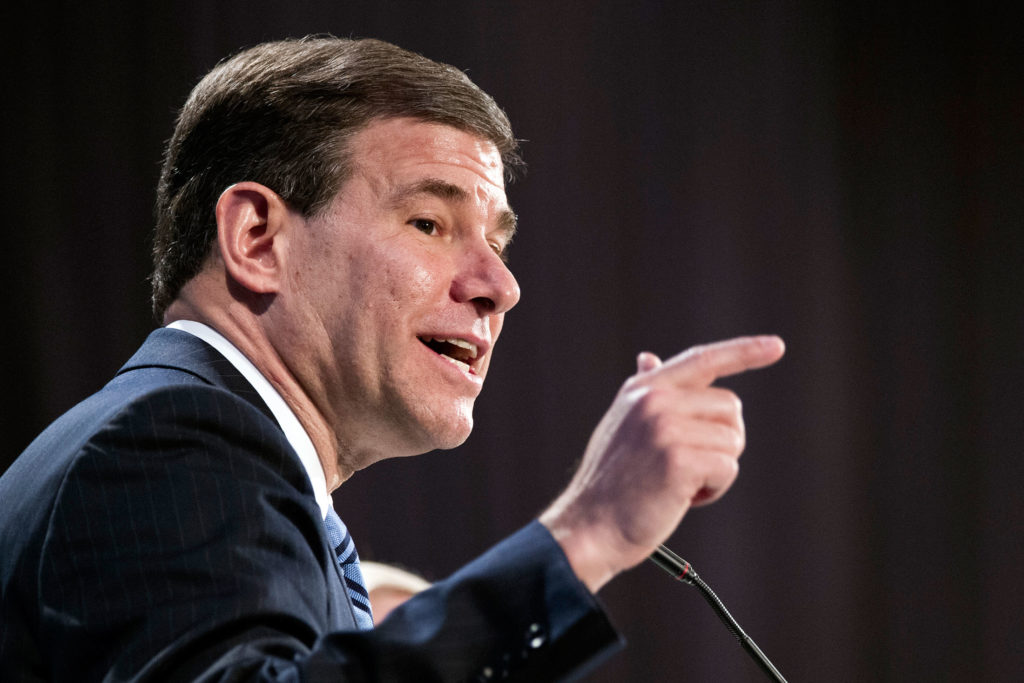
President-elect Donald Trump has met with one of the judges on his short list for potential Supreme Court nominees, less than two weeks before he is expected to announce his choice for the nation’s highest court. Judge William Pryor, an Alabama-based judge on the 11th U.S. Circuit Court of Appeals, met with Trump in New York on Saturday, said two people familiar with the meeting. They spoke on condition of anonymity because the meeting had not been publicly announced. Trump said last week that he would select a candidate to fill the seat of the late Justice Antonin Scalia within his first two weeks in office. He has promised to seek someone in the conservative’s mold and said he is working from a list of 21 people, mainly conservative state and federal judges in their 50s. For nearly a year, the court has had only eight justices, which means they can deadlock at 4-4 deadlock on decisions. The likely confirmation of Trump’s choice by a Republican-controlled Senate would restore a fifth vote for conservative outcomes in cases involving voting rights, the power of unions and in class-action lawsuits, lost with Scalia’s death. Trump also has said he wants an abortion opponent on the bench, although it would take a second Trump appointee to bring about dramatic change on that issue. Other potential Trump nominees include state Supreme Court judges Allison Eid of Colorado, Joan Larsen of Michigan, David Stras of Minnesota and Don Willett of Texas, and federal appellate judges Steven Colloton, Thomas Hardiman, Raymond Kethledge and Diane Sykes. Trump hinted last February that he had two favorites on the list of 21, Pryor and Sykes, although there is no indication that he’s made a final decision. Many factors come into play in choosing a Supreme Court justice, including age and gender. Typically, presidents seek nominees who have the potential for a long tenure in the lifetime appointments, seeking nominees under 60 years old. Pryor is 54. Trump’s victory rewarded Senate Majority Leader Mitch McConnell‘s strategy of refusing all year even to consider President Barack Obama‘s nomination of Judge Merrick Garland to take Scalia’s seat. McConnell announced on the night that Scalia died that the vacancy should be filled not by Obama, but by the next president. The Kentucky Republican was criticized for his stance by Obama, other Democrats and many legal scholars. Pryor also is a member of the U.S. Sentencing Commission, an independent agency that sets sentencing guidelines for the federal courts. He was the Alabama’s attorney general from 1997 to 2004. His predecessor in that job, Sen. Jeff Sessions, is Trump’s pick for U.S. attorney general, and the two – both natives of the city of Mobile, are said to have a close working relationship. In a statement in 2005 following Pryor’s nomination to the Eleventh Circuit, Sessions hailed Pryor as someone who “personally does not believe in abortion. He does not believe it is right. He believes it is wrong.” Pryor once called the 1973 landmark abortion decision, Roe v. Wade, the “worst abomination in the history of constitutional law.” He has also warned against the danger of “activist judges” influenced by personal beliefs. When he was appointed to the Eleventh Circuit, he said he would put his personal feelings aside and follow legal precedent. Locally, Pryor had a reputation as a scholarly attorney general, more interested in the law than rough-and-tumble politics. After getting a ninth justice on the court, the next big question will be whether liberal Justices Ruth Bader Ginsburg and Stephen Breyer, and Justice Anthony Kennedy, the pivotal vote closest to the court’s center, will retire during a Trump administration or try to stay on the bench in the hope that Trump is not re-elected in 2020. Ginsburg is 83, Kennedy is 80 and Breyer is 78. Republished with permission of The Associated Press.
18M more Americans would be uninsured under 2016 GOP repeal

Insurance premiums would soar and some 18 million Americans would lose health coverage if Republicans partially repeal President Barack Obama‘s health care law without a replacement, Congress’ nonpartisan budget office estimated Tuesday. The Congressional Budget Office analyzed a GOP 2016 repeal measure, which Republicans have cited as a starting point for their 2017 drive to dismantle and replace Obama’s health overhaul. Premiums for policies bought from online marketplaces established by Obama’s law would rise up to 25 percent a year after enactment of repeal. They’d about double by 2026, the report estimated. There’d also be 18 million more uninsured people a year after enactment and 32 million more by 2026, the report projected. The numbers served as a flashing yellow light for this year’s effort by President-elect Donald Trump and congressional Republicans to annul Obama’s law and — in a more complex challenge — institute their own alternative. While Republicans have produced several outlines for how they’d recraft Obama’s 2010 statute, they’ve never united behind one plan despite years of trying and there are many unknowns about what will happen in insurance markets while the GOP effort is underway. The report also became immediate political fodder for both sides in what is expected to be one of this year’s premier battles in Congress. Trump seemed to complicate that fight over the weekend when he told The Washington Post that a forthcoming GOP plan would provide “insurance for everybody.” In contrast, some congressional Republicans have used a more modest description, saying the plan will offer “universal access.” The 2016 bill that CBO analyzed did not replace Obama’s law with a GOP alternative, which Republicans have insisted will be an integral part of their health care drive this year. Because of that omission, Donald Stewart, spokesman for Senate Majority Leader Mitch McConnell, R-Ky., said the report “assumes a situation that simply doesn’t exist and that no one in Congress advocates.” AshLee Strong, spokeswoman for House Speaker Paul Ryan, R-Wis., called the estimates “meaningless” because they ignored plans for legislation and regulatory actions by the incoming Trump administration aimed at revamping how people could obtain coverage. Even so, Republicans have cited last year’s bill — which Obama vetoed — as a starting point for their 2017 drive to erase his law. Finding unity among Trump and GOP lawmakers on what a new plan should look like is expected to be a challenging task Democrats used the report as ammunition to assail the Republican health-care push. “Nonpartisan statistics don’t lie: it’s crystal clear that the Republican effort to repeal the Affordable Care Act will increase health care costs for millions of Americans and kick millions more off of their health insurance,” Senate Minority Leader Chuck Schumer, D-N.Y., said in a written statement that used the law’s formal name. Republished with permission of The Associated Press.
Talladega College raises over $600k to play at Donald Trump’s inauguration

The Talladega College Marching Tornadoes band found themselves in the middle of a national controversy over its decision to perform at president-elect Donald Trump‘s inauguration on Friday. Since agreeing to participate, the historically black Alabama college found itself struggling to raise the $75,000 necessary to travel to D.C. and participate. Enter a hopeful solution: a GoFundMe campaign. Hoping to crowdsource the necessary funds, the small school took to the internet to meet the fundraising goal, and did they ever. In just 14 days, with the help of 10,690 individuals across the country, the school has raised $619,669. That’s over eight time the $75,000 goal. What put the college over the top? An appearance from school president Dr. Billy C. Hawkins on “The O’Reilly Factor” on Fox News last Thursday night. “Some alumni have come at me pretty hard; they don’t want the band to participate and say I am a disgrace to my race,” Hawkins told O’Reilly during the segment. “This is about the students having an opportunity to participate in this national ceremony.” Following Hawkins’ appearance and O’Reilly’s plea to his viewers to help make the trip possible money poured into the site in hopes of making the trip a reality for the roughly 230 band members. “Congratulations to The Marching Tornadoes and President Hawkins!,” commented a man who donated $100 on the page. “I look forward to seeing you on television Friday! Make Alabama proud!” In a Friday news conference, Hawkins called the response “probably the single-greatest fundraising effort” for the school. The band is still taking donations.
Barack Obama praises Press Secretary John Earnest at last session with reporters
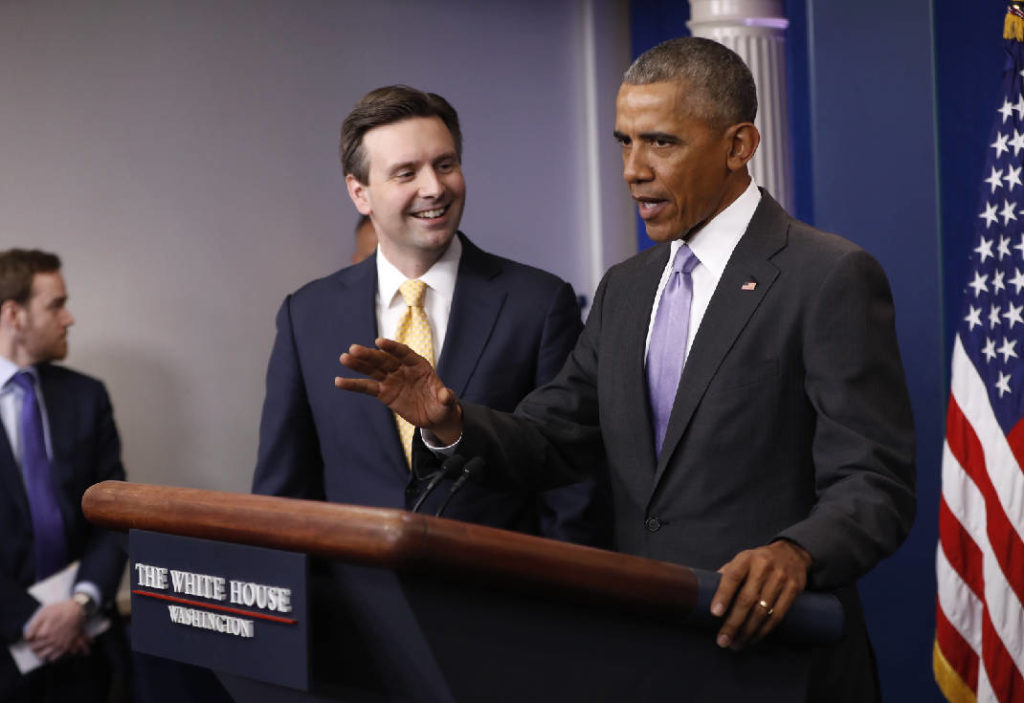
President Barack Obama has made a surprise visit to the final daily press briefing with White House Press Secretary Josh Earnest. Obama praised Earnest Tuesday for “his smarts and his maturity,” but added that one of his best qualities has been his integrity. Obama says Earnest is “tough and didn’t always give you guys what you wanted,” but that he tried to make sure to share as much of the administration’s vision and policy as possible. Earnest praised the journalists attending the briefing, saying that they serve a role that is a “uniquely American feature of our government. He said, “it’s made President Obama a better president and a better civil servant.” Republished with permission of The Associated Press.
Anti-death penalty protesters arrested outside Supreme Court
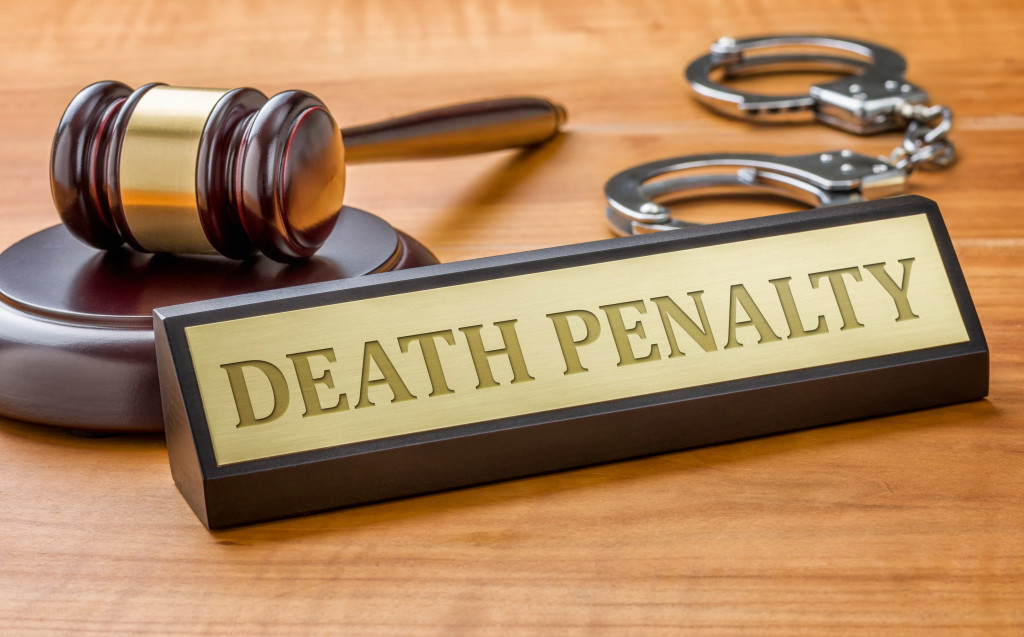
A Supreme Court spokeswoman says 18 demonstrators have been arrested outside the court during a protest against the death penalty. The protest on Tuesday marked 40 years since the first person was executed after the Supreme Court allowed capital punishment to resume in 1976. The arrests took place after protesters climbed the steps of the court’s marble plaza in a steady rain to unfurl a large banner reading “Stop Executions.” Dozens of other protesters stood on the sidewalk in front of the court chanting, singing hymns and holding signs that listed the names of every person executed over the past four decades. Executions and new death sentences have been declining in recent years. Twenty people were executed last year, the fewest since 1991, when 14 people were put to death. Republished with permission of The Associated Press.
Artwork depicting Ferguson removed from Capitol display
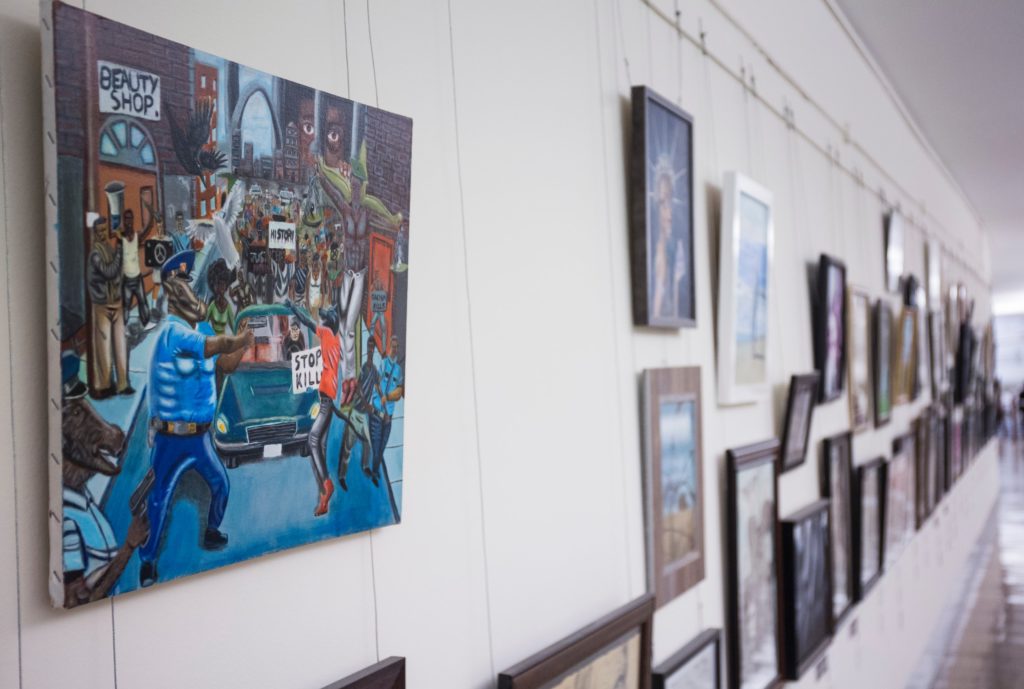
A student’s painting that divided members of Congress for its depiction of Ferguson, Missouri, has been removed from its Capitol Hill display, this time perhaps permanently. Several Republicans had complained about the painting, which shows a pig in a police uniform aiming a gun at a protester, and even took down the artwork temporarily. The lawmakers argued that the painting violated rules for a national student arts competition by showing subjects of contemporary political controversy or of a sensationalistic or gruesome nature. In August 2014, a white police officer shot and killed Michael Brown, an unarmed black teenager, in Ferguson, setting off weeks of protests. Architect of the Capitol Stephen Ayers informed lawmakers late Friday that the painting would be removed. On Tuesday, with House lawmakers back home for the week, the painting was gone. The painting was among hundreds completed by high school students that are featured in a tunnel leading to the Capitol and had been hanging for months. But some conservative media outlets called for its removal and Republican lawmakers repeatedly took it down and returned it to Rep. William Lacy Clay‘s office. Clay put it back up, saying its removal violated a constituent’s First Amendment rights to freedom of expression. That constituent, David Pulphus, co-wrote a column with Etefia Umana, published in the St. Louis Post-Dispatch that said they surely would have been arrested if they had dared to enter the Capitol and removed the statue of slavery advocate John C. Calhoun, a vice president and senator from South Carolina who served before the Civil War. Umana and Pulphus wrote that anger toward the painting was misplaced and fails to address critical issues pertinent to conditions in African-American communities. “Art imitates life, but no critic has asked the fundamental question the painting begs: Why would a young student with hope, promise and purpose perceive our community and the police in such a manner?” the pair wrote. The column concluded with: “David’s only comment is, ‘The art speaks for itself.’ It has spoken loudly. Now, who will protect American civilization, including our Constitution and democracy?” Clay called the decision arbitrary and insulting. He said the painting would have a “place of honor in my Capitol Hill office.” “This is now about something much bigger than a student’s painting. It is about defending our fundamental First Amendment freedoms which include the right to free expression; even when that creativity is considered objectionable by some, and applauded by others,” said Clay, who promised to seek a quick reversal of the decision. Ayers wrote a letter to Clay saying that he consulted with industry experts and reviewed the painting itself before determining that it didn’t comply with the House Office Building Commission’s prohibitions for the Congressional Arts Competition Rep. David Reichert, R-Wash., said the painting hung in clear defiance of rules established for the arts competition and was a slap in the face to law enforcement officers. His letter to the architect of the Capitol initiated the painting’s removal. Republished with permission of The Associated Press.
Poll: Young Americans fear they will be worse off post-Donald Trump
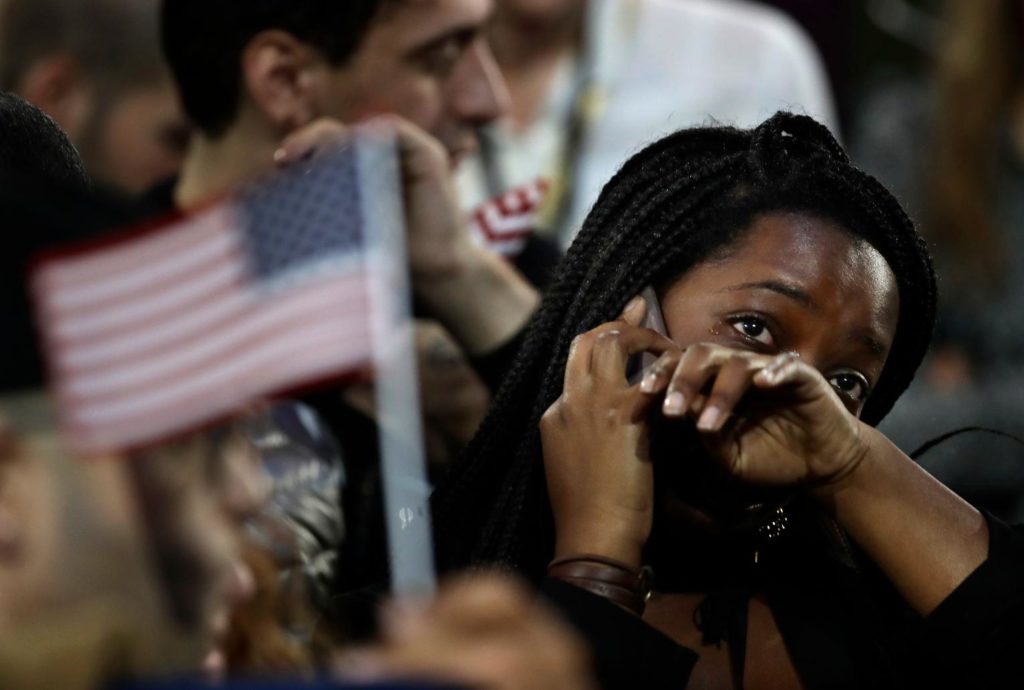
As Donald Trump approaches his inauguration, young Americans have a deeply pessimistic view about his incoming administration, with young blacks, Latinos and Asian Americans particularly concerned about what’s to come in the next four years. That’s according to a new GenForward poll of Americans aged 18 to 30, which found that the country’s young adults are more likely to expect they’ll be worse off at the end of Trump’s first term than better off. Such young Americans are also far more likely to think Trump will divide the country than unite it, by a 60 percent to 19 percent margin. Fifty-two percent of young whites, 72 percent of Latinos, 66 percent of Asian-Americans and 70 percent of blacks think Trump’s presidency will lead to a more divided nation. “Minority people are very afraid of all the rhetoric that he ran upon (in) his campaign,” said Jada Selma, a 28-year-old African-American graduate school student living in Atlanta. “Anytime he mentioned black people, he would talk about poor people or inner city. He would think that all of us live in the inner city and that we’re all poor.” “If you’re not a straight white male, than I don’t think he’s looking out for you as an American,” she said. GenForward is a survey of adults age 18 to 30 by the Black Youth Project at the University of Chicago with the Associated Press-NORC Center for Public Affairs Research. The first-of-its-kind poll pays special attention to the voices of young adults of color, highlighting how race and ethnicity shape the opinions of a new generation. The poll found that 54 percent of young people overall say life for people of color will be worse with Trump as president. About two-thirds of young blacks, Asian-Americans and Latinos think things will get worse for people of color, and whites are also more likely to expect things to get worse than better for minorities, 46 percent to 21 percent. Overall, 40 percent of young adults think they personally will be worse off four years from now, while just 23 percent expect to be better off. Young people of color are significantly more likely to think they will be worse off than better off, while young whites are more split in their personal expectations. Kuinta Hayle, a 21-year-old African-American from Charlotte, said she is worried that Trump’s selection for attorney general, Alabama Sen. Jeff Sessions, could roll back civil rights. She said Trump’s foray into “birtherism,” during which he propagated the lie that President Barack Obama was not born in the United States, still bothered her. “That was very meaningful. It still hurts,” Hayle said. “He doesn’t know anything about my life or the lives of people who aren’t like him. I feel Donald Trump is only for rich people. Obama was for people who didn’t have much.” Although he had a decisive win in the Electoral College, Trump lost the overall popular vote to opponent Hillary Clinton and has done little to reach out to those who didn’t support him in November’s election. He focused his post-election “Thank You” tour on states he won, settling scores on stage as he boasted about his surprising electoral victory. Over the weekend, Trump tore into Georgia Rep. John Lewis, among the most revered leaders of the civil rights movement, for questioning the legitimacy of his victory and saying he would not attend Friday’s inauguration. As for Obama’s presidency, young Americans are split on whether he has done more to unite or divide Americans, 38 percent to 35 percent, with 26 percent saying it did neither. Young blacks (57 percent to 16 percent), Latinos (57 percent to 19 percent) and Asian Americans (46 percent to 27 percent) are far more likely to say Obama united than divided Americans. But young whites are more likely to say, by a 46 percent to 26 percent margin, that Obama’s presidency was a dividing force. Indeed, not all young Americans are pessimistic about the incoming president. “He’ll be good for the economy. He’s a businessman and he’ll bring more jobs back,” said Francisco Barrera, 26, of Ft. Wayne, Indiana, who voted for Trump. “I think he’s going to do good and he’s going to end this political correctness. You can’t even say ‘God’ in the schools no more. Trump will put him back.” A majority of young adults think Trump will go down in history as not a very good president or a poor one. Young people of color are particularly likely to think Trump’s presidency will be not good or poor, but even young whites are more likely to expect that than to think it will be good or great, 48 percent to 27 percent. Young Americans are divided as to whether Trump will accomplish his campaign promises. While most think he’ll probably cut taxes for the rich and more than half of young people (59 percent) think Trump will deport millions of immigrants living in the country illegally, just 39 percent expect that he will be successful in building a wall along the Mexican border. However, about half of young Hispanics think that Trump is likely to build a border wall. And more than 7 in 10 young people believe he will definitely or probably succeed at repealing the Affordable Care Act. “He’s not even been inaugurated yet and he’s already alienating people,” said Greg Davis, a white 28-year-old graduate student living in Columbus, Ohio. “He’s still parroting the alt-right’s messages. His policy ideas I think would be awful. His nominees for Cabinet positions are disastrous. He’s nominating people who have the exactly the wrong ideas.” “I think it’s going to be a disaster,” Davis said. — The poll of 1,823 adults age 18-30 was conducted Dec. 9-12, 2016 using a sample drawn from the probability-based GenForward panel, which is designed to be representative of the U.S. young adult population. The margin of sampling error for all respondents is plus or minus 4 percentage points. The survey was paid for
Ag. Sec. Tom Vilsack takes job with dairy industry after leaving USDA
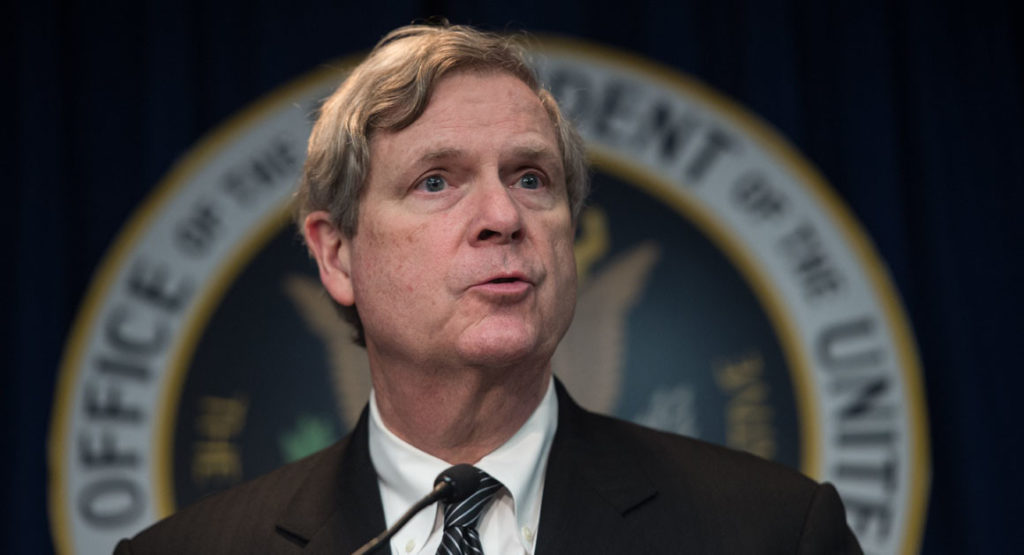
Former Agriculture Secretary Tom Vilsack is taking a job at the U.S. Dairy Export Council. The group is a nonprofit that promotes dairy products. An announcement Tuesday said Vilsack will help “develop a long-term vision for building sales and consumer trust in U.S. dairy.” Vilsack is entering the private sector after decades in public service. Before he was appointed agriculture secretary in 2009, he was Iowa’s governor for eight years. He also served in the Iowa state senate and as mayor of Mount Pleasant, Iowa. He was also on Democrat Hillary Clinton‘s vice presidential short list. She chose Virginia Sen. Tim Kaine instead. Vilsack was President Barack Obama‘s longest-serving Cabinet secretary. He left that position Friday, a week before Donald Trump takes office. Republished with permission of The Associated Press.
Donald Trump tries to calm tensions after John Lewis squabble
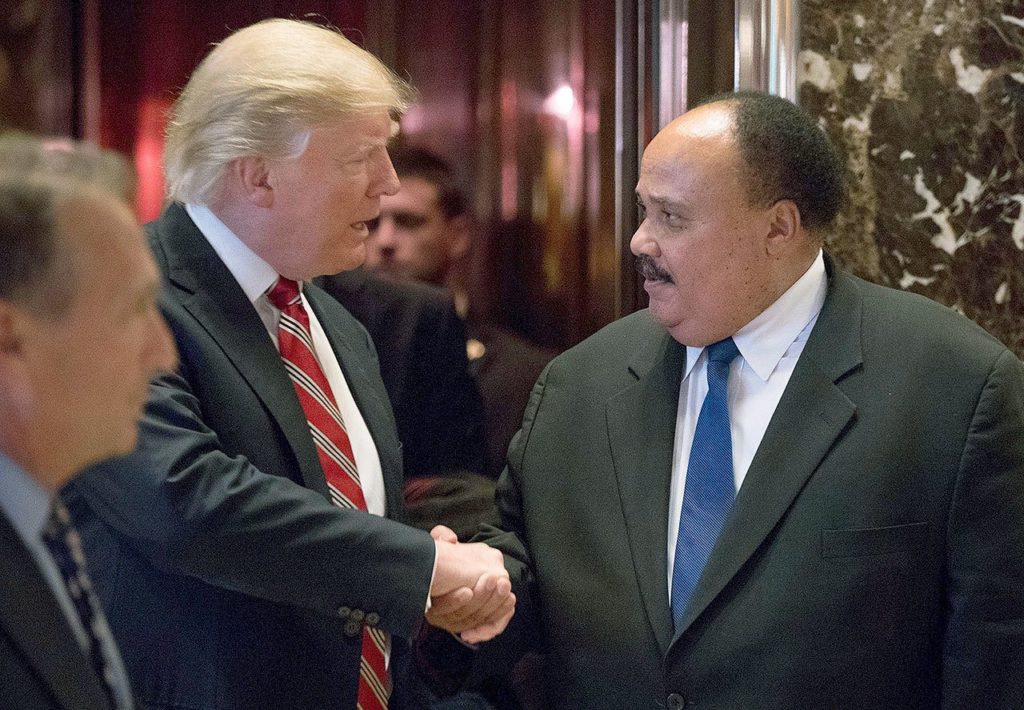
Donald Trump spoke of national unity to a son of Martin Luther King Jr., seeking to ease friction over the president-elect’s squabble with Rep. John Lewis, a protege of the slain civil rights leader. “He said that he is going to represent all Americans. He said that over and over again,” Martin Luther King III told reporters in the lobby of Trump Tower Monday after a nearly hour-long meeting. “I believe that’s his intent.” Trump met with King’s son on the holiday marking the life of the assassinated civil rights icon, just days after the president-elect had gone on Twitter to strike back fiercely at Lewis for questioning the legitimacy of the billionaire businessman’s election as president. Lewis and the elder King were among the Big Six civil rights leaders of the 1960s. In a post on his Twitter account, Trump had accused Lewis of being “all talk” after the Georgia Democrat said he didn’t think Trump had come to the presidency legitimately. Trump also tweeted that the Southern congressman should pay more attention to his “crime ridden” Atlanta-area district. Trump’s comments drew widespread criticism, and have done little to reassure those uneasy about the transition from the Barack Obama, the nation’s first black president, to a president-in-waiting who struggled to connect with many nonwhite voters during the campaign. The younger King downplayed the incident Monday, saying that “in the heat of emotion a lot of things get said on both sides.” King, who said he pressed Trump on the need for voting reform to increase participation, called their meeting “constructive.” King said that while he disagreed with the president-elect’s comments where Lewis is concerned, he believes “at some point in this nation, we’ve got to move forward.” “I think we also have to consistently engage with pressure, public pressure,” King said. “It doesn’t happen automatically.” Trump, who struggled for support from minority voters on Election Day, briefly joined King in the lobby of Trump Tower but ignored reporters’ shouted questions about his comments on Lewis, a civil rights legend in his own right. The congressman said late last week he didn’t consider Trump a “legitimate president,” blaming Russian interference in the election. Lewis said he would boycott Friday’s inauguration. More than two dozen Democratic members of Congress have said they will sit out the Trump swearing-in ceremony. Among them is Tennessee Rep. Steve Cohen, who said Monday “this president ‘semi-elect’ does not deserve to be president of the United States. He has not exhibited the characteristics or the values that we hold dear.” The Martin Luther King holiday is meant to honor community service and volunteerism, and many Americans, including President Barack Obama and first lady Michelle Obama spend part of the day undertaking a service project in their community. Trump, who canceled a planned trip to Washington, spent the day inside the Manhattan skyscraper that bears his name. Also this week, Trump’s picks for Cabinet posts continue their trek to Capitol Hill to win support from lawmakers considering their confirmation for Cabinet positions. On Tuesday, Republican Rep. Ryan Zinke of Montana was scheduled to make his case to be interior secretary. And Betsy Devos, Trump’s pick for education secretary, has a confirmation hearing Tuesday evening. Trump’s tweets have stirred things up internationally, as well. European Union nations bracing for Trump’s ascension showed defiance Monday in the face of the president-elect’s stinging comments on everything from NATO and German cars to the crumbling of the European Union. German Foreign Minister Frank-Walter Steinmeier said the U.S. president-elect’s view that NATO was obsolete and his criticism that European allied members aren’t paying their fair share had “caused astonishment.” Trump also said that Britain’s decision to leave the 28-nation EU would “end up being a great thing,” and he predicted that other countries would also leave. At a meeting of EU ministers, French Foreign Minister Jean-Marc Ayrault said the best response to such comments was simple – “it is the unity of the Europeans.” In Berlin, German Chancellor Angela Merkel insisted: “We Europeans have our fate in our own hands.” Republished with permission of The Associated Press.
Growing list of Democrats boycotting Donald Trump inauguration
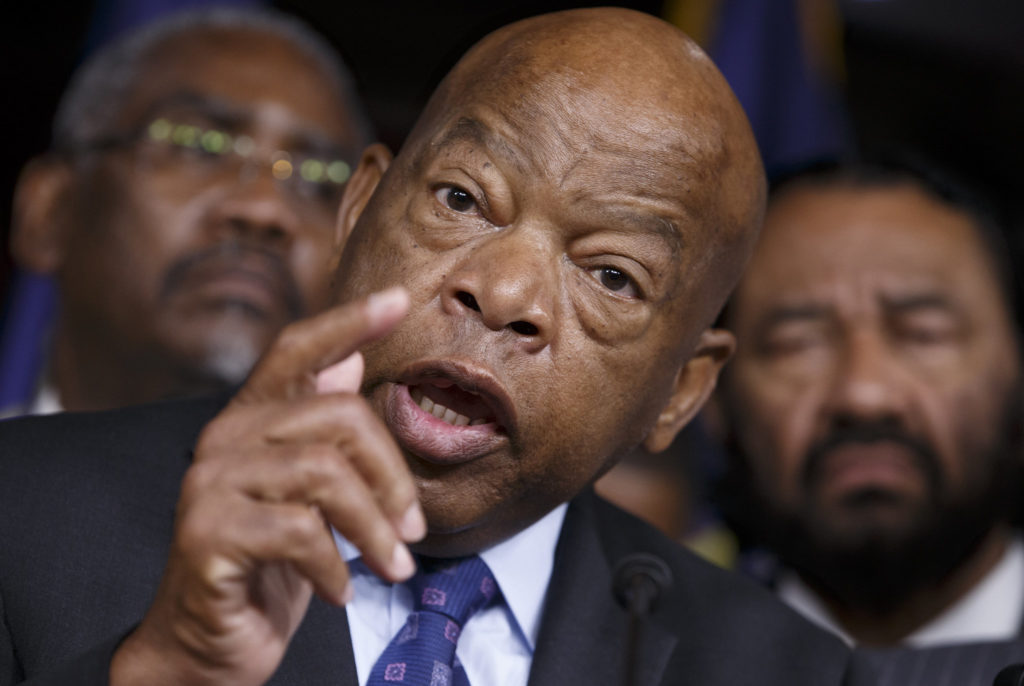
More than 40 House Democrats plan to boycott President-elect Donald Trump‘s inauguration on Friday, casting the Republican businessman as a threat to democracy. Reps. Steve Cohen of Tennessee, Jerrold Nadler of New York and Don Beyer of Virginia on Monday joined a growing list of lawmakers who will not attend Trump’s swearing-in at the U.S. Capitol. The number who initially said they would skip the event has increased after Trump lashed out at Rep. John Lewis, D-Ga., on Saturday for challenging his legitimacy to be the next president. Trump struck again Tuesday morning with a tweet that noted that Lewis had claim that Trump’s inauguration would be the first he will have missed since coming to Congress in 1987. “WRONG (or lie)!” Trump tweeted, saying Lewis had skipped George W. Bush‘s inauguration in 2001. Lewis’ office on Tuesday confirmed that the civil rights icon had missed Bush’s swearing in. “His absence at that time was also a form of dissent,” said spokeswoman Brenda Jones. “He did not believe the outcome of that election, including the controversies around the results in Florida and the unprecedented intervention of the US Supreme Court, reflected a free, fair and open democratic process.” Cohen said the hope and change associated with President Barack Obama taking office eight years ago have been replaced by “fear and dread.” “This president ‘semi-elect’ does not deserve to be president of the United States,” Cohen said in a statement. “He has not exhibited the characteristics or the values that we hold dear. That Dr. (Martin Luther) King held dear. That John Lewis holds dear. And when he questioned the integrity of my friend, colleague and civil rights icon John Lewis, that crossed the Rubicon.” Trump and other Republicans have dismissed the boycott and complaints, saying Democrats are sore losers who need to accept the results of the election and move on. Democrats control 194 House seats. While many Democrats were furious with the outcome of the drawn out 2000 election in which George W. Bush defeated Al Gore after recounts and a Supreme Court ruling, they generally attended Bush’s inauguration as the nation’s 43rd president. The House is out of session most of this week and roll call votes are not anticipated, so other lawmakers in both parties may skip the trip. Obama repeatedly faced questions during the 2008 campaign about the widely debunked claim that he was not a U.S. citizen and that his birth certificate was a fake. Trump, in fact, perpetuated that notion for many years before a brief statement last year that Obama was a citizen. Republicans attended Obama’s two inaugurations. Nadler, in a statement, said he refuses “to sit idly by as he (Trump) flaunts his illicit behavior without regard for the American people’s interest. I refuse to abide any effort to undermine a free and independent press, which serves a pivotal role in any democratic system and whose rights are guaranteed by our Constitution. I refuse to applaud for a man with a history of offensive and abusive behavior to women and minorities.” Beyer said he will not be part of the “normalizing or legitimizing” of a man whose election may be the result of “malicious foreign interference of Russian leaders,” a reference to U.S. intelligence’s assessment that Russia meddled in the election to help Trump win. Carol Shea-Porter, D-N.H., said in a tweet Monday night that instead of attending Friday’s ceremonies, she’ll go to religious services to “pray for all of our leaders and people.” Lewis said last week that he would not attend Trump’s swearing-in, claiming it the first time he had skipped an inauguration since joining Congress three decades ago. “You know, I believe in forgiveness. I believe in trying to work with people. It will be hard. It’s going to be very difficult. I don’t see this president-elect as a legitimate president,” Lewis said in an interview with NBC’s “Meet the Press” that aired Sunday. “I think the Russians participated in helping this man get elected. And they helped destroy the candidacy of Hillary Clinton,” Lewis said. That drew angry weekend tweets from Trump, who wrote that “rather than falsely complaining about the election results,” Lewis should focus on his congressional district. Republished with permission of The Associated Press.
Donald Trump’s America: Families differ as Reagan country changes

The week after Donald Trump was elected president, Dr. Mai-Phuong Nguyen and two dozen other Vietnamese-Americans active in liberal causes gathered in a circle of folding chairs, consoling one another about an America almost beyond comprehension. Now, days before Trump takes the oath of office, Nguyen sits in a restaurant booth in Orange County’s neon-lit Little Saigon and studies perhaps the most confounding face of the divide exposed by the election – her father’s. “All I know is, if a man makes $100 million he is really something,” Son Van Nguyen, 76, says of Trump. Here in a county transformed by waves of newcomers, the elder Nguyen – a government translator airlifted from South Vietnam with his family in 1975 as Communist forces pressed in on the capital – built a new life as a record-setting life insurance salesman, watching people strive and struggle. “And I know a lot of people out there sit there and wait for welfare,” he says, explaining his hopes that Trump will rein in such spending and create jobs. “But he is trying to prevent other people from coming in and enjoying some of the same things you came here for, Dad,” says his daughter, a 47-year-old physician who pushed for health care reform and fears Trump will take away the medical coverage it extended to millions of Americans. “If he does wrong, are you going to support him?” Their disagreement is a reminder that for Orange County, just as for the rest of the country, there has never been a moment quite like this one. When Hillary Clinton won this county of 3.2 million in November, it marked the first time the OC had backed a Democrat for president since Franklin Roosevelt. Best known for Disneyland, and long a hothouse of conservatism in a blue state, it was the largest county in the country to flip. The shift was expected eventually. Orange County’s citrus groves turned to tract housing decades back to welcome a mostly white influx from Los Angeles and Midwestern states. Today, though, Santa Ana’s quinceanera shops reflect a county that is a third Latino. One in five Orange Countians is Asian. The hopes and anxieties stirred by Trump’s inauguration spotlight even more complicated tensions. Most Vietnamese traditionally voted for Republicans, viewed as opponents of communism. But many of their adult children, also refugees, see Trump as rejecting American ideals and people like them. Local Republicans, who once embraced the John Birch Society and recently erected a statue of Ronald Reagan in the park where he launched two White House bids, long espoused a muscular conservatism. Most voted for Trump, but not without soul-searching. At Jimmy Camp‘s house, a “No Trump” sign made by Camp’s son still hangs in the window. Heading out to feed his family’s goat and potbellied pig, Camp recalls his start in Republican politics three decades ago – knocking on doors for candidates to earn cash. Camp played guitar in a rock band then and embraced platforms calling for government to stay out of people’s lives. He’d always loved the outdoors in a county that stretches from the ocean to the Santa Ana Mountains. After meeting county native Richard Nixon, he read up on the disgraced president’s often forgotten chartering of the Environmental Protection Agency. Camp became one of the state’s busiest Republican political consultants. Then, last summer he emailed fellow Republicans, renouncing his party membership because of his disgust with Trump. “If you go through and look at everything Jesus said in the Bible, this guy is opposite of it,” says Camp, 52, a pastor’s son. Camp, who has friends from Iran and Egypt, cringes at a president who would castigate Muslims as supposedly tied to terrorists, though he doubts Trump will fulfill his most extreme rhetoric. “I hope he doesn’t drive us off a cliff,” Camp says. “I hope that we survive the next four years. I think we will.” Others voice confidence in Trump. Gloria Pruyne says her family had reservations about Trump’s morality early on. But the conservative activist ended up knocking on more than 500 doors to get out the vote. Now Pruyne, 78, says she wants Trump to install a conservative Supreme Court justice, revoke an Affordable Care Act she blames for a $500 increase in her family’s monthly insurance bill, and back Israel. “We’re looking forward to a radical change with this president,” she says. With the inauguration approaching, Ron Brindle has no plans to remove the 5-foot-square portrait of Trump from his oil well fronting a main road in Huntington Beach. Brindle bought this land for his tree nursery business more than 40 years ago. Today, it is surrounded by tract homes, many owned by Asian families. “Now I don’t have anything against any of them, but what happened to the country?” Brindle says. The first thing Trump should do, he says, is close the border so Americans no longer have to foot the bill to care for foreigners. But Brindle also hopes that Trump will reach out to skeptics. Steven Mai is ready to listen. Mai, a 42-year-old registered Republican, rejected Trump for criticizing the Muslim parents of a slain American soldier. But Trump will be his president, Mai says. Still, if Trump really wants to lead, he should come to places like Orange County, says Mai’s wife, Tammy Tran. He could work in a sandwich shop for a few hours, or see what it’s like to care for an elderly person. Maybe then, the couple say, Trump will understand his responsibility to the many Americas. “I just hope he’s going to be the president that my parents were thinking,” Mai says. “If he can be a good president, then we all benefit.” Republished with permission of The Associated Press.
