
Donald Trump wax figure debuts before inauguration
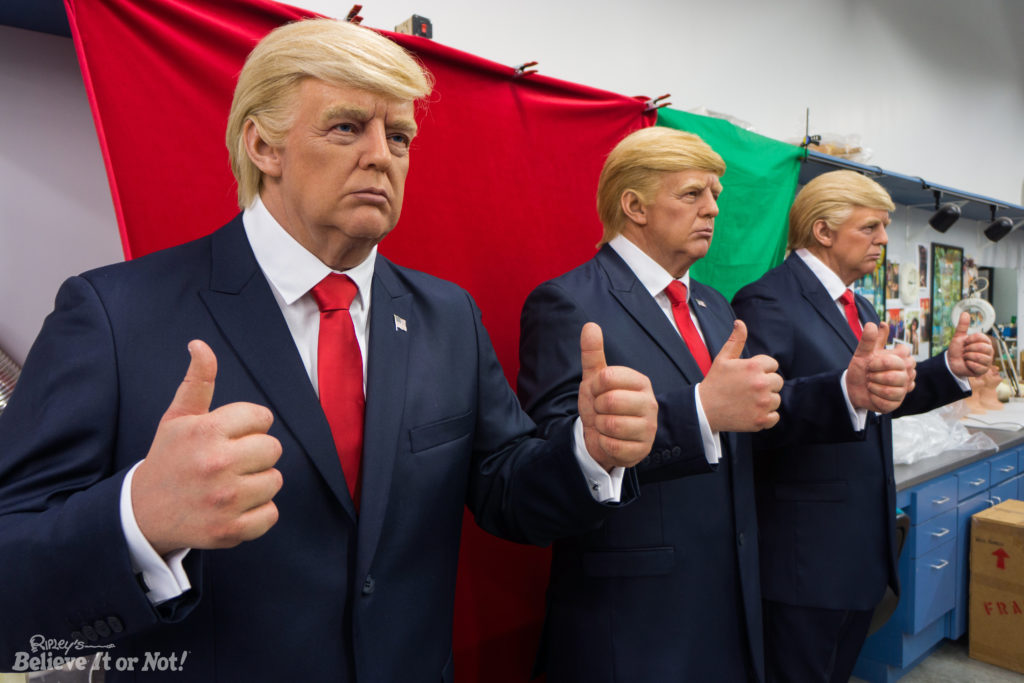
Madame Tussauds locations in Orlando, Washington, D.C., New York, and London unveiled wax figures of President-elect Donald Trump ahead of Friday’s inauguration. A team of 20 artists worked around the clock for six months to create the wax figures. It took five weeks just to fashion Trump’s famous hairstyle with each individual hair inserted by hand. This isn’t the first time Trump has been immortalized in wax. He’s actually the first president to already have a Madame Tussauds wax figure. Artists took hundreds of photos and measurements of Trump in 1997 for his first figure. After he won the 2016 election, the original was updated to match his current look. “Mr. Trump was the most-searched person globally on Google in 2016 so the pressure was on to perfect his iconic features in time for inauguration,” said Therese Alvich, general manager of Madame Tussauds Washington, D.C. in a release. Dressed in a patriotic dark blue suit, red tie and Made in America flag lapel pin, Trump will replace Barack Obama in a White House oval office set. A Trump wax figure has been in the lobby of the Ripley’s Believe It or Not on International Drive for the past month.
Daniel Sutter: The new power of sharing

Economic growth often involves new factories manufacturing more goods for us. But new forms of economic activity also contribute to prosperity. Ongoing innovations in the sharing economy can increase our standard of living without providing more goods. The best known firms in this new sector are ride- and home-sharing services Uber, Lyft, Airbnb and Home Away. These companies enable people to provide rides or lodging using their own cars or residences in exchange for payment. The use of existing cars and homes is the element of sharing. Many successful businesses have long facilitated sharing. The Uber and Airbnb examples show us that taxis, car rentals, and hotels all represent businesses built around sharing. Lawn services, bowling alleys and libraries also involve sharing. A lawn service uses its mowers to mow one lawn after another. By contrast, the mower you own and use sits in the garage most of the time. The new forms of sharing typically employ new technology, including the internet, smart phones, and social media. Technology is reducing transaction costs, which are the costs of carrying out buying, selling, and trading. Transaction costs often go unnoticed in the retail sector, but only because many innovations have routinized shopping at grocery or department stores, or now shopping online. Commerce-facilitating innovations include department stores, brand names, advertising, and credit cards. Many economists overlook transaction costs. But economists Douglas North and Oliver Williamson won Nobel Prizes for studying transaction costs. Some economic historians now view transaction cost reducing institutions as the fundamental source of modern prosperity. The market for used books illustrates how lower transaction costs make new trades profitable. The great challenge for exchange here is for sellers to find buyers interested in their books. Used bookstores offered a place for buyers to go to find a decent selection of titles. The excitement of discovering books you really wanted, however, really highlighted the limits of the process. Today anyone can buy or sell almost any book on Amazon Marketplace or eBay. Many new forms of sharing take the rental model. Social media allows the borrowing of tools, cookware, and trucks among a wider circle of friends. Extending borrowing circles is crucial in allowing people to find needed items. Sharing economy businesses are facilitating trading. And different modes of sharing exist. Uber offers rides by others, while Zipcar and Car2go rent cars owned by these companies for people to drive. Zipcar used technology to automate the rental process, allowing cars to be parked near where customers live. Most sharing economy businesses are really marketing innovations that reduce transaction costs. Airbnb’s background checks and rating systems, for example, increase the number of people willing to rent their homes, or pay to stay in a stranger’s home. Wise sharing will allow Americans to own less stuff, and the self-storage industry illustrates how valuable this might be. Today over 55,000 facilities nationwide have 2.5 billion square feet of space and earn annual revenues of $27 billion. About 10% of households rent a unit, and 65% and 47% of customers already have a garage or an attic – and still pay for more room. Sharing will let people tie up less of their wealth owning things that they rarely use. A University of California study found that each Car2go vehicle reduced the number of cars operated by residents of a city by 7 to 11. Essentially this means that one shared car can replace up to ten. Sharing allows people to avoid car payments, insurance, and parking, instead renting only when needed. A University of Massachusetts study estimates that many households could benefit $275 per year, which could rise to $1,000 with really extensive sharing. These savings will increase our prosperity, primarily by allowing peoples’ incomes to go further. We will instead have new and less expensive ways to access things we want to use. Innovative uses of technology constantly improve our lives, often by reducing transactions costs. The sharing economy is doing this today, providing an example where less is more. ••• Daniel Sutter is the Charles G. Koch Professor of Economics with the Manuel H. Johnson Center for Political Economy at Troy University and host of Econversations on TrojanVision. The opinions expressed in this column are the author’s and do not necessarily reflect the views of Troy University.
Mac Regan: What Donald Trump should say in his inaugural address

Donald Trump has stated that he wants to be a President for all Americans. He is not off to a promising start. Only 27% of eligible voters voted for him and Hillary Clinton beat him in the popular vote by 2.9 million votes. Daily protests outside his New York residence and The Million Women March planned for the day after the inauguration are evidence of deep misgivings about Trump the person as well as his ill-defined policies. Many of his cabinet appointments fail to engender a sense of balance and compromise. He has challenged the credibility of our intelligence agencies. Most of all, there is a deep unease in the nation that a Trump presidency is at best an uncertain bet and at worst a significant threat to our historical system of constitutional values, democracy, and capitalism. It doesn’t have to be this way. Trump’s January 20th message holds the potential to reassure all Americans while offering a prescription for American greatness that works for all. Here is what he needs to say. We need collaboration to solve our greatest problems The inaugural address is an opportunity for our new President to be, well, presidential. Trump must reassure all Americans that he will be a non-partisan leader who will demand that Congress finds common ground and solutions that reflect a fair balance of citizen’s views. To a great extent, Trump’s election reflects the deep dissatisfaction felt by most Americans at the lack of progress in three areas: Increasing inequality of opportunity and the feeling that the game is rigged to favor the rich and powerful Inability to secure our communities from epidemic levels of violence and substance abuse, to reduce poverty rates exceeding 20%, and to build the skills needed to create meaningful work as technology eliminates many traditional jobs A general sense of citizen disempowerment and disengagement where Congress is viewed as part of the problem versus part of the solution. Trump cannot overcome entrenched interests and find the right balance of policies through tweeting. Change requires careful debate, collaboration, compromise and communication. Trump needs to respectfully yet forcefully suggest that he, our citizens, and their elected representatives do their jobs. Citizen responsibility and elected representative reform need to be the centerpiece of a Trump inaugural. Citizens need to do their jobs Citizen rights are guaranteed in the Constitution and its Bill of Rights. Over the course of American history, we have demonstrated the ability to adapt these rights to eliminate slavery, provide universal suffrage, and extend important civil rights and social protections. It is this ability to adapt that has allowed American democracy to prosper in the face of incredible changes. However, we cannot adapt when citizens fail to fulfill even their basic responsibilities. Consider the evidence. Approximately 40% of eligible voters didn’t vote in the 2016 election. Even fewer voted in the last round of Congressional elections. Only immigrants receive formal citizenship training and are required to pass a test that the majority of our citizens would fail. The vast majority of citizens don’t communicate with their Congressional representatives. Most cannot even name their representative. Engaged and informed citizens are a necessary condition for effective democracy. It’s time for a citizen Bill of Responsibilities. A Bill of Responsibilities should set the standards that “we the people” need to fulfill in our role as citizens. The Trump inaugural should call for the formation of a non-partisan panel of citizens (who would be compensated for their work) to develop a citizen Bill of Responsibilities before the end of 2017. This panel should, at a minimum, provide four sets of recommendations to the President and the Congress that will: Require eligible voters to vote in presidential and congressional elections. Other countries do this. We should too. Develop common voter rules that will simplify voter registration and voting, provide adequate anti-fraud protections, and unify disparate state by state approaches Identify primary and secondary school curricula additions that ensure all high school graduates have a full understanding of citizen responsibilities, engage early on in policy debates, and develop the critical thinking skills to make informed choices Consider a system of rewards and penalties to encourage citizens to fulfill their responsibilities: financial penalties for those who fail to vote, temporary loss of citizenship for those who persistently fail to vote or meet other basic requirements (military service, jury duty, payment of taxes, felony convictions, etc). Citizenship should be earned. By clearly defining citizens’ responsibilities creating informed citizens and rewarding good citizenship, we can expect to restore the primacy of citizenship. What gets rewarded gets done. This type of citizen driven project has immense importance. It can be a foundation for increased public trust in the Trump administration and serve notice to Congress that “we the people” demand a more representative, inclusive, and accountable democracy. Congressional representatives would oppose these recommendations at their own peril. Elected representatives need to do their jobs Congressional approval levels are at their lowest levels in memory, the result of partisan gridlock caused by the disproportionate influences of well-funded special interests, business lobbyists, and representatives who are not representative of the broad citizenry. Many agree it’s time to “drain the swamp”, but no plan has been articulated to do this. The inaugural is Trump’s opportunity to demand six game changing reforms: Get the special interest money out of elections and re-elections. Canada puts strict limits on campaign contributions by individuals, and provides generous public funding for candidates. We need to do the same. Form a non-partisan task force to determine the best ways to overturn the Citizens United decision and forbid campaign contributions from businesses, unions, super PACs or any other organization while limiting contributions by individuals Reduce partisan gerrymandering by commissioning state by state non-partisan reviews of voting districts with the goal of restoring fair representation and competitive congressional elections Redefine the mission of political parties. Parties should not exist to win elections at any cost. They will better serve our democracy if they develop and articulate
With job announcements, companies appear to seek Trump approval
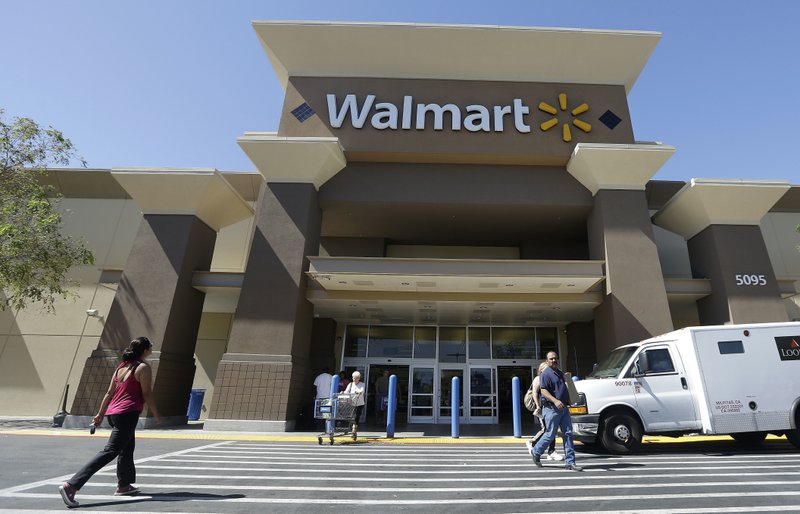
From Wal-Mart to General Motors to Amazon, a growing number of the world’s largest companies appear to be trying to get in step with President-elect Donald Trump‘s demand that employers hire and keep jobs at home. Trump, in response, has taken to Twitter to signal his approval. “Thank you to General Motors and Walmart for starting the big jobs push back into the U.S.!” he tweeted Tuesday afternoon. Yet it’s unclear just how many jobs are actually being saved or created as a result of Trump’s push or whether his administration will hold companies accountable for their pledges. In a solid job market with just 4.7 percent unemployment, hundreds of thousands of U.S. jobs are added all the time for a broad range of reasons. Trump has boasted that he deserves the credit based on what chief executives have told him, despite evidence to the contrary provided by those same companies. “Ask top CEO’s of those companies for real facts. Came back because of me!” the president-elect declared on Twitter on Wednesday. GM announced Tuesday that it was creating or keeping 7,000 jobs, while Wal-Mart said it planned to hire 10,000 and support an additional 24,000 construction jobs with store openings and expansions. Those announcements followed Amazon’s commitment to add 100,000 workers through mid-2018 and a bold claim by the Chinese online retailer Alibaba that it would create 1 million U.S. jobs over the next five years. That extravagant pledge would make Alibaba alone responsible for over 10 percent of all jobs added each year — an unheard-of feat in the modern economy. Many economists say the hiring being celebrated by Trump reflects, more than anything, the health of the $18.7 trillion economy he is inheriting. “Between the election and today, unless you work on Capitol Hill in D.C., nothing fundamental has changed in the U.S. labor market,” said Andrew Chamberlain, chief economist at the jobs site Glassdoor. To these economists, the latest high-profile hiring announcements suggest that companies are capitalizing on the politically charged climate. Trump has berated companies such as Nabisco for shuttering domestic plants in order to open factories in Mexico, while celebrating companies that publicly commit to hiring in the United States. What’s more, nearly every major U.S. employer has tax and regulatory issues before the government. To that end, a sympathetic ear in the White House could be helpful. The heads of German chemical company Bayer and seed-and-herbicide-maker Monsanto met with Trump last week to pitch the benefits of a planned-for merger of the two companies that requires antitrust clearance. And Trump proudly tweeted reports Wednesday that Bayer would add U.S. jobs. By announcing new jobs, companies can use any existing hiring plans to ingratiate themselves with Trump by hitching their plans to his economic agenda, noted Patrick O’Keefe, director of economic research at the consultancy and accountant CohnReznick. “There is a degree of opportunism — in a positive way,” O’Keefe said. GM plans to invest $1 billion in its U.S. factories and to create or keep 2,000 manufacturing jobs as well as 5,000 positions in auto financing and engineering — moves the company had said were being planned well before the election. Trump had drawn attention to GM this month by threatening on Twitter to tax the automaker for selling Mexican-built cars in the United States. That set up GM’s jobs announcement as a coup for Trump, even though the investment was already in the works. A GM spokesman said it was “good timing for us to share what we are doing.” Wal-Mart’s hiring similarly seems somewhat independent of Trump. The jobs stem largely from plans to open and remodel stores— work that would not be outsourced overseas. Wal-Mart is the nation’s largest private employer, with 1.5 million workers in the United States, and its hiring rate this year will be similar to prior years, said Lorenzo Lopez, a company spokesman. These announcements follow hiring plans announced by Ford and Fiat Chrysler, among others. The auto executives were willing to let Trump promote their hiring plans, even though their decisions involved other market forces, including increased demand for SUVs as gasoline prices have dropped. Hyundai said Tuesday that it plans to invest $3.1 billion by 2021 on research and development at its factories in Alabama and Georgia. Chung Jin Haeng, chief executive of the South Korean automaker, said the decision had little to do with Trump. “The U.S. market is strategically important,” he said. At the same time, Trump has also talked with companies about cutting their costs — a move that often involves slashing jobs. He met Tuesday, for example, with the CEO of Boeing, a company he had criticized in December over Twitter for the “out of control” price of two new planes for the Air Force One fleet. CEO Dennis Muilenburg said he chatted with Trump about how to lower the costs for the presidential planes as well as fighter aircraft. “I think Mr. Trump is doing a great job with engaging the business,” Muilenburg said afterward. “We’re all on the same page here.” Not all the job announcements will necessarily come to fruition. Alibaba has said it expects to add a million U.S. companies to its online retail platform in the next five years. It asserted that sales to Chinese consumers would lead each of those companies to add, on average, one job each. This would translate into an astounding 250,000 a jobs a year in an economy in which every employer, combined, added 2.2 million jobs in 2016. “It’s not rocket-science math,” said company spokesman Brion Tingler, who nevertheless cautioned that the 1 million jobs being publicized were an “aspiration.” Other than his social media megaphone, Trump doesn’t appear to have the means to hold companies accountable for their jobs pledges. His transition team didn’t respond to questions about how it planned to ensure that CEOs’ promises to create U.S. jobs were fulfilled. Republished with permission of The Associated Press.
Selma to commemorate”Bloody Sunday” will host largest voting rights commemoration event in US
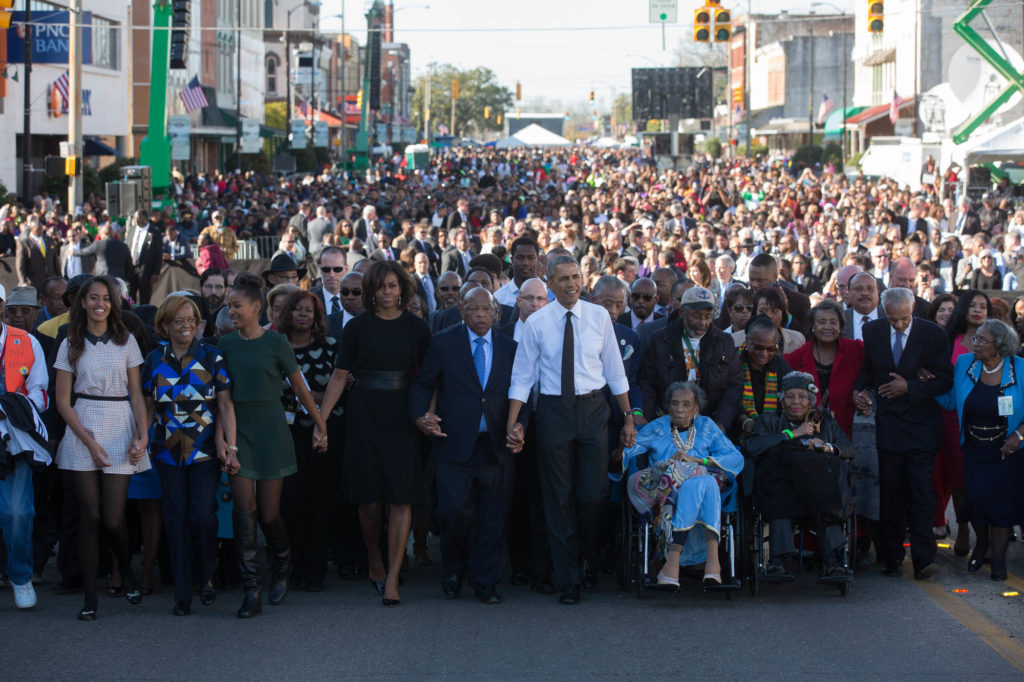
On Thursday, March 2 through Sunday, March 5, Selma, Ala. will host the largest voting rights commemoration event in the country — the Bridge Crossing Jubilee 2017 — remembering the 52nd anniversary of the Selma to Montgomery “Bloody Sunday” march. This annual event commemorates “Bloody Sunday,” when on March 7, 1965, a group of roughly 525 African American protesters planned to cross the Edmund Pettus Bridge on their civil rights march to Montgomery to demand the right to vote. At the bridge they where they were met by more than 50 state troopers and a few dozen men on horseback. When the demonstrators refused to turn back, they were brutally beaten, leaving at least 17 hospitalized, and 40 others injured. The violent attack, which was broadcast on national television, caught the attention of millions of Americans and was aptly dubbed “Bloody Sunday” and ultimately became a rallying point for civil rights leaders. While details of this year’s event are still being finalized, there will be workshops on the following topics: Voting Immigration Criminal Justice Education Economic Empowerment Health and Environment Special Workshop by SNCC Legends Additionally, the weekend will feature over 40 events including: Parade Blues Hip-hop and gospel music festival Step show Pageant Mock trial Unity breakfast Freedom Flame Awards Hip-hop summit Storytelling by Living History Makers March re-enactment and more Those interested in attending may purchase tickets online.
Nikki Haley supports moving US embassy in Israel to Jerusalem
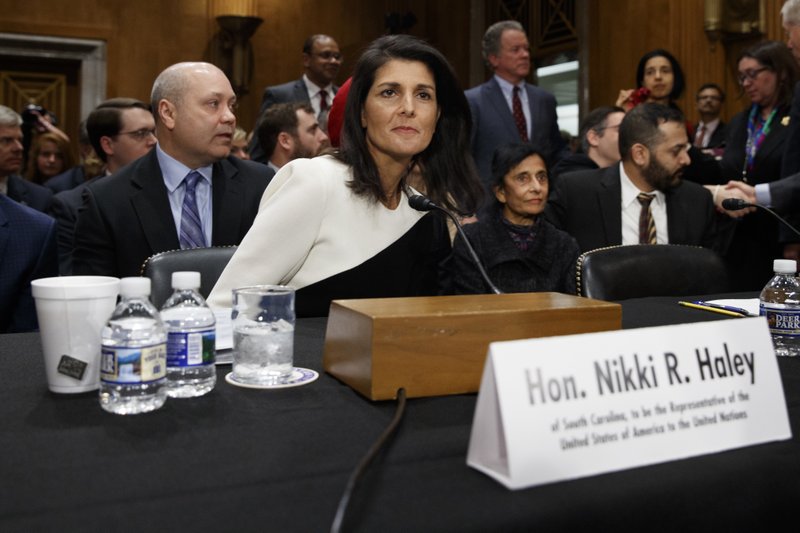
South Carolina Gov. Nikki Haley pledged her support for moving the U.S. Embassy in Israel from Tel Aviv to Jerusalem, a shift firmly endorsed by Donald Trump but one that could trigger more violence in the Middle East. Haley, Trump’s pick to be the U.S. ambassador to the United Nations, told the Senate Foreign Relations Committee on Wednesday that she “absolutely” backs the embassy move because that’s what Israel and congressional Republicans want. But a spokesman for Jordan’s government recently told The Associated Press that the embassy move would be a “red line” for Amman and “inflame the Islamic and Arab streets.” Jordan serves as custodian of a major Islamic shrine in east Jerusalem and the Palestinians seek a capital there. Haley also took a tougher stance against Russia than Trump, who will be sworn in Friday. She told the committee that she believes Russia committed war crimes by bombing Syrian civilians in the city of Aleppo. Rex Tillerson, Trump’s choice for secretary of state, declined to make that accusation during his confirmation hearing last week. She said she doesn’t think that the United States can trust Moscow right now and said she’s against lifting existing sanctions against Russia unless it changes its behavior. But she acknowledged there are areas, such as counterterrorism, where the two countries can cooperate. “The problem is there are no boundaries with Russia,” said Haley, who added that the U.S. needs to let Moscow know “we are not OK” with its annexation of Crimea and incursion in Ukraine. During the hearing, Haley assailed the Obama administration for failing to block a U.N. Security Council resolution that condemned Israel’s settlements in east Jerusalem and the West Bank. She pledged to reject future measures that she said unfairly targeted the Jewish state, if the Senate confirms her nomination. Haley said she won’t go to U.N. headquarters in New York and “abstain when the U.N. seeks to create an international environment that encourages boycotts of Israel.” She told the committee the U.N. resolution was “a terrible mistake” that makes a peace agreement between the Israelis and the Palestinians harder to achieve. Haley also said the U.N. has a “long history of anti-Israel bias,” and that during the most recent U.N. General Assembly session, the international body adopted 20 resolutions against Israel “and only six targeting the rest of the world’s countries combined.” Haley acknowledged that she is new to international diplomacy. But she said while the U.N. has had many successes, citing health and food programs that have saved millions of lives, “any honest assessment also finds an institution that is often at odds with American national interests and American taxpayers.” The United States contributes 22 percent of the organization’s budget, and Haley questioned whether such a sizeable investment is worthwhile. “We are a generous nation,” Haley said. “But we must ask ourselves what good is being accomplished by this disproportionate contribution. Are we getting what we pay for?” But she said she would not endorse a “slash and burn” strategy when it comes to determining where to spend money. Sen. Ben Cardin of Maryland, the committee’s top Democrat, said that despite the U.N. shortcomings, “it is almost impossible to imagine a world without the U.N.” He emphasized the need to strengthen America’s alliances, particularly in light of Trump’s view that NATO is “obsolete.” “We need to be reassuring our allies, not threatening to abandon them,” Cardin told Haley. Last December, Israel and its supporters lashed out at Obama for his decision to abstain and allow the U.N. Security Council to approve the resolution, which called the Israeli settlements “a flagrant violation under international law.” But Secretary of State John Kerry defended the decision in a speech last month, saying the U.S. was standing up for a two-state solution when it abstained on the resolution. He criticized Israel for settlement building and blamed Netanyahu for dragging Israel away from democracy. Kerry said expanding Israeli settlements in the West Bank and east Jerusalem are leading to an “irreversible one-state reality.” Republished with permission of The Associated Press.
Former President George H.W. Bush, wife Barbara hospitalized
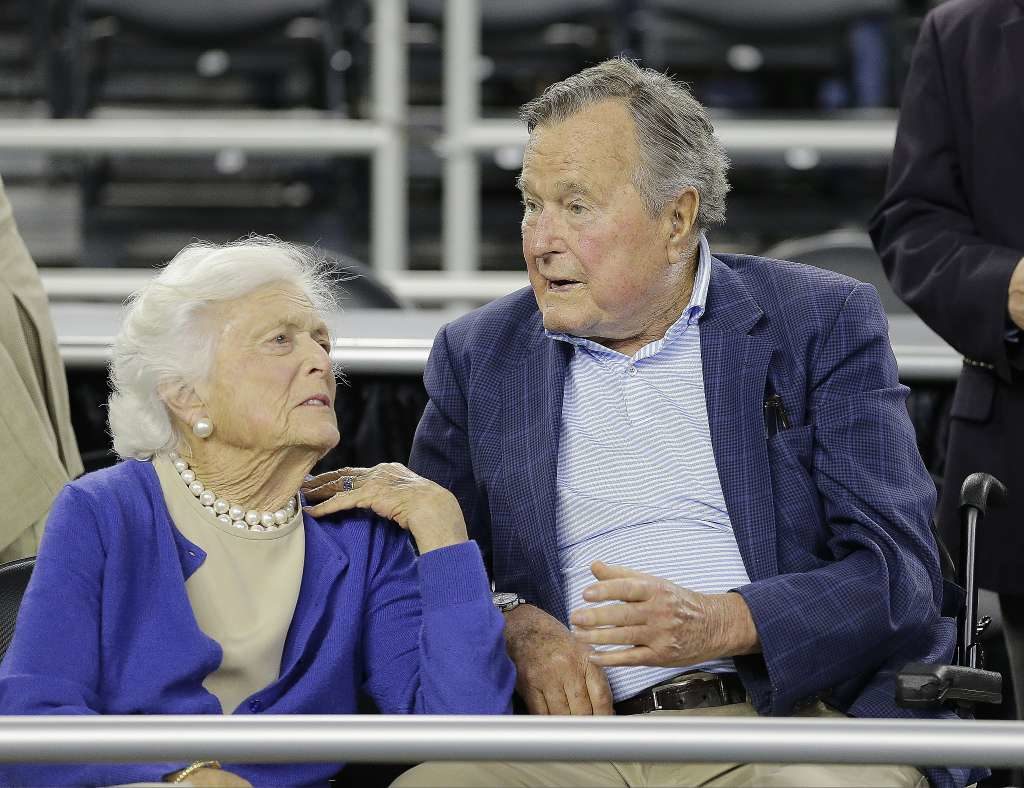
Former President George H.W. Bush was admitted to an intensive care unit on Wednesday, and his wife, Barbara, was hospitalized as a precaution, according to his spokesman. The former president was admitted to the ICU at Houston Methodist Hospital to “address an acute respiratory problem stemming from pneumonia,” family spokesman Jim McGrath said in a statement. McGrath said the former first lady was hospitalized as a precaution after experiencing fatigue and coughing. “Doctors performed a procedure to protect and clear his airway that required sedation. President Bush is stable and resting comfortable in the ICU, where he will remain for observation,” McGrath said in the statement. The 41st president was admitted to the hospital on Saturday for shortness of breath, McGrath said in an email to The Associated Press earlier Wednesday. McGrath said the 92-year-old was responding well to treatments. The 41st president was admitted to the hospital on Saturday, McGrath said in an email to The Associated Press earlier Wednesday. “Doctors and everyone are very pleased, and we hope to have him out soon,” McGrath said. Bush’s chief of staff, Jean Becker, told the Houston Chronicle and KHOU-TV that Bush was expected to go home in a couple of days. Bush, who served as U.S. president from 1989 to 1993, has a form of Parkinson’s disease and uses a motorized scooter or a wheelchair for mobility. He was hospitalized in Maine in 2015 after falling at his summer home and breaking a bone in his neck, and was hospitalized in Houston the previous December for about a week for shortness of breath. He spent Christmas 2012 in intensive care for a bronchitis-related cough and other issues. Despite the loss of mobility, Bush celebrated his 90th birthday by making a tandem parachute jump in Kennebunkport, Maine. Last summer, Bush led a group of 40 wounded warriors on a fishing trip at the helm of his speedboat, three days after his 92nd birthday celebration. Bush’s office announced earlier this month that he and his wife of more than 70 years, Barbara, would not attend Donald Trump’s inauguration this week due to the former president’s age and health. George Herbert Walker Bush, born June 12, 1924, in Milton, Massachusetts, also served as a congressman, CIA director and Ronald Reagan‘s vice president. His son, George W. Bush, was elected president in 2000 and served two terms. Another son, Jeb — a former Florida governor — made an unsuccessful bid for the GOP nomination in 2016. Only one other U.S. president, John Adams, had a son who also became president. Republished with permission of The Associated Press.
Commerce nominee Wilbur Ross declares he is pro-trade, pro-union
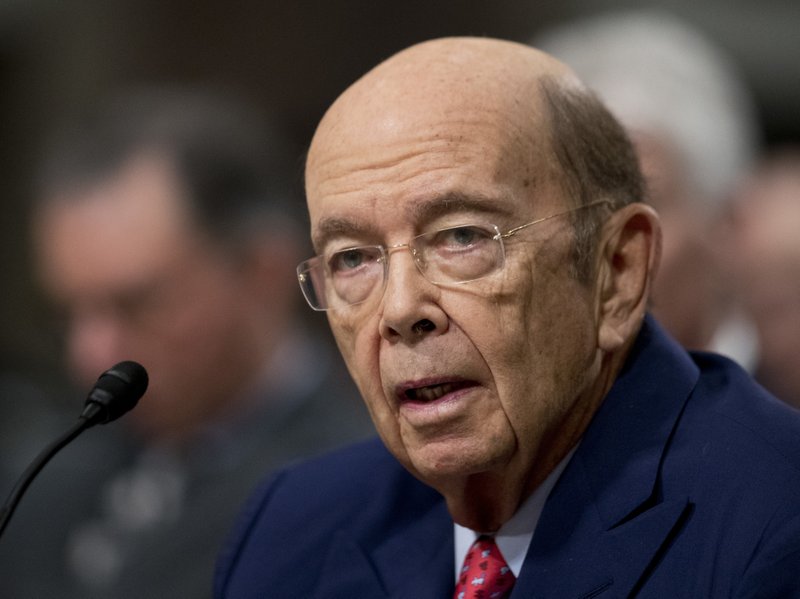
President-elect Donald Trump‘s pick for commerce secretary said Wednesday that he favors “sensible trade,” is pro-union and believes his vast business dealings have given experience fighting other countries’ unfair trade practices. Billionaire investor Wilbur Ross cited his relationship with the United Steelworkers Union, which has endorsed him for the Cabinet post, as proof that he will work to protect American jobs. “I’m pro-trade. But I’m pro-sensible trade, not trade that is detrimental to the American worker and to the domestic manufacturing base,” Ross told the Senate Commerce, Science and Transportation Committee. “I think I’ve probably had more direct experience than any prior cabinet nominee has had with unfair trade in the steel business, in the textile business, in the auto parts business and other sectors,” Ross said. Worth an estimated $2.9 billion, Ross has extensive business ties around the globe. Supporters say that makes him ideal to represent American business interests abroad. “I believe his extensive management experience in the private sector, and his understanding of the challenges faced by workers and businesses alike, will equip him well for the job of leading the Department of Commerce,” said Sen. John Thune, R-S.D., the committee chairman. During Ross’ hearing, Thune revealed that Ross had a household employee from 2009 to 2016 who could not provide documentation that he or she was in the U.S. legally. Ross said the employee provided a driver’s license and a Social Security number when hired. Ross said he rechecked the documentation for all of his household employees after he was nominated, and the employee could not provide it. Ross said the employee was fired. “We did the best that we thought we could do in order to verify the legality of the employment and it turned out that was incorrect,” Ross said. “But we did pay all the withholdings, so did that employee.” Such transgressions have derailed cabinet nominees in the past. But Sen. Bill Nelson of Florida, the top Democrat on the committee, questioned Ross only briefly about it. Trump has said Ross will play a big role in American trade policy. Trump’s views on trade are at odds with many congressional Republicans. He has pledged to re-negotiate existing trade deals and scrap a pending one with Asian countries. Ross said the North American Free Trade Agreement, involving the U.S., Canada and Mexico, “is logically the first thing for us to deal with.” “That will be a very, very early topic in this administration,” Ross added. The commerce secretary has several roles in promoting American business interests in the U.S. and abroad. The department works on trade issues, working to attract foreign investment in the U.S. The department also oversees agencies that manage fisheries, weather forecasting and the Census Bureau, which will conduct a census in 2020. Ross said he has unique experience at that agency; he was a census-taker while he attended business school. Unlike the president-elect, Ross has agreed to divorce himself from a vast financial empire. Ross has signed an ethics agreement with the Office of Government Ethics. In it, he agrees to divest from 40 different businesses and investments within 90 days of being confirmed. He agreed to divest from 40 more within 180 days. Among the businesses he will separate himself from is WL Ross & Co., the private equity firm he founded in 2000. Trump has had a run-in with the head of the ethics agency because he says he won’t completely divest himself from his business empire. Instead, Trump says he will turn control of his business over to his sons. Walter Shaub Jr., who directs the office, said Trump’s plan is insufficient to avoid conflicts of interest. Nelson praised Ross for divesting from most of his personal holdings. “I believe that’s the right thing to do and it tells me you’re committed to doing the job the right way by placing the public’s interests ahead of your own,” Nelson said. “It’s my hope that President-elect Trump will follow your lead and the example you set.” Republished with permission of The Associated Press.
Debbie Wasserman Schultz accuses HHS nominee Tom Price as another of Donald Trump’s ‘swamp’
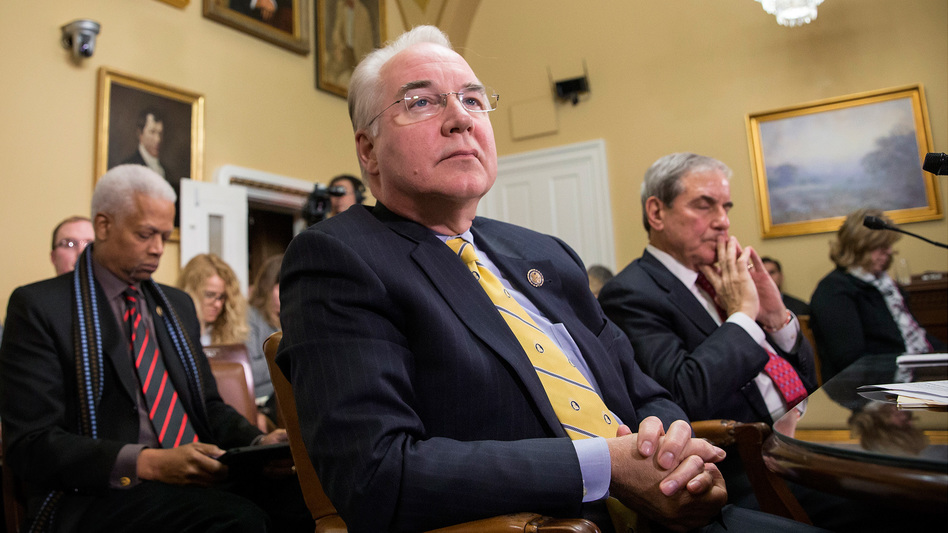
Tom Price, President-elect Donald Trump’s nominee for Health and Human Services Secretary, is poised to be grilled by Senate Democrats when he appears Wednesday before the Senate Health, Education, Labor and Pensions Committee. The six-term Georgia Republican congressman has been one of the leading opponents of the Affordable Care Act in Congress, and an advocate for the restructuring of the Medicaid and Medicare health entitlement programs. Democrats have vowed to fight the nomination of Price, an orthopedic surgeon. Undoubtedly, Price will be asked about his stock holdings in more than three dozen companies, including health care related agencies like Aetna, Biogen and Zimmer Biomet Holdings. It’s his purchase in that latter stock that may get him in some trouble with the committee. CNN reported that in March, Price bought between $1,001 to $15,000 worth of shares in Zimmer Biomet, a medical device manufacturer, before introducing legislation that would have directly benefited the company. That news comes after The Wall Street Journal reported last month that he traded roughly $300,000 in shares over the past four years in health companies while pursuing legislation that could impact them. Democrats pounced on that revelation. “With what we have recently learned about his apparent conflicts of interest — including filing legislation to benefit a medical device company in which he recently bought stock — it’s clear that he’s also another swimmer in President-elect Donald Trump’s ‘swamp,’” declared South Florida Representative Debbie Wasserman Schultz Wednesday. “No Member of Congress or Cabinet secretary — or president for that matter — should be creating the appearance of lining their own pockets on the taxpayers’ dime. Unfortunately, President-elect Trump, whose own record is rife with conflicts of interest, has tapped a number of Cabinet appointees that fit this alarming pattern. Congressman Price’s appalling record on health care policy should be reason enough to reject his nomination, but it should be withdrawn if these allegations prove to be accurate.” Wasserman Schultz also is criticizing Price for his opposition to the ACA and repeatedly proposing “draconian legislation to restrict women’s access to reproductive health care.” “He is committed to dragging American health care back several decades with his proposed cuts to Medicare, our social safety net, and would callously ensure that 129 million Americans who live with a pre-existing condition like me — a breast cancer survivor — will be denied coverage based on our medical history.” Wednesday’s hearing is being called just a “warm up,” because, in fact, Price faces confirmation by another committee — the Senate Finance Committee, and not the group of senators he speaks to Thursday.
US consumer prices up moderate 0.3 percent in December

U.S. consumer prices, driven up by rising energy costs, rose moderately in December, closing out a year in which consumer inflation rose at the fastest pace in five years. The Labor Department reported Wednesday that its consumer price index increased 0.3 percent last month, up from a 0.2 percent gain in November. Energy prices, which have been rebounding, were up 1.5 percent, led by another jump in gasoline pump prices. Food costs were unchanged for the fifth straight month. For all of 2016, prices were up 2.1 percent, compared to a 0.7 percent rise in 2015. It was the largest annual increase since a 3 percent jump in 2011. Core inflation, which excludes food and energy, was up 0.2 percent in December and 2.2 percent for the year. After four years of extremely low inflation, prices have begun to accelerate with both overall inflation and core inflation above the 2 percent target set by the Federal Reserve. The low inflation figures had allowed the central bank to keep interest rates at ultra-low levels with its key rate at a record low near zero for seven years. The Fed has now boosted rates twice in December 2015 and again last month by modest quarter-point moves. Fed officials are projecting that they will boost rates another three times in 2017. Fed officials continue to stress that they believe prices will be rising by modest amounts that will allow them to move interest rates up gradually. Andrew Hunter, U.S. economist at Capital Economics, said that core inflation has been relatively stable, rising at rates just above 2 percent over the past year. He said that would allow the Fed to keep interest rates steady until mid-year. But after that, he said a variety of factors including tax cuts and spending increases supported by the Trump administration will likely prompt the Fed to begin moving rates higher at a faster clip. “We expect that a sharper acceleration in inflation will eventually force the Fed to tighten policy much more aggressively” in the second half of this year, Hunter said, saying the Fed could hike rates four times this year. But other analysts said they were still looking for slower rise in rates. Gus Faucher, senior economist at PNC Financial Services Group, said he still believed the Fed would raise rates only twice in 2017, in June and December. For 2016, food costs actually declined 0.2 percent for the 12 months ending in December while energy costs were up 5.4 percent from a year ago. Currently, the national price for a gallon of regular gasoline is $2.36 up from $1.89 a year ago, according to AAA’s Fuel Gauge. Medical care services was one of the fastest rising categories last year, rising by 3.9 percent over the past 12 months. New car prices were up a slight 0.3 percent but used car prices were down 3.5 percent and clothing prices were down 0.1 percent over the past 12 months. In addition to a big fall in energy costs, inflation has been kept low in recent years by a rise in the value of the dollar against foreign currencies which makes imports, including clothing imports, cheaper for U.S. consumers. The Fed has used low interest rates and other measures to provide a boost for the U.S. economy as it struggled to emerge from the worst recession since the 1930s. Republished with permission of The Associated Press.
China calls on US to bar Taiwan from Donald Trump’s inauguration

China on Wednesday called on the U.S. to bar a Taiwanese delegation from attending Donald Trump‘s inauguration on Friday, underscoring concerns that the incoming president could seek to redefine relations between Beijing, Taipei and Washington. Foreign Ministry spokeswoman Hua Chunying said the request had been passed to Trump’s transition team and to the current administration of Barack Obama. “We urge the U.S. side once again not to allow the Taiwan administration to send the so-called delegation to attend the inauguration and to avoid any forms of official exchange with Taiwan,” Hua said at a daily briefing. China firmly opposes “anyone from the Taiwan administration engaged in activities that interfere or undermine the China-U.S. relationship in the U.S. under any pretext,” she said. Delegation leader and former Premier Yu Shyi-kun departed for Washington on Monday together with politicians from both Taiwan’s ruling Democratic Progressive Party and the opposition Nationalists. Along with attending the inauguration, the delegates plan to hold talks with politicians, academics and overseas Chinese community representatives. Trump angered Beijing and upset decades of diplomatic precedent by talking by phone with Taiwanese President Tsai Ing-wen shortly after winning November’s presidential election. Last week, he said in a newspaper interview that Washington’s “one China policy” under which it recognized Beijing in 1979 was open to negotiation, and earlier questioned why the U.S. should be bound by such an approach without China offering incentives. The U.S. has no formal relations with Taipei in deference to China, which claims the island as its own. However, the two maintain robust informal ties, while Washington sells Taiwan arms and is legally bound to regard any threat to the island as a matter of grave concern. Tensions across the Taiwan Strait have risen since Tsai’s election last year, with Beijing cutting off contacts and working to deepen Taiwan’s diplomatic isolation. Republished with permission of The Associated Press.
Stephen Miller: former Alabama staffer ‘who helped Trump find his voice’

Stephen Miller was a teenager in California when got his first political gig as a regular guest on a local conservative talk radio show, eager to complain about his liberal high school. In columns written for local newspapers, he took on what he called its plague of political correctness. The school’s decision to make announcements in Spanish “demeans the immigrant population as incompetent, and makes a mockery of the American ideal of personal accomplishment,” Miller wrote. He complained about the school offering condoms to underage students, allowing a club for gay students and failing to ask students to recite the Pledge of Allegiance every day. “You thought he was like a 35-year-old constitutional lawyer,” Steve Bannon, President-elect Donald Trump‘s chief strategist and senior adviser, said of Miller’s radio days. “That’s how he built his reputation.” The young caller who caught the ear of prominent conservatives, including the late Andrew Breitbart, founder of Breitbart News, went on to do the same with Trump after joining his campaign a year ago. Starting Friday, Miller assumes the role of assistant and senior adviser to the president for policy, a job that starts with helping Trump as the president-elect writes his inaugural address. If you’ve heard Trump speak at any point over the last year, you’ve likely heard Miller’s work. “I think he and Trump hit it off from the very beginning,” Bannon said. “You could tell the difference in Trump’s speeches. … The ideas became more powerful, they were a little crisper.” “I think he helped Trump find his voice,” Bannon said. A throwback to an earlier era who speaks in a punctuated staccato and is rarely seen in anything but a dark suit and signature skinny tie, the 31-year-old Miller started in Trump’s campaign as senior policy director, but quickly became a jack of all trades in the Republican’s threadbare operation. He assumed the role of Trump’s chief speechwriter, channeling the candidate’s freewheeling talking points into structured, teleprompter-ready prose. He even warmed up the crowd at Trump’s signature rallies. Jason Miller, who served as the campaign’s communications director, said when others were unwinding after a long day on Trump’s campaign plane, “Steve has his little keyboard up and he’s still furiously typing away.” Traveling from rally to rally on the plane, Stephen Miller kept a close ear on what Trump was saying, said Jason Miller said, cataloguing his comments and using them as the building blocks for the candidate’s formal speeches. “When Steve presents the president-elect with an idea, it’s already something that the president-elect is supportive of or has suggested himself,” Miller said. “(Trump) always knows what he wants to say and he always has key points he wants to make.” Miller, who declined a request for an interview, built on his high school days as a conservative provocateur at Duke University, quickly becoming a minor campus celebrity as he founded a chapter of Students for Academic Freedom and led the Duke Conservative Union. In his column for the campus’ student newspaper, Miller described himself as “a deeply committed conservative who considers it his responsibility to do battle with the left.” He railed against liberal professors, against attempts to curb the sale of cigarettes on campus and against Hollywood movies that “promote alternative lifestyles and erode traditional values.” When three Duke students who played lacrosse for the Blue Devils were accused of rape, Miller advocated tirelessly on their behalf. When the racially charged case fell apart and the three were declared innocent by the state’s attorney general, Miller was hailed by conservatives for his outspoken defense of his fellow students. He moved to Washington after graduation, taking a job with then-Minnesota Rep. Michele Bachmann and, later, Alabama Sen. Jeff Sessions. In seven years as a Sessions aide, Miller fought efforts to overhaul the nation’s immigration laws, and warned of the dangers of radical Islam and what he and his boss called the Republican Party’s failure to communicate with the nation’s working class. “When it comes to policy, issues and messaging, there isn’t anybody else that I’ve known who would be as valuable to a White House and a new administration as Stephen is,” said Sessions, who is Trump’s pick to serve as attorney general. “He is not a hired gun,” Sessions added in a statement. “He understands and supports the Trump movement” and he “understands America, loves her great values and people, and since high school in Los Angeles has defended them with passion and success.” Sam Nunberg, who helped lay the groundwork for Trump’s campaign, said that Miller was the first aide on Capitol Hill to be really open and accessible to the billionaire businessman’s campaign. “We had a similar message and similar policies as Sessions. And we were a vehicle to promote that agenda,” Nunberg said. “So we had mutual objectives.” But Garrett Murch, who worked side-by-side with Miller for five years in Sessions’ office, said the Trump and his soon-to-be-speechwriter also shared an anger and attitude. “What seemed to drive Stephen as much as anything was his rightful disgust with how inadequately Republicans communicated with everyday working Americans,” he said, adding: “Steven saw a lot of incompetence in the Republican Party and its messaging that I think he’d spent years thinking about. It would only seem natural that they would bond over that alone.” Republished with permission of The Associated Press.
