
Mexicans begin to unite in fight against Donald Trump’s plans

Mexicans are beginning to debate how to fight back against U.S. President Donald Trump‘s aggressive stance on trade and immigration. Prominent political figures have suggested the country expel U.S. law enforcement agents, stop detaining Central American migrants or no longer inspect northbound trucks for drug shipments. Some activist groups on Friday were calling for a boycott of American brands. Former President Felipe Calderon said Thursday that “we have to design a policy of retaliation” for Trump’s proposed plans, which include making Mexico pay for the border wall he wants to build. “We have to put U.S. security issues under review … including the presence of (U.S.) agents” on Mexican soil, Calderon told local news media. The comments came after current President Enrique Pena Nieto scrapped a planned Tuesday meeting with Trump after the American president tweeted that it would be better to cancel if Mexico wasn’t willing to pay for his proposed wall. Ruben Aguilar, a political consultant who was spokesman for former President Vicente Fox, noted Friday that Mexico has been stopping Central American migrants before they reach the U.S. border “as part of the logic between two friendly countries.” He suggested that Mexico could say, “Okay, I’m not going to stop Central Americans anymore,” and added, “Now if our two countries aren’t friends anymore, that is a card we could play to increase the pressure.” “Drugs are another” possible card, Aguilar said. “If you want to stop them with your wall, well we won’t stop them anymore, let them go through.” Trump appeared to try to defuse the spat between the two countries Friday, saying, “Great respect for Mexico, I love the Mexican people.” “We have really, I think, a very good relationship, the president and I, and we had a talk that lasted for about an hour this morning, and we are going to be working on a fair relationship,” Trump said. The office of the Mexican president confirmed the call, calling it “constructive and productive,” but did not specifically mention the wall or other policies proposed by Trump it doesn’t agree with. Pena Nieto’s government instead stressed “the need for both countries to continue working together to stop the trafficking of drugs and the flow of illegal weapons.” “Both presidents recognized their clear and very public differences on this very sensitive issue, and agreed to solve those differences as part of an integrated discussion of all aspects of the bilateral relationship,” Pena Nieto’s office said. “The two presidents also agreed, for the moment, to no longer speak publicly about this controversial topic.” On Friday afternoon, Mexican business magnate Carlos Slim called for “national unity” in the face of Trump’s hostility, and said the country should have a measured response “without getting angry but without surrendering.” Slim called for a “modern, not protectionist” national program of substituting imported products, the vast majority of which come from the United States. But he stopped short of calling for a boycott of American goods. “I think it is an error to think about boycotting companies,” Slim said. “What we should do instead is buy what is produced in Mexico.” A coalition of Mexican farm and consumer groups, however, did call for such a boycott when it raised the battle flag on Jan. 18, two days before Trump took office. The campaign’s slogan — “Consumers cry war!” — echoes the first line of Mexico’s national anthem as it calls on Mexicans to buy national products. “The statements and threats from the U.S. president-elect are irrational and unacceptable, but they should awaken a rational response, and lead us to radically change in our model of national development, and recover sovereignty over our food system,” the coalition said in a statement. In a country where U.S. chain restaurants, coffee shops and stores are now ubiquitous, social media users created long strings of hashtags such as #AdiosStarbucks #AdiosCostco, #AdiosWalmart, #AdiosMcDonalds, #AdiosProductosGringos , #ConsumoProductosMexicanos. Peter Schechter, senior vice president for strategic initiatives at the Atlantic Council, said the dispute may awaken underlying currents of resentment in Mexico. The U.S. took away almost half of Mexico’s territory in the 1848 Mexican-American War, though that historic resentment had faded in the last three decades. “All this does is to solidify the view that an attempt to negotiate with the United States under this administration is impossible, and that we should break from the United States,” Schechter said. “This argument has moved from incredulous, to possible in people’s minds. The next step is it moves from possible, to the right thing, and that step is not that far.” Republished with permission of The Associated Press.
Martha Roby: An enduring responsibility

Last week marked 44 years since the Supreme Court’s infamous Roe v. Wade decision that legalized abortion on demand in the United States. While many abortion activists celebrate this anniversary, it represents a particularly somber occasion for those of us who advocate for life. Since that 1973 ruling, more than 58 million unborn children in this country have had their lives ended by abortion. It’s no secret that I’m unapologetically pro-life and that I’m particularly passionate about this issue. During my time in Congress I have prioritized fighting on behalf of the unborn. I believe building a culture that truly values life requires us to assign better protections for unborn children under the law. While not everyone shares my beliefs on certain policies surrounding the rights of unborn children, a significant majority of Americans on both sides of the aisle agree on one basic standard: No taxpayer dollars should ever be used to fund, facilitate, or subsidize abortions. There is simply no place for abortion in the federal budget. Last week in the House, we appealed to this common ground and passed H.R. 7, the No Taxpayer Funding for Abortion and Abortion Insurance Full Disclosure Act, which prohibits once and for all federal tax dollars from being used to subsidize abortions. This bill extends a longstanding provision of appropriations titles called the Hyde Amendment that forbids the use of federal dollars to fund abortion through Obamacare insurance policies and certain government programs like Medicaid. As a member of the Appropriations Committee, I can tell you how indispensable the Hyde Amendment has been to stopping funding for abortion through our government health care agencies. Now the House has taken action to apply that same, longstanding provision to the entire federal government – and to make it permanent. For the last several years, this legislation and other pro-life efforts in the House have met uphill battles that conservatives have ultimately lost. The abortion industry’s fierce allies among Senate Democrats and within the Obama Administration made sure that many worthy, hard-fought pro-life initiatives met the same unfortunate fate. With a unified Republican government now seated, I believe our prospects have changed for the better. On just the second day of his presidency last week, President Donald Trump issued an executive order reinstating former President Ronald Reagan’s Mexico City policy, blocking federal funding for international nongovernmental organizations that provide or promote abortions. Days later, Vice President Mike Pence became the first vice president in history to speak at the March for Life in Washington, a massive annual gathering of pro-life advocates in our nation’s capital. For the pro-life community, these are welcome signs that the Trump-Pence Administration will be a powerful ally in the fight to increase protections for the unborn As a pro-life Member of Congress, I consider it my enduring responsibility to defend the unborn. There are many policy improvements I would like to pursue: reasonable limits on abortions after five months of pregnancy, stopping the shell game of public health funding at Planned Parenthood, and improving access to adoption services, just to name a few. Certainly a great place to start is prohibiting the use of taxpayer dollars to fund abortion once and for all. ••• Martha Roby represents Alabama’s Second Congressional District. She lives in Montgomery, Alabama with her husband Riley and their two children.
The Women’s Fund invests $215,000 into Greater Birmingham women and children
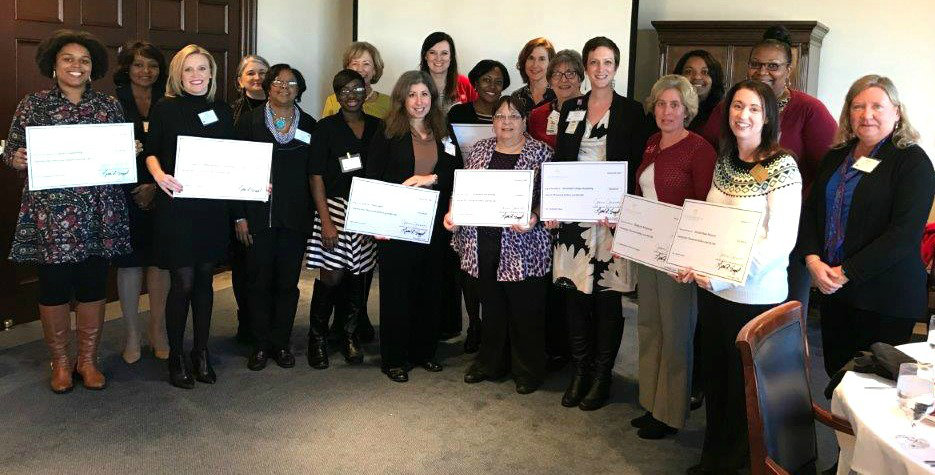
Nine local nonprofits and programs that focus on women’s economic security and ending the cycle of intergenerational poverty were awarded a record amount of grant money. The Women’s Fund of Greater Birmingham awarded its 2017 grants, totaling $215,000, at a ceremony to honor the grant recipients at Regions on Thursday. This is the largest amount invested in a single grant cycle since The Women’s Fund’s founding in 1996. “Thanks to generous community support, more women and their children will have the tools they need to build better lives,” said Jeanne Jackson, President and CEO. “The 2017 grants fund programs that provide women with supports essential for their long-term success, including job skills training, affordable housing, child care, career coaches. Birmingham invested in these women, and in turn, we will all move forward together.” The following agencies and programs received grants: Childcare Resources, Supplemental Child Care Program (SCCP) ($25,000) – Provides child care subsidies for low-income working mothers. Children’s Aid Society, Project Independence ($25,000) – Provides housing, economic, and educational supports for homeless, pregnant, or parenting teens. First Light, Forever Home ($25,000) – Provides independent housing and wraparound supports for homeless mothers and children. Jefferson State Community College, Women in Manufacturing Initiative ($25,000) – Provides scholarships and supports for single mothers to enter manufacturing associate’s degree program. Jimmie Hale Mission, Jessie’s Place ($20,000) – Provides educational, financial, and economic support, including child care assistance, for homeless mothers. Norwood Resource Center, Family Forward ($25,000) – Provides financial coaching, housing advocacy, and tax preparation assistance for 30 mothers whose children participate in center programming. Oasis Counseling, Mentally Healthy Moms ($25,000) – Provides mental health counseling for women to address employment issues. The Salvation Army, My Home ($25,000) – Provides permanent housing and case management for single mothers St. Vincent’s Foundation, Jeremiah’s Hope Academy ($20,000) – Provides child care assistance for low-income, single mothers receiving training at Jeremiah’s Hope in health-related fields. The Women’s Fund also invested $338,450 in collaborative two-generation programs in Greater Birmingham via their Collaboration Institute and other initiatives in 2016.
Labor secretary nominee Andrew Puzder’s company outsourced jobs
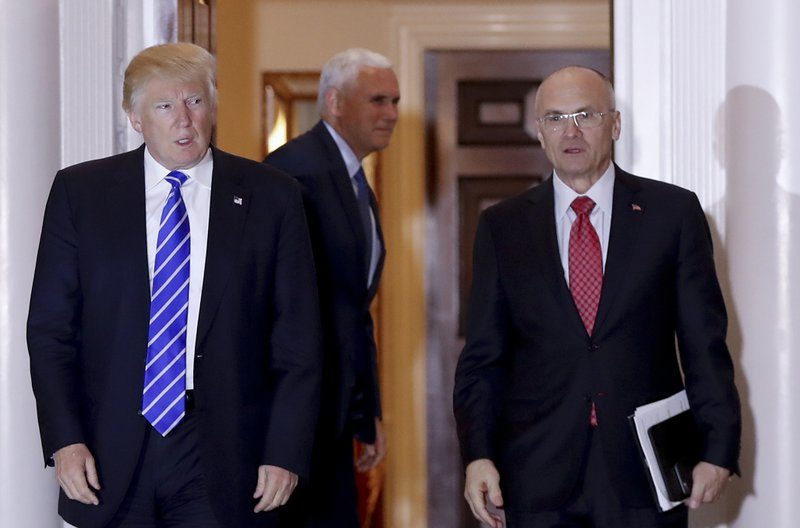
The fast-food empire run by President Donald Trump‘s pick for Labor secretary outsourced its technology department to the Philippines, a move that runs counter to Trump’s mantra to keep jobs in the United States A filing with the Department of Labor and Trump’s criticism of outsourcing could be raised at Andrew Puzder‘s confirmation hearing, with Democrats questioning how well he can advocate for workers. Puzder’s company, CKE Restaurants Inc., notified the government in August of 2010 that it was outsourcing its restaurant information technology division to the Philippines. Doing so, the agency found, “contributed importantly” to the layoffs of both CKE employees and those of an outside staffing firm at an Anaheim, California facility. The agency’s finding made workers eligible for federally funded benefits meant to dampen the impact of globalization on employees. “By outsourcing the function to a firm that employs hundreds of Help Desk specialists, CKE was able to improve the quality of service levels to their restaurants,” the company said in a statement Wednesday to The Associated Press. There’s nothing illegal, or even uncommon, about CKE’s decision to move its help desk overseas and lay off about 20 workers. But the filing — and a spokesman’s acknowledgement that CKE continues to use the IT operation in the Philippines — provides a window into a key contradiction raised by Trump’s nomination of Puzder to head the Cabinet agency charged with enforcing worker rights. “President Trump has said that he will put American workers first, but it increasingly appears this was just empty campaign rhetoric_and we saw this so clearly in who he nominated to lead the Department of Labor,” said Sen. Patty Murray of Washington, the senior Democrat on the committee that will consider Puzder’s nomination. “This filing showing jobs being outsourced overseas is yet another troubling example of workers being squeezed by companies under Andrew Puzder’s leadership.” During his first week in the White House, Trump warned that he would impose a “substantial border tax” on companies that move their manufacturing out of the United States. He also promised tax advantages to companies that produce products domestically. “All you have to do is stay,” he said during a meeting in the White House’s Roosevelt Room. Trump’s companies have regularly outsourced supply purchases and sometimes used guest workers. Trump’s anti-outsourcing message, begun during the presidential campaign, is based on the idea that the practice has hurt middle and lower-income working Americans who feel left behind in the nation’s economic recovery and form much of the new president’s political base. In its statement, CKE defended its decision to move its IT division overseas. “The existing CKE restaurant support staff was insufficient to adequately cover the disproportionately high volume of help desk calls that occur during the early morning hours and to provide full, 24-hours per day, 7-days per week coverage. So, CKE shifted its small help desk services team to a firm that provides both offshore and onshore support.” The Department of Labor’s determination that outsourcing cost the CKE Restaurant employees their jobs was one of more than 2,400 such certifications made in 2010. Outsourcing IT jobs is not unusual, especially in the restaurant industry, because of the cost, said Frank Casale of the Outsourcing Institute and co-founder of the Institute for Robotic Process Automation. “It’s going to be cheaper. From the standpoint of efficiency, it’s going to be better.” The Senate Health, Labor, Education and Pensions Committee has scheduled a Feb. 7 hearing on Puzder’s nomination, a hearing that has been postponed at least twice. Committee Democrats have offered up current and former employees of his companies to tell unflattering stories about their treatment while working for Puzder’s companies. Democrats and their allies say Puzder’s corporate mindset and his public statements call into question his fitness to defend government rules designed to protect American workers. And they’ve assailed Puzder’s opposition to a big raise in the minimum wage, among other positions. “The proof that the Trump administration won’t look out for working families is right there: Trump and his cabinet built their careers by hurting U.S. workers,” said Jessica Mackler, president of super PAC American Bridge, which backed Hillary Clinton during the 2016 campaign. At a 2013 American Enterprise Conference, Puzder said Hardee’s Restaurant operators in the Southeast and Midwest were jealous of the immigrant-heavy workforce in California. “In other parts of the country you often get people that are saying, ‘I can’t believe I have to work this job,’” he said. But in California, he added, “with the immigration population you always have the, ‘Thank God I have this job’ kind of attitude.” Puzder also has talked about replacing American workers who demand higher wages with robots, which he said are always polite, never late, and don’t sue their employers for discrimination, according to an interview with Business Insider. A statement from Puzder released by the Trump campaign in December struck a different note, promising that he’d be “the best champion American workers have had.” Trump and Puzder have said the nominee’s role as a jobs creator prepares him be a powerful advocate for American workers. Puzder tweeted on Jan. 16, “I am looking forward to my hearing.” Republished with permission of The Associated Press.
Official: Donald Trump wants to slash EPA workforce, budget
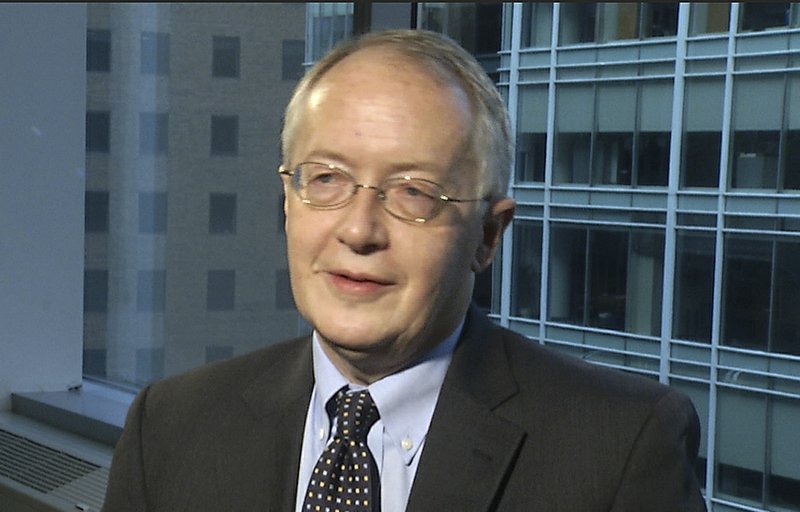
The former head of President Donald Trump‘s transition team at the Environmental Protection Agency said Thursday he expects the new administration to seek significant budget and staff cuts. Myron Ebell said in an interview with The Associated Press that Trump is likely to seek significant reductions to the agency’s workforce — currently about 15,000 employees nationwide. Ebell, who left the transition team last week, declined to discuss specific numbers of EPA staff that could be targeted for pink slips. Asked what he would personally like to see, however, Ebell said slashing the agency’s size by about half would be a good start. “Let’s aim for half and see how it works out, and then maybe we’ll want to go further,” said Ebell, who has returned to his position as director of the Center for Energy and Environment at the Competitive Enterprise Institute. The conservative think tank in Washington opposes “global-warming alarmism” and receives a portion of its funding from corporations and individuals that profit from the continued burning of fossil fuels. Ebell has long been a vocal critic of federal environmental regulations, which he claims are strangling the nation’s economy and impeding job growth. Though he kept specific recommendations he made to the White House confidential, Ebell suggested it was reasonable to expect the president to seek a cut of about $1 billion from the EPA’s roughly $8 billion annual budget. About half the EPA’s budget passes through to state and local governments for infrastructure projects and environmental cleanup efforts that Ebell said Trump supports. He said the cuts would likely fall on the remaining half the agency’s budget, which pays for agency operations and environmental enforcement. “President Trump said during the campaign that he would like to abolish the EPA, or ‘leave a little bit,’” Ebell said. “I think the administration is likely to start proposing cuts to the 15,000 staff, because the fact is that a huge amount of the work of the EPA is actually done by state agencies. It’s not clear why so many employees are needed at the federal level.” EPA has been roiled by turmoil during its first week under Trump, as members of the transition team issued what it has described as a temporary freeze on all contract approvals and grant awards. Trump’s representatives also instituted a media blackout, clamping down on media releases, social media posts and other external communications issued by career staff. AP reported Wednesday that Trump’s political appointees have been scrutinizing reports and data published on the agency’s websites for potential removal, especially details of scientific evidence showing that the Earth’s climate is warming and man-made carbon emissions are to blame. Ebell said Tuesday the purge is necessary because EPA’s leaders under President Barack Obama “politicized” global warming and allowed activists within the agency to publish “junk science.” “Undoubtedly the federal government has been staffed with scientists who believe the global-warming alarmist agenda,” said Ebell, whose academic credentials are in philosophy and political theory. Asked about Ebell’s comments, former Republican EPA Administrator William K. Reilly cautioned calm, saying that often transition teams have little to do with what eventually happens in an agency. “I would tell the EPA staff that, in my experience, transition teams often have zero influence,” said Reilly, who ran the environmental agency under Republican President George H.W. Bush. “They shouldn’t be taken that seriously. They’re just ideologues. They don’t work for and are not even known to the incoming cabinet.” Trump’s nominee for EPA administrator, Scott Pruitt, said during his Senate confirmation hearing last week that he disagreed with past statements by the president alleging that global warming is a hoax perpetrated by the Chinese to harm U.S. economic competitiveness. But like Trump, Pruitt has a long history of publicly questioning the validity of climate science and has pledged to dismantle Obama-era regulations aimed at curbing carbon emissions from coal-fired power plants. Earlier this month, NASA and the National Oceanic and Atmospheric Administration issued a joint statement affirming that 2016 was officially the hottest year in recorded history, breaking prior records set in 2015 and 2014. Studies show the Greenland and Antarctic ice sheets have decreased in mass, while the world’s oceans have risen on average nearly 7 inches in the last century. “Many studies have shown just how strong that level of consensus in the scientific community is that climate change is happening, it’s caused by humans and the impacts will be significant,” said Keith Seitter, the head of the American Meteorological Society who has a doctorate in geophysics. “It’s not junk science.” Ebell insists studies showing climate change poses a serious risk to human civilization are bunk. Though he now accepts global temperatures are increasing, he claims that the warming will be beneficial for most Americans — providing milder winters and longer growing seasons. “The fact is that in modern society we have the technology to deal with environmental challenges, and that’s why people live in Phoenix,” Ebell said. “Because warm is good, as long as we have air conditioning.” Republished with permission of The Associated Press.
Trump advisers, daughter registered to vote in 2 states

President Donald Trump‘s sweeping preview of his plans to investigate voter fraud in the United States includes those registered in more than one state. A number of people closest to the president fall into that category, including his Treasury Secretary nominee, Steve Mnuchin, Trump’s son-in-law and close adviser, Jared Kushner, as well as his younger daughter, Tiffany Trump. The president tweeted on Wednesday that he will be asking for a “major investigation” into voter fraud, “including those registered to vote in two states, those who are illegal and even, those registered to vote who are dead (and many for a long time),” he said. “Depending on results, we will strengthen up voting procedures!” It’s not illegal to be registered in two states and just because someone is, it doesn’t mean they vote in both. Trump’s comments likely suggest a crackdown on those who actually vote in two or more states — claims that secretaries of state across the country have dismissed as baseless. Mnuchin is registered in New York and California, according to a public voter database, and Kushner in New York and New Jersey. Tiffany Trump is registered in New York and Pennsylvania, where she went to college, according to the database — something presidential counselor Kellyanne Conway called “flatly false.” “She had been registered in Pennsylvania and went through the process, (and) said it was very byzantine and took a long time, but she said that she is not registered to vote in two states,” Conway said Thursday on NBC’s “Today.” The president’s chief counsel, Steve Bannon, shifted his Florida registration last summer, from a former home in Miami-Dade County where his ex-wife once lived, to a beachfront home owned by a Breitbart colleague in Sarasota County on the Gulf Coast. On Wednesday, Sarasota Supervisor of Elections Ron Turner told reporters that Bannon never voted in the county and had been removed from the county’s rolls this week based on information received from New York City’s elections office. A request for comment from the White House on how the proposed investigation might seek to address the two-state registration issue was not immediately answered. All 50 states and the District of Columbia have finalized their election results with no reports of the kind of widespread fraud that Trump alleges. Trump has long asserted that the system is “rigged,” but he increasingly vocalized his concerns in August after courts rejected tough voter ID rules put in place for the first time in a presidential election in states including North Carolina, Texas and Wisconsin. The rulings cited a risk of disenfranchising the poor, minorities or young people who were less likely to have acceptable IDs — and who are more likely to vote Democratic. Trump’s tweet on the investigation alarmed Democrats who already believe that moves to tighten voter ID laws are a means to restrict access to the ballot box. Like the president, Trump’s pick for attorney general, Republican Sen. Jeff Sessions of Alabama, who could oversee any federal probe, has shown sympathy toward claims of voting fraud. Republished with permission of The Associated Press.
Donald Trump admin pursues rethinking of national security policy
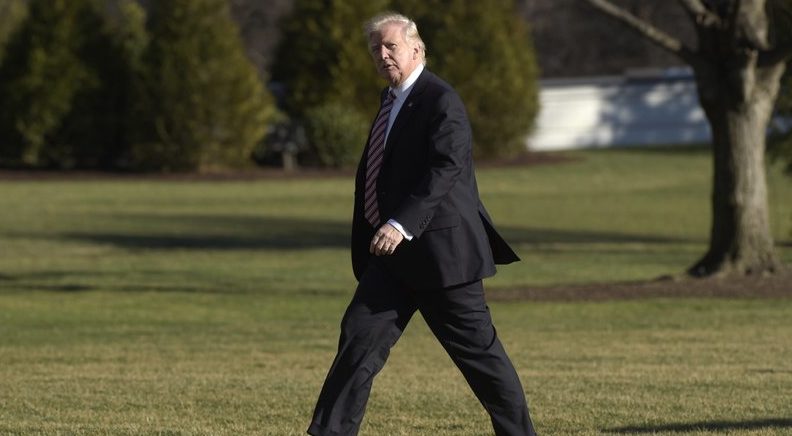
President Donald Trump is embracing the idea of Guantanamo Bay as a jail for terror suspects, a repudiation of the Obama administration’s longtime push to prosecute captured militants in the U.S. court system. A draft order spelling out a tougher line in the fight against terror dramatically rethinks how the U.S. should detain, monitor and prosecute terrorist suspects. It would reverse Obama’s efforts to close the military detention center at Guantanamo Bay, Cuba, and reopen the idea of establishing CIA detention facilities outside the United States. In its support of Guantanamo the document is likely to renew a debate, which the Obama administration considered closed, about whether military tribunals offshore or civilian trials in American courts offer a fairer and more efficient path to justice. “To take a step backward would be both practically misguided and morally indefensible,” said Eric Freedman, a constitutional law professor at Hofstra University and a legal consultant for Guantanamo detainees. “The United States, for better or worse, sets an example for governments and social movements alike throughout the world, and it’s already the case that the groups opposed to American values have made extraordinarily effective use of Guantanamo and its betrayal of American values,” Freedman said. Though the draft order, which the White House said was not official, takes a more expansive view of national security power, it also in some instances relies on legal authorities that remained in place during the Obama administration but went unused. Guantanamo was open for the duration of the Obama administration, leaving it available for use by a new administration. And though Obama opted not to indefinitely detain newly captured suspects, courts have recognized the government’s authority to keep without trial suspects captured during wartime and connected to specific terror groups like al-Qaida. “The authorities are still there, and there’s no legal reason why it wouldn’t be available to a President Trump,” said Stephen Vladeck, a national security law professor at the University of Texas at Austin. Aspects of the draft order weren’t surprising given Trump’s campaign promise to fill Guantanamo with “bad dudes.” His pick for attorney general, Alabama Sen. Jeff Sessions, said at his confirmation hearing that he thought the prison, opened to take terror suspects after the Sept. 11 terror attacks, had served its purpose “marvelously well.” Support for it now represents a total reversal of eight years of efforts to close it. The Obama administration sent no new detainees there, and while not fulfilling a promise to close it, whittled the population from 242 to 41. Obama’s Justice Department maintained that the U.S. civilian court system was the most legally sound forum in which to prosecute terror suspects captured in the U.S. and overseas and cited hundreds of convictions in New York and other cities as proof. Former Attorney General Eric Holder sought unsuccessfully in 2009 to move the suspected ringleader of the Sept. 11 attacks, Khalid Sheikh Mohammed, from Guantanamo to New York for trial, and though the plan was derailed by political opposition, has since expressed vindication as the military tribunal system at Guantanamo stalled. The son-in-law of Osama bin Laden, Sulaiman Abu Ghaith, was convicted in New York in 2014 on terror-related charges after being captured in Jordan. Ahmed Abu Khattalah, accused in the deadly 2012 attacks on a State Department compound in Benghazi, was captured in Libya in 2014 and is awaiting trial in Washington, D.C. And despite occasional objections from congressional Republicans, the Justice Department in the Obama administration has consistently used American courts to try suspects captured in the U.S. — including Boston Marathon bomber Dzhokhar Tsarnaev and the man accused in the Manhattan and New Jersey bombings last year. Sessions and other Republicans have long expressed concern that civilian courts afford legal protections to which suspected terrorists are not entitled. He has warned that valuable intelligence can be lost if a detainee is advised of his right to remain silent and to have a lawyer. But in several major cases, federal officials have used a public safety exemption to interrogate for intelligence purposes high-value suspects, including Tsarnaev, before advising them of their Miranda rights and restarting the questioning. Arguments that Guantanamo is a better forum than civilian courts have been “debunked by successful prosecution after successful prosecution,” Todd Hinnen, who served as acting assistant attorney general for national security in the Obama Justice Department, said before the new draft order was announced. “As a result, sending them before a less well-established, less tested system that’s viewed as less legitimate by much of the world, would be a step backward,” Hinnen said. But Robert Turner, a national security law professor at the University of Virginia, disagreed, saying the military tribunal process has fewer “theatrics” that accompany a civilian court case, where a “fast-talking lawyer” could come in and mislead the jury. The tribunal process, he said, has “no-nonsense rules.” “I don’t think Gitmo as a detention facility, per se, is one of the problems,” he said. Still, said Vladeck, the draft document lacked enough “teeth” and specifics for the public to know how much of its agenda could actually be implemented or survive inevitable statutory and political hurdles. “Morally it’s a terrifying document, but legally, I think it’s mostly a lot of hot air,” he said. Republished with permission of The Associated Press.
