
Trump advisers start ‘America First Policies’ nonprofit
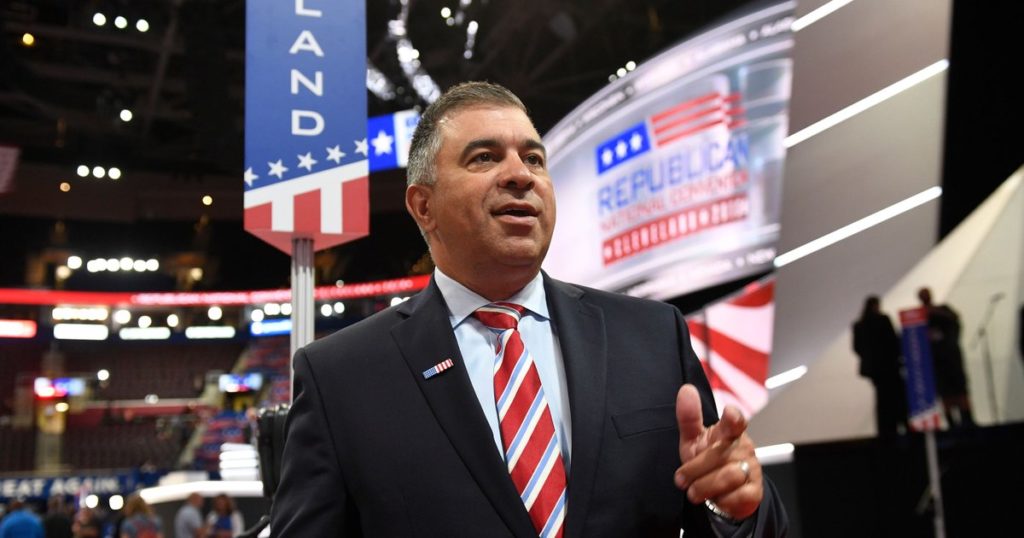
Six of President Donald Trump‘s top campaign aides have banded together to start a nonprofit called “America First Policies” to back the White House agenda. The group includes Trump’s digital and data director Brad Parscale, onetime deputy campaign manager Rick Gates and two campaign advisers to Vice President Mike Pence, Nick Ayers and Marty Obst. David Bossie, another Trump deputy campaign manager, and Katrina Pierson, a senior adviser on the campaign communications team, also will be involved, according to a statement announcing the group. “Some of the same like-minded individuals who put their energy into getting Mr. Trump elected are now going to be part of a grassroots group to go out there and help with the agenda, help the White House be successful,” Parscale said. The large — and so far unnamed — group of founders is aimed at quelling reports of dissention among campaign advisers who did not go into the White House. Republican donors Robert and Rebekah Mercer, who finance a data research shop called Cambridge Analytica, have been mulling starting a separate nonprofit. Ayers and Bossie have close ties to the Mercers. Parscale said the group aims to “build something unique, just like we did with the campaign.” America First Policies will conduct research into public policies and promote Trump’s favored causes, such as dismantling and replacing President Barack Obama‘s health care law and changing immigration policies. One of its first tasks is likely to be advocacy for Trump’s Supreme Court nominee, whom the president said he would announce Tuesday night. The group doesn’t have yet have a public website, but its founders said to expect digital and television advertising around issues. “This goes beyond Trump supporters,” Gates said. “We’re trying to capture all people who believe in the Trump agenda.” Obama also started a nonprofit group, called Organizing for Action, to back his policies. Some Democrats say that group undercut the Democratic Party by siphoning away donors and keeping separate Obama’s contact list for millions of his supporters. Many of the details of the new Trump-themed initiative have yet to be finalized. Nonprofits do not legally have to disclose their donors, although Obama’s group did so voluntarily on a quarterly basis. There’s no word yet on whether America First Policies will do that. Obama’s nonprofit inherited supporter lists from his campaign; the America First Policy founders say they’re still assessing what they can lease or obtain from the Trump campaign. Republished with permission of The Associated Press.
Martin Dyckman: Paul Ryan, Mitch McConnell — why are you enabling Donald Trump?
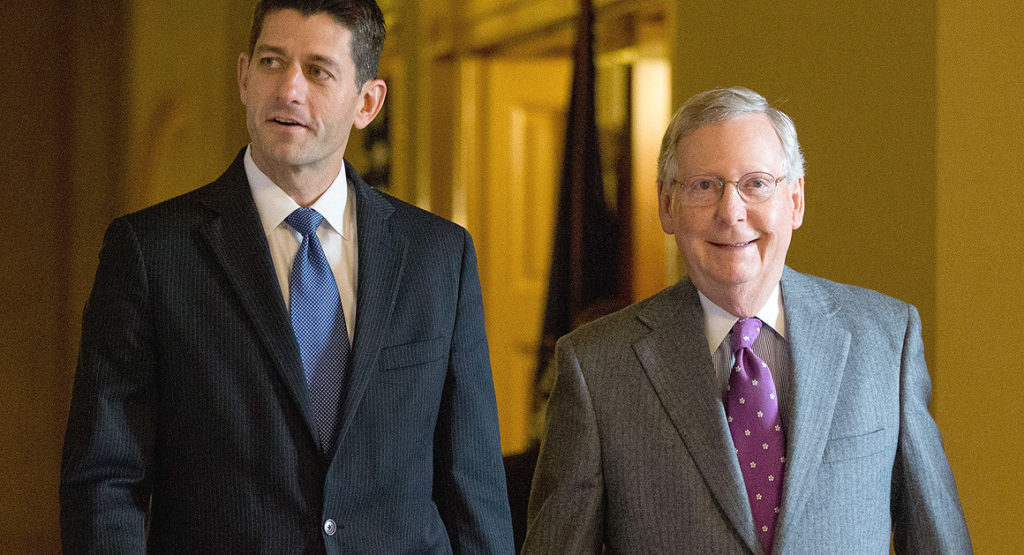
An open letter to House Speaker Paul Ryan and Senate Majority Leader Mitch McConnell: Gentlemen: It was wisdom rather than whim that guided the founders of our nation in separating the powers of government with a system of checks and balances. As James Madison remarked in The Federalist 47, “the accumulation of all powers … in the same hands, whether of one, a few or many … may justly be pronounced the very definition of tyranny.” Their faith in the future is being put to the test by current events in Washington that prompt me to ask: Have you lost your minds? Are you as irresponsible as the madman in the White House? Why are you defaulting on the duty of the Congress to defend our democracy? Why are you enabling Mr. Trump’s excesses? I’m writing this letter Jan. 30, the anniversary of two world-changing events. One was the birth of President Franklin D. Roosevelt, who greatly honored the office that you are allowing the current occupant to disgrace. The other was that of Adolf Hitler attaining the chancellorship of Germany in 1933, despite not having won a majority in any election. A month and a half later, Dr. Paul Joseph Goebbels, Hitler’s new propaganda chief, warned German newspapers against publishing criticism that could be used, as The Associated Press paraphrased it, “by oppositionists to the government’s detriment.” “The press must be the keyboard on which the government can play,” he said. “Criticism will be allowed, but it must be expressed so that no enemy of the government at home or abroad may be enabled to seize upon such criticism to the government’s detriment. Cooperation between the government and the press is our aim.” I don’t have to tell you what happened soon after to the German press. Well, sirs, it hasn’t taken nearly that long for Mr. Trump’s propaganda minister, Steve Bannon, to tell The New York Times to shut up, for the president himself to indulge himself in infantile Twitter messages attacking the Times and other great newspaper, The Washington Post; for a committee chairman in your Congress to lecture the media on its duty to be the government’s mouthpiece; and for Kellyanne Conway, who is apparently the junior propaganda minister, to say that reporters who criticize Trump ought to be fired. Doesn’t any of that concern you? I have specific concerns about what Trump is doing and what you are not doing. A case in point is your reported assurance that Mr. Trump’s great wall will be built, at extraordinary expense to the public in one form or another of direct or indirect taxation. That wall will be as abject a failure as France’s Maginot Line, and the only beneficiaries will be wall builders in the United States and tunnel builders in Mexico. The latter, as you should know, already have expertise in smuggling narcotics and people under our existing defenses. As deep as you build a wall, people will find ways around it. We have a long and essentially unguarded coastline. The Canadian border is open. Visas can easily be overstayed. The wall would be a failure not only practically but in the moral sense as well. History will come to regard that wall and its builders with the same contempt deservedly directed at the Soviet Union and its puppets in the former East Germany. My second issue is your timid acceptance of the catastrophic incompetence and cruelty with which the president issued his executive orders against Muslim immigrants last Friday. That he picked Holocaust Remembrance Day to do so is an irony almost too painful to bear. The agencies that would have to carry out his abuse of executive power (and what has become of the distaste you expressed when President Obama exercised his?) were neither consulted nor forewarned in time to avert massive confusion at airports. Decent people holding legitimate green cards were treated as criminals. Families were sundered. And why were only certain countries singled out, excluding those where, by remarkable coincidence, Mr. Trump has been doing business? Why are people from Iraq subject to his ban when those from Saudi Arabia, the country of origin of most of the 911 terrorists, are not barred? Don’t these inconsistencies bother you? Are you unconcerned by his unconstitutional preference for immigrants of one religion over all others? Are you not frightened — frankly, I’m terrified — that he is excluding the Chairman of the Joint Chiefs of Staff and the Director of National Intelligence from the regular meetings of the National Security Council? And that in their place, he is installing his far-right adviser, Steven Bannon? It would seem that he wants to hear only from those who would inform and flatter his biases. In my opinion, the Congress should without delay provide by legislation for the permanent, full NSC membership of those officials, and find a way to keep the dangerous Mr. Bannon at a distance. In my view, and that of others among whom we share concerns, you have decided to tolerate and even enable the administration’s dangerous conduct because of the short-term benefits that might accrue to the Republican Party. Yes, you might attain some policy goals that the candidate who won the popular vote would have blocked. But you are deluding only yourself if you think all this will rebound to the long-term benefit of your party. When America comes to its senses, the people will hold you along with Trump responsible for all the damage that needs to be undone. The greater the harm, the more you’ll be blamed for it. Sincerely, Martin A. Dyckman ___ Martin Dyckman is a retired associate editor of the Tampa Bay Times. He lives in Asheville, North Carolina.
Darryl Paulson: Florida – Land of electile dysfunction
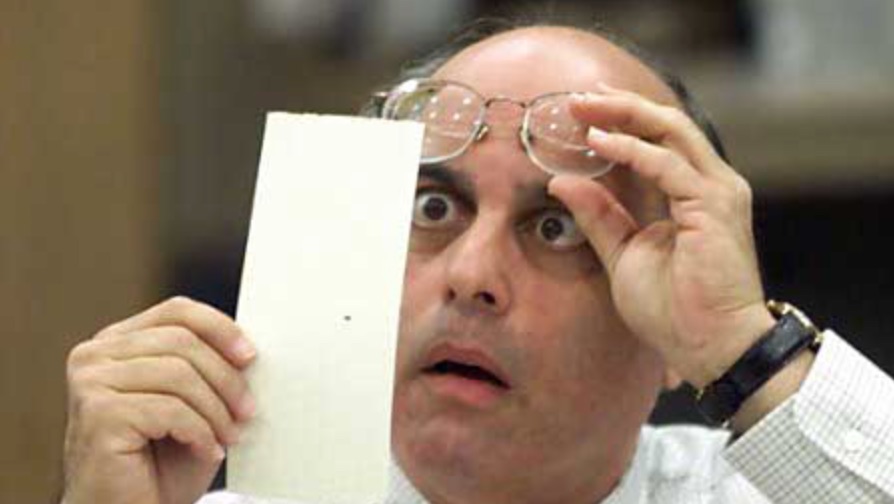
During and after the 2016 presidential election, Republican presidential candidate Donald Trump complained about “millions of people who voted illegally.” He offered no proof to his charge, and virtually all state supervisors of elections found little evidence of fraud. It is “big news” when a single case of vote fraud emerges. It would be the story of the decade if 3 million individuals cast fraudulent votes as Trump alleges. When Sara Sosa of Colorado voted in the 2010, 2011, 2012 and 2013 elections, every wire service carried the story. The unusual part of the story was that Sosa died in 2009. Examples such as Sosa are used by those who want to preserve the “integrity” of the election process. It is also used by those who use the case to show how unusual and rare such cases are in any election cycle. President Trump has become the first president to demand an investigation of an election he won. My guess is that this will be the first of many “firsts” during Trump’s tenure as president. With all of Trump’s complaining about vote fraud, it should be remembered that state and local governments have probably engaged in more case of fraud than have individuals. Few states have manipulated the voter rolls more than the state of Florida. Vote fraud by individuals in Florida Perhaps the prime example of vote fraud by people in Florida elections was the 1997 Miami mayoral race. Incumbent Mayor Xavier Suarez hired “Boleteros” or paid absentee ballot brokers to stuff the ballot boxes to win the election. Because of the vote fraud, the election results were overturned, and Joe Carolla became mayor of Miami. More recently, Zakee Furqan of Jacksonville, convicted of second-degree murder under the name Leon Nelson, voted in several elections before his felony conviction was discovered. The first trial resulted in a hung jury and he is currently facing a retrial. In the 2016 Florida Presidential Primary, Trump complained that 2,500 of his supporters were unable to vote for him in the primary. That may have been true, but it was not due to vote fraud. It turned out that these supporters were not registered as Republicans and, therefore, were not eligible to vote in Florida’s closed primary. Vote fraud by the State of Florida In previous writings, I have documented Florida’s long history of suppressing the right to vote for certain groups, especially the state’s minority voters. After the Civil War, the Democrats passed laws and amended the state constitution to eliminate black voters from the election rolls. Using devices such as the poll tax, the white primary, the eight-ballot box law and a host of other discriminatory devices, Florida could move from blacks being a majority of the electorate to blacks accounting for less than 10 percent of the electorate. All of this happened within a period of about 10 years. For those who argue that this was an embarrassing part of Florida’s early history, but it no longer happens, all one needs to do is look at recent Florida political history. The 2000 Presidential Election is filled with examples of how the Republican-dominated legislature and governor attempted to eliminate minority voters to help the Republican Party and its candidates. The Republican-controlled legislature passed a series of laws which collectively eliminated thousands of legal Florida voters. Before the 2000 Presidential Election, the Legislature approved of a “purge” of felon voters and non-citizens from the ballot. They hired a company, Data Based Technologies, to set up guidelines to remove potential felon voters. The guidelines were vague, and election officials were told to challenge any voter even if it was not an exact match. “John Smyth” could be removed if “John Smith’s” name was on the list. Or, John Smith could be removed even if the birthday or Social Security numbers did not match. Not surprisingly, most of those who were challenged were minority voters who tended to vote Democrat. The U.S. Commission on Civil Rights held three days of hearings in Tallahassee in January 2001 to investigate “alleged voter irregularities” in the Florida 2000 Presidential Election won by George W. Bush by a few hundred votes. Among the Commission findings: African-Americans were 10 times more likely to have their ballot rejected African-Americans cast 54 percent of the rejected ballots due to antiquated voting machines such as punch cards. There were over 180,000 over-votes cast in the 2000 election. Of the 100 with the highest rate of disqualification, 83 percent were majority black. In Miami-Dade, blacks were 65 percent of those on the purge list, but only 20.4 percent of the county’s population. Blacks were 11 percent of the Florida electorate in 2000, but 44 percent of those on the purge list. Florida, which disqualifies more felon voters than any other state, eliminates 10 percent of the voting age population and 23 percent of the black population from voting. Instead of ending the voter purges after the disastrous results of the 2000 elections, Florida renewed the purges in 2008 and 2012. In 2012, Florida sent supervisors a list of 180,000 potential illegal voters. 75 percent of those on the list were black or Hispanic. Only 207 non-citizens were found on the list and only 85 individuals, or .0002 percent, were removed. Pinellas County supervisor of elections Deborah Clark commented on the purges: “I’m sorry Florida is doing this right now. This does not reflect positively on Florida’s election process.” Everyone wants elections to be untainted by fraud and, according to all the evidence, Florida has experienced little voter fraud. A Florida Department of Law Enforcement study of the 20.7 million voters who participated in the last two statewide elections found only 13 cases of possible fraud and this resulted in only six guilty pleas. Studies have consistently found virtually no evidence of fraud in Florida elections and, yet, the state has adopted policies to protect the integrity of the elections which have resulted in thousands of individuals losing their right to vote. Florida
