
2 GOP Senators say they will oppose Betsy DeVos for Secretary of Education
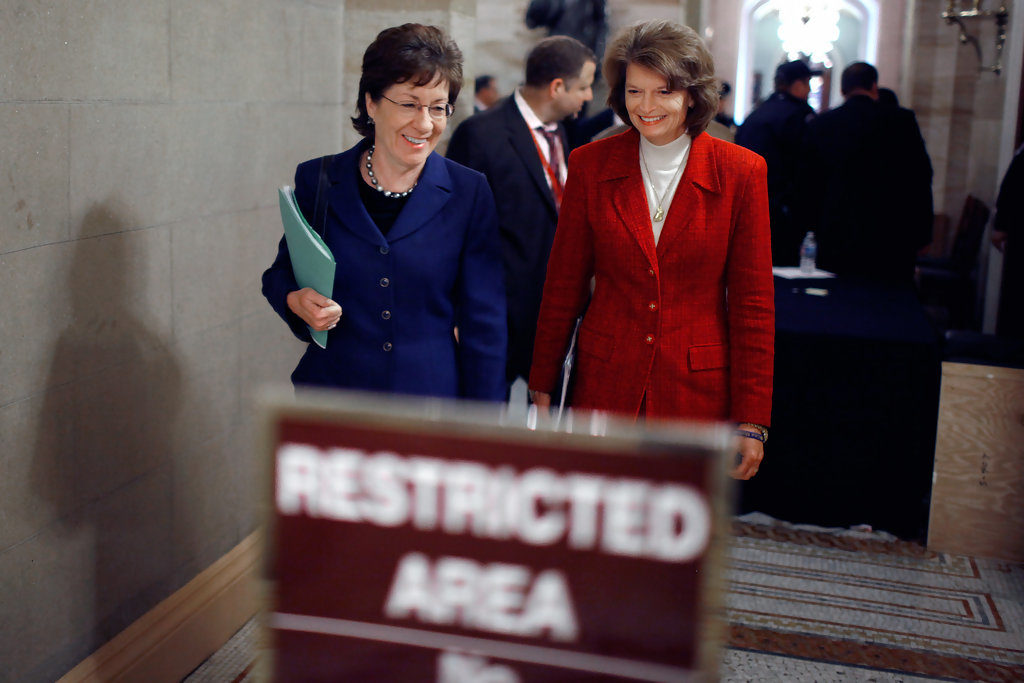
Republican Sens. Susan Collins of Maine and Lisa Murkowski of Alaska announced Wednesday in back-to-back speeches on the Senate floor that they will vote against Education Department nominee Betsy DeVos, endangering her confirmation. They are the first two Republicans to break with President Donald Trump on any of his Cabinet picks. If one more GOP senator opposes DeVos, it would almost certainly derail her nomination. “This is not a decision I make lightly. I have a great deal of respect for Mrs. DeVos,” Collins said on the floor. “I will not, can not vote to confirm her.” The senator specifically pointed to DeVos’ “lack of familiarly” with the Individuals with Disabilities Education Act, saying she was both “troubled and surprised” by her lack of knowledge. Speaking after Collins, Murkowski said she too had several concerns over the nominee. “I have serious concerns about a nominee to be secretary of Education … who has been so immersed in the discussion of vouchers,” Murkowski said. “I do not intend to vote on final passage to support Ms. DeVos to be secretary of Education.” The White House has since said it has “zero” concern that DeVos’ nomination is in peril. “I have 100 percent confidence she will be the next secretary of education,” White House press secretary Sean Spicer said at his daily press briefing with reporters calling DeVos an “unbelievably qualified educator and advocate for students, teachers, parents.” “I think that the games being played with Betsy DeVos are sad,” he concluded.
GOP suspends Senate rule, muscles Donald Trump picks through panel
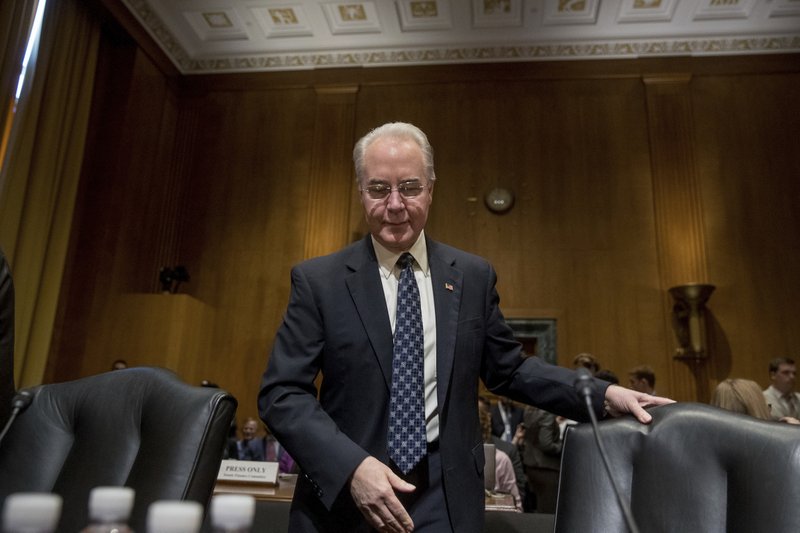
In the latest intensification of partisan hostilities, Republicans rammed President Donald Trump‘s picks to be Treasury and health secretaries through a Senate committee on Wednesday with no Democrats present after unilaterally suspending panel rules that would have otherwise prevented the vote. By a pair of 14-0 roll calls, the Senate Finance Committee approved Rep. Tom Price, R-Ga., to be Health and Human Services secretary and banker Steve Mnuchin to be Treasury secretary. Both nominations must be confirmed by the full Senate. The GOP’s show of brute political muscle came shortly before a testy session of the Senate Judiciary Committee at which lawmakers approved Sen. Jeff Sessions, R-Ala., to be attorney general. Later Wednesday, the full Senate planned to vote on confirming Rex Tillerson, the former Exxon Mobil CEO, as secretary of state. Republicans and Democrats have battled virtually nonstop since Trump entered the White House 12 days ago over his refugee ban, his firing of the acting attorney general and GOP plans to erase former President Barack Obama‘s health care law. With Republicans controlling both the White House and Congress for the first time in a decade, the GOP display of strength seemed to signal that the party will do all it can to block Democratic attempts to frustrate them. Democrats had boycotted Wednesday’s abruptly called Finance Committee meeting, as they’d done for a session a day earlier, demanding more time to question the two men about their past financial practices. Before approving the two nominees, the committee’s Republicans voted 14-0 to temporarily suspend a rule requiring at least one Democrat to be present for any votes. Committee Chairman Orrin Hatch, R-Utah, said the Senate parliamentarian had approved the extraordinary tactic and blamed it on Democrats, saying their boycott was “one of the most pathetic things I’ve ever seen” and “a nefarious breach of protocol.” In a written statement, top Finance panel Democrat Ron Wyden of Oregon said, “It’s deeply troubling to me that Republicans on the Finance Committee chose to break the rules in the face of strong evidence of two nominees’ serious ethical problems In a letter, Finance panel Democrats sent to Hatch early Wednesday, they wrote that they were not attending meetings because “both nominees have yet to answer important questions that impact the American people” about their financial backgrounds and submitted questions for them to answer. They also cited “significant concerns that both Mr. Mnuchin and Congressman Price gave inaccurate and misleading testimony and responses to questions to the Committee.” In confirmed by the full Senate, Price would lead Republican efforts to erase Obama’s health law. Democrats cited a newspaper report that officials of an Australian biomed company said Price received a special offer to buy their stock at a reduced cost, despite Price’s congressional testimony that the offer was available to all investors. Democrats also said a bank run by Mnuchin used a process for handling home foreclosures that critics have associated with fraud. Both men and congressional Republicans said they’d done nothing wrong. Separately, the Judiciary committee used a party-line 11-9 vote to send Sessions’ nomination to be attorney general to the full Senate. At that session, Sens. Al Franken, D-Minn., and John Cornyn, R-Texas, argued angrily over previous committee testimony and Franken complained that his integrity had been abused. Democrats had scuttled a planned vote Tuesday in the wake of Trump’s decision to fire Acting Attorney General Sally Yates. Several Democrats said they had no confidence Sessions would be able to stand up to Trump. Wednesday was just the latest instance of building tensions among Republicans and Democrats over Trump’s executive order on immigrants and refugees. But Democrats lack the numbers in the Senate to block Tillerson from becoming the nation’s chief diplomat. Republicans hold a four-seat advantage and during a procedural vote Monday on the nomination, Democrats Joe Manchin of West Virginia, Heidi Heitkamp of North Dakota and Mark Warner of Virginia cast their ballots for Tillerson. They’re unlikely to change their minds. Democrats boycotted a planned vote in the Senate Environment and Public Works Committee on Scott Pruitt, Oklahoma’s state attorney general in line to lead the Environmental Protection Agency. The vote was postponed. In his current position, Pruitt has frequently sued the agency he hopes to lead, including a multistate lawsuit opposing the Obama administration’s plan to limit planet-warming carbon emissions from coal-fired power plants. Like Trump, Pruitt has cast doubt on the extensive body of scientific evidence showing that the planet is warming and man-made carbon emissions are to blame. Pressed by Democrats in his Senate confirmation hearing in January, however, Pruitt said he disagreed with Trump’s earlier claims that global warming is a hoax created by the Chinese to harm the economic competitiveness of the United States. Another panel postponed a vote on Trump’s pick to head the White House Budget Office, tea party Rep. Mick Mulvaney, R-S.C., as Democrats asked for more time to read the nominee’s FBI file. Republished with permission of The Associated Press.
Senate committee approves Jeff Sessions’ AG nomination in party-line vote
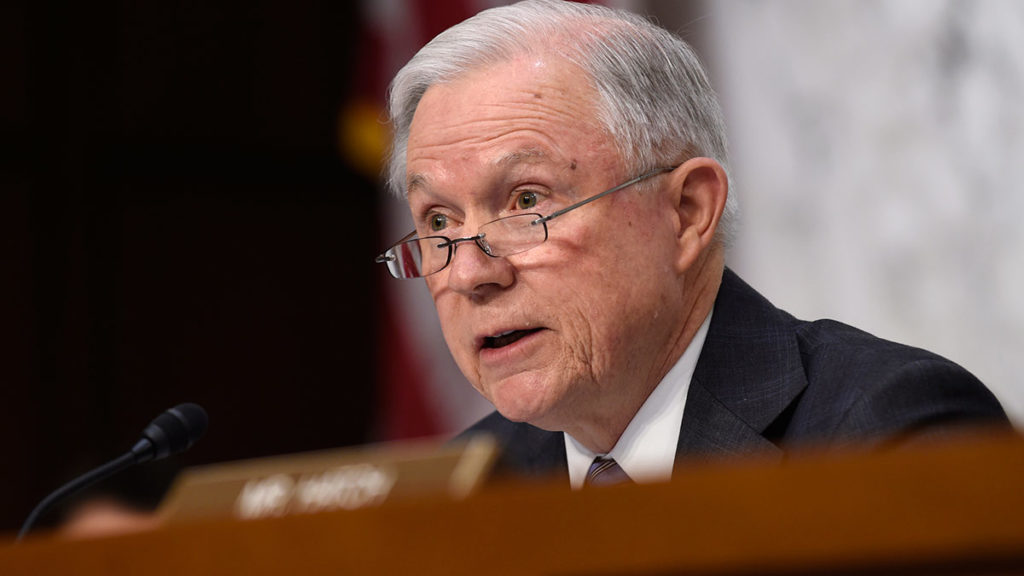
Alabama-Republican Sen. Jeff Sessions cleared another major hurdle on Wednesday, moving one step closer to becoming the nation’s next attorney general, when the Senate Judiciary Committee approved his nomination on a party-line vote. The 11-9 decision now moves to the Senate floor confirmation, where he is widely expected to be confirmed given the GOP’s 52-seat majority. To date, none of his Republican colleagues have voiced opposition to him nomination and he has the vote of at least one Democrat — West Virginia-Democrat Sen. Joe Manchin. Upon full chamber confirmation, Sessions is poised to take over as the nation’s chief law enforcement officer, a post which is now vacant following President Donald Trump‘s late-night firing of acting Attorney General Sally Yates on Monday.
In a first, Emirati foreign minister defends Donald Trump visa ban
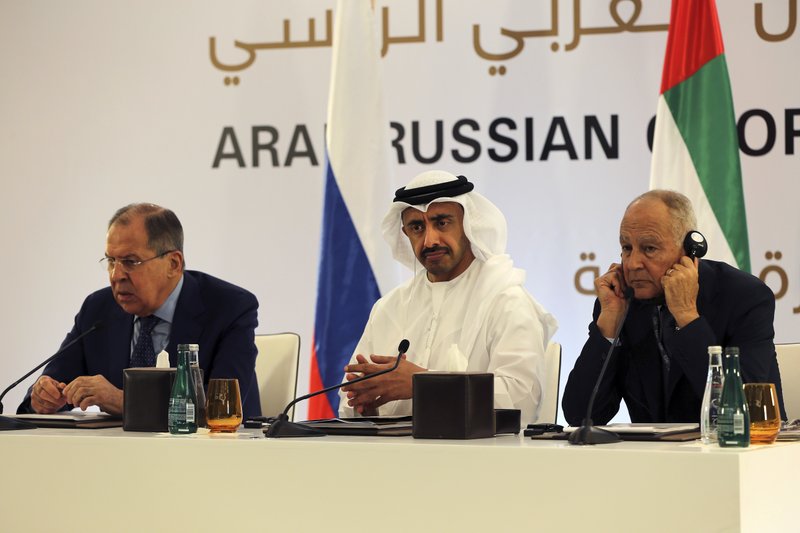
The United Arab Emirates‘ top diplomat on Wednesday came out in defense of President Donald Trump‘s order temporarily barring citizens from seven Muslim-majority countries from entering the United States. The comments by Sheikh Abdullah bin Zayed Al Nahyan, the Gulf federation’s foreign minister, could help bolster the administration’s assertion that the directive was not intended as a ban against Muslims. The UAE minister said the U.S. was within its rights to take what he said was a “sovereign decision” concerning immigration — the first such remarks in support of Trump’s move from the Gulf Arab region — and he voiced faith in the American administration’s assurances that the move was not based on religion. Sheikh Abdullah also noted that most of the world’s Muslim-majority countries were not covered by the order, which halts entry for 90 days to citizens of Iraq, Syria, Iran, Sudan, Libya, Somalia and Yemen. “This is a temporary ban and it will be revised in three months, so it is important that we put into consideration this point,” he said following talks with his Russian counterpart in the Emirati capital, Abu Dhabi. “Some of these countries that were on this list are countries that face structural problems,” he continued. “These countries should try to solve these issues … and these circumstances before trying to solve this issue with the United States.” The Emirates is one of the United States’ closest Arab allies. It is part of the U.S.-led coalition fighting the Islamic State group and hosts American troops and warplanes taking part in the anti-IS campaign. It is also home to a center backed by the U.S. that aims to counter extremist propaganda online. The seven-state federation prides itself on being a tolerant, forward-looking nation that also embraces its traditional Arab and Islamic heritage. The local population is dwarfed some four-to-one by foreign residents, many of whom are not Muslim. Trump made a point of speaking with the powerful Abu Dhabi crown prince, Sheikh Mohammed bin Zayed, and Saudi King Salman in his first calls to Arab allies this week. Sheikh Mohammed is the foreign minister’s brother and is likely to be the next Emirati president. America’s largest Arab export market, the Emirates also has commercial connections to the new U.S. president. Trump has lent his name to a soon-to-open golf course and real-estate project being developed in the Emirati city of Dubai, the Middle East’s commercial hub. The Abu Dhabi tourism office is a tenant of Trump Tower in New York. Sheikh Abdullah and Sergey Lavrov discussed a range of regional issues including the war in Syria during their meeting, which included Arab League Secretary-General Ahmed Aboul Gheit. Trump’s order also includes a suspension of refugee admissions for 120 days, and bans Syrian refugees from entering indefinitely. Lavrov expressed a willingness to engage with the new U.S. administration on the establishment of safe zones in Syria, something that Trump has expressed interest in creating. But he suggested more details were needed. “As I understand it, when the Americans are talking about safe zones, first of all they are interested in reducing the number of immigrants — especially through Syria — from going to the West,” he said. Republished with permission of The Associated Press.
Donald Trump’s voter fraud expert registered in 3 states

A man who President Donald Trump has promoted as an authority on voter fraud was registered to vote in multiple states during the 2016 presidential election, the Associated Press has learned. Gregg Phillips, whose unsubstantiated claim that the election was marred by 3 million illegal votes was tweeted by the president, was listed on the rolls in Alabama, Texas and Mississippi, according to voting records and election officials in those states. He voted only in Alabama in November, records show. In a post earlier this month, Phillips described “an amazing effort” by volunteers tied to True the Vote, an organization whose board he sits on, who he said found “thousands of duplicate records and registrations of dead people.” Trump has made an issue of people who are registered to vote in more than one state, using it as one of the bedrocks of his overall contention that voter fraud is rampant in the U.S. and that voting by 3 to 5 million immigrants illegally in the country cost him the popular vote in November. The AP found that Phillips was registered in Alabama and Texas under the name Gregg Allen Phillips, with the identical Social Security number. Mississippi records list him under the name Gregg A. Phillips, and that record includes the final four digits of Phillips’ Social Security number, his correct date of birth and a prior address matching one once attached to Gregg Allen Phillips. He has lived in all three states. At the time of November’s presidential election, Phillips’ status was “inactive” in Mississippi and suspended in Texas. Officials in both states told the AP that Phillips could have voted, however, by producing identification and updating his address at the polls. Citing concerns about voters registered in several states, the president last week called for a major investigation into his claim of voter fraud, despite his campaign lawyer’s conclusion that the 2016 election was “not tainted.” “When you look at the people that are registered, dead, illegal and two states, and some cases maybe three states, we have a lot to look into,” Trump said in an ABC interview. Reached by telephone Monday, Phillips said he was unaware of his multiple registrations but asked, “Why would I know or care?” “Doesn’t that just demonstrate how broken the system is?” he asked. “That is not fraud — that is a broken system. We need a national ID that travels with people.” Phillips has been in the national spotlight since Nov. 11, when he tweeted without evidence that his completed analysis of voter registrations concluded the “number of non-citizen votes exceeded 3 million.” Thousands of people liked and retweeted the claim, which led to a viral article three days later on InfoWars.com, a site known to traffic in conspiracy theories. Phillips also has previously tweeted about the dangers of “inactive voters” being able to vote in U.S. elections. “There is already law that compels states to remove inactive voters. Many don’t,” Phillips tweeted Nov. 29. According to media reports, five Trump family members or top administration officials also were registered to vote in two states during the 2016 election — chief White House strategist Stephen Bannon; Press Secretary Sean Spicer; Treasury Secretary nominee Steven Mnuchin; Tiffany Trump, the president’s youngest daughter; and Jared Kushner, Trump’s son-in-law and a senior White House adviser. The Houston-based True the Vote has challenged the validity of voter rolls in numerous states. On Friday, Phillips tweeted that the conservative group “will lead the analysis” of widespread voter fraud, and suggested in a CNN interview that it might release the underlying data in a few months. Shortly after Phillips appeared on CNN on Friday, Trump tweeted: “Look forward to seeing the final results of VoteStand. Gregg Phillips and crew say at least 3,000,000 votes were illegal. We must do better!” Republished with permission of The Associated Press.
Fed is likely to leave rates alone at a time of uncertainty
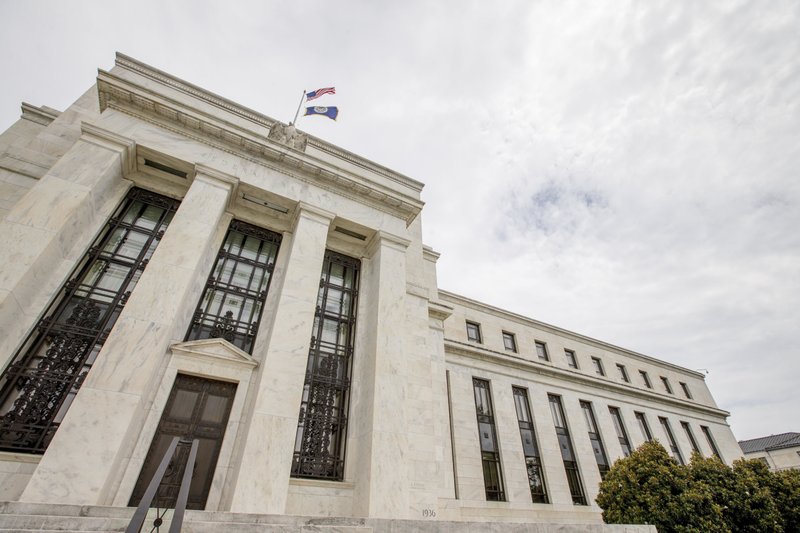
At some point in the coming months, the Federal Reserve is widely expected to resume raising interest rates. Just not quite yet. On Wednesday, the Fed will likely end its latest policy meeting with an announcement that it’s keeping its benchmark rate unchanged at a time of steady economic gains but also heightened uncertainty surrounding the new Trump administration. In its statement, the Fed will likely acknowledge that the economy has continued to move toward the central bank’s dual goals of full employment and annual inflation of roughly a moderate 2 percent. But the Fed is nevertheless expected to signal that it wants more time to monitor the economy’s performance and that it still expects those rate increases to occur gradually. “We are moving in the direction of more rate hikes this year, but the January meeting is not where that will start,” said David Jones, chief economist at DMJ Advisors. At the moment, most economists foresee no rate increase even at the Fed’s next meeting in March, especially given the unknowns about how President Donald Trump‘s ambitious agenda will fare or whether his drive to cancel or rewrite trade deals will slow the economy or unsettle investors. It’s always possible that the central bank could surprise Fed watchers Wednesday by sending a signal that a rate hike is coming soon. In Fed parlance, that signal could be as slight as changing language in its statement to say “near-term risks to the economic outlook appear in balance,” instead of “roughly in balance,” the phrase it has been using. The statement will not be accompanied by updates to the Fed’s economic forecasts or by a news conference with Chair Janet Yellen, both of which occur four times a year . Last month, the Fed modestly raised its benchmark short-term rate for the first time since December 2015, when it had raised it after keeping the rate at a record low near zero for seven years. The Fed had driven down its key rate to help rescue the banking system and energize the economy after the 2008 financial crisis and the Great Recession. When it raised rates last month, the Fed indicated that it expected to do so three more times in 2017. Yet confusion and a lack of details over what exactly Trump’s stimulus program will look like, whether he will succeed in getting it through Congress and what impact it might have on the economy have muddied the outlook. And while Trump’s tax and spending plans are raising hopes for faster growth, his proposals to impose tariffs on such countries as China and Mexico to correct trade imbalances could slow the economy if U.S. trading partners retaliate and collectively impede the flow of imports and exports. “The Fed is unlikely to signal intentions to raise rates as early as March given the heightened uncertainty about the timing and scope of fiscal and protectionist policies,” said Sal Guatieri, senior economist at BMO Capital Markets. Nariman Behravesh, chief economist at IHS Markit, predicts that the economy will grow a modest 2 percent to 2.5 percent this year, before accelerating next year to 2.6 percent to 2.7 percent on the assumption that Trump’s policy proposals will have begun to take full effect by then. The outlook for both years would mark an improvement over the economy’s lackluster growth of 1.6 percent in 2016, its weakest performance since 2011. Even though economic growth, as measured by the gross domestic product, was underwhelming last year, the job market appears close to full health. Hiring was consistently solid in 2016, and the unemployment rate ended the year at 4.7 percent, just below the 4.8 percent level the Fed has identified as representing full employment. And inflation, by the Fed’s preferred measure, rose 1.6 percent in the 12 months that ended in December, moving closer to the Fed’s 2 percent goal. Republished with permission of The Associated Press.
Conservative Neil Gorsuch emulates Antonin Scalia minus the rough edges
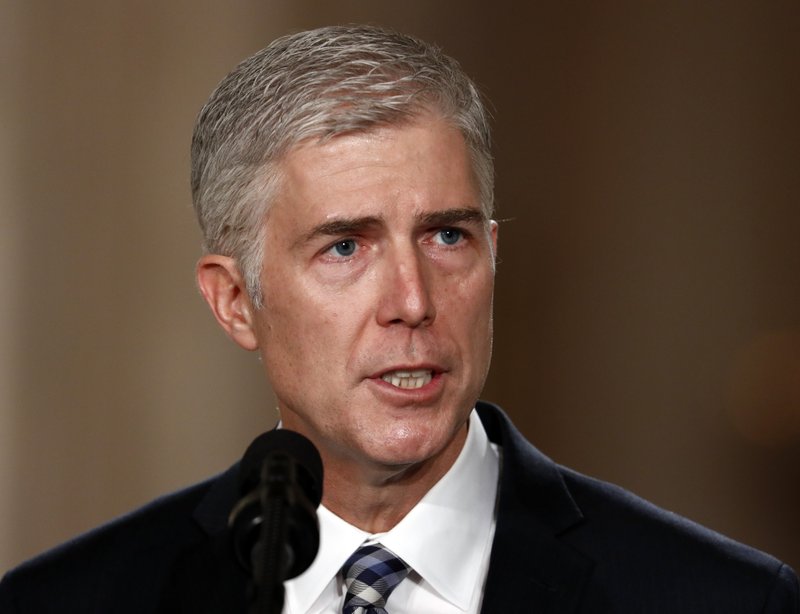
If confirmed by the Senate to the Supreme Court, Neil Gorsuch would fill the seat of the man he seeks to emulate as a judge. He would be the first justice to serve alongside a colleague for whom he worked. Gorsuch described his former boss, Justice Anthony Kennedy, Tuesday as one of the judges who brought him up in the law. President Donald Trump nominated Gorsuch to fill the seat of Justice Antonin Scalia, who died nearly a year ago. Trump said he was delivering on his pledge to choose someone in Scalia’s mold. Gorsuch, a federal appeals court judge in Denver for the past 11 years, said he adheres to Scalia’s approach to the law, evaluating the Constitution and laws by how they were understood when they written. He also shares with Scalia a flair for writing. But unlike the sometimes irascible Scalia, Gorsuch approaches his work with a courtly manner more reminiscent of Kennedy. Jeffrey Rosen, president and CEO of the bipartisan National Constitution Center in Philadelphia, has known Gorsuch since they worked as clerks on the federal appeals court in Washington, though for different judges. “His opinions stand out for his prose and analysis and he gets along really well with both sides,” Rosen said. While abortion rights groups immediately criticized the nomination, Rosen said Gorsuch’s record on the issue is sparse. In a book Gorsuch wrote laying out the case against assisted suicide and euthanasia, Rosen said, Gorsuch was careful to avoid making a religious case for his views, focusing instead on philosophy. “He has been careful not to say what he thinks about abortion or marriage equality,” Rosen said. In any event, with Kennedy remaining on the court, there are five votes to preserve abortion rights and gay rights, no matter Gorsuch’s views. Should Kennedy, 80, or liberal justices Ruth Bader Ginsburg, 83, or Stephen Breyer, 78, leave the court in the next four years, Trump then would have a chance to appoint a justice whose vote could perhaps flip the court on abortion, gay rights and a range of hot-button issues. It’s unclear how quickly majority Republicans might be able to move Gorsuch’s nomination through the Senate or whether Democrats will try to block him. Gorsuch could join the court in time for the last arguments of the term in the spring. The court currently has before it a case about the rights of transgender students, though the case could end up being returned to a lower court without a full hearing in the high court. Next term’s big issue could be whether some partisan redistricting violates the Constitution. Critics of labor unions also are likely to bring before the court a case that could damage the financial viability of unions that represent government workers, an issue on which the court split 4-4 after Scalia’s death. From his time on the appeals court, Gorsuch’s notable opinions include defense of religious freedom. In two cases that involved the contraception mandate under the Obama health care law, Gorsuch sided with businesses and non-profit groups that voiced religious objections to the requirement that they provide cost-free contraception to women covered under their health plans. Gorsuch also has written opinions that question 30 years of Supreme Court rulings that allow federal agencies to interpret laws and regulations. Gorsuch has said that federal bureaucrats are allowed to accumulate too much power at the expense of Congress and the courts. Those rulings “permit executive bureaucracies to swallow huge amounts of core judicial and legislative power and concentrate federal power in a way that seems more than a little difficult to square with the Constitution of the framers’ design,” he wrote last year. Justice Clarence Thomas has raised similar concerns. Notre Dame law professor John Copeland Nagle said he sees an irony in Trump’s selection of Gorsuch. “Who would have guessed that President Trump’s most important decision in his first weeks in office would be to limit his own power?” Nagle said. The choice of Gorsuch “does just that.” In background and style, Gorsuch resembles the group he may soon join. He would be the sixth member of the bench to have attended Harvard Law School; the other three have law degrees from Yale. Seven of the eight justices previously served as appeals court judges, Gorsuch’s current job. He was a Supreme Court law clerk, along with three other justices. While he is a native Coloradan, Gorsuch spent his high school years in Washington because his mother, Anne Gorsuch, was EPA administrator in the Reagan administration. At 49 years old, he’s the youngest nominee since Thomas, who was 43 when he joined the court more than 25 years ago. Gorsuch differs from his prospective colleagues in one respect. On a court with five Catholics and three Jews, he would be the lone Episcopalian. Republished with permission of The Associated Press.
Steven Kurlander: Turn Donald Trump voter fraud distraction into 21st-century voting platform

President Donald Trump unfolded his promised massive scale-back of leftist Federalism last week by signing numerous Executive Orders – so many that their volume probably made former President Obama blush with envy. The Trump Revolution, which can be defined both in conservative ideology and viewed as totally hazardous, shallow and impulsive at the same time, has begun in earnest. And it’s more than obvious that Trump is using all that (unconstitutional) executive power that has been allowed to build up the last 30 years to begin his revolution. At the same time, the Executive Orders were rolled out, Trump and his White House staff continued the campaign ShockPolitics methodology of making belligerent statements and discussion points to draw outrage toward Trump, distracting his opponents and Americans alike from the wielding of such power and the true implications of his executive orders. So while the Trump White House began to gut 30 years of excessive Federal environmental regulation and jump-started the Dakota Access and Keystone pipelines, he continued to complain about the reporting by media outlets of size of the crowd at the Inauguration. As the president began to frame a revision of our antiquated immigration policies by ordering our borders closed to visitors and refugees from selected Islamic countries, Trumps key adviser Steven Bannon incredulously stated at the same time that “The media should be embarrassed and humiliated and keep its mouth shut and just listen for a while.” Probably the most outlandish statement, actually two tweets, made by Trump during his few days in office was this: “I will be asking for a major investigation into VOTER FRAUD, including those registered to vote in two states, those who are illegal and … even, those registered to vote who are dead (and many for a long time). Depending on results, we will strengthen up voting procedures!” Trump wrote in two consecutive tweets Wednesday morning. Sure, the president’s assertion is, to put it nicely, questionable at best, particularly in light of allegations of Russian hacking against Democrats. However, the tweets themselves could be used to demark the beginning of a true discussion of fixing our voting system. Here’s a suggestion: Instead of an investigation, I would suggest the president form a bipartisan presidential commission comprised of members of Congress, security and computer industry leaders and experts, state officials and common citizens to secure our voting processes and modernize the way we vote to 21st century standards. I would suggest addressing five major voting issues: — Voter Registration — Building and implementing a national registry from scratch that would replace antiquated and inaccurate registration rolls in states and counties and safeguarding voters from suppression on a national level; standardizing voter registration in all 50 states; requiring a Social Security card, valid picture identification, and developing a eye-scanning or similar system to prove identity; building technology to allow voters to vote by using their PDAs and home computers; and to make registration for native-born American citizens at birth along with the issuance of a birth certificate or Social Security cards. — Launching a Voter Technology and Security Initiative — much like President Kennedy launched the Space Program — major national resources would be dedicated toward building a voter registration system that is impenetrable — and spur a much-needed buildup of securing our computers from hacking and identity theft in all aspects of our lives. — Destroying the Two Party hold on Voting – in all regions across the nation, there are a growing number of voters and office-seekers who are NDAs that do not receive the same influence and protection as Democratic and Republican voters both in election offices and at the polls – there’s a need to modernize this 19th century party system of controlling who votes and how polling places are manned. The Two-Party System is basically dead in 2017 and it’s time to reform voting to reflect its demise. — Replacing Election Day with an Election Period — where voters could vote within a time period rather than on a certain day. States already allow early voting and mail ballots. — Replacing voting at polls with voting by PDA or at home on computer or snail mail. The present scanning devices at polls are crap as well as the old methodology of voting itself by having to go to a specific place to vote. Going to the polls should be one of many options, not a mandate. The creation of such a presidential voting commission would be a positive first step for the president to take not only in terms of really addressing the breakdown of American voting, but to begin a positive dialogue, not confrontational rants by tweeting, to address the many issues facing Americans today. Such a commission could also serve as a model for Trump to build badly needed consensus and tamper down the vitriol that his election has created as a new norm in American life. ___ Steven Kurlander blogs at Kurly’s Kommentary and writes for FloridaPolitics.com. He is an attorney and communications specialist living in Monticello, New York. He can be reached at kurlyskommentary@gmail.com.
Democrats decry Donald Trump threat to fire inspectors general
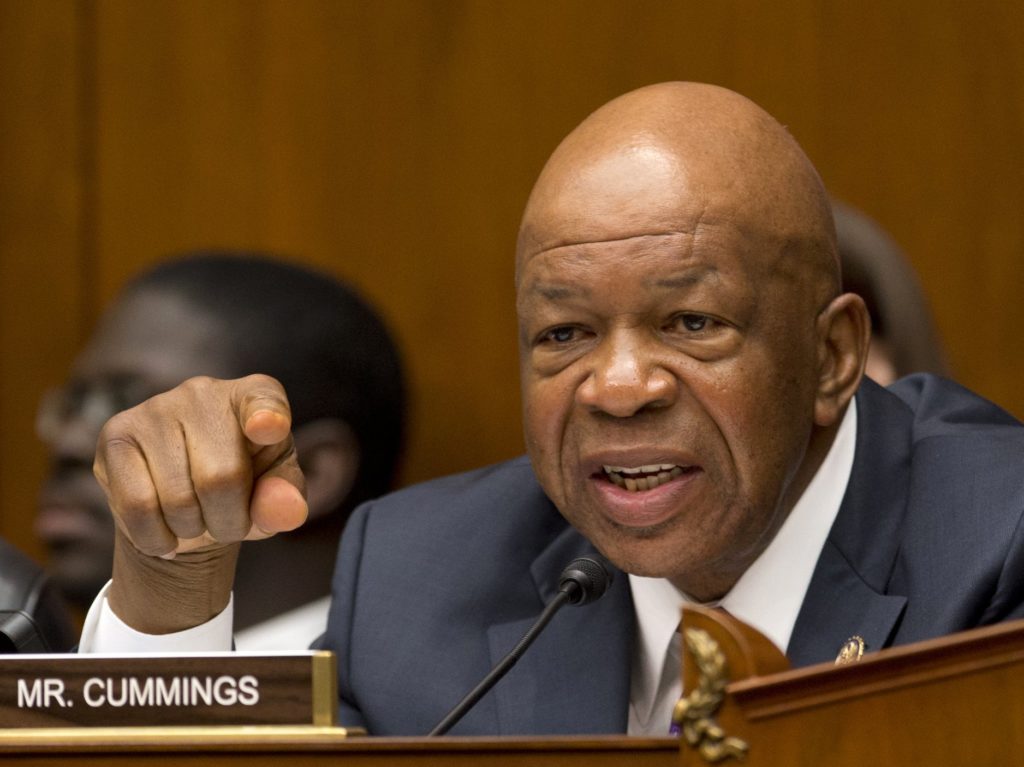
Democrats on the House Oversight Committee asked the White House Tuesday for information about reports that President Donald Trump‘s transition team threatened to remove a host of inspectors general from their posts. Democrats Elijah Cummings of Maryland and Gerald Connolly of Virginia said Trump officials apparently contacted as many as eight inspectors general earlier this month to inform them their positions were “temporary” and they should begin looking for other employment. The threats appear to have been withdrawn amid complaints from lawmakers and the inspectors general, “but there is no official communication confirming that this occurred,” the Democrats said. Cummings is the top Democrat on the oversight panel, while Connolly is the second-ranking Democrat. The lawmakers asked White House Counsel Donald McGahn to confirm in writing that Trump has no plans to fire any inspectors general. Inspectors general are internal watchdogs who conduct audits of federal agencies and investigate complaints of wrongdoing. The position is considered nonpartisan, although about half of the 70-plus inspectors general are appointed by the president; the rest are appointed by agency chiefs. Republished with permission of The Associated Press.
When will Robert Bentley, Legislature answer ‘the call,’ put lottery on Nov. ballot?

During the past couple of months, everywhere I go people continually ask me why in the world the Legislature could not simply put the issue of whether they could vote for or against a lottery on the November ballot. The fact that this inquiry has lingered for this long tells me that folks are upset about this travesty. They are mad at the Legislature. However, the blame lies with the governor. Indeed, the Legislature met in a special session to address this issue of whether or not to put the lottery proposal on the ballot and let you vote on this lingering issue. Most polls indicate that the good people of Alabama would vote in favor of it, provided there are no sweetheart deals, hidden chicanery or favoritism in the proposal. Most Republicans would vote in favor of it because they are tired of their money being sent to Georgia, Florida and Tennessee to help their schools, roads and indigents rather than keep their money at home helping Alabamians. Folks in the Heart of Dixie are going to buy lottery tickets. They are just going to buy them in our surrounding states. It was noticeable that a good many of the legislators, who represent border counties, voted against the referendum. This is similar to bygone days when most of the dry counties in the state continued to vote dry due to an ironic coalition between the bootleggers and preachers. I seriously think that some of these border counties are reaping a bonanza in gas tax revenue from the throng of cars headed to border states to buy lottery tickets. They say that cars are backed up for miles around every state border when these super Powerball extravaganzas occur. Well, to answer your questions, it is difficult to pass anything in a congress or Legislature. That is why they have the old adage, “It takes an act of Congress to get something accomplished.” In Alabama, extraordinary special sessions of the Legislature are the way to go to get something accomplished if you are the governor. The Legislature has to address what the governor calls the legislature into session for, it is called “the call.” George Wallace was a master of using special sessions to get what he wanted done. He would call them repeatedly. However, before he called them, he would have his ducks in a row. He would have called you on the phone, had you visit with him one on one in his office at the capitol or at the governor’s mansion. He would know what the vote count was on his issue before he called a special session. He would not waste taxpayer money on a session without any accomplishment. Well folks, our good ole doctor Governor Bentley ain’t George Wallace. Ole Bentley did waste money that the state General Fund does not have to squander. That is why the special session was called. It was designed to help bolster the beleaguered General Fund. Bentley failed because he did just the opposite of Wallace. He did not call any legislators. They heard about the session on the news. Even though Gov. Bentley shoulders the blame for failure to at least put the lottery issue on the ballot, he has shown profound leadership with his creation of an advisory council on gambling. This is a prudent, rational, and unbiased approach to the entire gambling issue. Bentley is right when he says the issue of gambling in the state is something that will never end unless we come together and figure out a way for the people of this state to have a say in its resolution. This advisory panel has done a thorough job of studying this issue. Jim Byard and Clinton Carter, two bright stars in Bentley’s cabinet, have led the comprehensive study of gaming. The commission looked at what other states are doing to reap revenue from gambling that already exists to get a clearer picture of what a lottery would generate for state coffers. They have looked at all gambits of gambling in the state, not just the lottery. They are designing a long-term approach to present to the legislature. The administration has extended the panel’s deadline to report to the legislature from January 31 to June, probably because they do not want to deal with gambling during this legislative session. The final solution must allow Alabamians to vote on this issue. See you next week. ___ Steve Flowers is Alabama’s leading political columnist. His weekly column appears in over 60 Alabama newspapers. He served 16 years in the state legislature. Steve may be reached at www.steveflowers.us.
