
Robert Bentley calls Special Election to fill vacant US Senate seat
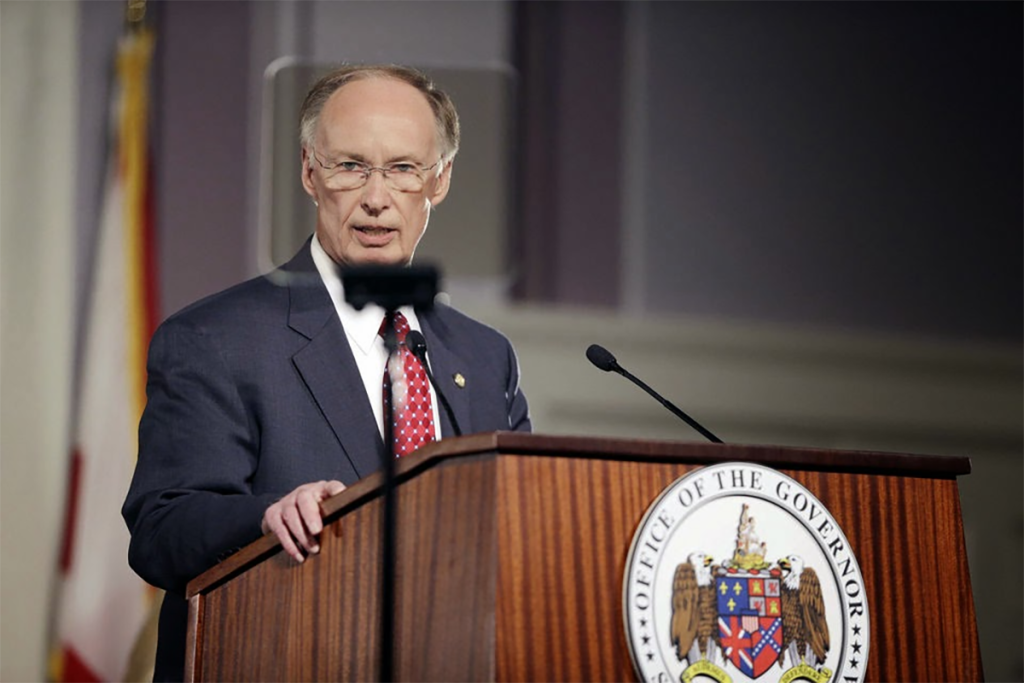
Governor Robert Bentley announced on Tuesday the dates for a Special Election to fill the seat in the U.S. Senate vacated by Jeff Sessions when was sworn-in as U.S. Attorney General. A special election will be held Nov. 6, 2018, in conjunction with other statewide elections. “After consultation and lengthy discussions with the Alabama Secretary of State’s Office, a large number of factors were considered in setting the date for this Special Election. Those factors included compliance with federal and state statutes and cases, saving unnecessary expense on a costly separate statewide special election, and setting a time that is expected to increase voter participation,” explained Bentley in a press release. “For these reasons, the 2018 General Election is the most reasonable time to hold the Special Election to fill the unexpired term of Senator Sessions.” Below is the finalized Special Election timeline: A Special Primary Election shall be held on Tuesday, June 5, 2018, if more than one candidate qualifies with either of the major political parties. A Special Primary Runoff Election shall be held on Tuesday, July 17, 2018, if necessitated by one candidate, of any qualified political party, not receiving a majority of the votes cast in the Special Primary Election. The Special General Election shall be held on Tuesday, November 6, 2018. All candidates qualifying with major political parties should be advised that the last day for any candidate to qualify with their respective parties, regarding such election, will be Friday, February 9, 2018, at 5:00 p.m. The two major political parties shall certify their qualified candidates to the Secretary of State as soon as possible after the qualification deadline but by no later than 5:00 pm on Thursday, March 15, 2018. All independent candidates and minor parties seeking ballot access are advised that their deadline for filing of the appropriate ballot access, petitions, and supporting paperwork with the Secretary of State shall be Tuesday, June 5, 2018 at 5:00 p.m.
No designer babies, but gene editing to avoid disease? Maybe

Don’t expect designer babies any time soon — but a major new ethics report leaves open the possibility of one day altering human heredity to fight genetic diseases, with stringent oversight, using new tools that precisely edit genes inside living cells. What’s called genome editing already is transforming biological research, and being used to develop treatments for patients struggling with a range of diseases. The science is nowhere near ready for a huge next step that raises ethical questions — altering sperm, eggs or embryos so that babies don’t inherit a disease that runs in the family, says a report Tuesday from the National Academy of Sciences and National Academy of Medicine. But if scientists learn how to safely pass alterations of the genetic code to future generations, the panel said “germline” editing could be attempted under strict criteria, including that it targets a serious disease with no reasonable alternative and is conducted under rigorous oversight. “Caution is absolutely needed, but being cautious does not mean prohibition,” said bioethicist R. Alta Charo of the University of Wisconsin-Madison. “This committee is not saying we will or should do germline — heritable — editing. What we are saying is that we can identify a set of strict conditions under which it would be permissible to do it,” Charo added. “But we are far, far away from being ready to try.” Genome editing should not go beyond healing the sick and enhance traits such as physical strength, what’s commonly called “designer babies,” the panel stressed. But the public should get involved in these debates now, to say what might one day be acceptable. The long-awaited report offers advice — the prestigious academies cannot set policy. But it is considered a step toward creating international norms for responsible development of this powerful technology. The U.S. National Academies and its counterparts in Britain and China have been holding international meetings with the hope of doing just that. “Genome editing is a new tool for gene therapy and it has tremendous promise,” Charo said. But, she added, it has to be pursued in a way that promotes well-being and is responsible, respectful and fair. Genome editing is essentially a biological version of cut-and-paste software, allowing scientists to turn genes on or off, repair or modify them inside living cells. There are a few older methods but one with the wonky name CRISPR-Cas9 is so much faster, cheaper and simpler to use that it has spurred an explosion of research. Under development are ways to treat a range of diseases from sickle cell and hemophilia to cancer. In lab experiments using human cells or animals engineered with humanlike disorders, scientists are unraveling how gene defects fuel disease — and are even trying to grow transplantable human organs inside pigs. That kind of research is very promising, is adequately regulated today and should continue at full speed, the National Academies panel concluded. When it comes to the more sci fi-sounding uses, it’s quite possible scientists will learn how to perform germline editing in five to 10 years, said panel co-chair Richard Hynes of the Massachusetts Institute of Technology. Safety is one reason for caution, he said, as scientists will have to learn whether editing one gene has unwanted downstream effects. Some critics argue that families plagued by inherited diseases already have other alternatives — adopt, use donated eggs, or undergo in vitro fertilization and discard resulting embryos that inherit the bad gene. But Charo noted that sometimes parents carry two copies of a lethal gene, guaranteeing any children inherit it. Others oppose the discarding of embryos for religious reasons. For some families, “you can see there would be strong arguments for doing it” if the other criteria are met, said Robin Lovell-Badge of Britain’s Francis Crick Institute. Some countries prohibit any germline editing research. Others, such as Britain, allow laboratory research with genome editing in embryos, not for pregnancy but to understand human development. In the U.S., scientists can perform laboratory embryo research only with private, not government, funding. Any attempt at pregnancy would require permission from the Food and Drug Administration, which is currently prohibited from using federal funds to review any such request. “The bottom line is there is no planetary government with enforcement power,” Charo noted Tuesday. Republished with permission of the Associated Press.
Bradley Byrne introduces bill to give veterans full access to local care

Alabama 1st District U.S. Rep. Bradley Byrne on Tuesday introduced legislation to give veterans full access to private, local medical care. Byrne’s bill, the Full Choice for Veterans Act, expands eligibility of the Veterans Choice Program to any veteran. Under the Veterans Choice Program, veterans receive a card to get care from private doctors or hospitals. Currently, access to the VA Choice Program is limited to those who have waited longer than 30 days for VA care or those who live more than 40 miles from a VA facility. Congressman Byrne’s bill changes that and give every veteran access to health care providers in their community, regardless of a veteran’s situation. “Veterans should not be forced to remain in a VA system that is dysfunctional and broken,” said Bryne. “This is why Congress created the Choice Card program a few years ago to give veterans greater access to private medical care in their local community. Sadly, the VA created roadblocks to limit veteran access to the Choice Card program. Our veterans deserve better. “Under the Full Choice for Veterans Act, we will give veterans the choices they need and access to timely medical care. Even more, I think we can actually save taxpayer money by cutting down on the bloated VA bureaucracy. This is a win-win situation, and I look forward to working with my colleagues to advance this legislation.” Byrne introduced similar legislation to expand veteran access to private care in 2015 in the previous Congress. Watch Byrne discuss his new bill below:
Alabama among states where immigrants have the least economic impact

With President Donald Trump’s immigration-policy reform actions likely to affect state economies, the personal-finance website WalletHub conducted an in-depth analysis of 2017’s Economic Impact of Immigration by State. In order to determine which states benefit most — and least — from immigration, WalletHub’s analysts compared the 50 states and the District of Columbia across 18 key metrics, ranging from “median household income of foreign-born population” to “jobs generated by immigrant-owned businesses as a share of total jobs.” Coming in behind neighboring states like Mississippi, Louisiana and Tennessee, Alabama ranked 9th on the list of state in regards to where immigrants make the smallest economic impact. Immigrants’ economic impact on Alabama (1= biggest impact; 25= average.): 44th: % of jobs generated by immigrant-owned businesses out of total jobs 37th: Net difference between state and local revenues and expenditures per individual immigrant 42nd: Median household income of foreign-born population 41st: % of Foreign-born STEM workers out of total STEM workers 29th: % of Foreign-born population aged 25 and older with a bachelor’s degree or higher 40th: % of Jobs created by presence of international students out of total jobs 42nd: Economic contribution of international students per capita Here’s how Alabama compares to the rest of the country: Source: WalletHub
Congress to grill Fed Chair amid uncertainty over Donald Trump’s plans
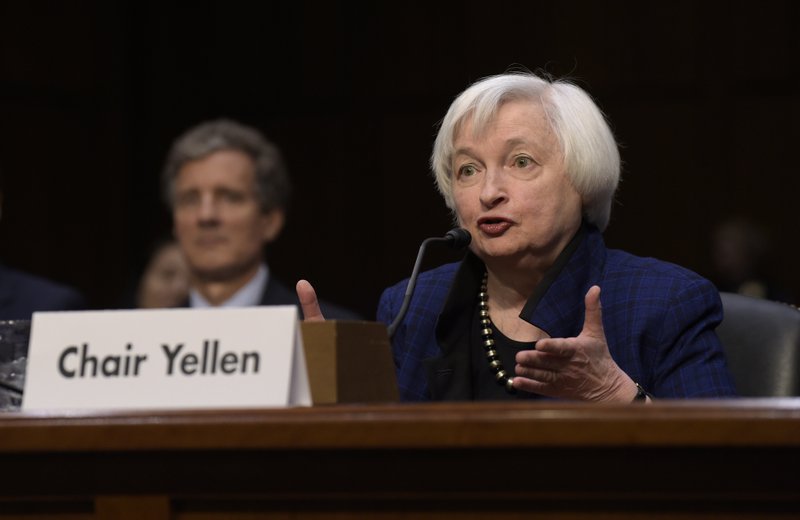
Federal Reserve Chair Janet Yellen faces two tasks when she delivers her semiannual testimony to Congress starting Tuesday: As always, she’ll sketch a picture of how she expects the economy to fare in coming months and how the Fed’s interest rate policy may unfold. But lawmakers are sure to press her also to spell out how the Fed might react to the ambitious economic program President Donald Trump is preparing to unveil soon. The proposals are expected to include deep tax cuts, stimulus spending, trade actions and deregulation. Investors will be eager to hear whatever Yellen says about them — or doesn’t say. Analysts caution, though, that Yellen may remain mum in her assessment of the possible consequences of Trump’s plans given that the details remain mostly unknown. Equally unclear is how much of the program will survive through Congress. “A lot of what the Federal Reserve will do this year will depend on what President Trump and Congress do, and at the moment we have no idea what will emerge from Congress,” said Mark Zandi, chief economist at Moody’s Analytics. “Until there is some clarity about what President Trump and Congress have in mind, I think the Fed is going to be cautious.” In December, the Fed modestly raised its benchmark short-term rate to a range of 0.5 percent to 0.75 percent, its first increase since December 2015. Until then, the Fed had left its key rate unchanged at a record low near zero for seven years to energize an economy pummeled by the most severe recession in decades. In December, the Fed also forecast that it would raise rates three times in 2017. After it met again early this month, the Fed issued a statement that noted improved sentiment among consumers and businesses. And the Fed said it had become more confident that inflation will reach its 2 percent target. But it offered no hints about when it would resume raising rates. Many economists caution that the pace of rate increases could change quickly depending on how much success Trump has in getting his economic initiatives enacted. The president is expected to formally present his program in the coming weeks, offering tax cuts for individuals and businesses and increased spending on infrastructure projects and a rollback of government regulations. Trump has said his goal is to double economic growth, as measured by the gross domestic product, from the lackluster 2 percent annual rate that’s prevailed since the Great Recession ended in 2009 to a robust 4 percent rate or better. Comments he made late last week reiterating his commitment to major tax relief helped drive up stock indexes to fresh record highs. But Fed officials could grow concerned that a big stimulus package at this stage of the recovery, with job growth solid and unemployment below 5 percent, might overheat the economy and trigger unwanted inflation pressures. If that were to happen, the central bank could decide to accelerate its rate hikes. “The Fed has been pretty consistent that it wants the rate hikes to come at a gradual pace, but that could change if Fed officials believe the budget-and-tax package that Trump is pushing is too big and coming too late in the economic cycle, with the economy already at full employment,” said Diane Swonk, chief economist at DS Economics. Swonk said she thinks Yellen will avoid responding directly to questions from Congress this week about Trump’s economic proposals until more is known about them. “She is going to want to fly under the radar as much as possible this week,” Swonk said. Yellen will likely also face questions about a key Republican priority: To undo much of the Dodd-Frank financial regulatory law, which was intended to curb the kind of excessive risk taking in the banking system that fueled the 2008 financial crisis. Yellen has been a staunch defender of the law. But Trump and his allies argue that the law has imposed too many constraints on banks, thereby slowing lending and economic growth. Beyond Dodd-Frank, Yellen could be pressed about Republican efforts to diminish the Fed’s independence, in part by subjecting it to more intensive audits. With a Republican in the White House, those efforts now stand a greater chance of success. Trump now also has the opportunity to fill three vacancies on the Fed’s seven-member policymaking board after Daniel Tarullo, a board member who was guiding the Fed’s regulatory efforts, announced Friday that he would resign this spring. With Tarullo’s exit and the selection of a successor, Trump and likeminded Republicans in Congress could be able to soften the Fed’s approach to regulation. Republished with permission of the Associated Press.
Kellyanne Conway: Michael Flynn resigned because he’d become ‘a lightning rod’
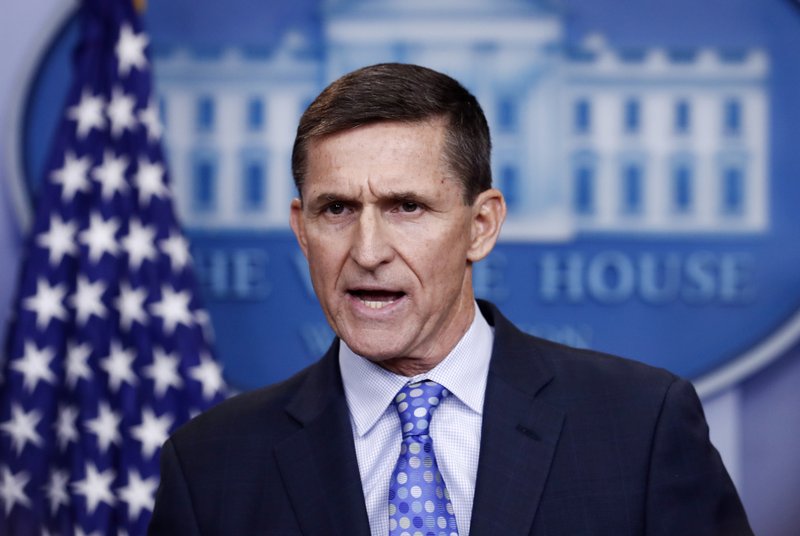
National security adviser Michael Flynn has resigned following reports he misled Vice President Mike Pence about contacts with a Russian diplomat, up-ending President Donald Trump‘s White House team less than a month after his inauguration. In a resignation letter, Flynn said he gave Pence and others “incomplete information” about his calls with Russia’s ambassador to the U.S. The vice president, apparently relying on information from Flynn, initially said the national security adviser had not discussed sanctions with the Russian envoy, though Flynn later conceded the issue may have come up. Such conversations would breach diplomatic protocol and possibly violate the Logan Act, a law aimed at keeping private citizens from conducting U.S. diplomacy. The Justice Department also had warned the White House late last month that Flynn could be in a compromised position because of contradictions between his public depictions of the calls and what intelligence officials knew to be true based on routine recordings of communications with foreign officials who are in the U.S. Kellyanne Conway, a close aide to Trump, had said Monday that Flynn continued to have the “full confidence” of the president. On Tuesday, she said in televised interviews that Trump had supported Flynn out of loyalty but that the situation reached a “fever pitch” and had become “unsustainable.” “By night’s end, Mike Flynn had decided it was best to resign. He knew he’d become a lightning rod, and he made that decision,” Conway told NBC’s “Today” show. When asked why the White House didn’t move sooner after being warned by the Justice Department that Flynn was at risk of blackmail, Conway was vague: “As time wore on, obviously the situation became unsustainable,” she repeated. She added: “We’re moving on.” Trump named retired Lt. Gen. Keith Kellogg as the acting national security adviser. Kellogg had previously been appointed the National Security Council chief of staff and advised Trump during the campaign. Trump is also considering former CIA Director David Petraeus and Vice Admiral Robert Harward, a U.S. Navy SEAL, for the post, according to a senior administration official. A U.S. official told The Associated Press that Flynn was in frequent contact with Ambassador Sergey Kislyak on the day the Obama administration slapped sanctions on Russia for election-related hacking, as well as at other times during the transition. An administration official and two people with knowledge of the situation confirmed the Justice Department warnings on condition of anonymity because they were not authorized to discuss the matter publicly. It was unclear when Trump and Pence learned about the Justice Department outreach. The Washington Post was the first to report the communication between former acting attorney general Sally Yates, a holdover from the Obama administration, and the Trump White House. The Post also first reported last week that Flynn had indeed spoken about sanctions with the Russian ambassador. Trump never voiced public support for Flynn after that initial report but continued to keep his national security adviser close. The White House officials sent contradictory messages, meantime, about Flynn’s job status. While Conway was remarking that Trump had “full confidence” in the retired general, White House press secretary Sean Spicer said the president was “evaluating the situation” and consulting with Pence about his conversations with the national security adviser. Asked whether the president had been aware that Flynn might have planned to discuss sanctions with the Russian envoy, Spicer said, “No, absolutely not.” The Kremlin had confirmed that Flynn was in contact with Kislyak but denied that they talked about lifting sanctions. On Tuesday, Russian lawmakers mounted a fierce defense of Flynn. Konstantin Kosachev, chairman of the foreign affairs committee at the upper chamber of the Russian parliament, said in a post on Facebook that firing a national security adviser for his contacts with Russia is “not just paranoia but something even worse.” Kosachev also expressed frustration at the Trump administration: “Either Trump hasn’t found the necessary independence and he’s been driven into a corner… or russophobia has permeated the new administration from top to bottom,” he said. Kosachev’s counterpart at the lower chamber of the Russian parliament, Alexei Pushkov, tweeted shortly after the announcement that “it was not Flynn who was targeted but relations with Russia.” California Rep. Adam Schiff, the top Democrat on the House Intelligence Committee, said Flynn’s resignation “does not end questions over his contacts with the Russians.” He said the White House has yet to be forthcoming about whether Flynn was acting at the behest of the president or others. Republished with permission of the Associated Press.
