
GOP leaders unveil new health law outline, divisions remain
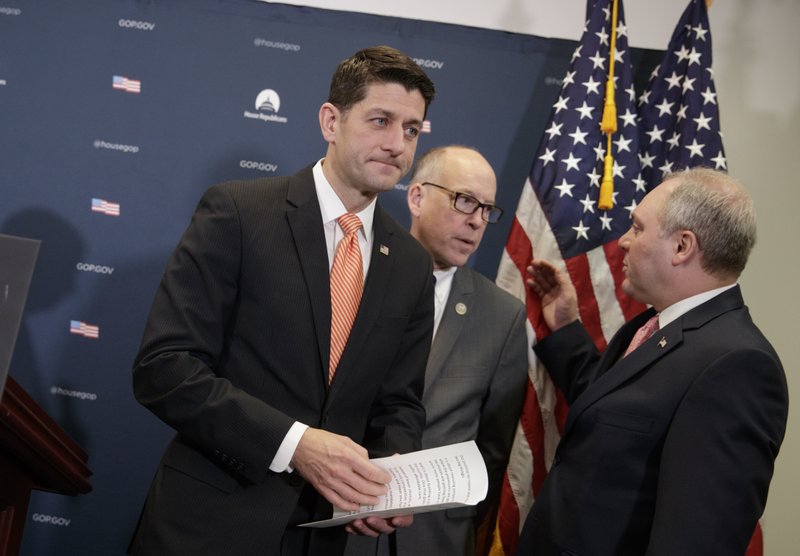
Top House Republicans unveiled a rough sketch of a massive health care overhaul to rank-and-file lawmakers Thursday, but a lack of detail, cost estimates and GOP unity left unresolved the problem that’s plagued them for years: What’s the party’s plan and can Congress pass it? At a closed-door meeting in the Capitol basement, House Speaker Paul Ryan, R-Wis., and other party leaders described a broad vision for voiding much of President Barack Obama‘s 2010 statute and replacing it with conservative policies. It features a revamped Medicaid program for the poor, tax breaks to help people pay doctors’ bills and federally subsidized state pools to assist those with costly medical conditions in buying insurance. Lawmakers called the ideas options, and many were controversial. One being pushed by Ryan and other leaders would replace the tax increases in Obama’s law with new levies on the value of some employer-provided health plans — a political no-fly zone for Republicans averse to tax boosts. “You have to legislate with a sense of political reality,” said Rep. Tom Cole, R-Okla., who said backing that proposal “would set up an ad against you from multiple directions” during upcoming elections. The scant health care progress mirrors a lack of movement on other issues in a capital run by the GOP. No proposals have surfaced to pursue President Donald Trump’s campaign promises to build a border wall with Mexico or buttress the nation’s infrastructure, and Republicans have yet to coalesce around another priority, revamping the nation’s tax code. Senate Republicans have criticized a House GOP plan to change how corporations are taxed. Trump has said he will release his own proposal in the coming weeks, but nothing had been produced, drawing mockery from Democrats. “At some point we need to move from imaginary made-up plans to things that you can read on paper,” said Sen. Mark Warner, D-Va. The health care outline was aimed at giving Republicans something to exhibit during next week’s congressional recess, at a time of boisterous town hall meetings packed with supporters of Obama’s law. Ryan told reporters that Republicans would introduce legislation voiding and replacing Obama’s statute after Congress returns in late February, but offered no specifics. Many Republicans took an upbeat tone after Thursday’s meeting, with Rep. Peter King, R-N.Y., saying, “We’re only 27 days into the new administration, so we have time.” But they have repeatedly failed for seven years to rally behind a substitute plan, and there are no guarantees of success in replacing a law that has extended coverage to 20 million Americans. “We’re not going to get out of this overnight,” Rep. Bill Huizenga, R-Mich., said of the overall effort. There are sure clashes ahead this time over crucial specifics that could jeopardize the entire effort. And lawmakers said they were awaiting official cost estimates from the nonpartisan Congressional Budget Office, which could ignite other battles if the price tag is disconcertingly high. Obama’s law levied $1.1 trillion in taxes over a decade to finance its expanded coverage to millions. GOP leaders said some or all of those taxes could be repealed, with the revenue replaced by a new tax on health care that employees receive at work. Two people familiar with the proposal said individuals would pay taxes on the value of such coverage above $12,000, and above $30,000 for families. Republicans would not confirm those amounts, though House Ways and Means Committee Chairman Kevin Brady, R-Texas, told reporters “the vast, vast majority of Americans” would be unaffected. According to documents distributed to members and obtained by The Associated Press, the expansion of Medicaid to millions of additional poorer people — almost entirely financed by federal taxpayers — would be phased out. In a compromise aimed at resolving a bitter dispute, extra Medicaid money would flow to the 31 states that accepted that expansion and the 19 that didn’t, though it would end “after a certain date” left unspecified. After that, states would get far more discretion to decide who would be covered by Medicaid. They’d also decide whether to receive federal Medicaid funds based on the fluctuating numbers of the program’s beneficiaries or a set annual amount. The tax penalties Obama’s law levies on people who don’t buy insurance would be abolished, as would federal subsidies for most people buying coverage on the online exchanges the statute established. They would be replaced by tax credits for people who don’t have job- or government-provided health coverage and tax-advantaged health savings accounts. Republicans said decisions on amounts have not been made. Republished with permission of The Associated Press.
White House taps billionaire to head intelligence review
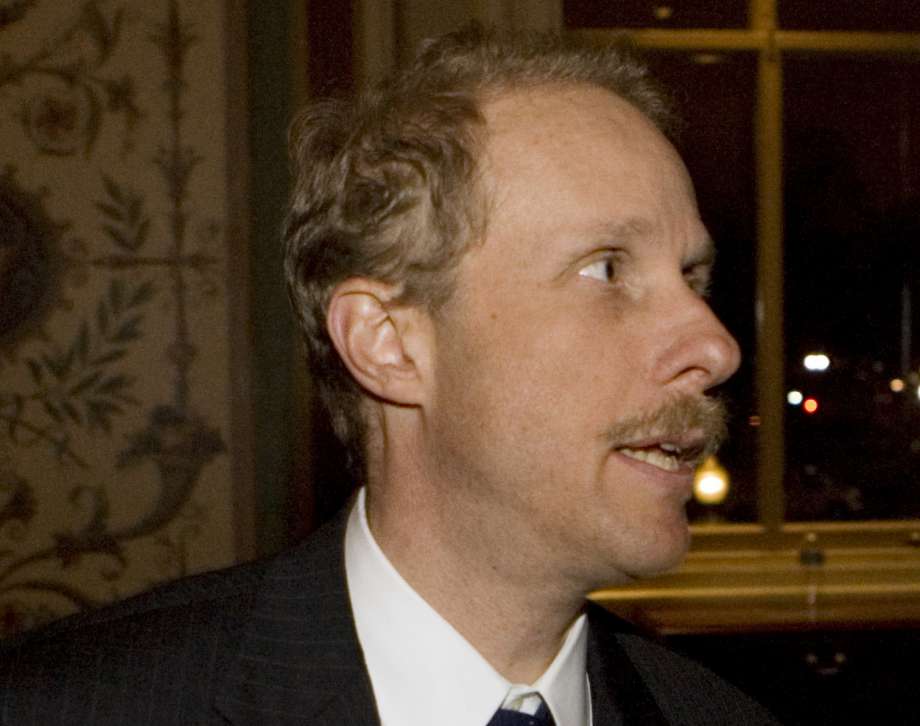
The Trump administration asked the founder of a New York-based private equity firm to lead a review of the intelligence community as President Donald Trump vows to crack down on what he describes as “illegal leaks” of classified information. A senior White House official said Thursday that Stephen Feinberg of Cerberus Capital Management has been asked to head the review of the various intelligence agencies and make recommendations on improvements to efficiency and coordination between the various intelligence agencies. The official was not authorized to discuss private personnel matters and spoke on condition of anonymity. The official said that Feinberg’s role is not official until he completes an ethics review. The president has vowed to crack down on leaks and add new oversight over intelligence. His moves have not been well received and look to many like retaliation against intelligence officials who are investigating his campaign aides’ ties to Russia. Trump on Tuesday tweeted, “The real scandal here is that classified information is illegally given out by “intelligence” like candy. Very un-American!” On Thursday, he accused Democrats of planting “fake news” stories on Russia in retaliation for their loss in the general election. Republished with permission of The Associated Press.
Fitzgerald Washington: Alabama’s workforce continues to grow
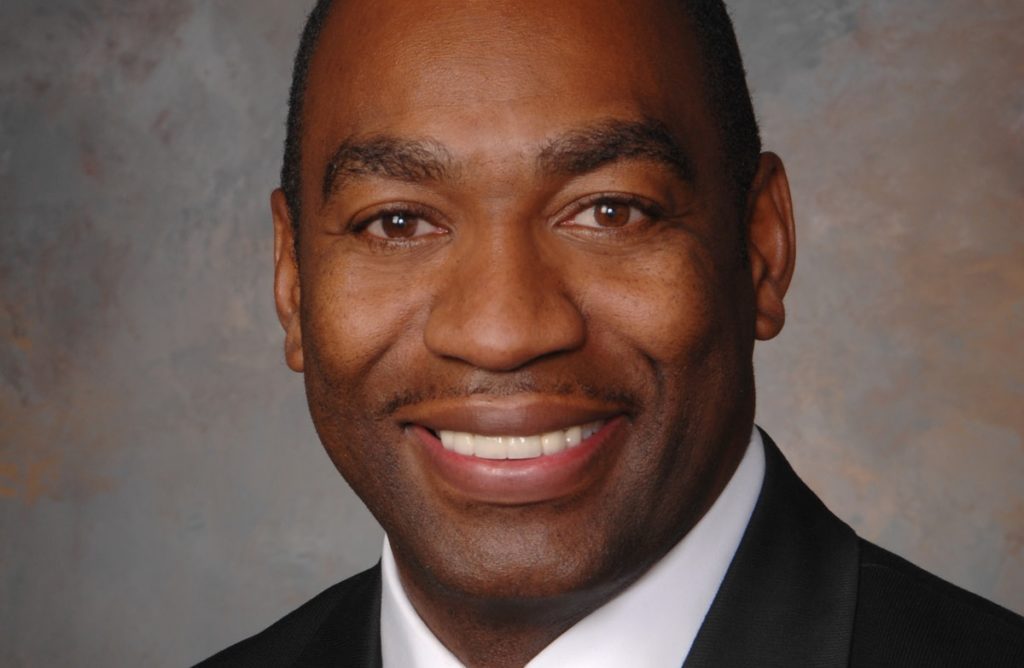
We’re at the beginning of another year, and ready to see continued improvement in our economy. At the Alabama Department of Labor, we are busy wrapping up the facts and figures for 2016. There were many improvements last year, and I’d like to let people know about them. We ended the year with our wage and salary employment only 17,000 jobs away from reaching two million. I can’t emphasize how great this news is! The last time our economy supported two million jobs was back in 2007, before the recession, before tens of thousands of Alabamians were relying on unemployment compensation to help support their families, and before our unemployment levels reached record highs. A wage and salary employment level of two million is considered to be a benchmark employment figure. I’m hopeful that we’ll reach that milestone in 2017. As employers’ confidence was sustained and hiring rose, Alabamians continue to join the workforce. We ended 2016 with the largest workforce we’ve had in more than five years. Additionally, more people were working in December 2016 than at any time since April 2008. Employers are hiring, and workers are working. Those who don’t have jobs are looking for jobs, which tells us they believe there are jobs to be had. All of these are positive signs for our economy. Our manufacturing industry continues to lead our economy. In 2016, Alabama ranked third nation-wide in manufacturing employment growth (year over year December). These competitive, sought-after jobs carry wages of more than $20 an hour. As far as unemployment compensation goes, the amount we are paying in benefits and the number of people filing for those benefits are at seven year lows. Those who are receiving benefits are only doing so, on average, for around 14 weeks, which is significantly less than during the recession, when up to 99 weeks were available and some were using all of them. Last year, we paid out over $183 million in Work Opportunity Tax Credits, more than $71 million higher than in 2015. These are credits that employers can take advantage of when they hire certain individuals, such as the long-term unemployed and food stamp recipients, among others. These are dollars that are going right back into our economy to spur spending and encourage hiring. Job orders on the state’s free jobs database, joblink.alabama.gov, were at five year highs, with several months registering more than 30,000 orders! With all of these positives, we still realize that there is work to be done. Even though there are more people working now than in nearly a decade, there are still more than 130,000 Alabamians who are out of work. Our mission, just like that of Governor Robert Bentley, is to make sure that these citizens have the opportunity to get a job, to support their families, and to live a quality life. In order to meet these obligations, we’re setting a few goals: First, we’re aiming to keep 2017’s yearly average unemployment rate below the yearly average unemployment rate of 2016 (5.9%). In order to keep the unemployment rate low, it’s important that we maintain employment levels. This means working with the Governor, state agencies, economic development groups, and local governments in order to keep jobs in Alabama and recruit new ones. Since taking office in 2011, Governor Bentley’s administration recruited 92,000 jobs to the state. These cooperative agreements are beneficial to all involved. We’re also focusing our efforts to surpass economists’ estimates for job growth in 2017. In January of this year, economists predicted that Alabama will gain 18,700 jobs in 2017. We hope to surpass that number, as we have for the past three years. In 2016, the prediction was for growth of 29,450. For the period covering January 2016 to December 2016, jobs grew by 49,600, bypassing the predictions by 20,150! Again, as employers maintain their confidence in the economy and continue to hire, hopefully, this goal will be an easy one to meet. We want to increase awareness of free, valuable services available at our 49 Career Centers located throughout the state. Our Career Centers offer so many wonderful services for both jobseekers and employers. The best part is that they are offered at no charge! Nearly half a million Alabamians were served in 2016, and we hope to increase that number this year. Our regional job fairs, hosted in Montgomery, Dothan, and Birmingham last year, drew more than 12,000 jobseekers to speak with more than 400 employers. We’re bringing our job fairs to other regions of the state this year. Come out and see us! Find out more information about any of our services at labor.alabama.gov. ••• Fitzgerald Washington is the Secretary of the Alabama Department of Labor
Martha Roby urges colleagues to strike “Obama’s Parting Gift to Planned Parenthood”
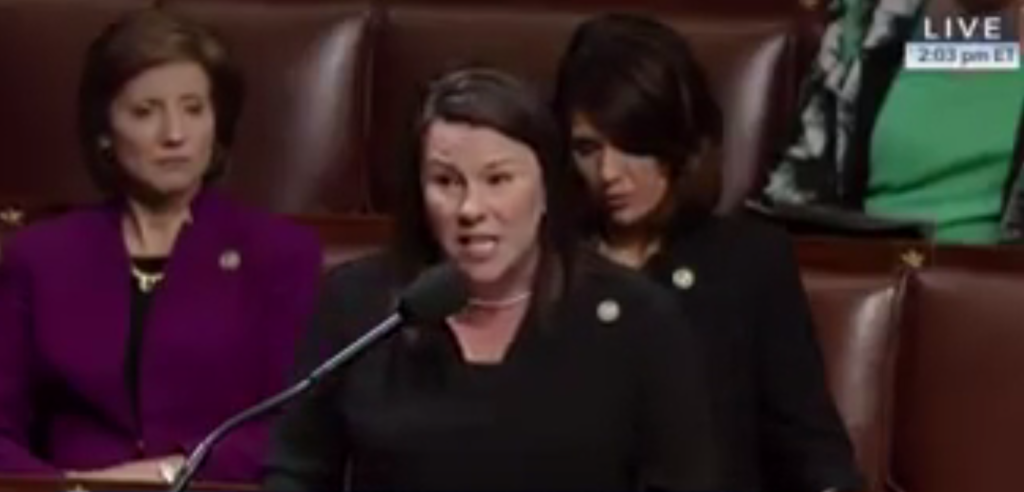
On Thursday, the U.S. House of Representatives passed a resolution that would overturn a last-minute Obama Administration rule designed to prevent states from defunding Planned Parenthood, but not before Alabama 2nd District U.S. Rep. Martha Roby made an impassioned plea to her colleagues to do so. Speaking on the House floor, Roby voiced her ardent support for House Joint Resolution 43, which would nullify a December 2016 Department of Health and Human Services rule mandating no state stop Title X public health dollars from flowing to abortion providers. “Congress must use its authority to strike this rule and stop the federal government from forcing states to funnel taxpayer money to abortion providers,” Roby said the House floor. “For Washington to attempt to coerce states into spending their federal dollars in certain ways is bad enough, but the fact that the Obama Administration circumvented Congress with this last-minute rule is outrageous.” Roby, who has long been outspoken about the need to stop taxpayer dollars from funding abortion clinics, offered her strong support for the measure to disapprove the Obama Administration rule, saying it is wrong on both process and policy. Roby explained Federally Qualified and Rural Health Centers are more plentiful and offer a wider range of services than abortion providers like Planned Parenthood. Noting that states have “every right” to redirect their Title X public health dollars to these non-controversial clinics. “If the true goal here was to ensure women’s health care, nobody should have a problem with that, but that wasn’t the goal, and everybody knows it. This rule is known as ‘President Obama’s parting gift to Planned Parenthood’ for good reason. It was a blatant attempt to preserve the pipeline of funding to the nation’s largest abortion business, and it was wrong.” HJ. Res. 43 was passed by the House of Representatives by a vote of 230-188. Watch Roby’s full speech below:
Donald Trump says White House ‘fine-tuned machine,’ despite turmoil

Donald Trump mounted an aggressive defense of his young presidency Thursday, lambasting reports that his campaign advisers had inappropriate contact with Russian officials and vowing to crack down on the leaking of classified information. Nearly a month into his presidency, Trump insisted in a freewheeling White House news conference that his new administration had made “significant progress” and took credit for an optimistic business climate and a rising stock market. The president denounced media reports of a chaotic start to his administration marked by his contentious executive order — rejected by a federal appeals court — to place a ban on travelers from seven predominantly Muslim nations. Trump said he would announce a “new and very comprehensive order to protect our people” next week. “This administration is running like a fine-tuned machine,” Trump declared in a lengthy news conference that saw the new commander in chief repeatedly interrupting reporters’ questions and airing his grievances. Throughout the encounter the new president delivered recurring criticism of the news media, accusing it of being “out of control” and promising to take his message “straight to the people.” He dismissed recent reports in The New York Times and on CNN that Trump campaign aides had been in contact with Russian officials before his election. Trump called Paul Manafort, his former campaign manager who has ties to Ukraine and Russia, a “respected man.” Pressed repeatedly, Trump said that “nobody that I know of” on his campaign staff had contacted Russian officials. He called such reports a “ruse” and said he had “nothing to do with Russia.” Trump added, “Russia is fake news. This is fake news put out by the media.” Amid reports of widespread leaks within his administration, Trump also warned that he would clamp down on the dissemination of sensitive information, saying he had asked the Justice Department to investigate. “Those are criminal leaks,” adding, “The leaks are real. The news is fake.” He blamed any problems on the outgoing Obama administration. “I inherited a mess at home and abroad — a mess,” Trump said. The president announced that Alexander Acosta, the dean of the Florida International University law school, would be his nominee for Labor secretary. That came a day after fast-food executive Andrew Puzder withdrew his nomination for Labor after losing support among Republican senators. Trump, a reality television star and real estate mogul who was elected as an outsider intent on change, said his ousted national security adviser, Michael Flynn, was “just doing his job” in talking with Russian officials before the inauguration. But he said he was “not happy” with how Flynn described his phone call with a Russian diplomat to Vice President Mike Pence. Trump knew for weeks that Flynn had misled Pence but did not inform the vice president, according to a timeline of events supplied by the White House. Trump said he had identified a strong replacement for Flynn, which made the decision to let him go easier. Trump is said to favor Vice Admiral Robert Harward, a former Navy SEAL, as his next national security adviser, according to a White House official. Harward met with top White House officials last week and has the backing of Defense Secretary Jim Mattis. He was meeting with officials later Thursday. Addressing immigration, one of the biggest issues of the past campaign, Trump said it was difficult dealing with the policy known as DACA, which allows young adults to get work permits and Social Security numbers and protects them from deportation. Referring to the Deferred Action for Childhood Arrivals rule, he said he would “deal with DACA with heart.” While Trump has promised to halt illegal immigration as a cornerstone of his administration, he has also promised to focus on people who have committed crimes. He said he had the “best lawyers” working on the policy now and the “new executive order is being tailored to the decision we got from the court.” Earlier in the day, Trump had a breakfast meeting with some of his staunchest House supporters. The White House has said Trump asked for Flynn’s resignation because he had misled Vice President Mike Pence over his dealings with Russia and whether he had discussed sanctions with Russia’s ambassador to the U.S. before Trump’s Jan. 20 inauguration. Flynn previously had denied those conversations to Pence and other top officials. On Thursday, he warned in a pair of tweets that “lowlife leakers” of classified information will be caught. As journalists were being escorted out of the breakfast meeting, Trump responded to a reporter’s question on the subject by saying: “We’re going to find the leakers” and “they’re going to pay a big price.” Republished with permission of The Associated Press.
Controversial monument preservation bill delayed in Alabama Senate
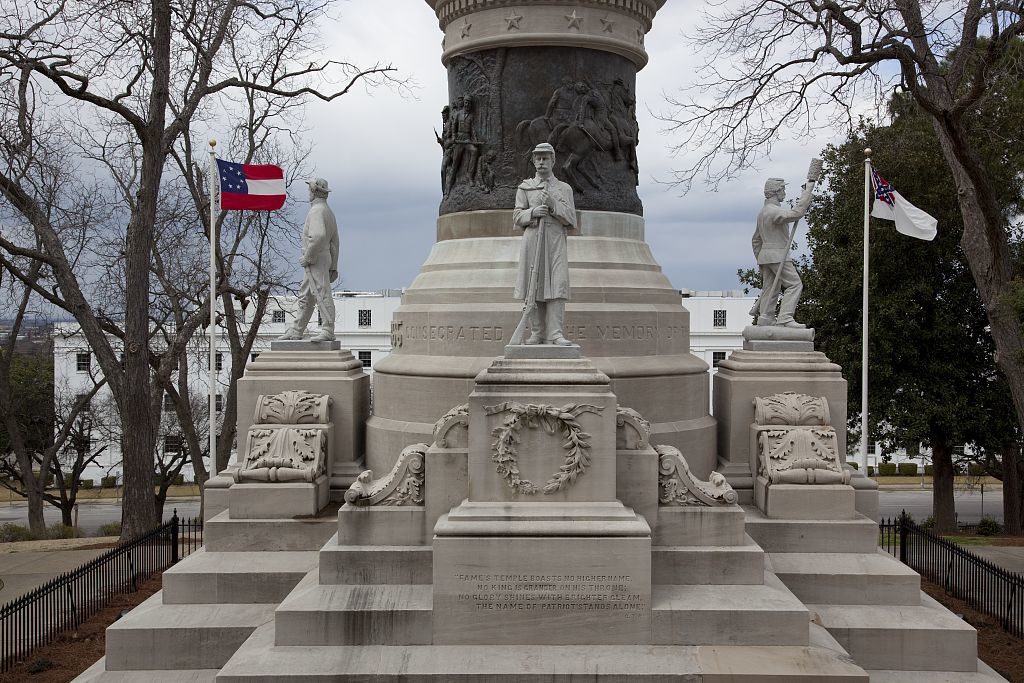
The Alabama Senate has delayed a vote on a bill that would prohibit the relocation, removal, alteration, renaming, or other disturbance of monuments located on public property. On Thursday, senators said they needed more time to review SB60: the Alabama Memorial Preservation Act of 2017, given the ongoing regional debate over the appropriateness of monuments, street names and buildings with visible links to slavery. Introduced by Sen. Gerald Allen, the bill would apply only to monuments that are more than 50 years old. “I am concerned about politically-correct efforts to erase entire portions of American history, and oftentimes these efforts to remove a statue or a monument are done in haste and without public knowledge,” Allen said in a news release. “I believe our children and grandchildren should remember history as it happened – the good and the bad.” Allen introduced a similar bill in 2015 — after Gov. Robert Bentley removed Confederate flags from the state Capitol grounds following backlash over the flag’s symbolism after the horrific shootings in a South Carolina church — but it failed to gain enough support in the Alabama House of Representatives to make it to a vote before the end of session.
Donald Trump’s pick for Israel envoy goes on damage control
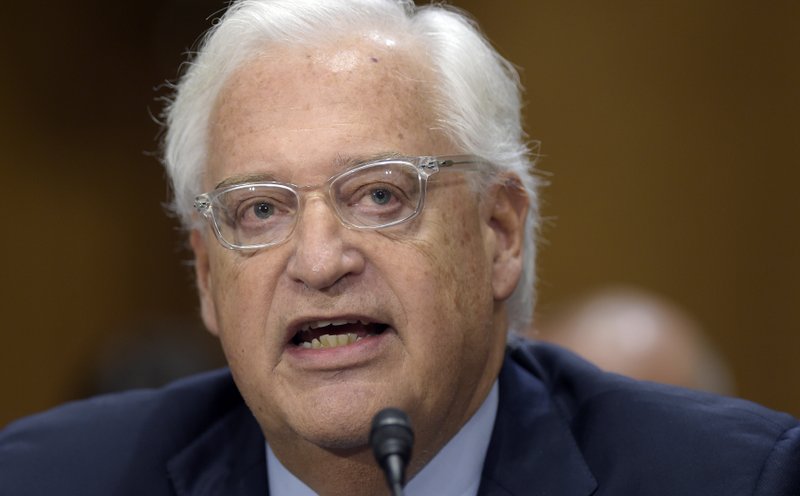
The combative attorney President Donald Trump picked as his ambassador to Israel sought to repair the damage from past attacks on political opponents, telling Congress he deeply regretted using inflammatory language and promised to be “respectful and measured” should he be confirmed. During his confirmation hearing Thursday, David Friedman said he deserved criticism for incendiary comments that targeted former President Barack Obama, former Secretary of State Hillary Clinton, liberal Jewish advocacy groups and others. Friedman had called one group, J Street, “worse than kapos” — a reference to Jews who helped the Nazis imprison fellow Jews during the Holocaust. “Apology is the first step to atonement,” Friedman told the Senate Foreign Relations Committee. “I have profound differences of opinion with J Street. My regret is that I did not express my views respectfully.” The son of an Orthodox rabbi, Friedman has been a fervent supporter of Israeli settlements, an opponent of Palestinian statehood and staunch defender of Israel’s government. The hearing played out along familiar party lines. Republicans largely sought to play to the Trump nominee’s strengths, while Democrats aimed for weak spots. Sen. Marco Rubio, R-Fla., vigorously defended Friedman and rejected the notion that he needed to distance himself from passionately held beliefs. Rubio argued the U.S. should be unashamedly pro-Israel, noting that the Jewish state is America’s staunchest ally in the volatile Middle East. But Sen. Tom Udall, D-N.M., delivered a blistering assessment of Friedman’s record, which the senator said is full of insulting comments and extreme views. Friedman labels anyone who disagrees with him, including the entire Obama State Department, as anti-Semitic, Udall said. Udall referenced a letter from five former American ambassadors to Israel who called Friedman unfit for the post. The former envoys, who served Republican and Democratic presidents, cited examples of Friedman’s “extreme, radical positions,” such as believing it would not be illegal for Israel to annex the occupied West Bank. During the hearing, Friedman assured members he would not campaign for such an annexation. He also cautioned against the expansion of settlements in the West Bank. “It makes sense to tread very carefully there,” Friedman said, echoing words used by Trump. The letter opposing Friedman’s nomination was signed by Thomas Pickering, William Harrop, Edward Walker, Daniel Kurtzer and James Cunningham. Friedman said he “absolutely” supports a two-state solution, but said he’s skeptical such an approach can succeed because Palestinians haven’t renounced terrorism and have refused to accept Israel as a Jewish state. But he said he would be “delighted” if it were possible to reach a two-state agreement. Friedman appeared before the committee a day after Trump and visiting Israeli Prime Minister Benjamin Netanyahu refused to endorse the two-state solution as the preferred outcome of Middle East peace talks. Their remarks at the White House effectively abandoned what has been the foundation of U.S.-led peace efforts since 2002. The Palestinians and the international community have long favored the establishment of an independent Palestinian state. But Trump declared he also could endorse a one-nation solution to the long and deep dispute between Palestinians and Israel. Prior to the hearing, Friedman had called the two-state strategy a “narrative” and an “illusory solution in search of a nonexistent problem.” But the alternatives appear to offer dimmer prospects for peace, given Palestinian demands for statehood. Dozens of countries, including the U.S., reaffirmed their support for a two-state accord at an international conference in Paris last month, just before Trump’s inauguration. During an exchange with Sen. Tim Kaine, D-Va., Friedman acknowledged the difficulty, if not impossibility, of a single-state approach. Just as Israel wouldn’t accept a two-state solution that didn’t recognize Israel’s right to exist, Kaine said, the Palestinians shouldn’t be expected to agree to a resolution that undercut their legal rights and relegated them to second-class status. “I think so,” Friedman said. Friedman said it’s not his role to make policy, but he recommended efforts to create a Palestinian middle class in the Gaza Strip that is empowered with economic opportunities. He said most Palestinians are “being held hostage by a ruthless regime,” a reference to the Islamic militant group Hamas, which seized power there in 2007. Protesters interrupted Friedman during his opening remarks. Two men, minutes apart, stood and shouted pro-Palestinian slogans. They each held up Palestinian flags before being removed by the Capitol police. Other protesters sang before being ushered out. One blasted a “shofar,” an instrument made of a ram’s horn used by Jews during the High Holidays. He prefaced it with the traditional chant “tekiah” that precedes the blowing of the shofar. A woman shouted, “Do not confirm David Friedman. He is a war criminal!” Republished with permission of The Associated Press.
Alabama shatters export record at $20.6 billion in 2016

Alabama’s exports broke an all-time record in 2016 with $20.6 billion in goods and services shipped abroad from the Yellowhammer State, a 6.4-percent increase from 2015. The total exceeds the state’s previous annual export record of $19.58 billion, set in 2012. Alabama-made products such as automobiles, aircraft parts, chemicals and metals were shipped to 189 countries last year, according to Alabama Department of Commerce’s Office of International Trade. “The increases in these numbers show Alabama companies are prospering in the global economy. These exports continue to be powerful growth engines for out state by supporting their communities through job creation,” said Governor Robert Bentley. “We will continue to support Alabama businesses as they grow to reach new markets and new customers because when businesses succeed, Alabama succeeds.” Alabama shipped goods across the globe to reach 2016’s record total, with their top export markets in Canada, China, Germany, Mexico and the United Kingdom, according to Commerce Department data. Among the many shipped goods, transportation equipment — which includes automobiles and parts, aircraft components, and boats, among other products — was the number one export category. These exports climbed 15 percent in 2016 totaling nearly $10.7 billion. Other top Alabama exports were chemicals, primary metals, paper products and some types of machinery. “Alabama’s dynamic manufacturing base turns out a wide range of great products that consumers in markets around the world want to own, which creates jobs and opportunity here at home,” said Greg Canfield, secretary of the Alabama Department of Commerce. “Setting a new record for exports last year shows that ‘Made in Alabama’ is not a slogan but a fundamental economic pillar supporting economic growth in our state,” Canfield added. According to state Commerce Department data, 2017 is poised to be another great year for Alabama exports, as exports from Alabama companies have risen 48 percent since 2006, and are expected to continue to rise in the future. “Exports are a key component of the state’s economic growth and make for a more prosperous Alabama,” said Hilda Lockhart, director of Commerce’s Office of International Trade. “It is encouraging to see this continued rise in exports because we know that it is growing jobs and sustaining our companies in a great multitude of industry sectors.”
Andrew Puzder withdrawal stark example of rough start for Trump WH
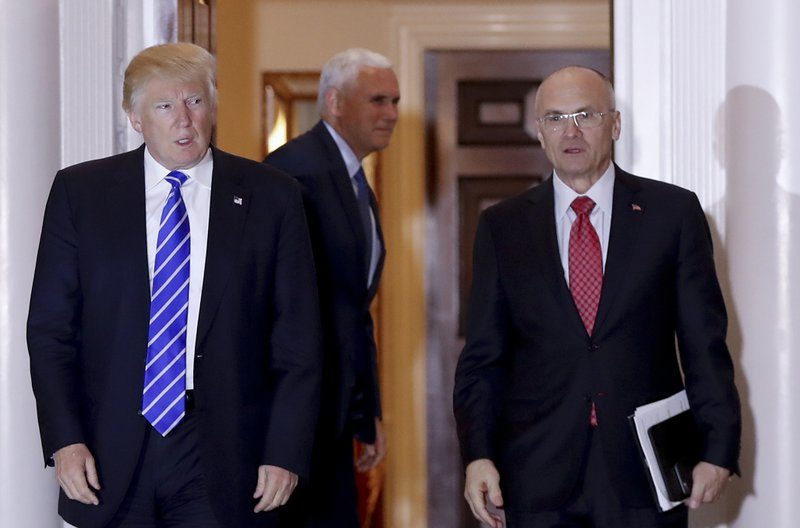
President Donald Trump plans to announce a new labor secretary nominee a day after his original pick, Andrew Puzder, abruptly withdrew from consideration. Trump scheduled a news conference Thursday afternoon to announce his new candidate for the labor job. “The man I’ll be announcing for labor is a star, great person,” Trump said as he opened a meeting with some of his staunchest supporters in the House. Puzder’s withdrawal was a stark example of the disorganized nature of the new administration not known for thorough vetting of its people or its plans. Contentious confirmation fights, a botched rollout of Trump’s refugee order and the ouster this week of National Security Adviser Michael Flynn have nearly paralyzed the administration. Republicans grumbled about the stream of “distractions,” including the torrent of criticism about Puzder’s personal life and his record as CEO of CKE Restaurants, Inc. What ultimately drained Puzder of enough Republican support for confirmation was his acknowledgment — well after Trump had become president — of employing a housekeeper not authorized to work in the U.S. Puzder said he had fired the employee about five years ago. But he did not pay the related taxes until after Trump nominated him as labor secretary on Dec. 9. Puzder said he paid the taxes as soon as he found out he owed them, but there was no explanation of why he didn’t know or pay for five years. Spokesman George Thompson said Wednesday that Puzder did not tell the White House about the housekeeper issue until after he had been nominated. It’s not clear that Trump’s aides asked the immigration question before the nomination even though such issues have sunk past presidential nominations and Trump has taken a hard line on people in the U.S. illegally. People who were interviewed during the transition period said they were not asked by Trump’s team to provide vetting information, raising questions about the level of scrutiny. Ultimately, Republicans made it clear that Puzder lacked the votes in a chamber narrowly split between Republicans and Democrats. There was scant, if any, praise for his vetting. Majority Leader Mitch McConnell and Sen. Lamar Alexander, who would have chaired Puzder’s confirmation hearing Thursday, issued statements praising Puzder’s qualifications but saying they “respect” his decision. Puzder fell to a relentless series of attacks from Democrats, labor and other groups who opposed him on ideological and personal grounds. They contended that his corporate background and opposition to such proposals as a big hike in the minimum wage made him an unfit advocate for American workers at the top of an agency charged with enforcing worker protections. They rolled out stories from workers who said they were treated badly at Puzder’s company. And they were ready to make his women and his workers part of the hearing on Thursday. Puzder was quoted in Entrepreneur magazine in 2015 as saying, “I like beautiful women eating burgers in bikinis.” He said the racy commercials for Carl’s Jr., one of his companies, were “very American.” Democrats also said Puzder had disparaged workers at his restaurants. He was quoted by Business Insider as saying he wanted to try robots at his restaurants, because “They’re always polite, they always upsell, they never take a vacation, they never show up late, there’s never a slip-and-fall, or an age, sex or race discrimination case.” A coalition led by the pro-labor National Employment Law Project and Jobs With Justice groups said Puzder’s withdrawal represents the “first victory of the resistance against President Trump.” “Workers and families across the country spoke up loud and clear that they want a true champion for all workers in the Labor Department,” said Sen. Patty Murray, the ranking Democrat on the panel that was to handle the hearing. Republished with permission of The Associated Press.
Senate narrowly confirms Mick Mulvaney as Trump’s new budget director
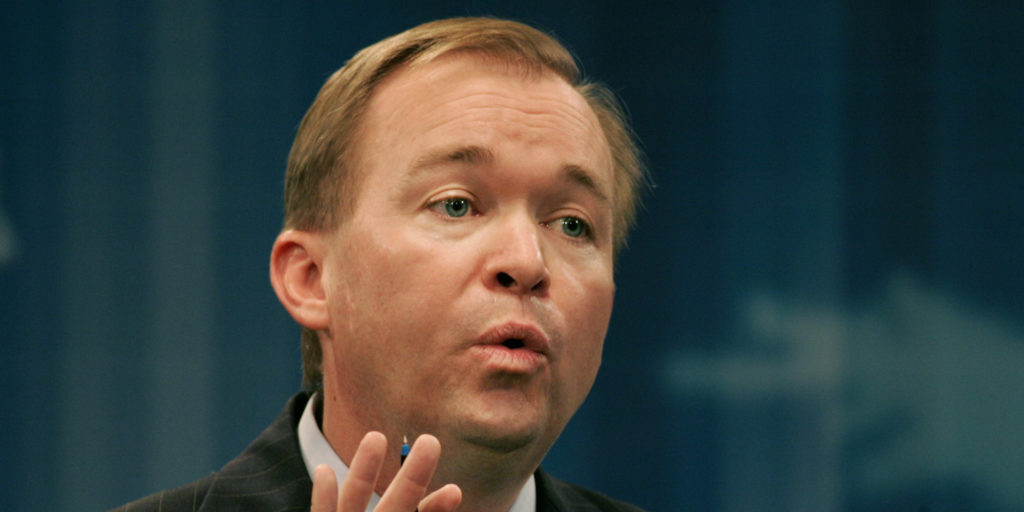
The Senate Thursday confirmed President Donald Trump‘s pick to run the White House budget office, giving the Republicans’ tea party wing a voice in Trump’s Cabinet. South Carolina Rep. Mick Mulvaney squeaked through the Senate on a 51-49 vote. Armed Services Committee Chairman John McCain, who’s emerging as perhaps the most vocal critic of the Trump administration, opposed Mulvaney for past House votes supporting cuts to Pentagon spending. “Mulvaney has spent his last six years in the House of Representatives pitting the national debt against our military,” McCain said. Mulvaney’s confirmation promises to accelerate work on Trump’s upcoming budget plan, which is overdue. That’s typical at the beginning of an administration. But there is also the need to complete more than $1 trillion in unfinished spending bills for the ongoing budget year, as well as transmit Trump’s request for a quick start on his oft-promised U.S.-Mexico border wall and tens of billions of dollars in emergency cash for the military. In the past, Mulvaney has routinely opposed such catchall appropriations bills, which required Republicans to compromise with former President Barack Obama, but the upcoming measure is going to require deals with Democrats The South Carolina Republican brings staunchly conservative credentials to the post, and Trump transition officials have telegraphed he’s likely to seek big cuts to longtime GOP targets such as the Environmental Protection Agency and other domestic programs whose budgets are set each year by Congress. Trump has indicated, however, that he not interested in tackling highly popular benefit programs like Social Security and Medicare and wants a major investment in infrastructure programs like highways. Democrats opposed Mulvaney over his support for curbing the growth of Medicare and Social Security and other issues, such as his brinksmanship as a freshman lawmaker during the 2011 debt crisis in which the government came uncomfortably close to defaulting on U.S. obligations. “He said to me in a one-on-one meeting how he would prioritize the debts he would pay if he defaulted on the debt,” said Sen. Claire McCaskill, D-Mo. “Wouldn’t that be a great addition to the chaos we are all feeling right now?” The vote came a day after Trump’s pick to head the Labor Department, Andrew Puzder, abruptly withdrew his nomination in the face of Republican opposition. Puzder faced questions over taxes he belatedly paid on a former housekeeper not authorized to work in the United States. Mulvaney has managed to survive questions about his failure to pay more than $15,000 in payroll taxes for a nanny more than decade ago. He has since paid the taxes. Republished with permission of The Associated Press.
Donald Trump charts new Mideast course; maybe no separate Palestine
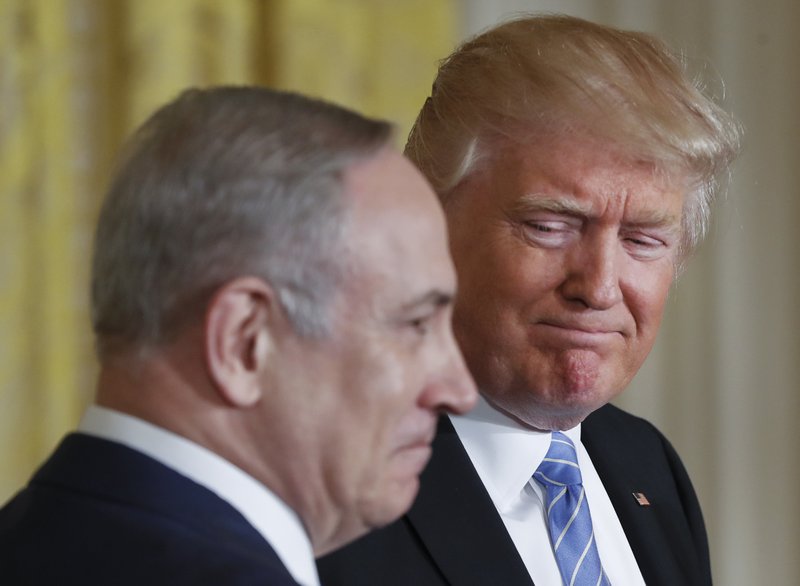
Charting a striking new course for the Middle East, President Donald Trump on Wednesday withheld clear support for an independent Palestine and declared he could endorse a one-nation solution to the long and deep dispute between Palestinians and Israel. The American president, signaling a new era of comity between the U.S. and Israel after rocky relations under President Barack Obama, said he was more interested in an agreement that leads to peace than in any particular path to get there. Standing beside Israeli Prime Minister Benjamin Netanyahu, Trump broke not only with recent U.S. presidents but also distanced the United States from the prevailing position of much of the world. While Trump urged Netanyahu to “hold off” on Jewish settlement construction in territory the Palestinians claim for their future state, he offered unwavering support for Israel, a pledge he appeared to substantiate with his vague comments about the shape of any agreement. While it once appeared that a two-state solution was the “easier of the two” options for the Palestinians and Israel, Trump said he’d be open to alternatives. “I’m looking at two-state and one-state, and I like the one that both parties like,” he told reporters. “I can live with either one.” The United States has formally backed the two-state solution as official policy since 2002, when President George W. Bush said in the White House Rose Garden that his vision was “two states, living side by side in peace and security.” In practice, the U.S. already had embraced the policy informally. President Bill Clinton, who oversaw the Oslo Accords in the 1990s that were envisioned as a stepping stone to Palestinian statehood, said before leaving office that resolution to the conflict required a viable Palestinian state. Separately on Wednesday, Palestinian leader Mahmoud Abbas called on Netanyahu to end settlement building and expressed “willingness to resume a credible peace process ” Also on Wednesday, CIA chief Mike Pompeo secretly held talks in the West Bank with Abbas, the first high-level meeting between the Palestinian leader and a Trump administration official, senior Palestinian officials said. The White House wouldn’t comment on the meeting All serious peace negotiations in recent decades have assumed the emergence of an independent Palestine. The alternatives appear to offer dimmer prospects for peace, given Palestinian demands for statehood. Dozens of countries, including the U.S., reaffirmed their support for a two-state accord at an international conference in Paris last month, before Trump’s inauguration. In Cairo on Wednesday, U.N. Secretary-General Antonio Guterres said: “There is no Plan B to the situation between Palestinians and Israelis but a two-state solution. … Everything must be done to preserve that possibility.” At one point Wednesday, Trump noted the need for compromise in achieving any Mideast peace. Netanyahu interjected: “Both sides.” On terrorism and other matters, there appeared little daylight between the leaders. Echoing language used by Trump over a need to combat “radical Islamic extremism,” Netanyahu said that for peace to be sustainable, two “prerequisites” must be met: “Recognition of the Jewish state and Israel’s security needs west of the Jordan” River. While a two-state solution would involve Israel ceding occupied territory that is strategically and religiously significant, many in the country believe a single binational state would be even more difficult to maintain. It would mean granting millions of Palestinians citizenship and voting rights, threatening Israel’s Jewish majority and its Jewish character. Trump’s campaign platform made no mention of a Palestinian state, and his inner circle included allies of the West Bank settler movement. A delegation of settlement leaders was invited to Trump’s inauguration. But after weeks of dancing around the issue of expanded Israeli settlement construction, Trump asked Netanyahu to “hold back on settlements for a bit.” In recent weeks, Netanyahu has approved construction of more than 6,000 new settler homes in the West Bank and east Jerusalem, territories Israel seized in the 1967 Mideast War. He also allowed Parliament to pass a law retroactively legalizing some 4,000 settlement homes built on private Palestinian land. Still, Netanyahu indicated he was open to some sort of arrangement. “We’ll work something out but I’d like to see a deal be made. I think a deal will be made,” he said. And Naftali Bennet, the head of Israel’s pro-settler Jewish Home Party, hailed the new atmosphere between Trump and Netanyahu, saying: “The Palestinian flag was today lowered from the mast and replaced with the Israeli flag.” American presidents have long struck a delicate balance in addressing the Israeli-Palestinian conflict, stressing the close U.S. friendship with Israel but also sometimes calling out Israel for actions seen as undermining peace efforts, such as expanding settlements. Trump and Netanyahu also were to discuss Iran and the president’s campaign pledge to move the U.S. Embassy in Israel from Tel Aviv to Jerusalem. On Wednesday, Trump said that he’d like to see the embassy move and said his administration is studying the issue closely. Palestinians and Arab governments have warned that such a move could be deeply destabilizing. After repeatedly clashing with Obama, including over a U.N. Security Council resolution in December condemning Israeli settlements, Netanyahu has seemed relieved by Trump’s arrival. He even recounted his personal relationships with members of Trump’s family, including son-in-law Jared Kushner, whom Trump has previously described as the man who could mediate a Middle East peace deal. “Can I reveal, Jared, how long we’ve known you?” Netanyahu said with a chuckle. “I’ve known the president and his family and his team for a long time and there is no greater supporter of the Jewish people and the Jewish state than President Donald Trump.” Republished with permission of The Associated Press.
Michael Flynn’s security clearance suspended pending review
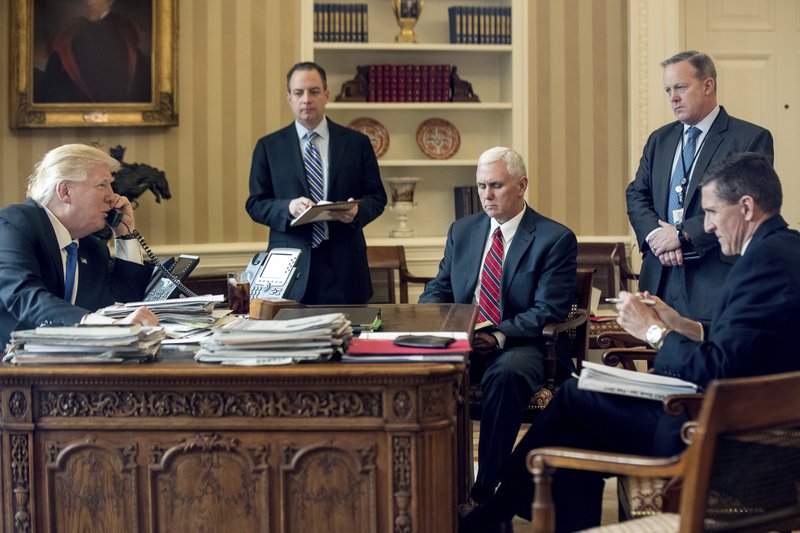
The Defense Intelligence Agency has suspended ousted national security adviser Michael Flynn‘s security clearance pending a review, a defense official said Wednesday. Flynn, a former director of the agency who was dismissed from that post, was forced to resign this week after the White House said he misled Vice President Mike Pence about his contacts with Russia’s ambassador to the U.S. before the inauguration. Flynn and the Russian appear to have discussed U.S. sanctions on Russia late last year, raising questions about whether he was freelancing on foreign policy while President Barack Obama was still in office and whether he misled Trump administration officials about the calls. A defense official said Flynn’s security clearance was suspended Tuesday evening — a standard administrative action taken when questions arise concerning an individual’s compliance with security clearance directives. The official, who was not authorized to discuss the matter publicly, spoke only on condition of anonymity, Obama dismissed Flynn as head of the Defense Intelligence Agency in 2014. Flynn has said he was pushed out for holding tougher views than Obama about Islamic extremism. But a former senior U.S. official said the firing was for insubordination, after Flynn failed to follow guidance from superiors. Former directors of the agency are routinely allowed to keep their security clearances so that they can advise the current director. Republished with permission of The Associated Press.
