
County court rules Tuscaloosa Councilman eligible for re-election
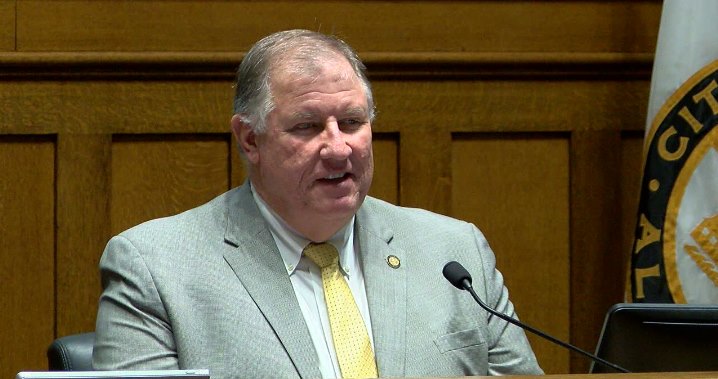
A Tuscaloosa circuit court judge on Monday ruled Tuscaloosa City Councilman Eddie Pugh eligible to run for re-election next month. Previously, the City of Tuscaloosa had said Pugh failed to qualify for re-election due to a bounced check. Pugh had mistakenly used a check from a closed account to pay his $200 qualifying fee. Tuscaloosa County Circuit Court Judge Jim Roberts ruled the returned check was not a good enough reason to disqualify the incumbent councilman. “If an individual were to buy a pizza with a worthless check, eat the pizza and then, a few days later, the check were to bounce, the pizza is not and cannot be returned to the restaurant and therefore, the agreement to sell and purchase pizza is not revoked or voided,” Roberts wrote in his ruling. “If a candidate were to file the appropriate paperwork and pay the qualifying fee by check on the last day of qualifying, the candidate would be included on the ballot and deemed to have qualified even though the actual money for the qualifying fee would not be received by the city for several days after the qualifying period ended.” Pugh will face Alan “AJ” Johnson in the District 6 city council race in the March 7 municipal election.
Del Marsh: Why I fight for school choice

With the election of President Donald Trump, school choice has been at the front of every discussion affecting education policy in the United States. I am pleased to say that the Alabama Legislature has been opening up choice for students and parents long before it was part of the national discussion. I am proud to have introduced sweeping legislation that allows the creation of public charter schools and the Alabama Accountability Act (AAA), which makes it easier for parents to send their children to different schools when they have no option. Let me be clear, the school choice discussion is not an attack on teachers, support staff, and administrators. I truly believe that on the whole we have some of the best teachers in the country who show up every day and work hard and follow their passion for educating children. I do have a problem with those special interest groups who are more interested in maintaining a status quo in education that favors them rather than actually doing anything make sure our schools and children are consistently improving and growing as students. With every reform I have promoted, I have welcomed any and all interested parties to help craft legislation so that it meets the needs of everyone involved. Many of the organizations entrusted to represent the values of our professional educators have little interest in assisting with reforms of any kind and work overtime to kill any change no matter how positive it may be to parents or students. Especially if those changes involve giving parents a choice. Recently I filed SB123 in the Alabama Senate to amend the Alabama Accountability Act. The AAA provides parents of children in failing schools the ability to transfer to non-failing schools. The most popular is through the use of a refundable income tax credit made by Alabamians to a Scholarship Granting Organization (SGO), which in turn pays the tuition for children in a failing school to attend a non-failing or private school. Survey after survey shows a majority of Americans support school choice. Those with means exhibit school choice by moving to areas where their public schools excel or pay for a private school, as I am sure the directors and bureaucrats of those opposed already do. However, for far too many, access to a quality education is solely determined by their ZIP code. The Alabama Accountability Act is a success. Ask the parents. Ask the children. Now, in a small effort to modify the bill at the cost of zero dollars to the this year’s education budget, the entrenched special interest groups who have overseen Alabama’s slide into the bottom of nearly all education achievement rankings want to deny the thousands of parents and children on waiting lists a choice, and force them to stay in schools they do not want to be in. They want children in foster homes to lose their scholarships if they are moved to a new home by the system. That is unconscionable. It is wrong. It is immoral. I do not support school choice to make teachers look bad, nor do I support school choice to so that anyone may profit from it. I support school choice for the parent who wants their child to have a better life that starts with quality education and for the student who is looking for a hand up to get where they want to go in life. Even if only one child is able to achieve their potential and realize their dreams because they were able to improve their situation, it will be well worth the vicious political attacks launched by the defenders of the status quo. I want every Alabamian to have a quality education. I agree with President Trump that for some, it is in public schools, for others, it is in private schools and home schooling. But only the parent knows best, and I trust them over Montgomery bureaucrats and lobbyists. ••• Anniston-Republican Del Marsh is a member of the Alabama Senate since 1998, representing the 12th District. He serves as the Senate President Pro Tempore.
Bradley Byrne moves to overturn OSHA’s ‘unlawful power grab’

In the final weeks of the Obama administration, the Department of Labor’s Occupational Safety and Health Administration (OSHA) issued a rule clarifying an employer’s continuing obligation to make and maintain an accurate log of workplace injuries and illnesses for five years after they occur. While OSHA inspectors have long used this information to enhance health and safety protections in America’s jobsites, the law explicitly says that employers can only be cited for record-keeping violations within a six-month time period. Yet the new “Volks” rule, extends the threat of penalty up to five years, which many consider an attempt to make an end-run around a 2012 D.C. Circuit Court decision that previously ended the five-year practice. Alabama 1st District U.S. Rep. Bradley Bryrne is working to overturn the new rule, which he calls an “unlawful power grab by the Obama administration.” Chairman of the Subcommittee on Workforce Protections, Bryne introduced a resolution of disapproval, H. J. Res 83, under the Congressional Review Act to overturn the rule and reject a failed approach to workplace safety on Tuesday. “Every worker deserves safe and healthy working conditions, and bad actors who put hardworking men and women in harm’s way must be held accountable,” said Byrne. “That’s why Republicans have consistently called on OSHA to improve its enforcement efforts and collaborate with employers to address gaps in safety.” Under the Congressional Review Act, Congress may pass a resolution of disapproval to prevent, with the full force of law, a federal agency from implementing a rule or issuing a rule that is substantially the same without congressional authorization. Chairman Byrne’s resolution would block OSHA’s “Volks” rule from taking effect and prevent future administrations from promulgating a similar rule. Bryne continued, “Unfortunately, the Obama administration consistently doubled down on failed, punitive policies that do more to tie small businesses in red tape than protect workers. With this rule, OSHA rewrote federal law while doing nothing to improve worker health and safety. Congress must reject this unlawful power grab and encourage the agency to adopt the responsible, proactive safety approach that America’s workers deserve.” Prior to Byrne’s resolution, two federal appeals courts have rejected the policies reflected in the rule after a Louisiana construction company was cited for paperwork errors occurring nearly five years prior. “We do not believe Congress expressly established a statute of limitations only to implicitly encourage the Secretary to ignore it,” the D.C. Circuit Court noted.
East Alabama’s controversial Sabal Trail pipeline on target for June operation

A 515-mile-long natural gas pipeline, which includes 86.4-miles in east Alabama, is on target to begin operation in June. The Sabal Trail Transmission pipeline is a joint project by three energy companies —Spectra Energy Corp., NextEra Energy Inc. and Duke Energy — and will transport natural gas from the Transco pipeline north of Alexander City, Ala., extend through the southwest corner of Georgia and end in central Florida near Orlando. The three-state pipeline is currently “about 85 percent complete with overall construction,” Andrea Grover, Director or Stakeholder Outreach for the Sabal Trail Transmission told Alabama Today. With construction underway in Tallapoosa, Chambers, Lee and Russell Counties, the pipeline is roughly 70% complete in Alabama, Grover added. Expected to provide a significant economic benefit to the Yellowhammer State, the pipeline creates both short-term and long-term jobs and adds capital investment and tax base to the state’s economy. During the current construction phase, the economic benefits include: 1,112 construction jobs available $37,240,486 funds from jobs being created $49,685,416 additional funds contributed by non-directly related construction activity $140,412,196 amount generated for the state after construction is completed In addition, the permanent economic impact and operations in Alabama will include: 94 permanent jobs after construction is completed $2,953,302 funds from jobs being created $4,907,082 additional funds contributed by non-directly related construction activity $10,757,812 amount generated for the state after construction is completed Despite the anticipated economic gains, environmental groups oppose the trail’s construction, saying it could threaten people’s health and access to clean water. On its face, this pipeline should be rejected for the threat it poses not only to our climate, but to the public health of communities it would affect,” said Lena Moffitt, Director of Sierra Club’s Beyond Dirty Fuels campaign. “Rather than doubling down on outdated, dirty fuels, we should complete our transition to 100 percent clean, renewable energy.” However, the Transmission contends they’ve taken comprehensive steps to address environmental groups’ concerns. “Regarding potential impacts on water supplies: Natural gas is lighter than air, meaning in the unlikely event it escapes from the pipeline, the gas can only travel up through the soil into the atmosphere and dissipate,” Grover explained in a column last month. “It cannot travel down through soils to water supplies. No toxins are released that would affect water quality.” She continued, “The project has been evaluated publicly over the past three years to ensure environmental permitting agencies, all levels of local, state and federal government, communities and landowners’ questions were addressed and impacts along the pipeline route were minimized. Sabal Trail hosted more than 50 open houses and public meetings and underwent a well-documented, comprehensive review by the Federal Energy Regulatory Commission (FERC).”
Roy Moore considering run for U.S. Senate in 2018
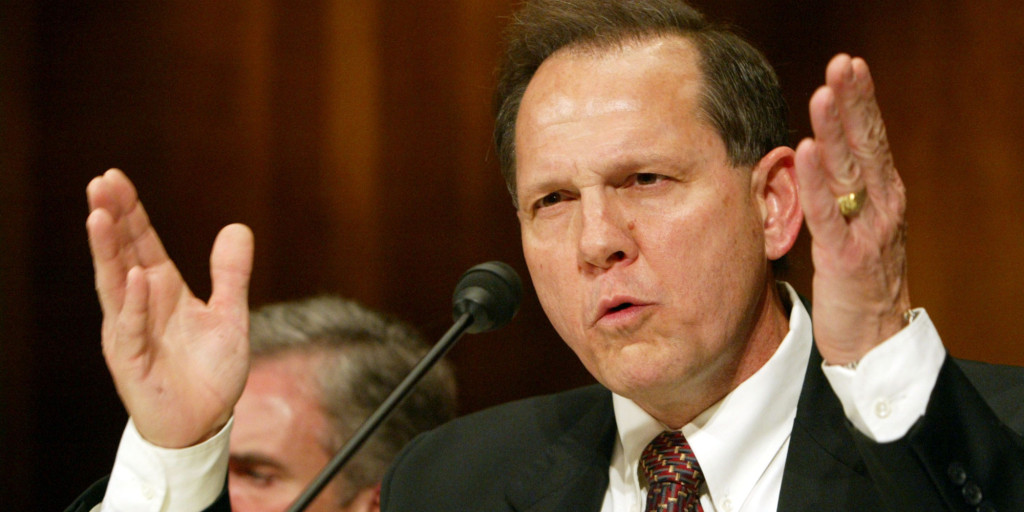
Suspended Alabama Chief Justice Roy Moore is considering a run for U.S. Senate in 2018, according to a report from WAFF. Through a spokesperson, Moore said he was interested in running for the senate seat against newly appointed incumbent Sen. Luther Strange, but he also has his eyes on other top elected jobs in the state. “As far as Judge Moore’s future, he is being asked to run for several offices: U.S. Senate, Governor, and Attorney General,” said spokesperson Rich Hobson. “He is weighing his options for the future, but his main concern right now is the pending appeal to restore him to the Office he was elected to by the citizens of Alabama.” Moore was suspended in 2016 for not giving in to the U.S. Supreme Court’s decision legalizing same-sex marriage. Back in 2003, he was forced out of the same post for refusing to remove a Ten Commandments monument. Last week, Gov. Robert Bentley set the dates for the special election to permanently replace former U.S. Sen. Jeff Sessions. Bentley’s dates set the primary election for June 5, 2018, followed by a primary runoff, if necessary on July 17, 2018. Moore was on Bentley’s shortlist for the Sessions’ vacated senate seat, though the governor announced Feb. 9 that he had selected Strange.
Perry Hooper eyes U.S. Senate run
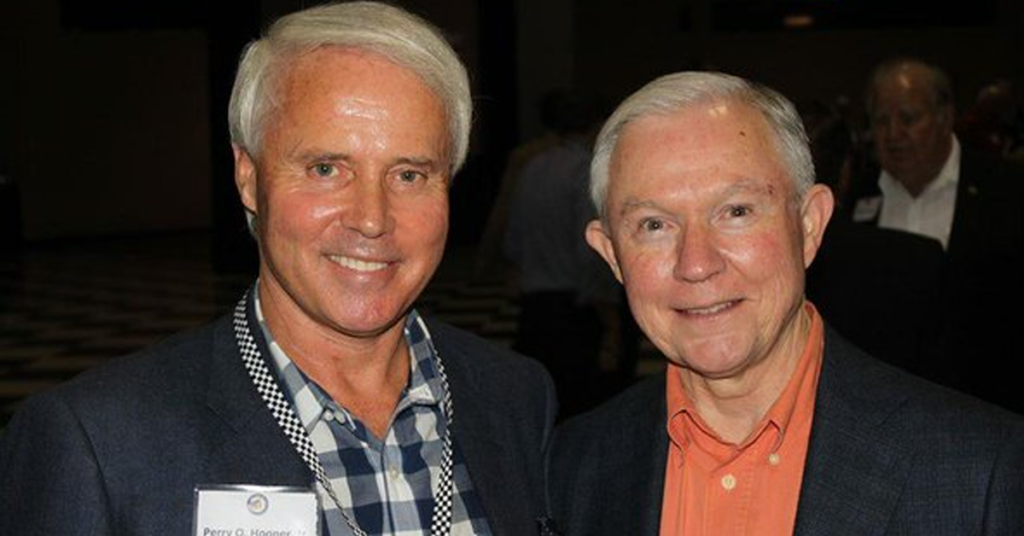
Former Republican state Rep. Perry Hooper told The New York Times that he is eyeing a run for Senate in the special election to replace Jeff Sessions next year. In the article, Hooper said he was considering challenging sitting U.S. Sen. Luther Strange and that his campaign could center around the circumstances of the former Alabama Attorney General’s appointment to the seat. After Sessions appointment as U.S. Attorney General, Gov. Robert Bentley selected Strange over Hooper and several other candidates to serve as in the senate until a special election for the remainder of Sessions’ term was set. Bentley ended up setting the special election for June, 2018, giving Strange more than a year of incumbency before he would have to be confirmed for the job by Alabama voters. The move was considered iffy by some, considering Strange’s office was handling an investigation into the scandal-plagued governor, though after his selection Strange said that speculation about inquiries on Bentley was “unfair to him and unfair to the process,” adding that “we have never said in our office that we are investigating the governor.” Hooper isn’t the only candidate who interviewed for the job who is considering running for it outright. Also this week, suspended Alabama Chief Justice Roy Moore announced through a spokesperson that he was considering a senate run, while also keeping his options open for a gubernatorial campaign or a run for Alabama Attorney General.
Bill Miller: The critical ingredient to the success of vaccination programs

Only a few weeks into a new administration and with it comes unwelcome medical news. The age-old debate about the safety and appropriateness of vaccination has been renewed and a vocal stage has been delivered to a small group of anti-vaccination zealots. Reports have circulated that Robert F. Kennedy, Jr, a highly visible critic of vaccination, has been invited to chair a commission on vaccination safety by the new administration. If it comes to pass, one result can be accurately predicted. It will become a confused platform of ideological rhetoric that will diminish trust in those scientific bodies charged with making sound judgments for the public welfare. This inevitable outcome is particularly unfortunate since there has never been any advance in medical history that has had a more positive impact on our lives than vaccination. Humanity has been in eternal conflict with infectious disease throughout history. Perhaps no disease better illustrates the vast range of impacts of epidemic disease than smallpox.In 18th Century Europe, at least 400,000 people died annually from smallpox. One-third of the survivors went blind. Mortality rates were as high as 60% in some communities. Infant mortality was even more frightening, approaching 80%. The ultimate success of smallpox vaccination is credited to Sir Edward Jenner in England. In 1796, he successfully introduced the technique of cowpox vaccination demonstrating its subsequent protective effect against smallpox. Today, due to the effectiveness of worldwide smallpox vaccination programs, that disease has been effectively eradicated from the planet. However, this is not the case for other consequential infectious diseases. Two years ago, a whooping cough epidemic swept through California where vaccination rates are steadily lagging. Contrary to any ordinary expectation, it is often the most affluent parents who are shunning immunization. Some of these anti-vaccine proponents are highly educated people being misled by social media. The trend appears to have originated with a fraudulent report in a British medical journal linking vaccination with autism. This report was subsequently revealed to have been based on fraudulent research and was retracted by that scientific journal. Similar rumors that vaccine stabilizers, such as thimerosol, contribute to autism have also been refuted. Nonetheless, damage has been done by ill-informed repetition. There is no doubt that those parents that refuse to vaccinate their children are well meaning. However, their actions are ill advised on two levels. The first is that refusing to appropriately vaccinate themselves or their child exposes both of them to the risks of deadly infections that can be entirely avoided. Yet, although vaccination is safe and highly effective it does have its limits. This links to the other critical factor that makes universal vaccination so crucial. No vaccination ever devised provides 100% protection and some individuals in any population cannot be vaccinated. This includes very young infants whose immune systems are not yet mature enough for vaccination and members of our community that are immunosuppressed due to diseases that weaken their immune system from a variety of illnesses including cancer. Their protection is through our actions. When there are high levels of vaccination within any community, the infectious agent is unable to find enough hosts to reproduce and sustain itself within that population. This level of community-wide protection is termed herd immunity. It is our joint responsibility, all of us together, to be part of the process of achieving this level of immunity both in our own interests and for the protection of the other members of our community. The next outbreak of a preventable infectious disease with its incumbent tragedies is always lurking. A political committee to examine the evidence based on ideological biases is not needed. Instead, our policies should rely on the expertise of already existing scientific organizations such as the Global Advisory Committee on Vaccine Safety (GACVS), an independent expert clinical and scientific advisory body, as well as our own Centers for Disease Control and the National Institutes of Health. The critical ingredient to the success of vaccination programs is education. Therefore, there needs to be a concerted program to recover our eroded memories of the consequences of now distant epidemic diseases that have been conquered or reduced through vaccination. The success of vaccination programs depends on being familiar with the bitter lessons of our continuous struggle with epidemic disease. Such an educational process must be ever ongoing. ••• Dr. Bill Miller has been a physician in academic and private practice for over 30 years. He is the author of The Microcosm Within: Evolution and Extinction in the Hologenome. He currently serves as a scientific advisor to OmniBiome Therapeutics, a pioneering company in discovering and developing solutions to problems in human fertility and health through management of the human microbiome. For more information, www.themicrocosmwithin.com.
U.S. Supreme Court rejects Alabama inmate’s death row appeal
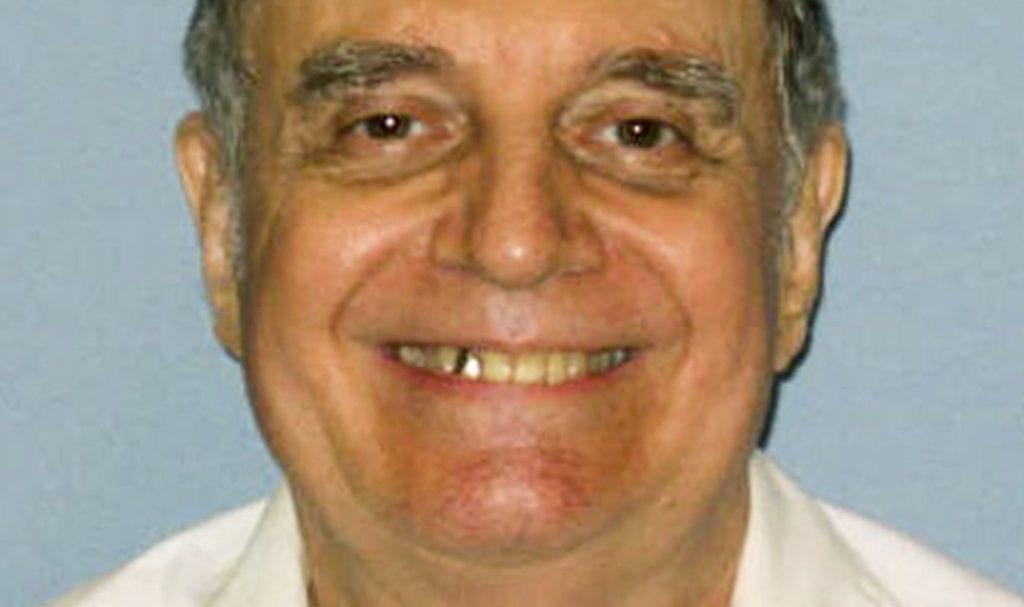
The U.S. Supreme Court on Tuesday rejected a chance to hear Alabama death row inmate Thomas Arthur’s latest challenge to his death sentence, denying Arthur’s petition to grant certiorari to hear his challenge over the State’s method of execution. Arthur, first sentenced to death in the early 1980s, has outlived seven different execution dates. In November, the court issued a last-minute stay to block his execution. Chief Justice John Roberts wrote in the November opinion he did not believe the request “meets our ordinary criteria for a stay,” but granted it as a courtesy to his colleagues who requested him to do so. “This case does not merit the Court’s review: the claims set out in the application are purely fact-specific, dependent on contested interpretations of state law, insulated from our review by alternative holdings below, or some combination of the three,” Roberts wrote at the time. Of the court’s Tuesday decision, Roberts again says the challenge “does not merit the court’s review.” Alabama’s new Attorney General Steven Marshall welcomed the high court’s decision. “The long wait for justice may be nearing an end for convicted killer Thomas Arthur,” said Marshall. “For more than 30 years he has fought to delay his execution for the 1982 cold-blooded murder of Troy Wicker of Muscle Shoals.” He continued, “Today’s Supreme Court decision is the second in as many months denying Arthur’s legal challenges to his death sentence. For the family of Troy Wicker, there is hope that justice will soon be served.” It is expected that Marshall’s office will seek an eighth execution date for Arthur, who continues to maintain his innocence.
Al Sharpton will serve as keynote speaker for Birmingham high school’s unity breakfast
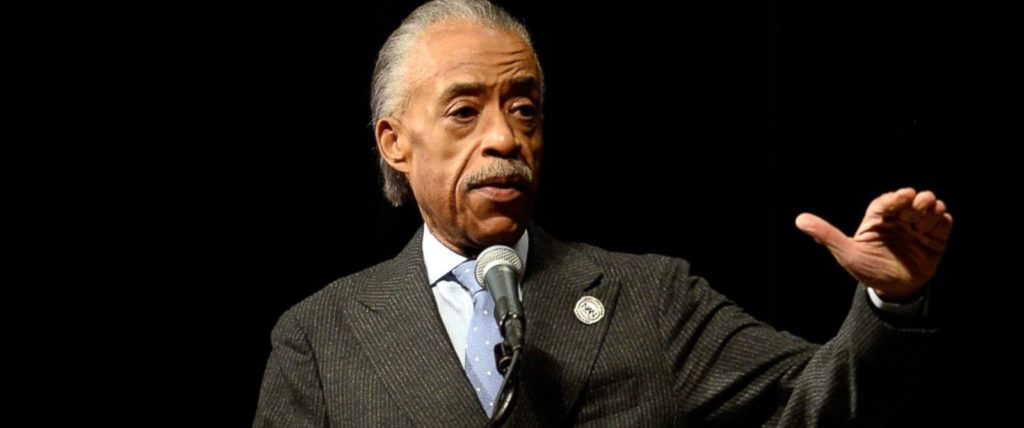
The Rev. Al Sharpton plans to spend Thursday morning in Birmingham talking to a group of high school students and the local community. The outspoken Civil Rights activist will serve as the keynote speaker at Wenonah High School‘s 14th annual Unity Breakfast, according to AL.com. There, he will speak on the breakfast’s theme: “Facing the Future and Cherishing the Milestones.” Hosted by the school’s award-winning culinary arts team the event is held annually during the school’s celebration of Black History Month. If you go … What: The Rev. Al Sharpton discusses “Facing the Future and Cherishing the Milestones” Where: Wenonah High School | 2800 Wilson Road, SW Birmingham When: 8:30 a.m. Friday, February 24, 2017 Call: (205) 231-1700 or (205) 231-170 for information on tickets According to Birmingham City Schools, Sharpton’s speech will also be livestreamed online.
U.S. to expand pool of people targeted for deportation

The Trump administration is greatly expanding the number of people living in the U.S. illegally who are considered a priority for deportation, including people arrested for traffic violations, according to agency documents released Tuesday. The documents represent a sweeping rewrite of the nation’s immigration enforcement priorities. The Homeland Security Department memos, signed by Secretary John Kelly, lay out that any immigrant living in the United States illegally who has been charged or convicted of any crime — and even those suspected of a crime — will now be an enforcement priority. That could include people arrested for shop lifting or minor traffic offenses. The memos eliminate far more narrow guidance issued under the Obama administration that resources strictly on immigrants who had been convicted of serious crimes, threats to national security and recent border crossers. Kelly’s memo also describes plans to enforce a long-standing but obscure provision of the U.S. Immigration and Nationality Act that allows the government to send some people caught illegally crossing the Mexican border back to Mexico, regardless of where they are from. One of the memos says that foreigners sent back to Mexico would wait for their U.S. deportation proceedings to be complete. This would be used for people who aren’t considered a threat to cross the border illegally again, the memo said. It’s unclear whether the United States has the authority to force Mexico to accept foreigners. That provision is almost certain to face opposition from civil libertarians and officials in Mexico. Historically, the government has been able to quickly repatriate Mexican nationals caught at the border but would detain and try to formally deport immigrants from other countries, routinely flying them to their home countries. In some cases, those deportations can take years as immigrants ask for asylum or otherwise fight their deportation in court. The memos do not change U.S. immigration laws, but take a far harder line toward enforcement. The pair of directives do not have any impact on President Barack Obama‘s program that has protected more than 750,000 young immigrants from deportation. The Deferred Action for Childhood Arrivals remains in place though immigrants in the program will be still be eligible for deportation if they commit a crime or otherwise are deemed to be a threat to public safety or national security, according to the department. Republished with permission of The Associated Press.
Donald Trump denounces ‘horrible’ threats against Jewish centers
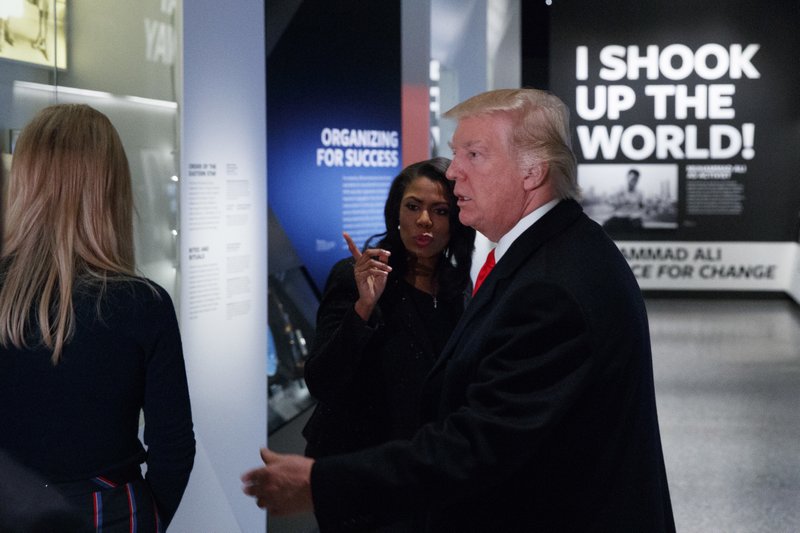
President Donald Trump on Tuesday denounced recent threats against Jewish community centers as “horrible” and “painful.” He said they are a “very sad reminder of the work that still must be done to root out hate and prejudice and evil.” Trump made the remarks after touring the newly opened National Museum of African American History and Culture. “This tour was a meaningful reminder of why we have to fight bigotry, intolerance and hatred in all of its very ugly forms,” Trump said. His comments about recent threats at Jewish community centers across the country marked the first time he had directly addressed a wave of anti-Semitism and followed a more general White House denouncement of “hatred and hate-motivated violence.” That statement, earlier Tuesday, did not mention the community center incidents or Jews. Trump “has made it abundantly clear that these actions are unacceptable,” that statement said. The FBI said it is joining with the Justice Department’s Civil Rights Division to investigate “possible civil rights violations in connection with threats” to the centers. On Monday, Trump’s daughter, Ivanka Trump, wrote on Twitter, “We must protect our houses of worship & religious centers,” and used the hashtag #JCC. She converted to Judaism ahead of her 2009 marriage to Jared Kushner. She joined her father at the African American museum tour. The White House was criticized by Jewish groups after issuing an International Holocaust Remembrance Day statement last month that did not mention Jews. Republished with permission of The Associated Press.
Donald Trump Month Two: Talks on health care and on tax overhaul

As President Donald Trump begins his second month in office, his team is trying to move past the crush of controversies that overtook his first month and make progress on health care and tax overhauls long sought by Republicans. Both issues thrust Trump, a real estate executive who has never held elected office, into the unfamiliar world of legislating. The president has thus far relied exclusively on executive powers to muscle through policy priorities and has offered few details about what he’ll require in any final legislative packages, like how the proposals should be paid for. The White House also sent conflicting signals about whether the president will send Congress his own legislative blueprints or let lawmakers drive the process. White House chief of staff Reince Priebus told The Associated Press that he expects a health care plan to emerge in “the first few days of March.” Pressed on whether the plan would be coming from the White House, Priebus said, “We don’t work in a vacuum.” On Sunday, White House advisers held a three-hour meeting on health care at Trump’s South Florida club, their third lengthy discussion on the topic in four days. Gary Cohn, the former Goldman Sachs banker now serving as Trump’s top economic adviser, and newly sworn in Treasury Secretary Steve Mnuchin have been leading talks with Republican lawmakers and business leaders on taxes. Neither man has prior government experience. Republicans long blamed Democrats for blocking efforts to overhaul the nation’s complicated tax code and make changes to the sweeping 2010 health care law signed by President Barack Obama. But with the GOP now in control of both the White House and Congress, making good on those promises rests almost entirely with the president and his party. To some Republicans’ chagrin, both issues were overshadowed during Trump’s first month. The president spent more time publicly fighting the media than selling Americans on his vision for a new health care law. Fresh questions emerged about Trump’s ties to Russia, particularly after national security adviser Michael Flynn was fired for misleading the White House about his conversations with a Russian envoy. The White House botched the rollout of a refugee and immigration executive order, Trump’s most substantive policy initiative to date, and the directive was quickly blocked by the courts. Priebus said the distractions did not slow down work happening behind the scenes on the president’s legislative priorities. “Obviously with the White House staff, you’re able to walk and chew gum at the same time,” Priebus said. “The economic team isn’t screwing around with the legal case and the lawyers aren’t screwing around with tax reform.” One of the biggest questions on Capitol Hill is how involved Trump plans to be in legislative minutia. One GOP leadership aide whose office has been working with the White House described the president as a “big picture guy” and said he expected Trump to defer to Capitol Hill on health care in particular. The aide was not authorized to speak publicly and insisted on anonymity. Priebus said he expects Congress to pass both a tax package and legislation repealing and replacing Obama’s health care law by the end of the year. But the White House’s outward confidence belies major roadblocks on both matters. After spending years criticizing “Obamacare,” Republicans are grappling with how to replace it and pay for a new law. While some lawmakers worry about getting blamed for taking health insurance away from millions of people, others worry the party won’t go far enough in upending the current system. “My worry now is that many people are talking about a partial repeal of Obamacare,” Rep. Rand Paul, R-Ky., said. “If you only repeal part of it and you leave it some sort of Obamacare light, which some are talking about, my fear is the situation actually gets worse.” Trump has said he wants to keep popular provisions like guaranteeing coverage for people with pre-existing medical conditions and allowing young people to stay on their parents’ insurance plans until age 26. He’s also raised the prospect of allowing people to buy insurance across states lines, which is not part of the law. On taxes, Republicans have a potentially more vexing impasse. House Republicans want to scrap the 35 percent tax on corporate profits, which is riddled with exemptions, deductions and credits, and replace it with a “border adjustment tax.” The system would tax all imports coming into the U.S., but exclude exports from taxation. House Speaker Paul Ryan‘s office has been vigorously promoting the idea to Trump, who has called the system “too complicated.” Some House aides have privately voiced optimism that the White House is coming around, though Priebus would only say that border adjustment was “an option we’re all discussing and debating.” The president has said he plans to release a “phenomenal” tax plan in the coming weeks. Republished with permission of The Associated Press.
