
Jeff Sessions: U.S. to continue use of privately run prisons
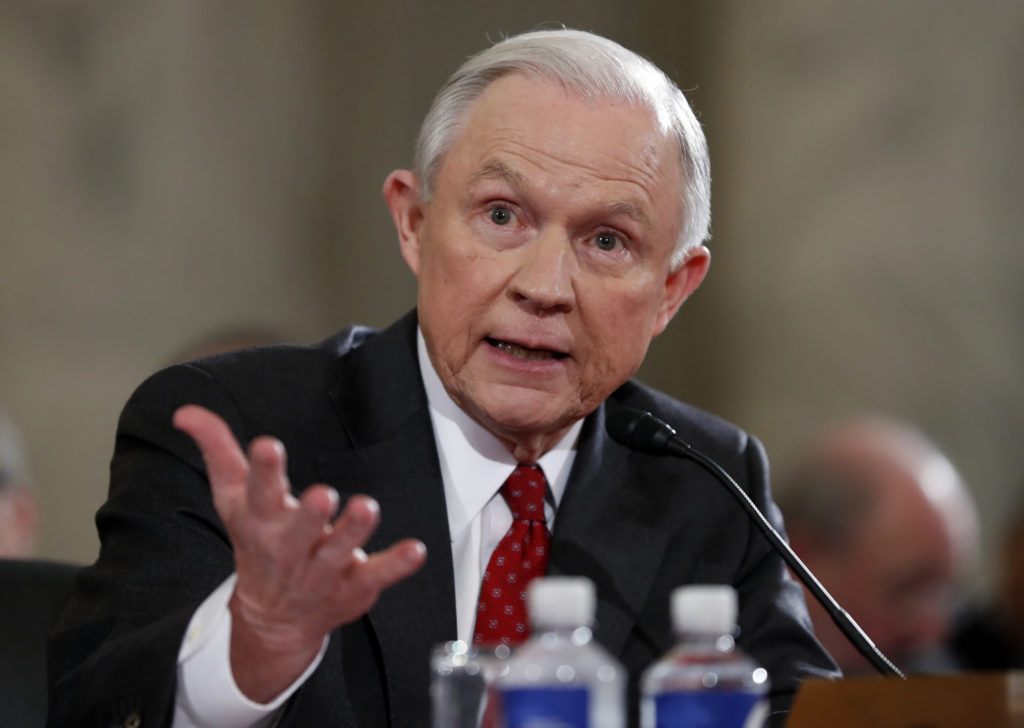
Attorney General Jeff Sessions signaled Thursday his strong support for the federal government’s continued use of private prisons, reversing an Obama administration directive to phase out their use. Stocks of major private prison companies rose at the news. Sessions issued a memo replacing one issued last August by Sally Yates, the deputy attorney general at the time. That memo directed the federal Bureau of Prisons to begin reducing and ultimately end its reliance on privately run prisons. It followed a Justice Department audit that said private facilities have more safety and security problems than government-run ones. Yates, in her announcement, said they were less necessary given declines in the overall federal prison population. But Sessions, in his memo, said Yates’ directive went against longstanding Justice Department policy and practice and “impaired the Bureau’s ability to meet the future needs of the federal correctional system.” He said he was directing the BOP to “return to its previous approach.” The federal prison population — now just under 190,000 — has been dropping due in part to changes in federal sentencing policies over the past three years. Private prisons hold about 22,100 of these inmates, or 12 percent of the total population, the Justice Department has said. The federal government started to rely on private prisons in the late 1990s because of overcrowding. Many of the federal prison inmates in private facilities are foreign nationals who are being held on immigration offenses. The Yates policy did not extend to prisons used by Immigration and Customs Enforcement, which hold tens of thousands of immigrants awaiting deportation. Immigration and human rights advocates have long complained about conditions in privately run prisons. An inspector general audit from last August said problems at private prisons in recent years included property damage, injuries and the death of a corrections officer. Republished with permission of The Associated Press.
Florence Snyder: If Donald Trump won’t man up, meet with teen, maybe Betsy DeVos will
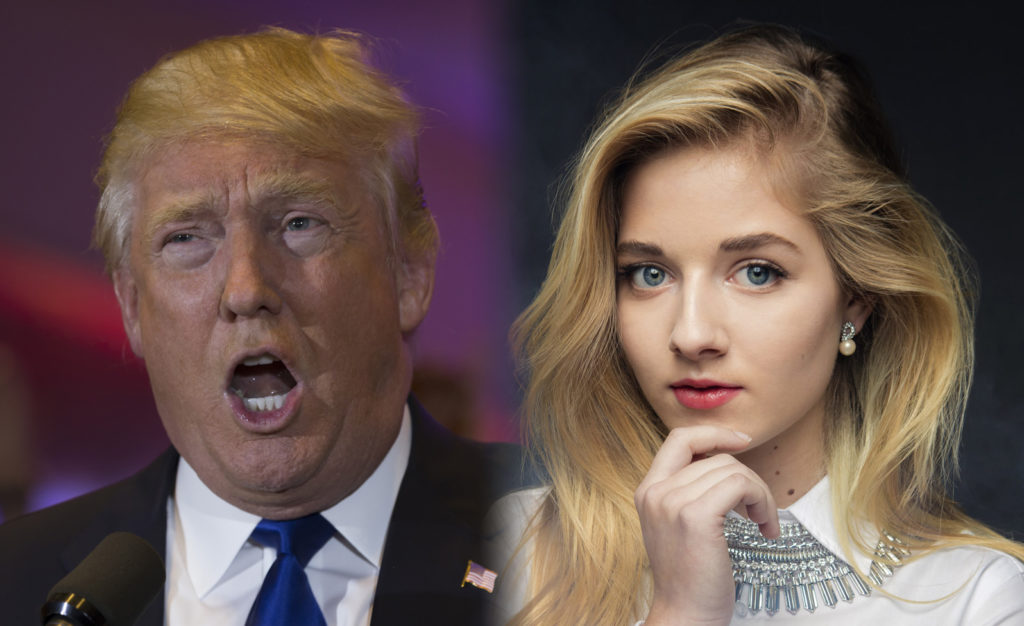
President Donald Trump ought to give Jackie Evancho the meeting she asked for. He owes her bigly. The sixteen-year-old musical prodigy performed the national anthem at Trump’s inauguration, adding a huge dose of class to the festivities and sparing a grateful nation from another round of DJ Ravidrums, Toby Keith and Three Doors Down. Evancho’s political skills are right up there with her astonishing vocal chops. In the wake of Trump’s mean-spirited withdrawal of federal protections for transgender students, she took to Twitter, and to television, to politely ask Trump to meet with her, and with her 18-year-old transgender sister, to learn about what life is like for children whose gender identity differs from the sex the person had at birth. That’s a lot for a sex-obsessed 70-year-old man to wrap his head around. But we’d like to think that Trump would have done it if any of his five children had felt utterly out of place in the pink or blue blankets in which they were first swaddled. The Evancho family, and Ileana Ros-Lehtinen, the mother of a transgender son and a Florida congresswoman who has refused to pander to uninformed and uncurious culture warrior constituents, and every other family with a transgender son or daughter has had to choose between educating themselves and supporting their loved one, or throwing the child to the wolves. The alternative to unconditional love is to give license to self-appointed gender police, and to the Mean Girls, Bully Boys, and Bathroom Bill Brigades who make life so miserable for transgender kids that one out of three of them will attempt suicide. Too many of them succeed, which perhaps explains why Education Secretary Betsy DeVos tried to talk Trump out of telling transgender kids that they’ll be happier — and definitely safer — with homeschooling. If Trump doesn’t have the guts to meet with the Evancho sisters, let’s hope that DeVos will.
Women of Influence: Catrena Norris Carter
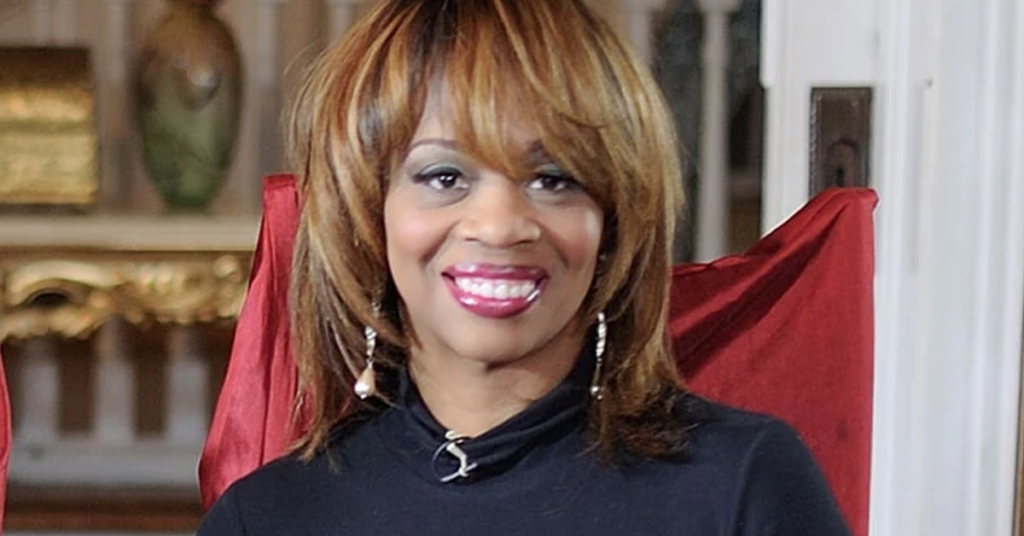
Before she even entered college, Catrena Norris Carter was already surrounded by some of the biggest names in the civil rights movement — Rosa Parks, Jesse Jackson, Coretta Scott King. During those impressionable teenage years, Carter was given an internship by Faya Ora Rose Touré with the 21st century Youth Training Program (21C). For the next several years, during her summers and spring breaks, she would meet with young people at Historically Black Colleges and Universities (HBCUs) from across the country. She spoke with everyone from kids and politicians, to homeless kids and those who had been in prostitution — where leaders of the Movement would share their knowledge and experiences to inspire, assist, organize and develop young people to be skilled community focused leaders. Carter soaked it all in and has since been a mover and shaker in the Yellowhammer State. Which is exactly why she is Alabama Today’s February’s choice for our Alabama Women of Influence feature. When you speak to Carter, it’s easy to recognize you’re talking with a force of nature. But before we mention all that she’s doing to change the world for the better, it’s important to look back to the program and people who influenced her to be the woman she is today. Created in 1985 by Touré, who would ultimately become Carter’s lifelong mentor, 21C was the breeding ground of Carter’s passion for helping those around her find success. “It was very influential in making sure that we all gave back to our communities. That we don’t just go away and get jobs and work on our personal success, but how important it was to reach back down and make sure that you pulled everybody up around you,” Carter told Alabama Today. The program was also where Carter learned a valuable lesson: legislation and politics are the keys to change. “It was always instilled that legislation and politics are the way for freedom, and the way out of poverty, and the way to look at life,” Carter explained. “Most people don’t look at life politically. They just kind of live day-to-day. Without asking those questions of ‘why is this law a law’ or asking why the process works.” During these years, Touré, Alabama’s first black female judge and the wife of state Sen. Hank Sanders, taught Carter about the power of a single individual. The notion has stuck with Carter over the years, she now hopes it will one day be her legacy: for people to know the power of one. “Unfortunately, most people just kind of go along to get along. Which is how we ended up with things in the past that didn’t so well — for the Jewish people, for women, and with slavery,” Carter said. “You have to understand, all of that was legal at the time. Just because something was legal, doesn’t necessarily make it right. Or make it just.” She continued, “Don’t just accept everything that comes before you. You have a right to challenge it. To overthrow if necessary. Never sit idly by, and just go along to get along. Don’t go down without a fight.” That fighting spirit came to the surface in her local community in 2014, when the Hoover, Alabama school system looked to cut the school bus program. When her sons came home with the news that April, Carter knew it was time to act. Encompassing a 53-mile radius, many families like her own depended on the system to get their children to and from school. So she took the organizing skills she learned over the years and at the 21st Century Youth Training Program and put them to good use. From rallying other mothers to getting the Department of Justice and the NAACP Legal Defense Fund involved, Carter ultimately helped stop the proposal over a year later. “Instead of just accepting it, I got with some other moms, and we fought them. It took pretty much an entire year, but in the end, we won,” Carter reminisced. “It was nice to get a victory. Because we don’t get them very often. The underdogs don’t usually win when you’re up against a system that big and that powerful. It felt good. And it helped thousands of lives and families.” At a time where many young women across the country are looking at issues in their own backyards that they’d like to change, Carter has one piece of advice: get involved. “Join some organizations that are into human rights and injustice issues. Find an organization that you feel passionately about. Even if it’s down to the heart association or something. Because everybody’s not going to be political, but that doesn’t mean that you can’t be involved with social,” Carter affirmed. “Do something that helps leave the world a little bit better than you found it.” Rest assured, Carter is practicing what she preaches. Outside of her day job, yes jobs, the list of Carter’s involvement is beyond impressive. She’s on the Board chair of the Greater Birmingham Boy Scouts of America, Board Member of League of Women Voters, Board Member of Ancient African Slavery Museum, and a Member of Alabama New South Coalition. When she’s not serving on various boards or volunteering you’ll find her working. Not only the only is she the Associate Publisher of Who’s Who in Black Alabama, the Managing Partner of C&C, and the President & CEO of Women Of Will (WOW) —a statewide, nonpartisan 501(c)(3) working to advance a richly diverse mass of women into leadership positions at work, in the community and in politics. WOW aims to recruit more women for leadership positions, from the boardrooms to the courtrooms — she also serves as National Coordinator of Selma’s Bridge Crossing Jubilee. Before this role, she was Executive Director of the Selma to Montgomery 50th Anniversary Commemoration Foundation, as well as the Executive Producer of Centric/BET’S “Salute Selma” Docu-concert and SHEROS documentary featuring some of the female living legends of the movement. Before this role, she was Executive Director of the Selma to Montgomery 50th Anniversary Commemoration Foundation, as well as the Executive Producer of Centric/BET’S “Salute Selma” Docu-concert and SHEROS documentary featuring some of the female living legends of the movement. With
Conservatives learn dealing with Donald Trump can be complicated
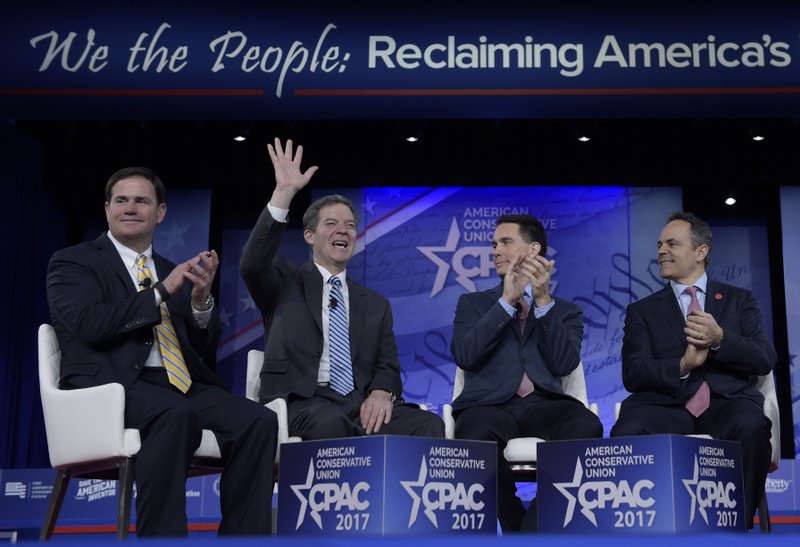
For the past eight years, thousands of conservative activists have descended on Washington each spring with dreams of putting a Republican in the White House. They finally have one, but they are not sure he’s really conservative. With Donald Trump‘s presidential victory, the future of the conservative movement has become entwined with an unconventional New York businessman better known for his deal-making than any ideological principles. It’s an uneasy marriage of political convenience at best. Some conservatives worry whether they can trust their new president to follow decades of orthodoxy on issues like international affairs, small government, abortion and opposition to expanded legal protections for LGBT Americans — and what it means for their movement if he doesn’t. “Donald Trump may have come to the Republican Party in an unconventional and circuitous route, but the fact is that we now need him to succeed lest the larger conservative project fails,” said evangelical leader Ralph Reed, who mobilized his organization to campaign for Trump during the campaign. “Our success is inextricably tied to his success.” Trump is to address the Conservative Political Action Conference on Friday morning. Vice President Mike Pence is to speak Thursday, as are White House chief of staff Reince Priebus and senior adviser Steve Bannon. Speaking Thursday morning, White House counselor Kellyanne Conway thanked the conservatives for helping elect Trump. As conservatives met for their first big sessions Thursday at the gathering in Oxon Hill, Maryland, a Washington suburb, they heard a stream of familiar conservative rhetoric. A panel of GOP governors urged Washington Republicans, who control the levers of power for the first time in a decade, to deliver the results that Republican governors have brought to their states. “The victory is not on Nov. 8. That is an assignment for change and real reform,” said Arizona Gov. Doug Ducey, urging Trump and his allies in Congress to make good on promises to repeal “Obamacare,” enact tax reform, and cut the federal budget. “As governors, as activists, engaged citizens, we need to hold all elected leaders accountable for results in this cycle right now. We may not get this same opportunity again. We can’t squander it.” Social conservatives were thrilled by a Wednesday night decision to reverse an Obama-era directive that said transgender students should be allowed to use public school bathrooms and locker rooms matching their chosen gender identity. Trump has a somewhat tortured history with CPAC, an annual convention that’s part ideological pep talk, part political boot camp for activists. Over the past six years, he’s been both booed and cheered. He’s rejected speaking slots and galvanized attendees with big promises of economic growth and electoral victory. At times, he has seemed to delight in taunting them. “I’m a conservative, but don’t forget: This is called the Republican Party, not the Conservative Party,” he said in a May interview on ABC’s “This Week.” The tensions between Trump’s brand of populist politics and conservative ideology will be on full display at the three-day conference, which features panels like “Conservatives: Where we come from, where we are and where we are going” and “The Alt-Right Ain’t Right At All.” Along with Trump come his supporters, including the populists, party newcomers and nationalists that have long existed on the fringes of conservativism and have gotten new voice during the early days of his administration. Pro-Brexit British politician Nigel Farage will speak a few hours after Trump. Organizers invited provocateur Milo Yiannopoulos after protesters at the University of California at Berkeley succeeded in stopping his appearance on campus. But the former editor at Breitbart News, the website previously run by Bannon, was disinvited this week after video clips surfaced in which he appeared to defend sexual relationships between men and boys as young as 13. Trump “is giving rise to a conservative voice that for the first time in a long time unabashedly, unapologetically puts America first,” said Republican strategist Hogan Gidley. “That ‘America First’ moniker can very well shape this country, but also the electorate and the Republican Party and conservative movement for decades.” Trump’s early moves — including a flurry of executive orders and his nomination of federal Judge Neil Gorsuch to the Supreme Court — have cheered conservatives. They’ve also applauded his Cabinet picks, which include some of the most conservative members of Congress. The ACU awarded his team a 91.52 percent conservative rating — 28 points higher than Ronald Reagan and well above George H.W. Bush who received a 78.15 rating. But key items on the conservative wish list remain shrouded in uncertainty. The effort to repeal President Barack Obama‘s health care law is not moving as quickly as many hoped, and Republicans also have yet to coalesce around revamping the nation’s tax code. No proposals have surfaced to pursue Trump’s campaign promises to build a border wall with Mexico that could cost $15 billion or more or to buttress the nation’s infrastructure with a $1 trillion plan. Conservatives fear that those plans could result in massive amounts of new spending and that Trump’s penchant for deal-making could leave them on the wrong side of the transaction. “There is wariness,” said Tim Phillips, president of Koch brothers-backed Americans for Prosperity. But with a Republican-controlled Congress, others believe there’s no way to lose. “He sits in a room with Mitch McConnell and Paul Ryan. Is there a bad a deal to be made with those three in the room?” asked veteran anti-tax activist Grover Norquist. “A deal between those three will, I think, always make me happy.” Republished with permission of The Associated Press.
House Speaker Paul Ryan gets firsthand look at US-Mexico border
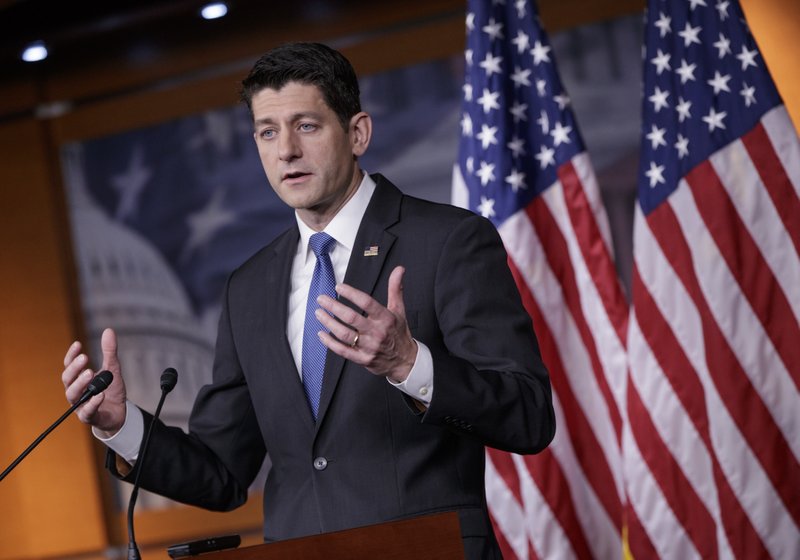
U.S. House Speaker Paul Ryan visited the Rio Grande valley on Wednesday for a firsthand look at the U.S.-Mexico border as the Trump administration steps up immigration enforcement and prepares to ask Congress to pay for a border wall. It was the first time the Wisconsin Republican had visited the border, and protesters gathered to meet his arrival in McAllen, Texas, with hand-painted signs protesting Trump policies. Ryan led a small group of fellow Republicans on the trip, including Rep. Michael McCaul of Texas, who chairs the Homeland Security Committee in the House. In McAllen, Ryan came face to face with some of the challenges that arise in building a wall along the entire 2,000-mile border, which includes much remote and inhospitable terrain as well as the Rio Grande, the river between Texas and Mexico. He met with local officials and toured the area by boat and helicopter, and even briefly rode on a horse. “When you see with your own eyes the many challenges facing our law enforcement professionals along the border, it gives you even greater respect for the work that they do day-in and day-out. But more tools and more support are needed for them to do their jobs effectively,” Ryan said in a statement after the visit. “Congress is committed to securing the border and enforcing our laws, and together with the Trump administration, we will get this done.” President Donald Trump has not yet formalized his request to Congress to pay for the wall he promised during his campaign. It’s expected to cost $15 billion or more, making it uncertain whether Congress would go along. Trump has promised Mexico will pay, but Mexico says it won’t, and Trump has never spelled out how that would happen, anyway. The administration is rolling out new policies to fight illegal immigration and subjecting millions of people who are in this country to deportation, even for minor infractions. A group called La Union del Pueblo Entero announced it was protesting Ryan’s visit “in order to show the opposition of border residents to the current presidential administration’s immigration and border policies.” According to The Monitor newspaper, protesters were asking to meet with Ryan, but he did not meet with them. Republished with permission of The Associated Press.
Conservatives welcome Donald Trump with delight – and wariness

For the past eight years, thousands of conservative activists have descended on Washington each spring with dreams of putting a Republican in the White House. This year, they’re learning reality can be complicated. With Donald Trump‘s presidential victory, the future of the conservative movement has become entwined with an unconventional New York businessman better known for his deal-making than any ideological principles. It’s an uneasy marriage of political convenience at best. Some conservatives worry whether they can trust their new president to follow decades of orthodoxy on issues like international affairs, small government, abortion and opposition to expanded legal protections for LGBT Americans — and what it means for their movement if he doesn’t. “Donald Trump may have come to the Republican Party in an unconventional and circuitous route, but the fact is that we now need him to succeed lest the larger conservative project fails,” said evangelical leader Ralph Reed, who mobilized his organization to campaign for Trump during the campaign. “Our success is inextricably tied to his success.” As conservatives filtered into their convention hall Wednesday for their annual gathering, many said they still have nagging doubts about Trump even as they cheer his early actions. A Wednesday night decision to reverse an Obama-era directive that said transgender students should be allowed to use public school bathrooms and locker rooms matching their chosen gender identity has thrilled social conservatives. “He’s said that on multiple occasions that he’s not a conservative, especially socially,” said Zach Weidlich, a junior at the University of South Alabama, “but my mind-set was, give him a chance, especially now that he’s elected.’” “He was the better of two evils given the choice,” added Timmy Finn. “I agree with his policies, however, I think he’s moving a little too fast.” Trump has a somewhat tortured history with the Conservative Political Action Conference, an annual convention that’s part ideological pep talk, part political boot camp for activists. Over the past six years, he’s been both booed and cheered. He’s rejected speaking slots and galvanized attendees with big promises of economic growth and electoral victory. At times, he has seemed to delight in taunting them. “I’m a conservative, but don’t forget: This is called the Republican Party, not the Conservative Party,” he said in a May interview on ABC’s “This Week.” Matt Schlapp, chairman of the American Conservative Union, which hosts CPAC, said Trump’s aggressive style is more important than ideological purity. “Conservatives weren’t looking for somebody who knew how to explain all the philosophies. They were actually looking for somebody who would just fight,” he said. “Can you think of anybody in America who fits that bill more than Donald Trump?” Trump is to address the group Friday morning. Vice President Mike Pence is to speak Thursday as are White House chief of staff Reince Priebus and senior advisers Steve Bannon and Kellyanne Conway. The tensions between Trump’s brand of populist politics and conservative ideology will be on full display at the three-day conference, which features panels like: “Conservatives: Where we come from, where we are and where we are going” and “The Alt-Right Ain’t Right At All.” Along with Trump come his supporters, including the populists, party newcomers and nationalists that have long existed on the fringes of conservativism and have gotten new voice during the early days of his administration. Pro-Brexit British politician Nigel Farage will speak a few hours after Trump. Organizers invited provocateur Milo Yiannopoulos after protesters at the University of California at Berkeley protested to stop his appearance on campus. But the former editor at Breitbart News, the website previously run by Bannon, was disinvited this week after video clips surfaced in which he appeared to defend sexual relationships between men and boys as young as 13. Trump “is giving rise to a conservative voice that for the first time in a long time unabashedly, unapologetically puts America first,” said Republican strategist Hogan Gidley. “That ‘America First’ moniker can very well shape this country, but also the electorate and the Republican Party and conservative movement for decades.” Trump’s early moves — including a flurry of executive orders and his nomination of federal Judge Neil Gorsuch to the Supreme Court — have cheered conservatives. They’ve also applauded his Cabinet picks, which include some of the most conservative members of Congress. The ACU awarded his team a 91.52 percent conservative rating — 28 points higher than Ronald Reagan and well above George H.W. Bush who received a 78.15 rating. But key items on the conservative wish list remain shrouded in uncertainty. The effort to repeal President Barack Obama‘s health care law is not moving as quickly as many hoped, and Republicans also have yet to coalesce around revamping the nation’s tax code. No proposals have surfaced to pursue Trump’s campaign promises to build a border wall with Mexico that could cost $15 billion or more or to buttress the nation’s infrastructure with a $1 trillion plan. Conservatives fear that those plans could result in massive amounts of new spending and that Trump’s penchant for deal-making could leave them on the wrong side of the transaction. “There is wariness,” said Tim Phillips, president of Koch-brothers-backed Americans for Prosperity. But with a Republican-controlled Congress, others believe there’s no way to lose. “He sits in a room with Mitch McConnell and Paul Ryan. Is there a bad a deal to made with those three in the room?” asked veteran anti-tax activist Grover Norquist. “A deal between those three will, I think, always make me happy.” Republished with permission of The Associated Press.
