
Cascades Sonoco announces $16 million Alabama expansion

Canadian based Cascades Sonoco — the joint venture between Sonoco, one of the largest global diversified packaging companies, and Cascades, a leader in the recovery and manufacturing of green packaging and tissue products — will invest $16 million in its Birmingham, Ala. facility, creating an additional 20 jobs. The companies says the investment will support a new line of packaging containers using the company’s water-based coating technology. Designed for the take-out food and corrugated industries, the companies say the new containers are recyclable, repulpable and compostable. “This investment represents a significant geographic expansion for water-based products by Cascades Sonoco, especially in the fast-growing Southeastern U.S.,” Rodger Fuller, senior vice president of Sonoco’s Paper & Engineered Carriers, U.S. & Canada, and Display & Packaging, said in a release. “With this exciting addition to its product portfolio, Cascades Sonoco remains dedicated to maintain its market leadership position in protective roll packaging for the paper industry.” The expansion will soon begin at the Cleage Drive facility with startup expected in the second quarter of 2018. At full capacity, the new coating line will be able to produce roughly 50,000 tons of sustainable coated materials annually. Cascades Sonoco worked closely on the expansion project with the Alabama Department of Commerce, AIDT, which will provide recruitment and training services, the Jefferson County Commission, Alabama Power Co. and the Birmingham Business Alliance (BBA). “This is a great project that was initially identified through the BBA’s Business Retention and Expansion program,” said Jeff Traywick, senior project manager for the BBA. “Foreign-based companies like Cascades Sonoco recognize the stability of the Birmingham market and find our community a great place to put down roots.”
White House bars major news outlets from gaggle
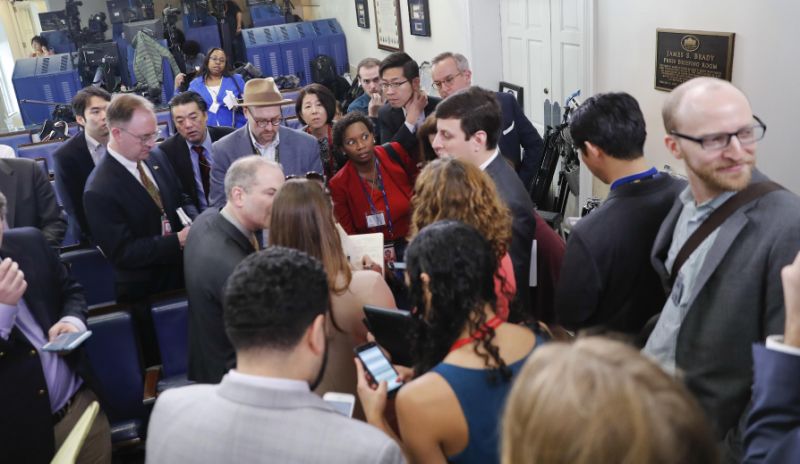
News organizations including The New York Times, the Los Angeles Times, CNN and POLITICO were blocked from joining an informal, on the record White House press briefing Friday. The Associated Press chose not to participate in the gaggle following the move by White House press secretary Sean Spicer. “The AP believes the public should have as much access to the president as possible,” Lauren Easton, the AP’s director of media relations, said in a statement. Several news organizations were allowed in, including the conservative website Breitbart News. The site’s former executive chairman, Steve Bannon, is chief strategist to President Donald Trump. The White House defended the decision not to include some news organizations. “We invited the pool so everyone was represented. We decided to add a couple of additional people beyond the pool. Nothing more than that,” said White House spokeswoman Sarah Sanders. Earlier Friday in a speech before the Conservative Political Action Conference, President Donald Trump railed against the media. Reaction from barred media outlets was swift. “Nothing like this has ever happened at the White House in our long history of covering multiple administrations of different parties. We strongly protest the exclusion of The New York Times and the other news organizations. Free media access to a transparent government is obviously of crucial national interest,” Dean Baquet, the Times’ executive editor, said in a statement. “This is an unacceptable development by the Trump White House. Apparently, this is how they retaliate when you report facts they don’t like. We’ll keep reporting regardless,” CNN said in a statement. Republished with permission of The Associated Press.
Arthur Orr’s ‘drugged driving’ bill stalls in Alabama Senate committee

While Alabama lawmakers debate how to create safer roads, one Alabama state senator believes it can be achieved by taking a stronger stance on “drugged” driving. Decatur-Republican state Senator Arthur Orr filed Senate Bill 180 on Valentine’s Day, which seeks to strengthen DUI law in the Yellowhammer State. The bill would expand the DUI standard to include several additional drugs, involve greater punishment for repeat offenders, and ultimately make it easier for a drivers’ license to be revoked. Through his bill, Orr wants to increase penalties for repeat “drugged driving” offenders and extend a “lookback period” from five years to ten, which would give courts the ability to use past misdemeanor and felony DUI convictions to add severity to future sentencing. On Wednesday, Orr’s bill stalled as his colleagues on the Senate Transportation and Energy Committee questioned whether or not looking back 10 years was looking back too far. They also questioned the list of drugs named in the bill. Orr moved to table his bill. In 2015, the Washington Post reported on a study from the Governors Highway Safety Association, which found that “drugs were found in the systems of almost 40 percent of fatally injured drivers who were tested for them. That rivals the number of drivers who died with alcohol in their system.” And “the number of dead drivers who tested positive for drugs has increased from 29 percent in 2005 to 39.9 percent in 2013, the report said, citing federal crash data.” Below are the drugs and amounts that would qualify for penalty until Orr’s bill: There is a 6 blood concentration of the following substances that is equal 7 to or greater than: 90 ng/mL of Alprazola 200 ng/mL of Amphetamin 10,000 ng/mL of Butalbita 10,000 ng/mL of Carisoprodol or meprobama 70 ng/mL of Clonazepam 20 ng/mL of Cocaine 5 ng/mL of Delta-9-tetrahydrocannabinol (THC) 500 ng/mL of Diazepam or nordiazepam 60 ng/mL of Hydrocodone 100 ng/mL of Lorazepam 250 ng/mL of Methadon 10 ng/mL of Methamphetamine 100 ng/mL of Morphine 100 ng/mL of Oxycodone 800 ng/mL of Tramadol 50 ng/mL of Zolpidem
Bills to give juries final say in death penalty cases moving in Alabama Legislature
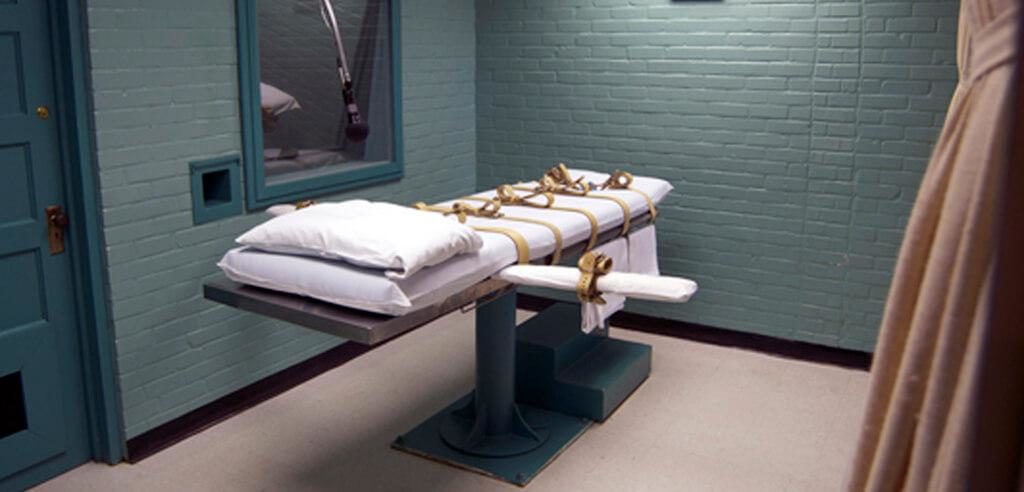
A pair of state lawmakers sponsoring bills to give juries the final say in death penalty cases will hold a news conference in front of the State House Tuesday. Pike Road Republican Sen. Dick Brewbacker and Tuscaloosa Democratic Rep. Chris England are both sponsoring bills that would disallow Alabama judges from overriding the jury sentencing recommendation in death penalty cases. Alabama is the last state in the country that allows judges to override a jury’s sentencing recommendation in capital cases. Current law requires 10 of 12 jurors to recommend the death penalty. The pair will be joined by Kimble Forrister, the state coordinator for advocacy group Alabama Arise, on the steps of the State House at 11:15 a.m. Tuesday to make their case for ending judicial overrides in Alabama. The news conference is part of Alabama Arise’s 2017 Legislative Day, where the group will bring in advocates from around the state to discuss death penalty reform and the group’s other legislative efforts with state lawmakers. Over the past 40 years, Alabama judges have overridden jury recommendations 107 times, more than 90 percent of the time to hand down a death sentence when a jury recommended life imprisonment. Brewbacker’s bill, SB 16, has cleared the Senate Thursday with a 30-1 vote, while England’s version, HB 32, won approval from the House Judiciary Committee earlier this month. The major difference between the two bills is that England’s version requires the jury recommendation to be unanimous, while Brewbacker’s bill leaves the 10 out of 12 threshold unchanged.
Robert Bentley to chair Education Workforce Committee during NGA winter conference
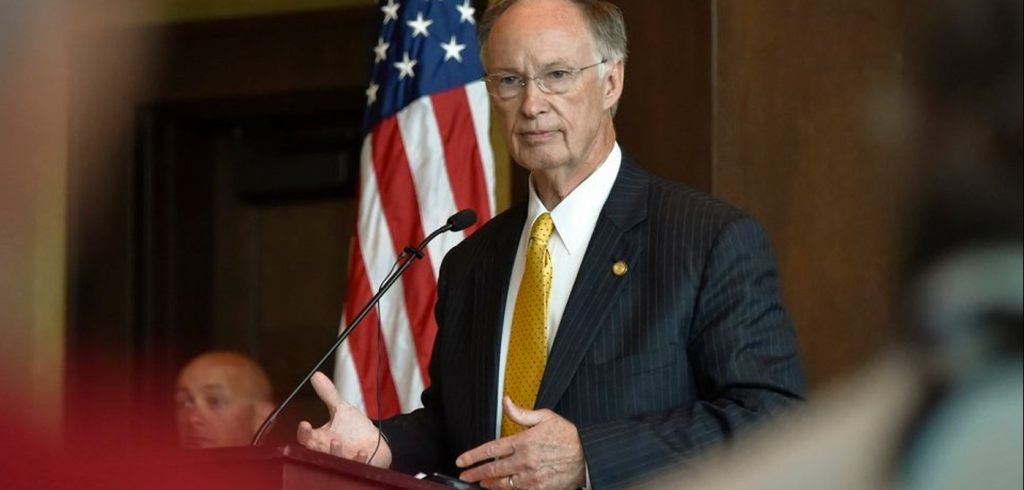
Governor Robert Bentley will join 45 of his gubernatorial colleagues from across the country in Washington, D.C. this weekend for the National Governors Association (NGA) winter conference. There, Bentley and the other state governors will discuss a wide range of topics that are important to the future of the State of Alabama. Items on the agenda include: health care, energy, early childhood education, transportation,infrastructure, homeland security, cybersecurity, public safety, health care reform, conservation management and species preservation. At the conference, Bentley will also serve as chair of the NGA Education and Workforce Committee — a topic that will open this year’s conference — along with his co-chair Washington-state Democrat, Governor Jay Inslee. “Throughout my term as Governor, I have advocated for a strong foundation for children with Alabama’s high quality First Class Pre-K program,” Bentley said in a news release. “This year, I have the great opportunity to chair the Education and Workforce Committee, and am very excited to help lead this session.” Bentley continued, “Every child deserves the opportunity to have a high quality education. I am looking forward to working with other governors as we make early childhood education a priority and continue to advocate for state control and federal support in education decisions, so that all our students can achieve their goals and prosper as adult citizens.” Alabama has seen tremendous success in early childhood education through the high quality First Class Pre-K program. Bentley will share results proven in Alabama’s Pre-K students and his plan to continue expanding the reach of Pre-K. Bentley will also discuss integrating successful components of the Pre-K model through the third grade. Directly following the session, the governors will meet to adopt their new policy positions, including one that makes early education a priority. President Donald Trump will meet with the Bentley and the other governors Monday morning to discuss several important policy issues.
Fresh out of federal prison, Don Siegelman turns 71; won’t celebrate with state pension

Former Gov. Don Siegelman, who spent more than six years in federal prison for bribery, turned 71 Friday. After two decades years in Alabama statewide elective office – eight as secretary of state and four each as attorney general, lieutenant governor, and governor – was convicted in 2006 of bribery, and sentenced to 78 months in federal prison. On February 8, Siegelman was released six months early from a facility in Oakdale, Louisiana, and is serving the remaining sentence in detention at his Vestavia Hills home. His conviction will officially end August 8. “I feel like a refugee coming into New York,” Siegelman told friends and family after his release. In 2006, both Siegelman and HealthSouth founder Richard Scrushy were convicted on bribery charges stemming from $500,000 Scrushy gave Siegelman’s campaign for his support in establishing an Alabama lottery and in exchange for being named to a state health board. Initially, Siegelman faced an 88-month prison sentence in 2007; nine months after his arrest, however, he was released on bond and filed an appeal. Later, the court resentenced Siegelman for 78 months; he returned to jail September 2012, where he stayed until earlier this month. AL.com reports that Siegelman will not be celebrating his birthday with a state pension – not because of his bribery conviction, but because of a 1901 statute in the Alabama Constitution that bans elected officials from receiving state retirement. A 1975 attempt to change the law to give then-Gov. George Wallace a pension was struck down as unconstitutional.
Mary Scott Hunter: Tests are a part of life

No one likes standardized tests. My kids don’t. But the truth is, just like in life, tests are a necessary part of school. In a couple of months your child and his or her classmates will take the ACT Aspire. It’s a scene that will repeat itself in classrooms and gymnasiums across the state. My children will be among those sitting for the exam. My youngest is in the third grade. This will be his first major test. My other children are old pros at this point. In fact, my eldest has taken the exam every year it has been offered. At this point, I know what to expect on test day. My children will beg me to let them call in sick, but my husband and I will remain resolute. We will make sure that all three of our kids are well rested for the several nights before the test, eat a good dinner and breakfast and are on time to school. Tests are hard, but so is life. Sometimes you just have to buck up and do things that scare you. While I am the only member of the Alabama State Board of Education that currently has children in public school taking the test, several of my colleagues have grandchildren. All of us want a good test. Every single year, we seem to have a big debate right before testing time about whether it is a good idea or not. I shudder at this conversation every time. It’s terrible to second-guess yourself. Especially right before a big event like a test. We replaced the state’s previous end-of-year exam, the Alabama Reading and Math Test, because we believed that the ACT Aspire would more accurately tell us how our children are learning in school. We wanted an assessment that would help teachers identify students who need additional help to get on the right track toward college and career readiness before it becomes too late. There are rumors, of course, that Alabama may be moving away from the ACT Aspire next year. And, the truth is, that’s a possibility over the next couple of years. Nevertheless, the ACT Aspire will be administered this Spring as planned. The goal of every school is to prepare children for success after they graduate from high school. Regardless of what the State Board of Education decides in the future about the ACT Aspire, there will be an end-of-year assessment given to students to provide parents with feedback on how our schools are preparing our children. This is true in every state in the nation. Earning an education in Alabama schools should mean something, and, just like in life, tests help make sure we stay on track. Otherwise, a diploma in Alabama will be nothing more than the equivalent of a participation trophy in little league baseball. We deserve more than that. And, I won’t let it happen on my watch. ••• Mary Scott Hunter represents the 8th District on the Alabama State Board of Education. She and her husband Jon live in Huntsville where their children attend public school.
Gary Palmer presents medals to family of fallen 6th District solider
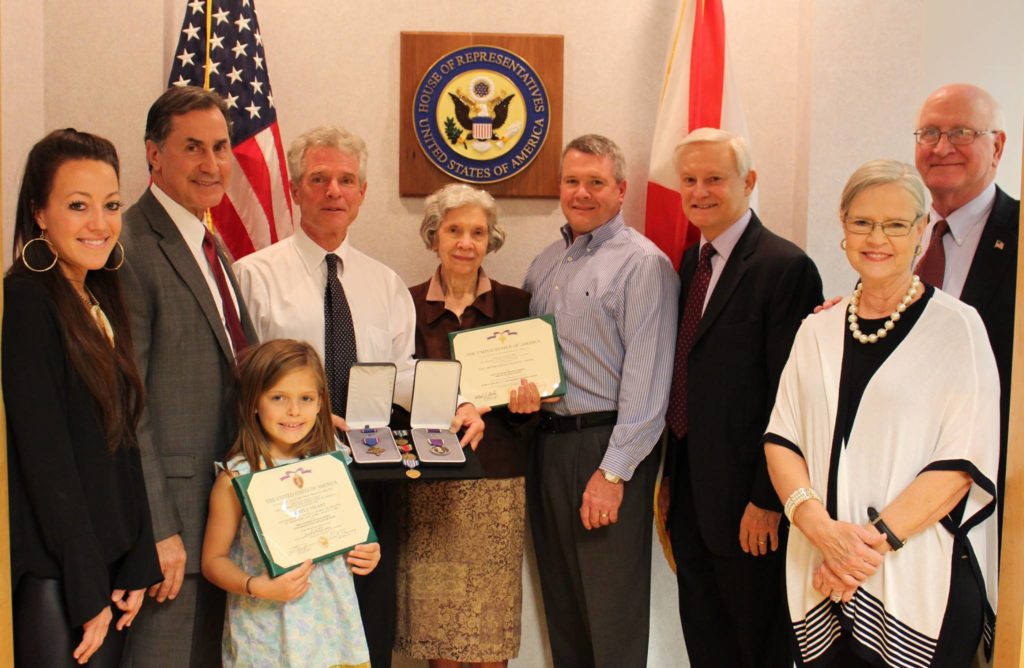
Alabama 6th District U.S. Rep. Gary Palmer and former Alabama U.S. Rep. Spencer Bachus presented several awards and medals to the family of one of Alabama’s fallen war heroes, Melvin Spruiell this week. The long overdue recognition was given for Spruiell’s part in the World War II D-Day Invasion of Europe. In the summer of 1944, Spruiell served as a Forward Artillery Observer with the 377th Parachute Field Artillery Battalion, First Lt. He exposed himself to enemy fire to locate a working radio in order to call in artillery to suppress and dislodge the enemy from their defensive position. He then volunteered as an infantryman, separating himself from his battalion, and led a charge across an open field to take out an enemy machine gun nest. During that action, First Lt. Spruiell was killed. “His actions are in keeping with the highest traditions of military service and reflect great credit upon himself, the 101st Airborne Division, and the Army of the United States,” Palmer said in a Facebook post. Spruiell graduated from Auburn University with a degree in chemical engineering, received a Masters at Tennessee, and a Doctorate at OSU. First Lt. Spruiell’s family was presented with the following medals: the American Campaign Medal the European-African-Middle Eastern Campaign Medal with Arrowhead Device one Bronze Service Star the World War II Victory Medal the Purple Heart the Distinguished Service Cross. “Men like First Lt. Spruiell are the reason America remains the home of the free and the land of the brave,” Palmer concluded.
State Department news briefings to resume week of March 6
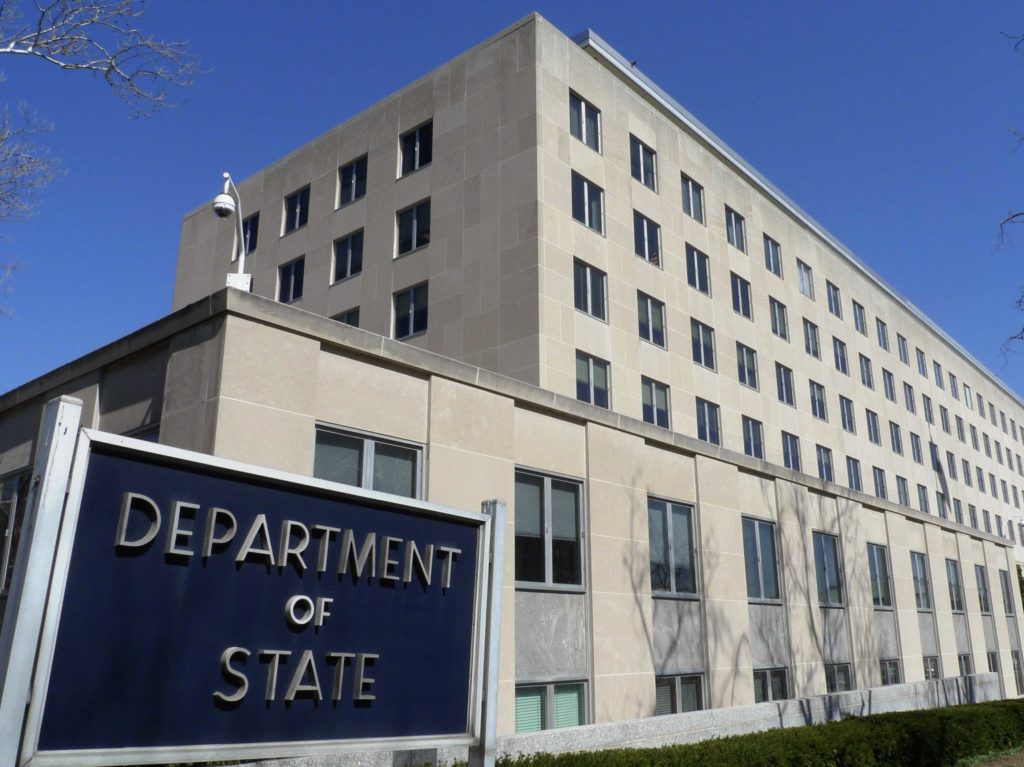
The State Department says it will resume regular press briefings early next month. It has been criticized for not holding a briefing since President Donald Trump’s inauguration. The department said Friday it would begin hosting the briefings during the week of March 6. The last briefing was Jan. 19, the last full day President Barack Obama‘s time in office. The hiatus is believed to be the longest since the department began holding news briefings in the 1950s. Officials have remained available to answer reporters’ questions despite the lack of televised briefings. Those are watched closely by foreign governments, and some current and former diplomats have expressed concern the absence of the briefings was allowing other countries to drive foreign policy debates. Republished with permission of The Associated Press.
Supreme Court could decide transgender case. Or not.
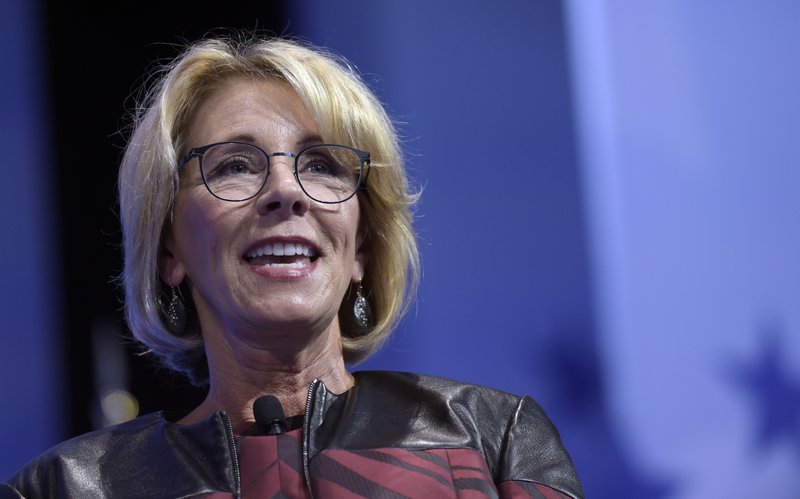
Both the transgender teen who sued to use a boys’ bathroom and the Virginia school board that won’t let him still want the Supreme Court to issue a definitive ruling in their ongoing dispute, even after the Trump administration retreated from an Obama-era policy on bathroom use. The big issue for both sides is whether the main federal law barring sex discrimination in education protects high school senior Gavin Grimm and other transgender students. Grimm was born a girl but identifies as a boy. The Virginia teen has been issued an amended birth certificate identifying him as a male, received hormone treatments and underwent chest reconstruction surgery. His lawyers said in court papers filed Thursday that prohibiting him from using the boys’ restroom is discrimination “on the basis of sex.” The Gloucester County school board said the law known as Title IX was “intended to erase discrimination against women in classrooms, faculties and athletics.” It does not include gender identity, the board said. But the withdrawal on Wednesday of joint Education and Justice Department guidance to school systems gives the high court an easy out if it is seeking to avoid a major ruling on transgender rights. The appeals court that sided with Grimm relied on the Obama administration’s reading of the anti-discrimination law and an Education Department regulation to hold that Grimm should be allowed to use a restroom that conforms to his chosen gender. The Trump administration’s decision to abandon Obama’s restroom guidance set off tensions within the Cabinet. Education Secretary Betsy DeVos expressed reluctance to rescind protections for transgender students and clashed with Attorney General Jeff Sessions, who supported it, according to a person familiar with the conversations but not authorized to speak publicly about internal discussions and so requested anonymity. After Wednesday’s the announcement, DeVos released her own statement, stressing that the administration had a “moral obligation” to protect LGBT students, which she said was “not only a key priority for the department, but for every school in America.” Speaking Thursday to the Conservative Political Action Conference, however, she framed it as a legal matter, “a very huge example of the Obama administration’s overreach.” The court on Thursday asked both sides to say what they think it should do following the administration’s action. Now that the basis for the appellate ruling has disappeared, the justices could return the case to the 4th U.S. Circuit Court of Appeals in Richmond, Virginia, and direct it to decide for itself what the law and regulation require. No appeals court has yet to do so and the high court typically won’t take up a major legal issue until after several courts around the country have weighed in. Similar cases are making their way through other courts of appeal. The temptation to wait may be even stronger because the court has been one justice short for more than a year, since Justice Antonin Scalia‘s death. President Donald Trump has nominated Judge Neil Gorsuch, but there is no chance Gorsuch could join the court in time for the March 28 argument in the Virginia case. “If I were a justice on the court, my inclination would be to say that I’d much rather be reviewing a lower court opinion that looked at the Title IX question,” said Case Western Reserve University law professor Jonathan Adler. Adler signed onto a legal brief in support of the school board that dealt with when courts should defer to federal agencies. That issue is no longer part of the case. There are some reasons why the justices might want to resolve the issue before the court breaks for the summer. Joshua Block, the American Civil Liberties Union lawyer who is representing Grimm, said the administration’s actions have created confusion and “only underscore the need for the Supreme Court to bring some clarity here.” Some strategic considerations may be at work as well. The outcome is likely to divide the liberal and conservative justices. The four liberal justices would need Justice Anthony Kennedy‘s vote to form a majority. It’s not clear he’s with them. Back in August, five justices voted to block the 4th circuit ruling ordering the school district to allow Grimm to use the boys’ restroom, at least until the high court finished its review of the case. At the time, Justice Stephen Breyer said he was providing the necessary fifth, majority-making vote as a courtesy to Kennedy and the other more conservative justices. It is impossible to know whether the court was spurred to act in August because of its concern about when courts should rely on agencies’ interpretations of laws and regulations, or the larger issue of Title IX protections. Fourteen states already prohibit discrimination against transgender students, according to the Human Rights Campaign. Republished with permission of The Associated Press.
Vulnerable Dems lay low as town hall angst rages
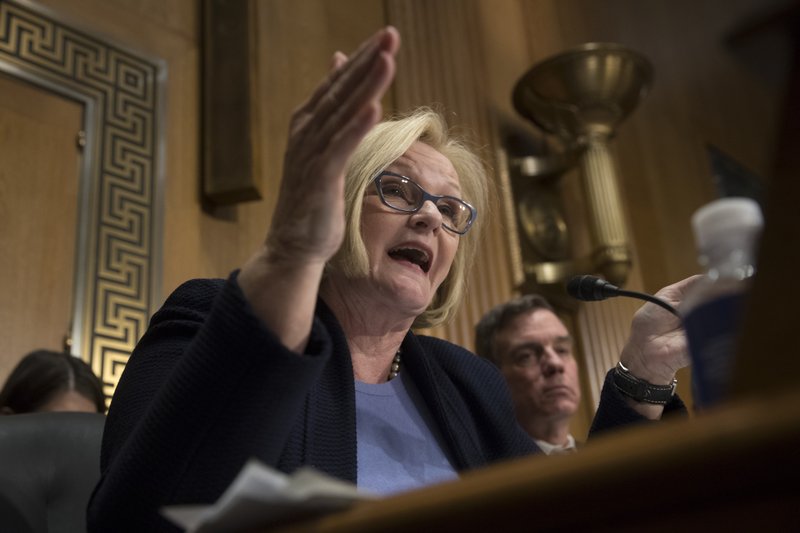
From Montana to West Virginia, the nation’s most vulnerable Senate Democrats are avoiding town hall meetings as their Republican counterparts get pummeled by an energized electorate frustrated with President Donald Trump‘s early agenda. Some Democrats prefer to connect with constituents over the telephone or using social media. Others are meeting voters in controlled environments with limited opportunities to ask questions. But few of the 10 Democratic senators facing re-election next year in states carried by Trump have scheduled in-person town hall meetings during this week’s congressional recess. Missouri Sen. Claire McCaskill declined an invitation to attend a town hall organized by a group called Kansas City Indivisible this weekend, deciding to send a staff member in her place. The two-term senator, up for re-election next year in a state Trump won by nearly 19 percentage points, is scheduled to chat with voters next week on Facebook Live. “Seems to me that all these members of Congress are afraid to face their constituents,” said Hillary Shields, a volunteer organizer with the Kansas City group. The cautious approach comes as Senate Democrats work to limit risks ahead of a challenging 2018 election season. After claiming the Senate majority in 2014, Republicans could win a filibuster-proof 60-vote Senate majority next year in an election in which Democrats are defending 25 seats (23 held by Democrats, two by independents), 10 of them in states carried by Trump. The GOP has a 52-48 edge in the Senate. There are no easy answers for Democrats like McCaskill, pushed to stand up to the Republican president by their liberal base and pulled to cooperate with the GOP by independents and moderates. McCaskill’s office noted she spent part of this week touring the U.S.-Mexico border and planned to host town halls later in the year. The political pressure is particularly intense for West Virginia Sen. Joe Manchin and North Dakota Sen. Heidi Heitkamp, Democrats whose states backed Trump by an average of 39 percentage points in November. Both have avoided formal town halls this week, but Heitkamp’s office said she participated in a discussion about flood issues with constituents in northeastern North Dakota and attended a subsequent ribbon-cutting on Thursday. She planned to tour a local National Weather Service office on Friday. Manchin’s office reported an equally busy schedule, but his constituents said he’s been hard to find this week. They’ve scheduled a protest outside the Democratic senator’s Charleston office on Friday to demand more access, according to Cathy Kunkel, an energy consultant who helped plan the protest. “Here we are, and we’d like a town hall meeting,” Kunkel said. “His constituents have a lot of questions. This is the first recess of the new Congress in the Trump administration.” As skittish Democrats dodge, many Republicans face an outpouring of anger in public meetings across the nation from constituents fired up over Trump’s first steps as president. Republicans like Senate Majority Leader Mitch McConnell and Arkansas Sen. Tom Cotton have been yelled at, heckled and booed in recent days. Some Republicans have avoided such confrontations. Texas Rep. Louie Gohmert evoked the near-fatal shooting of former Rep. Gabrielle Giffords to explain why he’s only holding telephone town halls. Giffords on Thursday urged members of Congress to “have some courage” and face their constituents. Yet few vulnerable Senate Democrats are expected to do so in settings that allow for unscripted questions. In Montana, where Trump prevailed by 20 percentage points, Sen. Jon Tester made several public appearances this week, but he did not advertise any of them as town halls. He answered questions about Scott Pruitt, Trump’s new chief of the Environmental Protection Agency, at one event about climate change, said spokeswoman Marnee Banks. In Pennsylvania, a spokeswoman for Sen. Bob Casey said he would host a town hall in early March, but the details hadn’t yet been set. In Florida, Sen. Bill Nelson addressed students at two Thursday appearances focused on education. And in Ohio, Sen. Sherrod Brown “has participated in several telephone conference calls recently” and his office “emailed surveys out to constituents” to gauge their priorities, said spokeswoman Jennifer Donohue. For now, protesters’ angst is largely focused on Republicans. But only a few weeks ago, Democrats including Senate Minority Leader Chuck Schumer and liberal heroine Massachusetts Sen. Elizabeth Warren faced a sharp rebuke for backing one of Trump’s Cabinet picks. “Grassroots Democrats won’t be shy about challenging their own leaders if they sense a whiff of cooperation with the Trump agenda,” said Ben Wikler, Washington director for the liberal group MoveOn.org. It’s unclear if they’ll get the chance with certain Senate Democrats, however. Shields noted that McCaskill made time to visit the Mexican border: “We’d like to have her back in Missouri.” Republished with permission of The Associated Press.
Caitlyn Jenner calls Donald Trump transgender decision ‘a disaster’

Caitlyn Jenner is taking President Donald Trump to task for his administration’s reversal of a directive on transgender access to public school bathrooms. Jenner addresses Trump in a video posted Thursday night on Twitter. She says, “From one Republican to another, this is a disaster.” The Trump White House has ended a directive issued during Barack Obama’s presidency that told public schools to let transgender students use bathrooms and locker rooms of their chosen gender. Jenner is particularly critical of Attorney General Jeff Sessions, saying, “Apparently even becoming attorney general isn’t enough to cure some people of their insecurities.” Addressing Trump, the former Olympic champion says: “You made a promise to protect the LGBTQ community. Call me.” Jenner came out as a transgender woman in 2015. Republished with permission of The Associated Press.
