
Childbirth Freedom Act to decriminalize midwives, pave way for home births

Alabama lawmakers will consider a pair of bills that would allow midwives to work in the state and would pave the way for births outside of a hospital. One bill, HB 316 by Republican Rep. Ken Johnson, would establish a seven-member state board to oversee and regulate midwives and also allow them to practice independently. Current law doesn’t allow midwives to legally deliver babies in most circumstances, and home births are only legal in the state if a midwife is not present. While Johnson’s bill, the “Childbirth Freedom Act,” would allow midwifery in the state for those with the Certified Professional Midwife accreditation, the proposal would carve out more complicated births, such as breach births or twins, to be performed by other medical professionals. Johnson has also filed a separate bill, HB 315, that would decriminalize midwifery for certified individuals, though practicing without the proper credentials would be a misdemeanor. Midwifery is legal and regulated in 31 states, including neighboring states Florida and Tennessee, and Alabama is one of a dozen states with a currently active bill legalizing the profession. Births overseen by a midwife are typically less expensive than in-hospital births The Alabama bills are championed by Alabama Birth Coalition, and are part of a broader campaign, “The Big Push for Midwives,” spearheaded by members of the trade. Proponents pushed for a similar bill in 2016, though that bill didn’t contain the same provisions on more complicated births. Alabama issued licenses to midwives before 1975, and allowed midwives to have independent practices so long as they held a valid permit from the Department of Health, though over the next few years the state stopped renewing licenses and informed midwives they would have to shut their doors.
Historically black colleges push for financial support
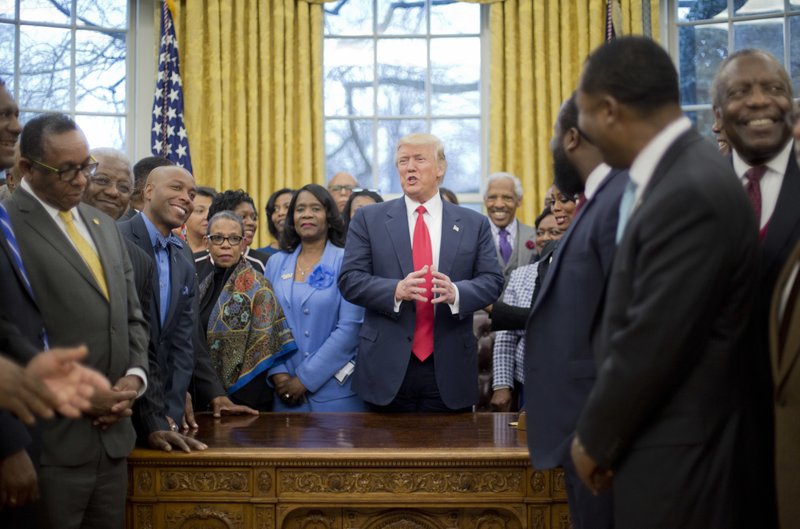
Presidents from a majority of the country’s historically black colleges and universities are in Washington this week, calling for $25 billion in the upcoming budget to help address priorities including infrastructure, college readiness and financial aid as President Trump prepares to sign an executive order aimed at signaling his commitment to the schools. Trump met briefly with the college leaders on Monday, posing for a photograph in the Oval Office before the group met with Vice President Mike Pence and Education Secretary Betsy DeVos. Tuesday’s order is expected to move the White House Initiative on Historically Black Colleges and Universities from the Department of Education into the White House. A senior White House official said the order was intended to prioritize the initiative and make it easier to partner with various federal departments and agencies. The moves are among the actions some college presidents said they would like to see coming from the new administration. For some, their decision to come to Washington was over the objections of students and alumni, but they say they can ill afford to play politics as Trump moves quickly to set priorities. Florida A&M Interim President Larry Robinson said it is important for schools like his to have a seat at the table early. “We are the subject matter experts in terms of what needs to be done,” Robinson said. “We wanted to communicate that to those who were receptive of doing something on our behalf … regardless of who’s sitting in the White House, or what their political affiliations are.” Though Trump did not have a plan to address HBCUs during his campaign — unlike Democratic presidential candidate Hillary Clinton — the Republican was swift to signal his support for the schools soon after his inauguration. Administration officials vowed that he would take action on HBCUs during Black History Month, which ends Tuesday. One of the president’s most visible black aides, Omarosa Manigault, holds degrees from two HBCUs: Central State University in Ohio and Howard University in Washington. More than 231,000 students enrolled at black colleges and universities in 2014, according to the National Center for Education Statistics. Almost 80 percent were black. But HBCU enrollment declined from 326,614 to 294,316 between 2010 and 2014, according to NCES data. And in the past generation, the percentage of black college students attending HBCUs dropped from 18 percent of the overall total of black college students in 1976 to 8 percent in 2014. On Tuesday, the college presidents will spend the day on Capitol Hill, lobbying Congress for more funding. Grambling State University President Rick Gallot said he was encouraged by Monday’s meeting and saw a government interested in a meaningful partnership. Gallot is hoping the initial meetings will lead to more access to research opportunities for his school. “As HBCUs, we’ve always done what politicians stress to agencies: To do more with less,” the head of the Louisiana college said. “Think of the opportunities that would be there to do more with more.” Gallot pointed out that more than 90 percent of his students are eligible for the federal Pell grant, and added he would like to see the program strengthened and made into a year-round opportunity. Trump’s executive order is also aimed at helping the HBCU initiative work as a partner in the president’s agenda, including job creation, community revitalization and making inner cities safer, according to the official who briefed reporters on condition of anonymity, despite the president’s recent complaints about un-named sources. Florida Memorial University’s Roslyn Artis said she is looking to play to Trump’s CEO background, looking for tax incentives that would attract government contractors and private companies to invest in HBCUs. “We’re appealing to his good business sense and hoping he finds an investment worth paying for,” she said, adding that Florida Memorial leadership had several listening sessions with its campus community ahead of the Washington trip to allay concerns. “The reality is, we as HBCUs don’t’ have the luxury of playing politics. It’s really about policy for us.” The presidents were invited to Washington by the Thurgood Marshall College Fund, the nonprofit umbrella organization of public HBCUs headed by Johnny Taylor, who said he reached out to both presidential campaigns about support for the schools last summer. Taylor pointed out that two-thirds of HBCUs are in red, or Republican-oriented states, and that the colleges are heavily reliant on federal and state funding to survive — meaning HBCUs must meet with the administration, despite the fact that only 8 percent of African-Americans voted for Trump. “Taking that position was met with great skepticism, and in some cases, outright refusal to cooperate, but the idea that you would not talk to this group is silly,” Taylor said at a reception his organization sponsored Monday. The Marshall fund and the United Negro College Fund, which supports private HBCUs, have been lobbying Trump to support the colleges. Taylor said Trump’s swift action on many of his campaign promises sends a message that he will take action without worrying about the political winds. “You can like or dislike his position, but one thing about him: If he says it, you can count on it,” Taylor said. Rep. Sheila Jackson Lee, who also attended the reception, was more skeptical Monday night, calling the Oval Office stop nothing more than ‘a photo op.’ “There is no substance at this point,” she said, cautioning to wait for the contents of the executive order and the budget process. “The proof is in the pudding.” Republished with permission of The Associated Press.
Florence Snyder: Let them eat steak, Part 2 – Rick Scott edition
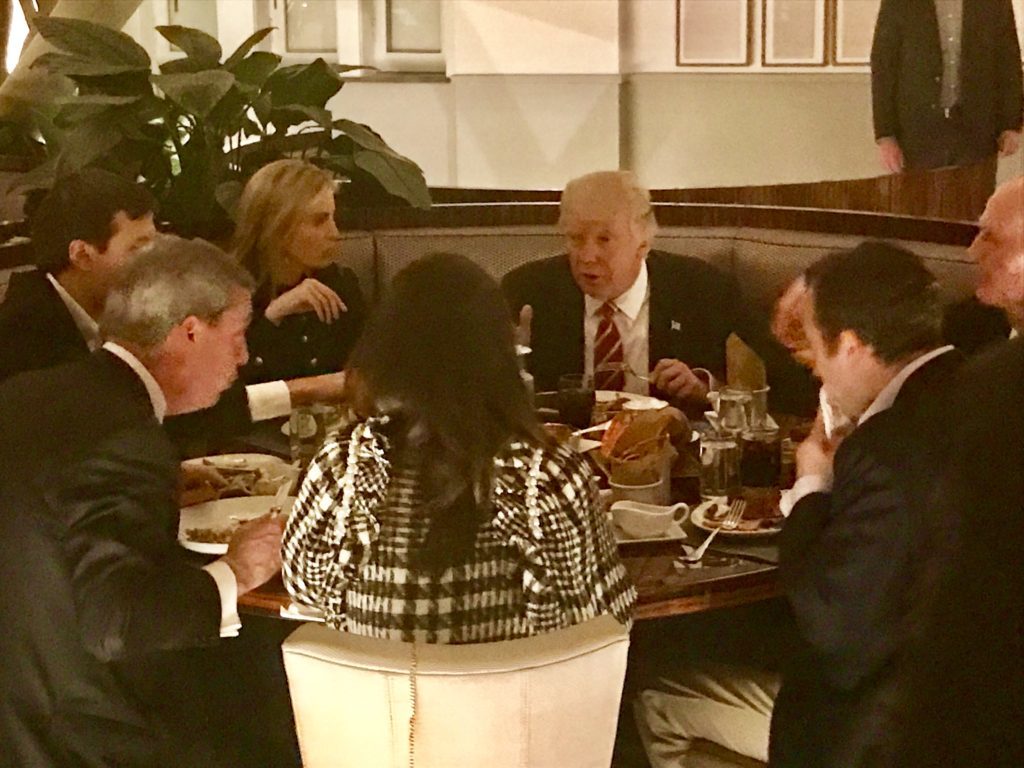
While Melissa McCarthy-impersonator Sean Spicer was confiscating his staff ‘s cellphones in search of leakers to fire, somebody tipped Independent Review Journal’s Benny Johnson to President Trump’s Saturday night dinner plans. Johnson identifies his tipster as a “trusted source.” Obvious suspects include Trump-whisperer and former Breitbart News big shot Steve Bannon. Bannon might have a soft spot for Young Mr. Johnson, who began his new media career as a contributor to Breitbart and fell, briefly, upon hard times when he was fired from BuzzFeed for multiple acts of plagiarism. Maybe it was the president himself, who, disguised as “John Barron,” mild-mannered publicist for Ratings and Sex Machine Donald Trump, used to call up reporters and dish irresistible tabloid trash for the Bonfire of the Vanities crowd. Who knows? Who cares! Whoever it was that told Johnson to ask for a balcony table at Trump International Hotel’s steakhouse — thank you for your service! Johnson’s minute-by-minute account is an SNL-level trove of rich, vivid, and telling details about the “worry worry super scurry” that surrounds a President and Guy Who’s Accustomed to Having His Own Way. It also works nicely as a pitch to the Food Porn Channel for a docudrama on “how a restaurant prepares for a president.” The story is lavishly illustrated with pictures that are remarkably revealing, considering they were taken in a steak palace and not a photography studio. Johnson was unable to catch a shot of Trump’s meal—well done New York strip soaked in catsup, allegedly — but the Tower of Bacon at Johnson’s table will make you lust in your salivary glands like a dirty old man drooling over a hot young blonde. Trump’s guests did not include Secretary of State Rex Tillerson, who dined across the room with his wife. If Trump was talking foreign policy over the $24 shrimp cocktails, he was doing it with Florida Governor Rick Scott, a man who makes up in certitude what he lacks in expertise. Also at the table was Brexit Boy and Party Crasher Nigel Farage, and Ubiquitous Daughter Ivanka Trump, accompanied by the Father of Her Children and Maker of Middle East Peace Jared Kushner. Johnson’s photo gallery includes a shot of Trump “discreetly” slipping a $100 bill to a “Latino busboy” who is, presumably, extremely vetted and not a rapist. The left side of the Twitterverse is sure this was Kabuki generosity staged for the benefit of a camera Trump knew was there. If that’s true, we’ll be hearing about it soon enough on Full Frontal, whose researchers are fanning out and talking to busboys Trump knew in his pre-presidential life if they’re not too busy performing the public service of euthanizing the White House Correspondents Dinner. ___ Florence Beth Snyder is a Tallahassee-based lawyer and consultant.
Bomb threat triggers evacuation of Jewish center in Birmingham

From Alabama to Michigan, bomb threats across the country have forced evacuations at Jewish schools and community centers in 2017. On Monday morning, the Levite Jewish Community Center (LJCC) in Birmingham, Ala. received its third threat of the year. According to the FBI’s Birmingham division, the FBI and the Justice Department’s Civil Rights division will investigate as part of a nationwide probe into threats against Jewish community centers. The LJCC received similar bomb threats on Jan. 18 and Feb. 20. Gov. Robert Bentley says he will not tolerate any such threats and will bring those responsible to justice. “As the Governor of every person of Alabama, I will not tolerate targeted threats against any segment of the community,” Bentley said in a statement. “I have been briefed on the bomb threats at the Levite Jewish Community Center in Birmingham, and I have ordered the State Bureau of Investigation, a division with in the Alabama Law Enforcement Agency to coordinate with local and federal law enforcement officials to provide investigative resources. I am deeply troubled for our families and communities that have been threatened and feel frightened. I can assure the people of our state that Alabama will not tolerate any threat, we will bring those responsible to justice and we will provide any resource necessary to protect every one of our citizens.” Alabama 7th District U.S. Rep. Terri Sewell, whose district includes part of Birmingham, is also taking a stand against the threats. “I am deeply disturbed by the threats against Jewish community centers in Birmingham and nationwide,” said Sewell. “These hate crimes will not be tolerated. Many of my constituents still remember the 1963 bombing at the 16th Street Baptist Church in Birmingham that killed four young black girls. We cannot and will not let that kind of hate rock our community ever again. The families in my district reject anti-Semitism or discrimination against any religion or race, and we will call out and confront discrimination wherever it is present.” Last Thursday, Sewell joined 157 of her Congressional colleagues in a letter to the U.S. Department of Justice (DOJ), the U.S. Department of Homeland Security (DHS), and the Federal Bureau of Investigation (FBI), urging the agencies to swiftly assess the recent threats against Jewish community centers and to advise Congress on any steps which it can take to help counter those threats. The Jewish Community Center Association of North America (JCC) echoed the letter. “Anti-Semitism of this nature should not and must not be allowed to endure in our communities. The Justice Department, Homeland Security, the FBI, and the White House, alongside Congress and local officials, must speak out – and speak out forcefully – against this scourge of anti-Semitism impacting communities across the country,” the JCC said. “Actions speak louder than words. Members of our community must see swift and concerted action from federal officials to identify and capture the perpetrator or perpetrators who are trying to instill anxiety and fear in our communities.” The JCC confirmed bomb threats were called into schools and/or JCCs in 11 states on Monday — Alabama, Delaware, Florida, Indiana, Maryland, Michigan, New Jersey, New York, North Carolina, Pennsylvania and Virginia. In the first two months of 2017 alone, there have been more than 60 incidents targeting Jewish community centers nationwide.
George W. Bush on Donald Trump and Russia: ‘We all need answers’
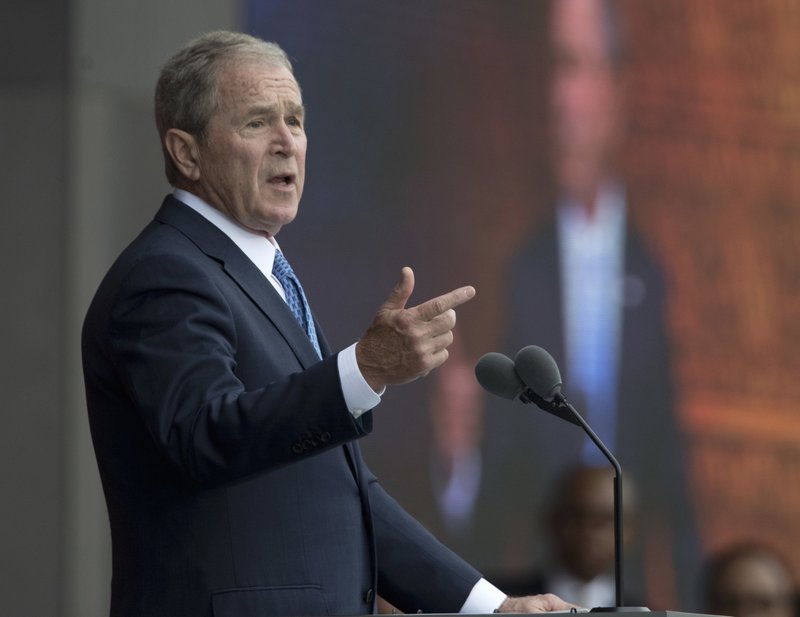
Former President George W. Bush said Monday “we all need answers” on the extent of contact between President Donald Trump‘s team and the Russian government, and didn’t rule out the idea that a special prosecutor could be necessary to lead an investigation. The Republican also defended the media’s role in keeping world leaders in check, noting that “power can be addictive,” and warned against immigration policies that could alienate Muslims. “I am for an immigration policy that’s welcoming and upholds the law,” Bush told NBC’s “Today” show. Bush’s comments came after a prominent Republican in Congress, Rep. Darrell Issa of California, called for a special prosecutor to investigate whether Russia interfered in the 2016 presidential election and was in touch with Trump’s top advisers during the campaign. Bush said he would trust Senate Intelligence panel Chairman Richard Burr to decide if a special prosecutor is necessary. But, Bush added, “I think we all need answers … I’m not sure the right avenue to take. I am sure, though, that that question needs to be answered.” The former president, who is promoting a book of his paintings of wounded veterans, also took issue with Trump’s characterization of the media as an “enemy of the people.” Bush said the U.S. won’t be able to convince authoritarian governments, including Russia, to open up their governments to media scrutiny if U.S. leaders try to discredit their own press. “We need an independent media to hold people like me to account,” Bush said. “Power can be very addictive, and it can be corrosive. And it’s important for the media to call to account people who abuse their power, whether it be here or elsewhere.” On the issue of immigration and Trump’s recent attempt to ban travelers from seven Muslim-majority nations, Bush warned that if the U.S. freezes out other countries and turns inward, that would only make it more difficult to fight the Islamic State group and other foreign extremists. “I think it’s very hard to fight the war on terrorism if we’re in retreat,” he said. Republished with permission of The Associated Press.
Alabama is 2017’s 3rd worst state for women

Things aren’t looking so good for women in the Yellowhammer State. The state ranks 47th in the nation for its share of women in poverty, 49th in women’s life expectancy at birth, and 49th for its quality of women’s hospitals. These are just a few reasons why Alabama was named the third worst state for women in 2017 by the personal financial company WalletHub. In their latest study of “2017’s Best and Worst States for Women,” WalletHub’s analysts compared the 50 states and the District of Columbia across 19 key indicators of living standards for women, with data sets ranging from “median earnings for female workers” to “women’s preventive health care” to “female homicide rate.” Woman-friendliness of Alabama (1=Best, 25=Avg.): 29th: Median earnings for female workers (adjusted for cost of living) 43rd: Unemployment rate for women 47th: Share of women in poverty 26th: Share of women-owned businesses 36th: Share of women who voted in 2012* presidential election 32nd: Female uninsured rate 49th: Women’s life expectancy at birth 49th: Quality of women’s hospitals 23rd: Women’s preventive health care Here’s a look at how Alabama compares to the rest of the country: Source: WalletHub
Bradley Byrne: Taking better care of our veterans

I’ve held over 75 town hall meetings since being elected to Congress, and these meetings allow me to get a feel for what issues are most important to the people I represent. At every single town hall meeting, I get at least one question about problems at the Department of Veterans Affairs (VA). We have all read different stories about the VA in the newspapers – stories about secret wait lists, VA employees stealing drugs, veterans dying while waiting for care, and doctors overprescribing pain medication. During my town hall meetings, veterans stand up and put a real, human face on the horrible problems at the VA. I have seen veterans literally break into tears when talking about the lack of timely care or bureaucratic roadblocks. The stories are heartbreaking. Our veterans deserve better than this. The culture of complacency and lack of accountability at the VA is simply unacceptable. Now, I know not everyone who works in the VA system is a bad actor. There are certainly people who work tirelessly day in and day out to serve our veterans. Unfortunately, their stories are overshadowed by the widespread challenges. Ultimately, I think we need to fundamentally reconsider the way we care for our nation’s veterans. These men and women have put their lives on the line to protect our freedoms, and we should do everything we can to ensure they receive the care they deserve. I recently introduced H.R. 1032, the Full Choice for Veterans Act. This short, two-page bill would change the law to ensure every veteran eligible for VA care is also able to seek medical care from private doctors, specialists, and hospitals in their local community. In other words, my bill would give veterans access to private, local medical care instead of forcing them into the broken VA system. Giving veterans the choice of private care will allow them to receive more timely access to better care. Congress passed a law a few years ago to create a similar program, known as the Veterans Choice Program. Sadly, the VA put up restrictions that created confusion and greatly limited veterans access to private care. My bill would do away with those restrictions and open the program up to all veterans eligible for VA care. By doing this, I think we will see two major benefits. First, we will get better and timelier care for our veterans in their local communities instead of forcing them to drive out of the way to a VA hospital or clinic. Second, we will save taxpayer money by cutting back on the bloated VA bureaucracy. Giving veterans greater access to private medical care is something President Trump talked about repeatedly on the campaign trail, and I hope I can work with his Administration to actually give veterans the choices they deserve. President Donald Trump’s pick to lead the VA, David Shulkin, was recently confirmed by the Senate, and I stand ready to work with him and his team to succeed where his predecessors have failed in changing the culture of complacency at the VA. Until the system changes, I will also continue working to ensure the current VA system works for our veterans. If you, or someone you know, is having a hard time navigating the bureaucracy at the VA, I hope you will encourage them to contact my office at 251-690-2811. My staff and I stand ready to help. There is no group more deserving of timely care and treatment than those who have served our country. By giving them greater choices and access to private care, I think we can do right by our veterans. • • • Bradley Byrne is a member of U.S. Congress representing Alabama’s 1st Congressional District.
Billionaire Wilbur Ross heads toward confirmation as Commerce secretary
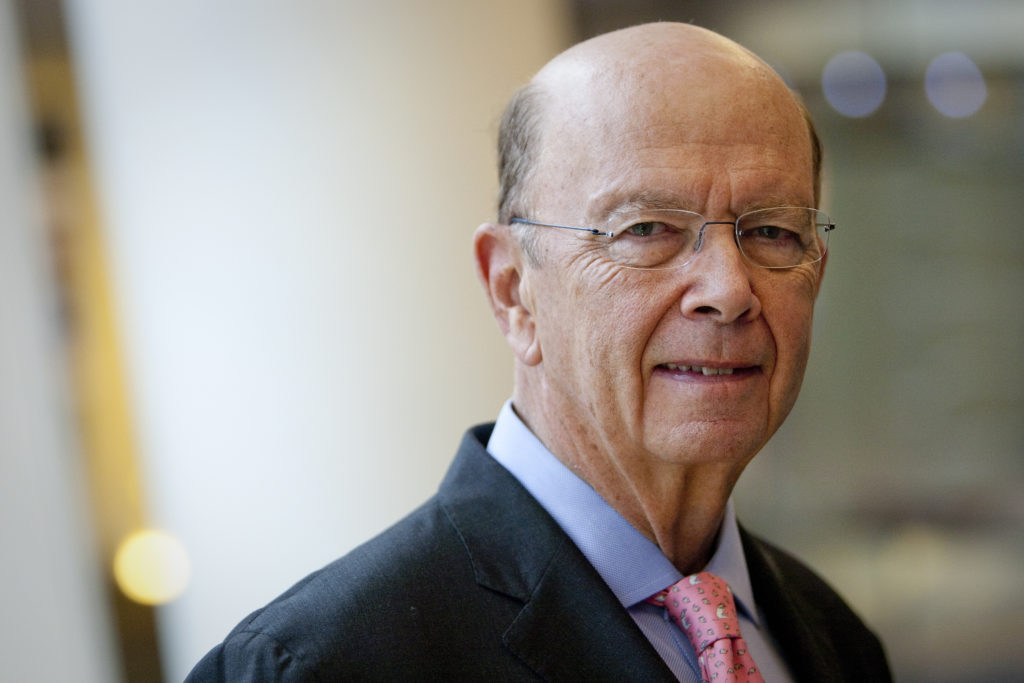
Billionaire investor Wilbur Ross is headed toward confirmation as Commerce secretary in President Donald Trump‘s administration. The Senate is set to vote on Ross’ nomination Monday evening. Ross easily cleared the Senate Commerce Committee and a procedural vote by the full Senate. Senators also are expected to move forward on Trump’s nomination of Montana Rep. Ryan Zinke to lead the Interior Department. If Zinke clears a procedural vote set for late Monday a final vote on confirmation could occur on Tuesday or Wednesday. Ross’ confirmation has gone much smoother than other Trump nominees’ approval. Former Commerce secretaries have praised him, including one who served under former President Barack Obama. Senators from both political parties were deferential to Ross at his nearly four-hour confirmation hearing, which was much more subdued than the confirmation hearings of other Trump nominees. “I believe his extensive management experience in the private sector, and his understanding of the challenges faced by workers and businesses alike, will equip him well for the job of leading the Department of Commerce,” said Sen. John Thune, R-S.D., chairman of the Commerce Committee. Breaking with Republican orthodoxy, Ross said the Trump administration will work quickly to re-do the North American Free Trade Agreement, a massive trade pact with Canada and Mexico that has boosted trade but still stings laid-off workers across the Midwest. Ross said all free trade agreements should be systematically re-opened every few years to make sure they are working in the best interests of the U.S. Ross said he is pro-free trade but noted his close relationship with the United Steelworkers union as proof that he will fight to protect American jobs. The union has endorsed him. NAFTA was negotiated and signed by President Bill Clinton, with broad support among Republicans in Congress. Worth an estimated $2.9 billion, Ross has extensive business ties around the globe. In 2000, he founded WL Ross & Co., a private equity firm. As part of his ethics agreement, Ross will divest from the firm, if confirmed. The commerce secretary has several roles in promoting American business interests in the U.S. and abroad. The department handles trade issues, working to attract foreign investment to the U.S. The department also oversees agencies that manage fisheries, weather forecasting and the Census Bureau, which will conduct a count in 2020. Ross said he has experience at that agency; he was a census-taker while he attended business school. Republished with permission of The Associated Press.
Poll: US teens disillusioned, divided by politics

In the days after President Donald Trump‘s election, thousands of teenagers across the nation walked out of class in protest. Others rallied to his defense. It was an unusual show of political engagement from future voters who may alter America’s political landscape in 2020 — or even in next year’s midterm elections. Now, a new survey of children ages 13 to 17 conducted by The Associated Press-NORC Center for Public Affairs Research with the permission of their parents finds that America’s teens are almost as politically disillusioned and pessimistic about the nation’s divisions as their parents. The difference? They aren’t quite as quick to write off the future. Eight in 10 feel that Americans are divided when it comes to the nation’s most important values and 6 in 10 say the country is headed in the wrong direction. Nyles Adams, a 14-year-old from New York City, was in kindergarten when Barack Obama was sworn in as the nation’s first black president. Adams, the grandson of Trinidadian immigrants, remembers watching the inauguration on TV and talking with his mother about the particular significance of Obama’s election for his black, immigrant family. Now, with Trump as president, he feels America’s best days are behind it, and the nation will be worse off in 40 years. Yet like 57 percent of his peers, he is still optimistic about the opportunity to achieve the American Dream. “Sometimes it does get you down, but I try not to focus on it too much because I see myself as someone who despite all the odds that are against me, I’m still going to prevail,” he said. That youthful optimism is hard to crush. While rates vary by race, 56 percent of all teens surveyed believe America’s best days are ahead, compared with the 52 percent of adults in an AP-NORC poll conducted in June 2016 who said the nation’s best days are behind it. But like adults, the poll reveals deep divisions along familiar lines. Just a quarter of teens say they have a lot in common with people of different political views. Three in four already have a party preference, including 29 percent who say they’ll be Democrats, 23 percent Republicans and 24 percent independent or another party. Less than one-third have a favorable impression of Trump, but only slightly more think well of Hillary Clinton. Elijah Arredondo, a second-generation Mexican-American from La Habra, California, disliked both major party candidates but is now worried about his family under Trump. His mother signed up for the Affordable Care Act, which Trump has promised to dismantle and replace. “I feel like anyone can achieve the American Dream, but for some people it’s a lot harder for them to do, so these things help people,” he said. Caroline Millsaps, of Garner, North Carolina, describes herself as a liberal Democrat and says climate change and women’s rights are her top political concerns. Last year, she took time away from her busy competitive dance schedule to attend two Bernie Sanders rallies with her mother. Like 40 percent of teens surveyed, she feels she has a “moderate” amount in common with people of different political views. “I always watch Fox News to get a different perspective, and I have some friends who support Trump and so I’ll ask them, ‘What is your opinion on this?’” she said. “I try to see both sides of the situation and see which side fits my view best.” Millsaps, 16, talks about politics daily with her parents and that has strongly influenced her views. Nearly 40 percent of teens surveyed said they did the same at least weekly and, like Millsaps, those talks seem to sway them. A majority of respondents said they agree with their parents’ political views most of the time. Only 3 percent disagree most of the time. Sophie Svigel, 17, attends a private Christian school in Dallas and identifies herself as a conservative Republican. She talks to her Republican parents about politics and almost always agrees with them, but is also heavily influenced by her faith-based school, she said. “I feel like a lot of the bad things that are going on are not really spoken of and are hidden,” she said. “I feel like the politicians and people in politics speak very vaguely about the problems that we’re facing.” That cynicism echoes in the AP-NORC poll. Just 16 percent of teens feel the federal government is doing a good job promoting the well-being of all Americans, and not just special interests. Fewer than 2 in 10 teens surveyed feel the federal government is doing a good job representing most Americans’ views. Jessi Balcon, from Bend, Oregon, has tried to fight that cynicism by pouring her energy into delivering food to homeless people and engaging in open-minded debate with those whose politics are different from hers. Nine in 10 teens say they have participated in civic activities like volunteering or raising money for a cause. “It’s not you versus me, it’s us versus the problem and the problem isn’t other people,” said Balcon, 17, a Green Party supporter. “There are a lot of really big problems that we need to solve, but I think that getting angry is the worst thing that we can do,” she said. “It doesn’t matter what side of politics they’re on, conservative or liberal. I don’t want to hate anyone.” ___ The AP-NORC poll of 790 teenagers age 13-17 was conducted online and by phone Dec. 7-31, 2016. A sample of parents with teenage children was drawn from NORC’s probability-based AmeriSpeak panel, which is designed to be representative of the U.S. population. Parents then gave permission for their children to be interviewed. The margin of sampling error for all respondents is plus or minus 4.6 percentage points. Republished with permission of The Associated Press.
Health care, Supreme Court on agenda as Congress returns
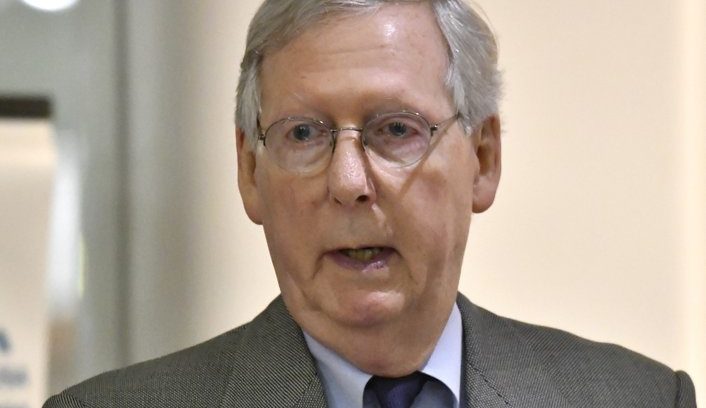
Congress returns to Washington this week to confront dramatic decisions on health care and the Supreme Court that may help determine the course of Donald Trump‘s presidency. First, the president will have his say, in his maiden speech to a joint session of Congress on Tuesday night. Majority Republicans in the House and Senate will be closely watching the prime-time address for guidance, marching orders or any specifics Trump might embrace on health care or taxes, areas where some of his preferences remain a mystery. Congressional Republicans insist they are working closely with the new administration as they prepare to start taking votes on health legislation, with the moment finally upon them to make good on seven years of promises to repeal and replace former President Barack Obama‘s Affordable Care Act. House Republicans hope to pass their legislation by early April and send it to the Senate, with action there also possible before Easter. Republicans will be “keeping our promise to the American people,” House Speaker Paul Ryan, R-Wis., said as he sent lawmakers home for the Presidents Day recess armed with informational packets to defend planned GOP changes to the health law. But land mines await. The recess was dominated by raucous town halls where Republicans faced tough questions about their plans to replace the far-reaching health care law with a new system built around tax credits, health savings accounts and high risk pools. Important questions are unanswered, such as the overall cost and how many people will be covered. There’s also uncertainty about how to resolve divisions among states over Medicaid money. The lack of clarity created anxiety among voters who peppered lawmakers from coast to coast with questions about what would become of their own health coverage and that of their friends and family. It has forced Republicans to offer assurances that they don’t intend to take away the law and leave nothing in its place, even though some House conservatives favor doing just that. “What I have said is repeal and replace and more recently I have defined that as repairing the ACA moving forward,” Rep. Leonard Lance, R-N.J., insisted to an overflow crowd in his politically divided district this past week. “I think we have a responsibility in Washington to try to make the system better.” It remains to be seen whether the release of detailed legislation in the coming days will calm, or heighten, voters’ concerns. Details on the size of tax credits to help people buy insurance, and how many fewer people will be covered than the 20 million who gained coverage under Obama’s law, could create bigger pushback and even more complications. With lawmakers set to return to the Capitol on Monday, it will become clearer whether the earful many got back home will affect their plans. GOP leaders are determined to move forward, reckoning that when confronted with the reality of voting on the party’s repeal and replace plan, Republicans will have no choice but to vote “yes.” Many Republicans say that how they will handle health legislation will set the stage for the next big battle, over taxes. And that fight, many believe, will be even trickier than health care. Already, it has opened major rifts between House and Senate Republicans. Senators also will be weighing the nomination of federal appeals Judge Neil Gorsuch, Trump’s pick for the Supreme Court. Hearings soon will get underway in the Senate Judiciary Committee; floor action is expected before Easter. Despite Gorsuch’s sterling credentials, Democrats are under pressure from their liberal supporters to oppose him, given voters’ disdain for Trump and the GOP’s refusal last year to allow even a hearing for Obama’s nominee for the high court vacancy, federal appeals Judge Merrick Garland. Yet some Democrats are already predicting that one way or another, Gorsuch will be confirmed. Even if he doesn’t pick up the 60 votes he needs, Senate Majority Leader Mitch McConnell, R-Ky., could use a procedural gambit to eliminate Democrats’ ability to filibuster Gorsuch, an outcome that Trump has endorsed. Congress is awaiting a budget from the Trump administration, and the slow process of rounding out Trump’s Cabinet will move forward as Republicans tee up more nominees over Democratic protests. The Senate has confirmed 14 Cabinet and Cabinet-level officials, fewer than other presidents at this point. The most controversial nominees, including Education Secretary Betsy DeVos and Environmental Protection Agency head Scott Pruitt, have been confirmed. Next up: financier Wilbur Ross for commerce secretary, Rep. Ryan Zinke to lead the Interior Department, retired neurosurgeon and 2016 GOP presidential candidate Ben Carson to be housing secretary and former Texas Gov. Rick Perry at the Energy Department. How Democrats vote will be telling, given the extreme pressures on them to oppose Trump at every turn. It’s a dynamic to which those with potential presidential ambitions are particularly sensitive. Sen. Elizabeth Warren of Massachusetts, among others, took heat for voting in favor of Carson in committee, while Sen. Kirsten Gillibrand of New York has opposed nearly all the nominees. Republished with permission of The Associated Press.
