
Alabama’s congressional delegation reacts to Donald Trump speech
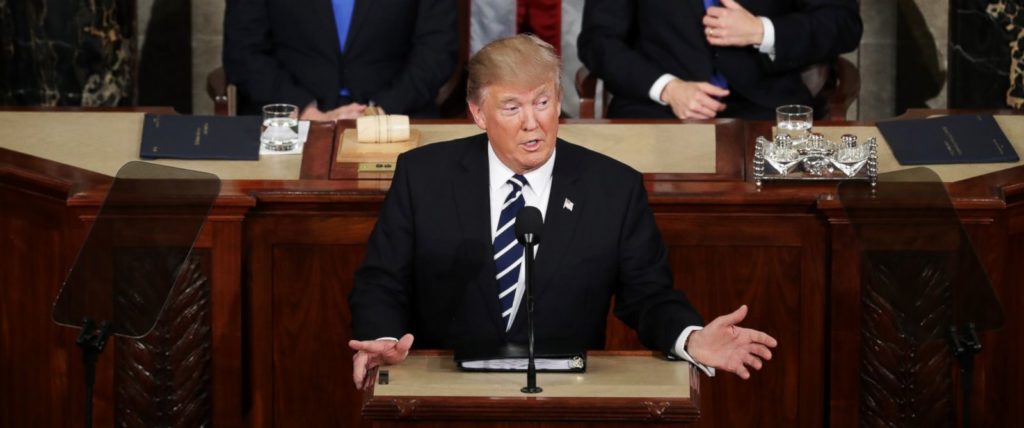
Donald Trump delivered his first-ever address to a joint session of Congress Tuesday night joint where he outlined his priorities for his first year in office. During his prime-time speech, the president touched on a variety of topics, including his hopes to repeal Obamacare, immigration policy, continuing his pledge to fortify the U.S./Mexico border with a wall, strengthening the military and jobs. His speech drew overwhelming praise from the Alabama delegation, with the exception of long Democrat 7th District Rep. Terri Sewell who was “deeply disappointed” in the contents of the speech. Here’s what the delegation had to say: U.S. Sen. Richard Shelby: In tonight’s address, President Trump laid out his vision for the nation and reiterated his commitment to ensuring that the American people have the opportunity to succeed. His remarks were a refreshing change from the last eight years, and I look forward to working with him on the many priorities discussed. In particular, I stand ready to work with the President on overhauling our broken tax code, rolling back burdensome rules and regulations, and getting Washington out of the way so that Americans can get back to work. It’s time for us to deliver on our promises for the American people. U.S. Sen. Luther Strange: It was truly an honor to be part of this historical moment. Like the millions of Americans who voted for real change in Washington, I found it refreshing to hear from a President who is keeping the promises he made to Americans when he ran for office. Just as he said, he is already taking steps to secure our border, repeal Obamacare and rebuild our military. I am even more encouraged after hearing the President share plans to reform our complicated tax code to allow Alabama families to keep more of their hard-earned money, and roll back bureaucratic red tape that is an unnecessary burden to Alabama small businesses. His cabinet nominees show his commitment to protecting our constitutional rights, caring for our Veterans and ensuring a quality education for every child, regardless of their zip code. This is an exciting time in America and I know that Alabamians are optimistic and ready to dream big for the first time, in a long time. It is truly an honor to serve in the Senate and help our President ensure all Americans have the opportunity to make our future a brighter one. Alabama 1st District U.S. Rep. Bradley Byrne: President Trump came before Congress tonight with a clear plan for action on behalf of the American people. From health care to immigration to national defense to infrastructure, the President laid out a clear agenda that will spur economic growth, keep the American people safe, get the government off our backs, and expand opportunity. I stand committed and ready to get to work on enacting these policies. The American people spoke clearly last November when they elected a unified Republican government, and now it is time for action. Alabama 2nd District U.S. Rep. Martha Roby: Tonight President Trump laid out several ways his administration and Congress can work together to rebuild our nation. I am particularly encouraged by his calls to properly fund our military, improve veterans’ health care, and secure our border. These are issues important to the Alabamians I represent, and I look forward to working with the Trump Administration to deliver results. Alabama 3rd District U.S. Rep. Mike Rogers: I was thrilled to hear President Trump lay out his optimistic vision for America’s future. We now have a president that is determined to work on the behalf of the American people first. President Trump’s dedication to enforcing our country’s immigration laws is critical to our safety and economy. For far too long, the executive branch has turned a blind eye to folks who are here in the country illegally and therefore, breaking the law. With Attorney General Sessions, the laws on the books will be enforced and the safety of our communities will be the highest priority. I am extremely grateful for President Trump’s pledge to increase investment in our national defense. To fully rebuild our military from the neglect of the Obama administration will require an extraordinary commitment… Read the rest of Rogers’ statement here. Alabama 4th District U.S. Rep. Robert Aderholt: As I expected and hoped for, President Trump gave a message to Congress that he is committed to making sure Washington is no longer ‘business as usual.’ After eight years of a White House that took a passive, apologetic approach to America and the world, we finally have a President who has announced America is back and literally wants it to be great again. President Trump’s plan to strengthen our military is greatly needed. If we are to win the war against ISIS, contain China, and keep a watchful eye on Russia, the size and capability of our armed forces needs to increase. I am also glad to hear that the President will put forth a plan to rein in the Federal bureaucracy. For example, the EPA has run amok with a busy-body attitude with farmers that literally tried to regulate mud puddles on their farms, not to mention the ‘War on Coal.’ However, President Trump has now passed the baton to Congress. It is now up to us. We must get to work to accomplish the mandate voters sent in November or Congress will face the people’s wrath next year. Alabama 5th District U.S. Rep. Mo Brooks: I enjoyed the optimistic tone of President Trump’s speech this evening and his message of unity and strength across America. I was pleased the President tonight addressed restarting the engine of the American economy and removing burdensome regulations that have made it so difficult to start and grow a business in America. President Trump has already taken strong steps to secure the border and enforce our nation’s immigration laws, and I applaud his continued commitment to the rule of law and national security. I look forward to working with my colleagues in Congress to support President Trump’s bold
Airports, legal volunteers prepare for new Donald Trump travel ban
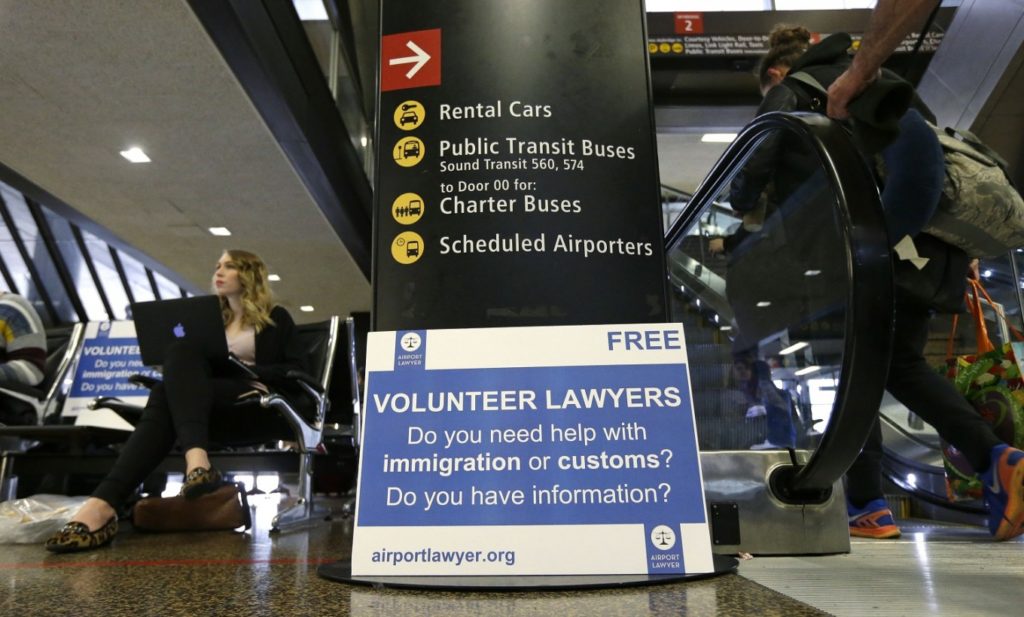
Airport officials and civil rights lawyers around the country are getting ready for President Donald Trump‘s new travel ban — mindful of the chaos that accompanied his initial executive order but hopeful the forthcoming version will be rolled out in a more orderly way. The new order was expected as soon as Wednesday. A draft suggested it would target people from the same seven predominantly Muslim countries but would exempt travelers who already have visas to come to the U.S. Since last month’s ban, which courts have put on hold, a section of the international arrivals area at Dulles International Airport outside the nation’s capital has been transformed into a virtual law firm, with legal volunteers ready to greet travelers from affected countries and ask if they saw anyone being detained. Similar efforts are underway at other airports, including Seattle-Tacoma International, where officials have drawn up plans for crowd control after thousands crammed the baggage claim area to protest the original ban. “The plan is to be as ready as possible,” said Lindsay Nash, an immigration law professor at Cardozo School of Law in New York who has been helping prepare emergency petitions on behalf of those who might be detained. Trump’s initial action, issued Jan. 27, temporarily barred citizens of Iran, Iraq, Syria, Yemen, Somalia, Sudan and Libya from coming to the U.S. and halted acceptance of all refugees. The president said his administration would review vetting procedures amid concerns about terrorism in those seven nations. Protesters flooded U.S. airports that weekend, seeking to free travelers detained by customs officials amid confusion about who could enter the country, including U.S. permanent residents known as green-card holders. Attorneys also challenged the order in court, including officials from Washington state. That lawsuit, which Minnesota joined, resulted in a federal judge temporarily blocking the government from enforcing the travel ban, a decision unanimously upheld by a panel of the 9th U.S. Circuit Court of Appeals. Many civil rights lawyers and activists have said they don’t believe a new order would cure all the constitutional problems of the original, including the claim that it was motivated by anti-Muslim discrimination. Trump has said he singled out the seven countries because they had already been deemed a security concern by the Obama administration. In his first address to Congress Tuesday night, Trump said his administration “is taking strong measures to protect our nation from radical Islamic terrorism” and is working on improved vetting procedures. “And we will shortly take new steps to keep our nation safe — and to keep out those who would do us harm,” Trump said. Last week, analysts at the Homeland Security Department’s intelligence arm found insufficient evidence that citizens of the seven Muslim-majority countries pose a terror threat to the United States. “It’s not enough to just tweak an order and not change the nature of why it was issued in the first place,” said Rula Aoun, director of the Arab-American Civil Rights League in Dearborn, Michigan, which sued over the initial ban and is prepared to do the same with the rewrite if necessary. In New York, American Civil Liberties Union attorney Lee Gelernt said the organization was ready to go to court if the administration tries to immediately enforce its new order. “The primary focus is being able to respond immediately to any request by the government to lift any of the injunctions, before the courts have had a chance to examine the new order,” he said. Activists and airport officials alike said they hoped it would be phased in to give travelers fair warning, which might preclude any detentions from arriving flights. “We are prepared and willing,” said Rebecca Sharpless, who runs the immigration clinic at the University of Miami School of Law. “But it’s unlikely to cause the same kind of chaos of last time.” At Dulles, Sea-Tac, Minneapolis-St. Paul and other airports, legal volunteers have greeted arriving travelers in shifts every day since the initial ban, wearing name tags or posting signs in different languages to identify themselves. The legal-services nonprofit OneJustice was ready to send email alerts to 3,000 volunteers in California if needed, deploying them to San Francisco and Los Angeles airports for people affected by any new order, chief executive Julia Wilson said. In Chicago, travelers have been signing up for an assistance program started by the local Council on American-Islamic Relations office to ensure swift legal help if they’re detained. Groups urged those arriving at 17 other airports, including Miami, Atlanta and San Diego, to register with Airport Lawyer, a secure website and free mobile app that alerts volunteer lawyers to ensure travelers make it through customs without trouble. Asti Gallina, a third-year student at the University of Washington Law School, volunteered at Sea-Tac for the first time Tuesday. It was quiet, she said. “An essential part of the American narrative is the ability to come to America,” Gallina said. “Any infringement of that is something that needs to be resisted.” Republished with the permission of The Associated Press.
Kay Ivey: Firsts for Alabama

In the first months of the 2017 calendar year and at the first of the 2017 Regular Legislative Session, I have found myself reflecting on some of the “firsts” our State has been able to achieve. Alabama is sometimes recognized as first for all the wrong reasons. I would argue that we actually have many accomplishments to be proud of. Alabama is – and will continue to be – one of the most conservative states in the country. This is one reason I am proud to be born and raised in this State. I am honored and proud to have played a part in serving and leading this State as we continue to implement conservative policies and decisions during my time in Montgomery. Although Alabama may not be the “first” state that comes to mind when the term “innovation” is discussed, I would argue we have and we continue to be a State which leads our country and our world in many unique ways. Below are a few of the accolades and milestones our state has been first to accomplish: Alabama was the first state to have night time flight training, started by Orville and Wilbur Wright in 1910. Wilbur and Orville Wright opened the nation’s first civilian flying school in Montgomery, Alabama. This school began Alabama’s long and distinguished history with aerospace that has spanned over one hundred years. Today, there are 83,000 people employed with 400 aerospace companies that creates a multi-billion-dollar economic impact for our state. Alabama workers built the first rocket engine to put humans on the moon. The birth of NASA began when the Marshall Space Flight Center in Huntsville was created and a young scientist, Wernher Von Braun, led the United States journey to the moon with the development of the Saturn 5 Rocket. The Marshall Flight Center is currently managing the production by Boeing to build the first SLS (Space Launch System) rocket. The SLS is expected to be more powerful than the legendary Saturn 5 rocket and take man to Mars and safely return home. Alabama was the first city in America to assemble the Airbus A320 in 2015. The Airbus U.S. Manufacturing Facility began production in Mobile, Alabama in July 2015. The $600-million, 53-acre facility at the Mobile Aeroplex at Brookley produces the A320 aircraft. The first customer was JetBlue in April 2016. At the beginning of this month, the Airbus Engineering Center in Mobile celebrated 10 years of operation. This was the first step in expanding Airbus to the United States. Airbus anticipates delivering four aircraft per month from Mobile before the end of this year. Alabama was the first state to have a state-funded archives department and building. On February 27, 1901, The Alabama Legislature created the nation’s first publicly funded state archives agency. Thomas M. Owen served as the founder and first director of the Alabama Department of Archives and History. The Alabama Department of Archives and History offers many services for our citizens to benefit from including: Alabama Voices exhibition allowing citizens to experience 300 years of Alabama’s history; and The Land of Alabama featuring the natural resources of our lands that shaped our State, and houses artifacts telling each story in our history. The Museum is a great way to for students and adults of all ages to experience the history of our great State. Alabama was the first state to declare Christmas a legal holiday. Alabama took the lead in 1836 to declare Christmas a legal holiday. Christmas was not recognized as a federal holiday until June 26, 1870. Alabama recognized the significance of time spent with family and friends while celebrating Christmas and acted on it. Alabama was the first state to have a Veterans Day celebration and parade. The first Veteran Day Celebration was in Birmingham, Alabama, in 1947 and was organized by Raymond Weeks, a World War II Veteran. Our State stands by Veterans because they deserve the upmost respect for their sacrifice to our country. Alabama established the Alabama Veterans Executive Network (AlaVetNet) in 2013 to facilitate the delivery of unified, seamless, and systematic access to services for those who have served our country and our state. In the last year, Alabama announced a new way of recognizing veteran owned businesses in our state with the distribution of display decals. I am proud Alabama has taken the lead in respecting and honoring the sacrifice of our veterans. Alabama was the first state to have an educational television network. The Alabama Educational Television Commission was created by the Alabama Legislature in 1953. With the first broadcast as a network in 1955 on Alabama Public Television (APT), Alabama became first state in the nation with an educational television network. APT continues to serve Alabama citizens by enriching their lives with high quality instructional content. The Capitol Journal, a program of APT, reports top Alabama news, events, issues, legislative sessions and all happenings in state government. Alabama was the first state to have an Emergency 911 call system. The first 911 call in the United States was made by Alabama Senator Rankin Fite in Haleyville, Alabama, on February 16, 1968. In 2012, the Alabama Legislature created the Statewide 911 Board to facilitate and promote an effective, efficient, and reliable 9-1-1 service to all resident and visitors in Alabama. I am proud that through endeavors like the Alabama First Responders Wireless Commission, Alabama has and will continue to support the safety of our citizens and law enforcement. Alabama introduced Mardi Gras to the western world. The celebration is held on Shrove Tuesday, the day before Lent begins. As we celebrate Shrove Tuesday (commonly referred to as Fat Tuesday) today, it is appropriate to recognize it all began in Mobile, Alabama, with the Carnival Celebration started by Frenchman Nicholas Langlois in 1703. The two weeks of Mardi Gras are celebrated with elaborate costumes featuring purple, gold and green. There are parades of extravagant floats with beads and moon pies thrown to the public while society
Jim Zeigler asks legal fees be halted until Robert Bentley impeachment resumes
Alabama Auditor Jim Zeigler has asked the state’s Contract Review Committee to delay a contract for legal services for the impeachment investigation of Gov. Robert Bentley. The investigation was halted at the request of then-attorney general Luther Strange on Nov. 3. Zeigler says the proposed $160,000 contract would be an additional payment to the Birmingham law firm of Lightfoot Franklin & White LLC for its outside representation and doesn’t need to be paid until the impeachment investigation resumes. If paid, the contract would make the total legal payments to investigate the governor total $350,000. The contract review panel is scheduled to Thursday, March 2 to review proposed contracts from state agencies. “Right now, the people of Alabama are being hit with costs of an impeachment investigation, but no investigation is being done. All cost – no investigation. That is unacceptable,” Zeigler said Tuesday. “Please delay approval of this contract until the impeachment is actually resumed. It is frustrating for the people of Alabama that the impeachment investigation has been halted but the legal cost to taxpayers is continuing. New Alabama Attorney General Steve Marshall has confirmed Bentley is still under investigation, recused himself accordingly, and appointed former Montgomery District Attorney Ellen Brooks as special prosecutor. “The continuing legal cost is concerning because the impeachment investigation is not continuing,” Zeigler continued. “House Judiciary Chairman, Rep. Mike Jones, said on Feb. 15 that he is waiting on clearance from new Special Prosecutor Ellen Brooks for the impeachment investigation to resume.” The House impeachment investigation began in the 2016 legislative session when 23 House members signed an impeachment resolution. It was referred to the House Judiciary Committee and made little progress before Chairman Jones halted it at the request of Strange Nov. 3. Below is Zeigler’s request to the Contract Review Committee.
Robert Bentley awards grant to help Ala. inmates overcome substance abuse dependencies
Gov. Robert Bentley awarded a $210,605 grant to the Alabama Department of Corrections to treat inmates in several correctional facilities with drug dependencies on Tuesday. “So many evils are rooted in illegal and illegally obtained drugs. In recent years, Alabama has seen a significant increase in the number of fatalities caused by opioid abuse, and we must assist those suffering from opioid addiction whenever possible,” Bentley said in a statement. “I support this program as a way to reduce our prison population and to safely release people back into the public, once they have completed their sentence and want to become productive members of society.” The six-month treatment program will be available at seven correctional facilities across the state and will be conducted by trained drug counselors and drug program specialists. The grant is made possible from funds from the U.S. Department of Justice. The Law Enforcement and Traffic Safety Division of the Alabama Department of Economic and Community Affairs (ADECA) will be responsible for administering the funds. “This valuable partnership is a major step in helping inmates transition back into society,” ADECA Director Jim Byard Jr. said. “Through this program, inmates who have struggled with drug dependency can take control of their lives and prepare to become responsible citizens once released. Public safety and our communities win when inmates are able to break an addiction.”
Blake Dowling: Websites and politics
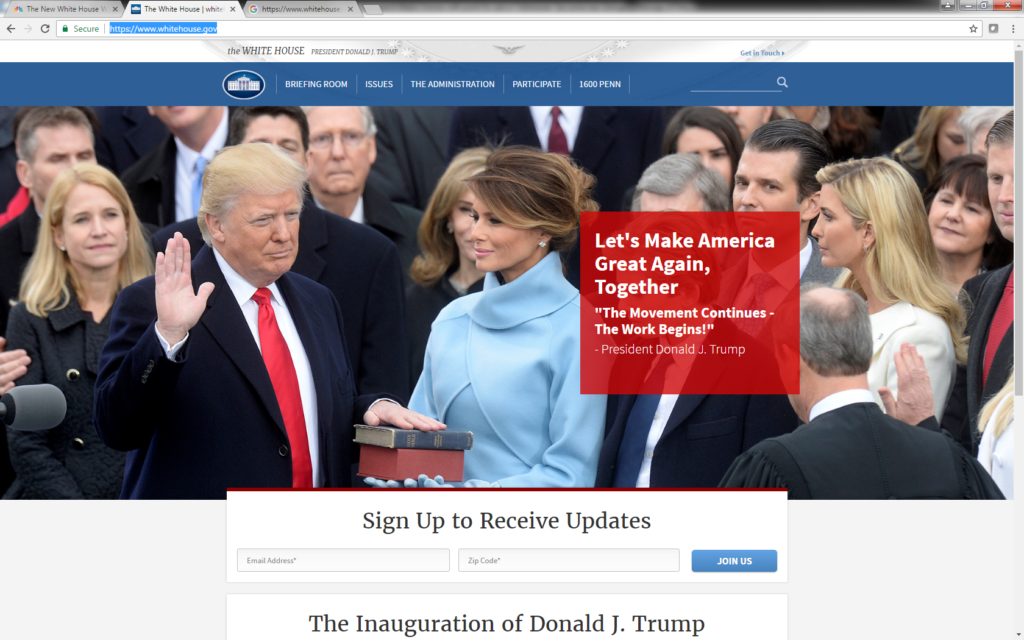
The new resident at the White House and technology are an interesting pair, with the Russians, Twitter, etc. Speaking of the new guy on Pennsylvania Avenue, make sure to check out the Showtime documentary Trumped. Regardless of your status — love him, hate him, internet troller, hater Facebook over-poster, fan, rioter, protester, etc. — if you are a fan of the political process, the behind-the-scenes coverage is spectabulous. The scene where Bernie asks the journalist what network is this anyway because the reporter is dropping the F-bomb, is a riot. To that end, I have always thought Showtime needed to cover a couple of college football games each year. The colorful language could be epic: “what kind of sh*t-ass hula hoop offensive scheme is Richt running at Miami this year,” etc. Back to tech, so WhiteHouse.gov got the standard new President overhaul, and they went very simplistic with their web presence, the picture going from each side of the screen to the next is compelling, and the use of white space is in line with the latest designs. From a technology perspective, cyber warfare and cyberbullying are two items that get a lot of attention on the page; that is a good thing. The White House fired their cyber expert, so that is a bad thing, as we all know there are those seeking to damage our nation, infrastructure and our processes through digital means. Back to Florida; the lobbying team at the Advocacy Group at Cardenas Partners has a cool site. Crisp and to the point. You get introduced to the team on the first look and can easily contact them if needed as email addresses are clearly spelled out. Obviously, contact info is critical; there is nothing more frustrating than not finding a phone number or email address with ease. If you don’t have a contact button, add one ASAP. Or even better have a generic email contact address right on the home page, for example, questions@CharlieSheen.com and the phone number too. You must decide at what level you want to engage your audience with your web brand. Look at Sen. Bill Nelson’s site for example. It would be the opposite of the White House and The Advocacy Group, it is loaded with info and color and extremely busy — billnelson.senate.gov. That said, he gives you access to social media, video clips, newsletter sign up, track record, request a flag, tours, internships and anything else you could possibly want. It is a very informative site, it is odd however that the header does not say, “Senator Bill Nelson.” Maybe he is keeping his options open. These three sites give you an excellent view into the vast world of political websites and perhaps you might see something you want to add. My web development partner, Michael Winn of Digital Opps said this: “In today’s fake or not fake news era, having a dedicated website to strengthen your organization’s initiative or campaign is paramount. An often-overlooked digital strategy is to integrate your original content into a blog or individual news brief format in order to provide the public, journalist and/or elected officials an information hub to check the facts. When done correctly, these bite-sized articles will garner the search engines’ attention and ultimately lead the readers to your website.” Well said sir. At Aegis, our site has a link to follow us on Twitter, like Sen. Nelson’s, but takes it a step further with an auto-feed of every piece of extremely helpful info I might be tweeting — like these three smoking hot tweets from Peter, Tim and John. If you want to see a site that provides visitors an education, info, certifications, news, updates, and anything else you might want, check out the Florida School Boards Association site: fsba.org it is slick, from legislative updates for their members to a link to download their mobile app. It can keep a visitor engaged for days (if you are into that sort of thing). There a massive amount of info, like Nelson’s page, but arranged in manner that is easier on the eyes. Other ideas to keep your site interactive and engaging: 360 tours, cams, links to blogs and columns, aegisbiztech.com or even a password protected area for clients, members, etc. Your web presence is a part of your brand, and you will be judged by your clients and constituents, so make sure you are giving it a serious look. ___ Blake Dowling is CEO of Aegis Business Technologies and writes for various organizations. He can be reached at dowlingb@aegisbiztech.com.
Donald Trump takes on entrenched practice of Washington leaks
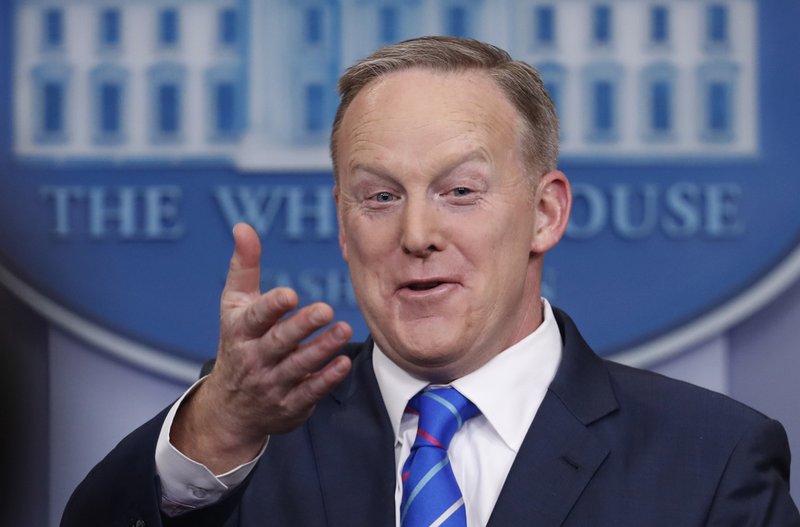
When White House Press Secretary Sean Spicer wanted to crack down on leaks last week, he collected his aides’ cell phones to check for communication with reporters. The crackdown quickly leaked. Spicer’s losing round in Washington’s perpetual game of information whack-a-mole was hardly a surprise. In trying to plug leaks from anonymous sources, President Donald Trump and his aides are going after one of the most entrenched practices in Washington politics and journalism, an exercise that has exposed corruption, fueled scandals and spread gossip for decades. But the practice has created several headaches for the new president, leading Trump, just weeks into his presidency, to publicly vow to try to punish “low-life leakers” in his own administration. “Let their name be put out there,’ Trump said before the Conservative Political Action Conference on Friday, accusing reporters of making up anonymous sources and stories. He declared reporters shouldn’t be allowed to use sources “unless they use somebody’s name.” “‘A source says that Donald Trump is a horrible, horrible human being.’ Let ’em say it to my face.” But Trump’s administration has not been practicing what the boss preached. Despite the president’s anger about unnamed sources, White House budget officials insisted on anonymity Monday as they outlined details of Trump’s spending plans to reporters on a conference call. The budget officials ignored requests to put the briefing on the record. Several anonymously sourced stories have driven Trump coverage: revelations that former National Security Adviser Michael Flynn had lied about conversations with Russians about sanctions; details of private phone calls Trump had with leaders of Australia and Mexico; draft memos of policy plans for actions like rounding up undocumented aliens. Trump isn’t the first president to be frustrated by leaks. From the release of the Pentagon Papers on Vietnam policy, the Watergate scandal that brought down President Richard Nixon to Edward Snowden‘s data dump of national security files, American history is filled with stories of government misconduct that came to light through information passed privately into the hands of journalists. “Leaking is gigantically important in modern presidential coverage and Washington history,” said Frank Sesno, a former CNN Washington bureau chief and now a journalism professor at George Washington University. Sources have countless reasons for leaking, Sesno said. Maybe they’re raising a trial balloon, or shooting one down. Maybe they don’t like a policy being considered or want to report wrongdoing. Maybe they just want to talk back to the boss. Journalists prefer sources go on the record; it lends more credibility to the stories. But on important areas of national security, it’s understandable when people insist upon anonymity, said Dean Baquet, executive editor of The New York Times, on CNN’s “Reliable Sources” Sunday. “These are not people who pull us aside because they want to screw Donald Trump,” Baquet said. “These are people who are worried about the direction of the government. These are people who are taking risks to talk to the media because they think these things need to be exposed. And I have to say, in an administration that has expressed so much distaste for the press and so much distaste for our role, are you surprised that some of the people who want to criticize the administration want to do it without their names attached? I’m not.” Leaks have progressed beyond the days of clandestine meetings in darkened parking garages — although that still happens. Since leakers can be tracked if they use government-issued phones, journalists and sources have increasingly turned to encrypted messaging services, such as Signal, that aren’t logged by phone companies, with messages that can be programmed to self-destruct after they are viewed. Spicer called the White House communications staff into his office to express his frustration with unauthorized leaks to reporters, according to two people with knowledge of the meeting but not authorized to discuss it publicly. He asked the aides to provide him with both their government-issued and personal cell phones so he could check communications with journalists. He also told them that use of encrypted texting apps was a violation of the Federal Records Act and had representatives from the White House counsel’s office in the meeting, according to one person with knowledge of the meeting. That person said Monday that Trump was not aware of the inquiry. Spicer also requested that details of the meeting not be shared with the press. Politico first reported the meeting Sunday. Trump said he probably would have handled the situation differently than his press secretary, meeting with staff one-on-one instead, but perhaps still demanding to look at their phones. In an interview with Fox News Channel’s “Fox & Friends” that aired Tuesday, the president denied there was a “major leak process” at the White House. So who leaked this story? “We have sort of ideas,” Trump said. “But don’t forget, we have people from other campaigns, we have people from other governments. We’ve got a lot of people here.” Sesno said the Trump White House’s battle against leakers is likely fueled by a combination of being new to Washington and a genuine desire to control the message. But to some who knew Trump from a different era, it’s a little jarring. In the 1990s, Trump was a frequent anonymous source of information about his social life and television series, “The Apprentice,” said newspaper columnist Linda Stasi, who covered Trump at the New York Daily News and New York Post. Once Trump called and pretended to be someone else delivering information about him; Stasi said she could easily recognize his voice. “I think he was surprised to find out that it’s not the same when you’re talking about the most important things in the world, as opposed to when your mistress is saying she was having good sex with him,” Stasi said. Stasi said she got along well with Trump, even though she felt the relationship was more beneficial for her than it was for him. “When it comes to politics, it’s a different game,” she
What to watch for when Donald Trump makes 1st address to Congress
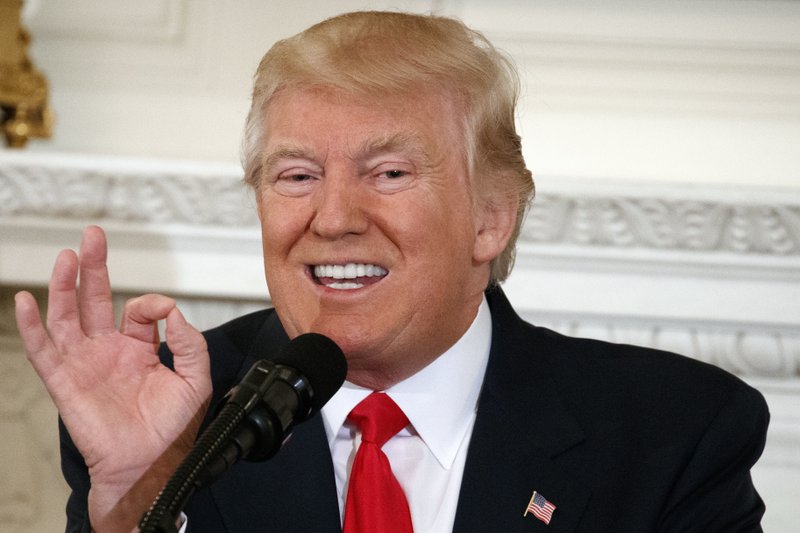
A presidential address to Congress is always part policy speech, part political theater. With President Donald Trump, a former reality TV star, there’s extra potential for drama as he makes his first address to Congress. After a chaotic start to his presidency, Trump will be trying to project his administration as ready to stride forward on top priorities such as changes to President Barack Obama‘s health care law and a tax overhaul. Congressional Democrats, in turn, will be trying to calibrate how strongly to oppose the Republican president in the staid setting of the House chamber, where manners still matter. Some things to watch for Tuesday night: PRE-GAME Which members of Congress will arrive hours early to stake out seats on the center aisle of the House chamber for Trump’s big entrance? Expect core Trump supporters to try to line the aisle. But will some of the Democrats’ traditional aisle-huggers continue to angle for prime seats, then make a point of passing up a handshake with the president? Rep. Sheila Jackson Lee, a Texas Democrat who has often positioned herself on the aisle for presidential addresses, does not plan on shaking Trump’s hand, according to her office. THE ROBED ONES Check out which Supreme Court justices show up this year. Samuel Alito, part of the court’s conservative contingent, hasn’t gone since he was caught on camera during the 2010 State of the Union address shaking his head and mouthing “not true” when Obama criticized a Supreme Court decision. Clarence Thomas, who has also stayed away in recent years, said in 2010 that the addresses had become so partisan that “it’s very uncomfortable for a judge to sit there.” Could this be a year for Ruth Bader Ginsburg, who leads the court’s liberal wing, to opt out? She criticized Trump in interviews before his election but later said she regretted making “ill-advised” comments in which she dismissed Trump as a “faker” who “really has an ego.” She went to every one of Obama’s speeches (but dozed off in 2015 when, she said, she “wasn’t 100 percent sober.”) FOCUS FACTOR White House Press Secretary Sean Spicer is promising Trump’s speech will be “an optimistic vision for the country, crossing traditional lines of party, race, socio-economic status.” Trump has demonstrated that he can stick to a script for high-profile speeches. But there’s always interplay between presidents and legislators in such addresses, and even a few presidential ad libs could change the dynamics of the night. If Trump veers into talk about “fake news,” and “criminal leaks” from intelligence officials and complaints about the courts blocking his executive order on immigration, that would distract from his effort to show more discipline and focus. WHITHER KUMBAYA? Spicer says he expects Trump to get “a very robust and applause-filled reception” from legislators. But dozens of Democratic legislators boycotted Trump’s inauguration. And now, they have to decide how to receive the president in their own chambers. Will they applaud the GOP president? Will the decorum of the moment be pierced with boos and heckles? Some of that may be choreographed in advance, but there’s always the chance of spontaneous outbursts. In 2009, Republican Rep. Joe Wilson of South Carolina blurted out “You lie!” during an Obama speech to Congress on health care. Expect to see lots of white in the crowd: Democratic women in the House planned to wear white to honor women’s suffrage and “stand in solidarity with the women of our nation.” DETAILS, PLEASE Republicans in Congress are getting impatient for more detail on Trump’s plans to repeal and replace the Affordable Care Act and to undertake sweeping tax changes. Trump on Monday called the health care law a “complicated issue” and promised to give states “the flexibility they need to make the end result really, really good for them.” The speech is a prime opportunity for Trump to go beyond such generalities, but aides say not to expect a “legislative walkthrough.” LOOKING UP The action won’t all be on the floor of the House. The galleries in the House balcony will offer another tier of commentary. Democratic members of Congress have invited immigrants, foreigners and people who have benefited from the Obama health-care law to be seated in the galleries as their guests. And first lady Melania Trump has invited special guests to sit in her box who are likely to telegraph different messages. TWITTERAMA No need to wait for the speech to end to get political commentary. Based on past presidential addresses to Congress, expect legislators to be live tweeting their reactions to what they view as the best and worst of it. And there’s always the potential for Trump himself to amplify — or scramble — his own message with presidential tweets before and after the fact. Senate Majority Leader Mitch McConnell, R.-Kentucky, said he’s hoping for a “tweet-free” message from Trump. COUNTER PROGRAMMING Expect both official and informal counterprogramming. Former Kentucky Gov. Steve Beshear, who helped expand health care coverage in his state under Obama’s health care law, will deliver the Democrats’ response to Trump’s address. And immigration activist Astrid Silva, who came to the U.S. illegally when she was 5, will offer the party’s Spanish-language response. Before Trump’s speech, opponents of the president planned a “resistance address” and rally at Lafayette Park across from the White House, with Rosie O’Donnell as a headliner. She and Trump have been feuding for years. Republished with permission of The Associated Press.
Kellyanne Conway kneels on Oval Office couch, sparks debate
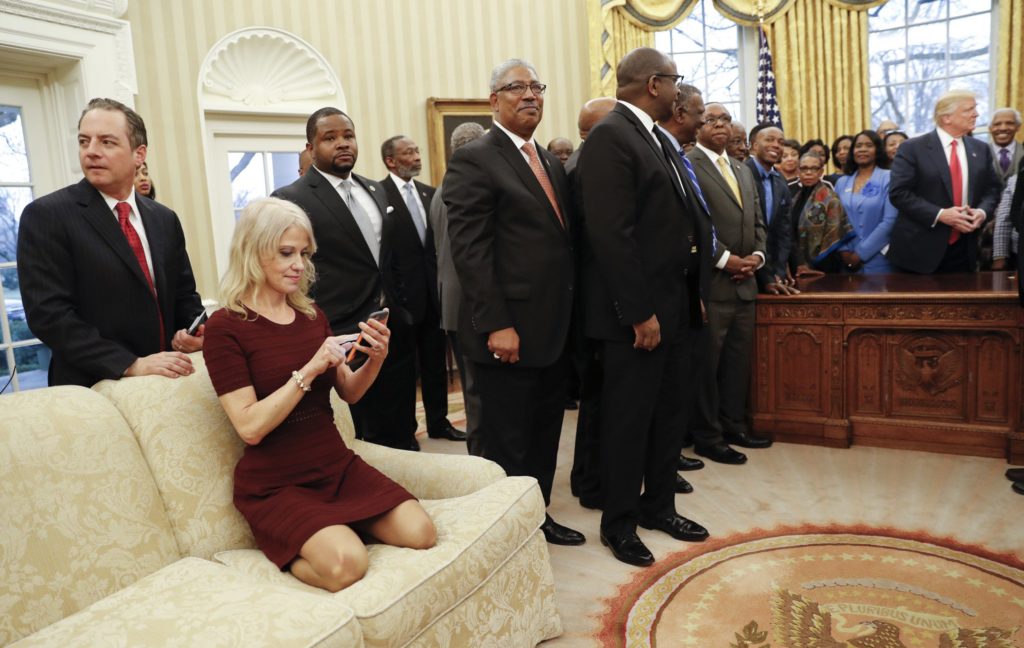
Photos of White House adviser Kellyanne Conway kneeling on an Oval Office couch with her shoes on have sparked an online debate about decorum in the executive mansion. Conway is seen perched on her knees on the couch with her feet behind her in photos taken Monday while President Donald Trump met with leaders of historically black colleges and universities. Some Twitter users were quick to highlight the photos as evidence of a lack of respect for the office from Conway and the Trump administration. Other users have countered with numerous photos of former President Barack Obama resting his feet on the office’s famed Resolute desk at various times during his eight years in office. Conway has yet to weigh in on the criticism. Republished with permission of The Associated Press.
Jeff Sessions says murder uptick threatens progress on crime

Attorney General Jeff Sessions painted a grim vision of violence in America on Tuesday, telling state law enforcement officials that a recent uptick in murders threatens to undo decades of progress. He pledged to “put bad men behind bars.” In his first major policy speech as attorney general, Sessions promised that combating violent crime would be a top priority of the Justice Department. He warned of a surging heroin epidemic with drugs pouring in from Mexico, of police officers made to feel overly cautious for fear of being captured on “viral videos” and of rising homicide rates in big cities. “We are diminished as a nation when any of our citizens fear for their life when they leave their home; or when terrified parents put their children to sleep in bathtubs to keep them safe from stray bullets; or when entire neighborhoods are at the mercy of drug dealers, gangs and other violent criminals,” Sessions said, according to prepared remarks to the National Association of Attorneys General. Sessions promised that his Justice Department would prioritize cases against violent offenders, aggressively enforce immigration laws and work to dismantle drug cartels. He announced the creation of a multi-agency task force, to be headed by the deputy attorney general, to propose crime-fighting legislation and study crime trends. He said the task force would include the heads of Justice Department agencies such as the FBI, Drug Enforcement Administration and the Bureau of Alcohol, Tobacco, Firearms and Explosives. Although it is true, according to FBI statistics, that homicide and other violent crimes have recently been on the rise, the numbers are nowhere close to where they were in the 1980s and early 1990s, and it’s hardly clear that the recent spike reflects a trend rather than an anomaly. Sessions’ early focus on drug and violent crime is a radical departure for a Justice Department that has viewed as more urgent the prevention of cyberattacks from foreign criminals, international bribery and the threat of homegrown violent extremism. Yet Sessions made no apologies for his focus on violent crime, saying he was concerned the increase could be part of a “dangerous new trend.” “We need to enforce our laws and put men behind bars,” said the former Alabama senator and federal prosecutor. “And we need to support the brave men and women of law enforcement as they work day and night to protect us.” He also indicated that, unlike his Democratic-appointed predecessors, he believes some police officers have pulled back on enforcement because of anxiety their actions could be recorded on video and scrutinized by the public. “They’re more reluctant to get out of their squad cars and do the hard but necessary work of up-close policing that builds trust and prevents violent crime,” Sessions said. FBI Director James Comey has floated the idea that the change in police behavior could help explain increases in crime, although former attorneys general Eric Holder and Loretta Lynch both refused to embrace that idea. Past attorneys general have used their appearances before their state counterparts to make policy pronouncements. In 2014, for instance, Holder said state attorneys general were not obligated to defend laws in their states banning same-sex marriage if the laws discriminate in a way forbidden by the Constitution. Republished with permission of The Associated Press.
Divided Republicans await clarity from Donald Trump on key issues
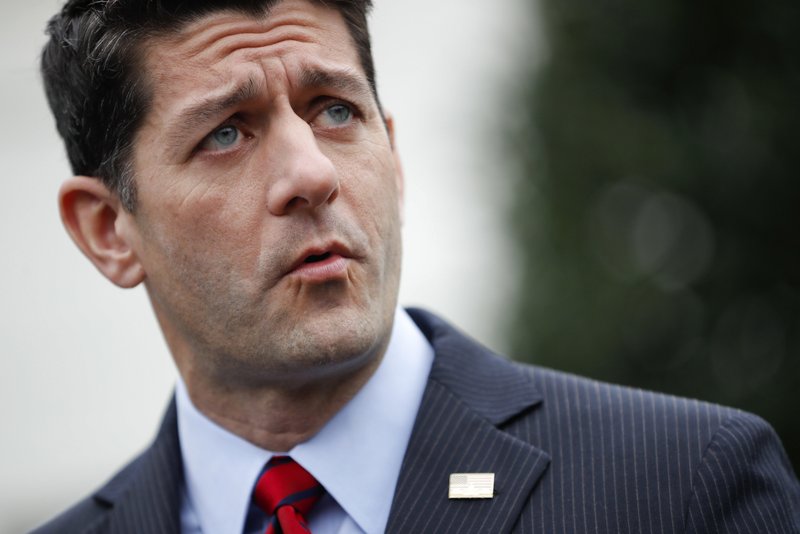
Flailing and divided, congressional Republicans are hoping for clarity from President Donald Trump on key issues like health care when he delivers his first speech to a joint meeting of Congress. It comes as Republicans are discovering, a month into Trump’s administration, how difficult it will be to make good on their many promises now that they control Washington in full. The GOP’s long-stated plans to repeal former President Barack Obama‘s health care law and replace it with something better are running into major difficulties even before legislation is officially released. After a week of raucous town hall meetings, Republicans are back in Washington and key conservatives have begun to denounce House leadership plans based on a leaked draft and reports that the bill would cost more than expected while covering fewer people than the Affordable Care Act. “That dog doesn’t hunt,” GOP Rep. Mark Meadows of North Carolina, head of the conservative House Freedom Caucus, declared flatly of a central element of the plan, tax credits extended regardless of income. Asked whether Republicans were nearing consensus on the overall legislation, Meadows said: “I think we’re a long way from that.” Another influential conservative, GOP Rep. Mark Walker of North Carolina, who chairs the Republican Study Committee, released a statement warning that “There are serious problems with what appears to be our current path to repeal and replace Obamacare.” And three key conservative senators, Mike Lee of Utah, Rand Paul of Kentucky and Ted Cruz of Texas, added their voices in opposition, too, announcing that they will oppose “Obamacare Lite” and “accept nothing less than full repeal of Obamacare.” House Speaker Paul Ryan downplayed the divisions, insisting in an interview Tuesday that Congress is on track with a plan that will lower costs and improve quality. Ryan says the nation doesn’t need Trump to come up with all the specifics. “I see him as more of a chairman, as a president, much like many successful presidents have been, where he gets people around him who are detailed people who can execute those plans,” Ryan told NBC’s “Today” show on Tuesday. But several other House Republicans said they would like to hear Trump sketch a clear vision, or better yet an endorsement of their plan, when he addresses Congress Tuesday night. Ahead of the speech, Republicans had little clarity about what Trump was going to say on the topic. Trump himself remarked Monday that “Nobody knew that health care could be so complicated.” “What the president can say is that the plan that gets presented to the conference is the one you need to vote ‘yes’ on,” said GOP Rep. Bill Flores of Texas. “That’s how he can be helpful.” Unlike the inauguration, Democrats plan to attend the speech, with women in the House wearing white to honor the suffrage movement and also to “stand in solidarity with the women of our nation.” Health care is far from the only issue dividing Republicans. Plans to overhaul the tax code have Republicans tied in knots, while Trump’s promised increases in infrastructure spending promise to provoke major clashes with deficit hawks. A government funding deadline looms two months away and must be met to keep the government from shutting down. And, senior lawmakers were busy throwing cold water on Trump’s budget proposal, which was made public in broad outlines on Monday. The budget envisions a huge $54 billion surge in U.S. military spending while slashing domestic programs and foreign aid. GOP Rep. Mike Simpson of Idaho, a senior member of the Appropriations Committee, said that the budget as presented could not possibly pass the House. “No, no. There’s a lot of members that have a lot of interest in a lot of these programs,” Simpson said. “There’s more to our government than just defense.” Yet for defense hawks, Trump’s Pentagon spending didn’t go far enough. Sen. John McCain of Arizona complained that Trump’s plans represented just a small increase over Obama’s recent Pentagon wish list. And, Trump’s budget would leave large deficits intact while sparing Social Security and Medicare, the entitlements that make up an enormous and growing share of the federal budget. That puts Trump in direct conflict with Ryan and other leading Republicans who’ve long advocated reforming entitlement programs to put them on a more sustainable footing and get deficits under control. It’s unclear how that conflict will get resolved, but several Republicans said Trump would have to address Medicare and even Social Security despite campaign promises to spare them. “If you want to balance the budget, if you want to increase defense spending, at some point in time you’ve got to touch entitlements,” Simpson said. “All you’ve got to do is look at the numbers. This is not rocket science.” Republished with permission of The Associated Press.
Big surge for military in Trump budget, big cuts elsewhere
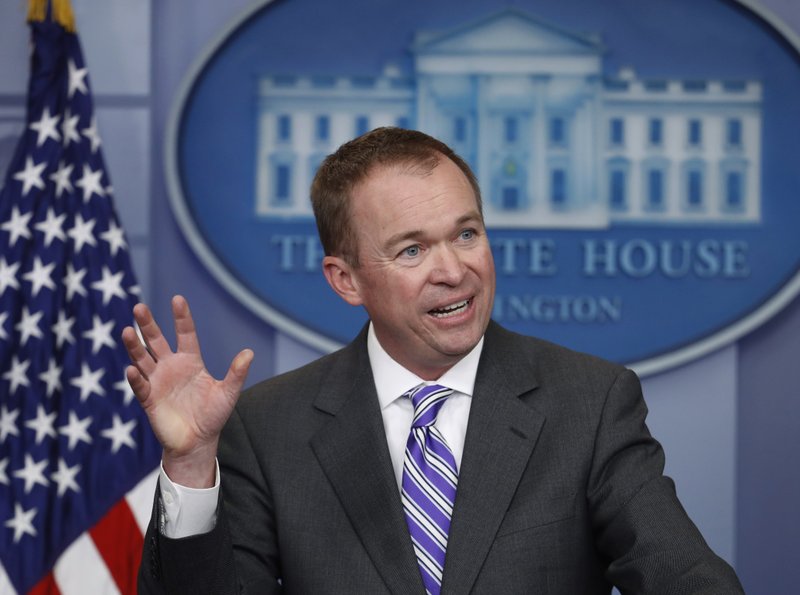
President Donald Trump is proposing a huge $54 billion surge in U.S. military spending for new aircraft, ships and fighters in his first federal budget while slashing big chunks from domestic programs and foreign aid to make the government “do more with less.” The Trump blueprint, due in more detail next month, would fulfill the Republican president’s campaign pledge to boost Pentagon spending while targeting the budgets of other federal agencies. The “topline” figures emerged Monday, one day before Trump’s first address to a joint session of Congress, an opportunity to re-emphasize the economic issues that were a centerpiece of his White House run. Domestic programs and foreign aid would as a whole absorb a 10 percent, $54 billion cut from currently projected levels — cuts that would match the military increase. The cuts would be felt far more deeply by programs and agencies targeted by Trump and his fellow Republicans, like the Environmental Protection Agency as well as foreign aid. Veterans’ programs would be exempted, as would border security, additional law enforcement functions and some other areas. “We’re going to start spending on infrastructure big. It’s not like we have a choice — our highways, our bridges are unsafe, our tunnels,” the president told a group of governors at the White House on Monday. He added, “We’re going to do more with less and make the government lean and accountable to the people.” However, Trump’s final version of the budget is sure to leave large deficits intact — or even add to them if he follows through on his campaign promise for a huge tax cut. His plan faces strong opposition from Democrats, who possess the power to block it. The immediate reaction from Republicans was mixed, with prominent defense hawks like Sen. John McCain of Arizona saying it would do too little to help the Pentagon and fiscal conservatives and supporters of domestic agencies expressing caution. The White House indicated that the foreign aid cuts would be particularly large. Asked about those plans, top Senate Republican Mitch McConnell of Kentucky would say only, “We’ll see how it works out.” A congressional showdown is inevitable later this year, and a government shutdown a real possibility. White House Budget Director Mick Mulvaney said the spike in Pentagon spending would bring the total defense budget to a record $603 billion — and that’s before including tens of billions of dollars for overseas military operations. The United States already spends more on defense than the next seven countries combined, but military leaders have complained repeatedly that aircraft are aging. Congress was told recently that the average age of Air Force aircraft is 27 years, and more than half of the service’s inventory would qualify for antique vehicle license plates in Virginia. “It is a true America first budget. It will show the president is keeping his promises and will do exactly what he said he was going to do,” Mulvaney said. “It prioritizes rebuilding our military, including restoring our nuclear capabilities, protecting the nation and securing the border, enforcing the laws currently on the books, taking care of vets and increasing school choice.” The border wall would cost $2.9 billion in 2018, according to draft documents for the Department of Homeland Security, which assume the agency would hire 500 new members of the Border Patrol and 1,000 new Immigration and Customs Enforcement agents next year. Detention beds for apprehended immigrants would receive $2 billion over current-year spending. The Transportation Security Administration ticket fee would increase by $1 to $6.60 for each one-way flight. Senate Democratic leader Chuck Schumer of New York said, “It is clear from this budget blueprint that President Trump fully intends to break his promises to working families by taking a meat ax to programs that benefit the middle class.” Mulvaney said the plan wouldn’t add to the budget deficit — currently projected to hit about $500 billion next year — but it wouldn’t reduce it, either. The administration again made clear that the government’s largest benefit programs, Social Security and Medicare, would be exempt from cuts when Trump’s full budget submission is released in May. GOP Rep. Mike Simpson of Idaho, a member of the Appropriations Committee, said the large cuts Trump envisions making to domestic programs won’t fly. “There’s a lot of members that have a lot of interest in a lot of these programs,” Simpson said. “There’s more to our government than just defense.” But McCain said Trump’s Pentagon plans would fall short by almost $40 billion and represent just a small increase over former President Barack Obama’s recent Pentagon wish list. “With a world on fire, America cannot secure peace through strength with just 3 percent more than President Obama’s budget,” said McCain, chairman of the Armed Services Committee. On Monday, tentative proposals for the 2018 budget year that begins Oct. 1 were being sent to federal agencies, which will have a chance to propose changes. Before the new budget year, there’s an April 28 deadline to finish up spending bills for the current 2017 budget year, which is almost half over, and any stumble or protracted battle could risk a government shutdown then as well. There’s expected to be an immediate infusion of 2017 cash for the Pentagon of $20 billion or more, and also the first wave of funding for Trump’s promised border wall and other initiatives like hiring immigration agents. Republished with permission of The Associated Press.
