
House passes bill to help VA fill critical job openings with support of entire Alabama delegation

While partisan politics undeniably has its place in the nation’s capital, on Friday members of the U.S. House of Representatives put aside political bickering in order to support an issue everyone agrees on — taking better care of America’s veterans. With the support of the entire Alabama delegation, the House unanimously passed H.R. 1367 in hopes of improving the Department of Veterans Affairs’ (VA) ability to recruit and retain high-quality health care providers and other professionals. The department has tens of thousands of vacant positions, and the bill would help strengthen the VA’s ability to identify staffing shortages, recruit employees to fill vacant positions, quickly on-board new hires, and retain high-performing workers across the country. Additionally, it contains provisions that would improve leadership and accountability throughout VA system, while helping increase the number of veterans in the federal workforce. Also included in the bill, was an amendment added by Alabama-Democrat 7th District U.S. Rep. Terri Sewell. The amendment encourages the VA Secretary to select eligible employees for its Fellowship Program who represent rural areas in order to alleviate the systemic burdens of rural healthcare workforce shortages. “In return for their service, our country has a sacred obligation to care for our veterans and military families,” said Sewell. “Today’s bipartisan support for legislation that strengthens VA hiring practices is an important step towards providing more responsive, more effective healthcare for our nation’s heroes.” Approximately 25 percent of America’s veterans live in rural communities and comprise nearly 11 percent of the adult rural population. Rural veterans account for 36 percent of all VA enrollees, making Sewell’s amendment particularly pertinent. “My amendment helps to ensure that veterans who are serviced by rural VAs have access to healthcare experts with cutting edge experience in the public and private sectors,” Sewell continued. “On top of long driving distances and minimal access to care, workforce shortages make it harder for our rural veterans to get the help they need, when they need it. I want to thank my colleagues on both sides of the aisle for their support, and I look forward to continuing our work to ensure that our nation keeps its promise to the men and women who serve our country.”
Bradley Byrne introduces Irish American History Museum legislation

On St. Patrick’s Day, Alabama 1st District U.S. Rep. Bradley Byrne aptly wants Americans to remember the impact Irish Americans have on the United States throughout our nation’s history and has thus sponsored a bill that will do just that. H.R. 1596, would to pave the way for the creation of a National Museum of Irish American History by establishing a Commission to study the potential creation of the museum. Comprised of 23 members, with seven appointed by the President and the others appointed by House and Senate leadership, the Commission would study a wide range of considerations related to the museum including location, cost, governance structure, and potential exhibits. “Irish Americans have had a profound impact on the United States throughout our nation’s history. From the arts to politics to sports to business, there are so many stories to tell and lessons to be learned,” said Byrne. “On this St. Patrick’s Day, when everyone is Irish, it only makes sense to begin the process of establishing a national museum to honor and preserve the impact Irish Americans have had on our great nation.” The bill is also co-sponsored by co-chairs of the Congressional Friends of Ireland, Rep. Pete King (R-NY) and Richard Neal (D-MA), as well as Congressmen Brian Fitzpatrick (R-PA), Stephen Lynch (D-MA), Patrick Meehan (R-PA), James McGovern (D-MA), and Tim Murphy (R-PA).
Documents detail Michael Flynn payments from Russian interests
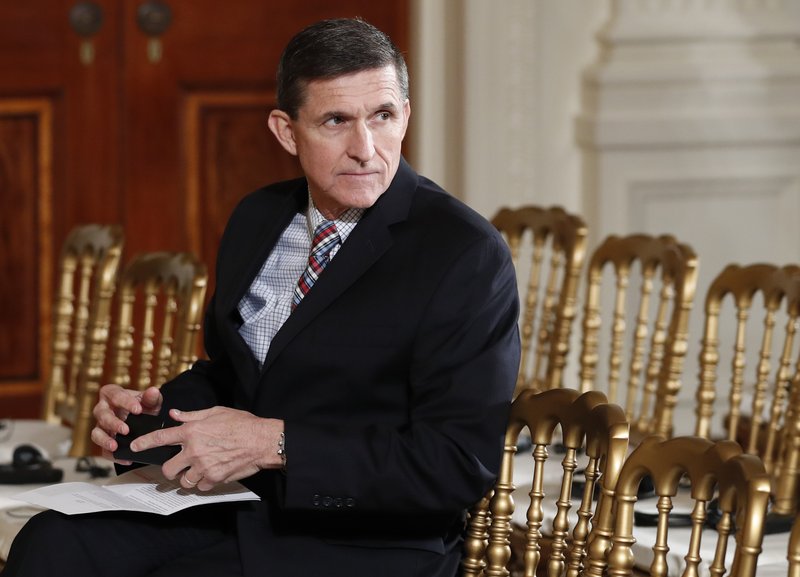
Former national security adviser Michael Flynn was paid more than $67,000 by Russian companies before the presidential election, according to documents released by a Democratic congressman. Rep. Elijah Cummings of Maryland asked the Trump administration to provide a comprehensive record of Flynn’s contacts with foreign governments and interests. Flynn’s ties to Russia have been scrutinized by the FBI and are part of House and Senate committee investigations into contacts between Trump campaign officials and Russians. The investigation comes as U.S. intelligence officials say Russia meddled in the recent election by hacking Democratic emails. According to the documents, Flynn accepted $33,750 from Russia’s government-run television system for appearing at a Moscow event in December 2015 — a few months before Flynn began formally advising President Donald Trump’s campaign — and thousands more in expenses covered by the network and in speech fees from other Russian firms. Flynn’s financial relationship with the RT network may violate a constitutional provision against gifts from foreign governments and Flynn should pay the money to the U.S. government, said Cummings, senior Democrat on the House Oversight and Government Reform Committee. Last week, Flynn registered with the Justice Department as a foreign agent whose lobbying work may have benefited the Turkish government. The lobbying occurred before Election Day, from August to November, during the period when Flynn was Trump’s campaign adviser. Trump fired Flynn as national security adviser last month, saying the former U.S. Army lieutenant general misled Vice President Mike Pence and other White House officials about his conversations with Russia’s ambassador to the U.S. The newly-released files show that RT — designated by the U.S. intelligence community as a propaganda arm for Russia’s government — also paid for luxury hotel stays and other expenses incurred by Flynn and his adult son, Michael Flynn Jr., during the Moscow trip. Flynn, who was fired in August 2014 as chief of the U.S. Defense Intelligence Agency, sat next to Russian President Vladimir Putin during the climax of the televised RT gala. Cummings said Flynn’s acceptance of payments from RT violated the emoluments provision of the U.S. Constitution, which prohibits retired military officers from accepting gifts from foreign powers. In letters sent to Trump, Defense Secretary James Mattis and FBI Director James Comey, Cummings said Flynn “violated the Constitution by accepting tens of thousands of dollars from an agent of a global adversary that attacked our democracy.” Cummings was referring to the intelligence agencies’ conclusion that Russia instigated cyber-hacking of Democratic party officials and organizations in the months before the presidential election. The Defense Department has said retired military officers are covered by the emoluments clause because they could be recalled to military service. The department has also noted that the prohibition on accepting foreign gifts includes commercial groups controlled by foreign governments or others “considered instruments of the foreign government.” Anna Belkina, RT’s head of communications, said Friday that the network’s payments to Flynn through his speakers’ group were “standard practice.” Belkina added that the committee’s disclosures of payments and emails involving its officials exposed the network’s confidential “exchanges and negotiations.” She did not address U.S. charges that RT is a propaganda outlet. A Flynn spokesman said Flynn informed the DIA before he went to Moscow and after his return. Price Floyd, a spokesman for Flynn, said that “as many former government officials and general officers have done, Gen. Flynn signed with a speakers’ bureau and these are examples of that work.” DIA spokesman Jim Kudla said Thursday that Flynn did report to the agency in advance that he was traveling to Moscow “in accordance with standard security clearance procedures.” Separately, the Army is looking into the matter of Flynn’s reporting and compensation, but has found no answers yet, according to spokesman Col. Pat Seiber. In an addition to the RT payments, Flynn was also paid $11,250 for two speeches in Washington — one in August for Volga-Dnepr Airlines, a Russian charter cargo airline, and a second, in September, for Kaspersky Government Security Solutions Inc., a U.S. subsidiary of Kaspersky Lab, a Russian-based cybersecurity firm. Kaspersky on Friday on Friday confirmed that its subsidiary had paid Flynn to speak at a Washington conference on cybersecurity in 2015, but declined to give a specific amount. In a statement, Kaspersky said it was a private company with no ties to any government, but is “proud to collaborate with the authorities of many countries, as well as international law enforcement agencies in the fight against cybercrime.” Flynn and his son also received an unspecified amount in expenses paid by RT for business-class flights to and from Moscow and for their three-day stay at the Hotel Metropol. RT representatives said the stay offered tours of the Kremlin, RT headquarters, the Bolshoi Theater and art museums. Another attendee who took part in some of the tours told The Associated Press they did not see Flynn at those events. Republished with permission of The Associated Press.
FACT CHECK: Who needs a wall? Donald Trump says border is strong
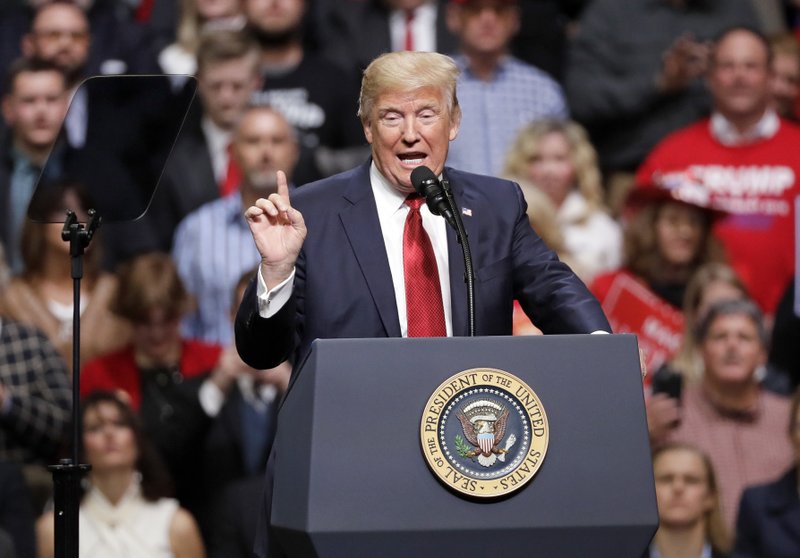
President Donald Trump says the border with Mexico is already “getting extremely strong” and would-be illegal crossers are giving up because they think, “we can’t get in.” All without the wall he promises to build, or any reported boost in deportations, or any surge in patrol agents. The boast was one of a number at a Tennessee rally Wednesday night that did not track with the facts. A look at some: TRUMP: “And by the way, aren’t our borders getting extremely strong? … We’ve already experienced an unprecedented 40 percent reduction in illegal immigration on our southern border, 61 percent — 61 percent since Inauguration Day. Sixty-one percent; think about it. And now people are saying we’re not going to go there anymore ’cause we can’t get in, so it’s going to get better and better.” THE FACTS: There’s not much evidence yet that Trump is driving down illegal immigration. It’s true that the number of border arrests dropped about 44 percent from January to February. But it’s too early to know if that will hold or what prompted it. Monthly and seasonal fluctuations are common. Trump hasn’t expanded the ranks of the Border Patrol or any other immigration or border-security agency. His orders haven’t yet changed the way the Border Patrol operates and so far there is no evidence that more people are being deported. The wall he’s promised to build isn’t up. The number of border arrests is the primary measure of the flow of illegal immigration at the border, though an imperfect one. If fewer people are arrested, that’s taken to mean fewer people are trying. Over recent decades, presidents have tried to have it both ways. They cite low arrest numbers to illustrate how their policies are dissuading people from crossing illegally. When arrest numbers are high, they say that’s because they’re being aggressive in enforcing the border. ___ TRUMP: Speaking of the appeals court that on Wednesday overturned his latest action limiting immigration from six Muslim-majority countries, “That 9th Circuit — you have to see. Take a look at how many times they have been overturned with their terrible decisions. Take a look.” THE FACTS: Other appeals courts have seen their decisions overturned at a higher rate than the 9th Circuit. In the most recent full term, the Supreme Court reversed eight of the 11 cases it heard from the San Francisco-based court. But the Atlanta-based 11th Circuit went 0 for 3 — that is, the Supreme Court reversed all three cases it heard from there. And over the past five years, five federal appeals courts were reversed at a higher rate than the 9th Circuit. The 9th Circuit is by far the largest of the 13 federal courts of appeals. In raw numbers, more cases are heard and reversed from the 9th Circuit year in and year out. But as a percentage of cases the Supreme Court hears, the liberal-leaning circuit fares somewhat better, according to statistical compilations by the legal website Scotusblog. The very act of the Supreme Court’s agreeing to hear a case means the odds are it will be overturned; the high court reverses about two-thirds of the cases it hears. ___ TRUMP: “Even liberal democratic lawyer Alan Dershowitz, good lawyer, just said that we would win this case before the Supreme Court of the United States.” THE FACTS: Not exactly. Dershowitz predicted Trump would win a Supreme Court showdown over his immigration action if the court focuses heavily on the law that gives him broad authority on the matter. If the court takes Trump’s campaign statements into account, though, Dershowitz told CNN, “he will lose.” Many experts think the case would be close because the president does have a lot of leeway in immigration. But if a policy is seen as having a religious test, that could run afoul of the First Amendment in the eyes of the justices. In the campaign, Trump openly called for keeping Muslim visitors out of the country. As president, his executive action is not explicitly against Muslims but would apply to people coming from six countries with mainly Muslim populations. ___ TRUMP: Speaking of the request in his new budget for a $54 billion increase for the Pentagon, “Our budget calls for one of the single largest increases in defense spending history in this country.” THE FACTS: Trump’s proposed increase, 10 percent higher than the Defense Department’s current budget, is large, but a long way from the highest boost ever. In just the past 40 years, there have been eight years with larger increases in percentage terms than the one he’s now proposing. In the early 1980s, for example, defense spending was increased dramatically as the Cold War with the Soviet Union intensified. The 1981 Pentagon budget saw a nearly 25 percent increase. And the proposed expansion pales in comparison with earlier times. Military spending consumed 43 percent of the economy in 1944, during World War II, and 15 percent in 1952, during the Korean War. It was 3.3 percent in 2015, says the World Bank. ___ TRUMP: “I’ve already authorized the construction of the long-stalled and delayed Keystone and Dakota Access pipeline. I’ve also directed that new pipelines must be constructed with American steel. They want to build them here, they use our steel. We believe in two simple rules. Buy American and hire American.” THE FACTS: His executive action calls for U.S. steel and pipes to be used “to the maximum extent possible and to the extent permitted by law.” With all that wiggle room, it’s not a guarantee of U.S. content. It’s also not the final word on the matter — the memorandum gives the commerce secretary until July to deliver a plan supporting the initiative. ___ TRUMP: “We are going to repeal and replace horrible, disastrous Obamacare. If we leave Obamacare in place, millions and millions of people will be forced off their plans” as insurers flee the market. “It’s a catastrophic situation. And there’s nothing to compare anything
Rex Tillerson: Use of pre-emptive force an option with NKorea
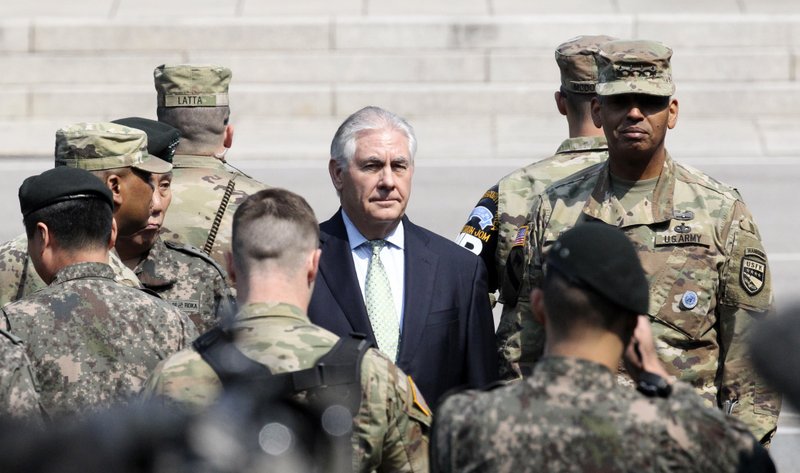
Secretary of State Rex Tillerson said Friday it may be necessary to take pre-emptive military action against North Korea if the threat from their weapons program reaches a level “that we believe requires action.” Tillerson outlined a tougher strategy to confront North Korea’s nuclear threat after visiting the world’s most heavily armed border near the tense buffer zone between the rivals Koreas. He also closed the door on talks with Pyongyang unless it denuclearizes and gives up its weapons of mass destruction. Asked about the possibility of using military force, Tillerson told a news conference in the South Korean capital, “all of the options are on the table.” Trump weighed in on the matter Friday on Twitter: “North Korea is behaving very badly. They have been ‘playing’ the United States for years. China has done little to help!” Tillerson said the U.S. does not want a military conflict, “but obviously if North Korea takes actions that threaten South Korean forces or our own forces that would be met with (an) appropriate response. If they elevate the threat of their weapons program to a level that we believe requires action that option is on the table.” But he said that by taking other steps, including sanctions, the U.S. is hopeful that North Korea could be persuaded to take a different course before it reaches that point. Past U.S. administrations have considered military force because of North Korea’s development of nuclear weapons and ballistic missiles to deliver them, but rarely has that option been expressed so explicitly. North Korea has accelerated its weapons development, violating multiple U.N. Security Council resolutions and appearing undeterred by tough international sanctions. The North conducted two nuclear test explosions and 24 ballistic missile tests last year. Experts say it could have a nuclear-tipped missile capable of reaching the U.S. within a few years. Tillerson met Friday with his South Korean counterpart Yun Byung-se and its acting president, Hwang Kyo-ahn on the second leg of a three-nation trip which began in Japan and will end in China. State Department officials have described it as a “listening tour” as the administration seeks a coherent North Korea policy, well-coordinated with its Asian partners. Earlier Friday, Tillerson touched down by helicopter Friday at Camp Bonifas, U.S.-led U.N. base about 400 meters (438 yards) from the Demilitarized Zone, a Cold War vestige created after the Korean War ended in 1953. He then moved to the truce village of Panmunjom inside the DMZ, a cluster of blue huts where the Korean War armistice was signed. Tillerson is the latest in a parade of senior U.S. officials to have their photos taken at the border. But it’s the first trip by the new Trump administration’s senior diplomat. The DMZ, which is both a tourist trap and a potential flashpoint, is guarded on both sides with land mines, razor wire fence, tank traps and hundreds of thousands of combat-ready troops. More than a million mines are believed to be buried inside the DMZ. Land mine explosions in 2015 that Seoul blamed on Pyongyang maimed two South Korean soldiers and led the rivals to threaten each other with attacks.” Hordes of tourists visit both sides, despite the lingering animosity. The Korean War ended with an armistice, not a peace treaty, which means the Korean Peninsula remains in a technical state of war. President Donald Trump is seen as seeking to examine all options — including military ones — for halting the North’s weapons programs before Pyongyang becomes capable of threatening the U.S. mainland. Tillerson declared an end to the policy “strategic patience” of the Obama administration, which held off negotiating with Pyongyang while tightening of sanctions but failed to prevent North Korea’s weapons development. Tillerson said U.S was exploring “a new range of diplomatic, security and economic measures.” Central to the U.S. review is China and its role in any bid to persuade Pyongyang to change course. China remains the North’s most powerful ally. Tillerson will meet with top Chinese officials including President Xi Jinping in Beijing this weekend. While the U.S. and its allies in Seoul and Tokyo implore Beijing to press its economic leverage over North Korea, the Chinese have emphasized their desire to relaunch diplomatic talks. Tillerson, however, said that “20 years of talks with North Korea have brought us to where we are today.” “It’s important that the leadership of North Korea realize that their current pathway of nuclear weapons and escalating threats will not lead to their objective of security and economic development. That pathway can only be achieved by denuclearizing, giving up their weapons of mass destruction, and only then will we be prepared to engage with them in talks,” he said. Six-nation aid-for-disarmament talks with North Korea, which were hosted by China, have in fact been stalled since 2009. The Obama administration refused to resume them unless the North re-committed to the goal of denuclearization, something that North Korea has shown little interest in doing. Tillerson urged China and other countries to fully implement U.N. sanctions on North Korea. He also accused China of economic retaliation against South Korea over the U.S. deployment of a missile defense system. He called that reaction “inappropriate and troubling” and said China should focus on the North Korean threat that makes the deployment necessary. China sees the system as a threat to its own security. Last week, North Korea launched four missiles into seas off Japan, in an apparent reaction to major annual military drills the U.S. is currently conducting with South Korea. Pyongyang claims the drills are a rehearsal for invasion. Republished with permission of The Associated Press.
Many Donald Trump voters would feel program cuts in budget proposal
The closure of a regional airport could force residents of a small town in upper Michigan to drive eight hours to catch a flight. The elimination of funding to keep the Great Lakes clean could hurt business at a waterside Ohio boating club. Cuts to the nation’s flood insurance program could mean greater losses after a storm for homeowners on Florida’s Gulf Coast. In his first budget blueprint since taking office, President Donald Trump held to his promise to build up the U.S. military while slashing domestic spending — even for programs that benefit the rural and lower-income Americans who voted for him last November. “Some people might think it’s a betrayal,” said Eric Waara, the Republican city manager of the 7,000-person town of Houghton on Michigan’s Upper Peninsula, who said he hoped the proposal was just a negotiating tactic. “I think that we all hope it’s the first small step until something better.” Houghton sits more than 200 miles from a major highway and for many residents the Houghton County Memorial Airport is their connection to the outside world. Trump’s proposed elimination of the Transportation Department’s Essential Air Service program, or EAS, could force the airport to close or dramatically curtail service, leaving residents with a four-hour drive to Green Bay, Wisconsin, or eight hours to Chicago to catch a flight, Waara said. The administration said it would save $175 million a year. Trump carried Houghton County with more than 54 percent of the vote as he became the first Republican to win Michigan since 1988. He got more than 50 percent of the vote in 86 of the 111 communities served by EAS, according to an Associated Press analysis of voting data. The proposed $1.15 trillion budget distills much of Trump’s sweeping campaign rhetoric into a set of hard choices and cold priorities. Trump is calling on Congress to boost defense spending by $54 billion, a move popular with many Republicans. A wall along the border with Mexico, a core campaign promise, would receive $4 billion to start construction. Trump’s campaign promises to gut ineffective programs and shrink a bloated bureaucracy translated into a plan that cuts environmental protections programs, community development funding, housing vouchers, scientific research, a commission to create economic opportunities in Appalachia and other programs. Funding for popular social services like Meals on Wheels, which provides food to the elderly, and after-school programs for children, also are on the chopping block. The outline — the start of negotiations with Congress — leaves untouched Social Security, Medicare and Medicaid spending. “Rural America stepped up to the plate behind the president in his last election, and we’re wholeheartedly behind him. We need to make sure that rural America at least gets its fair share,” said Alabama Rep. Robert Aderholt, the Republican chairman of the House agriculture appropriations subcommittee. Aderholt, who represents one of the highest Trump voting congressional districts in the country, said he’s generally supportive of less federal spending but has concerns about cuts that would hurt several rural development programs. “It doesn’t really reflect President Trump’s support for rural communities,” he said. Trump administration officials said the proposal supports a desire to give states more flexibility and to protect taxpayers from seeing their dollars wasted. “You’re only focusing on half of the equation, right?” Office of Management and Budget Director Mick Mulvaney said when asked about the cuts. “You’re focusing on recipients of the money. We’re trying to focus on both the recipients of the money and the folks who give us the money in the first place.” The budget proposal offered the promise of increased spending and services in some parts of Trump Country. The plan calls for a $500 million increase in spending to counter opioid epidemic, an acute problem in many rural communities. It proposes an additional $4.4 billion for veterans health care, including money to extend a program that allows eligible veterans to seek care from a private doctor outside the VA network. Trump’s proposed military buildup could be an economic boon to military contractors and military communities. In the areas surrounding Fayetteville, North Carolina, what’s good for Fort Bragg is good for the community. “We can’t help but look upon the budget favorably,” said Robert Van Geons, head of Fayetteville-Cumberland County Economic Development Corp. Two of the counties that make up the sprawling Fort Bragg delivered more than 60 percent of its votes for Trump. Others saw economic worries in the proposal. The blueprint would cut almost all the $300 million in funding for the Great Lakes Restoration Initiative, raising concern among some in the Ohio counties along Lake Erie. The initiative was started to help limit invasive species such as the Asian carp, among other threats. It was meant to reduce dangers such as the outbreak of bacteria in 2014 that contaminated drinking water for nearly 500,000 people living around Toledo. Trump’s budget plan says that these programs should be the responsibility of state and local governments. At Catawba Island Club, a lakeside club with hundreds of boat slips, a golf course and 100 year-round employees in Ohio’s Ottawa County, President Jim Stouffer said a rise in pollution could hurt his business. “Our reason for being is our members being able to get out on the water,” Stouffer said. Trump won the county by 57 percent of the vote on his way to carrying Ohio. The budget plan would also cut $190 million for mapping flood hazards for the National Flood Insurance Program, as well as grants to fund projects that would reduce damage from natural disasters. Without accurate maps of floodplains and the engineering projects funded by these grants, the costs from flood losses and natural disasters could be even higher for homeowners, businesses and taxpayers, said Don Griffin, a vice president at the Property Casualty Insurers Association of America. The three states with the most flood insurance policies, according to the government, are Florida, Texas and Louisiana, all of which supported Trump. Republished with permission of
Darryl Paulson: Do universities discriminate in hiring?
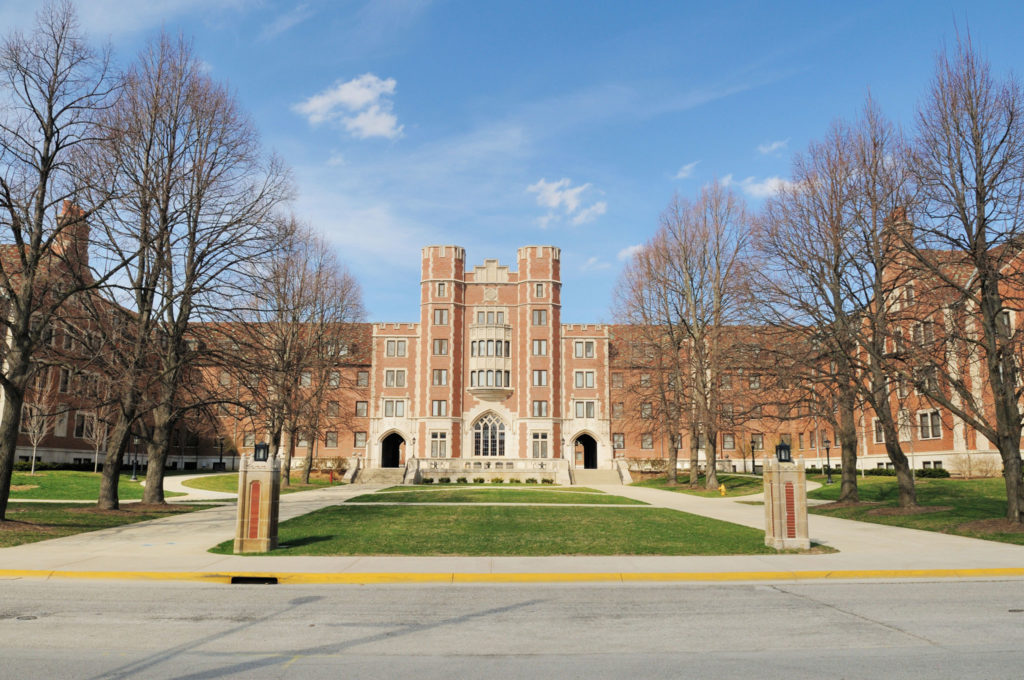
Universities are touted as bastions of diversity whose prime role is to encourage students to engage in critical thinking, ask tough questions and expose themselves to a diversity of ideas and opinions. If that is the mission of the university, they have dismally failed. Diversity is respected, up to a point, as long as it doesn’t include ideological diversity. As liberal commentator Nicholas Kristof observed in a recent New York Times op-ed, “We progressives believe in diversity, and we want women, blacks, Latinos, gays and Muslims at the table — er, so long as they aren’t conservative.” Welcome to the modern American university, where almost every type of diversity is encouraged, except for ideological diversity. Try challenging liberal dogma as a student or professor, and you will likely find yourself facing counseling and academic discipline. Where are all the conservative faculty? How many conservative faculty did you, your children or grandchildren encounter as part of their university education? If you are like most, the answer is very few. In fact, two scholars recently found that there were twice as many Marxists in the humanities and social sciences than Republicans. Most university will have their token conservative professor. Harvard has Harvey Mansfield, Princeton has Robert George, and Yale has Donald Kagan. I was one of the few conservative professors at the University of South Florida, and doubt that I would have been hired if my conservative views were known. I believe I was hired because I had spent the prior year as a National Teaching Fellow at Florida A & M University. Anyone who taught at a historically black university had to be a liberal. In addition, my doctoral dissertation was on the emergence of the black mayor in America in the aftermath of the civil rights movement. Only a liberal would be interested in writing about African-American politicians. John Hasnas, a Georgetown University professor recently explained the faculty recruitment process to the Wall Street Journal. Every recruitment meeting, wrote Hasnas, begins with a strong exhortation from the administration about diversity and the need for more woman and minority faculty. No recruitment committee has ever been instructed about the need to have a more ideologically diverse faculty. How rare are conservative professors? Where the nation is fairly evenly split between Republicans and Democrats, a recent study found that only 13 percent of law school faculty are Republicans. A similar study by the Georgetown Law Journal found that 81 percent of law professors at the top 21 law schools donated money to Democrats and 15 percent to Republican candidates. Daniel Klein, an economist at George Mason University, studied 1,000 professors around the nation and found Democrats outnumbered Republicans seven to one in the humanities and social sciences. In anthropology and sociology, the margin was 30 to 1. Johnathan Haidt, a renowned social psychiatrist at New York University, was so startled by the lack of conservative academics that he started a website, Heterodox, to foster more ideological diversity. In his own profession, 96 percent of social psychiatrists were left of center, 3.7 percent were centrist, and 0.03% were right of center. How would you like to be that sole right-of-center social psychiatrist? In one of the largest studies of ideological diversity on college campuses, the North American Academic Study Survey (NAASS) examined 1,643 faculty from 183 universities in 1999. 72 percent of faculty described themselves as liberals and 15 percent as conservatives. The same year as the NAASS study, the Harris Poll found that 18 percent of Americans described themselves as liberals and 37 percent called themselves conservative. Clearly, academia does not mirror the nation. Even in supposedly conservative academic enclaves, liberals outnumbered conservatives by 51 to 19 percent in engineering and 49 to 39 percent in business. Why are there so few conservative faculty on college campuses? Alan Kors, a conservative professor at Penn, argues that conservatives face a “hostile and discriminatory” environment. Conservatives seeking academic jobs are “outed” by their group associations, major professors, or dissertation topic. Not long ago, Harvard University found that only two of its doctoral students in the Government Department failed to get an academic placement. Harvey Mansfield advised both students, widely recognized for his conservative views. Liberals argue that there is no discrimination against conservatives. George Lakoff, a liberal linguistics professor at Berkeley, argues that liberals seek academic careers because “unlike conservatives, they believe in working for the public good and social justice.” In other words, conservatives are simply out for the money while liberals seek the betterment of society. Lakoff is proof positive of why we need more conservatives in academia. Look for Part II: Do universities discriminate? – The attack on free speech ••• Darryl Paulson is Professor Emeritus of Government at the University of South Florida in St. Petersburg.
