
What’s next for the state of Alabama
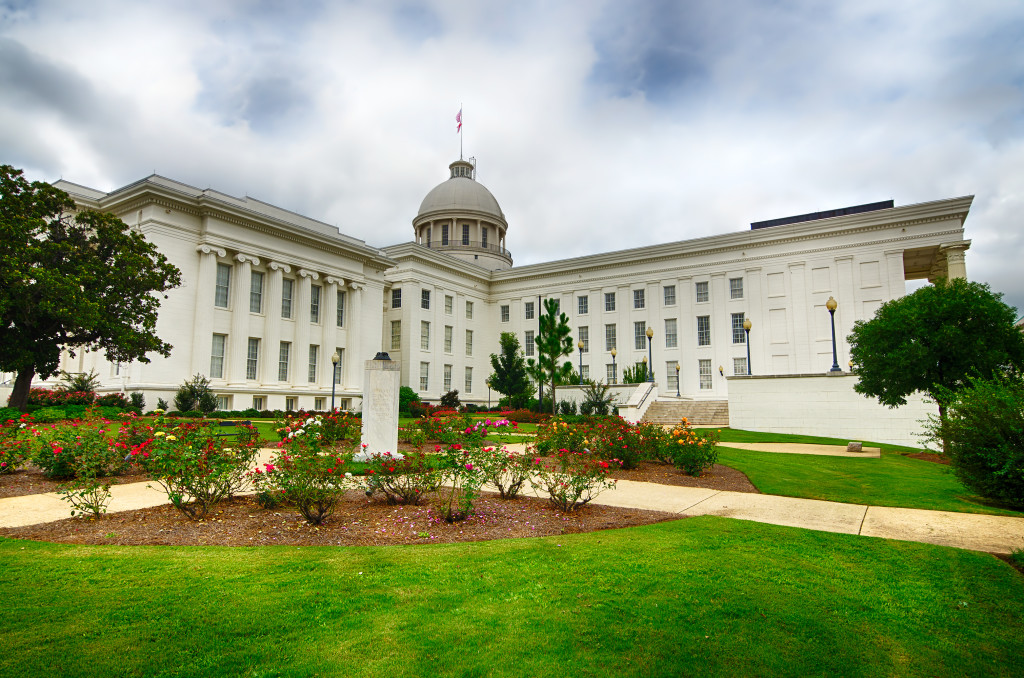
As the dust settles from Alabama Gov. Robert Bentley’s resignation last week, Hastings Wyman writes about what’s next for the state in an article for Southern Political Report Online. Gov. Kay Ivey has had a successful first week in office according to Marty Connors, former chairman of the Alabama Republican Party. “She fired the top cop, (Stan Stabler, a Bentley appointee who headed the Alabama Law Enforcement Agency). “She fired Ron Sparks,” whom Bentley appointed to head an agency for Rural Economic Development. “And she fired Rebekah Mason’s husband, which is pretty significant.” Still the first, and possibly most important question going forward is whether Ivey will change the special election date for the U.S. Senate seat currently held by Luther Strange. Many Alabamians view Strange’s appointment to the seat, and the unusually long incumbency given to him without an election, as just another example of the Bentley’s scandal-plagued tenure as governor. Ivey has the power to move the election to this year, according to the secretary of state, and that move could shake up Alabama politics in a big way. Ousted former state chief justice Roy Moore, who is currently deciding between running for governor or senate, could be enticed to run for the seat if its moved up. The other major political happening will be the emerging contest for governor in 2018. “Everything is very fluid right now,” says Connors. “How Kay Ivey governs will affect the next governor’s race… Had Kay not assumed the governorship, I don’t believe she would run for governor. Now that she’ll have the power of incumbency, she might,” he said. When it comes to the immediate future though, Wyman writes that Ivey and the Legislature “must put the Bentley matter behind them and move forward.” State Auditor Jim Ziegler still has some loose ends to tie up, including auditing the contents of three official residences used by Bentley once he’s removed his belongings, but it looks like the state is moving forward. “Ivey has already begun focusing on the state government’s business at hand, signing legislation that would give juries sole discretion whether to impose the death penalty, a power previously shared with presiding judges. And the GOP-controlled legislature now returns to a full agenda, which includes redrawing the lines in twelve legislative districts, funding the state’s Education Trust Fund, and passing the General Fund Budget,” Wyman writes.
Birmingham celebrates its place in history with Civil Rights National Monument sign unveiling
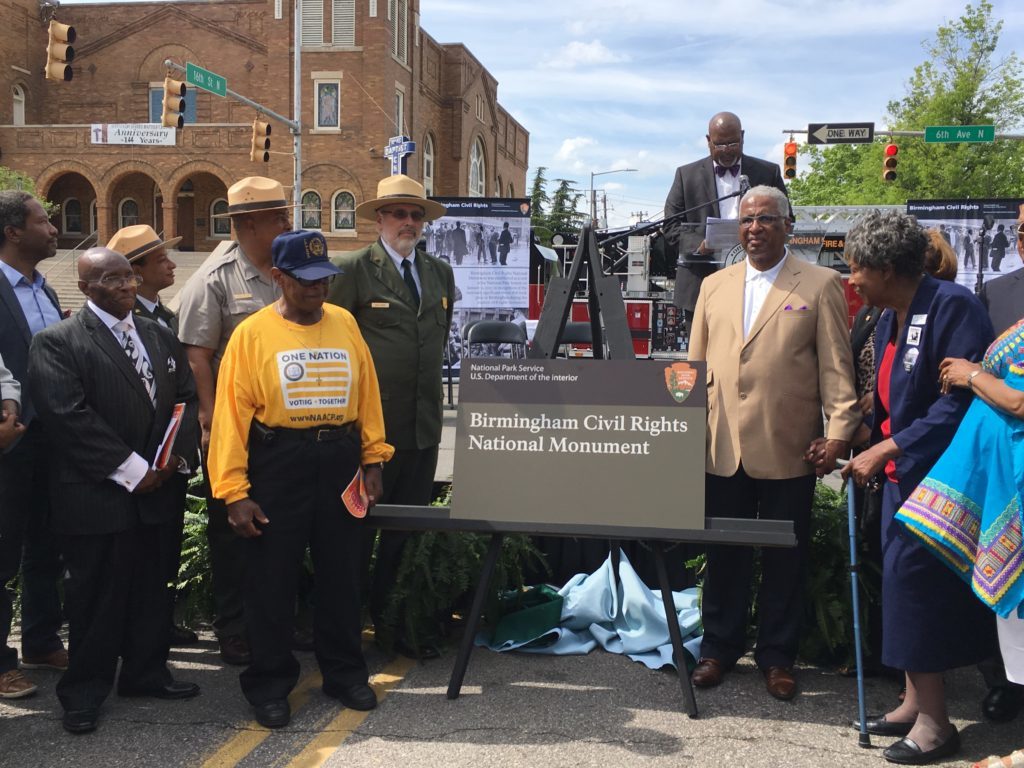
The new sign for the Birmingham Civil Rights National Monument was unveiled during a dedication ceremony Saturday afternoon in downtown Birmingham. For Alabama 7th District U.S. Rep. Terri Sewell getting the site recognized as a national monument has been a labor of love. Since 2015, she’s worked to bring stakeholders and federal policymakers together in the Magic City in support of creating the Birmingham Civil Rights National Monument. In 2016, Sewell continued her efforts and introduced legislation, supported by the entire Alabama congressional delegation, urging creation of a national civil rights monument in Birmingham. Later that year, Sewell and Birmingham Mayor William Bell hosted Interior Secretary Sally Jewell and National Park Service Director Jonathan Jarvis for a tour of Birmingham historical sites and a public meeting with the Birmingham community. Her efforts finally paid off when President Barack Obama designated the site the Birmingham Civil Rights District as a national monument just days before leaving office in January 2017 using his authority under the Antiquity Act. “Birmingham was the epicenter of America’s civil rights movement, and the Birmingham Civil Rights National Monument recognizes the remarkable contributions made by the foot soldiers and leaders of the movement,” said Sewell, who was unable to attend the event due of the funeral of her father. “We can never repay the debts we owe to those who fought, bled, and died to secure the blessings of liberty, equality, and justice for all Americans during the struggle for civil and voting rights. The Birmingham Civil Rights National Monument will help preserve their stories for future generations. I am thrilled at the investments the National Park Service is making in Birmingham as part of the national commitment to protecting the legacy of our nation’s civil rights heroes.” The national monument — which includes the Sixteenth Street Baptist Church, Bethel Baptist Church, the Birmingham Civil Rights Institute (BCRI), the A.G. Gaston Motel, parts of the 4th Avenue Business District and Kelly Ingram Park, where protesters were hosed down in unimaginable showdowns during the civil rights movement — highlights civil rights demonstrations in Birmingham in 1963 held against legalized segregation. “We can read textbooks and learn about different things, but I still think American citizens learn best when they go see, touch and feel the history that the National Park Service is preserving for future generations,” said Reginald Tiller, acting superintendent of the national park, in a video for the City of Birmingham.
Luther Strange tours Anniston’s BAE Systems Forge Facility
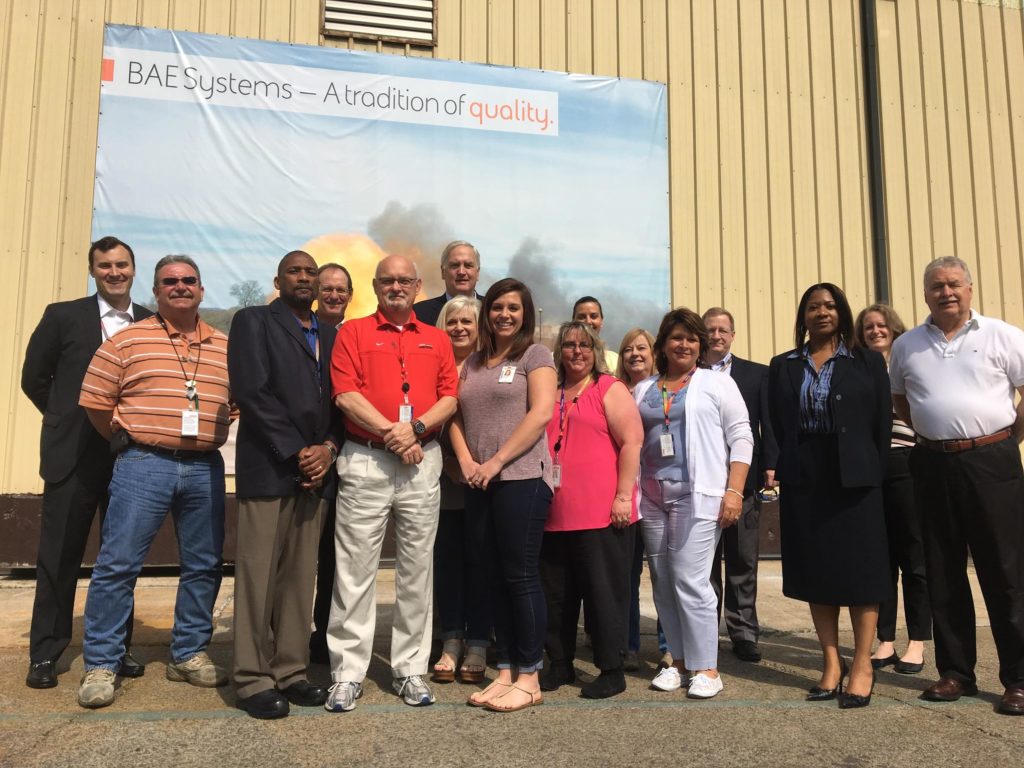
U.S. Sen. Luther Strange made a stop in Anniston last week to tour the BAE Systems Forge Facility to learn more about the operation and how it contributes to national security, as well as to the local economy and job market. “Almost everywhere you go in Alabama, you can find Alabamians working hard to keep our nation secure, either by serving in our military, or helping to provide the resources our armed forces need to do their job,” said Strange, a member of the Senate Armed Services Committee. “The BAE Systems Forge Facility is impressive to say the least, as it their dedication to their employees and local community.” BAE Systems employs over 260 people across three locations in Anniston and is the U.S. industrial base for combat systems track, producing the majority of the forged track components for the U.S. inventory of tracked vehicles. “We were excited to host Senator Strange at the BAE Systems Forge Facility and look forward to working with him in support for the nation and our employees in Anniston,” said Max Dodd, BAE Systems Operations Manager. “During the visit we were able to show the Senator how his position as a Member of the Senate Armed Services Committee positively impacts Anniston combat vehicle programs, such as the Armored Multi-Purpose Vehicle.” The Anniston facility also manufactures torsion bars and other suspension components for combat vehicles and for the mining and transportation industry. It has designed and/or developed every major track systems fielded by the U.S. Army in the past 35 years and over 16 million track shoes manufactured at the location.
Neil Gorsuch asks his first questions from Supreme Court bench
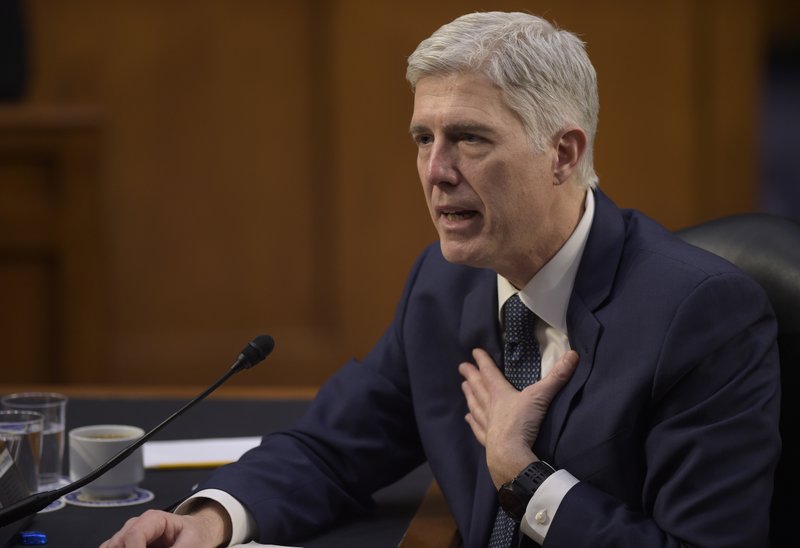
Supreme Court Justice Neil Gorsuch wasn’t shy Monday about making his voice heard as he took his seat on the bench for the first time to hear arguments. The new justice took less than 15 minutes before asking questions during an employment discrimination case. Gorsuch and his colleagues were hearing cases for the first time since President Donald Trump‘s pick was sworn in April 10. The case before the justices involved a technical issue about the process for a federal worker to appeal his discrimination claim. Gorsuch asked the worker’s lawyer Christopher Landau four questions in a row about the wording of a statute, saying he was “sorry for taking up so much time.” Gorsuch later sparred with Justice Department lawyer Brian Fletcher over the meaning of the Civil Service Reform Act, sticking to his reputation for focusing on the text of the law. “Wouldn’t it be a lot easier if we just followed the plain text of the statute,” Gorsuch asked. It was the first of three hour-long arguments the high court was set to hear on Monday. The court is back to its full contingent of nine members after being short-handed since Justice Antonin Scalia‘s death more than 14 months ago. The session started with Chief Justice John Roberts welcoming Gorsuch and wishing him “a long and happy career in our common calling.” Gorsuch responded briefly to thank Roberts for the “warm welcome.” Gorsuch took his seat at the end of the bench next to Justice Sonia Sotomayor, with the two sharing a laugh together before arguments began. Republished with permission of The Associated Press.
Victory for political speech in Alabama, in-person ethics training requirement dropped

Move over burdensome ethics requirements, a victory for free speech is coming through. On Monday, the Virginia-based public interest law firm Institute for Justice (IJ) announced that following their federal lawsuit, that they filed on behalf of Maggie Ellinger-Locke and the Marijuana Policy Project (MPP), the Alabama Ethics Commission dropped its burdensome, in-state training requirement for private citizens who want to speak with state lawmakers. Previously, Alabama law required all registered lobbyists — and the state has expansive definition of “lobbyist” would — to physically attend an ethics class offered only four times a year and in only one place – Montgomery. This requirement presented a major hurdle for Maggie Ellinger-Locke, who works at the MPP headquarters in Washington, DC and wanted to reach out to Alabama officials to behalf of the company. She had intended to contact them by phone, but under Alabama’s lobbying laws, those phone calls would have required Maggie to register as an official lobbyist and travel nearly 800 miles, to Montgomery, to attend the state’s hour-long ethics class. The Ethics Commission has now dropped the wearying rule and has agreed lobbyists can take the training online rather than physically traveling to the Yellowhammer State. “Lobbying government officials about matters of public policy rests at the very core of the First Amendment’s protection for the right to petition the government,” said Paul Sherman, a senior attorney with IJ, which represents Maggie and MPP. “We are glad that the Ethics Commission agreed to a common-sense fix that honors the right of citizens from across the country to talk to lawmakers free from unreasonable regulation.” According to a press release from the IJ, “while other states have ethics-training requirements for lobbyists, Alabama was unique in requiring people to physically travel to the state capital to comply with the law.” Public records indicated that at the time Maggie filed her lawsuit, more than 15 percent of Alabama’s registered lobbyists lived outside Alabama and that all registered lobbyists lived, on average, more than 130 miles from Montgomery. “I’m thrilled that the Ethics Commission has brought its law into the twenty-first century,” said Maggie. “It’s critical that states make it easier—not harder—for Americans to communicate with their elected officials.” Live-streaming training from the Ethics Commission will be available by May 2017.
Christmas in April? Toymakers elbow into the candy holiday

Look out, candy man: Toymakers are moving in on your plastic-grass turf. Retailers and toy companies are working together this year to create items for children’s Easter baskets that go well beyond chocolate bunnies and marshmallow chicks. Target Corp. is pitching Easter baskets with pint-sized Barbie dolls and Nerf guns. CVS Health Corp. is hawking Play-Doh, “Finding Dory” bubble makers and even Penn tennis balls to stuff amidst the fake grass. And Walgreens is offering tiny Trolls and Hello Kitty dolls holding a colored egg or basket. The efforts are paying huge dividends. Easter-season consumer spending is expected to hit a record $18.4 billion this year, a figure that would vault the holiday past Valentine’s Day for the first time, according to the National Retail Federation. Easter would trail only Christmas, back-to-school and Mother’s Day among the year’s main events for retail revenue. “There’s about a billion dollars of toys sold the three weeks leading into Easter,” said Jim Silver, editor of TTPM.com, an industry publication. “Manufacturers have been making toys that are Easter-basket friendly and come in egg-shaped packages.” The trend presents another challenge for candy companies like Hershey Co. Changing consumer tastes, including a shift away from sugar and processed ingredients, have eroded sales and put pressure on food companies to control expenses. Traditional candy-consuming holidays like Easter are more critical than ever as the industry struggles to ignite sales growth. The timing of the holiday is also crucial. Easter Sunday landed on March 27 last year, which gave people less time to shop for candy and gifts. Hershey, the largest seller of chocolate in the U.S., blamed the early holiday for weighing down 2016 sales. This year, however, companies are benefiting from an Easter holiday that falls on April 16, almost three weeks later. Warmer weather this weekend could prompt more people to get out to stores and host family gatherings, said Ana Serafin Smith, a spokeswoman for the retail federation. The extra time bodes well for retailers like Toys “R” Us Inc. The largest independent toy store chain is asking shoppers to “think outside the basket,” with basket-stuffers like $13 Lego dinosaurs, Mattel Inc.’s $15 Monster High fashion dolls and Nintendo Co.’s $40 Pokemon Moon video game. Toy companies also got shrewder in their product design and packaging this year. Manufacturer Jakks Pacific Inc. is offering $3 Disney Tsum Tsum collectible figures in pastel colors for the holiday. “Moms like the idea of adding other things,” said Sara Rosales Montalvo, a spokeswoman for Jakks, “so that the Easter basket isn’t completely filled with candies and chocolates.” (Contact the reporters at cpalmeri1@bloomberg.net. and cgiammona@bloomberg.net.) Republished with permission of Alabama NewsCenter.
Birmingham City Schools superintendent finalist withdraws
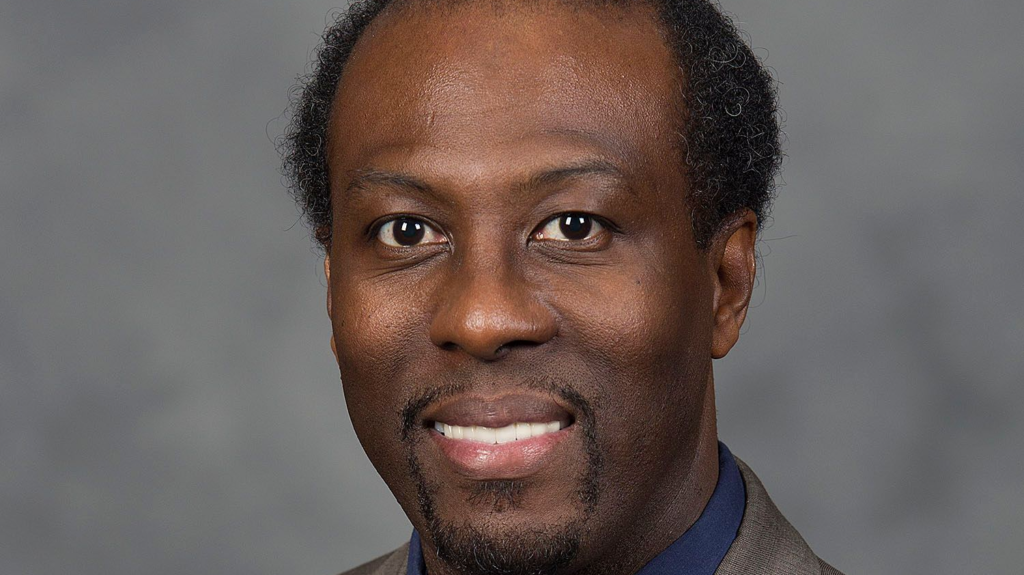
A Birmingham City Schools superintendent finalist has withdrawn from consideration after school board members expressed disappointment that none of the five finalists were from the school system or state of Alabama. AL.com reports Dr. Timothy Gadson III wrote in an email to a member of the Alabama Association of School Superintendents charged with vetting applicants that he felt he could do “an outstanding job,” but didn’t feel comfortable moving forward given “the political climate and controversy.” Gadson is currently superintendent designee and executive director of curriculum and schools at a Minnesota school system. His candidacy drew some scrutiny for a 2014 grading controversy during his tenure as Atlanta Public Schools associate superintendent. He wasn’t accused of any wrongdoing. The school board will invite a replacement candidate. Republished with permission of The Associated Press.
Birmingham’s Velocity Accelerator inaugural class member: Glow

As a mother of three and a former corporate employee, Yazmin Cavale knew how inconvenient it was to try to schedule an appointment at a beauty salon and then try to make it there at the scheduled time. What she didn’t know until she left that job and started doing hair and makeup was just how much other women were wanting the same convenience. Cavale increased clients from 25 to 150 in the first year and then began to wonder how she could create a better way of bringing beauty. Glow is an app-based business that allows women seeking hair makeup or spray tans from “Glowpros” to schedule a time when the professionals can come to the client at the customer’s convenience. Glow has been called “the Uber of beauty” because of both its convenience and the fact that Glowpros can work for Glow while maintaining their regular job. Glow is the only female-owned startup in the inaugural Velocity Accelerator program at Innovation Depot. Velocity Accelerator is a 12-week program designed to give a select group of startups focused mentorship and guidance to speed their growth. The inaugural class of 10 companies was announced in December and started in January with $50,000 in seed capital. The program concludes with Demo Day on April 18. Cavale said Glow launched in November and already has 150 customers per month. Plans are to grow into new markets after Demo Day. Republished with permission of Alabama NewsCenter.
Supreme Court , including Neil Gorsuch, to hear church-state case

Justice Neil Gorsuch‘s first week on the Supreme Court bench features an important case about the separation of church and state that has its roots on a Midwestern church playground. The outcome could make it easier to use state money to pay for private, religious schooling in many states. The justices on Wednesday will hear a Missouri church’s challenge to its exclusion from a state program that provides money to use ground-up tires to cushion playgrounds. Missouri is among roughly three dozen states with constitutions that explicitly prohibit using public money to aid a religious institution, an even higher wall separating government and religion than the U.S. Constitution erects. Trinity Lutheran Church of Columbia, Missouri, says its exclusion is discrimination that violates its religious freedoms under the U.S. Constitution. If the justices agree, “the decision could have implications far beyond scrap tires and playgrounds,” said Michael Bindas of the Institute for Justice, which is backing the church. “It has the potential to remove one of the last legal clouds hanging over school choice.” That prospect worries groups of public school teachers and others who oppose vouchers and other forms of public aid for private schooling. Adding to the intrigue is the long delay between when the Supreme Court agreed to hear Trinity Lutheran’s appeal, a month before Justice Antonin Scalia died in February 2016, and the argument. The span of more than 15 months suggests the justices were concerned they might divide 4-4. Indeed, the case wasn’t scheduled for argument until after President Donald Trump nominated Gorsuch for the seat. The timing of the argument “heightened our concern that the court has held this case for so long,” said Alice O’Brien, general counsel of the National Education Association, which opposes state aid to private schools. Missouri’s new governor, Republican Eric Greitens, injected some uncertainty into the high court case on Thursday, when he directed state agencies to allow religious groups and schools to receive taxpayer money for playgrounds and other purposes. The court on Friday asked both the church and the state to tell it whether the governor’s announcement affects the case. A lawyer for the church said in an interview with The Associated Press that the case would be unaffected because Greitens’ policy change does not resolve the legal issue. But a top aide to state Attorney General Josh Hawley told the AP that state lawyers were evaluating whether the new policy would affect the case. Should the court decide to go forward, Gorsuch’s votes and opinions in religious liberty cases as a judge on the federal appeals court in Denver would seem to make him more inclined to side with the church, and potentially provide the decisive, tie-breaking vote if the rest of the court is divided between liberals and conservatives, Bindas said. The case arose from an application the church submitted in 2012 to take part in Missouri’s scrap tire grant program, which reimburses the cost of installing a rubberized playground surface made from recycled tires. The money comes from a fee paid by anyone who buys a new tire. The church’s application to resurface the playground for its preschool and daycare ranked fifth out of 44 applicants. But the state’s Department of Natural Resources rejected the application, pointing to the part of the state constitution that says “no money shall ever be taken from the public treasury, directly or indirectly, in aid of any church, sect or denomination of religion.” A recycled scrap tire is not religious, the church said in its Supreme Court brief. “It is wholly secular,” the church said. Leslie Hiner, vice president of programs at Ed Choice, a school voucher advocacy group said, “It is difficult to understand that a little school could not participate in a safety measure determined by the state because somehow safety of children is conflated with religious purpose.” But the question of where the dividing line should be between church and state is complicated, said the NEA’s O’Brien. The Supreme Court has upheld some school voucher programs and state courts have ratified others. But “in many instances challenges to voucher programs have succeeded based on state court views that their constitutions draw a different line than does the federal constitution,” O’Brien said. Thirty states and the District of Columbia have some form of school choice, including vouchers, tax credits and education savings accounts, according to Ed Choice. The justices could themselves draw a line that decides the case in Missouri without saying anything more broadly about school choice. But that issue already is looming at the high court in appeals from a Colorado Supreme Court ruling that blocked the nation’s first county-initiated voucher program in Douglas County, Colorado. The Missouri church and some of the groups backing it have invoked what they describe as anti-Catholic bias that motivated the adoption of the Missouri provision and similar measures in other states in the late 1800s. They are similar to the proposed 1875 Blaine Amendment to the U.S. Constitution that would have prohibited the allocation of public school funds to religious institutions. “Both the Colorado and Missouri Blaine Amendments share discriminatory, anti-Catholic origins that make their contemporary use to compel religious discrimination particularly unacceptable,” lawyer Paul Clement wrote on behalf of the Colorado county. But 10 legal and religious historians said in a separate court filing that there is no evidence that “anti-Catholic or anti-religious animus” played a role in the adoption of the Missouri constitutional provision. And they said anti-Catholicism was a minor factor behind the Blaine Amendment. The broader debate was about the future of American education, they said. Republished with permission of The Associated Press.
Mike Pence warns NKorea ‘era of strategic patience is over’
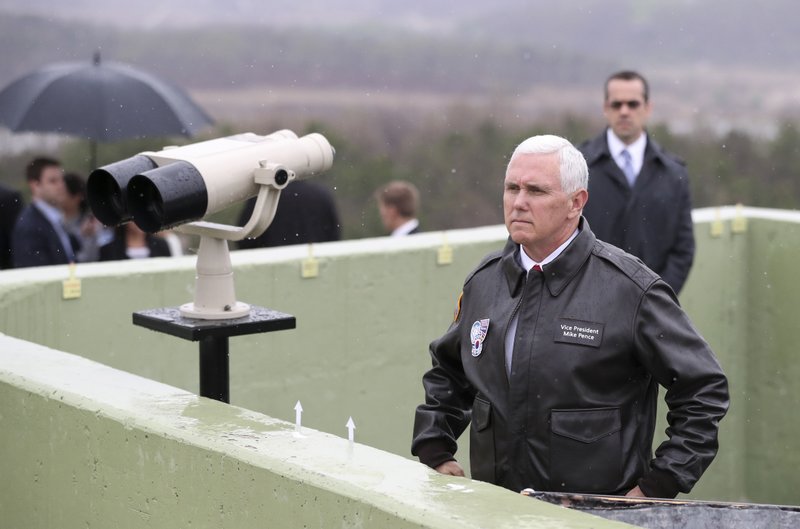
In a trip full of Cold War symbolism, U.S. Vice President Mike Pence traveled to the tense zone dividing North and South Korea and warned Pyongyang that after years of testing the U.S. and South Korea with its nuclear ambitions, “the era of strategic patience is over.” The unannounced visit Monday at the start of his 10-day trip to Asia was a U.S. show of force that allowed the vice president to gaze at North Korean soldiers from afar and stare directly across a border marked by razor wire. As the brown bomber jacket-clad vice president was briefed near the military demarcation line, two North Korean soldiers watched from a short distance away, one taking multiple photographs of the American visitor. Pence told reporters near the Demilitarized Zone that President Donald Trump was hopeful China would use its “extraordinary levers” to pressure the North to abandon its weapons program, a day after the North’s failed missile test launch. But Pence expressed impatience with the unwillingness of the regime to move toward ridding itself of nuclear weapons and ballistic missiles. Pointing to the quarter-century since the United States first confronted North Korea over its attempts to build nuclear weapons, the vice president said a period of patience had followed. “But the era of strategic patience is over,” he declared. “President Trump has made it clear that the patience of the United States and our allies in this region has run out and we want to see change. We want to see North Korea abandon its reckless path of the development of nuclear weapons, and also its continual use and testing of ballistic missiles is unacceptable.” In Moscow, Russian Foreign Minister Sergey Lavrov, speaking to reporters Monday evening, said he hopes “there will be no unilateral actions like those we saw recently in Syria and that the U.S. will follow the line that President Trump repeatedly voiced during the election campaign.” Meanwhile, China made a plea for a return to negotiations. Foreign Ministry spokesman Lu Kang said tensions need to be eased on the Korean Peninsula to bring the escalating dispute there to a peaceful resolution. Lu said Beijing wants to resume the multi-party negotiations that ended in stalemate in 2009 and suggested that U.S. plans to deploy a missile defense system in South Korea were damaging its relations with China. Later Monday, Pence reiterated in a joint statement alongside South Korean Acting President Hwang Kyo-ahn that “all options are on the table” to deal with threat and said any use of nuclear weapons by Pyongyang would be met with “an overwhelming and effective response.” He said the American commitment to South Korea is “iron-clad and immutable.” Noting Trump’s recent military actions in Syria and Afghanistan, Pence said, “North Korea would do well not to test his resolve,” or the U.S. armed forces in the region. The vice president earlier visited a military installation near the DMZ, Camp Bonifas, for a briefing with military leaders at the joint U.S.-South Korean installation, which is just outside the 2.5-mile wide (4 kilometers) DMZ. Under rainfall, Pence later stood a few meters from the military demarcation line outside Freedom House, gazing at the North Korean soldiers across the border, and then peered at a deforested stretch of North Korea from a lookout post in the hillside. In Tokyo, Japanese Prime Minister Shinzo Abe, speaking to a parliamentary session Monday, said: “Needless to say, diplomatic effort is important to maintain peace. But dialogue for the sake of having dialogue is meaningless.” “We need to apply pressure on North Korea so they seriously respond to a dialogue” with the international community, he said, urging China and Russia to play more constructive roles on the issue. Pence’s visit came amid increasing tensions and heated rhetoric on the Korean Peninsula. While the North did not conduct a nuclear test, the specter of a potential test and an escalated U.S. response has trailed Pence as he undertakes his Asian tour. Trump wrote Sunday on Twitter that China was working with the United States on “the North Korea problem.” His national security adviser, H.R. McMaster, said the U.S. would rely on its allies as well as Chinese leadership to resolve the issues with North Korea. McMaster cited Trump’s recent decision to order missile strikes in Syria after a chemical attack blamed on the Assad government, as a sign that the president “is clearly comfortable making tough decisions.” But at the same time, McMaster said on “This Week” on ABC that “it’s time for us to undertake all actions we can, short of a military option, to try to resolve this peacefully.” The Trump administration is hoping that China will help rein in North Korea in exchange for other considerations. Last week, Trump said he would not declare China a currency manipulator, pulling back from a campaign promise, as he looked for help from Beijing, which is the North’s dominant trade partner. Republished with permission of The Associated Press.
