
How communities shaped by refugees became Donald Trump country
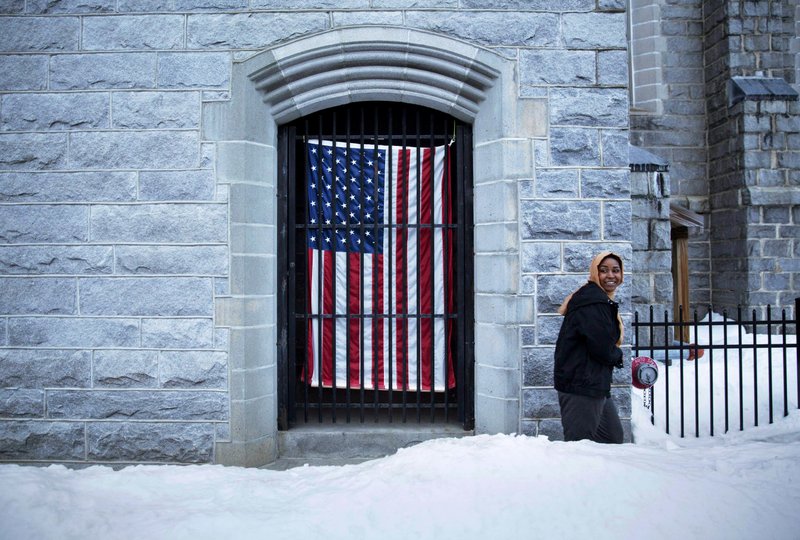
Richard Rodrigue stood in the back of a banquet hall, watching his blond-haired, blue-eyed daughter mingle among her high school classmates. These teenagers speak dozens of languages, and hail from a dozen African nations. They fled brutal civil war, famine, oppressive regimes to find themselves here, at an ordinary high school pre-prom fete in this once-dying New England mill town, revived by an influx of some 7,500 immigrants over the last 16 years. Rodrigue smiled and waved at his daughter, proud she is a part of it: “It will help her in life,” he said. “The world is not all white.” Rodrigue believes the refugees resuscitated his town — plugging the population drain that had threatened to cripple it, opening shops and restaurants in boarded-up storefronts. But he also agrees with Donald Trump that there should be no more of them, at least not now. America is struggling, he says, and needs to take care of its own before it takes care of anyone else. His working-class community, built along the banks of the Androscoggin River in the whitest state in America, is a place that some point to as proof that refugee integration can work. And yet for the first time in 30 years, voters in Androscoggin County chose a Republican for president, endorsing Trump’s nativist zeal against the very sort of immigrants who share their streets and their schools. Rodrigue knows he was born on the winning end of the American dream. His grandfather fled poverty in Quebec and moved to Maine to toil his whole life in the textile mills. He never learned English, faced hate and discrimination. Two generations later, Rodrigue owns a successful security company, lives in a tidy house in a quiet neighborhood and makes plans to send his daughter to college. Immigration worked for him. But it feels different today, as the county of 107,000 people tries to find its footing. The sprawling brick mills that line the river sit mostly shuttered. A quarter of children grow up poor. Taxpayers pick up the welfare tab. So Trump’s supporters here tie their embrace of his immigration clampdown to their economic anxieties, and their belief that the newcomers are taking more than they have earned. “There’s got to be a point in time when you have to say, ‘Whoa, let’s get the working people back up. Let’s bring the money in.’ But they keep coming, keep coming,” Rodrigue said. His community has been an experiment in immigration and all that comes with it — friendships, fear, triumphs, setbacks — and he knows that Trump’s presidency marks another chapter in that struggle for the American soul. “I guess it just boils down to: What’s enough? Is that wrong? Am I wrong? Am I bad? That’s how I feel.” ___ No one invited the Somali refugees to Lewiston. They fled bullets and warlords to eventually be chosen for resettlement in big American cities, where they were unnerved by the crime and drugs and noise. In early 2001, a few refugee families struggling to afford housing in Portland ventured 30 miles north and found a city in retreat. Empty downtown stores were ringed by sagging apartment buildings no longer needed to house workers because so few workers remained. The refugees saw possibility in Lewiston’s decay. Word spread quickly, and friends and families followed. The town morphed in a matter of months into a laboratory for what happens when culture suddenly shifts. Maine’s population is 94 percent white, and its citizens were abruptly confronted with hundreds of black Muslims, traumatized by war and barely able to speak English. Ardo Mohamed came to Lewiston in 2001. She fled Mogadishu in the 1990s, when militiamen burst into the home she shared with her parents and nine siblings, and started shooting. She watched her father die, as the rest of the family escaped into the woods. They wound up in overcrowded refugee camps, separated for years, then finally Atlanta, then Lewiston. Now she fries sambusas with her sister at a shop she owns downtown. “We wanted to be safe,” said the mother of five, “just like you do.” When the refugees began arriving, Tabitha Beauchesne was a student at Lewiston High School. Her new classmates were poor, but Beauchesne was poor, too. She grew up in a struggling family in housing projects downtown. It felt to her then, and it still feels to her now, that the refugees got more help than her family. “They just seemed to take over,” she said. She doesn’t consider herself racist, though acknowledges that race and religion likely play a role in her sense that the refugees overwhelmed her community. The African Muslims, many of whom wear hijabs, stand out far more than her French-Canadian ancestors did when they arrived generations ago, she said. That perception — one of being inundated by a culture so different from her own — ingrained in her a sense of injustice so deep it persists to this day. She’s now a stay-at-home mother of two, and she left Lewiston to move to another school district in the county because she believes the refugee students monopolize teachers’ attention. Once a Barack Obama supporter, Beauchesne turned to Trump — and she cheers his efforts to curb the flow of refugees into the United States. She wants Trump to design a tax system that funnels less of her money to aiding those from other countries. “I just don’t like giving money away that’s not benefiting me and, not to sound selfish, but then seeing it benefit other people,” she said. “As a business owner, my husband wouldn’t donate $500 to the Salvation Army if we couldn’t afford it. Our country needs to do the same thing.” Taxpayers do help refugee families. Maine offers a welfare program called General Assistance, a combination of state and city funds, which provides impoverished people with vouchers for rent, utilities and food. In 2002, at the beginning of the immigrant influx, the city handed out about $343,000
Del Marsh, Arthur Orr seek accountability for higher education spending

Facing a perennial budget shortfall, the Alabama Legislature is forced to consider how to best spend each and every hard-earned taxpayer-dollar each year. Which is exactly why Anniston-Republican Sen. Del Marsh and Decatur-Republican Sen. Arthur Orr submitted a plan in the Alabama Legislature that seeks to establish greater accountability for the state’s higher education spending by creating the Alabama Community College Council on Outcome-Based Funding. The council would be tasked with rethinking the current postsecondary funding model and create a plan to shift to outcome-based funding for Alabama’s community colleges. Like many state across the country, Alabama currently allocates funds on the basis of enrollment, which by-and-large ensures equitable distribution of per-student spending across institutions. Essentially, dollars follow students high school to higher education. But the current system doesn’t always take in account whether or not students complete their college courses, transfer to other institutions, or even graduate. Which is why Marsh and Orr are hoping to change the system to one where dollars don’t simply follow students, but rather they follow successful students, by shifting the funding to what educators call an outcome-based or performance-based system. Switching to an outcome-based system, endeavors to ensure taxpayer investments yield the best possible returns as they incentivize not only college access, but also college completion “The goal here is to bring more accountability to taxpayer dollars that are spent by higher education institutions,” Orr remarked. “The Legislature appropriates over $1.5 billion annually to Alabama’s colleges and universities, and we need a mechanism for rewarding those institutions that are providing great value to Alabama’s students.” According to the plan set forth — Senate Joint Resolution 85 — an advisory council will develop a specific outcome-based funding model for the allocation of Education Trust Fund appropriations to publicly-supported community and technical colleges in Alabama. “Making government more accountable to the taxpayers is a top priority of the Alabama Legislature,” Marsh said. “We are committed to making any changes necessary in order to achieve that goal.” Alabama isn’t the only state looking to make a change. Across the country, other budget-strapped states have been forced to carefully consider how their limited dollars are spent on higher education. Currently, thirty-two states — including neighbor-states Florida, Georgia, and Tennessee — now use, or are in the process of transitioning to performance-based formulas to determine higher education spending. “Historically, many colleges have received state funding based on how many full-time equivalent students are enrolled at the beginning of the semester,” said the National Conference of State Legislatures. This model provides incentives for colleges to enroll students and thus provide access to postsecondary education, but this model does not necessarily provide incentives for institutions to help students successfully complete degree programs. Many states are reconsidering the enrollment-based funding model and instead are aligning funding models with state goals and priorities.” Pending what the advisory council puts together, Alabama could be poised to join them soon. A shift in process could not only help the state’s ongoing budget crisis, but also bolster state’s higher education graduation rate. Only 23.5 percent of Alabamians between the ages of 25 and 64 have an associate’s degree or better. In comparison, 40.4 percent of Americans in the same demographic do, according to the U.S. Census Bureau’s 2011-2015 data. “This process is in line with our vision of providing all Alabamians with an affordable pathway to succeed through quality education and training,” said Jimmy Baker, Chancellor of the Alabama Community College System. “We look forward to working with the Legislature to create a funding model that ensures we are accountable with every dollar provided to us and shows the successes of our students.” According to SJR85, “the advisory council shall report its findings, conclusions, and recommendations to the Governor, the Chair of the House Ways and Means Education Committee, and the Chair of the Senate Finance and Taxation Education Committee not later than January 1, 2018” to be considered during the 2018 Legislative Session.
Ed Henry, who led impeachment charge against Robert Bentley, enters race for U.S. Senate seat
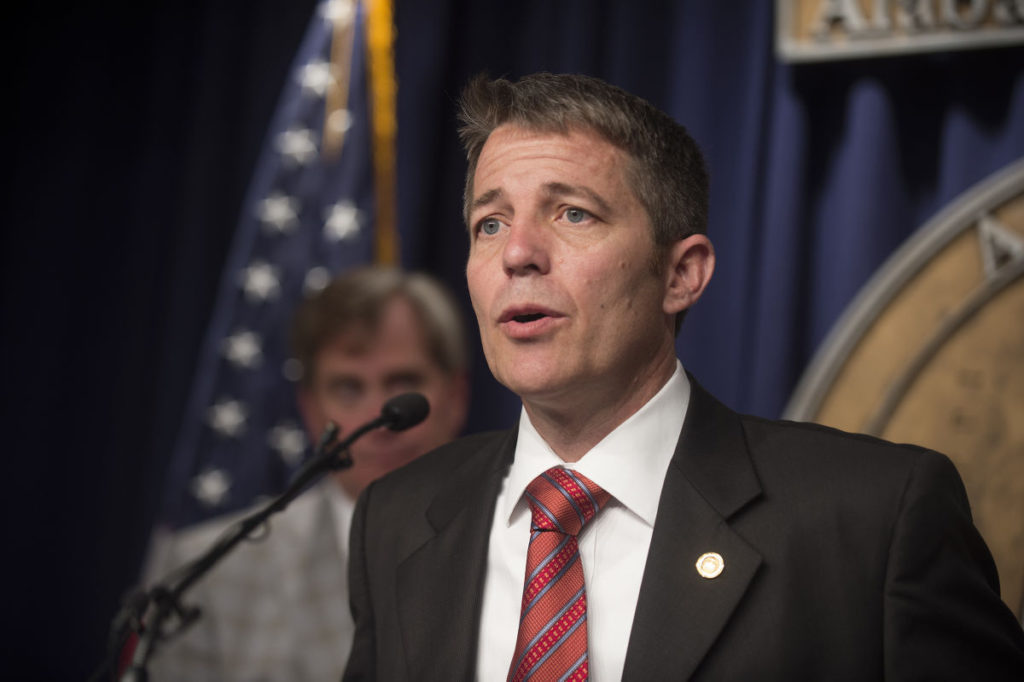
Decatur-Republican State Rep. Ed Henry on Tuesday announced plans to run in 2018 for the state’s U.S. Senate seat that once belonged to Jeff Sessions and is currently filled by interim U.S. Sen. Luther Strange. “It seems that the time is right and God has laid this path out for us,” Henry told reporters. “We’re going to walk in His will and we’ll see what comes of it.” Last March, Henry led the charge against then-Gov. Robert Bentley bringing forth articles of impeachment aimed at unseating the scandal-ridden governor. Some have called into question Bentley’s appointment of Strange to the Senate seat vacated by U.S. Attorney General Jeff Sessions since Strange had told Alabama lawmakers to hold off on impeaching the scandal-plagued governor while he conducted an investigation into Bentley as the state’s Attorney General. “Trump’s going to need help draining the swamp,” Henry, who was Trump’s Alabama co-chair, added. “One thing I have been able to do here is not necessarily drain the swamp but I’ve definitely dropped enough bombs in it that we’ve found some bottom-dwellers and they are floating to the top.” Henry’s announcement followed Gov. Kay Ivey‘s Tuesday morning proclamation to reschedule the special election date. The new primary date is Aug. 15, with a runoff set for Sept. 26; the general election is Dec. 12, a year ahead of the previously scheduled election date. In February, Bentley temporarily appointed then-Attorney General Strange to the Senate seat until Alabama could hold a special election. Bentley originally scheduled the special election to coincide with the 2018 regular election cycle, a primary in June and general election in November. Other candidates may throw their hats into the ring over the coming days, with Republican State Sen. Del Marsh saying he would decide whether he will run this week. Sens. Slade Blackwell and Trip Pittman are also considering a run, as is former Rep. Perry Hooper Jr. Watch Henry discuss his decision to run below:
Birmingham church may soon be allowed to have its own police force
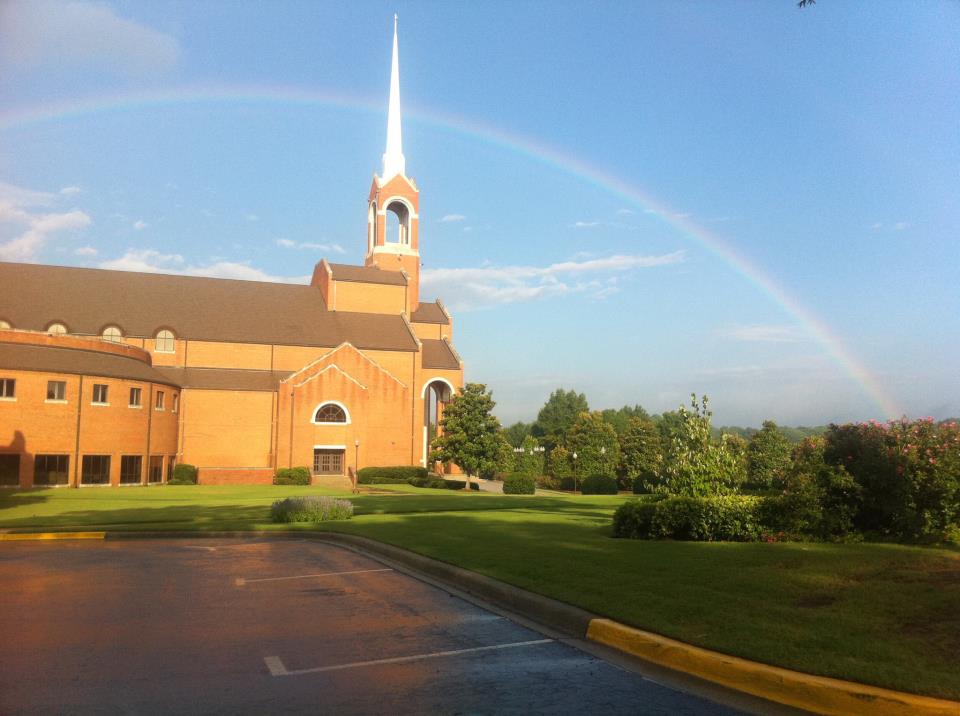
Alabama lawmakers are mulling over the idea of allowing a church to form its own police force. Briarwood Presbyterian Church, a megachurch in Birmingham, is hoping to establish its own police department of fully deputized officers who would be armed and have the authority to make arrests in order to keep it growing congregation of over 4,000 people safe. Last week, the Alabama Senate approved SB.193 by a vote of 24-4, which would allow just that. The state House is now considering an identical version of the bill that was sent to the Public Safety and Homeland Security committee in February. Officers hired by the church would need to be certified by the Alabama Peace Officers Standards and Training Commission and their law enforcement authority would be restricted to the church’s campuses and properties. Previously, the state has allowed a few private universities the authority to have their own police force, but has yet to give church or non-school entity the same rights. The Legislature passed the Briarwood bill during the 2016 legislative session, but former Gov. Robert Bentley failed to sign it into law. If the bill becomes law under Gov. Kay Ivey, it will likely to face a legal challenge from the American Civil Liberties Union of Alabama (ACLU-Alabama) who says it’s unconstitutional.
Donald Trump extends private-sector health care program for vets

President Donald Trump has signed a bill extending a program that lets some veterans seek medical care in the private sector. The extension will give Veterans Affairs Secretary David Shulkin time to develop a more comprehensive plan to allow veterans to more easily go outside the VA health system for care. The new law allows the VA to operate its Choice program until its funding runs out, expected early next year. Trump says veterans have “not been taken care of properly” and the bill will extend and improve the program so they can see any doctor they choose. The Choice program was put in place after a 2014 scandal over long wait times for vets at the VA medical center in Phoenix. The program was to have expired in August. Republished with permission of The Associated Press.
Roy Moore making unspecified ‘announcement’ Wednesday, possibly challenging Luther Strange
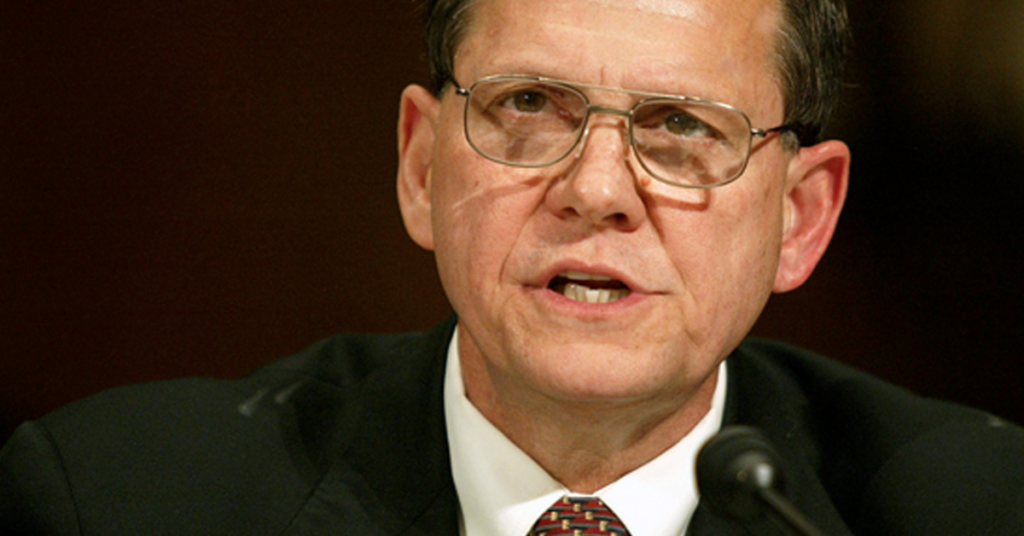
Roy Moore might be posing a challenge for interim U.S. Sen. Luther Strange. News 5 is reporting the suspended Alabama Chief Justice will hold a news conference Wednesday afternoon for an unspecified “announcement.” What is fueling speculation is the news conference was called at once after newly named Gov. Kay Ivey signed a proclamation advancing the special election for the Senate seat vacated in February by U.S. Attorney General Jeff Sessions. Then-Gov. Robert Bentley — who had interviewed Moore for the Senate seat — scheduled the election for 2018, in line with the midterm elections. But Ivey rescheduled the primary Aug. 15, a runoff Sept. 26 and the general election Dec. 12. Moore was one of about two dozen candidates brought in Bentley to interview for the seat, which ultimately went to then-Attorney General Strange. Bentley resigned April 10 and was booked into Montgomery County jail on a pair of misdemeanor campaign-finance charges. The Republican pled guilty to both as part of a deal to avoid facing four felony charges. Under suspension after a conviction on judicial ethics charges related to a gay marriage order, News 5 says Moore’s checkered political past made him a controversial choice for the Senate. Since his suspension, however, Moore has been looking for a return to public service, even a possible return to the Alabama Supreme Court. Moore’s news conference will be 1:30 p.m. Wednesday at the State Capitol.
Steve Flowers: Alabama’s bizarre political theatrics would make a great movie

We in the Deep South have a unique history of political theatrics. The only northern states that rival our colorfulness are New Jersey and Illinois. In those two states, you are expected to be corrupt, especially Chicago. Our most colorful southern state has always been Louisiana. The parishes and bayous of the Pelican State gave us Huey Long and other characters. No other states can hold a candle to Louisiana’s brazen corruption. They not only expect their politicians to steal and cavort, they frown on them if they do not. The environment of Louisiana politics is bred toward corruption and debauchery. They not only gave us the glamour of the King Fish, Huey Long, they are proud of their infamous reputation. Well folks if you look at us here in the good old Heart of Dixie over the past few years we are probably giving Louisiana a run for its money. A cursory look at the record reveals that our Speaker of the House of Representatives, Mike Hubbard, was caught and convicted of taking bribes for sponsoring and passing legislation. Our 74-year-old doctor Governor Robert Bentley fell in love with his 44-year-old No. 1 adviser, lost all his wits, and has resigned from office in disgrace. He pleaded guilty to a misdemeanor charge and agreed never to run for office again. The House of Representatives was poised to impeach him had he not resigned. Ole Bentley had become an irrelevant clown and fodder for late night talk shows. The State is better off with Lt. Governor, Kay Ivey, serving out the remaining 20 months of Bentley’s term. Bentley, in a charade promulgated by his desire to not be indicted for his shenanigans, gave the U.S. Senate Seat vacated by Jeff Sessions to the sitting Attorney General Luther Strange to avoid prosecution. Therefore, our new junior U.S. Senator is in Washington with the taint of Bentley’s scandal hovering over his head with the appearance that he is there due to audacious collusion. We have an even richer novel that has transpired in Jefferson County, our most populous and supposedly urbane county. It made national news a year ago when the Mayor and President of the City Council got into a fistfight in the Birmingham City Hall. However, a new development is even more bizarre. During the fall elections, Democrats won all the Jefferson County judgeships. Along with the judgeships, Jefferson County voters elected a Democratic District Attorney. Democrat Charles Henderson beat incumbent Republican Brandon Falls by over 10,000 votes. Get this folks, the sitting DA trumps up a perjury charge against the new DA a few days before he was to take office. Falls convened a grand jury Jan. 12 and returned an indictment the next day Jan. 13. Henderson was to take office the following Monday. As anybody knows, a prosecutor can indict a potato for anything at any time. This scenario proves that point. The loser, Falls, got the winner, Henderson, indicted for perjury. This is so bizarre and corrupt a situation that it makes the aforementioned stories pale in comparison. It makes Jefferson County and Alabama look like a Third World banana republic. There are rampant rumors that the State’s top watchdog, Prosecutor Matt Hart, is camped out in Jefferson County and massive indictments are on the way. It has been over 70 years since Louisiana had a similar scenario. Nobody has been as brash in between. The Louisiana King Fish Huey Long was assassinated on the steps of the capitol in Baton Rouge. Huey Long’s brother, Earl Long, followed his famous older brother as governor. Earl was one colorful character. His opponents decided to seize power from Earl. They took control of the state police and had Earl arrested and put in the state insane asylum. One of the best political movies ever is entitled “Blaze” starring Paul Newman and it illustrates this story of Louisiana political lore. I recommend it for entertainment. These past two years in Alabama politics would make for a good movie. This latest Jefferson County fiasco would have to be a part of the plot. Look out Louisiana; we’ve got some good theater in the Heart of Dixie. See you next week. ___ Steve Flowers is Alabama’s leading political columnist. His weekly column appears in over 60 Alabama newspapers. He served 16 years in the state Legislature. Steve may be reached at www.steveflowers.us.
Newtown schools ask Donald Trump to reject conspiracy theorists
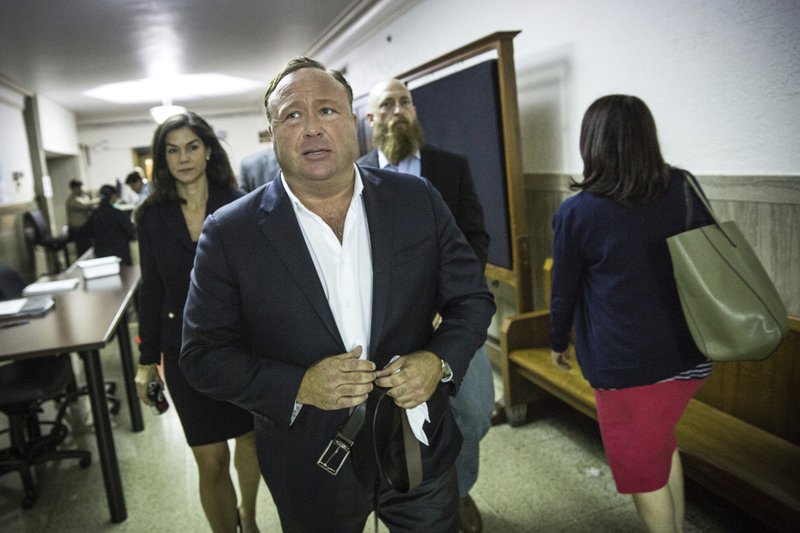
Members of the Newtown Board of Education hoped a newly elected President Donald Trump would speak out against a famous conspiracy theorist and others who question the Sandy Hook Elementary School massacre. Two months later, they have yet to receive a response. The school board sent a one-page letter in February, asking Trump to denounce the lies because the comments of those who deny what happened are still hurting the community, said Keith Alexander, board chairman. The letter singled out Alex Jones, a radio host whose “Infowars” programming has alleged the massacre was a hoax. As a candidate, Trump voiced admiration for Jones during a December 2015 interview, telling Jones: “Your reputation is amazing. I will not let you down.” The school board wrote to Trump: “We are asking you to intervene to try to stop Jones and other hoaxers like him,” urging him to “clearly and unequivocally” recognize that 20 children and six adults were killed at the school more than four years ago. In response to questions from The Associated Press about the school board’s letter, the White House said: “President Trump has been quite clear that we, as a nation, are united in condemning hate and evil in all its forms.” Messages were left seeking comment with Jones through the Infowars website and the radio network that produces his show. Alexander said the school board had not heard back from Trump as of this week. “I do hope that we will receive a direct response at some point,” he said. In the days following the mass shooting, Trump used Twitter to express condolences to the Newtown families, saying it was “heartbreaking ” to see the photos of the young Sandy Hook victims and saying “it was a horrible day for Newtown, CT and our country.” Since the shooting on Dec. 14, 2012, several victims’ relatives have been accosted or harassed by conspiracy theorists, including some who say it was staged to erode support for gun rights. The question of how to address conspiracy theorists has been a sensitive one in Newtown. Many don’t want to talk about it publicly, fearing it will stir up more provocations. One parent whose child was killed at Sandy Hook, and who spoke on the condition of anonymity out of the fear of harassment, said many victims’ families opposed the letter being sent to Trump for that reason. Leonard Pozner, whose 6-year-old son Noah was killed in the shooting, once had a caller leave a voicemail message telling him: “You gonna die, death is coming to you real soon.” A Florida woman has been criminally charged in connection with voicemail and email threats to Pozner. A man accused of approaching the sister of slain Sandy Hook teacher Victoria Soto and angrily claiming the massacre hadn’t happened was sentenced a year ago to two years of probation. A Newtown teacher told a court in September that he had brought a weapon to school because he feared for his safety after receiving threats from conspiracy theorists. Pozner said he doubts the school board’s appeal to Trump will do much to sway anybody who believes the shooting that killed his son was some kind of hoax. “I don’t think the president can do anything about this conspiracy theory, even if he wanted to,” Pozner said. “The origin of conspiracy theories is a mistrust of government.” While he believes there is little any government official can do, Pozner has been working since 2015 to keep conspiracy theories from gaining such prominence on the internet. His HONR Network encourages the public to contact advertisers on Google and social networks to raise awareness of how ad revenue is being used to support false news. Alexander said the school board sent the letter in hope that it would help. “The town of Newtown suffered a tragedy that brought with it more than its own direct consequences and the comments of those who deny the events only further harm our community,” he said. “I believe the board of education action was intended to limit further harm from that behavior.” Republished with permission of The Associated Press.
