
Lawmakers to vote on bill to decriminalize midwifery, allow more home births
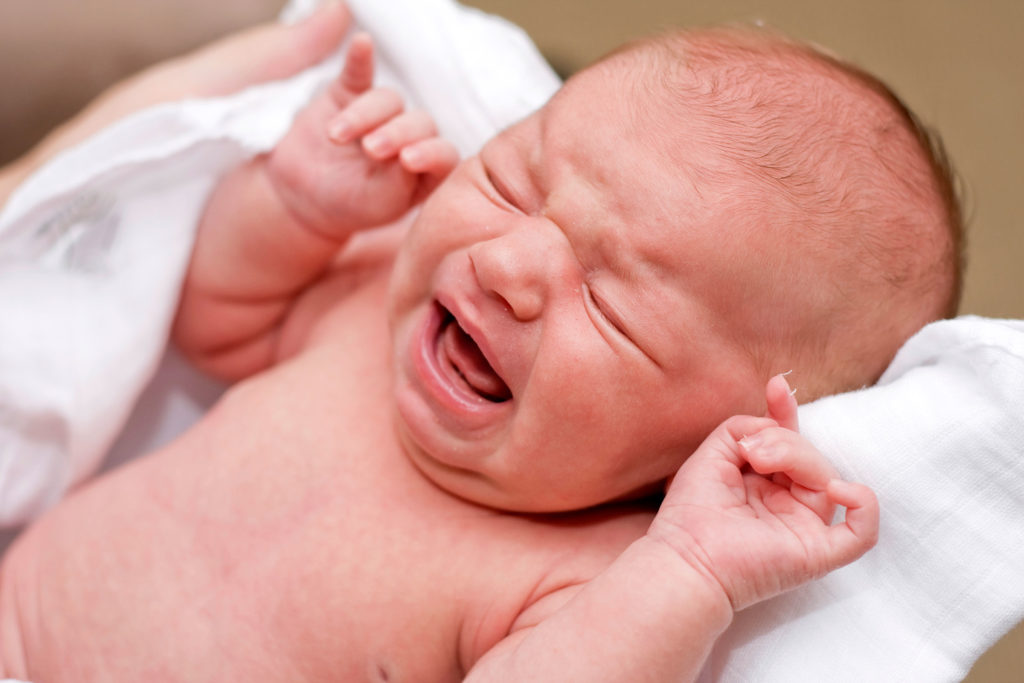
Having a home birth in Alabama may soon be a lot easier if lawmakers give the green-light to a bill in the state House next week. HB315, which was introduced by Moulton-Republican state Rep. Ken Johnson in February, would decriminalize Certified Professional midwives and has been scheduled on Tuesday’s special order agenda. Currently, state law says it’s a misdemeanor offense to practice midwifery without a license issued by the state Board of Nursing and the Board of Medical Examiners. Meanwhile, midwifery is legal and regulated in 31 states, including neighboring states Florida and Tennessee. For women hoping to have a natural, home birth or for those without easy access to hospital with obstetric care, this reverse is policy welcome news. “To see is to believe! Yes! It’s true! For the first time EVER a midwifery bill will get a vote on the floor of the House!” wrote the Alabama Birth Coalition on their Facebook page. “Don’t delay, call your representative today! Call every state representative you can before Tuesday and ask for their commitment to vote YES on HB315!” Opponents of the bill, claim passing it and having births outside of the hospital is a safety issue. But Kaycee Cavender, President of the Alabama Birth Coalition says supporting families during pregnancy and childbirth, disagrees. She says legalizing midwifery makes home births safer for both the mother and child. “It’s important the bill passes because Alabama families are giving birth outside the hospital already. Whether it’s by personal choice or by accident,” Cavender told Alabama Today. “It’s our duty to make sure these families have safe access to the care they need to make these births safe.” According to the Alabama Birth Coalition, only 29 out of the 67 counties have a hospital with obstetric care. Of those 29 counties, only 17 are rural. “It’s not society’s place to decide what’s right for each family. In order to make home births as safe as possible, we must legalize certified professional midwives — they’re specialists and experts in out of hospital delivery and care,” Cavender added. While Haley Pilgrim, a doula and mother of five from Leeds, has not had a home birth herself she believes having the option to have a safe home birth is all about personal freedom. “I have not had a homebirth, though I have long desired one, due to the laws in our state criminalizing midwives,” Pilgrim told Alabama Today. “I have precipitous labors and would never be able to make it across state lines to give birth like many other women do to have the birth they desire. My husband was deployed to Afghanistan at the time so I had to wait on childcare and transportation to arrive. The irony was not lost on me that my husband was serving and fighting for our freedoms while I was back at home without the freedom to choose who could attend my birth. I am not against hospital deliveries for those that choose that.” “Obviously this is about having a choice. All Alabama mothers deserve one, and I can guarantee you that we do not take it lightly! For low risk pregnancies like mine that don’t want or require intervention, it is more of a hassle to have to make that very painful and sometimes long ride to a hospital.” While Pilgrim doesn’t plan on having any more children herself, HB315 is still personal — she wants to see the Legislature approve it not only women across the state, but also her own daughters. “I don’t plan on having any more children, but I want this bill to pass for future Alabama mothers- for my doula clients and my two young daughters who may one day give birth here,” Pilgrim added. At least one state lawmaker is already listening to voices like Cavender and Pilgrim’s and has taken to social media ahead of Tuesday’s vote to voice his support. Vestavia Hills-Republican state Rep Jack Williams said he’ll be voting yes on Tuesday Friday afternoon. #HB315 common sense decriminalization of midwifery is on the special order calendar Tuesday in the Alabama House . I’m voting yes. — Jack Williams (@repjack) April 21, 2017
New Alabama AMBER Alert criteria goes into effect following Bessemer incident

Following an incident on Wednesday in Bessemer, Gov. Kay Ivey asked acting Alabama Law Enforcement Agency (ALEA) Secretary Hal Taylor to revise Alabama’s AMBER Alert guidelines. On Wednesday, a vehicle was stolen with a 19-month-old child in it at a gas station in Bessemer, Ala. Nearly two hours later the child had yet to be found and the Bessemer police requested the AALEA issue an AMBER Alert for the child. Based on the criteria in place at that time, the incident did not meet the previously adopted requirements for an AMBER Alert to be issued. As a result, Ivey announced Friday the finding of an “abduction” shall no longer be required for an AMBER Alert to be issued. Because of Ivey’s involvement, Alabama’s policy will mirror that of the the United States Department of Justice’s recommended criteria for issuing AMBER Alerts, and will result in more AMBER Alerts being issued in the state. “We need to protect the children of our state. Though we pray that an AMBER Alert is never needed, I asked Secretary Taylor to broaden the scope of our AMBER Alert requirements to safeguard as many children as possible,” Ivey said in a news release. “This change today ensures that we are keeping the public better informed. AMBER Alerts give all Alabamians the opportunity to be involved in caring for our most vulnerable asset, our children.” The new guidelines immediately went into effect. “It is the Alabama Law Enforcement Agency’s goal to rescue abducted and missing children. By expanding our criteria for issuing an AMBER alert, we will further that goal, and hopefully, make sure that as many vulnerable children as possible are protected from those whom would do them harm,” Taylor added. “Due to ongoing investigations, we may not always release why an alert may or may not be issued, but we will ensure that all cases are evaluated against this new standard.”
Martha Roby: A productive three months
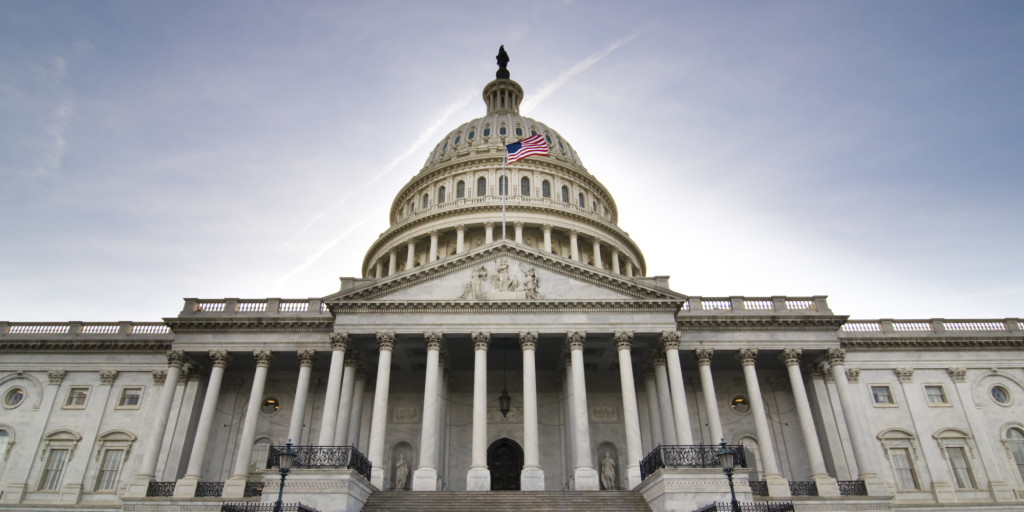
With Congress on a short district work period, I recently took the opportunity to travel throughout Alabama’s Second District for a week full of meetings and visits. My time spent traveling the district allows me to offer an update on the latest from Washington and hear from constituents about their concerns with the issues facing our country. Over the course of a week I visited Eufaula, Montgomery, Enterprise, Brantley, Opp, Andalusia, Luverne, Evergreen, Greenville, and places in between. Everywhere I went people asked me what exactly our Republican-led government is doing to move our country ahead. It’s a fair question. If you turn on the news you’ll probably hear that everything in Washington is gridlocked and Congress and the White House aren’t getting along. You can draw your own conclusions about why some news outlets choose to report only negative news out of Washington, but it’s not all true. The truth is the last three months have actually been pretty productive. As I told people throughout the district, Congress and the White House have been working together to deliver results on some of the biggest issues facing our country. I’ll briefly share just a few. First, Neil Gorsuch is now an Associate Justice on the U.S. Supreme Court. This is a prime example of a news story that was vastly underreported. Not only do we now have a highly capable justice who will help restore constitutional order, we will have him on the bench for a long time, Lord willing. We are reining in the regulatory state that President Barack Obama put into place. This is another story that may not always lead the news, but if you talk to anyone who runs a business they’ll tell you about the mountain of mandates and red tape that make it difficult to be successful. We’ve utilized the Congressional Review Act to strike 13 major federal regulations from the Obama era, ranging from intrusive environmental and educational mandates to regulations that eroded Second Amendment rights and attempted to force states to steer money to Planned Parenthood. We are rebuilding our nation’s military. The Defense Appropriations bill we passed out of the House last month rejects the Obama Administration’s troop level reductions that would have cut as many as 36,000 from the ranks. Instead, we’re providing funding for an additional 4,000 servicemen and women. Our bill also delivers a much-deserved 2.1 percent pay raise to all military personnel. Our country is finally taking action on illegal immigration. Attorney General Jeff Sessions has made it very clear that he’s serious about securing the border and enforcing our laws. For the first time in years, the Department of Justice is embracing congressional efforts to defund sanctuary cities. We are working to improve the Department of Veterans Affairs. President Trump recently signed into law the Veterans Choice Act to extend the VA’s Choice program and allow veterans to have more access to private care. This legislation ensures that those who are dependent on VA health care can access outside providers when VA wait times are too long or facilities are too far away. While I’m proud of these successes, there have been discouraging setbacks. I was deeply disappointed that Congress could not immediately deliver on our promise to repeal and replace Obamacare. There are many reasons why our efforts fell short, but the result is that this deeply flawed law remains in place and continues to make life harder for millions of Americans. I still remain optimistic about our prospects moving forward, and you can count me among those who are still 100 percent committed to delivering on our promise. We need to pass health care legislation soon for many reasons. Accomplishing this will clear the way for other important agenda items, including pro-growth tax reform, an infrastructure investment plan, trade policies that put our country’s interests first, and more. I’m confident we can build upon our successes and learn lessons from our mistakes to continue to deliver the results that the American people are counting on. ••• Martha Roby represents Alabama’s Second Congressional District. She lives in Montgomery, Alabama with her husband Riley and their two children.
Justice Dept threatens sanctuary cities in immigration fight
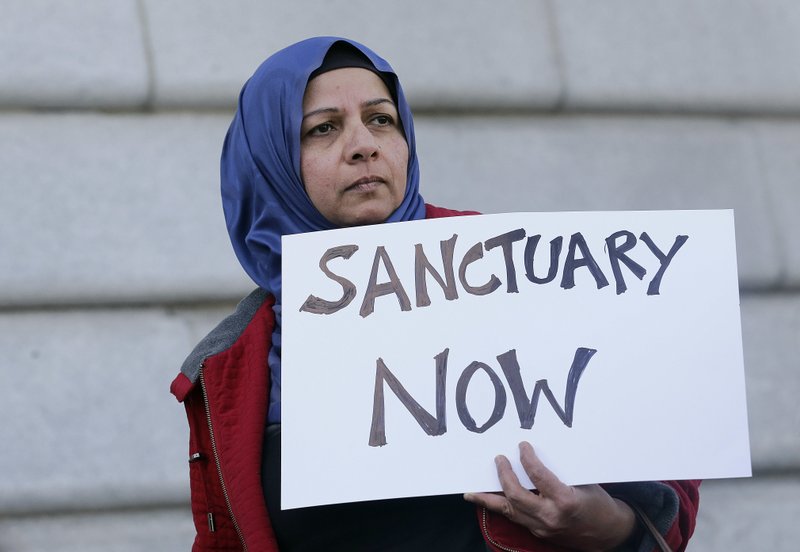
The Trump administration intensified its threats to crack down on so-called sanctuary cities that refuse to comply with federal immigration authorities, sending letters Friday to nine jurisdictions warning it would withhold coveted law enforcement grant money unless they document cooperation. The letters went to officials in California and in major cities including New York, Chicago, Philadelphia and New Orleans, all places the Justice Department‘s inspector general has identified as limiting the information local law enforcement can provide to federal immigration authorities about those in their custody. Attorney General Jeff Sessions has increasingly warned that the administration will punish communities that refuse to cooperate with efforts to find and deport immigrants in the country illegally. In a statement Friday, the Justice Department said the recipients of its letters are “crumbling under the weight of illegal immigration and violent crime.” After a raid led to the arrests of 11 MS-13 gang members in California’s Bay Area “city officials seemed more concerned with reassuring illegal immigrants that the raid was unrelated to immigration than with warning other MS-13 members that they were next,” the department said. The federal law in question says state and local governments may not prohibit police or sheriffs from sharing information about a person’s immigration status with federal authorities. Friday’s letters warn officials they must provide proof from an attorney that they are following the law or risk losing thousands of dollars in federal grant money that police agencies use to pay for anything from body cameras to bulletproof vests. The money could be withheld in the future, or terminated, if they fail to show proof, wrote Alan R. Hanson, acting head of the Office of Justice Programs, which administers the grant program, which is the leading source of federal justice funding to state and local communities. The targeted jurisdictions also include Clark County, Nevada; Cook County, Illinois; Miami-Dade County, Florida; and Milwaukee County, Wisconsin. They were highlighted in a May 2016 report by the Justice Department’s inspector general that found they have policies or rules that interfere with information-sharing among local law enforcement and immigration agents. The Orleans Parish Sheriff’s Office, for example, has a policy to decline all requests by Immigration and Customs Enforcement to keep a suspected deportable immigrant in its custody long enough for immigration authorities to arrest the person unless that person is charged with certain violent crimes, according to the report. It also pointed to a Miami-Dade County rule that allows its corrections department to honor detainer requests only if ICE agrees in writing to reimburse the county for costs and only if the inmate has a prior felony conviction, among other constraints. The Obama administration warned cities after the report’s release that they could miss out on grant money if they did not comply with the law, but it never actually withheld funds. The grants in question are based on population and support an array of programs, technology and equipment for local law enforcement agencies, which can use the money at their discretion. Sessions said earlier this week that sanctuary cities undermine efforts to fight violent gangs. Republished with permission of The Associated Press.
Donald Trump eyes changes to Barack Obama’s tax and Wall Street rules

The Trump administration embarked Friday on new efforts to study and possibly dismantle some of the tax and financial regulations established by former President Barack Obama. President Donald Trump will sign an executive order to review tax regulations set last year by his predecessor, as well as two memos to potentially reconsider major elements of the 2010 Dodd-Frank financial reforms passed in the wake of the Great Recession. The review of tax regulations could give greater leeway to companies looking to shelter income overseas, or simply seeking to reduce paperwork related to the enforcement of such regulations. Treasury Secretary Steven Mnuchin said a “significant” issue to be examined will be the crackdown by Obama on inversions, which are mergers that enable U.S. firms to relocate their headquarters overseas where tax rates are lower. The review could also touch on overlapping rules designed to stop foreign-based companies from shifting their U.S. profits abroad. Mnuchin said the goal of the executive order is to reduce the burden of time and money from complying with tax regulations. “The tax system is way too complicated and burdensome,” he said. The administration is also trying to pass tax reform that would reduce corporate rates and encourage businesses that have trillions of dollars stowed overseas to bring their profits back to the U.S. “We’re not going to do anything that makes U.S. businesses less competitive,” Mnuchin said. The two memos would focus on possible adjustments to the Dodd-Frank law, which was designed to stop banks from growing “too big to fail” and requiring public bailouts. One memo will order Mnuchin to review a component of the law that allows federal regulators to liquidate failing financial firms during an economic crisis if those companies are large enough that their collapse would pose a threat to the entire U.S. economy. The other memo will order the Treasury to review a process that designates which non-bank firms could threaten the financial system if they fail. Critics argue this process is costly and arbitrary. Both measures will be suspended while they’re under review. Mnuchin said taxpayers won’t be left on the hook. “Let me make it absolutely clear: President Trump is absolutely committed to make sure that taxpayers are not at risk for government bailouts of entities that are too big to fail,” he said. His report will explore if it would be better to liquidate troubled financial firms through a modified form of bankruptcy. Former Federal Reserve chair Ben Bernanke argued in a February blog post that there is no provision for the government to inject money into a failing firm as was done during the 2008 financial meltdown. This means that all losses would be borne by private investors. Also, Bernanke said his experience is that financial regulators are often better equipped to respond to these emergencies than bankruptcy judges. Mnuchin suggested Friday that it might be necessary to update bankruptcy laws to accommodate collapsing firms during an economic crisis. Republished with permission of The Associated Press.
White House pushes uncertain bid to revive health care bill
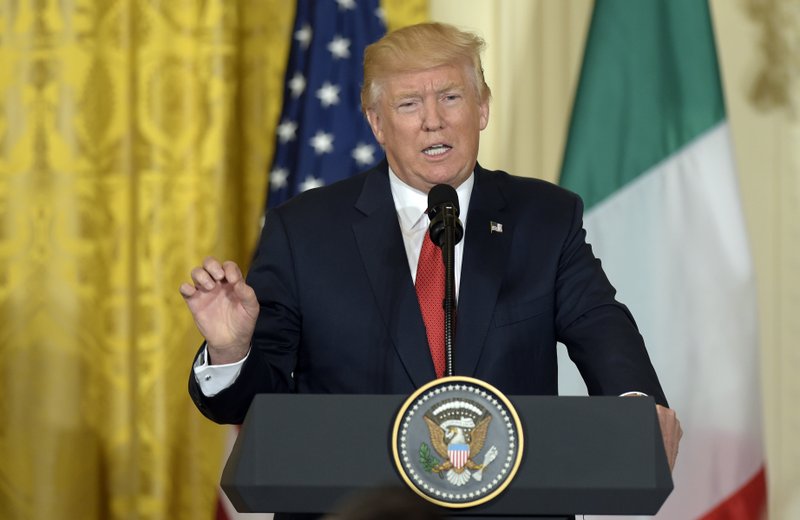
Eager for a victory, the White House expressed confidence Thursday that a breakthrough on the mired Republican health care bill could be achieved in the House next week. The chamber’s GOP leaders, burned by a March debacle on the measure, were dubious and signs were scant that an emerging plan was gaining enough votes to succeed. During a White House news conference, Trump said progress was being made on a “great plan” for overhauling the nation’s health care system, though he provided no details. “We have a good chance of getting it soon,” Trump said. “I’d like to say next week.” The White House optimism is driven largely by a deal brokered by leaders of the conservative Freedom Caucus and the moderate Tuesday Group aimed at giving states more flexibility to pull out of “Obamacare” provisions. A senior White House official acknowledged that it was unclear how many votes Republicans had, but said House Speaker Paul Ryan, R-Wis., has told the White House that a vote could come together quickly. Yet GOP lawmakers and aides to party leaders, conservatives and moderates alike were skeptical that the House would vote next week on the health legislation. They cited the higher priority of passing a spending bill within days to avert a government shutdown, uncertainty over details of the developing health agreement and a need to sell it to lawmakers. Trump said he planned to get “both” a health care deal and a spending bill. Many Republicans also expressed doubts that the health care compromise would win over enough lawmakers to put the bill over the top, especially among moderates. The bill would repeal President Barack Obama’s health care law and replace it with less generous subsidies and eased insurance requirements. “Every time they move the scrimmage line, you risk losing other people who were ‘yes’ but this changes them to a ‘no,’” Rep. Dan Donovan, R-N.Y., said Thursday of attempts to win over one end of the GOP spectrum without losing votes from the other side. The Staten Island centrist said he remained a no vote, partly because the legislation would increase Medicaid costs for New York City’s five boroughs. The White House official and most lawmakers and GOP congressional aides who spoke were not authorized to discuss the internal process publicly and insisted on anonymity. An outline of a deal has been crafted by Rep. Mark Meadows of North Carolina, who heads the hard-line Freedom Caucus, and New Jersey Rep. Tom MacArthur, a Tuesday Group leader. Vice President Mike Pence also played a role in shaping that plan, Republicans say. It would deliver a win to moderates by amending the GOP bill to restore Obama’s requirement that insurers cover specified services like maternity care. But in a bid for conservative support, states would be allowed to obtain federal waivers to abandon that obligation. In addition, states could obtain waivers to an Obama prohibition against insurers charging sick customers higher premiums than consumers who are healthy — a change critics argue would make insurance unaffordable for many. To get those waivers, states would need to have high-risk pools — government-backed insurance for the most seriously ill people, a mechanism that has often failed for lack of sufficient financing. “It looks to me like we’re headed in the right direction,” Rep. Dave Brat, R-Va., a Freedom Caucus member, said Thursday. He said that assuming the outline is translated into legislative text he backs and is added to the health care bill, he would now support the legislation and believes most of Freedom Caucus’ three dozen members would also back it. The Tuesday Group has roughly 50 members. They don’t necessarily vote as a bloc, and it is unclear how many colleagues MacArthur would bring with him to such an agreement. The White House is anxious to pass legislation quickly, partly because Trump will likely hit his 100th day in office without a having signed a major piece of legislation. In an interview Thursday with The Associated Press, budget chief Mick Mulvaney said he was surprised at “the toxicity levels” that have divided the GOP over health care and hoped lawmakers’ two-week break would prove “healing.” But House GOP leaders face the same problem that’s plagued them for seven years of trying to concoct a plan for repealing Obama’s 2010 law: The party’s conservatives and moderates are at odds over how to do it. With Democrats solidly opposed, Republicans can lose no more than 21 House votes to prevail, and Ryan short-circuited a planned vote last month because more than that would have defected. That was a major embarrassment to Ryan and Trump, and House leaders are loath to bring a revised health care bill to the House floor unless they are convinced it would pass. Ryan sent a mixed message about the bill’s prospects in remarks Wednesday to reporters in London. “It’s difficult to do. We’re very close,” he said, adding, “It’s just going to take us a little time.” Republished with permission of The Associated Press.
How a single sentence from Donald Trump enraged South Korea

U.S. President Donald Trump‘s apparently offhand comment after meeting with Chinese leader Xi Jinping — that “Korea actually used to be a part of China” — has enraged many South Koreans. The historically inaccurate sentence from a Wall Street Journal interview bumps up against a raft of historical and political sensitivities in a country where many have long feared Chinese designs on the Korean Peninsula. It also feeds neatly into longstanding worries about Seoul’s shrinking role in dealing with its nuclear-armed rival, North Korea. Ahn Hong-seok, a 22-year-old college student, said that if Trump “is a person capable of becoming a president, I think he should not distort the precious history of another country.” Many here assume that Xi fed that ahistorical nugget to Trump, who also admitted that after 10 minutes listening to Xi, he realized that Beijing’s influence over North Korea was much less than he had thought. Here’s why Trump’s comments strike a nerve in South Korea: ___ WRONG, BUT WHOSE MISTAKE? It’s unclear whether Trump was quoting Xi or had misunderstood what he was told when he said Korea had been part of China. It never was, historians outside of China say, although some ancient and medieval kingdoms that occupied the Korean Peninsula offered tributes to Chinese kingdoms to secure protection. And for a period during the 13th century, both China and Korea were under the rule of the Mongolian empire. “Throughout the thousands of years of relations, Korea has never been part of China, and this is a historical fact that is recognized internationally and something no one can deny,” Cho June-hyuck, a South Korean Foreign Ministry spokesman, said Thursday. Asked whether Trump was quoting Xi, Lu Kang, China’s Foreign Ministry spokesman, didn’t provide a direct answer, but said, “Korean people should not be worried about it.” ___ HISTORICAL FEUD Trump stumbled into a long history dispute between the Asian neighbors; specifically, their views over the dominion of ancient kingdoms whose territories stretched from the Korean Peninsula to Manchuria. South Koreans see these kingdoms as Korean, but China began to claim them as part of its national history in the early 1980s. At the time, China’s state historians were exploring ways to ideologically support Beijing’s policies governing ethnic minorities, including the large communities of ethnic Koreans in the northeast, experts say. In the early 2000s, a Chinese government-backed academic project produced a slew of studies arguing that the kingdom of Goguryeo (37 B.C.-A.D. 668) was a Chinese state. This infuriated South Korea, where nationalists glorify Goguryeo for its militarism and territorial expansion. Seoul launched its own government-backed research project on Goguryeo in 2007. Some analysts say the argument is more political than historical as Goguryeo existed more than a thousand years before the foundation of modern states in Korea and China. ___ ‘KOREA PASSING’ Several South Korean newspapers mentioned the Chinese claims over Goguryeo as they lashed out at Trump over the comments, and at Xi for allegedly feeding the U.S. president Chinese-centric views. Chosun Ilbo, South Korea’s largest newspaper, said China was looking to “tame” South Korea and weaken the traditional alliance between Seoul and Washington in an attempt to expand its regional influence. Seoul has long worried about losing its voice in international efforts to deal with North Korea’s nuclear threat — something local media have termed “Korea Passing.” Seoul and Beijing are also bickering over plans to deploy in South Korea an advanced U.S. missile defense system that China sees as a security threat. In the meantime, Trump has reportedly settled on a “maximum pressure and engagement” strategy on North Korea, which is mainly about enlisting the help of Beijing to put pressure on Pyongyang. “It’s highly possible that China will try to solve the problems surrounding the Korean Peninsula based on a hegemonic stance that likens the Koreas to Chinese vassal states,” said the Munhwa Ilbo newspaper on Thursday. “If Trump has agreed with this view, you will never know what kind of a deal the two global powers will make over the fate of the Korean Peninsula.” Insecurities about both China’s and Trump’s intentions in the region will be among the big issues as South Koreans vote next month for their next president. Republished with permission of The Associated Press.
