
Secretary of State John Merrill says 92 candidates, PACS violate Alabama finance rules
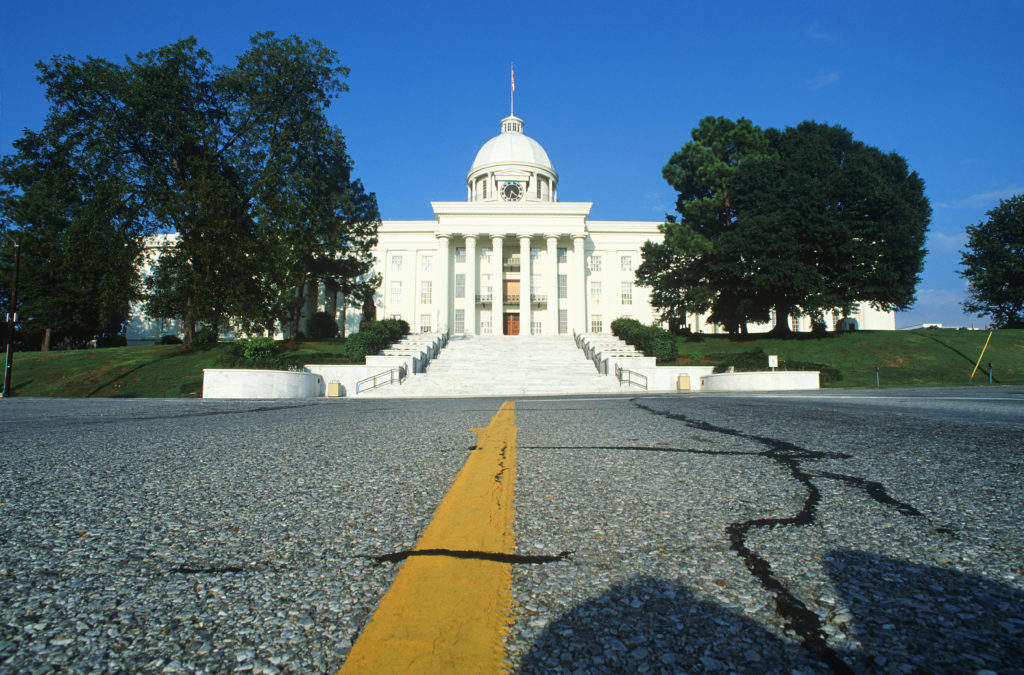
Alabama Secretary of State John Merrill says 92 political candidates and Political Action Committees (PACs) have broken campaign finance rules. Annually, by January 31, candidates that spend or raise more than $1,000 must file campaign finance reports showing campaign contributions and expenditures. In 2017, more than 1,000 candidates and PACs were required to file their 2016 Annual Report. As of Monday, 92 have not yet taken the steps necessary to reach full compliance. Merrill on Monday publicly released of all the candidates and PACs who missed the January deadline. “Our intention in releasing these names to the public is to further encourage candidates and PACs to bring their filings into compliance allowing the citizens of our state to review the extent of their fiscal responsibility,” Merrill said in a press release. At this time, no administrative penalties exist for those who missed the deadline. Beginning with the 2018 Election Cycle, which begins in June, administrative penalties will be levied. $300, or 10% of contributions or expenditures not reported, for first time offenders $600, or 15% of contributions or expenditures not reported, for second time offenders $1,200, or 20% of contributions or expenditures not reported, for third and subsequent offenses The full list of candidates and PACs not in compliance with the annual reporting requirement is available here.
Autism insurance bill stalls in Alabama Senate
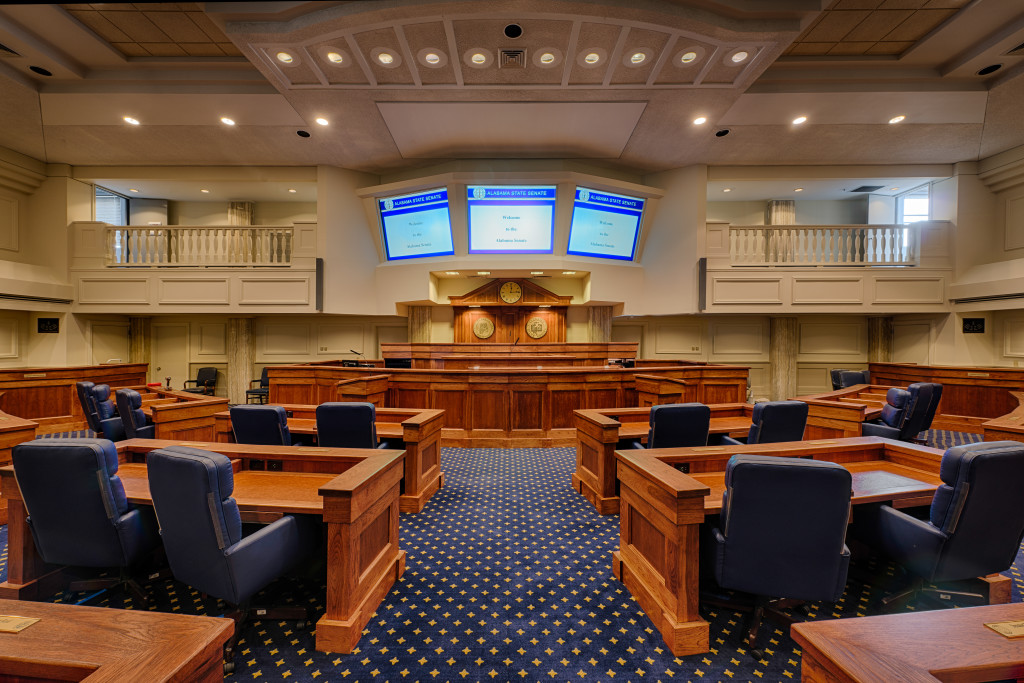
Families of autistic children faced a set-back Monday when a bill that would require health insurance providers cover an expensive autism therapy stalled in the Alabama Senate. The bill, which passed the state House unanimously two weeks ago, is held up in the Senate Budget Committee where Chairman, Daphne-Republican Sen. Trip Pittman says there are concerns over the costs to the state. Alabama is one of only five states with no requirement that insurance companies cover the costly therapy, called Applied Behavior Analysis (ABA). According to the bill’s language, children with autism who are 9 years old and younger would be insured for up to $40,000 in treatment per year. That coverage would decrease to $10,000 per year by age 19. The bill faces heavy opposition from the insurance industry, including Blue Cross Blue Shield, as well as the Business Council of Alabama. Nevertheless, the bill’s sponsor Auburn-Republican Sen. Tom Whatley took to social media on Saturday where he posted a video discussing the importance of the bill calling it “much-needed” and “the solution our state needs” for families with children along the autism spectrum. Pittman says it will be at least another week before SB406 has a public hearing. Watch Whatley’s Facebook video about the bill below:
Donald Trump on Civil War: Why couldn’t they have worked that out?

The U.S. president had a historical question: Why did America’s Civil War happen? “Why could that one not have been worked out?” Remarks by Donald Trump, aired Monday, showed presidential uncertainty about the origin and necessity of the Civil War, a defining event in U.S. history with slavery at its core. Trump also declared that President Andrew Jackson was angry about “what was happening” with regard to the war, which started 16 years after his death, and could have stopped it if still in office. Trump, who has at times shown a shaky grasp of U.S. history, questioned why issues couldn’t have been settled to prevent the war that followed the secession of 11 Southern states from the Union and brought death to more than 600,000 Americans, North and South. “People don’t realize, you know, the Civil War, if you think about it, why?” Trump said in an interview with The Washington Examiner that also aired on Sirius XM radio. “People don’t ask that question, but why was there the Civil War? Why could that one not have been worked out?” In fact, the causes of the Civil War are frequently discussed, from middle school classrooms to university lecture halls and in countless books. Immigrants seeking to become naturalized are sometimes asked to name a cause of the war in their citizenship tests . Fierce disagreement over the future of slavery was a driving force behind the war, but economic issues and disputes over state rights were also factors. “Slavery was the root cause of the Civil War. It was not the only cause, but it was the underlying cause,” said Eric Foner, a Columbia University history professor and a leading expert on the war. “As a historian, I would prefer the president had a better handle on American history.” Trump’s comments about the war came after he lauded Jackson, the populist president whom he and his staff have cited as a role model. He suggested that if Jackson had been president “a little later, you wouldn’t have had the Civil War.” “He was really angry that he saw what was happening with regard to the Civil War. He said, ‘There’s no reason for this,’” Trump continued. Jackson died in 1845. The Civil War began in 1861. Late Monday, after a day of incredulous news coverage, Trump took to Twitter to amplify his message and seemingly stress that he did in fact know when Jackson died, writing: “President Andrew Jackson, who died 16 years before the Civil War started, saw it coming and was angry. Would never have let it happen!” Jackson was a slave-holding plantation owner. Some historians do credit him with preserving the full Union when South Carolina threatened to secede in the 1830s over an individual state’s ability to void federal tariffs. But that controversy, known as the “Nullification Crisis,” was not about slavery, and the eventual compromise that preserved states’ rights did little to alter the nation’s path to the War Between the States. “Even Andrew Jackson, were he alive, could not have solved the problem,” Foner said. “The situation in 1861 was far more dire than in the 1830s during the Nullification Crisis.” The Civil War was decades in the making, stemming from disputes between the North and South about slavery and whether the union or the individual states had more power. The question over the expansion of slavery into new Western territories simmered for decades and Southern leaders threatened secession if anti-slavery candidate Abraham Lincoln was elected in 1860. After Lincoln won without carrying a single Southern state, Southern leaders believed their rights were imperiled and seceded, forming the Confederate States of America. War erupted soon afterward as the North fought to keep the nation together. The conflict lasted four years. The White House did not respond to requests for an explanation of Trump’s reasoning. His comments on the Civil War drew swift criticism from some civil rights groups and Democrats, including Rep. Barbara Lee of California who tweeted “President Trump doesn’t understand the Civil War. It’s because my ancestors and millions of others were enslaved.” This is far from the first time that Trump expressed a muddled view on American history. Trump, during an African-American history month event, seemed to imply that the 19th century abolitionist Frederick Douglass was still alive. Trump said in February that Douglass “is an example of somebody who’s done an amazing job and is getting recognized more and more, I notice.” While justifying his argument for a border wall with Mexico, Trump said last week that human trafficking is “a problem that’s probably worse than any time in the history of this world,” a claim that seemed to omit the African slave trade. Trump, prompted by his chief strategist Steve Bannon, embraced the legacy of Jackson soon after his election. The White House has eagerly drawn parallels between the two men, particularly between Trump’s success with working-class voters and how Jackson fashioned himself as a champion of the common man against a political system that favored the rich and powerful. Trump paid tribute to Jackson, known as “Old Hickory,” by visiting Jackson’s grave in Tennessee in March. Republished with permission of The Associated Press.
Personnel note: Kay Ivey appoints Joshua Pendergrass as Communication Director
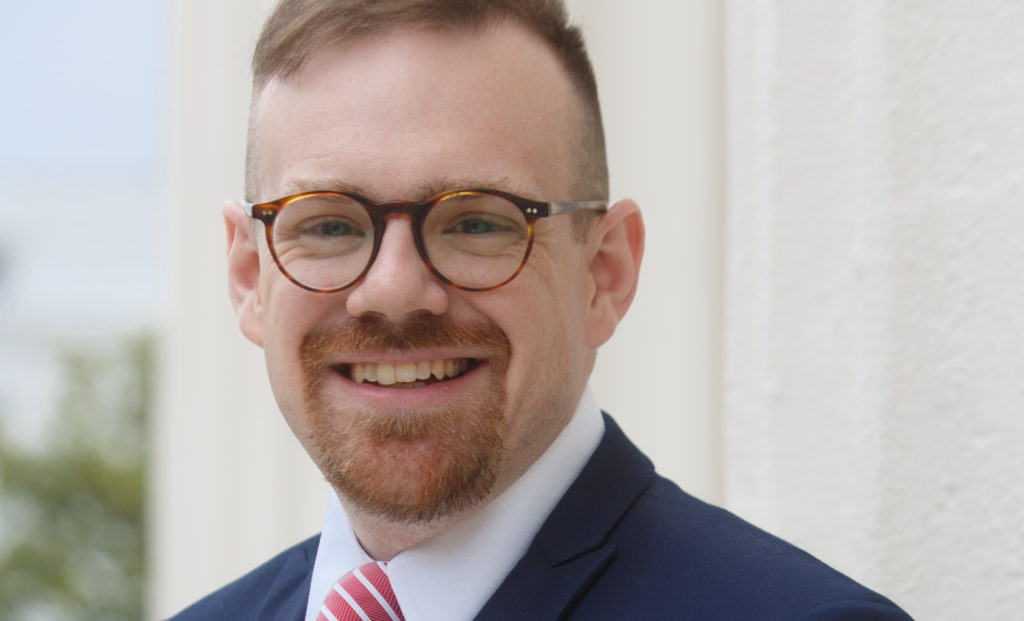
Governor Kay Ivey on Friday announced she has appointed Joshua Pendergrass as Communication Director. With nearly a decade of experience working in communication and media relations, Pendergrass has also worked on several legislative and statewide campaigns in both Alabama and Tennessee with extensive experience in speech writing and public policy. “Since taking office, I have worked to fill my team with men and women of the highest integrity. As we seek to restore Alabama’s image, I am glad to add folks like Josh Pendergrass who will work every day to steady the ship of state and improve Alabama’s image,” Ivey said of her appointment. Pendergrass holds a Bachelor’s Degree from Lambuth University and a Juris Doctor degree from Thomas Goode Jones School of Law at Faulkner University. He has been in private law practice since 2011 and has served as the Senior Pastor at Bethany Baptist Church in Crane Hill, since 2013. “Josh Pendergrass is a faithful husband, father, and community servant. Having served on our ALCAP Board in recent years, Josh has demonstrated a perceptive knowledge of the major issues facing our state and has stood strong on the conservative values that are important to the people of Alabama,” added Joe Godfrey, Executive Director of the Alabama Citizens Action Program (ALCAP). “His appointment shows Governor Ivey’s desire to have an administration committed to conservative values and the highest level of integrity and honesty.” In the new role, Pendergrass will manage Ivey’s communications strategy, working closely with Press Secretary Eileen Jones and the other members of the Communication & Media Office of the Governor. The appointment was effective Wednesday, April 19, 2017.
Electric vehicles and alternative fuels take center stage in Alabama
Buddy Gamel would have claimed the prize for most unusual entrance to the Odyssey Day event last week on the Bessemer campus of Lawson State Community College. The president of Precision Sales & Service, which specializes in alternative fuel conversions, puttered into the auditorium of the Ethel Hall Center for Automotive Excellence on a red propane-powered scooter. “I do it whenever I can get away with it,” the Birmingham businessman said. “People tend to remember it when I do that.” About 60 people had a lot to remember as they were shown the latest advancements in alternative fuels and vehicles. The Alabama Clean Fuels Coalition joined Lawson State in sponsoring National Odyssey Day. The event included educational presentations on domestically produced alternative fuels, including compressed natural gas, propane autogas and electric alternative fuels. “It’s really meant to be the odyssey of growing into a market and using the alternative fuels,” said Alabama Clean Fuels Coalition’s Mark Bentley. “It’s a growth opportunity, or it’s an odyssey moving forward. All these fuels are available today and all of them are domestically produced, which is marvelous.” Three appealing options Gamel said propane has been one of the most-used alternative fuels, although it has largely been behind the scenes. “Any time gasoline starts going up, you start hearing about alternative fuels again,” he said. “I’m just a believer that it’s a good alternative fuel no matter what the cost of gasoline is because you can’t budget for gasoline. You can budget for propane. You know what you’re going to pay for it for the year. You’re not going to have any surprises.” Jim Roberts is the public information officer with the Emerald Coast Utilities Authority in Pensacola, Florida. He cited an unusual complaint the company receives about its CNG-fueled garbage trucks. “Our customer service department gets calls from customers about missing the garbage collection,” he said. “Why? Because they couldn’t hear the truck coming in the morning. These trucks are very, very quiet, unlike the diesel trucks. That’s a great problem to have.” Cedric Daniels of Alabama Power said people are always eager to hear him talk about electric-powered cars. “Cars are like candy,” he said. “You want to see them. You want to see the cool ones. You’re interested, and we all use them, so we can identify with them.” And, he added, there are many makes and models. “There are SUVs. There are sports cars, sedans. There are crossovers,” Daniels said. “There are many other types of vehicles that customers have a choice to acquire.” Go green, save the world Lawson State President Perry Ward said alternative fuels affect everyone. “It actually impacts our environment – the air we breathe, the way things are in the community,” he said. “It’s very, very important and will impact every single person in the country and in the world, when you think about smog and all other things like that. We’re trying to go green and save the world.” Odyssey Day featured a discussion on the $25.5 million from the Volkswagen settlement that will be available to be spent in Alabama. The money is targeted to reduce diesel emissions and improve air quality in the state, via grants that will – for example – replace aging diesel engines with ones that use alternative fuel sources, such as compressed natural gas, propane or electric. The $2.9 billion Volkswagen settlement was negotiated with the federal government following the company’s attempts to cheat on emissions testing. The Alabama Department of Environmental Management will administer the state’s share. Visit https://www.alabamacleanfuels.org/ for more information. Republished with permission of Alabama NewsCenter.
Venture for America draws best and brightest to Birmingham
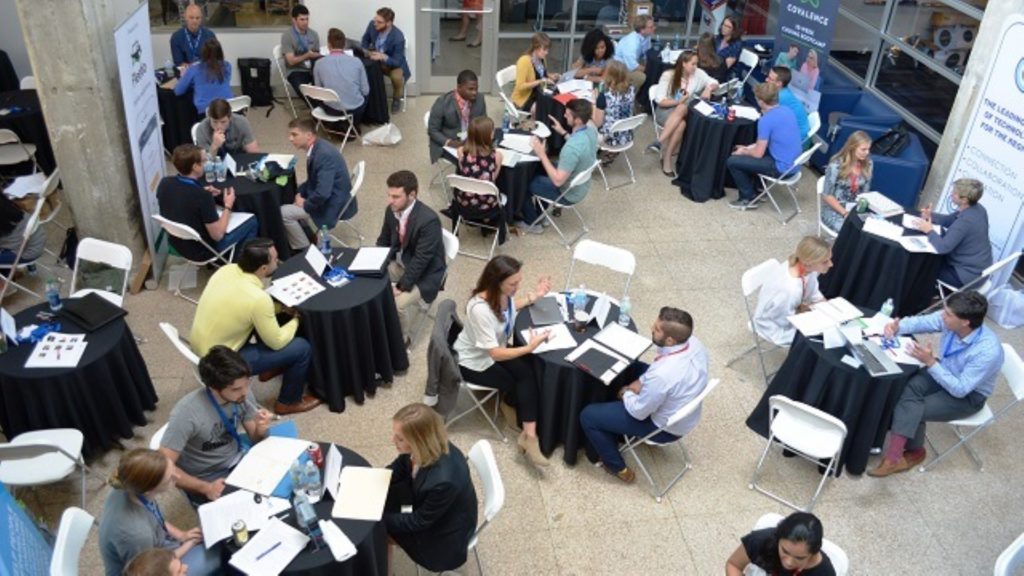
More than 40 companies from Birmingham, San Antonio, New Orleans and Nashville were in Birmingham Friday hoping to hire one of 50 Venture for America fellows. Innovation Depot hosted the VFA regional job fair, making Birmingham the center of innovation attention for at least a couple of days. “We have screened more than 2,000 young people in the country this year and selected the 200 best and brightest and brought a good cross-section of them here today,” said Amy Nelson, managing director and incoming CEO of New York-based Venture for America. VFA fellows come from some of the most prestigious universities in the country. For startup companies or companies with a focus on innovation, it can be hard to visit all of those schools on career day, so VFA holds regional events bringing select students to one place. Fellows vie for a two-year apprenticeship with the companies. Once the two years are up, the company may offer to keep the fellow on or a fellow may look to pursue starting his or her own company. “We’ve seen an uptick each year in the number of companies wanting to hire VFA fellows,” said Devon Laney, CEO of Innovation Depot. “And from the VFA fellows themselves who have moved to Birmingham, they tell us over and over and over how excited they are about being here, how much they’ve enjoyed their time and the fact that they’re going to stay.” On Friday, the companies held speed interviews. Fellows had 20 minutes to interview with each of as many as eight companies in hopes of finding a fit and an offer. Landon Acriche is ending his two-year VFA fellowship with Alabama Power, where he works as an innovation strategist. He was one of eight fellows who were part of the first Birmingham VFA program two years ago. Acriche was on the other side of the table Friday helping interview potential fellows and telling them about Alabama Power. “They’re making the decision difficult for us,” Acriche said. “Everyone who comes through VFA is very qualified and so everyone we’re speaking to is very interesting and has a lot of great experience.” Acriche said he tells them about the opportunities to learn about all aspects of the business at Alabama Power but also how the company supports new ideas and areas of innovation. And what does he tell them about Birmingham? “I’m telling them it’s awesome,” he said. “They’re coming to the conclusion that we all love it here.” Jared Weinstein, a New York venture capitalist who attended Mountain Brook High School, has also been singing the praises of the Magic City. He approached Nelson a couple of years ago and asked if VFA would consider Birmingham among new cities for a regional job fair. “I was skeptical, to say the least,” Nelson said. “It’s a smaller city. We work in Cleveland, Philadelphia, Baltimore – which, they’re a little bigger, a little more established in terms of entrepreneurship.” But Weinstein encouraged her to visit Birmingham. Alabama Power officials showed her around the city and Innovation Depot companies told of the great things happening in the area. “Just the welcome and the energy – it was a no-brainer,” Nelson said. “By the end of that day, we were totally sold.” For the fellows, Nelson said the decision of where to go for their fellowship is not one they take lightly. “When you’re a young person, you want to be part of a winning team and part of a team that’s growing,” she said. “If you are able to join up with a group of like-minded individuals and see that progress, then your work is meaningful to you and that keeps you coming back.” Republished with permission of Alabama NewsCenter.
Alabama Power engineers mentor girls at iCan Conference

It would be hard to engineer a better day than the annual iCan Engineering Conference at Alabama Power Corporate Headquarters April 15. More than 100 sixth-through-eighth-grade students and their parents from across the state attended. Students filled their day with a variety of learning experiences, including competitions, engineering, and electrical and chemical activities. The conference is a part of the iCan girls‘ school year curriculum, bringing students, parents, educators, iCan team members and other volunteers to kick off the program. Speakers included faculty from Auburn University and the program director for Gear UP Alabama. Engineer Lakevia Bibb France, the adviser for the conference, works closely with a planning committee. “The attendance has grown significantly this year,” France said. “People are spreading the word within the school systems, church organizations and social media outlets. We are excited to have people travel from across the state to the conference.” Because France grew up in a small town, she was unaware of engineering opportunities. Since that time, she has worked to expose the field of engineering to as many girls as possible. “This is a learning event for the parents as well,” France said. “Engineering faculty from colleges, universities and professional organizations spoke to the parents about how to get their girls prepared for college. “I hope each girl who attends the conference walks away feeling they have made a permanent connection with a mentor,” she said. “I want the girls to feel someone is there who can provide guidance during the remainder of their lives. What makes this event worthwhile is when these girls return to Alabama Power as engineers. I can truly smile and say ‘Job well done.’” “This project is a success due to the hard work and enthusiasm that goes into the project,” said Malcolm Franklin, Substation Construction manager. “iCan is a gift that keeps on giving and we are proud to give our support, devotion and time to such a great organization.” The iCan mission focuses on empowering young female minds of today to engineer a better world for tomorrow. To learn more about the iCan! Girls in Engineering, visit www.icanengineer.com. Republished with permission of Alabama NewsCenter.
With Obama, Clinton gone, GOP revives Nancy Pelosi as boogeyman
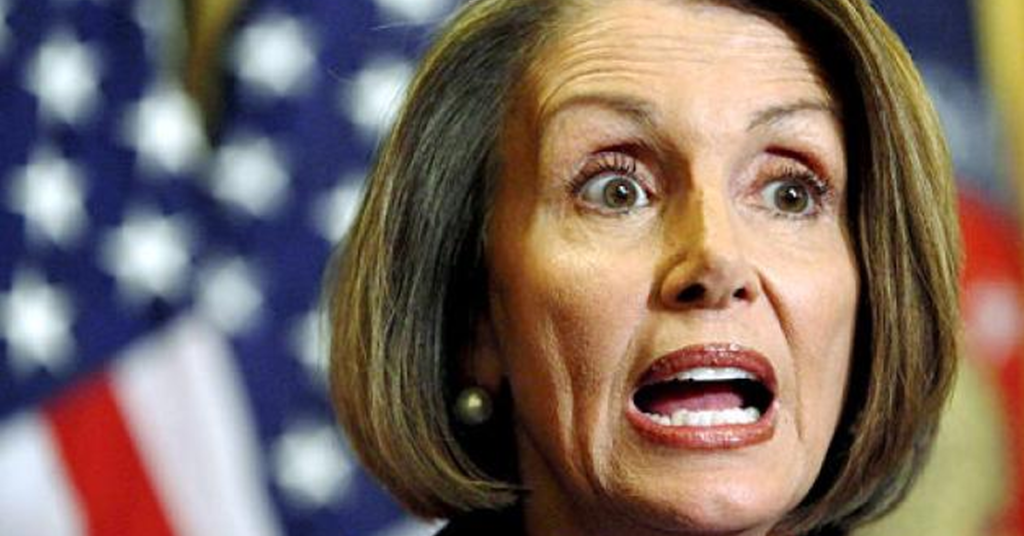
Move over Barack Obama and Hillary Clinton, Republicans have a new campaign boogeyman. Well, sort of new. It’s more of an encore for Nancy Pelosi, the 77-year-old House Democratic leader who spent four years as the nation’s first female speaker, lost her majority in 2010 and now wants the gavel again. In that quest, the California lawmaker and fundraiser extraordinaire finds herself as the GOP’s preferred face of a Democratic Party trying to upend Republicans’ monopoly control in Washington. Republicans are testing their approach in a pair of special House races where the specter of a second Pelosi speakership is intended to excite — or scare — Republican voters and sway independents enough to counter surging opposition to President Donald Trump. And the strategy could be a defining theme of the 2018 midterm elections. “Nancy Pelosi and liberal politicians are flooding into Georgia to try and stop our Republican majority,” a national GOP television spot blares in a suburban Atlanta congressional district where 30-year-old Democrat Jon Ossoff nearly won a multiparty primary outright. Ossoff still could claim a June runoff victory that would jolt Washington, and his opponent, Republican Karen Handel, warns he’d be Pelosi’s “rubber stamp.” In Montana, a grainy black-and-white television image of Pelosi greets voters mulling another Democratic upset bid. “Rob Quist talks folksy, but his record is more Nancy Pelosi than Montana,” a voiceover warns of the singer-turned-candidate. Trump himself has joined in. “Ossoff is funded by Nancy Pelosi,” who wants “to land a blow against my presidency,” reads a fundraising email the president signed on Handel’s behalf. And when the U.S. Chamber of Commerce endorsed Handel, the organization’s political chief, Rob Engstrom, bemoaned Pelosi’s “failed legacy as speaker.” Pelosi has proven effective as a prolific fundraiser and a leader capable of rallying Democrats to deliver major legislation for then-President Barack Obama. As speaker, she muscled through the 2010 health care law and the Dodd-Frank financial overhaul — complex laws the likes of which her Republican successors have been unable to handle. Pelosi frames the attacks as proof Republicans have no affirmative case. “It shows the bankruptcy of their own initiatives,” she said recently on NBC’s “Meet the Press” when shown ad clips. Ossoff calls them “tired” and repeated his pledge to be independent. Reminded that Pelosi and other House Democratic leaders held a fundraiser for him in Washington on March 16, he said, “I’m a Democrat running for Congress.” The coordinated GOP assault certainly resonates with voters like Matt West, a Georgia financial planner. West, 45, says his first-round vote for Handel wasn’t about her or Trump, but about national Democrats. “I just don’t believe that he’d stand up to Nancy Pelosi if the district wanted him to,” West says of Ossoff. Some Democrats say Pelosi and other party leaders walk into stereotypes about liberals, making it harder to argue that Trump and Republicans hurt middle-class households. “It gets very difficult when most of our leadership, almost exclusively, are coastal. That’s an issue,” argues Rep. Tim Ryan, D-Ohio, who unsuccessfully challenged Pelosi for minority leader last fall. Former Rep. John Barrow of Georgia, a Democrat, argues the dynamics reflect gerrymandered districts and a campaign process that punishes moderates. Democrats will likely have to win some of those Republican-friendly districts to net the two dozen House seats they’d need for a majority. Barrow weathered the 2010 Republican onslaught but ultimately lost in 2014, after years of Republicans branding him as an Obama-Pelosi tool, even though he did not vote for Pelosi as speaker after Obama took office as president. Barrow instead cast symbolic votes for civil rights leader John Lewis, another Georgia congressman. “Both parties are tightly in the grip of the most partisan voters,” which necessarily yields a more extreme Congress, Barrow said. “I can’t tell you how many folks I had tell me, ‘John, you’d be our man for the job, but I just can’t do anything to support Obama and Pelosi.’” Republicans have long caricatured Pelosi, who hails from a liberal San Francisco district, just as Democrats have used polarizing GOP figures like Sarah Palin and Senate Majority Leader Mitch McConnell of Kentucky to raise money and excite loyal liberals. The difference this time, though, is Republicans having to navigate through the politics created by their own uniquely polarizing president by making Pelosi an almost singular counter now that Obama is out of office. Trump lost the national popular vote by almost 3 million, and he has Gallup job approval ratings lower than any recent president so early in his tenure. Republicans also attribute to Trump the national fundraising deluge for Ossoff, who’s on track to collect more than $10 million ahead of his June 20 runoff, and with the surprisingly close GOP victory margin in an April special House election in Kansas. As Barrow, the former Georgia congressman, noted, the Pelosi effect is concentrated with a House congressional map drawn by many GOP-controlled legislatures that created more districts where she is an easy target. “Trump may not be that popular here,” said Georgia Republican Greg Williams, who backed Handel’s top GOP opponent. But naming Pelosi, he said, is “a dog whistle for conservatives.” Republished with permission of The Associated Press.
Bradley Byrne: The first 100 days
We are now over 100 days into the Trump Presidency and this era of unified Republican government. Despite what some in the mainstream media may say, a lot has been accomplished. In fact, more bills have been signed into law by President Donald Trump in his First 100 Days than any President since Harry Truman. Many of these bills have focused on rolling back costly and unnecessary government regulations. All told, cutting these regulations is estimated to save around $18 billion a year. Quite possibly the most important and consequential event of the First 100 Days was the nomination and confirmation of Judge Neil Gorsuch to the U.S. Supreme Court. Judge Gorsuch understands that it is his job to uphold the law, not rewrite the law through judicial rulings. His confirmation reasserted a 5-4 balance on the Supreme Court in favor of more conservative judges. President Trump also appointed a first class team to help lead our government, and all of his cabinet secretaries are now confirmed and in place. From Attorney General Jeff Sessions to Secretary of Homeland Security John Kelly to Secretary of Labor Alex Acosta, this is a team of leaders who understand the importance of keeping the American people safe, enforcing the law, and growing our economy. Speaking of the economy, it has made important strides in the early days of the Trump Administration. Over 500,000 new jobs have been created, and the unemployment rate is at its lowest level since May 2007. The President is also looking out for American workers by pushing for fair trade deals and cracking down on bad trade practices. These changes are especially important to the steel industry, which is a key part of our local economy in Southwest Alabama. President Trump is also cracking down on illegal immigration, which has resulted in illegal border crossings hitting a 17 year low. The President has made clear that illegal immigration will not be allowed and that there will be serious consequences for those who enter our country illegally. It is wonderful to see our immigration laws actually being enforced. For those of us who support the pro-life movement, the First 100 Days have been a huge success. As one of his first acts, President Trump reinstated the “Mexico City Policy,” to ensure no taxpayer money goes to non-governmental organizations that perform or promote abortion. We also had a huge victory when the President signed our bill blocking a rule that would have forced states to fund Planned Parenthood. On national security, President Trump has sent a clear message that America is back, we are standing strong, and we mean what we say. Our allies know that we will support them and our adversaries realize there will be consequences for their actions. The President, with the help of Congress, is also making progress to rebuild our military and ensure our troops have the tools they need to get the job done. President Trump, along with Secretary of Veterans Affairs David Shulkin, has also made important progress in turning things around at the VA. Just last week, they announced the creation of a new Office of Accountability and Whistleblower Protection to help identify and resolve issues at the VA. I am also thrilled to see the President advocating for increased veteran access to private medical care through the VA Choice Card program. The good news is that our work is just getting started. I still expect progress on important issues like health care, tax reform, infrastructure, trade, and much more. There is no doubt the challenges facing our nation are great but so are the opportunities. • • • Bradley Byrne is a member of U.S. Congress representing Alabama’s 1st Congressional District.
Lawmakers seal deal on $1T plan government-wide funding bill
Congressional Republicans and Democrats forged a hard-won agreement Sunday night on a huge $1 trillion-plus spending bill that would fund the day-to-day operations of virtually every federal agency through September, denying President Donald Trump funding for a border wall and rejecting his cuts to popular domestic programs. Aides to lawmakers involved in the talks announced the agreement after weeks of negotiations. It’s expected to be made public early Monday. The catchall spending bill would be the first major piece of bipartisan legislation to advance during Trump’s short tenure in the White House. While losing on the wall along the U.S.-Mexico border, Trump won a $15 billion down payment on his request to strengthen the military. The measure funds the remainder of the 2017 budget year, rejecting cuts to popular domestic programs targeted by Trump, such as medical research and infrastructure grants. Successful votes later this week would also clear away any remaining threat of a government shutdown — at least until the Oct. 1 start of the 2018 budget year. Trump has submitted a partial 2018 budget promising a 10 percent increase for the Pentagon, financed by cuts to foreign aid and other nondefense programs that negotiators on the pending measure protected. Democrats were quick off the mark to praise the deal. “This agreement is a good agreement for the American people, and takes the threat of a government shutdown off the table,” said Senate Minority Leader Chuck Schumer, D-N.Y., a key force in the talks. “The bill ensures taxpayer dollars aren’t used to fund an ineffective border wall, excludes poison pill riders, and increases investments in programs that the middle class relies on, like medical research, education and infrastructure.” Trump said at nearly every campaign stop last year that Mexico would pay for the 2,000-mile (3218.54-kilometer) border wall, a claim Mexican leaders have repeatedly rejected. The administration sought some $1.4 billion in U.S. taxpayer dollars for the wall and related costs in the spending bill, but Trump later relented and said the issue could wait until September. Trump, however, obtained $1.5 billion for border security measures such as more than 5,000 additional detention beds, an upgrade in border infrastructure and technologies such as surveillance. The measure is assured of winning bipartisan support in votes this week; the House and Senate have until midnight Friday to pass the measure to avert a government shutdown. It’s unclear how much support the measure will receive from GOP conservatives and how warmly it will be received by the White House. Republicans are also eager to move on to other issues such as overhauling the tax code and reviving their moribund effort to repeal the Affordable Care Act, President Barack Obama‘s health care law. While the measure would peacefully end a battle over the current budget year, the upcoming cycle is sure to be even more difficult. Republicans have yet to reveal their budget plans, and battles between Trump and Congress over annual agency budgets could grind this summer’s round of spending bills to a halt. Among the final issues resolved was a Democratic request to help the cash-strapped government of Puerto Rico with its Medicaid burden, a top priority of House Minority Leader Nancy Pelosi of California. Pelosi and other Democrats came up short of the $500 million or so they had sought but won $295 million for the island, more than Republicans had initially offered. Democrats were successful in repelling many conservative policy “riders” that sought to overturn dozens of Obama-issued regulations. Such moves carry less urgency for Republicans now that Trump controls the regulatory apparatus. House Republicans succeeded in funding another round of private school vouchers for students in Washington, D.C.’s troubled school system. GOP leaders demurred from trying to use the must-do spending bill to “defund” Planned Parenthood. The White House also backed away from language to take away grants from “sanctuary cities” that do not share information about people’s immigration status with federal authorities. Democrats praised a $2 billion funding increase for the National Institutes of Health — a rejection of the steep cuts proposed by Trump — as well as additional funding to combat opioid abuse, fund Pell Grants for summer school, and additional transit funding. Senate forces, led by Majority Leader Mitch McConnell, R-Ky., and several Appalachia region Democrats, won a provision to extend health care for 22,000 retired Appalachian coal miners and their families. Democratic votes will be needed to pass the measure even though Republicans control both the White House and Congress. The minority party has been actively involved in the talks, which appear headed to produce a lowest common denominator measure that won’t look too much different than the deal that could have been struck on Obama’s watch last year. For instance, the measure contains a $2 billion disaster aid fund, $407 million to combat Western wildfires, and additional grants for transit projects, along with $100 million in emergency funding to fight the nation’s opioid crisis. The measure also taps $68 million to reimburse New York City and other local governments for unexpected costs involved in protecting Trump Tower and other properties, a priority of lawmakers such as Rep. Nita Lowey, D-N.Y. Republished with permission of The Associated Press.
Beyond 100 days, Donald Trump faces more legislative challenges
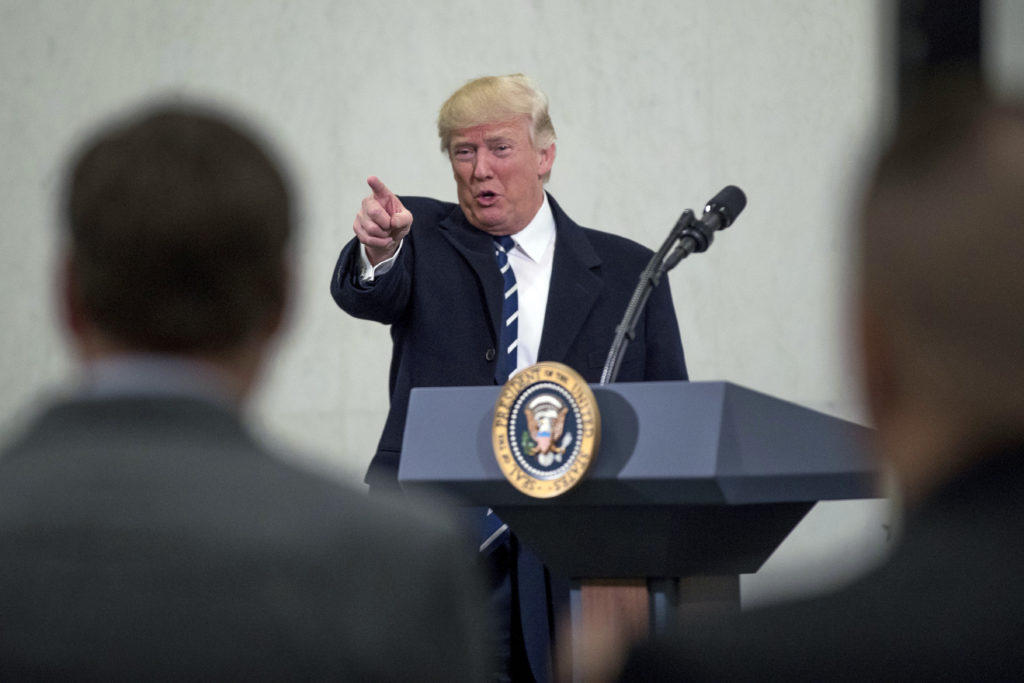
President Donald Trump would get additional military funds, but no border wall dollars under a massive spending bill that Congress agreed to Sunday night. The $1 trillion plus spending agreement — which would fund virtually every federal agency through September — came just after Trump marked 100 days in office without any significant legislative wins. The bill does not deliver everything the White House sought, but it would be the first major piece of bipartisan legislation to advance during Trump’s time in the White House. The House and Senate have until Friday at midnight to pass the measure to avert a government shutdown. Trump has spent his first 100 days coming to terms with the slow grind of government even in a Republican-dominated capital, and watching some of his promises —from repealing the nation’s health care law to temporarily banning people from some Muslim nations — fizzle. The spending measure funds the remainder of the 2017 budget year. Aides to lawmakers involved in the talks announced the agreement after weeks of negotiations. It denies Trump a win on his oft-promised wall along the U.S.-Mexico border, but gives him a down payment on his request to strengthen the military and funding for additional border security measures. Despite a renewed White House effort push, the House did not vote last week on a revised bill to repeal and replace the Affordable Health Care Act. After the original effort failed to win enough support from conservatives and moderates, Republicans recast the bill. The latest version would let states escape a requirement under Obama’s 2010 law that insurers charge healthy and seriously ill customers the same rates. The overall legislation would cut the Medicaid program for the poor, eliminate fines for people who don’t buy insurance and provide generally skimpier subsidies. Critics have said the approach could reduce protections for people with pre-existing conditions. But during an interview with “Face the Nation” on CBS aired Sunday, Trump said the measure has a “clause that guarantees” that people with pre-existing conditions will be covered. Trump said: “Pre-existing conditions are in the bill. And I just watched another network than yours, and they were saying, ‘Pre-existing is not covered.’ Pre-existing conditions are in the bill. And I mandate it. I said, ‘Has to be.’” Trump said during the interview that if he’s unable to renegotiate a long-standing free trade agreement with Mexico and Canada, then he’ll terminate the pact. He also spoke about tensions with North Korea. Asked about the failure of several North Korean missile tests recently, Trump said he’d “rather not discuss it. But perhaps they’re just not very good missiles. But eventually, he’ll have good missiles.” Trump also said he is willing to use the trade issue as leverage to get China’s help with North Korea. “Trade is very important. But massive warfare with millions, potentially millions of people being killed? That, as we would say, trumps trade.” And he acknowledged the presidency is “a tough job. But I’ve had a lot of tough jobs. I’ve had things that were tougher, although I’ll let you know that better at the end of eight years. Perhaps eight years. Hopefully, eight years.” Also this week, the president will welcome Palestinian President Mahmoud Abbas to the White House. And he’ll head to New York City on Thursday where he’ll visit the USS Intrepid to mark the 75th anniversary of a World War II naval battle. On Sunday morning, Trump headed to Trump National Golf Club in Virginia. The White House did not immediately clarify whether he was holding meetings or golfing. Trump marked his 100th day in office Saturday with a rally in Harrisburg, where he continued to pledge to cut taxes and get tough on trade deals. “We are not going to let other countries take advantage of us anymore,” he said Saturday in Harrisburg at the Pennsylvania Farm Show Complex and Expo Center. “From now on it’s going to be America first.” Trump’s rally Saturday night in Harrisburg offered a familiar recapitulation of what he and aides have argued for days are administration successes, including the successful confirmation of Neil Gorsuch to the Supreme Court, his Cabinet choices and the approval of construction of the Keystone XL pipeline. Republished with permission of The Associated Press.
