
Rock nation? Dwayne Johnson considering run for White House
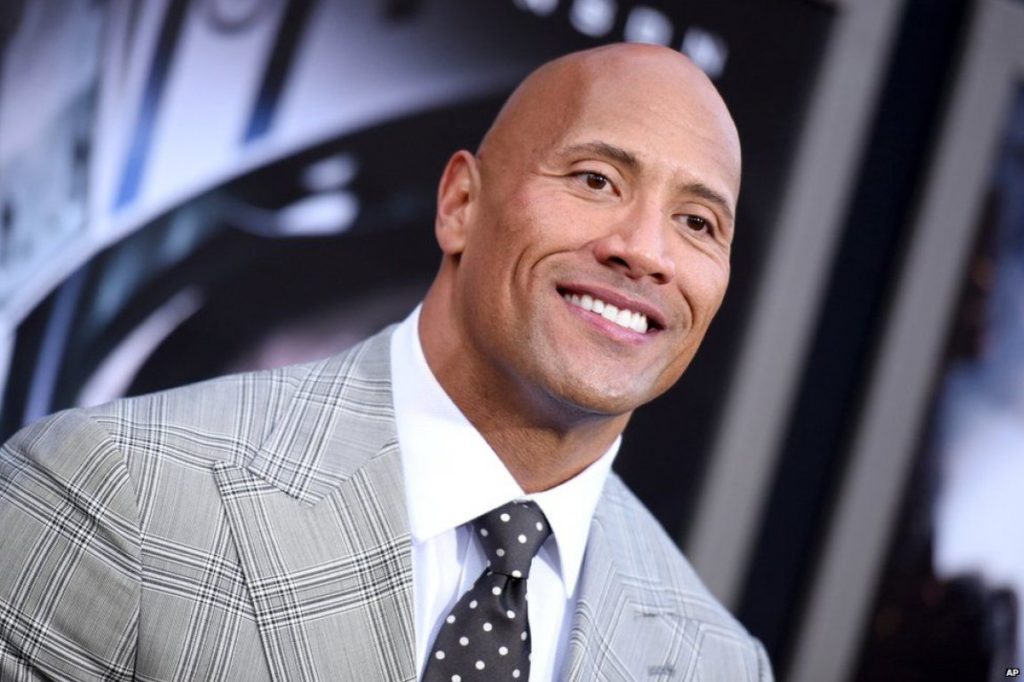
After conquering Hollywood, Dwayne “The Rock” Johnson may have his sights set on the White House. The actor and former pro wrestler tells GQ that a presidential run is “a real possibility.” Johnson says if he were president, leadership would be a top priority. Johnson isn’t revealing much about his political leanings, but says he’s not in favor of President Donald Trump’s proposed travel ban because he believes “in inclusion.” Johnson declined to endorse anyone in the presidential race last year even though he says both campaigns approached him. Johnson explains that he didn’t want to sway anyone’s opinion or make people unhappy with his politics. Johnson would have at least one high-profile backer in NBCUniversal vice chairman Ron Meyer, who tells GQ he’d vote for Johnson “without a question.” Republished with permission of The Associated Press.
Alabama Democrats stall vote on redistricting bill
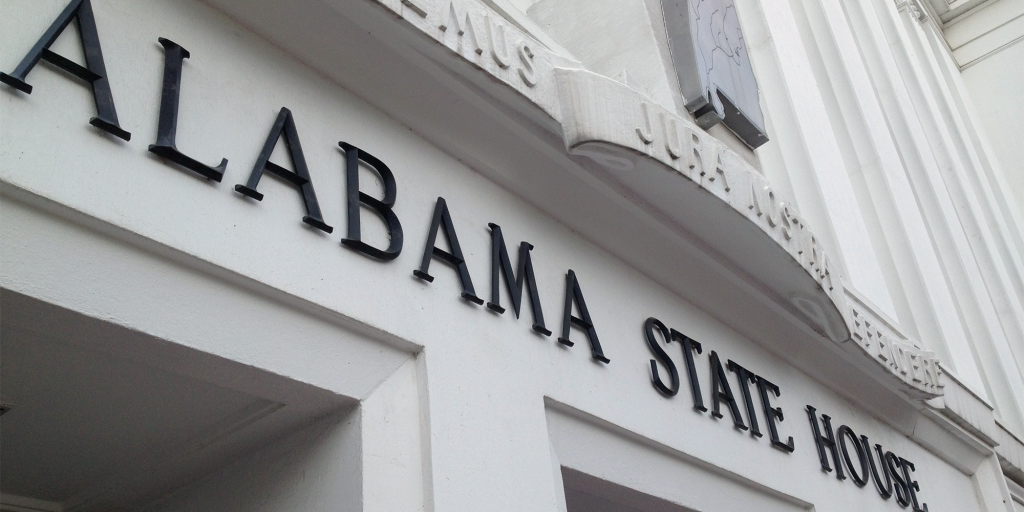
House Democrats are working hard to stall a vote on a plan to redraw the state’s legislative districts, saying the latest plan is still unfairly based on race. The Legislature was tasked with drawing new district plans following a January decision from a three-judge federal court found the Legislature improperly used race as the primary factor in drawing nine House districts and three Senate districts in 2012. The court ruled the 12 districts in question could not be used in the 2018 elections. Tweaking the lines of those 12 districts affected the other 13 districts across the state. Late Tuesday night, members of the House Democratic Caucus delayed a vote on the new plans until Thursday when Thomasville-Democrat Rep. Thomas Jackson asked for the 539-page bill to be read aloud by an automated voice-reader. The reading is estimated to take approximately 13 hours and resumed Thursday when the Legislature came back into session. The House Democratic Caucus took to Facebook on Thursday to express their disapproval of the plans. Folks, this entire reapportionment process has been yet another example of cloak and dagger politics. The committee meetings were thrown together at the last moment, the “public hearing” was anything but public, and on top of it all, the plan that was debated in committee isn’t the plan that was on the floor yesterday. Republicans drew a midnight substitute for the reapportionment plan, meaning that the plan on the floor yesterday was never discussed, analyzed, or debated in committee. Our members didn’t get the midnight substitute until the day the plan went to the floor despite the fact that all 12 districts that were ruled unconstitutional are OUR districts. Not only is this proposed plan unconstitutional because it continues racial gerrymandering, but the entire process has taken place in secret under a cloud of smoke and crookedness. After a Governor, Chief Justice, and Speaker of the House being removed from office in the past year, Republicans still have not learned their lesson– that cloak and dagger politics have no place in our system. The GOP-led House say they have enough votes to pass the measure, but Democrats say they will plan to continue to delay a vote as long as possible. The redistricting plan will be subject to federal court approval.
Bill to decriminalize Alabama midwifery passes Senate committee
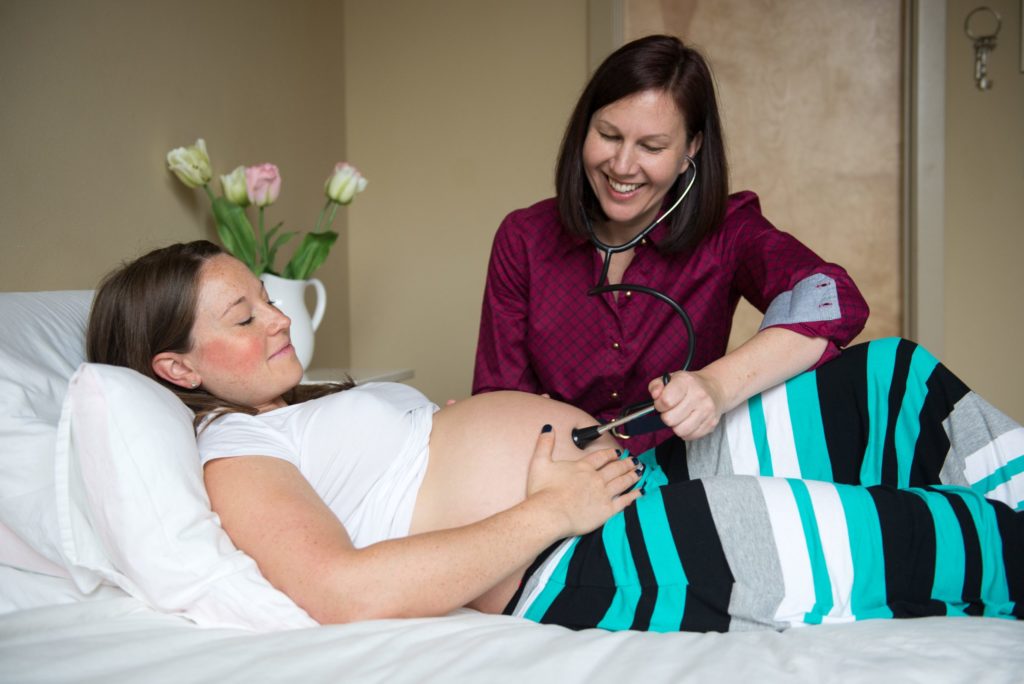
An Alabama Senate committee on Wednesday passed a bill that would allow certified professional midwives to legally practice in the Yellowhammer State. The Senate Judiciary Committee approved the bill, sponsored Moulton-Republican state Rep. Ken Johnson , 9-2. The committee also approved an amendment Rainbow City-Republican Sen. Phil Williams offered that would mandate certified midwives to carry liability insurance. It also requires mothers and midwives to have a written emergency plan in place at least 30 days prior to the mother’s expected due date. Currently, state law says it’s a misdemeanor offense to practice midwifery without a license issued by the state Board of Nursing and the Board of Medical Examiners. Meanwhile, midwifery is legal and regulated in 31 states, including neighboring states Florida and Tennessee. Supporters of the bill call today’s vote a victory for Alabama midwives. “It passed!!!,” the Alabama Birth Coalition posted on their Facebook page. “We are so thankful for the favorable report from the Judiciary committee today. On to the Senate floor! We will explain the amendment in more detail later, but supporters…. this is a time to celebrate and remain positive and hopeful!!” The bill will now move to the full Senate for consideration. It has already passed the State House, 84-11.
Donald Trump thrusts U.S. presidency into perilous area
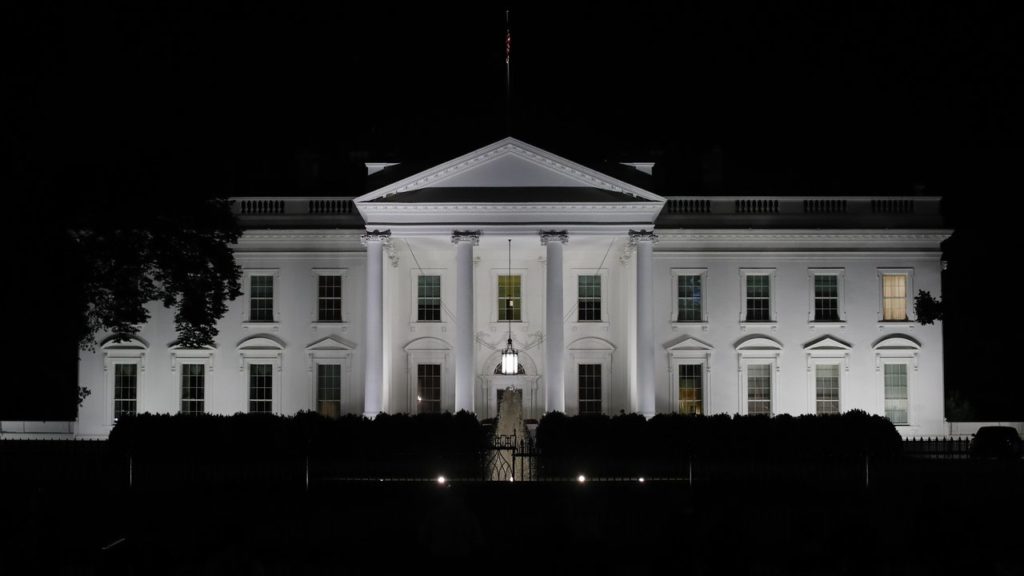
With his shocking dismissal of FBI Director James Comey, Donald Trump is propelling the presidency into rarely traversed territory. His surprise announcement Tuesday flouts decades of presidential deference to the nation’s top law enforcement agency and its independence. It earns Trump the dubious distinction of being the first president since Richard Nixon to fire the official overseeing an investigation involving the commander in chief. And it cements a clear pattern of a man willing to challenge — in dramatic fashion — the institutions created to hold the president accountable. “That’s why this is unprecedented,” said Michael Beschloss, a presidential historian. “He’s showed signs of not having a great deal of respect for the system by which this investigation has been operating.” Sen. Richard Burr, the North Carolina Republican who is overseeing one of the congressional investigations into Russia’s election interference, said: “I am troubled by the timing and reasoning of Comey’s termination.” Sen. Jeff Flake, R-Ariz., said he’d spent hours trying to find “an acceptable rationale” for Trump’s decision. “I just can’t do it,” he said. Trump attained his White House goal after a decades-long career in business during which he was accountable to few people other than himself. Thus, he has chafed at the constitutionally mandated constraints on the presidency. Within days of taking the oath of office, he suddenly fired acting Attorney General Sally Yates — a career Justice Department official — after she refused to defend the White House’s controversial travel and immigration ban. When the federal courts blocked that measure as well, Trump aggressively castigated individual judges as political actors and challenged the court’s role in curbing a president’s policies. No matter which president originally appoints them — Comey was tapped by Barack Obama in 2013 — almost all FBI directors are allowed to serve out their full 10-year terms under successor commanders in chief. Bill Clinton is the only other president to fire an FBI chief, amid questions about the director’s use of FBI aircraft for personal purposes. The Trump White House cited Comey’s handling of last year’s investigation into Hillary Clinton’s email practices as the cause for the firing, and, to be sure, Comey left himself vulnerable. He was widely criticized for heavy-handed and high-profile decisions in the case, particularly when he sent a letter to Congress 10 days before the election saying the bureau was looking at new information related to the inquiry. He said at the time that the new information related to emails found on a laptop belonging to the husband of Clinton aide Huma Abedin, the disgraced congressman Anthony Weiner. At the time, Trump praised Comey for having “guts” and doing “the right thing,” statements that complicate his assertion that now, seven months later, Comey’s decisions warranted firing. Trump’s announcement came as Comey was again facing criticism, this time for telling congressional lawmakers that Abedin had forwarded “hundreds or thousands” of emails to the laptop. On Tuesday, hours before Trump fired Comey, the FBI told lawmakers that the director was wrong, and Abedin had forwarded only a “small number” of emails. Although Democrats blame Comey for Clinton’s loss, they are unlikely to accept Trump’s explanation for the firing. The president has repeatedly dismissed Comey’s Russia investigation — as well as the congressional inquiries — as a “hoax.” He’s also insisted that he is not personally under investigation — asserting Tuesday that Comey told him three times that he was not a target — though the FBI has stated unequivocally that the president’s campaign and his associates are facing scrutiny. “This is Nixonian,” said Sen. Bob Casey, D-Pa. Jimmy Gurule, a former assistant attorney general who was appointed by President George H.W. Bush, said Trump’s decision “threatens our democracy and undermines the integrity of the FBI investigation.” Gurule is now a law professor at the University of Notre Dame. Nixon’s decision had a ripple effect throughout his administration, with the attorney general and deputy attorney general resigning rather than carry out the president’s orders. There was no such response from Trump’s White House aides and other top administration officials. “We haven’t had a voice from within the Trump administration denounce this yet,” said Douglas Brinkley, a presidential historian at Rice University. “I think at this moment the question is, will leading Republicans step out of the box and become profiles of courage?” In the immediate aftermath of Trump’s announcement, many Republicans appeared more inclined to back his decision, citing their own concerns with Comey’s stewardship of the FBI following months of controversy. None of the Republicans who did raise concerns were rushing to draw comparisons to Nixon, the only president to resign from office. Yet they, too, appeared troubled by Trump’s decision and wary of the prospect of White House interference in an investigation involving the president. Comey’s “removal at this particular time will raise questions,” said Sen. Bob Corker, R-Tenn. It is essential, he said, that ongoing investigations are full “and free of political interference until their completion.” Republished with permission of The Associated Press.
Donald Trump delaying decision on Paris climate deal
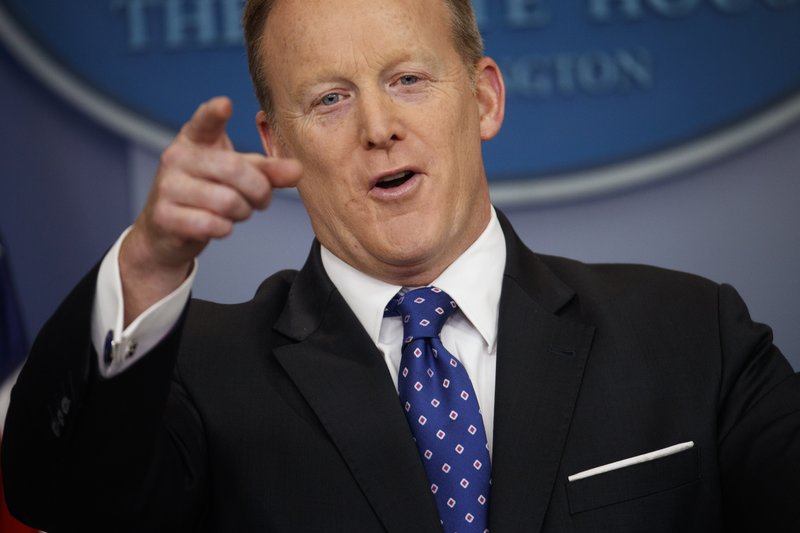
President Donald Trump is delaying a decision on whether to withdraw from a landmark climate deal until after an international summit later this month. That means the president will head to the G7 summit in Italy at the end of May amid continued global uncertainty over whether the United States will remain in the emissions-cutting deal struck in Paris under the Obama administration. White House spokesman Sean Spicer said Tuesday that Trump wants to “continue to meet with his team,” seeking advice from both an economic and an environmental perspective as he works to make a decision. A meeting for top advisers to discuss the deal was set for Tuesday afternoon but was postponed. Trump pledged during the presidential campaign to renegotiate the accord, but he has wavered on the issue since winning the presidency. His top officials have appeared divided about what to do about the deal, under which the United States pledged to significantly reduce planet-warming carbon emissions in the coming decade. Leading up to the expected Tuesday meeting, a number of high-profile businesses spoke out in favor of remaining in the deal. A group including Apple, Google and Walmart signed a letter sent to Trump last week. A larger coalition signed on to ads run in the Washington editions of the New York Times and Wall Street Journal this week. On Instagram Tuesday, renowned jeweler Tiffany and Company wrote a message to the president, saying “we’re still in for bold climate action. Please keep the U.S. in the Paris Climate Agreement.” Ted Halstead, president of the Climate Leadership Council, said that “there is a nearly unanimous position on the part of big business.” Halstead co-authored an opinion piece that ran in the New York Times Tuesday, titled “The Business Case for the Paris Climate Accord.” “American business leaders understand that remaining in the agreement would spur new investment, strengthen American competitiveness, create jobs, ensure American access to global markets and help reduce future business risks associated with the changing climate,” said the piece, written with George P. Shultz, who served as secretary of state under President Ronald Reagan. Opponents of the deal have also lobbied the president this week, with a group of conservative organizations signing a letter saying “the treaty is not in the interest of the American people and the U. S. should therefore not be a party to it.” Signatures on the letter include veteran anti-tax activist Grover Norquist and Myron Ebell, who led transition efforts at EPA prior to the president’s swearing in. The Paris accord, signed by nearly 200 nations in 2015, was never ratified by the Senate due to the staunch oppositions of Republicans. It therefore does not have the force of a binding treaty, and the United States could potentially withdraw from the deal without legal penalty. Secretary of State Rex Tillerson, the former chief executive of the oil company Exxon, said at his Senate confirmation hearing in January that he supports staying in the deal. But Environmental Protection Agency Administrator Scott Pruitt has said the Paris pact “is a bad deal for America” that will cost jobs. Like Trump, Pruitt has questioned the consensus of climate scientists that man-made carbon emissions are the primary driver of global warming. A senior administration official said the president’s inclination has been to leave the pact, but Ivanka Trump set up a review process to make sure he received information from experts in the public and private sector before a making a decision. The official requested anonymity to discuss private conversations. Ivanka Trump, who serves as an adviser to her father, was supposed to meet separately Tuesday with Pruitt Tuesday, but that meeting was also postponed, according to a White House official who requested anonymity to discuss private talks. Republished with permission of The Associated Press.
Steve Flowers: Some positive political observations for 2017 so far

Most times political columns are critical or derogatory of politicians. However, today I would like to share some positive observations from the first few months of this year. Sometimes I enjoy striding down the halls of our old capitol reminiscing about my younger days when I would walk those halls as a page boy and then during my 30s and 40s as a member of the legislature. In bygone days, you would never see a constitutional officer in their offices working on Fridays, not even the governor. A few months ago, I walked down the halls at about 3:30 on a Friday afternoon and popped into Secretary of State John Merrill’s office and to my amazement Secretary Merrill was in his office working. After visiting with him a while, I walked across the hall to the State Treasurer’s office and lo and behold there was Young Boozer working away. We chatted a while, Young’s daddy was a good friend of mine. His name was also Young Boozer. He was a very successful businessman. He had been a star football player at Alabama during the 1920s with Bear Bryant. He intercepted a pass that won the Rose Bowl against Stanford, which by the way is this Young’s alma mater. Well about three weeks later I was attending a ceremony in the old historic House chamber, which was also on a Friday afternoon. I repeated my steps from the previous Friday and again Merrill and Boozer were in their offices working. In essence not only are John Merrill and Young Boozer uniquely qualified for their jobs, these two gentlemen have an honest to goodness work ethic for the people of Alabama. Our Senior Senator Richard Shelby has been our U.S. Senator since 1986. During those 30 years, he has kept a campaign promise made during that 1986 campaign. He has come home and visited all 67 counties each and every year. As he begins his sixth six-year term he finds himself in a pinnacle of power never before matched in Alabama political history. He is without question one of the five most powerful men in the United States Senate, which makes him one of the nation’s most important leaders. Senator Shelby chairs the omnipotent Senate Rules Committee. Within the next two years he will set the record for Senate longevity by any Alabama Senator in history. He will exceed John Sparkman’s record of over 32 years in the Senate and he will also become Chairman of the Senate Appropriations Committee. Most U.S. Senators in his position would enjoy the trappings of power and adulation in Washington. Not Shelby. At 81 years old, he spent the months of February and March quietly traveling the state visiting with Alabama businesses discussing how he could use his seniority to enhance their opportunities and growth. One Wednesday night in late February, I joined my old friend Shelby for dinner in downtown Enterprise. He had spent the past two days visiting with military-related industries throughout the Wiregrass around Ft. Rucker. As we reminisced about past times in Alabama politics I marveled at how sharp Shelby is for 81. He looks and moves more like someone 61. We are fortunate to have Shelby. State Senator Gerald Dial has been in the Alabama Senate for 30 years. He has adamantly said he is not running for re-election next year. He is using his last term in the Senate to be a leader and workhorse. He seems to be in charge of the Senate. He is involved with every major issue and is chairing the Reapportionment Committee, which has to have a resolution by the end of the Session. He seems more like the Governor than a powerful State Senator. State Senator Cam Ward has taken the bull by the horns with the prison overcrowding bond issue. He has been the architect, developer, chief cook and bottle washer of this premier and critical issue. He has filled a void left by the governor’s office. Representative Steve Clouse has become the budget guru and mainstay of the beleaguered General Fund. As Chairman of the House Ways and Means Committee he has worked adroitly and prudently to keep the ship of state afloat. If it were not for Clouse’s diligence and stewardship, the state would be floating aimlessly into the Gulf of Mexico. See you next week. ___ Steve Flowers is Alabama’s leading political columnist. His weekly column appears in over 60 Alabama newspapers. He served 16 years in the state Legislature. Steve may be reached at www.steveflowers.us.
Energy state Republicans under pressure on methane rule
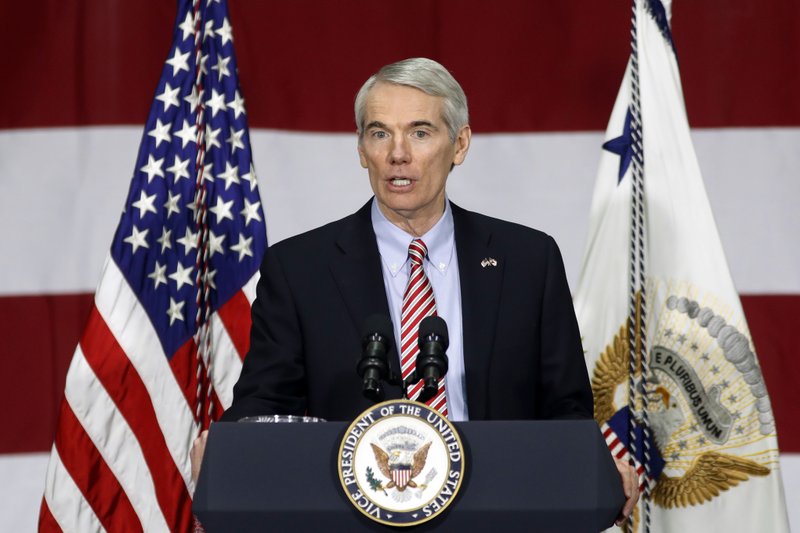
Republicans from energy-producing states are under pressure as the Senate weighs whether to overturn an Obama-era regulation to restrict harmful methane emissions escaping from oil and gas wells on public land. A coalition of groups with ties to the fossil-fuel industry and the conservative Koch Brothers have waged a public campaign to overturn the Interior Department rule but have so far fallen short. Senate Republican leaders say they are close to getting the 51 votes needed to overturn the rule under the Congressional Review Act. A vote is scheduled Wednesday even as key GOP senators remain publicly undecided. Two Republican senators — South Carolina’s Lindsey Graham and Susan Collins of Maine — have said they will oppose the repeal effort, while Republican Sens. Cory Gardner of Colorado and Dean Heller of Nevada have not declared how they will vote. Sen. Rob Portman, R-Ohio, said late Monday he will support the repeal effort after weeks of public silence, saying he got assurances from Interior Secretary Ryan Zinke that he will take steps to reduce methane waste. Despite Portman’s announcement, some environmental groups are optimistic they can score an unlikely victory by preserving the Obama-era rule under a Republican-controlled Congress and White House. “This was a longshot,” said Mark Brownstein, vice president of the Environmental Defense Fund. “Is there any bigger or badder opponent than the oil and gas industry?” The methane issue “has captured the attention of local communities, and the reason is they are seeing the impact on their houses, their water and in some cases they are literally smelling it,” Brownstein said. “When you have local groups getting engaged and speaking out … it’s incredibly hard for any elected representative to ignore that.” President Barack Obama finalized a rule in November that seeks to reduce waste and harmful methane emissions as part of a strategy to address climate change. Energy companies frequently “flare” or burn off vast supplies of methane — the primary component of natural gas — at drilling sites because it earns less money than oil. An estimated $330 million a year in natural gas is wasted through leaks or intentional releases — enough to power about 5 million homes a year. Gas flaring is so prevalent in oil-rich North Dakota that night-time flaring activity on drilling sites is visible in NASA photos from space. Robert Dillon, a spokesman for the American Council for Capital Formation, a business-aligned group that promotes lower regulations and taxes, said he is confident the methane rule will be overturned. The Republican-controlled House voted in February to reject the rule, and President Donald Trump is expected to sign the measure if it lands on his desk. While acknowledging that the Senate vote has taken longer than expected, “nearly all Republicans are now expected to support repeal of the methane rule,” Dillon said. Democrats and environmental groups hailed the Obama rule as a way to protect the public health and generate tens of millions of dollars in revenues for state, local and tribal governments. Republicans and industry groups call the rule another example of federal overreach under Obama and say it duplicates state rules in place throughout the West. Methane emissions fell by 13 percent from 2011 to 2014 even as production boomed, according to government data. “The oil and gas sector has been so successful in reducing methane emissions from venting and flaring, in part, because methane itself is a valuable resource that producers capture and sell,” a coalition of industry groups said in a letter to senators. The groups include the American Energy Alliance and Americans for Prosperity, part of a conservative network backed by billionaires Charles and David Koch. The Obama rule will decrease energy production on federal lands, leading to lower revenues from royalties and higher energy costs and lost jobs, the coalition said. Both sides of the debate have targeted Gardner, a first-term senator who heads the Republican Senate campaign committee. The federal rule is based on a Colorado regulation widely popular in the state. A recent poll showed 83 percent of Colorado residents support requiring energy companies to prevent leaks of methane gas. Don Schreiber, a New Mexico rancher whose family owns a farm in southern Colorado, said it would be “morally outrageous” for Gardner and other senators to overturn the methane rule, citing a huge methane plume that hovers over the Four Corners region of Arizona, Colorado, New Mexico and Utah. The plume threatens tourism and the health of local residents, Schreiber and Gwen Lachelt, a commissioner in La Plata County, Colo., said at a Capitol news conference Tuesday. “My constituents deserve protection,” Lachelt said, calling the methane plume “a very grave” threat. Gardner declined to comment. Sen. Maria Cantwell, D-Wash., said it would “be a huge step backwards to roll back” the methane rule. “We can keep our commitment to people or we can let polluters off the hook,” she said. Republished with permission of The Associated Press.
