
Alabama Senate approves autism insurance mandate

The Alabama Senate voted 33 to 1 Tuesday night mandating insurance coverage for autism therapy. The bill, which has previously stalled in the Senate due to concerns over costs, requires providers to cover an intensive therapy called Applied Behavioral Analysis (ABA) therapy. The bill will now go back to the House where lawmakers must decide whether or not they want to accept the changes the Senate made to it, such as making the mandate only apply to patients up to 18 years of age, applying only to companies with at least 51 employees, and delaying the mandate altogether on public plans until Dec. 31, 2018. Last month, the House unanimously passed the bill, 100-0. Despite not wanting any changes, the bill’s sponsor Meridianville-Republican Rep. Jim Patterson has said he’ll ask his colleagues to approve the changes. Parents of children who have had the therapy told the House Insurance Committee that it has been “life-changing” for their children. The therapy is also expensive, costing tens of thousands of dollars each year. “This whole experience has been a life changing thing for me. I have learn[ed] so many things, and met some wonderful people,” wrote Meridianville resident Summer Bryant Stewart on Rep. Patterson’s Facebook wall Tuesday night after the bill’s Senate passage. “The autism community is the toughest group of people I have ever had the pleasure of meeting. The love and support from my family and friends kept me going through this fight. I am so thankful for Jim Patterson and the courageous way he stood up for my family and the rest of the autism community. “ Upon passage, the bill’s Senate sponsor Auburn-Republican Sen. Tom Whatley, took to Facebook to celebrate:
Uber to Alabama lawmakers: don’t adjourn without one set of ridesharing rules

With no ridesharing-friendly bills signed into law this year and just days left in the legislative session, Uber is making a final plea to state lawmakers to pass one clear set of rules that will bring ridesharing to the entire Yellowhammer State. In a blog post on Tuesday, Uber Alabama General Manager Luke Marklin urged Alabama lawmakers to follow in the footsteps of more than 40 other states across the country, and pass a statewide framework for ridesharing before adjourning this legislative session. “Alabama’s lawmakers should not leave town this week without sending a bill to Governor Ivey that brings Uber’s reliable rides and flexible work opportunities to everyone in the state with one clear set of rules,” said Marklin. “Forty-two states—and counting—have passed statewide ridesharing frameworks, and letting this session end without a law in Alabama will leave Alabama’s residents and tourists behind. If cities continue to have varying rules for ridesharing, it will hurt thousands of drivers’ ability to earn money and prevent people from a getting a ride when they need it most.” Currently ridesharing companies like Uber and Lyft can only operate in select cities throughout the state, and are governed by agreements with each individual city. Which is why, earlier this month, the state House of Representatives passed HB283, which endeavors to provide uniformity of laws governing transportation network companies by ensuring companies, drivers, and insurance requirements are governed solely by Alabama State Law. However, a last minute amendment that was added to the bill, is complicating its future. Instead of allowing the law to apply statewide, HB283 would now only apply to cities and unincorporated areas of the county that do not currently have ridesharing services, should it be signed into law. “A last-minute provision added to the legislation will continue Alabama’s patchwork of conflicting regulations and create more confusion for riders and drivers,” said Uber spokesperson Evangeline George. On Wednesday, the state Senate is expected to consider an alternative bill, which has the full support of Uber. SB271 creates one single set of rules for ridesharing that Uber believes “Alabama needs.” According to Uber, nearly 2,000 Uber riders and driver-partners in Alabama have written their representatives and senators about why Uber is important to them and should be available throughout the state. “I am an Uber driver with over 2,000 rides under my belt, and I can tell you that the majority of my riders state how much they love Uber,” said Tonja, an Uber drive-partner from Mobile. “The convenience of being there to pick them up within minutes, the cost of a ride, and friendly drivers are a godsend to them. Uber has lowered the number of DUI arrests in this country and abroad. It has given drivers the freedom to work on a schedule that best suits their lifestyle, which has opened up an entrepreneurship that helps families and individuals everywhere.” Leaders from across the state are echoing Ubers pleas to legislators, urging them to pass a statewide framework for ridesharing in Alabama this session: Dr. John R. Drew, Senior Vice Chancellor, Troy University: “While Alabama’s large cities have passed ridesharing regulations, it will be impossible for the service to come to small cities like Troy without a statewide law. Continuing Alabama’s patchwork of conflicting regulations will only foster confusion and hamper our ability to get the rides we deserve. We need one set of ridesharing rules to ensure Troy University students can count on Uber for rides to and from Montgomery, Auburn, and anywhere else in the state they choose to visit.” Eufaula Mayor Jack B. Tibbs Jr.: “In Eufaula, providing for the safety and security of the citizens of our community is a top priority. Ridesharing has proven to have a significant impact on public safety in communities across our country, which is why I urge you to pass one clear set of rules for ridesharing in Alabama that would allow companies like Uber to operate statewide.” William J. Canary, President and CEO, Business Council of Alabama: “Alabama is building a reputation around the globe for being open and welcoming to technological innovation and entrepreneurialism exampled by the influx of high-tech jobs to regions across our state. HB 283 will help Alabama to continue moving in this direction and is a commonsense approach that benefits consumers, businesses, the entrepreneurs who work with TNCs, and local governments.” J.T. Griffin, Chief Government Affairs Officers at Mothers Against Drunk Driving: “MADD knows that Alabama is currently considering legislation, HB 283, which would provide for a consistent, clear regulatory mechanism that would allow rideshare companies to operate statewide. Rideshare has the ability to help provide new alternatives to take drunk drivers off the road and help protect our communities. MADD would urge you to consider the lifesaving potential of rideshare technology as you consider this legislation.” Joy Harris, President of the National Federation of the Blind’s Alabama Chapter: “As President of the National Federation of the Blind of Alabama, I support the passage of HB 283, which would permit ridesharing services to operate throughout the state with appropriate regulation. We strongly support the expansion of these services throughout the state. Provision of ridesharing in underserved areas would explode the number of transportation options available to blind residents. It would allow the blind to independently order their own transportation and free anyone who was reluctant to provide it from that task.”
House approves legislation to streamline death penalty appeals
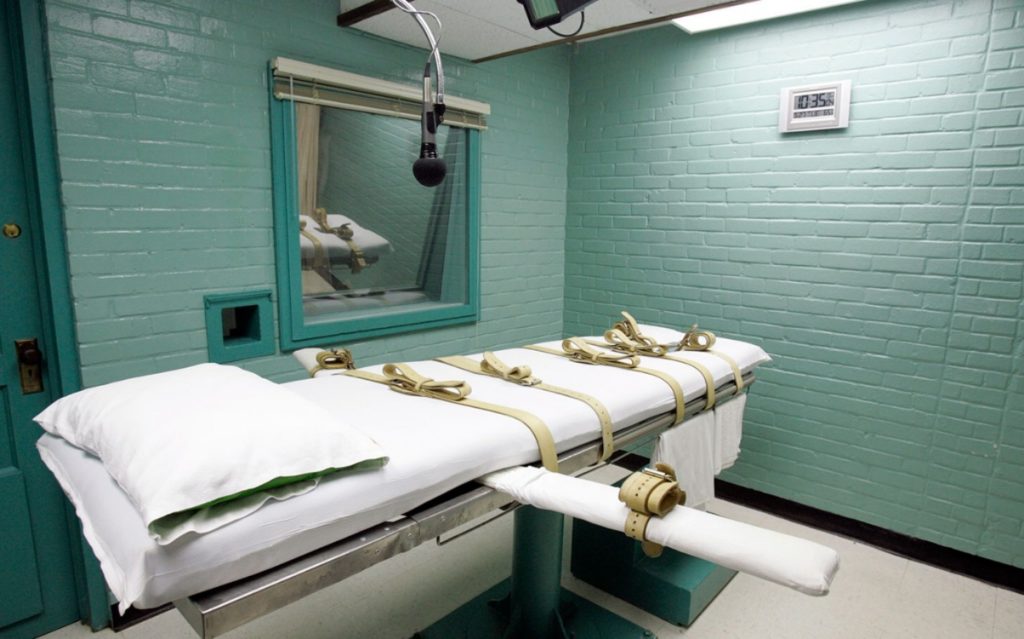
The Alabama House of Representatives on Tuesday approved a bill that would streamline the appeals process for death row inmates. SB187, the Fair Justice Act, streamlines the appeals process by requiring inmates to raise claims such as ineffective counsel at the same time as direct appeal claiming trial errors. It was approved by the House 74-26. The bill’s sponsor, Alabaster-Republican Sen. Cam Ward says the bill should drop the appeals time from roughly 18 years down to nine. However, many House Democrats argue it increases the chances the state could execute an innocent person. Attorney General Steve Marshall disagrees. He thinks the bill is the solution to the state’s inefficient appeals process. “There is no doubt that Alabama’s system for reviewing capital cases is inefficient and in need of repair,” said Marshall. “The average death row inmate appeal time is over 15 years and rising. Each year that these appeals drag on, the general public is further removed from and even desensitized to the horrendous crimes that led to the sentences of every individual on death row. But, for the families of victims, the pain is not numbed with the passing of years. The endless appeals process reopens their wounds again and again.” Marshall continued, “This legislation is about justice, and justice should be fair and swift. The Fair Justice Act takes nothing away from a death row inmate in terms of the courts reviewing his case, but streamlines the appellate process so that the direct appeal and the state post-conviction stage occur simultaneously.” The Fair Justice Act passed the Alabama Senate on April 18. It will return to the Senate for concurrence or conference committee.
Donald Trump claims ‘absolute right’ to share info with Russia

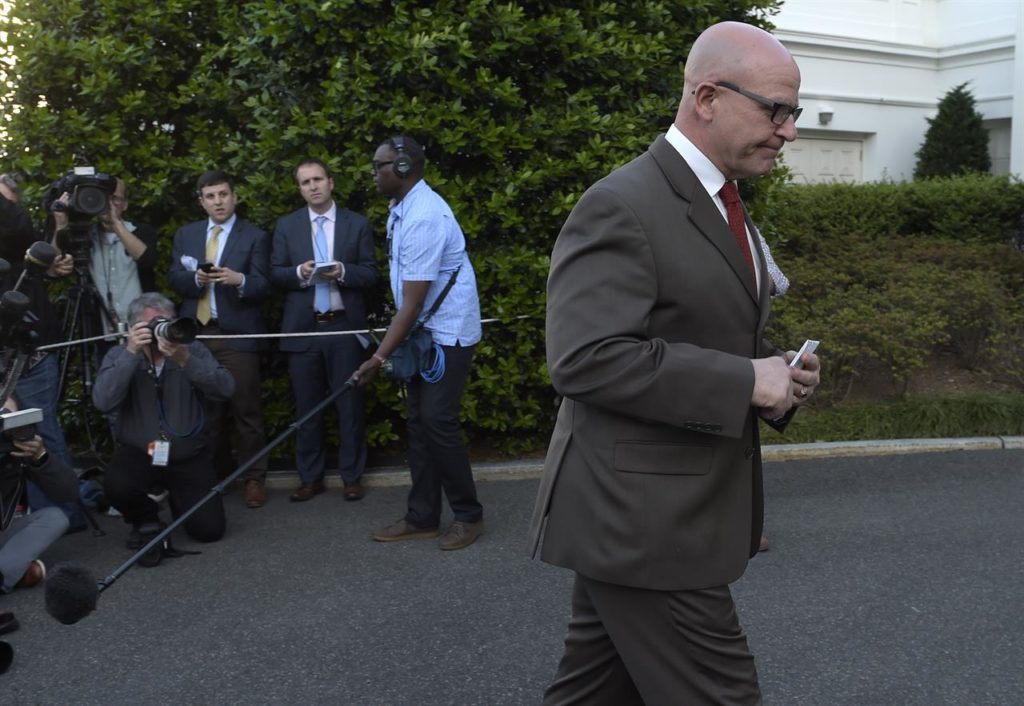
Pushing back against allegations of damaging intelligence disclosures, President Donald Trump’s national security adviser insisted Tuesday that Trump’s revelations to Russian officials about the terrorist threat from the Islamic State group were “wholly appropriate” and amounted to a routine sharing of information. H.R. McMaster added that none of the U.S. officials present for the president’s Oval Office meeting with the Russian foreign minister last week “felt in any way that that conversation was inappropriate.” He used the words “wholly appropriate” nine separate times. Trump himself claimed the authority to share “facts pertaining to terrorism” and airline safety with Russia, saying in a pair of tweets he has “an absolute right” as president to do so. Trump’s tweets did not say whether he revealed classified information about IS, as published reports have said and as a U.S. official told The Associated Press. McMaster, in a White House briefing, said: “In the context of that discussion, what the president discussed with the foreign minister was wholly appropriate to that conversation and is consistent with the routine sharing of information between the president and any leaders with whom he is engaged.” He cast some of Trump’s revelations as information that was available from publicly available “open-source reporting” and added that the president did not know the precise source of the intelligence he had shared, suggesting that Trump could not have compromised confidential sources. Still, the White House has not expressly denied that classified information was disclosed in the Oval Office meeting between Trump and Russian diplomats last week. The Kremlin dismissed the reports as “complete nonsense.” The news reverberated around the world as countries started second-guessing their own intelligence-sharing agreements with the U.S. A senior European intelligence official told the AP his country might stop sharing information with the United States if it confirms that Trump shared classified details with Russian officials. Such sharing “could be a risk for our sources,” the official said. The official spoke only on condition that neither he nor his country be identified, because he was not authorized to discuss the matter publicly. On Capitol Hill, Democrats and Republicans alike expressed concern about the president’s disclosures. Sen. John McCain, R-Ariz., called the reports “deeply disturbing” and said they could affect the willingness of U.S. allies and partners to share intelligence with the U.S. Senate Majority Leader Mitch McConnell called the intelligence uproar a distraction from GOP priorities such as tax reform and replacing the health care law. “I think we could do with a little less drama from the White House on a lot of things so that we can focus on our agenda,” he told Bloomberg Business. Doug Andres, a spokesman for House Speaker Paul Ryan, said the speaker was looking for “a full explanation of the facts from the administration.” Minority Leader Chuck Schumer, D-N.Y., called for Congress to have immediate access to a transcript of Trump’s meeting with the Russians, saying that if Trump refuses, Americans will doubt that their president is capable of safeguarding critical secrets. Trump said in his tweets, “I wanted to share with Russia (at an openly scheduled W.H. meeting) which I have the absolute right to do, facts pertaining … to terrorism and airline flight safety. Humanitarian reasons, plus I want Russia to greatly step up their fight against ISIS & terrorism.” As President I wanted to share with Russia (at an openly scheduled W.H. meeting) which I have the absolute right to do, facts pertaining…. — Donald J. Trump (@realDonaldTrump) May 16, 2017 Trump shared details about an Islamic State terror threat related to the use of laptop computers on aircraft with Russian Foreign Minister Sergey Lavrov and Russian ambassador to the U.S. Sergey Kislyak, a senior U.S official told AP. The classified information had been shared with the president by an ally, violating the confidentiality of an intelligence-sharing agreement with that country, the official said. …to terrorism and airline flight safety. Humanitarian reasons, plus I want Russia to greatly step up their fight against ISIS & terrorism. — Donald J. Trump (@realDonaldTrump) May 16, 2017 Trump later was informed that he had broken protocol and White House officials placed calls to the National Security Agency and the CIA looking to minimize any damage. The official, who spoke on condition of anonymity because the official was not authorized to speak publicly, would not say which country’s intelligence was divulged. Asked why the NSA and CIA were put on notice if the revelations were not problematic, McMaster cast the notification as being provided “from an overabundance of caution.” The disclosure put a source of intelligence on the Islamic State at risk, according to The Washington Post, which first reported the disclosure on Monday. The CIA and the Office of the Director of National Intelligence have declined to comment. CIA Director Mike Pompeo was to brief members of the House intelligence committee later in the day. The U.S. official said that Trump boasted about his access to classified intelligence in last week’s meeting with Lavrov and Kislyak. An excerpt from an official transcript of the meeting reveals that Trump told them, “I get great intel. I have people brief me on great intel every day,” he said. On Monday, McMaster told reporters: “The president and the foreign minister reviewed a range of common threats to our two countries including threats to civil aviation. At no time, at no time were intelligence sources or methods discussed and the president did not disclose any military operations that were not already publicly known.” The revelations could further damage Trump’s already fraught relationship with U.S. intelligence agencies. He’s openly questioned the competency of intelligence officials and challenged their high-confidence assessment that Russia meddled in last year’s presidential election to help him win. His criticism has been followed by a steady stream of leaks to the media that have been damaging to Trump and exposed an FBI investigation into his associates’ possible ties to Russia. The disclosure also risks harming his credibility with U.S. partners
Alabama legislative preview: May 16 – May 19, 2017
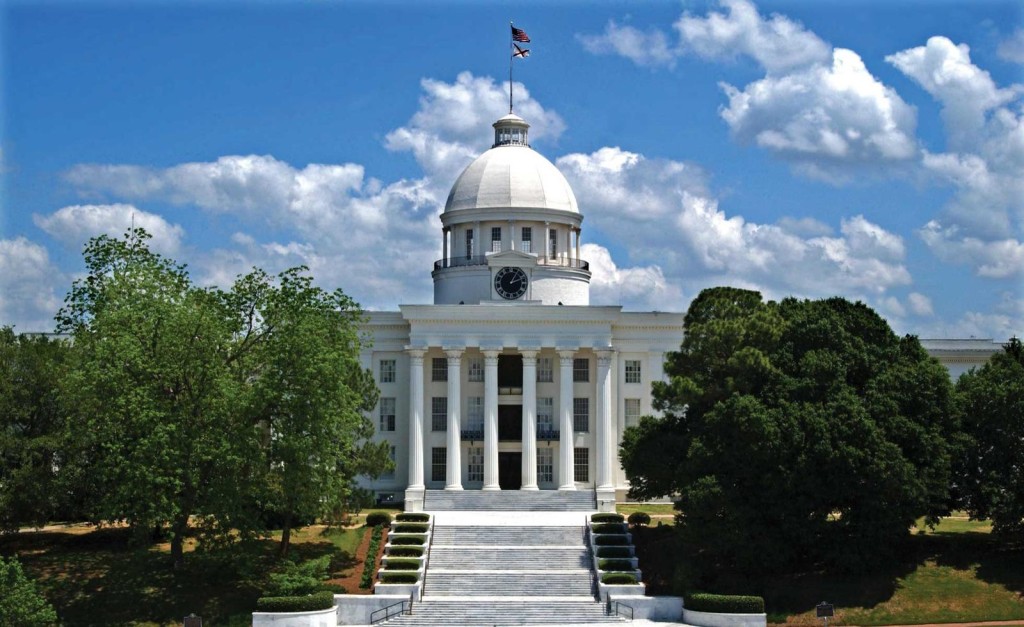
Four days. That’s all Alabama’s state lawmakers have to complete their legislative priorities for 2017. Some bills will end up languishing in the annals of Alabama history, while others will soon have their day on the governor’s desk. With the time running out, the Republican-controlled Legislature has a full plate of legislative priorities from prison construction, to redistricting, to the budget to get across the finish line, else they will have wait until next year to see them through. Or risk being called back to Montgomery for a special session by Gov. Kay Ivey later this year. Here is what legislators have on their plate for the final days of the 2017 Regular Session: House: Convenes Tuesday at 11:30 a.m. SB187: The Fair Justice Act would shorten the death penalty appeals time by requiring inmates to raise claims such as ineffective counsel at the same time as direct appeal claiming trial errors. Sponsored by Alabaster-Republican Sen. Cam Ward; Rogersville-Republican Rep. Lynn Greer SB82: Marshall James Walton Highway Safety Act would create the crime of homicide by vehicle or vessel if the person causes the death of another person while knowingly engaged in the violation of any state law or municipal ordinance applying to the operation or use of a vehicle or vessel Sponsored by Montrose-Republican Senator Trip Pittman; Mobile-Republican Rep. Chris Pringle SB108: Prohibits a voter from voting in a primary runoff election unless the voter voted in the preceding primary election of the party for which the runoff election is being held Sponsored by Auburn-Republican Sen. Tom Whatley; Birmingham-Republican Rep. Arnold Mooney SB23: Would require the AlabamaLaw Enforcement Agency to operate a driver’s license office in each county of the state a minimum of one day each week. Selma-Democrat Sen. Henry Sanders; Gadsden-Democrat Rep. Artis McCampbell Senate: Convenes Tuesday at 2 p.m. To be updated when Senate posts Special Order Calendar. Unfinished Business There are still several issues left unfinished in this final week of session, including a prison construction plan, state budgets, autism legislation, as well as child care regulations. One of the most contentious issues is the House redistricting map. The Senate still needs to approve it, but Republican and Democratic lawmakers are at odds with how to proceed as Democrats say new plan continues the state’s history of racial gerrymandering in order to maintain Republican dominance. Legislation that passed the House decriminalizing midwifery also awaits Senate approval.
Donald Trump defends sharing ‘terrorism’ facts with Russians
President Donald Trump defended revealing information to Russian officials, saying in a pair of tweets Tuesday that he shared “facts pertaining to terrorism and airline flight safety” and had “the absolute right” to do so. Trump was responding to reports Monday that he revealed highly classified information to senior Russian officials during an Oval Office meeting last week, putting a source of intelligence on the Islamic State at risk. But Trump tweeted that he shared the information for “humanitarian reasons, plus I want Russia to greatly step up their fight against ISIS & terrorism.” Trump says he wanted to share with Russia “facts pertaining to terrorism and airline flight safety.” He noted that as president, he has an “absolute right” to do this. The reports by The Washington Post and others drew strong condemnation from Democrats and a rare rebuke of Trump from some Republican lawmakers. White House officials denounced the report, saying the president did not disclose intelligence sources or methods to the Russians, though officials did not deny that classified information was disclosed in the May 10 meeting. The president and the foreign minister reviewed a range of common threats to our two countries including threats to civil aviation,” said H.R. McMaster, Trump’s national security adviser. “At no time, at no time were intelligence sources or methods discussed and the president did not disclose any military operations that were not already publicly known.” Secretary of State Rex Tillerson also disputed the Post report. He said Trump discussed a range of subjects with the Russians, including “common efforts and threats regarding counter-terrorism.” The nature of specific threats was discussed, he said, but not sources, methods or military operations. The Post, citing current and former U.S. officials, said Trump shared details about an Islamic State terror threat related to the use of laptop computers on aircraft with Russian Foreign Minister Sergei Lavrov and Russian Ambassador to the U.S. Sergey Kislyak. The ambassador has been a central player in the snowballing controversy surrounding possible coordination between Trump’s campaign and Russia’s election meddling. The anonymous officials told the Post that the information Trump relayed during the Oval Office meeting had been provided by a U.S. partner through an intelligence-sharing arrangement. They said it was considered so sensitive that details have been withheld from allies and tightly restricted even within the U.S. government. The New York Times and BuzzFeed News published similar reports later Monday. Russia’s foreign ministry spokesman denied the report. Maria Zakharova, a spokeswoman for the Russian foreign ministry, on Facebook on Tuesday described the reports as “yet another fake.” The revelations could further damage Trump’s already fraught relationship with U.S. intelligence agencies. He’s openly questioned the competency of intelligence officials and challenged their high-confidence assessment that Russia meddled in last year’s presidential election to help him win. His criticism has been followed by a steady stream of leaks to the media that have been damaging to Trump and exposed an FBI investigation into his associates’ possible ties to Russia. The disclosure also risks harming his credibility with U.S. partners around the world ahead of his first overseas trip. The White House was already reeling from its botched handling of Trump’s decision last week to fire James Comey, the FBI director who was overseeing the Russia investigation. A European security official said sharing sensitive information could dampen the trust between the United States and its intelligence sharing partners. “It wouldn’t likely stop partners from sharing life-saving intelligence with the Americans, but it could impact the trust that has been built, particularly if sharing such information exposes specific intelligence gathering methods,” said the official, who spoke on condition of anonymity because the person was not authorized to speak about such intelligence sharing. The revelation also prompted cries of hypocrisy. Trump spent the campaign arguing that his opponent, former Secretary of State Hillary Clinton, should be locked up for careless handling of classified information. The Post said the intelligence partner had not given the United States permission to share the material with Russian officials. By doing so, Trump would have jeopardized cooperation from an ally familiar with the inner workings of the Islamic State group, and make other allies – or even U.S. intelligence officials – wary about sharing future top secret details with the president. Afterward, White House officials took steps to contain the damage, placing calls to the CIA and the National Security Agency, the newspaper said. The CIA and the Office of the Director of National Intelligence declined to comment Monday evening. Congressional Republicans and Democrats expressed concern about the report. GOP Sen. Bob Corker of Tennessee, chairman of the Senate Foreign Relations Committee, told reporters the Trump White House “has got to do something soon to bring itself under control and order.” He described the White House as “on a downward spiral.” Senate Minority Leader Chuck Schumer of New York also called the story “disturbing,” adding, “Revealing classified information at this level is extremely dangerous and puts at risk the lives of Americans and those who gather intelligence for our country.” The controversy engulfed the White House. Reporters spent much of the evening camped out adjacent to Press Secretary Sean Spicer‘s office, hoping for answers. At one point, an eagle-eyed reporter spotted a handful of staffers, including Spicer and Deputy Press Secretary Sarah Huckabee Sanders, walking toward the Cabinet Room. Republished with permission of The Associated Press.
Supreme Court order unlikely to deter voting restrictions
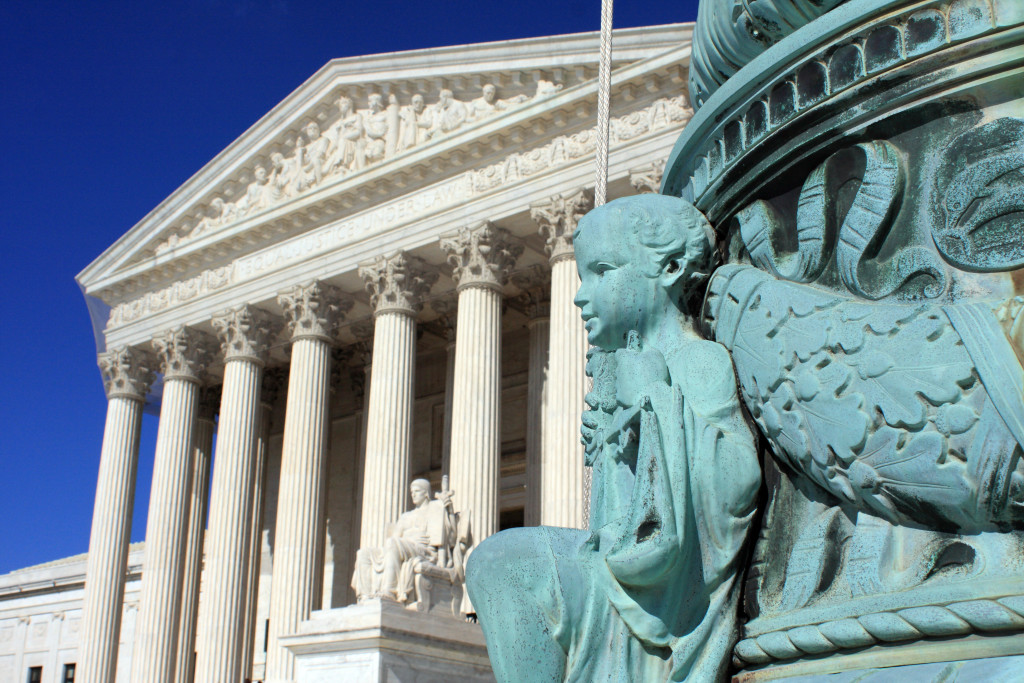
The Supreme Court’s refusal to breathe new life into North Carolina’s sweeping voter identification law might be just a temporary victory for civil rights groups. Republican-led states are continuing to enact new voter ID measures and other voting restrictions, and the Supreme Court’s newly reconstituted conservative majority, with the addition of Justice Neil Gorsuch, could make the court less likely to invalidate the laws based on claims under the federal Voting Rights Act or the Constitution. The justices on Monday left in place last summer’s ruling by the 4th U.S. Circuit Court of Appeals striking down the law’s photo ID requirement to vote in person and other provisions, which the lower court said targeted African-Americans “with almost surgical precision.” But Chief Justice John Roberts noted that the court’s decision to stay out of the case rested on a partisan dispute over who had the authority to present North Carolina’s case to the court, not the justices’ views on the substance of the issue. Indeed, before Gorsuch joined the court, the other eight justices split 4-4 over whether to allow the challenged provisions to remain in effect despite the court ruling striking them down. In January, when the high court rejected a Texas appeal over its voter ID law, Roberts practically invited Texas Republicans to bring their appeal back to the Supreme Court after lower court consideration of the issue is finished. “The issues will be better suited for certiorari review at that time,” Roberts wrote, using the Latin term for the court’s process of deciding whether to hear a case. Two earlier Supreme Court decisions paved the way for the wave of voter ID laws that are now in place in 32 states, according to the National Conference of State Legislatures. Roberts was part of a conservative-led decision upholding Indiana’s voter ID law in 2008 and he was the author of the court’s 5-4 decision in 2013 that gutted a provision of the federal Voting Rights Act that had required North Carolina, Texas and other states, mainly in the South, to get approval before changing laws dealing with elections. Republicans in North Carolina and Texas moved to enact new voting measures after the Supreme Court ruling. Voters, civil rights groups and the Obama administration quickly filed lawsuits challenging the new laws. Advocates of requiring voters to show identification at the polls say it is a prudent, painless way to deter voter fraud. Opponents contend that in-person voter fraud has historically not been a problem and that poorer and minority voters, who tend to support Democrats, are more likely to lack driver licenses and other acceptable forms of identification. Roberts’ and the other conservatives’ track record in voting cases suggests they’ll be “quite skeptical of voting rights claims,” said election law specialist Richard Hasen, a law professor at the University of California at Irvine. “You could certainly see a five-justice majority overturning a case like this,” Hasen said of the North Carolina appeal. He acknowledged that Gorsuch himself has yet to weigh in on the topic. A conservative defender of the voting laws agreed. “I’d think challengers to voter ID laws would be extremely nervous about any such case coming to the court,” said Hans von Spakovsky, a senior legal fellow at the Heritage Foundation. Already this year, Arkansas, Iowa and North Dakota have approved voter ID laws, according to the Brennan Center for Justice at New York University. Georgia and Indiana are among states that have added other voting restrictions to their identification laws, the Brennan Center said. The voter ID issue itself could return to the court in the next year or two in cases from Texas and Wisconsin. The 5th U.S. Circuit Court of Appeals already has ruled that Texas’ law violates the Voting Rights Act, but a broader challenge to the law is pending at the New Orleans-based appeals court. The 7th U.S. Circuit Court of Appeals appeared inclined to uphold Wisconsin laws requiring voter ID and limiting early voting when it heard arguments in February. Republican Gov. Scott Walker signed the measures into law in 2011. Republished with permission of The Associated Press.
GOP candidate for FBI says no special counsel for inquiry
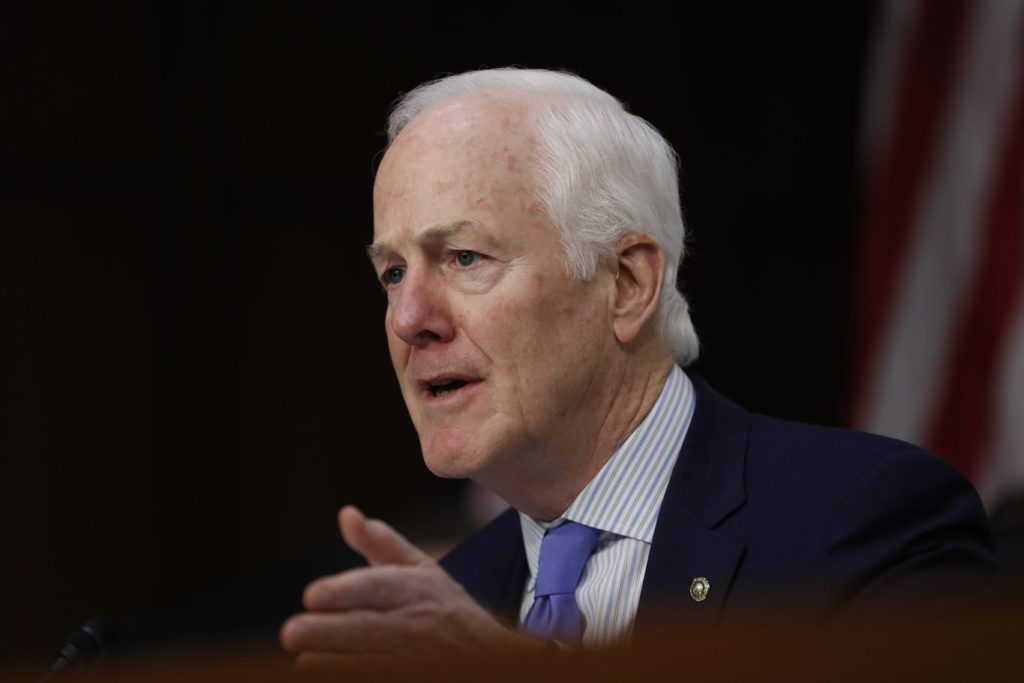
Texas Sen. John Cornyn, one of several candidates President Donald Trump is considering to replace fired FBI Director James Comey, sees no need for a special counsel to investigate possible collusion between Russia and the Trump campaign. Last year, though, Cornyn said an independent prosecutor was necessary to investigate Democrat Hillary Clinton and her email practices. His position echoes that of most of the Senate GOP caucus. Cornyn is the Senate majority whip and the No. 2 Republican, a job that often puts him in the position of speaking for the party and defending Trump. Republished with permission of The Associated Press.
