
Donald Trump’s food stamp cuts face hard sell in Congress

President Donald Trump‘s proposal to slash food stamps by a third will be a hard sell in Congress, even as Republicans have tried repeatedly to scale back the program’s $70 billion annual cost. Democrats will oppose any changes to the program, which is designed as a temporary safety net for Americans who find themselves unable to adequately feed themselves or their families. Many Republicans, too, have been wary to overhaul food stamps, even as participation has more than doubled. Trump’s proposal could have a disproportionate effect on Republican-leaning states – seven of the 10 states with the highest food stamp participation supported Trump. Republicans are still eying cuts to the program, but none as large as what Trump has proposed. — WHAT TRUMP IS PROPOSING Known as the Supplemental Nutrition Assistance Program, or SNAP, the program now serves 44 million people and cost $70 billion last year. The program more than doubled in cost during the recession, and after some eligibility rules were expanded. The cost has stayed higher even as the economy has recovered, though it has slowly decreased annually. Trump’s proposed budget would save $191 billion over 10 years by shifting some of the cost to states, targeting the benefits to the poorest people, increasing work requirements and limiting some eligibility. It would also allow states to determine the level of SNAP benefits they provide. States now administer SNAP with federal money, but would have to come up with an average of 10 percent of the cost by 2020 and 25 percent by 2023. Mick Mulvaney, Trump’s budget director, said shifting costs to states would give them “a little bit of skin the game” and incentivize them to improve the programs. — WHY IT’S A LONG SHOT Congress is unlikely to approve such deep cuts in the program, since it affects constituents so broadly. And farm-state lawmakers who have jurisdiction over SNAP have generally sought to preserve it, as food stamps help them win urban Democratic votes for the massive farm bill that Congress passes every five years or so. “It’s important to note, #SNAP plays a crucial role in protecting our most vulnerable citizens who’ve fallen on tough times,” tweeted House Agriculture Chairman Mike Conaway, R-Texas, after the budget was released. Still, Conaway and Senate Agriculture Chairman Pat Roberts, R-Kan., have indicated they will support some sort of SNAP overhaul in the next farm bill, due next year. “We need to take a look at our nutrition assistance programs to ensure that they are helping the most vulnerable in our society,” Conaway and Roberts said in a joint statement on the budget. It won’t be easy. The bill would need 60 votes in the Senate, and Democrats have strongly opposed any changes to the program. Republican leaders insisted on food stamp cuts in the 2014 farm bill, and the House passed legislation that would have strengthened work requirements and cut 5 percent. After negotiations with the Senate, the cut was reduced to an almost-negligible 1 percent that only affected a handful of states. Similarly, in the mid-1990s, some in the GOP pushed for a major food stamp overhaul as part of welfare reform, and some work requirements were added. But the program stayed largely intact. — WHOM THE CUTS WOULD AFFECT While a majority of SNAP recipients are in urban areas, there has been an increase in rural areas. Of the 10 states that have the most food stamp recipients, seven went Republican in the 2016 presidential election – Florida, Georgia, Michigan, North Carolina, Ohio, Pennsylvania and Texas. In a list compiled by the liberal-leaning Center on Budget and Policy Priorities, three states among those that have the highest percentage of recipients are strongly Republican – Louisiana, Mississippi and West Virginia. One of Trump’s proposals would limit government waivers that have allowed able-bodied adults who don’t have dependents to receive food stamps indefinitely without finding work. The Trump administration says this would help move people off the rolls. “If you’re on food stamps, and you’re able-bodied, we need you to go to work,” Mulvaney said. Lucy Melcher of the anti-hunger group Share Our Strength says some people aren’t able to find work in their areas, and have no access to job training. She says the cuts could be “devastating.” The proposed cuts would “just exacerbate poverty for people who are already trying to work their way out of it,” Melcher said. “I don’t think there’s a person living in poverty today who wouldn’t be affected by this budget.” Republished with permission of The Associated Press.
Mom-and-pop joints are trouncing America’s big restaurant chains

There’s a limit to unlimited breadsticks after all. Americans are rejecting the consistency of national restaurant chains after decades of dominance in favor of the authenticity of locally owned eateries, with their daily specials and Mom’s watercolors decorating the walls. It’s a turning point in the history of American restaurants, according to Darren Tristano, chief insights officer at Chicago-based restaurant research firm Technomic. “This really seems to be the dawning of the era of the independent,” Tristano said. “The independents and small chains are now outperforming. The big chains are now lagging.” Free-marketing websites, such as Yelp Inc., have boosted the fortunes of independents in the age of McDonald’s, Cracker Barrel, Domino’s, Taco Bell, Olive Garden – the list goes on. In a shift, annual revenue for independents will grow about 5 percent through 2020, while the growth for chains will be about 3 percent, according to Pentallect Inc., an industry researcher in Chicago. Sales at the top 500 U.S. chains rose 3.6 percent last year. The gains were larger, 3.9 percent, for the whole industry, Technomic data show. Closing locations It’s not that Wendy’s Baconator or the Grand Slam Slugger Breakfast from Denny’s will soon go the way of the dodo. But some national chains are feeling the pain amid dismal sales. Subway Restaurants, the biggest U.S. food chain by number of locations, saw the number of domestic outlets decline for the first time ever last year. Noodles & Co. and Red Robin Gourmet Burgers Inc. are shutting locations after failing to attract customers. Applebee’s, owned by DineEquity Inc., reported same-store sales tumbled almost 8 percent in its latest quarter, and casual-dining chain Ruby Tuesday Inc. said in March it may sell itself after a prolonged slump. Large chains seem rooted in the American experience. But times, and tastes, are changing. Customers these days believe locals have better food, service, deals and even decor, the Pentallect report said. Sales are reflecting that. Last year, revenue was up 20 percent at DineAmic Group in Chicago, which owns nine different restaurants. Honors system At Chicago’s Brown Bag Seafood Co., where sales jumped 63 percent in 2016, lunch customers can grab a cookie out of the “honors system” mailbox for just $1. There are homey touches, like a watercolor painting of the Clark Street Beach in nearby Evanston, Ill., that founder Donna Lee’s mother painted. Lee started Brown Bag in 2014 after realizing chains didn’t do it for her. “It feels like you’re there only and solely to get your food quickly and get out the door,” she said. “There really is no charm.” Brown Bag’s top seller is its daily-catch powerbox with grilled fish – barramundi was on the menu on a recent weekday – served atop quinoa, wild rice and spinach for $9.99. A nearby Panera Bread Co., which has more than 2,000 locations in 46 states and Canada, charges the same price for a strawberry poppyseed salad with chicken. Some chains are trying to imitate the success of smaller, independent brands. At Maggiano’s Little Italy, which has 52 locations and is owned by Chili’s parent Brinker International Inc., traffic has been on the wane. Same-store sales dropped 1.6 percent in the most recent quarter for the fourth-straight decline. Maggiano’s has new menu items and meals that cater to customers’ allergies and diets – think vegetarian, vegan and the occasional gluten-free ravioli. The chain updated its menu to include executive chef photos and short bios, and in February it introduced an emblem of millennial hip: brunch. “The experience of dining out has become much more important than it was before,” said Larry Konecny, chief concept officer. Bullish on mom Restaurant suppliers also have noted the trend. Diners prefer the experience, service and value offered by independent restaurants, Pietro Satriano, chief executive officer of US Foods Holding Corp., said during a conference call this month. “Growth with independents was very solid” in the latest quarter, he said. While national chains advertise like crazy, mom and pops depend mostly on word of mouth and Yelp reviews. “It’s not the same barriers to entry that there were, that if you put up this group of restaurants that you have to have this big TV campaign. No, you don’t,” said John Gordon, restaurant and franchisee consultant at Pacific Management Consulting Group in San Diego. It’s “authentic” and Instagram-able experiences that diners are searching for these days, Gordon said. “It’s not experiential to sit in a rundown McDonald’s.” Republished with permission of Alabama NewsCenter.
Alabama-Germany partnership shows new strength after decades of growth
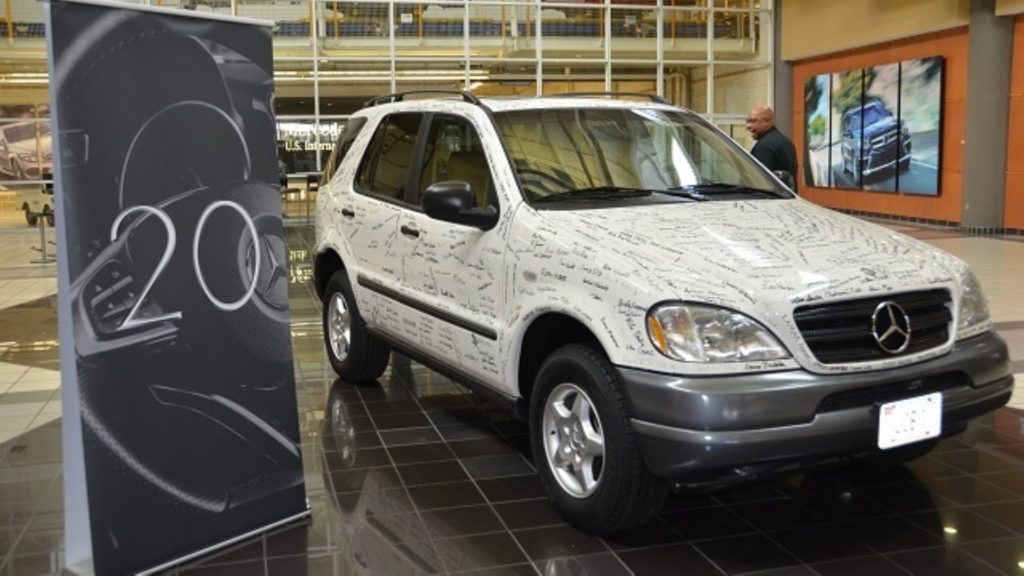
German companies have invested $8.4 billion and created nearly 15,500 jobs in Alabama over the past two decades, and the prosperous relationship is poised to grow even stronger. State exports to the European nation are on the rise, and at the same time, Germany’s foreign direct investment in Alabama remains strong. There are also new and ongoing efforts to develop more business, cultural, educational and social ties between individuals and organizations with a vested interest in each side. Germany is one of Alabama’s most important economic allies, said Greg Canfield, secretary of the Alabama Department of Commerce. “Certainly Mercedes-Benz and its network of suppliers have played a major role in the creation of Alabama’s auto industry, which has, in turn, transformed the state’s economy and the lives of many residents,” Canfield said. “But there are also significant German investments here in industries including aerospace, chemicals, steel processing and more,” he said. “Like the automotive firms, these companies have found highly skilled workers in Alabama who are helping them achieve their goals, and we look forward to seeing even more growth in the future.” Long-standing ties More than 70 German companies operate in the state, according to the AlabamaGermany Partnership, a nonprofit founded almost 20 years ago following the startup of the Mercedes auto assembly plant in Tuscaloosa County. And while many people think the luxury automaker was the state’s first German company, that distinction actually belongs to Evonik Industries, a chemical manufacturer that has been operating in Mobile for more than 40 years, said Tine Hoffmeister, AGP executive director. But Alabama’s ties to Germany go back much further than that, she said. The city of Cullman was founded in the late 1800s by Col. Johann Gottfried Cullmann, a German refugee who was instrumental in bringing many more German immigrants to the region. And in Huntsville, it was a team of Germans, led by Wernher von Braun, who pioneered U.S. rocket technology in the 1950s and 1960s and helped establish the city’s space industry. Mercedes, however, does play a huge role when it comes to the profile of German investment in the state, Hoffmeister said. “That’s because of their brand recognition,” she said. “Unlike some companies who make things people may not be familiar with, a car is something you can see and you can touch, so it’s had a big impact.” It’s also a special time for Mercedes, which this year is marking its 20th anniversary of auto production in Alabama. The first customer-ready M-Class SUVs began rolling off the assembly line in Tuscaloosa County on Feb. 14, 1997. New initiatives The AlabamaGermany Partnership hosts a variety of events to bring together Alabama residents, German citizens and their respective businesses, including its popular annual dinner held last month at Talladega’s International Motorsports Hall of Fame. New and expanding German companies in Alabama were recognized. Hoffmeister said one of AGP’s newest initiatives is a young professionals group. “With the young professionals group, we’re trying to get a new generation involved in the mission of the AlabamaGermany Partnership,” she said. “Some are American, and some are German. We do German company tours and host networking events. We hope they will be helpful in connecting with young people who are still in school and deciding what to do with their lives. “There are so many opportunities with German companies that a lot of people don’t realize.” Along those lines, another new initiative at AGP is an effort to document all of the available internships, apprenticeships and co-op education programs at German companies in Alabama to better connect students with those opportunities. Economic partners Germany consistently ranks high among Alabama’s trading partners and countries responsible for the most foreign direct investment in the state.The latest estimated FDI data shows German firms created 1,140 jobs in the state last year, the most of any other country, while their related combined investment of $177 million was the second highest. Meanwhile, state exports to Germany reached almost $3.2 billion in 2016, a 29 percent increase from the previous year. The increase pushed Germany up the list of top destinations for Alabama-made products, from No. 4 to No. 3. Not surprisingly, vehicles were the top Alabama export to Germany, rising 36 percent to $2.4 billion. But other product categories also showed strength, including aerospace products and parts, primary metal manufacturing and plastics and rubber products, said Hilda Lockhart, director of the Alabama Department of Commerce’s Office of International Trade. “The German government has deemed aerospace as a priority and it provides a very strong core of the industrial sector,” she said. “U.S. aircraft parts are readily accepted in Europe because of the quality – while some countries are not as good quality. Out of all the top markets for aerospace Germany ranked fourth in the world.” In addition to Mercedes and its suppliers, other German companies that call Alabama home include Diehl Aerospace Inc., aircraft product support and maintenance; Aviagen, hatchery and poultry feed manufacturing; Kloeckner Metals Corp., steel processing; Jenoptik Optical Systems, micro optics; and TÜV Rheinland Industrial Solutions, testing laboratories. AGP has a German Business Committee made up of German company leaders who meet about every other month, Hoffmeister said. The group has been helpful for new German companies, as officials share their experiences about building a business in the state. There are also culture workshops, typically held once a year, to educate both Germans and Americans on cultural norms for business dealings. And in addition to the big annual dinner, AGP hosts small dinners around the state to help bridge cultural divides. “We have small dinners where we have Germans and Americans coming together and sharing a meal,” Hoffmeister said. “In my view, I think that’s one of the best ways of starting a relationship with someone else, by sharing a meal.” This story originally appeared on the Alabama Department of Commerce’s Made in Alabama website. Republished with permission of Alabama NewsCenter.
Birmingham Mayor William Bell unveils $428 million budget for 2018

Birmingham Mayor William Bell on Tuesday presented to the city council a $428 million fiscal 2018 budget that increased as a result of recruiting and retaining businesses, the mayor said. In his budget message on Tuesday, the mayor pointed out that “aggressive business recruitment and retention” by the Mayor’s Office of Economic Development and increased revenues over the past five years have led to an “unprecedented” $64 million increase in the budget since 2012. “The city of Birmingham continues to show strong signs of economic growth, allowing us to present the largest budget ever in the city’s history,” said Bell. The spending plan contains a 5 percent merit raise for employees, an extra $1.5 million for police vehicles, and $1.5 million to help clean neighborhoods. The fiscal year begins July 1. In addition to economic development, the mayor said the city has paid attention to the neighborhoods. He pointed to Operation Green Wave, “which has begun its second pass through the city,” said Bell. “The first wave cut more than 12,000 lots, removed more than 86,000 tons of trash and debris, cut more than 20,000 right of ways and more than 2,000 alleys,” he added. “The budget includes $1.5 million to continue Operation Green Wave.” Bell also talked about abandoned structures, which have been an issue in the city for decades. He noted that the Department of Planning, Engineering and Permits has more than tripled its demolition capacity. “In 2012, fewer than 200 structures were removed. In 2016, we removed more than 600 blighted structures,” he said. “This effort takes additional resources, so we have included another $1.5 million in the budget to continue our demolition efforts.” The mayor also said how pleased he is with the advancement of several projects throughout the city, including the Ramsay McCormack Ensley Public Safety Municipal Complex, the One Pratt Superblock project, the Crossplex development, the opening of the Maxine Herring Parker Bridge in Collegeville, and the continued development of the downtown Historic Civil Rights District. He added that bond projects continue throughout the city, with more than $9 million in paving and $10 million in park improvements and upgrades to historic Legion Field. Republished with permission of Alabama NewsCenter.
Alabama ranks high on 2017 list of best states for military retirees

For active duty military, home is where ever the government sends you. But for military retirees with the option to choose where they live, Alabama’s not a bad choice. That’s according to a new study of 2017’s Best & Worst States for Military Retirees by personal finance website Wallethub, which ranked the Yellowhammer State as the 13th best state for military retirees That’s good news for the over 400,000 veterans living in Alabama. WalletHub conducted the study in light of May being Military Appreciation Month. Their analysts compared all 50 states and Washington, D.C., across three dimensions — economic environment, quality of life, and health care —To determine the best and worst states for military retirement. Alabama came in first place for economic environment rank, but found itself in the middle of the pack at 25 for quality of life, and at disappointing 38th place when it comes to veterans health care. The study also found Red States were more friendly toward military retirees than Blue States. The top five states: Florida Montana New Hampshire Wyoming South Carolina The five worst states: Utah North Carolina Rhode Island New Jersey Here’s how Alabama compared to the rest of the country: Source: WalletHub
Get to know Mary Maxwell, Republican running for Alabama U.S. Senate seat

11 Republicans and eight Democrats will officially move forward to their party’s August 15 primaries to vote in the Alabama special election to replace Jeff Sessions in the U.S. Senate With a little over three months until voters head to the ballots, AlabamaToday.com is inviting all of the candidates, including appointed-incumbent Sen. Luther Strange, to complete a questionnaire we believe offers an interesting, albeit, thumbnail sketch of who they are and why they are running. If you are a candidate and would like to complete the questionnaire, email Elizabeth@ALToday.com. Today’s candidate spotlight features Mary Maxwell, a professional researcher turned investigative journalist who can no longer sit back and watch what’s happening in this country. Here she is in her own words: Significant other? George Maxwell, a dutiful, disciplined Scotsman, educated me and inspired me (not to mention made me extremely happy). He went aloft 17 years ago and it took me nine years to recover, as my fellow widows will understand. Kids? I am nulliparous but deeply interested in the situation of the millennials today. I want them to be given values and principles that will carry them through anything. (I’ve published “Teen Etiquette with Feelings” at Amazon under pseudonym Fortunata Fifi — only goes a little way, though.) Education background? BA from Emmanuel, a ladies Catholic college in Boston. Master of Liberal Arts, a town-and-gown thing at Johns Hopkins, for which I mainly chose courses from faculty of Public Health. Certificate of Advanced Study at Harvard Extension, very lightweight but allowed one to sing Brahms in the Harvard Summer Chorus. PhD in Politics at Adelaide University, Australia, led to my book “Morality among Nations” (using sociobiology as a base). Law degree, LLB, obtained in my near-dotage, would have led to my wearing a wig in Australian courts. Professional background? Been doing research for 39 years, so I guess I should claim “researcher” as my profession. In the last few years this took a turn into investigative journalism and the producing of stage plays. What was your first job? New England Telephone Co. operator, at $1.60 per hour. Loved it. In 25 words or less, why are you running for office? I can’t sit by and watch what’s happening, especially the despoiling of the planet. Constitutionally, we’ve got all we need to deal with criminal officials. Did you speak with anybody in your political party before deciding on running? No. Receive any encouragement? From whom? I made the decision so quickly (heard about the Senate vacancy on May 1st), had no time to consult. Whom do you count on for advice? If I get elected I will run to Senator Rand Paul for guidance, but in thinking out my positions now I don’t need his help as he and I are twins, constitution-wise. Who is your political consultant? Campaign manager? None — still waiting to obtain such help. Who was the first person to contribute to your campaign? My friend Dee McLachlan made a beautiful website for me: MaxwellForSenate.com. Why did they donate? Because an artist’s got to do what an artist’s got to do. Who, if anyone, inspires you in state government? Governor Kay Ivey slays me. Why do people mistrust elected officials and what are you going to do about it? They should not mistrust them; they should shoot them. What I mean is, it’s the citizen’s fault if their representatives are working for someone other than the people. (“Pull your employees into line, Folks.”) What am I going to do about it? I am going to yak constantly about the fact that 25-year-olds and up should completely wipe out the present 435 members of the House of Representatives in 2018, and one-third of the Senate. It is a doable. Get crackin’, young ones. Save the Great Republic! What are 3 issues that you’re running on? Well, I certainly won’t say Education even if that is VITAL, as it is none of the federal government’s business. First, I will concern myself with avoiding war – yes, and “regime change.” Look how easily a ‘trend’ becomes acceptable. We regime-changed Iraq, Libya, etc. and now media says it’s what we are supposed to do in Syria, etc. No, it ain’t. Second, I will whack the FDA, CDC, NIH, and other organizations for keeping medical cures under lock and key. Please see my 2 books – free download at maryWmaxwell.com: “Consider the Lilies: A Review of 18 Cures for Cancer and Their Legal Status,” and “A Balm in Gilead: Curing Autism and Awakening the Physicians.” Third, I’d be honored to be the voice of the voiceless, whether that be homeless persons, targeted individuals, or prisoners. I hear the biblical injunction “I was in prison and you visited me.” Matthew 25:36. I’m dying to know what is going on in federal prisons, especially Supermax. What is a “disruptive” issue (i.e. ride-sharing) you are interested in? Medical experimentation on soldiers. Gulf War Illness is probably the tip of the iceberg. Who was the best governor in Alabama’s modern history? George Wallace. I am a maniac for states’ rights, so I’d even countenance his sticking up for segregation (as I like Judge Roy Moore sticking up for straights-only marriage, despite my wholly endorsing integration and gay marriage). The Constitution requires that every one of the 5 forces (3 branches plus states and people) guard their part – or we’ll die. Anyway, Wallace apologized for his bigotry, asked for forgiveness, and got support from African-Americans after that. The fact that Wallace was shot at when running for president tells me a lot (and no, I do not think Arthur Bremer was the assassin). Are yard signs an important part of campaigning in your district? I don’t know. What’s the first thing you read each morning? I don’t read in the morning. I jump out of bed and start writing. True. Where do you get your political news? From GumshoeNews.com, sometimes buttressed by Globalresearch.ca or waynemadsenreport.com. 60 Minutes or House of Cards? Please. Social media presence? Twitter handle? I wish to learn this game. So far I’m a bit
Supreme Court upholds ‘soft money’ limits; Gorsuch, Thomas disagree

The Supreme Court is upholding federal limits on political parties’ use of so-called soft money for federal elections. A three-judge court in Washington, D.C., had earlier upheld the restrictions in a challenge brought by Louisiana Republicans. Political parties may only use money they raise through the federal system for elections for Congress and president. This money often is called hard money because it is raised under rules limiting the size of contributions and requiring disclosure of its source. Justice Neil Gorsuch joined Justice Clarence Thomas in calling for the Supreme Court to consider striking down limits on how political parties spend money. Gorsuch and Thomas said they would have set the case for argument. They did not otherwise comment. Republished with permission of The Associated Press.
Callers threaten Texas lawmaker who seeks Donald Trump impeachment
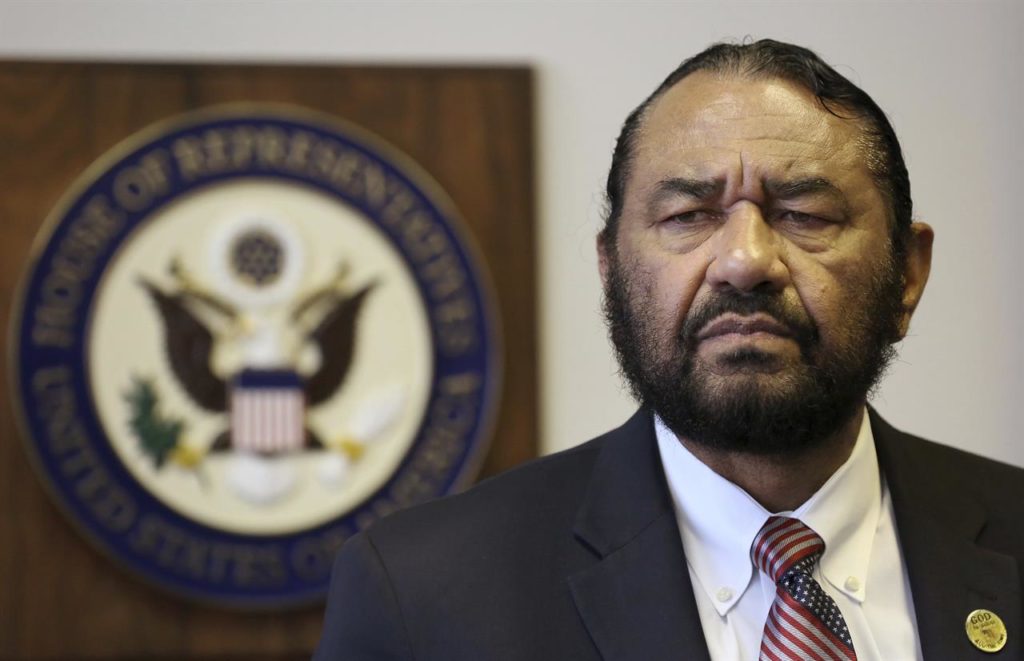
A black Texas congressman said Saturday that he’s been threatened with lynching by callers infuriated over him seeking impeachment of President Donald Trump. U.S. Rep. Al Green held a town hall meeting and played recordings of several threatening voicemails left at his offices in Houston and Washington, the Houston Chronicle reports . The seven-term Democrat told the crowd of about 100 people that he won’t be deterred. “We are not going to be intimidated,” Green said Saturday. “We are not going to allow this to cause us to deviate from what we believe to be the right thing to do and that is to proceed with the impeachment of President Trump.” One male caller used a racial insult and threatened Green with “hanging from a tree” if he pursues impeachment. Another man left a message saying Green would be the one impeached after “a short trial” and then he would be hanged, according to the recording. Green took to the House floor on Wednesday to say he believes Trump committed obstruction of justice and no one’s above the law. Trump, a Republican, has dismissed criticism of his firing of FBI Director James Comey amid the agency’s investigation of possible links between Russia and Trump campaign associates. Green said he wanted his constituents to be aware of the hateful calls he’s since received. “When a person talks about lynching you, we think that’s a pretty serious threat,” said Green, a former president of the Houston branch of the NAACP, according to his congressional website. Republished with permission of The Associated Press.
Bradley Byrne: Police Week about honoring law enforcement

Last week, we celebrated National Police Week with events in the nation’s capital and in communities right here in Southwest Alabama. These ceremonies served as an opportunity to say “thank you” to those who help keep us safe. During one ceremony in front of the United States Capitol, President Donald Trump proudly proclaimed that “patriotic Americans of all backgrounds truly support and love our police.” The ceremonies and Police Week also presented a solemn opportunity to honor those who have lost their lives while serving in the line of duty. At the National Law Enforcement Officers Memorial in Washington, this quote from former President George H. W. Bush puts the sacrifice best: “Carved on these walls is the story of America, of a continuing quest to preserve both democracy and decency, and to protect a national treasure that we call the American dream.” In 2016, 145 officers were killed in the line of duty, including Correctional Officer Kenneth Bettis who was attacked by an inmate at Holman Correctional Facility in Atmore. Already in 2017, 50 more officers have lost their life in the line of duty. These numbers are heartbreaking. In addition to honoring our law enforcement officers, we also took time to reflect on the sacrifice of the families of police officers and first responders. These families must overcome long hours, late nights, and constant fear as their loved one works to protect us. In Congress, we used Police Week as an opportunity to pass a number of bills important to our nation’s law enforcement officers. I want to highlight a few of them. First, we passed the Thin Blue Line Act. This bill would amend the federal criminal code to include the killing or attempted killing of a law enforcement officer or first responder as an aggravating factor in federal death penalty decisions. Those who target and kill our law enforcement officers should be punished to the fullest extent of the law. We also passed the Probation Officer Protection Act, another pro-police bill that would authorize probation officers to arrest hostile third parties who harm them or obstruct them from doing their job. This commonsense bill will help keep probation officers safe and free up time for our law enforcement officers to focus on other priorities. Third, we passed the Honoring Hometown Heroes Act by a vote of 411 to 1. This bill simply permits the American flag to be flown at half-staff when a local police officer, firefighter, or first responder is killed in the line of duty. This will be just a small token of appreciation on behalf of a grateful nation. Of particular importance to Alabama, the House passed the Strengthening State and Local Cyber Crime Fighting Act. The bill formally authorizes the National Computer Forensics Institute, which is located in Hoover, Alabama. This program helps train state and local law enforcement regarding cyber and electronic crimes. Finally, we passed the American Law Enforcement Heroes Act. Many of our nation’s veterans go on to serve as police officers, and this bill would prioritize the hiring of veterans under the federal COPS Hiring program. These are just five examples of our efforts in Congress to crack down on crime and support our nation’s police officers. Never forget that we get to lay our heads down on our pillow at night feeling safe because there are men and women out there patrolling the streets. So, the next time you lay down for bed, be sure to say a special prayer for all our law enforcement officers and first responders. • • • Bradley Byrne is a member of U.S. Congress representing Alabama’s 1st Congressional District.
Twitter leader says he’s ‘sorry’ for social media role in Donald Trump’s election

A co-founder of Twitter says he’s sorry if the popular social media platform helped put Donald Trump in the White House, as the president has suggested. In an interview with The New York Times, Evan Williams says Twitter’s role in Trump’s populist rise is “a very bad thing.” The president has credited Twitter with his election to the highest office in the land. When confronted with that notion, Williams said: “If it’s true that he wouldn’t be president if it weren’t for Twitter, then yeah, I’m sorry.” The 45-year-old Silicon Valley entrepreneur also said the internet is obviously broken because it rewards extremes. Williams also says he was wrong thinking that the world would be a better place if there was a platform for everyone to freely speak and exchange ideas. Republished with permission of The Associated Press.
Texas revives transgender ‘bathroom bill’ for public schools
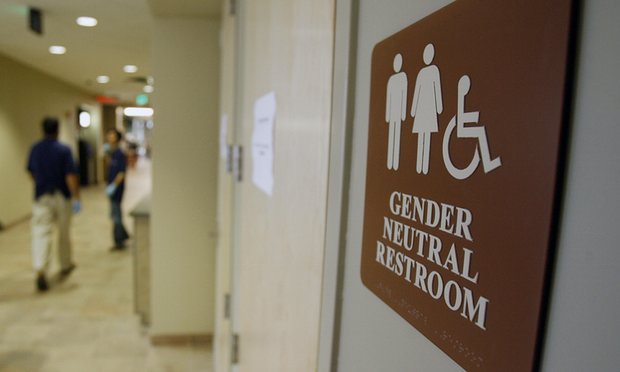
A transgender “bathroom bill” reminiscent of one in North Carolina that caused a national uproar now appears to be on a fast-track to becoming law in Texas – though it may only apply to public schools. A broader proposal mandating that virtually all transgender people in the country’s second-largest state use public restrooms according to the gender on their birth certificates sailed through the Texas Senate months ago. A similar measure had stalled in the House, but supporters late Sunday night used an amendment to tack bathroom limits onto a separate and otherwise unrelated bill covering school emergency operation plans for things like natural disasters. Republican Rep. Chris Paddie authored the hotly-debated language, saying it had “absolutely no intent” to discriminate. Under it, transgender students at public and charter schools would not be permitted to use the bathroom of their choice but could be directed to separate, single-occupancy restrooms. “It’s absolutely about child safety,” said Paddie, from the East Texas town of Marshall. “This is about accommodating all kids.” His change passed 91-50. Final House approval should come Monday, sending the modified bill to the Senate, which should easily support it. Texas’ legislative session ends May 29, but that’s plenty of time – even if the bathroom bill is scaled-back enough to only affect the state’s roughly 5.3 million public school students, and not the general public. “This amendment is the bathroom bill and the bathroom bill is an attack on transgender people,” said Rep. Joe Moody, an El Paso Democrat. “Some people don’t want to admit that because they are ashamed, and this is shameful.” A small group of Democratic women legislators went into the men’s restroom just off the House floor before debate began in protest. With Republicans enjoying solid majorities in both of Texas’ legislative chambers, though, such opposition was purely symbolic. Houston Democratic Rep. Senfronia Thompson, one of the House’s longest-serving and most-respected members, likened the new language to when restrooms nationwide were segregated by race. “Bathrooms divided us then and bathrooms divide us now. Separate but equal is not equal at all,” Thompson said, drawing floor applause. While Barack Obama was still president, the U.S. Department of Education tried to implement requirements that school districts nationwide allow transgender students to choose campus bathrooms or locker rooms they wished to use. Texas led a lawsuit challenging that directive and a federal judge in Texas ordered it suspended. President Donald Trump then rescinded the order in February. Republican Gov. Greg Abbott has said he wants to sign a bathroom bill into law. House Speaker Joe Straus, a Republican from San Antonio, has been even more vocal opposing one – saying it could hurt a Texas economy that has been among the country’s strongest in recent years. Top firms, chambers of commerce and lobbyists also have decried the bathroom bill in all forms as bad for business. Many Hollywood actors and music stars have suggested state boycotts, and the NFL and NBA have expressed concerns about it passing – even though Houston successfully hosted this year’s Super Bowl. Since 2004, Texas has hosted more combined Super Bowls, NBA All-Star Games (three) and NCAA men’s Final Fours (five) than any other state. San Antonio is scheduled to host another Final Four in 2018, and Dallas is hosting the 2018 women’s NCAA Final Four. Supporters described limiting the scope to schools as “middle ground” and hinted that it could soften the kinds of costly boycotts that hit North Carolina after it approved its bathroom bill last year. The NCAA pulled sporting events and the state faced losing billions of dollars in related economic fallout, though some opposition has quieted since North Carolina lawmakers voted in March for a partial repeal. Straus said in a statement that the House amendment “will allow us to avoid the severely negative impact” of the original Senate bill, which was closer to what North Carolina’s original looked like. But opponents still vowed to fight Sunday’s Texas amendment with lawsuits. If the Legislature succeeds “in forcing discrimination into Texas law, you can bet that Lambda Legal will be on the case before the next school bell rings,” Jennifer C. Pizer, senior counsel and director of law and policy at the national gay rights group Lambda Legal, said in a statement. Republished with permission of The Associated Press.
Martin Dyckman: It’s always about the money
The Miami Herald columnist Leonard Pitts wrote a powerful case for Donald Trump‘s impeachment, in the style of an open letter to the “Dear Republicans in Congress,” that I was reading to my wife as she prepared breakfast the other morning. At the part where Pitts asked, “Have you no loyalties deeper than party?” Ivy broke in. “The money,” she exclaimed. That nailed it. It is always about the money. It’s about the campaign money they expect to continue bagging from the Kochs and other oligarchs who embrace the Trump agenda even as they despise the man. It’s about the money, the great gobs of money that would befall the wealthier classes, the true constituency for most of them, from the sort of tax “reform” they are counting on Trump to sign. It’s about the money they would gain for themselves from the Trump tax scheme. While the outlines he proposed are strikingly thin, they are enough to show that Congress members themselves would make out better than bank robbers. The middle class and poor would get essentially nothing. The foregone revenue would take America back to where the oligarchs want it — a sociopolitical stone age, with the new robber barons doing what they want and getting what they want, with only minimal interference, if any, from taxes, regulations or labor unions. The Congress does not simply represent the Republican Party’s true constituency. It is part of it. The most recent available figures estimated the average Congressional net worth at around $1 million. To be one of the richest 50 members required a minimum of $7.28 million in net worth. Of those 50, 32 were Republicans. There are Democrats, no doubt, who would vote for the outrageous Trump tax scheme if they thought their voters would forgive them. Most of the Republicans act as if they don’t have that particular worry. For the Democrats and the few Republicans who do care to put their country first, the question may well be whether it would be best to be rid of the guttersnipe in the White House sooner or later. From an exclusively partisan standpoint, it would suit the Democrats to have him still twisting in the ill winds of own making as the 2018 midterm elections approach. This would be better for policy as well, since every Republican Congress member who isn’t totally insulated by gerrymandering would have to worry about casting his or her vote with the extremely unpopular president. And the fact that Trump still refuses to release his tax returns, despite all the promises, raises profound suspicions about any tax legislation bearing his label. If Trump were dethroned now, whether by his Cabinet or by a late-awakening congressional conscience, the Democrats would be confronting in President Mike Pence someone who has a long-standing and genuine commitment to all the hideously anti-social policies that Trump never shared until he saw them as keys to the Republican nomination. Lacking Trump’s offensive personality, Pence could take America backward even faster and farther than Trump. The more important issues, though, are the clear and present danger of keeping an uneducated, uneducable and wildly impetuous man-child in proximity to the nuclear codes, the forfeiting of American influence and prestige for which he is responsible, and the disgust that sickens most of us with every new disclosure of his abuses of power and of the foreign influences in his campaign. Whatever happens in the short term, both political parties should be planning how to never again nominate someone so singularly unfit and dangerous as Trump. The electoral system was supposed to prevent that — “a moral certainty,” as Alexander Hamilton put it, “that the office of President will seldom fall to the lot of any man who is not in an eminent degree endowed with the requisite qualifications.” When Hamilton wrote “seldom,” he was not thinking “forever.” But the Founders provided for a day when their precautions would fail. At the outset, the party factions in Congress caucused to nominate their candidates for president. There was never a doubt as to their qualifications. No outsider cracked the system until Andrew Jackson came along, and he was much like Trump, who admires him, in being ill-informed, reckless and ruthless. Congress, for all its enormous faults, could be an inherently better judge of presidential timber than the present primary election system. But to try to give Congress control of who runs would be a fool’s errand, not to mention unwise. What Congress should do — what it must do — is to accept the constitutional responsibility the Founders assigned to it in the event of a rogue presidency. It is the fail-safe they wrote into the Constitution. As Pitts described it to the Republicans, “Your course of action, if you have even a molecule of courage, integrity or country love, should be obvious. Impeach him now.” ___ Martin Dyckman is a retired associate editor of the Tampa Bay Times. He lives in Asheville, North Carolina.
