
Luther Strange releases new TV ad touting NRA endorsement, taking shots at liberal agenda
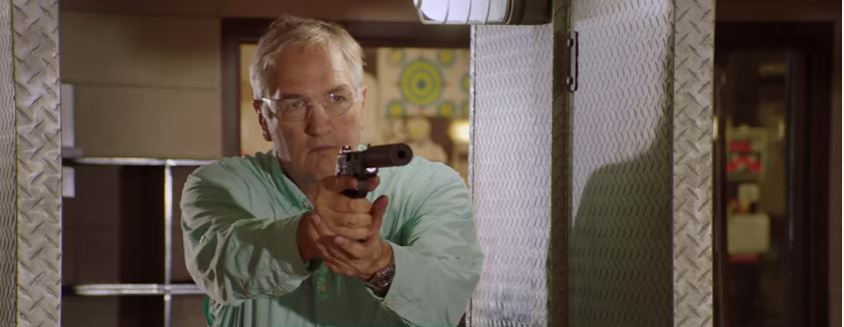
Luther Strange touted his endorsement by the National Rifle Association in a new TV ad released Wednesday in his bid to stay in the U.S. Senate. The 30-second spot — titled “Shooting Range” — also touched on Strange’s history of opposing former President Barack Obama during his time as Alabama’s attorney general. “He’s in Alabama conservative,” the ad says, “with the guts to take the conservative fight to Obama.” The ad shows “Big Luther” Strange at a shooting range taking aim at a target that says, “Obama’s amnesty plan for illegal immigrants” and talks of his fight to protect Second Amendment rights. Last week, Strange announced a pair of endorsements — the NRA and the Alabama Farmers Federation. The NRA support came from Strange’s support on Second Amendment issues. The Farmers Federation cited his record as attorney general, in challenging of the federal Environmental Protection Agency’s Waters of the United States rule. Eleven Republicans and 8 Democrats running in the Aug. 15 special primary, with a likely runoff to follow in September.
Kay Ivey signs sex offender reporting bill into law
A bill to bring Alabama’s criminal code regarding sex offenders up-to-date with observed trends in sexual misconduct, particularly when technology is involved, has been signed in to law. SB301, sponsored by Mobile-Democrat Sen. Vivian Figures was signed by Gov. Kay Ivey on Friday. “The most important duty of government is to keep our people safe. I proudly signed SB301, because it protects the vulnerable in our society by ensuring that reporting requirements for sex offenders are strict and enforced,” Ivey said. “Our laws must keep up with changes in our technology.” “I am thankful for the work of Senator Figures, all legislators, and Attorney General Steve Marshall in securing bipartisan passage of this important legislation,” Ivey added. SB301 codifies a total of five new criminal offenses into law. The legislation also makes changes to the existing sex-offender laws to strengthen reporting requirements and it clarifies parts of the existing statute. “This new law is an important step forward in updating our criminal code to combat new and troubling forms of sexual misconduct, many of which are made possible by evolving technology,” Figures commented. “As sponsor of this legislation, I thank the Attorney General’s Office and the Office of Prosecution Services for their leadership in developing and promoting the proposal. I also thank Governor Ivey for signing the bill into law.”
David Shulkin stresses ‘lot of work to do’ to fix beleaguered VA
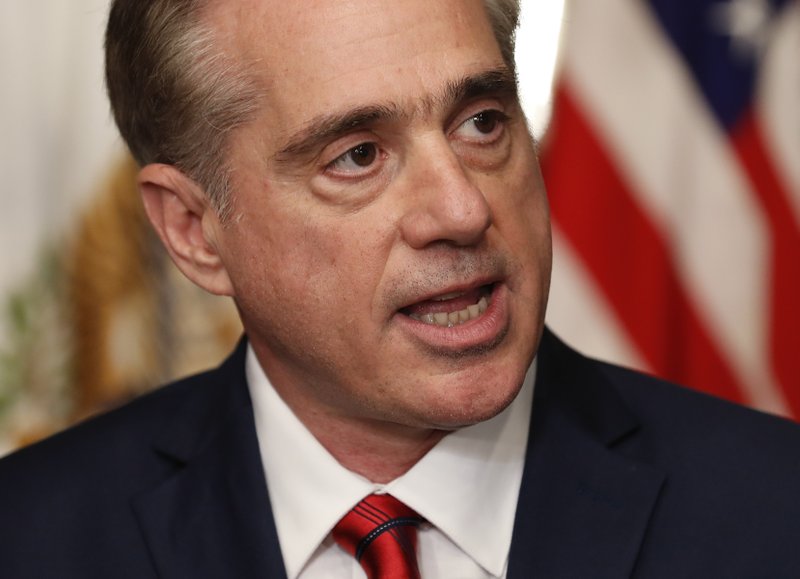
Veterans Affairs Secretary David Shulkin warned Wednesday that the VA is “still in critical condition” despite efforts that predate his tenure to reduce wait times for medical appointments and expand opportunities to seek care in the private sector. In a “State of the VA” report, Shulkin, a physician, issued a blunt diagnosis: “There is a lot of work to do.” Veterans can get “same-day” services at medical centers but are still waiting too long – more than 60 days – for new appointments at about 30 locations nationwide. Many primary care centers are understaffed or running out of space. Appeals of disability claims remain backed up with years of wait. Inventory systems at several VA facilities are woefully out of date, and employee accountability is “clearly broken.” Shulkin said the department had about 1,500 disciplinary actions against employees on hold, citing legal requirements that it must wait at least a month before taking action for misconduct. That means people are being paid “for violating our core values,” he said in a 17-page report. “Our veterans and their families have benefited from our early success, but have suffered due to the failures of the past to effect real change,” Shulkin said. Shulkin provided his “top to bottom review” at a critical time. His biggest proposals for revamping the VA – and fulfilling the campaign promises of President Donald Trump – will need to be acted on soon by an increasingly polarized Congress if measures are to be passed by this fall. The wish list includes an accountability bill to make it easier to fire VA employees, expanding the Veterans Choice program of private-sector care and stemming veterans’ suicide. About 20 veterans take their lives each day. “That should be unacceptable to all of us,” Shulkin said at a White House briefing. Other efforts include an overhaul of information technology systems, plans to reduce 400 vacant buildings and 735 underutilized facilities, consolidation at VA headquarters in Washington and partnerships with local governments and the private sector. Shulkin announced that a promised White House hotline for veterans’ complaints should be fully operational by Aug. 15. Testing begins Thursday. The telephone number is (855) 948-2311. During the campaign, Trump promised a 24-hour hotline so veterans’ complaints will not “fall through the cracks.” Shulkin, who served in the Obama administration and was promoted by Trump, described the president as being “deeply engaged” on veteran issues, a subject Trump highlighted during the campaign. He pledged to make the department and its health care system work better for veterans. “His commitment to being involved in veteran issues is one of his top domestic priorities,” Shulkin said at the briefing. “Anything that we need, the White House has been extremely responsive and they are impatient and anxious for us to get on with this.” Trump’s budget plan calls for a 3.7 percent increase in total VA funding, mostly to pay for rising costs of medical care. It specifically calls for $29 billion over the next decade for Choice, which allows veterans to seek outside medical care from private doctors. To cover rising costs, the VA would cap the amount of educational benefits veterans could receive under the GI bill and halt “individual unemployability” benefit payments to out-of-work disabled veterans once they reach age 62. Major veterans’ organizations oppose such cuts, with the American Legion describing the trade-offs as “stealth privatization.” Veterans’ groups worry the Trump administration is seeking to expand Choice to the detriment of core VA programs. Besides Choice, Shulkin said he was seeking to implement another campaign priority: a VA accountability office, established by executive order last month, Shulkin said he still needed the Senate to pass accountability legislation that would give him broader authority, such as lowering the evidentiary standard to fire employees. The Senate is scheduled to vote on the bill June 6. The Associated Press reported this week that federal authorities were investigating dozens of new cases of possible opioid and other drug theft by employees at VA hospitals, a sign the problem isn’t going away after the VA announced “zero tolerance” in February. Since 2009, in only about 3 percent of the reported cases of drug loss or theft have doctors, nurses or pharmacy employees been disciplined. Republished with permission of The Associated Press.
Donald Trump’s cellphone diplomacy raises security concerns
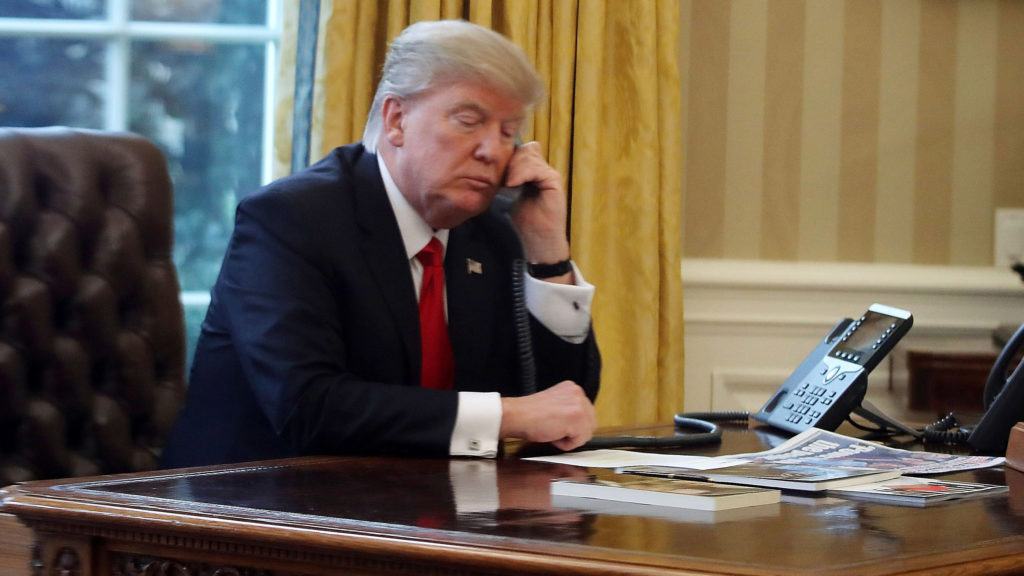
President Donald Trump has been handing out his cellphone number to world leaders and urging them to call him directly, an unusual invitation that breaks diplomatic protocol and is raising concerns about the security and secrecy of the U.S. commander in chief’s communications. Trump has urged leaders of Canada and Mexico to reach him on his cellphone, according to former and current U.S. officials with direct knowledge of the practice. Of the two, only Canadian Prime Minister Justin Trudeau has taken advantage of the offer so far, the officials said. Trump also exchanged numbers with French President Emmanuel Macron when the two spoke immediately following Macron’s victory earlier this month, according to a French official, who would not comment on whether Macron intended to use the line. All the officials demanded anonymity because they were not authorized to reveal the conversations. Neither the White House nor Trudeau’s office responded to requests for comment. The notion of world leaders calling each other up via cellphone may seem unremarkable in the modern, mobile world. But in the diplomatic arena, where leader-to-leader calls are highly orchestrated affairs, it is another notable breach of protocol for a president who has expressed distrust of official channels. The formalities and discipline of diplomacy have been a rough fit for Trump — who, before taking office, was long easily accessible by cellphone and viewed himself as freewheeling, impulsive dealmaker. Presidents generally place calls on one of several secure phone lines, including those in the White House Situation Room, the Oval Office or the presidential limousine. Even if Trump uses his government-issued cellphone, his calls are vulnerable to eavesdropping, particularly from foreign governments, national security experts say. “If you are speaking on an open line, then it’s an open line, meaning those who have the ability to monitor those conversations are doing so,” said Derek Chollet, a former Pentagon adviser and National Security Council official now at the German Marshall Fund of the United States. A president “doesn’t carry with him a secure phone,” Chollet said. “If someone is trying to spy on you, then everything you’re saying, you have to presume that others are listening to it.” The caution is warranted even when dealing with allies. As German Chancellor Angela Merkel‘s learned in 2013, when a dump of American secrets leaked by Edward Snowden revealed the U.S. was monitoring her cellphone, good relations don’t prevent some spycraft between friends. “If you are Macron or the leader of any country and you get the cellphone number of the president of the United States, it’s reasonable to assume that they’d hand it right over to their intel service,” said Ashley Deeks, a law professor at the University of Virginia who formerly served as the assistant legal adviser for political-military affairs in the U.S. State Department. The practice opens Trump up to charges of hypocrisy. Throughout last year’s presidential campaign, he lambasted Democratic rival Hillary Clinton for using a private email server while she was secretary of state, insisting she should not be given access to classified information because she would leave it vulnerable to foreign foes. Presidents’ phone calls with world leaders often involve considerable advance planning. State Department and National Security Council officials typically prepare scripted talking points and background on the leader on the other end of the line. Often an informal transcript of the call is made and circulated among a select group — sometimes a small clutch of aides, sometimes a broader group of foreign policy officials. Those records are preserved and archived. The White House did not respond to questions on whether the president is keeping records of any less-formal calls with world leaders. Trump’s White House is already facing scrutiny for apparent efforts to work outside usual diplomatic channels. The administration has been fending off questions about a senior aide’s alleged attempt to set up a secret back channel of communication with Moscow in the weeks before Trump took office. White House adviser Jared Kushner, Trump’s son-in-law, met in December with Russia’s ambassador to the U.S. and discussed whether a secret line of communication could be used to facilitate sensitive policy discussions about the conflict in Syria, according to a person familiar with the talks. The person demanded anonymity because the person was not authorized to discuss the sensitive conversation by name. The White House has said such back-channel communications are useful and discreet. Trump has struggled more than most recent presidents to keep his conversations with world leaders private. His remarks to Australian Prime Minister Malcolm Turnbull, Mexican President Enrique Pena Nieto and Russian diplomats have all leaked, presumably after notes of the conversations were circulated by national security officials. It was unclear whether an impromptu, informal call with a foreign leader would be logged and archived. The Presidential Records Act of 1981, passed in response to the Watergate scandal, requires that the president and his staff to preserve all records related to the office. In 2014, the act was amended to include personal emails. But the law contains “blind spots” — namely, record-keeping for direct cellphone communications, said Jonathan Turley, a professor at George Washington University Law School, who specializes in public interest and national security law. Under Barack Obama, the first cellphone-toting president, worries about cyber intrusions — particularly by foreign governments — pulled the president’s devices deep into the security bubble. Many of the functions on Obama’s BlackBerry were blocked, and a very small handful of people had his phone number or email address, according to former aides. “Government sometimes looks like a big bureaucracy that has stupid rules, but a lot of these things are in place for very good reasons and they’ve been around for a while and determine the most effective way to do business in the foreign policy sphere,” said Deeks. “Sometimes it takes presidents longer to figure that out.” Republished with permission of The Associated Press.
Poll: GOP health bill a far cry from Donald Trump promises

President Donald Trump has called the House-passed health care bill a “great plan,” but a new poll finds that 3 out of 4 people in the United States do not believe it fulfills most of his promises. The poll out Wednesday from the nonpartisan Kaiser Family Foundation also found a growing share of the public concerned that the GOP’s American Health Care Act will have negative consequences for them personally by increasing their costs, making it harder to get and keep health insurance, or reducing quality. In the poll, only 8 percent said the Senate should pass the House bill as it is. “There is nothing in this poll, that if you were in the Senate, would cause you to rush out and pass the House bill,” said Drew Altman, president of the foundation, a clearinghouse for health system information. It was the latest in an ongoing series of Kaiser surveys on health care. Senators are on break this week, back in their home states sounding out constituents. In Washington, staffers are working on a legislative framework that can get 51 votes. The House bill would eventually lead to 23 million fewer people covered, according to a recent Congressional Budget Office estimate. While it would reduce average premiums over time, it could also destabilize coverage for people with health problems in some states. The GOP measure would eliminate former President Barack Obama‘s Medicaid expansion and limit future federal financing for that safety net program. It would repeal the unpopular requirement that most people get covered or risk fines. It would continue to provide subsidies for private health insurance, but at a reduced level. And it would cut taxes on upper-income people that Democrats raised to finance their Affordable Care Act. As a candidate and as president, Trump has made reassuring promises about health care. While offering few details, he’s promised to improve coverage and cut costs. Days ago the president tweeted, “I suggest that we add more dollars to Healthcare and make it the best anywhere. ObamaCare is dead – the Republicans will do much better!” But both the House GOP bill and Trump’s own budget would make big cuts across a range of health care programs, from insurance to medical research. In the poll, 3 in 4 people said they don’t think the narrowly-passed House bill fulfills most of Trump’s promises. Thirty-five percent it fulfilled none of his promises, while 40 percent said the bill fulfills some Trump promises. Only 4 percent said the GOP bill fulfilled all of the president’s promises, while another 10 percent said it delivered on most of his promises. Drilling down to Republicans, only 30 percent said the bill delivered on all or most of Trump’s health care promises. Fifty-one percent said it fulfilled some pledges. On the plus side for Trump and his congressional allies, the poll found that the GOP base continues to support the House bill, with 67 percent of Republicans saying they view it favorably. And a plurality of Americans – 42 percent – expressed support for Medicaid work requirements favored by the GOP Other findings are not so reassuring. After Trump won, relatively few people saw personal risks from his promised repeal of Obama’s health overhaul. Only 28 percent thought it would increase the cost of their own health care, while 21 percent said it would worsen access to health insurance, and 19 percent were concerned about quality. Now, when asked about the GOP health care bill, 45 percent feared their costs would go up, 34 percent were worried about their ability to get and keep health insurance, and 34 percent were concerned that quality would suffer. The poll found that Obama’s law is more popular than the House plan. Forty-nine percent had a favorable view of Obama’s overhaul, compared with 31 percent who had a favorable view of the Republican proposal. The Kaiser poll was conducted from May 16-22 among a nationally representative random digit dial telephone sample of 1,205 adults. The margin of sampling error is plus or minus 3 percentage points for the full sample. For results based on subgroups, the margin of sampling error may be higher. Republished with permission of The Associated Press.
Jim Zeigler to announce emergency measures to keep State Auditor’s office operating
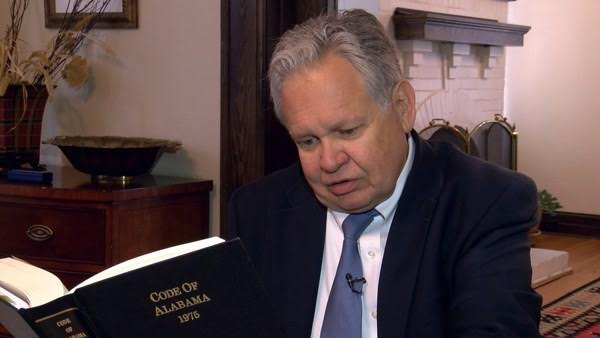
State Auditor Jim Zeigler will make speech at the Montgomery Capital Rotary Club on Thursday announcing emergency measures his office will take in order to keep the State Auditor’s office operating following three years of budget cuts. Zeigler says his office has been slashed by 28.5% since he took office in 2015. According to Zeigler the budget is $368,000 below the minimum needed to audit the state’s $1.9 billion worth of state property items. “This marks the third year in a row that our budget has been cut,” Zeigler said. “We are $368,400 below sea level. With the severe cuts the previous two years, we cannot do our constitutional job of property inventories with this latest cut. We had already cut everything we could after the last two budget cuts, so there is nothing left to cut.” The State Auditor is responsible for inventorying state property items worth $500.00 or more, plus all weapons and sensitive items. When Zeigler took office in January 2015, the office had $1,066,922 to operate. With three budgetary cutbacks in a row, the office will have only $762,575 starting October 1. “We have already dropped from 11 full-time and 1 part-time to six full-time and twi part-time employees,” Zeigler added. “We dropped from five field auditors to two full-time and one part-time to audit the entire state.” In order to adjust for the cuts thus far, the State Auditor’s office has already made the following cuts: Discontinued the cell phone contract for the auditors Cut office supply budget Delayed replacing aging vehicles used by auditors Transferred three vehicles to other agencies to reduce insurance since we have lost field auditors Cut overnight travel and only allow daily travel by the auditors Reduced the number of allowable miles for each auditor to travel from their home base to reduce vehicle fuel and maintenance costs Delayed replacing computers and printers Cut state travel to national property management conferences Reduced office space that was being leased.
Al Franken: ‘Everything points to’ collusion with Donald Trump, Russia
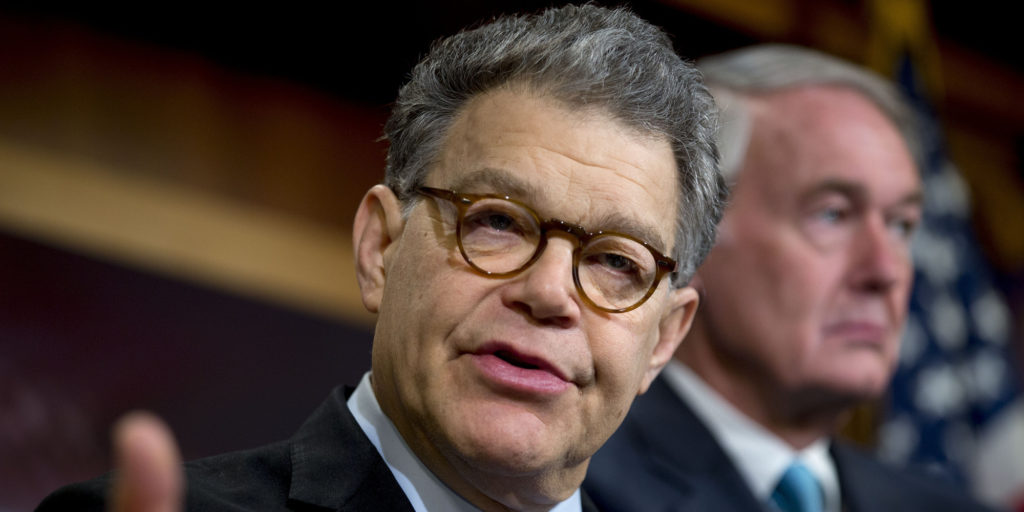
A conversation between two comedians turned serious late Tuesday when U.S. Sen. Al Franken said “everything points to” collusion between President Donald Trump‘s campaign and the Russians. The Minnesota Democrat did not cite any evidence, noting a special counsel has been appointed to lead an FBI probe into the Republican administration’s ties to Russia. But Franken shared his “feeling” when pressed by late-night comedy legend David Letterman during joint appearance in New York City. “My feeling is that there was some cooperation between the Trump campaign and the Russians. I think everything points to that,” Franken told Letterman, who moderated a discussion designed to highlight the release of Franken’s new memoir. Franken added, “They just haven’t been acting like people who have nothing to hide.” The Associated Press reported earlier in the day that Trump’s personal attorney, Michael Cohen, rejected a House intelligence committee request for information, while former National Security Adviser Michael Flynn will provide documents to the Senate intelligence committee as part of its probe into Russia’s meddling in the 2016 election. Franken, a founding writer on “Saturday Night Live,” has emerged as a liberal hero of sorts during his two terms in the Senate. He insisted in recent days that he will not run for president in 2020, however. “I see myself running for re-election in 2020,” he told Letterman of his plans to seek a third Senate term. Letterman and Franken ignored comedian Kathy Griffin‘s photo shoot in which she’s pictured holding what looks like Trump’s severed head. While Griffin apologized for the image, the Republican National Committee singled out Franken for accepting political contributions exceeding $3,000 from Griffin in recent years. The two were scheduled to appear together at an event in California in the coming weeks. Franken spokesman Michael Dale-Stein did not say whether Franken still planned to attend the event, but he condemned Griffin’s photo. The senator, Dale-Stein said, “believes this image was inappropriate and not the kind of thing that should be part of our national discourse.” Back in New York, the comedians had the crowd roaring. In classic deadpan style, Letterman drew a huge laugh when he declared, “I have begun to lose confidence in the Trump administration.” Republished with permission of The Associated Press.
Despite Donald Trump, cleaner energy growth expected to carry on
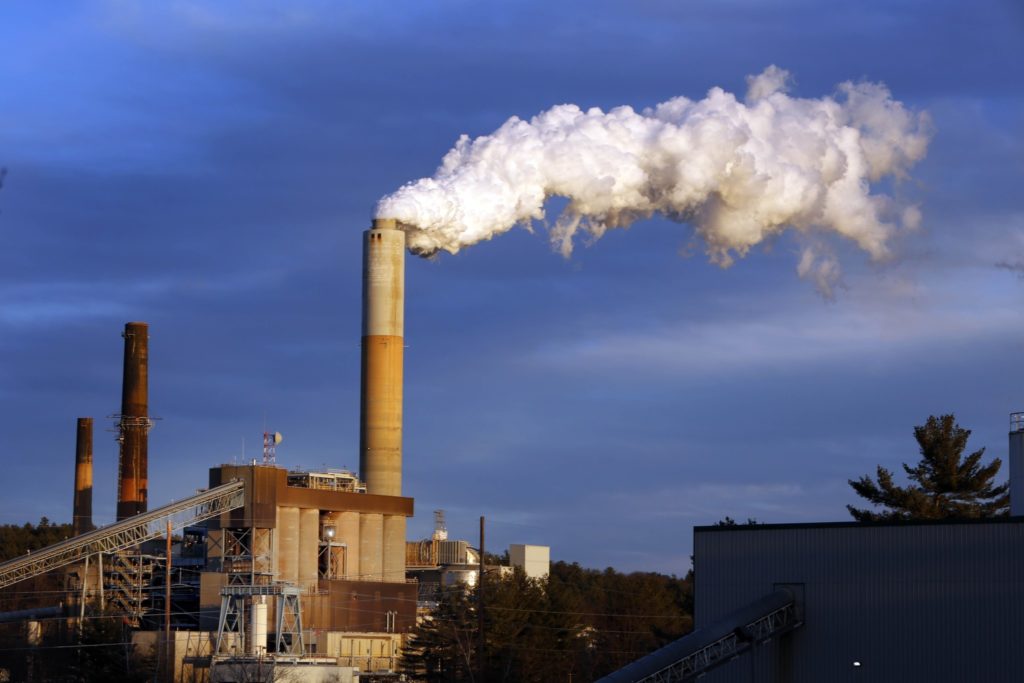
President Donald Trump may abandon U.S. pledges to reduce carbon emissions that contribute to global warming, but that step seems unlikely to stall the push to adopt cleaner forms of energy. Around the world, coal-fired power plants are being shuttered as governments and private companies invest billions in wind turbines and solar farms. Even in regions of the U.S. where coal is plentiful, electric utilities are increasingly shifting to cheaper, cleaner-burning natural gas. In the absence of federal action to address climate change, some left-leaning states such as California and New York are moving ahead with ambitious clean-energy policies of their own. Trump said on Twitter late Wednesday he will announce his decision on whether to pull the United States out of the Paris climate accord during a Rose Garden event Thursday afternoon. The Paris accord was negotiated by President Barack Obama in 2015. A White House official told The Associated Press on Wednesday that Trump is expected to withdraw from the deal, though aides cautioned he had not yet made a final decision. Reports of the impending move by the American president triggered statements of support for the climate accord from scores of world leaders. At a meeting of the G7 in Sicily last week, only Trump refused to reaffirm their nations’ continuing support for the Paris deal, which was signed by nearly 200 countries. “A U.S. withdrawal from Paris will be a disappointment to the climate community, but it may also embolden other countries to fill the void left by the U.S. and take on a greater leadership role,” said Glen Peters, a Norwegian scientist who tracks global carbon emissions. “The declines in U.S. emissions in the last decade have largely happened without strong climate policies, and a withdrawal from the Paris Agreement may have minimal effect on U.S. emissions but give a hit to international morale.” Trump, a Republican who has claimed global warming is a hoax, has moved quickly since taking office to delay or block restrictions on burning of fossil fuels enacted by his predecessor that he claims are holding back economic growth. The president has pledged to reverse decades of decline in coal mining, which now accounts for fewer than 75,000 U.S. jobs. Almost every other industrialized economy in the world is moving in the opposite direction. On April 30, Germany established a new national record for renewable energy use with 85 percent of all electricity produced in the county coming from renewable sources. That same month, Scotland was able to produce an electricity surplus from its wind turbines, producing 136 percent of the energy needed for its 3.3 million households. The Chinese government canceled construction of more than 100 new coal-fired power plants earlier this year, announcing plans to invest at least $360 billion in green-energy projects by 2020. It is a building boom expected to create an estimated 13 million jobs. Though it remains the largest global carbon emitter, China also leads the world in total installed solar and wind capacity. China generates about 20 percent of its electricity from renewable sources, compared to about 13 percent in the U.S. “President Trump is ceding the future to the Germans, the Chinese, the Indians, and other nations rather than having the United States continue to lead the world on clean energy solutions,” said Sen. Ed Markey, D-Mass. “By creating the clean energy technologies here at home and then deploying them around the world, we can have job creation that is good for all creation.” Coal is the dirtiest of fossil fuels, accounting for more than three-quarters of carbon emissions from U.S. power plants despite generating less than 40 percent of the nation’s electricity. Several of the country’s largest coal companies have sought bankruptcy protection in the last year, largely due to competition from natural gas made cheaper and more abundant by hydraulic fracturing. As American utilities have turned away from coal, the nation has seen a corresponding decline in carbon emissions. Still, the United States remains the world’s second largest emitter of carbon dioxide. Scientists warn that any delay in weaning the country off fossil fuels could exacerbate the negative effects of climate change for the rest of the globe. Carbon dioxide stays in the air for 100 years and about one-fifth of what’s accumulated in the atmosphere over the last century came from the United States, more than any other country. “The U.S. pulling out of Paris will not stop the fight against global warming, since almost all other countries are committed to it,” said Stefan Rahmstorf, a German climate researcher. “But it could delay it and any delay could be detrimental, as stopping global warming before critical tipping points are crossed is a race against the clock.” Republished with permission of The Associated Press.
USAA says it will reinstate ads on ‘Hannity’

The USAA financial services firm is reinstating its advertising on Sean Hannity’s Fox News Channel program after receiving heavy criticism for its initial decision from many of the military members and veterans that it serves. The San Antonio, Texas-based company said Tuesday it will also start advertising again on other programs where it had suspended ads, including “Hardball” and “The Rachel Maddow Show” on MSNBC, and Jake Tapper’s “The Lead” on CNN. Following Hannity’s reporting on a discredited conspiracy theory involving the death of a Democratic National Committee staff member, the liberal advocacy group Media Matters last week posted a list of his show’s advertisers — and USAA was one of 10 to say it was pulling its commercials. At the time, the USAA said the company’s policy was to avoid politically opinionated shows. But many of USAA’s customers reacted angrily, and it didn’t help when the company’s advertising on other opinion shows was pointed out. USAA said it wasn’t trying to favor one set of political views over another. “We heard concerns from many members who watch and listen to these programs,” USAA said in a statement on Tuesday. “Our goal in advertising has always been to reach members of the military community who would benefit from USAA’s well-known commitment to service. Today, the lines between news and editorial are increasingly blurred.” The advertising is returning while the company reviews its policy about avoiding the opinion shows. Hannity was due to return to Fox Tuesday following a brief vacation. He had said he would no longer talk about the shooting death of Seth Rich last year following pleas from the man’s family, although his network had retracted an online story about Rich because it hadn’t met its reporting standards. Brent Bozell, president of the conservative Media Research Center, said he wasn’t surprised by USAA’s decision, “given the avalanche” of protests. His group was behind mobilizing that backlash, and said its members generated more than 1,600 phone calls to USAA within 48 hours. “They did the right think in going back on that show,” he said, “and so long as the other side isn’t participating in personal smears, they should participate on those shows, too.” Angelo Carusone, president of Media Matters, said the incident illustrates his belief that Hannity is volatile and dangerous for advertisers to be involved with. “Many are currently experiencing firsthand that doing business with Hannity means subjecting your brand to one potential PR crisis after another,” he said. Republished with permission of The Associated Press.
Social media rushes to define Donald Trump’s ‘covfefe’ tweet

A midnight tweet from President Donald Trump has social media trying to find a meaning in the mysterious term “covfefe.” Trump tweeted just after midnight on Wednesday: “Despite the constant negative press covfefe.” The tweet immediately went viral and became one of the president’s more popular posts before it was taken down after nearly six hours online. Trump poked fun at the typo, tweeting around 6 a.m., “Who can figure out the true meaning of “covfefe” ??? Enjoy!” The term became a top trending item on Twitter, with many users supplying tongue-in-cheek meanings. One user joked that “covfefe” is already a popular name for babies in states that voted for Trump. Silicon Valley executive Andrew Crow went as far to change his last name on Twitter to “Covfefe.” Jimmy Kimmel lamented that he’ll never write anything funnier than the term. Dictionary publisher Merriam-Webster checked in with an eye-rolling tweet about people looking up “covfefe” on its website. Dozens of definitions have been submitted the Urban Dictionary website, which crowdsources meanings for slang terms. The president returned to his normal Twitter routine later in the morning by slamming Democrats over the probe into Russia’s meddling in the 2016 election. Republished with permission of The Associated Press.
Steve Flowers: Lay of the land in U.S. Senate sprint
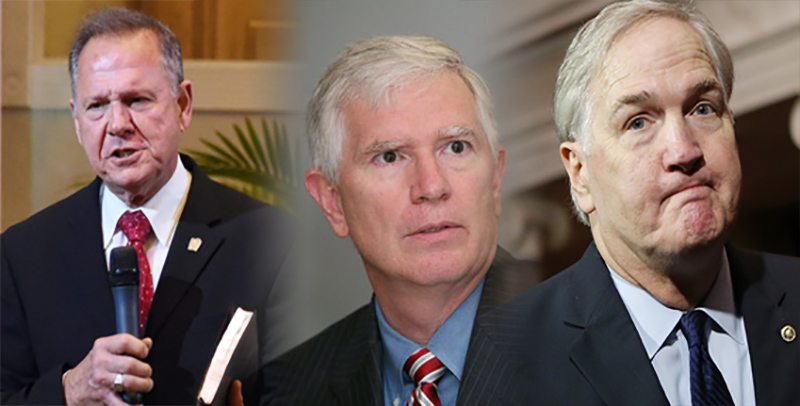
As the race for our open U.S. Senate seat begins, let’s look at the lay of the land. First-of-all it will be a sprint. The race is upon us with the primaries August 15 and the run-off six weeks later September 26. The Republican primary victor will be coronated December 12. We, in the Heart of Dixie, are a one-party state when it comes to major statewide offices. Winning the GOP primary is tantamount to election. Therefore, our new senator will probably be elected September 26. With 10 Republicans in the race, it will be highly unlikely that anybody could win without a run-off, so the initial goal is to make the run-off. There are amazingly 19 total candidates who qualified. You can write the 8 Democrats off as irrelevant because a Democrat cannot win in Alabama. With 11 Republicans running, it appears to be a crowded race. However, 6 of the 11 are “run for the fun of it” qualifiers. Therefore, even though the field has a lot of horses, there are only 5 of the 19 who could be considered thoroughbreds and probably only 3 who have a viable chance to win. Former Chief Justice Roy Moore and former State Attorney General and Robert Bentley appointee to the Senate, Luther Strange, are more than likely headed to a Republican run-off. Huntsville and Tennessee Valley Congressman Mo Brooks has the best chance to challenge for a run-off spot. Initial polling has Roy Moore at 30 percent, Luther Strange at 14 percent and Mo Brooks at 7 percent. Roy Moore’s removal from his post as Chief Justice of the Supreme Court by some vague Judicial Inquiry Commission for being against gay marriage has made him a hero and martyr among Alabama’s conservative and religious voters. There is a pent-up desire to right a wrong among the Alabama people. It is obviously showing up in the polling, but it could be illuminated and result in a higher than anticipated 30 percent. Polls are a picture of the total pool of voters. However, the final poll and the one that really matters is who actually shows up to vote August 15. Roy Moore’s folks will be there, they are ardent and mad. They will not be at the lake or the beach. In fact, if there is an extremely low turnout, Moore could conceivably win without a run-off. It is unlikely that occurs. However, he more than likely finishes first and has a spot in the run-off. Luther Strange will be fighting to hold on to the other spot in the Sept. 26 final dance. He will more than likely prevail in his quest to get into the run-off and keep the seat. Luther will have $10 million of Washington establishment super PAC ammunition at his disposal. It is hard to overcome that kind of money. It is the mother’s milk of politics. Luther is banking on the fact that most U.S. Senate seats are bought by special interest money. Folks, $10 million washes a lot of taint away from the Bentley to Luther deal. It looks inevitable that Roy Moore and Luther Strange will be in a run-off and the prevailing opinion is that Moore cannot get over 50 percent. However, polling indicates that neither Moore nor Strange can get over 50 percent. They both have a large base of detractors. This race was ripe to be won by an outside rich man who could spend $10 million of their own money. “Yella Fella” Jimmy Rane walked away from a U.S. Senate seat that was his for the taking. Congressman Mo Brooks has the best chance to knock Strange out of the run-off. He starts off with a base of support in the Tennessee Valley and $1.2 million in his federal war chest. If he were to raise $3 million, he would probably beat Luther and ultimately would probably beat Moore. Brooks is to the right of Attila the Hun and belongs to a right-wing congressional group known as the Freedom Caucus. There are some very rich right-wing zealots around the country who give to Freedom Caucus candidates. They may load ole’ Mo up and teach the Elitist Establishment Mitch McConnell crowd a lesson. If state Sen. Trip Pittman, from Baldwin County, could raise $5 million he could sell. He is the only serious candidate from the vote-rich Baldwin/Mobile area. Dr. Randy Brinson has the perfect background, narrative and family values story. However, like Pittman, he needs $5 million to tell his story. We will see. See you next week. ___ Steve Flowers is Alabama’s leading political columnist. His weekly column appears in over 60 Alabama newspapers. He served 16 years in the state Legislature. Steve may be reached at www.steveflowers.us.
Medicare plans to replace Social Security numbers on cards

Old Medicare cards will be going in the shredder. Officials said Tuesday the government is on track to meet a 2019 deadline for replacing Social Security numbers on Medicare cards with randomly generated digits and letters to protect seniors against identity theft. Planning for the massive transition has been underway for years. Beneficiaries and their families should start seeing changes next April, Medicare announced Tuesday. That’s when the agency will begin mailing out new cards to more than 57 million elderly and disabled beneficiaries. They’ll be instructed to destroy their old cards after they get the new one. New cards may be used right away. Health care transitions can be notoriously tricky for the government. Remember the “Obamacare” computer system that didn’t work at first? Or the Medicare drug program rollout, when millions of low-income beneficiaries couldn’t get their prescriptions filled initially? In a statement Tuesday, Medicare chief Seema Verma said the Trump administration is aiming for “a seamless transition” over a 21-month period that will involve coordination with beneficiaries, family members, hospitals, doctors, insurance companies, pharmacies and state governments. Congress has set an April 2019 deadline for all beneficiaries to have new cards. Medicare has set up a website that provides some basic information. True to government form, the new Medicare number already has an acronym: MBI, which stands for Medicare Beneficiary Identifier. No final prototype of the new card has been unveiled, but the MBI will have 11 characters, a combination of randomly generated numbers and upper-case letters. That will easily distinguish the MBI from the familiar Medicare number, which is based on Social Security numbers. Using Social Security numbers has been a recognized vulnerability for years, exposing seniors to identity fraud. In a digital society, having a Social Security number stolen can have immediate financial and legal consequences taking months and even years to untangle. “Most beneficiaries will carry that Medicare card in their wallet, so if their wallet is lost or stolen, that is exactly what the identity thief is looking for,” said AARP’s Amy Nofziger, a fraud prevention expert. Private insurers have stopped using Social Security numbers on ID cards, she added, and it’s imperative that Medicare is gearing up to make the change. Seniors are increasingly the victims of identity fraud, the government says, with a nearly 24 percent increase in such cases from 2012-2014, when 2.6 million incidents were recorded. Nofziger warned that confusion around the transition to new Medicare cards could become an opportunity for fraudsters. Beneficiaries may get unsolicited phone calls from official-sounding people asking for personal details so new cards can be sent. They should ignore that. Do not provide any information, said Nofziger, and instead report any such calls. “Your card will be automatically mailed to you,” she said. Republished with permission of The Associated Press.
