
Jim Zeigler to become “field auditor” to keep office operating
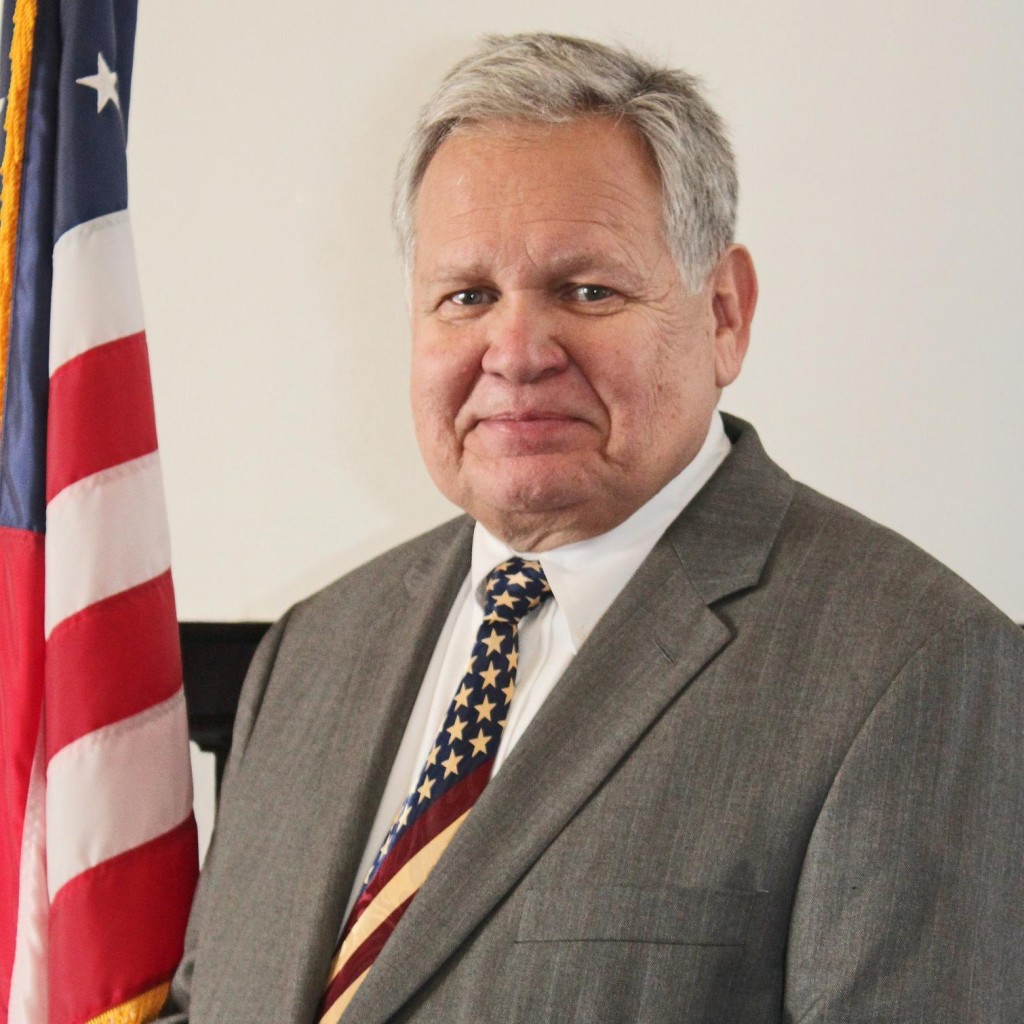
State Auditor Jim Zeigler is taking one for the team. Or rather, the Yellowhammer State. In the wake of cuts to the State Auditor’s office operating budget, Zeigler announced Thursday in addition to his normal duties as State Auditor, he will train to also work as a field auditor, doing the actual property inventory of state agencies in order to help keep the office operating. The unusual move is necessary as the budget has been cut 28.5 percent since January 2015 when he first took office. According to Zeigler the new budget won’t allow the status quo to continue as it is $368,400 below the minimum needed to audit the state’s $1.9 billion worth of state property items. Zeigler made the announcement in a speech to the Capitol Rotary Club in Montgomery.
Housing chief Ben Carson steps up public profile in coming weeks
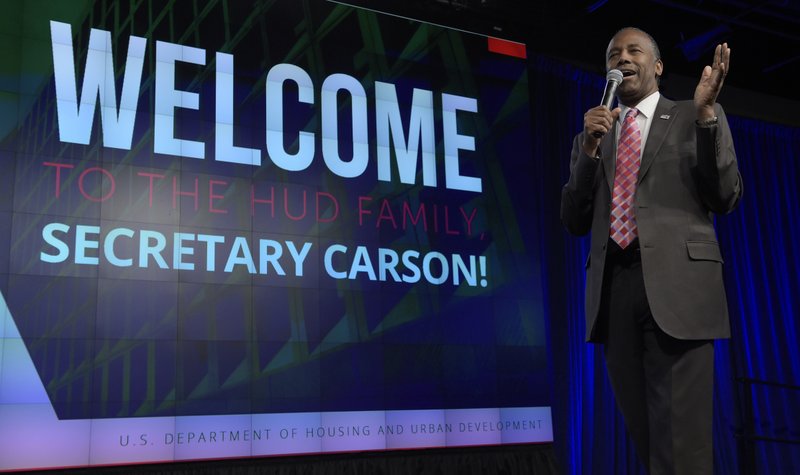
President Donald Trump‘s point man on housing, Ben Carson, takes on a higher profile this month in Washington – an opportunity to spell out his vision on federal housing policy, and to try to avoid some of the verbal gaffes that have stirred criticism in his first months on the job. On Thursday, Carson will headline a homeownership conference at his agency, the Department of Housing and Urban Development. Next week, he heads to Capitol Hill to testify before House and Senate panels about deep cuts planned for HUD in Trump’s proposed budget. It’s a shift in visibility for the renowned neurosurgeon and former Republican presidential candidate as he nears 100 days in Trump’s Cabinet. Since taking the helm of HUD in March, Carson, 65, has visited a handful of cities as part of a national “listening tour” to talk to HUD employees, housing officials and public housing residents. He’s also had appearances at some housing conferences – most of it with little or no advance notice to the media. So far, he has not shared publicly his policy agenda for the department. HUD spokesman Raffi Williams says Carson is no longer a candidate running for political office and has been busy leading a $40 billion federal agency that has more than 8,000 employees. “He’s focused on governing and crafting policies that advance HUD’s mission of creating strong, sustainable, inclusive communities and quality affordable homes for all Americans,” said Williams. When Carson has discussed his views on government and housing policy, he’s sparked some criticism. In his first full week on the job, Carson seemed to describe slaves as immigrants, saying – “there were other immigrants who came here on the bottom of slave ships, worked even longer, even harder for less.” Last week, on the radio show of close friend and conservative commentator Armstrong Williams, Carson said poverty is largely a “state of mind.” “You take somebody who has the right mindset, you can take everything from them and put them on the street and I guarantee you, in a little while, they’ll be right back up there,” Carson told Armstrong on his SiriusXM show. “And you take somebody with the wrong mindset, you can give them everything in the world and they’ll work their way back down to the bottom.” The comments from Carson, who grew up poor in inner-city Detroit, stoked outrage on social media – coming from the head of an agency that provides millions of lower-income people with rental subsidies and other housing assistance. But Rolf Pendall, co-director of a housing program at the Urban Institute think tank, isn’t worried that Carson has “been given the mission of destroying the agency.” While not defending Carson’s comments, Pendall said the housing chief’s testimony during his January confirmation hearing shows “he clearly does think that HUD is part of the solution to urban problems, to rural problems, to housing problems in the United States, and that many of its programs have been effective in the past.” Carson’s vision could become clearer when he testifies about the administration’s proposed $6 billion cut in the agency’s $47 billion budget. Slated for elimination in the Trump budget are several housing support and community development programs, such as the $3 billion Community Development Block Grant program. The plan also would cut about $2 billion from the department’s rental assistance programs, to $35.2 billion. Rental assistance programs comprise about 80 percent of the agency’s total funding. New requirements to encourage work and self-sufficiency are part of the plan. One proposal would increase the tenant contribution toward rent from 30 percent of adjusted income to up to 35 percent of gross income. The cuts would be devastating, Pendall said: “People will lose housing vouchers. They will become homeless, and some of them will die.” Diane Yentel, president and CEO of the National Low Income Housing Coalition, says she wants to see Carson focus on programs with proven results – such as the Housing Trust Fund, which the Trump budget would eliminate, or Section 8 housing vouchers. “Each of these programs not only end homelessness and housing insecurity, but they are proven to increase the educational attainment of the kids living in those affordable homes and to increase the lifetime earnings of the kids living in those homes,” Yentel said. Yentel called Trump’s budget proposal “extreme overreach” and said she worries it moves the goal posts so far that “it creates an environment where cuts only half as deep seem like a reasonable compromise.” Republished with permission of The Associated Press.
Daniel Sutter: Just what the doctor ordered

The U.S. House of Representatives recently passed the American Health Care Act (AHCA), an expansive bill which Republicans claim delivers on their promise to repeal and replace the Affordable Care Act. The AHCA proposes changes to Medicaid that should control costs, and could even improve the quality of care for low income Americans. Medicaid is the joint state and Federal program providing health insurance for the poor and disabled. States operate the programs, with rules and over half of the funding provided by Washington. Since Medicaid’s founding in 1965, matching grants have doled out Federal dollars, with states receiving from $1 to $3 for each dollar spent (low income states get a better match). Beginning in 2020 under the AHCA, states would receive a fixed dollar amount per beneficiary, for each of five beneficiary categories. Alternatively, states could elect to receive a block grant, meaning a fixed dollar amount not dependent on the number of enrollees. Medicaid’s match has been open-ended, so that spending more on approved coverage brings in more Federal dollars. High income states have obtained more Federal dollars through generous optional coverage. But this means that for any total of Federal spending, fewer dollars are available to help poor states, compromising the quality of care. Matching grants have also produced billions of dollars of spending on services that Americans do not think are worthwhile. This last point requires some explanation. People obviously do not agree on how much we should spend on Medicaid (or any program). Labeling spending “wasteful” often simply disguises personal opinion. I think that some Medicaid spending can be more validly called wasteful. Suppose that a state considers spending $100 million on Medicaid. Given Alabama’s matching rate, our state legislators would need to appropriate about $35 million to cover $100 million of services. Is this spending worthwhile? Most Alabamians are not on Medicaid, so if we think solely in terms of personal benefit, most of us would say no. But Americans give almost $400 billion annually to charity, and so clearly consider the well-being of others. We would need to think about how much we value providing medical care for those who can’t afford it. The thinking resembles deliberating about individually donating $100 to a charity; if we give the money, we effectively say that helping others is worth at least $100. For the Medicaid example, Alabamians should consider exactly what procedures and persons will be covered, and whether we can afford the taxes. Let’s say we do this and come up with a value. If the value is at least $100 million, the spending is worthwhile. Unfortunately, Medicaid’s matching grants encourage Alabamians to only worry if the services are worth the $35 million we must spend. Yes, we pay a share of Federal taxes, but separately from decisions about Medicaid. So we might approve spending which we believe yields only $50 million in value. Spending $100 million to produce $50 million in value, I think, counts as waste. Block grants make states pay the full cost of extra spending. Consequently, Alabama and other states should only spend $100 million on Medicaid when the perceived value is at least $100 million. The Congressional Budget Office estimates that the ACHA will reduce Medicaid spending by $880 billion over a decade. Would this eviscerate Medicaid? Spending today exceeds $500 billion annually, and is projected to rise, so we will still be spending roughly half a trillion dollars a year. More importantly, the cuts should target coverage that Americans judge to not be worth the cost. No state would be compelled to cut coverage for any person currently on Medicaid. The first lesson of economics is that incentives matter. Medicaid’s open-ended matching grants create bad incentives under which states waste our tax dollars. The AHCA is a broad bill, and some elements may do more harm than good. But ending Medicaid matching grants would be a prescription for improvement. ••• Daniel Sutter is the Charles G. Koch Professor of Economics with the Manuel H. Johnson Center for Political Economy at Troy University and host of Econversations on TrojanVision. The opinions expressed in this column are the author’s and do not necessarily reflect the views of Troy University.
Get to know Brian McGee, Democrat running for Alabama U.S. Senate seat

11 Republicans and eight Democrats will officially move forward to their party’s August 15 primaries to vote in the Alabama special election to replace Jeff Sessions in the U.S. Senate With a little over three months until voters head to the ballots, AlabamaToday.com is inviting all of the candidates, including appointed-incumbent Sen. Luther Strange, to complete a questionnaire we believe offers an interesting, albeit, thumbnail sketch of who they are and why they are running. If you are a candidate and would like to complete the questionnaire, email Elizabeth@ALToday.com. Today’s candidate spotlight features Brian McGee, a Lee County Democrat who believes the nation must begin to put Country in front of Party. Here he is in his own words: Significant other? Kids? Married to Jacqueline Harrison McGee for 47 years. Son, Jonathan, Navy vet, works for the Department of Defense in Japan, married with 3 children. Daughter, CPA in Florida, married with one child. Education background? Professional background? Military Background: Volunteered Infantry during Vietnam War, Attended Officer Candidate School and in 4 years of active duty rose from private to Army Captain, Ranger Training, Jungle Warfare, Biological, Chemical and Nuclear Warfare training, Commander of 39th Scout Dogs for the 173rd Airborne in Vietnam, Military awards include Combat Infantry Badge, Bronze Star, significant achievement –13 months in Vietnam and did not lose a single man, Company Commander of an Engineer Reserve Company Educational Background: Bachelor’s Degree in Elementary Education with minor in Science, Master’s Degree in Educational Technology, Specialist Degree in School Administration. Taught for 11 years in the United States and then went to work for the Department of Defense Schools living 25+ years in Bahrain in the Middle East, Panama, Japan and England. Traveled to over 50 countries. What was your first job? As a teenager I worked on a farm. Then I joined the US Army. After the army and while in college, I was a common laborer building tunnels, bridges and digging ditches. In 25 words or less, why are you running for office? As a nation we MUST begin to put Country in front of Party. We must put the people FIRST. We CAN do this. Did you speak with anybody in your political party before deciding on running? Receive any encouragement? From whom? Before putting my name in the ring, I talked to the Chairwoman of the Democratic Party, Nancy Worley, and also Jessie Smith, who had twice been a candidate for the US House Seat in the 3rd congressional district. I also, of course, talked in great detail with my wife and adult children. This was a decision that would affect all of our lives and their input was critical. Who do you count on for advice? My wife of 47 years is my primary confidante and advisor. After that, I have to give a nod to my sister who is a Republican, my pastor/priest and even my Bible Study Group. They are significant as they have a wide range of opinions from right to left and all points in between. I can float an idea with some of them and get an interesting and thoughtful comeback. Who is your political consultant? Campaign manager? What you see is what you get. This is a grassroots organization and we are not being politically correct. We speak from the heart and from years of experience gained through an incredible life, well lived and including a wide set of experiences. Who was the first person to contribute to your campaign? Why did they donate? I cannot appropriately share the individual’s name, but she resides in Oregon. I used to work with her in Europe and she knows and trusts I will put country over party or and over getting elected or reelected. Who, if anyone, inspires you in state government? I wanted to talk about someone current and so I am picking Governor Kay Ivey. She is the second woman to be governor of Alabama and the first teacher to sit as governor. I believe she is someone who could get things done for Alabama and its people. I am filled with hope. At the current time, if you look on her website she lists five initiatives. The Military Stability Commission, Aerospace Caucus, End Child Hunger, Economic Development, and Girl’s State. I support all of those initiatives but I would include the following: a commission on improving public education, one on expanding health care opportunities in Alabama, and, within the Economic Development commission, expanding the Green Technology sector, using the successful template used of the Aerospace industry. Why do people mistrust elected officials and what are you going to do about it? The reason I am running is I mistrust many, if not most, politicians. We in Alabama deserve better than people who lie to and mislead us in order to get into office. Many of these people seek votes with slick campaign ads but people are not stupid and their real needs should be addressed. My understanding is that Strange is coming into this election with a 4 million dollar war chest. ‘Who is control? Those who vote or those who fund? So what will I do differently when elected? I pledge to all Alabamians that I will work to get money OUT of politics. I tell anyone donating to my campaign that I WILL PUT COUNTRY BEFORE PARTY AND COUNTRY WAY BEFORE MONEY. If that is unacceptable, then I really do not want the money. What are 3 issues that you’re running on? (Please don’t simply say “education” or “improving the schools”) Solving problems. Typically politicians do not try to solve problems. They are after good sound bites and things that will help them and their party get elected and stay in power. They twist and mislead. They sow alt-facts and spread downright lies in order to get elected. I was trained in the military that if you are given a mission you need to break that mission down into its component parts and devise a plan to SOLVE the problem. I do not care what side of the aisle has the idea or who gets the credit. I care about the results. We need to solve problems. The bottom
Joe Biden launching fundraising PAC amid 2020 speculation
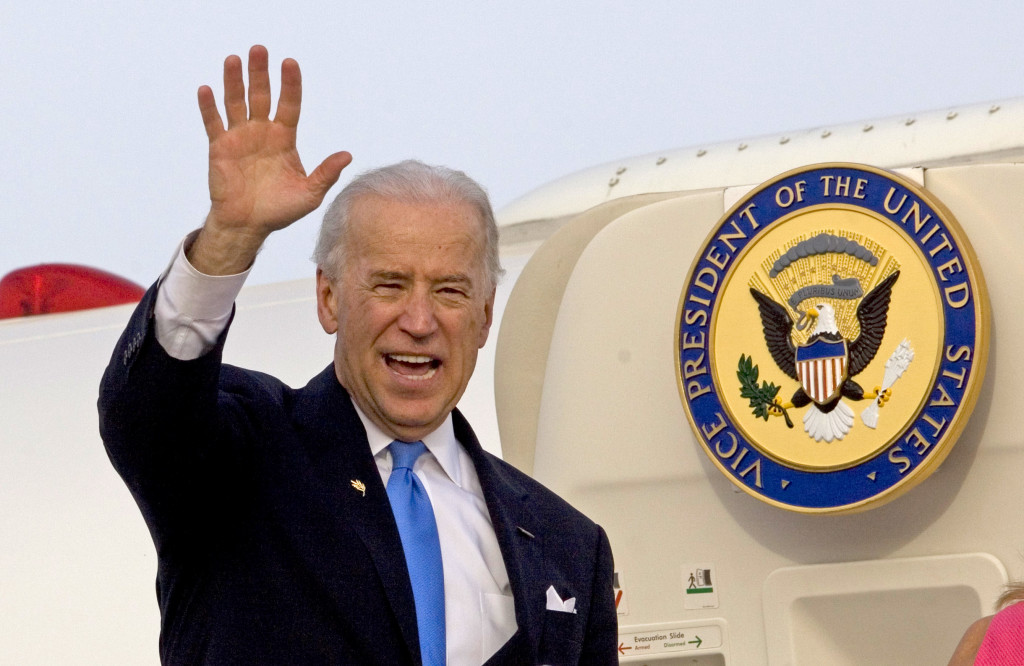
Former Vice President Joe Biden is launching a political action committee amid speculation that he may run for president in 2020. Biden plans to announce Thursday that he’s forming the “American Possibilities” PAC. The committee will allow him to raise money for candidates and maintain relationships with longtime donors. In an email to supporters and a Medium post, Biden plans to say that “the negativity, the pettiness, the small-mindedness of our politics drives me crazy.” Biden isn’t mentioning President Donald Trump by name but says that kind of politics is “not who we are.” The 74-year-old Biden has said he probably won’t run for president in 2020 but hasn’t totally ruled it out. He strongly considered running in 2016. Biden’s former White House aide Greg Schultz will run the PAC. Republished with permission of The Associated Press.
