
Mo Brooks defends Donald Trump’s withdrawal from Paris Climate Accord on House floor
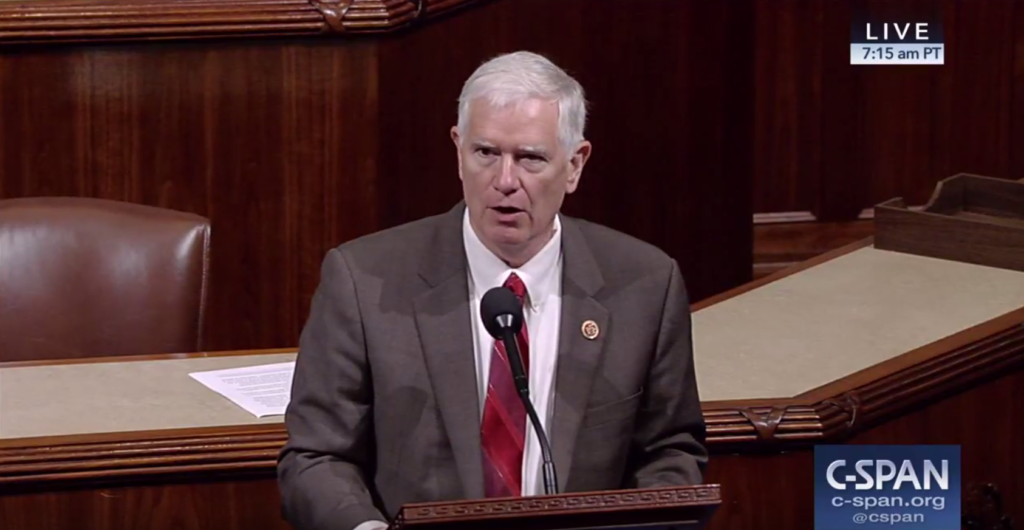
Alabama 5th District U.S. Congressman Mo Brooks appeared on the House floor Wednesday to support President Donald Trump’s decision to withdraw from the Paris Climate Accord. “President Trump is right, America must lead by putting America’s national interest first. The Paris Climate Accord did not do that,” said Brooks. “I am proud that President Trump puts America First. America should not and must not yield even a smidgeon of our national sovereignty to the dictates of other, lesser nations. Despite liberal, climate-scare and socialist Democrat hysteria to the contrary, America has been, and is, by almost every standard, the greatest nation in world history. With an ‘America First’ attitude, America will continue its 75 year streak as the greatest nation in the history of the world, second to none.” Trump announced his decision to withdraw from the agreement that former President Barack Obama signed last week, saying it has disadvantaged the United States all the while benefitting other countries, leaving American businesses and taxpayers to pay the tab. Brooks agreed with Trump’s assessment, calling the accord a “global redistribution of wealth scheme.” “Lest there be any doubt, the Paris Climate Accord intentionally hurt America to the benefit of competitor nations. In a global redistribution of the wealth scheme, the Paris Climate Accord called for America to give away tens of billions of dollars to other countries,” Brooks added. Watch Brooks’ floor speech below:
Kay Ivey signs bills to improve Alabama’s business climate
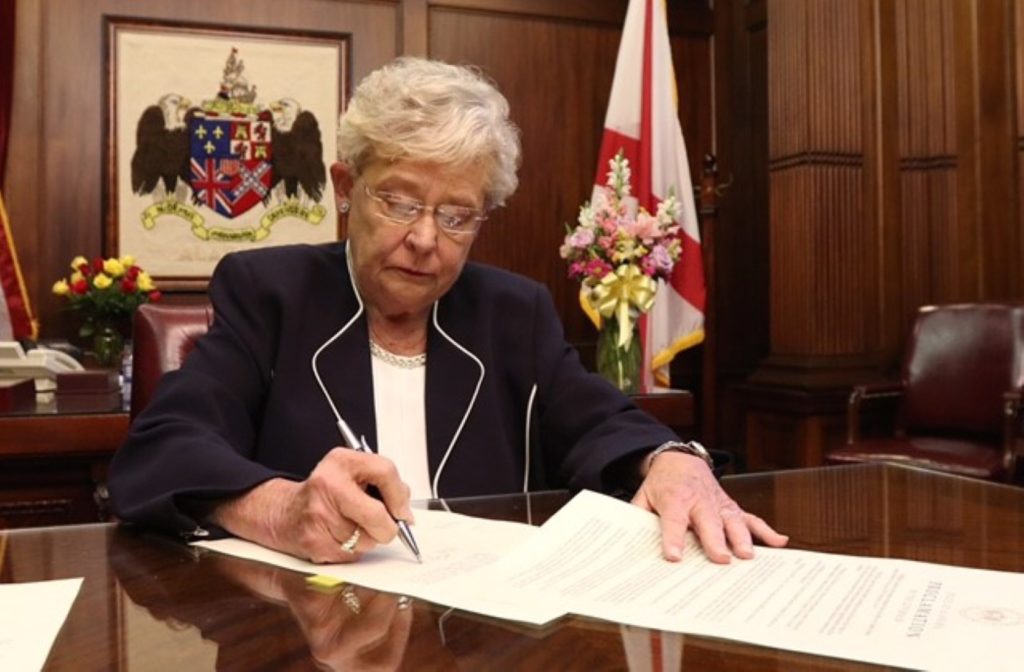
Governor Kay Ivey recently signed into law three bills to help improve Alabama’s business climate. “From day one, my quest has been to ensure the world knows Alabama is open for business. By removing burdensome regulations on small businesses we are sending that signal loud and clear,” Ivey said. “When businesses spend less on overhead and government regulation, they can invest more in hiring; that’s good for all Alabamians.” Senate Bill 316, House Bill 242 and House Bill 390 all reduce regulation and make it easier for small businesses to operate in the state. Specifically, SB316 protects small businesses that are licensed in one municipality or county from being forced to buy a license in a second location just to make deliveries to that area. HB242 clarifies the state’s workers’ compensation law and makes it easier for small businesses to comply with the law. HB390 protects franchise parent companies from law suits initiated against the organization’s franchisees, thereby allowing for the expansion of franchise opportunities in Alabama. “I am thankful for the work of the legislature in passing these bills, especially the sponsors, Senator Sanford, Representative Garrett, and Representative Carns,” Ivey added. The National Federation of Independent Business (NFIB) Alabama expressed appreciation of Ivey’s support of the three pieces of legislation. “NFIB Alabama members appreciate Governor Ivey’s support of the small business legislation that was signed into law. Governor Ivey has always been a great supporter and champion for small business,” said Rosemary Elebash, Alabama State Director for the NFIB.
Mike Jones named House Rules Committee Chairman
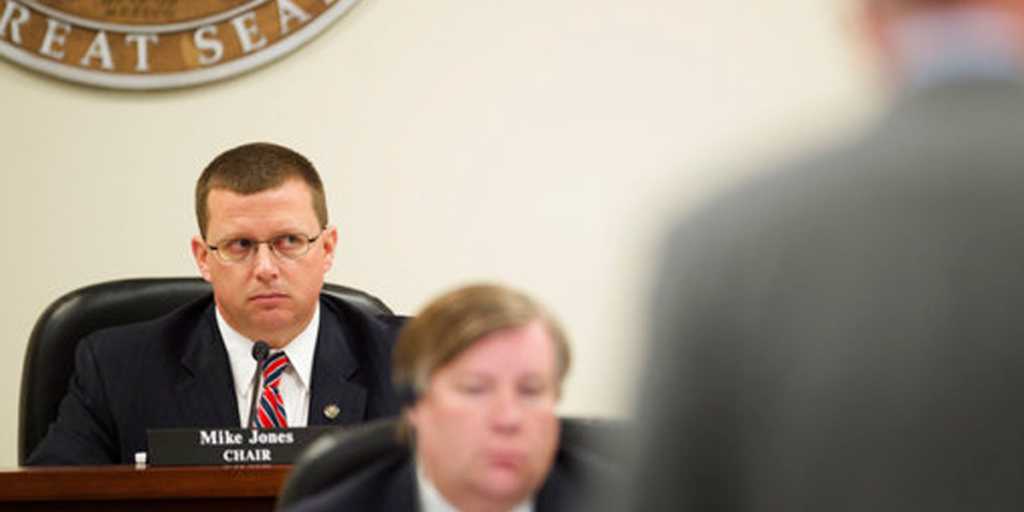
Two-term representative Andalusia-Republican Rep. Mike Jones was named chairman of the House Rules Committee, Monrovia-Republican Speaker Mac McCutcheon announced Wednesday. Jones, previously the chairman of the House Judiciary Committee who oversaw the probe into former Gov. Robert Bentley’s impeachment investigation, replaces Troy-Republican Rep. Alan Boothe. Boothe vacated the post earlier this week when he announced he would not seek re-election to the House in 2018. “The attention to detail and fairness that he demonstrated and the deep respect that he earned from members on both sides of the aisle are exactly what we need in a House Rules Committee chairman, so I am proud to make this appointment,” McCutcheon said in a statement. Tasked with drafting the list of bills the House will consider each day, the Rules is considered one of the House’s most powerful committees. Jones promised his colleagues he would keep an “open door and an open mind toward issues, bills and resolutions that they consider important.” It is not yet clear who McCutcheon will choose to succeed Jones as the head of the Judiciary Committee.
White House looks for ways to undermine James Comey’s credibility
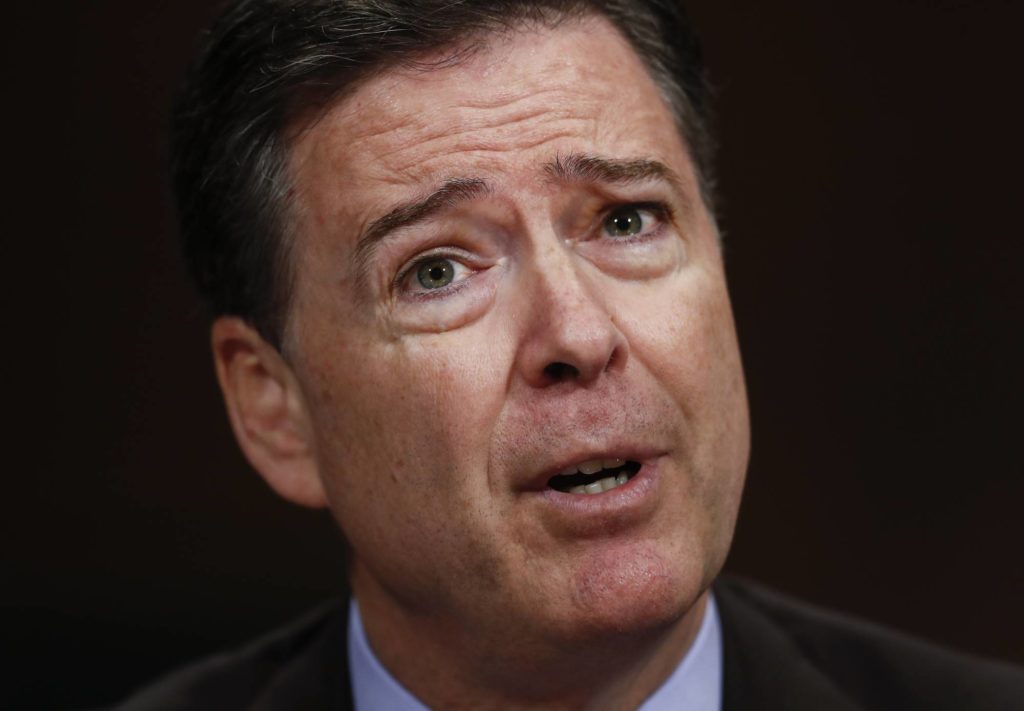
With fired FBI Director James Comey’s highly anticipated congressional testimony just a day away, the White House and its allies are scrambling for ways to offset potential damage. Asked Tuesday about the testimony, President Donald Trump was tight-lipped: “I wish him luck,” he told reporters. Comey’s testimony Thursday before the Senate intelligence committee could expose new details regarding his discussions with Trump about the federal investigation into Russia’s election meddling. Comey could also bring up other aspects of his dealings with the Trump administration. On Tuesday evening a person familiar with the situation said Comey had told Attorney General Jeff Sessions that he did not want to be left alone with Trump. The person, who was not authorized to discuss the matter by name and spoke on condition of anonymity, told The Associated Press the comment was made because of concerns Comey had about Trump. It was not immediately clear when the conversation occurred. But The New York Times, which first reported the interaction with Sessions, said it came after Trump had asked Comey in February to end an FBI investigation into Trump’s first national security adviser, Michael Flynn. Justice Department spokesman Ian Prior declined to comment. He said Sessions “doesn’t believe it’s appropriate to respond to media inquiries on matters that may be related to ongoing investigations.” Trump’s White House and its allies are crafting a strategy aimed at undermining Comey’s credibility. Both White House officials and an outside group that backs Trump plan to hammer Comey in the coming days for misstatements he made about Democrat Hillary Clinton’s emails during his last appearance on Capitol Hill. An ad created by the pro-Trump Great America Alliance — a nonprofit “issues” group that isn’t required to disclose its donors — casts Comey as a “showboat” who was “consumed with election meddling” instead of focusing on combating terrorism. The 30-second spot is slated to run digitally on Wednesday and appear the next day on CNN and Fox News. The Republican National Committee has been preparing talking points ahead of the hearing, which will be aired live on multiple TV outlets. An RNC research email Monday issued a challenge to the lawmakers who will question Comey. There’s bipartisan agreement, the email says, that Comey “needs to answer a simple question about his conversations with President Trump: If you were so concerned, why didn’t you act on it or notify Congress?” Comey’s testimony marks his first public comments since he was abruptly ousted by Trump on May 9. Since then, Trump and Comey allies have traded competing narratives about their interactions. The president asserted that Comey told him three times that he was not personally under investigation, while the former director’s associates allege Trump asked Comey if he could back off an investigation into Michael Flynn, who was fired as national security adviser because he misled the White House about his ties to Russia. Democrats have accused Trump of firing Comey to upend the FBI’s Russia probe, which focused in large part on whether campaign aides coordinated with Moscow to hack Democratic groups during the election. Days after Comey’s firing, the Justice Department appointed a special counsel, former FBI Director Robert Mueller, to oversee the federal investigation. The new revelation about Comey’s uneasiness with Trump brings to mind a posting last month by Comey friend Benjamin Wittes on his Lawfare blog, in which he said Comey “saw it as an ongoing task on his part to protect the rest of the Bureau from improper contacts and interferences from a group of people he did not regard as honorable.” Despite the mounting legal questions now shadowing the White House, Trump has needled Comey publicly. In a tweet days after the firing, he appeared to warn Comey that he might have recordings of their private discussions, something the White House has neither confirmed nor denied. White House officials appear eager to keep the president away from television and Twitter Thursday, though those efforts rarely succeed. White House spokesman Sean Spicer said the president plans to attend an infrastructure summit in the morning, then address the Faith and Freedom Coalition’s “Road to Majority” conference at 12:30 p.m. “The president’s got a full day on Thursday,” Spicer said. The White House had hoped to set up a “war room” stocked with Trump allies and top-flight lawyers to combat questions about the FBI and congressional investigations into possible ties between the campaign and Russia. However, that effort has largely stalled, both because of a lack of decision-making in the West Wing and concerns among some potential recruits about joining a White House under the cloud of investigation. “If there isn’t a strategy, a coherent, effective one, this is really going to put us all behind the eight ball. We need to start fighting back. And so far, I don’t see a lot of fight,” said Barry Bennett, a former Trump campaign aide. Still, Trump supporters say they are willing to step in to help the White House deflect any accusations from Comey. “If we feel he crosses a line, we’ll fire back,” said Ed Rollins, chief strategist of Great America PAC, the political arm of the group airing the Comey ad. Republished with permission of The Associated Press.
Leaked NSA doc highlights deep flaws in US election system
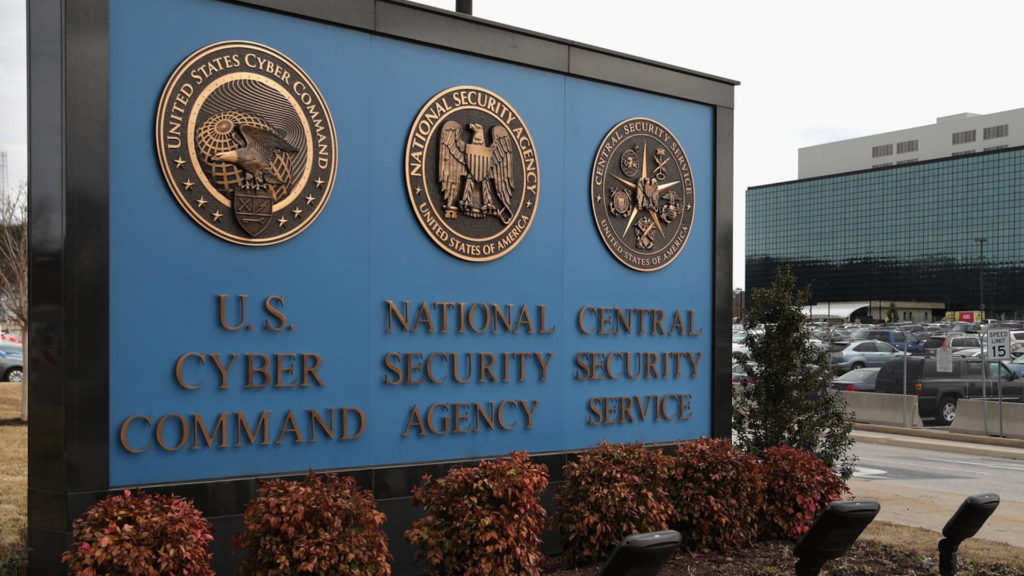
A leaked intelligence document outlining alleged attempts by Russian military intelligence to hack into U.S. election systems is the latest evidence suggesting a broad and sophisticated foreign attack on the integrity of the nation’s elections. And it underscores the contention of security experts and computer scientists that the highly decentralized, often ramshackle U.S. election system remains profoundly vulnerable to trickery or sabotage. The document, purportedly produced by the U.S. National Security Agency, does not indicate whether actual vote-tampering occurred. But it adds significant new detail to previous U.S. intelligence assessments that alleged Russia-backed hackers had compromised elements of America’s electoral machinery. It also suggests that attackers may also have been laying groundwork for future subversive activity. The operation described in the document could have given attackers “a foothold into the IT systems of elections offices around the country that they could use to infect machines and launch a vote-stealing attack,” said J. Alex Halderman, a University of Michigan computer scientist. “We don’t have evidence that that happened,” he said, “but that’s a very real possibility.” Computer scientists have proven in the lab that once sophisticated attackers are inside an election network, they could manipulate pre-election programming of its systems and alter results without leaving a trace. Sen. Mark Warner of Virginia, the ranking Democrat on the Senate intelligence committee, said Tuesday that hacking into state voting systems ahead of the Nov. 8 vote was more widespread than has been disclosed. Attempts by Russia to “break into a number of our state voting processes” was “broad-based,” he said, without offering details. In Moscow, a Kremlin spokesman categorically denied Tuesday that Moscow had tried to hack the U.S. elections. Warner did not directly address the classified intelligence report published Monday by The Intercept, an online news outlet. The Associated Press has not independently verified the authenticity of the report, although its apparent leaker, an NSA contract worker, was arrested last weekend in Georgia. The NSA document says Russian military intelligence first targeted employees of a Florida voting systems supplier in August. Apparently exploiting technical data obtained in that operation, the cyber spies later sent phishing emails to more than 100 local U.S. election officials just days ahead of the Nov. 8 vote, intent on stealing their login credentials and breaking into the their systems, the document says. The emails packed malware into Microsoft Word documents and were forged to give the appearance of being sent by the system vendor, VR Systems of Tallahassee, Florida. The Department of Homeland Security knew in September that hackers believed to be Russian agents had targeted the voter registration systems of more than 20 states. To date, no evidence of tampering with vote tallies or registration rolls has emerged. The U.S. elections system is a patchwork of more than 3,000 jurisdictions overseen by the states with almost no federal oversight or standards. The attack sketched out in the NSA document appears designed specifically to cope with that sprawl. The NSA document did not name any of the states where local officials were targeted by the emails masquerading as being from VR Systems. But in September, the FBI held a conference call with all 67 county elections supervisors in the battleground state of Florida to inform them of infiltration of VR Systems without naming the company. Ion Sancho, who retired as Leon County supervisor in December, said he later learned from industry contacts that it was VR Systems. VR Systems officials did not respond directly to questions emailed by the AP. In a statement, the company said it only knows of a “handful” of customers who received the fraudulent email, adding that it had “no indication” that anyone had clicked on the malware. The NSA document says at least one account was likely compromised. The company makes software for on-site voter registration at polling stations and backend systems for voting management, according to its website, which says it has customers in California, Florida, Illinois, Indiana, New York, North Carolina, Virginia, and West Virginia. VR Systems’ electronic poll books – electronic systems used to verify registered voters at polling places – experienced problems on Nov. 8 in Durham County, North Carolina. The issue forced officials to abandon the system, issue paper ballots and extend voting hours. North Carolina’s state elections director said Tuesday that officials would investigate to see if officials in Durham County were targeted and possibly compromised. Iowa University’s Douglas Jones is among computer scientists who say voter registration systems are particularly vulnerable to tampering, in part because they are on the internet. Someone trying to cause chaos and discredit an election could delete names from registration rolls prior to voting – or request absentee ballots en masse. In the latter case, a voter showing up at the polls on Election Day would be recorded as having already cast their ballot. That could force voters to file provisional ballots, and provoke long lines. There is no evidence any of that happened last Election Day. Republished with permission of The Associated Press.
Former state senator, GOP Chairman to run Roy Moore’s Senate campaign
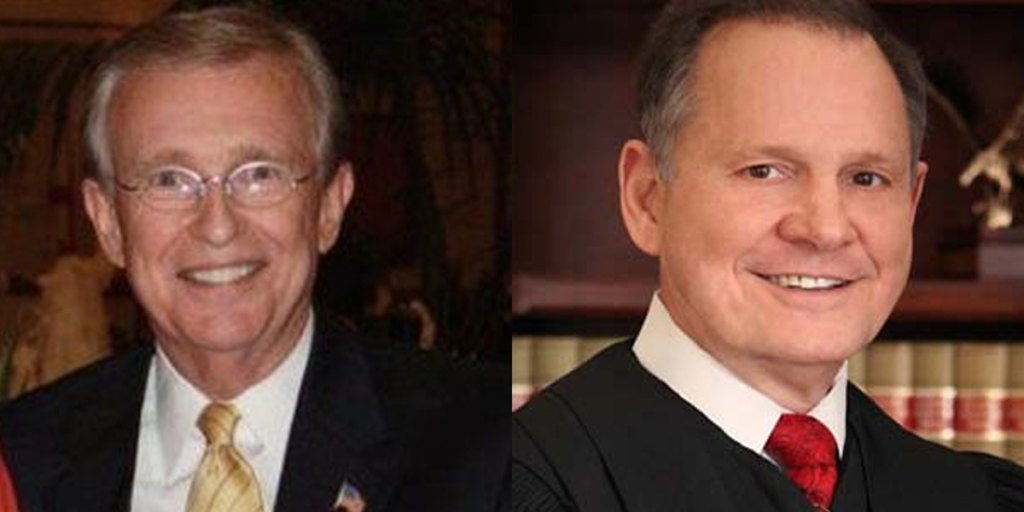
Former Alabama Chief Justice and U.S. Senate candidate Roy Moore has tapped Bill Armistead to serve as his campaign manager. Armistead is no stranger to Alabama politics. Most recently, he served as the Alabama Republican Party Chairman from 2011 to 2015. Prior to that he had served two terms as a state senator from 1994 to 2002. He was also the Republican nominee for Lt. Governor in 2002. “I am honored to have Bill Armistead serving as my Campaign Chairman,” said Moore on Facebook. “I have known Bill for over 25 years and know him to be an ethical leader of our party who consistently stands up for our shared conservative values. Bill will help us engage the real people of Alabama who are frustrated by establishment politics in Washington and want a Senator who will be their voice.” Under Armistead’s leadership, the Republican Party increased its majorities in the state legislature winning every statewide office and made record gains at the local level. “Judge Roy Moore will be the next United States Senator from Alabama, and I am proud to offer my endorsement and support. I encourage all my friends across the state to join the campaign today by visiting judgemooreforsenate.com or on Facebook @JudgeRoyMoore,” Armistead said in a press release. He continued, “Judge Moore has stood up for conservative values his whole career, often in the face of so-called, bi-partisan adversaries, and this campaign will be no different. The Washington establishment has made it clear that they want to hand-pick the next Senator from Alabama, but I have every confidence that voters in Alabama will stand with Judge Roy Moore on August 15th and send a proven fighter and tested outsider to Washington to shake up the status quo and support President Donald Trump in draining the swamp.” Moore will face nine Republican challengers in the August 15 primary.
Steve Flowers: The Bankheads, Alabama’s illustrious political family

Since we are in the midst of an election for a U.S. Senator, let me share the story of one of the most prestigious congressional families in Alabama history. The Bankheads of Jasper would likely be the most prominent political family in Alabama political lore. More than likely there has never been a father serve as one of Americas most powerful U.S. Senators while their son, William Bankhead, served as Speaker of the U.S. House of Representatives. The original founder of the famous family was John Hollis Bankhead. He was the patriarch of a family that spawned sons John H. Bankhead II and Speaker of the U.S. House, William B. Bankhead and daughter, state archivist, Marie Bankhead Owen and granddaughter Tallulah Bankhead, who became a star of stage and screen. John Hollis Bankhead was born in 1842 on his family’s plantation in present Lamar County. He was educated in local schools and joined the Confederate Army at 19. He fought in numerous Civil War battles and was wounded several times. He entered the Confederate Army as a private and rose to Captain. After the Civil War, he married Tallulah Brockman of Wetumpka and returned to farming his family land. He began his political career by serving four terms in the state Legislature. He then was elected to the U.S. House of Representatives in 1886 and served 20 years in Congress. In 1906, Alabama did an extremely unusual thing. At that time, state legislatures still appointed U.S. Senators. Alabama’s legislature met only every four years and both of the state’s Senators, Edmund Pettus and John Tyler Morgan, were aging. The State Democratic Party held a primary to choose a successor should one or both Senators die before the Legislature met again. It was called the pallbearer’s primary. Bankhead won the primary. In June 1907, Morgan died and Bankhead took the U.S. Senate seat. John Bankhead left an indelible legacy as a senator. He was a champion of building federal highways and waterways. America’s first national highway that traverses from Washington D.C. to San Diego, California is named the Bankhead Highway after our Senator John H. Bankhead. John’s son, William, was elected to the U.S. House of Representatives in 1916. Thus, he served simultaneously in the House while his father served in the Senate. He followed his father’s advice to learn the rules. He did and it earned him a seat on the powerful Rules Committee. He was joined on the committee by another southern congressman, who would also make his mark in Congress, Sam Rayburn from Texas. During William Bankhead’s 23 years in Congress, he became Chairman of the Rules Committee, Majority Leader and then Speaker of the U.S. House of Representatives. He was and continues to be our only Alabamian to serve as Speaker of the House. Even though William Bankhead was Alabama’s most distinguished congressman, he was best known as being the father of the most famous and flamboyant actress of that era, Tallulah Bankhead. Tallulah, who was named for her maternal grandmother, was very close to her Speaker father, William. She was renowned for her eccentric and uninhibited behavior and for her throaty utterance calling everyone, “dah-ling.” She thrust the Bankhead name in bright lights on Broadway and in Hollywood. Senator John Hollis Bankhead had a daughter named Marie who made her mark in Alabama history. Marie Owen Bankhead was the founder of the State Archives Building. She was affectionately called “Miss Marie.” Our magnificent Archives Building across from the Capitol, was built and the funds secured by Miss Marie from the New Deal WPA Program. It did not hurt that her father was one of the nation’s most powerful senators and her brother was Speaker of the U.S. House of Representatives. Miss Marie Owen Bankhead served as director of the State Archives for 35 years, from 1920-1955. Besides the national Bankhead Highway, in Alabama, we have the Bankhead Tunnel in Mobile, the William B. Bankhead National Forest, which transverses a good portion of Alabama, the Bankhead Home and Heritage Center in Jasper, and the historic Bankhead Avenue in Montgomery. The Bankhead’s of Alabama are the Deep South’s version of the Kennedy’s. See you next week. ___ Steve Flowers is Alabama’s leading political columnist. His weekly column appears in over 60 Alabama newspapers. He served 16 years in the state Legislature. Steve may be reached at www.steveflowers.us.
Twitter users blocked by Donald Trump cry censorship
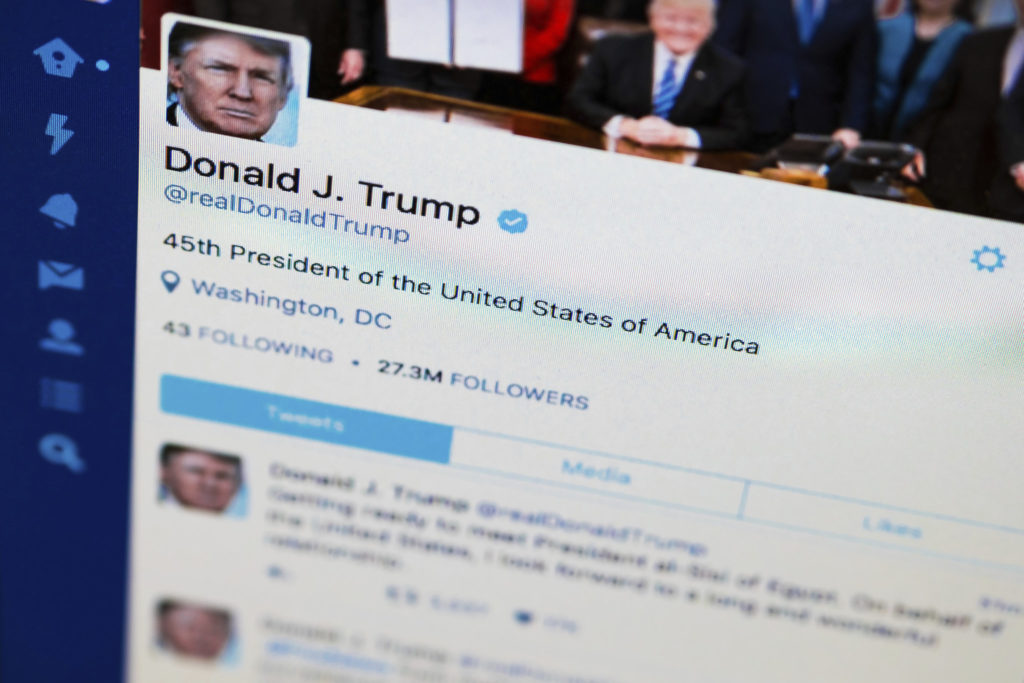
President Donald Trump may be the nation’s tweeter-in-chief, but some Twitter users say he’s violating the First Amendment by blocking people from his feed after they posted scornful comments. Lawyers for two Twitter users sent the White House a letter Tuesday demanding they be un-blocked from the Republican president’s @realDonaldTrump account. “The viewpoint-based blocking of our clients is unconstitutional,” wrote attorneys at the Knight First Amendment Institute at Columbia University in New York. The White House didn’t immediately respond to a request for comment. The tweeters – one a liberal activist, the other a cyclist who says he’s a registered Republican – have posted and retweeted plenty of complaints and jokes about Trump. They say they found themselves blocked after replying to a couple of his recent tweets. The activist, Holly O’Reilly, posted a video of Pope Francis casting a sidelong look at Trump and suggested this was “how the whole world sees you.” The cyclist, Joe Papp, responded to the president’s weekly address by asking why he hadn’t attended a rally by supporters and adding, with a hashtag, “fakeleader.” Blocking people on Twitter means they can’t easily see or reply to the blocker’s tweets. Although Trump started @realDonaldTrump as a private citizen and Twitter isn’t government-run, the Knight institute lawyers argue that he’s made it a government-designated public forum by using it to discuss policies and engage with citizens. Indeed, White House press secretary Sean Spicer said Tuesday that Trump’s tweets are “considered official statements by the president.” The institute’s executive director, Jameel Jaffer, compares Trump’s Twitter account to a politician renting a privately-owned hall and inviting the public to a meeting. “The crucial question is whether a government official has opened up some space, whether public or private, for expressive activity, and there’s no question that Trump has done that here,” Jaffer said. “The consequence of that is that he can’t exclude people based solely on his disagreement with them.” The users weren’t told why they were blocked. Their lawyers maintain that the connection between their criticisms and the cutoff was plain. Still, there’s scant law on free speech and social media blocking, legal scholars note. “This is an emerging issue,” says Helen Norton, a University of Colorado Law School professor who specializes in First Amendment law. Morgan Weiland, an affiliate scholar with Stanford Law School’s Center for Internet and Society, says the blocked tweeters’ complaint could air key questions if it ends up in court. Does the public forum concept apply in privately run social media? Does it matter if an account is a politician’s personal account, not an official one? San Francisco-based Twitter Inc. declined to comment. The tweeters aren’t raising complaints about the company. Republished with permission of The Associated Press.
