
Donald Trump’s legal plan built in his image: Fight, fight, fight
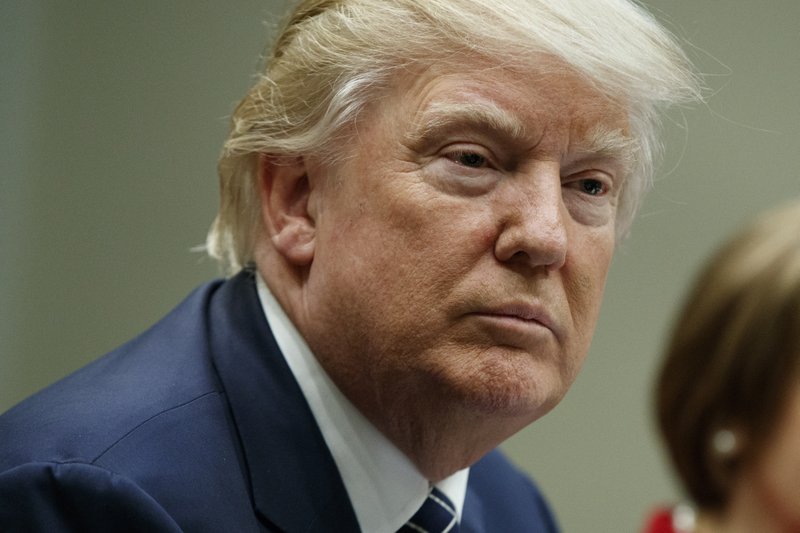
President Donald Trump, whose combative instincts are to lash out and never retreat, appears to be shaping a legal team in his own image. His clear directive: Fight, fight, fight. In aggressively worded statements and confrontational TV appearances, Trump’s personal lawyers and newly hired proxies have shown themselves more than ready to defend him in the manner to which he is accustomed – with arguments seemingly aimed at public opinion as much as at warding off any actual legal threat from prosecutors. The legal team, like the president, has come out ready to hit hard, even if not always quite accurately. “The president has not been and is not under investigation,” lawyer Jay Sekulow has declared repeatedly the past few days, only to add to the statement Monday that he didn’t know for certain if that was true. “The legal team has not been notified,” he said on CNN. The Trump team’s style makes for a study in contrasts when compared to the seasoned group of prosecutors and criminal law experts working under Robert Mueller, the tight-lipped, respected ex-FBI director. To make it even more difficult, their client’s public statements often threaten to undercut their work. “I don’t care who Trump hires. There’s no reason to think he’s going to listen to legal advice,” said Washington defense lawyer Peter Zeidenberg. “Good luck trying to represent him.” It’s too early to say for sure what legal strategy his team will settle on, especially since the full contours of the probe aren’t known and no public allegations have been leveled by investigators. But two avenues appear clear so far: The lawyers are prepared to paint Mueller’s investigative team as somehow politically motivated, or too aligned with the interests of fired FBI Director James Comey; and they will argue the president didn’t illegally exert pressure on the investigation. Already, they’ve floated the idea that Mueller could be biased because some members of his investigative team have made campaign contributions to Democrats and because Mueller interviewed for the FBI director’s job after Trump fired Comey. Attacking the idea that the president tried to obstruct the investigation also seems key. Comey did tell Trump he was not personally under investigation, but that was before the director was fired. Comey has since said he suspects the circumstances of his firing will be scrutinized by Mueller, putting pressure on Trump’s supporters to deny any illegal intent – critical to an obstruction of justice case. Some suggest his actions were wholly legitimate, based on ignorance rather than malevolence or on anger at an FBI director who would not repeat publicly his private reassurances. “If you can prove that there was something there and the president knew about it, then the obstruction case looks far stronger,” said Washington attorney Justin Dillon. “But if it’s just, he’s acting impetuously because he doesn’t like having himself or his friends investigated for something he genuinely believes he didn’t do, then I think that’s a much harder case for obstruction.” Whether Trump himself is under investigation at this stage also is still unclear. On Friday, he seemed to confirm news reports that he was, tweeting, “I am being investigated for firing the FBI Director by the man who told me to fire the FBI Director! Witch Hunt.” Pressed by TV interviewers, Sekulow declared that Trump was not being investigated, then tried to walk that back, at least slightly, saying there had been no such notification. That lack of formal notification wouldn’t be unusual in the early stages of an investigation. Federal prosecutors sometimes, but not always, advise an individual if he is at risk of being charged or is the subject of an investigation. Prosecutors early on also are generally focused on understanding how a particular circumstance unfolded, rather than in pursuing a particular target. One thing’s for certain: Even with Mueller’s team working in silence, declining to discuss or confirm the most basic details, Trump’s team is determined to make his case in public. That may be an understandable approach in such a high-profile matter, though not always an advisable one. “My constituents are prosecutors, judges and juries,” said criminal defense lawyer Bill Jeffress. “When you became a sort of talking head and spokesperson – a PR person basically – you lose credibility and you confuse your role. I think that’s a tough thing for a defense lawyer.” While total silence won’t work, a more measured public approach may be prudent, Dillon said. “He probably can’t say nothing, but I think he should say as little as possible – and it should be so boring that it makes for bad copy,” he said. “Boring” seems out of the question. Take Mark Corallo, the conservative public relations veteran who currently serves as a spokesman for Marc Kasowitz, Trump’s longtime personal lawyer who now leads his defense team. The New York Times reported Monday that Corallo’s recent tweets have included praise for Mueller and a suggestion that Vice President Mike Pence should be the Republican nominee in 2020. Though several Trump associates have hired more conventional attorneys from the elite ranks of Washington-region litigators – son-in-law Jared Kushner has turned to Jamie Gorelick, a former deputy attorney general in the Clinton administration, and Vice President Mike Pence has retained veteran Richmond, Virginia, defense lawyer Richard Cullen – the Trump defense team has a decidedly different pedigree. Kasowitz heads the group despite his lack of deep experience in Washington or in criminal defense. Well known in the Manhattan business circles that Trump inhabits, Kasowitz has a reputation as a bare-knuckles court brawler. At the president’s urging, he has been on the offensive, casting doubt on Comey’s character and raising questions about whether the former FBI director inappropriately disclosed sensitive material. Trump has also retained Sekulow, who has been the face of the legal team on TV – though he, too, has an untypical background, having largely specialized in religious liberty claims. The White House recently bolstered the legal team’s credentials by hiring former prosecutor
Mary Scott Hunter to Betsy DeVos: Keep your promises to the states
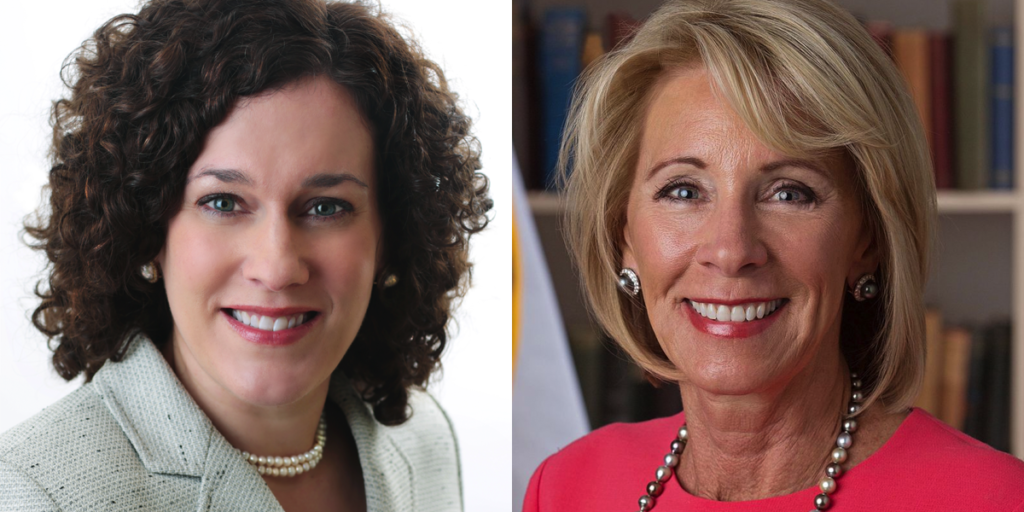
Despite being one of President Donald Trump‘s most controversial nominees, U.S. Department of Education Secretary Betsy DeVos had the “qualified” support of Alabama State Board of Education member Mary Scott Hunter from the jump. Now Hunter is putting her support of DeVos to the test. On Friday, she sent a letter to DeVos asking for standardized testing flexibility as the state seeks to drop the ACT Aspire test for its students in favor of alternative tests. Earlier this year, the DeVos called for states and local school districts to have greater say in education standards and issues, citing the Every Student Succeeds Act (ESSA) as the way to allow more local control. However, when Sentenace followed the ESSA approval process and submitted the state’s education plans to the federal government, the U.S. Department of Education rejected it. But Hunter is not taking “no” for an answer. Earlier this month, Alabama Superintendent of Education Michael Sentance requested flexibility from using ACT Aspire testing while we develop an Alabama test that is right for us. Over the last several years we have worked hard to implement rigorous standards that will best prepare our children and youths for living and working in the 21st century. We have shaped these standards with Alabama’s values in mind while keeping our eyes on what today’s students will need to thrive in the decades to come. At this point our best option is to receive a waiver for next year’s standardized test,” the letter continued. “This would allow us time to develop a test that aligns to our Alabama standards, is rigorous, and properly informs instruction. Alternately, we could use existing formative assessments to determine student growth. If your Department does not grant the waiver there is a strong likelihood we will administer three different summative tests in three years, Aspire this past year, a different test next year, and yet another test the year after next. Obviously this is very undesirable for both our students and teachers. Standardized testing is extraordinarily difficult. Getting it right has implications for Alabama for decades to come. We need time to do that. At the time of publishing, the U.S. Department of Education has yet to grant a waiver to Alabama. Read Hunter’s full letter below:
Jim Carnes: Congress’ plan to cut Medicaid threatens Alabama’s rural communities

In many small towns across Alabama, the Great Recession of 2008 is still visible in empty storefronts, shrunken paychecks and lives put on hold. Unfortunately, those rural communities will soon be dealt another devastating blow if Congress cuts federal funding for our state’s Medicaid program. Medicaid is a critical lifeline for 24 percent of Alabama’s rural and small-town residents, and the deep cuts to Medicaid being considered right now by Congress would have a harmful and disproportionate impact on our children, seniors and families in need. According to a new independent report by researchers at Georgetown University and the University of North Carolina, a larger share of children and families living in small towns and rural areas rely on Medicaid for their health coverage. This is especially true for children. About 52 percent of children living in non-metro areas of Alabama are covered by Medicaid and ALLKids (known in other states as the Children’s Health Insurance Program, or CHIP), compared to 42 percent in metro areas. Nationally, the researchers found a direct connection between increases in Medicaid and CHIP coverage and reductions in the rate of uninsured children in small towns and rural areas. For almost 20 years, ALLKids has been a point of pride for Alabama. Our CHIP program was the first to be authorized when federal law made the coverage possible, and ours has been a national leader in quality and reach. We can’t afford to turn our backs now on the progress we’ve made for our kids. Studies show that when children have health coverage they can get important doctor-recommended screenings and care to help them stay healthy and are more likely to enter school ready to learn. The study also found that Medicaid covers a higher percentage of adults living in small towns and rural areas (14 percent) than in our state’s metro areas (11 percent). Many adults covered by Medicaid are parents or caregivers, and when they have health care coverage, they are better able to provide children with the care they need to grow and thrive. Medicaid also helps improve financial security by protecting the entire family against medical debt and bankruptcy. Alabama’s rural seniors also depend more heavily on Medicaid coverage (24 percent) than their peers in urban areas (19 percent). The proposed cuts would fall especially hard on Alabama’s small-town nursing homes and other long-term care services. Even Alabama residents who aren’t directly covered by Medicaid should be concerned about what cuts to Medicaid would mean for hospitals, clinics and physicians serving our state’s small towns and rural communities. When fewer people are covered, ER visits and uncompensated care drive up costs for all of us and put rural hospitals and doctors’ offices at risk of closing their doors. When a community hospital closes, the entire community suffers. Medicaid is a lifeline for the rural parts of our state. It ensures that the most vulnerable among us–children, seniors and people with disabilities – can get the care they need. It keeps our rural hospitals running and able to serve patients who otherwise would be forced to drive long distances to get care. City dwellers sometimes forget that rural health care can be a life-saver for any traveler who has a highway emergency. Medicaid cuts are bad for Alabama. They won’t rein in personal health care costs. They won’t give our state flexibility to innovate and find better ways to deliver care. Instead, they will take away coverage from those who need it most and undermine the healthcare infrastructure on which we all depend. ••• Jim Carnes is policy director for Arise Citizens’ Policy Project, a statewide nonprofit coalition of 150 congregations and organizations working to improve public policies that affect low-income Alabamians.
National ‘Ride to Revive’ Section 5 of the Voting Rights Act to leave from Selma
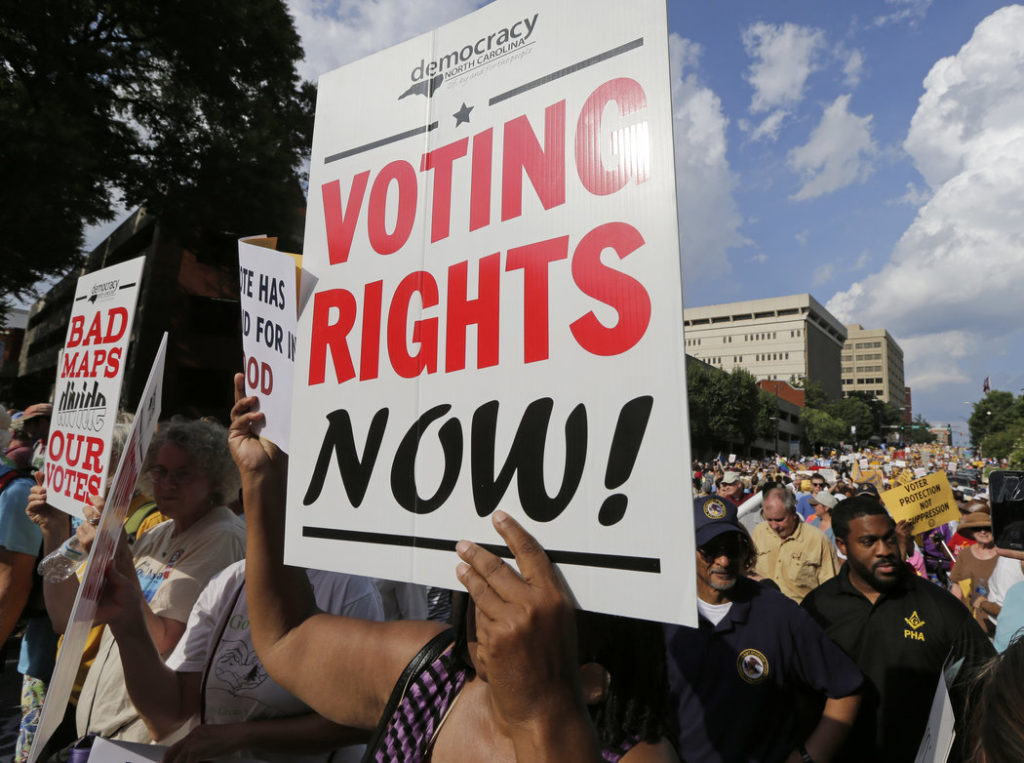
On June 24, 2017, the 4th Anniversary of the Supreme Court’s reversal of section 5 of the Voting Rights Act, advocacy groups from across the country will come together in Selma, Ala. to embark on the “Ride to Revive” — a journey to the nation’s capital where they will endeavor to draw attention to and restore the invalidated section of the Voting Rights Act. Upon their arrival to Washington, D.C. on June 27, the S.O.S. Movement for Justice & Democracy, along with a coalition of 41 organizations, including Women of Will and NAACP, will hold a rally a press conference at the U.S. Capitol to discuss the need for restoring Section 5. “Every issue is a voting issue,” Catrena Norris Carter, one of the event’s organizers, said in a press release. “Many of the massive problems we face in the South and the Nation can be addressed by progressive voting rights laws and practices. Our democracy depends on us, the people and the South.” The group will begin their trek at the historical Edmund Pettus Bridge in Selma — the site which played a critical role in securing the Voting Rights Act of 1965. On March 7 of that year, a group of roughly 525 African American protesters planned to cross the bridge on their civil rights march to Montgomery to demand the right to vote. At the bridge they were met by more than 50 state troopers and a few dozen men on horseback. When the demonstrators refused to turn back, they were brutally beaten, leaving at least 17 hospitalized, and 40 others injured. The violent attack, dubbed “Bloody Sunday,” shocked the nation and galvanized Congress to pass the Voting Rights Act, the landmark piece of federal legislation that prohibits racial discrimination in voting. In the summer of 2013, the Supreme Court invalidated a section of the law — freeing Alabama and eight other states, mostly in the South, to change election laws without advance federal approval. Prior to that these nine states had to get “pre-clearance” from the U.S. Justice Department to make changes to voting districts.
Jovita Carranza sworn in as 44th U.S. treasurer
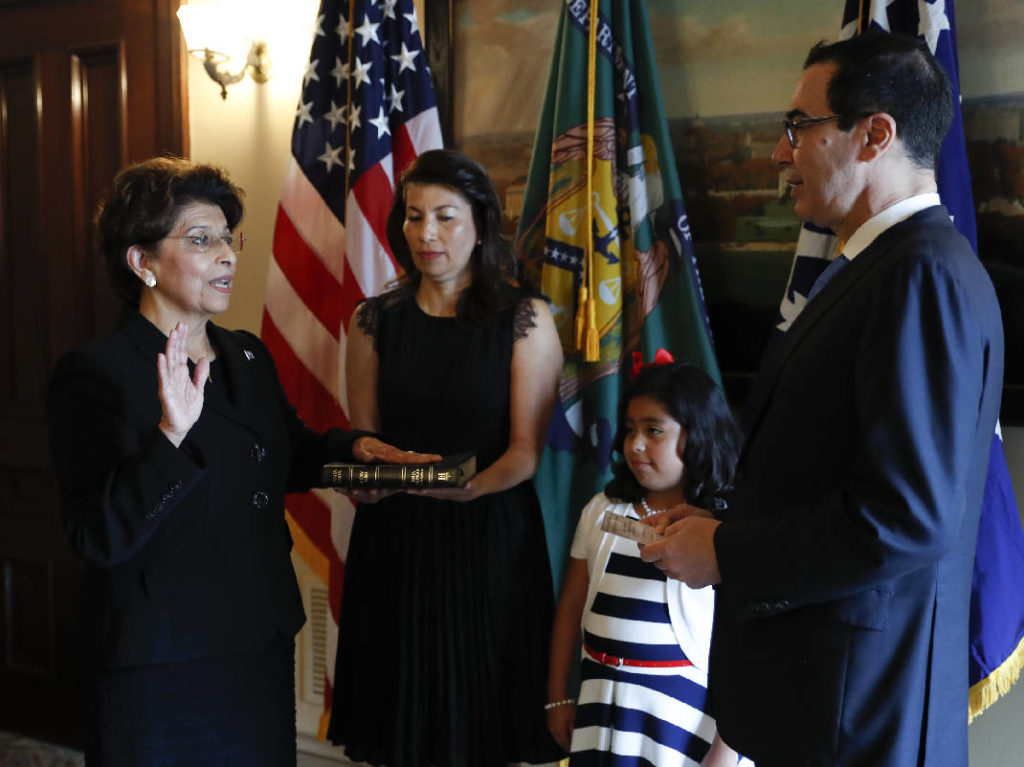
Jovita Carranza has been sworn in as the 44th Treasurer of the United States and the 16th woman to hold the job. Carranza was sworn in Monday by Treasury Secretary Steven Mnuchin. She started at United Parcel Service as a night-shift box handler in the 1970s and worked her way up to be the president of international operations at UPS in Latin America. After leaving UPS, she served as a deputy administrator of the Small Business Administration in the George W. Bush administration. As Treasurer, Carranza will oversee the Bureau of Engraving and Printing, which produces the nation’s paper currency, and the Bureau of the Mint, which producers U.S. coins. Both Mnuchin and Carranza will have their signatures on the nation’s currency. The first bills featuring both names are expected to go into circulation later this year. Since President Harry Truman selected the first woman Treasurer in 1949, all of those who have followed have been women. Carranza succeeds Rosie Rios who served in the Obama administration. She is the seventh Hispanic woman to hold the position. Mnuchin has already submitted his signature to be reproduced on the currency, and Carranza is expected to do so shortly. Mnuchin’s neat signature is a significant improvement in legibility over his predecessor, former Treasury Secretary Jacob Lew. Lew’s loopy scrawl was so bad that then-President Barack Obama joked that Lew had better work on his penmanship or run the risk that he would “debase our currency.” Republished with permission of The Associated Press.
Winkelmann Group to invest in Alabama production facility
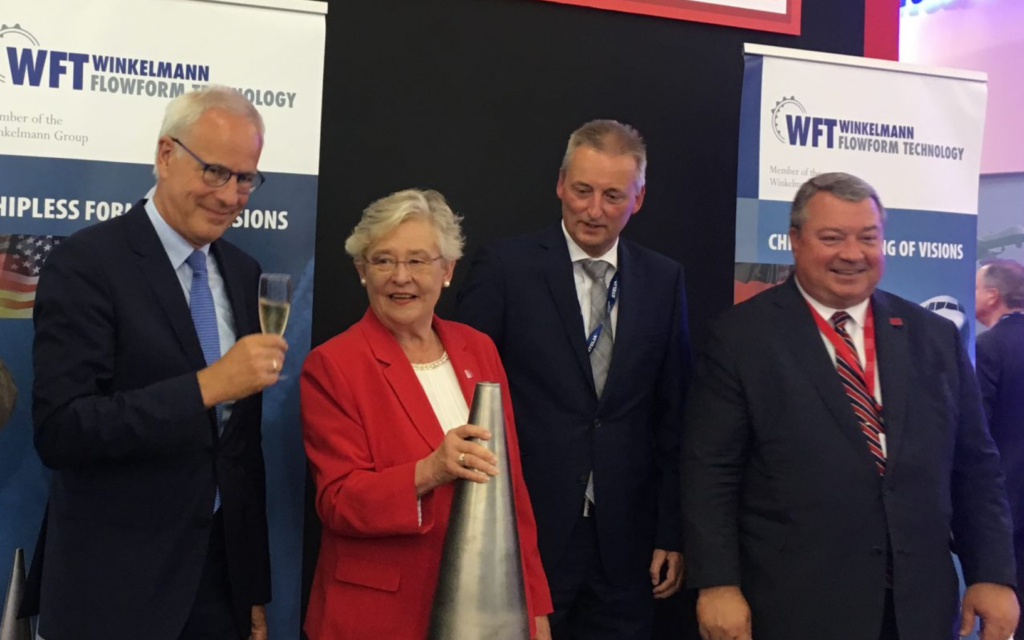
German-based Winkelmann Group, a high-tech manufacturer serving the aerospace industry, announced on Monday plans to invest $12 million in an Auburn production facility. It’s another sign of growth for an industry that is swelling in the Yellowhammer State. The company is creating an Alabama-based subsidiary that will invest the funds in order to establish a metal forming operation called the Winkelmann Flowform Technology LP, Alabama Governor Kay Ivey and Winkelmann Group CEO Heinrich Winkelmann announced at a press event at the Paris Air Show. The new facility will create approximately 50 jobs over the next five years. “As we declare to the world that Alabama is open for business, we welcome Winkelmann to our family of aerospace and defense-related companies in Alabama,” Ivey said. “The Winkelmann Group, with over a hundred years of industrial history, operates numerous manufacturing facilities globally, and we are extremely proud that they chose Auburn as the home of Winkelmann Flowform Technology.” “With the North America operation, my team will be able to better serve the aerospace and defense industry, as well as the commercial automotive and oil and gas industry in the U.S.,” CEO Winkelmann added. “Our flow-forming engineering and manufacturing knowhow combined with the one-of-a-kind machinery equipment installed at our Auburn facility creates solutions for our customers, who demand and deserve only the highest quality.” The core competency of Winkelmann Flowform Technology focuses on high-precision, high-strength, thin wall roto-symmetrical parts from all kind of metals, including titanium and high-strength steel. The combination of technical engineering capabilities with in-house manufacturing processes guarantees high-quality, precise, near net shape designs. The company is fully certified and has more than 45 years experience in the space flight and aviation business. “Winkelmann is a family company that’s been around for more than a century because it possesses a tremendously high level of technical expertise in manufacturing,” said Greg Canfield, secretary of the Alabama Department of Commerce. “Winkelmann’s impressive capabilities add another dimension to Alabama’s robust aerospace sector, and we’re happy that the company picked Auburn as the home of its first U.S. production facility,” he added. Winkelmann’s choice of Auburn opens the door for potential collaboration with Auburn University, whose Samuel Ginn College of Engineering has about 6,000 students and is considered one of the top engineering programs in the U.S. “We had several conversations with the leadership of Winkelmann,” said Dr. Chris Roberts, dean of Auburn’s Samuel Ginn College of Engineering. “There are numerous areas where some of our departments — including mechanical engineering, aerospace engineering and materials engineering — will be able to assist the company with its operation in Auburn. And the company will offer excellent employment opportunities for our students in the future.” With its three divisions, Automotive, Building + Industry and Flowforming, the Winkelmann Group is one of the leading groups of companies in the field of metal forming for well-known customers from a wide range of industries. In total, the group employs more than 4,000 people. “The announcement today is great news for Auburn,” Auburn Mayor Bill Ham Jr. said. “The company has great technology and is managed very well. This will create excellent job opportunities for our residents. “I am extremely grateful for the support we’ve received from the State of Alabama, and I’m proud to welcome Winkelmann to the Auburn family.”
UAB students’ research work takes flight with drone technology
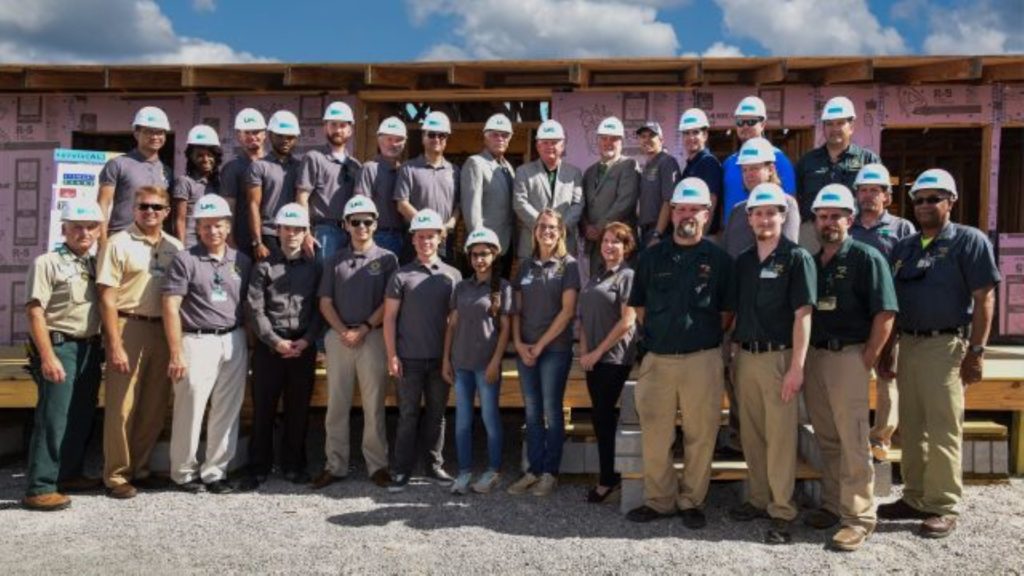
Drones are quickly becoming a prolific part of modern society, and students at the University of Alabama at Birmingham are doing cutting-edge research involving the flying machines. Elizabeth Bevan, a doctoral student in the Department of Biology, is using drones in her thesis project that studies the effects of climate change on the endangered Kemp’s ridley sea turtle in the Gulf of Mexico. Her focus is understanding the courtship and mating behaviors of the turtles, and drones have given her an up-close view into their previously unknown habitat. They do so without interfering with the animals. In 2013, Bevan and her mentor, biology professor Dr. Thane Wibbels, started using a basic drone with a GoPro camera attached. They sent it out over the water to film hatchings they had been monitoring on the beach, and they were floored by the potential. They followed up with a more sophisticated drone and camera. “The next season we were awestruck,” she said. “The newer model had a communication system between the aircraft and the remote control, and we could see in real time what the camera saw. It was the first time we’ve ever seen this kind of glimpse into this habitat.” Revolutionary technology Elizabeth Bevan pilots the UAB team’s DJI Inspire drone. (UAB) Bevan and Wibbels have documented eight types of courtship and mating behavior among the turtles in the Gulf. They’re now exploring with new cameras, including a thermal imager that lets them track turtles in the ocean and on their nesting beaches through body heat. Bevan said drone technology is revolutionizing the way researchers conduct biological studies of sea turtles and wildlife in general. “Without drones, we wouldn’t have been able to get this kind of information,” she said. “It’s not just opening a new door; it’s like blowing open a whole new wall.” Bevan has received a fellowship through the National Science Foundation’s East Asia and Pacific Summer Institute Program. This summer, she will spend three months in Australia, where researchers are doing advanced work involving drone technology and wildlife habitat exploration. Limitless potential Meanwhile, Ali Darwish, a UAB doctoral student in the Department of Electrical and Computer Engineering, has been building drones since 2009 and says they have unlimited applications. He is developing a software that will allow drones to track other drones. He was also part of a team that developed a small, waterproof quadcopter drone for dam inspections; another project is looking at potential applications for agriculture. UAB professor Dr. Arie Nakhmani and graduate student Ali Darwish hold a quadcopter drone in the School of Engineering laboratory. (UAB) “By placing infrared sensors and thermal sensors on drones, we can enable farmers to see plants, see diseases and see whether plants are irrigated,” he said. Darwish, who grew up in Dubai, has always had a fascination with flying machines. A native of Syria, he and students from other schools were involved in a project that sought to deliver humanitarian aid by drones to his war-torn home country. Their work was stymied by the political climate, but that hasn’t stopped Darwish’s interest in drones. He will soon start a job in Washington, D.C., with a company that specializes in artificial intelligence. He continues to work on his dissertation, and his work with drones – flying them, testing them, developing new uses and abilities for them – will continue. Not too long ago, drone technology was a military secret, Darwish said. But now, it’s showing up in all types of commercial applications. “People shouldn’t be afraid of drones. They’re coming anyway, because the technology is evolving, so let’s get used to living with them,” he said. This story originally appeared on the Alabama Department of Commerce’s Made in Alabama website. Republished with permission of Alabama NewsCenter.
UAB unveils first look at completely net-positive solar house headed for competition
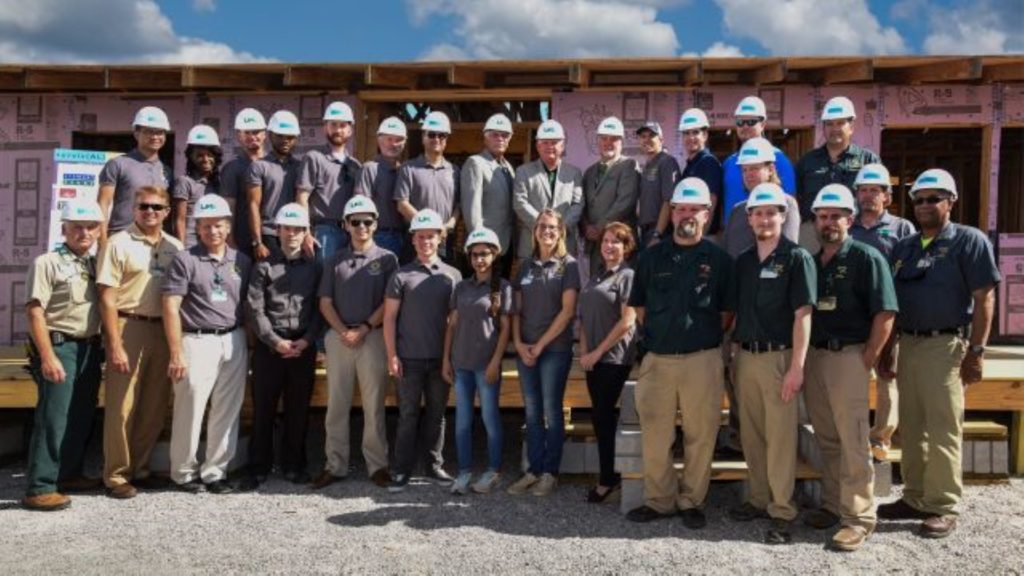
A team of University of Alabama at Birmingham students are building a house powered completely by solar energy in a competition against 11 other colleges from around the world. The UAB team unveiled the beginning stages of the house in a ceremony at the construction site recently. UAB is among an elite group of collegiate teams selected for the U.S. Department of Energy Solar Decathlon 2017 competition. UAB’s team is made up of students from a variety of disciplines across the university who have begun working on the house, along with students from neighboring Calhoun Community College. The team is working toward completing the design, construction and testing of what they dub the surviv(AL) house. Once the house is completed and tested on the UAB campus, it will be disassembled and transported to the Denver competition site, where it will be reassembled in October along with the 11 other solar houses. “The Solar Decathlon attracted more than 60,000 visitors last year, so this is an incredible opportunity for UAB students to showcase their talent and capacity to the world in 2017,” said Bambi Ingram, UAB Sustainability program administrator. Team Alabama is preparing to showcase the net-positive solar home. (UAB) The team’s solar house must be equipped to run all the appliances and accouterments at the same level of a comparable house on a conventional power grid, but with the only source of energy coming from what the house is able to harness itself. The efficiency of the house will allow it to produce more energy than it consumes, leaving the homeowners or users of the structure with extra energy to use in other ways. “The U.S., and particularly Alabama, lags behind the rest of the world in the number of net-zero, and especially net-positive, energy buildings built,” said Hessam Taherian, assistant professor in the UAB School of Engineering, and an adviser for the project. “By searching for innovative ways of harnessing and conserving energy, UAB students will have opportunities to develop technology that will be customized to meet the particular challenges of the local environment — from seasonal heat and humidity to surprise tornadoes and thunderstorms.” Because the houses must be suited to their local climate, the Alabama house will be designed with tornadoes in mind. The house will include at least one room with tornado-resistant walls, incorporating panels designed by engineers in the UAB Materials Processing and Applications Development Center. The design will allow for the house to be efficiently reassembled surrounding that tornado room, should a natural disaster occur. The house will also be built to beat the Alabama heat. A UAB-developed solar collector system helps cool the house by taking water out of the air and reducing energy costs. A device dehumidifies the air inside the home at night and recharges the material during the day, reducing the overall load on the home’s air conditioning system. The house will be tested in advance of the judging to ensure it produces enough energy to power all appliances. For example, students will be required to wash laundry, and clothes will be checked to make sure there is enough power for the dryer to fully dry the clothes. Other appliances will be checked to make sure they meet normal expectations, such as a water heater that can sustain hot water for the typical length of a shower. The house will have to provide sufficient energy to charge an electric car so that it can be driven 25 miles. The team will be required to prepare meals for two dinner parties at which they will host teams from other universities. They will also host a game night using the house audiovisual equipment, with snacks prepared in the kitchen. Bonus points will be awarded for any excess power generated by the house. “We want to fight the misconception that a house using renewable energy means compromising on comfort or performance,” Taherian said. Stringent criteria The teams will showcase the houses to the public and provide free tours of renewable energy systems and energy-efficient technologies, products and appliances. The houses will be judged according to strict criteria in 10 separate categories, ranging from architecture and engineering to the performance of the appliances. The winner will be the team that best blends affordability, consumer appeal and design excellence with optimal energy production and maximum efficiency. The Solar Decathlon village and competition houses will be open to the public at 61st & Peña Station near the University of Colorado. A free commuter train will be available: Thursday, Oct. 5-Sunday, Oct. 8: 11 a.m.-7 p.m. Monday, Oct. 9: 1-7 p.m. Thursday, Oct. 12-Sunday, Oct. 15: 11 a.m.-7 p.m. The Solar Decathlon 2017 teams will compete for a minimum of $100,000 and a maximum of $300,000 in prizes. Once the competition is over, the house will be returned to UAB as a permanent net-positive building on campus, where it will be available for sustainability research and other uses, while helping raise awareness and educating the public about renewable energy. UAB’s team of 60 students is guided by faculty in the School of Engineering, in partnership with UAB Sustainability and the Collat School of Business, as a component of the project includes marketing and communications activities. Industry partners have been equally important in the progress of the project. Williams Blackstock Architects, for instance, has offered its services in helping students, faculty and staff with the design. Additional industry partners will be key to the project’s success. A team effort Team Alabama’s Solar Decathlon effort so far has truly spanned across campuses and into the community. The UAB Facilities Division continues to be instrumental to the project through offsetting some costs, providing materials and the construction site, as well as offering construction expertise to the team. “This project is the perfect example of how we strive to integrate research and innovation processes to operate like a living lab,” said Mike Gebeke, assistant vice president of Facilities Management. “We are really happy to have the opportunity to partner with academic
Kay Ivey kicks off Paris Air Show: ‘It’s a new day in Alabama’

Gov. Kay Ivey urged an Alabama economic development team in France for the Paris Air Show to work hard to position the state for more growth in an industry critical to Alabama’s future. Alabama Commerce Secretary Greg Canfield speaks to Gov. Kay Ivey after the Paris Air Show kick-off breakfast. (Made in Alabama) Ivey spoke to economic developers, elected leaders, university representatives and others at a breakfast meeting that marked the start of an intensive four-day effort to secure new aerospace jobs and investment for Alabama. “It’s a new day in Alabama, and we are open for business,” the governor told the group. She urged them to use their moment on the “world stage” to facilitate the creation of new jobs and investment in Alabama, which is already home to around 400 aerospace and defense firms. At the industry’s premier trade event, Ivey will join Greg Canfield, secretary of the Alabama Department of Commerce, in more than 20 scheduled appointments with leaders from top aerospace companies, beginning today. Targeting aerospace growth The team from Mobile holds a planning session for the Paris Air Show after Sunday’s kick-off breakfast. (Made in Alabama) The kickoff meeting for the Alabama delegation at the Paris Air Show drew economic development specialists from areas of the state where the aerospace industry plays an important role — Huntsville, Mobile, the Wiregrass and areas such as Auburn-Opelika. Canfield said the ultimate goal of the Paris Air Show mission is build relationships with key industry contacts and to lay the groundwork for additional job creation and aerospace investment in the state. “We know that when companies come to Alabama, they succeed, and it happens time and time again,” Canfield said. “That means well-paying jobs for Alabama citizens and enhanced vitality for communities across the state.” Last year, aerospace and defense companies announced new investment exceeding $242 million in Alabama projects expected to create more than 1,550 jobs, according to figures from the Alabama Department of Commerce. The growth has continued in 2017, and Alabama economic developers are optimistic that the Paris Air Show mission will set the stage for additional expansion. “Aerospace is huge in the Wiregrass. It’s well over $1 billion in economic impact to our region of the state,” said Jonathan Tullos, executive director of the Wiregrass Economic Development Corp. “Because of Fort Rucker, we already have a pipeline of workers who are trained and skilled. It’s really the cornerstone of what we do.” This story originally appeared on the Alabama Department of Commerce’s Made in Alabama website. Republished with permission of Alabama NewsCenter.
Jeremy Arthur announces run for Alabama House District 88
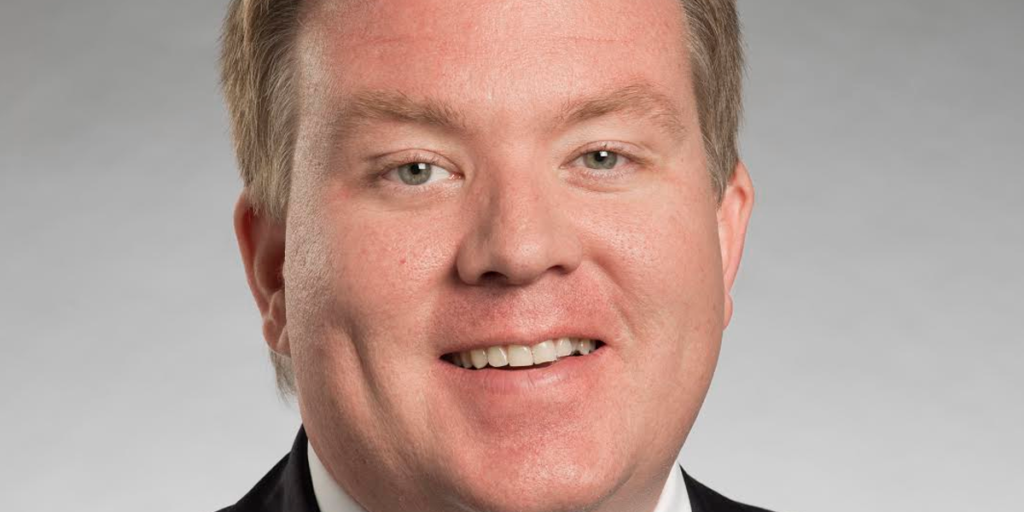
President of the Chamber of Commerce Association of Alabama, Jeremy Arthur announced Monday he is running for the Alabama House of Representative District 88 seat, representing portions of Autauga and Elmore counties. Arthur, a Republican from Prattville, led the Prattville Area Chamber of Commerce for a decade prior to joining the Chamber of Commerce Association of Alabama as its president and CEO in 2012. “As a 5th generation Alabamian, I’m proud to call Alabama and District 88 home,” Arthur said. “My neighbors and friends in District 88, and throughout the River Region, have given me so much. I want to repay their trust and will serve with integrity, dedication, and principled leadership.” While he’s never held public office, Arthur is no stranger to serving the community. His record of civic leadership and local community involvement is extensive. He in the past has served as president of the Prattville Rotary Club, campaign chair for the River Region United Way- Autauga County, president of Leadership Autauga, president of the Prattville Baptist Hospital Advisory Council, and president of P.A.S.S. (Peers Are Staying Straight.) He currently serves on the boards of directors for the Prattville YMCA, the Prattville-Autauga Character Coalition, the Prattville Creative and Performing Arts Council, the Autauga County Children’s Policy Council, and the Autauga Education Foundation, among others. “Our communities truly care and look out for each other. The hardworking men and women of District 88 deserve a representative who looks out for their best interests at the State House,” Arthur explained. “I pledge to work every day to ensure our conservative principles are heard and respected in Montgomery.” Statewide, Arthur serves as president of the Voices for Alabama’s Children Board of Directors, serves on the Executive Committee of the Main Street Alabama Board of Directors, the Alabama School Readiness Task Force, the Business Education Alliance, and the Encyclopedia of Alabama. He has also served as a member of several national organizations, including the board of directors of the Auburn University Alumni Association. He served as chairman of the U.S. Chamber of Commerce Foundation, Institute for Organization Management (Southeast). “I admire, respect, and appreciate the citizens of District 88,” added Arthur. “I uniquely understand the needs facing our local area. I will work hard to guarantee that Autauga and Elmore counties have what they need to continue to lead, grow, and succeed.” The District 88 seat is currently held by Rep. Paul Beckman who announced last month he would not seek re-election and is running for the office of probate judge next year in Autauga County.
Alabama receives $100K Farm to School grant to buy more local produce

Alabama students will be seeing more locally grown produce on the school menus next school year thanks to a newly awarded $100,000 grant from the U.S. Department of Agriculture (USDA). Designed to increase the availability of local foods in schools, USDA Farm to School grants can help farm to school programs get started or expand existing efforts. “Increasing the amount of local foods in America’s schools is a win-win for everyone,” said USDA Secretary Sonny Perdue. “Our children benefit from the fresh, local food served in their meals at school, and local economies are nourished, as well, when schools buy the food they provide close to home.” The state’s Farm to School Cooperative — a coalition of state and community partners including the Alabama Department of Education, the Foodbank of North Alabama/Farm Food Collaborative, the Alabama Farmers Federation, Feeding the Gulf-Coast Food Bank, food hubs, Druid City Garden Project, and EAT South — was one of 65 projects recipients from across the country of the USDA’s 2017 Farm to School Grant. The co-op encourages schools to serve fresh, locally grown fruits and vegetables to students, implement hands-on education in school gardens, and provide nutrition and agriculture education. Specifically, the state will use grant funds to assist farmers with GAP certification, revise the Alabama farm to school website, develop a state-wide promotional campaign, and support school garden curriculum development. The Tuscaloosa-based Druid City Garden Project, part of the coalition, will utilize funds to facilitate building mobile cooking units for schools to engage students in cooking demonstrations with produce grown in school gardens. “The Alabama Farm to School Collaborative provides farmers an opportunity to develop relationships with the students in their local schools districts,” commented Alabama Agriculture Commissioner John McMillan. “Not only do the students enjoy locally grown food, but now they can make a connection to the person who grew it for them.”
Jim Zeigler: Alabama has an immediate infrastructure need – Interstate 65
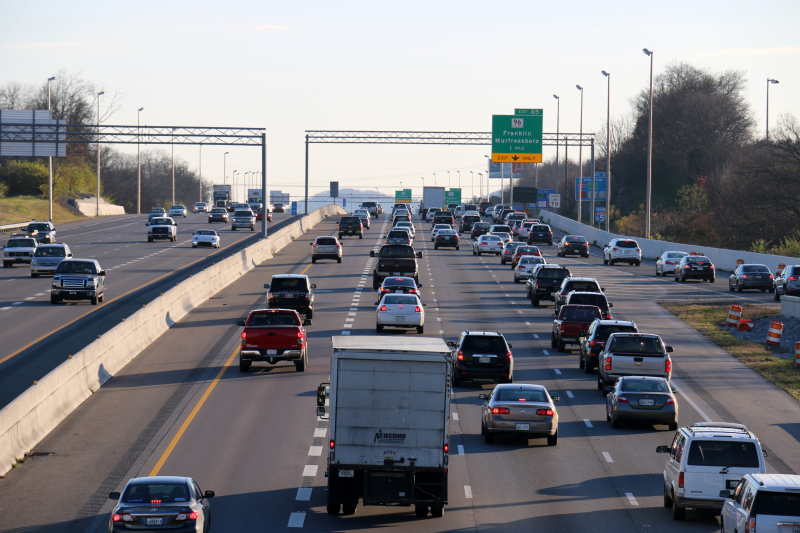
I do not need expensive studies and consultants to know that Alabama has immediate infrastructure needs. I experienced a major infrastructure problem Saturday afternoon. While the inadequacy of Interstate 65 from Birmingham to Montgomery — and on all of the beach route — may or may not be our most dangerous problem, it may well be the most immediate. It is a problem NOW. It took me four hours to drive my family from Hoover to Montgomery. We saw no wrecks, no road construction, and no stalled vehicles. This weekend was no beach holiday. The congestion was simply Saturday summer traffic in Alabama. There is more traffic on I-65 than the highway can accommodate. The backups and delays on stop-and-go I-65 are beyond an inconvenience and irritation. This problem can hurt businesses that depend on I-65 for customers and deliveries. It can hurt our trucking industry. It can quickly hurt tourism. It can discourage Alabama families from taking trips. And it is a safety problem, with an increasing number of fatal wrecks on I-65. It will get worse if not fixed. I am now working on plans (plural) to fix I-65. There are options to get this done that are not being talked about by our transportation leaders. Should we six-lane I-65 from Pelham to Clanton? Should we put in a Diamond Lane so that drivers have the option of buying a Diamond Pass? It would allow Pass Holders only to bypass delays in a reserved far left lane (requires three lanes). I have used it before, and I was going 70 when the other lanes were stop and go. It works. OR should we have a High-Occupancy Vehicle (HOV) lane that would be free for all cars with two or more passengers? They could bypass delays. Do we need to extend and connect existing roads to create an alternate route parallel to I-65 and US 31? And how are we going to pay for these fixes? I am also studying financing options. I have already found that revenue which is supposed to go for Alabama roads is being diverted to other things. I am not talking about just a small diversion of road funds. I discovered this diversion may be close to $70 million a year. That amount would fund a large pay-as-you-go road program. President Trump has proposed a trillion dollar infrastructure program. This is our chance to use previously-diverted or wasted Alabama dollars to match federal dollars. This may be our best opportunity to fix Highway 280 in Jefferson and Shelby Counties. To build the I-10 bridge over the Mobile River. To fix “Bloody 98” in West Mobile County. To expand all beach routes. And to take care of dozens of road and bridge projects in Alabama cities and counties. I have taken it upon myself to locate mismanaged state money to use as our matching share in order to maximize the Trump infrastructure money. I will report my findings to state officials and to you, the taxpaying public. ••• Jim Zeigler is the Alabama State Auditor. You can follow him on his Facebook page Zeigler “Waste Cutter”.
