
Jala Jala is an Alabama Maker worth shouting about
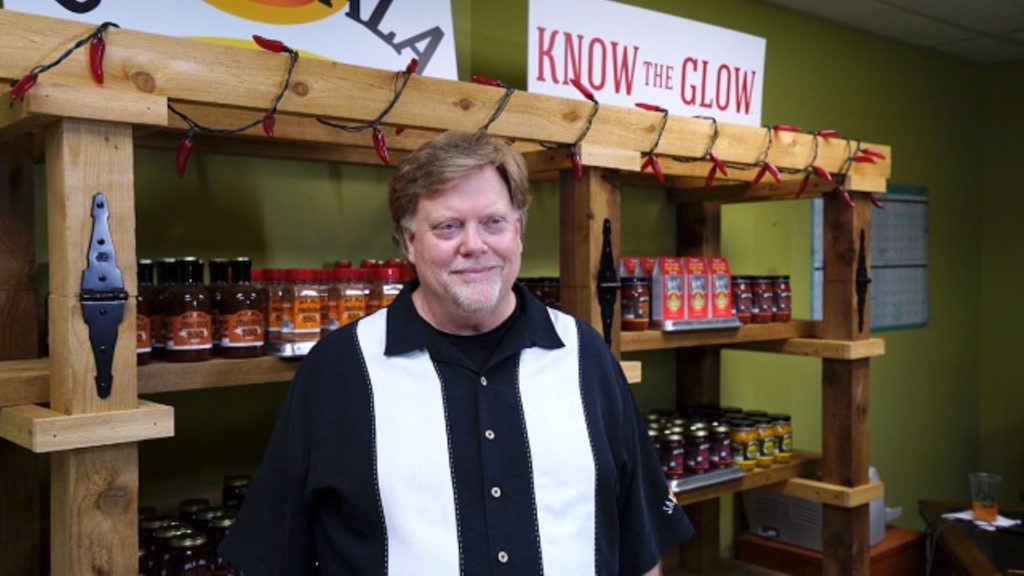
Being from Texas, Jay Short just assumed other folks loved jalapeño peppers as much as he did. “Growing up in in the Dallas area, jalapeños were a way of life. My dad would serve them with every meal,” he says. “So I thought everybody ate them.” These days, as the founder of Jala Jala Foods, Short is sharing his passion for peppers by bringing the enjoyable glow of fresh jalapeño salsas and jellies to customers across the Southeast. “I moved to Huntsville to work as a manufacturing rep for an electronics company,” Short says. “I did that for a while, then went to chef’s school. I tried the restaurant world, but it wasn’t for me.” One day, his fondness for jalapeños met a friend’s field of peppers – and a business was born. “In the summer of 2011 my friend Phil, who was also our church’s chef, came to me with a problem,” Short remembers. “He had a backyard garden full of jalapeños, and was trying to figure out what to do with them. I’d been making salsa for about 30 years, so I told him we should try that.” As Short turned many of the jalapeños into homemade salsas, Phil created pepper jellies with the rest. “We made about 350 jars of salsas and jellies and sold them at our church,” Short says. “They were all gone by Christmas.” The next summer the pair produced more than 1,500 jars of their handmade products – and sold out again. “So I thought maybe we should get into the food business,” Short says. After coming up with various names for their company – “one was ‘Phil-apenos,’ but that kind of confused people as to what kind of food we were selling,” Short admits – they settled on Jala Jala (pronounced “hala hala”) Foods in 2013. “We cooked at my home for a while, then used the church’s kitchen,” Short says. “But the business grew so much that in a couple of years we needed a bigger place. I found an industrial kitchen that had been used by a catering company, and it was perfect.” Now, using mainly locally grown jalapeños, Short and a handful of other creative cooks turn out 12 types of salsas, jellies (flavored with blueberries, strawberries and blackberries), relishes, barbecue sauces and a chili mix. “The mix is based on my grandfather’s 100-year-old chili recipe,” Short says. “He used to cook for crews in the Texas oil fields and they loved his chili.” In addition to his products being sold on the company’s website, Short’s salsas and sauces are available at Whole Foods and Publix grocery stores across the South. This spring, he traveled back to Texas to show off his goods at nine Central Market grocery stores. “It’s like going home, because that’s where it all started,” he says. “Texas is where I learned to love the taste of jalapeños. When prepared correctly, they’re delicious. That’s why our motto is ‘know the glow.’” “With jalapeños, it’s all about flavor, not heat,” Short says. “You get this glowing feeling when you eat them. And that’s what I want to share – that glow.” The Product: Jalapeño salsas, pepper jellies, relishes, barbecue sauces and rubs, as well as Texas Red Chili Mix. Take Home: A jar of Texacan Salsa (with a medium amount of jalapeño glow) $7.59. Jala Jala Foods Inc., P.O. Box 14417, Huntsville AL 35815 www.jalajalafoods.com 256-880-0663 Republished with permission of Alabama NewsCenter.
Birmingham Velocity Accelerator company LikelyAI releases iPhone app

The company that traveled the farthest to be part of Birmingham’s inaugural Velocity Accelerator class has marked a major milestone with the release of its app for iPhone. LikelyAI came to Birmingham from Slovakia to be part of the program that helps promising startups develop business plans and earn financing as they make their companies more marketable. This week, LikelyAI released its iPhone app, which uses an algorithm to help users select the best photos to share on their social media accounts. “It’s fantastic,” Jozef Marko, co-founder of LikelyAI said of the launch. “We’ve been preparing for this moment for almost one year.” Marko interned at Facebook and Google, while LikelyAI co-founder Lukas Ruttkay founded successful companies in Slovakia. They hired a developer, Michal Korbela, in Slovakia and began looking around the world for an accelerator program to help get their idea for LikelyAI off the ground. When they saw the Birmingham Velocity Accelerator program was seeking applicants for its inaugural class at Innovation Depot, Marko and Ruttkay signed up thinking they would be willing to relocate to Birmingham, England. When they were approved for the program, they realized their relocation would take them much farther from home. “We came here without any kind of expectations,” Marko said. “We didn’t know what to expect.” Lukas Ruttkay and Jozef Marko are co-founders of Birmingham’s LikelyAI, which launched its iPhone app this week. (Michael Tomberlin / Alabama NewsCenter) Both Marko and Ruttkay said they have been overwhelmed by the Southern hospitality and the level of support they’ve received in Alabama. They were a crowd favorite at Demo Day, the culminating event for Velocity Accelerator participants. Marko said it has been so special that the LikelyAI team felt compelled to push themselves to be successful in response to that support. “It kind of pushed us to work harder,” he said. Marko said the team had another personal motivation to launch the app this week. “We are going back to Europe soon to visit our families and we really wanted to push this launch before so we can finally have something done,” he said. Ruttkay expects a nice reception when they return. “We shared a post on Facebook to let everyone know we have launched the app,” he said. “Everyone is excited for us.” It’s a major milestone for LikelyAI. “The most important part is the launch and how people will use the app,” he said. The app uses an algorithm powered by artificial intelligence that takes into account objects, shapes, color patches, lighting and positioning and uses them as data points to predict the popularity, success and engagement of the images will find on social media. Lukas Ruttkay and Jozef Marko are co-founders of Birmingham’s LikelyAI, which launched its iPhone app this week. (Michael Tomberlin / Alabama NewsCenter) Marko said through their participation in Velocity Accelerator, they learned it was easier to develop an algorithm for social media influencers and regular users on Instagram than for high-volume users such as a large corporate user looking to select the right images for a marketing campaign. “We are tweaking the algorithm all the time,” he said. “We’ve got a very good algorithm at last and we’re very proud of where it is.” Ruttkay said the plan is to give new users a two-week free trial, and select users will be eligible to analyze up to 100 free pictures per month afterward. LikelyAI said social media influencers can expect between 10 percent to 20 percent increase in engagement using the app. An enterprise or corporate version of the app will also be released in the future. For now, only the iPhone version is available, but within a couple of months, LikelyAI plans to release an Android version. As for Marko and Ruttkay and the company, they plan to remain in Birmingham. “We decided to stay here for a while,” Ruttkay said. “We like it. We like the environment and the people.” Republished with permission of Alabama NewsCenter.
Blue Origin to invest $200M in Alabama rocket engine production facility

Blue Origin, the spaceflight company started by Amazon founder Jeff Bezos, announced today that it will manufacture its BE-4 engine in a state-of-the-art production facility to be built in Alabama’s Rocket City. The new facility will be in Huntsville’s Cummings Research Park, the nation’s second-largest research park, and construction can begin once an engine production contract with United Launch Alliance (ULA) is awarded. The BE-4 is America’s next rocket engine and will power ULA’s Vulcan rocket if it’s selected for the project. The production of this engine would end the nation’s dependence on Russia for access to space for critical national security space systems. This rendering shows Blue Origin’s New Glenn reusable rocket. (Blue Origin) ‘Great state for aerospace’ Two BE-4s would be used on the Vulcan booster rocket. The BE-4 will also power Blue Origin’s New Glenn reusable launch system with seven BE-4s on the reusable first stage and a vacuum-optimized BE-4U on the second stage. Blue Origin awaits the final public approval of the local package by the city and county governments during July meetings. Using the latest design and manufacturing techniques, the BE-4 is made for both commercial and government missions. The BE-4 uses oxygen-rich staged combustion of liquid oxygen and liquefied natural gas to produce 550,000 pounds of thrust. Development began in 2011, and testing is under way. “Alabama is a great state for aerospace manufacturing and we are proud to produce America’s next rocket engine right here in Rocket City,” said Robert Meyerson, president of Blue Origin. “The area’s skilled workforce and leading role in rocket propulsion development make Huntsville the ideal location for our state-of-the-art manufacturing facility.” Blue Origin will employ up to 342 people in the new facility. The company will make approximately $200 million in capital investment in the state. “This announcement today is excellent news for our state. I am pleased to see Blue Origin investing in Alabama, and I look forward to working with them and other businesses to continue boosting economic development opportunities,” U.S. Sen. Richard Shelby said. Blue Origin will manufacture BE-4 rocket engines in Huntsville. (Blue Origin) Under the Saturn V The announcement took place at the historic Davidson Center for Space Exploration under the Saturn V rocket, a nod to the community’s aerospace heritage. Blue Origin’s project builds on that heritage and positions the Huntsville/Madison County community for a key role in the commercial space industry. “We are excited to welcome Blue Origin to Alabama. I must commend founder Jeff Bezos and company President Robert Meyerson for their vision to create this innovative company, and for choosing to make Alabama its Home Sweet Home,” Gov. Kay Ivey said. “Because of this investment, more men and women can provide a better living for their families, and it helps cement Alabama as the preferred destination for the aerospace industry,” she added. Blue Origin founder Jeff Bezos at the company’s Texas launch facility. (Blue Origin) ‘Project Eagle’ Many economic development partners contributed to the effort to successfully recruit Blue Origin to the state as part of what was called “Project Eagle.” These partners include the Governor’s Office, the Alabama Department of Commerce, the Tennessee Valley Authority, the city of Huntsville, Madison County and the Huntsville/Madison County Chamber. “Blue Origin’s decision to locate its BE-4 engine manufacturing center in Huntsville reflects the deep and longstanding capabilities in the city that became the cradle of the nation’s rocket program,” said Greg Canfield, secretary of the Alabama Department of Commerce. “Huntsville is a hub of innovation in every facet of aerospace, making it the perfect home for this Blue Origin facility.” Blue Origin said it chose Huntsville for this project because of the high-tech aerospace manufacturing workforce and ecosystem, including NASA’s Marshall Space Flight Center, nearly 300 private aerospace and defense contractors, and the University of Alabama in Huntsville, number 14 in NASA research funding in the nation. “Huntsville is proud to be the nation’s propulsion center of excellence, and we couldn’t ask for a better partner than Blue Origin to join our team,” Mayor Tommy Battle said. “When you look at NASA’s visionary work at the Marshall Space Flight Center, the talent and capacity of Huntsville’s space industry partners, and our expertise in research and development, engineering and manufacturing, Blue Origin is joining a truly remarkable environment.” Added Madison County Commission Chairman Dale W. Strong, “Today’s announcement ensures that our community will continue to be at the center of the world’s rocket propulsion development. Jeff Bezos and Blue Origin will build on the legacy of the German rocket team and the Marshall Space Flight Center to power the growing commercial rocket business that will be a critical part of our nation’s future space program.” Blue Origin has completed more than 100 staged-combustion tests during the development of the BE-4 engine. (Blue Origin) ‘Center of excellence’ In support of Blue Origin, the city of Huntsville, city of Madison and Madison County have provided funding for their three school systems to launch an experiment on a Blue Origin rocket in summer 2018. The school systems will determine how to select teams, and then they will work with the Huntsville/Madison County Chamber and Dream Up, an organization that supports space-based learning, to design and develop their payload. “Blue Origin reinforces our region’s place as the Rocket City, and a center of excellence for rocket propulsion. Blue Origin’s presence will have a positive impact on our state, our region and our community,” said Chip Cherry, president and CEO of the Huntsville/Madison County Chamber. “This is an important development for Cummings Research Park’s next era of expansion, and we look forward to a long and productive relationship with Blue Origin.” This story originally appeared on the Alabama Department of Commerce’s Made in Alabama website. Republished with permission of Alabama NewsCenter.
Amazon founder Jeff Bezos plans Alabama rocket engine plant
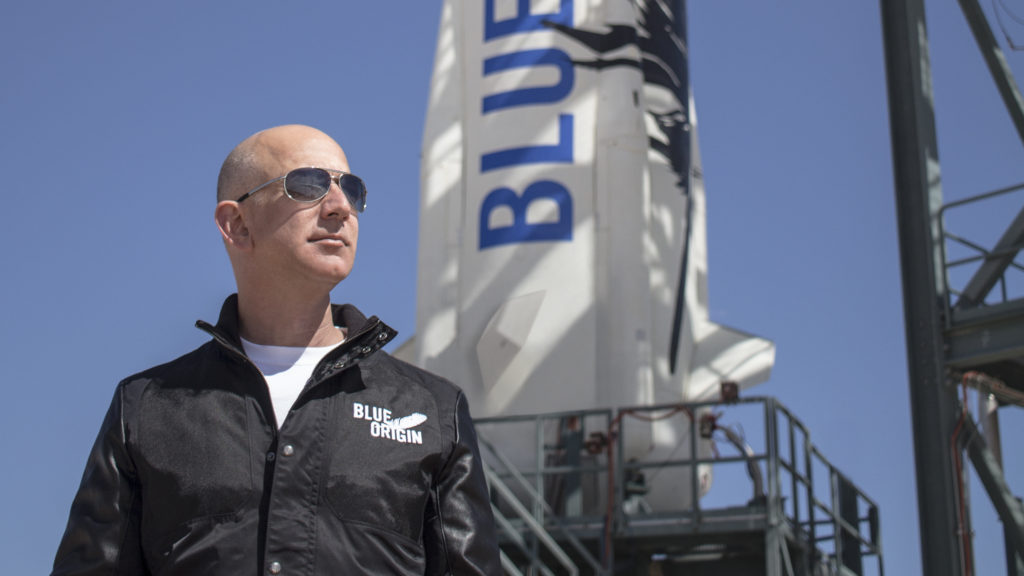
Amazon founder Jeff Bezos‘ private spaceflight company, Blue Origin, is planning to build a new rocket engine in Huntsville, Ala. the company and state officials announced Monday. The new “Rocket City” facility will be in Cummings Research Park, the nation’s second-largest research park, and construction can begin pending an engine production contract with United Launch Alliance (UAL). Blue Origin President Robert Meyerson clarified, explaining his company is seeking the UAL contract, a private company that provides satellite launches for the U.S. government and others. He said the company will locate a production factory for the BE-4 rocket engine in Huntsville upon a contract being signed. “Alabama is a proven leader in aerospace manufacturing with the highest-skilled workforce, business climate and leadership that we need to produce low-cost rocket engines that we need to protect the nation, (and) explore the universe,” Meyerson said at a news conference in Huntsville. “Alabama is a great state for aerospace manufacturing and we are proud to produce America’s next rocket engine right here in Rocket City.” The BE-4 is America’s next rocket engine and, if selected, will power UAL’s Vulcan rocket. The production of this engine would end the nation’s dependence on Russia for access to space for critical national security space systems. Should the facility come to Huntsville, it will mean jobs up to 342 people along with approximately $200 million in capital investment in the state. “We are excited to welcome Blue Origin to Alabama. I must commend founder Jeff Bezos and company President Robert Meyerson for their vision to create this innovative company, and for choosing to make Alabama its home sweet home!,” said Alabama Gov. Kay Ivey. “Because of this investment, more Alabamians can provide a better living for their families, and it helps cement Alabama as the preferred destination for the aerospace industry.” Many economic development partners contributed to the effort to successfully recruit Blue Origin to the state. These partners include the Governor’s office, the Alabama Department of Commerce, the Tennessee Valley Authority, the City of Huntsville, Madison County, and the Huntsville/Madison County Chamber. “Blue Origin’s decision to locate its BE-4 engine manufacturing center in Huntsville reflects the deep and longstanding capabilities in the city that became the cradle of the nation’s rocket program,” said Greg Canfield, secretary of the Alabama Department of Commerce. “Huntsville is a hub of innovation in every facet of aerospace, making it the perfect home for this Blue Origin facility.” Blue Origin chose Huntsville for this project because of the high-tech aerospace manufacturing workforce and ecosystem, including NASA’s Marshall Space Flight Center, nearly 300 private aerospace and defense contractors, and the University of Alabama in Huntsville, number 14th in NASA research funding in the nation. “This announcement today is excellent news for our state. I am pleased to see Blue Origin investing in Alabama, and I look forward to working with them and other businesses to continue boosting economic development opportunities,” commended U.S. Senator Richard Shelby. The announcement took place at the historic Davidson Center for Space Exploration under the Saturn V rocket, a nod to the community’s aerospace heritage. Blue Origin builds on that aerospace heritage and positions the Huntsville/Madison County community in the commercial space industry. “Huntsville is proud to be the nation’s propulsion center of excellence, and we couldn’t ask for a better partner than Blue Origin to join our team. When you look at NASA’s visionary work at the Marshall Space Flight Center, the talent and capacity of Huntsville’s space industry partners, and our expertise in research and development, engineering, and manufacturing, Blue Origin is joining a truly remarkable environment,” said Huntsville Mayor Tommy Battle. “Today’s announcement ensures that our community will continue to be at the center of the world’s rocket propulsion development. Jeff Bezos and Blue Origin will build on the legacy of the German rocket team and the Marshall Space Flight Center to power the growing commercial rocket business that will be a critical part of our nation’s future space program,” stated Madison County Commission Chairman Dale W. Strong. In support of Blue Origin, the City of Huntsville, City of Madison, and Madison County have provided funding for their three school systems to launch an experiment on a Blue Origin rocket in Summer 2018. The school systems will determine how to select teams, and then they will work with the Huntsville/Madison County Chamber and Dream Up, an organization that supports space-based learning, to design and develop their payload. “Blue Origin reinforces our regions’ place as the Rocket City, and a center of excellence for rocket propulsion. Blue Origin’s presence will have a positive impact on our State, our region and our community,” said Chip Cherry, President and CEO of the Huntsville/Madison County Chamber. “This is an important development for Cummings Research Park’s next era of expansion and we look forward to a long and productive relationship with Blue Origin.”
Randall Shedd to chair new House Standing Committee on Urban and Rural Development
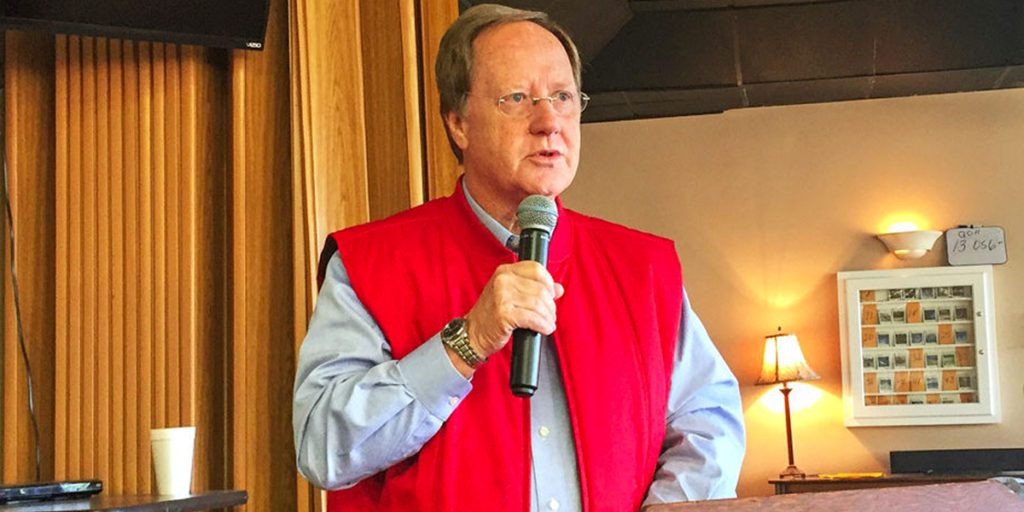
Cullman-Republican state Rep. Randall Shedd has been named chairman of the new House Standing Committee on Urban and Rural Development House Speaker Mac McCutcheon announced Monday. According to McCutcheon, the new panel will focus its attention on combatting the pockets of poverty that exist across the state by addressing issues like broadband access, infrastructure, and other factors contributing to impoverished areas. “For the past several years, Alabama has led the nation in attracting new jobs, opportunities, and industrial development, but there are areas of our state that still struggle economically, and they deserve our attention,” McCutcheon said. “Since joining the Alabama House, Rep. Shedd has promoted the need for development initiatives in both urban and rural areas, so his expertise and interest in this area makes him the ideal candidate to chair this committee.” Shedd said he looks forward to tackling the challenges that leading the panel offers and pledges to work toward more prosperity and opportunity for all of Alabama’s citizens. “Every Alabamian, no matter where they live, deserves the chance at a good-paying job and an honest day’s work, and, as chairman of this committee, I will do everything in my power to provide it to them,” said Shedd. “I appreciate the confidence that Speaker McCutcheon has placed in me, and I can promise that the bills, measures, and ideas that come before my committee will get a thorough vetting and a fair hearing.” Prior to his election to the Alabama House in 2013, Shedd served as chairman of the Cullman County Commission and as mayor of Fairview. He was previously employed as the director of the Cullman County Commission on Aging. Joining Shedd on the new committee are: Hayden-Republican David Standridge: Vice Chairman Thomasville-Democrat Thomas Jackson: Ranking Democrat Bessemer-Democrat Louise Alexander Selma-Democrat Prince Chestnut Athens-Republican Danny Crawford Leeds-Republican Dickie Drake Woodland-Republican Bob Fincher Greensboro-Democrat Ralph Howard Mobile-Republican Margie Wilcox Tuscaloosa-Republican Rich Wingo
National Democrats continue to target Martha Roby’s seat in 2018
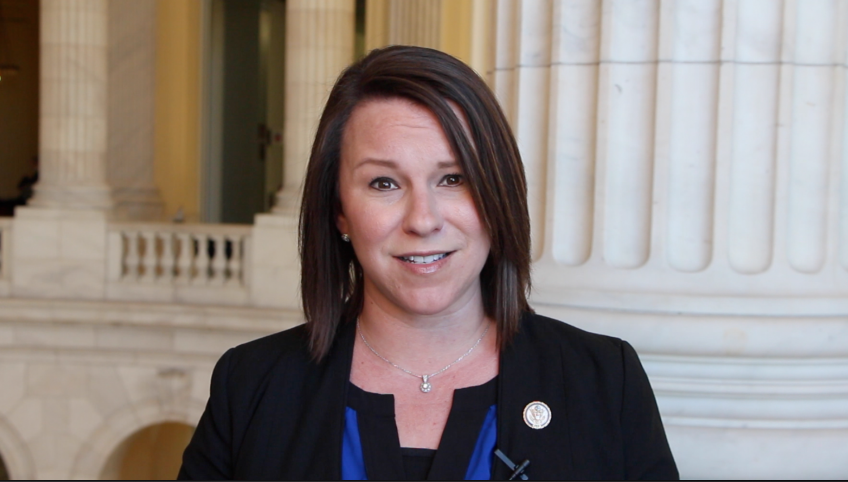
Despite a major loss in the recent Georgia special election national Democrats are still actively working to find a path to flip the U.S. House in 2018. Earlier this year, the Democratic Congressional Campaign Committee (DCCC) identified Alabama 2nd District U.S. Rep. Martha Roby as their sole target in the Yellowhammer State in their efforts to flip the House. Now, six months later — with the next general election being over a year and a half away — the DCCC is continuing to attack her every move, in hopes of capitalizing on any perceived vulnerabilities. When Senate Republicans unveiled their version of an Obamacare repeal bill last week, they saw it was the perfect opportunity to make another statement against Roby. Despite coming from the upper chamber, the DCCC is claiming the bill is only moving forward because “Rep. Martha Roby and House Republicans voted for a bill that would take health care away from millions.” “If Martha Roby thought the Senate would make this health care bill less painful for Alabama families, she was wrong. The Senate didn’t save Martha Roby,” said DCCC spokesperson Cole Leiter in his second statement made against Roby in past five days. “This horrific Repeal and Ripoff bill would not be headed to a vote in the Senate now if Roby had not voted for a bill that rips insurance from 23 million Americans, raises premiums, slaps an age tax on Americans over 50, and destroys protections for people with preexisting conditions. Martha Roby already made her bed and now she has to lie in it.” Despite the left’s attacks, Roby’s not shying away from her support to repeal and replace Obamacare, which has consistently pointed out is hurting her constituents. In fact, she visited the Oval Office last month and pledged her support to President Donald Trump to help build support for repeal and replace in the House. “Washington Democrats should have learned from recent elections that preserving Obamacare isn’t a winning message in Alabama. Our state has suffered average premium increases of more than 200 percent under this law – the highest in the country. Rep. Roby is working with the Trump Administration and her colleagues to repeal this deeply flawed law and replace it with a health care system that lowers costs, increases access, and isn’t run by the government,” said Emily Taylor, Rep. Roby’s spokeswoman. Roby won her fourth term to Congress in November when she defeated Democrat Nathan Mathis 49-41 percent. Her victory was by smaller-than-expected margins following backlash for speaking out against now-President Trump. Roby had been among the first Republican Members of Congress to stand her ground and say she would not vote for Trump following the release of the “Access Hollywood” videotape where he was recorded making crude comments about women. While Roby may have disagreed with the way Trump talked about women, she has since said she has “consistently supported President Trump’s policy initiatives and has said time and again that she wants our president to be successful.”
Donald Trump travel ban partly reinstated; fall court arguments set

The Supreme Court is letting a limited version of President Donald Trump’s ban on travel from six mostly Muslim countries take effect, a victory for Trump in the biggest legal controversy of his young presidency. The justices will hear full arguments in October in the case that has stirred heated emotions across the nation. In the meantime, the court said Monday that Trump’s ban on visitors from Iran, Libya, Somalia, Sudan, Syria and Yemen can be enforced if those visitors lack a “credible claim of a bona fide relationship with a person or entity in the United States.” Trump said last week that the ban would take effect 72 hours after being cleared by courts. The administration has said the 90-day ban was needed on national security grounds to allow an internal review of screening procedures for visa applicants from the six countries. Opponents say the ban is unlawful, based on visitors’ Muslim religion. The administration review should be complete before Oct. 2, the first day the justices could hear arguments in their new term. A 120-ban on refugees also is being allowed to take effect on a limited basis. Three of the court’s conservative justices said they would have let the complete bans take effect. Justice Clarence Thomas, joined by Samuel Alito and Neil Gorsuch, said the government has shown it is likely to succeed on the merits of the case, and that it will suffer irreparable harm with any interference. Thomas said the government’s interest in preserving national security outweighs any hardship to people denied entry into the country. Some immigration lawyers said the limited nature of the ban and the silence of the court’s liberals on the issue Monday suggested that the court had not handed Trump much of a victory. The White House did not immediately comment. The court’s opinion explained the kinds of relationships people from the six countries must demonstrate to obtain a U.S. visa. “For individuals, a close familial relationship is required,” the court said. For people who want to come to the United States to work or study, “the relationship must be formal, documented and formed in the ordinary course, not for the purpose of evading” the travel ban. The opinion faulted the two federal appeals courts that had blocked the travel policy for going too far to limit Trump’s authority over immigration. The president announced the travel ban a week after he took office in January and revised it in March after setbacks in court. The 4th U.S. Circuit Court of Appeals in Richmond, Virginia, said the ban was “rooted in religious animus” toward Muslims and pointed to Trump’s campaign promise to impose a ban on Muslims entering the country as well as tweets and remarks he has made since becoming president. The San Francisco-based 9th U.S. Circuit Court of Appeals said the travel policy does not comply with federal immigration law, including a prohibition on nationality-based discrimination. That court also put a hold on separate aspects of the policy that would keep all refugees out of the United States for 120 days and cut by more than half, from 110,000 to 50,000, the cap on refugees in the current government spending year that ends September 30. Trump’s first executive order on travel applied to travelers from Iraq and well as the six countries, and took effect immediately, causing chaos and panic at airports over the last weekend in January as the Homeland Security Department scrambled to figure out whom the order covered and how it was to be implemented. A federal judge blocked it eight days later, an order that was upheld by a 9th circuit panel. Rather than pursue an appeal, the administration said it would revise the policy. In March, Trump issued the narrower order. Republished with permission of The Associated Press.
Mike Rogers calls for ‘Space Corps,’ new branch of U.S. military
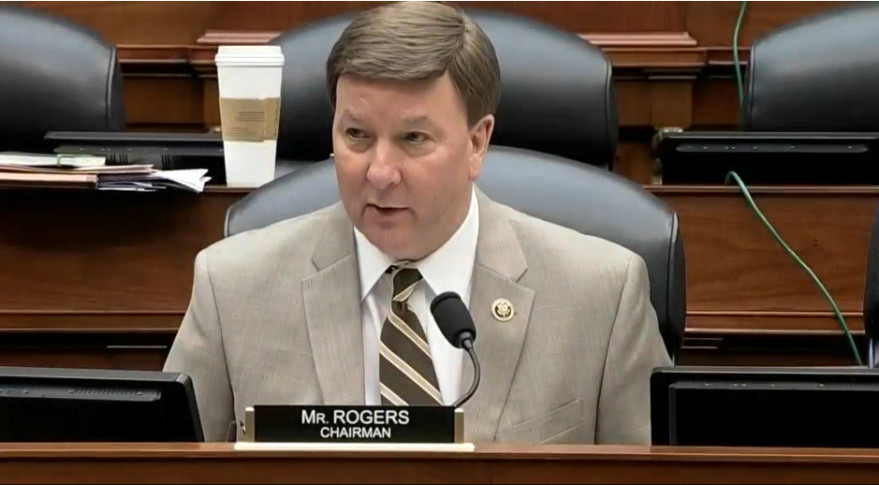
U.S. Rep. Mike Rogers wants the Pentagon to look toward the stars. The Saks Republican, a member of the House Armed Services Committee, is pushing for the creation of the “Space Corps” a new branch of the U.S. military to protect the nation’s assets in low-to-near Earth orbit. First reported in AL.com, Rogers and Tennessee Republican Rep. Jim Cooper, both top representatives on the Strategic Forces Subcommittee, presented a measure last week to the House Armed Services Committee National Defense Authorization Act establishing a Space Corps. As the first new branch since 1947 — the creation of the U.S. Air Force — the Space Corps would be under U. S. Air Force umbrella, and will protect national security and corporate interests. “There is bipartisan acknowledgment that the strategic advantages we derive from our national security space systems are eroding,” Rogers said a joint statement. “Not only are there developments by adversaries, but we are imposing upon the national security space enterprise a crippling organizational and management structure and an acquisition system that has led to delays and cost-overruns.” While technically under Air Force command, the Space Corps commander would be a member of the Joint Chiefs of Staff, similar to the Marine Corps’ within the U.S. Navy. Rogers said the Department of Defense is not sufficiently prepared to protect U.S. space-based assets, “thus Congress has to step in.” “The adversary will continue to build capabilities to hold our space assets at risk. For that reason, we must act now to fix national security space and put in place a foundation for defending space as a critical element of national security,” Rogers said. If passed, the Space Corps would go into effect by Jan. 1, 2019. The Air Force, which currently runs a space command, is pushing back on the suggestion. “From the Air Force’s perspective, we think right now it’s important to take the capabilities and resources that we have and focus on implementation and integration with the broader force, versus creating a separate service,” Col. Patrick Ryder told AL.com. Rogers’ bill still needs approval by the full Armed Services Committee, the House and Senate as well as President Donald Trump’s signature before becoming reality.
Poll: Younger Republicans more liberal on immigration
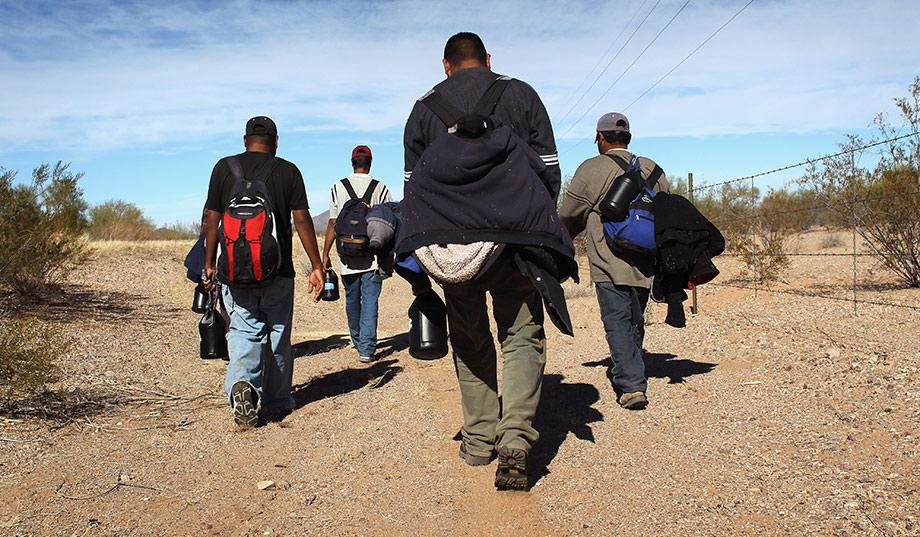
Young Republicans hold significantly more liberal views of immigrants and immigration than their older counterparts, reflecting a difference consistent with white Americans regardless of which political party they identify with, according to the latest American Values Atlas, a survey conducted by the Public Religion Research Institute survey. While 41 percent of Republicans of all ages believe immigrants face a lot of discrimination in the United States, the percentage increases to 60 percent among Republicans between 18 and 29 years old, the survey found. That’s a stark contrast to GOP voters 65 and older – only a third of that group says immigrants experience discrimination. Researchers also found that 74 percent of young whites believe that immigrants are targeted for discrimination a lot, compared to 57 percent of white Americans of all ages. However, among Republicans, only for the youngest group, between 18 and 29, is that view in the majority. Even 30-to-39-year-old Republicans are evenly split, 48 percent to 48 percent, on whether immigrants undergo a lot of discrimination. Overall, 63 percent of Americans say there’s a lot of discrimination against immigrants, the most who say of any group asked about in the poll. That includes transgender people (62 percent), black Americans (57 percent) and gays and lesbians (58 percent). Greg Goldstein, 20, and Ryan Kromsky, 24, are in the generation of Republicans that says immigrants face discrimination. “Immigration has been the basis of the American society, and to this day immigrants offer a great deal to the workforce, economy and overall success of America,” said Goldstein, an economics major at the University of Maryland and president of the school’s Progressive College Republicans. Kromsky, a former Maryland student who founded the group, agrees. “These hard workers, bright students and aspiring capitalists should be welcomed with open arms, the same way that Americans are openly welcomed abroad,” said Kromsky, who graduated in 2015 and is now a financial systems analyst in Washington. “Closed-minded Republicans need to expand their perspective to see how immigrants are helping us all create a better America. I believe that this will change with the younger generation of Republicans,” Kromsky said. Both Kromsky and Goldstein favor a more inclusive approach than their older Republican counterparts to immigrants in general, whether or not they’re living in the U.S. illegally. The young Republicans polled share that view. According to the PRRI poll, 64 percent of all Americans, regardless of political affiliation and age, believe that immigrants in the U.S. illegally should have a path to citizenship if certain conditions are met; only 16 percent say they should be deported. Among Republicans of all ages, support for a path to citizenship is lower, at 55 percent. But when only Republicans between the ages of 18 to 29 are accounted for, that number rises to 62 percent. The election of President Donald Trump, who pledged to deport millions of immigrants living in the country illegally during the campaign, did not diminish the young Republicans’ hope for a new stance by the GOP. “I think the rhetoric was used to churn up votes and does not represent President Trump’s actual views, but I truly hope that President Trump will respect immigration as the pillar of American society that it always has been,” Kromsky said. The age gap among Republicans also surfaces on gay rights: 54 percent of Republicans between 18 and 29 believe that gay and lesbian couples should marry, while half as many Republicans older than 65 agree. Younger GOP supporters are more closely aligned with the majority of Americans than their older counterparts: Overall, 58 percent of Americans support gay marriage. However, they are far from the average among young people of all political leanings: 74 percent of them support gay marriage. The American Values Atlas is the result of 40,509 interviews conducted by telephone, including 24,266 of them to mobile phones, between May 18, 2016, and January 10, 2017. The margin of error is plus or minus 0.6 percentage points. Republished with permission of The Associated Press.
Former state Sen. Roger Bedford to retire from campaign trail

With a political career spanning more than three decades, former state Sen. Roger Bedford is retiring from the campaign trail. “It’s been my highest honor to serve the people of Northwest Alabama for 30 years, and I will continue to support people who are working for what is right for the people of Alabama,” the Russellville Democrat told the Times Daily last week. “But I’m retiring from campaigning.” Bedford, who turns 61 next month, was first elected to the state Senate in 1982 when he was 25, becoming the youngest person in Alabama history to be elected to the Legislature. He served Senate District 6 through 1990 when a battle with cancer forced a brief hiatus. After his recovery, he returned to the Senate for another two decades — from 1994 until 2014 — when he lost a bid for re-election to Tuscumbia Republican Sen. Larry Stutts by only 60 votes. “I’m very grateful to my family and friends who have helped and supported me over the years,” Bedford added. “But I’m at peace with this decision. I’ve been away from it for four years, and I have really enjoyed working, spending time with my wife, Maudie, my son, Roge, and getting more involved in work at my church as a deacon.” As a practicing lawyer, Bedford serves as the city attorney for Red Bay and for the Franklin County Commission, as well as acting as a municipal judge in Russellville and Hackleburg.
Bradley Byrne: Putting Americans back to work
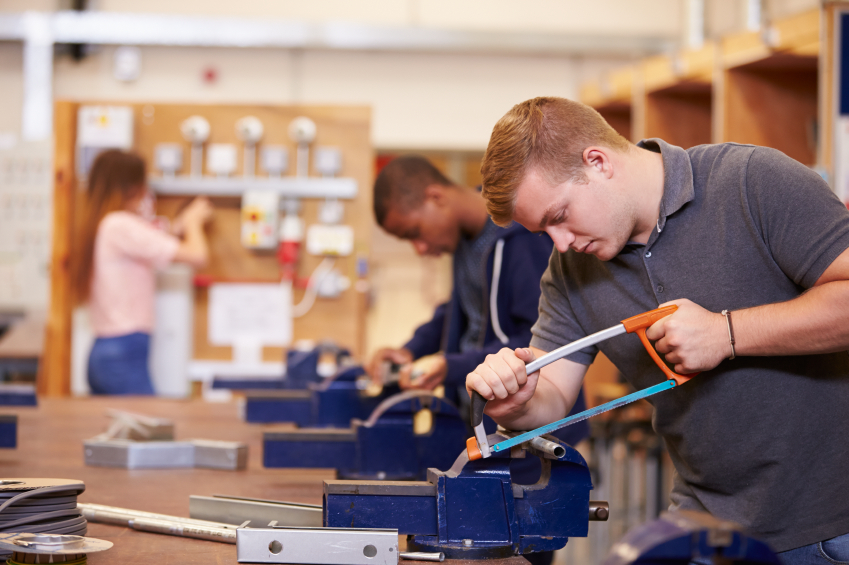
You have probably read the stories about how Republicans and Democrats can never get along and how it has caused absolutely nothing to get done in Washington. While that may make a good narrative for the media, it is not accurate. In fact, just this past week, Congress came together in a bipartisan way to pass bills that will help put the American people back to work. I was especially proud of our bipartisan efforts to boost our nation’s career and technical education (CTE) programs. These programs are critical in helping connect Americans with the skills they need to find a good-paying job. There is a false belief in our country that in order to be successful you have to obtain a four year degree or more. That simply is not true. In fact, many Americans have successful lives after attending a community college or gaining a certificate from a training program. That is what career and technical education is all about. Back when I served as chancellor of Alabama’s two year college system, I saw these programs work firsthand. I saw individuals who had absolutely no background or prior training go through a welding program and end up with a great job that pays high wages. These programs truly work like magic. CTE programs are so important in today’s economy because our country is experiencing a skills gap. This means there are jobs out there that remain unfilled because people lack the skills required to fill the jobs. This is limiting economic growth and hurting the overall economy. Well, CTE programs can help close that skills gap by giving people the training they need. Our bipartisan bill, the Strengthening Career and Technical Education (CTE) for the 21st Century Act, makes important reforms to ensure our CTE programs are actually working and directs resources toward in-demand skill areas. Importantly, the bill ensures a limited role for the federal government while empowering state and local leaders. Ultimately, improving career and technical education programs is the most important thing Congress can do to help close the skills gap, combat poverty, and help put Americans back to work. On another bipartisan note, the House also passed a bill last week to help people on welfare programs have access to jobs. The bill would establish a test program for states to create a targeted tax credit for employers who hire individuals on welfare programs. The bill, the Accelerating Individuals into the Workforce Act, passed on a strong bipartisan vote of 377 to 34, and it makes progress on the important priority of encouraging work among welfare recipients. As we continue our efforts to fight poverty, we must measure success by how many people we are getting off of welfare programs and back to work, not by how many people we are adding to the welfare rolls. Through improving career and technical education and encouraging work in welfare, there will be three big wins for the American people. First, we will help individuals live more successful lives by connecting them with jobs. Second, we will grow the overall American economy by closing the skills gap. Third, we will save taxpayers money by taking people off welfare and putting them to work. So, while there are certainly issues where Republicans and Democrats do not agree, there are a large number of areas where we often come together and make a difference on behalf the American people. That is exactly what we did this past week with our efforts to create more opportunities for the American people through boosting career and technical education and promoting work in our nation’s welfare programs. • • • Bradley Byrne is a member of U.S. Congress representing Alabama’s 1st Congressional District.
Promise, promises: What Donald Trump has pledged on health care
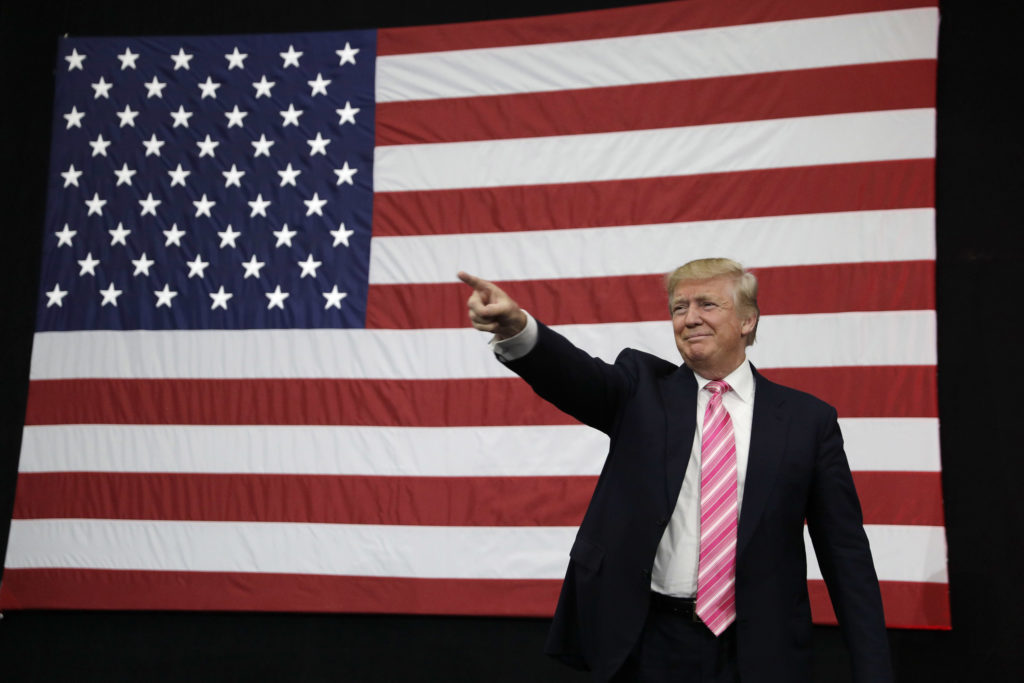
President Donald Trump is not known for plunging into the details of complex policy issues, and health care is no exception. Since his campaign days, Trump has addressed health care in broad, aspirational strokes. Nonetheless he made some clear promises along the way. Those promises come under two big headings. First, what Trump would do about the Affordable Care Act, his predecessor’s health care law, often called “Obamacare.” Second, the kind of health care system that Trump envisions for Americans. On repealing Obama’s law, Trump seems to have a realistic chance to deliver. But he’s nowhere close to fulfilling his generous promises of affordable health care for all. A look at some of the president’s major health care promises, and how the Republican legislation advancing in Congress lines up with them: REPEAL ‘OBAMACARE’ Repealing President Barack Obama‘s signature domestic achievement has been a clear and consistent promise from Trump. Under the Obama law, some 20 million people gained coverage through a combination of subsidized private insurance and a state option to expand Medicaid for low-income people. Costs have been a problem, as are shaky insurance markets for people buying their own policies. But the nation’s uninsured rate is at a historic low, about 9 percent. Both the House and Senate GOP bills would largely fulfill Trump’s promise to repeal Obama’s law. Both bills end Obama’s unpopular requirement for individuals to carry health insurance or risk fines. The legislation also phases down the Medicaid expansion and repeals hundreds of billions of dollars in taxes on upper-income people and health care industries, used under Obama to finance coverage. And it opens the way for states to seek waivers of federal health insurance requirements. Some Republican critics on the right say the congressional bills leave other major parts of “Obamacare” in place, such as subsidies for people buying private insurance, and too many rules. While the subsidy structure would remain, much less taxpayer money is invested in it. “INSURANCE FOR EVERYBODY” In a Washington Post interview before his inauguration, Trump distilled his vision for health care into a few visionary goals. “We’re going to have insurance for everybody,” he said. “There was a philosophy in some circles that if you can’t pay for it, you don’t get it. That’s not going to happen with us.” Trump said he was close to finishing a plan of his own that would have “lower numbers, much lower deductibles.” But the White House never delivered a health care plan from the president. And the congressional plans are likely to increase the number of uninsured people, because even if all Americans have access to coverage, some may no longer be able to afford it. Deductibles are likely to rise for many people with individual coverage because the congressional plans would end subsidies under Obama’s law that reduced out-of-pocket costs for those with modest incomes. The Congressional Budget Office has projected that, on average, premiums for individual policies would be lower over the long run than under current law. But there would be winners and losers. Younger adults and those in good health are likely to find better deals. Older people and those requiring comprehensive coverage could well end up paying more. TAKING AWAY THE LINES During the presidential campaign, Trump called for a system in which insurance plans would compete nationally, offering Americans choice and lower premiums. “What I’d like to see is a private system without the artificial lines around every state,” he said at one of the presidential debates. Many experts say Trump’s vision of interstate competition is unrealistic because health insurance, like real estate, reflects local prices. In any case, it remains unfulfilled in the GOP legislation. Some congressional leaders have promised that cross-state insurance will be addressed in follow-on legislation. Such a bill, however, would likely have to meet a 60-vote test in the Senate. PRESCRIPTION DRUG PRICES During the presidential campaign, and since becoming president, Trump called for action to bring down the cost of prescription drugs. The GOP bills in Congress basically sidestep that. At one point in the campaign, Trump called for giving Medicare the authority to directly negotiate prices with drug makers, an approach favored to some extent by Obama and Democratic presidential candidate Hillary Clinton. Trump also proposed letting Americans import prescription drugs from other countries, where prices are usually lower because of government regulation. But Medicare negotiations are a nonstarter for most congressional Republicans, and Trump’s call for allowing drug importation has faded. MEDICAID In a 2015 interview with The Daily Signal, Trump said: “I’m not going to cut Social Security like every other Republican and I’m not going to cut Medicare or Medicaid.” But last year, his campaign started backtracking on the Medicaid promise, endorsing the idea of limited federal financing for the federal-state program that covers some 70 million low-income people, from newborns to elderly nursing home residents, from special-needs kids to part-time workers lacking job-based health insurance. The Republican bills in Congress would phase out Obama’s financing for Medicaid expansion and limit future federal payments for the entire program as well. The Congressional Budget Office said the House bill would reduce federal Medicaid spending by $834 billion over 10 years, and the program would cover about 14 million fewer people by 2026, a 17 percent reduction. Several Republican governors have joined their Democratic counterparts calling that a massive cost-shift to the states. OPIOID CRISIS The Trump White House says it’s serious about confronting the nation’s opioid epidemic, which shows no sign of letup. “The president is all in,” health secretary Tom Price said on a recent visit to New Hampshire. “He has such passion for this issue because he knows the misery and the suffering that has occurred across this land.” But state officials say rolling back Obama’s Medicaid expansion would deal a heavy blow to their efforts to treat addiction and get its victims back to jobs and family. Among the group of low-income adults made eligible for Medicaid under Obama are many
