
Judge: Psychiatric care unconstitutional in Alabama prisons

Alabama’s psychiatric care of state inmates is “horrendously inadequate” and violates the U.S. Constitution’s ban on cruel and unusual punishment, a federal judge ruled Tuesday. U.S. District Judge Myron Thompson ruled in favor of all current and future Alabama inmates with serious mental health problems. “Given the severity and urgency of the need for mental-health care explained in this opinion, the proposed relief must be both immediate and long term,” Thompson wrote in the 302-page decision. Gov. Kay Ivey said she would work closely with Corrections Commissioner Jefferson Dunn and state legislative leaders to address the issues raised in the ruling. “I am committed to providing justice to all Alabamians by ensuring constitutionally-permissible conditions for all prisoners,” the governor said. Lawyers for inmates say they were reviewing the decision and would comment later. “I can’t say this comes as a surprise to anybody. Some of us have been saying for years that this was coming,” said state Sen. Cam Ward, who has spearheaded prison reform efforts as well as unsuccessful legislation to build new prisons. “We as a legislative body are going to deal with the financial consequences,” Ward said. The mental health claims were part of a larger inmate lawsuit filed in 2014 over medical care. The judge presided over a trial that began in December focusing on mental health, and last month, he certified this part as a class action on behalf of all current and future inmates with serious mental illness. State officials denied providing inadequate mental health treatment, but the judge cited evidence to the contrary from inmates and prison officials. One inmate killed himself days after testifying, prompting the state to agree to new suicide prevention methods while the trial continued. The judge acknowledged that the department blames lack of funding, but he said money alone couldn’t make up for such poor treatment, and sweeping change is required. Alabama’s troubled state prison system houses nearly twice the inmates it was designed for. Prison officers and inmates have been killed and injured in a series of violent crimes behind bars. The litigation echoes lawsuits in states, including California, South Carolina and Arizona, that led to court orders and settlement agreements to improve conditions or reduce crowding. Republished with permission of The Associated Press.
Food & Wine magazine’s relocation to Birmingham ‘a smart move’

At the first Alabama rest stop on Interstate 20/59, just this side of Mississippi, visitors notice two things in the lobby. One is a colorful poster touting our state’s remarkable biodiversity: Alabama is America’s Amazon. The other is a large, canvas photo of world-renowned chef Frank Stitt standing in the dining room of one of his Birmingham restaurants, Chez Fonfon, presenting a perfect omelet. The current issue of Food & Wine magazine. (contributed) Welcome to a state where food has become as important as the very land we live on. And welcome to Food & Wine magazine, which is moving to the Time Inc. building in Birmingham. Of course, from a price-per-square-foot prospective the move from New York to Birmingham makes sound financial sense. Especially considering that Time Inc. recently built a huge, state-of-the-art facility in Birmingham with 28 test kitchens, 13 photo and video studios, and a showcase kitchen with a beautiful, expansive tasting room for demonstrations and events. “The Potlikker Papers: A Food History of the Modern South” is the latest from author and Southern food expert John T. Edge. (contributed) But the move makes sense in lots of other ways, too. The South has become enormously significant and is increasingly influential regarding American food. John T. Edge, director of the Southern Foodways Alliance, writes in his new book, “The Potlikker Papers”: “Conversations about food have offered paths to grasp bigger truths about race and identity, gender and ethnicity, subjugation and creativity. Today, Southern food serves as an American lingua franca.” Birmingham has been part of that conversation for a while. John T. Edge said Food & Wine’s move to Birmingham is a smart one. (Jason Thrasher) “I think Birmingham has long defined itself as a media center, by way of Southern Living, has defined itself as a national leader in the shelter magazine and food magazine world,” Edge says. “The arrival of Food & Wine in Birmingham signals a moment of democratization for food media … in that a base in New York is no longer required to cover the dining scene. The American dining scene is vital in Birmingham, in Chicago, in San Francisco and Los Angeles. It’s vital across a broad swath of the nation. “I hope this is the last time people wonder whether a national magazine should move South, can move South, and still be relevant,” he says. “I think that’s an old question that has little relevance now. Of course, they’re in Birmingham; it’s a smart move.” Frank Stitt, chef and owner of Highlands Bar and Grill. (contributed) Restaurateur Becky Satterfield also thinks Birmingham is a good fit for the national magazine. “There are so many smart people in this town working on food projects of one sort or another. There’s so much that supports this being a perfect place to have another magazine like Food & Wine.” Satterfield is committed to Birmingham’s food community; she’s the owner of Satterfield’s Restaurant and president of the Birmingham chapter of Les Dames d’Escoffier International (a philanthropic organization of women leaders in food, beverage and hospitality). Her newest venture, a Latin American restaurant called El ZunZún (Spanish for “the hummingbird” because the cuisine is based on locations along the migratory routes of these little birds), will open in early 2018. “People don’t realize how much food-related business is going on here in every aspect,” Satterfield says, listing food-science efforts, new sustainable farming practices, healthy food education in schools, ongoing work to address hunger issues and even the nationwide interest in Southern culinary traditions. “It’s not just restaurants,” she says. Birmingham’s restaurants do get plenty of attention, though. James Beard Foundation Award-winning chefs such as Chris Hastings with his Hot and Hot Fish Club and OvenBird and Stitt with Highlands Bar and Grill and Bottega have brought destination dining to Birmingham. Elsewhere, from one end of Alabama to the other, chefs including James Boyce (Cotton Row) in Huntsville, David Bancroft (Acre) in Auburn and Bill Briand (Fisher’s Upstairs) in Orange Beach are making national headlines regularly. Rob McDaniel, of SpringHouse in Alexander City, along with Timothy Hontzas (Johnny’s restaurant in Homewood), Bancroft and Briand all were semifinalists for 2017 James Beard awards. Highlands Bar and Grill and its pastry chef, Dolester Miles, were finalists – not for the first time, either. The Birmingham-based “Cooking Light” magazine brought home three James Beard media awards this year. In fact, countless award-winning chefs; savvy, sophisticated diners; prominent food professionals; and accomplished home cooks call Alabama home, and many are influencing our country’s food scene in ways big and small. Jessie Merlin. (Big Communications) Jessie Merlin, whose food blog “What to Eat in Birmingham” sees up to 30,000 visitors each month, says: “Birmingham has a very diverse food scene – all the Southern food that you would expect at a very high level from Frank Stitt and Chris Hastings and their protégés, but also a really strong, ethnically diverse food scene including Szechwan Chinese food and Nepalese food and Thai food as well as homegrown soul food. We have classically trained, talented world-famous chefs and home cooks who have had really strong success.” Highlands Bar and Grill could become Food & Wine magazine’s “new clubhouse” when the magazine moves to Birmingham. (Phil Free/Alabama NewsCenter) The new Pizitz Food Hall, she points out, is one of the most ethnically diverse food halls in the country. “Birmingham, it seems to me, would be a welcoming place for Food & Wine. Birmingham has a long tradition of great food magazines and talented magazine staff, so I think (this move) follows nicely.” Edge takes it a step further: “There have been many moments to peg the American culinary renaissance to, many years to peg it to, many chefs to peg it to and many restaurants to peg it to, but one of the signal moments in the American culinary renaissance was the opening of Highlands Bar and Grill in 1982.” “That restaurant remains an important and vital and innovative American culinary citadel. If you
Mobile protesters call out Luther Strange, Richard Shelby on health care
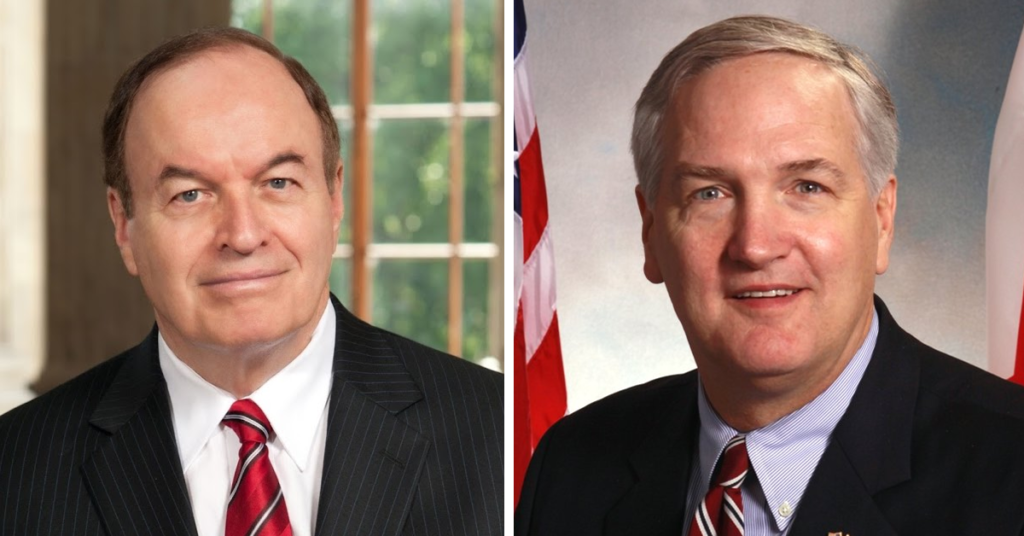
Obamacare supporters gathered in front of Mobile’s federal courthouse Monday, with about 100 people protesting Republican efforts to repeal and replace the Affordable Care Act. As AL.com reports, Monday afternoon’s rally – organized by Mobile attorney Henry Brewster – was part of a statewide effort to get Alabama Sens. Richard Shelby and Luther Strange to “agree to meet face to face with their constituents regarding the health care bill working its way through Congress.” Last week, the Senate revealed its version of the health care bill and their attempt to rollback Obamacare. Senate Majority Leader Mitch McConnell of Kentucky was hoping to have a vote by as soon as Wednesday but faces strong resistance by several key conservatives, including Rand Paul of Kentucky, Ted Cruz of Texas, Utah’s Mike Lee and Ron Johnson of Wisconsin. Those four senators announced they would oppose the Senate bill without changes, effectively slowing down any chance of passage as is. Similar protests were held both in Alabama and across the country Monday, including one outside the Birmingham’s Robert S. Vance Federal Building and Courthouse. Both Strange and Shelby have indicated they are leaning toward “yes” if the bill comes to a vote on the Senate floor. Strange is already committing to support this bill, while Shelby told FOX Business he was “encouraged by key provisions in the Senate bill, which would repeal Obamacare’s disastrous individual and employer mandates, repeal taxes on chronic care, health savings accounts, and medical devices, and put Medicaid on a budget that works for individual states.” Brewster told reporters that the bill was essentially a $400 billion tax cut “for the 1 percent,” and called for anyone within earshot to express their disapproval to the senators, via phone and social media. “It is critically important that we make as much noise as possible to them,” Brewster said. Among the elected officials speaking at the rally: District 1 Mobile County Commissioner Merceria Ludgood, Democratic State Rep. Barbara Drummond of Montgomery and Lorenzo Martin, who serves on the Prichard City Council. Ludgood said it was a “sad reason to have to come together,” adding she was “outraged” by the effort to repeal Obamacare, “because the calculation is not about human lives, it’s about dollars.” At the same time, the nonpartisan Congressional Budget Office released its report on the bill, saying that as many as 22 million people would lose health coverage in the next decade under the Senate’s plan. While 15 million would lose Medicaid coverage, the plan would lower the nation’s deficit by billions over 10 years, with substantial tax cuts for corporations and the wealthy. While 15 million would lose Medicaid coverage, the Senate plan, as it stands, would lower the nation’s deficit by billions over 10 years, providing substantial tax cuts for corporations and the wealthy.
Will Barfoot announces candidacy for Alabama State Senate

Will Barfoot is hoping to bring a bevy of fresh ideas to the Alabama State Senate come the 2019 legislative session. On Tuesday the Montgomery-attorney announced he’s seeking the GOP nomination for the District 25 seat, which covers parts of Elmore, Montgomery and Crenshaw counties, in next year’s election. “We can’t continue to elect career politicians and then be surprised when our problems get worse, not better,” Barfoot said. “I am running to bring fresh ideas and a new approach to problem-solving to the Alabama Senate. Some people say my ideas are out of the box thinking but I think they are just a combination of good common sense and applying tried and true conservative business principles to the legislature.” The seat is currently held by Pike Road-Republican Senator Dick Brewbaker who announced in November 2015 that he will not seek re-election. Barfoot says he believes that the citizen legislature should be filled with more new people and fewer career politicians and thus promises to serve no more than three terms in the Senate. “Government solutions come from elected officials far too often,” Barfoot explained. “Little effort is made to talk to the state employees and public school teachers who are doing the work everyday and ask them what they see in terms of waste and what ideas they have for streamlining processes and making operations more efficient and more effective.” Barfoot wants to sponsor legislation that would create an incentive program for non-management level state employees and teachers to come forward with cost saving ideas. Under his plan, employees who identify cost saving measures that also increase government efficiency would receive a portion of the money that was saved as result of their suggestion. He also wants to utilize his business experience to help existing companies expand and to help encourage new companies to locate in District 25. “Small businesses can’t grow and create new, high paying jobs if they are overburdened by too many regulations and too much unnecessary paperwork,” Barfoot said. “As a small business owner, I know that over-regulation is costing this area jobs and too much red tape is killing businesses. A better business environment will lead to more jobs and higher wages and that is what we need.” Barfoot also says he will examine regulations on all sectors, including the agricultural industry which is responsible for a large percentage of Alabama’s job growth. “Farmers feed us and I remember that three times a day,” Barfoot added. Barfoot is a partner with Barfoot & Schoettker, LLC. He is married to Kathy Barfoot and has five children. They are members of Thorington Road Baptist Church. The Republican Primary will be held on June 5, 2018.
House panel weighs privatizing air traffic control

A House panel is considering legislation that would split off management of the nation’s skies from the Federal Aviation Administration and give that responsibility to an independent, nonprofit company. The idea is to remove air traffic control from the uncertainties of the government budget process. Proponents say Washington dysfunction has hampered the FAA’s efforts to update equipment designed to make flying more efficient and safer. The union representing about 18,000 air traffic control workers supports Republican Rep. Bill Shuster‘s bill. The union says the legislation will protect the workforce and provide predictable funds for the aviation system. President Donald Trump supports the effort, but aviation groups that often rely on smaller airports for business travel, recreation, pilot training and crop spraying oppose it. So do some key GOP senators. Republished with permission of The Associated Press.
Luther Strange launches ad supporting Donald Trump’s legislative agenda

Less than 24 hours after the Supreme Court reinstated President Donald Trump‘s travel ban — which Trump claims is needed to prevent terrorist attacks and help curtail illegal immigration — Sen. Luther Strange on Tuesday released of his third television ad for the Republican special Senate primary election in support of Trump’s policies. The ad highlights Strange’s commitment to working with Trump and Attorney General Jeff Sessions to fight against illegal immigration and focuses on Strange’s legislation which cuts funding to sanctuary cities and uses those funds to build the border wall. “While serving in the United States Senate, I have made it my top priority to help President Donald Trump pass the agenda that Alabamians overwhelmingly supported in this past election,” said Strange. “I am proud to be working with President Trump and Attorney General Jeff Sessions to deport violent criminal illegal aliens and build the wall on our southern border.” Strange’s legislation promoted by the ad iis intended to help Trump keep his promise to build the wall on the southern border. His three-page bill takes federal transportation dollars away from sanctuary cities and redirects them to funding the Secure the Fence Act of 2006. The ad also highlights the freshman Senator’s successful battle against President Barack Obama’s illegal amnesty executive order while serving as Attorney General of Alabama. Watch the ad below:
Alabama is not one of America’s most patriotic states?

With Independence Day just a week away, American patriotism is running high. It’s difficult to think of a state where its residents bleed more red, white and blue than Alabama, but according to WalletHub the state is only in the middle of the pack when it comes to patriotism. In their latest in-depth analysis of 2017’s Most Patriotic States in America, the personal-finance website found Alabama to be the 27th most patriotic state in the country. Ranking the Yellowhammer State behind neighbor-state Mississippi (20) and Georgia (9). To come up with their rankings, WalletHub’s data team compared the states across 13 key indicators of patriotism. The data set ranges from share of enlisted military population, to share of adults who voted in the 2016 presidential election, to AmeriCorps volunteers per capita. “The first characteristic is a deeply held loyalty to the country, sometimes interpreted as nationalism, and a fierce pride in being American, “said G. Terry Madonna, Director of the Center for Politics and Public Affairs, Director of the Franklin and Marshall College Poll and Professor of Public Affairs at Franklin & Marshall College. “That certainly does not mean a loyalty to any particular party or candidate. For some, that gets translated into various forms of civic engagement, such as voting, running for office, active involvement in civic organizations, and service in the military are among the most prominent factors.” The study also revealed that red states, like Alabama, are more patriotic than blue states. Red states on average have a ranking of 23.4 out of 50, whereas blue states only score 28.5. See how Alabama compares to the rest of the country: Source: WalletHub
Democrats aim to blast Donald Trump for favoring wealthy
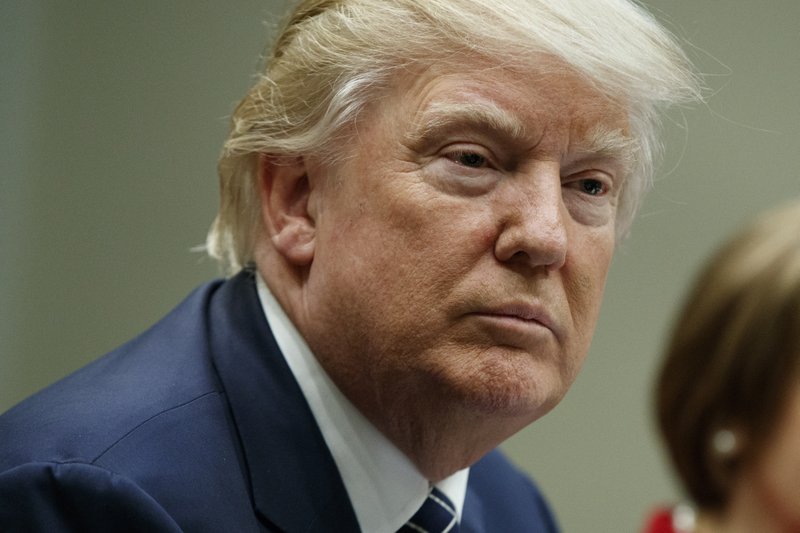
Democrats are out to capitalize on what they believe is growing public sentiment that President Donald Trump, the richest man to call the White House home, is turning his back on the people who got him elected in favor of his wealthy peers. The party is hoping that pitch will pack extra oomph at a time when even some Republicans are raising concerns that the GOP health-care plan could hurt the poor. Though stung by a series of defeats in special congressional elections, Democrats believe they can make inroads with some of Trump’s most loyal supporters by driving home the combined potential impact of proposed tax cuts that would largely benefit the wealthy and pending health care legislation that would fail to cover tens of millions of Americans enrolled in “Obamacare.” In a polling memo circulated by the Democratic group Priorities USA, Democrats say they have seen a significant shift in the last two months in the number of people that believe the president sides with the wealthy and big corporations over average Americans. Democrats plan to turn that message into a prominent sales pitch for their candidates and surrogates, and could make it the theme of ads as well. Guy Cecil, the group’s chairman, said that for the president’s first three months in office, voters who backed President Barack Obama then switched to Trump believed that the new president represented middle-class workers more than he represented the wealthy. But he said that has changed since April. “People are taking a second look,” says Cecil. “The reason that health care is so powerful is because it directly affects people’s lives and there’s a clear trade-off: You’re giving tax cuts to the rich; you’re taking health care away from everybody else.” Public polling also turns up growing unease about GOP attention to needs of the middle class. A Pew Research Center poll released last week found 57 percent of respondents said the Democratic Party “cares about the middle class” while 42 percent said that Republicans did. The White House dismissed the findings. “Unlike the Democrats who have no agenda and no ideas, the president is working hard to lower the cost of health care, cut taxes for all families and businesses, and create good jobs and higher wages for all,” said White House deputy press secretary Sarah Huckabee Sanders. Trump, of course, has never shied away from being associated with wealth. His insurgent candidacy for president was built on his business experience, and his time on the reality TV show “The Apprentice” cast him as America’s CEO, with his riches on full display. Even though he refused to release his tax returns, he boasted time and again on the campaign trail about how much money he had, even declaring, “I’m really rich.” That hasn’t changed since Trump took office. He spends most weekends at one of his opulent resorts, brags about his advisers’ wealth and even told the crowd at an Iowa rally last week that he didn’t “want a poor person” for any senior economic jobs. The nonpartisan Congressional Budget Office found that the House health care bill would leave 23 million people without insurance while the Senate would do the same to 22 million, with the brunt falling on older people with lower income. Trump’s proposed budget also targets many of the programs that help low-income Americans, such as help with heating their homes. Democrats hope it provides more ammunition to revive their effective 2012 attack lines claiming Mitt Romney had turned his back on the working and middle classes. But what worked against Romney may not necessarily be effective with Trump loyalists. “The draconian impact of the GOP Trumpcare bill is a potential asset for the Democrats,” said Wendy Schiller, political science professor at Brown University, “but the big obstacle for them is that the bill’s provisions do not take effect until well after 2018, and not entirely until 2025. So it is unclear they will be able to persuade the majority of voters in congressional districts that the sky is falling on health care if nothing much changes.” Moreover, many of the president’s backers don’t care about Trump’s wealth or his policies, their loyalty instead guided by partisan impulses and Trump’s larger-than-life personality and promises. “His supporters pay attention to what he’s saying, and less so to either the Democrats or the press,” Republican pollster Neil Newhouse said in an email. “Simply put, Democrats can criticize his health care plan and tax plan as much as they want, but it falls on deaf ears with Trump voters, as they simply tune it out.” The president’s allies point to all the failed attacks launched at Trump during the campaign and to GOP wins in the recent special elections as evidence that the Democrats won’t be successful if they are simply the anti-Trump party. Former Trump campaign adviser Barry Bennett says the party’s latest strategy is further evidence that the president is “living in their heads.” “Attacks like these are to define someone and Donald Trump is already completely defined,” Bennett said. “The people of Warren, Ohio, don’t care if he is rich. They care if he is creating jobs.” Republished with permission of The Associated Press.
These senators will make or break the GOP’s health care push
President Donald Trump‘s campaign promise to repeal and replace “Obamacare” is now in the hands of a key group of GOP senators who are opposing -or not yet supporting – legislation Senate Majority Leader Mitch McConnell is pushing to bring to a vote this week. These lawmakers range from moderate to conservative Republicans, and include senators who were just re-elected and a couple facing tough re-election fights. Their concerns about the legislation vary along with their ideology, from those who say it’s overly punitive in ejecting people from the insurance rolls, to others who say it doesn’t go far enough in dismantling former President Barack Obama‘s Affordable Care Act. Satisfying one group risks alienating another. Trump spent part of the weekend placing phone calls to a handful of these lawmakers, focusing on senators who supported his candidacy – Ron Johnson of Wisconsin, Shelley Moore Capito of West Virginia, Ted Cruz of Texas and Rand Paul of Kentucky. The next several days will show whether the president’s efforts pay off and if those lawmakers and the others will ultimately fall in line on legislation that would impact health care for millions of Americans, while allowing Trump and GOP leaders to boast of fulfilling a campaign promise seven years in the making. McConnell has scant margin for error given united Democratic opposition, and can afford to lose only two Republicans from his 52-member caucus. A look at the key Republican lawmakers: — THE CONSERVATIVES Cruz, Paul, Johnson and Sen. Mike Lee of Utah jointly announced their opposition to the legislation as written last Thursday, the same day it was released. They said it did not go far enough to dismantle “Obamacare,” and Johnson also complained of a rushed process. “They’re trying to jam this thing through,” Johnson complained Monday to conservative radio host Hugh Hewitt. Yet Johnson, like many other congressional Republicans, was elected in 2010 on pledges to repeal Obamacare and has been making that promise ever since. While looking for tweaks that can satisfy the conservatives, Senate GOP leaders are also arguing that any Republican who fails to vote for the leadership bill will be responsible for leaving Obamacare standing. Few Senate Republicans expect Paul to vote with them in the end, because of opposition he’s long expressed to government tax subsidies going to pay for private insurance, but many expect Cruz could be won over, especially since he’s running for re-election. — THE ENDANGERED Sen. Dean Heller of Nevada, the only Senate Republican up for re-election next year in a state Hillary Clinton won, surprised Senate GOP leaders by coming out hard against the health legislation at a news conference Friday. Standing next to Nevada’s popular Republican Gov. Brian Sandoval, Heller said he could not support a bill that that “takes away insurance from tens of millions of Americans and hundreds of thousands of Nevadans.” Nevada is one of the states that expanded Medicaid under the Affordable Care Act. The GOP bill would unwind that expansion and cap Medicaid payments for the future. Nevada also has a disproportionate share of older residents under age 65 – when Medicare kicks in – who would likely face higher premiums because the GOP bill gives insurance companies greater latitude to charge more to older customers. Heller’s fellow moderate Republican, Sen. Jeff Flake, faces similar issues of an aging population in neighboring Arizona. He is viewed as the second-most-endangered GOP incumbent next year after Heller. Flake has not yet taken stance on the bill but is facing a raft of television ads from AARP and other groups that are opposed. Phoenix Mayor Greg Stanton, a Democrat seen as a possible Flake challenger next year, said Monday the Senate bill “doesn’t make anyone healthier. It doesn’t make anyone safer.” But Flake, who was outspoken against Trump during last year’s campaign but has grown quieter since his election, also faces a potential primary challenge from the right. Both Heller and Flake face the uncomfortable prospect of angering their party’s base if they don’t support the GOP health bill – but alienating general election moderate and independent voters if they do. — THE MODERATES Sens. Susan Collins of Maine and Lisa Murkowski of Alaska are fellow moderates who’ve raised concerns about the Senate health bill for a variety of reasons. On Monday, after the release of a Congressional Budget Office analysis that the bill will leave 22 million more people uninsured over a decade, Collins announced she would oppose an important procedural vote on the legislation this week. Along with potential opposition from Johnson, Paul and Heller on the vote, that could leave leadership struggling to even advance to a final vote on the health care bill. Collins said that the bill’s Medicaid cuts hurt the most vulnerable and that it doesn’t fix problems for rural Maine. Murkowski has not taken a position but has also expressed concerns about the impacts on a rural, Medicaid-dependent population, as well as funding cuts to Planned Parenthood. — THE TWO-ISSUE SENATORS Sens. Rob Portman of Ohio and Shelley Moore Capito of West Virginia are generally reliable votes for GOP leadership. In this case, both have two specific, and related, concerns causing them heartburn on the health bill: The prevalence of opioid addiction in their states, and their constituents’ reliance on Medicaid. In many cases, voters with addiction problems rely on Medicaid for treatment help, and Portman and Capito both represent states that expanded Medicaid under Obama’s law. Last year about 100,000 low-income West Virginia residents with Medicaid coverage had drug abuse diagnoses, according to state health officials. Republished with permission of The Associated Press.
Supreme Court ruling in travel ban case leaves many questions

The Supreme Court’s decision to partially reinstate President Donald Trump‘s temporary travel ban has left the effort to keep some foreigners out of the United States in a murky middle ground, with unanswered questions and possibly more litigation ahead. The justices ruled Monday in an unsigned opinion they would hold a full hearing on the case in October. In the meantime, the administration can bar travelers from six majority-Muslim countries from the U.S. if they don’t have a “credible claim of a bona fide relationship” with someone or some entity in the country. It’s unclear what will ultimately constitute a “bona fide relationship,” though the ruling suggested that an American job, school enrollment or a close relative could meet that threshold. Equally unclear is how many foreigners will be affected from the six countries: Syria, Sudan, Iran, Yemen, Libya and Somalia. The ruling was seen as at least a partial victory for Trump in the biggest court case of his presidency. Trump claims the temporary ban is needed to prevent terrorist attacks. Opponents reject that and argue it’s a backdoor way to bar Muslims from entering the United States, as Trump promised in his campaign. The early indications are that the administration will use the decision to take a tough line on travelers from those countries. A senior U.S. official familiar with the situation said the Trump administration has plans in place to relaunch the stalled ban and tourists will be among those kept out. Under these plans, largely orchestrated by White House adviser Stephen Miller, tourists from those countries and any academics, lecturers or others invited to speak or make presentations in the U.S. will be barred. Those groups are regarded as unable to show a substantial and pre-existing tie to a person or institution in the United States. The official who described the plans was not authorized to discuss them publicly by name and spoke on condition of anonymity. But some immigration lawyers and advocates said relatively few people would fall under the ban because these travelers tend to have sufficient relationships with people or institutions in the United States. Jamal Abdi, policy director for the National Iranian American Council, said most Iranians who visit the United States have relatives here or are coming to work or study. He said his group has no idea how the administration plans to judge family relationships and a hard line could mean a significant number of Iranians will be kept out the country for the time being. It could also mean more lawsuits if advocates for immigrants believe the administration is going beyond the Supreme Court’s guidelines in barring visitors to the United States. Like the fate of would-be tourists and scholars, the immediate future for refugees is murky. In its opinion, the court partially reinstated Trump’s temporary prohibition on refugees from any country, using criteria similar to that used in the travel ban. The effect on refugees could be greater because they are less likely to have family, school or business relationships in the United States. Lavinia Limon, CEO of the U.S. Committee for Refugees and Immigrants, said she was dismayed by the ruling, but insisted that her agency has “an existing relationship with incoming refugees, certified and arranged through the Department of State.” “Travel plans are in process, beds have been made and staff around the country plan to meet new Americans at the airports today, tomorrow and in the coming weeks and months,” Limon said. Trump’s initial travel ban caused panic and chaos at airports around the world in late January as it took effect immediately after being signed. Refugees, legal U.S. residents and visa holders were turned back at airports or barred from boarding U.S.-bound planes. A federal court blocked it about a week later. There may be less confusion as the ban is partially reinstated. The administration has revised its travel ban to exclude legal residents and visa holders. Also, the government said last week the ban would go into effect 72 hours after the Supreme Court ruling – which would be Thursday morning in Washington. Republished with permission of The Associated Press.
