
Increased food spending, lower gas prices give retailers boost for Independence Day
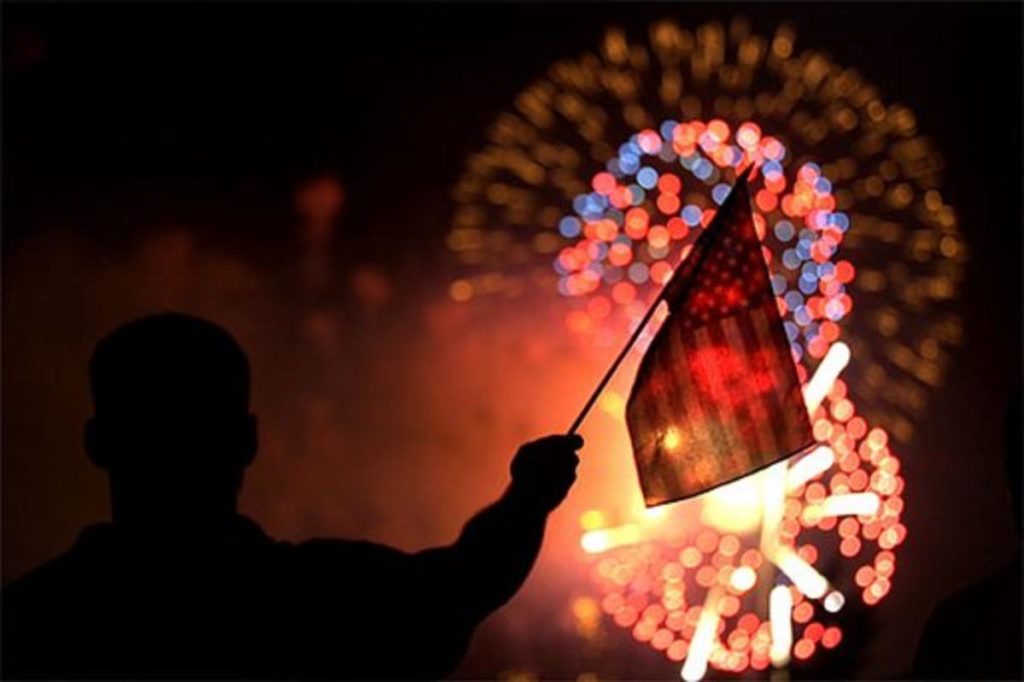
With Independence Day arriving Tuesday, retailers expect a surge in one of the things Americans do best – eat. The National Retail Federation (NRF) predicts Americans will spend more than $7.1 billion for Independence Day weekend on food items for picnics, barbecues and other celebrations. That’s an increase of about $2 in per-person spending over 2016. Numbers from the NRF annual survey, conducted by Prosper Insight & Analytics, note that as many as 88 percent of those surveyed (an estimated 219 million Americans) will be celebrating Independence Day weekend, with 162 million of them — 66 percent — taking part in a cookout or picnic, spending an average of $73.42 per person, up from $71.34 last year. Americans will be showing their patriotic spirit with flags and clothing. Nearly two-thirds of U.S. consumers — 65 percent — own an American flag, while more than half (53 percent) will wear some sort of patriotic themed clothing like T-shirts, bathing suits or shoes. Forty percent own some other patriotic themed decorations, and 28 percent say they plan to buy additional patriotic items. Fireworks are another popular Independence Day activity, despite July 4 falling on a weekday in 2017. Less than half of Americans — 44 percent — plan to watch fireworks Tuesday night, while 14 percent will watch a parade. Lower gas prices will also have a noticeable impact on Independence Day activities, with nearly 33 million Americans planning to head out of town for the long weekend, up from 31 million last year. The NRF survey found just 18 percent of Americans are concerned about gas prices, down from 21 percent last year; it is at the lowest level since the survey began in 2004. Worries about gas prices for Independence Day peaked in 2008 when 59 percent of Americans said they were concerned over the cost of gas.
July Fourth holiday brings mixed feelings for minorities
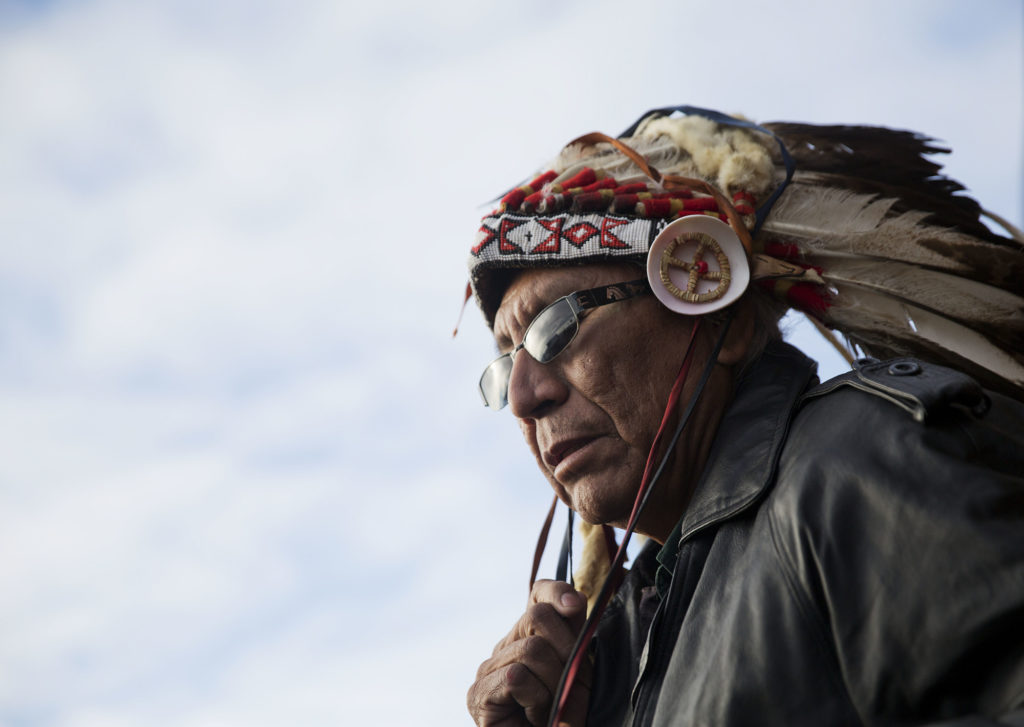
As many in the United States celebrate the Fourth of July holiday, some minorities have mixed feelings about the revelry of fireworks and parades in an atmosphere of tension on several fronts. How do you celebrate during what some people of color consider troubling times? Blacks, Latinos and immigrant rights advocates say the aftermath of the 2016 presidential election, recent non-convictions of police officers charged in the shootings of black men, and the stepped-up detentions of immigrants and refugees for deportation have them questioning equality and the promise of life, liberty and the pursuit of happiness in the United States. Filmmaker Chris Phillips of Ferguson, Missouri, says he likely will attend a family barbecue just like every Fourth of July. But the 36-year-old black man says he can’t help but feel perplexed about honoring the birth of the nation after three officers were recently cleared in police shootings. — POLICE SHOOTINGS Since the 2014 police shooting of unarmed teenager Michael Brown in Ferguson, Missouri, officer shootings – of black males in particular – have drawn scrutiny, sparking protests nationwide. Few officers ever face charges, and convictions are rare. Despite video, suburban St. Paul, Minnesota, police officer, Jeronimo Yanez, was acquitted last month in the shooting of Philando Castile, a black man. The 32-year-old school cafeteria worker was killed during a traffic stop July 6, almost a year ago. “Justice apparently doesn’t apply to all people,” said Phillips, who saw the protests that roiled his town for weeks following Brown’s death. His yet-unreleased documentary “Ferguson 365” focuses on the Brown shooting and its aftermath. “A lot of people have lost hope.” Unlike Phillips, Janette McClelland, 55, a black musician in Albuquerque, New Mexico, said she has no intention of celebrating July Fourth. “It’s a white man’s holiday to me. It’s just another day,” McClelland said. “I’m not going to even watch the fireworks. Not feeling it.” McClelland, who grew up in Los Angeles before the urban unrest of the 1960s, said she fears cities may see more violence amid a feeling of helplessness. “I’m praying and trying to keep positive,” she said. — IMMIGRATION Immigration was a key issue during the presidential campaign for both parties. Since then, Trump’s administration has stepped up enforcement and instituted a scaled-back partial travel ban that places new limits on entry to the U.S. for citizens of six Muslim-majority countries. The temporary ban requires people to prove a close family relationship in the U.S. or an existing relationship with an entity like a school or business. On Friday, the administration announced that Immigration and Customs Enforcement would arrest people – including relatives – who hire smugglers to bring children into the U.S. illegally. Patricia Montes, a Boston resident and immigrant from Honduras, said she’s grateful for the opportunities and security the United States has given her. Yet this year, she doesn’t know how to approach the Fourth of July holiday. “I fell very conflicted,” said Montes, an immigrant advocate. “I mean, what are we celebrating? Are we celebrating democracy?” Montes said it pains her to see children fleeing violence get turned away and deported back to Central America without due process. She also is disturbed by recent immigration raids in Latino and Muslim communities that spark more fear and uncertainty. In Texas, Latino activists have been protesting a state law that forces cities and towns to cooperate with federal immigration authorities. In New Mexico and Michigan, immigrant advocates have been rallying on behalf of Iraqi refugees facing deportation. “There’s a lot not to be proud about when celebrating the Fourth of July,” said Janelle Astorga Ramos, a University of New Mexico student and daughter of a Mexican immigrant. “Even though it’s a time to celebrate as a country and (for) our unity, it’s definitely going to be on the back of our minds.” Desspite those problems and concerns, Ramos said her family will recognize the holiday and visit Elephant Butte, New Mexico, a popular summer destination. “This is our home,” Ramos said. Isabella Baker, a 17-old Latina from Bosque Farms, New Mexico, said she’ll celebrate the holiday based on her own views of patriotism. “More people are standing up because of the political climate,” Baker said. “That makes me proud.” — PROTEST AGAINST PIPELINE For months, members of the Standing Rock Sioux were at the center of a protest against an oil pipeline in North Dakota. A protest camp was set up. The tribe said the Dakota Access oil pipeline plan could pose a threat to water sources, if there were a leak, and cause cultural harm. Police made more than 700 arrests between August 2016 and February 2017. The Trump administration approved the final permit for the $3.8 billion pipeline, which began operating June 1. The pipeline moves oil from western North Dakota to a distribution point in Illinois. Four Sioux tribes are still fighting in federal court to get the line shut down. Ruth Hopkins, a member of South Dakota’s Sisseton Wahpeton Oyate tribe, said Native Americans have always viewed the Fourth of July with ambivalence, and this year will be no different. However, there will be celebrations. Her Lake Traverse Indian Reservation holds an annual powwow on July 4 to honor veterans as a way to take the holiday back, she said. “Also, a lot of people up here use fireworks and the holiday to celebrate victory over Custer for Victory Day,” said Hopkins, referring to Sitting Bull and Crazy Horse defeating George Custer and his 7th Cavalry at the Battle of the Little Big Horn. Still, the holiday comes after tribes and others gathered in North Dakota to support the Standing Rock Sioux tribe and its fight against the pipeline, Hopkins said. Because of that, water and land rights remain on peoples’ mind, Hopkins said. Gyasi Ross, a member of Montana’s Blackfeet Nation and a writer who lives on the Port Madison Indian Reservation near Seattle, said all the tensions this Fourth of July are a blessing because it has
GOP voters blame Congress, not Donald Trump, for lack of progress
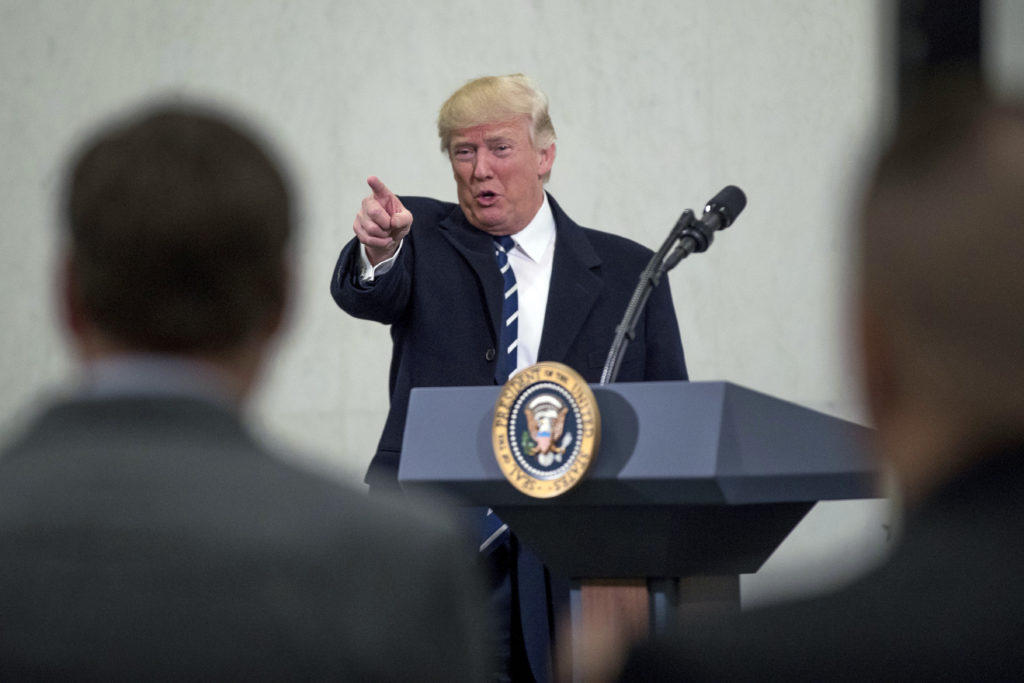
In firm control of the federal government, President Donald Trump and his Republican Party have so far failed to deliver on core campaign promises on health care, taxes and infrastructure. But in New York’s Trump Tower cafe, the Gentry family blames Congress, not the president. Like many Trump voters across America, the Alabama couple, vacationing last week with their three children, says they are deeply frustrated with the president’s GOP allies, faulting them for derailing Trump’s plans. As the family of five lunched in Trump Tower, Sheila Gentry offered a pointed message to those concerned with the GOP’s ability to govern five months into the Trump presidency. “Shut up. Get on board. And let’s give President Trump the benefit of the doubt. It takes a while,” said the 46-year-old nursing educator from Section, Alabama. “They just need a good whoopin’,” said her husband, Travis Gentry, a 48-year-old engineer, likening congressional infighting to unruly kids in the back seat of the car. As Washington Republicans decry Trump’s latest round of Twitter attacks, Republicans on the ground from New York to Louisiana to Iowa continue to stand by the president and his unorthodox leadership style. For now at least, rank-and-file Republicans are far more willing to blame the GOP-led Congress for their party’s lack of progress, sending an early warning sign as the GOP looks to preserve its House and Senate majorities in next year’s midterm elections. Inside and outside the Beltway surrounding the nation’s capital, Republicans worry their party could pay a steep political price unless they show significant progress on their years-long promise to repeal and replace Democrat Barack Obama‘s health care law. Even more disturbing, some say, is the Republican Party’s nascent struggle to overhaul the nation’s tax system, never mind Trump’s unfulfilled vows to repair roads and bridges across America and build a massive border wall. “It’s a problem for Republicans, who were put in place to fix this stuff. If you can’t fix it, I need someone who can,” said Ernie Rudolph, a 72-year-old cybersecurity executive from suburban Des Moines, Iowa. There is no easy path forward for the Republican Party. The nonpartisan Congressional Budget Office predicts that health care legislation backed by House and Senate Republican leaders – and favored by Trump – would ultimately leave more than 20 million additional Americans without health care, while enacting deep cuts to Medicaid and other programs that address the opioid epidemic. In some cases, the plans would most hurt Trump’s most passionate supporters. Just 17 percent of Americans support the Senate’s health care plan, according to a poll released last week, making it one of the least popular major legislative proposals in history. The president on Friday injected new uncertainty into the debate by urging congressional Republicans simply to repeal Obama’s health care law “immediately” while crafting a replacement plan later, which would leave tens of millions of Americans without health care with no clear solution. That shift came a day after several Republicans in Congress condemned Trump’s personal Twitter attack against MSNBC hosts Mika Brzezinski and Joe Scarborough, which was viewed across Washington as an unwanted distraction in the midst of a sensitive policy debate. Trump’s nationwide approval rating hovered below 40 percent in Gallup’s weekly tracking survey, even before the tweet. At the same time, just one in four voters approve of Republicans in Congress, Quinnipiac University found. Democrats, meanwhile, report sustained energy on the ground in swing districts where Republicans face tough re-election challenges. Democrats need to flip 24 seats to win the House majority next fall, a goal that operatives in both parties see as increasingly possible as the GOP struggles to govern. A former Obama administration national security aide, Andy Kim, is among a large class of fresh Democratic recruits. “People are fired up,” said Kim, who’s challenging Rep. Tom MacArthur, R-N.J. “It’s not just about the health care bill. It’s not just about Trump. … They’re concerned about the ability of this government to put together any credible legislation going forward.” Republicans are also concerned. In Iowa’s Adair County, GOP Chairman Ryan Frederick fears that Republican voters will begin to lose confidence in their party’s plans for taxes, infrastructure and immigration should the health care overhaul fail. “Everyone I know looks at trying to get Obamacare repealed and says, ‘If we’re making this much of a pig’s breakfast out of that, what are we going to do with tax reform?’” Frederick said. “We’ve dreamed of killing Obamacare for seven years. And we have the House, the Senate and the presidency, and we can’t do it?” he continued. “What’s the deal, guys?” Louisiana Republican Party Chairman Roger Villere bemoans “factionalism” in his party. Intraparty divisions are holding up health care, he says, which in turn keeps the GOP-led government from tackling other priorities. He’s looking to Trump for leadership. “He’s the ultimate negotiator,” Villere said. “We’ll see how good he is.” Back in Trump Tower, Sheila Gentry conceded that Trump’s tweets sometimes make her cringe, but she still has confidence in her president. She can’t say the same for congressional Republicans. “The Republicans who are in there now that aren’t being very supportive, they’re going to find themselves without a job soon if they don’t step it up,” she said. Republished with permission of The Associated Press.
