
Donald Trump is right: Jeff Sessions’ recusal a mistake
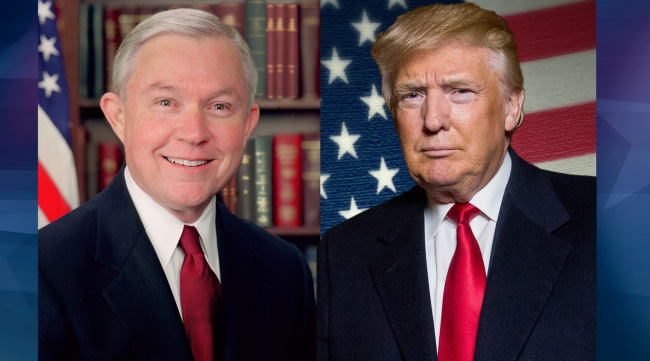
In Feb. 2016, then-Sen. Jeff Sessions did the unexpected — he sidestepped the establishment and threw his support behind Donald Trump. It was Sessions’ reputation and early loyalty ultimately earned him Trump’s U.S. Attorney General appointment. Trump saw Sessions as a leader, an honorable man worthy of a top-tier Cabinet position. Very few disagreed with the appointment and those who did cite half-baked facts or out and out lies regarding his impeccable record. Sessions, to Trump, was someone who put a lot on the line to be an early supporter and someone he thought he could continue to count on to have his back. Imagine his disappointment when Sessions recused himself the Russia investigation. In an interview with The New York Times, President Donald Trump said he thought it was “very unfair” that Attorney General Jeff Sessions accepted his appointment without warning him that he would recuse himself from the ongoing Russian investigation. Trump was right about Sessions’ recusal. It wasn’t the right thing to do. The easiest way to explain his actions is “feeding the trolls,” and Sessions’ and his team should know better than that. Jeff Sessions is an honorable man. He has proved through a career in public service his commitment to truth, honesty, integrity. The Russian investigation is a classic witch hunt in every sense of the word. The media and the Democrats are using it as a dog whistle to take attention away from the agenda and accomplishments of the president. Let’s revisit what led Sessions to his recusal: During his Jan. 10, 2017 confirmation hearing, Minnesota-Democrat Senator Al Franken, asked what Sessions would do if “there is any evidence that anyone affiliated with the Trump campaign communicated with the Russian government in the course of this campaign.” Sessions replied frankly, “I have been called a surrogate at a time or two in that campaign, and I didn’t have — did not have communications with the Russians, and I’m unable to comment on it.” Then on Jan. 17, 2017, as reported by The Washington Post, Sen. Patrick J. Leahy, a Democrat from Vermont, asked Sessions in a written questionnaire whether he had been “in contact with anyone connected to any part of the Russian government about the 2016 election, either before or after Election Day.” Sessions responded with one word: “No.” Despite pushback from the Left, Sessions was confirmed on Feb. 8. Fast-forward to the evening of March 1, when Sessions found himself yet again being questioned about whether he had any ties to Russia. “I never met with any Russian officials to discuss issues of the campaign,” he said in a statement. “I have no idea what this allegation is about. It is false.” Nevertheless, less than 24 hours later, despite the denials that any of his conversations with Russian officials were related to the presidential campaign, Sessions recused himself from any current or future investigation of Russian meddling in the 2016 presidential election. Sessions let the media bully him into recusal. He allowed their baseless accusations dictate his actions. He handed them a win they didn’t deserve. Rather than standing up and being the honorable man Trump, and America, needed him to be he took the easy way out. No doubt, he did what he thought he had to in order to escape further scrutiny, but that still doesn’t make it a good decision. What I wish Sessions had done instead of recusing himself was take the tough tone that he later took with the Senate Intelligence Committee on June 13, 2017, where he said: “Further, I have no knowledge of any such conversations by anyone connected to the Trump campaign,” Sessions said. “The suggestion that I participated in any collusion or that I was aware of any collusion with the Russian government to hurt this country, which I have served with honor for 35 years, or to undermine the integrity of our democratic process, is an appalling and detestable lie.” “I recused myself from any investigation into the campaign for president, but I did not recuse myself from defending my honor against scurrilous and false allegations.” With that fire in his belly and the truth on his side, he should have stood strong and not recuse himself to start with. Edmund Burke famously said, “The only thing necessary for the triumph of evil is for good men to do nothing.” Rather than allowing the critics and conspiracy theorists to triumph with the recusal of a good man, an honest man, Trump and our nation needed for him to be fully involved in this investigation.
Trip Pittman nets $250K in Senate bid, ‘top-tier’ in Q2 fundraising
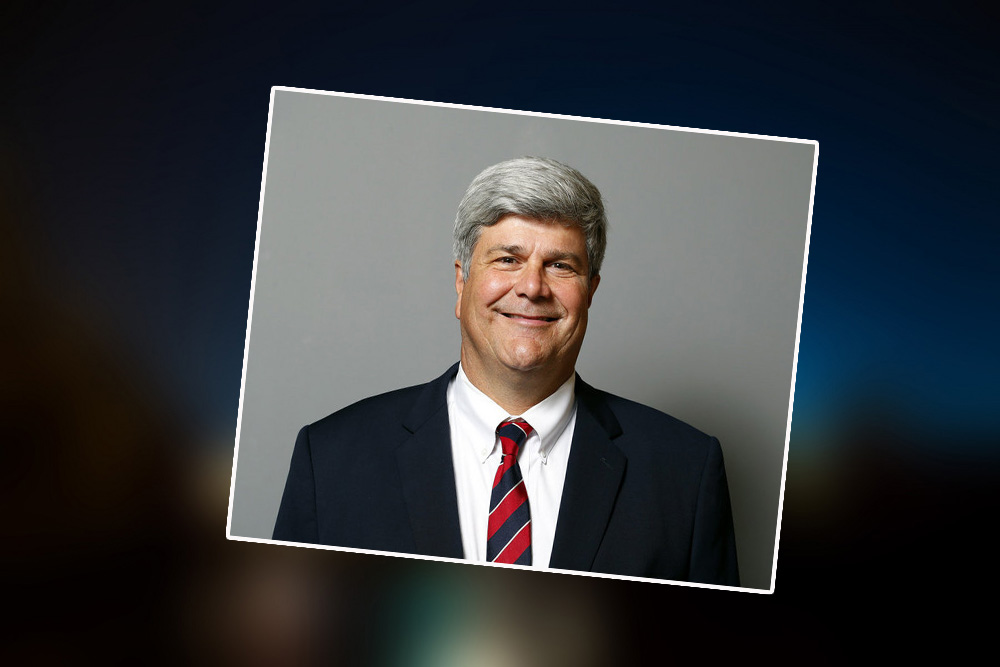
State Sen. Trip Pittman raised nearly $250,000 in the second quarter, putting him in the “top tier” of candidates in Alabama’s special election for the Senate seat currently held by Luther Strange. Pittman’s take included a personal loan of $50,000, reports AL.com, and shows he was “among the race’s thriftiest spenders up to the end of June, spending a little more than $30,000 on his campaign.” Former Alabama Supreme Court Chief Justice Roy Moore and Huntsville Republican Congressman Mo Brooks each posted $300,000 in donations, while Strange raised $1.8 million in the second quarter. Roll Call reported recently on internal polling that puts Moore in the lead with 27 percent, Strange at 23 percent and Brooks at 21 percent. In a campaign statement, Pittman noted there was only a single donation from a PAC: The University of South Alabama. “The people of Alabama need someone with integrity,” said Pittman, who represents Montrose. “I am running to shake up Washington, not to be part of the problem. Alabama needs to select their next senator, not the Washington money crowd or a disgraced former governor. I am 100 percent committed to this race, and have no interest in any other elected office.” While Pittman touts a lack of PAC money in contributions to his Senate campaign, AL.com notes there were a significant number of lobbyists: Joseph Fine and Robert Geddie, of the Fine Geddie lobbying firm; Dax Swatek and Tim Howe, of the lobbying firm Swatek, Howe & Ross; Tom Coker, president of the lobbying firm Tom Coker & Associates and Michael Sullivan, owner of The Lobbyist Group. If one person does not reach 50 percent plus one in the Aug. 15 GOP primary, the top two vote-getters will face a runoff Sept. 26; the general election is Dec. 12.
Roy Moore blasts Mo Brooks ‘ridiculous’ stance on marijuana legalization
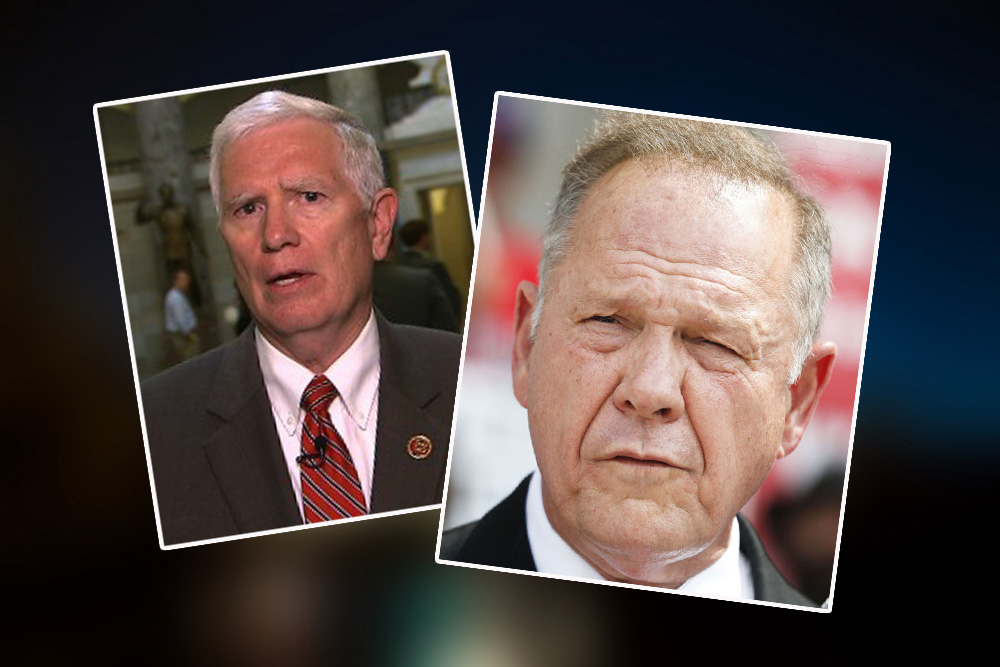
This week, Alabama Congressman Mo Brooks, in a heated race for the U.S. Senate seat now occupied by Luther Strange, declared his support for legalizing medical marijuana. Taking that stance during a Senate race is “absolutely ridiculous,” said former Alabama Supreme Court Justice Roy Moore, also running in the special election to serve the remaining term of Attorney General Jeff Sessions. The United States faces bigger, more pressing problems, Moore said, and those issues are what should be addressed during a Senate race, not whether to legalize medical marijuana. On Monday, Brooks made the declaration at a news conference streamed on Facebook, the same day fellow Senate candidate Dom Gentile — whose wife has cancer — dropped out of the race to endorse Brooks. The Huntsville Republican said: “Medical cannabis should be treated like any other medical treatment that saves lives or eases pain and symptoms … That is what I believe. That is how I will vote in the Senate. That is how I have voted in the House.” Appearing on WYDE Wednesday, Moore slammed Brooks’ position as a non-starter. “I think it’s ridiculous to concentrate on a matter like that as a United States Senator which should be left to the states,” Moore said on The Michael Hart Show. “I mean we got North Korea threatening to nuke us, we got a health care system that’s broken and costs everybody, an immigration system that’s risking the security of our national security because of people flowing across the borders; we’ve got unfair trade agreements … I could go on and on … we got judges thinking they rule the world.” “About an issue like this,” Moore added, “leave it to the states.” As for legalization of medical marijuana, it continues to be a hotly debated issue, particularly over the possibility of increased use among youths. A new report from the American Academy of Pediatrics found as more states legalize the drug for adult use, a greater number of teenagers think it is safe. This leads to rising concerns by doctors and other medical professionals that teens are underestimating the risks of marijuana use. “Marijuana is not a benign drug for teenagers because it affects their developing mind. Teenagers are at a critical time of brain development and they have lifelong impacts from marijuana during adolescence,” Dr. Stephen Patrick of Vanderbilt University Medical Center told Chris Martinez of CBS New York. “People living in states with legalized medical marijuana are more likely to use and abuse cannabis than people living in states where pot remains completely illegal, says a new study that cautions policymakers,” wrote Trevor Hughes in an April 26 piece for USA Today, reporting on a recent study funded by the National Institutes of Health. In July 2015, the South Florida Sun-Sentinel reported on a study by Florida International University finding legalized medical marijuana could lead to increased marijuana use by teenagers. According to research by FIU criminal justice professor Lisa Stolzenberg, legalized medical marijuana in Florida marijuana could lead to increased pot use by youths, similar to what happened in other states that passed laws allowing marijuana for the treatment of pain, nausea, vomiting and other medical conditions. The study also cited statistics for 2010-11, the most recent year in the study, where 9.7 percent of high school students reported using pot in states with legalized medical marijuana, compared to only 6.8 percent in states where it was illegal. Marijuana use among youth in states that legalized rose consistently since 2004, staying higher than in states where it’s illegal. In the Alabama Senate race, Roll Call reports recent internal polling puts Moore in the lead with 27 percent, Strange at 23 percent and Brooks at 21 percent. If no candidate reaches 50 percent plus one in the Aug. 15 special primary, the top two vote-getters will face a runoff Sept. 26; the general election is Dec. 12. Moore’s appearance can be heard here:
Bradley Byrne: “Buy America” policies are good for Alabama
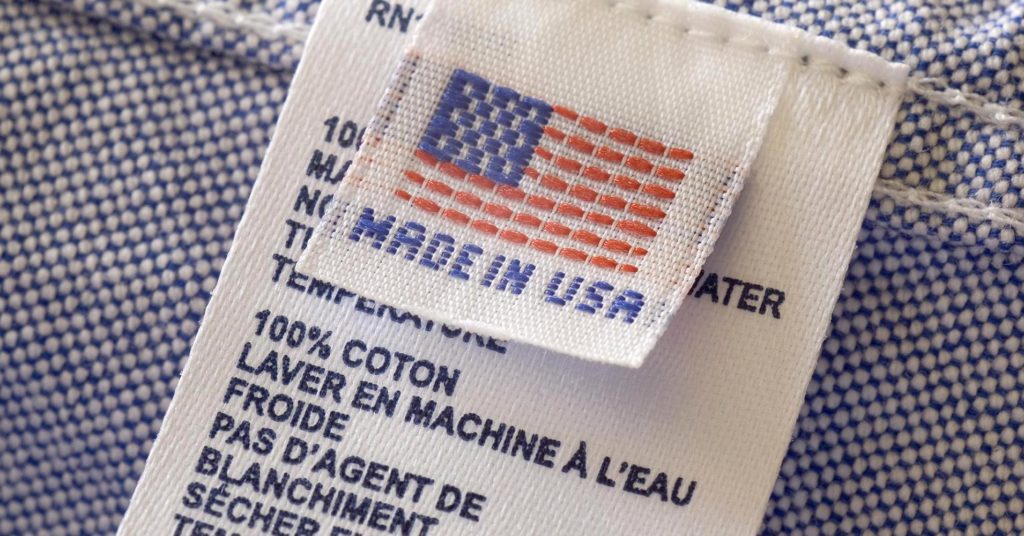
President Donald Trump recently devoted a week to celebrating the importance of “Made in America” products with special events at the White House. I was pleased to see the President shining a spotlight on the many first-class items produced here in the United States. I often meet with manufacturing leaders from across Alabama during their visits to Washington, D.C. or during visits to their facilities back in Alabama. We discuss issues affecting our state’s manufacturing industry, the importance of infrastructure investments, as well as policy ideas that will spur industry growth, create jobs, and boost our local economy. Iron and steel companies are often a key part of the conversation. While iron and steel manufacturing is not new to Alabama, we currently face challenges critical to the health of the industry. Alabama has a rich history of manufacturing, with iron and steel serving as a key backbone of our state’s economy. Manufacturing in Alabama currently accounts for over 252,000 jobs – 11.7 percent of the total employment in the state and 11.71 percent of the gross state product. More than 60,000 of these jobs are supported by the steel industry. But, with opportunities on the horizon, we can do better. As a member of Congress, I am constantly looking for solutions to improve job opportunities, expand local industries and support our future workforce. To accomplish this, we must implement pro-business policies that will strengthen the steel manufacturing industry and promote homegrown economic activity. In April, President Trump signed an executive order to “Buy America,” which aims to use American-made goods for taxpayer-financed infrastructure. Buy America has broad bipartisan support and ensures that we first look to U.S. manufacturers instead of overseas competitors. Buy America is a simple, commonsense policy: American tax dollars spent on public projects should stay in the states and support our national economy. We shouldn’t subsidize jobs overseas when cost-competitive and quality goods are available here. As we have continued discussions surrounding the need to improve our infrastructure, U.S. companies should have the first opportunity to supply materials used to build roads, bridges, ports, water systems and other critical infrastructure. Buy America preferences prevent us from relying on other countries, like China, for steel and other materials used for producing infrastructure and our national defense systems such as fighter jets, tanks and ships. These countries capitalize on excess steel production overcapacity and subsidized imports, creating a detrimental impact on the industry. That, along with tough environmental and labor regulations, make it critically important to support policies that promote local steel manufacturing. The impact of supporting the local steel industry goes far beyond the jobs related to the specific manufacturer. For every domestic steel manufacturing job, it has a seven-fold impact in the economy, creating jobs in the community beyond those directly employed. Alabama is home to some of the most advanced and best manufacturing facilities in the world as well as a talented, skilled workforce that can compete with anyone. With Buy America preferences, we have the opportunity to reward those efforts. While progress has been made, there is much work to be done. Alabama’s strong tradition of producing iron and steel has positioned our state for future growth. It is time we take positive action to support this sector by implementing policies that keep our jobs, tax dollars, and industries in Alabama. I am proud of the hardworking men and women who support Alabama’s steel industry, and I look forward to continuing to advance policies that create a positive impact for the industry and our economy. • • • Bradley Byrne is a member of U.S. Congress representing Alabama’s 1st Congressional District.
Sarah Sanders replaces Sean Spicer as press secretary
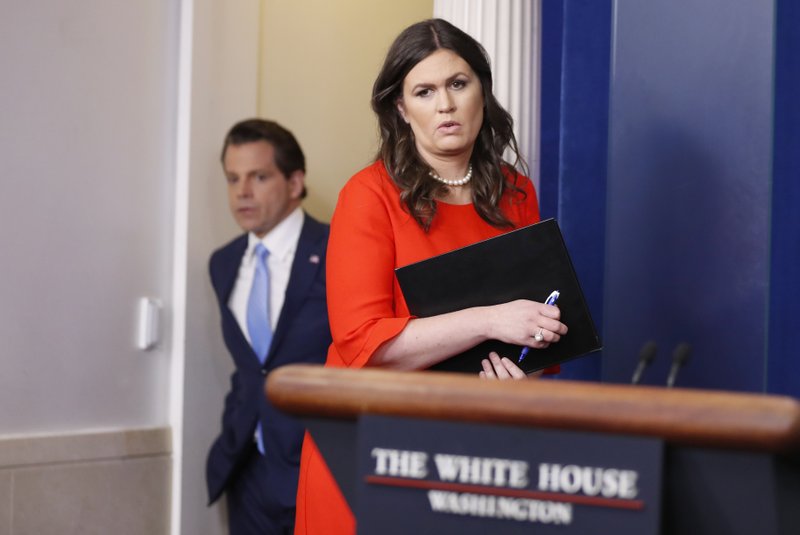
The Latest on changes to the White House communications staff (all times local): 2:45 p.m. New York financier Anthony Scaramucci has been formally named White House communications director and Sarah Huckabee Sanders has been promoted to press secretary in the Trump White House’s latest shakeup. Trump says in a statement read by Sanders that he’s “grateful” for departing press secretary Sean Spicer’s “work on behalf of my administration and the American people.” He adds: “just look at his great television ratings!” Scaramucci also is addressing reporters at the White House. He calls Spicer “a true American patriot” and says he hopes Spicer “goes on to make a tremendous amount of money.” ___ 2 p.m. Outgoing press Secretary Sean Spicer says that he chose to resign from his position to give incoming communications director Anthony Scaramucci a fresh start. Spicer says during a brief phone conversation with The Associated Press following his announced departure that, “we’re at the point where” the president “could benefit from a clean slate.” He says he felt it would be best for Scaramucci to be able to build his own operation “and chart a new way forward.” Spicer is also complimenting Scaramucci, a New York financier and frequent defender of the president who was a staple at Trump Tower during the president’s transition. Spicer says of Scaramucci’s hiring: “It’ll be great, he’s a tough guy.” ___ 1:50 p.m. White House press secretary Sean Spicer says it’s been “an honor” and “privilege” to serve President Donald Trump and the country. Spicer resigned Friday in protest over the hiring of a new White House communications director. He says in a tweet that he will continue his service through August. One person with knowledge of the situation said Spicer objected to the hiring of New York financier Anthony Scaramucci’s lack of qualifications for the communications role. The person spoke on condition of anonymity because they were not authorized to discuss the personnel matter publicly. ___ 1 p.m. White House deputy press secretary Sarah Huckabee Sanders will be conducting an on-camera briefing on Friday afternoon, following White House press secretary Sean Spicer’s resignation. Spicer announced his departure after President Donald Trump hired a new White House communications director, ending his rocky six-month tenure as Trump’s top spokesman. Sanders has been handling most of the briefing duties in recent weeks, and most briefings have been off-camera. The last on-camera White House briefing was held on June 29. ___ 12:35 p.m. White House chief of staff Reince Priebus says he supports incoming communications director Anthony Scaramucci “100 percent.” His comments come moments after White House press secretary Sean Spicer resigned over Scaramucci’s hiring. Priebus and Spicer spent years working closely together at the Republican National Committee. Priebus has also reportedly opposed hiring Scaramucci for various administration positions. Priebus told The Associated Press that he and Scaramucci are “very good friends.” He says it’s “all good here” at the White House. ___ 12:07 p.m. White House press secretary Sean Spicer is resigning his position, according to two people with knowledge of the decision. One of those people said Spicer is quitting because of objections over the appointment of a new White House communications director, New York financier Anthony Scaramucci. The people with knowledge of the decision insisted on anonymity because they were not authorized to discuss the personnel matter publicly. Republished with permission of The Associated Press.
Martha Roby: Deterrence, diplomacy, and discipline

North Korea has been causing problems for the United States and the world for decades, but their belligerence has recently reached a new level. North Korea’s successful test launch of an Inter-Continental Ballistic Missile (ICBM) is a clear sign of escalated hostilities and confirmation that this nation and its dictator pose a direct threat to the United States. Secretary of Defense James Mattis has called North Korea “the most urgent threat to security and peace,” and that was prior to the regime’s most recent missile test. Secretary Mattis testified before our Defense Appropriations Subcommittee recently and described how horrible a conflict with North Korea would be, especially for neighboring countries like South Korea and Japan. “It would be a war that fundamentally we don’t want,” he said. “Our allies and us would win at great cost.” I concur with the Secretary’s assessment that an armed conflict with North Korea should be avoided, and that’s why I believe the United States is at a turning point in terms of dealing with this rogue nation. Former President Barack Obama’s policy toward North Korea was called “strategic patience,” which amounted to ignoring many of North Korea’s antics with the hopes that isolation from the world community would prompt the regime to reconsider its aggression and pursue a more peaceful course. The problem with that policy is that it depends upon a somewhat rational leader who is looking out for the well-being of his people. Unfortunately, Kim Jong Un is the opposite, which is why many of my colleagues and I warned that this policy was naïve and would only embolden the regime. That ultimately turned out to be correct, and now Kim Jong Un is testing his boundaries to see how the United States is going to respond under the Trump Administration. Dealing with North Korea is not a simple issue, but it is clear that “strategic patience” did not work. Moving forward the United States must take a more direct approach to make it clear that North Korea’s continued aggression will result in crippling consequences. I believe addressing the regime comes down to three components: deterrence, diplomacy, and discipline. First, we need military assets in place in the Pacific to deter and ultimately stop an attack should one happen. That’s the purpose of the Terminal High Altitude Area Defense (THAAD). THAAD is a missile system that can be deployed to intercept and stop ballistic missiles from hostile countries. THAAD is now strategically located in both Guam and South Korea. These are the primary ways we could stop a missile attack from North Korea. If THAAD sounds familiar, that’s probably because these missiles are manufactured at Lockheed Martin’s Pike County Operations Center near Troy. These missiles are a critical component in our efforts to counter North Korea’s aggression, which is why I made missile programs a funding priority in the Fiscal Year 2018 Defense Appropriations bill. Second, our country needs skilled international diplomacy now more than ever. We need to build an international coalition to send a message to North Korea that the world’s patience has run out and that their aggression will no longer be tolerated. I have been pleased with the Trump Administration’s response to the North Korea situation. Secretary of State Rex Tillerson and United Nations Ambassador Nikki Haley have been pitch perfect in their messages internationally, but the real challenges lie ahead. Third, we must use more than just our military to combat North Korea’s aggression. We need to use every available tool to discipline Kim Jong Un where it really counts: his bank account. Congress recently voted to increase economic sanctions against the regime, and that’s a good start. I’d like to see the Trump Administration use our considerable American influence to ensure that nations like China, Russia, and others do not enable North Korea by doing business with the regime. Just like with Iran, we have to make it clear that trade and cooperation with any nation that threatens the United States and our allies is unacceptable. ••• Martha Roby represents Alabama’s Second Congressional District. She lives in Montgomery, Alabama with her husband Riley and their two children.
Donald Trump legal team looking to investigate Robert Mueller aides
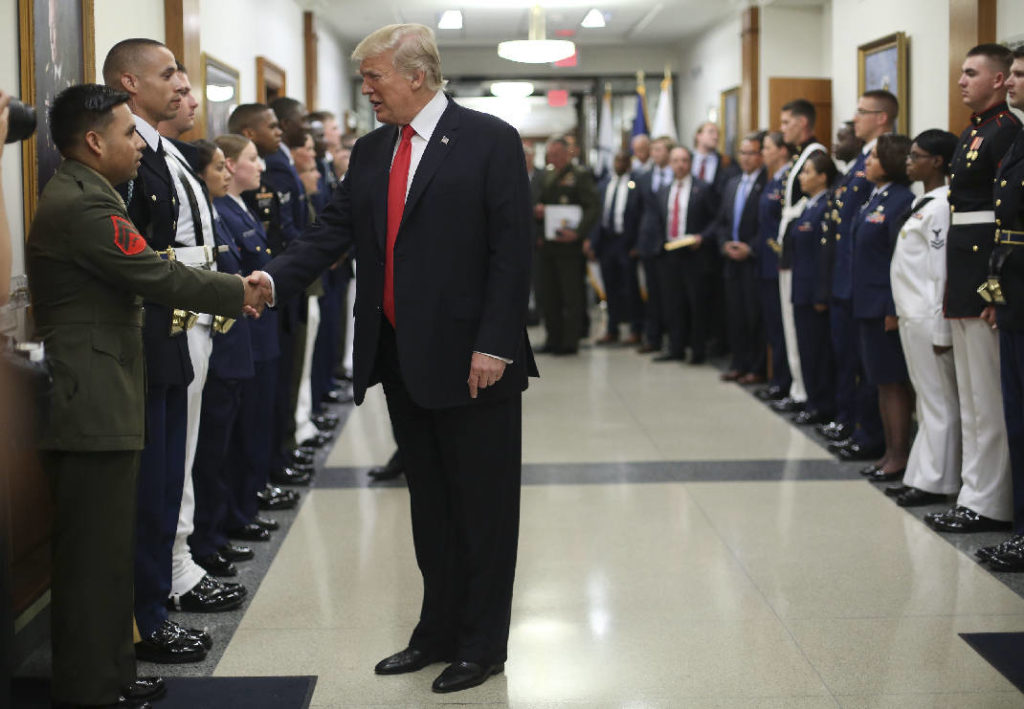
President Donald Trump’s legal team is evaluating potential conflicts of interest among members of special counsel Robert Mueller’s investigative team, three people with knowledge of the matter said Thursday. The revelations come as Mueller’s investigation appears likely to probe some of the Trump family’s business ties. Attorney Jay Sekulow, a member of the president’s external legal team, told The Associated Press that the lawyers “will consistently evaluate the issue of conflicts and raise them in the appropriate venue.” Two people with knowledge of that process say those efforts include probing the political affiliations of Mueller’s investigators and their past work history. Trump himself has publicly challenged Mueller, declaring this week that the former FBI director would be crossing a line if he investigated the president’s personal business ties. Mueller and congressional committees are investigating whether the president’s campaign coordinated with Russia during the 2016 election. While Trump has assailed the probes as a partisan “witch hunt,” the investigations have increasingly ensnared his family and close advisers, including son Donald Trump Jr. and son-in-law and White House senior adviser Jared Kushner. As the investigations intensify, Trump’s legal team is also undergoing a shakeup. New York-based attorney Marc Kasowitz, whose unconventional style has irked some White House aides, is seen as a diminishing presence in the operation, according to two people with knowledge of the matter. Mark Corallo, who has been working as a spokesman for the legal team, is no longer part of the operation, according to those familiar with the situation. They insisted on anonymity because they were not authorized to discuss the matter publicly. Republished with permission of The Associated Press.
Alabama’s June unemployment rate drops to 4.6%

Alabama”s unemployment rate fell to 4.6 percent during June marking a significant improvement over June 2016’s rate of 5.8 percent, according to data released Friday by Governor Kay Ivey‘s office. “Alabama’s unemployment continues to drop, and our economy continues to add jobs. As of now, we are only two-tenths of a percentage point away from catching up to the national unemployment rate,” said Ivey. “Even though our numbers are improving, I continue to pledge to work even harder to make sure that any Alabamian who wants a job can find one.” Wage and salary employment increased in June by 6,000 to 2,016,400, and monthly gains were seen in the fields of: Hospitality — an increase of 6,000 Leisure and hospitality sector — an increase of 6,000 Professional and business services sector — an increase of 1,000 Other services sector — an increase of 1,200 “For the third month in a row, we can report that our wage and salary employment is topping two million jobs. This has been a milestone we’ve strived to reach for years, and is an excellent indicator of economic health,” said Alabama Department of Labor Commissioner Fitzgerald Washington. “We’ve added 46,100 private sector jobs since January, and our over the year job growth rate was 1.8%, the highest it’s been in 11 years!” The last time the yearly growth in wage and salary employment measured more than 1.8% was in June 2006, when it measured 2.2%. Counties with the lowest unemployment rates are: Shelby County: 3.8% Elmore, Cullman, and Baldwin Counties: 4.3% Marshall County: 4.5% Counties with the highest unemployment rates are: Wilcox County: 13.5% Clarke County: 10.6% Perry County: 10.2%. Major cities with the lowest unemployment rates are: Vestavia Hills: 3.2% Hoover: 3.6% Homewood: 3.7% Major cities with the highest unemployment rates are: Prichard and Selma: 10.1% Anniston: 7.0% Mobile and Bessemer: 6.5%
Australia disappointed by delay in US refugee resettlement
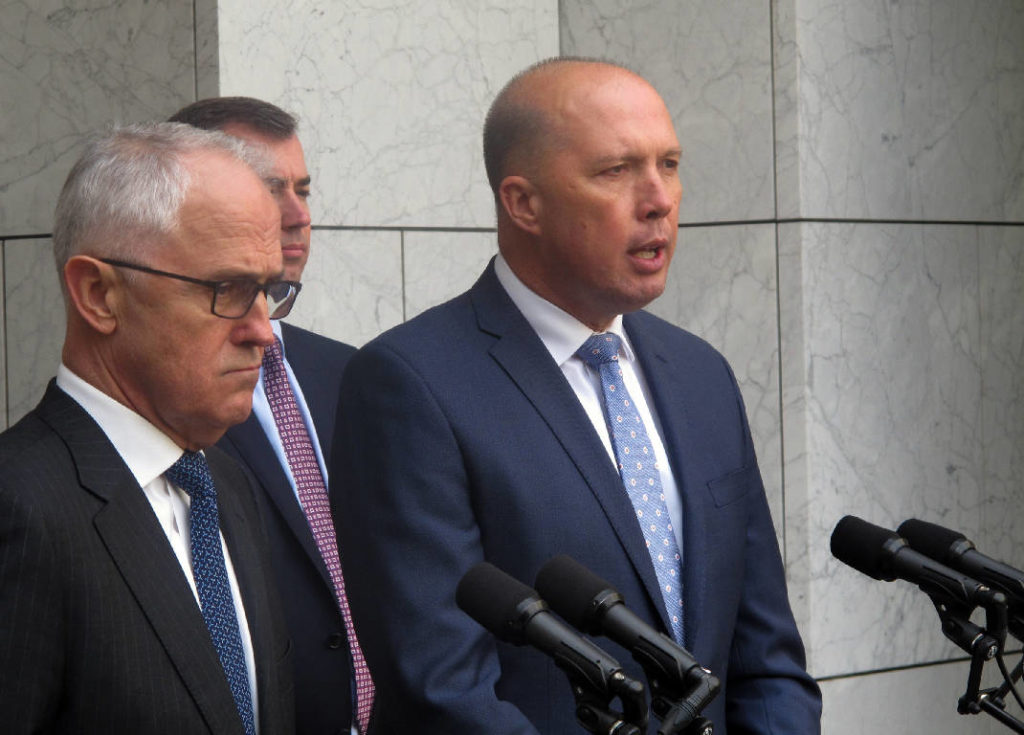
Australia was disappointed that hundreds of its rejected refugees would not begin resettling in the United States this month under a deal that predates President Donald Trump‘s administration, an official said on Friday. President Barack Obama‘s administration agreed to accept up to 1,250 refugees among hundreds of asylum seekers – mostly from Iran, Afghanistan and Sri Lanka – who have been languishing for up to four years in immigration camps on the impoverished Pacific island nations of Papua New Guinea and Nauru. Immigration and Border Protection Minister Peter Dutton said Australia wanted the refugees to start moving in July, but the United States had already filled its 50,000 refugee quota for the current fiscal year. “We’re disappointed that they haven’t been able to move this month, which was my hope, but their new program year starts on Oct. 1, and we’re working with both the State Department and the Department of Homeland Security to ensure that we can get people off as quickly as possible,” Dutton told reporters. Trump berated Prime Minister Malcolm Turnbull during their first telephone conversation as national leaders in January over the deal which Trump described in a tweet as “dumb.” Trump said the refugees would be subjected to “extreme vetting” before they were accepted. There are few details on what that would entail. Australia will not settle any refugees who try to arrive by boat – a policy that the government says dissuades asylum seekers from attempting the dangerous and occasionally deadly ocean crossing from Indonesia. Australia instead pays Papua New Guinea and Nauru to house asylum seekers in camps that have been plagued by reports of abuse and draconian conditions. Dutton said he was determined to close the men-only camp on Manus Island in Papua New Guinea by the end of October. Asylum seekers on Manus who were rejected by the United States would be transferred to Nauru, who will remain open indefinitely. Australia last month reached a settlement of 90 million Australian dollars ($68 million) with more than 1,900 asylum seekers who sued over their treatment on Manus. Republished with permission of The Associated Press.
